Showing posts with label Madhu Bhojwani. Show all posts
Showing posts with label Madhu Bhojwani. Show all posts
My friends started out with me, but raced ahead-Ira Dubey
9:16 AM
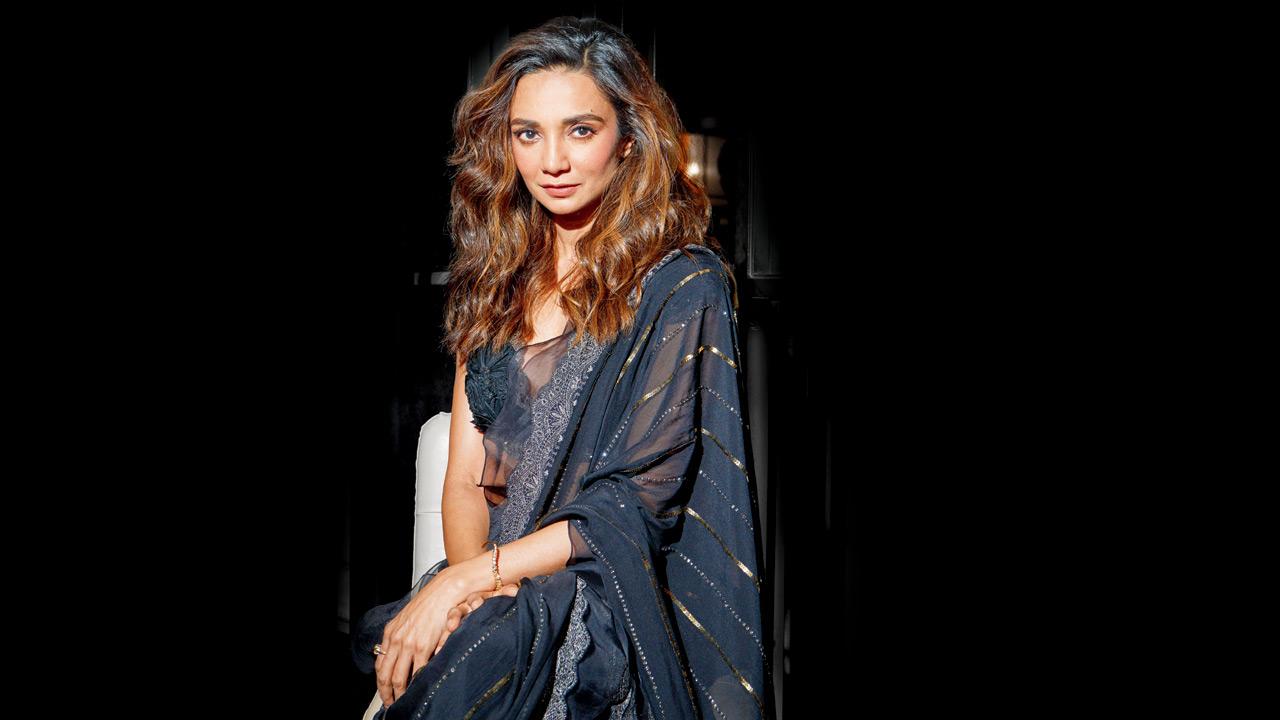
Accepting that everybody has their own career path, Bollywood actor Ira Dubey on her connection with Fatima Jinnah as she gears up for Freedom At Midnight 2
Letty Mariam Abraham (MID-DAY; February 18, 2025)
In the last decade-and-a-half, Ira Dubey has largely concentrated on acting, be it in a wide range of plays or in shows like Potluck and Scoop. But now, the actor is ready for the next step in her career—writing and direction. Will wearing multiple hats be overwhelming? Maybe. But Dubey is excited about the road ahead that will see her not only direct her first film but also return to the new season of Freedom At Midnight where she plays Fatima Jinnah, a leading women’s rights activist in Pakistan. In conversation with mid-day, she talks about life of an actor on stage, films and OTT, her love for writing, and battling self-doubt. Edited excerpts from the interview.
Does juggling writing, acting and producing a show get overwhelming?
One has to try and find [the time]. I have been a stage actor for almost 20 years. Theatre is close to my heart. I won’t ever give it up. If you had the good fortune of having theatre in your life, I don’t think you’d ever give it up for that very reason. Whether it’s Naseer [Naseeruddin Shah] sir or late Om Puri or Shabana ji [Azmi] or my mother [Lillete Dubey], some of our finest actors come from theatre and still go back to it. That’s because it’s an actor’s medium more than a film.
Are you planning to foray into direction as well?
I’ve been a festival director and I’ve directed [plays] for stage, but I haven’t helmed anything on film yet. I’m writing something that I would like to direct. The journey of writing and directing films began last year. Every time you want to try on a different hat, you become a student. I didn’t go to film school to learn directing, I haven’t assisted any directors. But then, some of the most successful directors never studied film. It can be overwhelming, but you have to strike a balance. When you live in a city with rent and bills to pay, [it becomes difficult] to sustain your writing career and enjoy yourself. I have to balance that now with finding the time to write and research.
How do you deal with writer’s block?
I don’t even know if I have experienced writer’s block. I used to enjoy writing very much when I was younger. I used to write poetry, I was a voracious reader. I used to read a book a day up to my 20s. Then, life took over and I focused more on my acting career. I moved away not only from reading, but also from writing. So, it’s like I’m opening a very old door. Writer’s block is something that you have to [go through]. It’s like that famous Robert Frost quote: The best way out is always through.
Do you battle with self-doubt?
I think all of us do. I think self-doubt is healthy in a way, and in some ways, it’s not. Again, it’s about finding out how you walk that line. I’m a perfectionist. I was an overachiever in school. It has taken me 15 years to find that part of myself. You don’t have to be the master at everything you do. It’s more about coming into your own, knowing that a lot of it is about the process, and is not result-oriented.
When did you start asking yourself these questions?
Some of it began after I lost my dad in 2015, and some I’ve always had. I went through a dark period in my 20s. It’s something I may talk about in a film someday. There are certain low periods in everybody’s life. How you deal with those and emerge out of them teaches you so many things in retrospect. Going through [a dark phase] in my late teens and early 20s, and then losing my father at 31 propelled me towards this self-awareness.
How do you view your film career?
I don’t know where I am in my film career, to be honest with you. I always quote this example—my mother started working in films in her 40s. Clint Eastwood started directing in his 70s. People’s careers have turned around in their 50s and 70s. Life is unpredictable. When I look back, there were moments in those 15 years where I have been very frustrated, wished things were different, been envious of other people and wondered why things were happening for them and not for me. I have friends who started out around the same time as me, but they’ve raced far ahead of me. I felt the pinch. But at the end of the day, the belief in yourself, your ability, and your talent are far more important because those will carry you forward.
What is the status of Potluck season 3 and Freedom At Midnight season 2?
We were hoping there will be a third season of Potluck. The second season of Freedom At Midnight will be out in August. In 2017, I was asked to do a reading of a book called Mr And Mrs Jinnah: The Marriage That Shook India. I completely fell in love with the book and acquired the rights to develop a two-season show that didn’t ever get made. I remember meeting Nikkhil [Advani] and Mira Nair [for it]; she was quite interested, but she needed time as she was working on a couple of things at the time. Just before COVID hit, I had to give it up because somebody wanted the lifetime rights and I couldn’t afford that. In 2022, Nikkhil offered me Fatima’s character in Freedom At Midnight. Nikhil’s partner, Madhu Bhojwani, had watched me in three plays and loved me in them. The role just made perfect sense. I didn’t give a damn about the fact that she had grey hair or that she was older. Fatima is an absolutely fascinating character.
I’m glad that after 21 years, people are still watching Kal Ho Naa Ho, dancing to Maahi Ve-Nikkhil Advani
8:13 AM
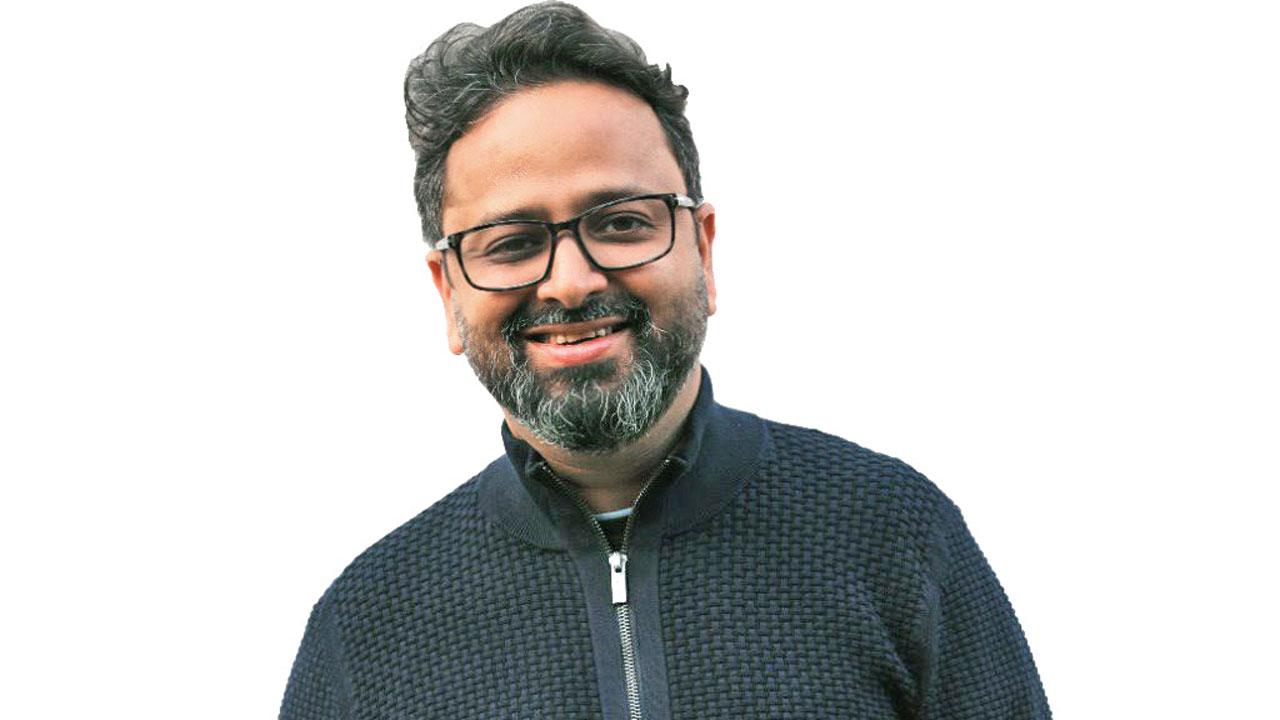
Niharika Lal (BOMBAY TIMES; December 10, 2024)
Call it serendipity or coincidence, Nikkhil Advani ended up with two releases on the same day last month – the re-release of Kal Ho Naa Ho and the release of the period drama Freedom At Midnight. He says he can’t really take credit for either of the projects or the release dates. “I was just offered the projects, and I didn’t say no,” he said during a conversation.
‘I ENJOY BEING ON SET’
Nikkhil says he enjoys filmmaking. “I enjoy being on set. I love being in a writers’ room. As a showrunner and producer, I constantly have to be in rooms where budgets are being discussed and, more importantly, where budget cuts are being slashed. I’ve never really enjoyed being in an editing room, though. I hate it because every time I watch my footage, I find myself thinking, ‘I could have shot this better. I wanted it to be better. Maybe we can change this,” he says.
‘IT WAS A CONSCIOUS DECISION TO USE LIGHTS LIKE THE CROWN’
Watching Freedom At Midnight may remind the audience of the historical drama The Crown. Nikkhil says, “Was it a conscious decision to be like The Crown? Yes, very much. What The Crown does is use very harsh backlight from the windows, and they shoot a lot on sets. We were also shooting extensively on sets, so it became an automatic reference point for us. Agar aap blue ya green screen use karte ho, then half your budget goes into VFX, and you can’t do anything else.”
He further explains, “These are things I’ve learned over the years. For instance, if I want the audience to feel a little more stressed out, I use darker colours and wood paneling. Colours were thought out very carefully because I wanted the audience to be emotionally connected to every scene of Freedom At Midnight.”
‘TRIED TO BE AS AUTHENTIC AS POSSIBLE’
Nikkhil says that as far as authenticity is concerned, the team tried their best. He explains, “But I don’t think it can ever be enough, right? The people being spoken about and shown in this story were giants. It’s not just about getting their physicality, speech, or walk right. What they thought, what they said, their vision – it was immense. What I tried to do was put the audience into a room with them and show, yeh log kaise thay.”
‘People still dance to Maahi Ve and send me clips’
“Neither did I have a choice about the release of Freedom At Midnight, nor did I have a say in the re-release of Kal Ho Naa Ho,” shares the filmmaker, adding, “I’m just glad that after 21 years, people are still watching Kal Ho Naa Ho, dancing to Maahi Ve, and sending me video clips.”
He says, “I didn’t consciously make these choices. Someone offered me Freedom At Midnight, and someone offered me Kal Ho Naa Ho. Maine keval bola, ‘Mujhe kaam chahiye, mujhe kaam karna hai.’ My sister (Monisha Advani) and my production partner, Madhu (Bhojwani), often ask me, ‘When will you turn around and start saying no?’ And I reply, ‘I won’t. I’ll never say no. If I’m offered a project, why would I say no?’ Logon ke paas kaam nahi hai. People often say, ‘You’re doing so much work,’ and the reason is simple I say yes to everything. When I was doing the post-production for Vedaa, I was simultaneously shooting Freedom At Midnight. I don’t say no; I only say yes. Karan (Johar) told me to do Kal Ho Naa Ho, and I said, Okay.”
The impact of Mrs Chatterjee vs Norway is such that women are sending bangles and mirrors to Norwegian embassy-Nikkhil Advani
8:16 AM

Nikkhil Advani, Monisha Advani and Madhu Bhojwani talk about the appreciation their recent projects have received and how their content company has rapidly adapted to the changing times
Neha Maheshwri (BOMBAY TIMES; March 27, 2023)
The audience has showered immense praise on two recent releases – the film, Mrs Chatterjee vs Norway and the OTT series, Rocket Boys 2 — both of which are based on real-life stories. But that’s not the only common factor between these two. Both are creations of Emmay Entertainment content production house, which is headed by the creative-minded trio of Nikkhil Advani, Madhu Bhojwani and Monisha Advani. They like to describe themselves as a ‘triumvirate’, which encapsulates a synergy of creativity with sound finance and pragmatism.
The 12-year-old company boasts of a massive slate of original content, including films and web shows. Ask them about the roadmap that brought the company so far and Nikkhil says that there isn’t one. He reasons, “You spend one year planning to do something, and suddenly out of the blue, something else will come up, and that becomes a roadmap.”
However, Monisha says, “There is a roadmap that makes us a very interesting triumvirate because we function with contrarian views. Nobody saw a pandemic coming and suddenly the consumption pattern changed. The content, the way we presented, all of that is transforming so rapidly that we have to nurture a group of creators who are agile to that flexibility.”
Madhu states that at the end of the day, “it’s the commerce that allows us to exist”. She elaborates, “What these 12 years have taught us and kept us going is that you have to light many fires and hope that they become bonfires around which you can stand and warm your hands. We started this company in 2011, and up to 2017, we produced six films. From 2017 to 2023, we finished our 29th project. That can’t be just based on being reactive. We have grown a competency in the area of web series. We are also excited to tell stories based on true incidents.”
The OTT space is liberating, admits Nikkhil. He adds, “OTT has allowed storytellers to fly. Things like Friday kaun aayega, Saturday kaun baithega, Sunday family baithegi ki nahi. The purity of telling a story gets diluted in the process.”
When asked what draws the trio to real-life stories, Madhu replies, “Real life presents us with the most inspiring and bizarre stories (Airlift, Batla House, Mrs Chatterjee vs Norway, Mumbai Diaries and Rocket Boys 1 & 2). Yes, there are a lot of ramifications, especially from a legal standpoint. Three of us are at loggerheads mostly when we give the green signal to a real-life story.”
Nikkhil adds, “I was certain that if I couldn’t use Norway in the title of Mrs Chatterjee vs Norway, I wouldn’t make the film.” He also recalls the reactions he got for Rocket Boys. “A lot of people told me that Rocket Boys is cinematic and shot so beautifully, why couldn’t it be a film? It can’t be because then look at the content you will have to give up.”
The trio is moved by the impact their productions have made on the audience. “The impact of Mrs Chatterjee vs Norway is such that women are sending bangles and mirrors to the Norwegian embassy,” Nikkhil shares. Monisha adds, “I don’t know whether it’s triggering or inspiring, but I am moved by the experience. We are not evangelists or activists, we just set out to entertain and tell authentic stories.”
While talking about the production house’s plans — which include the second season of Mumbai Diaries, the new web show Adhura, a film by Saurabh Shukla and another one starring Abhishek Bachchan this year — Nikkhil says he’ll continue to champion the approach of disruption. “We are constantly challenging ourselves. Longevity is a result of disruptions, so I intend to shake things up. Now, whether the disruption will come in the form of genre or an idea, we don’t know,” he signs off.
The OTT business is really the IPL of content-Sameer Nair
8:25 AM
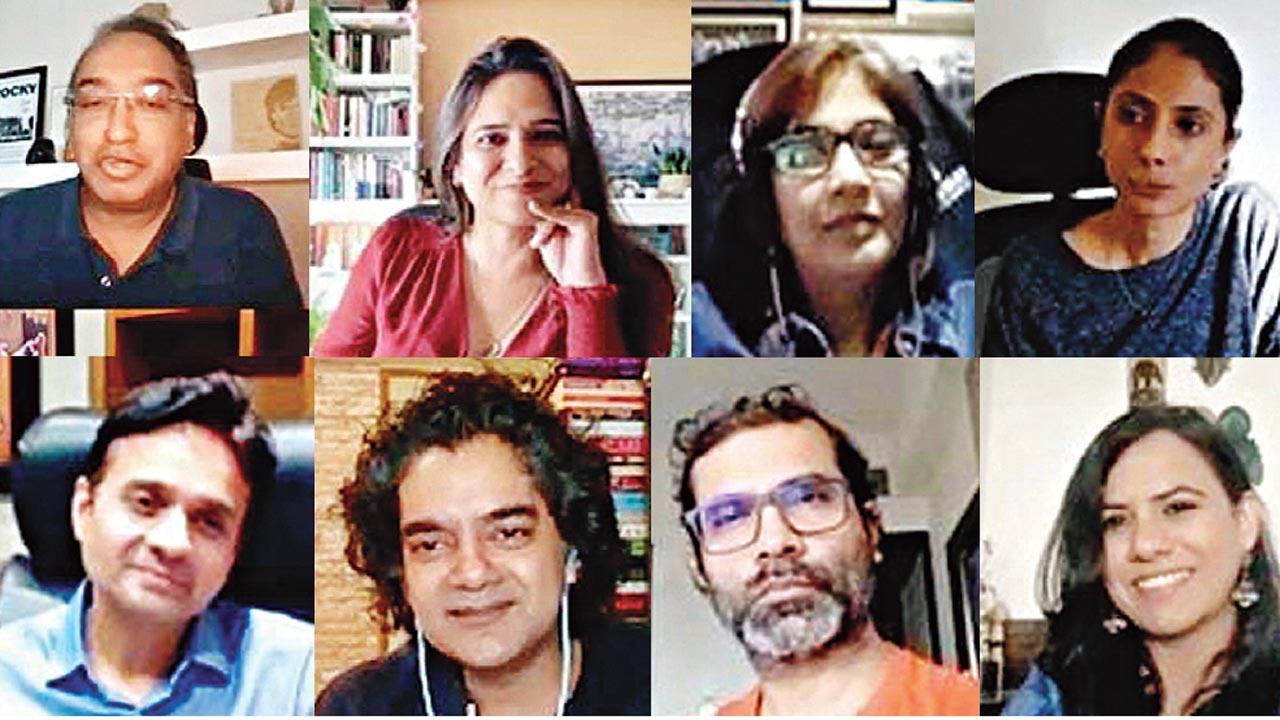
(Clockwise from top) Sameer Nair, CEO, Applause Entertainment; Nimisha Pandey, Chief Content Officer, Hindi Originals — Zee5; Madhu Bhojwani, partner, Emmay Entertainment; Pratiksha Rao, Director — films and licensing, India, Netflix; Aparna Purohit, Head, India originals, Amazon Prime Video; Arunabh Kumar, Founder TVF; Mayank Shekhar, Entertainment Editor, mid-day; Apoorva Mehta, CEO, Dharma Productions and Dharmatic
In the OTT head honchos’ huddle, ahead of Hitlist Awards, India’s top content bosses delve on the changing scene
Mayank Shekhar (MID-DAY; February 25, 2022)
Not that you can time this—a day before the Hitlist Awards’ OTT head honchos’ huddle took place over a zoom call, with India’s top content bosses, Netflix founder Reed Hastings dropped a truth bomb elsewhere.
Of all major markets, Reeds reckoned, Netflix was yet to convincingly crack India. Social media handles took off thereafter, throwing up suggestions on what Netflix must do, where it had gone wrong — a swarm of SWOT analyses, if you may.
Sameer Nair (Applause Entertainment) feels this is like offering boxing lessons to Mike Tyson, going through a purple patch: “Netflix are the leaders of how streaming business is done. And India has always been a complicated, hungry, but value-conscious market, that’s also tasted blood during the pandemic. Even cable TV is pathetically cheap at $3 a month here. Everywhere else, it’s $20-30. Satellite TV has 200 million viewers, OTT platforms are at 30-40 million. We talk of ‘cutting the (cable) cord’ — why bother; it’s just there!”
Pratiksha Rao (Netflix India), on the other hand, takes this barrage of unsolicited, social-media advice rather sportingly, terming it a “huge privilege that people think of brand Netflix as passionately. We see ourselves as creative enablers, partners for as diverse stories as we can, to also make them travel globally,” besides offering global (original) content on the platform itself.
To be fair, as per estimates, Netflix holds about 5 per cent of the Indian OTT market; its revenue-share stands close to 30 per cent. There are, currently, about 75 OTT platforms in India. And of the 225 fresh shows streamed in 2021, 170 of them were in Hindi alone. A certain level of segmentation has obviously taken place in an industry that’s at best about five years old.
Nimisha Pandey (Zee5) reveals her platform delivered 40 pieces of original content (series/films) in 2021: “We plan to focus more on quality.”
Aparna Purohit (Amazon Prime Video) agrees her mandate isn’t quantity either. Given that the streaming service is part of an overall shopping mall. “The pressure is to put out something that constantly raises the bar—becomes part of cultural zeitgeist, water-cooler conversations; whether that’s Paatal Lok or Mirzapur. That’s not easy pressure; even as we placed 18 shows and 50 films across languages (in 2021).”
With its own captive subscriber/audience base, the OTT can be deemed as the new star-system for Indian entertainment. They unilaterally green-light scripts—for films, and shows that are shot like cinema. And, in return, receive both immense love and instant criticism for the choices they make.
Speaking of the star-system, which is directly related to theatrical entertainment—whatever happened to Bollywood, as it were, that took a beating from both Hollywood (Spider-Man), and down South (Pushpa, which collected Rs 80 crore among Hindi audiences alone)?
A contention behind this threat to Bollywood being that most of Mumbai’s top, traditional producers have turned into vendors for OTT platforms in the process.
Apoorva Mehta (Dharma Productions, which pretty much equals Bollywood) reasons, “Theatrical is the cornerstone, that’s where the heart lies. The South is filling a gap. Very few Hindi filmmakers, like Rohit Shetty, are great with delivering scale plus entertainment.”
The other unsung aspect of the nascent, theatrical dominance of the South in Hindi markets, as Arunabh Kumar (TVF) points out, is serious upgrade in the quality of Hindi dubbing, subtitling and translation—something that wasn’t adequately appreciated for Allu Arjun’s Pushpa.
Of course television, more so OTT platforms, and Internet access in general, have had a role to play with audiences sampling cinema/content/stardom from all over, other Indian languages included.
As for his own Hindi films, Mehta says he had to make do with the war-tentpole Shershaah (2021) on Amazon Prime Video (APV), because they had held on to it for over a year since the pandemic: “We couldn’t miss out on August 15.” Also, one’s not sure anymore what the response to a mid-range production like Gehraiyaan (also on APV) would be in a theatre: “There’s a skew towards larger than life, experiential entertainment.”
What’s the unlearning, when film studios enter the streaming fray? How are the OTT and film industries different? Bollywood producer Madhu Bhojwani (Emmay Entertainment), who delivered 10 OTT titles in 2021 (including Empire and Mumbai Diaries 26/11) likens the two financial worlds to farming and hunting. Wherein the OTT industry promises a predictable return on an input cost: “There is a cap on how much you can make.”
“The up-side, even once you dilute stakes on the intellectual property of a film,” depends on performance in theatres: “Films are like the races.”
The other changing dynamic between the two industries is again, of course, the star-system itself. Lead actors in Bollywood are notorious for cornering as paycheck a bulk of the film’s budget. Do they matter on OTTs anymore?
TVF’s Kumar says streaming platforms are democratic, in the sense that they don’t grade content on your device, based on who’s in it. The library is near infinite (for a lifetime anyway). Unlike network television, where you can only watch a show at a time; and theatres, that can only play a certain number of films.
Can’t deny the initial buzz, though, that a show/film on an OTT is likely to generate, given a legacy star in it. Rao from Netflix is clear, “The script and the creator’s vision are most important in assessing a project, yes. There is still a commercial value attached to the power of big talents, who have built a filmography and fan base, over years. While they have to deliver that value, they also have to be used the right way, as we’ve done in the US. [Conversely], you can have a [Malayalam super-hero film] Minnal Murali that generates its own fandom. The film didn’t have a big star. But [Tavino Thomas] became a national heartthrob after.”
The equivalent of the box-office, the barometer for cinema stardom, isn’t clicks on OTT platforms, as Pandey from Zee5 points out: “The click is just a vanity metric. Sampling does no good. Once you have clicked—how long you have stuck with the content matters more in the long run.”
And this is why, according to APV’s Purohit, “There is no rush. You don’t have to prove a success of a film or series over a weekend [unlike box-office]. The audience surprises us eventually.”
The reason OTT platforms are seen as parallel to the film industry, rather than television—despite the disproportionate size of screen—is clearly for the budgets involved. And indeed the cross-pollination of talents that have taken place over the past half a decade.
Unlike the US, that moved towards limited edition, quality series back in the late 1990s, Indian network TV continued to appeal to mass markets, chiefly with long-running soap operas, with little incentive to do much else. “This is India’s HBO moment,” Nair from Applause, reckons.
Having been part of all three worlds, how does Nair perceive these industries separately? He says, “There are various ways to describe it. One that I find useful is to take the movie business as playing for the national cricket team—11 players from a billion plus. Fiction on TV is domestic cricket. Those in it hope to make it from thereon. The OTT business is really the IPL of content—involves both domestic and international players, with quality on display; everybody gets their moment under the sun.”
In the food-chain on the Internet, there is in fact another competitive level, below the IPL of content. Which is where TVF’s Kumar progressed from, on a free-for-all YouTube, making spoofs and branded content—starting out with a sketch called Rowdies in 2012, peaking with Kota Factory, the second season of which made it to Netflix.
In 2022, Kumar asserts, “The lot on YouTube from a decade ago are presently subscribers of OTT platforms. That’s the cascading effect. Likewise, there’s a whole new world of 18-year-olds consuming short videos on YouTube now, that we also make content for—being the only collective from the old lot that continues to.”
This content economy is also a creator economy. Everyone is an aspirant, with an idea for a feature, short, or series; displaying talents all-day, online. Many of whom, we figure, might be interested in a conversation with these OTT bosses.
All of whom suggest their inboxes are open for new ideas. Kumar however warns the idea alone is hardly as important as the rigour and effort behind detailing a plan that ought to be 5,000 pages, minimum: “An idea means nothing. I’d value discipline over talent, any day.”
There’s also the ‘bible’, which Zee5’s Pandey defines as an elaborate presentation of sorts that captures the treatment of an idea/story, sometimes visuals included.
Whether it’s a bible or story synopsis, what’s essential, says Rao for Netflix, is “if you’re able get out, what’s in your head. Focus on explaining the story, and its emotions. Instead of saying, this is the ‘best’, or it’s India’s version of xyz!” In case you were searching for a favoured genre to sell, APV’s Purohit makes it public: she is actively on the lookout for young adult fiction.
A safe area, no doubt. Given OTT is no more quite the brave new world it used to be, only until a year back—what with the government putting in place an indisputably draconian censorship law, skewed towards accepting complaints from any viewer of an OTT platform, to be acted upon by a three-tier crime and punishment system.
Bhojwani is part of the government’s second-tier committee, that comprises industry folk and members of civil society—the first is the OTT platform itself; the third tier involves multiple Union ministries.
Bhojwani says, “Since this grievance-redress council was put in place, a lot of complaints have come in. But it’s been okay, working, so far.” So far, being the essential rider. Mehta at Dharma is taking no chances, getting scripts vetted by legal teams, desisting from anything that spells potential trouble.
Although Nair—who recently got away with Danish Sait’s smart political satire, Humble Politician Nograj—reasons, you gotta do, what you gotta do: “Creators both reflect and hold mirror to society—telling stories you’re not meant to; finding ways to. All great art progresses on these fundamentals. A danger bigger than censorship, is self censorship.”
There is a moment of silence at this point from the OTT platform bosses in this huddle. Well. Understandably so.
One pick of 2021
Sameer Nair: Jerry Seinfeld’s stand-up special, 23 Hours To Kill (Netflix)
Madhu Bhojwani: Mini-series, Dopesick (Disney+ Hotstar)
Apoorva Mehta: German multi-part series, Dark (Netflix)
Nimisha Pandey: TVF series Aspirants (YouTube)
Arunabh Kumar: English-Japanese thriller film, Kate (Netflix)
Aparna Purohit: Cop investigative series, Mare of Easttown (Disney+ Hotstar)
Pratiksha Rao: The Morning Show, Season 2 (Apple TV)
Cast your vote for the Hitlist OTT Awards
Log on to www.radiocity.in/hitlistawards to cast your vote.
You can also vote via SMS. Send HITLIST <space> category name <space> your choice (a/b/c as on the website) to 57575.
Voting lines close on March 18.
Nikkhil Advani would tell me no one is checking if the flags in the battle sequences are aligned or not-Mitakshara Kumar
8:16 AM
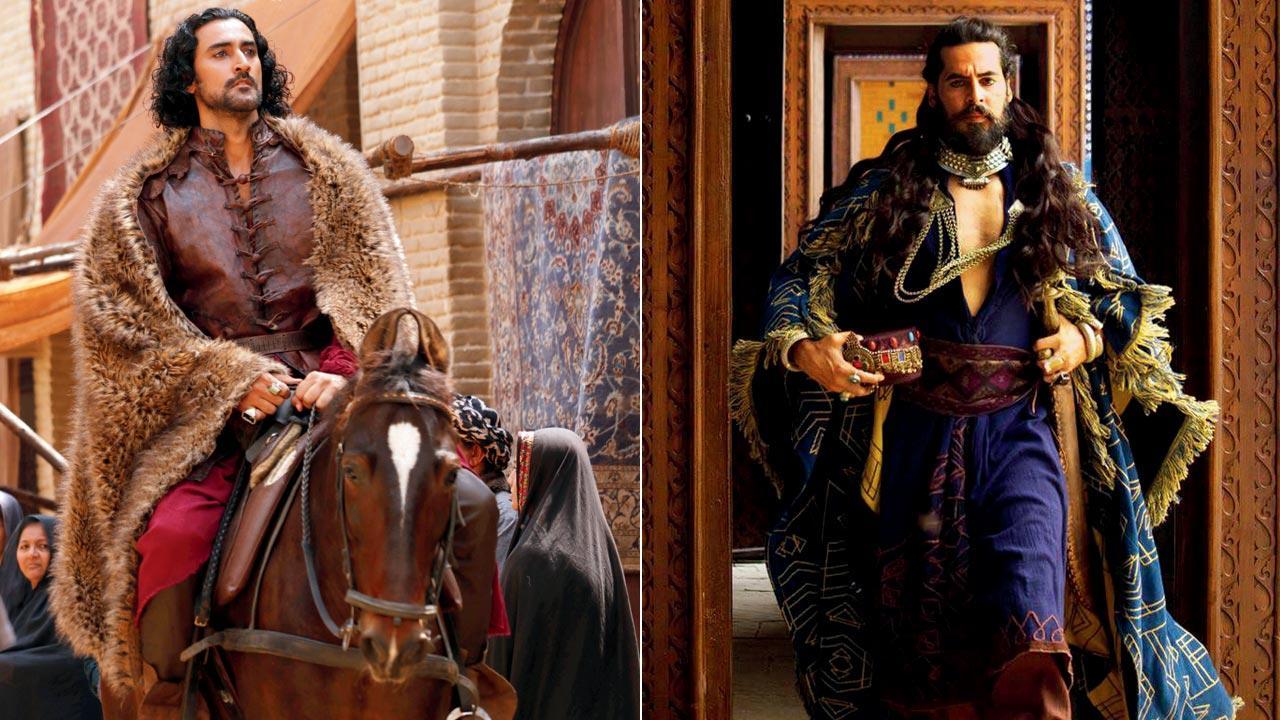
Kapoor as Babur; (right) Morea as Muhammad Shaybani Khan
As Kumar rolls out The Empire, the team on its making, and shooting the historical drama amid the pandemic
Mohar Basu (MID-DAY; August 24, 2021)
Retelling the events leading up to the First Battle of Panipat, led by Mughal emperor Babur, on screen is a tall order. The challenge is heightened when you have to recreate the 16th century battle amid the biggest setback of the 21st century — Coronavirus. So, how did creator-producer Nikkhil Advani and director Mitakshara Kumar create The Empire — featuring Kunal Kapoor, Shabana Azmi and Dino Morea, among others — in the face of such obstacles? “Detailed research, patience and with the help of an army of people,” says Kumar, who walks us through the making of the Disney+ Hotstar offering.
Setting up the stage
It helped that Kumar trained Sanjay Leela Bhansali’s projects, Bajirao Mastani (2015) and Padmaavat (2018), two of the country’s most ambitious period dramas. The director admits her eye for precision was often a joke on set. “Nikkhil would tell me no one is checking if the flags in the battle sequences are aligned or not. But when one is making a show of this nature, we might as well perfect it.”
The beginning — adapting the first book from Alex Rutherford’s Empire of the Moghul series into a screenplay — was not daunting for writers Kumar and Bhavani Iyer, courtesy the book’s thorough research and gripping story. But bringing alive the screenplay was a different ball game altogether. Much like mentor Bhansali, who had once famously said that he scores for his songs while in the shower, Kumar says music played a key part in visualising the world. “Music helps me transport myself to that era. I visualise everything.”
After developing the screenplay through 2017-18, came the detailed storyboarding by Advani and her. The duo roped in cinematographer Nigam Bomzan to support their vision on ground. “We have not had a historical series in Indian digital entertainment, but we’ve had shows like Tipu Sultan or even Bharat Ek Khoj, which were brilliant. Sadly, we stopped making them. There is no visual reference for a DoP [director of photography] for stories belonging to that era, besides all the [international] shows and films.”
Even as his lens captured the visual grandeur of the era, Bomzan says his focus was on the story. “In this case, it was more of the conflict of an individual’s mind and his internal battles. We never let the backdrop of royalty overpower the story of Babur.”
He remembers being a ball of nerves before shooting the first battle sequence at Film City in January 2020. “It is difficult to shoot large-scale battles, and the realisation dawned on me as I drove to the set at 5 am. All I could see was several tents in a row, with a sea of people getting into their costumes. When the time came to film the battle, there were an additional number of horses, elephants and cannons. It was nerve-wracking, but then there was Nikkhil [director for the war scenes] who was calm and brought in his years of experience. He had all the shots broken down beforehand. He was patient as that’s the only way one can shoot with animals in the midst of live explosions that we were doing.”
The responsibility of dressing Kapoor’s Babur and Morea’s Shaybani Khan in the finest while staying true to the nomadic vibe of the clan was given to costume designer Sheetal Sharma. She fell back on the paintings and books to study their sartorial evolution. “We have used a lot of central Asian embroidery. Textile-wise, we have used raw jute and handloom fabrics, taking inspiration from the rugs of Persia.”
For the artillery, Sharma added a touch of mushroom leather and faux fur to make the armour look more powerful. While the women — Aisan Daulat Begum and Khanzada Begum portrayed by Azmi and Drashti Dhami respectively — were draped in earthy tones, with a slight splash of blues and reds, it was their jewellery that was paid attention to. “We’ve used a lot of rustic antique jewellery and beautiful stones like turquoise and blue sapphire.”
Babur’s biggest enemy — the pandemic
It was sheer luck that the makers had scheduled the primary war sequences in the first schedule. Only 21 days into the shoot, the team found themselves facing an entirely unexpected enemy — the pandemic. The shoot was halted for five months as the country went into lockdown, and shoots were suspended till August. As the team returned to the set in September, Kumar remembers wondering how she would pull off a period drama in the face of the COVID-induced restrictions. “It was a nightmare post COVID. You couldn’t shoot with more than 50 people, so scenes had to be reconstructed to accommodate the crowd. The looks of the characters had to be reworked as the number of people on screen reduced, but the scene had to stand out. We worked around the logistical limitations, including shooting intimate sequences first. We shot a lot less, which is why 90 days stretched to 120 days,” recounts Kumar.
The biggest blow of the pandemic was having to drop the 35-day schedule in Uzbekistan that was slated for 2020. “Real locations lend authenticity. No one will notice, but I would have preferred a bustling set with 300 junior artistes. That said, as a director, I feel my finesse will show if the show is grand despite all these limitations.”
Recreating Uzbekistan
With the Uzbekistan schedule out the window, art director Priya S found herself shouldering a daunting task — to recreate the central Asian country in Mumbai. “Wai became Babur’s Samarkand. Film City [housed] Shaybani Khan’s tent. In Madh Island, we [built] Fergana Darbar. Budget was the biggest challenge,” she recalls.
Primarily an architect, Priya says she studied the architecture of Uzbekistan to rise to the job. “We tried to do justice to the beautiful Uzbekistan architecture by way of colourful mosaics, religious symbols, and abstract geometrical patterns. [These are found] on almost every palace, mosque, and minaret, and characterise the turquoise-hued country,” she explains.
How did they stay within budget, given the change in plans prompted by the pandemic? Producer Madhu Bhojwani, who handles the finances of Advani’s productions, quips, “What makes you think we didn’t go over-budget?”
She says it wasn’t creating the show that cost them as much as the inactivity of 2020 did. “We had to work hard to hold together. Daily-wage workers had to be paid, and we were responsible for those on our payroll. There have been some crucial takeaways that we will employ in the future seasons.”
All’s well that ends well
A crew of 80-plus, four schedules and 120 days of shooting later, Advani and Kumar are ready to offer their retelling of Babur’s journey to the audience. The genesis of the show was four years ago with the erstwhile Fox team, during the making of POW: Bandi Yuddh Ke that was produced by Advani as well. Producers Monisha Advani and Bhojwani are fairly confident that they have a great series at hand. Though it’s probably the first big-budget historical series in Indian digital space, Bhojwani believes the story itself is familiar. “If anything, we are the last to tell it,” she notes.
In fact, Karan Johar was to make the period drama, Takht that focused on the Mughal empire. Monisha remembers a dinner party where Johar and Bhojwani were exchanging notes on the period. “He had just come back from his Italy recce, and Madhu was in the thick of things with this series. There they were amid all that laughter, showing each other their visual palettes, and locations of Florence and Uzbekistan,” she laughs.
The challenges have been myriad — from the inception to the latest comparisons with Game Of Thrones. Needless to say, nothing was as excruciating as the pandemic constraints. “But we’d do it all over again, and hopefully for many seasons,” signs off Monisha.
The legality of it all
Telling a Mughal story comes with the risk of hurting sentiments in the current climate. Monisha explains, “There is a level of sensitivity in us as storytellers to make sure we are respectful of everyone’s culture. We focused on telling the story of a family and the drama of these personalities.”

The Samarkand palace recreated in Wai
From easing visa process to issuing quick permits, it's a smooth run for film shoots in India despite the pandemic
8:29 AM

Niharika Lal (BOMBAY TIMES; January 30, 2021)

MAKING FILMING EASY FOR INTERNATIONAL CREW IN INDIA
In another panel discussion, India producers of Hollywood films discussed how during the lockdown, even though everything came to a grinding halt, they still got the required permissions to shoot. Alan McAlex, producer, said, “We were in the post production of a film where we needed a lot of clearances from the Ministry of Home Affairs for the use of a map in the title sequence. It was in the middle of April-May. The offices were working with one-third of the strength (due to COVID), and still the FFO helped us to get the clearances. That was really easy. There was another American production that was supposed to come to India and we had to submit our documents for the clearances. Again the FFO aided us in the middle of the pandemic. Besides that, FFO also helped us in getting in touch with embassies of the countries from where the crew were coming to India. So it was also helping us in reaching out to other countries.”
Talking about film visa procedures, Vikramjit Roy, Head, FFO, said, “We have extended the film visa norms to even include location recces for international projects, which was earlier only meant for film shoots. Now, 124 Indian missions have nodal officers who issue film visas for India. So the collaboration between the Ministry of I&B and the Ministry of External Affairs has really helped us in terms of issuance of visa.”
Talking about shooting at monuments in India, Roy added, “Come to FFO to shoot at any ASI monument, and you will get your permissions easily. The same has been done for the railways. Whether it is railway locations, a yard or a platform, that (permission of shooting there) will also now be through the FFO. Of course, we are yet to make any formal announcement for that. There are certain test cases that are taking place, and then we will go live with this announcement.”
Madhu Bhojwani, partner, Emmy’s Entertainment & Motion Pictures LLP, shared, “We got permission to shoot at Wagah border. Earlier, we were not able to do so as easily as we would have liked to. To be able to have access to a location like that is wonderful, as then you are able to tell some really compelling stories, and not have to recreate (the real locales elsewhere).”
Dhan Preet Kaur, MD, NFDC, said, “FFO’s main goal is to facilitate shooting to induce film-related tourism in the country. We are the biggest filmmakers in the world and now we are also turning into the biggest film viewers in the world.”
SHOOTING FILMS AMID PANDEMIC
During another discussion on shooting in the Coronavirus pandemic, the representatives of Uttarakhand and Madhya Pradesh discussed how they went out of their way to facilitate shootings in their states. Nishant Radhakrishnan, Head, Creative Development, Film & Series, Junglee Pictures and Jinesh Shah, Head Originals, Roy Kapur Films, who were part of this panel, discussed how with the help of state film offices and FFO, they are able to shoot films amid the pandemic.
Panelists said that Uttarakhand has removed red tape and rolled out a red carpet, and many filmmakers in Mumbai agree that they had fun shooting in Uttarakhand. K S Chauhan, Deputy Director, Information, Uttarakhand said, “On January 4, we got a request for a shoot from team Badhaai Do, and we gave permission within 24 hours. We have planned a new policy keeping COVID in mind. According to the new policy, even if 10% of the film is shot in the state, we will give subsidy to the film. We have also included foreign filmmakers in this scheme. It is also beneficial for the state. For instance, for Badhaai Do, 150-200 rooms and 50-60 cars have been booked, so it is profitable for the state as well.”
Giving an example on how they do their best to facilitate filmmakers, Ram Tiwari, Deputy Director, Madhya Pradesh Tourism Board, said, “A filmmaker expressed interest in shooting in the opium fields in Mandsaur where opium is grown legally. But due to some issues, it wasn’t possible to shoot there. However, we are trying to give them an alternate space near Indore, to cultivate opium for filming purposes, so that the production team has access to hotels, airports etc. Besides, we are currently working with Rajkumar Santoshi and Kangana Ranaut’s Dhaakad.”

Second schedule of Nikkhil Advani's grand web series Moghuls to commence in Thane
8:30 AM

Moghuls unit builds lavish 17th century set in Thane as director Nikkhil Advani gears up to resume shoot of Shabana-starrer next month
Uma Ramasubramanian (MID-DAY; August 29, 2020)
 In development since 2018, Nikkhil Advani-directed web series, titled Moghuls finally kickstarts its second schedule of the shoot. After a stint in Jaipur in February, the unit is building a lavish set in Thane. "Since it is a period drama, a lot of research has gone into designing the set and palace [to depict the era accurately]," informs a source of the Disney+ Hotstar venture.
Producer Madhu Bhojwani (below) of Emmay Entertainment says that the Ronit Roy and Dia Mirza starrer will roll out next month. "[At present], we are building the set as per protocols. The shoot will start in September and continue for a few months."
Moghuls is a screen adaptation of Alex Rutherford's six-volume historical fiction novel, Empire of the Moghul. The drama also features Shabana Azmi, 69, as Babur's grandmother Esan Daulat. Bhojwani is excited to see the veteran actor back on the set. "For the last few months, our team has worked hard to ensure that the safety guidelines recommended by the state government and Producers' Guild are implemented. We have left no stone unturned to keep our workplace secure and are delighted to have Shabana ji join us in this schedule."
To avoid overcrowding at the shooting site, the period drama will be shot across multiple sets. "Each set will be made ready in phases to ensure that everything doesn't happen at the same time," explains Bhojwani. Her other productions, Arjun Kapoor and Rakul Preet Singh's tentatively titled Chale Chalo, Akshay Kumar's Bell Bottom and Kaun Banega Shekhawati are currently being shot in Mumbai, UK and Rajasthan respectively.

Satyameva Jayate 2: John Abraham to fight corruption in Lucknow
8:19 AM

Earlier slated to be shot in Mumbai, Satyameva Jayate 2 makers switch location to Uttar Pradesh
Uma Ramasubramanian (MID-DAY; July 25, 2020)
 Filmmaker Milap Zaveri, who was hoping to take the John Abraham-fronted Satyameva Jayate 2 on floors in April, has utilised the lockdown to polish his script. Armed with a powerful story about tackling corruption, the director is gearing up to film the cop caper from September. However, there has been a last-minute change of plans — while the movie was originally set in Mumbai, the makers have now decided to shoot it in Lucknow instead.
Madhu Bhojwani, who is backing the film along with Bhushan Kumar, states that the change of location had little to do with the shooting guidelines of the state and was prompted purely by the demand of the story. "We had earlier conceived it as a film that could have been shot in Mumbai. But as the story developed, we [realised] it lends itself beautifully to Lucknow. It was a creative decision," she says. The sequel to the 2018 hit also features Divya Khosla Kumar.
Arjun Kapoor and Rakul Preet Singh to resume shoot in Mumbai; Europe schedule put on hold
8:22 AM

Even as their Europe schedule is in limbo, unit of Arjun Kapoor-Rakul Preet Singh's rom-com to resume shoot in the city
Uma Ramasubramanian (MID-DAY; June 30, 2020)
Arjun Kapoor and Rakul Preet Singh were only one schedule away from wrapping up the shoot of their yet-untitled romantic comedy when the nationwide Coronavirus lockdown was announced in March. In the three months since, the unit of the Kaashvie Nair-directed venture has been wondering about the fate of their final Europe stint. Now, as filmmakers are slowly returning to the sets, co-producer Madhu Bhojwani too is charting the way forward for the project.
"Keeping the safety protocols in mind, we will evaluate what can be shot locally. We will first film the indoor portions, and then, take a call on the pending shoot. Even as the restrictions are being lifted in India, we must proceed carefully," says Bhojwani of the cross-border love story that also features Kumud Mishra and Neena Gupta.
Given the current scenario, international travel is off the cards for the foreseeable future. Ask Bhojwani if they are planning to recreate Europe in Mumbai, in such a scenario, and she says that the makers are playing it by ear. "For now, we are adopting a wait-and-watch mode as several countries are in lockdown."
Amid lockdown, Producers' Guild, FWICE's initiatives to help daily wage workers hit a roadblock
8:32 AM

Kapur, Mishra and Advani were among those who initiated the dialogue around the plight of daily wage workers
As state government announces lockdown, initiatives announced by the Producers' Guild, FWICE to help daily wage workers hit a roadblock
Uma Ramasubramanian (MID-DAY; March 25, 2020)
A week since the Producers' Guild announced the setting up of a relief fund for the daily wage workers and the Federation of Western India Cine Employees (FWICE) promised to distribute groceries and other essentials, there has been little progress on the initiatives. The associations' best intentions have hit a roadblock with the state government imposing Section 144 from Monday.
Manish Goswami, vice president, Producers' Guild, says, "Not every daily wage worker has a bank account, so they would have to come and collect the money. At this point, an assembly of four to five people is not allowed, so we can neither gather [those in need] nor conduct meetings."
The association set up an account last Wednesday, encouraging industry folk to contribute to the fund. Soon, Farhan Akhtar, Sonam K Ahuja and other stars urged everyone in the industry to do their bit. Ask him if the Guild has accumulated a handsome amount during the week, and Goswami says, "We have received verbal commitment from many, but since the production houses are shut, they have not been able to make the transactions. Hopefully, we will get clarity on March 31; then, the funds will start coming in and we can distribute them."
Among the filmmakers who had pledged support to the daily wage workers was Nikkhil Advani. Madhu Bhojwani, partner, Emmay Entertainment, rues that the process has slowed down. "While our intention is very much intact, the execution has been impeded in terms of resources," she says.
In the wake of the janta curfew on March 22 and the subsequent lockdown, the FWICE had to call off their week-long plan of distributing groceries among those affected by the suspension of shoots. Birendra Nath Tiwari, president, says, "At the moment, the only way to help them is to give a door-to-door service [but that is not feasible]." While several television studios have come to their aid, he rues, "No Bollywood actor has offered help yet."
On Tuesday evening, Prime Minister Narendra Modi announced a 21-day nationwide lockdown. The move, though necessary, will further affect the daily wage workers.
An Act Of Kindness
Even as he relentlessly rallies behind the daily wage workers, Anubhav Sinha took the lead in distributing food grains to the needy. On Monday, the filmmaker took to Twitter and called for volunteers who can help him in distributing ration across the city. Actor Ronit Roy was one of the first to lend him support in the initiative.

Emmay Entertainment believes in empowering women storytellers
6:12 PM

Mitakshara Kumar, Monisha Advani, Madhumita, Kaashvie Nair, Madhu Bhojwani and Ananya Banerjee
BOMBAY TIMES (March 9, 2020)
For a production house where two-thirds of its leadership is female, Emmay Entertainment has taken the gender mandate further. Founded in partnership with filmmaker Nikkhil Advani, producers Madhu Bhojwani and Monisha Advani realised that in its ninth year, the company’s body of work has reflected agnostic genres — from real-life thrillers like Batla House, D-Day and Airlift, to massy dramas like Satyameva Jayate and Marjaavaan.
Conscious of upping the volume on content that represents women in a stronger, positive and empowered manner, they realised the answer was not just in the story; for that, they needed the right storytellers. The company has now signed four women directors with diverse film grammar and yet, an aligned agenda — inclusivity. These filmmakers include Kaashvie Nair (whose upcoming film will feature Neena Gupta, Arjun Kapoor and Rakul Preet), Madhumita (critically-acclaimed director of the award-winning Tamil feature film KD), Mitakshara Kumar (directing a period epic for an international OTT) and Ananya Banerjee (debuting with two web series this year).
Speaking on behalf of the company, producer Monisha Advani says, “We are committed to producing for an increasing number of women directors. This is not a diversity card. We believe their optics change the way we view any genre of cinema, be it action, drama or comedy.”
Arjun Kapoor and Rakul Preet Singh will head to Punjab for next schedule of their cross border film
7:54 AM

Duo will be joined by Neena Gupta, Soni Razdan, Kumud Mishra, Kanwaljit Singh for a schedule that kicks off on Dec 10
Himesh Mankad (MUMBAI MIRROR; December 4, 2019)
 Mirror was the first to report (November 6) that Arjun Kapoor and Rakul Preet Singh are teaming up for a yet-untitled family dramedy produced by Bhushan Kumar, Nikkhil Advani and John Abraham. The film went on floors in mid-November with Arjun shooting for his solo portions in Mumbai. “I’ve shot for five days and it was all interior stuff which we filmed,” Arjun reveals, adding that he is yet to shoot with his leading lady, with whom he interacted at length during acting and character-building workshops.
Now, we have learnt that the film’s leads are headed to Punjab to kick off the second schedule on December 10. “It’s a coming-of-age story, a family comedy-drama which has a nice, feel-good vibe to it. I haven’t done something in this space before. We have a nice ensemble cast,” Arjun informs. The actor and Rakul will be joined by co-stars Neena Gupta, Soni Razdan, Kumud Mishra and Kanwaljit Singh in the Punjab schedule.
The cast of the film, which is written by Kaashvie Nair, who makes her directorial debut with the film, along with Anuja Chauhan and Amitosh Nagpal, is scheduled to shoot at real locations in and around Punjab. “We have an exciting schedule coming up across locations in Chandigarh, Patiala, Amritsar and the Attari border. The entire cast will be in Punjab for a better part of the month,” says Madhu Bhojwani, who is also producing the film. Bhushan goes on to add that the shooting spots play a major role in taking the story forward. “We will be treating Punjab as another character in the film, which is a cross-border love story. It’s a unique take on relationships within a family,” he informs.
According to a source close to the development, Arjun, Rakul and the team will fly to Los Angeles for the final shoot after the second schedule. “Filming will be wrapped up by January-end, following which the team moves on to post production. The film will release next year,” the source shares, adding that Neena’s getup in the film is prosthetic-heavy. “There were several look tests that she underwent with the team in October. Her look, once unveiled, will surprise many.”
Kiara Advani bags Indoo Ki Jawani; to be produced by Nikkhil Advani
7:59 AM

Actress plays girl from Ghaziabad whose left and right swipes on app makes for a quirky comedy
Avinash Lohana (MUMBAI MIRROR; May 27, 2019)
 Kiara Advani who is presently shooting for the Vikram Batra biopic, Shershaah, with Sidharth Malhotra, has given her nod to a coming-of-age comedy titled Indoo Ki Jawani. Produced by Nikkhil Advani, Niranjan Iyengar and Ryan Stephen, it features Kiara as Indoo Gupta, a feisty girl from Ghaziabad, whose left swipes and right swipes with a dating app results in hilarious chaos. It will be the Bollywood debut of Bengali writer-filmmaker Abir Sengupta and is expected to go on floors in September.
“Some time ago, my daughter Keya came to my office and while looking at the posters of the films we have made so far asked matter-of-factly why all of them had only men and no women. Around the time, I heard this story that Niranjan and Ryan brought to us and fell in love with it. Thankfully, it revolves around a female protagonist,” laughs Nikkhil, saying that they have been looking to collaborate with Kiara for the longest time and were pleased that she instantly gave her nod.
Kiara is all fired up about her first female centric film. “Indoo is edgy, lovable and quirky. The dialect is completely new so I’m going to do a lot of workshops to get it right. I can’t wait to start shooting,” she says, adding that the story is relevant to today’s time and given her character’s background and the setting, the film is really exciting. Prod her for details and she zips up, only reiterating that Nikkhil and she have discussed several projects in the past. “This is such a special script, I think we were meant to do it together,” she smiles.
It was writer-turned-producer Niranjan who first reached out to Kiara. His production partner, Ryan, informs that when Abir narrated the gist of the story to him in a coffee shop, he knew that this film had to be made and they couldn’t think of anyone better than Nikhil, Monisha Advani and Madhu Bhojwani to collaborate with. “They got it in a heartbeat and that’s what’s most important for any film. Indoo Ki Jawani is young and funny, pure heartland, and sends the right message home, making it the perfect debut for us as producers,” exults Ryan.
Ask Kiara if she has ever been on a dating app and she shakes her head, “Nope, but I have friends using these apps and have heard a lot of fun stories of their experiences. But nothing compared to what we have for you,” she laughs.
John Abraham, Bhushan Kumar, Nikkhil Advani come together to make six films
7:57 AM

BOMBAY TIMES (November 22, 2018)
A slate of films will be jointly produced by Bhushan Kumar’s T-Series, John Abraham’s JA Entertainment and Monisha Advani, Madhu Bhojwani and Nikkhil Advani’s Emmay Entertainment.
Some of the movies that will be made under this joint venture will also see John Abraham as an actor. Similarly, apart from being a producer, Nikkhil Advani will also direct a few projects. Meanwhile, other directors who will be a part of this collaboration include Gauravv Chawla, Samar Shaikh, Kaashvi Nair and Ranjit Tiwari.
Speaking about this development, Bhushan Kumar, CMD, T-Series, says, “Having worked with John, Nikkhil and everyone at Emmay, I have a very secure partnership.” John shares, “The coming together of this tripartite gives an enhanced and solid platform to showcase talent and technicians, which is a critical way forward to expand the industry.” Nikkhil adds, “We welcome this collaboration, as it will enable us to push the envelope with new stories and formats.”
While more details will be announced soon, six films are already in the final stages of assembly and will go on floors between 2019-20.
When I finally picked up the Batla House script, I couldn’t put it down-Nikkhil Advani
8:13 AM

Roshmila Bhattacharya (MUMBAI MIRROR; October 22, 2018)

My writer Ritesh Shah has lived the dream longer. He spent a year researching and meeting people before coming to me, thinking the maker of D-Day, Airlift and P.O.W.: Bandi Yudhh Ke was the best person for this film. At the time I was preoccupied with other projects. When I finally picked up the script, I couldn’t put it down. I just felt it needed some more work. (Smiles) I didn’t know it’d take four years and 30 drafts before we could take it to the floors. I have never felt more energised or more nervous.
Nervous, why?
It’s such a huge responsibility. I’ve to be fair to both sides. It’s not just the story of then ACP Sanjeev Kumar Yadav who in 2008 with a seven-member Special Cell Team barged into Flat 108 of L-18 Batla House in search of Atif Bashir, Chief of the Indian Mujahideen believed to be behind several bomb explosions across India between 2003– 2008 culminating in a series of blasts in Delhi. It’s also about three young students of Jamia Millia Islamia—Okla University in our film – who were accused, arrested or killed. I need to be able to look at those who shared their trauma with us in the eye, to hear them say that justice was done when they see the first copy. I know this film will trigger discussion, conversation…
...Maybe even controversy?
My production house is already being asked by various people to share the draft even though Batla House is not a documentary but a work of fiction inspired by true events. For that matter we are also getting enquires from certain communities asking if they’ve been correctly represented in my upcoming film Baazaar despite it being cleared by the CBFC. All I can say is that we are a responsible production house who despite being given a choice of ‘U/A’ and ‘A’ accepted an adult certificate for Satyameva Jayate because we didn’t want to expose kids to graphic violence.
Has John Abraham who plays the protagonist met DCP Sanjeev Kumar Yadav who headed the encounter?
Yes, they’ve had a few meetings during which John absorbed certain nuances in his speech and body language which he wants to incorporate into his character. He’s been taking Urdu lessons as a large part of the narrative is in it.
Getting back to Baazaar, why has it taken the film so long to come to the theatres?
We were looking for the right partner who believed in the film, in my choice of Saif (Ali Khan) to play the protagonist and in newcomer Rohan Mehra to play the second lead. Also, in debutant director Gauravv Chawla. We found it in Viacom18 who will market it well.
Weren’t you supposed to direct Baazaar yourself?
I was, but then my sister, Monisha Advani who is my production partner, suggested I listen to what Gauravv had done with the first 30 pages of the script. By the time he came to the third scene I knew he was the best person for the job. Even Saif who’d told me he wanted me on the set everyday, called on the second day to say I didn’t need to be there. He’s an intelligent guy, and because he reads and thinks so much, he needs a director who can can answer all his questions.
I’ve been busy with Moghuls. So far everything I’ve done, I could see happen before my eyes. But every shot in this series needs some kind of VFX. I had to imagine snow here and mountains there. It was a challenge. We’ve just wrapped up the first episode.
Your take on #MeToo?
This has been a year of churning and I’m glad that the world is finally waking up to women’s rights. My sister and my other producer partner, Madhu Bhojwani, headed an HR company till they retired and I convinced them to join me. Sixty per cent of our work force are women and certain guidelines regarding sexual harassment were already in place in our company before all #MeToo exploded. I can assure that no woman is unsafe or unprotected with us.
Radhika Apte joins cast of Saif Ali Khan starrer Baazaar
8:08 AM

Sonil Dedhia (MID-DAY; May 11, 2017)
Known for playing bold, feisty characters, Radhika Apte will next be seen in Saif Ali Khan-starrer Baazaar. Producer Madhu Bhojwani says, “It is a performance-oriented character and we wanted someone who could take the audience by surprise. Keeping that in mind, we thought Radhika fits the bill. She is a fine actress.”
Touted to be a thriller, Nikkhil Advani-produced Baazaar is set against the backdrop of stock market. The film will also see yesteryear actor Vinod Mehra’s son Rohan making his acting debut. The producer, however, refuses to reveal who the actress will be paired with. “All I can say is that she has an important and interesting role, which the audience will enjoy.”
While the film has been in the making for long, the first look poster was unveiled only last week. Madhu claims there hasn’t been any delay. “I can’t comment on media speculation, but it is a script that we have been working on for quite some time. We wanted to announce it when everything came together.”
The makers hope to take the film to theatres later this year. “We will start shooting next week. Hopefully, if things go as per schedule, we will be able to release it by this year-end or early 2018,” she signs off.
Subscribe to:
Posts (Atom)