Showing posts with label Lootera. Show all posts
Showing posts with label Lootera. Show all posts
Fenil's Bollywood Talk # 872
4:36 PM

DRY PERIOD SETS IN AT THE BOX OFFICE, NETFLIX ORIGINAL FILM TO STEAL THE SHOW THIS WEEKEND
The dry period has begun in Bollywood and it’ll get over only when the holy month of Ramzan gets over, on March 31. Until then, this whole month will see not-so-exciting content though next week’s The Diplomat might surprise.
This week will see the release of several old films like Fashion, Highway, Queen, Lootera and surprisingly even Road Movie. The biggest re-release, however, will be Shaadi Mein Zaroor Aana. It is backed by Deepak Mukut who also produced Sanam Teri Kasam, which became a smashing hit on its re-release. Shaadi Mein Zaroor Aana is also a cult hit on satellite. But it looks like the audience might not be as interested in watching it on the big screen, looking at the ticket sales. Even Fashion, Queen, Highway, Lootera and Road Movie will have a tough time though there’s hope that Lootera can get decent footfalls.
The last week’s releases, Crazxy and Superboys Of Malegaon, have failed to entice viewers. Superboys Of Malegaon has received unanimous acclaim but will struggle to even cross the Rs. 3 crore mark. Crazxy is holding well on the weekdays, though it's thanks to the Buy One Get One Ticket Free offer. In a unique move, the makers will release the film with a new climax since the ending hasn’t got a great response. It remains to be seen if this novel strategy entices moviegoers.
On the other hand, Chhaava continues to rule though its collections suffered a drop. However, it will keep collecting at low levels until Eid. The three-week collections stands at around Rs. 460 crores and it might see a jump next weekend on Holi. If all goes well, it’ll have a lifetime collection of around Rs. 530 crores.
Speaking of new releases, there’s no major Hindi film storming in cinemas tomorrow. The major Hollywood release is Mickey 17. It is directed by Bong Joon Ho of Parasite fame and stars Robert Pattinson. The subject is novel and the word of mouth is overwhelmingly positive. Sadly, the advance booking is very poor as the awareness is limited. Hopefully, the film will gradually pick up.
Lastly, the film which will make the maximum noise is Nadaaniyan. It releases directly on Netflix and marks the debut of Ibrahim Ali Khan. He’s paired opposite Khushi Kapoor in this film, which also stars Mahima Chaudhry, Suniel Shetty, Dia Mirza and Jugal Hansraj. The makers haven’t promoted the film much and no interviews or events have taken place either. But due to the casting, it's sure to find a huge viewership.
The dry period has begun in Bollywood and it’ll get over only when the holy month of Ramzan gets over, on March 31. Until then, this whole month will see not-so-exciting content though next week’s The Diplomat might surprise.
This week will see the release of several old films like Fashion, Highway, Queen, Lootera and surprisingly even Road Movie. The biggest re-release, however, will be Shaadi Mein Zaroor Aana. It is backed by Deepak Mukut who also produced Sanam Teri Kasam, which became a smashing hit on its re-release. Shaadi Mein Zaroor Aana is also a cult hit on satellite. But it looks like the audience might not be as interested in watching it on the big screen, looking at the ticket sales. Even Fashion, Queen, Highway, Lootera and Road Movie will have a tough time though there’s hope that Lootera can get decent footfalls.
The last week’s releases, Crazxy and Superboys Of Malegaon, have failed to entice viewers. Superboys Of Malegaon has received unanimous acclaim but will struggle to even cross the Rs. 3 crore mark. Crazxy is holding well on the weekdays, though it's thanks to the Buy One Get One Ticket Free offer. In a unique move, the makers will release the film with a new climax since the ending hasn’t got a great response. It remains to be seen if this novel strategy entices moviegoers.
On the other hand, Chhaava continues to rule though its collections suffered a drop. However, it will keep collecting at low levels until Eid. The three-week collections stands at around Rs. 460 crores and it might see a jump next weekend on Holi. If all goes well, it’ll have a lifetime collection of around Rs. 530 crores.
Speaking of new releases, there’s no major Hindi film storming in cinemas tomorrow. The major Hollywood release is Mickey 17. It is directed by Bong Joon Ho of Parasite fame and stars Robert Pattinson. The subject is novel and the word of mouth is overwhelmingly positive. Sadly, the advance booking is very poor as the awareness is limited. Hopefully, the film will gradually pick up.
Lastly, the film which will make the maximum noise is Nadaaniyan. It releases directly on Netflix and marks the debut of Ibrahim Ali Khan. He’s paired opposite Khushi Kapoor in this film, which also stars Mahima Chaudhry, Suniel Shetty, Dia Mirza and Jugal Hansraj. The makers haven’t promoted the film much and no interviews or events have taken place either. But due to the casting, it's sure to find a huge viewership.
Women oriented films will be back from OTT to the big screen-Sonakshi Sinha
8:41 AM

Chandrima Pal (BOMBAY TIMES; December 8, 2023)
Minutes after charming the crowd at Netaji Indoor Stadium, Sonakshi Sinha spoke to CT about that precious feeling of being financially independent, the love she received for Dahaad and more. Excerpts.
"I share a special connection with Kolkata. I was born when my father (Shatrughan Sinha) was shooting for Goutam Ghose’s Antarjali Jatra here. I’d also received the maximum amount of love for Lootera, where I played the role of a Bengali girl"
You celebrated your first Dhanteras in your new home this year. How does it feel to be a homeowner?
Well I haven’t moved out completely, I still live with my parents. As they say, there is no place like home, and Ramayan, where I’ve lived with my parents all my life, will always be my home. But the new house is where I have my meetings, do some of my shoots and chill. So it is more of an office space kind of a situation right now. But yes, it brings with it a certain sense of achievement because I have always dreamt of having my own house.
How important is it for young women to work towards a financial goal?
I think it’s extremely important. Financial independence means you are totally and completely in charge of your life, especially if you are a woman. Earlier things were different, as women were more dependent on the male counterparts in their family. But today, women are achieving that financial freedom, their independent goals. I always say that you’ve to make yourself so strong that you don’t have to depend on anyone for anything.
But we don’t get to see such strong women on the big screen anymore. They seem to have all moved to the OTT. Does this reflects a shift in viewership?
I think this whole change in the kind of content is due to the change in audiences in general post pandemic. You can’t blame anything else. People will still go to theatres if the content is good. Yes, a lot of the women-driven stories have shifted to OTT, but who’s to say it can’t shift back?
You’ve done quite a few of the solo lead, or women-oriented films – perhaps taken a few risks too with films such as or Double XL or Khandani Shafakhana. Do you regret those choices or do you stand by them?
I believe I’ve always done the right thing. With Akira I tasted blood! Having the complete responsibility of a film on your shoulder makes you feel like a hero. How can I go back? How can I do a film where I am just a part of the story? I want the story to revolve around me! I’m happy with the way things have gone for me. There has to be a really strong pull factor (to draw audiences to theatres). A good story and great performances can still hold their own if the word-of-mouth is good
-----------------------------------------------------------
It’s unbelievable, but I still get complimented for my work in Dahaad. It was a once-in-lifetime kind of challenge for me to play this bike-riding tough cop SI Anjali Bhaati. And to get appreciated for that character is like the icing on the cake. I’ve not seen this kind of a response to my work in years. I’ve had people whom I haven’t met in years, call me up to tell me that they loved my performance."
– On the response she got for Dahaad
I won’t do film albums that have more than one composer; public will not know ki kiska gaana kya hai-Amit Trivedi
8:54 AM
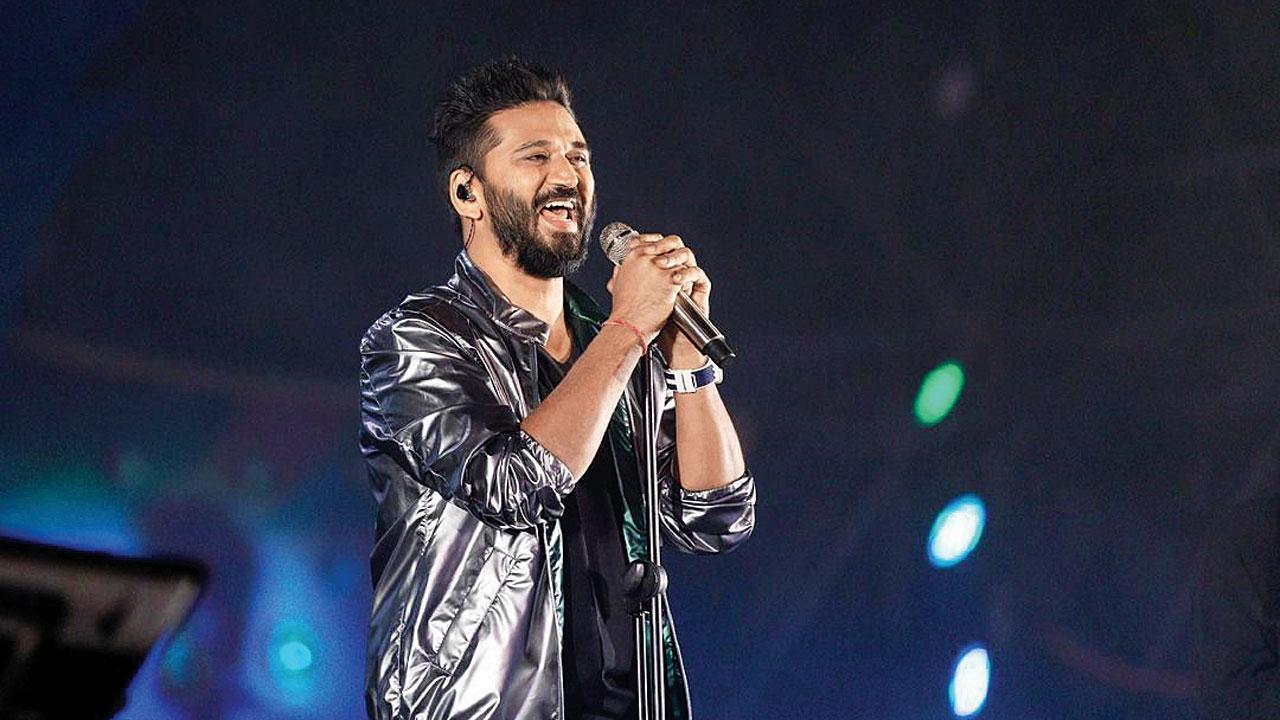
Debarati S Sen (BOMBAY TIMES; October 14, 2023)
In 2009, Amit Trivedi’s soundtrack of Dev D changed the way Hindi film music sounded. Over the years, his willingness to experiment with diverse musical landscapes, blending of traditional elements with contemporary sounds, resonated with music lovers and his songs like Iktara (Wake Up Sid), London Thumakda and Kinare (Queen) to the electrifying beats of tracks from Udta Punjab gave Indian cinema a refreshing musical identity.
In a candid conversation with the musician at his Andheri studio, we discussed his love for freedom as a music composer, how he works multiple mediums whether it's films, OTT or the independent space, and more. Excerpts from our interview…
Mostly, all your film work has been complete albums. But there are many that have three to four composers working on one single film. Did you consciously take a stand against such albums?
Yes, I have said a no to such work. I won’t do film albums that have more than one composer. I feel bad for composers who do that because the public will not know ki kiska gaana kya hai and so your identity will be lost. In the long run, no one will remember. But if it is an individual composer then people would know and recall far more easily. For example, if it's Pathaan, we all know it is Vishal-Shekhar.
Did you ever have to give up your creative freedom for others? For the director or producer of the film?
That keeps happening. I won’t take names but when my fans feel ‘this song isn’t an Amit Trivedi one’, those are the times when I have faced this interference! In those songs mujhe creative freedom nahi diya gaya tha. Curb kartein rahein. Yeh mat karo, woah karo etc. And that is when the result is like that. Whenever I have not had any interference, those tracks and albums have worked extremely well like a Dev D, Udaan, Lootera, Kai Po Che, Queen. In Udta Punjab thoda bahut interference tha, but not much. I did the music for Qala in just three days. I didn’t let anyone interfere at all, kisi ko mauka hi nahi diya! That’s my learning after all these years in this industry!
You’d completed the first six songs of the Dev D album in six months, and it was released without any changes. Has that ever happened in recent years?
It happened with Qala and Jubilee. It is such a pleasure to work with filmmakers like these. They just let you be. They give you that freedom to create. Their ideas and visions are really great. What they want to say in their films is also unique and working on such projects is an experience. To be a part of that vision and getting to create the way you want to and the freedom to bring in what you can in that space, is magic. But if you are chasing a certain parameter of success, whether it is commercial or there is a certain mindset, it is a different ballgame, and I don’t operate from that level.
It’s been 15 years as a composer in the Hindi film music industry. Would you say your journey has been more about ups than downs?
Life is like that – ups and downs toh rehta hi hai. Mostly ups and very little downs so far, and it has been a beautiful journey and I am immensely grateful for that. Jo bhi bura hona hai woh toh hota hi hai. But then, I have a habit of rubbing things off and moving forward constantly. I never look back. Never have. Always aage chalo. Keep working. I never look at the lows in life.
10 Years of Lootera: To step into the character, Ranveer Singh gave up coffee throughout the shooting-Sonakshi Sinha
8:38 AM
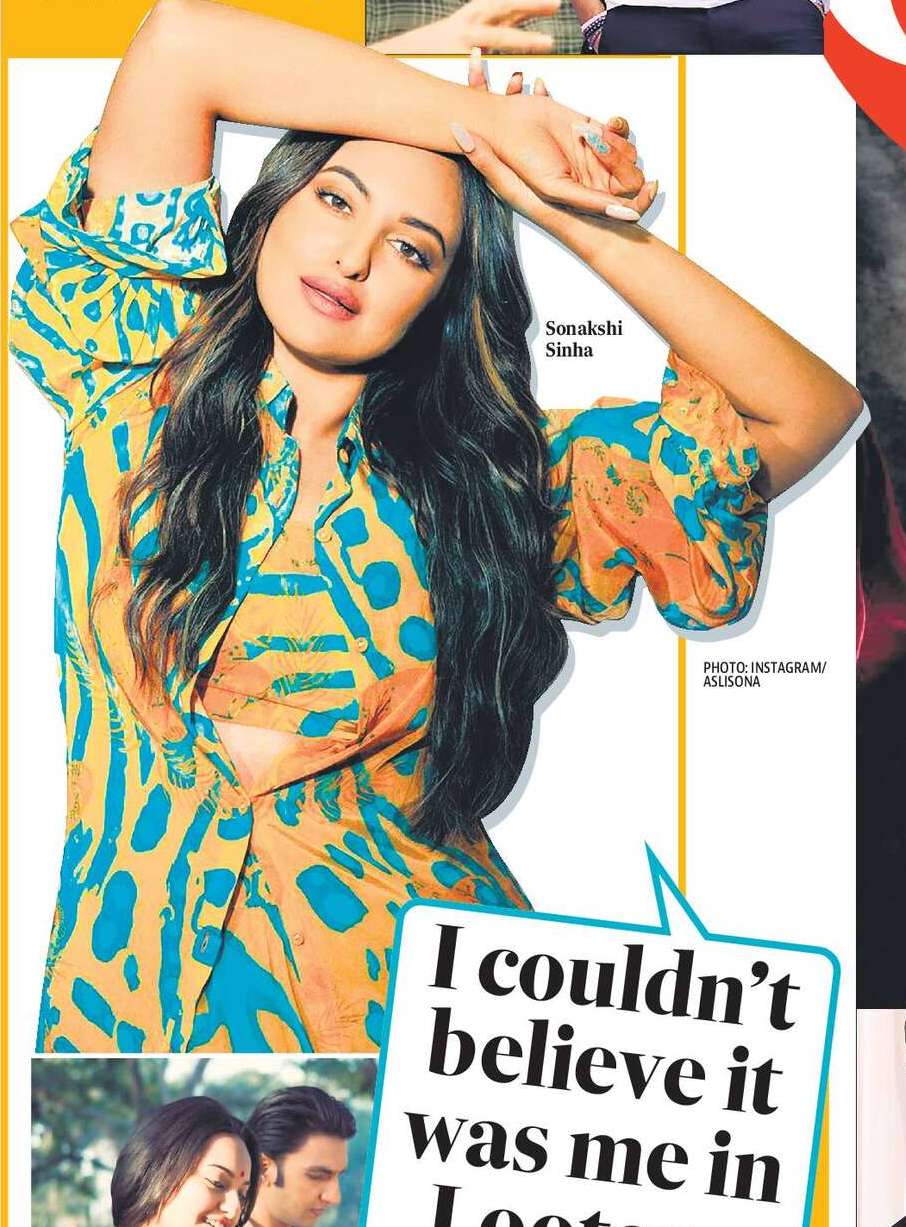
Rishabh Suri (HINDUSTAN TIMES; July 5, 2023)
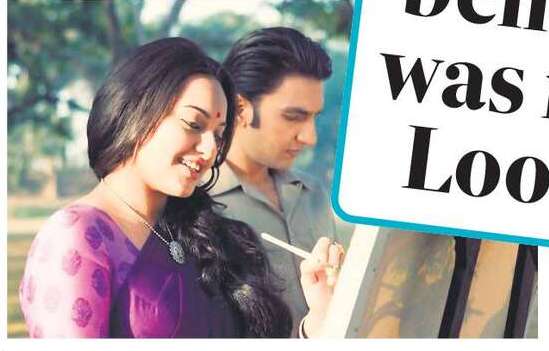
Having done commercial potboilers such as Dabangg (2010) and Rowdy Rathore (2012), being part of a period film like Lootera (2013) changed Sonakshi Sinha’s career trajectory. She managed to prove her versatility as an actor with her portrayal. As the film turns 10 today, Sinha recollects the first time she saw herself in Lootera.
“When I watched the film for the first time, I was like, ‘Who is this person?’ I couldn’t believe it was me. Getting to know my character, Paakhi, was surreal. I was proud of myself and what we had made,” says the 36-year-old.
Directed by Vikramaditya Motwane, the film, co-starring Ranveer Singh, saw Sinha play an ailing woman. She says she didn’t gel with Motwane initially: “We come from different schools of cinema. He used to be like, ‘Get into the character and feel the emotion’, while I was like, ‘What is he saying?’ We did have friction initially. I asked him one day, ‘How can Paakhi crack jokes in one moment and cough up blood, crying in the next? So he said, ‘Whatever you are doing is working for me’. That was our moment of reconciliation.”
RANVEER GAVE UP COFFEE
“It was lovely to see Ranveer like that. To step into the shoes of his character, he gave up coffee throughout the shooting of the film. He said, ‘I don’t need the energy’. He is a hyperactive person. For him, to do whatever he did, was more of a challenge,” says Sinha.
13 SAREES, ONE SONG
“For Sawaar Loon, I changed 13 sarees in a day because the entire song had montages,” she says.
10 Years of Lootera: Amit Trivedi, Amitabh Bhattacharya share fascinating trivia
8:36 AM
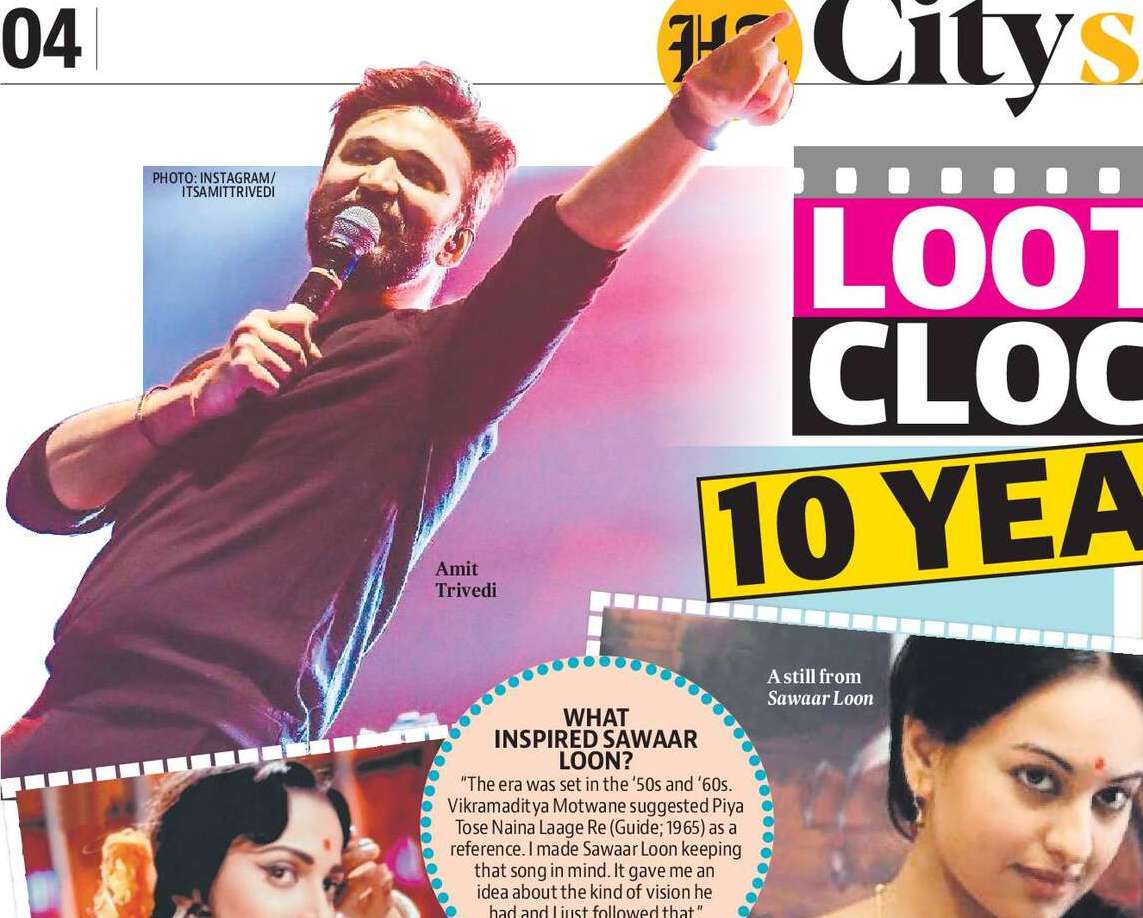
Soumya Vajpayee (HINDUSTAN TIMES; July 5, 2023)
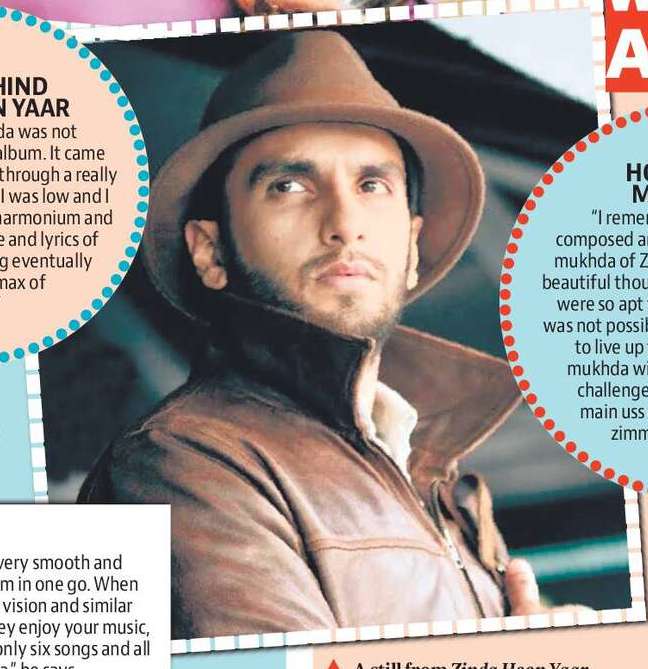
Besides winning awards, the music of Lootera (2013) also earned a lot of respect from music aficionados. So much so that the six-track album continues to feature on their playlists. For composer Amit Trivedi, the experience of working on the songs of the Ranveer Singh and Sonakshi Sinha-starrer “was amazing”.
He shares, “I always enjoy working with Vikramaditya Motwane (director), as he always has clarity on the music he wants in his films. He gave me the script of Lootera and there was so much clarity in the way things were described that I knew exactly how to go about it. Working with Amitabh Bhattacharya as the lyricist and some amazing singers was a great experience too.”
WHAT INSPIRED SAWAAR LOON?
“The era was set in the ‘50s and ‘60s. Vikramaditya Motwane suggested Piya Tose Naina Laage Re (Guide; 1965) as a reference. I made Sawaar Loon keeping that song in mind. It gave me an idea about the kind of vision he had and I just followed that,” says Trivedi.
WHAT A SMOOTH RIDE!
“Working on the songs of Lootera was very smooth and we managed to come up with all of them in one go. When you work with people who have a clear vision and similar wavelengths, things get easy. When they enjoy your music, you get the freedom to create. I made only six songs and all of them made it to the album of Lootera,” he says.
THE STORY BEHIND ZINDA HOON YAAR
Trivedi recalls, “Zinda was not supposed to be in the album. It came to me when I was going through a really tough time, personally. I was low and I just sat down with the harmonium and came up with the tune and lyrics of the mukhda. The song eventually became the climax of the film.”
-------------------------------------
Soumya Vajpayee (HINDUSTAN TIMES; July 5, 2023)
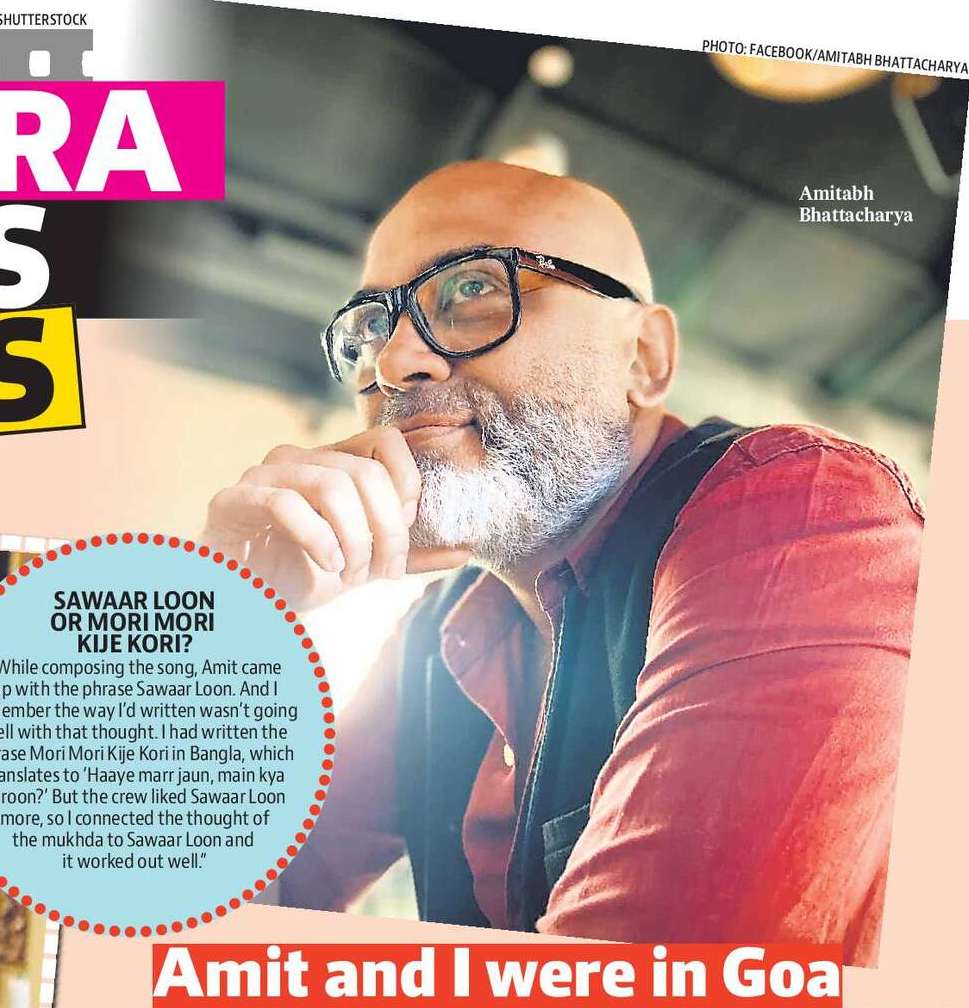
I had come to Mumbai with the vision of becoming a singer and I became a lyricist by chance. I had just found a footing as a lyricist in the industry around the time Lootera happened, so it was a special project,” says lyricist Amitabh Bhattacharya, who penned all the songs of the film. Teaming up with composer Amit Trivedi, his collaborator on many projects even before Lootera, was a memorable experience for the writer.
“Amit and I make a good team. Since we had worked on projects like Aamir (2008), Dev D (2009) and Udaan (2010) by then, we had a great tuning. He would share the melody with me and I would write the lyrics after listening to the track. All the songs in the film were the first drafts I wrote,” he says, adding, “Working on a classic like Lootera while I was also writing songs for a commercial masala film like Yeh Jawaani Hai Deewani (2013) was interesting. As an artiste, I enjoyed the variety.”
ZINDA HOON YAAR IS MEMORABLE
“I remember Amit had already composed and written the lyrics for the mukhda of Zinda Hoon Yaar and it was a beautiful thought. I realized that the words were so apt that rewriting the mukhda was not possible. For me, the responsibility to live up to the benchmark of the mukhda with impactful antras was a challenge. But mujhe khushi hai ki main uss gaane ko accha likhne ki zimmedari nibha paaya,” he recalls.
SHIKAYATEIN FOREVER
Bhattacharya reminisces, “My favourite track from the album is Shikayatein. There’s something in the melody. Amit and I were in Goa when he shared the melody with me and I wrote the song. There are some songs that you write and feel a sense of relief and catharsis. Shikayatein is that song for me. With (singer) Mohan Kannan’s voice, the song went to another level.”
SAWAAR LOON OR MORI MORI KIJE KORI?
“While composing the song, Amit came up with the phrase Sawaar Loon. And I remember the way I’d written wasn’t going well with that thought. I had written the phrase Mori Mori Kije Kori in Bangla, which translates to ‘Haaye marr jaun, main kya karoon?’ But the crew liked Sawaar Loon more, so I connected the thought of the mukhda to Sawaar Loon and it worked out well.”
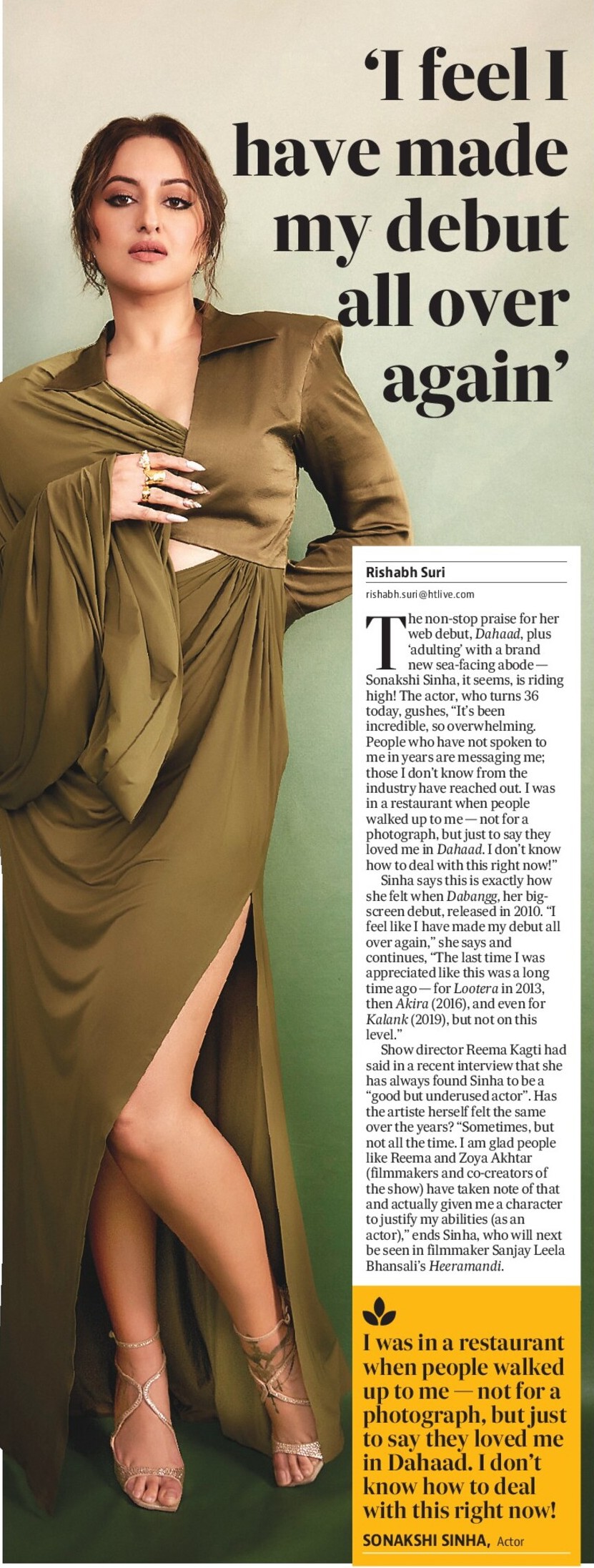
I feel I have made my debut all over again-Sonakshi Sinha
3:34 PM
Rishabh Suri (HINDUSTAN TIMES; June 2, 2023)
The non-stop praise for her web debut, Dahaad, plus ‘adulting’ with a brand new sea-facing abode — Sonakshi Sinha, it seems, is riding high! The actor, who turns 36 today, gushes, “It’s been incredible, so overwhelming. People who have not spoken to me in years are messaging me; those I don’t know from the industry have reached out. I was in a restaurant when people walked up to me — not for a photograph, but just to say they loved me in Dahaad. I don’t know how to deal with this right now!”
Sinha says this is exactly how she felt when Dabangg, her big- screen debut, released in 2010. “I feel like I have made my debut all over again,” she says and continues, “The last time I was appreciated like this was a long time ago — for Lootera in 2013, then Akira (2016), and even for Kalank (2019), but not on this level.”
Show director Reema Kagti had said in a recent interview that she has always found Sinha to be a “good but underused actor”. Has the artiste herself felt the same over the years? “Sometimes, but not all the time. I am glad people like Reema and Zoya Akhtar (filmmakers and co-creators of the show) have taken note of that and actually given me a character to justify my abilities (as an actor),” ends Sinha, who will next be seen in filmmaker Sanjay Leela Bhansali’s Heeramandi.
People never questioned my abilities as an actor-Sonakshi Sinha
10:19 PM

Sonakshi Sinha doesn’t want to take on repetitive, insignificant roles anymore; says she’s equipped enough to headline films now
Rishabh Suri (HINDUSTAN TIMES; February 19, 2022)
Actor Sonakshi Sinha likes how things have been in her career so far. But going forward, she’d like something to change — she doesn’t want to settle for small parts: “I don’t want to be repetitive or do characters that aren’t strong.” So, is she referring to the damsel in distress kind of roles? “Not really. If I have to play that at some point, it’s my job to portray a character. But, if I get to play a serial killer, I won’t say I can’t do it. As an actor, you have to play different roles,” she says.
The 34-year-old, who will be seen in films such as Double XL and Kakuda, says she doesn’t find the ‘commercial heroine’ image a hindrance in being considered for more meaningful roles.
“I have never strategised anything, or thought that at this point, I will only do such films. I did a film like Lootera (2013) at the beginning of my career, right in the middle of those commercial films. From the beginning, people never questioned my abilities as an actor, so it wasn’t difficult for them to imagine me in certain kinds of roles,” says Sinha.
She feels that the way he audience accepted her in films such as Dabangg (2010) and Rowdy Rathore (2012) made the makers believe that she could headline films, too: “Since I did films like that, I got to do movies such as Double XL. I got the power and courage to headline films.”
I was told to my face that I’m not quintessential hero material-Vikrant Massey
9:15 AM

Renuka Vyavahare (BOMBAY TIMES; August 14, 2020)
Born and raised in Mumbai (contrary to popular perception, he isn’t from Nagpur), Vikrant Massey was noticed in the popular TV show, Balika Vadhu. He made a foray into cinema with Lootera (2013) and though he’s had his share of struggles, he has made his presence felt in noted films like Dil Dhadakne Do (2015), A Death In The Gunj (2016), Lipstick Under My Burkha (2016) and Chhapaak (2020). In a conversation with BT, he spoke about the insider-outsider debate, nepotism, stereotypes and film elitism — why it is difficult for TV actors to get a breakthrough in films.
Vikrant said, “Sabke struggles alag hote hain, but we grow up in a culture where films are perceived as idealistic. We idolise filmmakers and what’s it like to be a film star. All those notions are destroyed when you try become a movie actor.”
‘TV ACTORS KO FILMON MEIN BADE PARTS NAHI MILTE’
Despite being a Mumbaikar, when Vikrant switched from TV to films, he had to swallow unsavoury comments. He revealed, “TV actors ko filmon mein bade parts nahi milte. Do-teen scenes ke role milte hai, yeh perception ban gaya hai and it’s true to an extent. People think since you’re a household name, you lack fresh appeal. Why does it take someone’s (Sushant Singh Rajput) death for us to be kinder?”
“I was told to my face I am not quintessential hero material. I am not the good-looking guy with biceps. Yeh sab sunke aapki himmat toot jaati hai. These comments weren’t positive and I took it personally. I was angry, but I used that anger to prove these people wrong. As an actor, I had over 10 years of experience in TV, but that wasn’t counted. You have to start from scratch and you have to adapt as these two are different mediums with different priorities,” said Vikrant.
‘STAR KIDS HAVE ACCESS TO INFORMATION THAT WE DON’T’
The actor believes that merit is given credibility today, but those who belong to film families are bound to have an edge. He elaborated, “Unless you are a good actor, you won’t survive. As far as the disparity is concerned, it is tougher for outsiders. Star kids have access to information that we don’t. Unko dhoop mein bithaake nahi rakhte, unko auditions nahi dene padte. Also, the respect you get on set is directly proportional to the length of your role and how important you are to them. I was lucky to get a Lootera. To be able to work with Ranveer Singh, Anurag Kashyap and Vikramaditya Motwane was a big deal. However, I wasn’t given the script of Lootera beforehand, because I was playing the supporting part. When asked, I was told, ‘We can’t give it to you now’. Ranveer got the script in advance and this is common for most films. Bade studios aapko script nahi denge, unless you play the hero. Heroes are treated differently. Things have changed for me now since I am considered as a breakout star. I get scripts today, but hierarchical system hai. If a person plays a servant in a film, he is actually treated like one on set, unless he is an NSD alumnus or leaves in a BMW. Then even the ADs treat you differently.”
Vikrant also blames the audience, media and actors for not breaking the chain. “Log utne hi important hai, jitna unko importance diya jata hai. Are the big production houses the only ones making films? Why is their validation so important to you? A leading production house had refused to cast me as the lead, because I played a smaller role in Lootera. They politely declined and said they admired my work nonetheless. I was told, ‘Hum aapko chhote roles hi de sakte hai.’ People are not obliged to give you the part you want. Life for everyone across the world is unfair. You need to grow a thick skin. The nepotism debate is being blown out of proportion. It exists, but it is not impenetrable.”
‘I CANNOT STRESS ENOUGH ON THE IMPORTANCE OF HAVING THE RIGHT PEOPLE AROUND’
For aspiring actors, clarity of thought is important. Vikrant said, “When I saw Irrfan’s performance in Maqbool (2004), I decided that’s the kind of work I want to do. I have grown up admiring actors like Balraj Sahni, Naseeruddin Shah, and now, Rajkummar Rao. Some actors want to be like Hrithik Roshan, while some aspire to be like Irrfan sahab. You need to know what you want. Having family and friends around, who you can rely on, helps a great deal. They make sure you don’t get carried away. I cannot stress enough on the importance of having the right people around.”
‘IT’S GOOD THAT WE ARE NOW FIGHTING FOR EQUAL OPPORTUNITIES’
“If nepotism exists, free and fair opportunities also exist. You have to be consistent and march on thinking accha kaam karna hai. After 16 years in this profession, I am still three-four years away from being in a position to decide the kind of work I want to do. There is no such thing as overnight success. You are in it for the long haul. It’s good that we are now fighting for equal opportunities and transparency, because genuine talent deserves those chances,” the actor concluded.

My work was recognised, but I wasn’t-Shilpa Rao
8:27 AM

Nikita Deb (HINDUSTAN TIMES; July 9, 2020)
Singer Shilpa Rao can be termed as one of the most successful singers in Bollywood right now. So, when conversations around mental health of people in showbiz caught fire recently, it came as a shock when she revealed what a tough time she went through in 2013, mentally. The singer says that in developing countries like India, the common man is always more concerned about the “basic necessities” and hence, one’s mental health always takes a backseat.
“I know for a fact that a lot of my friends, who are not from the music industry, face mental health problems. This is common among people across the world, and it is not a career specific problem. All of us are going through it. A lot of us have our ways and means to deal with it, but some don’t,” says Rao, while adding that in 2013, after the release of her hit song Manmarziyan in Lootera, she reached a point where she could see a “dead end”.
“I was doing a lot of work, and it was getting the kind of recognition that it deserved from the audiences, but I wasn’t achieving the stature that I should have. It used to really hurt when a lot of cover singers who have gained popularity singing my songs, were more popular than me. After Manmarziyaan, I completely went into a shell, and I gave up,” adds Rao.
The singer, who is known to not be very visible in the media, says that at that point, she started going to only recording studios and live gigs because that’s where “she would thrive”. “I was raised in an environment where I knew I had to sing well and that’s how I function, not by marketing or publicity. I’m a little old school but that hasn’t changed even now. I still feel nervous going for a recording,” she says.
Hence, Rao believes that it is important for everyone to see a therapist. “We all have friends and well wishers but when we have a therapist, we have a person who we know will be there whenever we need to talk. If you have a fever, you won’t consult your friends right? And to be brutally honest, when you cut your finger, the bruise is visible, but the emotional trauma that people go through leaves deeper cuts which cannot be seen,” says Rao, who adds that she healed herself by travelling a lot.
“In 2013, I started to travel a lot because I never spoke to anybody about my issues. I met a lot of new people, who had nothing to do with my profession, and with whom, I just had conversations. It changed my outlook towards life. However, even though travelling helped me, it may not necessarily help others,” she concludes.
I was nominated for a jury award, not called to event-Vikrant Massey
8:27 AM

Kavita Awaasthi (HINDUSTAN TIMES; July 4, 2020)
“When I made the transition from TV to films, I knew I would have my fair share of struggles but I am lucky things were easier than expected,” says actor Vikrant Massey, who debuted in Lootera (2013) and made a mark in films.
“When you start off, beggars can’t be choosers and back then, TV actors weren’t given much importance. I was told ‘TV actors ka kuch nahin hoga films mein’. In fact, I auditioned for Lootera and was rejected. Later, the actor who was signed on to play the friend in the film couldn’t do it and the makers called me 20 days before the shoot. So, that was sheer luck. A career in Bollywood is a mix of luck, choices and talent. Instead of saying ‘Mauka nahin milta’, one should turn every challenge into an opportunity. I am thankful to all makers who saw potential in me and cast me in substantial roles,” says Massey, recently seen with Deepika Padukone in Chhapaak.
Weighing in on the debate over nepotism, Massey says, “Nepotism exists everywhere. One might get a few chances, but you have to prove yourself. There are a number of insiders who didn’t get film offers after a few of their films flopped. Life is all about choices. I hoped to break the mould and get noticed in films, which is why I chose to be part of good films and work with talented makers, even if my roles were small. Being an outsider, you have no one to guide you, so you have to rely on your wits. There are no second chances.”
Ask him about his recent tweet where he asked when will the system be fair, and he says, “That was about the hierarchical system in the industry. Making a film with a popular star is alright as film-making is a business, after all. But in the tweet, I was saying the other actors should have been invited as well. It has happened to me too. I was nominated for the Best Actor Jury category in a popular awards function, but wasn’t invited to the event. So, should I be hurt by that? No. It doesn’t matter to me kyunki system hi aisa hai. I only focus on work.”
The actor is also grateful to filmmakers he worked with as they “didn’t typecast” him and the writers who wrote good roles for him. “I am also grateful to the audiences who loved me on TV for 10 years. Today, I know I want to be part of good content — be it a big film, small film or OTT. Today, the biggest stars are seen on OTT, which wasn’t favoured a few years ago. Times are changing and so is cinema. People appreciate relatable performances,” he adds.
If I have to be somebody’s friend to get an award, I am sorry I can’t do that-Sonakshi Sinha
8:20 AM

Radhika Bhirani (HINDUSTAN TIMES; February 27, 2020)
Sonakshi Sinha has never kept ‘khamosh’ when it comes to speaking her mind. In a recent tweet, which came as a reaction to reports that she is the only Indian female actor to enter the ₹1,500 crore club in the past decade, the actor shared how she kept her head held high and realised that “lobbying wasn’t needed, awards didn’t matter, fake friendships were beneath me and that there is no substitute for hard work”.
In her 10-year Bollywood journey, which started with a bang with Dabangg, Sonakshi has featured in over 20 films, apart from many special numbers in movies. She says she is aware of how hard she has worked, mostly uninterrupted, and that’s what matters. “Friendships come and go over here. Lobbying is something I don’t even think of. I’ve never gone to a producer and said ‘please give me work’. I’ve been truly fortunate that good work has always come to me.... My work ethic, the kind of hard work I put in, my principles... that’s what I think will take one forward. I’m happy doing that, keeping my head down and just concentrating on my job,” the actor tells us.
On the awards front, Sonakshi had bagged almost every big debutante honour for Dabangg. But she did feel “snubbed and underestimated” sometimes. But that only inspires the 32-year-old to do even better. “The critics are harsh on me because I come from a commercial school of films, and they don’t take too kindly to them. My best is yet to come. I want to think like that with every project that I do, but that doesn’t mean there haven’t been performances that have been loved by the audiences and critics alike,” she says.
Sonakshi points out that her work in films such as Lootera (2013), Akira (2016), Noor (2017) and Kalank (2019), got a thumbs up from critics. “Praise does come your way, but unless you are friends with the higher-ups in the publications or at the awards, you won’t be featured in the nominations. You have to maintain a certain friendship with them, which is something I find stupid. I want to let my work speak for itself. And honestly, people like Aamir (Khan) and Kangana (Ranaut) have proved that you don’t have to get awards, especially to be called a great actor.”
But it’s not something that bothers her. “If I have to be somebody’s friend to get an award, I am sorry I can’t do that. But yes, I am very happy with the kind of response I get from the audiences,” she says.
Sonakshi recounts how at one award show, she was nominated for Lootera, and was confident about winning, but it went to another actor. “It felt strange... When I asked [them] how come you thought that the critics’ award should also go to the same actress who got popular choice award, they said that she had a better box office year,” Sonakshi says.
On a lighter note, she says, “If one goes by this logic, I should have won the award for each one of my ₹100 crore films that had released. That’s when I completely lost faith in any of this business and just decided to do my work and do it well.”
I thought I’d be yelled at for hitting the film’s hero-Vikrant Massey on his first ever shot in debut film
7:55 AM

As told to Avinash Lohana (MUMBAI MIRROR; February 7, 2020)
My first shot was for the TV show Kahaan Hoon Main in 2004. We were filming in Madh Island and 10-15 minutes into the shoot, the director yelled at me as I struggled to perform. I was just 17 at the time and burst into tears. The supervising producer comforted me and told me to get thick-skinned if I wanted to continue working in the industry. That show didn’t see the light of the day, but I did other TV shows for 10 years before shooting for my first Hindi film, Lootera, which featured Ranveer Singh and Sonakshi Sinha in the lead, and was directed by Vikramaditya Motwane.
My first scene was shot in the city’s Film City studio with Ranveer. In the sequence, while we are staying at Pakhi’s (Sonakshi) house, Ranveer comes to my room and shakes me awake. Jolted, I pull out a gun from underneath my pillow and aim it at him. Unfortunately, when I did that, the gun’s nozzle hit Ranveer’s nose so hard, I actually heard the impact. I thought I’d be yelled at for hitting the film’s hero and be fired that very minute. Thankfully, nothing like that happened. Ranveer didn’t say a word.
On the same day, I shot for a confrontational scene with him. Sonakshi had finished with her portions for the day but stayed back to watch my scenes. She was very encouraging and complimented me on my acting skills.
Lootera was an important film for me as it was directed by Vikram, whose first film, Udaan, was critically-acclaimed. The fact that I got to do the film with two big Hindi film actors was like the icing on the cake.
Working with Barun Chanda and Adil Hussain was a phenomenal experience as well. When we were shooting in Dalhousie, Adil da and I stayed in different hotels and on our days off, I would walk for 10 minutes to get to his room, where he would light a cigarette and read aloud chapters from the book he was reading. I would just sit there and quietly listen to him. Sometimes, we would talk about the nuances of acting, human psychology and about society in general. Just spending time with these actors and observing them at work helped me learn so much.
All of us got along well on that set. All through the filming I remember Vikram telling me, “less is more”. That advice has stayed with me all these years, and it’s not just about acting but life in general. I admit that I was quite nervous on my first day of the film, considering how big it was, but honestly, I feel that nervousness even today, before every shot. There is a ritual I follow before giving a shot, just for my own peace of mind. But I’d rather not talk about it as it is sacred.
Ranveer Singh and Ayushmann Khurrana have reinvented the male lead in Hindi cinema
8:09 AM

Jitesh Pillai (MUMBAI MIRROR; December 29, 2019)
It will be difficult to identify a theme that has dominated Hindi cinema in 2019. From biopics that revisited historical events and celebrated chest-thumping national pride to fictional accounts of underdogs who rose above their circumstances, this year’s blockbusters have broken many moulds. They have also brought to the fore actors who couldn’t be more unlike the typical Bollywood hero — beefy, bombastic and superheroesque in their abilities. Here are two actors who took the sensitive, everyman approach to their roles, and still came out on top:
Ayushman Khurrana
His onscreen avatars have endured sexual dysfunction, celebrated human foibles and shattered gender conventions. And this year, with back-to-back hits such as Article 15, Bala and Dream Girl, Khurrana is, without a doubt, Bollywood’s man du jour. So what exactly makes him tick?
Khurrana has proven — with unfailing regularity — his ability to slip into, and completely immerse himself in, characters based in both metros and mofussil towns. His honest and impactful portrayals have given the Hindi film hero of 2019 a vulnerable, self-deprecating, even endearing edge. He may not be a pioneer in channeling a male lead riddled with flaws or grappling with sticky situations, but he is certainly the most convincing. And this is perhaps what makes him more relatable and accessible to a larger audience. The fact that his real life story is also the stuff of dreams — Khurrana was plucked from a reality show that he later went on to host, and then moved onto Bollywood — makes him the person every front-bencher aspires to become.
Ranveer Singh
His recent films have shown that Singh can morph as seamlessly into a diverse set of characters, as he can, in real life, evolve from being the boy next door to an audacious clotheshorse. From Khilji in Padmaavat to Murad in Gully Boy, Singh internalises his roles to an extent that one can barely distinguish him from the part he’s playing. We first got a glimpse of his thaharaav in Lootera, a beautifully-underplayed performance that slipped through the cracks. Then, as Murad, a freestyle rapper from a Mumbai slum, Singh imbues his role with the same heartbreaking quality that also wins hearts.
Singh’s recent, elaborately-experimental red carpet turns have evoked both shock and surprise — besides generating unending clickbait-worthy material. He can sometimes appear as a stylist’s worst nightmare. You may roll your eyes or shrug in bewilderment at his bizarre off-screen looks, but you just can’t ignore Ranveer Singh. He’s made sure of that. It’s this devil-may-care attitude that has made Singh an irreverent yet definitive youth icon. And going by his immaculate portrayal of former Indian skipper Kapil Dev in his next '83, we’re sure Singh’s going to knock it out of the park in 2020 as well.

How Bollywood has infused the spirit of Durga Puja in films
8:16 AM

Rachana Dubey (BOMBY TIMES; October 8, 2019)
Call it Vijaya Dashami, Bijoya, or Dussehra — the festival is celebrated with fervour in most parts of India. The day underlines the victory of good over evil — a theme that has been translated on celluloid often by Bollywood filmmakers.
For decades, filmmakers have used Durga Pujo, Navratri and Dussehra celebrations as motifs or as backdrops for key events in their narratives. Visuals from the festive season have often lent themselves for the creation of dance numbers, memorable scenes and sequences, replete with symbolism.
Sujoy Ghosh’s Kahaani (2012) features one of the most well-recalled, and what is considered to be one of the best amalgamations of Durga Puja into a story. The film unfolds in Kolkata, which is gearing up for the pujo, and culminates on dashami (last day of Durga puja), drawing parallels between the festival’s message — the victory of good over evil — and the story, as Bidya Bagchi (Vidya Balan) defeats her husband’s murderer.
 Bring this up and Sujoy says, “The thought behind the sequence was to highlight the strength and will of a mother. I’m a huge fan of Maa Durga, because in this form of hers, she’s always with her children. For Bengalis around the world, she’s a mother — we equate her to a human being. In Kahaani, I wanted to depict that Maa arrives once a year, she listens to you and solves your problems. We threaded in a lot of stuff. The build up-to the story is pretty much like the build-up to Bijoya. The climax blended beautifully with the culmination of the pujos.”
Pradeep Sarkar’s Parineeta (2005), adapted from the eponymous Bengali novel by Sarat Chandra Chattopadhyay, uses Durga Puja as a backdrop on two crucial occasions — once to show the love and care Lolita (Vidya Balan) has for Shekhar (Saif Ali Khan) and then to show Shekhar’s jealousy towards Lolita’s friendship with Girish (Sanjay Dutt). The film also uses the traditional dhunuchi dance as a tool for the narrative.
 The filmmaker shares, “Durga Puja has often been used as a backdrop in films or as a part of the story. It only makes sense to include the festivities when there is some meaning to it. During pujo, you meet people and interact with them, and relationships also blossom. That is how we also used it in the film.”
Shoojit Sircar’s Vicky Donor (2012) briefly takes the audience pandal-hopping during Durga Puja in Delhi, to show the growing proximity between Vicky (Ayushmann Khurrana) and Ashima (Yami Gautam). The Ranveer Singh and Arjun Kapoor-starrer, Gunday (2014), also saw the two actors sway to beats of dhols against the backdrop of Durga puja in the song Jashn-e-Ishqa.

FILMMAKERS SPIN THE NARRATIVE AROUND THE FESTIVAL
Sanjay Leela Bhansali’s screen adaptation of Sarat Chandra Chattopadhyay’s Devdas (2002) shows Paro (Aishwarya Rai Bachchan) and Chandramukhi (Madhuri Dixit-Nene) meeting and even dancing together. Paro is seen at Chandramukhi’s kotha, asking for mitti of her aangan to make an idol of Maa Durga for her baadi. This marks the beginning of a crucial turn in the story when Paro is forbidden from stepping out of her house.
The story of Akshay Kumar’s Bhool Bhulaiyaa (2007) peaks in the thick of Navratri in a village in North India. The film’s climax, which sets off on ashtami, underlining the theme of good winning over evil, shows Vidya Balan as the revengeful dancer Monjulika, who is seeking protishodh (revenge) for her lover’s death. Raveena Tandon played a victim of marital violence in Kalpana Lajmi’s Daman (2001). Her character Durga vanquishes her patriarchal tormentor on dashami, freeing herself from bondage.
 Vikramaditya Motwane’s Lootera (2013) opens in a traditional zamindar’s baadi celebrating Durga Puja. Sonakshi Sinha, as Paakhi, is seen enjoying a jatra with her friend in the house. Here, the celebration is more of a backdrop to show how festivals were seen as symbols of power and prestige in society those days. Elaborating on it, writer Bhavani Iyer, who wrote the screenplay, shares, “I don’t think one really sets out to put a festival into the story. A lot depends on the milieu or the household you set the story in. Maa embodies vengeance and righteous anger, and if that fits into a story, then, Durga Puja could become an ideal motif. We used pujo to define the Bengal of the 1960s when zamindari was breathing its last. The jatra that Sonakshi is watching in the film, depicts her family’s power and stronghold in a fast-changing society. It was metaphoric.”
In Kurukshetra (2000), Sanjay Dutt, who plays an honest cop, is seen wiping out evil politicians, while Dussehra firecrackers drown out the sound of gun-shots, symbolising the defeat of modern-day Raavans. Ram Leela, which is an integral part of Navratri celebrations, was also used effectively in Rakeysh Omprakash Mehra’s Delhi 6 (2009). While depicting the glorious celebrations at Delhi’s Ramleela Maidan, the narrative also delves into frictions within men from the neighbourhood.
 Ashutosh Gowariker’s Swades (2004) also featured a Ramleela performance by debutant Gayatri Joshi. Here, it was a philosophical discourse — a conversation between Raavan and Sita that tries to highlight the difference between the evil and good. In a face-off sequence in Rajkumar Santoshi’s Lajja (2001), Madhuri Dixit-Nene, while playing Sita, refuses to go through an agnipariksha to prove her chastity.
More recently, Akshay Kumar, revealing his upcoming Laxmmi Bomb avatar, put out a picture with the backdrop of Maa Durga, embodying power and anger. Talking about the reducing number of instances of films using the festival as a motif, writer Bhavani Iyer says, “Kahaani was one of those films that integrated the festival so beautifully into the story. Even Sanjay Leela Bhansali’s ritualistic semblance of the celebrations in Devdas was a sight. Storytelling, in the last few years, has changed. The pujas are extravagant celebrations as opposed to the lives that we lead today, which are so clinical. We’ve also begun to write our stories in a more realistic manner. That doesn’t always allow us to merge festivals and rituals with the stories.”
IN THE BYGONE ERA...
Amitabh Bachchan and Rakhee’s 1981 Bengali-Hindi bilingual Anushandhan, made in Hindi as Barsaat Ki Ek Raat, used Durga as the metaphor of triumph. As a police officer, Amitabh is seen investigating an evil father-son duo. He is even seen playing drums during Durga pujo and beating Amjad Khan at a competition.
On the other hand, is Shakti Samanta’s Amar Prem (1972), featuring Rajesh Khanna, Vinod Mehra and Sharmila Tagore. The film had a brief, but an extremely powerful depiction of Durga pujo, which appears at the end of the film. While Nandu (Vinod) takes Pushpa (Sharmila), his foster mother, home, we see protimas of Maa Durga being taken to pandals, hinting at mahalaya. The symbolic reference to Maa’s homecoming was hard for anyone to miss.
 Apart from Hindi films, Bengali movies have evidently underlined the spirit of Durga Pujas through their stories. Pather Panchali (1955), Devi (1960), Titas Ekti Nadir Naam (1973), Joi Baba Felunath (1979), Utsab (2000; right), Debipaksha (2004), Antarmahal (2005; below), Durga Sohay (2017), Bishorjan (2017) and Uma (2018) are some films where important parts of the narrative have been woven around the festival. Writer-director of the Bengali film, Mahalaya, Soumik Sen says, “The pujos have been used as motifs in Bengali cinema very often. Utsab, Joi Baba Felunath, Bishorjon (2017), Nayak (1966) and Bela Seshe (2015) are some examples of how differently and beautifully the festival has been merged into the story. In Hindi films, Kahaani and Devdas come to the mind when one thinks of weaving in the celebrations of Durga Pujo into the story. The difference lies in the way the festival has found its place across popular cultures from the West to the East.”
Filmmaker Ramkamal Mukherjee’s Season’s Greetings (2018), a homage to filmmaker Rituparno Ghosh, uses a motif of children visiting parents for the Durga Puja in his film — something Ghosh’s Utsab also employed. Ramkamal says, “The festival has different meanings and style of celebrations across the country. For Bengalis, it’s about Maa’s homecoming, symbolically depicted as a mother, daughter, wife or a sister in films. I’ve shown this in my film, too, to doff my hat to someone who crafted bold stories and broke all taboos — something that Maa also embodies.”

Besides dance, we would also help the kids in Kamathipura with their studies-Vikrant Massey
8:20 AM

As told to Avinash Lohana (MUMBAI MIRROR; July 23, 2019)
 I had joined the Summer Funk course at Shiamak Davar’s dance institute (left) when I was around 16. I had a blast and even won an award after being adjudged one of the best dancers. Unfortunately, the trophy broke while I was returning home from the performance hall. Now, that was heart-breaking. But I guess I must have caught the eye because soon after, I was selected for a special potential batch and started assisting an instructor by the name of Kunal.
We were given two options: we could teach at one of Shiamak’s commercial classes or as a part of an initiative, train the kids of sex workers in Kamathipura. I chose the latter and worked as an assistant instructor with them for almost a year. Besides dance, we would also help them with their studies. It was an incredible experience and life back then was hectic.
I remember I would catch the 5.50 am local train from Andheri to Grant Road. On the way, I would grab a samosa-pav and Rooh Afza-laced milk. The class would go on for an hour or so after which Kunal and I would go to an Irani bakery for breakfast. Then, I would leave for college while he would head towards a work commitment. In the evening, all the instructors would meet again for training. Our day never ended before 10 pm, sometimes even 11 pm. I was one of the youngest instructors, VJ Manish Anand was one of my colleagues, and I have fond memories of the time we spent with those kids.
I earned my first salary from a school assignment. Some people had flown down from New Zealand and were working on a catalogue. They needed a still photographer for their project and zeroed in on me. I was paid Rs 200 for those pictures and I used the money to play video games.
While I was dabbling in all this, I knew deep down that I wanted to be an actor but the plan was to get into it after completing my education. But when I was 17, I was working at the dance institute where I met this producer who offered me a TV show. It was Diwali night. I grabbed the offer and shot for it, waiting impatiently for the show to air. But because of some legal issues between the producers and the broadcasters, it was stuck. It finally released after six years in the 2 am slot. And my mother would stay awake to watch it.
However, while I was waiting for it, I worked in the same producer’s office for two-three months as an assistant in the creative team. I would conduct auditions. After that I tried but since no offers were coming my way, I joined a coffee shop in Juhu. I was the cleaner-cum-worker. The idea of starting work at such an early age was to support myself and my family in whatever way I could. I worked at the coffee shop for six to seven months. My job included monitoring the restrooms to see that they were cleaned every few hours. I had to check if the soap and the tissue paper were there, among other things. Sometimes my friends would show up and order a cappuccino, leaving behind a Rs 10-Rs 20 tip for me.
Occasionally, I would see people giving me the ‘look’, wondering why a well-spoken guy like me was working at a coffee shop. One of my seniors there knew I had acting aspirations and would encourage me a lot. He called me “sundar ladka” and believed good things were in store for me.
I hung on to my acting dream and eventually Dharam Veer (below) happened in 2008. This TV show was a fictional story of two princes set in 13th century Aryanagar with me playing the righteous and dutiful Dharam and Rajat Tokas as Veer. This was followed by Balika Vadhu a year later, followed by other TV shows like Baba Aiso Varr Dhoondo and Qubool Hai, followed by my big Bollywood break in Lootera in which I played Ranveer Singh’s friend. I have just wrapped up Meghna Gulzar’s Chhapaak with Deepika Padukone.

Before Lootera, the only films that were offered to me were masala entertainers-Sonakshi Sinha
8:12 AM

Crediting Lootera for changing the game for her, Sonakshi Sinha talks about how her upcoming films strike a balance between content and commerce
Sonil Dedhia (MID-DAY; July 22, 2019)
After Khandaani Shafakhana, Sonakshi Sinha has her plate full with Mission Mangal, Dabangg 3 and Bhuj: The Pride Of India. It is easy to see how her outings belong to diverse genres — if the August 15 release is a sci-fi drama, the Dabangg franchise is as mainstream as they come, and the Ajay Devgn-Sanjay Dutt starrer, a larger-than-life war offering. But before you think it's a conscious move, Sinha says that she is simply fortunate that filmmakers trust her with such varied characters.
"Over the years, filmmakers know the kind of roles that will suit me. When I started out, I was the quintessential Hindi film heroine, and the only films that were offered to me were masala entertainers. But after Lootera (2013), the perspective changed. My character in Bhuj... is a strong woman. Vicky Donor (2012) and Shubh Mangal Saavdhaan (2017) dealt with sex-related issues and were fantastic scripts. But for the first time, a story on a similar issue is being narrated in Khandaani Shafakhana from a female protagonist's point of view. So, it's an interesting time in my career."
The actor is upbeat about Mission Mangal as much for its subject as for it being a female-led project. "It celebrates the spirit of womanhood. It was a moment of pride to be associated with the film." She is quick to add that the third edition of Dabangg, which reunites her with Salman Khan, holds a special place in her life. "It is because of Salman Khan that I am here today. He never asked me if I wanted to do Dabangg; he just told me that I am doing it. After that, there was no looking back."
Dabangg 3 is homecoming for me. This franchise ensured that I never had to look back-Sonakshi Sinha
10:50 AM

Rachana Dubey (BOMBAY TIMES; February 19, 2019)
She’s at her fittest best right now, and the actress feels that she’s in a much better place to take risks with her professional choices. While her year began with Mungda’s redux version, the coming months have a lot more action in store.
With three films gearing up for release in 2019, one on the floors and Dabanng 3 ready to roll out in April, Sonakshi Sinha’s plate is full.
And that’s how she wants it to be. In a chat with BT, the actress talks about changing the priorities in her career, the kind of roles she savours and how dancing sets her free. Excerpts:
You’ve hardly been in Mumbai since December last year. Your social media pages are full of photographs of you holidaying abroad. You seem to be really living it up...
Yes, I am living out of a suitcase; I love travelling. Something or the other keeps coming up. My mother called me up the other day and said, ‘Beta, you’ve been gone for too long.’ I had to pacify her. There are times when I like to switch off and take off to some place. I love travelling with my friends. Besides that, my work has also taken me to some amazing places.
You said that you are in a happy space personally and professionally. So, what has been the change that brought about this state of mind?
Over the years, I have realised that you need to be in a space where you find happiness in smaller things. What’s the point waiting for something bigger to happen? It could be a phone call from a best friend or my director clapping after a great take. These small things that happen everyday have a greater capacity to make you happy if you allow them to do so. The search for happiness is never-ending, but you need to know where to stop.
You have a busy year at the movies in 2019. With three releases planned and an untitled film already on floors, there’s also Dabangg 3 waiting to start...
I am starting off (Dabangg 3) in April. It’s homecoming for me. This franchise ensured that I never had to look back. Salman Khan recently told me that I have to look like Rajjo from the first part. Someone who heard that in the gathering said, ‘She looks younger than that.’ So, on a serious note, I am physically in a great zone. I don’t have to work on my body. I just have pick up Rajjo from where I left. Then there’s Mission Mangal in which I am playing a scientist, there’s also Kalank… I mean I have a thali in front of me.
What are your favourites in this thali that you just spoke about?
I’m partial towards comedies, but I will savour a great role in any genre. If a role is challenging enough and exciting, I will do it. It just has to have something more than the usual for me to do. That’s the only box I need to tick.
Has that always been your criteria while choosing films?
No, it has changed over a period of time. For an actor, priorities are different at different times. Our cinema has changed a great deal in recent times, and a lot of different films are finding acceptance now. It feels great to take chances with roles. While every stage of my career has been fulfilling, I feel that my film choices have undergone a change. Every movie I did helped me reach a position where I can actually take more risks. It has strengthened me and taught me to shoulder an entire film.
So, you think you are in a better position to run risks today?
I would think so, but that is also because of the kind of films I have done in the past. Even back in the day, I ran a risk. When I was doing the so-called masala films, I decided to go ahead with Lootera (2013), though I was warned against it. Today, that is one of my most talked-about roles. So, I have always taken risks, but today, I can take even more. Commercial films have given me the cushioning to be able to take up films like Akira (2016) and Noor (2017). Today, irrespective of the kind of subject a filmmaker is exploring, they are not hesitant to reach out to me. They know I will fit into their world easily because I can switch between characters.
Lately, you seem to have developed a lot of love for dance. If you are not seen in a regular dance number in your film, you happily step in for a cameo in another. For example, your recent number, Mungda...
It’s something I enjoy. I don’t work too hard to get the steps right because I love to dance. It helps me to enjoy and express myself. In fact, dancing sets me free. I’m the happiest on the dance floor and I let that show. Maybe, that is what people appreciate. I feel free-spirited when I’m dancing.

I cleaned tables at a Versova cafe...the plan was to earn a fixed salary and maybe land a movie role-Vikrant Massey
7:16 AM

As told to Natasha Coutinho (MUMBAI MIRROR; December 10, 2018)
My first job for which I got paid came to me while I was studying at St Anthony’s High School in Versova. A group from a New Zealand health advisory board was in the city and had selected a few kids from our school to appear in a catalogue. I was one of them. The model playing my mother had to feed me syrup. After the shoot, I was paid Rs 200. I kept half of the money for myself and spent some of it on a tennis ball. My friends and I played with it till it was in tatters. I spent the rest of the money on chewing gum, chocolates and playing video games on the jukebox, which was popular back then.
My next job, which I started in the 10th standard during the summer holidays, was as a contemporary dancer in Shiamak Davar’s troupe. I was one of the youngest dancers in the senior group. I worked with them for two years.
Shiamak’s was the first job that came with a monthly salary. After a few performances I got into a special batch of 40, chosen from thousands of students, but in my mind I knew that acting was my true calling.
During that period, I took up another job, cleaning tables at a Versova cafe. I was a Yari Road boy and there was a coffee shop at every nook and corner of the neighbourhood where ‘filmi people’ would hang out. The plan was to earn a fixed salary and maybe land a movie role.
At the time, I didn’t even have Rs 30 to buy a cup of coffee for myself. The lady who hired me warned, “If anyone gets to know that I’ve hired an underage guy, I will not only be fired but put behind bars.” I assured her no one would know. We told people that I was three years older than my actual age.
During my time at Shiamak’s and the coffee shop, I also applied for a flight purser’s job at an airlines and cleared the initial rounds. I was at a stage in my life where I needed to make money to fund my education. I eventually did not take up the purser’s job because I had landed some acting projects on television by then.
 Then, I landed my first film, Vikramaditya Motwane’s Lootera, in 2013. It was a surreal experience for me, because I had seen his Udaan twice in the theatre. Clearing my first audition call was a high. I didn’t know how big my role was as I hadn’t got the script to read but I wanted to work with this man. And I have to admit that I learnt a lot from him. I believe, every project makes you what you are as you’re learning things along the way.
I’ve learnt the significance of earning my own bread because of my early exposure to work. To survive, we must adapt to the times we live in. It’s a constant trial-and-error process.
I love books because I have an overactive imagination-Sonam Kapoor
8:15 AM

Nayandeep Rakshit (DNA; September 19, 2018)
Sonam Kapoor aka Sonam K Ahuja is a voracious reader. While working, she finishes ‘one book a week’ and when on a holiday, she doubles up her speed, the actress laughingly tells us as when we meet her for a chat during the Jio MAMI Word to Screen Initiative this year. The effervescent stylista says, “It was a conscious call to join this event because I wanted to be part of a movement that promotes reading and authors, in association with films. After all, these are the two things that I love the most — books and movies.” In a brief chat, she talks about her favourite paperbacks and discusses why she encourages the idea of novels being adapted for the big screen...
‘NOBODY READS MUCH TODAY’
Sonam rues, “Today’s generation doesn’t read much. It’s important to enjoy a book every week as it improves one’s vocabulary and writing skills.”
‘STORIES NEED TO REACH PEOPLE WHO DON’T READ BOOKS’
Calling writers the ‘backbone of every film’, the Neerja actress adds, “I love books because I have an overactive imagination and I like to be in another world. I do feel people today don’t have too much of an imagination, so the stories need to reach out to audiences who aren’t avid readers. I read The Handmaid’s Tale many years ago in high school and today, it’s a successful TV show.”
BOOKS TO FILMS
The style maven recently asked her industry friends to name the tomes that they feel deserved a screen adaptation. But there’s an ongoing debate about how films adapted from books, don’t retain the same values. Sonam tells us, “The reason you decide to adapt a novel onto screen is because you want the story’s basic essence to be translated on celluloid. So, it shouldn’t be much different, but carry its soul and spirit forward in an authentic way.”
Ask her which are her favourite adaptations and she smiles, “I like Sense And Sensibility and The Help. Among Indian works, I love Saraswatichandra and Devdas. Recently, I watched Sacred Games, which was terrific. Aisha was our film and I liked the way it was made. Even Lootera was beautiful and based on a short story. Sometimes, the movies are better than the books.”
CREATIVE INVOLVEMENT?
Apart from Aisha that was based on Jane Austen’s Emma, the Veere Di Wedding actress is currently working on two movies, which have been adapted from two bestsellers. She’s already kick-started shooting for The Zoya Factor while Battle For Bittora is in the pipeline. Is she creatively involved with the scripting of these films? Sonam avers, “It’s just been a few days since we started shooting for The Zoya Factor. The film was in planning for two years. As for Battle For Bittora, it’s happening next year.”
WEB SERIES OR A MOVIE?
Last year, the leggy actress had told us that she’s acquired the rights to Krishna Udayasankar’s Govinda. On prodding her about the status of that, she reveals, “We are definitely making Govinda. But currently, I’m trying to figure out whether it’s suitable for TV, the digital platform or cinema. Today, Baahubali and Padmaavat are doing well, so I’m hoping people will enjoy this one, too. However, it will take at least one or two years.”
I would call myself a funny person. I like to make people laugh-Sonakshi Sinha
4:37 PM

Chaya Unnikrishnan (DNA; February 19, 2018)
Once the golden girl of the box office, Sonakshi Sinha hasn’t had the same luck in her recent spate of films such as Akira, Noor, and Force 2. Her last release, Ittefaq, too, wasn’t exactly a huge hit. “But I am still the asli Sona,” she laughs. The actress is in a space where she is looking for creative satisfaction rather than numbers. That’s how she agreed to do Welcome To New York, a stage-show reality film, that has her doing out-and-out comedy for the first time. Here, the actress talks about the kind of humour she likes, how she is a natural at it, and more...
After the suspense mystery Ittefaq, you will be seen in Welcome To New York, which is a comedy. Is this a deliberate move?
I choose films instinctively. When I am offered a script, I first see if, as an audience, I would like to watch it, only then I take it up. Honestly, I am looking for roles that will challenge me in some way or the other. I have never done a full-fledged comedy like this one. Most of my movies have been a mix of comedy, action, drama and romance. The makers came to me with the concept of a stage reality film. They told me they would shoot it at an award show, with everybody doing a cameo in it and having funny scenes. I found it interesting and felt I should be a part of this. I wanted to see what kind of an experience it would be. And, it was amazing.
What kind of comedy do you like?
Anything that makes me laugh. I can watch a slapstick comedy, or something with sensible, or dry humour. Andaz Apna Apna is my all-time favourite comedy movie. I would love to do a mad comedy. I would also like to be part of a sensible comedy like 3 Idiots, which along with being funny had a lot of emotions and a lovely message.
How difficult or easy is it for you to do comedy?
I would call myself a funny person. I like to make people laugh, and it doesn’t take much to make me laugh. Comedy, kind of, comes to me naturally. Shooting for this film was a one-of-a-kind experience because nobody knew what we were doing. They were thinking documentary ban rahi hai award show par, but we made a feature film! Imagine shooting amidst the fans on the green carpet? How can you explain to them that we’re shooting for a film? But that’s exactly what happened. I remember there was this confusion, too. I had worn a sari for the film shoot, and then I changed to my red carpet outfit to attend the awards. People were like, ‘Why is she wearing two outfits at the same show?’
That sari was talked about because it was loud and colourful. In fact, your look in the film is distinct...
That’s because the character I play is mad! She is a fashion designer with a quirky sense of style. She thinks she is stylish irrespective of whether other people agree with her or not. She is secure about her fashion sense, but is a little bit of a crackhead. I had to bring out those quirks of her personality in the way she dresses with loud, colourful outfits, but with a traditional touch in the form of her bindi, and jewellery. I feel the bindi is a beautiful accessory for an Indian woman. She is a Gujarati girl close to her roots. So, though she wears western clothes, it has an ethnic touch.
How was it working with Diljit Dosanjh?
Diljit is reserved, but in front of the camera, he just transforms into a completely different person, which is a mark of a good actor. So, off screen, even if he did not talk much, on screen we had a great equation.
You are acting with two big Punjabi stars — Diljit and Jassi Gill (Happy Bhaag Jaayegi 2). Will this help you to increase your reach in Punjab?
I hope so. Anyway, I have got a good foothold in the North because of my father’s roots and the kind of films I have done in the past like Dabangg, Rowdy Rathore and Son Of Sardaar which did very well there. Now, my upcoming films will only add to it. Next, I have Dabangg 3 coming up. I am really looking forward to it. Everything is falling into place (smiles).
There have been reports of another heroine being a part of Dabangg 3...
(Cuts in) As of now, I am Rajjo and I will always be. Whether the script has another heroine or not, it is the producer or the director’s call.
You were once considered the golden girl of box office as you had successive Rs 100 crore hits. But that is no longer the case. How have you dealt with it?
I am still the golden girl, asli sona (laughs). There’s nothing to deal with. I am doing some good work, whether it was Akira, a character like Noor, or a film like Ittefaq. Yes, earlier there was a trend of movies like Rowdy Rathore and Son Of Sardaar, but now is the time to experiment. My recent films may not have done big numbers box office-wise, but creatively, it has been satisfying to be a part of them. When I did those films, people said I had nothing much to do in them. Now, I’m asked why I’m not doing those kind of movies anymore. You can’t please everybody. I have to see what makes me happy and challenges me. Only when you are happy and balanced, will that translate on screen.
But aren’t you missing those huge box-office figures?
Even when I was getting those figures, they did not matter to me. What matters to me is the love of the audience. Lootera didn’t do big numbers, but even today, whenever somebody meets me, that is the first film they mention to me. The box-office figures are based on how many people have seen your film, how many screens it was released in — a lot of factors are involved. Ittefaq was in a different genre. It was a small film, which opened in a lesser number of screens, but it was still a hit. Even Akira for that matter was a great opportunity for me to work with AR Murugadoss and show that I can do action. What didn’t work was the film’s budget. It should have been made on a much more controlled budget. It made Rs 30-35 crore in India alone, which is a great number for a singular female lead project. I got tremendous appreciation for doing an action film like that. And that’s what matters. Honestly, my last few films have got me much more appreciation than the earlier ones.
Subscribe to:
Posts (Atom)