Showing posts with label Lipstick Under My Burkha. Show all posts
Showing posts with label Lipstick Under My Burkha. Show all posts
It is lovely to hear a woman’s voice. I love the idea of women calling the shot on set-Aahana Kumra
8:22 AM
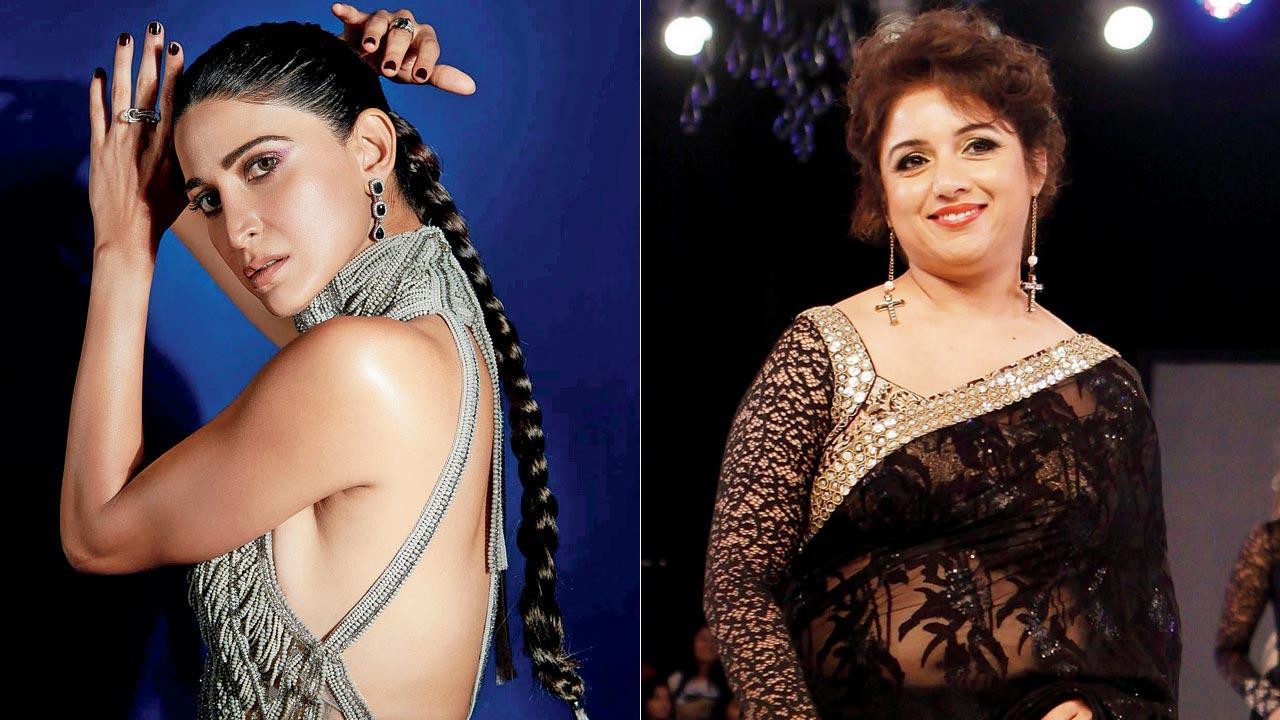
Wrapping up her part in Salaam Venky, Aahana Kumra on working with director Revathy and why female-directed projects have a different flavour
Letty Mariam Abraham (MID-DAY; September 18, 2022)
When working in a male dominated world, it is exciting to see women take up the baton and run the show. Aahana Kumra, who has wrapped up the Kajol-starrer 'Salaam Venky', agrees, having worked with Alankrita Shrivastava in 'Lipstick Under My Burkha' (2017) in the past.
“They see you differently. The kind of suggestions I get from a female-director [comes] from a woman’s point of view. They tell me how I should be feeling at that moment, but also to be restrained. It has been incredible, like how Alankrita was. It is lovely to hear a woman’s voice. I love the idea of women calling the shot on set,” says Kumra, who was excited to work in Revathy’s directorial venture, 'Salaam Venky'.
Hoping to imbibe some of the director’s qualities, she says, “Revathy is unreal. I have never met a human being like her. If I could even have five per cent of her patience, politeness and compassion, I would consider myself lucky. She is a sensitive, sensible, and a beautiful person.”
Talking about the atmosphere on the set, the actor adds that the shoot had a “beautiful energy”. “She wanted that energy on set. It is motherly, sisterly, and friendly. It comes down to what your experience has been with your director.”
Goodbye, tragic martyr in white saree. Hello, merry widow
7:59 AM

In Lipstick Under My Burkha, the 55-year-old widow played by Ratna Pathak Shah is an avid reader of erotic novels
Widowed women change their colours on screen as filmmakers finally focus on their individuality
Sonam Joshi (THE TIMES OF INDIA; April 19, 2021)

Many films like Pagglait are now stepping away from the traditional stereotypes of the widow as a tragic, melodramatic and motherly figure. Widowhood becomes a trigger for women to rediscover themselves, and find out what it means to live life on their own terms.
Pagglait’s lead character was inspired by the women in his family, says director Umesh Bist, especially an aunt who took up a job in her late husband’s company despite not having studied much. “After my father’s death, I remember telling my mother I wanted to see her as my mother, and not a widow, that she could continue to wear bangles or coloured saris and enjoy the food she used to rather than give it up,” he says. “I didn’t want to see widowhood as a defining character trait but just one of the circumstances in life.”
If Pagglait’s Sandhya discovers her agency only by the end of the film, the young widow Ratna in the film Is Love Enough - Sir exercises hers at every step of the story. After her husband’s death, Ratna leaves her village to work in Mumbai as a domestic help, trains herself in tailoring and dreams of a better life for herself and her younger sister. Though the film addresses the class divide through a love story between Ratna and her employer, it also follows her journey. “She turns extreme adversity into an opportunity for herself, telling her boss: ‘life khatam nahin hoti’,” director Rohena Gera says.
Something similar happens in the film Once Again in which a financially independent middle-aged widow who runs a restaurant in Mumbai starts a telephonic romance with an ageing actor. “We as a society are far ahead of our storytelling — so many women live like this and we are not being told these stories,” says director Kanwal Sethi. “It was important that the woman wins on all fronts, as a lover and as a mother…She can finally feel the sensuality of her person and focus on her needs,” he says.

Other portrayals take a more subtle view of freedom. In the film Aise Hee, an elderly widow in Allahabad who we only know as Mrs Sharma suddenly gets the freedom to do little things, like eating ice-cream at the mall, getting a pedicure, learning embroidery and walking by the river. “Her husband’s death gives her the space to think that there are options which she never thought of earlier,” director Kislay says. “In real life, widowhood marks a break, where a lot of women change because they are forced to be more independent.” Mrs Sharma wants to preserve this new freedom, refusing to let her granddaughter move in because she likes being alone.
Kislay says that the film is a departure from the 1957 film Mother India, which in many ways is the epitome of the tragic, sacrificial widow in Hindi film. In one scene, the TV screen in Mrs Sharma’s house literally plays a scene of Nargis saving her children from floods. “Mrs Sharma could have been a Mother India, but what if the person doesn’t want to,” asks Kislay. The role has been essayed by septuagenarian Mumbai-based actor Mohini Sharma, who lives alone herself. There is a similar tone of independence in Tanuja Chandra’s documentary film Aunty Sudha, Aunty Radha, on her elderly widowed aunts who give each other companionship in their sunset years.
Gera, who got many messages from many women struggling with social judgement after their husband’s deaths, says it is important to depart from patriarchal norms. “We are still far from being an egalitarian society,” she says. “It’s great if filmmakers can show what we can aspire to: encouraging women to move on, rather than idealising a tragic figure who has given up on herself.”
FCAT abolished; filmmakers to appeal to high court now in case of grievances
8:15 AM

Lipstick Under My Burkha and (right) Haraamkhor were denied certification by the CBFC, after which the FCAT stepped in and gave both the films an ‘A’ certificate and some cuts
Niharika Lal (BOMBAY TIMES; April 8, 2021)

Now, a film that isn’t being granted a CBFC certificate or has any other grievances with the board, can approach the high court. Several film personalities, such as Hansal Mehta, Vishal Bhardwaj, Guneet Monga and Richa Chadha took to Twitter to express their views on this ruling. Mehta wrote, “Do the high courts have a lot of time to address film certification grievances? How many film producers will have the means to approach the courts? The FCAT discontinuation feels arbitrary and is definitely restrictive. Why this unfortunate timing? Why take this decision at all? (sic),” while Bhardwaj tweeted, “Such a sad day for cinema. FILM CERTIFICATION APPELLATE TRIBUNAL ABOLISHED | 6 April, 2021 (sic).” Monga and Chadha reacted to Bhardwaj’s tweet, expressing their displeasure.
A SPECIAL BENCH NEEDS TO BE CREATED TO DEAL WITH FILM CASES: VIVEK NARAYAN SHARMA, LAWYER
Lawyers say that this move would help filmmakers, provided there is a separate bench to deal with such cases. Vivek Narayan Sharma, an advocate and ex-Joint Secretary of Supreme Court Advocates on Record Association, says, “This is a good decision, provided some measures are taken simultaneously. The number of judges has to be increased in the high court, and a separate bench should be created to deal with these matters exclusively so that there is no delay. The tribunals are quasi-judicial in nature and they have a limited approach. Filmmakers can’t push much in a tribunal, but in the high court, they can reason.”
GOING TO THE COURT IS A LONG PROCEDURE. IF A FILMMAKER IS STUCK AT THE HIGH COURT, A FILM CAN SUFFER: POONAM DHILLON, FORMER FCAT MEMBER
FCAT is one of the fastest working tribunals and the cost incurred by the body is minimal. None of the members are drawing any salary, and the expenditure is also limited. The FCAT was something necessary to give relief to filmmakers if they had any problems with the CBFC, as going to the court is a long procedure. If a filmmaker is stuck at the high court, it becomes a big burden and the film can suffer. We, at FCAT, would try to have a screening as soon as we could once we got a request from a producer or filmmaker about the problems they were facing with the release. Based on the screening, the members would try and come to a decision as soon as possible. During the screening, members go back to the scenes and dialogues that the CBFC objected to. Sometimes we’ve seen a film twice and even thrice. Giving that much time to each film would not be a fair thing to expect from a judge. Sometimes, we even have to refer to old films which were passed or objected to. The tribunal was being fair to the filmmakers and adhering to the guidelines, and the decision to abolish it should be reconsidered.
It would be a bit of a problem for filmmakers to get relief against the CBFC’s decisions, considering how overburdened courts are. The film industry is huge, and it is not just the Hindi film industry, but films from across the country come to the tribunal.

- Overturning the CBFC’s decision to reject a certification to Great Grand Masti, FCAT cleared the film with an ‘A’ certification and 22 voluntary cuts.
- Babumoshai Bandookbaaz (left) was cleared by the FCAT with an ‘A’ certificate and eight minor cuts, after the CBFC ordered 48 cuts.
- After the CBFC denied Lipstick Under My Burkha a certification, the film was cleared by the FCAT with an ‘A’ certificate and voluntary cuts reducing the length of sex scenes.
- After the CBFC refused to certify Haraamkhor, the FCAT cleared it and suggested to reduce the length of lovemaking scenes between the teacher and student by 50%. It also asked makers to add a disclaimer at the beginning and a warning during three lovemaking scenes between the characters.
- Last year,the FCAT refused to clear Joker (2019) for telecast with a U/A certificate, saying the movie glorifies violence. The film has been given an ‘A’ certificate by the CBFC.
------------------------
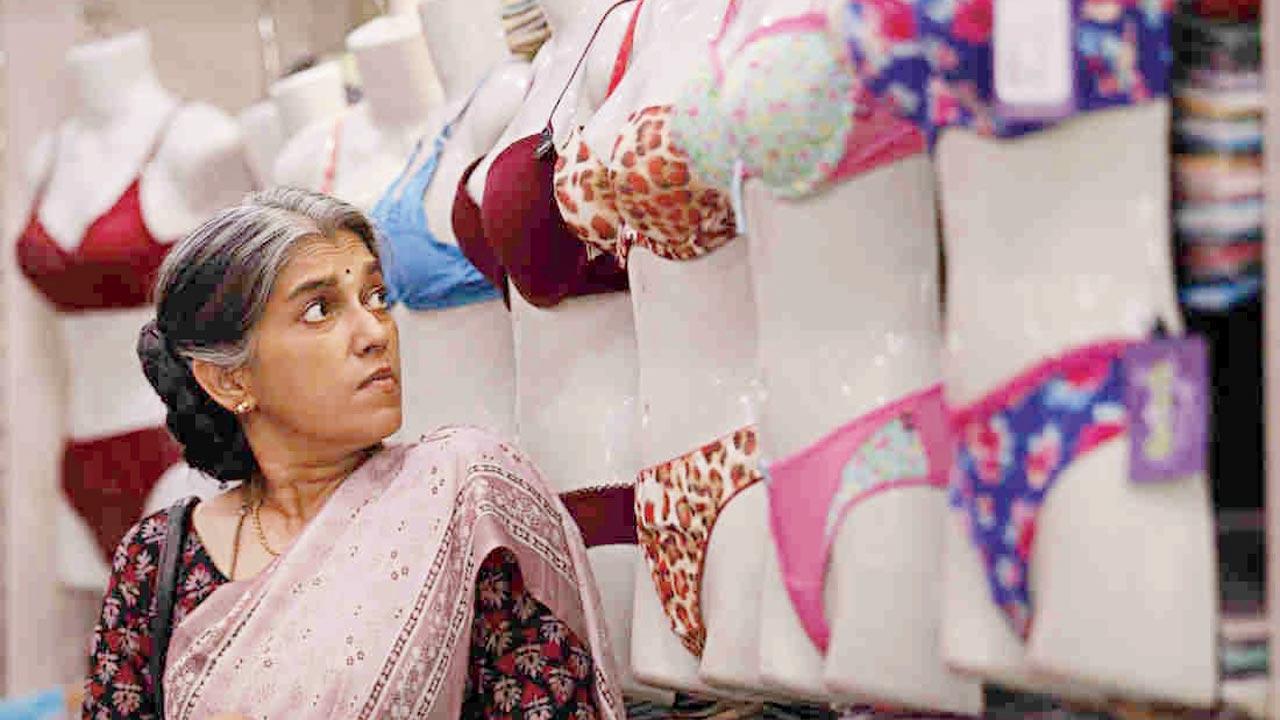
FCAT had cleared Lipstick Under My Burkha with a few cuts and an ‘A’ certificate
As government does away with Film Certification Appellate Tribunal, former member says the five-member body was sensitive to filmmakers
Mohar Basu (MID-DAY; April 8, 2021)
The entertainment industry, which is reeling under the new OTT guidelines formulated by the Information & Broadcasting Ministry and trying to find a way to tell its unconventional stories in a country that is quick to take offence, has suffered another blow. Filmmakers across the country woke up on Wednesday morning to the news that the Film Certification Appellate Tribunal (FCAT) was abolished with immediate effect.
The move comes after the Ministry of Law and Justice reportedly dissolved nine appellate authorities, following the Tribunal Reforms Ordinance 2021.
With the body that was constituted in 1983 now dissolved, filmmakers in disagreement with the decision of the Central Board of Film Certification (CBFC) will have to approach the high courts. Poonam Dhillon — who was a part of the five-member FCAT along with retired Justice S K Mahajan, journalist Shekhar Iyer, advocate Bina Gupta and Shazia Ilmi — says that the decision spells more distress for aggrieved producers and directors. “Filmmakers need a platform where they can get fast relief. Long drawn-out court procedures can be time-consuming and monetarily draining for them. In some cases, the CBFC may object to something minor, say a scene or a dialogue. Now, a filmmaker will have to get a court date, arrange for a two-hour viewing of the movie. I am not sure the court will have the time to watch two-hour films every week; they have other pressing cases. The Tribunal was expeditious in resolving issues, dispensing decisions within a week — whether it’s reversing the CBFC’s decision or suggesting a cut. Additionally, the Tribunal kept the CBFC in check. The film industry needs a body like that,” she asserts.
Considering the body had representative of the entertainment industry, it was sensitive to filmmakers’ grievances. “We have sat down with [directors] and understood their perspective. Often we’ve watched the same film over and over again to be certain that the makers don’t get a raw deal.”
Dhillon notes that while several Tribunals have been done away with because they are not cost-effective, the same doesn’t stand true for the FCAT. “None of the members were drawing a salary. If one weighs in on the work we did vis-a-vis the expenses incurred [of screening], it was a win-win situation,” she says, urging the government to reconsider the matter.
Ilmi, who is currently in the Sundarbans campaigning for the ongoing West Bengal elections, did not respond to our detailed text.

There is nothing wrong in making masala films, provided it has a good story-Aahana Kumra
8:54 AM

Aahana Kumra talks about shooting for her first mainstream movie Khuda Haafiz
Mohar Basu (MID-DAY; August 13, 2020)
Aahana Kumra has no qualms admitting that she was apprehensive about playing an Arab agent in Disney+ Hotstar's latest offering, Khuda Haafiz. Recounting her first meeting with director Faruk Kabir, Kumra tells us, "He was clear that this is not the cinema I am usually associated with." Known for her work in Lipstick Under My Burkha (2016) and Voot Select's Marzi, the actor is often labelled 'indie actor' — a tag that often comes up in meetings with producers. "When I was offered this role, I was told this isn't an indie film. That comment stunned me, but there is a perception that I only do independent cinema," says the actor.
"During the narration, it sunk in that this is a different universe," introspects the actor, adding that the typical Bollywood masala films were never offered to her. "People don't look at me as someone who is commercially bankable because I have never done the song-and-dance routine. There is nothing wrong in making masala films, provided it has a good story. With Khuda Haafiz, I had that satisfaction."
Walking into this world post Netflix's Betaal, Kumra admits that she suffered from a mental block. "Everyone around me was confident that I could pull it off, except me. The film had hand-to-hand combat, I didn't think I was physically strong to do the part. At one point, I almost let go of the project." The Vidyut Jammwal-starrer is a reminder that she is a shape shifting artiste who is capable of pushing herself to do more. "Faruk's faith in me pushed me to work harder. I even went through dialect training to get the Arabic twang to my Hindi."
Prakash Jha's remark was not [directed at] me. It was regarding the scene-Aahana Kumra
7:47 AM
After saying she was ‘uncomfortable’ with Lipstick producer’s presence during a sex scene, Aahana clarifies stance
MID-DAY (May 16, 2019)
Aahana Kumra says she was “uncomfortable” with a remark made by producer Prakash Jha during the shooting of Lipstick Under My Burkha (2017), but the comment was on a scene and not on her. Kumra says Jha made her uncomfortable while filming an intimate scene in the Alankrita Shrivastava-directed film. It was the first time that the actor, 34, was shooting such a scene. She said the producer passed a remark during the filming of the scene.
Shedding light on it, she says, “Alankrita made sure that all the intimate scenes were shot in a closed set with few people around. Prakash Jha happened to drop by while I was shooting with co-star Vikrant Massey. Since I had never shot an intimate scene before that, it was difficult to get in the right zone. Since he is also a director, he had a suggestion regarding the scene, but I wanted to hear it from Alankrita. He was on the set for a while, and after he left, we continued to shoot and also implemented his suggestion.”
Kumra felt a recent comment made on the incident by her was blown out of proportion. “Prakash Jha has been extremely respectful of all of us actors at every time that we have met him. It’s not right to drag his name unnecessarily. The remark was not [directed at] me. It was regarding the scene purely,” she said in an interview.
Asked about what the remark was, the actor said, “ I am not comfortable sharing that.”
MID-DAY (May 16, 2019)
Aahana Kumra says she was “uncomfortable” with a remark made by producer Prakash Jha during the shooting of Lipstick Under My Burkha (2017), but the comment was on a scene and not on her. Kumra says Jha made her uncomfortable while filming an intimate scene in the Alankrita Shrivastava-directed film. It was the first time that the actor, 34, was shooting such a scene. She said the producer passed a remark during the filming of the scene.
Shedding light on it, she says, “Alankrita made sure that all the intimate scenes were shot in a closed set with few people around. Prakash Jha happened to drop by while I was shooting with co-star Vikrant Massey. Since I had never shot an intimate scene before that, it was difficult to get in the right zone. Since he is also a director, he had a suggestion regarding the scene, but I wanted to hear it from Alankrita. He was on the set for a while, and after he left, we continued to shoot and also implemented his suggestion.”
Kumra felt a recent comment made on the incident by her was blown out of proportion. “Prakash Jha has been extremely respectful of all of us actors at every time that we have met him. It’s not right to drag his name unnecessarily. The remark was not [directed at] me. It was regarding the scene purely,” she said in an interview.
Asked about what the remark was, the actor said, “ I am not comfortable sharing that.”
Check out Aahana Kumra, Anupam Kher, Arjun Mathur in The Accidental Prime Minister
8:14 AM

Lipstick Under My Burkha’s Aahana Kumra plays the political scion in the screen adaptation of Sanjaya Baru’s book
Avinash Lohana (MUMBAI MIRROR; July 18, 2018)
After featuring in Alankrita Shrivastava’s Lipstick Under My Burkha, Aahana Kumra will be seen in Vijay Ratnakar Gutte’s The Accidental Prime Minister, a screen adaptation of Sanjaya Baru’s book, which features Anupam Kher as the former Prime Minister of India, Manmohan Singh. Aahana plays Priyanka Gandhi in the film.
“Hansal (Mehta) sir had liked my performance in one of my web shows and had asked casting director Vicky Sidana to get in touch with me. When I went for the look test and they put me in Priyanka Gandhi’s attire, she came alive for me as well. Till then even I hadn’t imagined that I could look like her. It’s a very powerful role and I am having a great time playing it,” informs the actress, adding that it’s important to get the look right while playing a real-life character.
She had started prepping for her part as soon as she landed the film. “I started reading about Priyanka Gandhi online and observed her closely to get into the skin of the character. I saw a few of her rallies, noting how witty and honest she is in her interviews so that I could get her mannerisms right. It would be pretty interesting if I got to meet her,” Aahana says.
The actress, who has finished shooting for most of her portions, reveals she has worked with Anupam Kher earlier. “That film didn’t release but I have been an admirer of his work. He has been encouraging. He challenges himself so much as an actor that it’s very inspiring. I remember stealing his food once from his plate too, but he didn’t mind,” she laughs.
Meanwhile, prod her if there is a chance for a sequel of Lipstick Under My Burkha that had also featured Konkona Sen Sharma and Ratna Pathak Shah and she says, “The director will be in a better position to answer that question, though I would love to be a part of it. There are times when we discuss what would happen to Rosy or Leela in a sequel. There are so many films made around women now which is really exciting,” she signs off.
Actors shouldn’t be apprehensive about working in films based on politics-Aahana Kumra
7:57 AM

Lasyapriya Sundaram (BOMBAY TIMES; July 17, 2018)
Political drama, The Accidental Prime Minister is based on Sanjaya Baru’s memoir, The Accidental Prime Minister: The Making and Unmaking of Manmohan Singh. Baru was Prime Minister Manmohan Singh’s media advisor for a period of four years. In the past, political dramas or films based on political figures have faced opposition from political parties. When Baru’s book hit the stands, it had to deal with bouquets as well as brickbats for the facts revealed in it.
Quiz Aahana Kumra, who plays Priyanka Gandhi in the film, about this and she says, “Any film can end up facing a backlash. My earlier film Lipstick Under My Burkha was banned though it was a purely fictional story that spoke about realities. The issues addressed in the film were problems that were faced by women all over the world. Even a film like Padmaavat faced trouble. I feel actors shouldn’t be apprehensive about working in films based on politics or political figures. I was surprised when I came to know that a film was being made on Sanjaya Baru’s book. I am happy to be playing a role that’s relevant to our times. Every film is trying to tell a story from its point of view. This film obviously is from the perspective of Sanjaya Baru. As an actor, I won’t be able to comment on whether what he has spoken about in the book is right or wrong. I am just doing my job. I can be honest to the script and the role that’s been given to me. I can’t be thinking if it is right as far representing the political scenario is concerned.”
Dear Veere Di Wedding team, it’s disappointing that you guys couldn’t save the abuses from getting replaced at the hands of the Censors!
3:43 PM

When I first saw the trailer of this week’s big release Veere Di Wedding, I was quite impressed and amused! After all, it’s rare that women in our films are shown in such an authentic light, freely talking about sex and hurling abuses. But immediately, I reminded myself that my joy might be shortlived. After all, we still have a ‘sanskaari’ Central Board of Film Certification (CBFC) who can cause problems for this film and get all these abuses muted or replaced with milder words, even if the makers ask for an ‘A’ certificate.
Thankfully, the CBFC has been liberal in the case of Veere Di Wedding, but only till an extent. They allowed most of the sex talk and the use of F-word. They retained the much talked about masturbation scene of Swara Bhasker, though they blurred the vibrator. But at several places, the abuses got replaced. The cut list of the CBFC for this film is out and one can see that c*****a was replaced with bewakoof, bitch was replaced with witch, m*******d was replaced with madarjaat, b******d was replaced with pencho, c**t was replaced with choosa, tawayaf was replaced with rawayat and a**hole was replaced with jackass. The word c******a was also muted twice and kutiya was muted once. Amusingly, bastard was replaced with f****r though the latter is more objectionable!
All these modifications had a mild impact while watching the film. However, Swara Bhasker uttering madarjaat and Sonam Kapoor saying pencho looked very odd unreal in this otherwise straight-out-of-life flick. And the question arises is – why didn’t the producers of the film, Ekta Kapoor and Rhea Kapoor, fight to retain the cuts? There were reports that Ekta and Rhea’s father, Jeetendra and Anil Kapoor respectively, attended the CBFC screening and requested that the film shouldn’t be butchered and only then did the CBFC decided to retain a lot of stuff. Yet, the film did get affected to an extent.

And this is quite shocking considering that we all know by now how our ‘sanskaari’ CBFC works. Ever since Pahlaj Nihalani became the chairperson of CBFC in January 2015, he had started implying unjust cuts on films which led to shockwaves. CBFC also became a laughing stock. The word ‘lesbian’ was muted in Dum Laga Ke Haisha. In Pyaar Ka Punchnama 2, all abuses were removed and yet, the film was given an ‘A’ certificate. Even James Bond was not spared – his kissing scene in Spectre was reduced, leading to #SanskaariJamesBond jokes. The controversial Malayali film Sexy Durga had to change its name to S Durga due to pressure from the Censors.
But the CBFC doesn’t have its way all the time. There’s a solution for the makers who if they desire for almost zero cuts in their film. The Examining Committee (EC) is the first one to see the film and suggest the unjust changes. If the makers are not satisfied with these changes, then they can approach the Revising Committee (RC). The RC is believed to be more liberal than EC and if the makers are still not happy, the next step is to approach the Film Certification Appellate Tribunal (FCAT). The FCAT in most cases relaxes most of the cuts ordered by the EC. Ekta Kapoor would know about this well. After all, 3 of her films – Great Grand Masti, Udta Punjab and Lipstick Under My Burkha – were stuck due to the insane number of cuts asked by the CBFC. Udta Punjab especially led to a lot of problems as the makers were asked to do 89 cuts in the film, including removing the word ‘Punjab’! The makers fought tooth and nail and even approached the Bombay High Court, which passed the film with just 2 cuts. Great Grand Masti and Lipstick Under My Burkha got passed by the FCAT with minimal changes. This year’s first release Kaalakaandi, starring Saif Ali Khan, also faced problems from the CBFC after it was told to make 72 cuts/changes. But the FCAT passed the film with an ‘A’ certificate and just 2 cuts.
However, all this takes time. As a result, if a film has adult content, the makers should ideally apply for certification at least 3-4 months or even 6 months in advance. This would give the makers enough time to fight it out and approach the RC and FCAT. Unfortunately, most of them don’t do so. Most of the films get ready only 2 or 3 weeks before release and only then they approach the CBFC for certification. By the time the EC sees the film and suggests the changes, there’s no time left to fight it out with them. As a result, the makers have to accept whatever cuts asked by the EC.
Ekta Kapoor and Rhea Kapoor should have obviously known that their film’s content is such that it can get chopped off. Hence, they should have applied for certification way back. Also, it was akin to cheating the moviegoers since the Veere Di Wedding trailer did show Sonam and Swara mouthing expletives, all of which got replaced. Why did they incorporate these abuses in the first place? Didn’t they know that the CBFC would cut it out? Was the plan to generate hype for the film by showing the abuses and then not really caring whether they make it to the final cut? Is opening and money all that matters to the makers? What about fighting passionately for creativity, the way Ekta did for Lipstick Under My Burkha? Why couldn’t she and her team plan the shoot and post production in such a way that they could have got 3-4 months to save the film from having any changes from the CBFC?
Of course, this is a minor complaint against the film and the makers won’t take it seriously. But in the long run, something has to be done about this. It’s frustrating to see mutes and replacements done especially in those scenes which are already shown in the trailers in the uncensored form. Here’s hoping the makers in future don’t take audiences for granted and go all out to save their film from getting axed!
I am doing my own kind of ‘MeToo’. I don’t want to do it like others-Ekta Kapoor
9:13 AM

Madhureeta Mukherjee (BOMBAY TIMES; May 31, 2018)
She’s feisty and fearless. Her opinions make solid statements and her ideas have shock value. Ekta Kapoor, the woman who made a genre out of the saas-babu sagas on Indian television, is also a film producer who takes pride in telling stories about love, lust, sexual repression and drugs. Quite an antithesis this one is. That’s Ekta Kapoor for you. Her ideas can be anything from simple to sensational or real to radical — all depending on what her audience will lap up. There’s one thing certain about this woman with boundless enthusiasm and guts galore, and she simplifies it best herself, “People are being able to put me in a box, so they think I am an anomaly”. She’s backing the upcoming Veere Di Wedding directed Shashanka Ghosh, a film where four fab women are leading the show. In a chat with BT, Ekta talks about how sanskar and sex can co-exist, the warped idea of feminism that looms large over us, and how she’s drawn to stories that beautifully break the idea of perfection. Read on…
After a long wait, Veere Di Wedding is finally here. The film, led by four female actors, is already making quite a statement. And all of you have stressed on the fact that it is not a chick flick...
It’s about time we make a statement, right? Though I am far more gender agnostic in the way I view things. I don’t look at it as a film about four women, it’s about friendship. And once you get engaged in the story, you really don’t see the gender of the lead cast. The more you spell out these things, the more we underline it, and we end up creating some kind of discrimination. Veere… is a coming-of-age film, and it’s about acceptance of the fact that the fairy tales we have been fed, don’t turn out exactly the way you imagined. We are all becoming the heroes we are told to marry, and we are becoming women who are okay with our blemishes, flaws and body types. It’s this depth in the story that drew me towards it. This is a story that we need to tell our boys and girls.
Kareena Kapoor Khan was signed for the project and then she announced that she was pregnant. Rhea Kapoor and you made the choice to wait for her to have the baby and come back to work. It also sends out a message that actresses cannot be easily substituted...
Well, Kareena is a star, a stunning woman and also an actor par excellence. There was a list of actresses that Rhea and I went through, who were keen to do it, but we needed a performer, because Kalindi (Kareena’s character in the film) is complex. I think that when you know your character well, and you are not looking at making the most expensive film on earth, you should go with certain type of actors that you want. I clearly remember when Rhea called me up to tell me that Kareena is pregnant, I was walking to the Tirupati temple. I was dealing with Udta Punjab (2016), as the film had run into trouble, and my nephew Laksshya (brother Tusshar’s son) had arrived just six days before that. There was too much happening already, and we just had a baby in our house, too. I didn’t think that an actress should lose a film because she was having a child. Not happening! As a producer, I was in and out of the project initially, and it had nothing to do with the idea of the film itself. A lot of people said that it’s a women-oriented film and that the budgets are not working out. There are people in the industry who patronisingly look at you and say. ‘Two crore mein toh khul jaayegi, yaar. Gaane chal gaye, warna women-oriented film ki opening kaise ho sakti hai’. I went through the same thing during The Dirty Picture (2011). On paper, the film appeared to be a Rs 12-crore loss. I said I am doing this film; I will make ten more shows and make the money for the company. I believed in it, and I did it.
There is a line in the film where Sonam Kapoor’s character says that it doesn’t matter how qualified or successful a girl is, but unless she has a mangalsutra around her neck, her life is not seen as complete. Every woman is evaluated through that prism, isn’t it? A single woman of so-called marriageable age is also often seen justifying why she is single...
We are always told that we should settle down and find the other half. And that half is someone who will come and complete you. I have given so many interviews where I was asked, ‘When will you settle down?’ What is the meaning of being settled? It means doing what I want to do, being independent and being emotionally sorted. I am in that space. I feel complete. So, I am settled, aren’t I? If I find someone, I will be giving something and sharing a part of me, but the purpose is not to fill up the other half. You don’t need someone to complete you, whether you are a man or a woman.
Interestingly, the kinds of films you have backed, like The Dirty Picture, Udta Punjab, Lipstick Under My Burkha (2016), are bold, path-breaking and challenge the norms of cinema. These are quite different from your TV shows, which are family-friendly and cater to a certain audience. In that area, you have gone with the tide. Your sensibility across mediums is starkly different…
People can’t put me in a box, so they think I am an anomaly. They tell me that you make a television soap like Naagin, then you make a film like Lipstick Under My Burkha, and now, you are making a film like Veere… I tell them, why don’t you get it, there are so many sides to me. I am doing my own kind of ‘MeToo’, I don’t want to do it in a way that others are doing it. In the show Naagin, in the first episode, she gets molested and then she comes back and takes full on revenge. In our society, kuch cheezein hum kehte hai aur woh wahi reh jaati hai. No one will ever call this a movement. But we need to penetrate across with our shows, and we have to do it in a language that the masses understand. I am also told ki, ‘Aap sanskar ki baat karte ho, phir aap sex ki baat karte ho’. I tell them that sanskar aur sex dono ussi ladki ke pehlu hai. Agar ek ladki mandir jaati hai, uska yeh matlab nahin ki she’s not interested in sex. And why are we deciding that this is all that a woman can be? That this is what stirs a fight between women? The one in the sari is complexed about the one in the swimsuit, and the one in a swimsuit looks down upon the one in the sari. Then, we start putting labels on each other and fighting over it. We have to stop putting ourselves and other people in boxes. We have to realise that as the world is getting gender fluid, we have to be fluid about our sensibility, too. Acceptance is the word of the decade. The day we get it, we are sorted.
In Veere… the four girls brazenly talk about sex, orgasms and use cuss words to express themselves; it’s the kind of stuff that we don’t see in our cinema. None of the characters are seeking to be poster girls of perfection or morality (that’s socially acceptable). It is a brave choice, but you are also taking some chances while backing such subjects...
That day somebody asked me, ‘Aap Kalpana Chawla (American astronaut and the first woman of Indian origin who went to space) ke baare mein kyon nahin film banate? Tab feminist film hogi na, yeh kaise feminist film ho gaya?’ I am like… how confused are you? First of all, yahan pe feminism kaise aa gaya? Feminism is a belief; a man or a woman can be a feminist. You have to believe in the concept of equality, and believe in giving someone space to live the kind of life they want. I said that I would love to make a film on Kalpana Chawla also. I even told him that what he said is politically incorrect on all levels.
The idea of feminism is terribly misconstrued. Here again, you want to put a woman on a pedestal.
It’s again the girl who can achieve, or the girl who has a baby who is put on a pedestal. The other girls have to reach that position somehow. For television, I make socially moving, but simple and sweet content, it’s not radical. With films, I want to do that. So many people tell me… ‘Yahi type ki films aapko pasand hai’. I tell them yes, and you won’t get it. The beauty of Veere… is that it doesn’t try to show the perfect woman. The film is about breaking perfection. It works for me, because I want to see four friends sit down and say… why the hell did this happen to me? That is real. Our hearts break, our mascara melts and when we are struck with pain, we overeat, drink and we are on Instagram reading quotes. This is just the way we are.
After creating content across mediums over the years, which medium do you think is the most challenging?
I still think that TV is most challenging. With shows, you are in people’s homes, you can’t do things in a certain way and you can’t be too radical. You have to get the story across to hundreds of people and the show has to fetch high ratings. Every time you think you have cracked it, you realise that the audience is sensitised to the story. And there are only so many stories. Making television shows is like going to war with your hands and legs tied.

I hate it when people say, ‘bada bold character hai’-Aahana Kumra
7:55 AM

Letty Mariam Abraham (MID-DAY; March 24, 2018)
It has been two years since Lipstick Under My Burkha first hit screens and garnered acclaim from viewers and critics alike. But, the film’s success hasn’t translated into better offers for Aahana Kumra, who played the role of Leela.
The actor, who has dabbled in television, theatre, web and films, says that now, every offer coming her way is reminiscent of the character she played. “Post the release of the film, there have been few offers that can be called interesting. I have to be careful about my next project, because it cannot be a frivolous one.”
Alankrita Shrivastava’s venture saw its leading ladies unabashedly explore their sexuality. Evidently, then, the film featured a fair share of explicit scenes. Kumra confesses that the projects being offered to her now require her to pull off similar sequences, but her characters lack meat. “A lot of people have offered me ‘bold characters’. But, I’ve never understood what that means. When Alankrita came to me with this role [Leela], she didn’t entice me with [explicit] scenes. She merely gave me the script, and asked me to decide if I wanted to do the film or not. I was sold on the script. I hate it when people say, ‘bada bold character hai’. They are not certain if they want me to strip naked, perform a sex scene, or simply kiss on screen. Films are decided based on scripts, not on a ‘bold’ scene that the character must perform,” she says, adding that such offers have even come from reputable filmmakers.
However, Kumra, who is currently filming the web series, It Happened In Hong Kong, has her “frank nature” to blame. “I have noticed that I’ve never managed to bag a role though auditions. Maybe, I’m too scared, or probably rub the casting directors the wrong way. But, I don’t get work through auditions.”
Filmmakers like Farah Khan play by patriarchal rules to be successful-Aparna Sen
8:07 AM

MID-DAY (February 23, 2018)
National Award-winning filmmaker Aparna Sen yesterday said that though there are several women directors now, some of them like Farah Khan play by patriarchal rules to become successful.
Sen believes women directors are “confident enough in their own skin to critique their woman characters” but there are some who play by the rules. “You have women filmmakers who have a male gaze. They play according to the rules of the patriarchal system and make a success of it. For instance, Farah Khan, who makes predominantly mainstream films, has a distinct male gaze, except that she has a tongue firmly planted in her cheek while playing the macho game,” Sen said while delivering the keynote address at the fourth edition of the Gateway LitFest in Mumbai.
Sen, who made her acting debut with Satyajit Ray’s Teen Kanya (1961), went on to establish herself as a successful director with acclaimed films such as Paroma (1984), Paromitar Ek Din (2000), Mr and Mrs Iyer (2002), 15 Park Avenue (2006) and Iti Mrinalini (2011). The veteran said the question is not really about gender as all true artistes are androgynous by nature. “Male filmmakers only need to tap their female selves in order to develop their female gaze as many great filmmakers have done. But why is it important to do so? Because the world has been run by aggressive males and landed itself in a fine mess. It is time that the female gaze made its presence felt both in cinema and in a world that’s been driven by intolerance, greed, hate and lust.”
She said gentler and more inclusive films should be made where multiple voices can be heard. Sen also said that sex is still a taboo and “patriarchy is so deeply entrenched” that even today the audience has a problem with a woman exercising her sexual choice or expressing her sexual desires. “If we look at the depiction of sex, the male filmmakers will usually have the man in the role of an aggressor while the woman will remain passive. It will take an Alankrita Srivastava (Lipstick Under My Burkha, 2017) to show women’s sexual desires in a way every woman can identify with. A filmmaker can have a female gaze while having a male protagonist,” Sen said.
“That’s the thing about today’s female filmmakers. They are confident enough in their own skin to critique their woman characters. They are perfectly comfortable in empathising with their male characters when need be,” she added.
Recalling her own experience of turning director with her National Award-winning 36 Chowringhee Lane (1981), the director said there were not many women directors when she started off. “I had little to go by when I embarked on my lonely journey in 1980, except for films made by some exceptionally talented men like Satyajit Ray, Ritwik Ghatak and Mrinal Sen from my own native Bengal, G Arvindam and Adoor Gopalakrishnan from Kerala and Girish Kasaravalli in Karnataka to name a few. Filmmakers that I had worked with as an actor during my stint in mainstream Bengali cinema were far from encouraging. One of them asked me, ‘I hear you’re planning to direct a film’? ‘Yes dada,’ I said. ‘Story by?’ ‘Me dada,’ I replied. ‘And screenplay?’ ‘Also by me,’ I said. ‘Very brave’, he said, which was meant to be sarcastic,” she said without naming the director.

Alankrita Srivastava, Ekta Kapoor reunite after Lipstick Under My Burkha
8:25 AM

Ekta Kapoor and Alankrita Shrivastava come together for another woman-centric film that is expected to take off later this year
Natasha Coutinho (MUMBAI MIRROR; January 9, 2018)
 After the much talked about Lipstick Under My Burkha, director
Alankrita Shrivastava and producer Ekta Kapoor are set for a reunion
with another female-centric film. “Lipstick… went so well and we had a
great time working on it. So a reunion seemed like natural progression.
Ekta has a lot of courage to take risks and she is the right person for
the kind of films I make,” Alankrita told Mirror.
After the much talked about Lipstick Under My Burkha, director
Alankrita Shrivastava and producer Ekta Kapoor are set for a reunion
with another female-centric film. “Lipstick… went so well and we had a
great time working on it. So a reunion seemed like natural progression.
Ekta has a lot of courage to take risks and she is the right person for
the kind of films I make,” Alankrita told Mirror.
According to the filmmaker, her next will be shot entirely in North India and is about two women in a coming-of-age story. “I’m still working on the screenplay so I’d rather complete it before saying more on the subject,” she says cagily, adding, “For now I’m excited about exploring the lives of both protagonists and the roles women have in the changing India of today. The future is female, not just in India but the world over.”
When prodded on the cast, Alankrita revealed that she is currently waiting to finalise it and wants to kick off shooting this year.
Point out that expectation from her follow-up directorial must be sky-high and she says, “It’s daunting because you don’t know what preconceived ideas people may have after Lipstick... I like to work with a blank slate. The journey of my debut film was intense but now it’s over.”
After the much talked about Lipstick Under My Burkha, director
Alankrita Shrivastava and producer Ekta Kapoor are set for a reunion
with another female-centric film. “Lipstick… went so well and we had a
great time working on it. So a reunion seemed like natural progression.
Ekta has a lot of courage to take risks and she is the right person for
the kind of films I make,” Alankrita told Mirror.According to the filmmaker, her next will be shot entirely in North India and is about two women in a coming-of-age story. “I’m still working on the screenplay so I’d rather complete it before saying more on the subject,” she says cagily, adding, “For now I’m excited about exploring the lives of both protagonists and the roles women have in the changing India of today. The future is female, not just in India but the world over.”
When prodded on the cast, Alankrita revealed that she is currently waiting to finalise it and wants to kick off shooting this year.
Point out that expectation from her follow-up directorial must be sky-high and she says, “It’s daunting because you don’t know what preconceived ideas people may have after Lipstick... I like to work with a blank slate. The journey of my debut film was intense but now it’s over.”
I have been typecast in the role of the earnest and morally upright woman-Konkona Sen Sharma
8:24 AM

Lasyapriya Sundaram (BOMBAY TIMES; November 27, 2017)
This year, Konkona Sen Sharma made her directorial debut with the much-acclaimed film, A Death In The Gunj. The National Award-winning actress also impressed with her role in one of the most controversial films of the year, Lipstick Under My Burkha. Her advent into films can be best described as accidental, but she doesn’t shy away from calling a spade a spade when she says, “Once I was in my 30s, I realised that the roles were not that many and that they were not interesting.” In a candid chat with BT, she talks about how even in mainstream films, she has always chosen - to essay unconventional roles and how she doesn’t believe in making happy films, but chooses to tell stories which have a deep impact on people. Excerpts…
You have seamlessly straddled the worlds of both Hindi and Bengali cinema, but in the recent past, your work has been more prolific there. Is it because you are getting more performance-oriented roles in Bengali films?
Once I was in my 30s, I realised that the roles were not that many and that they were not interesting. I don’t know whether it was because people were bored of seeing the same face or because I had become a mother. In fact, I wasn’t even being offered Bengali films. The makers in Kolkata perhaps were under the impression that I was busy working in Mumbai. The kind of roles I played in Goynar Baksho and Kadambari (her Bengali releases) have become rare now. A lot depends on the imagination of the director and the kind of risk the producer wants to take. Many a time, you need an A-list star, otherwise you are not going to get the money to make the film.
Your mother (actor-filmmaker Aparna Sen) once said, “In mainstream cinema, the way you look precedes everything and that’s a terrible thing to happen. I didn’t have the kind of choices that the current generation has.” She also said that she had acted in some terrible films. Well, do you think mainstream cinema has changed since the days your mother acted in them? What’s your take?
The idiom of mainstream films was very set when my mother was acting in them. By the time I started acting, we had improved technically and Hindi cinema had also evolved. I think I got films, which were more realistic than what my mother did. I had more of a choice in the way my characters were written and the heroines were depicted. Also, everybody acts in some terrible films. If you have a long-lasting career, then all your films are not going to be great. As far as looks taking precedence over everything else is concerned, I wasn’t seeking these films (Wake Up Sid and Luck By Chance), they came to me. I have always played unconventional roles. When I did Ek Thi Daayan, I was very happy to be offered a negative role because I feel I have been typecast in the role of the earnest and morally upright woman.
Your character in Lipstick Under My Burkha was of a woman who has survived marital rape. It’s considered to be a taboo topic even today in our society...
The experiences that my character goes through in the film are very common, but it’s rarely depicted with honesty in cinema. We tend to depict safe ideas in our mainstream films. Nobody has ever said that you are not allowed to make a film on marital rape, but it’s a subject that almost never appears in our films, not even in passing.
You made your directorial debut with A Death In The Gunj. The film’s protagonist, Shutu, is a marginalised character. Were you apprehensive about projecting a dark universe?
I don’t think the endless pursuit of happiness is a very desirable quality. Also, I didn’t think about it so much when I was developing and making it. In retrospect, I can say that I am hungry for experiences that move me. I am not scared of watching a film that will depress me; neither am I scared of reading a book that talks about loss or grief. I want to make films which touch me and make me think; they are not necessarily happy films.
So, did turning director happen by chance or did the lack of good roles propel you into it?
I didn’t get into direction because I was not getting that much work in front of the camera. I wasn’t working as much. I had gone through some transformative experiences myself. This film was inside me and it was taking over me in some way. Having seen my mother’s experiences, I didn’t want to direct a film. Executing content which is alternative is like walking on a hard and difficult path. In fact, when I was writing the script, I wasn’t sure if anybody would fund it. It was a passion project.
Would you ever make a film that makes a political statement?
I don’t want to make a political statement for the sake of making one through my films. I can always do that on social media or write an article. However, the political is also personal. And that’s governed by your own choices. But if I can make a film which can move people, is authentic and can also make a political statement, that would be an ideal combination.
As a working woman and mother, often, you must have been asked how you manage to strike a balance. However, working men are never asked this question. Why does only one gender have to shoulder the responsibility of being a superhuman?
The perception can only be changed collectively. These questions must be asked to fathers as well. I remember being asked this question at the Melbourne Film Festival. Seated right next to me was Shoojit Sircar, who is a wonderful filmmaker and a father to two daughters, but nobody asked him about striking a balance. Having said that, the balancing act can get overwhelming at times. I take inspiration from so many women who are doing it every day, including my mother. Even my domestic help inspires me.
The Harvey Weinstein sexual harassment scandal opened a can of worms that has led to many women coming forward and saying #MeToo. Do you think talking about it will lead to many survivors taking the legal route?
I think protest is important, but unfortunately, what happens is that we leave it at that. We don’t examine our lives and the choices we make. Protest provides a voice and solidarity to the survivors, but we need to follow it up with policy change and that’s tedious. We can’t just protest and forget about it.

A look at the female writers of Bollywood who are making giant waves
1:57 PM

An international study reveals that female characters get all the worst lines in films. In Bollywood, it couldn't be truer. These are the writers challenging that notion
Aastha Atray Banan (MID-DAY; August 20, 2017)
Writer Suhani Kanwar (above) went to cinemas halls a couple of times to gauge the audience reaction to her 2014 release Ragini MMS 2. Her favourite scene had actor Sunny Leone (who plays herself in the film), being told that 'real' actors elicit emotion in films, while all Sunny does is pretend to have orgasms (in her adult films). So Sunny goes on to do a Meg Ryan in When Harry Met Sally, moaning and arching her back in pleasure. She elicits such emotion in her co-actor in the scene, that he, the 'real' actor forgets his lines. "There was this uncomfortable silence in the hall, followed by men laughing at the dumbstruck guy.. but actually, they were laughing at themselves, because the guy on screen was saying exactly what they think. Those are the men the scene was targeted at... the ones who watch adult films but also judge the women in them. If I, for one moment, made them uncomfortable with their own hypocrisy, I did my job" says the 36-year-old, whose more recent work is the acclaimed Lipstick Under My Burkha, for which she also wrote the screenplay.
A recent study by USC Viterbi School of Engineering's Signal Analysis and Interpretation Lab (SAIL) which will be published in the Proceedings of the Association for Computational Linguistics, scanned over 1,000 film scripts and found that even if female characters were removed from the plot, there'd be little difference. In an interview, Anil Ramakrishna, one of the study's researchers, said, "Writers consciously, or subconsciously, agree to established norms about gender that are built into their word choices." In the Indian film industry, we wouldn't need a study to tell us that the gender roles are skewed. Women are objectified as either the vamp or sexy savitri, sati savitri or avenging martyr. It's only in the last few years that movies like Queen, Kahaani, Tanu Weds Manu and now Lipstick have challenged what female characters can say on screen.
"I don't use the word heroine, because I feel that the roles in my stories are characters. And, their dialogues should be honest and should remain true to them and the context," says Alankrita Shrivastava, writer and director of Lipstick. "Dialogues cannot be forced on someone for the sake of sending a message."

Lipstick Under My Burkha director and writer Alankrita Shrivastava (centre) with the cast of her film, Ratna Pathak Shan and Konkana Sen Sharma
Shrivastava, who also made the Gul Panag-starrer Turning 30, adds that she has the liberty to say something like that because she doesn't come from the Bollywood tradition of dialogue writers. "Since I write and make my own movies, I have control. Otherwise, storytelling is controlled by men. Female characters usually lack nuance and sensitivity. An equal and opposite content should also exist."
Kanwar, who also wrote a show called Swim Team for Channel V (with two young girls training to swim for the Olympics), says that women writers have to unlearn the process of discounting their own stories and writing from the male perspective. "We have been censoring ourselves, because we've been trained to think there isn't a market for what we have to say. I always want to say something, on an hourly basis, and some people find that tiresome. I also don't agree when people ask, 'is this the right time', because there's never going to be the perfect time to go out and demand your rights. We just need to keep telling our stories."
 Her sentiment is echoed by Lipstick dialogue writer Gazal Dhaliwal (right), who tries to explain the dialogue writing process in a simple yet effective way, "An important rule for me is to not become preachy in order to make a statement. Else, I risk losing my audience. Leela's lament stated in a simple line, 'Aapko pata hai hamaari galti kya hai? Hum sapne bohot dekhte hain', according to me, is more effective than a long speech about women living oppressed lives."
Writer Ishita Moitra (below), currently writing Alt Balaji's The Test Case starring Nimrat Kaur as the first Indian Army officer to fight at the front, was struck by how things have changed when she watched the 90s classic, Ghar Ho To Aisa on TV recently. "There is a good bahu and a bad bahu, and the bad bahu teaches the other to rebel. But, in the end, the good bahu realises that she should resist change, as her child also has to grow up in the same house. Movies wanted to stop the rebellion. And, I figured, that a man must have written that." Moitra, who has also written Noor and dialogues for Ragini MMS 2, feels that things are changing, albeit slowly, but players like Ekta Kapoor and actors like Anushka Sharma, Alia Bhatt, Vidya Balan and Kangana Ranaut who want, need and ask for stronger characters, ensure that writers like her can create better roles for women.
"In mainstream films, these actors are saying, give me something to do. Like in Sultan, in the last scene, Anushka tells Salman's character, 'don't give up, we are sportsmen'. She doesn't say 'tumhe mere pyar ki kasam'," says the 34-year old. "I also think producers and directors are changing. They fear they come across as regressive."

I want to go back to my acting coach and get yelled at-Nawazuddin Siddiqui
8:17 AM

Mohar Basu (MID-DAY; August 13, 2017)
He has had four releases this year — Haraamkhor, Raees, Mom and Munna Michael — but he is far from done for 2017. He is gearing up for his next, Babumoshai Bandookbaaz, which courted controversy after the Censor Board asked for 48 cuts. We catch up with the actor at a suburban club. He is no longer the demure guy making monosyllabic responses. He has reinvented himself as a thinking man’s actor, an artiste with global recognition and someone, who the common man can look up to as the changing face of films in India. In an hour-long chat, we deconstruct the new Siddiqui — raring to go, daring to experiment and unafraid to call a spade a spade. Excerpts from an interview:
Babumoshai Bandookbaaz makes a massy hero out of you. There is dance and dialoguebaazi like one. Was that the agenda?
Actors get excited about each and every film of theirs; some films more than others. This is my testing ground. I am doing action and dance, but it will be a failed effort if the audience doesn’t take it well. As actors, we can do our best and hope for the best. But in the current lull in the film industry, everything is a gamble.
It’s incredibly bold too to make a hero of a man who has no social values. Did the censor folk put you in a sense of doubt or reassess your judgement of the story at hand?
Forty-eight cuts is no a laughing matter. Audience kuch aur dekhna chaah rahi hai and CBFC kuch aur dikhana chaah raha hai. There is such a hue and cry about box office figures dwindling and films not making enough money. But the stories need to reassessed. If we study the shift to Netflix or to the web, we’ll realise it’s due to better content. The films that the censor folk rang alarm bells for have fared well. The recent release Lipstick Under My Burkha was lauded. So was Udta Punjab last year. There is an eerie dichotomy between the content people desire and the impositions of the certification board. This cannot be good news for content in general. People favour authenticity, real topics. When you show reality, you need to add the local flavour. Real people have a different lifestyle now, unke bhasha, unke pyaar karne ka tareeka sab badal gaya hai. What does the Censor Board want? We don’t touch upon real subjects and issues. At the end of the day, these are the films which put Indian cinema on the global map. Safe romantic comedies are not the ones for festivals. There is a hunger in the world to explore India for what it is. We aren’t making enough local films.
Your next film is based on controversial Urdu writer Sadat Hasan Manto’s life and works. Are you worried?
We are petrified. After the 48 cuts in Babumoshai Bandookbaaz, I wonder if we will have anything more than the posters to show. Manto took on subjects, which people squirm from discussing even now. He was controversial for the right reasons; he was holding a mirror to the world. I am keen to show the film to everyone. We finished shooting a month ago; now the VFX work is on. It releases in March next year.
Your recent short film on Manto ends with Faiz Ahmed Faiz’s words “Bol ke lafz azad hai tere… ” In some ways, the short suggested the world is moving backwards.
Isn’t it? The things we could show in the ’70s, we can’t anymore. The world wants to watch path-breaking stuff. Our filmmakers don’t have the free hand to show it. With content going digital, everything is a click away so why are we being prudes? Let’s look away from the hypocritical society we live in. To say that things films are showing aren’t happening for real, is living in denial. We are compromising on content, which we shouldn’t be doing.
In your zest to experiment, you did a film like Munna Michael. Did its failure affect you?
Munna Michael wasn’t my space, but I wanted to give it a shot. Reactions were polarised. Of course, it feels bad when films don’t work. This isn’t my space, but I take on such roles to stop myself from falling prey to monotony. So, there are no regrets. Critics panned the film. I am used to good reviews. But I have become a pakka industrywallah. This universe is made of praises and criticisms, flops and hits... we have to walk on. I learnt this the hard way after Raman Raghav 2.0 (2016) when international media raved about the film. The reviews here didn’t say the most flattering things. There were lines like: It was distastefully gory. Anurag and I had joked then that we thankfully edited a scene of me cutting a man’s throat in Gangs Of Wasseypur (2012), with a peppy song playing as the blood spills out. The Indian audience does not have the taste for gory cinema; it’s an acquired taste. May be someday, such films will work too. People are foolish if they think one flop can stop me from doing such films. I love my dark zones, complex characters with layers, brooding personality and dysfunctional mind. That’s my training.
You’ve worked with Salman Khan and Shah Rukh Khan because you felt it helps you get a better audience for your indie films. Now with the audience panning their films, is it time to be more optimistic?
It is presumptuous of us to say if a film doesn’t work, their star value is losing the Midas touch. They are superstars, their holding is different but yes, the space and respect for content has gone up by notches. I am happy with the offers coming my way and the success. I feel empowered to pick up bold characters. I could have been overconfident, but when you’ve worked in theatre, you know that overconfidence is a mirage. You’ll have bad days still and fall with a thud often. I think after Manto, I will take time off work and rest a bit. I want to go back to my acting coach and get yelled at. Relearning is the most important process for any actor to keep his craft polished.
Plabita Borthakur begins work on next film, also featuring Naveen Kasturia
7:50 AM

Sanyukta Iyer (MUMBAI MIRROR; July 27, 2017)
Soon after her acting debut as a young college student named Rihanna Abidi in the recently released Alankrita Srivastava film, Lipstick Under My Burkha, which features Konkona Sen Sharma and Ratna Pathak Shah in lead roles, Plabita Borthakur has already started work on her second film.
The yet-untitled film by FTII alumnus and debutant filmmaker, Dinesh Yadav, follows a young boy, played by Sulemani Keeda actor and web series breakout star Naveen Kasturia, who is accused of bringing bad luck to his village.
Plabita plays Naveen’s childhood love, who he tries to reunite with during the course of the film. It is set in the remote villages of Rajasthan and Gujarat and Plabita will be seen as a small town girl alongside seasoned actors like Sanjay Mishra and Vijay Raaz. “I’m quite excited about it because once I started reading the script, I was hooked. It was a page-turner,” Plabita says.
Begum Jaan to Lipstick Under My Burkha: Why fun female films are ignored in Bollywood?
7:07 AM

Dhaval Roy (DNA; July 21, 2017)
Bollywood has always been big on bhai bonding. From Jai-Veeru in Sholay to Karan Arjun, from Ram Lakhan to Main Khiladi Tu Anari, from 3 Idiots to Zindagi Na Milegi Dobaara, and from Dil Chahta Hai to Gunday — Hindi cinema has always celebrated brotherhood on screen. While the industry and the media constantly talk about getting Shah Rukh Khan and Salman Khan in a film together, no one talks about casting Deepika Padukone and Katrina Kaif in a film. Chick flick, or otherwise.
Fun films with more heroines are considered frivilous and not commercially-viable. Even when these films are made, they are serious films like this week’s release Lipstick Under My Burkha. After Hrs explores why lighthearted, girls-only films have been few and far between in Bollywood.
Why so serious?
If you try to think of a big commercial film with female protagonists, Chak De India! might come to mind. But that would never have been made without SRK. Is Dangal a film about two female wrestlers or about Aamir Khan? You know the answer to that.
Chick flick, as a genre has largely been untapped in Bollywood. With a gang of girls as protagonists and a road trip across Thailand, looks like Sonam Kapoor and Kareena Kapoor starrer, Veere Di Wedding, is going to be the perfect chick flick. Before this film, Rajshree Ojha’s Aisha (2010) would probably be the only movie that would easily pop up in one’s mind. Rajshree says, “When I made the film, there were no light films about women as friends, so I thought it would definitely work.” But she was, perhaps, ahead of her time.
Bring on the buddy films
While there are plenty of buddy films and brawn fests like Dil Chahta Hai, Zindagi Na Miley Dobara, the Munnabhai series, Dhamaal, Masti, Houseful, Dhoom, and their sequels, there is a serious dearth of awe-inspiring films in the — Clueless, Mean Girls, or Sex And The City — space, which lies mostly unexplored even though there is a market for it. “A shortage of women directors who can make films to cater to the sensibilities of ‘chicks’ or young females is one of the reasons,” says film exhibitor and distributor, Akshaye Rathi. However, director Sajid Khan doesn’t think male directors are unskilled at making chick flicks. “Gary Marshall made two of the most iconic Chick flicks ever — Pretty Woman and Runaway Bride — and Gary Winick made Bride Wars,” says he, adding that back home, “Karan Johar, Aditya Chopra, and Punit Malhotra (I Hate Luv Storys) have the sensibilities to make great chick flicks.” However, according to him, “It’s a buyer’s and not a seller’s market. People try to make what will sell. Multi-starrers with heroes do better at the box office.”
Issue-based films
Not just in the present, earlier decades of Bollywood has also mostly seen male-centric multi-starrers, whether Amar Akbar Anthony (1977) or Naseeb (1981), while films with female bonding as their subject have had overtones of feminism and a social message. In recent years, we have seen many women-centric films — Lipstick Under My Burkha, Parched, Angry Indian Goddesses, Pink, Begum Jaan — but they all focus on social issues and messages.
And that has been the case for decades with films like Mandi (1983), Rihaee (1988), Mirch Masala (1989), Lajja (2001), Dor (2006). “There are important messages that will probably not be conveyed if not through these films,” says Rajshree. Actress Tannishtha Chatterjee, who has done multi-starrers like Gulab Gang and Parched says that the first half of her film Angry Indian Goddesses was like a chick flick or a road movie, but when the promo released, the sexist comments called it a corrupt and unrealistic film.
Get the Message!
Director of Begum, Srijit Mukherji, too believes that a powerful medium like cinema is a tool to convey socially-relevant messages across. “For a country like India that has seen so much violence against women and women’s empowerment is a raging issue, I’d call it a luxury to concentrate on lighter films and chick flicks. I genuinely feel there are far more serious issues that need to be tackled,” the director says.
It’s a culture thing
Tannishtha says that Indians cannot relate to lighthearted narratives of girls, and have a long way to go before they can wrap their heads around the fact that girls can have fun, on screen or off it. “We are still struggling with basics like, ‘what were two girls doing outside at 10 pm, wearing such clothes?’ So, a road film or a story that’s purely about girls having fun and not dealing with serious problems won’t be accepted any time soon,” she says.
Films like Aisha or Sex And The City will only appeal to a fraction of the population that comprises the urban elite, the actress adds. “Unfortunately, audiences only relate to inspiring stories like Dangal or hard-hitting films when it comes to women-centric films,” she says.
No takers...
While finding a producer for a film with heroes as protagonists wouldn’t be a tough task, an all-girls outing doesn’t inspire the same kind of confidence. Rajshree recalls the travails of trying to find a producer for Aisha, owing to the fact that ours is a male-dominated society. “Producers would wonder who was going to watch it (a chick flick). One studio even asked me to change the protagonist to a male,” Rajshree says. Srijit concurs, “It’s very difficult to find producers for a multi-starrer with female protagonists even if it’s a serious film that has an audience.” Getting a producer for the film is only half the battle won as box-office success of such films is another concern.
No benchmark for producers
Taapsee Pannu, who was recently seen in Pink, says that she has been looking for chick flicks, “I’ve been told by directors that they don’t have any such script. I think light films with females in leading roles has no market and they won’t get enough returns.” Akshaye doesn’t blame the producers, though, “With films starring one of the Khans, Akshay Kumar, or Varun Dhawan, the makers know the film will do good business. But with chick flicks, they don’t really have a benchmark to see them as good investments.”
War of the roses
Many chick flicks are also sacrificed at the hands of starry egos and a bid to get better screen space. For instance, Goldie and Shrishti Behl’s remake of Bride Wars was first delayed when one of the leading ladies, Katrina Kaif, reportedly walked out because the other star, Priyanka Chopra, had an equally meaty and strong role. Rajshree faced a similar problem while casting for Aisha. “Because the film was about three girls, no big actress was ready to do it since all of them wanted to get the main role. One popular actress turned down Amrita Puri’s role just because of that. In such cases, one ends up getting new girls instead of big actresses,” she says.
Untapped genre
Akshaye says that it’s the lack of good directors and writers making such films that the genre remains unexplored. “There’s a demography and psychography that craves such entertaining films that are focused on girls or young women. We are not doing enough to cater to them. The gap in demand and supply of such films needs to be filled and if someone makes a good and fun film on a modest budget and recovers the money, a lot of producers would look at the genre,” he says. Other than the business aspect, “We need to have a fun movie with friendly banter and girls enjoying themselves,” like Rajshree says. As Taapsee adds, “Someone has to take that first brave step soon.” We all live in the hope that Veerey Di Wedding does well at the box office so that more makers are encouraged to tap the genre.
Fenil's Bollywood Talk # 474
3:28 PM

WILL THESE 2 NOT-SO-EXCITING FILMS ACHIEVE BOX OFFICE SUCCESS?
The much talked about Jagga Jasoos has released and as feared, it failed to make a mark at the box office. It has not been a good time for Bollywood since significant films like Raabta, Behen Hogi Teri and Bank Chor failed and now Jagga Jasoos too joins the list. Mom worked somehow but it hasn’t been a huge success. Now all hopes are pinned on tomorrow’s releases – Munna Michael and Lipstick Under My Burkha. My views on these films
MUNNA MICHAEL: It stars Tiger Shroff and marks his third collaboration with Sabbir Khan, who launched him in Heropanti and then also worked with him in last year’s super-hit film Baaghi. Newcomer Nidhhi Agerwal stars opposite Tiger but what’s more interesting is that even Nawazuddin Siddiqui is a part of it. From the trailers, Tiger-Nawazuddin’s scenes seem very interesting. The film has a dance element and also gives a tribute to Michael Jackson, who is idolized by Tiger. Not just MJ but Tiger also gives homage to his own father Jackie Shroff. Hence, Munna is shown as a resident of Teen Batti, where his dad once resided. Songs are catchy but haven’t become chartbusters. Action and dance scenes look great but it’s something that Tiger has done before. As a result, the excitement among fans is limited. Tiger-Sabbir’s last film Baaghi opened at approx 12 crore and it will be difficult for Munna Michael to cross this mark. Even if it opens in 8-10 crore range, it would be still good since costs are limited. If response is positive, the film can grow in the weekend and sustain well in weekdays, which will be enough for the movie to be called a Hit.
LIPSTICK UNDER MY BURKHA: It’s a new-age cinema starring Konkona Sen Sharma, Ratna Pathak Shah, Aahana Kumra and Plabita Borthakur. It is directed by Alankrita Shrivastava and produced by Prakash Jha. The film has toured many film festivals internationally and also was screened at the 18th Mumbai Film Festival. However, earlier this year, the film attracted maximum eyeballs after it was not passed by the Censor Board due to its adult content. The Censors also said that the material is ‘lady oriented’ as one of the reasons for not giving it a certificate. It snowballed into a huge controversy and finally, the film was passed reportedly with very minimal cuts. Thankfully, the soul of the film hasn’t been affected. What’s unfortunate is that it’s a niche film and hence, its reach would remain limited. It will mainly score in the metropolitan cities.
WHICH FILM WOULD YOU LIKE TO SEE AND WHY? DO LET ME KNOW!
In the hands of a male director, content of Lipstick Under My Burkha would have become crass-Aahana Kumra
7:58 AM

Aahana Kumra, who plays a small- town beautician in Lipstick Under My Burkha, opens up about her journey
Kusumita Das (MID-DAY; July 16, 2017)
She may be one of the newest crop of actors in the industry, but Aahana Kumra exudes the sure-footedness of a veteran. Having done a few indie ventures such as The Blueberry Hunt and Sona Spa, both with Naseeruddin Shan, the 32-year-old actress is now waiting for the release of the much talked-about Lipstick Under My Burkha, where she shares the screen with acting stalwarts Ratna Pathak Shah and Konkona Sen Sharma.
Kumra was, in fact, a student of Naseer and Ratna, in her Whistling Woods International days. From the classroom to the camera, she appears to have made a smooth transition. In the film, directed by Alankrita Shrivastava, she plays a small-town beautician who feels stifled in her personal and professional life, and wants to elope to a big city with her lover. The feisty role involved her engaging in several intimate scenes.
“Under the hands of a male director, this kind of material, about four women exploring their sexuality, could have easily become crass. But, when I read this script, I was blown away by the finesse with which Alankrita has handled the story and situations. Even in the indie space, such well-crafted roles are not written. I’d have been an idiot not to have taken it up,” Kumra says.
Born and brought up in Lucknow, Kumra was 13 years old when she moved to Mumbai. “My mum is a former CID officer and my dad used to work in pharmaceuticals in Moscow.” Her initial days in Mumbai were marked by long hours spent at Prithvi Theatre, assisting Sanjna Kapoor. “I had too much energy, and realised just hanging around in Prithvi, doing workshops, assisting backstage, even selling tickets, would channel that energy in the right way. It was only a matter of time that I would be drawn to the stage.” Kumra recalls herself as a hyperactive college kid. “I was into every performance platform possible.”
There was a slight U-turn she took after her graduation, when she started interning at Lowe advertising agency. But soon after, she charted her path towards Whistling Woods to begin her journey as an actor. “I wanted a job where I could go to work and not get bored. That’s why, no matter how big or small the role is, I am mindful about how impactful it is.”
Even for an actress who has in the past worked with the likes of Amitabh Bachchan in Yudh, her role in Lipstick Under My Burkha, made her nervous. “I was doing sex scenes for the first time. I don’t think even my co-star, Vikrant (Massey) had done anything like that before. I remember, during one of our initial scenes, we just sat there for 15 minutes staring at each other, wondering how to get started,” she laughs.
There was also the time, when she had no idea which co-star had left her slightly bruised. “I had a few intense making out scenes with both Vikrant and Vaibbhav (Tatwawdi). And they had all to be filmed in a single day. The next morning I was cribbing about my ordeal when Plabita (co-star) pointed out that my lips had turned blue! And, I had no idea if it was Vikrant or Vaibhav.”
Aahana was nervous about her mother seeing the film. “I told her she didn’t have to, if she didn’t want to. I was greatly relieved when she told me she enjoyed it.” This is the first time that Aahana was working with a female director, and she describes Alankrita as a hard task master. “She’s very inspiring, and she’s never easily satisfied with a scene. When you feel you have done your best, she’ll keep nudging you for a better take. It was exhausting, but, I guess it all paid off.”
Pahlaj Nihalani wanted me to beg and plead with him-Alankrita Shrivastava
7:53 AM

Mohar Basu (MID-DAY; July 4, 2017)

Chronicling her journey of attempting to get her film in theatres, Shrivastava describes Nihalani’s behaviour as strange. “The Examining Committee was divided in its opinion, so, we approached the Revising Committee. Nihalani, who was present at the screening, made me feel like a criminal. Ideally, the CBFC committee and the director should sit across the table and discuss the concerns objectively. But, in India, your fate is declared like a judgment,” she tells mid-day, adding that the chief even refused to exchange pleasantries with her when she greeted him.
Nihalani left little scope for negotiation when he announced that it was ‘not a scene, but the whole film’ that concerned the committee, Shrivastava says. “He simply said, ‘we have made a unanimous decision that we won't certify it.’ His secretary slyly asked if I had anything to say, as though I must beg or plead with them. This cannot be how a free country functions.”
Pointing out that a director musn’t need to defend a film before the committee, Srivastava says, “The CBFC power structure is lopsided. Why do they get so personal and vindictive?” The filmmaker finds little merit in the reason that drives the committee’s decision. She claims that Nihalani refused to certify the Ekta Kapoor production because it expresses a “female point of view”, but adds that Indian cinema objectifies women anyway. “There’s enough sexualised content in Indian cinema, but it passes because it caters to men. Skimpily-clad women dance for men as the cameras follow their bodies, like the male gaze would. That’s the sort of content that’s a hit here. The culture we are creating is obnoxious. Even women are beginning to think as per patriarchal norms. Cinema and society work in a vicious cycle.”

Subscribe to:
Posts (Atom)