Showing posts with label Lai Bhaari. Show all posts
Showing posts with label Lai Bhaari. Show all posts
I don’t know how Om Raut decided to cast me as Chhatrapati Shivaji Maharaj in Tanhaji: The Unsung Warrior-Sharad Kelkar
10:54 AM
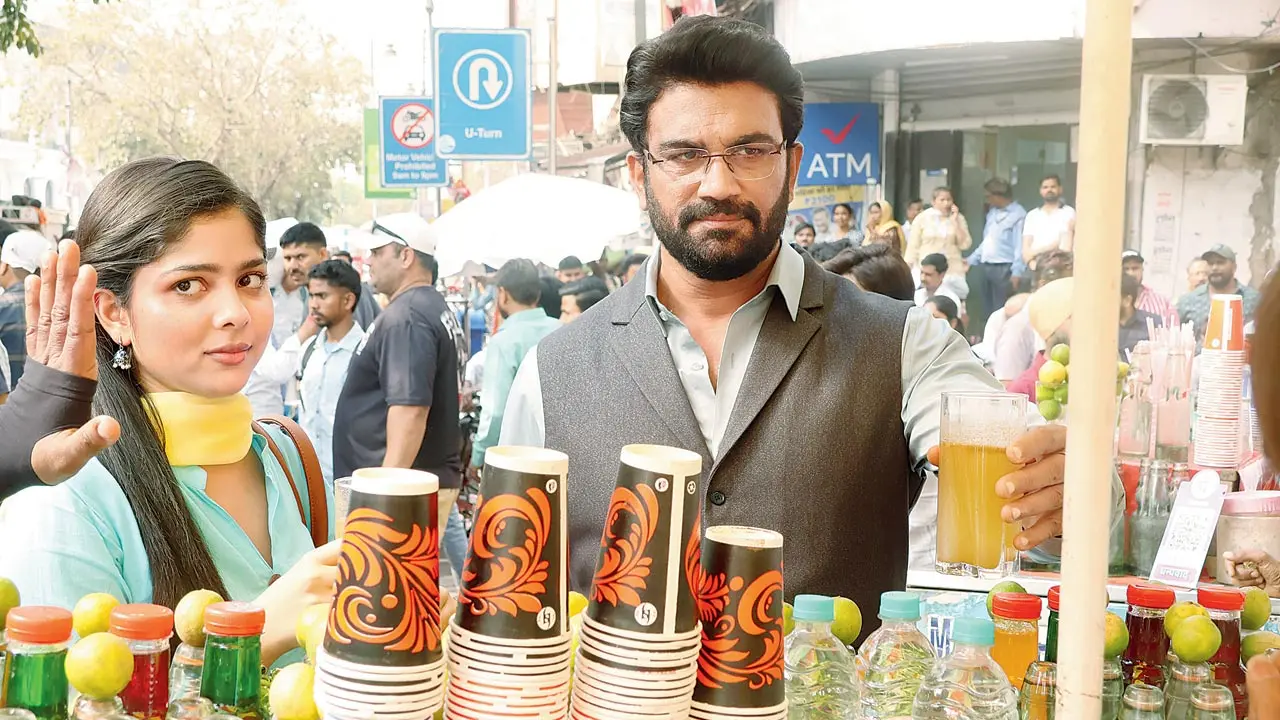
(L-R) Niharika Chouksey and Sharad Kelkar in ‘Tumm Se Tumm Tak’
Actor Sharad Kelkar argues against expecting television and film to carry social responsibility beyond their entertainment value
Letty Mariam Abraham (MID-DAY; July 29, 2025)
Acting is his forte, regardless of the character he plays. Sharad Kelkar, who returns to television after eight years, is excited to explore his romantic side — one he rarely gets to showcase onscreen. In Tumm Se Tumm Tak, the actor plays a 46-year-old business magnate who falls for a spirited 19-year-old. Ask him why, and Kelkar says it was the perfect choice for his comeback to TV. While many are surprised by the age gap between the lead characters, he maintains, “It proves that when two hearts truly connect, age is just a number.” In conversation with mid-day, he discusses his evolution as an actor, why television should be viewed purely as a source of entertainment, and why no amount of money is worth losing his peace of mind. Excerpts from the interview.
Do you ever have self-doubts about a character you are playing?
I have always strived to do things I have never done before. Of course, there are times when you end up doing similar things because the scale of the project is huge, especially in films. Sometimes, it is the story that intrigues you — even if you are repeating a character — but I try to do it as differently as possible. I’m ideally a director’s actor; I never go to the monitor to watch my shots. The director knows what he is shooting and what I’ve done, and he will tell me if it needs to be reshot. Who am I to judge? In fact, I welcome such criticism because it’s good for the project and for me.
Over the years, have you come across a director who has contributed to your growth as an actor?
It has been amazing throughout my career. Most of my roles have been unexpected — roles I never thought I would get to portray. Director Nishikant Kamat was the first to see me in a negative role when I was doing positive characters in TV shows. He offered me Lai Bhaari [2014]. If you go into the interiors, they still call me Sangram [his character in the film]. I don’t know how Om Raut decided to cast me as Chhatrapati Shivaji Maharaj in [Tanhaji: The Unsung Warrior, 2020]. Then there’s Raghava Lawrence, who chose me for Laxmii [2020]. I think I’ve been blessed to receive such different and unexpected roles.
There’s a rumour that you are the highest-paid actor on television. Is that true?
Actually, someone said that I’m the highest-paid on TV after Salman Khan and Amitabh Bachchan. Maybe in fiction shows, yes, but I still feel Smriti [Irani] would be the highest-paid actor. Rupali [Ganguly], who is doing Anupamaa, must be on the list. And Shabir [Ahluwalia] would be on the list too. However, I cannot be sure.
Is money a deciding factor for you?
It is one of the important aspects, I won’t deny it. If I am getting it, why not? When I do films, if you start doing them only for money, you may get two or three projects — then nobody will call you. Your work has to be substantial, earn that place in the industry, and be dependable. Money is still secondary. Sometimes you compromise; at times, you [demand] more if you’re in a better position. I have done a lot for friends. Money is important, but my peace of mind takes priority.
Tumm Se Tumm Tak is an adaptation of the Kannada show Jothe Jothiyali, which ran for three years. Have you committed for three years?
I haven’t seen the show. We spoke about it; the pace of our show is faster than that of the other. If people start liking it, then I may consider it. How can I decide in advance? I don’t sell my life that easily [laughs]. My contract, for now, is only for a year, which is standard policy. The show is divided into two tracks. As per the tagline, it is the meeting of two worlds. The advantage I have is that I don’t have to shoot for 20 to 25 days at a stretch. I get time to do my films, go on holiday, and spend time with my family.
There’s been a lot of talk about the age gap between your and Niharika Chouksey’s characters. Do you think such a storyline will find acceptance?
This is a fictional story. Everything should be seen from the right perspective. You cannot expect comedy from a film like Aligarh [2016]. I feel films are not meant to improve society. They are stories. They can’t be real. We are selling dreams, not [shaping] moral codes.
Any visual medium acts as an influencer, so don’t you also have the responsibility to give the right messaging along with entertainment?
Parents are spending money to send their children to school and colleges, but instead of getting influenced there, why is the onus on films, shows, and actors to guide or influence people the right way? These are just for entertainment. Inspiration should be only about the craft; the rest is fictional. I feel their perspective is wrong. How many of us would say, after watching Mirzapur, that we want to be like Kaleen Bhaiyaa? But someone who already has that instinct will obviously get influenced. We are not putting the idea there. It’s not like people started honour killings after watching movies and shows.
I always thought my first film would also be my last-Riteish Deshmukh
8:12 AM

Neha Maheshwri (BOMBAY TIMES; November 29, 2024)
While his comic timing in a string of Hindi films won him popularity, Riteish Deshmukh’s advent into Marathi films brought forth a side of him that the audience had never seen. Recently, the actor, who was seen as the host of the Marathi Bigg Boss, wrapped up the latest instalment of Housefull. In a conversation, Riteish talks about his journey in the Hindi and Marathi industries and how he defines success as an actor, director and producer:
‘The outcome of your efforts is not in your hands’
Riteish took over from Mahesh Manjrekar as the host of the recently concluded Bigg Boss Marathi Season 5. Ask him about the popularity of this season, and he replies, “I believe that instead of being weighed down by the success, one should be responsible towards the work that you’ve taken on and do it with utmost sincerity. I realized early in my life that the outcome of your efforts is not in your hands; it can succeed or fail. You have to give it your 100 per cent dedication regardless of the result.”
‘I’m just happy to dive into comedies’
The actor was also shooting for the fifth installment of Housefull alongside hosting the reality show. Talking about returning to a quintessential comic caper, he shares, “Although Kakuda was a horror comedy, it wasn’t the typical madcap one. So, I am just happy to get back to comedies, which are coming back-to-back with Housefull 5, Dhamaal 4 and Masti 4. In between, I will also be directing the Hindi and Marathi bilingual Raja Shivaji, a film based on the life of Chhatrapati Shivaji Maharaj.”
‘I didn’t deliberately choose to take on negative roles’
Reflecting on his early days, he recalls that his primary goal as a debutant in Tujhe Meri Kasam (2003) was simply to win the audience’s acceptance. He says, “When I debuted in 2003, all I wanted was for the audience to accept me. When comedies like Masti (2004) and Kyaa Kool Hai Hum (2005) worked, people started offering me only comedies.”
Ask him if he had to put in a lot of effort to break away from the genre, and he says, “No, I don’t think it was a deliberate attempt. It was just one of those opportunities that came my way. Ekta Kapoor and Mohit Suri were brave enough to offer me Ek Villain at that point, and I am very happy with the way it worked out.”
He adds, “I tried to do serious films like Naach (2004) and Rann (2010), but those didn’t work. I even did Aladdin, which didn’t click either. So, I was back to the comedy franchises. Breaking away from the comedy genre took time and films like Lai Bhaari (2014), Ek Villain (2014), Ved (2022), Visfot (2024) and Raid 2 (yet to release) helped me explore other aspects of my craft.”
‘Becoming an actor was never my plan’
Riteish has seen huge success in the Marathi film industry. Does he ever compare his journey in regional cinema with his work in Hindi films?
He says, “Becoming an actor was never my plan — I’m an accidental actor. In fact, I always thought my first film would also be my last. Everyone defines success differently. For me, success is something personal. When I reflect on my journey, as someone who grew up on movies, I feel immense gratitude for the opportunities I’ve had. I’ve worked with legends like Amitabh Bachchan, Shah Rukh Khan, Anil Kapoor, Madhuri Dixit, Mithun Chakraborty, Rishi Kapoor, Sanjay Dutt, Ajay Devgn, Akshay Kumar, and Salman Khan. These are the icons I admired onscreen. Sharing the screen with them is my definition of success. So, it doesn’t matter whether I’ve achieved great heights in Marathi cinema or performed reasonably well in Hindi. Those aren’t the metrics I measure myself against.”
Images: Salman Khan and Riteish Deshmukh reunite for a Marathi film
11:03 AM

BOMBAY TIMES (July 12, 2022)
Eight years ago, Marathi viewers witnessed a masaledar treat in the form of Riteish Deshmukh’s debut in the industry with Lai Bhaari. However, apart from Riteish’s debut, the Nishikant Kamat film was also talked about for the multiple cameos in it. One such cameo came from Salman Khan, and the audience went berserk. That was 2014.
Come 2022 and Riteish and Salman are reuniting again, this time for Riteish’s directorial debut, the Marathi film Ved. While details about Salman’s role in the film haven’t been revealed yet, photos from the sets, with the duo, have surfaced. In a statement, Riteish said, “We have completed shooting the film and are now embarking on the journey that will culminate with its release. During such times, it's important to have support from the people close to you and one such person is Salman Khan. He was with me in Lai Bhaari and we are reuniting for Ved now. ”
Appreciating Salman’s support, Riteish added, “Thank you Bhau. Love you. ”
The film has been in the news ever since its announcement. It will also mark Genelia Deshmukh’s first full-fledged Marathi role (she, too, had a cameo in Lai Bhaari). Besides these, the film also features Ashok Saraf, Shubhankar Tawade and Jiya Shankar in pivotal roles.
— Inputs by Mihir Bhanage
Rickshawalas call me Pammi, and bahut pyaar se-Aaditi Pohankar
8:19 AM

Kavita Awaasthi (HINDUSTAN TIMES; January 31, 2021)
“I am fortunate to have worked with great directors like Imitaz Ali and Prakash Jha sir, and that I got powerful scripts where I played the central characters. I am a hungry actor and when I get an impactful script, I want to deliver,” says Aaditi Pohankar, who starred in two hit web shows, She and Aashram, last year.
After debuting in Marathi cinema and dabbling in Tamil films, Pohankar got pan-India success with the two shows. The 26-year-old says, “I couldn’t have asked for anything else as both of my releases worked well. She became a blockbuster and makers noticed me and later Aashram, too, became very big. I had debuted with the Marathi film Lai Bhaari (2014), which had many names from Bollywood, so it didn’t feel too different. After a stint in south cinema, I realised that I want to stick to Hindi and tried to pick strong scripts. I want people to remember my roles.”
With success, came popularity and Pohankar is revelling in the fact that she is recognised and not just in Mumbai. “I have been surprised that people in Conoor and Ladakh have recognised me, which has been so pleasant. Rickshawalas call me Pammi, and bahut pyaar se. People from US have texted and sent DMs. It motivates me to perform better,” she gushes.
The actor has films on her agenda and has a list of directors and actors that she wants to work with. “In 2021, I have a sports film, a romantic movie and next seasons of my web shows as well. But after last year, everyone wants to shoot right now and my dates are clashing badly,” she signs off.
More than a friend, Nishikant Kamat was a mentor and guide throughout my career-Sharad Kelkar
8:12 AM

Kavita Awaasthi (HINDUSTAN TIMES; August 19, 2020)
 “It is so painful to talk about Nishi sir. More than a friend, he was a mentor and guide throughout my career,” says actor Sharad Kelkar remembering the late director Nishikant Kamat, 50, who passed away on Monday. He was battling liver cirrhosis in a hospital in Hyderabad.
Kelkar had known Kamat for the past eight years when he began his journey in films. “My last project was with him for a web show, Rangbaaz Phir Se, where he was the creative producer and edited the show too. I remember, he wasn’t well, yet he came to the set and met everyone. He was a strong-headed and positive person. The last time he fell sick and was serious, he fought hard and was on his feet soon. This time, too, we were hoping he would get well soon. I was constantly in touch with friends who were with him in Hyderabad. He was improving but this disease is unpredictable and Nishi sir was fighting hard but it didn’t work. It’s so sad. Talking about him, I am getting flashes of all the lovely memories with him. I remember, I would drop by at his office in Andheri whenever I could and we would chat for hours sipping tea,” says Kelkar, who worked with the director in two films - Lai Bhaari (2014) and Rocky Handsome (2016).
There has been an outpouring of posts and condolences for Kamat on social media and Kelkar attributes it to the person that Kamat was. “He was a lovable, lively guy with a great sense of humour. He would call everyone Sir, and was a disciplined man on the set. He would encourage everyone and as he was an actor first, then became an editor and a director. I spoke to him right before the lockdown and he was planning a film shoot in London,UK, and was supposed to go on a recce. Due to his ill health, even a small infection could lead to serious concerns yet he never let that stop his work. But he fought till the end and that shows how strong his spirit was,” says Kelkar.
It's always interesting to try something new-Sanjay Dutt
7:46 AM

As he forays into regional cinema with his production Baba, Sanjay Dutt says he is open to the idea of acting in Marathi films
Sonil Dedhia (MID-DAY; July 18, 2019)
 Months after announcing his foray into production with Prasthanam, Sanjay Dutt has ventured into regional cinema with the Marathi offering, Baba. The actor says that it was an emotional decision to back the project as the Deepak Dobriyal starrer revolves around the deep bond between a father and son. "When I sat for the narration, I was sure that I wanted to produce this film, as I want to be associated with good subjects. It isn't a deliberate attempt to dedicate the film to my father [Sunil Dutt], but he was my rock. I believe that the first person a child looks up to is his father."
The actor is fondly known as 'Baba' in Bollywood. Point this out to him, and he calls it a happy coincidence. "The credit goes to the director [Raj Gupta]. When they came to me, I was pleasantly surprised to hear the title." As he throws his weight behind regional fares, the star is also open to the idea of acting in them. "If something interesting comes my way, I wouldn't mind trying my hand. It's always interesting to try something new."
There is no denying that, at 59, Dutt finds himself busier than ever. While his recently opened production house needs his attention, the actor also has been dividing his time between his four films, Panipat, Shamshera, Prasthanam and Bhuj: The Pride Of India. But he shows no signs of slowing down — his banner is gearing up to bankroll a Punjabi film titled Bank Loan. "We want to create a balance between content-driven and commercial entertainers. A film like Sairat (2016) was a huge success, but at the same time, Lai Bhaari (2014) also did fantastic business. So the idea is not to compromise on content."
If I go out and shoot, then Riteish will have to take the step of being the homemaker-Genelia Deshmukh
7:19 AM

As she returns to big screen with Mauli song, Genelia discusses possible second innings in cinema; husband Riteish reveals duo is on lookout for “that perfect script”
Upala KBR (MID-DAY; December 10, 2018)
Two years after her cameo appearance in Force 2 (2016), Genelia Deshmukh has returned to the big screen — she features alongside husband Riteish Deshmukh in a special number, Dhuvin Taak, in his upcoming venture, Mauli. While fans of the duo have missed seeing them together, Riteish admits that he has been cajoling his better half to return to movies. “As a producer, I would love to see her on screen, maybe in a Marathi film. We will do a film together; we are looking for that perfect script,” says Riteish.
No stranger to regional fares, Genelia points out that a Marathi outing has been missing from her fiilmography so far. Impressed by the evolution of Marathi cinema in the past few years, she says that she is looking forward to dabble in them. “I have been part of regional cinema — both mainstream and off-beat. I find Marathi stories so good. When I read the scripts that make their way to our production house, I am bowled over. I have done a lot of work in the South film industry that people here wouldn’t necessarily produce,” she laughs, adding, “I would love to do commercially exciting movies like Mauli.”
The mother-of-two says that her children — Riaan and Rahyl — are the reason she hasn’t plunged headlong into films again. “It’s a full-time commitment once I come back to films. it can’t be a half-hearted effort. Riteish and I have to decide how we go about it. If I go out and shoot, then he will have to take the step of being the homemaker at that time as our children are too little to be left on their own.”
Ask her how Dhuvun Taak came her way and she credits Riteish and director Aditya Sarpotdar for the decision. “They were discussing possible names of actresses who could feature in the song. Next thing I know, Riteish told me that I am doing the song. My initial reaction was no, since I was out of town with our kids. He said, ‘Come for three days, shoot and go back’ and that’s exactly what I did. And I loved being in front of the camera again.”
Box Office figures don’t matter, people’s reactions do-Riteish Deshmukh
8:31 AM
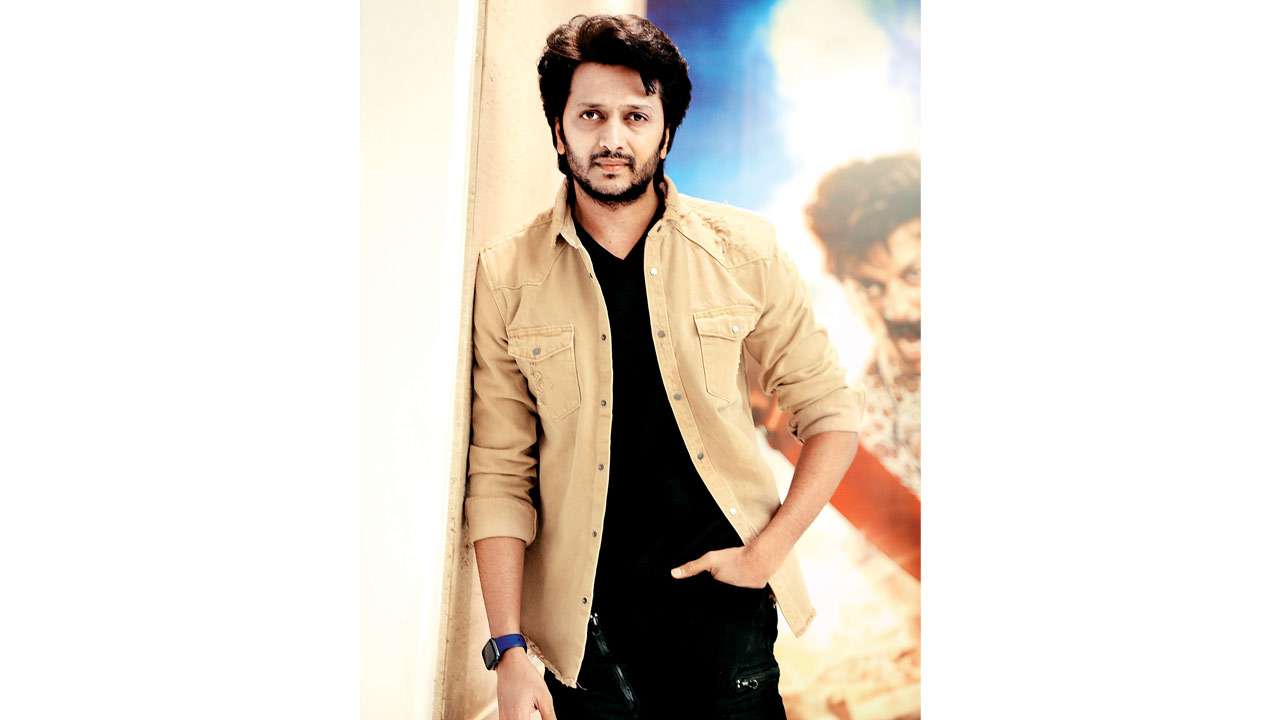
Nayandeep Rakshit (DNA; December 9, 2018)
Four years ago, Riteish Deshmukh made his debut in Marathi cinema as a producer with Lai Bhaari. His maiden venture went on to do over Rs 40 crore business at the box office. Proud of his Marathi legacy, the actor returns to the same space with Mauli. He tells After Hrs why there has been a long gap between both the movies, how he strikes a balance between regional and Hindi cinema as well as his learnings as a producer. Excerpts…
Would you say that Lai Bhaari is instrumental in changing people’s perception towards Marathi cinema?
Let’s not give Lai Bhaari that credit. It all started with films like Shwaas (2004) and Harishchandrachi Factory (2009), which won the National Award and were selected as India’s official entries to the Oscars. That’s when people started noticing the kind of content that was being generated in the Marathi industry. There are two parameters for films — content and commerce. But when the numbers started coming in, things changed. It began with Balak Palak (2013) which made Rs 12 crore. Then came Duniyadari that raked in Rs 25 crore. In 2015, Timepass 2 did around Rs 30 crore and after that, Lai Bhaari broke the Rs 40 crore mark as it had action and drama. So, Marathi industry was not only producing content but also making good numbers.
Natsamrat, which released in 2016, set the cash registers ringing with Rs 50 crore. Three months later, Sairat managed to cross the Rs 90 crore mark at the box office. Rs 90 crore in Marathi is almost like a Rs 300-400 crore film in Hindi. No Hindi movie, barring Baahubali, has done that much business in Maharashtra. Interestingly, all these flicks that have done these numbers opened in the same range of Rs 2-3 crore. So, now the aim is to increase the opening figures. But how do we do that? Do we increase shows? Because then, Hindi films will also take these shows up. So, it’s a double fight.
Regional and Hindi cinema fighting for screens has always been the case...
Yes, and it will continue to be so. There’s nothing bad with that. Everyone wants the best for their films. Now, it’s up to the audience to watch whatever they want to. But the only thing is that the other person should at least get a decent opportunity to showcase. Opportunity is an issue here.
You even moved your film, as a sign of love and respect for Shah Rukh Khan’s Zero...
Shah Rukh is doing the biggest movie of his career, in terms of production, and it’s an amazing film that he’s bringing to life. Mauli is the biggest film that my production house is making. The scales are completely different, and so are the budgets. I was releasing it on December 21 because it’s the holiday season. Initially, Total Dhamaal was supposed to open in cinemas on December 7. So, I wanted to keep a two-week gap between both my movies. With Total Dhamaal shifting to February 2019, I realised that if Mauli releases along with Zero, the business of both the movies would get affected. That’s when I decided that my Marathi movie should hit the marquee a week earlier. So, it has worked out well for Shah Rukh and me. And I’m glad we could do so for each other’s betterment.
What took you four years to come back with Mauli?
We were planning to release it sooner. We had developed it and announced it. However, later, we realised it’s not what it should be. After that, I got busy.
Does it become difficult to juggle between the two industries?
It is difficult but the responsibility I have for my Marathi films and productions is much more. I have to sit on everything — right from the font of the poster to whose name will be placed where. In the case of my Hindi films Housefull or Dhamaal franchise, I only have to do my photoshoots and promote the film. Life as a producer is challenging, engaging and extremely gratifying. It’s amazing to see how a script comes to fruition.
Is Mauli a takeaway from Lai Bhaari?
No, it’s not a part two. It’s a different story. But the essence and the premise remains the same.
People are increasingly remaking Marathi films in other languages…
There’s a certain sense of recognition today. Cinema and entertainment will soon be language agnostic. I’m watching a Spanish series with subtitles on my TV and enjoying it as it’s exciting. Mumbai is a true cosmopolitan city in the country where statistically 35 per cent of the population is Marashtrian while the remaining constitutes people from different corners. When a film becomes the talk-of-the-town, everyone gets excited to go and watch it. The non-Marathi speaking audience has also started watching our films, which is a great boon to our industry.
Have you ever thought of dubbing Mauli in Hindi and releasing it across India?
No, because if I had thought that way, I would have made it in Hindi. One should not confuse the basic core reason behind creating a movie. And that’s your audience. A Hindi version will take away a lot from the way I wanted to make the Marathi movie. Dubbing is an option. Mauli and Lai Bhaari both can be remade as great Hindi films too. But as of now, let’s see what happens.
Lai Bhaari was a huge success. So, the expectations from this film are quite high. Are you feeling the pressure?
No. Lai Bhaari, Sairat and other films were loved by the audience and that’s why they fared so well at the box office. If Mauli has to do the same business as Lai Bhaari, it has to be appreciated by viewers. Because of my debut Marathi film, I got the courage to make Mauli a bigger film in terms of budget, scale, action and songs. But if you think I’m looking at a business more than Lai Bhaari, then no, I can’t gauge that right now. Box office figures don’t matter, people’s reactions do. If people connect to the film, it will do good. Unfortunately, today we’re only discussing collections, which are immaterial. In recent times, smaller films have done Rs 100-crore business solely because of their strong connect.
Image: Riteish Deshmukh and Genelia Deshmukh reunite on-screen for a song in Mauli
8:45 AM

Nayandeep Rakshit (DNA; December 2, 2018)
Riteish and Genelia Deshmukh, who have been married for six-and-a-half-years, are one of the most adorable couples in Bollywood. Time and again, there have been talks about the two doing a film together and the former had admittedly told us sometime ago, “I want Genelia to do a full-fledged Marathi movie with me.”
Now, the jodi will reunite on screen for a song in Riteish’s upcoming production, Mauli. Reveals a source, “Their chemistry has always been loved by the audience. So, when the Housefull 4 actor saw there was scope, he got Genelia to do a Holi song with him for Mauli. Titled Surf Laavun Dhuvun Tak, it’s an out-and-out fun track in sync with the spirit of the festival of colours.”
Interestingly, they were last seen together four years ago, in a similar festive track in his debut Marathi film, Lai Bhaari.
Confirming the development, Riteish adds, “I don’t want to miss any opportunity to work with Genelia. I have actually forced her to do the number. It felt so good to dance together after four years and that too on an Ajay-Atul composition. Hopefully, the audience enjoys it as much as we did.” The song launches today.
Image: Saiyami Kher joins Riteish Deshmukh in Mauli
9:53 AM

Nayandeep Rakshit (DNA; May 7, 2018)
Four days ago, Riteish Deshmukh flagged off his next Marathi production venture — Aditya Sarpotdar’s Mauli — which has the actor playing the lead. Now, we can confirm that the makers of the actioner have found their leading lady in Saiyami Kher.
Riteish confirms the news, “We were looking for a fresh face to cast in Mauli and found that in Saiyami. She is young, vivacious and fits the character of a firebrand Marathi mulgi to the T. We look forward to working with her.”
Saiyami tells us, “I’m delighted to work in a language that I am very proud of — my mother tongue Marathi — that, too, opposite Riteish in his home production. He successfully introduced a new genre of action and drama to Marathi cinema with Lai Bhaari.” This will be the young actress’ second project and her debut in Marathi films.
Saiyami is taking forward the legacy of her grandmother Usha Kiran, who was a huge name in Marathi cinema. In a career that spanned over five decades, the yesteryear actress was known for films like Daag, Patita, Chupke Chupke and has received several top honours.
“Mauli will always be very close to my heart as it takes me back to my Maharashtrian roots. I will really miss my grandmom on this journey because she would have been proud to see my Marathi debut. I’m really excited and seek everyone’s good wishes and blessings,” she says. Incidentally, Saiyami’s aunt, Tanve Azmi, had played Riteish’s mother in Lai Bhaari.
There is a lot of pressure while working on sequels-Riteish Deshmukh
7:48 AM

Rachit Gupta (BOMBAY TIMES; April 11, 2018)
Riteish Deshmukh has a busy year ahead, with two Bollywood films lined up for release. He says, “I’m working on Total Dhamaal and Housefull 4. The previous installments of both these films have fared well and hence, expectations are already high. So, there is a lot of pressure.”
Having said that, Riteish also believes that any film with strong content, if released at the right time, will do well. It really doesn’t matter if they are part of a popular franchise. “The genre of the film could make a difference to its box-office prospects. Comedies like Total Dhamaal and Housefull 4 have a better chance to succeed, but at the end of the day, it’s about getting your content and release date right. If those parameters are in place, the film will work well,” he says.
That’s not all. Riteish Deshmukh, who made his debut in Marathi cinema with Lai Bhaari in 2014, is all set for his second outing in the language. Riteish will soon begin work on Mauli, which was first announced in 2015. The film, however, was later put on the back burner because of creative issues.
The actor, who is also an acclaimed producer in Marathi film industry, says, “Mauli is going on floors soon. Sometimes, what happens after a success like Lai Bhaari is that one tries too hard to figure out what one wants to do next. You have already set a benchmark and you don’t want to slip. But then, it doesn’t always work out the way you planned. Fortunately, in Mauli’s case, we got the film back on track.”
Mauli, an action drama directed by Aditya Sarpotdar and written by Kshitij Patwardhan, will be produced by Riteish’s production house, Mumbai Film Company.
Radhika Apte speaks up on the furore over her leaked sex scene in Parched
8:10 AM

Radhika Apte on the furore over her nude scene being leaked, and hubby Benedict’s support through it
Mohar Basu (MID-DAY; September 21, 2016)
Radhika Apte has been in the news more for the leak of her nude scene in Parched than for her performance. One would assume she is seething with rage at an irrelevant slice of the film taking the focus away from the issues at its core. But when hitlist caught up with her, she was surprisingly nonchalant. “I didn’t react when it happened. You can actually find any nude scene of any film on YouTube. I did the film, didn’t I? I want everybody to watch the movie. I was never under the impression that I should do the film but it shouldn’t be shown openly. That would be prudish, right?”
With statements like ‘nude scenes can be liberating’, she has earned the reputation of bold. But she says that she isn’t trying to be groundbreaking. “If I were one bit worried, I would be diplomatic, measured with my words. What others look upon as bold is just who I really am. I can’t fake it and I don’t want to have double standards,” she adds.
Supportive husband
For a married woman, it could be difficult but for Radhika, her violinist husband Benedict Taylor is her support system. “When he watches my films, he doesn’t respond as a husband, he responds as a viewer. Every person has a point of view. Sometimes, he likes what I do, sometimes he doesn’t. As a husband, he doesn’t really have a say. I don’t really have to take anybody’s permission to decide what I work on. He (Benedict) is one of the most liberal men I have met. He encourages me to break boundaries. This kind of support from the whole family helps. You don’t have another battle to fight at home at least. But, support is irrelevant, in the end. Not everyone has family backing. It is good to have it but if you don’t, you can still make it all by yourself.”
Mainstream ambition
She’s known for parallel cinema, but has no qualms about dancing and singing onscreen. She says, “I did Lai Bhaari which was a masala flick. I love dancing and I like good, peppy music. But the film should offer something enticing. I don’t want to be reduced to a small role that has no scope for performance. Luckily, mainstream films are becoming content-rich. I never had a plan for a career but I can’t bring myself to do movies that I don’t enjoy watching.”
Pop, rock and American music are alien to me-Riteish Deshmukh
8:10 AM

Neha Maheshwri Bhagat (BOMBAY TIMES; September 19, 2016)
Son of the soil, Riteish
Deshmukh is not just a successful producer, but a clever actor, too.
Contrary to his goofy image, there's a lot of introspection behind his
choices. A trait that is evident, right from the time he decided to
chase his passion for acting, instead of following his father's
footsteps into politics. A move that paid off and how. In a candid chat
with BT, the actor, who plays a street musician in the upcoming film
Banjo, reveals how every film he makes in Marathi is an ode to his
father, the late Vilasrao Deshmukh.
We heard that you wrote the lyrics for Rada Rada. Given your background, was it difficult to write such lyrics and connect with the character of a street singer?
The song is wrongly attributed to me. There is this perception that I come from an affluent background because my father was the Chief Minister of Maharashtra for a long time. But my upbringing has been middle class. My father was a farmer's son and a sarpanch before he entered politics. The culture and value system of Latur is deep-rooted in us. I lived in government quarters and kids from the neighbouring homes were my friends. One of my friends' elder brother was a banjo player. In fact, I also owned a banjo. So, this environment isn't alien to me. But you know what is? Pop, rock and American music. If I were to play a rock star, I would have had to work really hard to understand the character.
Tell us about your character in the film.
Taraat is arrogant, has a stubble and long, unkempt hair. He's probably not had a bath for days and is perpetually drunk. He speaks less and when he does, he uses a lot of punchlines, which sound rather heroic. In that sense, he reminded me of Amitabh Bachchan in Deewar. But he becomes a different person while playing the banjo. A musician that I kept in mind while playing that instrument was tabla maestro Zakir Hussain. The image of him playing the tabla for a tea commercial has been a big influence. There is a movement of his head that is in tandem with the rhythm.
What was Genelia's reaction to your new look?
She was really excited as she felt that I had sported the same hairstyle for a long time and needed to change it. I had to take a break of three months to grow my hair. Now, I am on a break again to grow my beard.
Is there something that we don't know about banjo players?
I wonder how many people know that banjo players play the instrument with a blade. I have done that in the film. I bite a blade and rip it into two in the introduction scene. I even cut my fingers while doing that, but you don't realise it at that moment, and continue playing.
 Nargis has a wry sense of humour and you are known to be a prankster. How was it on the set?
She is crazy and cracked. Being Maharashtrians, Ravi (Jadhav, director), the writer and I conversed majorly in Marathi. So, she would be like, 'Oh my God, there is one more language I need to learn now! I don't know what you are speaking. I barely understand Hindi.' But it worked well for the film as she is playing an NRI character in it.
So, can she speak a few words of Marathi now?
The only word I taught her was 'Aaicha Gho', which means mother's husband. She thinks it's a cuss word. I haven't told her the meaning, but after this interview she will know what it really means.
The film could be compared to Ranbir Kapoor's Rockstar, especially because Nargis was in that film, too...
There are bound to be comparisons because both are musicals. But every character has a different journey. Ranbir in Rockstar had a different goal and the same applies to Banjo. They have their own stories to tell. Just because a guy falls in love with a girl doesn't mean there can't be different romantic sagas. I loved Rockstar and I hope that people like Banjo too.
You played a solo hero in Naach and Rann, but got noticed with Ek Villain and Lai Bhaari. Do you think these movies changed the audience's perception?
Success changes people's perception. It dictates how the next two years will be. Had the earlier two films done well, things would have been different. But the comedies I did at that time turned out to be more successful. So, I was offered such roles back-to-back. My film Aladin, which is close to my heart, also didn't do well. So, I went back to doing comedies until Ek Villain came my way. Playing the villain helped me break the perception that I was only good at comedy. That was a huge risk. This was followed by Lai Bhaari, which was an action-commercial film in Marathi. I am glad it was received well. I am excited that now I am being offered non-comic films, too.
So, are multi-starrer films, barring franchises, off-limits now?
I learnt early in my career to adapt be it doing solo, two or multi-hero projects. People may differentiate my films as solo-hero projects or multi-starrers, but I don't. If I am offered a three-hero film after two solo projects, I will do it.
You went back to doing adult comedies after announcing a break from them...
I said no to adult comedies because I felt I couldn't offer anything new to the genre. Strangely, people think I only do comedies but the fact is that I have only done sequels. Having said that, I am in a space where I want to do what excites and stimulates me as an actor and producer. If I have something new to offer to any genre, I will do it. I just don't want to repeat myself.
You seem to have cracked the formula of producing successful Marathi films right from the word go...
There are a lot of parameters for a film to be successful. An engaging story told in a nice way, along with a good release are imperative. Personally, I don't think about the money when my film releases; if your budget is right and you pitch it correctly, it will surely be profitable.
Salman Khan wanted to remake your Marathi production Yellow in Hindi. What happened there?
Yes, we spoke about it, but we have both been busy with our work. Hopefully, we will reconnect soon on this and figure out the next step. With time, the relevance of the subject also changes. If it works out, we would love to make it with his production house.
You have added your father's name to yours in your Marathi film posters. Has this been done to establish a better connect with the Maharashtrian audience?
My father wasn't around to see my Marathi debut and hence, I decided that every Marathi film I do will have my name written as Riteish Vilasrao Deshmukh.
We heard that you wrote the lyrics for Rada Rada. Given your background, was it difficult to write such lyrics and connect with the character of a street singer?
The song is wrongly attributed to me. There is this perception that I come from an affluent background because my father was the Chief Minister of Maharashtra for a long time. But my upbringing has been middle class. My father was a farmer's son and a sarpanch before he entered politics. The culture and value system of Latur is deep-rooted in us. I lived in government quarters and kids from the neighbouring homes were my friends. One of my friends' elder brother was a banjo player. In fact, I also owned a banjo. So, this environment isn't alien to me. But you know what is? Pop, rock and American music. If I were to play a rock star, I would have had to work really hard to understand the character.
Tell us about your character in the film.
Taraat is arrogant, has a stubble and long, unkempt hair. He's probably not had a bath for days and is perpetually drunk. He speaks less and when he does, he uses a lot of punchlines, which sound rather heroic. In that sense, he reminded me of Amitabh Bachchan in Deewar. But he becomes a different person while playing the banjo. A musician that I kept in mind while playing that instrument was tabla maestro Zakir Hussain. The image of him playing the tabla for a tea commercial has been a big influence. There is a movement of his head that is in tandem with the rhythm.
What was Genelia's reaction to your new look?
She was really excited as she felt that I had sported the same hairstyle for a long time and needed to change it. I had to take a break of three months to grow my hair. Now, I am on a break again to grow my beard.
Is there something that we don't know about banjo players?
I wonder how many people know that banjo players play the instrument with a blade. I have done that in the film. I bite a blade and rip it into two in the introduction scene. I even cut my fingers while doing that, but you don't realise it at that moment, and continue playing.
She is crazy and cracked. Being Maharashtrians, Ravi (Jadhav, director), the writer and I conversed majorly in Marathi. So, she would be like, 'Oh my God, there is one more language I need to learn now! I don't know what you are speaking. I barely understand Hindi.' But it worked well for the film as she is playing an NRI character in it.
So, can she speak a few words of Marathi now?
The only word I taught her was 'Aaicha Gho', which means mother's husband. She thinks it's a cuss word. I haven't told her the meaning, but after this interview she will know what it really means.
The film could be compared to Ranbir Kapoor's Rockstar, especially because Nargis was in that film, too...
There are bound to be comparisons because both are musicals. But every character has a different journey. Ranbir in Rockstar had a different goal and the same applies to Banjo. They have their own stories to tell. Just because a guy falls in love with a girl doesn't mean there can't be different romantic sagas. I loved Rockstar and I hope that people like Banjo too.
You played a solo hero in Naach and Rann, but got noticed with Ek Villain and Lai Bhaari. Do you think these movies changed the audience's perception?
Success changes people's perception. It dictates how the next two years will be. Had the earlier two films done well, things would have been different. But the comedies I did at that time turned out to be more successful. So, I was offered such roles back-to-back. My film Aladin, which is close to my heart, also didn't do well. So, I went back to doing comedies until Ek Villain came my way. Playing the villain helped me break the perception that I was only good at comedy. That was a huge risk. This was followed by Lai Bhaari, which was an action-commercial film in Marathi. I am glad it was received well. I am excited that now I am being offered non-comic films, too.
So, are multi-starrer films, barring franchises, off-limits now?
I learnt early in my career to adapt be it doing solo, two or multi-hero projects. People may differentiate my films as solo-hero projects or multi-starrers, but I don't. If I am offered a three-hero film after two solo projects, I will do it.
You went back to doing adult comedies after announcing a break from them...
I said no to adult comedies because I felt I couldn't offer anything new to the genre. Strangely, people think I only do comedies but the fact is that I have only done sequels. Having said that, I am in a space where I want to do what excites and stimulates me as an actor and producer. If I have something new to offer to any genre, I will do it. I just don't want to repeat myself.
You seem to have cracked the formula of producing successful Marathi films right from the word go...
There are a lot of parameters for a film to be successful. An engaging story told in a nice way, along with a good release are imperative. Personally, I don't think about the money when my film releases; if your budget is right and you pitch it correctly, it will surely be profitable.
Salman Khan wanted to remake your Marathi production Yellow in Hindi. What happened there?
Yes, we spoke about it, but we have both been busy with our work. Hopefully, we will reconnect soon on this and figure out the next step. With time, the relevance of the subject also changes. If it works out, we would love to make it with his production house.
You have added your father's name to yours in your Marathi film posters. Has this been done to establish a better connect with the Maharashtrian audience?
My father wasn't around to see my Marathi debut and hence, I decided that every Marathi film I do will have my name written as Riteish Vilasrao Deshmukh.

Saturday is the new reality check-Riteish Deshmukh
7:58 AM

Riteish Deshmukh on the trade, changing trends, being on a career high as an actor and producer
Sarita A Tanwar (DNA; July 14, 2015)
Riteish Deshmukh started off his career as a solo hero
in Tujhe Meri Kasam in 2003 and followed it up with Out Of Control.
After just two films, he realised that perhaps his career needs a
different path to success. He found his space in films with a multi
star-cast like Masti, Maalamaal Weekly, Bluffmaster!, Cash, Apna Sapna
Money..!, Kyaa Super Kool Hain Hum and Aladin to name a few.
Unlike many heroes who start off with solo careers and stubbornly continue doing those till they are forced to retire, Riteish made the most of what was available to him. He came from an affluent background and could have continued making films mainlining him, but he didn’t let his ego get in the way of his dream. Today, he in the position to pick and choose films. I don’t know if success is always sweeter when it comes after a struggle, but it’s got to be lot more satisfying. Today he has earned the position he is at, along with respect. In the last two years, he has come into his own. He is flying high professionally and personally, but remains the same grounded guy I’d met during an interaction during the release of his first film. Here he talks about being on a high, career-wise, about changing attitudes in the trade and the way ahead.
The last two years have been rather significant for you in terms of your career. What do you attribute that to?
I think there are two things. I felt that the growth of the industry in terms of approach towards actors and not trying to cast them in the same roles, trying offbeat casting and people also being excited to see someone new in that role. Probably that has helped. I was lucky enough to have that opportunity be it, acting in Ek Villain, producing Balak Palak or doing a film like Lai Bhaari. Eventually, all these things timed out well for me. Thanks to them, I got Bangistan and YRF’s Bank Chor, which are not the typical comedies that I am associated with.
Grand Masti and Ek Villain took you to a different level, both crossing Rs 100 crores. In Marathi, it was Lai Bhaari that created new records. Is there a feeling of vindication?
One thing I learnt in the last ten years is that once the Friday is over, it’s the past. You have to let go. I have seen a lot of people who are living on Fridays that have really gone back. Saturday is a new day, Saturday is the reality check, you have to move on. As an actor, I feel the only day you should enjoy or be sad about is a Friday. Saturday you have to go out and start work again.
That’s easier said than done, no?
I know, but I have been a part of films that have not worked and of films that have been successes, but I don’t carry either forward. All that matters is the experience that you had while working on the films. Yes, it’s easier said than done, but I consciously try to work towards that, because everyone is on top of the game, everyone is doing great. There is so much to learn from female actors as well as from male co-stars. I saw Ranveer in Dil Dhadakne Do, and he was incredible, the way he did it. It was so easy and so nice, he was so wonderful. So it’s not about, ‘Oh, if I would have done the role would I do the same thing?” It’s about... he did it so differently so what I can do in my next film, that will be so refreshing? I got a chance in Ek Villain and I tried my best, I did my best but the film is done. What next?
You’ve always been a hero of the masses. With Bangistan, are you trying to reach out to a different set of people.
No. Till the time Ritesh Sidhwani called me for Bangistan I never thought that I would be the actor that Excel would approach or Yash Raj would want me for a lead for Bank Chor, but I was glad they had thought of me.
Bangistan looks too similar to Welcome to Karachi.
They are two different films. But it’s about two people caught in two different situations about India-Pakistan so in that way they are alike, but nothing else.
The director of Bangistan used to be a film critic. And he has always voiced his dissent at the kind of films you have done throughout your career. When your director shows contempt for the kind of films you have done, how do you relate to him?
That’s a very interesting question. For many years, I’d stopped reading reviews. So when I was told Karan Anshuman was directing, I was like ‘Okay.’ I don’t hold it against anyone if they dont like any film of mine. I am like ‘you didn’t like the film, everyone’s choice is different, so it’s okay.’ During a conversation much later, I mentioned to him that I had not read any reviews and at the time Grand Masti had released and Genelia told me he reviewed it. Karan said, “Read my review, I have in fact praised Grand Masti”. That’s the time I read the review.
He had praised it?
Yes, he had praised Grand Masti. More than anything, what I like about Karan or any director for that matter is when they narrate the film with a conviction. And it’s important how much a director understands cinema. I go with that feeling. And when Karan narrated it, it was wonderful. I didn’t know and I am not against any director who has had a flop film, no film, successful film...
As a hero, do you find attitude towards you changing after recent successes?
Whose attitude?
The film industry, in terms of the films that are being offered to you?
Yes. For sure. The films that have been offered to me now are different. Also, there are certain roles that people thought I would have done earlier, I like the fact that they now say, “Nahi, nahi... Riteish yeh role nahi karega”. In a way I’m glad they have decided to not approach me with certain kinds of roles.
You refused Kya Kool sequel because you consciously wanted to move away from that genre, but you are doing Great Grand Masti due to the emotional pressure from Indra Kumar. True?
I didn’t do Kya Kool... 3 because I wasn’t doing any adult comedies. Let me just say that I am doing GGM only for Indra Kumar. The only multi-starrer that I am doing right now are Great Grand Masti and Housefull 3.
You’ve emerged as a star in your own right now. Does it then become difficult to do films like Housefull 3 where you are sharing attention?
No. I am doing Housefull 3 because it’s my franchise. I feel it’s my film and I have grown with it, my career has grown with it and above all it has Akshay Kumar, Abhishek Bachchan, so I am working with my friends. There is no competition in terms of, there will never be a time when I am trying to do outdo Akshay or he is trying to outdo Abhishek. Everyone is comfortable and confident about their space.
One hears that now you are rather firm on the choice of heroine opposite you. She has to be of a certain stature. Is that correct?
No, no, not at all. I have never ever got into the casting of a heroine.
Has this change in your stance of doing a certain kind of cinema happened because of fatherhood?
In a way, yes. Marriage and fatherhood are two big life changing things. When you are single, your responsibility is for the day or for the week. When you become a husband then you start planning for the next one year or two years. But when you become a father, your life view suddenly shoots up and extends to the next ten or next fifteen years. And it’s great because I am looking forward to this responsibility.
Lai Bhaari has also given you a lot of responsibility towards Marathi cinema. One hears that you are getting the entire Marathi industry under your wings now.
Lai Bhaari was an attempt to do something more commercial within Marathi space and I’m glad it was received the way it was, and I think I am trying to just be a small contributor in this big wheel.
But suddenly, everyone is looking at you as the new hope of Marathi cinema.
I know I think it’s their bigness (sic) to look at me that way, and I will always try to live upto that. But there have been, and there are legends in Marathi cinema right now, who are doing their best and everyone is contributing towards success of the industry. There are so many advantages in Marathi cinema with regard to the kind of films you can make within limited budget and appreciation that you look forward to because those cinemas won’t be even attempted in the Hindi formats, unfortunately. Marathi cinema is the second choice in the State of Maharashtra, the first choice is always Hindi and we are struggling but hoping that changes. There are a lot of things happening. Hopefully, there is some film that will come and break the Rs 50 crore barrier. We have just broken 40. Hopefully 50 and 60, and Marathi cinema becomes stronger.
Lastly, most actors shield their children from the media. You have set a trend by coming out in the public with the baby pictures on social media. What was the thought behind that?
I wanted him to be part of my father’s birthday. It was my father’s 70th birth anniversary, and it coincided with Riaan’s six months, so we wanted to make that day special. Also, we have travelled with him and are going to travel in the future too. So why all the hiding and telling people, ‘Don’t click pictures’? It’s pointless. Especially, in this day of mobile phones, everyone is a paparazzi. So, we decided to put his pics out there and now I am not bothered. Whoever wants to click can click, but that was a special day and we wanted to make it extra special.
Marathi films target youngsters to hit box office sweet spot
7:40 AM

Big Crowds Key As Satellite Rights Revenue Dries Up
Sandhya Soman (THE TIMES OF INDIA; April 12, 2015)
One of the indications that you have arrived as a bona fide Twitter celebrity is when you get your hands on a 'verified' account. It means that Twitter has weeded out the imposters and announced it to the world that you are the one who is really in the news. A few years ago, when actor Swapnil Joshi got the blue tick mark of authenticity, he felt that it wasn't because of his decade-long career in TV and Bollywood but due to a few small-time Marathi movies that he had starred in. Movies, that were specifically made to draw youngsters and had made news for being box office hits.
“It was a small personal victory but also a victory of cinema,“ says Joshi. Now there are fan clubs in Aurangabad, Beed and even in Mumbai for most big actors like him. Joshi's bracelets are dutifully copied while Bollywood actor and latest Marathi icon Riteish Deshmukh's grungy bearded look is carefully cultivated. “I feel that now you can have a stable career in Marathi if you can connect with the audience,“ says Joshi.
Ever since satellite broadcasting rights for movies started petering out around two years ago, Marathi films have had only box office collections to bank on. This explains the industry's jubilation when the state government tried to push through a controversial prime time slot for Marathi in Mumbai multiplexes recently. What has also changed is the way these filmmakers have been tweaking themes to make not just award-winning movies but also technically slick, youth-centric films to ensure a decent theatrical run.
“Around three years ago, 70-80% of the revenue came from satellite rights. Now that has changed and you have to recover costs mostly from theatrical rights. Channels will buy only if the movie does well in theatres,“ says producer Nanu Jaisinghani.
The fall in demand from TV channels is something that has hit Bollywood too, says Kamal Gianchandani, CEO, PVR Pictures. “There has been a general dip in broadcasting rights as ours is a cyclical business and this has happened before,“ he says. What might have accentuated it for Marathi is the rise in number of movies it is churning out. “Channels need probably 50-60 films while we are making 150 a year,“ says Vijay Patkar, president, Akhil Bharatiya Marathi Chitrapat Mahamandal.
Producers and filmmakers meanwhile haven't been idle.“Marathi films traditionally had viewers above the age of 35, the kind of people who used to watch plays with family. But I realised that youngsters will watch good content after I tracked their reactions to my film 'Balak-Palak' on social media,“ says ad man-turned-filmmaker Ravi Jadhav.
Jadhav trawled the net to see who was posting YouTube videos of his 2013-movie, their age group and comments. One fan finally told him on Facebook that the current love stories feature 40-year-old heroes and heroines. “I am watching them from my childhood! Why don't you make something for youngsters?“ he asked. Jadhav complied and came up with monster hit 'Timepass', a light teenage romance firmly anchored in Marathi ethos, which collected an unprecedented Rs 33 crore.
Now there are more movies where there is something for everyone. Deshmukh-starrer 'Lai Bhari', a bigger commercial success than `Timespass', is in Marathi but could be Bollywood for all purposes, says actor-producer Suhrut Godbole. He followed the same logic while making super hero-movie 'Baji' starring Shreyas Talpade à la Zorro.“We got the best technicians and the movie rivals any Hindi one,“ he says.
With producers poring over costumes, dance and action sequences, a sore point with youngsters put off by the mindless comedies of 80s and 90s, the college-going crowd has gone back to proudly watching Marathi films, sometimes repeatedly . There are now talks about ticketed release of 'Time Pass 2' in Singapore, Malaysia and the Middle East, and many such movies crossing Rs 1 crore in the first week of release.
Gianchandani says the adoption of various genres and experimentation shows the natural evolution of the industry. “The movies are becoming very similar to ones produced in Tamil, Telugu or Hindi,“ he says, adding that a large part of this success could be attributed to government policies of tax exemption and other grants. The developments are also reflective of societal changes, says Jadhav. “Earlier, boys and girls had to take permission from parents to watch movies. Now, they don't as they have pocket money,“ he says, adding that social media has ensured that there is no information lag even in villages.
There has been no let up in content so far. Low budget movies like 'Killa, 'Court' and 'Khawde' go to film festivals, win awards, and gain publicity and crowds in theatres. The others, meanwhile, say they prefer to make clean entertainers, limited as they are by budget and viewers who prefer aesthetic content. “Content remains king,“ says Joshi.
Bollywood suffers losses but Marathi Cinema shows 200% growth
9:28 AM

Looks like the Hindi film industry needs to learn a few lessons from Marathi movies' business model — superior content, low budgets and zero reliance on stars. After all, the regional industry has registered 200 per cent profits last year
 Sonali Joshi Pitale (MID-DAY; April 5, 2015)
The Marathi film industry seems to have everything going for itself. The number of releases has shot up over the last three years and so have the profits — all this without "superstars" or big budgets.
At the recently concluded annual session of the Federation of Indian Chambers of Commerce and Industry (FICCI), a panel of producer and studio representatives stated that the regional industry had registered nearly 200 per cent profits in the previous year. The much bigger Hindi filmdom, which rides on claims of crores of rupees, the gain was a meagre 0.6 per cent.
Trade expert Komal Nahta says the Marathi filmdom is pegged to be a Rs 150 crore industry. "So, if we consider that they have made 200 per cent profits, that makes it approximately Rs 300 crore. However, I don't agree with such numbers as some films click with the audience and do well at the box office while others don't."
Last year, Ravi Jadhav (top, on left)'s 'Timepass' (pictured on top) raked in a record-breaking Rs 5 crore in its opening weekend. The film was made on a budget of Rs 1.75 crore and went on to earn Rs 30 crore, says the filmmaker, adding: "Planning is something that helps producers. We generally have a schedule of 30-35 days to complete a film. Marathi actors come from theatre, so they are disciplined and allot proper dates. Therefore, the budget of the film hardly goes beyond Rs 2 crore. The film narratives are simple and the shoot happens at real locations, which is why we don't have to spend too much money on the sets."

 At the FICCI session, the unanimous view on Bollywood's dismal performance was that most filmmakers depend heavily on the "star system" — the three Khans, Shah Rukh, Salman and Aamir — as it is a safe bet. Producers also have to bear the compensation of an actor's staff and spend heavily on the movie promotions, which have become an ego battle. Eventually, a project tends to go over budget.
"I don't know the methods of calculating profit. But I think an important factor working in favour of Marathi movies is how you control the budget and spend on publicity," says Bollywood actor Riteish Deshmukh, who turned producer for Marathi films with the superhit comedy drama 'Balak Palak' (pic, above) (2013). "In Hindi cinema, there is more competition and producers have to spend a lot of money on marketing, so recovering it all becomes difficult. Someone needs to break this strategy," he adds.

Sandeep Kulkarni, who featured in Nishikant Kamat's critically acclaimed film 'Dombivali Fast' (2005), feels the audience has been able to connect with recent Marathi films due to good content and music. "Films like 'Lai Bhaari' had a novelty factor which drew crowds to the theatres. It was also marketed well. In case of Hindi films last year, only 'Queen' could make profits as it was made on a small budget film and had a good story," says the actor, who will produce the sequel to 'Dombivali Fast'.
Director-producer Paresh Mokashi echoes his views, saying that Marathi culture has always supported good art, and the present-day filmmakers are in sync with the cultural milieu and aspirations of the audience. "Marathi films have never been a star-studded affair; people have always liked the way a story has been presented. So, films belonging to different genres like 'Lai Bhaari', 'Duniyadari', 'Elizabeth Ekadashi' and 'Fandry' have worked well," says the National Award winning filmmaker.
In the last few years, the regional film industry has handed out an assorted platter of coming-of-age films, social dramas, biopics as well as out-and-out masala movies for the masses, which have been a delight for the audience. And the winners, undoubtedly, have been the films with superior content.


Sources said the government subsidy for regional filmmakers is Rs 30-40 lakh.
BO toppers
Rs 40 crore
Total collection of 'Lai Bhaari' (pictured below); budget: Rs 8 crore
Rs 30 crore
Total collection of 'Timepass'; budget: Rs 1.75 crore
Rs 12 crore
Total collection of 'Dr Prakash Amte'; budget: Rs 2.5 crore
Rs 7 crore
Total collection of 'Elizabeth Ekadashi'; budget: Rs 1.5 crore

2014 has been special for us; we haven't planned any celebrations-Sajid Nadiadwala
10:17 AM

MUMBAI MIRROR (December 25, 2014)
2014 has been a very good year for NGE with 100% success rate of your films and your banner is receiving 6-7 trophies at every award ceremony. How are you celebrating it?
This year has been very special for us and there is a lot that I have to be thankful for. We haven't planned any celebrations as such, as all our time now is invested in the next year. We have 4 - 5 films to release in 2015 so we are all gearing up for it.
Your directorial debut, Kick, broke records, when do we see you start your next directorial venture?
I am overwhelmed with all the love we have received. There are no concrete plans for the next directorial film as yet. I need to feel strongly about a story and a script to take it up. As a producer, I have been in the industry for over 27 years now but while directing Kick, I felt like a newcomer. The journey has been unforgettable and I got to learn a lot.
You are an excellent producer, director and a writer (Lai Bhaari). What is next for Sajid Nadiadwala?
As I mentioned earlier, I am all occupied with our upcoming films. Our next with Tiger has gone on floors. Housefull 3 is in the scripting stage. We might start shooting soon. We are going to shoot with Imtiaz and Ranbir for Tamasha's another schedule soon. Phantom with Kabir is releasing in April. So there is a lot happening right now.
Shreyas Talpade lodges police complaint as Poshter Boyz becomes victim of piracy
7:46 AM

Sonali Joshi Pitale (MID-DAY; August 12, 2014)
Shreyas Talpade is a harrowed man. The actor, who recently turned producer with his maiden production, Poster Boyz, is upset about pirated DVDs of his film doing the rounds. Similarly, Ameya Khopkar, the co- producer of Riteish Deshmukh’s film, Lai Bhaari, too is said to be disturbed by the sale of pirated copies of the film.
A source says, “Recently, one of Shreyas’ close friends called him to let him know about pirated copies of Poster Boyz being sold in Mumbai. Lai Bhaari too has become the victim of piracy and this is why Shreyas and Amay met the Mumbai Police Commissioner on Monday.”
Urging the commissioner to take strict action against the culprits, they lodged a complaint with the city police’s anti- piracy cell on Monday. Shreyas and Amay confirmed the story.
Unplanned factors led to Lai Bhaari’s success-Nishikant Kamat
8:35 AM

Lai Bhaari's National Award-winning director Nishikant Kamat on the fortuitous events behind the Marathi grosser's unprecedented success
Kunal Guha (MUMBAI MIRROR; August 10, 2014)
 When Nishikant Kamat
returned to Marathi films after an eight-year sabbatical to direct the
Riteish Deshmukh-starrer Lai Bhaari in early 2013, it was to explore the
unknown. For the first time in his two-decade-old career, Kamat, who
has previously directed the National-award winning Dombivali Fast (2005;
his first venture into films after a decade in television), Mumbai Meri
Jaan (2008) and John Abraham-starrer Force (2011), had a typical
Bollywood potboiler on hand. “When I read the script, I was worried that
I wouldn’t be able to do it. I had never made a film in this genre,”
says Kamat.
Lai Bhaari’s story is that of a woman’s attempt to avenge the murder of her husband and son with help from another son she is reunited with after 25 years. The full-blown action-entertainer with a heady mix of Bollywood staples like comedy, romance and action, was a first for both, Kamat and Marathi cinema. It also marked the debut of a new wave in Marathi films.
For the first time, audiences were treated to a typical potboiler with Salmanesque larger-than-life treatment. “The Marathi film audience prefers intellectually-driven content, not mass entertainers. Lai Bhaari follows the typical Hindi film style of storytelling,” explains Kamat, who is presently filming Rocky Handsome with John Abraham in Hyderabad.
Though Kamat had tried his hand at mainstream cinema, he didn't think Lai Bhaari would achieve the commercial success it did. In the four weeks since its release, it has become the highest gross ing Marathi film ever. At last count it had raked in Rs 33.74 cr at the box office. But, it was the uncertainty that excited Kamat. “If a script tickles me or gives me butterflies in the tummy that root from fear, I just go ahead and do it,“ admits Kamat, who is slated to direct a yet-to-be-titled film with Irrfan Khan.
Kamat, who has known Deshmukh for eight years, had contemplated collaborating with him for a Hindi film, but nothing materialised until the two were approached by producers Ameya Khopkar and Jeetendra Thackeray (who co-produced Lai Bhaari with Deshmukh) separately. “I think I was picked since I keep trying new things and each of my films is different from the other,” says Kamat, adding that he is ‘satisfied’ with the response to the film.
And a film starring Deshmukh couldn’t have come at a better time. When it released, the 35-year-old actor was already riding high on the success of his first negative role in Ek Villain. Lai Bhaari was like a dream follow-through. But its box-office success, feels Kamat, is accidental. “Unplanned factors led to the film’s success. Firstly, Riteish's super-hit released just three weeks before Lai Bhaari and the fact that our film ended up releasing in July, a time when many devotees are on the pilgrimage to Pandharpur (shown in the film) were factors that contributed to tit being a hit,” admits Kamat, adding that the chartbusters com posed by music directors Ajay directors Ajay Atul were also a big draw.
Kamat’s recent ventures have his actors doubling up as producers (Riteish, John and Irrfan). “It helps get their dates easily,” he laughs. “On a serious note, they are more involved in the project and sensitive to production challenges. If they have to work for 12 instead of eight hours to accommodate financial constraints, they do it.” Many say Lai Bhaari has resurrected Kamat’s career — it is his second release since 2008 and now he has two films that are in production. But he insists that isn’t true. “I had bagged these films months before Lai Bhaari released. I have work chalked out for the next year, too,” he adds.
In an interview with a Mumbai daily last year, Kamat had said, “It doesn’t matter how successful I am as a filmmaker. I’d make a Marathi film whenever I need to reclaim my roots.” As it turns out, the two aren’t mutually exclusive after all.
Sajid Nadiadwala to get lesser single screens in Maharashtra for Kick thanks to Lai Bhaari?
8:36 AM

Vickey Lalwani (MUMBAI MIRROR; July 23, 2014)
Mirror (July 21) was the first to inform you that Salman Khan's Eid release has stiff competition from Riteish Deshmukh's film Lai Bhaari in single screen theatres.
Chief of the MNS Film Wing, Ameya Khopkar, who has co-produced the Marathi film with Riteish's wife Genelia D'Souza, had told us, "We will not withdraw from the screens where our film is doing very well. In the theatres where business is okay, we may give them a show or two."
However, a group of exhibitors tried to play peacemaker and met the MNS, late Monday evening. The meeting was inconclusive and continued on Tuesday. But despite negotiations, Sajid Nadiadwala, who makes his directorial debut with Kick, will get lesser single screens in Maharashtra than what he had asked for.
Leading distributor Ramesh Sippy says, "The matter has finally been settled. Lai Bhaari in its third week will get one or two shows at single screens in the main cities. Single screens in smaller centres will screen the film in all shows."
A source from the unit of Kick says, "The impact of the decision is more psychological than financial. It shouldn't make a big dent in our collections as the reduced number of screens is restricted to Maharashtra. Else, it's Kick all the way. And even here, the multiplexes have no problems in accommodating our film. They can always increase the number of shows."
Subscribe to:
Posts (Atom)