Showing posts with label Kolkata. Show all posts
Showing posts with label Kolkata. Show all posts
I told Zee team, ‘Going to Kolkata for 50 days is out of the question!’-Karisma Kapoor
8:53 AM

Priyanka Sharma (MID-DAY; June 2, 2026)
Picture this: Karisma Kapoor was shooting for a brand commercial four years ago, when the makers of Brown approached her to front the series. The actor’s first reaction? A hard no. Kapoor recalled, “I vehemently said no to Brown. I’m not in the rat race; I’m in my own lane, working at my own pace. So, when the team at Zee came to me, I said, ‘Going to Kolkata for 50 days is out of the question!’”
So, what changed her mind about the Abhinay Deo-directed crime thriller? Persuasion. “The lady [from Zee] asked for 20 minutes. I refused as the [brand] shoot was going on. She asked to meet me after two days. Today, I’m so happy I took that meeting, because when I heard the script of Brown, I couldn’t say no to playing Rita Brown,” said the actor, who plays a depressed, alcoholic cop investigating a series of murders in Kolkata. Certainly a dramatically different role from the ones Kapoor began with, over 30 years ago.
When she forayed into films, masala fares that relied on stardom, song-and-dance, and escapism were the norm — something that is viewed as easy today, when author-backed roles and realistic stories dominate the landscape. But she doesn’t share the opinion.
“The most difficult thing is to do comedy. You can pull off an intense scene, but doing comedy is tougher,” asserted the actor.
She further batted for mainstream movies, saying, “My first big award was for Raja Hindustani [1996], an out-and-out [mainstream] film. So, as an actor, just do your best and it will be appreciated.”
Helen returns to acting after 14 years with Karisma Kapoor's web series, Brown
9:29 AM
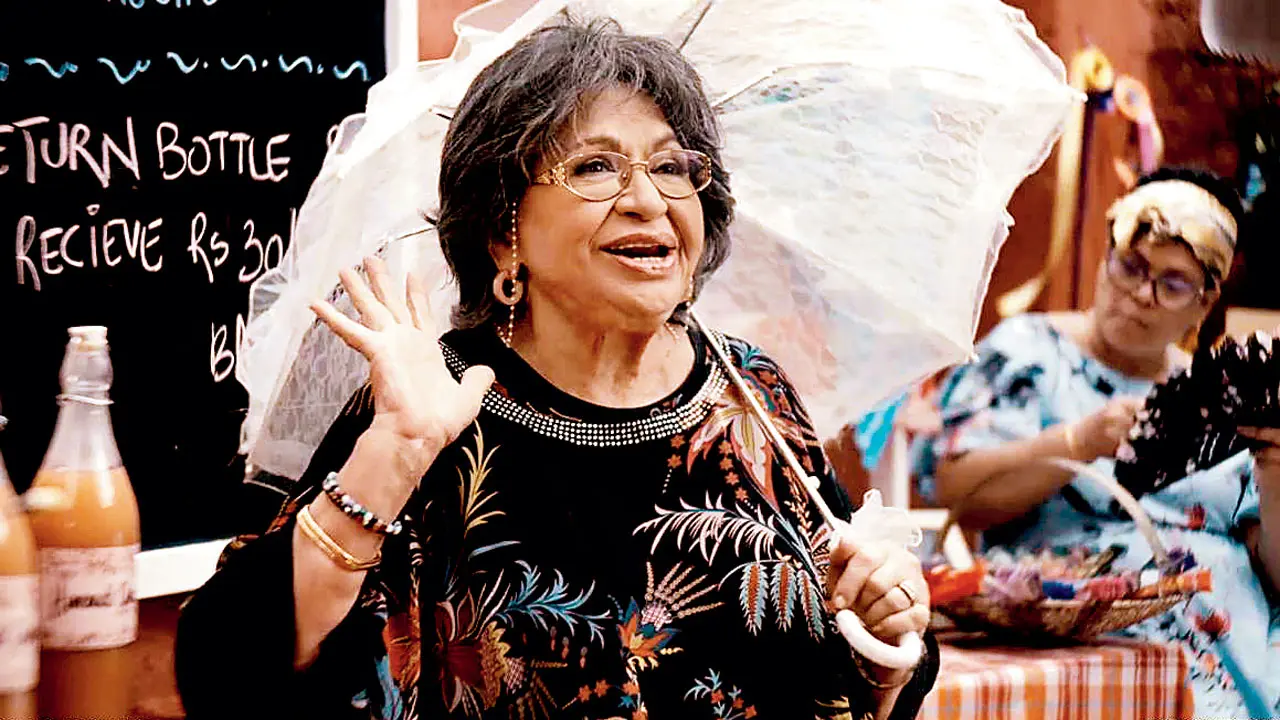
Returning to acting after 14 years with ‘Brown’, veteran actor Helen says she was delighted to reconnect with her craft through the light-hearted role
Mohar Basu (MID-DAY; May 28, 2026)
That inimitable grace and natural charm — we’ve missed seeing Helen on screen. Fortunately, the makers of Brown heard us. Sure, the noir crime thriller is being awaited as it marks Karisma Kapoor’s return to a web series six years after Mentalhood (2020). The cherry on top is that with it, Helen faces the camera after almost 14 years.
We aren’t the only ones excited about the special appearance. The veteran actor revealed that she, too, was thrilled at the idea of going to a set again. “It’s been such a long time since I faced the camera. Returning to acting, even for a small role in Brown, has been delightful. Sometimes, it’s not about the length of the role, but the joy of being part of something special,” she beamed.
Set to première on Zee5, Brown — directed by Abhinay Deo — follows Kapoor’s alcoholic cop, who investigates a string of brutal murders in Kolkata. While the story explores themes of trauma, guilt, and redemption, Helen’s character offers moments of levity in the intense narrative. She shared, “My character brings in moments of lightness and comic relief. I’m so glad I was considered for this part — it gave me the chance to reconnect with my craft and relive the magic of being on set.”
Making the experience richer were her co-stars, be it Kapoor or Soni Razdan. Helen added, “Working with Soni and Karisma was an absolute pleasure. I’ve known them both for years, and sharing the screen with them felt so natural and full of warmth.”
You’ll spot another unexpected face in the crime thriller. Singer Shaan is making his OTT debut with the series. He said, “It’s a sweet role, but one that adds an emotional layer to the story. What made this project close to my heart is that it’s rooted in Kolkata. With so many Bengali nuances woven into the narrative, there were moments I could deeply relate to.”
With Arijit Singh, it’s only about the art, not about the clothes you wear-Nikhita Gandhi
10:16 AM

Torna Chakraborty (BOMBAY TIMES; April 11, 2026)
Nikhita Gandhi, who recently enjoyed an afternoon hike around Rabindra Sarobar with us over a chilled bhaanr of lassi, also wanted to spend some time with the friendly strays in the lake’s vicinity. But every single one of them seemed to be cooling off in some shaded corner, away from the scorching sun. We too settled down in a cool, breezy spot to have a candid chat about her three dogs and the unconditional love they offer every day, and why she feels that adopting Indies is important.
‘Please rescue and adopt, preferably Indies’
Nikhita revealed that her journey as a pet parent began with a rescue dog, who she co-parented with friends in Mumbai. For someone constantly on the move, the Qafirana singer admits that being a pet parent comes with its own challenges.
“It’s a huge responsibility. I practically live in airports, but I make sure there are people to take care of them at home. We make sure that they’re never alone,” she says, adding, “Spending time with them feels therapeutic, especially when you have a bad day. They can sense it. There’s so much love in the house because of them.”
A strong advocate for adoption, she hates the bias against Indies. “All three of my dogs are Indies. Please rescue and adopt them. I believe in giving them a home. They bring immense love, comfort, and healing that changes your life,” she adds.
‘Kolkata will always mould me as an artist’
Nikhita calls herself a Benjabi (Bengali + Punjabi) and swears by how the city continues to play an important role in her journey.
“Kolkata is an artistic city. There’s an ease here, a cultural acceptance of the arts that allows you to dream freely. That will always mould the artist I continuously evolve into,” she said.
From learning Odissi as a child to training in Hindustani classical music, her foundation is unmistakably rooted in the city. The singer never misses her bhar-er chaa, even though she is a coffee person, the city somehow manages to break that habit. Growing up in Lake Gardens, her ritual was to take a stroll by the lake. She also acknowledged the strong presence of Bengalis in the music industry and said she never felt disconnected from the city.
“I have bumped into so many Bengalis in the music industry. We have been singing and dancing since childhood. So it’s a very natural course to enter the arts and to enter the music industry.”
‘With Arijit, it’s always about the art’
Nikhita’s latest track with Arijit Singh is trending, and that too after he decided to step away from playback singing.
Speaking about her association with the singer, she says, “My first song with Arijit was Raabta from Agent Vinod, and since then, we’ve been part of so many popular tracks such as Ullu Ka Pattha from Jagga Jasoos, Aavan Jaavan from War 2, and more. With him, it’s only about the art – not about the clothes you wear, or your branding – just the art. It’s a very beautiful thing for me – that I get to be a part of his legacy, and that he’s such an important part of mine.”
----------------------------------------------
I feel the bias against Indie dogs is akin to racism. It’s like you’re discriminating against our own breed of dogs
Filming begins for Sourav Ganguly biopic, Kolkata shoot planned
3:15 PM
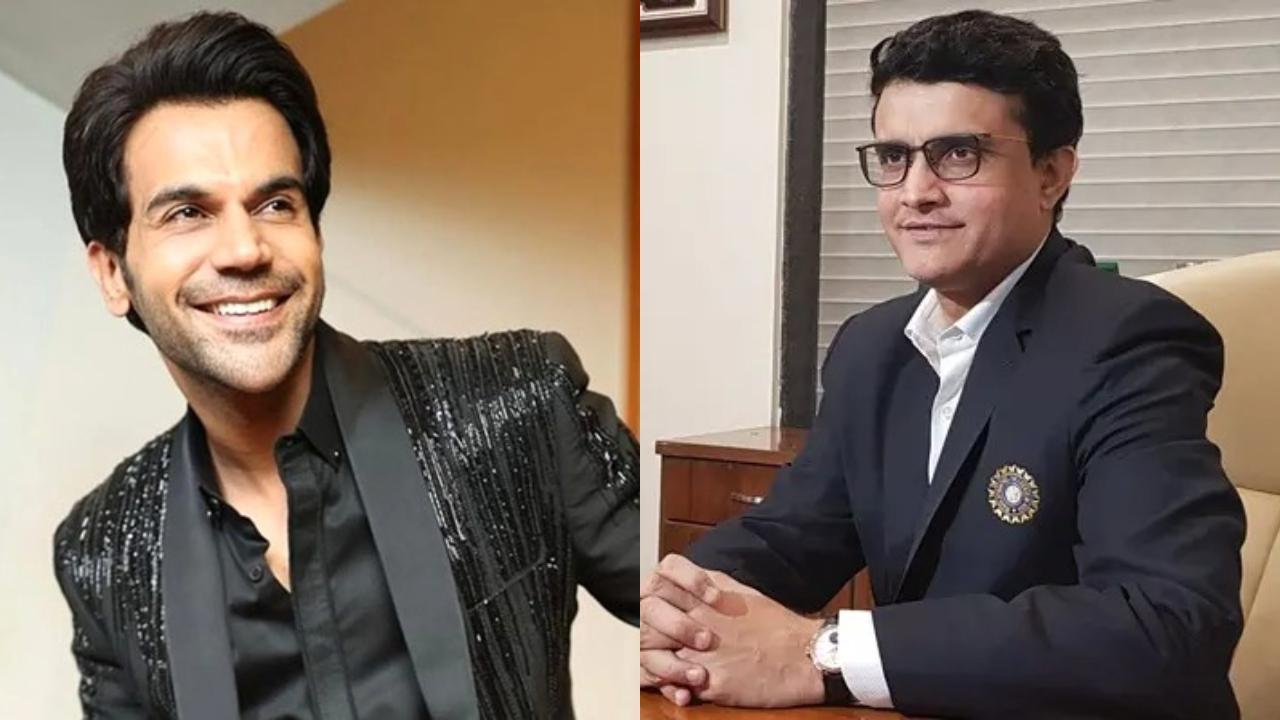
BOMBAY TIMES (April 3, 2026)
Filming has begun on the biopic of former cricket captain Sourav Ganguly, with filmmaker Vikramaditya Motwane stepping into the director’s chair, the makers announced on Wednesday. Actor Rajkummar Rao will portray Ganguly in the film, tentatively titled Dada: The Sourav Ganguly Story.
Sanjay Das, a key member of the project team, said, “Right now, Sourav is busy with the T20 league, but after the 10th, he will be present at the shoot. After 20th, shoot is scheduled to be in Kolkata, however the dates are being reconsidered, due to elections in West Bengal.”
When asked if Dada: The Sourav Ganguly Story is the final title, Sanjay added, “It is the working title as of now, it is likely to be changed.”
– Inputs from Ruman Ganguly
Rajkummar to visit Eden Gardens, Ganguly’s former training centre
Rajkummar Rao, who portrays Sourav Ganguly in the biopic, has undergone immersive preparation ahead of filming.
Earlier, sources shared that he may spend time in Behala – the Kolkata neighbourhood where Ganguly grew up – and visit Eden Gardens, along with the coaching centre where he trained, to study the cricketer’s onand off-field persona.
Boman Irani may join Rajkummar Rao in Sourav Ganguly biopic
4:30 PM

Ruman Ganguly (BOMBAY TIMES; March 2, 2026)
Casting discussions are intensifying for Vikramaditya Motwane’s upcoming biopic on former India captain Sourav Ganguly, with multiple roles still being finalized just weeks before the film goes on floors – an unusually tight timeline for a project of this scale. According to a source close to the production, Boman Irani is reportedly being considered to portray Ganguly’s father, Chandi Ganguly – though discussions are still ongoing. Casting for the role of Snehasish Ganguly – Sourav Ganguly’s elder brother and a former cricketer – remains under discussion, with no actor finalized so far. The film is scheduled to begin shooting in Kolkata from March 16.
Meanwhile, Gajraj Rao is being considered to play former BCCI president Jagmohan Dalmiya. “Gajraj Rao delivered a remarkable performance in Maidaan (2024), and the production house is keen to bring him on board,” a source said, adding that the casting process is still underway.
Tollywood actress Aparajita Adhya is being considered for the role of Ganguly’s mother. Several other Bengali actors, including Abir Chatterjee, Rudranil Ghosh and Saswata Chatterjee, were considered for roles during the casting process, but factors such as look tests and date availability created hurdles, the source said. Casting for dancer and choreographer Dona Ganguly is yet to be finalized.
The biopic is expected to be shot across Kolkata, London and Mumbai over a 40-day schedule. Vikramaditya Motwane recently visited Kolkata with his team for a recce, including a visit to Eden Gardens, as pre-production gathers momentum ahead of the shoot schedule.
Rajkummar Rao to visit Eden Gardens, Ganguly’s former training centre
Rajkummar Rao, who will portray Sourav Ganguly in the biopic, is expected to undergo immersive preparation ahead of filming. Sources say he may spend time in Behala – the Kolkata neighbourhood where Ganguly grew up – and visit Eden Gardens, along with the coaching centre where he trained, to study the cricketer’s on- and off-field persona.
--------------------------------------------------------
Sourav Ganguly met Rajkummar Rao in Mumbai recently. Since everything in the film revolves around the cricketer, his consent is necessary at every step of the film’s production – A source close to production
Sapna Bhavnani cancels Kolkata leg of Wench Film Festival after I&B ministry pulls SRFTI as venue
8:31 AM

Sapna Bhavnani forced to cancel Kolkata leg of Wench Film Festival after I&B Ministry removes Satyajit Ray Film & TV Institute as its venue
Priyanka Sharma (MID-DAY; February 19, 2026)
If things had gone as planned, Sapna Bhavnani would be unveiling the sixth edition of the Wench Film Festival at Satyajit Ray Film and Television Institute (SRFTI) in Kolkata today. But events over the past week have compelled the filmmaker to cancel the Kolkata leg of the horror film festival.
Things came undone a week ago when the Ministry of Information and Broadcasting (I&B) shared a few updates with her, which included the removal of SRFTI as the venue.
“On February 11, SRFTI’s PR manager informed me that they were told to put all festival activities on hold. A day later, my team member got an email from the I&B ministry in which they had mentioned the two films that they didn’t clear for screening. Also, they removed SRFTI as the venue. We never heard directly from the institute,” she shared.
With little time to arrange a new venue, Bhavnani had to cancel the screenings. She added, “We did everything as per protocol. It’s sad, especially since it’s a film school. I don’t know what pressure they have given in to.”
Our Prime Minister did not want me to continue singing-Babul Supriyo
8:13 AM

The singer-politician shares what kept him away from music for over seven years, his comeback and wanting to bring music into politics
Akash Bhatnagar (HINDUSTAN TIMES; February 11, 2026)
After over a seven-year hiatus, singer-politician Babul Supriyo, currently serving as a Cabinet Minister in the West Bengal state government, has returned to Hindi music with the track Ankhiyaan, a collaboration with singer Shaan.
“Luckily, I got a chance to split my time between Mumbai and Kolkata. Shaan has been a great composer for a very long time. I keep hearing his work,” he says.
Revealing that earlier he was not allowed to sing due to his political career, he calls his return as “Babul 2.0”.
“Music is my passion and my better half. I resigned once in 2017 as I was not permitted to perform. Even my American tour was cancelled. But then, if given a choice, I would leave politics. I enjoy it, but it is very vitriolic, so I am trying to bring some music into politics,” he adds.
The 55-year-old entered politics in 2014 with the Bhartiya Janata Party (BJP) before joining the All India Trinamool Congress (TMC) in 2021.
Reflecting on his break from music, Babul says it wasn’t voluntary, adding that even at serious platforms, he was repeatedly pushed to perform. “No matter the speech, what made it to TV were the songs they made me sing, turning every appearance into an ‘entertainment quotient’,” he shares.
The singer-politician adds, “Our Prime Minister did not want me to continue singing because he felt it would dilute my position as a Union Minister, so I had to abide.”
However, the artiste credits West Bengal Chief Minister Mamata Banerjee for allowing his return to music. “My CM promotes music. She has given me full liberty to do anything," he ends.
Alia Bhatt can play Suman; Prem could be a mix of Ranbir Kapoor and Ranveer Singh-Bhagyashree
10:16 AM

Sundas Jawed (BOMBAY TIMES; December 13, 2025)
From holistic living to putting her family first, the actress talks about how she prioritizes the important things in life & more. It’s a pleasure going on the set now. There are so many enterprising women at work – right from directors, cinematographers, assistant directors and more,” said Maine Pyar Kiya star Bhagyashree about the transformation of the film industry since her debut. In a candid chat with us on the sidelines of a recent event in town, the actress and wellness advocate also shared insights into her acting career, her experiences as a mother, her wellness journey, and more.
‘Storytelling has evolved with society’
“That’s because cinema reflects society,” she said. “For instance, audiences now embrace women in roles once reserved only for men. Earlier, an on-screen cop had to be a man, but now, women are doing fine in those roles,” she added.
On her journey towards holistic wellness
Speaking about the turning point that led her towards wellness advocacy, she revealed it began with a shock. “I woke up one morning, unable to move my right hand. Initially, doctors explained the condition with clinical terms like calcification and cervical issues, but soon, I realized a lot of it was emotional and mental distress manifesting in my body. The pandemic also reminded us how important health is for everyone,” she said, adding that after recovering, she felt a sense of responsibility to share what she had learnt.
“I realized I must help women my age going through similar struggles,” she said, adding that her methods are accessible to all. “These are things people can do at home – no side effects, simple, but regularity is mandatory.”
On putting family first
Looking back on her decisions early in life – choosing marriage, embracing motherhood, and pausing her career – she said those weren’t sacrifices, but priorities. “Family needs nourishment like a plant needs water and sunlight till it can stand on its own. That’s what I did – nourished my family,” she said.
On a Maine Pyar Kiya remake
On the timeless appeal of the 1989 blockbuster, Bhagyashree pointed out why her character resonated with the audience. “People wanted a daughter or a daughter-in-law like Suman... The role embodied love, innocence, respect, and deep-rooted Indian values,” she said, adding, “No matter how modern we become, we want respect for elders and relationships. That belief system doesn’t change. That’s why Maine Pyar Kiya is close to people’s hearts even today.”
When asked which actors would do the film justice if it were made today, she said, “Honestly, I don’t think it should be remade. It would lose its essence. But hypothetically, if it was ever remade, I think Alia Bhatt would be perfect for Suman. She has the face, grace, naughtiness, and demeanour for the role. As for Prem, it could be a mix of Ranbir Kapoor and Ranveer Singh. Ranveer would bring the energy to the first half, and Ranbir, the sincerity in the second half.”
-------------------------------------------
Many of my in-laws stay in Kolkata, so in a way this city is my sasural. Puchka, mishti doi & gur ke rasgulle are my favourites
-------------------------------------------
I would love to work in a Bengali film someday. I’ve met Prosenjit Chatterjee, who everyone calls Bumbada, and we often talk and hope we can do something together
-------------------------------------------
When my son Abhimanyu told me he wanted to be an actor, I was against it. Not because I doubted his abilities, but due to my fear of the emotional toll, the intense competition, and the constant public scrutiny he would experience
I don’t believe that cinema is dead, it’s alive and thriving-Ramesh Sippy
8:59 AM

Eshna Bhattacharya (BOMBAY TIMES; November 15, 2025)
When Ramesh Sippy took the stage at the 31st Kolkata International Film Festival for the Satyajit Ray Memorial Lecture, the packed hall was transported back to the dusty plains of Ramgarh, where Sholay first came alive. Fifty years since its release, the filmmaker’s words still carried the same spark of storytelling that defined one of Indian cinema’s greatest epics.
Sholay: From two lines to timeless legend
Ramesh Sippy recalled, “Sholay started as a two-line idea, maybe four, about an army officer and two mischievous ex-soldiers, later changed to police officers because army permissions would have slowed filming.”
He praised Salim-Javed, saying, “I told Javed sahib only about Gabbar - impulsive, heady, smiling one moment and exploding the next. From his first narration, I knew he’d captured exactly what I wanted. That scene in the ninth reel gave us the immortal line, ‘Kitne aadmi the?’”
On unseen technical challenges, Sippy explained, “The Thakur family massacre sequence took 23 days because weather kept changing; clouds appeared after days of perfect sunlight. The lamp-lighting scene with Amitabh and Jaya took 15–20 nights - we rehearsed in the afternoon and shot at dusk, often capturing just one take per day. There were no post-production fixes; every shot demanded meticulous planning, patience, and teamwork. Even a bike-with-sidecar shot was nailed in the first take after careful preparation.”
On casting, he said, “Dharmendra debated Thakur, Gabbar, and finally Veeru. Hema Malini’s speed and energy made Basanti unforgettable, while even small roles like Asrani’s jailor or Sachin’s priest’s son were built with perspective.”
Concluding on the film’s legacy, he reflected, “Every frame, every contribution - from Salim-Javed to technicians like M S Shinde and Mangesh Desai, to artisans like Aziz Bhai - mattered. That’s why Sholay endures, fifty years later, delighting audiences worldwide.”
Cinema, change, and the art of balance
For Sippy, the core of filmmaking lies in balance - between art and commerce, between dream and discipline. “The combination of art and commerce, to me, is true cinema,” he said. “Markets change, but the fundamentals remain. Filmmakers, producers, financiers -all adapt, but what lasts is sincerity.”
He dismissed the idea that cinema is losing its relevance. “Don’t believe for a moment that cinema is dead,” Sippy said. “It’s alive and thriving. Every genuine hit proves how audiences still come back to fill the halls. Multiplexes may be smaller than single-screen theatres, but they deliver what matters - great sound, beautiful projection, and that same old magic.”
Sippy’s message to young filmmakers was clear: “Follow your dreams, trust your instincts, and give the world good, powerful, entertaining cinema. The audience always knows what’s genuine - and they reward sincerity and passion. That’s the real legacy.”
He also spoke about the role of women in cinema, the rise of new voices, and how technology has transformed storytelling. “Whether you learn in film school or by observation, what matters is the urge to create,” he said. “Any time is a good time for cinema.”
Bengal, and a hope of a future bridge
The filmmaker grew nostalgic as he reflected on Bengal’s influence on his work. “To have someone like Satyajit Ray admire Sholay is an honour I’ll always hold close,” he said.
“Ray’s storytelling taught generations of filmmakers to aim higher.” He acknowledged the imprint of Bengali cinema on his own philosophy, adding, “I learned so much from Bengali cinema and from filmmakers everywhere: the ideal is always to combine art and commerce, making films that connect with audiences on all levels.”
Expressing a desire to return to Kolkata, he said, “Kolkata breathes cinema. I think I would be quite happy to look at some kind of proposal, a project bridging Bombay and Bengal. If we find the right film, the right subject that appeals to both audiences, and in general, to everyone, I’ll be very happy and willing to do it. If the opportunity arises, I’d love to make something that bridges Bombay and Bengal, a story that speaks to everyone.”
------------------------------------------------------
“My father was in films, but my first visit to a set was when I was just seven years old. I walked through those huge wires and all the equipment on set. It was dangerous, I realize now, but at the time, as a kid, I didn’t think about that. I was simply fascinated by the entire atmosphere.” - Ramesh Sippy
------------------------------------------------------
“Don’t think that cinema is dead. It is very much alive, and when a hit comes along, you realize the audience never left - they always come back. Whenever there’s a good film, they will return” - Ramesh Sippy
------------------------------------------------------
“Satyajit Ray was a great admirer of Sholay. He once told me it was one of the most well-crafted films in Indian cinema he had ever seen.” - Goutam Ghose
Konkona Sen Sharma on Durga Puja: "In Mumbai, they seem to have vegetarian food..."
4:11 PM

Akash Bhatnagar (HINDUSTAN TIMES; October 1, 2025)
Durga Puja rekindles in Konkona Sen Sharma the childlike excitement she felt growing up in Kolkata. The actor-director says, “It has been a part of my childhood and my upbringing. Growing up in Kolkata, it was a very big deal. We would plan our whole year around the Pujo. It’s beyond being a religious festival; it’s kind of like an identity for Bengalis.”
“During our childhood, we would all get five new dresses for five days, and then we would go into different pandals. We would eat food and meet friends and family, and it would be a very lovely festive time,” the 45-year-old explains as she recalls her memories of celebrating the festival.
This year’s celebration is extra special for the actor-director. Ask her why and she shares, “Along with Maa Durga, my mother (Aparna Sen, filmmaker) has come to visit me during the festival, which doesn’t happen every year. It’s really lucky that I’m spending time with my Maa Durga.”
Having moved from Kolkata to Mumbai, Konkona noticed a difference in how Durga Puja is celebrated in both places. “I was pleasantly surprised to see that pujo is such a big deal here too. It’s called Navratri and celebrated a little differently.”
Asked about the differences, she adds with a smile, “In Mumbai, they seem to have vegetarian food, which is very different from how Bengalis celebrate. In Bengal, people like to eat fish cutlets, chaat and whatnot. They indulge in food that they normally wouldn’t, and it becomes a part of the celebration.”
Parambrata Chatterjee, Sumeet Vyas, Aaditi Pohankar, Priyanshu Painyuli team up for Raj Chakraborty’s Hindi web debut
8:36 AM
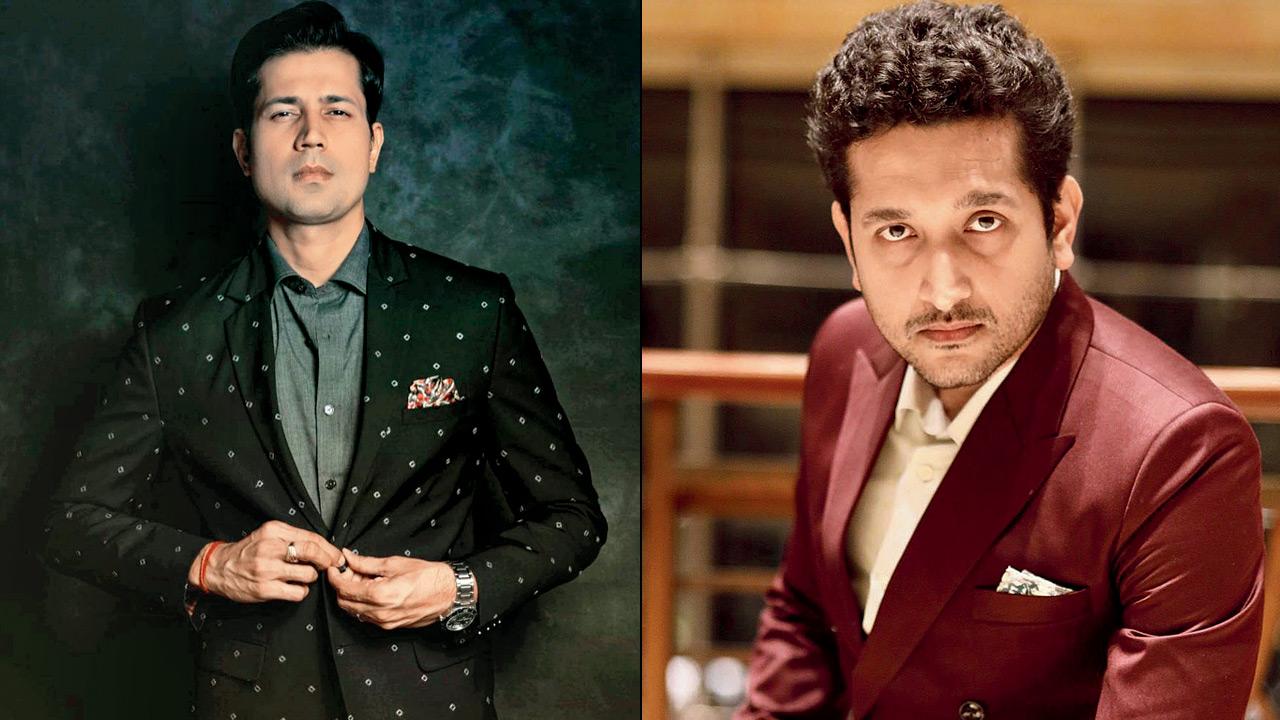
Mohar Basu (MID-DAY; September 28, 2025)
A gripping crime story demands edge-of-the-seat twists, a solid cast, and an auteur to weave it all together. The upcoming yet-untitled romantic thriller seems to tick all those boxes. Set to stream on JioHotstar, the series marks the Hindi streaming debut of Bengali filmmaker and politician Raj Chakraborty, and stars Parambrata Chatterjee, Sumeet Vyas, Aaditi Pohankar, and Priyanshu Painyuli in key roles.
The series, shot across Kolkata and Darjeeling, has wrapped filming and is now in post-production.
“The series revolves around a relationship tested by betrayal and hidden motives, set against the shifting social and political undercurrents of Kolkata and the hills of Darjeeling. The team has shot several key sequences in Kolkata’s older neighbourhoods and colonial-era buildings,” informed a source associated with the production.
He added, “The post-production is currently underway in Mumbai, and the streamer is expected to announce the title and release date later this year.” After gaining popularity with films, including Proloy (2013), Parineeta (2019), Habji Gabji (2022), and Shontaan (2024), among others, this romantic thriller marks Chakraborty’s foray into the Hindi web space.
The romantic thriller is politician and filmmaker Raj Chakraborty’s third project with Parambrata Chatterjee after ‘Proloy’ (2013) and ‘Habji Gabji’ (2022).
As long as both sides abuse me, I’m fine-Javed Akhtar
4:09 PM
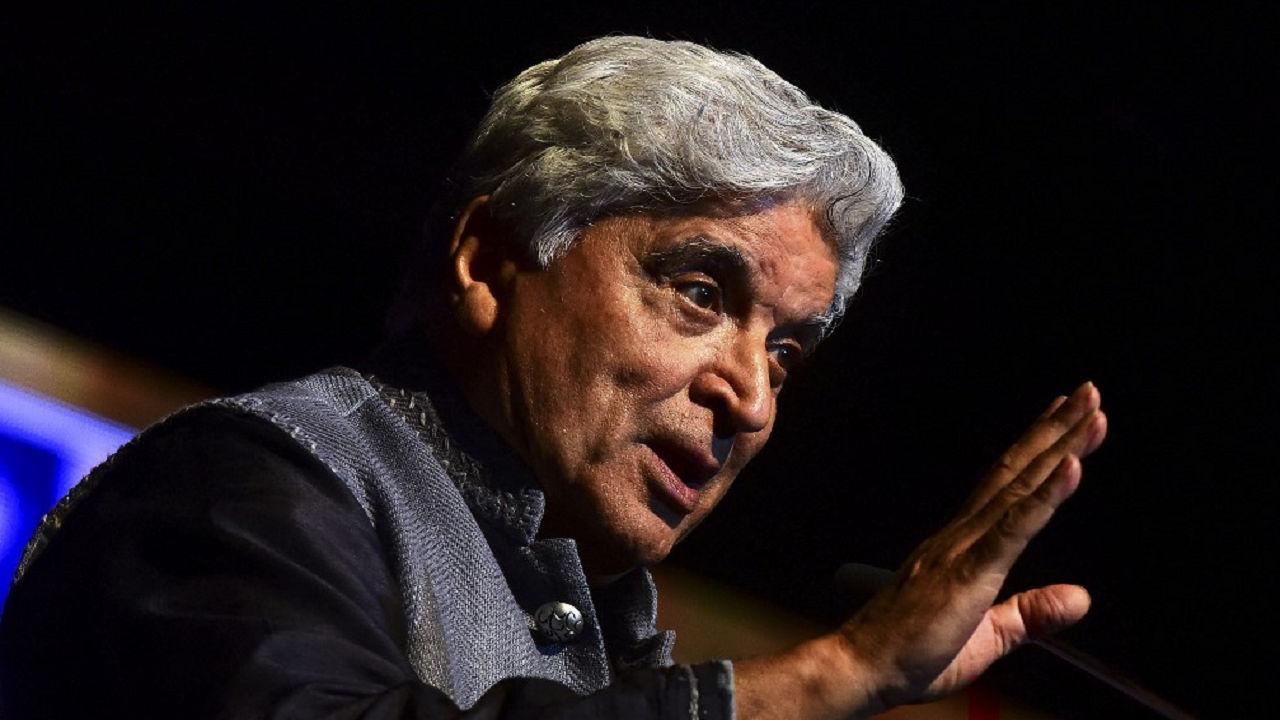
Lyricist Javed Akhtar, who was barred from speaking in Kolkata by a Muslim organization for being an atheist, opposes any religious group claiming ownership of a language
Alka Dhupkar (MUMBAI MIRROR; September 9, 2025)
After an event in Kolkata was cancelled over lyricist-poet Javed Akhtar being invited, writer Taslima Nasreen wrote on X about how he had once helped organize her book launch in Mumbai in 2000 despite religious groups threatening violence. “Today, however, there is no Javed Akhtar to bring Javed Akhtar to Kolkata and defeat the fundamentalists,” she wrote in the post.
Akhtar was to speak on the contribution of Urdu literature to Hindi cinema at the event organized by the Urdu Academy, before two Islamic organizations raised objections. Both organizations opposed his attendance because he had publicly spoken about being an atheist and promoted atheism.
While the Jamiat Ulema-e-Hind threatened protests and claimed Akhtar could make statements that upset communal harmony, the Wahyahin Foundation said they had invited Akhtar to a debate.
Speaking to TOI Plus, Akhtar said he had no intention of participating in any debate on his views of God orreligion. He also spoke about why a religious community can’t stake a claim to a language and why the Muslim groups have misunderstood Urdu literature entirely. Edited excerpts :
When Hindu trolls tell you to ‘go to Pakistan’ and some Muslim groups brand you a ‘kaafir’, how do you deal with hostility from both sides?
It is a great source of satisfaction to me. As long as the Hindu extremists and the Muslim extremists abuse me, I’m fine. If one of them stops, then I’ll be worried. I’d wonder what has gone wrong? Have I lost my balance? As long as both sides are equally upset with me, it means I’m doing fine.
Religious censorship has existed for a long time, but does its growing encroachment threaten the fundamental right to freedom of expression?
It (religious censorship) has always been a threat to freedom of expression. In the West, there are certain societies with a higher level of tolerance than what we have in India and South Asia. But religious intolerance is everywhere in the world.
Whenever I criticize religion, I don’t know why, but one particular community gets upset. For me, all religions are the same and I don’t differentiate between them. I don’t like any of them.
Religious sentiment is deeply personal, yet even constructive criticism of religious practices often becomes a sensitive issue…
This religious intolerance is understandable because whatever they (religions) believe in cannot be justified by reason or argument. Faith doesn’t need any argument, any logic, any reason, any witness, or any evidence. But you conclude, or you accept one, without the support of all these rungs of the ladder. Then, they have no choice but to bring in their sentiments. They say ‘our emotions are hurt’ or ‘our sentiments are hurt’. Have you ever heard anyone say our religious arguments or logic have been hurt?
Whenever someone voices modern views against orthodox practices, the response is rarely dialogue and is almost always a threat. Doesn’t this harm the religious sphere?
You know, I’ve been invited by a mufti from Kolkata to have a debate about whether God exists or not. I am willing to debate with anybody, anywhere, but first of all, they need to tell me what is the audience will be that will be there? Will they be your people who will not listen to reason and may get violent? If you were reasonable people, you would have said to me that since I was coming to Kolkata, why don’t I have a debate? You wouldn’t have stopped me from coming to Kolkata. You wouldn’t have asked Urdu Academy not to invite me.
In such an atmosphere, what gives you the courage to keep speaking your mind?
Maybe stupidity. But somebody should speak, somebody has to push the envelope. But you can only push the envelope up to a point and wait. In the next generation, somebody will come and push the envelope further. You cannot be a revolutionary because that is counterproductive. You will be helping the fundamentalists, because a common man will not be able to digest everything.
How far do you see yourself having pushed that envelope through your work so far?
That’s for others to decide. I am very careful, and I don’t always speak my mind. You may say that it is cowardice, but it is to try to make people more reasonable. You can only take one step at a time.
These are people who have no idea what Urdu literature is. All the important poets, except for the exception of Iqbal, were Leftists. This isn’t in the 20th century, but even hundreds of years ago. The kind of poetry Meer, Ghalib, Khayyam, Majaz, Faiz and other poets after them have written, show all of them are totally irreligious people. All of them were free thinkers and mentioned their religious beliefs tongue in cheek.
Like Meer wrote 200 years ago: Jaae hai ji najat ke gham mein aisi jannat gayi jahannam mein (When one loses tranquillity to the yearning of salvation, then may a heaven like that be banished to hell)
Or Ghalib says: Hum ko maaloom hai jannat ki haqeeqat lekin dil ke khush rakhne ko ‘ghalib’ ye khayal achha hai (We know the truth about Paradise, But to keep the heart happy, O Ghalib, this thought is good.
These were the most popular poets of their time. You know, the Quran was translated into Urdu for the first time in 1798 by Islamic scholar Shah Abdul Kadir in Delhi. All the muftis at the time issued a fatwa against him, questioning how he could translate a holy book in this heathen language, this dirty language which talks of lovers and wine?
Not everyone religious is an extremist. They could ask why you are against faith. How do you deal with this question?
They may say they are believers, but rational. How is it possible? They are just less irrational than others. But if you believe in anything which is beyond logic and reason, then you are irrational.
The Roman Empire was very advanced for its time, and the Romans worshipped Jupiter, who was a very important God for them. Today, if you hear that I worship Jupiter every morning, how would you react? What is wrong with worshipping Jupiter? And yet, I would seem mentally challenged today, though it was fine at that time. But if 10 crore people start worshipping Jupiter, you would say it’s a faith. It is the number of idiots that gives dignity to a stupid idea.
How Javed Akhtar was silenced in Kolkata in the name of Islam
4:05 PM
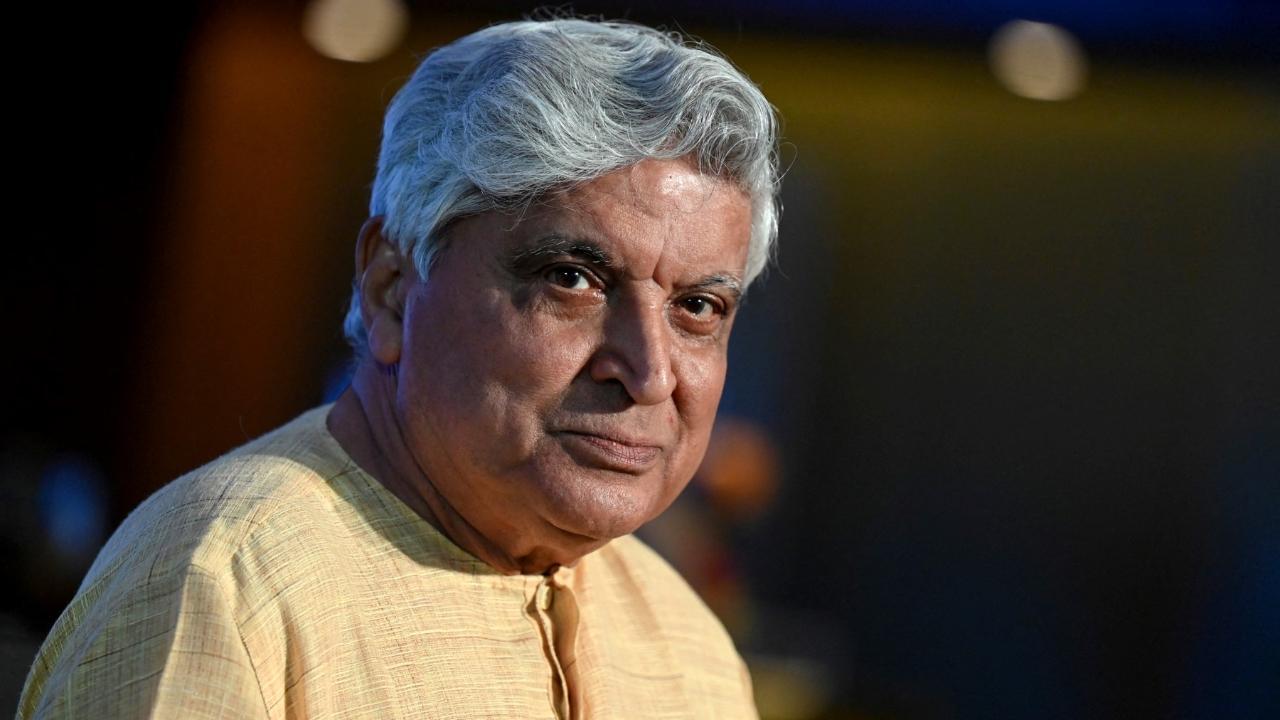
A state-run Urdu Academy postponed its festival after objections from two Islamic groups over Akhtar’s invitation. This cancellation has now reignited concerns about the state yielding cultural space to sectarian forces
MUMBAI MIRROR (September 4, 2025)
The Urdu Academy’s four-day festival in Kolkata was meant to be a celebration of cinema, Urdu, and poetry. Instead, it may now become a symbol of the suppression of free speech. Hours ahead of the inaugural session, the state-run body called off the event after two Islamic organizations objected to the presence of poet-lyricist Javed Akhtar, citing his outspoken atheism.
The cancellation has sparked a debate on whether political caution and religious sensitivities are shrinking the cultural space for Urdu in Bengal.
The four-day literary-cum-cultural festival organized by the West Bengal Urdu Academy to celebrate Urdu’s contribution to Hindi cinema was scheduled to run from August 31 to September 3.
The Hindu reported that, according to sources in the Urdu Academy, the state government intervened to avoid any unrest ahead of the 2026 Assembly elections. Officials were concerned that protests or even an ink attack on Akhtar could mar the event, the Hindu added.
“Due to unavoidable circumstances, the four-day programme, Urdu in Hindi cinema, scheduled from August 31–September 3, is being postponed,” said Nuzhat Zainab, Secretary of the Academy. When asked for specifics, she reiterated, “As I said, due to unavoidable circumstances.”
Two Islamic groups led the opposition
The opposition to Akhtar’s participation came from two groups — the Jamiat Ulema-e-Hind and the Wahyahin Foundation. Both wrote to the Urdu Academy demanding that his invitation be withdrawn, framing their objections in terms of faith and cultural propriety.
In a letter dated August 25, reproduced by India Today, the Jamiat had warned of “democratic protests” if the invitation was not withdrawn, drawing parallels to their earlier campaign against Bangladeshi author Taslima Nasreen in 2007. “If our people’s requests are not heeded, we will be forced to adopt another method prevalent in democracy,” the group said.
The controversy inevitably evoked the memories of 2007, when sustained protests by religious groups forced Bangladeshi writer Taslima Nasreen to leave Bengal after she was accused of blasphemy.
The Wahyahin Foundation said it was “surprised” at the Academy’s decision to choose Akhtar as chief guest and warned that his views could negatively influence young people. The group emphasised that his presence was not in line withthe spirit of an Urdu festival.
For the protesting groups, Akhtar’s identity as an outspoken critic of religious practices across faiths made his invitation to an Urdu event unacceptable.
Javed Akhtar’s atheist identity
Akhtar has long described himself as a rationalist. “I am an atheist and I say it publicly. I want people to be reasonable and rational,” he had tweeted back in 2019.
He has compared religion to alcohol, suggesting that while moderation may not be harmful, most people tend to overindulge, leading to intolerance and conflict. In another instance, he remarked that “all the religions without exception, belong to the dark ages.”
Despite his criticism of organized faith, Akhtar also identifies as a “cultural Muslim,” acknowledging his heritage while firmly rejecting religious dogma. Over the years, he has been equally critical of both Hindu and Muslim fundamentalists, once remarking, “As long as both – the communal Muslims and communal Hindus – are targeting me, I am doing the right thing.”
The postponement of the Urdu Academy festival has sparked wider concern about shrinking cultural spaces in Bengal.
Human rights activist Shabnam Hashmi reminded that “India is neither a Hindu Rashtra nor an Islamic country” and stressed that atheists have the right to live and speak freely. For now, the Academy insists that the festival will be rescheduled. Whether Javed Akhtar will still be part of it — and whether such a space can be secured for rationalist voices — remains an
Javed Akhtar’s run-ins with Islamic fundamentalists
JUNE 2025: Liberal Muslim activists penned an open letter accusing Akhtar of legitimising discrimination against Muslims after he linked anti-Muslim housing bias to Partition trauma; demanded unconditional apology. Its authors, led by activist journalist Asad Ashraf, accused him of using the “warped reasoning that Hindu supremacists use to justify... systemic discrimination” against Muslims and “fanning the flames of communal logic in the guise of being balanced”.
MARCH 2025: Backed cricketer Mohammed Shami for not fasting during Ramzan; told him not to “give a damn” to “reactionary bigoted idiots.” Taking to social media, Akhtar wrote, “Shami saheb, don’t give a damn to those reactionary bigoted idiots who have any problem with your drinking water on a burning afternoon at a cricket field in Dubai. It is none of their business. You are one of the great Indian teams that is making us all proud. My best wishes to you and our whole team.”
MAY 2020: Sparked an Azaan loudspeaker row with a tweet calling it a discomfort; AIMIM accused him of echoing an RSS-style rhetoric. He’d written, “In India for almost 50 yrs Azaan on the loudspeaker was haraam. Then it became halaal and so halaal that there is no end to it but there should be an end to it. Azaan is fine but loudspeakers do cause discomfort for others. I hope that at least this time they will do it themselves.”
OCTOBER 2019: Supported TMC MP and Bengali actress Nusrat Jahan after clerics attack her for celebrating Durga Puja; challenged them to also condemn lynch mobs. He wrote, “I support Nusrat unconditionally and whole heartedly. Now may I ask you if you have enough conscience and guts to oppose and condemn the lynch mobs and stand up for the poor victims.”
MAY 2010: Received death threats after calling a cleric “insane” during a TV debate on fatwas against working women.
I don’t think I’ll be doing any more films-Sharmila Tagore
8:09 AM

Ruman Ganguly (BOMBAY TIMES; April 15, 2025)
This Bengali New Year is extra special for Sharmila Tagore, as the veteran actress’ first Bengali film in about 14 years, Puratawn, has just released. Speaking to us at the Kolkata premiere of the film, the veteran actress tells us about her interpretation of Poila Boishakh. “Poila Boishakh isn’t about grandeur for us – it’s about the connection, the small joys, and traditions we’ve built over time,” she says.
In a chat with us, Tagore speaks about how the family celebrates different festivals “in their own ways”, returning to Bengali cinemas after a long time and why the recent film might just be her last.
‘We celebrate festivals in our own way’
“We celebrate every festival in our own personal way — that’s what makes them meaningful. Saif celebrates Eid, Kareena celebrates Diwali, and yes, Ganpati too. And wearing new clothes during Durga Puja? That’s still a must in our family,” she shares. Food, unsurprisingly, remains at the centre of it all.
“Goja banano hotoh barite mone ache amar (I remember we used to make deep-fried treats at home),” she recalls fondly. “My mother would prepare an elaborate anno bhog to offer to the almighty. Sweets were always part of the celebration, and they still are.”
‘TO RETURN TO BENGALI FILMS AFTER 14 YEARS IS SPECIAL’
It’s been nearly 14 years since Tagore last faced the camera for a Bengali film – but with the recently released Puratawn, she’s back in a language that remains closest to her heart. “I never really left cinema,” she says. “Even when I wasn’t doing films, I was still engaged – lecturing, working with NGOs, always involved with people. But Bengali cinema... it’s something else. To return after 14 years, and to do so with a film like this – that’s special.”
Puratawn, starring Tagore and Rituparna Sengupta, is a film about “a mother and a daughter – about ageing, memory, and how families navigate change.” Talking about the film, the actress says, “Ritu, who plays my daughter, is trying to fix everything — but the film shows that not everything in life can be fixed.”
The emotional layers of the film resonated with Tagore. “Many parents live alone today — their children are abroad or settled in different cities. Joint families are rare. Loneliness is real, and the film reflects that beautifully.”
‘MORE FILMS LIKE NAYAK SHOULD BE BROUGHT BACK TO THE BIG SCREEN’
Recently, Satyajit Ray’s critically acclaimed film Nayak (1966), starring Tagore and Uttam Kumar was re-released on the big screen across India, drawing first-timers from a younger generation and older audiences alike.
“Watching Nayak on the big screen after 60 years was a fabulous experience (smiles),” says the actress whose turn as a feisty but compassionate journalist in the film commands a fan following of its own till this day. “I’ve seen the film many times before, but only on a small screen. Getting the chance to watch it in a theatre is rare – you usually have to go to a film festival or wait for a special re-release.”
Tagore went not once, but twice – both times with close friends. “Uttam babu was absolutely fantastic, and Sumita Sanyal was so good, even in her short role. And I’ll be honest – I even enjoyed watching myself on screen,” she shares.
For the actress, the re-release was more than nostalgia – it was a reminder of how classic cinema continues to resonate. “I really hope more films like this are brought back. The impact, the enjoyment – it’s all so much greater when you see a film in a theatre. There’s something magical about it.”
A mother’s lullaby
In his exclusive interview with us, Saif Ali Khan spoke of a lullaby his mother sang to him in the hospital when he was recovering post the attack on him. “That hasn’t happened since I was a baby,” he had said. Tagore smiles when reminded of it. “I used to sing Khoka ghumolo para juralo... — isn’t that the perfect song to put a little boy to sleep? It’s apt, I feel,” she smiles.
‘I don’t think I’ll be doing films anymore’
The recently released Bengali film Puratwan may be the veteran actress’ last film. “I don’t think I’ll be doing any more films,” she says quietly. “Lately, I haven’t been keeping too well. During the shoot, I had to climb stairs, and while I managed, it made me anxious — will I be able to do everything that’s expected on a set? You need to be physically fit to shoot a film, and I’m not sure my health will permit that anymore.”
Violence in Kolkata has been the best kept secret for the longest period of time-Debatma Mandal
9:13 AM

Showrunner Neeraj Pandey and director Debatma Mandal on their connection to Kolkata and expanding the universe with Khakee: The Bengal Chapter
Mohar Basu (MID-DAY; March 16, 2025)
How do you raise the stakes after success? By biting into an even more sumptuous world. With Khakee: The Bengal Chapter, the standalone sequel to Neeraj Pandey’s Khakee: The Bihar Chapter, that is the attempt. The series explores the crime-infested landscape of early 2000s Bengal, with an IPS officer tearing through a web of political power and law enforcement roadblocks. This crime drama boasts an ensemble cast led by Jeet, Prosenjit Chatterjee, Saswata Chatterjee, and Parambrata Chatterjee.
While Pandey continues as the showrunner, directorial responsibilities are shared by Debatma Mandal and Tushar Kanti Ray. The series is set to stream in both Hindi and Bengali, making it Netflix’s first dual-language Indian crime show.
Mandal tells us, “The basic idea was from Neeraj. The idea that we could tell a story representing Kolkata a little better was always the endeavour. There were things about Kolkata that had not been explored earlier, which was an exciting premise to take up. We know how crime, politics, and violence work here because we’ve all grown up here. I think violence in Kolkata has been the best-kept secret for the longest period of time.”
When the Bihar chapter came out, Pandey had envisioned the Khakee franchise as a multi-series, each instalment focusing on a new state.
The showrunner added, “At that point in time, we were clear that the vision was to take it to different states. During the promotion of Khakee: The Bihar Chapter, somebody told me not to talk about the possibility of a season two right now. But we went ahead and said that this is supposed to be a multi-season show. If it doesn’t work out, no problem. But there’s nothing wrong with thinking of it, right? So we dreamt big from day zero. I’m happy that we’ve managed to tell a second season of this and am looking forward to many more.”
What’s the pada culture?
‘Pada’ means neighbourhood club/adda, a culture long practised in Kolkata. Initially, the members of the club were restricted to organising blood donation camps, hoisting the party’s flag, and conducting political rallies. They have now become the foot soldiers of the state government. Pandey, who spent a lot of time in Kolkata, explained, “We were just discussing the pada culture in Kolkata and how different it is from any other state. While the Bihar chapter was adapted, this is a fictional story, but we went back and referenced a lot of incidents we knew [beforehand].”
Pritish Nandy asked me for a sequel to Hazaaron Khwaishein Aisi-Sudhir Mishra
9:08 AM
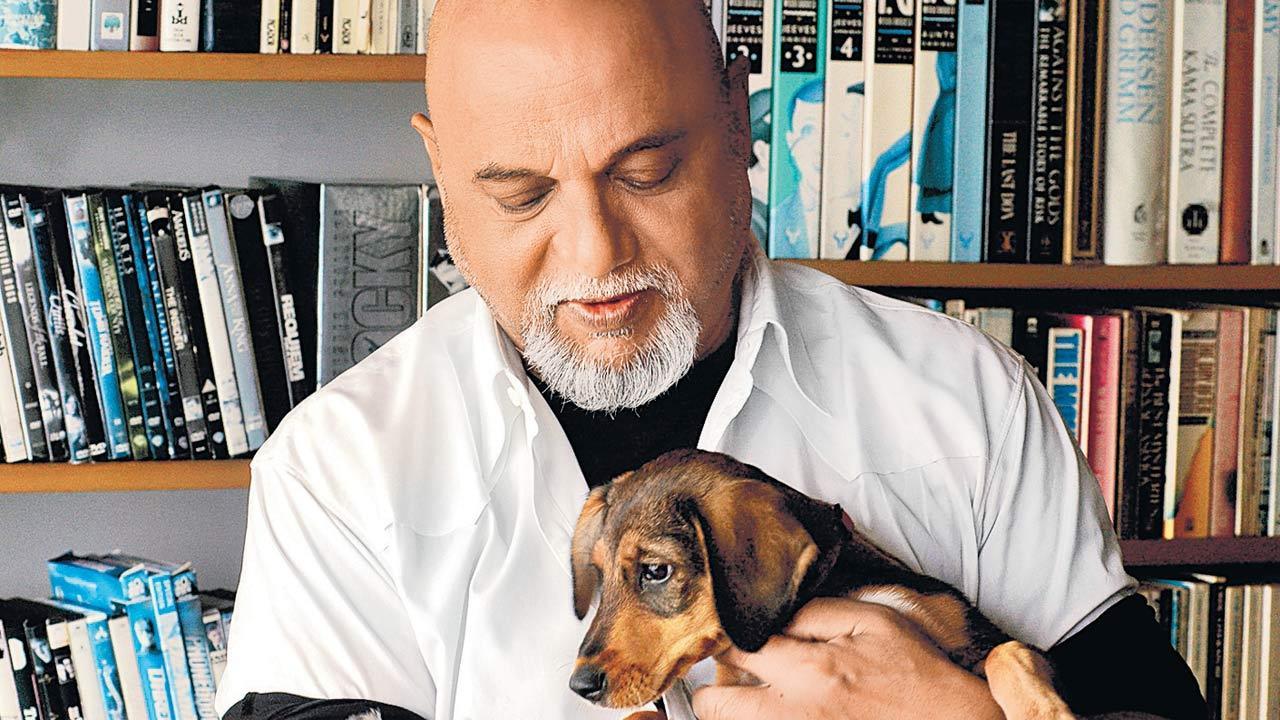
Director Sudhir Mishra on the man who made his Hazaaron Khwaishein possible
Sudhir Mishra (MID-DAY; January 10, 2025)
“You seem stressed”, a voice next to me half-whispered into my ear. I must’ve been crying or something. I was very stressed. I turned around and through my tears, I saw a blurred face of a man, who I recognized to be Pritish Nandy.
We were on a flight to Delhi, and the funding for my film had just fallen through. That film was Twist With Destiny, which would later be known as Hazaaron Khwaishein Aisi. The guy, who was funding me, told me to f*** off, because it was too obtuse, too unlike anything else, too political, and not political enough, where the main girl character was a kind of a sl**.
“Who’s going to sympathize with a bitch like that,” Money Man had said. I turned to look at Pritish again, and trying to get a hold of myself, I told him I was trying to make a film. And now that Money Man had said no, I’ll be unable to make it.
He looked at me, and smiled. Of course, I knew Pritish: the publisher and editor of The Times of India group, and that he had taken over the Illustrated Weekly magazine from the hands of Khushwant Singh!
He had done a lot of famous interviews with Mr Patnaik, the chief minister of Orissa, at the time. The interviews had almost toppled his ministry! I knew that the Delhi circles were quite upset with him. I knew that he didn’t give a damn.
I also knew that he had taken over the Sunday Observer magazine and then left it again! Rumours were that he had started a production company, but there were too many rumours in Mumbai, and we seldom took everything seriously.
I must’ve stared at him blankly, because I didn’t know how to reply when he suddenly asked me what the film was about. Anyway, I was going to spend two hours with the man [on the flight], and he had bothered to ask. My gut instinct told me that he’d get the film, creatively.
I sort of gave him a 15-minute narration. There was a long pause, and he told me “Come to my office tomorrow. I’ll give you the money.” That’s exactly how Hazaaron began.
We met the next day, I signed the contract in a couple of days. He never asked me what the cast was. I showed him pictures of the people I was casting. 40 per cent of the money was supposed to come from France, in kind. This came to us in the form of the DoP, the editor, and the sound designer.
Everyone else from India was new. The actors Shiney Ahuja, Chitrangda Singh were absolutely fresh faces and while KK had done some work, it was still initial days for him. Shantanu Moitra was the music director nobody knew at the time. Swanand Kirkire happened to be my associate director and he would go on to write the songs. He was also the main casting director.
Pritish never said much. He never talked about the film, but talked around it. He was very respectful to us as filmmakers, and very generously tried to tell us things around the subject-matter of the film—in the hope that some things would land, be understood and therefore, become part of the film.
In those conversations, I understood how deeply he knew about those times. There was also a lament inside him for what was changing. There was this Radical Kolkata interacting with the Cosmopolitan Kolkata. The Radical Kolkata was also the product of the Cosmopolitan Kolkata, and the various fissures tearing apart Bengal then.
Pritish Nandy was a product of the Kolkata of that time, and he carried that with him wherever he went. Sometimes, I think, you could feel the loss in his poems, although he never directly talked about them.
Another great thing about Pritish was that he never imposed his power as producer. When he didn’t like something, he never issued instructions. Instead, he gave you many options, of which you could take one, or many. There was never any insistence from his side. But the depth and force of his arguments were so great that you often incorporated his understanding of things into your film.
One day he called me and said, “Your film is about my time, but then it should also be about any time.” For him, the ’60s were also visible in the ’70s; and so was a yearning for the future.
“So, your film should indicate the time period subtly, but not constantly thrust it in the audience’s face. Everyone should not have sideburns. Not everyone should wear a bell bottom, and so on.”
I thought it was a sharp observation and something that I implemented. As a result, Hazaaron became about the people, and the Emergency became its backdrop, and therefore, now it’s not only about the young people of that time, but about the young people and their passions in any time period.
Another sharp memory. I was going to the shoot one day, and he called me and said, “You know, Sudhir. Your title ‘Twist With Destiny’ doesn’t do justice to the film. So, change it, but please don’t give me an English one. It’s an Indian film. Give me a title, which doesn’t just appeal to the anglicized set, but to everyone.”
Five minutes later, I asked him if we can call it ‘Hazaaron Khwaishein Aisi’. He immediately said yes, and put the phone down.
When Hazaaron didn’t release for a long time I was quite upset and he said to me, “I let you make the film you wanted to, right?” Now, let me put it in front of the audience in a way that the audience deserves, and he did.
Hazaaron, in some strange way, in the way he marketed it [though not everyone agreed] became a silent, cult hit, and that has a lot to do with Pritish.
Then we made Chameli. During that time, I met his two lovely, young daughters. He said, “I used to hate them, when they were children. But when they grew up to be bright, intelligent children, I fell in love with them.” You wouldn’t think so, when you met a man like Pritish. But he really adored his children.
I often met him later… We were going to do another film, but it didn’t work out. He called me, and we met again. He asked me for a sequel to Hazaaron. It’s one of my regrets that I couldn’t come up with a worthy sequel for Hazaaron.
We were supposed to meet this month and over a cup of tea, talk about life and cinema. That too is one regret.
Nobody has approached me for Bhagam Bhag 2-Govinda
8:13 AM

Amid reports of Bhagam Bhag’s original cast reuniting for the sequel, Govinda says he will front the comedy only if the script and remuneration are to his liking
Upala KBR (MID-DAY; December 4, 2024)
Fans of Bhagam Bhag (2006) cheered hard when Shemaroo Entertainment and producer Sarita Ashwin Varde announced the sequel to the comedy, last month. Reports suggested that the original trio—Akshay Kumar, Govinda and Paresh Rawal—would reprise their roles in the second instalment. But now, there is a plot twist. Govinda says he hasn’t even been offered the laugh riot.
“Nobody has approached me for Bhagam Bhag 2, or sat down for a discussion. There are stories of me doing not just Bhagam Bhag 2, but many other sequels, including Partner,” says the actor, amused by the developments.
Many filmmakers are jumping on the bandwagon of franchise films. The sequel to Priyadarshan’s Bhagam Bhag, which is expected to roll next year, comes 18 years after the original’s release. Quiz Govinda whether he would like to be a part of it, and he says his decision will depend on various factors.
“I know sequels are popular today, but one should not go by beliefs, suggestions and popularity. If I do a project, I must discuss it in its entirety—from the remuneration to the script, my character and the director,” he points out.
Regardless of whether he stars in Bhagam Bhag 2 or not, the actor is making his way back to the movies. On the latest episode of The Great Indian Kapil Show, Govinda announced that he has signed three new films, Bayen Haath Ka Khel, Pinky Darling, and Len Den: It’s All About Business. After his sporadic appearances on screen over the past decade, it will be refreshing to see the senior actor—easily one of the best in Hindi cinema when it comes to comedy—in front of the camera again.
His excitement is palpable as he says, “We’ve selected the best scripts. After Aa Gaya Hero [2019], we hadn’t announced more films, but now the time is right.”
The senior actor hit headlines this October, when he sustained injuries on his leg after his gun accidentally went off. Asked if he has recovered completely, he says, “It was important for me to come on Kapil’s show and perform because people were saying a lot of things. [They were wondering] whether I can dance like I used to earlier. So, I appeared on the show and spoke about the accident hasi mazaak mein. [On October 1], I was to catch a morning flight to Kolkata for a special darshan to Dakshina Maha Kali. The [revolver] case was made of plastic, and the gun slipped from the case and accidentally fired on my knee. Now that I’m better, I’ll visit all the places where I had taken mannat.”
R Madhavan to play a 40-year-old virgin opposite Fatima Sana Shaikh in Karan Johar’s next
8:12 AM
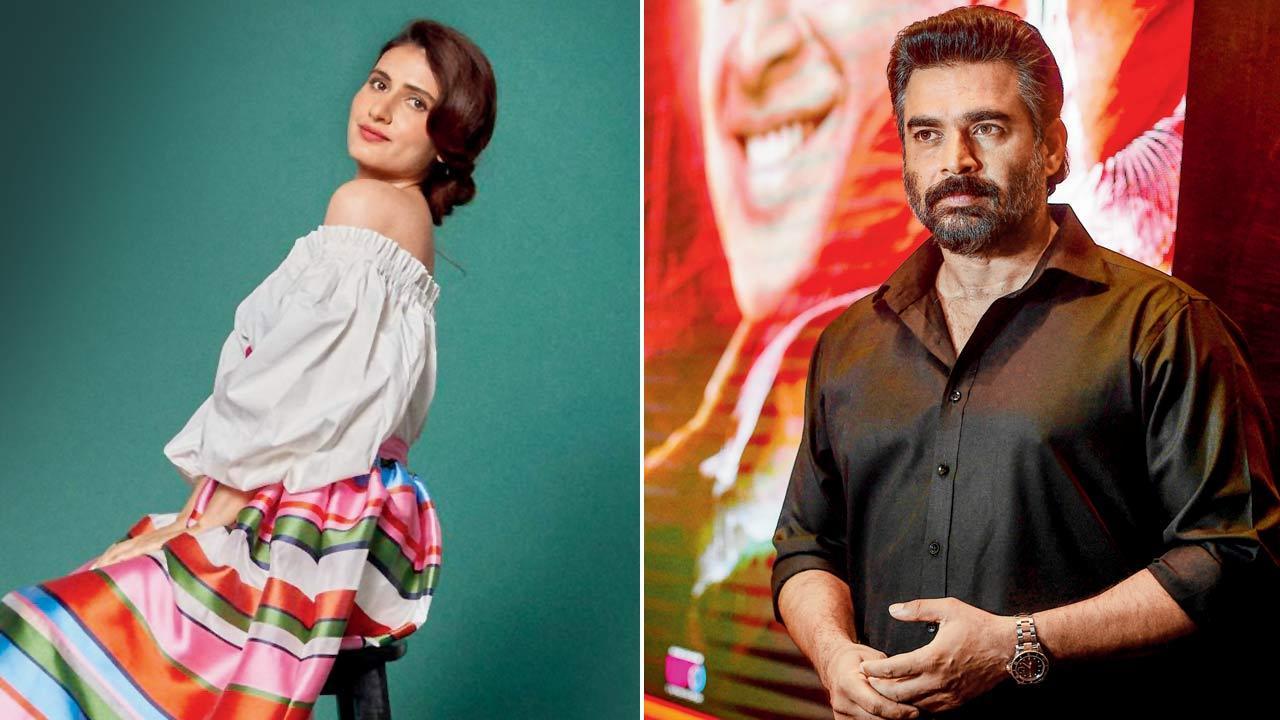
R Madhavan-Fatima Sana Shaikh kick-off shoot of the tentatively-titled Tharki; sources say it revolves around a 40-something virgin’s romance with a younger woman on a dating app
Priyanka Sharma (MID-DAY; November 21, 2024)
There is a new romance brewing in the city, albeit for the cameras. Only last month, it was reported that R Madhavan and Fatima Sana Shaikh were set to team up for a love story. Now, mid-day has learnt that the project has gone on floors. So, what is the actors’ maiden collaboration all about? From what we’ve heard, it’s a May-December romance of sorts, with Madhavan’s character coming across a younger woman on a dating app. Sources tell us that it is tentatively titled Tharki.
Director Vivek Soni, who previously helmed Sanya Malhotra and Abhimanyu Dassani-starrer Meenakshi Sundareshwar (2021), is offering a light-hearted take on the unusual love story.
An insider reveals, “Madhavan plays a virgin, who is in his mid-40s. He comes across Fatima’s character, a woman in her early 30s, on a dating app, and how the two fall in love forms the crux of the story. It’s a quirky and contemporary take on the relationship.”
The cast includes Namit Das, who plays the protagonist’s close friend, and Karan Wahi in a special appearance. While the film rolled in Mumbai in early November, the unit’s next stop will be Kolkata in December. The OTT film, produced by Karan Johar’s Dharmatic Entertainment, will find a home on Netflix.
Tharki marks Madhavan’s return to the rom-com genre almost a decade after Tanu Weds Manu Returns (2015). “Madhavan’s fans in the Hindi audience have always enjoyed his romantic comedies, be it the Tanu Weds Manu franchise or Rehnaa Hai Terre Dil Mein [2001] that found a wide fan base over the decades. Tharki will be the perfect payoff for them, after his intense portrayals in Shaitaan and Rocketry: The Nambi Effect [2022]. In fact, he will also be seen in another romantic comedy, De De Pyaar De 2, but the love story won’t be centred on his character,” adds the source.
Shaikh, meanwhile, also has Anurag Basu’s Metro...In Dino in the pipeline.
There’s something about the Bengali culture that just feels very familiar-Vidya Balan
2:30 PM

Onkar Kulkarni (BOMBAY TIMES; October 11, 2024)
Dressed in a red Banarasi sari, Vidya Balan enthusiastically soaked in the Durga Puja festivities at the Chembur Durga Puja Association. The actress, who believes, “Ami mon theke Bengali (I am a Bengali at heart)”, immersed herself into the celebrations – from blowing the conch, playing the dhak to gorging on some irresistible Bengali mishti. She talks to us about her connect with Durga Puja, her Bengaliness and how Satyajit Ray has a role to play in her love for Bengali culture.
‘My first visit to a Durga Pujo pandal was in my early 20s’
While growing up, Vidya was more familiar with Navratri than Durga Pujo. She tells us, “We celebrated Navratri every year in the South Indian way. For us, Navratri meant ‘girl time’. My mom would call her female friends and their girls over for haldi kumkum and we would visit others too. My first visit to a Durga Pujo pandal was only in my early 20s. I’d done a music video, Kabhi Aana Tu Meri Gali, with Euphoria and Pradeep Sarkar (director of Parineeta). Since I lived in Chembur, dada’s then assistant Paula, invited me to this pandal because she was going to be singing here.”
‘Fortunate to explore various facets of Durga Maa through my work’
As she revisits this pandal after 20 years, Vidya gets nostalgic. She says, “The image of Durga Maa instantly called out to me. What Durga Maa stands for resonated with me at a very deep level, even before I could articulate it or understand it. I’ve been fortunate to explore various facets of Durga Maa in some of my most popular films.”
‘Bengalis are known for their beautiful women and their beautiful weaves’
The Kahaani actress loves the khichuri along with begun bhaja (brinjal fry) bhog served during pujo. One of the other highlights is, of course, dressing up in gorgeous saris. “I love wearing saris with the red bindi, and hair left loose, and now I also have my own shakha pola (the traditional Bengali white and red bangles). Bengalis are known for their beautiful women and their beautiful weaves. I wear all kinds of saris, but I love Bengali saris, the Dhakai, Baluchari and even the simple Bengal cotton saris. I remember on one of my early trips to Kolkata, I had gone to Punjabi House at Gariahat and bought my mom a sari for Rs. 135, and she still has it.”
‘I see Navratri and Durga Puja as a celebration of the divine feminine’
Apart from the grand celebrations, the festival is also a tribute to the divine feminine, Maa Durga. Vidya shares, “I see Navratri and Durga Pujo as a celebration of the divine feminine and the power of Shakti. I guess my sister and I have imbibed that from my mother. Growing up, I had examples of a lot of strong women in my life, including my mother, aunts, neighbours and sister, who I’ve always said is my hero. They are all delicate, simple women, but women with a lot of strength. So, when you grow up with such role models, you believe that you can do whatever you want to do in life and that femininity is not an appendage, it is powerful.”
‘The first time I visited Kolkata, it felt like this was also home’
Vidya has had a strong association with Bengal and its culture. In one of her most outstanding performances, Kahaani, she was called Vidya Bagchi, and the final moment in the film culminated in a Dashami scene. She made her acting debut with a Bengali film, Bhalo Theko, and then her Bollywood debut with Parineeta, which was set in Bengal.
She says, “There’s something about the Bengali culture that just feels very familiar. You know, I visited Kolkata for the first time only in 2003, but the moment I went there, it felt like this was also home. I’ve also shot a lot of important films in my career, including Bhalo Theko (2003), Parineeta (2005), Kahaani (2012), Kahaani 2 (2016) and Te3n (2016) in Kolkata.”
‘Satyajit Ray has a role to play in my love for Bengali culture’
“I think Satyajit Ray also has a role to play in my love for Bengali culture. I’ve watched a lot of Bengali films, and I know some songs and rhymes (like aabol-taabol) too. I couldn’t have imagined that my film debut would be in the land of Ray. I didn’t get an opportunity to work with him, but I’ve had a lot of people tell me that I look like one of his favourites, Madhabi Mukherjee (laughs)!”

I miss the food which is an integral part of Pujo. Mumbai cannot match up to it-Tina Datta
8:58 AM

Ruman Ganguly (BOMBAY TIMES; October 4, 2024)
As Kolkata wakes up in the wee hours of dawn to the enchanting baritone of Birendra Krishna Bhadra, people know that the festive season has begun. Tina Datta who rose to fame with Uttaran, listens to Mahishasurmardini not just on Mahalaya but on other days also. She misses Kolkata’s Pujo and talks to CT about her childhood memories of Durga Puja, Pujo shopping, Mumbai’s Pujo and more.
Tina’s childhood Pujo memories
As a child, Tina used to spend Durga Puja with her grandparents, memories of which she really cherishes. “Visiting pandals near my house was a must along with my grandparents. They would make me sit right next to them and teach me the Puja rituals. I just loved to hear the stories from the Puranas they used to narrate. They also gave me 50 rupees as pocket money for five days with which I could buy anything I wanted. So, I used to have ice cream and cold drinks without anyone scolding me (laughs)!”
"Seeing the whole city decked up before Pujo gives goosebumps as it looks beautiful with pandals and decorative lights"
Tina’s Durga Puja plans this year
As Tina stays in Mumbai, she doesn’t always have specific plans for Pujo. However, she misses coming to Kolkata for anjali. She says, “I have no such plans this year, other than visitng pandals in Mumbai and going for events. There was a time when I made it a point to fly down to Kolkata on Ashtami for the anjali but now it’s not possible these days because of the festive rush.”
‘As a child, I used to look forward to Pujo shopping and buying makeup’
Durga Puja shopping is one of the things that one looks forward to in the entire year. Tina says, “Durga Puja was the time to receive unlimited gifts from parents and relatives. Wearing new shoes and trying them before puja was mandatory. My father specially used to give me Rs 500 to buy makeup because I loved doing makeup since childhood. At that time, at Rs 500 we used to get so many beauty products! Now we buy things throughout the year, but back in those days, waiting for the whole year to buy during pujo was indeed something to look forward to.”
‘Mumbai’s Pujo can never match up to Kolkata’s spirit’
Talking about how much Tina misses Durga Puja in Kolkata, she says, “I miss the art that Kolkata creates during this time of the year. I don’t think one can witness such creativity, and ideation anywhere else in India – it is unparalleled. I also miss the food which is an integral part of Pujo, including chops & cutlets. Mumbai cannot match up to it.”
-----------------------------------------------------------------
"It’s not that I have to listen to Mahishasurmardini only on Mahalaya’s morning, I listen to it often on YouTube as it calms me"
-----------------------------------------------------------------
"Durga is a woman with unbeatable power and like every time, this time too I wish she blesses us with an immense amount of strength"
-----------------------------------------------------------------
"The months leading up to the festival are marked by the sculpting of clay images of Durga and her family at Kumartuli, and it is such a wonderful place to visit"
Subscribe to:
Posts (Atom)