Showing posts with label Khullam Khulla: Rishi Kapoor Uncensored. Show all posts
Showing posts with label Khullam Khulla: Rishi Kapoor Uncensored. Show all posts
Rishi Kapoor: Khullam Khulla, yet so private
8:05 AM

Biographer Meena Iyer on the many contradictions of the star who never said anything off-the-record, and yet remained deeply private
Meena Iyer (MUMBAI MIRROR; May 1, 2020)
What can I write about Chintu (Rishi Kapoor) without letting him down? He was a private person. All the blabber on Twitter — which frequently struck as relevant and sometimes drew flak for its candour — was still just the tip of the iceberg. Ranbir Kapoor, when asked about his father’s social media presence, is quoted as saying in my book, Khullam Khulla: Rishi Kapoor Uncensored, “I do not have a take on his Twitter personality, though that is usually the first question anyone asks me about my father. All I can say is, so long as he is being honest and having fun, it’s his prerogative.”
I digress. But Rishi really was buried somewhere deep within the public persona, and few people were allowed to see that side of him. Most of the things I learnt about him were gauged and gathered from whispers, things he would speak about in private. Like his love and respect for his wife, Neetu, a no-tolerance policy towards certain colleagues, his love and admiration for Ranbir, and the urge to indulge daughter Riddhima and granddaughter Samaira.
He was fiercely protective of his family. Anything aimed at his siblings, parents, wife or son would hurt him. He wouldn’t bother about himself as much. Besides being a superstar, Rishi was a well-meaning father and a great companion to Neetu.
There were many highs and lows in the 40 years that we knew each other. In the early days, I recall meeting him as a cub reporter from Star & Style, sent over by senior colleagues to broker peace between him and the magazine. Rishi had been seething over something one of the columnists had written about his family. Oh boy, did I get an earful! Soon, he realised that I was just the messenger and cooled off. That was the beginning of our friendship. Chintu never asked me to keep things “off the record” and I loved that about him.
He had no patience for stupidity, especially towards the end. Perhaps, he knew that time was running out. Sometimes, I could see him exasperated by inane pleasantries. But he rarely brought up his illness with me. When my publisher asked me to do a reprint of our book, with an additional chapter on his battle with cancer, he flatly refused. “I don’t think there is any merit in it,” he said. Instead, he wanted me to do a book with Neetu on how she got through the difficult phase. “Ask her about our one year in New York.
Ask her how she brought me back from the brink. She’s the hero,” Chintu said. Some meetings with Chintu stayed in mind more than others. Like the time he returned from Mauritius in June, 2018, and we went to watch Sanju in Worli. He couldn’t stop raving about Ranbir’s performance in the film. Pouring us drinks at his house later, he thumped his chest, exclaiming that Ranbir had “surpassed” him and Neetu as an actor. When he couldn’t get through to Ranbir (the actor was rehearsing for a film elsewhere) he impatiently dialled Sanjay Dutt, who was overseas, to tell him that Ranbir had done him justice. Then, he turned around to explain, “Ranbir will call me back but I had to share my excitement with someone. Who better than the real Sanju?”
Our last meeting was on March 9, at his residence. He and Neetu had just retired to their fifth-floor apartment after participating in a Holi function. “Let’s hope all the negativity is gone in that fire,” Neetu remarked, while Chintu and I had a quick drink. He was faithful to his Johnny Walker Black Label but opened a Hibiki for me.
As Neetu and he reclined in their individual lazy-boys that evening, everything seemed normal. We watched old Hindi songs on TV and each time he, Raj Kapoor, Neetu or Randhir Kapoor appeared on the screen, Chintu would rattle off tit bits about the song. “This is my favourite pastime. I love the nostalgia it brings,” he’d confess.
At the dinner table, he reprimanded me for the umpteenth time for being a “boring” vegetarian, as he tucked into an extra-small portion of an exotic chicken dish whipped up by Neetu. That evening, I learnt that the couple and Ranbir were likely to celebrate Alia Bhatt’s birthday (March 15) together. Though he was in the middle of chemotherapy, Chintu told Neetu that he wanted to take his son and Alia out for a meal.
Later, he said to me that he would be okay if Ranbir wanted an intimate wedding. “It’s their call. I am okay with 45-odd people too. I will tell my friends, well-wishers to bless them. I will apologise and explain that everyone couldn’t be invited because Ranbir is a private person. I respect his privacy,” he said.
As I got up to leave, he apologised for not seeing me to the door and requested Neetu to walk me to the lift. Like always, a box of See’s Candies (sugar-free peanut brittle) was my parting gift. Now, I see the box staring back at me from the refrigerator. But the man who made sure I was always stocked up is gone.
RIP Rishi Kapoor: Mulk mourns as Kapoors lose a son
8:00 AM

Avijit Ghosh (THE TIMES OF INDIA; May 1, 2020)
Rishi Kapoor, who stormed into young hearts and stardom with the bubblegum blockbuster Bobby (1973), and who reinvented himself in the new millennium, deftly navigating fluctuating popular trends and fickle public taste, passed away in a Mumbai hospital on Thursday.
The actor, who was batting leukemia, was 67. “He remained jovial and determined to live to the fullest right through two years of treatment across two continents,” his family said in a statement.
Rishi, the second son of Indian cinema’s legendary showman Raj Kapoor, arrived at a time when Rajesh Khanna’s reign of romance was fast on the fade. Amitabh Bachchan and action were the new box-office currency. With his chocolate looks and red lips, he appeared to be on the wrong side of vogue. But Rishi didn’t fight the tide; rather he found ways to survive and thrive.
In a career spanning nearly five decades, he starred in over 150 films, forming a trendy romantic pair with Neetu Singh, who later became his wife. He was also part of many hits with Bachchan.
------------------------
April has been a cruel month. Now the first family of Bollywood has lost its biggest star. Son of a legendary showman, Rishi Kapoor never allowed the illustrious record of his elders to weigh him down. He was a versatile artiste with a nearly 50-year career
Avijit Ghosh (THE TIMES OF INDIA; May 1, 2020)
 In a long, glittering career, Rishi Kapoor acted in romantic thrillers (Khel Khel Mein) and love yarns of different shades (Kabhi Kabhie, Laila Majnu, Sargam, Prem Rog, Tawaif, Saagar, Henna). He danced better (Hum Kisi Se Kum Nahi, Karz) than most contemporaries. A lesser actor would have got lost in masala multi-starrers (Amar Akbar Anthony, Naseeb) but Rishi’s easy charm and comic timing helped him sail through. And yes, his movies were synonymous with chartbusting tracks, generally composed by R D Burman and Laxmikant-Pyarelal.
With passing time, he abandoned the mannerisms that came in the way of his growth as an actor. In the coda of his career, when character actor parts were more etched out, Rishi Kapoor found a second wind. A garrulous Bollywood producer (Luck By Chance), a gay dean (Student Of The Year), a loathsome trafficker (Agneepath), a spirited grandfather (Kapoor & Sons) and an aging Muslim laywer battling for honour (Mulk) -- he invested each part with a sense of the real.
“My second phase as a character artiste is particularly gratifying because I could disprove certain misconceptions that people have about senior actors,” Rishi wrote in Khullam Khulla, the autobiography he co-authored with Meena Iyer.
Few Bollywood autobiographies – barring those by Dev Anand and Naseeruddin Shah -- are so honest. Rishi spoke about fearing his father before coming to admire him, his bouts with alcohol, depression and chauvinism. He wrote how he had objected to Rajesh Khanna -- whom he initially disliked -- being considered for Raj Kapoor’s Satyam Shivam Sundaram, and admitted to a drunken fight with fellow actor Sanjay Khan. He admitted how he had gone to Javed Akhtar’s home to bait him after Imaan-Dharam scripted by Salim-Javed had flopped and expressed regret at not being able to help R D Burman when the down-and-out maestro asked for work late in his career.
Kapoor was born on Sept 4, 1952 in Bombay’s no. 1 film family. “I have a vault filled with priceless memories, and a unique vantage point since birth. I have seen four generations of Kapoors at work -- from my grandfather, my father, uncles and brothers, to Karisma, Kareena and Ranbir (his son),” he said in his autobiography.
He was a natural. In his debut role as a boy besotted by his school teacher in his father’s Mera Naam Joker, Rishi projected the right degree of infatuation with heartbreak. Bobby was made primarily by Raj Kapoor to tide over the losses suffered after Joker flopped. The love story oozing with teen glamour became a monster hit. Songs such as Hum tum ek kamre mein band hon – now revived in these times of social distancing -- were frowned upon by aging India but lapped up by the young and the loveless. Kapoor and his co-star Dimple Kapadia became the vanilla of the season.
The film shaped his image as a romantic star. He was yoked to the template of youthful entertainers, where he lipsynced to peppy songs in pullovers. He was often paired with debutantes (Shoma Anand in Barood, Kajal Kiran in Hum Kisi Se..., Ranjeeta in Laila Majnu).
Always in step with the times, Rishi Kapoor was a regular on Twitter. He tweeted honestly and, sometimes controversially, to his 3.5 million followers. The actor’s last tweet, posted on April 2 was straight from the heart. He wrote, “An appeal to all brothers and sisters from all social status and faiths. Please don’t resort to violence, stone throwing or lynching. Doctors, nurses, medics, policemen etc… are endangering their lives to save you. We have to win this Coronavirus war together. Please. Jai Hind!”
--------------------------
MESSAGE FROM THE FAMILY
“Our dear Rishi Kapoor passed away peacefully at 8:45 am IST in hospital today after a two-year battle with leukemia. The doctors and medical staff at the hospital said he kept them entertained to the last.
“He remained jovial and determined to live to the fullest right through two years of treatment across two continents. Family, friends, food and films remained his focus and everyone who met him during this time was amazed at how he did not let his illness get the better of him.

With his bride and parents at his wedding in 1980
Meena Iyer pays a wonderful tribute to Krishna Raj Kapoor
9:19 AM
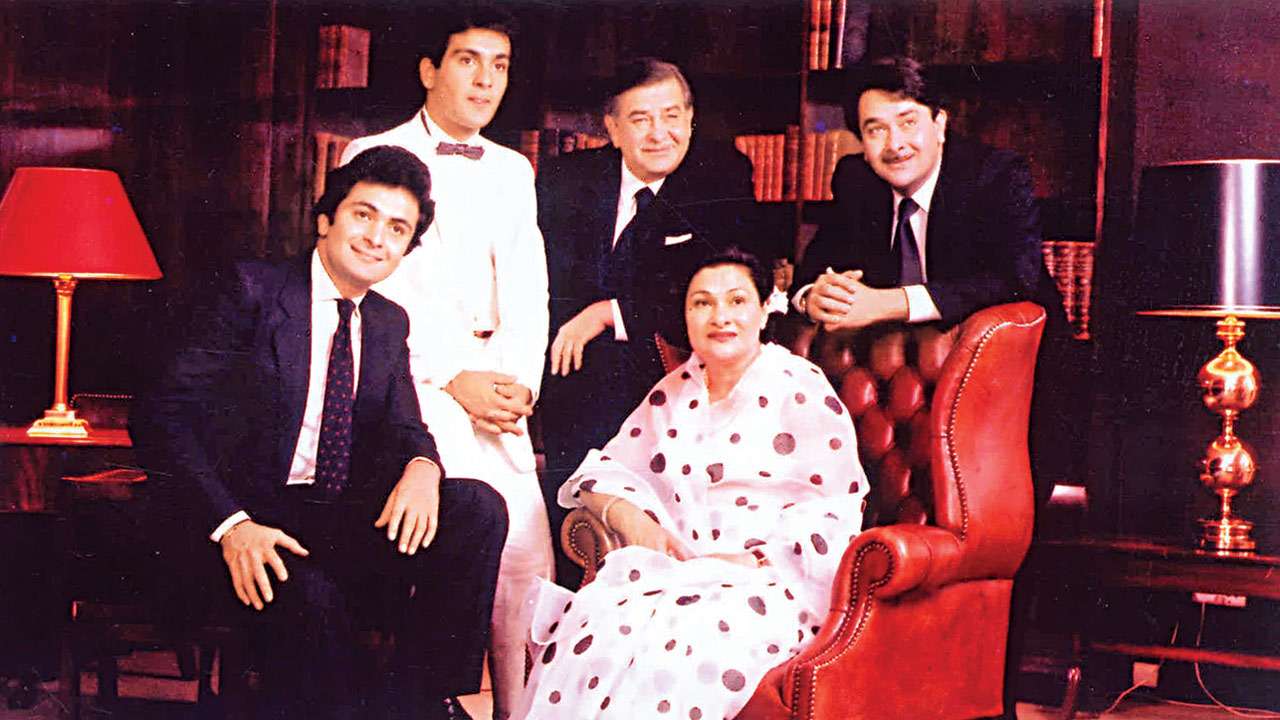
Krishna Raj Kapoor With her hubby and sons — Rishi, Rajiv and Randhir Kapoor
Meena Iyer (DNA; October 2, 2018)
On Monday morning, the Hindi film fraternity woke up to the extremely sad news of Krishna Raj Kapoor’s demise. I will always remember her as the First Lady of Bollywood. It was her elder son, Randhir, who said, “I regret to announce that I lost my mother early this morning. She died peacefully.” The wife of Padma Bhushan recipient and Dabasaheb Phalke awardee, filmmaker Raj Kapoor, Krishnaji (88) died of a cardiac arrest at 5 am on October 1, 30 years after she lost her husband on June 2, 1988.
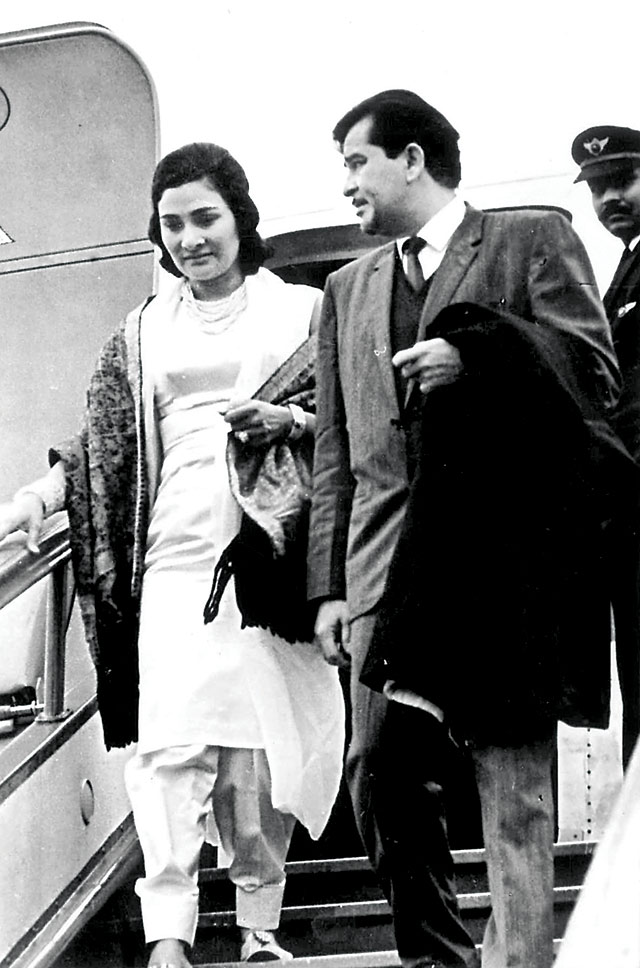 Krishna Raj Kapoor with husband Raj Kapoor
While friends and family members poured in to pay their last tributes, her son Rishi, who left for the US with Neetu and Ranbir on Saturday, couldn’t be present for the last rites. Speaking of Krishnaji, well, a hundred memories live with me. From her immaculate, usually, clad-in-white appearance to her bright lipstick and well-manicured painted nails, almost everything is etched vividly in my mind. Apart from being a benevolent human being, she was also extraordinarily sharp.
A CHARMING HOST
On one of my visits to her Deonar residence two years ago, I bent to touch her feet and she reprimanded me saying, “Betiyaan, pair nahin chhooti.”
Yes, the Punjabis do not permit their daughters to touch the feet of
elders because they feel a girl should never have to ‘bend’ as they are
considered Goddesses. So, while Rishi Kapoor, with whom I had gone to
their family home, touched his mum’s feet and got blessed in turn, I got
a hug from the lady.Next, we were treated to a glass of chaas. And, then asked to go about our business. We were picking out photographs for Rishi’s autobiography, Khullam Khulla. And, Krishnaji had kindly given us access to the treasure trove of family albums spanning seven decades that are lying safe in aluminium trunks on the bungalow’s first floor.
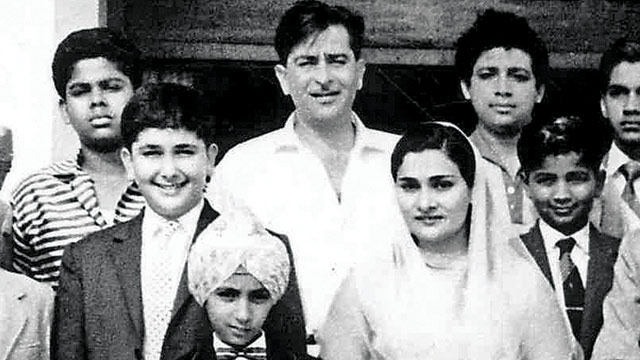 Krishna Raj Kapoor with Raj Kapoor and a young Rishi
At lunchtime, the lady of the house appeared dressed in a dark-coloured salwar kameez, her sartorial choice a rare exception. When we requested her for a photograph, she promptly pulled out her orange lipstick, dabbed her lips and said, “I’m ready.” Like the rest of her khandaan, she didn’t relish the fact that I was a vegetarian because the choices for a herbivorous person are limited at the Kapoor lunch table. Once that hurdle was crossed, she enthusiastically fed me aloo-gobhi and garam parathas, explaining how the cauliflower was broken into pieces, not cut in the Kapoor family kitchen. Minutes later, she saw Chintu eating without wearing a napkin. She wrinkled her nose and said, “Napkin pehen loh.” It was sweet to see a 64-year-old Rishi (in 2016) being pulled up by his mother for his lack of table manners on that occasion.
A WOMAN OF STEEL
Like I said at the start, Krishnaji
was her own person. She didn’t suffer fools and though the world
believed that she lived in her legendary husband Raj Kapoor’s shadow,
this was not true.In his book, Chintu spoke so affectionately of his mother. He said, “When my dad wanted to cast me as the young Raju in Mera Naam Joker (1970), he had to take permission from my mother, who gave him the go-ahead with a caveat saying — it should not interfere with my school studies.”
Not many may know this. Chembur would not have been the destination for the famed RK Studios that came up on a barren plot of land there seven decades ago. Bollywood’s showman wanted the studio to be built at Tardeo back in the day. Legend has it that when Krishna heard that Raj saab had a choice of choosing between Tardeo and Chembur, she promptly told him to choose the latter. The reason, according to the family grapevine, is that Nargis had a home in South Mumbai and Krishna didn’t want anything too close to her place as she was romantically involved with Raj for many years.
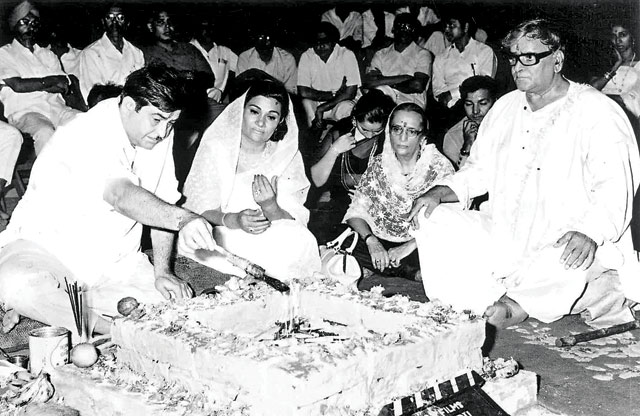 Krishna Raj Kapoor with Raj Kapoor and Prithviraj Kapoor
It is also a legendary tale that when Krishna learnt of Raj saab’s reported involvement with Vyjayanthimala, she walked out of her home with her children and headed to Natraj Hotel in South Mumbai. Raj later bought his estranged family a home in another location but, eventually, Prithviraj Kapoor intervened and the domestic squabble was sorted. Yet years later, Krishnaji had matured and mellowed. She was a changed person altogether. Rishi also recalled how, when Nargis set foot in the R K Studios compound after 36 years, in January 1980 on the occasion of his marriage to Neetu Singh, she was nervous. But it is said that Krishna took her aside and put her at ease saying, “My husband is a handsome man. He is also a romantic. I can understand the attraction. I know what you are thinking, but please don’t beat yourself up over the past. You have come to my home and I cannot tell you how happy I am.”
A DOTING MOTHER-IN-LAW
Neetu Kapoor, who
spoke to her mother-in-law every single day after her marriage until the
very end, addresses her as her most favourite person in the world. Mrs
Kapoor made a few daily calls. Besides Rishi and Neetu, Amitabh
Bachchan, whose daughter Shweta is married to Krishna’s grandson, Nikhil
Nanda, used to chat with her almost daily when he was in Mumbai. Big B
always made it a point to inquire about her health and she, in turn,
told him details of her failing health and she blessed him.When Neetu turned 60 on July 8 and was heading to Paris for the celebrations, her only wish was that her ma-in-law should accompany her! Here in Mumbai, too, the saas-bahu had a fixed routine. Krishnaji and Neetu usually frequented a Chinese restaurant at a five-star in BKC. Besides eating there, the senior Mrs Kapoor would also carry a parcel of their signature Peking Duck back with her to Deonar to share it with her other two sons — Randhir and Rajiv — who spent time with her at the bungalow.
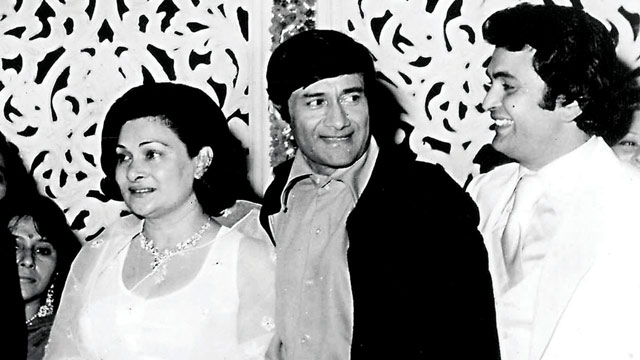 Krishna Kapoor, Dev Anand and Rishi Kapoor
There are innumerable stories about the senior Mrs Kapoor, but one of my favourite ones is the one where she called Rishi and Neetu on New Year’s Eve last year to ask them about their plans. “We are listening to Shirdi Sai Baba bhajans,” said Neetu because both Chintu and she had stopped going out on NYE for a few years now. To which the matriarch of the khandaan told her, “I am out in Khandala partying with my friends. They will ring in my birthday (January 1) in just a bit. So, you old people listen to bhajans, I will party on your behalf.”
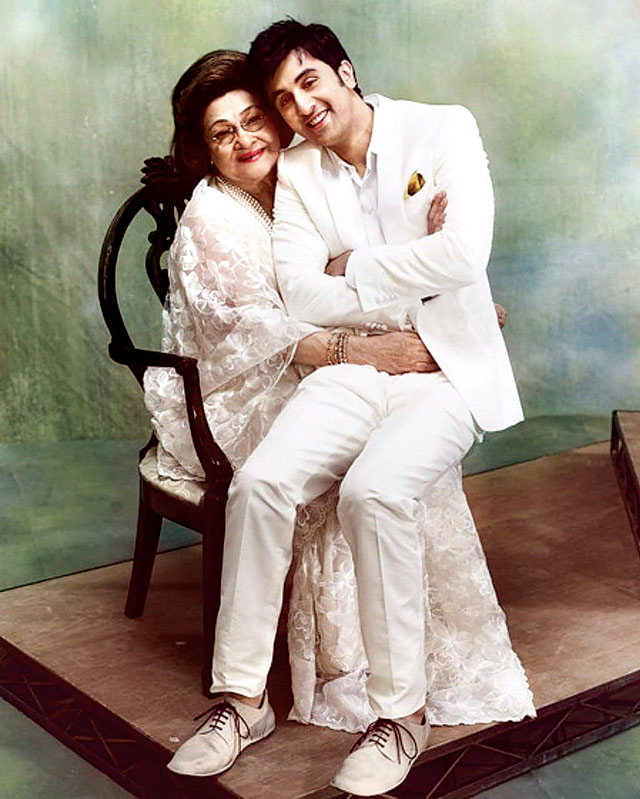 She shares a laugh with grandson Ranbir Kapoor
FOR THE LOVE OF HER GRANDSON
Ranbir Kapoor had grown particularly fond of his grandma when he
stayed with her a couple of years ago. The duo spent hours bonding,
watching television and generally chatting about cinema. And though Mrs
Kapoor was slightly uncomfortable around his two Mastiffs, Leo and
Guido, she was happy to have them around because it also meant keeping
her grandson close. She tiptoed around them, but was happy to watch her
favourite pota play in the garden with his pets.
NOT WITHOUT HER SISTERHOOD
Besides her family, Krishnaji’s
favourite people were journalist Nishi Prem (who was virtually a
neighbour in Chembur) and Dimple Kapadia. Until a few years ago, Salman
Khan’s mother Salma was also extremely close to Krishna. However, of
late, Salma hadn’t been such a regular with this gang. They were part of
her kitty group and the girls met up regularly for some food and fun.
Neetu recently hosted them at her Bandra residence and their joie de vivre reverberated around her Bandra residence, long after Krishnaji and Nishi had driven off to Chembur.Actually, some people never really go away. They continue to live in your memory forever.
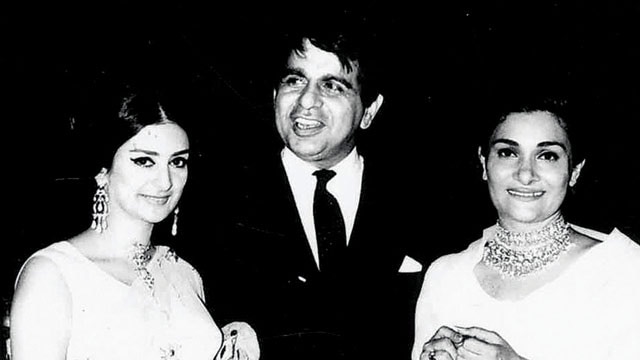 Krishna Raj Kapoor with Saira Banu and Dilip Kumar
This generation refers to me as Ranbir Kapoor's father-Rishi Kapoor
6:01 PM

Asserting that his love for his craft is enough, Rishi Kapoor says he will "never" explore direction again
Shaheen Parkar (MID-DAY; May 6, 2018)
Rishi Kapoor is not one to evade questions, but he does tire of repetition. "How many times can I answer the same questions over and over again? It's either about the role or the film? Ask me kuch alag." So we ask him "kuch alag". We ask him to reflect on his past ventures, like, maybe, Ranbhoomi (1991), also starring Jeetendra and Shatrughan Sinha. "Why are you reminding me about it," he groans. "It was an awful film, which is better forgotten. Ask me something else."
Seated with the veteran at a Juhu hotel, we're instantly reminded about how this place was once the hotspot for stars, including him. "Yes it was, years ago. This was the happening place. Today, every memory of my life is at least 30 to 40 years old. This generation refers to me as Ranbir Kapoor's father. That's fine. I live in the present. I'm not one to keep saying, 'Hamara bhi zamaana tha.' You must move on with the time."
Moving on in his career, however, has landed Rishi Kapoor back in time. His recent venture, 102 Not Out, sees him collaborate with an artiste he shared screen space with 27 years ago. "Amit ji [Amitabh Bachchan] has played my step father-in-law, brother and buddy. Now, I am playing his son. I have been working with him for 44 years. It is not that I haven't met him throughout these years. We catch up at social gatherings. He is a challenging and delightful actor. I consider myself a student of cinema, so I continously learn from him."
Even though their collaboration has given the industry masterpieces like Kabhi Kabhie (1976), Naseeb (1981) and Coolie (1983), among others, Kapoor singles out Amar Akbar Anthony (1977) as a film that's special. "People tell me today that [even] children love watching it. It is a timeless film, it is like watching Charlie Chaplin. You can watch it over and over again."

Amitabh Bachchan has previously been seen as his brother in Amar Akbar Anthony
Kapoor not only gives credit to audiences' sensibilities when appreciating the films the like, but also points out that they are too evolved to accept poor content offered to them by filmmakers. "In the past, every film had the underlying lost-and-found theme. Every actor had at least four films that followed the 'bachpan mein bichad gaye' theme, and those films worked. At that time, the audience was forgiving. Today they will not accept anything. There is so much exposure," he says, pointing towards the inevitable competition they face from Hollywood. "Viewers want chic films, interesting stories, the best popcorn and top amenities at the multiplex. Their demand is justified, given that they shell out Rs 400 for a ticket."
While the veteran loves to entertain those turning up at cinema halls with his acting prowess, he says they will "never" be witness to his abilities as director again. After wielding the directorial baton in 1991 for Akshaye Khanna and Aishwarya Rai Bachchan starrer Aa Ab Laut Chalen, he confesses he'd rather "leave the stress" on set when working on a film. "An actor is a king. People will do salaam to you when you enter and exit the set. Directors or producers have to endure many hassles. I don't want to go through the stress of acquiring great box office collections. I am 65 and have been working for over four decades. Why would I take on something more challenging than I can handle?"
Acting he says, is his passion, even if he never permitted his parents to notice how excited he was when he first harboured the thought of being an actor. When his father, the late Raj Kapoor casually spoke about including a young Rishi in his project, he was thrilled. "I ran into my room, took a sheet and started practising signing autographs. Cinema has his own charm. Movies are magical."
It's probably this admiration that he has for the industry that keeps him going. Even at 65, he has his hands full with his projects. He recently wrapped up Anubhav Sinha's Mulk, and Leena Yadav's Rajma Chawal, and will soon kickstart work on Malayalam director Jeetu Joseph's Bollywood debut. He is also invested in the stage play based on his autobiography, Khullam Khulla.
"I have done shows in Dubai, Hong Kong, Bahrain and London. Most of the audience comprises people who are above 45 years of age, that's a lot that has grown up watching my films, ones who know me." But Kapoor's is a name known across age groups. The young folk on Twitter know him as the man who can't stop ranting. The actor has mastered the art of tackling trolls. "I keep taking panga on social media," he smirks, adding, "But, what I tweet is straight from the heart."
When trolls messed with Rishi
> In 2017, trolls suggested that "primary education" be made mandatory in nepotistic Bollywood when Kapoor inadvertently shared a math troll meme that read: "If you add your age to your birth year, you will arrive at 2017. This happens once in 1000 years."
> Throwing up names like Jack Daniel and Black Label, twitterverse questioned the actor what liquor was he consuming when he joked about wanting a repeat of former Indian Cricket captain Saurav Ganguly's shirtless celebration at the Women's World Cup final last year.
> Kapoor irked fans of Twinkle Khanna when he wished her on her birthday while reminding her that she was in her "mums tummy when I was serenading her in Bobby "Aksar koi Ladka" In 1973 (sic)."

The Kapoor surname didn’t make me an overnight star-Rishi Kapoor
8:04 AM

Rishi Kapoor on his legacy, his father and his son, and why acting is more enjoyable now
Roshmila Bhattacharya (MUMBAI MIRROR; April 25, 2018)
When watching the trailer of your upcoming film 102 Not Out, noting the changing expressions, mood swings and subtle inflections in the voice, one realises that playing a 75-year-old character couldn’t have been easy.
It was a challenge but that makes it exciting for an actor. Umesh (director Umesh Shukla) and I took the character forward from Saumya Joshi’s original play, giving him creased shirts two sizes large and shoulders stooped from the tension he’s lugging around. Babulal Vakharia is khadoos, depressed and in denial. His 102-year-old father who aspires to be the world’s oldest man, wants to send him away to an old age home because he’s the most depressed man around. Herein lies the conflict and the story of the film.
What made the journey more interesting was Preetisheel Singh’s make-up. While playing a 90-year-old man in Kapoor & Sons I’d relied on prosthetics, this time it was just a wig, moustache and Amit ji (Amitabh Bachchan) complementing me with his getup. It wasn’t an easy walk-on part but no character actor has it easy because you’re not running around trees, serenading the heroine.
When the character requires you to be low, does the emotion spill over into real life?
Babulal’s not low, he’s straitjacketed with a short circuit, picky about details, bound by timetables and finicky about rituals.
Are you that finicky in real life?
Not like Babulal, who’s an eccentric, an extremist. I’m a normal person who takes life as it comes. In his case his life is disrupted if his routine is disturbed.
You’re in an interesting phase in your career with films like 102 Not Out, Mulk and Rajma Chawal, taking elderly characters out of the stereotype and towards newer horizons...
It’s a bloody high! I’m finally getting to play characters and not just be Rishi Kapoor. The Kapoor in Kapoor & Sons was not Rishi Kapoor. Ditto Santosh Duggal in Do Dooni Chaar, Romy Rolly in Luck By Chance, Rauf Lala in Agneepath and Iqbal Seth in D-Day. Even DCP Ravikant Phogat in Aurangzeb was an exciting role but it was a boring film and flopped so no one saw it. I keep changing Rishi Kapoor’s face all the time. I’m looking for challenges because all my life I only sang songs and romanced heroines. As I tell my wife, I’ll even lose weight for a film if I must but not just for the heck of it.
Even in your prime you were seen as an actor who could deliver…
But except for Prem Rog, Tawaif and Damini the rest were just romantic roles in films shot in Ooty, Kashmir and Switzerland. Back then we didn’t experiment. Even now the front benchers want maar dhaad — such films will always run in India — but we also have a new multiplex audience that is cinema literate and looking for different content. Films are no longer about song and dance, romance and the youth. For me content has always been king and I welcome this change.
What was your relationship with your father, Raj Kapoor, like?
He wasn’t just my father but also my guru who taught me the ropes and introduced me twice, in Mera Naam Joker and Bobby. I was in awe of him which was born out of love, respect and admiration. He was Raj Kapoor; there was a halo around his head. Till we completed school, we hardly saw him because he was busy making films. We didn’t know he was a popular actor-director, but we knew he was an important man because everywhere we went, people would look at us. Even in this hotel, if we came for dinner without a reservation, we got a table easily because of him. We never misused that privilege but he remained an awe-inspiring figure even when I was working with him.
Was he a jovial man?
No, he was a serious man whose work was his nirvana. But he was a kind father who went away too soon.
Has Rishi Kapoor changed with time?
Why would I change? Am I not doing good work? Have I not lasted in this industry for 45 years?
I meant as a person, not an actor...
I am a difficult man and not easy to get along with. I’m God-fearing and ritualistic. I pray twice a day, I’m bound by tradition and I am conservative. I’m also a big boozer.
And as a father?
I’m a loving father now but there was a time when my son and I didn’t get along because I was so busy. I’ve never given my son the liberty of being on back-slapping terms with me. There was this invisible glass pane between us… It’s like history repeating itself as it seems almost like my equation with my father. Now, I want Ranbir to get married, have some kids, so I can be a grandfather and make up for everything there.
Both of you are passionate about acting…
That’s the family trademark. Ranbir is the fourth generation of Kapoor males in the industry. In 107 years of Indian cinema, our contribution has been 90-plus years. Films are our livelihood, that’s the only thing I know how to do, but I also enjoy it and I am a hardworking actor. The Kapoor surname or Bobby, which I got because my work was appreciated in Mera Naam Joker, didn’t make me an overnight star. There are many Kapoors who didn’t make it, we were chosen by the people. There is no nepotism in films.
Please elaborate…
Well, perhaps I didn’t sleep on the road and didn’t starve because I came from a well-to-do family, but I also struggled as much as my contemporaries. Maybe not for a break but later to regain ground. Zanjeer released in the same year as Bobby and romance made way for action. I had to struggle to withstand such cyclones and that’s no mean feat. Today, thanks to my autobiography, Khullam Khulla, I’m getting invited by big corporate houses and even Google to tell my inspirational story.
Like you, Ranbir isn’t afraid to go against the ‘hero’ image…
(Smiling proudly) Yes, and the reactions to his new film Sanju have been phenomenal. All the calls and messages I’ve been getting since morning are about him. He always wanted to be an actor but told his mother that he wouldn’t wear a twisted cap on his head and have 40 dancers suddenly appear behind him. He wanted a different career graph and took on serious films like Wake Up Sid and Rocket Singh. Some films, like Jagga Jasoos and Bombay Velvet, failed, but no actor has a 100 per cent track record. But as the saying goes, ‘Form is temporary, class is permanent’.
DNA After Hrs editor Meena Iyer pays an ode to Sridevi
10:38 AM

Meena Iyer (DNA; February 26, 2018)
When I woke up to the news of Sridevi’s demise yesterday, I fervently hoped that it was a ‘death hoax’ and someone would call me soon to say, “It was a mistake. Sri is alive.”
But when my worst fears were confirmed and I learnt that she had passed away close to midnight on February 24 in Dubai with husband Boney Kapoor by her side, I just slumped in my chair. I felt a lot older and was so deeply saddened by the news that I’m yet to recover from it.
Okay, let me put things into perspective. Sridevi or Pappi, as she was called by her family, was not a friend. But she was the darling of the masses for over three decades. And for those of us who started Hindi cinema reportage at the start of the ’80s, she was someone who dominated our thoughts.
Personally and professionally, No 1 was always a lonely spot and Sri, who wore the mantle of top dog for the longest time, never let her mask slip in front of anyone but her immediate family. Fiercely protective about her private life, she hated being probed, whether it was about her mother who controlled her finances or Mithun Chakraborty, who had stolen her heart.
The only time she broke down (or rather the first time it became public knowledge) was at the start of the ’90s, when she lost her father, Ayyapan Yanger. She was shooting for Boney’s Roop Ki Rani Choron Ka Raja (1993) then. That was perhaps one of the earliest times when she sought refuge in his home in Lokhandwala. The company of Boney’s parents — Surinder and Nirmala Kapoor — gave her solace.
Interviewing Sri was always a task. A person of few words, getting an answer out of her was tough. Yet, I have notched up some really terrific interviews with her. Both of us spoke Tamil and perhaps that’s why Sri gave me more concessions than she did to other journos.
However, the atmosphere around her was crackling. She was deified all over South India, long before she came to Mumbai. Chances were that you would be trampled upon by her fans if you were travelling to a shoot with her. Like this one time when we went to Visakhapatnam for a shoot of a film called Jaani Dost (1983). She was pairing up with Jeetendra in the Hindi version and Krishna in the Telugu version. As bystanders, our jaw dropped because in the sweltering summer heat of Andhra Pradesh, at least 20,000 had come from nearby villages and townships just to get a glimpse of their devi.
She was riding such high in the ’80s that soon after Himmatwala and Mawaali (both of which released in 1983) followed by Maqsad (1984), she became the reigning queen of Hindi cinema.
But she was no fluke. Like Jeetendra, with whom she had done 15-odd films, had once told me, “As far as Sri goes, I admired her when she was a newcomer. I admire her even now.” He added, “She wasn’t the original choice for Himmatwala. It was supposed to be Rekha. But director K Raghavendra Rao asked me to see this new girl. Sri landed Himmatwala and the rest is history.”
Jeetu also recalled her dedication. “She was a fabulous dancer. And I was like a parrot. I would just parrot my steps and keep doing rehearsals. Though Sri got her steps right the first time itself, she would patiently rehearse with me. Her dedication should be applauded,” he said. Amitabh Bachchan, Vinod Khanna, Rishi Kapoor and Anil Kapoor clamoured to do a film with her. Dimple Kapadia, Amrita Singh and Meenakshi Seshadri mostly did those films that were rejected by Sridevi.
I remember the time in 1987, when we wrapped up an interview on a flight from Mumbai to Chennai where she told me, “I’m absolutely fed up of doing films where a heroine is just required to stand around as a showpiece.” By this time she was refusing more movies than accepting them. It didn’t matter to her even if the film was a Toofan (1989) with Amitabh.
In his biography by Harper Collins, Khullam Khulla: Rishi Kapoor Uncensored that I co-authored with him, Rishi says, “There was only one heroine who was a little reluctant to work with me, very likely because she was the bigger star at the time. Sridevi was making waves and I had hit a plateau when we worked together in Nagina (1986). She was also very reclusive. I was later told that she was an extremely shy person and very inhibited.”
“One of our most embarrassing moments was when we were shooting a song for Nagina at RK Studios. When you are in the midst of a ‘take’ and the assistant cameraman suddenly says the magazine has run out (when the camera needs a new roll of film), it is a very awkward moment for actors. The lights are on, you are in position, and you have to hold it, looking odd and static, while a new film is loaded. During Nagina, Sridevi and I found ourselves in that awkward situation, just standing there, waiting. When she suddenly spoke to me and said, ‘Sir, I have seen Khel Khel Mein four times,’ I was so taken aback. I could only mumble something about a film of hers that I had seen and that was it.”
“That was the only conversation I had with Sridevi all through the filming of Nagina. Otherwise, it was always ‘Namasteji’ and ‘Good Night ji.’
It was during the making of Chandni (1989) that we became friendly. She opened up to me and a new level of comfort also improved our performance. Yashji (Chopra) gave us a free hand in the film, leaving a lot of room for improvisation. It worked well since I had to be spontaneous and improvise on set, and so did Sri. She contributed a great deal towards making scenes work. The ‘cognac, sharab nahi hoti’ sequence, for instance, was entirely improvised. It was not in the original script. It was made up on the spot by Yashji, Sridevi and me.'
Sridevi is a terrific actor who balances method acting (which she picked up from Kamal Haasan) with spontaneity. She has also evolved over the years. When I saw her in English Vinglish (2012), I was floored. She has flowered into a highly-intelligent actor.
I was probably one of the first people to know that Sridevi was in a relationship with Boney Kapoor. For the first time, I had an inkling of it when we were shooting a song for a film in Goa. Sridevi had left the location before me. And, I was heading back to the Taj for lunch when I saw someone who looked like Boney from afar. But I wasn’t sure. Fortunately, the general manager of the hotel, Joe, was a classmate of mine. I called him up and asked, ‘Is Boney here?’ He said, ‘Who Boney?’ I replied, ‘Boney Kapoor.’ He looked up the name on the computer and reported that he wasn’t there. It occurred to me then that he may have used an alias, so I asked Joe, ‘Has an Achal Kapoor checked in?’ And the answer was, ‘Yes.’
Achal Kapoor is Boney’s real name. And that’s when I guessed what was brewing between the two. Three or four months later, after they got married, there were whispers that she was carrying his baby. The dress man of our film revealed that all her clothes were being altered and her trousers were being loosened. The director was also told not to take shots below the waist. But for the most part, Sridevi kept her personal life away from public scrutiny, and professionally, she was wonderful to work with. She was a fabulous actor. I had two huge successes with her, Nagina and Chandni. We also did Banjaran (1991), which was an average film.”
After her marriage to Boney, Sri’s world revolved around her home. She affectionately called him, “Papa” and he addressed her with many endearments including “Jaan”. When one dropped by to meet Boney at their Juhu bungalow in a quiet by-lane, Sri was the one offering chai and biscuits. She looked happy beyond words and of course once Janhvi and Khushi came, she just slipped seamlessly into domesticity.
On her return from Dubai, Sri and Boney were committed to fly to Mauritius to attend a function where she was to be Chief Guest. And a few weeks ago, this couple was also house-hunting in South Mumbai. Perhaps, they were looking for a plush address to settle sometime later in life.
Of course, all of that is now an unrealised dream. The queen of Indian cinema has passed away, leaving behind her a void that will never be filled.
Paint a pair of eyelashes and draw a mouth on a pole and I can even romance it-Shashi Kapoor
7:57 AM

Meena Iyer (DNA; December 6, 2017)
Shashi Kapoor was a true blue Piscean. He was charm personified one minute, tongue-in-cheek the next. But in the end, you usually warmed up to him because his charm outweighed his sarcasm.
I met him for the first time in the early ’80s at his office at Janki Kutir, near Prithvi Theatre. Seeing me dressed in a sari and a big bindi, he jested, “Are you sure you want a career in journalism? Or are you hoping to get noticed by Shyam (Benegal) and looking for a break in one of his movies? You are dressed for it.”
When I assured him I had no plans of facing the camera, he laughed and said, “I was just kidding.”
On another occasion, when I told him how flirtatious he was, he confessed that he could even romance a pole in a film. “Paint a pair of eyelashes and draw a mouth on a pole and I can even romance it,” he said. “But I’m not looking to do that with you because you are closer to Kunal’s (his elder son) age, than mine.” With Shashi, you could never have the last word. However, many of us from the media couldn’t get enough of him and were always looking for excuses to meet him.
Though he had a quirky sense of humour, he was an extremely professional actor. There were times when he was doing multiple shifts for different films on the same day. But he was very much like the English (his in-laws were British) when it came to punctuality and professionalism because he managed to pack in so much into his day. He preferred to meet journalists only during the lunch break.
The one thing that I often noticed was how frugal his food habits were. The meals that came from his home were supervised by his wife, Jennifer, who monitored his diet. Back in the day, Rishi Kapoor had once said, “Jennifer aunty had kept Shashi uncle on such a strict diet. Once she went away, he let himself go.’’
When we visited him at his home in Atlas Apartments in Mumbai, Shashi gave us a taste of the Kapoor hospitality. Like the rest of his family, he pulled a face when I told him that I was vegetarian. “Is that any way to live?’’ he joked. Of course, his man Friday would ensure even the vegetarians were fed well.
The sight of Shashi settled in a chair in his drawing room dressed in a white kurta and a lungi still haunts me. He had put on loads of weight by the early ’90s and could not even bend to cut his toe nails. So, he had a man seated at his feet doing just that. Not that he enjoyed being ungainly, but he refused to apologise for his size!
When he teased a couple of journos and me by saying, “Oh, look, the baddies are here,’’ we would quip with “Look, fatty is here too.’’ And he always took it sportingly. How often do you see an actor allowing someone to take a jibe at him? But Shashi was different. He was real, he was fun.
And then one day everything changed. Shashi’s health started to fail. He suffered a slight memory loss. When we met him at Neetu Kapoor’s mother, Rajee Singh’s funeral, he smiled at us but there wasn’t any flicker of recognition in his eyes. Instead, there was a certain sadness in them.
In March this year, he attended the launch of his nephew Rishi Kapoor’s book Khullam Khulla at a five-star hotel in Bandra. The entire Kapoor clan was there. Though Shashi didn’t recognise most people barring his family, all of us walked up to greet him. And then something terrible happened. One of the organisers stamped on Shashi’s foot by mistake. He winced in pain and his eyes clouded with tears. Though he didn’t know who caused the pain, he looked around helplessly. In that moment, I realised that Shashi may not be able to recognise people but he was alert enough to recognise and feel the pain caused by some clumsy oaf.
That thought broke my heart...just like his demise has.

... with wife Jennifer Kendal
 ...In a still from Deewar (1975)
 ...In a still from Junoon (1978)
 In a still from Sammy and Rosie Get Laid (1987)

Shashi Kapoor with daughter Sanjna and son Kunal
Rishi Kapoor reveals dad Raj Kapoor's affairs but mum about his own?
7:57 AM

The actor hasn’t addressed his own link-ups in his biography
DNA (January 24, 2017)
Rishi Kapoor makes some telling points in his pointedly blunt autobiography Khullam Khulla: Rishi Kapoor Uncensored. The title comes from an Asha Bhosle-Kishore Kumar number in a Rishi Kapoor-Neetu starrer Khel Khel Mein (which incidentally was directed by Raveena Tandon’s father Ravi Tandon). It is meant to reflect the bindaas no-holds-barred mood and tone of the confessional biography.
A fair affair?
However there are points in the narrative where the candour gets conditional and selective. While Rishi speaks about his father Raj Kapoor’s extra-marital relationships with Nargis and Vyjayanthimala (the latter denied any relationship beyond the professional in her memoir, and Rishi had responded by openly calling her a liar), there is not a word about his own link-ups, rumoured or real.
The living vs the dead
Says an industrywallah who has been very candid in his biography, “Are we to presume that the only woman Rishi Kapoor has ever been involved with is his wife Neetu Singh? If not, are we to presume that Rishi didn’t want to hurt any living person with his confessions? Is it all right to be candid about the relationships of the dead and not all right to speak honestly about relationships with people who are living?”
Rishi Kapoor to enact passages from his book as a 90-minute play
3:32 PM

Shaheen Parkar (MID-DAY; January 19, 2017)
Vetran actor Rishi Kapoor's biography might have only been released a few days ago, but has already grabbed headlines owing to the intricacies with which the actor has highlighted certain aspects of his life. Aptly titled 'Khullam Khulla: Rishi Kapoor Uncensored', the book not only includes details of the colourful life of his father Raj Kapoor, who, writes Rishi, had a string of affairs with his co-actors, and loved his booze, but also includes a foreword by son Ranbir, who confesses that his relationship with his father wasn't as friendly as he'd desired.
But penning his life into a book isn't enough for the 64-year-old actor. Hitlist has learnt that Rishi, who believes that a first person narration of his stories is more likely to elicit a response, is now set enact his autobiography on stage. "Yes, I will be doing live shows," he says, further adding that he is keen to recite his stories in his own voice and gauge the audience's reaction immediately.
Titled Khullam Khulla with Rishi Kapoor, the 90-minutes show, which will have the actor narrate select passages from the book, is being produced by V G Jairam of Fountainhead Entertainment. Jairam informs, "We came up with the idea and approached him [Rishi] for a stage show. Rehearsals are underway and an announcement with the details will be made shortly. Rishi Kapoor will be in conversation with Kiran Kotrial (film writer) for the enactment. We plan to stage it across the globe."
Dad (Raj Kapoor) loved his booze and leading ladies-Rishi Kapoor
7:52 AM

MID-DAY (January 17, 2017)
Veteran actor Rishi Kapoor has opened up about the colourful life of his father, filmmaker Raj Kapoor in his soon-to-be released autobiography, saying he loved his cinema, booze, and his leading ladies. Rishi, in his book titled Khullam Khulla: Rishi Kapoor Uncensored, narrates his father’s affairs with co-actors and his passion for films. It also captures the evolution of his relationship with the superstar.
Rishi begins the book talking about his father’s affair with yesteryears’ actor Nargis Dutt, who together, continue to be widely acknowledged as the most iconic pair on screen. He writes, “My father, Raj Kapoor, was twenty-eight years old and had already been hailed as the ‘showman of Hindi cinema’ four years before. He was also a man in love at the time, unfortunately, with someone other than my mother. His girlfriend was the leading lady of some of his biggest hits of the time, including Aag (1948), Barsaat (1949) and Awara (1951).”
Rishi further writes that Nargis was Raj Kapoor’s “in-house heroine” and was understandably immortalised in the RK Studios emblem. The 64-year-old actor further highlighted the relationship his father shared with co-star Vyjayanthimala, who in the past had denied having an affair with the actor. Rishi also reveals his father’s fascination for a particular brand of whisky, which he refused to share.
When Rishi Kapoor had tea with Dawood Ibrahim
3:36 PM

In a forthcoming autobiography, the actor opens up on the Don and depression
THE TIMES OF INDIA (January 15, 2017)
Along with the good, fame
has also brought me in contact with people of dubious character. One of
them was Dawood Ibrahim. The year was 1988. I had landed in Dubai with
my closest friend, Bittu Anand, for an Asha Bhosle-R D Burman night.
Dawood always had a man at the airport to keep him posted on VIP
movement. When I was leaving the airport, a stranger walked up to me and
handed me a phone. He said, 'Dawood sa'ab baat karenge (Dawood sa'ab
would like to talk to you).' Obviously, this was before the 1993 blasts
in Mumbai and I didn't think of Dawood as a fugitive on the run. He
wasn't an enemy of the state yet. Or, at least, that was the impression I
had. Dawood welcomed me and said, 'If there is anything you need, just
let me know.' He also invited me to his house. I was taken aback.
Later, I was introduced to a fair, pudgy guy who looked British. This was Baba, the don's right-hand man. He said to me, 'Dawood sa'ab wishes to have tea with you.' I didn't see any harm in that and accepted the invitation. That evening, Bittu and I were picked up from our hotel in a gleaming Rolls Royce. While we were being driven to his home, a conversation went on around us, in Kutchi. I don't understand Kutchi but my friend did, and he realized that we were being driven around in circles, so we wouldn't know the exact location of his house. Dawood, immaculately dressed in an Italian ensemble that wasn't exactly a suit, greeted us warmly and apologetically explained, 'I called you to tea because I don't drink or serve alcohol.' So, we had a tea-and-biscuits session for four hours. He spoke of a number of things, including some of his criminal activities for which he had no regrets. 'I have carried out petty thefts but I have never killed anyone, though I have got someone killed,' he revealed. He claimed to have had someone shot in a Mumbai court for lying. I can't remember exactly what he said, but it was about someone going against Allah's word and so they had to do it. He claimed, 'I was Allah's messenger, so we shot him through his tongue and then through his brain.' Director Rahul Rawail later used this real-life incident as the basis of a courtroom murder scene in his film Arjun (1985).
Dawood also told me he'd loved me in the film Tawaif because my name in it was Dawood. Dawood was pleased that through the film I had (unwittingly) glorified his name. Years later, in Nikhil Advani's D-Day, I once again played Dawood on screen. Dawood spoke of his fondness for my father, my uncles, Dilip Kumar, Mehmood, Mukri and other actors. I remember feeling rather fearful when I first arrived there, but as the evening progressed my anxiety melted away and I relaxed, and we shared innumerable cups of tea over four hours. He asked me again if I needed anything. His exact words were, 'If you need anything at all, any money, anything, just feel free to ask me.' I thanked him and said that we were well taken care of.
*** I met Dawood only once after that, in Dubai. I love buying shoes and I was with Neetu at a sprawling Lebanese store called Red Shoe Company. Dawood was there too. He had a mobile phone in his hand and was surrounded by eight or ten bodyguards. This time too he said, 'Let me buy you whatever you want.' I politely declined and said, 'I appreciate your gesture but I'd like to do my own shopping.' He gave me his mobile number, but I couldn't offer one in return because this was in 1989 when we didn't have mobile phones in India. Finally Dawood said, 'I am a fugitive because I will not get justice in India. There are a lot of people there who are against me. There are also many in India I have bought. I pay several politicians who are in my pocket.' I said to him, 'Dawood, please leave me out of all this, yaar. I am an actor and I really don't wish to get involved.' He understood. He was always extremely nice to me and showed me a lot of warmth. But everything changed soon after. I don't know what made him go after my country the way he did. I have had no interaction with him at all after that chance meeting at the shoe shop. But there have been some more encounters with members of his family. I made a film called Shreemaan Aashique which had music composed by Nadeem Shravan and lyrics by Noora, Dawood's brother, who had a flair for writing. I heard that Dawood's cronies would wake Nadeem up at 2 am. and say, 'Noora wants to speak to you.'
'I sank into depression after Karz'
 I had thought Karz (1980) would do wonders for my career. It had
wonderful music, and some great work by the cast and crew. When that
didn't happen, I lost my nerve, sinking into a deep depression. I
couldn't face the camera anymore. At that time I was shooting
simultaneously for four films: Naseeb, Deedar-e-Yaar, Zamaane Ko Dikhana
Hai and Prem Rog. But I couldn't bring myself to go to work. Big stars
like Amitabh Bachchan, Hema Malini and Shatrughan Sinha were on standby
because one last
day of filming was left for Naseeb. But I wouldn't turn up. My father was
a worried man. Doctors
were called in, psychiatrists were consulted. Meanwhile, four film crews
were considerate
enough to hold everything and wait for me to get well. Director Nasir
Husain thought I was in financial difficulties, so he sent me Vitamin M
(money), hoping to ease my troubles.
But in my brief moments of clarity I also knew that I had to pick myself up. And although the process was slow, I managed to climb out of it and regain normalcy . Many months later, Amitabh confessed to me that he had faced something similar. My father also recalled a time when Yusuf sa'ab had suffered a similar trauma and had torn off his own shirt while shooting for Dil Diya Dard Liya (1966).
Edited excerpts from 'Khullam Khulla Rishi Kapoor Uncensored' with permission from HarperCollins India
Later, I was introduced to a fair, pudgy guy who looked British. This was Baba, the don's right-hand man. He said to me, 'Dawood sa'ab wishes to have tea with you.' I didn't see any harm in that and accepted the invitation. That evening, Bittu and I were picked up from our hotel in a gleaming Rolls Royce. While we were being driven to his home, a conversation went on around us, in Kutchi. I don't understand Kutchi but my friend did, and he realized that we were being driven around in circles, so we wouldn't know the exact location of his house. Dawood, immaculately dressed in an Italian ensemble that wasn't exactly a suit, greeted us warmly and apologetically explained, 'I called you to tea because I don't drink or serve alcohol.' So, we had a tea-and-biscuits session for four hours. He spoke of a number of things, including some of his criminal activities for which he had no regrets. 'I have carried out petty thefts but I have never killed anyone, though I have got someone killed,' he revealed. He claimed to have had someone shot in a Mumbai court for lying. I can't remember exactly what he said, but it was about someone going against Allah's word and so they had to do it. He claimed, 'I was Allah's messenger, so we shot him through his tongue and then through his brain.' Director Rahul Rawail later used this real-life incident as the basis of a courtroom murder scene in his film Arjun (1985).
Dawood also told me he'd loved me in the film Tawaif because my name in it was Dawood. Dawood was pleased that through the film I had (unwittingly) glorified his name. Years later, in Nikhil Advani's D-Day, I once again played Dawood on screen. Dawood spoke of his fondness for my father, my uncles, Dilip Kumar, Mehmood, Mukri and other actors. I remember feeling rather fearful when I first arrived there, but as the evening progressed my anxiety melted away and I relaxed, and we shared innumerable cups of tea over four hours. He asked me again if I needed anything. His exact words were, 'If you need anything at all, any money, anything, just feel free to ask me.' I thanked him and said that we were well taken care of.
*** I met Dawood only once after that, in Dubai. I love buying shoes and I was with Neetu at a sprawling Lebanese store called Red Shoe Company. Dawood was there too. He had a mobile phone in his hand and was surrounded by eight or ten bodyguards. This time too he said, 'Let me buy you whatever you want.' I politely declined and said, 'I appreciate your gesture but I'd like to do my own shopping.' He gave me his mobile number, but I couldn't offer one in return because this was in 1989 when we didn't have mobile phones in India. Finally Dawood said, 'I am a fugitive because I will not get justice in India. There are a lot of people there who are against me. There are also many in India I have bought. I pay several politicians who are in my pocket.' I said to him, 'Dawood, please leave me out of all this, yaar. I am an actor and I really don't wish to get involved.' He understood. He was always extremely nice to me and showed me a lot of warmth. But everything changed soon after. I don't know what made him go after my country the way he did. I have had no interaction with him at all after that chance meeting at the shoe shop. But there have been some more encounters with members of his family. I made a film called Shreemaan Aashique which had music composed by Nadeem Shravan and lyrics by Noora, Dawood's brother, who had a flair for writing. I heard that Dawood's cronies would wake Nadeem up at 2 am. and say, 'Noora wants to speak to you.'
'I sank into depression after Karz'
But in my brief moments of clarity I also knew that I had to pick myself up. And although the process was slow, I managed to climb out of it and regain normalcy . Many months later, Amitabh confessed to me that he had faced something similar. My father also recalled a time when Yusuf sa'ab had suffered a similar trauma and had torn off his own shirt while shooting for Dil Diya Dard Liya (1966).
Edited excerpts from 'Khullam Khulla Rishi Kapoor Uncensored' with permission from HarperCollins India
I got a dressing down from Rishi Kapoor; I was quaking like a leaf-Meena Iyer
2:09 PM

A veteran journalist on writing the autobiography of one of Bollywood’s most mercurial heroes
Meena Iyer (MUMBAI MIRROR; January 8, 2017)
 In my 37-year-old association with the temperamental star, an ammusing
moment while working on this autobiography stands out. Rishi Kapoor and I
were taking our Q&A sessions at a coffee shop outside his Bandra
home and as he ordered stir-fried veggies for me, he asked, utterly
baffled, “How can anyone be vegetarian?” I laughed heartily, because
this was quintessential Rishi Kapoor for you. Honest, brazen,
unapologetic. “Honestly what do vegetarians eat? Ghaaspoos?”. He then
joked that once a year, during Navarati, he did succumb to his
herbivorous instincts and even that was a “hard and boring period for
him”.
Many of my colleagues wondered if I had, out of some subconscious masochism, willingly walked into the lion’s den by choosing to work with one of Bollywood’s most eccentric stars. To be honest, I had done exactly that in the mid-80s, so his fits and rages were like old hat to me. I was then working with Star & Style and our columnist, the feisty Devyani Chaubal, had written a singularly nasty piece about him. He was livid. Since I was the greenhorn and the only unsuspecting one, my colleagues sent me to “break the ice” with Rishi Kapoor. And boy, oh boy, did I get a dressing down. I was quaking like a leaf when I returned to office; I was, suffice to say, altered. However, a week later, I was pleasantly surprised when he called me and gave me a no holds-barrred interview. Now, three decades later, here I was writing his life story.
 Whether jovial or cranky, Rishi
Kapoor’s hospitality never fails you. Food and beverages are served
based on the hour of the day (or night). So if you’re there at 11 am,
you are offered chaas, but if you’ve overstayed your welcome until
7.30pm, then it has to be Black Label. Some things never change in
Bollywood, one might add. It also helps that Rishi Kapoor suffers from
OCD and is meticulous about everything, down to his puja ritual, during
which he will always light only naag champa agarbatis in front of the
deity and listen to bhajans for the better part of the morning. On the
other hand, a radio has to play continuously in his bathroom or bedroom,
and his own repertoire of 350 odd songs, which dominate playlists even
today, continue to exhilarate him. So it had become perfectly routine
for me to be deep in conversation with the actor when he would suddenly
jump up and go, “That’s my song!’’
Did I extract enough juice from a rather controversial innings in B-town? He was clear from the start that he didn’t want any ‘muck’. “If someone is looking for salacious details of my life, they will be disappointed,” he maintained all through. “I’m not about to give anyone vicarious pleasure by writing rubbish. But I will be as upfront as I can,” he said.
His 37-year-old marriage to Neetu Singh, for one, did have its share of fights, but about that he was not willing to get into. “When we got married, Neetu, who was at the peak of her career, quit to stay home. Before we tied the knot, we had decided that one of us would be the homemaker and the other would be the bread-winner. I was bowled over and I am totally indebted to Neetu for choosing to stay home, raise kids and hold the fort. And I was very sure, I would not give her any reason to complain.”
But then, just as I was about to give up, just when I thought that his very own claim that “this book is not to be a hagiography” was merely lip service, I was taken aback with his candour. Because when Rishi talks, he talks: he opened up about his father Raj Kapoor’s tempestuous life, his long silences with Neetu, his formal relationship with his superstar-son Ranbir, his tryst with Dawood Ibrahim, fisticuffs and fiery outbursts with colleagues back in the day. Over many cups of coffee and servings of stir-fried veggies, emerged a man who was funny, sad and honest — all at the same time. Contrary to his recently acquired brash and boisterous Twitter personality, Rishi Kapoor is as vulnerable and fragile as his porcelain-like visage from Bobby.
Speaking of Bobby, he spoke utterly honestly about being possessive about his first co-star, Dimple Kapadia, and how, despite that, they both overcame this to remain friends. He spoke of his shaky but steady relationship with Amitabh Bachchan. And most importantly, he also spoke about fighting clinical depression soon after his marriage. In a milieu where so much of our preoccupation with celebrity culture is about what goes on between a celebrity’s legs, working on this book taught me that it can indeed be refreshing to figure out what goes on between a celebrity’s ears for a change.
That dressing down from my Star & Style days finally seemed worth it, after all.
Khullam Khulla: Rishi Kapoor Uncensored
by Rishi Kapoor and Meena Iyer, published by Harper Collins, releases next week
Subscribe to:
Posts (Atom)