Showing posts with label Khuda Gawah. Show all posts
Showing posts with label Khuda Gawah. Show all posts
There is no love for Pakistan in Main Wapas Aaunga-Imtiaz Ali
10:51 AM

Sonal Kalra (HINDUSTAN TIMES; April 11, 2026)
He’s been in the film industry for almost 20 years now, and people swear by his school of filmmaking. Unrequited, often incomplete love (barring a few exceptions) forms an integral part of his stories. Yet, when you speak to him, he’s all heart. Filmmaker Imtiaz Ali, gearing up for the release of his next film Main Wapas Aaunga, spoke about everything under the sun on The Right Angle with Sonal Kalra. Excerpts:
Do you still get asked about a Jab We Met 2 or Tamasha 2?
I do keep hearing about Rockstar 2 and Jab We Met 2. But especially for Jab We Met (2007), I won’t [make a sequel]. Some things are best left untouched. I don’t want to start from a point of view that this is a money-making plan or a professional move… Good films cannot be made that way. They have to come from a point of, ‘This is a nice story, I want to be in this world’. Love Aaj Kal 2 (2020) bhi toh banayi thi na… woh toh itni achhi nahin gayi.
How did you come up with the title Main Vaapas Aaunga?
When I was in school, I read a poem called The Highwayman, which was very effective. I was thinking this is such a thing to say, that ‘I’ll come to thee by moonlight, though hell should bar the way.’ Then there was a song actually in Khuda Gawah (1992), in which the character of Badshah Khan (Amitabh Bachchan) says, ‘Main vaapas aaunga; main agar mar bhi gaya phir bhi vaapas aaunga’. I remember the impact of that song. Even while shooting this film, I didn’t think that it would be called Main Vaapas Aaunga. There was this scene we were shooting on a moving train. I had briefed Vedang Raina (actor), who is playing Kinu in the film, that he comes and he screams these same words. He’s making this promise to somebody, and it happened to be those words. During the take, I realised that this has to be the title of the film.
Have you received Love Aaj Kal-like comparisons?
I saw some on the internet, but I’m not worried about that at all. This is not two love stories; it is just one story.
You’ve taken two risks—one, telling a romantic story in a time dominated by high-scale violent films, and two, exploring love involving Pakistan when sentiments are sceptical.
There is no love for Pakistan in the film. It’s a very personal story of one person. And it is not casting an allegation. It is not saying anything which is politically one way or the other. Anybody watching the film will not feel slighted by the fact that this is catering to anyone. The second thing is, is there a time for a love story to work? I’ve seen all of my life that any good film, whether it’s violent, bold, romantic or a comedy, is working at any particular time that it’s released. The audience is very strategic in the way that it wants to see films, and if the socio-political climate becomes very intense, maybe comedies will also work very well, and a film which is very intense and bloodthirsty will also work.
Which of your films comes closest to perfection?
Perfection— no! As for things which made me happy, there are certain points in Rockstar (2011) and Amar Singh Chamkila (2024). In Chamkila, there was this portion where we had a beautiful sunset, and somehow, we had time in hand. I don’t know what we were doing, so I just asked Diljit (Dosanjh), ‘Please sit here, and I’ll play the song. You just listen to it and turn and look at the lens when I say.’ That’s the longest take in the film. And I thought, let’s take a chance at Mainu Vida Karo. So then I played it, and he heard it for the first time. Sometimes, you don’t even know why, and it feels nice.
Do you see flaws in any of your past films?
Oh yes, I discover flaws very early. I remember that I saw Socha Na Tha (2005) after many, many years, and then I was laughing along with it, which is not something that ever happened for the first 10-15 years since its release. For a film like Jab Harry Met Sejal (2017), there was something very nice, which did not really turn out nicely. This whole angle of somebody being a womaniser or looking at themselves like an unstable character but having a story behind it… It was very enticing. I feel that even in Love Aaj Kal (2020), there were certain things which were underwhelming. There was a very beautiful thought, but I couldn’t bring it out in the best possible value.
Is a reunion with Ranbir Kapoor (with whom he worked in Rockstar and Tamasha) on the cards?
There is no present plan as such. But hopefully there’ll be something that will have to top the other work that we’ve done.
What’s that one thing about the film industry that you have still not been able to understand in 20 years?
Everyone here is very passionate and always trying to come across as strategic and professional. But I think they’re just a group of passionate drifters. I don’t know how they have so much time to just do gup-shup. When I met (actor) Shah Rukh Khan... he was sitting calmly for 5-6 hours, talking to me. How does he have so much time? It’s the same for all of the Khans, various other producers, directors — whoever you meet. I love that about the film industry. But unfortunately, what happens in the film industry is that with popularity comes power. Each one of them have so many people on their social media… it’s almost unfair. And if somebody has to say something about politics, etc., maybe we are not the most qualified, but we have to be damn careful.
I also feel lucky to be a part of the industry because I didn’t know anybody when I came here. It’s only with the support of these people that I could do anything.
Throughout the pandemic, Amitabh Bachchan kept asking about my family-Ali Khan
8:36 AM

After Amitabh Bachchan injured himself during the Thalaivar 170 shoot, his Khuda Gawah co-star Ali rushes to meet the megastar and reflects on their 30-year friendship
Upala KBR (MID-DAY; November 9, 2023)
There is much anticipation around Rajinikanth’s next, the working title of which is Thalaivar 170, as it reunites him with Amitabh Bachchan 32 years after Hum (1991). On October 18, Bachchan began shooting for the film in Mumbai. However, last week, the megastar injured his right hand while shooting for TJ Gnanavel’s directorial venture. On hearing this, actor Ali Khan—who shared screen space with him in Khuda Gawah (1992) and Kohram (1999) —rushed to the Versova set to meet his long-time friend.
“On October 28, I went to Khoja Bungalow to meet him. He was very happy to see that I came to visit him after his injury. Even today, he is as warm and affectionate as he was the first time I met him,” says Khan.
The actor, recently seen in Gadar 2: The Katha Continues, says Bachchan was the inspiration behind his foray into Hindi movies. “I became an actor only because of Bachchan saab. While in college, I remember going to the set of Kasme Vaade [1975] and meeting him for the first time.”
Little did Khan know then that he would work with the legend some day, and even count him among his friends. “My big break was in Khuda Gawah. From then, our long association began. Throughout the pandemic, he kept asking about my family as my wife had passed away due to COVID. When I met him this time, he blessed my grandson.”
With Pathaan's success, Shah Rukh Khan passes where Amitabh Bachchan and Dilip Kumar did not
8:44 AM
Box Office India Trade Network
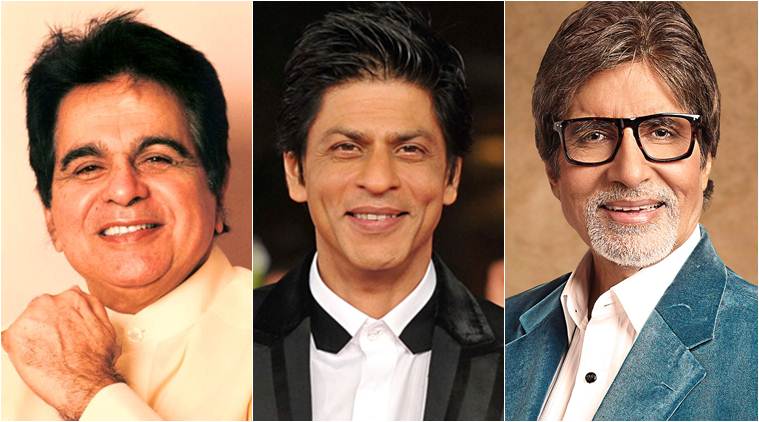
The 100 year plus history of cinema in India has seen around seven genuine superstars or megastars. We say genuine as regional superstars are called superstars today while stars and mini stars also get called superstars; so the word superstar looses value. When historians write about Indian cinema, then it may well be that the names of Dilip Kumar, Amitabh Bachchan and Shah Rukh Khan will be at the top of the pile due to various reasons.
In reality, these things are very region based as X can be the biggest ever in one region and then this X can be number 5 of all time in another region and huge essays can be written who was greatest where and when but that is for another day. However, there is a huge huge similarity in the career of Dilip Kumar, Amitabh Bachchan and Shah Rukh Khan and it becomes even more uncanny that all three are among the biggest superstars if not the biggest India has ever seen.
All the three superstars had a hiatus in their respective careers and not only were they all at a similar age but it was also for a similar period and it looks like Shah Rukh Khan may have passed where the other two legends did not.
Dilip Kumar took a break at the age of 53 post BAIRAAG in 1976. This film is seen as a flop in the industry but as per box office collections, it was a HIT or even SUPERHIT. But prior to this Dilip Kumar had not seen a hit for six years and BAIRAAG was a much delayed release. Som the decision to take a break was probably taken much before the release of BAIRAAG.
BAIRAAG was released in October 1976 and then Dilip Kumar came back with KRANTI in February 1981 which was a break of 52 months. KRANTI broke all first run box office records but Dilip Kumar came back as character artist rather than the lead. Its another matter that he set a precedent that his films become set around this older character rather than leads and many also became huge BLOCKBUSTERS. This sets him apart from all the actors and is basically why he is the greatest ACTOR India has ever seen.
Amitabh Bachchan took a break at the age of 49 post the release of KHUDA GAWAH. This film did not live upto expectations due to the huge costs but was a good grosser and the biggest of that year in some circuits. But generally except for AAJ KA ARJUN, the films of Amitabh Bachchan had not been performing as they should for a few years. KHUDA GAWAH was released in May 1992 and it was break of 60 months as MRITYUDAATA came in May 1997. He did a guest appearance in INSANIYAT in between but that was a long delayed film. Amitabh Bachchan came back as main lead but the film just did not work and nor did others as lead. Hence, he eventually had to shift to character roles. It was still a great career as a character artist and is still going strong today but the sort of films and roles Dilip Kumar got was not there for Amitabh Bachchan.
Shah Rukh Khan took a break at the age of 53 post the release of ZERO and there is not much to say about the fate of this film and also the few films that came before ZERO. ZERO was released in December 2017 and Shah Rukh Khan came back with PATHAAN in January 2023 which was break of 61 months and it has smashed the box office. The difference here is that Shah Rukh Khan has not comeback as a character artist like Dilip Kumar but main lead. And when Amitabh Bachchan did come back as main lead, it led to failure while Shah Rukh Khan has succeeded and how. Basically he has gone to where the legends could not go post the hiatus they all took.
There can be a new chapter of super success written depending on how the story unfolds from here. This is a different Shah Rukh Khan from before just not on screen but as the way things are done also. Shah Rukh Khan was the king of promotion and it was his methods that the rest followed and are still following today. This is while Shah Rukh Khan himself has changed to keeping a low profile which is actually still a must for a genuine superstar or star though many don't see it that way. You see all these actors promoting films with stupid interviews all over the digital space, there are these Instagram videos and shorts or reels or whatever they are called sort of telling the public you can see me on these regularly for free so no need to come and watch my films and the public does as they say. The difference now with SRK maybe is that the message will be that if you want to see me then see me on the big screen and with this scene of exclusivity with the correct product and the sky will be the limit. Both will have to go hand in hand but the potential to create history with this mix is huge.
Also if this is the way SRK goes, then just like he taught the industry about promotion and he may now teach that it is all pretty pointless now and its your film and your exclusivity that urges fans to watch you in the cinema hall. This actually would be far important than any box office history as it will put the film industry on the correct lines.
"Never had any heroine dared to demand a double role in a Bachchan film": Excerpts from Sridevi's biography
8:50 AM

Excerpts from Sridevi's biography, authorised by husband Boney Kapoor, reveal how she negotiated her way to become the only actress to bag a double role in a Big B film
MID-DAY (December 15, 2019)
The media now anointed her with another sobriquet. Female Bachchan. The label soon acquired a whole new meaning when Sridevi now decided to stop working with Amitabh. Filmfare showcased the actress on its November cover with the tag line—'Out of Reach?' In the same interview, Sridevi gave her reason why: 'I never said I won't work with Amit-ji. But then what's there for any artiste to do in a film starring him? He does everything himself.' But when producer Manoj Desai and director Mukul Anand conceived a magnum opus set in Afghanistan (Khuda Gawah), it begged the magnificence of Sridevi. Bachchan himself was in a fix on how to get the actress onboard, when an opportunity presented itself.
Those days it was customary for filmmakers to invite the industry and media and share rushes of their upcoming ventures. Boney Kapoor and Satish Kaushik held such an event where they screened Sridevi's outstanding performance in the number Dushman Dil Ka from Roop Ki Rani Choron Ka Raja. Amitabh, present at this preview, was mesmerized. The next day, Bachchan sent a truckload of roses for Sridevi. Headlines exploded about how the biggest actor had paid tribute to the biggest actress. Filmfare brought out a cover story with the tagline—'How Amitabh Wooed Sridevi'. While Sridevi agreed in principle to star in the film, she laid down the condition that she would play both the roles of Amitabh's wife and daughter. This was unprecedented! Never had any heroine dared to demand a double role in a Bachchan film. But the actress knew her worth. The deal was struck.
As a child-artiste, Sridevi was witness to a co-child-actor's death:
Sridevi was witnessing incidents now that were leaving a mark on her tiny mind. In several interviews, she recounts watching a fellow child star pinched hard by his mother because he was required to cry for a scene. However, the most traumatic incident remains the one that occurred by a lake on a different shoot. Sridevi was in the water with twelve other children for a scene. As soon as the shot got over, everyone returned to the shore and changed into dry garments. Suddenly, someone noticed that one pair of clothes was still lying unworn on the grass, flapping gently in the breeze. As everyone stared, a terrifying silence engulfed them all. Realization dawned that one child had not made it back to the shore alive. In her 1988 chat with Stardust, the actress recounted: 'Everyone was frightened . . . the director sent a man to call the boy's mother immediately, while we waited anxiously. The scene that followed was horrible. The director began by telling her how her son had met with an accident. . . She pulled her hair, flung the flowers away, tore her sari, banged her fists and rolled on the ground crying . . . I don't think I'd ever forget that sight. Somehow, it has helped me grow up.'
When Sridevi was called the unwed mother...:
On 2 June 1996, Sridevi and Boney got quietly married at the Sai Baba temple in Shirdi. With Srilatha [sister] having reservations about their relationship and Boney already wedded to Mona Shourie, the couple kept their marriage under wraps. Consequently, for the longest time, the world remained oblivious to the fact that Boney and Sri had become man and wife. As a result, tabloids erupted in early 1997 with unfounded reports calling Sridevi an unwed mother, pregnant with Boney's child.
Excerpted with permission from Sridevi: The Eternal Screen Goddess, written by Satyarth Nayak, published by Penguin Random House India

I became action hero because of Danny Denzongpa saab-Suniel Shetty
9:03 AM

As told to Hiren Kotwani (MUMBAI MIRROR; December 11, 2019)
 The first film I signed was Sajid Nadiadwala’s Waqt Hamara Hai and my first release was Balwaan. I got into films thanks to photographer J P Singhal saab. Raju Mawani, who sadly passed away in October, was making his first film as a producer with Deepak Anand as the director.
I had never thought I’d become an actor. But when I got the opportunity, I was like, “Mauka mila hai toh I’ll do my best… chauka maarne ka”. I trained with (the late acting coach) Roshan Taneja saab for a few weeks, and when it was time to shoot, I would mug up my lines. Initially, I was a little nervous. Divya Bharti was the leading lady of the film and she was already a star; very spontaneous and brilliant at everything she did. Gradually, with the prep and all, I got comfortable. Then, there was also Danny saab (Denzongpa).
By the time we began shooting, my nerves had settled. My first shot was an action scene—I had to jump off the bridge at Kemps Corner. It was action and I felt it was up my alley. It charged me up. Since it was the neighbourhood I grew up in, people I had grown up around had gathered on the first day of the shoot to root for me. At the back of my mind, I knew I had to give my best and I couldn’t disappoint them. Thankfully, the shoot went well.
Looking back, Suniel Shetty became an action hero purely because of the efforts of Danny saab. He had shot with Amit ji (Amitabh Bachchan), who had lifted him for a scene in Khuda Gawah. It was he who suggested that I carry him on my shoulders/back for an action scene. His logic was that after an actor like Amit ji had done it, the audience would believe that this new actor is strong, too. So, it’s also because of Amit ji’s legendary image that I got set as an actor. (Action director) Ravi Dewan put his heart in the action. The entire team helped me settle in the film.
When you have such strong co-actors, it makes a big difference. I learnt a lot during my first film. It was Danny saab who first told me to not work on Sundays and to spend the day with family. “Do your own thing, enjoy your life. Don’t be a slave to work,” he told me.
Even though Sajid (Nadiadwala) bhai signed me first, he had no qualms about Balwaan releasing first. He’s still the same person today and takes care of his team like before. Not to forget, there were also people like Rajiv Rai and Shabbir Boxwala, among others, because of whose involvement, my career took off.
An analysis of the reasonably priced and delicious snacks sold in single screen theatres of Mumbai
2:14 PM

As a salute to the Mumbai's last surviving single screen theatres, we relish the simple and delicious snacks sold at their counters
Suman Mahfuz Quazi (MID-DAY; December 1, 2018)
The posters are peeling, the walls are leaking and the curtains may come undone. The counters are half-empty, the food aplenty, but we're all flocking to over-priced nachos anyway. Welcome to this stupid world.
City historian Deepak Rao is as unhappy as us. "We'd make sure to carry extra pocket money for the chicken rolls at Old Excelsior when we went to watch films as college students," he reminisces, adding, "Watching movies used to be an experience." And we attempted to relive it.
As Eros cinema remains shut behind large doors and Regal, a glittering hoarding in Colaba's iconic skyline, sits on the cusp of an uncertain future, we take a look at the humble and wholesome fare sold at near abandoned food counters of the city's single-screen theatres, before they disappear like the brightness from the Diwali lights you forgot to take down.

Hotel filmistan
 In 1992, when Khuda Gawah, a Bachchan-starrer Bollywood drama, premiered in the now-ageing Maratha Mandir at Mumbai Central, actor Poonam Dhillon had brought along a box of pedhas. The staff ate it up when Dhillon wasn't looking and she let it go with a laugh. Umar Rasool Sunasra (right), 52, food and beverage manager at the theatre, tells us many stories while looking back at his 35 years of service.
"Dilip Kumar was also here. I served him tea," he recalls. Incidentally, the film's co-producer, Manoj Desai, is also the executive director of the movie hall. The canteen is as relevant to their patrons as the box office. And their in-house vegetable sandwich (Rs 20), a humble snack made with bread, tomato, cucumber and green chutney continues to be a favourite. Young moviegoers who are there to watch Rajnikant and Akshay Kumar's new offering, 2.0, flock to the counter for hot and crispy samosa (Rs 30), chips and sandwiches.
 Popular among Mumbaikars for screening a daily show of the 1995 blockbuster Dilwale Dulhania Le Jayenge even today, the cinema hall continues to serve wafers at Rs 10. "If the ticket is Rs 20, the food has to be cheaper, right?" he reasons. And if you ask him what he thinks of multiplex fare, he shakes his head disapprovingly. "Galat baat hai. Nuksaan na humara na customer ka hona chahiye. Tab hi toh woh laut ke ayenge," he says even as he reminisces the golden days of packed shows and surging sales.
AT M M Marg, RBI Staff Colony.
CALL 23070119

En route Pune
 Subhash Bhatia (right), F&B manager at Chitra Cinema on Ambedkar Road, remembers Pune-bound city slickers stopping by to hoard affordable-but-hygienic wafers, sandwiches, and softies, which were a hit during summers in the '50s and '60s, when air-conditioned cars were still a distant dream. Located in a prime location, they still get a decent footfall, but have had to add new snacks like burgers.
The mela-like popcorn machines are a new addition and they have brought on board a different distributor for sandwiches, who serves variants like Russian salad and cheese chutney (Rs 80 each). "The problem is, if it isn't a good film that's playing, customers don't show up, but with a multiplex, they can simply watch another film. Our generation was happy with very little. It's not the same anymore," he shares.
AT Dr Baba Saheb Ambedkar Road, Dadar East.
CALL 24182264

A galaxy for cinephiles
 "Yahan sab gareeb log aatein hai, madam," Babu Shaikh (right), food counter manager at Bandra's Gaiety-Galaxy Complex points out, speaking about why they continue to sell affordable eats, despite a decline in footfall. Their samosa, sourced from Sion's popular street food joint Guru Kripa (who, along with A1, caters to seven single-screens including the ones mentioned here), were once selling like hot cakes. Now, Babu says, "It's hard to sell even 50."
He thinks allowing patrons to bring their own food has lent itself considerably to the fall in sales. Even so, he stands by keeping costs low. "Poor people should have a place they can go to, to enjoy films as well," he argues. At one end of the movie hall's expansive cafeteria, an ice cream counter continues to sell Pastonji's chocolate ice cream (Rs 30) served in old-school wafer cones.
AT Swami Vivekanand Marg, Bandra West.
CALL 26558285

A forgotten landmark
 Ganpati Eesan (right) has been working as the F&B manager at Regal Cinema's counter for 15 years. In a little corner behind the counter, he has set-up a table where he makes the theatre's popular sandwiches. "Back in the day, customers would purchase a ticket only to try the veg exotic sandwich [capsicum, tomato, cucumber and mayo]. We discontinued it three years ago because the ingredients became costlier but we couldn't hike our prices."
Now, they serve only cheese and chutney sandwiches (Rs 70). Looking back at some of the weirdest moments from his time behind the counter, Eesan recalls, "Once a foreigner brought urchins inside for a movie and raided our counter. We thought it was sweet, but didn't know how to respond."
As the PVRs and Cinepolises of the world took over, Regal relegated to the background, forgotten in all its vintage Art Deco splendour.
AT Colaba Causeway, Shahid Bhagat Singh Road.
CALL 22021017
Subscribe to:
Posts (Atom)