Showing posts with label Ketan Mehta. Show all posts
Showing posts with label Ketan Mehta. Show all posts
Our animation films have little resonance outside the country-Ketan Mehta
8:02 AM

At a recent panel discussion at the Mumbai International Film Festival , filmmakers discussed the evolution of animation films
Vinay MR Mishra (BOMBAY TIMES; June 21, 2024)
The Mumbai International Film Festival (MIFF) witnessed multiple panel discussions, one of which revolved around the evolution of animation films and their appeal across age groups. The panel comprised renowned filmmaker Ketan Mehta, actor-producer Jackky Bhagnani, Iranian filmmaker Mohammad Kheirandish and Emmy-nominated filmmaker Vaibhav Kumareshwar.
Mohammad Kheirandish, known for his animation film Dolphin Boy, spoke about his ambition to take his animation movies worldwide. “We prefer content that shows Iranian essence and the reality of Iran to the international market. It is not specifically made for Iranians. I would prefer if the audiences across the world could see it and like it,” he said.
‘WE NEED A MORE GLOBAL MINDSET’
Sharing his thoughts, Ketan Mehta, known for the popular cartoon Motu Patlu, spoke about India’s lack of global ambition when it comes to animation. “The problem we have been facing is that most channels and producers are international companies, who want to cater to the Indian market. However, when you are creating specifically for the domestic market, it has very little resonance outside the country, and that is the problem. We need to break out of this cycle. We need a more global mindset and ambition as we are all global citizens now,” he shared.
Vaibhav Kumareshwar, who won an Emmy for his acclaimed cartoon Lamput, has another perspective to offer. “Frankly, I am not thinking which market I am going to create for. We never planned that Lamput would be for a particular market. The only thing we kept in mind is that it won’t simply be Indian. It was not rooted in any particular culture,” he shared.
‘ON THE ANIMATION FRONT, WE CAN PUSH THE ENVELOPE’
Actor-producer Jackky Bhagnani, who aspires to get into the world of animation, said, “We are working towards getting into the animation space. Chatting with different filmmakers here today, who’ve done such amazing work, was exciting. On the animation front, we are very new, but I believe we can push the envelope. The beauty of animation is that it is all about expression, and you are not limited to that area. In animation, you can imagine anything and create it.”
It was heartbreaking when we decided to not do Freedom Radio-Ketan Mehta
9:46 AM
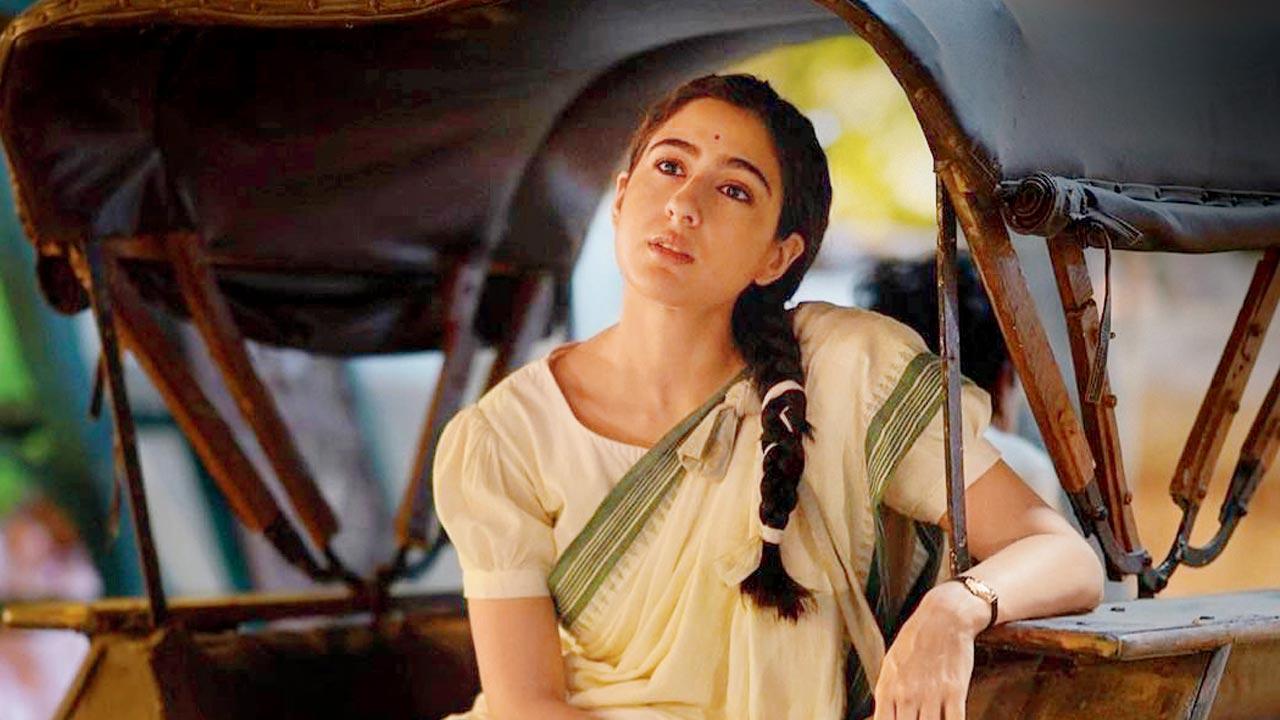
Director Ketan rues having to put brakes on biopic of freedom fighter-aunt Usha Mehta, after Ae Watan Mere Watan makers announced Sara-led film on same subject
Upala KBR (MID-DAY; March 1, 2024)
A heartfelt tribute to his aunt Usha Mehta, who had played a crucial role in India’s freedom movement—that’s how Ketan Mehta had envisioned Freedom Radio. In May 2022, the director and producer Anubhav Sinha announced the ambitious biopic. Unfortunately, it was not meant to be. After the Sara Ali Khan-led Ae Watan Mere Watan was announced last year, Ketan was persuaded by Sinha to drop their project as both movies had the same subject.
Now, as the Karan Johar production is slated to première on Prime Video on March 21, Ketan remembers how his film was to be an intimate portrait of his aunt, who established the underground radio station, Congress Radio, during the Quit India movement.
“Developing this story was pure joy. Sifting through her personal diaries and delving into my own memories have been a crucial part of the work. We were planning to make Freedom Radio, but another film was already being made on the same subject. That had progressed substantially, and we were still in the pre-production stage. It wouldn’t have been wise to repeat it,” he says.
The decision to drop the story, which he held so dear, was not easy. “It was heartbreaking when we decided to not do Freedom Radio. But that’s part of filmmaking; you have to take it in your stride.”
The team of Ae Watan Mere Watan released the teaser in January 2023, while Johar and Khan launched a motion poster at the International Film Festival of India (IFFI) in Goa last November. In director Kannan Iyer’s film, Khan steps into the shoes of the late Mehta, who was awarded the Padma Vibhushan in 1998. Did the film’s team reach out to Ketan or his family during their research?
“Not at all. We were planning to tell her story, with flashes from her childhood till India’s independence in 1947. I lived with my aunt for 15 years before she passed away. So, we shared a deep connection.”
One wonders about the road ahead for Freedom Radio. Has he shelved the biopic completely? “I’m not making it for the time being. We had an independent perspective, and since [we had] personal knowledge of the family, it would have been a richer film. But Anubhav felt that having two similar stories come out was not the best idea. We kept it on the backburner; we’ll see how it works out.”
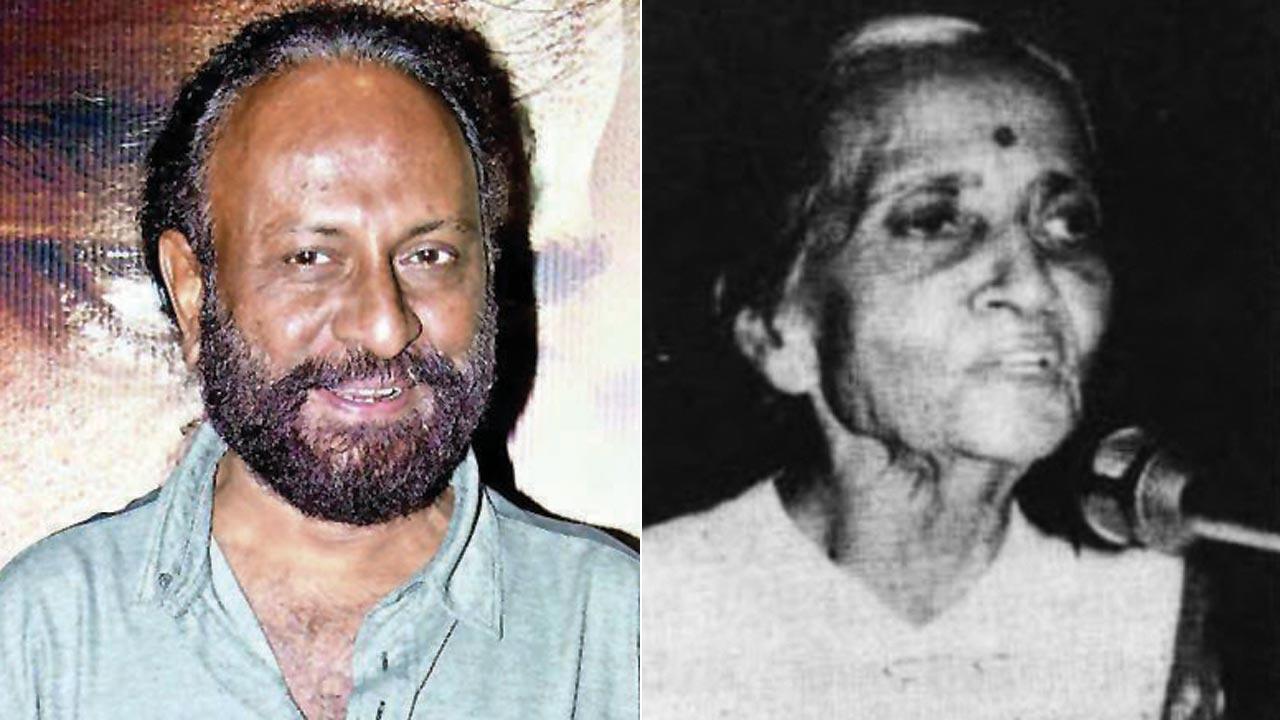
Madhur Bhandarkar, Ketan Mehta and Milan Luthria pay tribute to Nitin Desai
8:45 AM
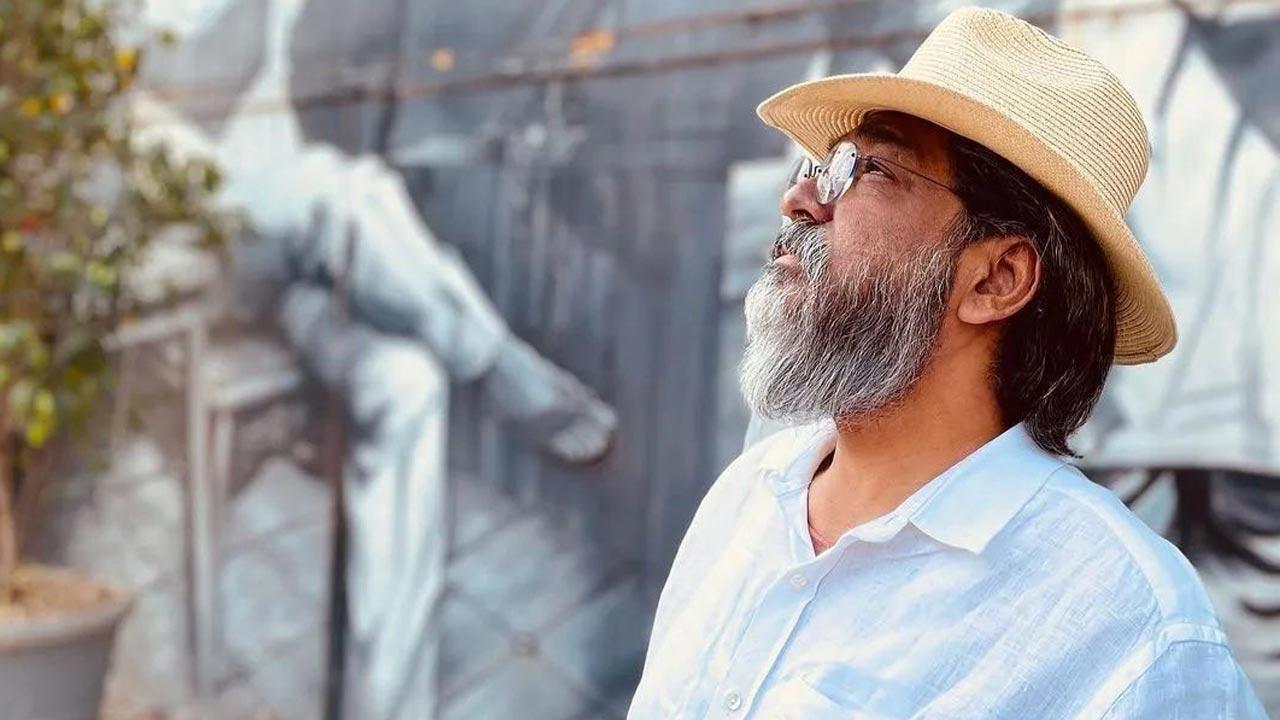
BOMBAY TIMES (August 3, 2023)
Renowned art director and production designer Nitin Chandrakant Desai died by suicide at his studio (N D Studios) in Karjat, 80 km from Mumbai, yesterday. As per reports, he was going through financial stress and speculation is that this could have been the reason for him to take this step.
In his career spanning 20 years, he worked with prominent filmmakers like Ashutosh Gowariker, Vidhu Vinod Chopra, Rajkumar Hirani and Sanjay Leela Bhansali. He was the brain behind the sets of Hindi films like 1942: A Love Story (1994), Hum Dil De Chuke Sanam (1999), Lagaan: Once Upon A Time In India (2001), Devdas (2002), Lage Raho Munna Bhai (2006), Jodhaa Akbar (2008) and Once Upon A Time in Mumbaai (2010) to name a few.
His last venture as an art director was Panipat (2019). He had also created the sets for the Oscar-winning film Slumdog Millionaire (2008). Desai won several awards throughout his career, including four National Awards.
In 2005, Desai established N D Studios in Karjat, which was spread over 52 acres. This studio has played host to many movies as well as the reality show Big Boss. He also tried his hand at acting and has been credited as an actor in Daud (1997) and the Marathi movie Hello Jai Hind! (2011), which he directed.
Last month, Desai had performed a pooja at his studio in anticipation of the upcoming festival of Ganesh Chaturthi. He was working on the pandal decoration for Mumbai’s iconic Ganpati mandal Lalbaugcha Raja. He was also busy with an OTT show on Maharana Pratap.
Regarding his demise, Raigad Superintendent of Police (SP) Somnath Gharghe said, “Police were informed by a worker on the set. When the team reached the studio, we saw his body hanging. We are investigating further to ascertain all the aspects in this case.”
- With inputs from ANI
---------------------------------
Directors Bhandarkar, Luthria and Mehta pay tribute to one of Bollywood’s finest art directors, who could create lavish mansions for Devdas and rustic villages for Lagaan with equal ease
Upala KBR, Hiren Kotwani and Priyanka Sharma (MID-DAY; August 3, 2023)
There is a sense of magic as the lights in a theatre dim for we are often, within moments, transported into another world. And if we were lucky, we would be transported to a world created by art director Nitin Desai. From the earthy village of Lagaan (2001) to the vibrancy of Devdas (2002), from the 16th century palaces of Jodhaa Akbar (2008) to the ’70s Bombay in Once Upon A Time In Mumbaai (OUATIM, 2010), there wasn’t a setting that the four-time National Award winner had not introduced us to.
OUATIM director Milan Luthria remembers how he began shooting the gangster film with Ajay Devgn and Emraan Hashmi in real locations across Mumbai. Soon, crowd-management issues made him consider filming on sets. That’s when someone recommended the production designer to him.
“I told Nitin what I had in mind. He said, ‘Don’t worry, it will all happen in my studio [ND Studios, Karjat].’ He came back with a plan and sketches of how he was going to turn around various parts of his studio. He made a vintage café, made Sultan’s [Devgn’s character] house all white, and made the bustling streets where we shot the song, Pee Loon. His greatest quality was that he could adapt to the sensibility of the film. He realized that each movie had a different demand, which is why every film of his looks different,” he shares.
The director remembers that the climax where Devgn’s character is shot at while delivering a speech was the most challenging. But Desai, he says, came up with quick solutions.
“The studio originally didn’t look that way. There was chaos, but he quickly changed the colours of the backdrop, erected a wall on one side and removed certain fountains, saying that the style did not match the era we were depicting. He was hands-on. If you had an issue and needed a solution, Nitin was the man,” adds Luthria.
The studio originally didn’t look that way. There was chaos, but he quickly changed the colours of the backdrop, erected a wall on one side and removed certain fountains, saying that the style did not match the era we were depicting. He was hands-on. If you had an issue and needed a solution, Nitin was the man,” adds Luthria.
Desai had won National Awards for his work in Dr Babasaheb Ambedkar (1998), Hum Dil De Chuke Sanam (1999), Lagaan and Devdas. But to Bhandarkar, his work went beyond grandeur.
“Nitin was synonymous with [elaborate] set design after his brilliant work in Hum Dil De Chuke Sanam and Devdas. But he was equally a genius in creating realistic sets for films like Traffic Signal, Jail [2009] and Indu Sarkar [2017]. He visited Yerawada and Thane prisons to create a realistic set for Jail. When I asked him [to recreate] Connaught Place, he promised that it would be as real as Delhi’s landmark location. I was amazed at the transformation. I clicked some pictures and sent it to my friends in Delhi, who couldn’t believe it was a set.”
A trait of Desai that endeared him to the director was his ability to make good his promises. “He was always flexible with budgets and would say, ‘Main kar ke deta hoon.’”
Director Ketan Mehta shares that the Aamir Khan-led Mangal Pandey: The Rising (2005) was the first endeavour to be shot in ND Studios that opened in 2005. “When he launched the studio, the qawwali song from Mangal Pandey was the first shoot on the location. Nitin was a disciplined and systematic designer. So, even before we began shooting, everything was pre-visualized and pre-decided with major contributions from the creative genius that Nitin was,” says Mehta, who worked with him over 28 years and several films.
Producer Ronnie Screwvala, who collaborated with Desai on several films, most notably Jodhaa Akbar and Fashion, remembers him as someone who thought big and created even bigger. “He always gave his all to whatever he did. He always thought big and then actually made it happen. I am very sad to hear the news, ” he says.
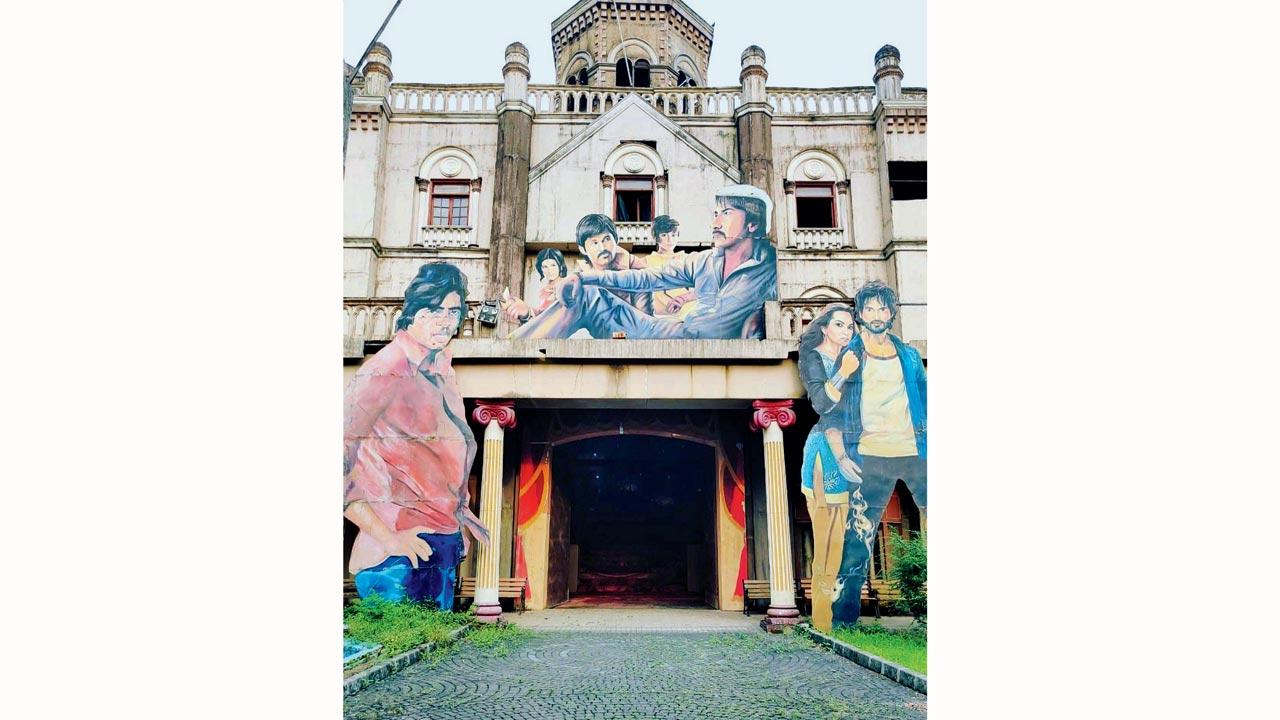
The particular permanent set in ND Studios, Karjat, where Desai was found dead on Wednesday
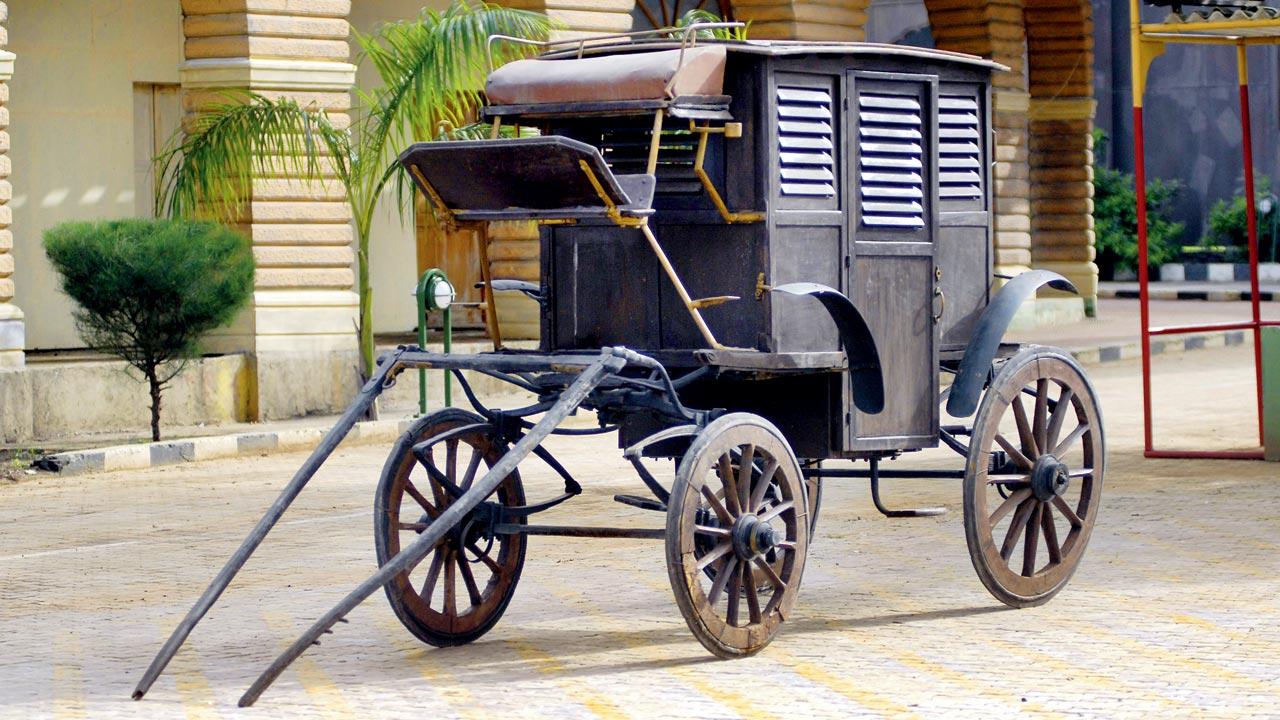
Set pieces used for the filming of Lagaan. Pics/Nimesh Dave
My offer is open to Anurag Kashyap, Ketan Mehta and a few other friends-Anubhav Sinha
7:57 AM
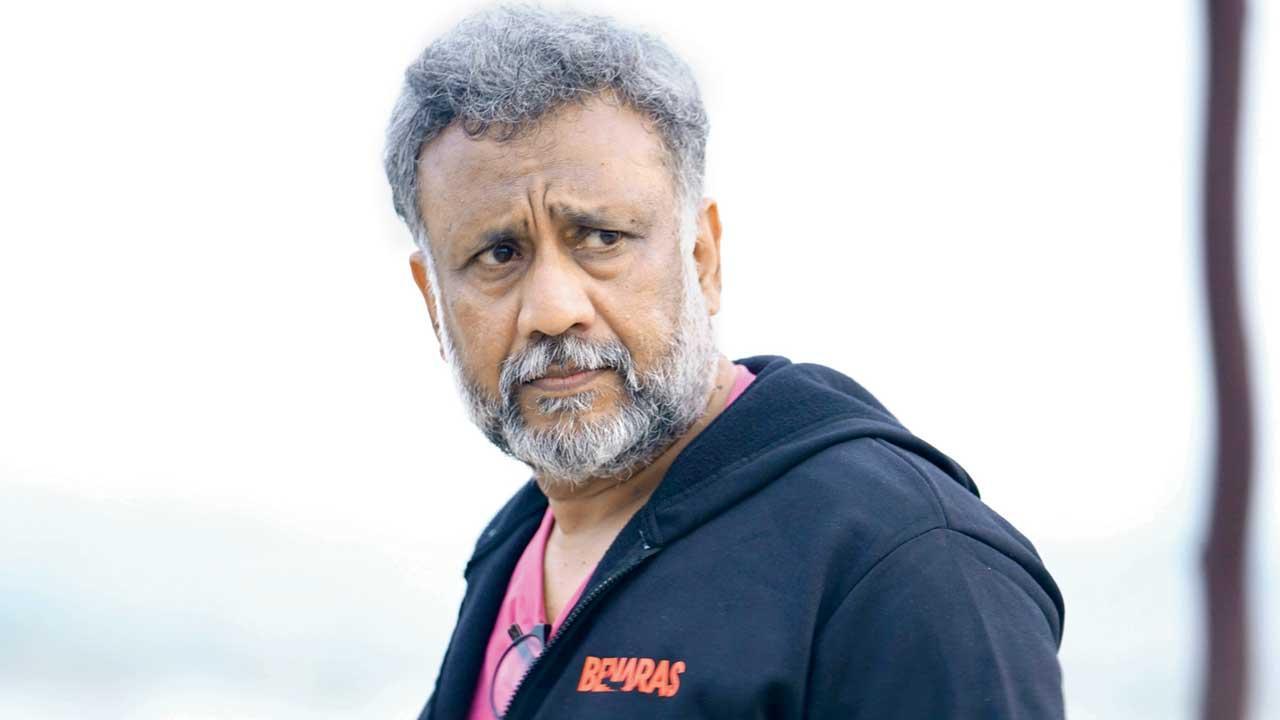
Throwing his weight behind director-friends Hansal and Sudhir’s movies, Bheed maker Anubhav says viewers must explore beyond big-scale entertainers
Priyanka Sharma (MID-DAY; March 31, 2023)
Filmmaker Anubhav Sinha has an open offer for his director-friends. They decide the story they want to tell, and he will throw his weight behind the project. This year, he has backed Hansal Mehta’s Faraaz. “The same offer is open to [Anurag] Kashyap, Ketan Mehta and a few other friends,” smiles Sinha, whose Bheed hit the screens last week. Up next are two productions — Sudhir Mishra’s drama Afwaah, and an anthology.
Sinha and Mishra were trying to collaborate on a film for the past 10 years. It was the Nawazuddin Siddiqui and Bhumi Pednekar-starrer that finally excited them. “It happened organically that I produced Hansal and Sudhir bhai’s films. Sudhir bhai and I talk four times a day, discussing new stories. Producing is creative, social and personal.”
Sinha, who made his feature film directorial debut with Tum Bin (2001), has come a long way in the past two decades — directing hard-hitting films like Article 15 (2019) and Thappad (2020), while enabling his peers to tell their stories.
“I don’t look at what I am doing as helping someone tell a story. That’s too condescending [to others]. I am in a position today where I [have] money [to support] a film that I think should be made. Tomorrow, someone else will be in this position, and he will hopefully say that about my film. It’s about sharing the individual’s belief in the film.”
While he attaches his name to small but significant stories, the audience, of late, seems to show an inclination towards big-scale entertainers.
Point it out to Sinha, and he doesn’t mince his words, as he states, “While one seeks approval from the audience, one also wants the audience to identify a good film and back it. One is disappointed when they don’t go and watch a film like Faraaz, which was about youngsters and got great reviews. They need to explore newer kinds of films. It has become a convenient discussion that some films are made for OTT, and some for theatre. Watching a film on OTT is like having coffee, and not smelling it. In theatres, you can [fully experience] a movie.”
This is how India’s entry to Oscars is selected
8:45 AM

With fans already kicked about films likely to represent India at the Oscars, experts decode the selection process
Sugandha Rawal (HINDUSTAN TIMES; August 27, 2022)
Of late, there’s been buzz around films such as RRR, The Kashmir Files and Rocketry: The Nambi Effect, as they stand a chance to represent India at the Oscars next year (95th Academy Awards). But, experts suggest that fans shouldn’t get overwhelmed with the hype yet, as the official selection process hasn’t even begun.
“The process of seeking entries will start at the beginning of September, with the Film Federation of India (FFI) sending invites to all the [film] associations in India. The jury will start viewing the films on September 16, and the official entry will be announced by the end of September. That film will be sent to the Oscars in October,” says Supran Sen, secretary general, FFI.
Breaking down the process of finding India’s official entry to the Oscars, Nitin N Datar, vice president, FFI, shares, “We don’t have a fixed selection committee. We add new members every year, who are all National Film Award winners. While we watch a lot of movies to decide the official entry, some producers can also send their entries directly to the Academy, if they meet the eligibility criteria. We take note of films from all across India and not just the popular ones.”
While the jury has been formed, the names of the members haven’t been revealed yet. “That’s because once the names are out, there is a lot of pressure from people, as they try to influence the jury members’ decision,” adds Datar
Trade experts are happy with the films that are creating the buzz. Taran Adarsh says, “These films are strong contenders, as they are unique and reflect real India.” Producer and trade analyst Girish Johar adds, “These films are apt because they represent Indian viewing consumption right now.”
Director Ketan Mehta, who has been on the jury in the past, decodes the criteria for picking the official entry: “The story and filmmaking should be high quality, and the story should have the ability to travel the world.”

Anubhav Sinha joins forces with Ketan Mehta to produce Usha Mehta's biopic, Freedom Radio
7:46 AM
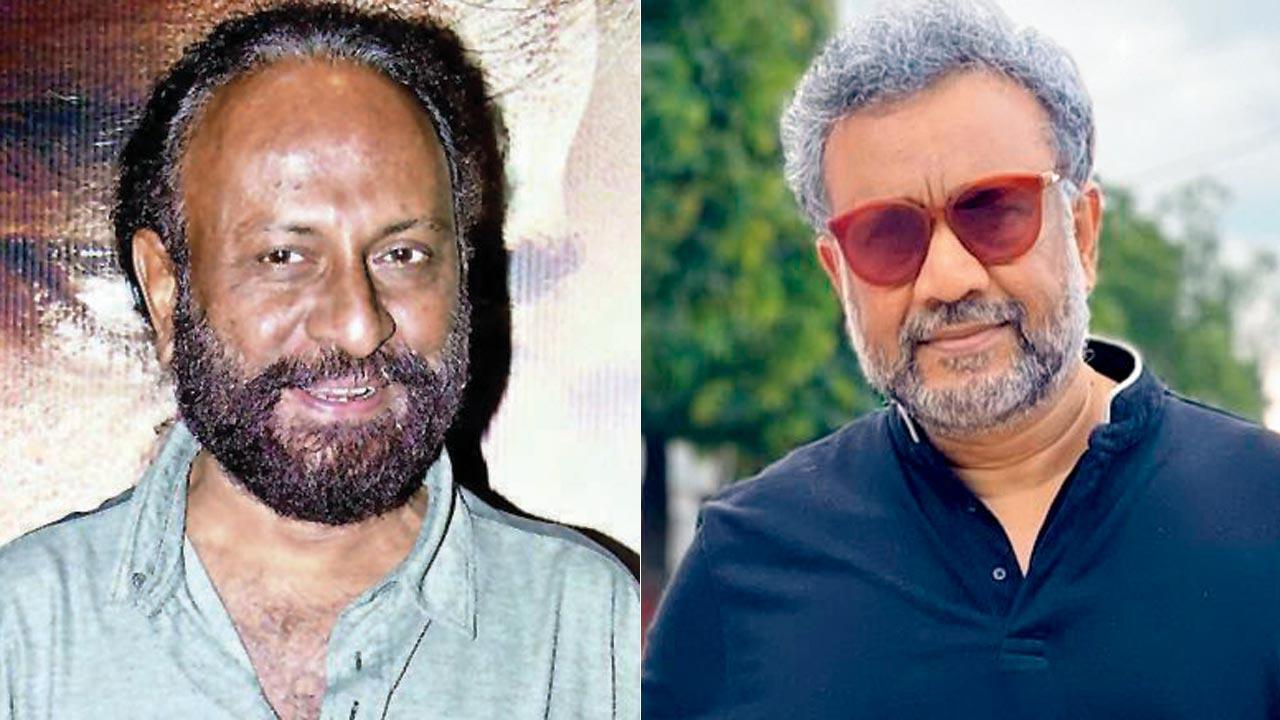
Mohar Basu (MID-DAY; May 19, 2022)
Last September, mid-day was the first to report that Ketan Mehta is planning a biopic on his freedom fighter-aunt Usha Mehta (Another biopic in Bollywood, Sep 7). Telling such an ambitious story requires unflinching support from collaborators with like-minded vision. Fortunately, Ketan has found the perfect partner in producer Anubhav Sinha.
For the director, Freedom Radio is a means to celebrate the fiery spirit of his aunt who played a crucial role in establishing the Congress Radio. “In 1942, when Mahatma Gandhi announced the Quit India movement, the British Raj arrested all the top leaders in a midnight swoop. The movement was rendered leaderless. That is when the youth of India came forward to take charge. Usha Mehta, a 22-year-old student, galvanised a team of fellow students to counter the British. They established a secret, underground radio station. Under constant threat, they continued to provide the true news of the freedom struggle to the people of India,” he recounts.
Developing this story has been pure joy for Ketan, as he revisited his aunt’s bravery. “Sifting through her personal diaries, and delving into my own memories have been a crucial part of my work. I couldn’t have found a more supportive producer than Anubhav who understands [my] vision.”
Freedom Radio is in pre-production, with the makers in the process of finalising the lead actor. Backing the biopic under Benaras Mediaworks, Sinha says, “It’s the kind of patriotism that we need to revisit in today’s day and age.”
Playing a freedom fighter would be my dream role-Bhumi Pednekar
8:12 AM

Responding to news of being a contender for film on freedom fighter Usha Mehta, Pednekar says she’s game
Mohar Basu (MID-DAY; January 6, 2022)
In a previous edition, mid-day had reported that filmmaker Ketan Mehta was considering roping in Bhumi Pednekar for a biopic on his aunt, freedom fighter Usha Mehta. Now, in an interview with this writer, the actor says essaying the part of a freedom fighter would be among her most cherished opportunities.
“Playing a freedom fighter would be my dream role. I am fascinated by such remarkable personalities. It would be an honour. I hope the universe listens to this,” says the actor. With a string of offerings, including Bheed, Rajkummar Rao-starrer Badhaai Do, Ajay Bahl’s Ladykiller, Govinda Naam Mera, and Raksha Bandhan with Akshay Kumar, within the span of one calendar year, Pednekar is set to explore a gamut of personalities for the big screen.
“All my films see me attempt to shatter stereotypes. That’s what I have done right from my debut film, Dum Laga Ke Haisha. I see myself playing ambitious, beautiful, and gutsy characters, because I relate to them. I am thrilled to be creatively expressing myself.”
Despite having tackled a variety of genres, Pednekar says there is one that she is still keen to give a go at. “A fantasy project. I would love to experience that, as an actor,” she signs off.
It would have been an honour to play someone like Usha Mehta-Taapsee Pannu
8:17 AM

Rachana Dubey (BOMBAY TIMES; October 16, 2021)
Filmmakers Ketan Mehta and Karan Johar are in a race of sorts to bring out a biopic on freedom fighter and revolutionary Usha Mehta.
Usha, Ketan’s paternal aunt, was one of the key members who took charge of the country’s fight for freedom against the British regime between 1942 and 1947. Most senior revolutionaries were put behind bars at that time and it was the young revolutionaries who played a vital role to keep the freedom movement alive using underground radio stations. Usha Mehta was the one who initiated this use of technology to reach out to the masses. It was reported that Taapsee Pannu and Bhumi Pednekar are the top choices as far as Ketan’s biopic on his phoiba (aunt) is concerned.
When we spoke to Taapsee Pannu about being considered for the role, she said, “This is news to me. I have not been offered this film and neither do I have its script with me to see. Yes, it is a dream to play a freedom fighter or someone who crosses limits to show her love for her motherland.”
The Badla actress further added, “It would have been an honour for me to play the role but I have no idea where this came from and I have not been offered this film.”
On his part, in his recent chat with BT, filmmaker Ketan Mehta had stated, “At this moment, all I can say is that the screenplay is still being worked upon. It’s very early to say who’s playing the part.”
Our patriarchal society has forgotten the contribution made by women in our freedom struggle-Ketan Mehta
8:32 AM

Rachana Dubey (BOMBAY TIMES; October 10, 2021)
Ketan Mehta, who has made films like Sardar, Rang Rasiya, Mangal Pandey: The Rising and Manjhi: The Mountain Man, has been in the news for his upcoming film, a biopic on freedom fighter Usha Mehta, who played a pivotal role in the Quit India Movement of 1942. The biopic became a point of discussion also because it came to light that filmmaker Karan Johar, too, is reportedly planning a film on the same subject. Ketan Mehta spoke to BT exclusively about this and more:
Several years ago, when you were making Rang Rasiya, there was news about a few other films being planned on Raja Ravi Verma, who was the subject of your movie. Now again, while you are planning a film based on your paternal aunt, Usha Mehta, the subject has also been picked up by another filmmaker.
India is a free country, and I can’t deny that my phoiba (aunt) makes for a great subject. I wish Karan all the best. I feel personally responsible that a tribute to her is made and presented as well as possible. It is a family legacy. My father was also a freedom fighter, and this is the only legacy dad and phoiba left us with and I feel this should be passed on to people. I have been out of the ring for a while. The last film I made was Toba Tek Singh and Manjhi: The Mountain Man. I am also not an industry insider to pick up the phone on another filmmaker and talk about things. I prefer to be that way. I am Usha Mehta’s kin and reaching out to me is their decision. If they want to do that, they can. And why would I anyway stop them from making their film? Yes, it’s unfortunate that these things happen all the time in our business. When I was making Rang Rasiya, it so happened that a few more films were in the pipeline on the same subject. I can’t stop others from doing what they want to do.
You’ve made other biopics before deciding to make this one with which you have a personal connect. Why did it take so many years for you to plan a biopic on your aunt?
Usha Mehta was my father’s sister. I’ve grown up under her guidance, and she also spent the last 20 years of her life with us at our home. She has guided me all my life and that inspiration, I felt, should now be shared with the world at large. I made films like Mangal Pandey: The Rising and Sardar because the freedom movement has inspired me in a big way. This film is about the Quit India Movement, our last battle for freedom, which is the most underreported aspect of our freedom struggle. All the prominent leaders like Maulana Azad, Mahatma Gandhi and Jawaharlal Nehru were in prison and the youngsters took over the mantle. They guided the nation in its last battle for independence with very little resources at their disposal. They used the radio to reach out to as many people as possible. That underground radio station was run by my aunt, Usha Mehta, at the age of 22. That entire phase between 1942 and 1947 has barely been recorded. Next year, it will be the 80th anniversary of the Quit India movement, hence the movie.
Didn’t your grandfather oppose your aunt and your father’s participation in the India’s freedom struggle?
My grandfather was a judge in the court and he still allowed them, especially my aunt, which only goes on to show that he was an open-minded man, who not only made it a point to educate his daughter, but also support her decisions. Phoiba was studying to become a lawyer at that time. She went on to do her PhD degree, too. My grandfather didn’t know about the underground radio station, but he knew where the sentiments of his children were. I can imagine what that time must have been like...It was a do or die situation, youngsters took charge unprepared and took it to the finish line. Deep down, in all of this is a father-daughter story. I was very close to my aunt and this film is close to my heart.
A few days ago, Azad Hind, a biopic on revolutionary Durga Bhabhi, was announced. Gradually, the focus is shifting towards the women who played a part in India’s freedom movement.
It’s because our society was, and to a great degree, is patriarchal even today. It has forgotten the contribution made by women in our freedom struggle. Their work has remained unsung and that is the reason we need to look at our history with a different lens now, and revisit chapters to understand our past better while looking towards the future.
In recent weeks, news has made the rounds that Taapsee Pannu and Bhumi Pednekar are the top choices for playing Usha Mehta in your film. Would you like to comment on that?
At this moment, all I can say is that the screenplay is still being worked upon. It’s very early to say who will be playing the part.
Ketan Mehta to mount Usha Mehta film on a lavish budget; keen to sign Taapsee Pannu or Bhumi Pednekar
8:14 AM

Sources say Ketan’s biopic on freedom fighter-aunt Usha Mehta to be mounted on a lavish budget; director begins recreating ’40s Bombay with historians
Mohar Basu (MID-DAY; September 16, 2021)
Telling the story of a freedom fighter is a significant undertaking. The responsibility only grows manifold when the subject has been an intimate part of your life. On that count, Ketan Mehta’s next, a biopic on freedom fighter-aunt Usha Mehta is perhaps his most important work. Sources say that the period drama will be mounted on a lavish budget.
Even as he is shaping the final draft of the script, the National Award-winning filmmaker has simultaneously begun the pre-production. With the late Mehta having spent the better part of her life in then-Bombay, the director is recreating the city of the 1930s and ’40s.
The historians who assisted Ketan in the script development are also overseeing the process of world-building. A source reveals, “Mehta’s team has reached out to well-known art directors. Alongside, they are conducting a recce of south Mumbai, mainly Colaba and Fort, where a large part of the action will be set. The director hopes to kick off the shoot by the first quarter of 2022, with the indoor sequences. Post that, the unit will shift to Madh Island or Virar, where grand sets replicating the architectural style of the ’30s and ’40s will be built. Ketan is studying every element that is being sourced — from the fabrics to the vehicles — to ensure it is historically accurate. A fair amount of VFX will be employed as well.”
While a leading studio has come on board, the director is keen to sign on Taapsee Pannu or Bhumi Pednekar for the titular role. Ketan is unfazed that Karan Johar too is reportedly backing a story on the same subject, instead viewing his movie as a personal story of the gritty Gandhian who had helped establish the Congress Radio during the Quit India movement.
The source from the unit adds, “The film will shed light on her contribution in setting up the underground radio station in 1942 as well as her serving a prison sentence in Yerawada Jail. Ketan sir has a lot of first-hand anecdotes from his aunt and her personal diaries, which are forming the crux of his story.”
Ketan Mehta to bring freedom fighter-aunt Usha Mehta’s life to screen; Taapsee Pannu, Bhumi Pednekar top choices?
8:13 AM
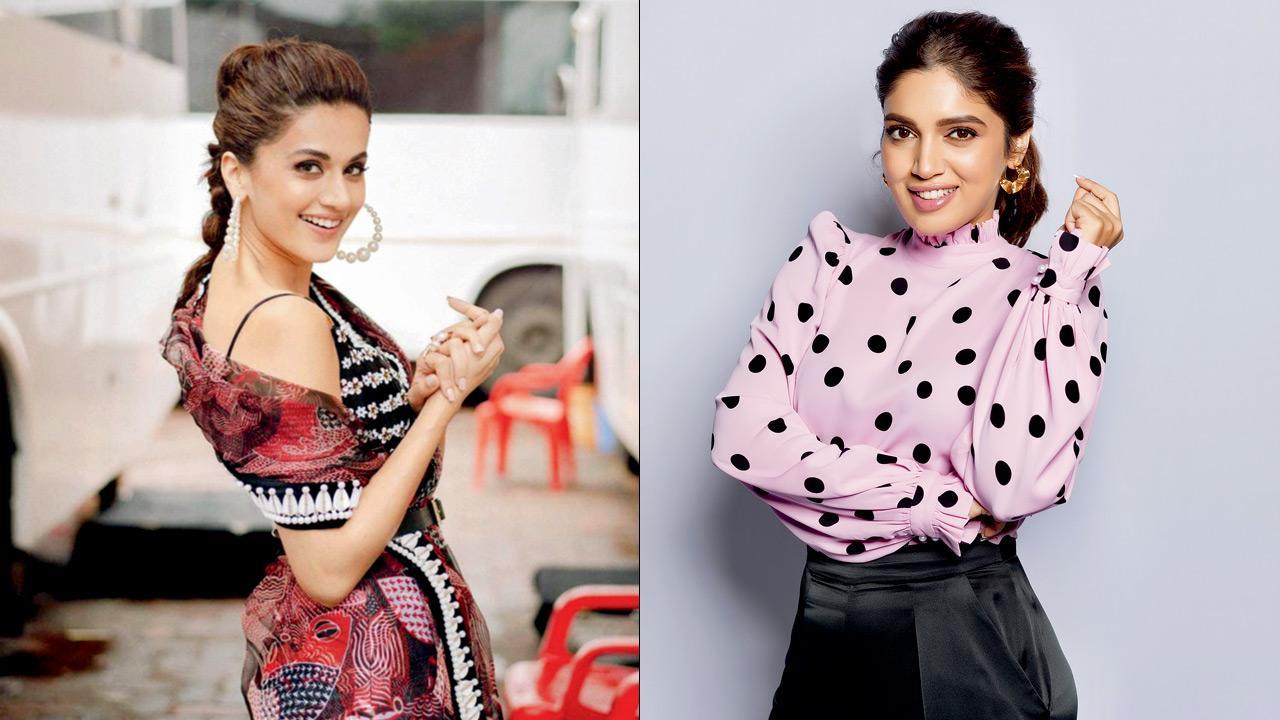
Sources say Ketan Mehta to bring freedom fighter-aunt Usha Mehta’s life to screen; Taapsee and Bhumi top choices for the role
Mohar Basu (MID-DAY; September 7, 2021)
Over the past fortnight, rumours abounded about Karan Johar backing a movie on freedom fighter Usha Mehta. The brave achievements of the 20th century freedom fighter have inspired another storyteller. It is heard that Ketan Mehta, nephew to Mehta, is developing a film on the Gandhian who had helped establish Congress Radio. The underground radio station amplified Mahatma Gandhi’s message of peaceful rebellion during the Quit India movement.
The director’s penchant for biopics is known, having made Mangal Pandey: The Rising (2005) and Manjhi: The Mountain Man (2015) in recent years. A source says that the filmmaker is drafting the final script. “Ketan has simultaneously begun pre-production, and aims to kick off the film by late 2021. He has narrowed down his choices for the lead to Taapsee Pannu and Bhumi Pednekar. Given the actors’ busy date diaries after the second lockdown, the casting will be locked by November.”
Mehta remained unavailable for comment till press time.
Captain Vyom to be made into films, web series
8:19 AM

Nikita Deb (HINDUSTAN TIMES; October 16, 2020)
The cult ’90s show Captain Vyom is all set to make a comeback in a renewed avatar. Original creator, Ketan Mehta, who helmed the sci-fi superhero series back in the day, confirms the news and says that it is a “very exciting development”. “It is after 20 years that we are reinventing that concept. Captain Vyom was the first Indian sci-fi series and an entire generation of kids enjoyed it at that time. It was also India’s first encounter with space age. Now, with India getting into space, it is an incredible concept to be reinvented for the younger generation,” says Mehta, who won’t be spearheading the franchises but will be creatively involved in the five-part film, and five-part web series.
The series starring actor Milind Soman had a huge fan following back in the day, and Mehta believes that it is the best time to bring it back. “We are perfectly placed to reimagine the mythological and supernatural elements of the show. So, a fresh Indian perspective to the space age should be exciting,” he adds.
Since the ’90s, the visual effects and animation industry in India has only seen an upward growth. And Mehta says that it is now time for the industry to take the big leap, and compete in the global markets. “Captain Vyom was the beginning of visual effects in India. It was the first such show and since then, the entire scenario has changed. India has emerged as a strong player in the animation game. The visual effects industry has really developed in the last 20 years. So, we are ready to create content for the global audiences. It is time that we took the big leap in the world of science fiction,” signs off Mehta.

Five filmmakers come together to interpret the COVID pandemic
8:34 AM

Anubhav Sinha, Sudhir Mishra, Hansal Mehta, Ketan Mehta and Subhash Kapoor are planning an anthology film based on stories and experiences from the Coronavirus pandemic
Anshul Chaturvedi (BOMBAY TIMES; July 26, 2020)
For Indian cinema, the anthology — a collection of short films with a similar subject — as a collaborative project with multiple filmmakers has now become a relatively familiar concept. This is courtesy the OTT space, which has been host to several popular ones, stitching together tales on a variety of topics, ranging from stories of lust to stories of ghosts.
For the big screen, however, this remains unfamiliar territory. In 2013, we saw Bombay Talkies, an anthology that had four short films, directed by Dibakar Banerjee, Karan Johar, Zoya Akhtar and Anurag Kashyap, to celebrate the 100th year of Indian cinema. However, when the sequel for it, Lust Stories, with the same directors, came out in 2018, it released on OTT and not in theatres. All subsequent anthologies have also released on OTT platforms. Before this, there have been films like Darna Zaroori Hai (2006) and Dus Kahaniyaan (2007) with each story being helmed by a different director.
Does that make Bombay Talkies Bollywood’s last big screen collaborative anthology? Perhaps not, if something being planned by five directors presently works out — a project that may release sometime around April 2021.
Anubhav Sinha, Sudhir Mishra, Hansal Mehta, Ketan Mehta and Subhash Kapoor are working on making an anthology focused on the subject that we are living through presently — the experiences of life amidst the COVID-19 pandemic.
“This is such an interesting time, you know — even though I realise interesting may not be the best word,” explains Anubhav, who is informally spearheading the collective effort. “Sudhir bhai’s driver had contracted COVID and he was unable to get a bed — and we were making all sorts of phone calls just to get him a hospital bed. Uss raat mere dimaag mein aaya ki humein usko document karna chahiye. And what better way to do it than different filmmakers looking at different things? Sudhir bhai ke pitaji ki death hui COVID period mein. We lost Irrfan — aur hum Irrfan ke janaaze par bhi nahi jaa paye. Nikloon ki nahi nikloon… Tigmanshu ko police se jhagda karna pada – he said main toh jaaonga, bhai hai mera!”
He adds, “Yeh saari cheezein disturbing thi. Mujhe laga inko record karna chahiye. Maine phir baat kari sab doston se — and they all said haan yaar karte hain. And that’s how the idea behind it began to formalise. This seemed like a good collaboration for all of us. There’s one story by Subhash, one by Hansal, one by Sudhir bhai, one probably by Ketan. These are filmmakers that I believe that the socalled ‘Bollywood’ has largely ignored.”
Ketan Mehta? It’s been a while since we saw his work. How did he get persuaded?
Anubhav pauses to make an impassioned point. “The corporate world doesn’t know who Ketan Mehta is. Unhone Mirch Masala ka naam hi nahi suna, dekhna toh chhor do! I saw it a month back. Log mujhe bolte hain ki Anubhav makes feminist cinema, etc etc. I say look at Mirch Masala — that’s what a film is! Thappad is not a film — Mirch Masala is a film! If I had any power, I would be chasing Ketan Mehta to make films all the time. I heard this story once about (Akira) Kurosawa not making a film for many years and (Quentin) Tarantino met him and asked him about it — and he said, I don’t have funds. And Tarantino called up the studio and said, ‘Hey, Kurosawa doesn’t have money to make a film — produce one!’ And then Kurosawa made his next film. This is an authentic story I believe... Today Ketan is not making films. Govind Nihalani is not making films — arrey yaar Ardh Satya banai thi unhone! Sharam karo, doob maro, iss sheher mein Govind Nihalani ko film banane ko nahi mil raha hai!”
Angry point made, Anubhav returns to the original topic. “Sudhir Mishra and Ketan Mehta are the stalwarts here — jinka cinema dekh kar hum ne picture banana seekha hai. Then the three of us, aaj ke — myself, Hansal and Subhash Kapoor.”
Anubhav adds, “So, it will be an interesting bunch of names, to tell stories of an interesting time in our lives. Yeh meri neeyat thi when I thought of the directors. I would have wanted (Anurag) Kashyap to also be part of this, but he is starting a big project so he couldn’t join us.”
The pandemic stories, essentially, then? “Yes. We will all interpret this period — starting February/March 2020 — and we will all tell a story from it.” And the sub-stories? “Hansal’s story is quite comic and quite tragic. Sudhir bhai’s is political, quite political. Subhash’s is also political, but in a different way. I am still struggling with my story — I want to tell an atmospheric story, which is about fear. I live on the 20th floor and I can see a very large expanse of Mumbai from my window. It has suddenly started looking like a deserted, dead city. And Ketan is saying ‘main dekh ke batata hoon’ (laughs).”
Hansal Mehta adds that he was very excited about the idea and is ready to begin shoot. “We have been meeting virtually very often during this lockdown. In one of our virtual parties Anubhav came up with this idea of chronicling this extraordinary time in history through this anthology of short films. I jumped at the idea. I think I was the first among our entire group to submit a script! I’m ready to begin shooting next week. It will be exciting to have like-minded directors with diverse styles tell their stories.”
Sharing why telling these stories is important, Subhash says, “The world has not seen anything like this ever before, it’s crucial to chronicle this period and explore stories around, I look forward to this journey with like-minded friends.”
“Reflections during the COVID time” is how Sudhir Mishra puts it. “It is not just ki chalo anthology banate hain and this is a good topic,” he explains. “It has developed organically. We talk a lot. We are envious of each other in the right ways. We have some sort of loose federation of common interest. This developed like that — and we said, let’s do this together.”
“We will all hopefully be able to start shooting by November,” says Sudhir, “If someone has to shoot indoors, then that is easier. But if the story demands outdoor shots, crowds — which you assume a political story will — then we have to see by what time that becomes possible.”
Saif Ali Khan’s ‘India’ comment draws Kangana Ranaut’s ire; evokes sharp responses online
8:10 AM

Juhi Chakraborty (HINDUSTAN TIMES; January 23, 2020)
 Actor Saif Ali Khan is facing a severe backlash after suggesting in a recent interview that the concept of India was defined by the British. Saif was speaking to Film Companion about his recent period epic, Tanhaji: The Unsung Warrior, when he said that he found the film’s historical inaccuracy to be ‘dangerous’, and adding there was no concept of India till perhaps the British gave it one.
Several people have since reacted to his comments, including his Rangoon (2017) co-star Kangana Ranaut, raising the pertinent question whether actors should refrain from making such comments.
Expressing his disagreement with what Saif said, actor Sanjay Mishra points out that India’s history dates back to the very early years of human civilisation. “Our culture, our history is very ancient. India has made a huge contribution to the world’s civilisation. All of this is very old and way before the Britishers came,” he says.
But filmmaker Hansal Mehta feels that there is nothing wrong with what Saif opined. “Why should actors not talk about it? Saif spoke from a place of passion and he is free to express his views, whether we agree or disagree with it. He has spoken his truth and there is no reason why he should be trolled or reprimanded for it. He should take all of this with a pinch of salt. These trolls have become a joke,” he says.
However, when it comes to period films or projects with a historical background, audiences often get a bit more sensitive about the treatment of the story by the filmmaker and the actors. Trade analyst Atul Mohan hence feels actors should be very careful about making such comments on sensitive matters. “He should have been more cautious about what he says in public, especially at a time when his film is doing really well at the box office. When you make such a statement, it not only affects the sentiments of the people but also the film’s box office results,” he says.
Filmmaker Ketan Mehta, who has helmed period films such as Mangal Pandey: The Rising (2005) and Rang Rasiya (2014), feels that there has to be extra sensitivity when making such films. “Everyone involved with the project has to be wary of what to say and what not to say,” he says. But he does not endorse the trolling of actors. “Everyone has a right to their opinion and so does Saif. And it can be countered in a civilised manner, you needn’t be harsh and aggressive,” Ketan adds. Saif’s response was awaited at the time of going to press.
All of us remembered Kundan Shah a lot that day-Sudhir Mishra
7:57 AM

Clockwise from left: Ketan Mehta, Saeed Mirza, Pankaj Parashar, Sudhir Mishra, Amit Khanna, Govind Nihalani, Manmohan Shetty and Vinay Shukla; Kundan Shah (inset)
Sudhir Mishra who met his filmmaker pals for lunch, reveals that middle of the road cinema, FTII and their late friend who made Jaane Bhi Do Yaaro dominated the conversation
Avinash Lohana (MUMBAI MIRROR; August 23, 2019)
 Filmmakers Saeed Akhtar Mirza, Sudhir Mishra, Ketan Mehta, Pankaj Parashar, Amit Khanna, Manmohan Shetty, Govind Nihalani and Vinay Shukla met for lunch at a suburban restaurant recently, and Sudhir quipped afterwards, “Hum zinda hain, hum aur filmein banaenge! Anybody have a problem with that?” Soon, Nikkhil Advani, Goldie Behl and Tigmanshu Dhulia were enquiring if they could assist Sudhir and friends. The lunch was Amit’s idea and lasted for three hours. “All of us have worked together. We spoke about films and old times,” Sudhir tells Mirror.
The topics of discussion included their days at Film and Television Institute of India (FTII). “Ketan, Pankaj, Vinay and Saeed studied at the institute and I consider myself an unofficial student as I stayed on the premises with my brother (Sudhanshu) for three years and have worked with many FTII graduates. Even today, I narrate all my scripts to Saeed, Ketan and Amit,” the filmmaker confides.
At another point, Saeed reminded Sudhir that he had fallen off the roof while working on Saeed’s Mohan Joshi Hazir Ho. “Today, you have 20 people for one job, back then, we did everything alone. On Kundan’s (Shah) Jaane Bhi Do Yaaro, I was the writer, assistant, peon and even assistant editor. I am not saying that today’s filmmakers aren’t passionate, but we were mad and still are,” Sudhir exclaimes.
He points out that Govind’s Ardh Satya ran for 25 weeks in Mumbai and Om Puri was a star. And Jaane Bhi Do Yaaro ran for 56 weeks in Delhi. “So, when people say that the audience has changed and become more accepting, it is an insult to the audience of the time of Ardh Satya. Today, many middle-of-the-road films are influenced by Hrishikesh Mukherjee, Basu Chatterjee and Basu Bhattacharya; that genre worked then and still does. Independent cinema didn’t begin today, it began with Guru Dutt,” Sudhir asserts.
Kundan Shah, who passed away in 2017, was a big part of the conversation. “All of us remembered him a lot that day. Saeed is writing a book which is a kind of a conversation with Kundan. We worked for three days at a stretch during Jaane... actors slept wherever they could and I’d wake them when they were needed for a shot. Those were the times,” Sudhir concludes.
I’ve never had egg on my face publicly-Kangana Ranaut
8:56 AM

Meena Iyer (DNA; January 15, 2019)
2019 looks like a particularly exciting year for you. More so as last year we hardly saw you on screen.
(Laughs) There were only cases; about six to seven of them. People were trying to put me behind bars, can you believe that? They should make a film on my life also (laughs uncontrollably). This year, I have Manikarnika - The Queen of Jhansi, Mental Hai Kya and Panga, all of these are exciting subjects. I personally feel that life moves like a wave. I have had a really horrible time and I hope it changes this year. 2018 was bad. My films weren’t working, cases were filed against me; it was going really downhill, till a point, it couldn’t go any further down. But you never know; life has a way of surprising you. Hopefully, it will change for the better.
You are an extraordinarily spirited individual. But do you see yourself as a lone wolf?
I don’t feel lonely, because honestly, people may not be there with me physically, but I get a lot of support from various quarters. I’ve stood up for so many things. But I’ve never had a situation where I had egg on my face publicly. Like I said, it may not necessarily be from our industry, but I do get support from individuals across different walks of life. God knows where that comes from and how much people really resonate and identify with me.
For example, when the whole nepotism thing happened, Karan Johar went on record and apologised to me. There are a whole lot of instances of such a nature. When I began shooting for Manikarnika, I switched off from everything. I never bothered about it, but there were these never-ending open letters. Even in the past, when I faced uneasy accusations from one quarter and I was sent a notice, there was such an outrage. But though I was not relevantly a big star and I was having this conflict with a co-actor, I did find people supporting me.
However, at times I did feel cornered, especially after Simran’s failure. Script writer Apurva Asrani, filmmakers Ketan Mehta, Karan Johar and Rakesh Roshan and some others singled me out for criticism. The industry was having these intense meetings to make sure I was put in my place. Probably that was the only phase when I felt suffocated.
It makes me feel suffocated even now when I think about it. Ketan went to the Economic Offences Wing (EOW), Aditya Pancholi filed a case and Rakesh Roshan continued to say he would ‘reveal’ something. However, all of this didn’t go anywhere.
The EOW withdrew the case. Nothing came out of that propaganda, they did. As for nepotism, Karan had to apologise. But at that time, I felt I couldn’t take it anymore because there were six-seven things happening simultaneously and I was the lone target.
Is the Bollywood hierarchy dominated by Deepika Padukone, Alia Bhatt and you? How do you view the top position?
Let’s not have any delusions about that. The kind of place Shah Rukh Khan and Aamir Khan naturally inherited from their seniors like Dilip Kumar and Amitabh Bachchan worked differently. Actually as far as the girls go, this is not something that can be looked upon so superficially. With women it has been different. What we have currently is definitely as good as it can get. However, I don’t know about us being a part of the hierarchy. In the ’80s and ’90s, we’ve had Sridevi and Madhuri Dixit-Nene, who enjoyed a certain spurt of superstardom. If you see, there were those small phases of stardom that they saw, it was very age oriented and focused only around that span of time. Keeping all that in mind, we’ve definitely made a better place for ourselves. But are we on par with our male counterparts? No. However, we do wield a certain amount of influence on the audience and that feels good.
A recent media report quoted you as saying that you can identify with Rani Lakshmibai because there are similarities between your life and hers.
I don’t think I said exactly that. Her life was very extreme. It would be naive of me to say that I identify with her life or say my life is similar to that of hers. We are born in free India. Our issues are, jaise kehte hain na, ‘amiron ki gambhir samasyaaein’. In those days, there were real problems. The way she struggled, or even how unfortunate her death was. It’s too much for us to realise its intensity.
We can fight cases openly, we have a proper constitution. But someone throwing you out of your palace or for that matter from your land because they think they can grab your wealth! Jhansi was one of the princely states at that time, especially a Hindu princely state and perhaps the richest. So, they had very real issues. But I do identify with her spirit. And that is perhaps what I have tried to convey. If I’m tested, I don’t know to what extent; but not giving up, standing for what I feel and having a voice is definitely what I identify with.
Newton is a brilliant film, but maybe, we need to up the game-Anupam Kher
7:59 AM

While Rajkummar Rao’s satire, Newton, becomes India’s 47th Oscar entry that didn’t make it to the top five, the film fraternity continues to remain hopeful about a win, someday
Rachana Dubey (BOMBAY TIMES; December 16, 2017)
Newton, unanimously selected by the Film Federation of India (FFI) jury to represent the country at the 90th edition of the Academy Awards to be held in Los Angeles on March 4, 2018, is out of the race in the Best Foreign Language film category.
The Academy of Motion Picture Arts and Sciences has announced that the satire hasn’t progressed to the top nine film line-up despite winning accolades back home. A Fantastic Woman (Chile), In The Fade (Germany), On Body And Soul (Hungary), Foxtrot (Israel), The Insult (Lebanon), Loveless (Russia), Felicite (Senegal), The Wound (South Africa) and The Square (Sweden) have made the cut and will proceed to the next round of voting.
Since 1957 (when India sent its first entry), only three Indian entries have made it to the top five nominations at the coveted Oscar Awards — Mother India (1957), Salaam Bombay (1988) and Lagaan (2001). Newton is the 47th entry that hasn’t made it to top slot.
Amit V Masurkar, who directed the Rajkummar Rao-starrer, says, “The competition is very tough, it’s the equivalent of Olympics for cinema. Most of the films in the competition have done fabulously well in the international domain. Even Newton received positive reactions at every screening. So, it doesn’t feel bad that we couldn’t make it. I’m glad we were chosen to represent India on such a massive platform.”
Filmmaker C V Reddy, who headlined the committee that selected Newton, says, “We’re still very proud of the choice we made. The rest is a film’s own destiny.” Supran Sen of the FFI, adds, “We thought that this was the best film on the table. Promoting it in the US is a producer’s prerogative and responsibility. We can’t help it if our entry is not chosen in the top five.”
Filmmaker Ketan Mehta, who has previously been on the FFI panel that selects India’s entry to the Oscars, believes that Indian cinema is yet to start communicating with the world. “There’s exciting cinema all over the world — American and European films talk beyond the borders. Their majority market is outside their borders, which is not the case for India. We are still hugely dependent on our domestic market, which is less than two per cent of the world market. Fortunately, even in that space, our market is robust for so many films to be made, but we are still shying away from being adventurous and global with our content. Also, we need exceptionally deep pockets to market the film in the US before the Oscars,” adds Ketan.
However, Amit V Masurkar disagrees on the importance of lobbying. “It’s not about lobbying at that stage; it’s largely about the content. The competing films are hugely followed by reputed festivals the world over, something that might be making a difference. We were good, but maybe, someone was better.”
Actor-filmmaker Anupam Kher, who has straddled Hollywood and Bollywood films and is currently the head of FTII, Pune, questions India’s obsession with the Oscar. He adds, “Oscars are their awards, and they follow their own process of screening and voting. We haven’t seen the other contenders in the category. How do we know someone wasn’t better than us? We feel heartbroken each year, but don’t make adequate effort to introspect and learn. Newton is a brilliant film, but maybe, we need to up the game. Oscar has been a long chase but maybe, we’ll get there, soon.”
Over the last decade, Visaranai, Court, Liar’s Dice, Barfi!, Adaminte Makan Abu, Peepli Live, Harishchandrachi Factory, Taare Zameen Par, Eklavya: The Royal Guard and Rang De Basanti, were sent as India’s entries to the Oscar. While some of them reportedly couldn’t garner the right response, it was argued that Barfi! was similar in essence to Charlie Chaplin films.
Newton had also faced a similar situation shortly after its selection from India was announced. There were discussions on social media platforms insinuating that the concept of the film was borrowed from the Iranian film, The Secret Ballot. Recently, during a chat with Naseeruddin Shah he spoke about the controversy around the movie and expressed his concern, “For the first time, we unanimously chose one entry for the Oscar, but even then, someone tried to damage its chances by saying that it’s a copy of some Iranian film. Need I say more?” The actor believes that India’s desire to win the Oscar stems from the urge to be seen and heard on a worldwide platform. However, he had argued that Hindi movies have a larger audience globally than Hollywood movies. He had added, “I have seen the so-called big hits in the US run to empty theatres in their very first week. While we outnumber them in terms audience strength, we have a massive fascination for the Oscar. We desperately want to be photographed by the world, holding the trophy. We might get something in costume design or maybe cinematography; chances for those are also bleak. We won an Oscar for Gandhi (Bhanu Athaiya for costume), but the campaign began before the film was shot and it was run by a Hollywood studio. Their studios recognize Oscar material and promote it while it’s being made, we don’t.”
Vishal Bhardwaj and Ketan Mehta quarrel over the title Rani for Deepika Padukone's film?
2:24 PM

Vishal Bhardwaj keen to name his Deepika Padukone and Irrfan Khan film Rani, Ketan Mehta refuses to part with title
Upala KBR (MID-DAY; December 8, 2017)
For an industry that popularised the phrase, naam mein kya rakha hai, Bollywood has seen a fair share of quarrels over film names recently. The newest entrants on this list are Vishal Bhardwaj and Ketan Mehta, who find themselves at loggerheads over the name Rani. Bhardwaj has his heart pinned on the title for his upcoming Deepika Padukone and Irrfan Khan-starrer. However, with the ownership rights of the name resting with Mehta, Bhardwaj finds himself in a tight spot.
A source says, "Vishal has been asking Ketan for the title since the past six months. But, Ketan is not budging. This is precisely why Vishal is taking so long to announce the film's name." Bhardwaj confirmed the developments to mid-day. Buzz is, Mehta had purchased the titles, Rani and Jhansi Ki Rani, for his Rani Lakshmibai biopic with Kangana Ranaut. However, even though Ranaut parted ways with him over creative differences, Mehta still intends to make the film. "This is why Ketan doesn't want to give up the title. In fact, he had initially hoped to rope in Deepika for the role, but since she was busy filming Padmavati, things didn't materialise."
Marking the return of the celebrated jodi after their successful act in Piku (2015), Bhardwaj's film is apparently a fictional account. The venture, currently referred to as Sapna Didi, is not a biopic, as had been previously reported. There were suggestions that the film is an adaptation of journalist-turned-author Hussain Zaidi's book, Mafia Queens Of Mumbai. Although sources now speculate otherwise, Zaidi's involvement in the project hasn't been refuted.

I hope the government stands by creative freedom and allows every kind of voice to flourish-Ketan Mehta
7:48 AM

Filmmaker Ketan Mehta comes out in support of Sanjay Leela Bhansali’s period drama
Lasyapriya Sundaram (BOMBAY TIMES; November 17, 2017)
 While the controversies around Sanjay Leela Bhansali’s Padmavati refuse to die down, the film has sparked a multi-layered debate within the industry, the royal descendants, political circles and movie-lovers. In the past, various films based on Indian history have been made by Indian filmmakers. And in the last decade alone, several films based on India’s struggle for Independence including Mangal Pandey: The Rising and Bose: The Forgotten Hero have been attempted by Ketan Mehta and Shyam Benegal respectively.
Mangal Pandey: The Rising, which was about the soldier who played a key role in sparking off the revolt of 1857 against the British, faced opposition from various pockets. Rang Rasiya, that revolved around the life of painter Raja Ravi Verma, also faced severe flak from various corners. When we asked Ketan if a filmmaker has the creative license to interpret historical facts, and if there is a difference between a historical film and historical fiction, he said, “When a filmmaker takes historical material and characters, and works a narrative around them, the boundary between fiction and non-fiction blurs. As it is you are trying to condense a lifetime and large chunks of time into a feature film. You’re connecting things for dramatic purposes. It’s the idea behind the narrative that counts more than authenticity of facts. History is written from various perspectives. I believe that human history is my heritage as a creative person and what then I am communicating is more important than mere historical facts. Each person interprets history and culture in his own way, and in a free society that’s every filmmaker’s right.”
 While historical narratives in Hollywood are a regular fare and often filmmakers take liberties while interpreting history, Bollywood filmmakers end up facing criticism and are also forced to battle fringe bodies that resort to violence to induce fear.
Ketan explained, “Hollywood is less insecure. We haven’t overcome our post-colonial hangover. We are still in the process of reinventing our identity as a nation. So, sectarian interests take precedence because our identity is still being formed.”
Talking about the ire faced by him for his films on Mangal Pandey and Raja Ravi Verma, the filmmaker says, “Unfortunately, in our country we have not liberated our mind yet. It’s time that we do so. We have liberated the country and the economy. Now, It’s time to liberate our mind. Otherwise, we will keep regressing into our cocoons. Filmmakers and films are the softest targets available. It gives some the opportunity to grind their own axe and guard their sectarian interests. I hope the government stands by creative freedom and allows every kind of voice to flourish.”
I am more than happy to let go of this industry. I don't have an iota of respect for it-Kangana Ranaut
8:11 AM

Anshul Chaturvedi (BOMBAY TIMES; September 14, 2017)
In a mince-no-words
conversation with Bombay Times, ahead of the release of her upcoming
film Simran, Kangana Ranaut bares her mind on Bollywood and battles
-fought within and outside. Excerpts...
When Rangoon did not take off, there was some visible happiness. That a Kangana movie did not work. Now isn't that a benchmark of having arrived? When people are waiting for a flop to come and are happy when it does?
Yeah, it's a celebration!
Does it feel like I'm vindicated, my losses also draw attention?
No, you know, the thing is, with Rangoon, I knew the stakes were very high. And Rangoon flopping, I knew there is a set of people who are going to come out with their daggers and stab me to death, in a way ... So I knew this. It was my biggest nightmare, my biggest fear, that if Rangoon flops, what will happen to me? And when it did, every nightmare came true. People were just waiting for this to happen. There was a time when my phone was ringing all the time, there was so much. And they all came together. And to my surprise, when I survived that, the rush that you feel, that's when I felt - if my worst fear cannot do anything, what is there for me to worry about? So now I feel like this unchained beast, because this is the limit of my enemies. All the controversies, all the... And to add to that my accidents, to add to that how my film (on Rani Lakshmibai) was struggling financially, the film I was supposed to do with Ketan Mehta didn't get any financiers. And then he came with a lawsuit and then the nepotism debate went abroad and... So for me, like, when all this happened and I survived that, now I honestly don't fear anything. What will you do to me now? Nothing! There's nothing you can do to me now, because everything that can go wrong did go wrong, and here I am, completely perfectly happy in my own world.
What have your hits taught you, what have your flops taught you?
My hits have taught me nothing. When a film flops, there is a lot of learning. Post a failure, you're heading to big success. But success is a result of the learnings from failures. If I have succeeded in a film like Queen, it's a result of eight years' failures. But Queen in itself didn't teach me any thing. Celebration in itself has no learning to it.
If those eight years had not been a tough ride, would you have been the person you are today, if you had a hit to start off with?
No, no way! And I wouldn't want to change it for anything. Because of course when I started out, I didn't know I wanted to be an actress. But when I became an actress, like anyone else, I wanted an easy life, I wanted to be in the Yash Raj camp and the Dharma camp and be doing Khan films when I was an 18-year-old. Of course I wanted all of that. And because it didn't happen, I realised that the real treasure is not something that someone can give you... you don't want to be the moon who is reflecting light from others, because when everyone's gone, you have your darkness to live with. You want to be like the sun, you want to give light, not just borrow light from people.
Somewhere, people feel that an individual's struggle is about the individual and the world. My struggle is about me. My struggle did not start with the point that I want to show the world who I am. Because I did not know in the first place, who I am, who I was. So my struggle was 'I want to find out who I am'. Because what I was told as an individual, by my family, and the limited impression of mine that people had, even growing up that didn't ring true. Being physically less capable than a man, being emotionally or financially always dependent on a man... I didn't speak English. None of the women from our family have a success story to brag about, so even I can't have it... yes, it does make sense, nobody has made it so far, why would you? But then there is a feeling within you which tells you otherwise. So that's the struggle - between the facts and the feeling.
How often do you end up Googling yourself?
These days, quite a lot (laughs)! Because there are, like I said, a hundred people, a hundred opinions, and I have a digital team, so of course they keep sending me links, asking, 'do you want to give a reaction?' Or they keep telling me, 'don't react to this'. Most people think when you are an actor, you should stick to your business, but I see myself more like a personality, than an actor. So just the movie is never my agenda, never has been.
What is your agenda?
Most people expect me to be like, now that you're promoting your movie, just stick to your business. But the point is, who are you to tell me what my business is? If I am entirely here only for movies then why did I reject Khan films? Why don't I care to work with Karan Johar? Why don't I go get awards, if just that's my business? But I don't care about my business, can't you tell? So who are you to tell me what my business should be? I am here in the capacity of a woman, and my personality as a woman is a lot more valuable to me than the business of my films. Like I've said no to Rs 300-crore films. It's not like they became Rs 300-crore films and I regret it, they were always Rs 300 crore on paper also. I mean, can't you tell that I really don't care about the business of my films? Especially, like I said, after I hit rock bottom and realised that actually, it really doesn't matter, because people have loved me as an individual. So I have to make sure that when somebody points a finger at your character as a woman, you've got to respond to that. You can't be like, oh, I'm an actor, in my capacity I should just be promoting my film. I would never respect anyone who is so calculative in life, who can't rise above the status of the business and the method of marketing. It's a horrible thing to tell somebody that now that you're promoting your film... what is a film? In the scheme of things, tell me, what is a film? I've given so many hit films, today they're not even relevant. Who are you to tell me I should only be bothered about my film? What is a film? A film is nothing. I already have four offers...
I wonder what people involved in your movies think of that take...
No, but like I said, I already have four offers. It's not even relevant to them either. I am an actor, I'll get a job regardless. So anyone who thinks that a profession is above one's character and dignity is just an idiot who doesn't know how to live life. Life is not about tricks and techniques. Life is about finding yourself, and finding peace with that.
The thing is, see, what is the definition of success? I want to ask a successful person. If you are crawled in your little hell hole, and you do not have a voice, you're shit scared of losing whatever little you have earned in life, you are the most unsuccessful person in life. I want to tell these people that I've made this conscious decision that I set out to just discover myself and be like... you know, I don't subscribe to this, first papa's ghar and then husband's ghar and then that's just the cycle of my life. I just wanted to be an independent girl. But now at this point, at 30, I have earned a lot more than that. And it's a conscious decision you make ki yaar, I had just come ki mujhe thoda kaam mil jaye, bahut hai mere liye. And today I am one of the most successful actors, I am among the highest paid, I have won so many awards, I've even set records. Toh ab mujhe kis cheez ka darr hai?
Being actors, if it is about our gender, about religion, about the debate of India's struggles, the army fighting at the border why, for all this, do you show your back and why do you crawl into your little holes, why? If you can't speak... beyond being an actor, beyond being a professional, you are a citizen of the nation, first and foremost. How dare this industry forget that? Their lives are very limited. And that's why, like I said, I am more than happy to let go of this industry. And why? Because I don't have an iota of respect for it. And they can tell. And that's why they don't like me. And my genuine reason for not liking this industry is very personal. And I always say, if I stay, good for them, if I don't, good for me (laughs)! This kind of freedom also comes from the fact that I'm ready to move into another phase of my life, which can comprise anything. I can turn an author, or I can direct the kind of film I want once in a while, or I can do organic farming - I've built a beautiful house in Manali. But the thing is, if a certain industry doesn't have, you know, you don't have any respect, or pride or even gratitude, why do you want to live like that? We don't give back to the country enough. And there are very few films that address what the nation should be. There are very few that are actually made for the hinterland, the real India. So we really need to buckle up and earn our respect as an industry.
The Simran trailer has lines about “Chhote chhote titli jaise pankh nikal rahe hain...“ Many people would look at you and probably visualise “Chhote chhote seeng...“
(Laughs) Like I said, with extreme failures or bullying, there's a point when you're like, you're trying to watch your back, you're trying to save yourself, you're trying to fight conflicts and then there comes a point where you, I don't know, you just become this beast. And also to see what the opposition is about. I mean, I don't even call them worthy enemies, because they're not. The ones who play underhand games, who come from behind with a dagger, the ones who will use different means to fight back, are not worthy enemies. I wish they were like me, to tell me things to my face, or to come in front of everyone and say things as they are. Or what they feel, because I would love to know their perspective. I guess I will never know, because like I said, coming from front and attacking from front is not what they are taught to do. So yeah, I think I've become this beast post my Rangoon failure and everything that happened post that.
Your character says, “tum jante kitna ho mera nature kaisa hai, character flaw toh nahi...“ what's your character flaw?
Mera character flaw yehi hai ke I am, I mean, being headstrong is a good quality, but I am too headstrong. I am too, too, too headstrong. And sometimes I even get a bit taken aback with my own ego as a woman. Because A, a woman, and B, ego. It's not a combination that doesn't exist, it does, of course. But it's not acceptable. And that too in this much multitude. I think ego is genderless. It's harmful for anyone. But for me, I do feel that I am too egoistic... but my pride and my dignity do stem out of it.
Doesn't that disrupt logical thought, influence your reactions?
Well, of course. Luckily, I am not an impulsive person. I always have a filter of objectivity through my thoughts. That's why I can take really strong stands. I really value my personality more than my profession. And I've earned it, over a period of time. Luckily, I became familiar with the cause and effect theory by Vivekananda, and I subscribe to it. I have to put everything through that filter, and then I realise, oh, yes. If I didn't have that, I would be a disaster, I agree. Ego is like a death trap, ego can completely destroy you. But then I have Vivekananda's blessings, and I have his teachings.
Are the people close to you, who when they see you continuing with your anger and ego, behave like Sameer in Simran's trailer, fleeing from you without hearing you out, and you have to exclaim, poori kahani suno!
(Laughs) Well, people around me, yeah they get fed up of me, it's not that they don't. I don't meet my set of friends sometimes for days, because I am embroiled in some kind of controversy, something's going on. So they do get fed up, ki tumko chain nahi hai? Matlab when you're in so much trouble, why don't you keep quiet?
You and Vidya Balan are actors who are often the sole face on their posters. You in particular seem to have a lot of cinema which looks like it is being made around your personality. If a role is contrary to your profile, is of a love-struck, dependent character, will you be able to fit in?
Of course I'll do such a role. If the script is good, if the story is good, I would play such a role. In fact, Julia, to an extent, till half the film (Rangoon), she's that woman, who's looking for the approval of a man, who's so needy in love that it is almost like a sickness. Also, I can't say that I was not that person at one point of time. Growing up, I had a terrible time with romantic life and love interests, and I used to be lovesick to an extent that I wouldn't eat for days, I wouldn't go to school, I would cry all the time. And also there's a lot of shame that comes with being lovesick, with the fantasies of youth and the trap of primitive mating instincts. There's a lot of shame attached to it. You can't share that with anyone. I used to lose a lot of weight every time I was in love. I've had a terrible time growing up. And the same with maternal instincts. Like the last few years of my life, since I've been 25, and now I'm 30, I'm just, brooding, want to have a family, all my girlfriends are expecting. So it's not easy. I would show a lot of empathy to young women and tell them it's just fine, it's fine if you're lovesick, it's fine if you cry all the time, it's fine if you don't feel hungry, feel the butterflies that come with the initial encounter of passion, that pukey feeling that you get with the excitement of meeting someone. Oh my God, I remember all of that. So that time, yes, that's your world and you can't think beyond that. I have a lot of empathy for such a state. And I'm sure I'll be damn good at playing it because I have been lovesick to such an extent... I used to listen to Jagjit Singh's poetry. I was a Ghalib fanatic!
Which ghazals?
Tere aane ki jab khabar mehke teri khushboo se sara ghar mehke (laughs)! Oh God! Ghalib Khuda ke waste parda nakab se utha zalim, kahin aisa na ho yahan bhi wohi kaafir sanam nikle... Hazaaron khwahishein aisi ki har khwahish pe dam nikle. How much, uff! Matlab, what beautiful days of growing up.
What irks you the most currently?
How people think they have the right to tell me how I should live my life. Who are you to tell me what I should do with my life? “Just keep to your film“? Why?! This platform that I have, I've earned, dammit! You will tell me what I should say? Why should you tell me? There was so much shame in being in love when you were younger and now there is shame in being a nationalist or being someone who's fighting against gender bias or... if there is going to be shame at every stage, then what is the fun of growing up? (Laughs) Young women are shamed for being in love, older women are shamed for talking about issues, what do you do?!
Write a book?
(Laughs) I definitely have a lot to tell!
When Rangoon did not take off, there was some visible happiness. That a Kangana movie did not work. Now isn't that a benchmark of having arrived? When people are waiting for a flop to come and are happy when it does?
Yeah, it's a celebration!
Does it feel like I'm vindicated, my losses also draw attention?
No, you know, the thing is, with Rangoon, I knew the stakes were very high. And Rangoon flopping, I knew there is a set of people who are going to come out with their daggers and stab me to death, in a way ... So I knew this. It was my biggest nightmare, my biggest fear, that if Rangoon flops, what will happen to me? And when it did, every nightmare came true. People were just waiting for this to happen. There was a time when my phone was ringing all the time, there was so much. And they all came together. And to my surprise, when I survived that, the rush that you feel, that's when I felt - if my worst fear cannot do anything, what is there for me to worry about? So now I feel like this unchained beast, because this is the limit of my enemies. All the controversies, all the... And to add to that my accidents, to add to that how my film (on Rani Lakshmibai) was struggling financially, the film I was supposed to do with Ketan Mehta didn't get any financiers. And then he came with a lawsuit and then the nepotism debate went abroad and... So for me, like, when all this happened and I survived that, now I honestly don't fear anything. What will you do to me now? Nothing! There's nothing you can do to me now, because everything that can go wrong did go wrong, and here I am, completely perfectly happy in my own world.
What have your hits taught you, what have your flops taught you?
My hits have taught me nothing. When a film flops, there is a lot of learning. Post a failure, you're heading to big success. But success is a result of the learnings from failures. If I have succeeded in a film like Queen, it's a result of eight years' failures. But Queen in itself didn't teach me any thing. Celebration in itself has no learning to it.
If those eight years had not been a tough ride, would you have been the person you are today, if you had a hit to start off with?
No, no way! And I wouldn't want to change it for anything. Because of course when I started out, I didn't know I wanted to be an actress. But when I became an actress, like anyone else, I wanted an easy life, I wanted to be in the Yash Raj camp and the Dharma camp and be doing Khan films when I was an 18-year-old. Of course I wanted all of that. And because it didn't happen, I realised that the real treasure is not something that someone can give you... you don't want to be the moon who is reflecting light from others, because when everyone's gone, you have your darkness to live with. You want to be like the sun, you want to give light, not just borrow light from people.
Somewhere, people feel that an individual's struggle is about the individual and the world. My struggle is about me. My struggle did not start with the point that I want to show the world who I am. Because I did not know in the first place, who I am, who I was. So my struggle was 'I want to find out who I am'. Because what I was told as an individual, by my family, and the limited impression of mine that people had, even growing up that didn't ring true. Being physically less capable than a man, being emotionally or financially always dependent on a man... I didn't speak English. None of the women from our family have a success story to brag about, so even I can't have it... yes, it does make sense, nobody has made it so far, why would you? But then there is a feeling within you which tells you otherwise. So that's the struggle - between the facts and the feeling.
How often do you end up Googling yourself?
These days, quite a lot (laughs)! Because there are, like I said, a hundred people, a hundred opinions, and I have a digital team, so of course they keep sending me links, asking, 'do you want to give a reaction?' Or they keep telling me, 'don't react to this'. Most people think when you are an actor, you should stick to your business, but I see myself more like a personality, than an actor. So just the movie is never my agenda, never has been.
What is your agenda?
Most people expect me to be like, now that you're promoting your movie, just stick to your business. But the point is, who are you to tell me what my business is? If I am entirely here only for movies then why did I reject Khan films? Why don't I care to work with Karan Johar? Why don't I go get awards, if just that's my business? But I don't care about my business, can't you tell? So who are you to tell me what my business should be? I am here in the capacity of a woman, and my personality as a woman is a lot more valuable to me than the business of my films. Like I've said no to Rs 300-crore films. It's not like they became Rs 300-crore films and I regret it, they were always Rs 300 crore on paper also. I mean, can't you tell that I really don't care about the business of my films? Especially, like I said, after I hit rock bottom and realised that actually, it really doesn't matter, because people have loved me as an individual. So I have to make sure that when somebody points a finger at your character as a woman, you've got to respond to that. You can't be like, oh, I'm an actor, in my capacity I should just be promoting my film. I would never respect anyone who is so calculative in life, who can't rise above the status of the business and the method of marketing. It's a horrible thing to tell somebody that now that you're promoting your film... what is a film? In the scheme of things, tell me, what is a film? I've given so many hit films, today they're not even relevant. Who are you to tell me I should only be bothered about my film? What is a film? A film is nothing. I already have four offers...
I wonder what people involved in your movies think of that take...
No, but like I said, I already have four offers. It's not even relevant to them either. I am an actor, I'll get a job regardless. So anyone who thinks that a profession is above one's character and dignity is just an idiot who doesn't know how to live life. Life is not about tricks and techniques. Life is about finding yourself, and finding peace with that.
The thing is, see, what is the definition of success? I want to ask a successful person. If you are crawled in your little hell hole, and you do not have a voice, you're shit scared of losing whatever little you have earned in life, you are the most unsuccessful person in life. I want to tell these people that I've made this conscious decision that I set out to just discover myself and be like... you know, I don't subscribe to this, first papa's ghar and then husband's ghar and then that's just the cycle of my life. I just wanted to be an independent girl. But now at this point, at 30, I have earned a lot more than that. And it's a conscious decision you make ki yaar, I had just come ki mujhe thoda kaam mil jaye, bahut hai mere liye. And today I am one of the most successful actors, I am among the highest paid, I have won so many awards, I've even set records. Toh ab mujhe kis cheez ka darr hai?
Being actors, if it is about our gender, about religion, about the debate of India's struggles, the army fighting at the border why, for all this, do you show your back and why do you crawl into your little holes, why? If you can't speak... beyond being an actor, beyond being a professional, you are a citizen of the nation, first and foremost. How dare this industry forget that? Their lives are very limited. And that's why, like I said, I am more than happy to let go of this industry. And why? Because I don't have an iota of respect for it. And they can tell. And that's why they don't like me. And my genuine reason for not liking this industry is very personal. And I always say, if I stay, good for them, if I don't, good for me (laughs)! This kind of freedom also comes from the fact that I'm ready to move into another phase of my life, which can comprise anything. I can turn an author, or I can direct the kind of film I want once in a while, or I can do organic farming - I've built a beautiful house in Manali. But the thing is, if a certain industry doesn't have, you know, you don't have any respect, or pride or even gratitude, why do you want to live like that? We don't give back to the country enough. And there are very few films that address what the nation should be. There are very few that are actually made for the hinterland, the real India. So we really need to buckle up and earn our respect as an industry.
The Simran trailer has lines about “Chhote chhote titli jaise pankh nikal rahe hain...“ Many people would look at you and probably visualise “Chhote chhote seeng...“
(Laughs) Like I said, with extreme failures or bullying, there's a point when you're like, you're trying to watch your back, you're trying to save yourself, you're trying to fight conflicts and then there comes a point where you, I don't know, you just become this beast. And also to see what the opposition is about. I mean, I don't even call them worthy enemies, because they're not. The ones who play underhand games, who come from behind with a dagger, the ones who will use different means to fight back, are not worthy enemies. I wish they were like me, to tell me things to my face, or to come in front of everyone and say things as they are. Or what they feel, because I would love to know their perspective. I guess I will never know, because like I said, coming from front and attacking from front is not what they are taught to do. So yeah, I think I've become this beast post my Rangoon failure and everything that happened post that.
Your character says, “tum jante kitna ho mera nature kaisa hai, character flaw toh nahi...“ what's your character flaw?
Mera character flaw yehi hai ke I am, I mean, being headstrong is a good quality, but I am too headstrong. I am too, too, too headstrong. And sometimes I even get a bit taken aback with my own ego as a woman. Because A, a woman, and B, ego. It's not a combination that doesn't exist, it does, of course. But it's not acceptable. And that too in this much multitude. I think ego is genderless. It's harmful for anyone. But for me, I do feel that I am too egoistic... but my pride and my dignity do stem out of it.
Doesn't that disrupt logical thought, influence your reactions?
Well, of course. Luckily, I am not an impulsive person. I always have a filter of objectivity through my thoughts. That's why I can take really strong stands. I really value my personality more than my profession. And I've earned it, over a period of time. Luckily, I became familiar with the cause and effect theory by Vivekananda, and I subscribe to it. I have to put everything through that filter, and then I realise, oh, yes. If I didn't have that, I would be a disaster, I agree. Ego is like a death trap, ego can completely destroy you. But then I have Vivekananda's blessings, and I have his teachings.
Are the people close to you, who when they see you continuing with your anger and ego, behave like Sameer in Simran's trailer, fleeing from you without hearing you out, and you have to exclaim, poori kahani suno!
(Laughs) Well, people around me, yeah they get fed up of me, it's not that they don't. I don't meet my set of friends sometimes for days, because I am embroiled in some kind of controversy, something's going on. So they do get fed up, ki tumko chain nahi hai? Matlab when you're in so much trouble, why don't you keep quiet?
You and Vidya Balan are actors who are often the sole face on their posters. You in particular seem to have a lot of cinema which looks like it is being made around your personality. If a role is contrary to your profile, is of a love-struck, dependent character, will you be able to fit in?
Of course I'll do such a role. If the script is good, if the story is good, I would play such a role. In fact, Julia, to an extent, till half the film (Rangoon), she's that woman, who's looking for the approval of a man, who's so needy in love that it is almost like a sickness. Also, I can't say that I was not that person at one point of time. Growing up, I had a terrible time with romantic life and love interests, and I used to be lovesick to an extent that I wouldn't eat for days, I wouldn't go to school, I would cry all the time. And also there's a lot of shame that comes with being lovesick, with the fantasies of youth and the trap of primitive mating instincts. There's a lot of shame attached to it. You can't share that with anyone. I used to lose a lot of weight every time I was in love. I've had a terrible time growing up. And the same with maternal instincts. Like the last few years of my life, since I've been 25, and now I'm 30, I'm just, brooding, want to have a family, all my girlfriends are expecting. So it's not easy. I would show a lot of empathy to young women and tell them it's just fine, it's fine if you're lovesick, it's fine if you cry all the time, it's fine if you don't feel hungry, feel the butterflies that come with the initial encounter of passion, that pukey feeling that you get with the excitement of meeting someone. Oh my God, I remember all of that. So that time, yes, that's your world and you can't think beyond that. I have a lot of empathy for such a state. And I'm sure I'll be damn good at playing it because I have been lovesick to such an extent... I used to listen to Jagjit Singh's poetry. I was a Ghalib fanatic!
Which ghazals?
Tere aane ki jab khabar mehke teri khushboo se sara ghar mehke (laughs)! Oh God! Ghalib Khuda ke waste parda nakab se utha zalim, kahin aisa na ho yahan bhi wohi kaafir sanam nikle... Hazaaron khwahishein aisi ki har khwahish pe dam nikle. How much, uff! Matlab, what beautiful days of growing up.
What irks you the most currently?
How people think they have the right to tell me how I should live my life. Who are you to tell me what I should do with my life? “Just keep to your film“? Why?! This platform that I have, I've earned, dammit! You will tell me what I should say? Why should you tell me? There was so much shame in being in love when you were younger and now there is shame in being a nationalist or being someone who's fighting against gender bias or... if there is going to be shame at every stage, then what is the fun of growing up? (Laughs) Young women are shamed for being in love, older women are shamed for talking about issues, what do you do?!
Write a book?
(Laughs) I definitely have a lot to tell!

Subscribe to:
Posts (Atom)