Showing posts with label Kamal Gianchandani. Show all posts
Showing posts with label Kamal Gianchandani. Show all posts
Spider-Man: Brand New Day helps pave the way for Marvel Studios to come back into the game in India
8:58 AM

New Spider-Man film has made records, ending the studio’s recent dull run
Rajesh N Naidu (THE ECONOMIC TIMES; August 1, 2026)
Mumbai: Marvel Studios has staged a strong comeback at the Indian box office with Spider-Man: Brand New Day becoming the country's highest-opening Hollywood film.
The movie collected Rs 60.60 crore on its first day and recorded an average occupancy of 72.3% across India, according to Sacnilk, marking a sharp resurgence for the studio after several recent releases received mixed and modest response.
"The extraordinary response to Spider-Man shows that Marvel Studios' resurgence has truly begun. The film's first-day collection is around 60-70% higher than that of the previous Spider-Man film. This makes it a major win for both Sony and Marvel in India," said Kamal Gianchandani, chief business planning & strategy, programming, PVR INOX.
In the past seven years, barring long-established and familiar characters such as Spider-Man, Doctor Strange, and Thor, Marvel Studios' films featuring new characters from its cinematic universe have received a mixed or modest response in India. Films such as Eternals (2021) and The Marvels (2023) did not perform well, largely because of superhero fatigue among audiences and the swift introduction of new Marvel characters for which audiences were unprepared.
Among Marvel's characters, however, Spider-Man continues to be a dependable theatrical franchise for Sony Pictures.
"The film's success reflects the enduring appeal of Peter Parker as a character and demonstrates that when audiences connect with a compelling story and a cinematic experience, they show up in huge numbers in theatres," said Shony Panjikaran, general manager and head, Sony Pictures Releasing International, India.
Producers pointed out that the frenzy for the Spider-Man franchise among Indian audiences can be gauged from the significant contribution of its dubbed versions to the film's total India collection. They also pointed out that the opening day collection show there is no superhero fatigue among Indian audiences.
"This opening sends a strong message about Marvel's position in India. Audiences have not moved away from superhero cinema; they have simply become more selective,” said Suniel Wadhwa, co-founder & director, Karmic Films.
"Spider-Man today is a genuinely pan-India theatrical brand. Over 40% of its advance business comes from dubbed versions. When a globally loved character combines franchise equity, spectacle and true event value, Indian audiences continue to respond in extraordinary numbers. Brand New Day could well mark the beginning of fresh theatrical momentum for Marvel in India," added Wadhwa.
Another aspect that could serve as the foundation for a solid and successful second innings for Marvel Studios in India is the point at which the last Spider-Man film ended, distributors said.
"The ending of Spider-Man: No Way Home was not just a good ending for Peter Parker. It was a strategic reset that gave Marvel Studios enormous creative freedom and helped rebuild the Marvel Universe organically. Spider-Man is likely to provide Marvel Studios with fresh momentum and a breeding ground for new stories featuring familiar characters in India," said Shaaminder Malik, a film distributor and trade analyst.
Film trade analysts estimate that the film will easily surpass the previous instalment's India collection. Spider-Man: No Way Home, the previous film in the franchise, collected Rs 218 crore in India.
"The Spider-Man success is not happening by chance. It is part of a carefully planned strategy by both Sony and the Marvel team, with a fresh approach focused on stronger storytelling and its most-loved characters. I think the film will surpass the last Spider-Man movie's collection," said Girish Johar, producer and film business expert.


Kiara Advani, Sidharth Malhotra to clash at the box office in August last week
9:57 AM

After several delays, Toxic gets a new release date, which will see it clash with Sidharth Malhotra’s Vvan and several other films
Vinay MR Mishra (BOMBAY TIMES; June 22, 2026)
After months of speculation, the makers of Toxic: A Fairytale For Grown-Ups have finally locked a new release date. Headlined by Yash, also starring Kiara Advani, and directed by Geetu Mohandas, the pan-India action spectacle will now hit theatres worldwide on August 26.
While Toxic arrives on a Wednesday, coinciding with Onam and giving it a two-day head start before the weekend, it will still face competition at the box office. On August 28, three other films — Khosla Ka Ghosla 2, Shraddha Kapoor’s Eetha and Sidharth Malhotra’s Vvan — are currently slated to release, setting up one of the busiest weekends on the 2026 release calendar. Interestingly, if the films release as planned, real-life couple Sidharth and Kiara will see their films clash at the box office.
Toxic was originally slated for an earlier release before undergoing several date changes. Industry buzz linked one of the shifts to a crowded release calendar and a clash with Ranveer Singh’s Dhurandhar The Revenge, which eventually secured the March 19 release slot. Toxic was later set for a June 4 release, but Yash confirmed in April that the team needed more time to align its global distribution strategy and international partnerships ahead of its worldwide rollout.
Akkshay Rathie, Director, Ashirwad Theatres Pvt Ltd, believes the situation remains fluid and that producers may still rethink their release strategies. “Two films with the ability to create a significant impact across the length and breadth of India ideally shouldn’t arrive together because every stakeholder wants to optimize revenues. Toxic is undoubtedly the bigger pan-India film in terms of geographical reach. Eetha may have stronger relevance in Maharashtra and certain markets, but Toxic has the potential to perform across urban as well as rural India,” he says.
Rathie adds that the announcement has caught the industry off guard and could trigger further movement on the release calendar. “This announcement has come completely out of the blue. There is still time and everyone will do whatever it takes to protect the best interests of their respective films,” he explains.
Kamal Gianchandani, CEO, PVR, believes that even if the clash is not averted, four films can be accommodated. He shares, “Cinemas have enough and more capacity to accommodate three or more films, especially when the movies are varied in sizes. We’ll see what decision other producers take on their release dates, because they often go back to the drawing board and rethink their dates.”
Sameer Munshi, VP, Miraj Entertainment Ltd, adds, “From an exhibitor’s perspective, this is a good clash to have. A packed release calendar indicates confidence in the theatrical business and gives audiences more choice. If the content works, all films can find an audience, even though Toxic is likely to be the clear opening-weekend leader.”
‘All filmmakers want to showcase their work well’
Deepak Mishra, director of Vvan, confirms that the movie is set to release on August 28, on the occasion of Raksha Bandhan. On the clash, he says, “We are the same industry. As artistes, we all want to showcase our work well. Eventually, the audience is the king. My best wishes to the Toxic team.”
When asked if there is a possibility that Vvan could be pushed to another date, Mishra says, “That will be a call that the makers will take. I am only focused on my work.”
Averting a box office clash will help both Toxic and Dhurandhar 2, say exhibitors
4:30 PM

Renuka Vyavahare (BOMBAY TIMES; March 5, 2026)
Yash’s much-anticipated action drama Toxic has a new date at the box office. For weeks, conversations around a potential clash between two big films — Toxic and Dhurandhar 2 — had been intensifying. On Thursday morning, the makers of Toxic announced that the film will skip its March 19 release date and instead hit screens on June 4, citing the ongoing crisis in the Middle East.
An official statement from KVN Productions and Monster Mind Creations read: “Filmed in Kannada and English, Toxic: A Fairy Tale for Grown-ups is a film created for a global audience. We were excited to share our film with you all on March 19. However, the current uncertainty in the Middle East impacts our goal to connect with the widest possible audience. Therefore, in the interest of our partners and our audience, Toxic: A Fairy Tale for Grown-ups will now be released in cinemas across the globe in English and Indian languages on June 4, 2026 (sic).”
‘Pushing Toxic’s release date makes everyone’s life more comfortable’
While exhibitors believe there is space for multiple releases in theatres, averting a clash is often the best-case scenario for tentpole films.
“We have enough capacity for two films to co-exist. As far as exhibitors are concerned, handling the maara-mari that happens during screen sharing is part and parcel of our job, but overall, this does make everyone’s life more comfortable. I don’t think the reason to push the release of Toxic is an excuse. Yash is a big star in the Middle East, so it’s a fair decision. Dhurandhar 2 is 3 hours 55 minutes long, so now we can give it four slots easily. Since Dhurandhar never released in the Middle East, it won’t be affected anyway,” explains Kamal Gianchandani, CEO, PVR Pictures Limited, and President of the Multiplex Association of India (MAI).
‘Dhurandhar 2 is one of the reasons for the change in Toxic’s release date’
Some exhibitors, however, believe the delay may have more to do with the looming box-office clash. Manoj Desai, Executive Director of G7 and Maratha Mandir, says, “As far as Toxic’s delay is concerned, the Middle East feels like an excuse. Dhurandhar 2 is one of the reasons, if not the only reason. However, I do think this is a good decision as the public won’t be divided.”
Speaking about Dhurandhar 2’s runtime, he adds, “The first film was 3 hours 34 minutes long, and now the second one is 3 hours 55 minutes. We can only have three shows a day in single screens, which itself is our loss. Our standard show timings are 12 pm, 3 pm, 6 pm and 9 pm. If a film is four hours long, with an interval, it becomes almost four and a half hours.”
‘Dhurandar 2 and Toxic will benefit by at least Rs. 75–100 crore now’
Talking about how the industry stands to gain from spacing out big-ticket releases, Akkshay Rathie, Director, Ashirwad Theatres Pvt Ltd, says, “This will benefit both films by at least Rs. 75–100 crore of net box office business, which would have eroded from their collections had they come together. This puts us in a good state because it allows every quarter to have something big — Dhurandhar 2 in March, Bhoot Bangla in April and Toxic in June. Big films spreading out over months always helps the business.”
An exhibitor on condition of anonymity revealed how screen-sharing is a major issue when two big films go head to head. “Revenue share is never an issue between the producers and the exhibitors, that all is pre-decided. Bigger issue is screen sharing. It can get ugly as both films will demand more screens and prime time. The audience is also unlikely to watch two big films in the same week as going out for a movie is not cheap, especially with big families. By averting clash with Dhurandhar, Toxic has made sure that they don’t eat into each other’s business. No one will go on record saying they were not confident about clashing with Dhurandhar so the middle east excuse. Everyone wants to save their face and wants an upper hand.”
'Business prospects for both films will be stronger'
Ashish Kanakia, CEO, Moviemax Cinemas said, "The decision has been taken by the producers in view of the current situation in the Middle East, and averted clashes are naturally in the best interest of both producers and exhibitors. Both Toxic and Dhurandhar are highly anticipated, large-scale films with strong audience interest. Two major releases arriving on the same date is not ideal in the present scenario; with Toxic now moving to 4th June, we believe the business prospects for both films will be stronger, which is ultimately a positive for the industry as a whole.”
Netflix's $83-billion Warner Bros Discovery deal sparks alarm among multiplexes
9:16 AM

Warner Bros has a longstanding contribution to movie release calendars: MAI
Javed Farooqui (THE ECONOMIC TIMES; December 7, 2025)
Mumbai: The Multiplex Association of India (MAI) has raised concerns over Netflix's acquisition of Warner Bros Discovery's studio and streaming assets, warning that the growing trend of streaming platforms buying major studios does not bode well for the theatrical business.
Amazon's $8.5 billion takeover of MGM did not attract similar pushback because the studio, though modest, was operational at the time, and Amazon has since focussed on increasing its theatrical output. Amazon MGM Studios plans to release three to four films annually in India. Netflix, by contrast, has maintained a limited and selective approach to cinemas.
Netflix's $83 billion deal for Warner Bros Discovery, following the spinoff of the linear TV networks and Discovery+ into Discovery Global, is among the largest entertainment mergers in recent years. Its scale mirrors Disney's $71 billion purchase of 21st Century Fox in 2019.
MAI said Indian cinemas rely on a steady and diverse film slate to sustain a vibrant theatrical ecosystem. The takeover of a major Hollywood studio by a streaming company that has deprioritized theatrical releases poses a competitive and economic threat.
Kamal Gianchandani, president, MAI, said the Indian theatrical market thrives on choice, scale and cultural diversity and highlighted Warner Bros' longstanding contribution to release calendars.
"Cinemas in India are more than entertainment venues. They are cultural hubs and major economic engines. They support millions of livelihoods across production, distribution, exhibition, food and beverage and ancillary services," he said.
He added that Netflix has made its stance clear through its restrictive approach to theatrical releases. "If this acquisition proceeds, the risk is two-fold: a meaningful reduction in high quality content for cinemas and the potential for shortened or non existent theatrical windows. This would impact revenues, limit consumer choice and weaken the broader film ecosystem. A consolidation of this size requires careful scrutiny and MAI will continue to raise its concerns with regulators in India and abroad," he said.
Netflix said on Friday it expects to maintain Warner Bros' current operations and build on its strengths, including theatrical releases.
Multiplex executives privately admit the deal may have limited short-term impact in India because Hindi and regional films dominate the box office. Ormax Media data shows the 2025 box office reached Rs. 11,077 crore by October, up 24% from last year. Hollywood contributed 10% of the total, with Indian films accounting for the rest.
Hollywood remains a strong double-digit contributor for chains such as PVR Inox and Cinepolis, though Warner Bros Discovery's share is in low single digits. "While WBD's contribution in India is not very large, this merger will shake up global cinema in the years ahead. There is already strong opposition to the deal in the US," said a senior multiplex executive.
Multiplexes want tickets up to Rs 300 in 5% tax bracket
3:58 PM

Javed Farooqui (THE ECONOMIC TIMES; August 27, 2025)
Mumbai: The Multiplex Association of India (MAI) has urged the government to move cinema tickets priced up to Rs. 300 into the 5% GST slab, arguing that such a shift would improve affordability and give exhibitors the confidence to expand screen infrastructure in smaller towns and cities.
The association has reached out to members of the GST Council and written to the information and broadcasting and finance ministries regarding the demand. Currently, tickets priced above ₹100 attract 18% GST, while those below Rs. 100 are taxed at 12%, a structure introduced in 2018.
"Our request to the government is that this Rs. 100 should become Rs. 300. Tickets up to Rs. 300 should fall in the 5% category. Anything higher than Rs. 300 could be in the 18% category," said Kamal Gianchandani, president of MAI and CEO of PVR Inox Pictures.
The 56th meeting of the GST Council will be held in New Delhi on the 3rd and 4th of September. The government is considering reducing the existing four-tier GST structure of 5%, 12%, 18% and 28% to just two slabs of 5% and 18%.
"Since PM Modi has spoken about GST rate rationalization to improve affordability, the cinema sector is a fit case, an obvious candidate to have a rationalization of GST," Gianchandani said.
The industry argues that the current framework no longer reflects ground realities. The dual GST structure was decided in 2018, but since then inflation has risen, Covid-19 disrupted the industry, and consumer behaviour has shifted with the acceleration of OTT adoption.
"A Rs. 100 ticket is no longer realistic. Even Rs. 200 is considered normal due to inflation. To support the sector, the cap should be raised to Rs. 300. Bollywood employs thousands directly and indirectly, and multiplexes are an important medium to reach audiences. At a time when the industry is facing challenges, such support is critical," said Rohit Jain, deputy managing partner at Economic Laws Practice, which has been assisting MAI by drafting representations and engaging with stakeholders.
On the impact of a GST reduction, Gianchandani said the tax gap on a Rs. 300 ticket is Rs. 40, or about Rs. 160 for a family of four, calling it significant.
How theatres are luring you back on Tuesdays
9:44 AM
Niharika Lal (BOMBAY TIMES; April 8, 2025)
Anyone following the film industry will know that the buzz around soaring ticket prices and expensive food and beverages has been around for quite some time. You’ve likely heard the complaints – how a simple movie outing can feel like a luxury splurge. Many filmmakers have echoed this concern, pointing out that it’s not always the content keeping audiences away, but the overall cost of the experience.
To address this, cinemas are introducing Blockbuster Tuesdays this summer – an initiative aimed at making moviegoing more affordable. Starting this week, theatres across the country (excluding states with regulated pricing) will offer standard movie tickets for just Rs. 99. Exhibitors say the goal is to give audiences a reason to return to theatres every week. With a curated mix of new releases and beloved classics, the initiative hopes to boost footfalls and rekindle the joy of watching films on the big screen.
Starting this week, cinemas will offer regular movie tickets at Rs 99 on Tuesdays
This summer, cinemas have come up with another experiment - Blockbuster Tuesdays. Starting this week, cinemas across the country (except in states with regulated pricing) will offer regular movie tickets at just Rs 99, and premium formats like recliners, IMAX, 4DX, and ScreenX at lower prices.
Exhibitors say they want to give moviegoers a weekly excuse to step out and experience cinema the way it’s meant to be - on the big screen, in a dark room, with an audience.
"This summer, cinemas are rolling out attractive mid-week prices for moviegoers. It’s our way of reminding the world just how thrilling it is to experience stories on the big screen," says Kamal Gianchandani, President of the Multiplex Association of India and CEO of PVR INOX Pictures. "Blockbuster Tuesdays is a bold, industry-wide initiative that reflects our deep commitment to making cinema more accessible and enjoyable for everyone," he says.
Exhibitors say it will be a mix of new releases and classics lined up to ensure that this summer, Tuesday becomes a weekly ritual of moviegoing. They also add that, as part of Blockbuster Tuesdays, F&B prices will be slashed on Tuesdays throughout the summer.
Cinemas have been experimenting with pricing models since reopening after the pandemic
Exhibitors say that they have been paying attention. Over the past couple of years, cinemas across India have been rethinking how to make the big-screen experience more accessible.
As cinemas struggled to bounce back from the pandemic, grappling with hesitant audiences and half-empty auditoriums, multiplex operators tried something for the first time in India - National Cinema Day. The idea was to drop ticket prices to Rs 75 to make cinema going affordable for everyone. The response was so massive that it’s now an annual event.
The Rs 75 tickets had moviegoers lining up even for early morning shows. That wasn’t just a one-off success - it sparked a trend.
Since then, theatres have been experimenting. Annual National Cinema Day, weekday offers and occasional ticket drops. Exhibitors say this move is aimed at attracting more regular footfalls especially from younger audiences, who are price-sensitive.
Tuesday@Cinemas
- Movie tickets to start at a price of just Rs 99/ Rs 149 every Tuesday.
- Starting from April 8, recliner seats, formats such as IMAX, 3D, 4DX, ScreenX etc., will also be available at special pricing on Tuesdays
- F&B deals will also be available on Tuesdays
Cinemas concerned over Karnataka price-cap proposal, fear other states may follow suit
10:32 AM

Puran Choudhary & Rajesh N Naidu (THE TIMES OF INDIA; March 8, 2025)
The Karnataka government's proposal to cap movie ticket price at Rs 200 on single screens and at multiplexes has made film exhibitors concerned amid a slump in footfall at theatres nationwide, and they fear this may prompt other states also to take similar steps.
Karnataka chief minister Siddaramaiah's statement during his budget presentation Friday has raised uncertainty and concern within the industry.
PVR INOX, which operates 215 screens in Karnataka out of its total 1,728, will wait for a government order and assess its conditions before evaluating its position, said chief executive Pramod Arora. He also cautioned that implementation of such a cap would also hurt the state’s tax revenue.
“The rule may also vary depending on the different formats in which movies are screened. We are confident that the exchequer is prudent and would not want to hinder the revenue generated by the industry,” he said. “Despite Tamil Nadu’s regulations (capping prices), dynamic pricing for screening in different formats exists. If this rule is implemented in Karnataka, it would be a short- and long-term setback for revenues and a regressive move. No government wants to discourage any industry be it cinema or aerospace,” he added.
According to industry analysts, Karnataka has 719 screens, accounting for nearly 20% of the 3,674 screens across the southern region. Multiplexes control 90% of the market, with the state's growing cosmopolitan culture making it the most profitable multiplex market in southern India, they said.
"We are still reviewing the matter," said Multiplex Association of India president Kamal Gianchandani.
Meanwhile, Karnataka Film Exhibitors Association president K V Chandrashekar welcomed the proposal, saying that it would encourage more people to watch movies on the big screen. “This move will attract more audiences to theatres, benefiting the industry and helping us compete with OTT platforms. Tamil Nadu has successfully adopted this model, and Karnataka can do the same,” he said.
Karnataka home minister G Parameshwara told the state legislative council Thursday that the government was aware that watching films in multiplexes was beyond the reach of the middle class and that the government’s earlier decision to allow movie watchers to carry food and water into multiplexes was not being followed.
“We will soon put in place a comprehensive system to regulate and bring uniformity in cinema ticket prices,” Parameshwara said.
A veteran trade analyst, who wished to remain anonymous, said: “Bengaluru is the best market for multiplexes as films in almost all languages perform well here, making Karnataka the most lucrative market in the South.”
There is a huge cost in running multiplexes and capping of ticket prices at Rs 200 is impractical and financially unviable for exhibitors, said south-based independent trade analyst Sreedhar Pillai. “One has to understand that watching films in theatres is not an essential service. So, the government has to consider this.”
In the southern region, exhibitors currently operate under flexible arrangements with state governments. In Andhra Pradesh and Telangana, ticket prices are capped between Rs 175 and 200 Monday to Friday, with flexible pricing on weekends, allowing exhibitors to hike rates for big-budget releases. Tamil Nadu maintains a Rs 175 cap, while in Kerala, cinema owners coordinate ticket rates with local bodies and associations, establishing a regulated price range.
"Such orders impact the entire ecosystem nationally. It’s a vicious cycle. Producers will be discouraged from making big-budget films as they won’t recover costs through higher ticket prices, and exhibitors will lose business since multiplexes today are largely driven by big-budget films," said the head of content programming & strategic initiatives at a Mumbai-based multiplex.
Chandrashekar of the Karnataka Film Exhibitors Association said in his view only first-day revenues may see an impact, but footfalls in theatres will increase in the long run.
Analysts say that if other states follow suit in capping ticket prices, it could affect the quality of services offered by exhibitors and restrict their ability to invest in technological upgrades, ultimately impacting the overall movie-going experience. Additionally, multiplexes may hesitate to expand due to the revenue constraints imposed by price caps, they said.
Decoding: How movie ticket prices are set
10:18 AM

Niharika Lal (BOMBAY TIMES; March 11, 2025)
Why aren’t people going to cinemas? Is it because of high movie ticket prices? Well, that may not be entirely true. Exhibitors blame lack of good films, while producers blame high ticket prices. Ticket pricing has been a tug-of-war between exhibitors and producers for a long time.
Last year, when several producers and directors claimed that people were avoiding cinemas due to ticket prices, the Multiplex Association of India issued a statement clarifying that in 2023, the Average Ticket Price (ATP) across all cinemas in India was Rs 130 per ticket. Kamal Gianchandani, President of the Multiplex Association of India, said at the time, “Cinema exhibitors continuously experiment with pricing models, collecting customer feedback and leveraging data analytics to refine their strategies. This ensures that the current pricing is both competitive and fair in the context of today’s market.”
Determining movie ticket pricing
Cinema pricing is dynamic and flexible. Prices fluctuate based on multiple factors:
- Location
- Day of the week
- Seat type
- Film format
- Cinema format
There are two parts of pricing strategy for multiplexes and for single screens
- All major chains are constantly in discussion with each other and they decide pricing
- Pricing is decided on the basis of slabs – regular, premium, blockbuster
- Pricing strategy for a new release is decided with the producers, studios and distributor
- Each single screen owner discusses pricing with distributors
How cinemas make moviegoing affordable
- Frequent discounts and promotions make cinema outings more affordable
- All pricing structures are clearly listed for transparency and choice for customers
- Every month there are low ticket priced days
- Some cinemas roll out weekly offers
- Advance booking discounts
‘Audiences will seek the cinema experience when tickets are priced at affordable rates’
Recently in a post, filmmaker Subhash Ghai addressed the utility of price capping of tickets. He wrote, “Why is Bollywood bleeding today? Because of the heavy cost to watch a film in cinema halls. Cinema lovers have stopped going to theatres to experience a collective movie-watching experience on the big screen. The only solution... If Bollywood, along with state governments, formulate a rule to cap 30 per cent of cinema hall tickets at affordable prices, akin to the ‘economy class’ tickets in Tamil Nadu, then perhaps, more viewers will return(sic).
At a recent event in Delhi, Kiran Rao had addressed the issue of movie halls going empty. She had said, “When you actually have enough cinemas and movies being priced at an affordable rate, you will have people wanting the cinema experience.”
PVR Inox launches new service to combat declining footfalls
7:59 AM

Javed Farooqui (THE ECONOMIC TIMES; January 21, 2025)
Multiplex operator PVR Inox has introduced ScreenIT, a service available on its app aimed at addressing challenges such as declining footfalls, improving screen utilization, and catering to audience preferences.
The move comes as multiplexes face reduced footfalls due to the rise of over-the-top (OTT) platforms and limited content diversity. ScreenIT offers a library of over 500 titles at launch, with plans to expand to more than 1,000. Ticket pricing will remain unchanged.
Renaud Palliere, CEO of The Luxury Collection and Innovation at PVR Inox, explained that ScreenIT allows audiences to select, schedule, and promote movies for screenings.
"There's no downside in this initiative. The only upside is to maximize and optimize admissions. It creates viral marketing opportunities for people to go and see content that they couldn’t necessarily see again on the big screen. They can design and customize the experience the way they want, and they can earn from it," he said.
According to Ormax Media, footfalls fell 6% year-on-year to 883 million in 2024, well below the pre-pandemic peak of 1.03 billion recorded in 2019. An increase in the average ticket price has partially offset losses from declining footfalls.
The Hindi film industry has also been cautious about greenlighting projects due to box office flops in recent years. To compensate for a weak content pipeline, multiplexes like PVR Inox have turned to re-releasing old hits—a strategy that has shown positive results. In Q2, reruns accounted for 6% of PVR Inox's admissions.
"In the last eight to nine months, we've seen consistent behaviour from re-releases, where many have performed almost like a brand-new film," said Kamal Gianchandani, Chief of Business, Planning, and Strategy at PVR Inox, during the company’s Q2 earnings call.
Through the PVR Inox app, ScreenIT users can choose films spanning genres such as action, romance, and regional cinema. Once selected, users can schedule screenings by choosing the location, date, and time at any of the 120 screens across 50 cities in India.
To confirm a screening, at least 10% of the auditorium’s capacity must be filled. "Let’s say the auditorium you’ve chosen has a 100-seat capacity. You’ll need to sell at least 10 tickets for the show to go ahead," Palliere explained.
ScreenIT also incentivizes users to promote screenings not just in their social circle but also beyond it. For every ticket purchased via their promotional link, users earn a 5% cash reward.
Palliere believes this strategy not only drives admissions but also enhances customer loyalty. He likened the initiative to the circular economy model used by industries such as e-commerce and travel.
"I mean, it has delivered and yielded significant results in terms of utilization. Whether it’s e-commerce or Airbnb, you can name many players in the circular economy. This is about turning the audience into brand ambassadors of the content they want to see and rewarding them for that," he added.
Singham Again, Bhool Bhulaiyaa 3 to vie for Diwali box office collections
8:29 AM
Rajesh Naidu (THE ECONOMIC TIMES; September 27, 2024)
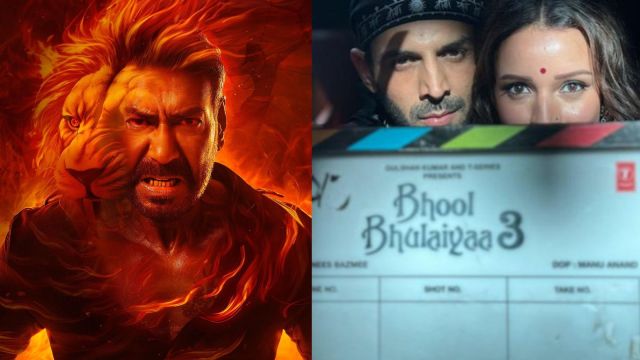
At a time when the Hindi film industry is finding its footing after the success of 'Stree 2', all eyes are on the Diwali clash between franchise films 'Singham Again' and 'Bhool Bhulaiyaa 3', as producers challenge the belief that two major releases on the same day during a lean phase may cannibalise each other’s box office collections.
Many industry watchers believe that releasing these films one after the other, with a sufficient gap, could have helped producers realise the true box office potential of both movies — especially considering that very few films have succeeded at the box office since the beginning of the year.
“It remains to be seen if the box office can support two such large films,” said an established producer who wished to remain unnamed.
Some producers, however, feel that the gamble will pay off because both films have different appeals.
Jyoti Deshpande, president of media and content business at Reliance Industries, which co-produced 'Stree 2', the highest-grossing film of 2024, said: "The genres of both films are totally different. Two or more films clashing during a holiday period is not uncommon. Our 'Stree 2' has just emerged as the winner from a three-way clash with other films."
Reliance Industries’ Jio Studios is also a co-producer of Ajay Devgn-starrer action film 'Singham Again'.
"We have assembled the biggest ensemble of stars for this Diwali event film. 'Singham Again' will bring together all the cop characters from the 'Singham' franchise along with new cop characters," Deshpande said.
‘Singham Again’ was initially slated for an August 15 release but was postponed to avoid clashing with the highly anticipated Telugu film 'Pushpa 2 - The Rule', the sequel to 2021's blockbuster 'Pushpa: The Rise - Part 01'. The release of 'Pushpa 2’, meanwhile, had been postponed to early December.
In recent years, films in the horror-comedy and action genres have been well-received by audiences. This is reflected in the successes of films such as 'Animal', 'Munjya', and 'Stree 2'. This trend could potentially work in favour of both 'Bhool Bhulaiyaa 3' (horror-comedy) starring Vidya Balan and Kartik Aaryan, and 'Singham Again' (action), said exhibitors and trade analysts.
Kamal Gianchandani, president of the Multiplex Association of India, said: "The genres of 'Singham Again' (action) and 'Bhool Bhulaiyaa 3' (horror comedy) provide differentiated offerings to audiences. It is a long Diwali weekend. One must not consider it a clash of two films."
There are no capacity constraints in the exhibition industry, as there are enough single and multiplex screens to accommodate both films, Gianchandani said. Additionally, audiences not only have choices but also a compelling reason to return to theatres to watch another film, he added.
Trade analysts are also optimistic about the box office performance of these two films, largely because there is no big film in the line-up for release for five weeks after Diwali.
"The trade circuit is not worried about the clash of these two films. People will watch both films given their different genres and the high recall value of their franchises,” Veteran trade analyst Komal Nahta said. “On a Diwali weekend, people have the spending power. So, two films on a Diwali day can easily work."
Producer and film business expert Girish Johar added: "There is enough scope for both films to do well at the box office. These films do not have competition from another big-budget, star-studded film for at least five weeks after Diwali."
Re-releases walking a fine line between nostalgia and overkill in cinemas
9:12 AM

Re-releases are walking a fine line between nostalgia and overkill in cinemas today, with some experts questioning their long-term impact
Akash Bhatnagar (HINDUSTAN TIMES; September 22, 2024)
What started as a novel idea to evoke nostalgia in theatres, the trend of re-releasing films is quickly turning into an overload. Almost every other day, there’s news of a new re-release. While a film like Laila Majnu (2018) was brought back to theatres to offer the theatrical experience they missed during their original release, others like Taal (1999), Tum Bin and Rehnaa Hai Terre Dil Mein (both 2001) seem to be simply jumping on the bandwagon. But is this re-release overload becoming a buzzkill, or is it fuelling a growing trend?
THE OVERKILL OF RE-RELEASES
Trade analyst Komal Nahta believes it’s too much, too soon: “Definitely, it’s an overkill. It’s difficult to predict how long this will go on, but it won’t last forever. People will soon get tired of watching old films. Right now, they’re rushing to the theatres because it’s a novelty, but that won’t last.”
Varun Gupta, founder director at Max Marketing, agrees: “It’s a fad, not a trend. The reason some films are working is that very few people saw them in theatres during their original release. There’s no real nostalgia there. It’s more about people catching up on what they missed. But this doesn’t apply to all films... Hum Aapke Hain Koun...! (1994) re-released but didn’t pull in the numbers. The re-release culture isn’t a cash cow.”
A SYMBIOTIC RELATIONSHIP BETWEEN OTT AND THEATRES
Offering a fresh perspective, Kamal Gianchandani, CEO of PVR INOX Pictures, sees re-releases as part of a bigger trend. “These films gained more popularity on streaming platforms, and cinemas are giving audiences a differentiated experience,” he explains.
When asked if this trend will fade, he says, “Maybe. But people said the same about pan-India releases, and those are here to stay. Some films will do well, others won’t.”
THE BUSINESS SIDE
Devang Sampat, managing director at Cinepolis India, sheds light on the financial angle. “Re-releases have contributed positively to business, but new releases generally offer higher margins for theatres. The share percentage for new films is higher, but the affordability of re-releases attracts more footfall. Theatre business thrives on balancing the two.”
To avoid re-release fatigue, Sampat suggests focusing on “high-demand films and pairing them with strong promotional strategies”. “This way, theatres can keep the concept fresh and prevent it from losing its charm,” he ends.
Analyzing the trend of re-releases: "Films are available for free online, but moviegoers want to see them on big screen"
8:21 AM
Niharika Lal (BOMBAY TIMES; August 31, 2024)
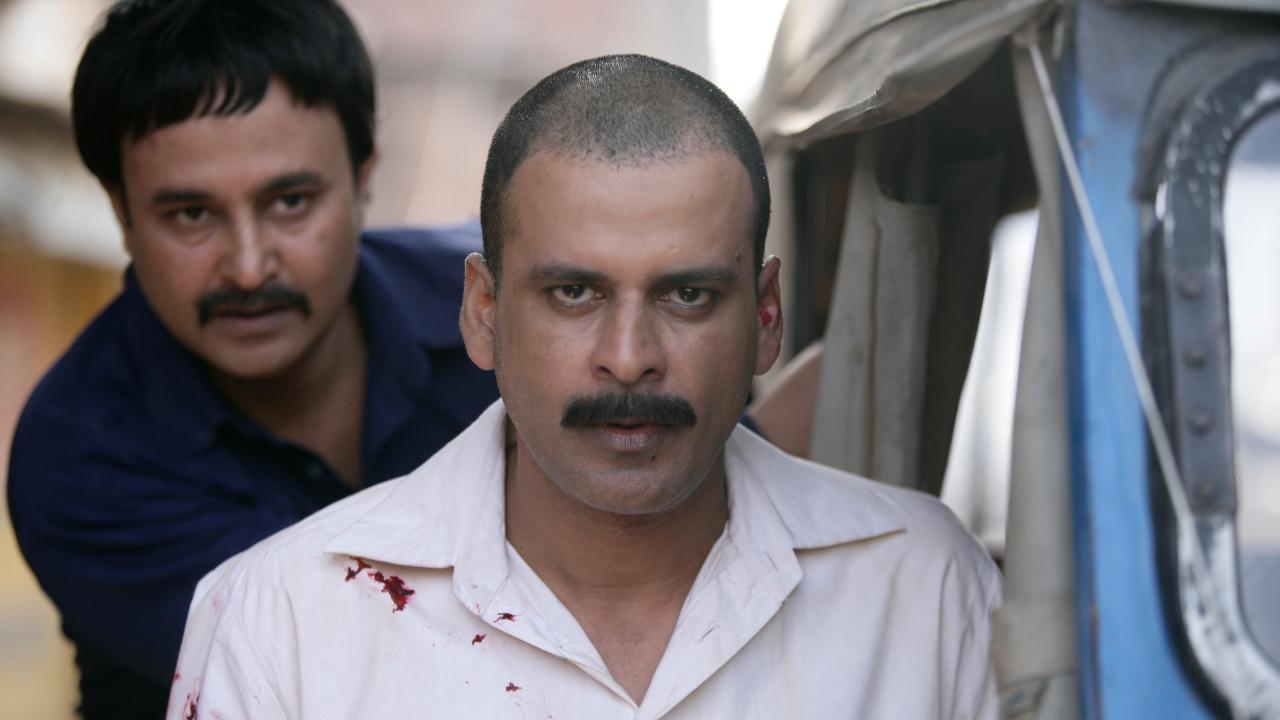
If the recent re-release announcements of Gangs Of Wasseypur and Rehnaa Hai Terre Dil Mein have you rushing to book tickets, you’re not alone. Cine buffs have been in for a treat with theatrical re-releases this year. Whether it’s to mark a film’s anniversary, generate buzz before a sequel, or simply revisit a cinematic hit, actors and filmmakers have been bringing their old films back to the big screen.
Films with a fan following being re-released
Ajay Bijli, MD of PVR INOX, says, “What’s interesting is that these films are available for free online, but moviegoers are still excited to see them on the big screen.”
Amit Sharma, MD, Miraj Cinema, adds, “September only has a couple of Hindi films scheduled for release. This is a major reason why cinemas are opting for re-releases of films with a strong fan following.”
‘The success of re-releases validates that people enjoy the theatrical experience’
Talking about re-releases, Yogesh Raizada, VP of Wave Cinemas, says, “Rereleases majorly work for two reasons – nostalgia for all things related to the 1990s, and a new audience that had only heard about these films but never had the chance to see them on the big screen.”
Kamal Gianchandani, president of MAI (Multiplex Association of India), adds, “The success of the re-releases validates how much people enjoy the theatrical experience. They are willing to come to cinemas despite these films being on TV and streaming platforms.”
A selection of Zoya Akhtar’s films were recently screened as part of her retrospective. Zoya Akhtar had said, “When we spoke about retrospective, there was one aspect of me which was like well, retrospective? Am I kind of done? And another part of me was jumping with joy that these films will be on the big screen again”
Imtiaz Ali’s Laila Majnu, which was first re-released in Srinagar, received an overwhelming response from the audience recently. “It gives us hope that people are coming to cinemas in huge numbers to watch old films,” the director said.
'A 3-4 week re-release calendar for Gangs Of Wasseypur'
Exhibitors say that the whole of September looks very empty and dull, with only a couple of Hindi films scheduled for release this month. This is a major reason why cinemas are opting for re-releases of films with a strong fan following.
Amit Sharma, MD Miraj Cinema says, "Whenever a film is re-released, it takes a little time to grow. People start learning about the film and its re-release. It's in the second and third week when the film starts picking up. So, we are planning a 3-4 week re-release calendar for Gangs of Wasseypur, which makes more sense."
'Playing of these older films in cinemas is a reflection of the fact that these films are doing well'
Kamal Gianchandani, president of MAI (Multiplex Association of India) says, "Some of these films can't even be classified as classics. There are several reasons for this - when these films were originally released, they were ahead of their time, or they simply didn't click with audiences. It's also a validation to how much people enjoy the theatrical experience that they are willing to come to cinemas to watch Rockstar or Jab We Met, despite these films being available on TV channels and streaming platforms. While there are various reasons why these re-releases work, the bottom line is that people are enjoying some of these older films, and it’s our job to bring them to all audiences. If people are enjoying older films in cinemas alongside new releases, then we are happy to offer them to our customers. Playing of these older films in cinemas is a reflection of the fact that these films are doing well."
Media industry likely to seek reversal of Karnataka government decision on cess levy
8:16 AM

Javed Farooqui (THE ECONOMIC TIMES; July 26, 2024)
Media and entertainment industry bodies are planning to submit representations to the Karnataka government for a reversal of the 1-2% cess on cinema tickets besides TV and over-the-top (OTT) subscription fees, people familiar with the development said.
The Cine and Cultural Activists Welfare Cess will also be imposed on all revenue generated from related establishments such as cinema theatres, multiplex halls, OTT, TV channels and other such establishments notified by the government.
Apart from the state government, the industry bodies could also petition the governor and the ministry of information and broadcasting (MIB), the nodal ministry for TV, OTT and film industries, they added.The industry bodies that are likely to make representations include the Indian Broadcasting and Digital Foundation (IBDF), Internet and Mobile Association of India (IAMAI), Multiplex Association of India (MAI) and Producers Guild of India (PGI).
If the state government refuses to roll back the cess on movie tickets and OTT subscriptions, the industry bodies could also seek legal remedy by challenging the Karnataka Cine & Cultural Activists Welfare Bill's applicability to OTT platforms and TV channels.
"The bill may lead to similar legislation being passed by other state governments. It would also lead to increased costs for consumers," a senior media executive said on condition of anonymity.
Legal experts say that the proposed tax would disrupt the uniform tax structure envisaged under the Goods and Services Tax (GST) regime and create an uneven playing field for various forms of entertainment.
"The imposition of any cess on a supply or consumption will lead to tax cascading and ultimately increase the price of the supply. The cess should be imposed only under exceptional circumstances, as such additional levies will be against the broad objectives of GST, thereby leading to constitutional debates," said Abhishek Rastogi, founder of Rastogi Chambers.
The bill, which seeks to establish a welfare fund for artists and technicians in the film industry in Karnataka, has been passed by both houses of the state legislature and is awaiting the governor's assent.
PVR Inox chief business planning and strategy officer Kamal Gianchandani, who is also the president of MAI, said that the cess will be detrimental for the industry.
He also said the cess defeats the purpose of ‘one nation-one tax’ under the GST regime. While stating that MAI will raise its concerns with the state government, Gianchandani said legal remedy is always an option.
PVR INOX-KFPA dispute leads to stalling of Malayalam releases in India
11:30 PM

Neeshita Nyayapati (HINDUSTAN TIMES; April 13, 2024)
Amid Eid festivities PVR INOX has stopped screening Malayalam films across the country due to a dispute with the Kerala Film Producers Association (KFPA). New releases like Aavesham, Varshangalkk Shesham, Jai Ganesh and many more have been removed from screens in Kerala and other states across India.
Reportedly, the KFPA started a new content-providing company, asking theatres in Kerala to take films through this venture. However, PVR INOX raised objections to this and stopped the screening of not just Malayalam films in Kerala but also their dubbed releases in other states.
Filmmakers and distributors alike raised concern about this. Sashidhar Reddy of Mythri Movies, said, “It is unfair to stop shows like this when they’re collecting good money.”
Meanwhile, Kamal Gianchandani, CEO of PVR Pictures Limited, put out a statement on X: “Such an action of forcing an exhibitor to procure content from only one source is anti-competitive in nature and prohibited under the law. As a law-abiding member of the Indian film industry, we are unable to comply with this advice.”
Lights, camera, rewind: Why old classics are new stars of cinema
8:44 AM

Reruns began as a way to lure audiences back into theatres after the pandemic, but have now taken a life of their own
Shruti Sonal (THE TIMES OF INDIA; October 15, 2023)
Twenty-two-year-old sociology graduate and theatre artist Darshana Choudhary had grown up listening to old Hindi songs, courtesy of her parents. One of the albums that played the most in her house was ‘Guide’, which had gems such as ‘Tere mere sapne ab ek rang hain’ and ‘Aaj phir jeene ki tamanna hai’. However, despite her fascination with the album, Choudhary had never watched the 1965 film. So, when it was announced that the film would be screened across multiple theatres in India to commemorate Dev Anand’s 100th birth anniversary, along with ‘CID’, ‘Jewel Thief’ and ‘Johnny Mera Naam’, she booked tickets instantly.
“I realised that such movies require the audience to surrender to them. I couldn’t do that on YouTube,” says Choudhary.
Like her, many young and old moviegoers across the country are filling up theatres to catch a rerun of films first released years ago. Like Dev Anand, similar screenings in PVRs and single screens have been held by the Film Heritage Foundation (FHF) to commemorate iconic films of superstar Amitabh Bachchan and Dilip Kumar. To celebrate his 45 years in Bollywood, director Vidhu Vinod Chopra’s best films hit the big screen on Friday.
Shivendra Singh Dungarpur, archivist and founder of FHF, is leading this initiative. “My dream was to make classics accessible to the public, and not just restrict them to film festivals. Most of these films are available on OTT platforms but I always felt that the films made with so much effort are our heritage, and deserve to be screened on the big screen,” says Dungarpur.
Ahead of Big B’s 80th birthday last year, Singh reached out to PVR, producers, and the actor himself, to figure out a way to screen films such as ‘Deewaar’, ‘Don’, and ‘Mili’. Most of the responses were skeptical, he says, including that of Bachchan, who very politely asked why people would pay to see such old films in the theatre again?
However, FHF’s persistence paid off and some exhibitors agreed to screen the films across three days in October. The event was a huge success, with most shows sold out. It was followed by similar screenings to pay tribute to Dilip Kumar in December last year, and then Dev Anand this September. The ticket prices ranged from Rs 100-150, and the posters were redesigned to appeal to the young and old.
The trend began last year, when theatres were struggling to bring back audiences after the pandemic, but has now taken a life of its own. “For Mr Bachchan’s films, we had screenings in 17 cities. For Dilip Kumar, it increased to 27 cities, and for Dev saab, we were able to reach 30 cities and 58 cinemas!” says Singh, with pride.
From big production houses such as Yash Raj Films bringing back their biggest romantic hits for Valentine’s Week this year to small-budget films with a cult following, there’s room for multiple genres and stories today. Among the upcoming releases is Kamal Hassan’s 1987 silent black comedy ‘Pushpak’.
Director and writer Pawan Kumar’s landmark Kannada film ‘Lucia’ was re-released in September, ten years after its initial run at the box office. This small-budget debut venture has been lauded by fans and critics for its alternate style of filmmaking. However, the director never thought that he’d see people buying tickets for it again. “Even at a time when shows of a big film like ‘Jawan’ were running housefull, people agreed to give a few screens to us. I took my daughter to see the film; she was not even born when it was first released,” Kumar says.
It’s the coming together of commerce, nostalgia, and heritage. Above all, it’s an excellent way to reach two generations, says Vebhuti Duggal, film studies professor at Delhi’s Ambedkar University. “For the generation that has seen the films and stars on screen, rewatching them with their family holds value and nostalgia. Then, there’s a generation that has only watched them on television or on YouTube, and has been curious to see them on the big screen,” she says.
Film producers and multiplexes are also waking up to the commercial value of classic films, like music labels did decades ago. “When the trend of remixing old songs or creating new renditions became popular, music labels such as HMV and T-Series remastered old tracks, and re-released them online, via cassettes, and vinyls,” she says.
For PVR Pictures’ chief executive Kamal Gianchandani, the trend is a sign of the value that the moviegoing experience holds even today. “It’s a big validation of theatres because all these films are freely available on so many platforms, and yet people choose to buy tickets. It also makes business sense because on a long-term basis, this is helping us get new customers. And as for those ones who already come to the cinema, this is helping us increase their frequency,” he says.
Beyond the commerce, Durganpur says the films are also helping drive conversations around the importance of preserving film heritage. More and more youngsters are attending workshops to know more about the process, and flocking to see screenings of rare prints of black and white films such as Kamal Amrohi’s Mahal (1949).
Choudhary says that a crucial part of the experience of watching old movies in a theatre is a sense of community. “We are together to celebrate a film that we love.”
With Rs. 99, National Cinema Day is returning on October 13
8:24 AM

Niharika Lal (BOMBAY TIMES; September 21, 2023)
WHAT:
After the success of National Cinema Day last year, the Multiplex Association of India (MAI) and cinemas across the country have decided to celebrate it again on October 13. Tickets will be offered for Rs. 99. Currently, the average ticket price across Mumbai is in the range of Rs. 200-2000. Films which will be released from October 5 will be a part of National Cinema Day.
WHERE:
Around 4,000 screens across the country, including major chains like PVR, INOX, Cinépolis, Carnival, Miraj and Citypride, Asian, Mukta A2, Movietime, Wave, M2K, and Delite, are participating.
---------------------------------------------------------------
‘All films and all shows will be priced at Rs. 99, apart from special format shows. National Cinema Day is a thank you to the moviegoers from the industry for record-breaking business’ – Kamal Gianchandani, President, MAI
Is premium movie watching here to stay?
8:35 AM

Syeda Eba Fatima (HINDUSTAN TIMES; August 14, 2023)
Last month, tickets for Oppenheimer were being sold for Rs. 2,450 each and even 3am screenings of the film were running houseful. Tickets for James Cameron’s Avatar: The Way of Water (2022) were sold at Rs. 2,500. Even Mission: Impossible – Dead Reckoning Part One saw an unusually higher ticket price. These incidents seem to suggest that there is an audience for premium movie-watching experiences. With a number of big-ticket pan-India releases lined up, including Jawan, Animal and Salaar: Part 1 – Ceasefire, we ask experts if the premium segment is a one-off thing or if is it here to stay.
Kamal Gianchandani, CEO, PVR Inox Pictures
Audiences preferring premium formats to enjoy films at the cinemas is a trend we’ve been observing for the last several years. So, we’ve been upgrading our cinemas and believe this trend is here to stay.
Devang Sampat, CEO, Cinepolis India
The ticket bookings for Oppenheimer proved that Indians prioritize exceptional storytelling and unforgettable cinematic journeys. True enthusiasts will pay for the cinematic experience on the big screen. With films like Jawan and Fighter are anticipated to garner huge profits, it is evident that people are ready to invest more in their movie-watching experience.
Girish Johar, producer and trade analyst
Only a section of people, those who have the spending power, are moving towards the premium cinema experience. But a person who enjoys films like Satyaprem Ki Katha or Zara Hatke Zara Bachke won’t pay these ticket prices. The middle-class audience interested in watching these films, wait and go to the theatre when the ticket prices fall.
Akshaye Rathi, film exhibitor and distributor
For movies that have cinematic spectacular value, immersive viewing experiences or collective viewing experiences, people will choose cinema halls as the preferred medium of consumption and pay any price for it.
Taran Adarsh, trade expert
The audience would enjoy a premium cinema experience with actors Shah Rukh Khan’s Jawan and Dunki, Prabhas’ Salaar or Ranbir Kapoor’s Animal. There is a movement towards wanting a premium experience but only in select areas.
Piracy war: I&B minister Anurag Thakur proposes strict penalties
8:39 AM

Niharika Lal (BOMBAY TIMES; August 3, 2023)
On Monday, the Lok Sabha passed the Cinematograph (Amendment) Bill 2023, which cracks down on film piracy. Earlier, in his speech, Union Information and Broadcasting Minister Anurag Thakur in the Rajya Sabha said, “The film industry is facing a loss of Rs 20,000 crore annually because of piracy. Online piracy saw a 62% surge during the pandemic. Hence the Bill proposes a three-year jail term and a fine from Rs. 3 lakh to up to 5% of a movie’s production cost for those making pirated movies.”
WHAT WILL CHANGE AFTER AMENDMENT IN CINEMATOGRAPH ACT?
Ameet Naik, founder and managing partner of a legal firm, explains “The current laws that address piracy are Copyright Act and Information Technology Act, which prescribe penal provisions for piracy. However, there was no such penal provision under the Cinematograph Act for piracy. With the new amendment introduced in the Cinematograph Bill, recording of a film or helping a person to record a film in a cinema theatre using audio-visual devices has been prohibited and punishment is proposed. The Act therefore harmonises with the Copyright Act and IT Act on piracy.”
CAN RECORDING SHORT CLIPS FOR SOCIAL MEDIA GET YOU ARRESTED?
Does the Amendment mean you can be arrested for posting movie clips on social media from the theatre? Last week in Rajya Sabha, Anurag Thakur said that he has been getting this question a lot and clarified, “(If) you record a shot for one minute and you are not posting (it), then you will not be punished. But if you record the entire movie and try to gain profit from it then you will be punished under 6A of the Cinematograph Act.”
FILMMAKERS OFTEN APPROACH COURTS TO BLOCK ILLEGAL WEBSITES
Over the years, film piracy has changed its forms – from CDs and pendrives to websites, and now it is circulated through social media. In recent years, pirated versions of many Hollywood and Bollywood films were immediately available online post theatrical or digital release. In some cases, like Salman Khan-starrer Radhe (2021), pirates even announced the sale of the movie on Facebook after its release. In the last few years, makers of several films have approached the court to block websites streaming films illegally. Courts have also passed john doe orders, a pre-infringement injunction for when makers anticipate piracy of their films or shows.
‘TRAINED STAFF, INCREASED SECURITY AT MULTIPLEXES TO STOP PIRACY’
The MAI (Multiplex Association of India) has made several representations and suggestions to the I&B ministry to curb piracy. Kamal Gianchandani, President, MAI, says, “Piracy happens through different sources, hence it is difficult to pinpoint a single source. Multiplexes have security measures in place to curb piracy. But having said that there are single screens and small multiplexes from where such leaks could happen too. Hence enforcement is crucial. The MAI is continuously in talks with the police departments of various states, as they play a major role in curbing piracy, and the states have been supportive.”
Cinemas take several measures, such as increasing security during the first weekend of a film’s release, deploying trained projectionists and staff to prevent any illegal activity inside a cinema hall, and taking immediate action if they come across any such case.
Cinema halls can disallow outside food & beverages, says Supreme Court
3:05 PM

Amit Anand Choudhary (THE TIMES OF INDIA; January 4, 2023)
New Delhi: The Supreme Court on Tuesday held that theatre owners can bar movie-goers from bringing food and beverages from outside, saying as it’s their private properties they are entitled to take commercial decisions and impose terms and conditions to regulate entry which are not contrary to public interest, safety and welfare, reports Amit Anand Choudhary.
“The cinema hall is not a gym where you need healthy food. It is a place of entertainment. A cinema hall is private property. It is for the owner to decide subject to statutory rules,” said a bench of Chief Justice D Y Chandrachud and Justice P S Narasimha. It, however, said theatre owners have to provide hygienic and safe drinking water free and parents would be allowed to take nutritious food for their infants.
--------------------------------
New Delhi: The SC on Tuesday set aside a 2018 J&K high court order that people be allowed to bring their own food and drinks inside the theatre. It said moviegoers are not forced to purchase eatables and drinks from inside the hall and it was up to them to do so. The issue has been pending in various HCs, including Delhi and Bombay, and the SC order settled the issue once and for all and would be applicable to other states also.
The top court said that owners are entitled to keep the theaters clean and to prevent littering by prohibiting eatables from outside and the viewer had to abide by the rules fixed by management after entering inside the theatre.
“A cinema hall is a private property. What goes in is for the owner of the property to decide subject to statutory rules. So saying that arms are not allowed or no discrimination on the basis of caste or gender can be there is fine. But how can the high court say that they can bring any food inside cinema halls. Suppose someone starts getting jalebis. Owner would not want anyone wiping their hands on the seats. It’s his right. He may not want tandoori chicken to be bought in. No one is forcing them to buy popcorn. But the owner has a right,” the bench observed.
Finding fault with the HC order, the bench said that the HC exceeded its jurisdiction by passing the order on a PIL which adversely affected the rights of theatre owners. “We are clearly of the view that the high court transgressed the limits in the exercise of its jurisdiction under Article 226 of the Constitution by ordering and directing the state to ensure that there should be no prohibition on a moviegoer from bringing eatables and beverages from outside within the precinct of a cinema hall,” the bench said.
The Court was hearing a batch of appeals filed by theatre owners challenging a 2018 verdict of the HC. Senior Advocate K V Viswanathan, appearing for theatre owners of J&K, submitted that cinema halls are not a public property and admission to such halls was reserved by cinema hall owners and HC erred in passing the order which affected business of theatre owners.
---------------------------------
Cinemas must provide free drinking water & allow home food for infants, the apex court says'
BOMBAY TIMES (January 5, 2023)
Water, yes. Food for infants, yes. But eatables from home? Not at all. The Supreme Court on Tuesday passed an order that cinema owners are within their rights to stop patrons from bringing outside food into theatres. The apex court was hearing a batch of appeals filed by cinema hall owners and the Multiplex Association of India challenging a 2018 verdict of the Jammu and Kashmir High Court, which had removed the ban on people carrying their own food and water in theatres.
Chief Justice of India D Y Chandrachud and Justice P S Narasimha made it clear that since cinemas were private property, the owners could set terms and conditions for entry. Hall owners have welcomed the decision, and have vowed to provide free drinking water and permit home food for infants, as per the court’s directive.
CJI: NO ONE IS FORCING YOU TO BUY POPCORN
“Suppose someone starts getting jalebis inside the cinema hall… If the viewer wipes his sticky fingers on the seats, then who will pay for the cleaning?”
“People can also bring tandoori chicken. Then there will be complaints of bones left in the hall. No one is forcing them to buy popcorn.”
“Suppose they sell nimbu paani for ₹20, you can’t say I’ll go buy my nimbu from outside and squeeze it in a flask and make it inside the theatre.”
“We reiterate that cinemas (must) provide hygienic drinking water without any charge.”
“When an infant accompanies a parent, cinema owners shall not object to reasonable food carried for the infant.”
WE ARE RELIEVED AND PLEASED: THEATRE OWNERS
The entire cinema exhibition sector is relieved and very pleased with the Supreme Court decision. It validates what MAI’s (Multiplex Association of India) stand has been all along in this matter. We have to maintain the property, and allowing people to bring in food can lead to damage to the property. We don’t sell food with gravy, only finger food. The practice of not permitting outside food has been validated by the state governments for reasons, including security and hygiene issues.
– Kamal Gianchandani, President, Multiplex Association of India
HOW THE MATTER REACHED THE SUPREME COURT
The original petitioners were two practising lawyers who complained that nutritious food is not served inside the theatres in Jammu and Kashmir. They further argued that moviegoers were forced to purchase food inside the theatre at exorbitant rates.
The Jammu and Kashmir High Court passed an order in July 2018, permitting moviegoers to bring outside food inside cinemas This order had been challenged in various high courts, including Delhi and Mumbai, and the SC order now puts the matter to rest
- With inputs from Onkar Kulkarni and Yvonne Jacob
‘IT’S NOT A COMPULSION FOR MOVIEGOERS TO BUY FOOD FROM US; IT’S A CHOICE’
As a business owner, it’s a fundamental right to be able to sell food or beverages on my property. It is not a compulsion for moviegoers to buy food from us; it’s a choice. Outside food items are not allowed on private properties and it’s the same with multiplexes. We are not a social club or a government entity; we are a business. Why shouldn’t we be allowed to make our revenue? From a safety standpoint, one can bring in alcohol or explosives in the name of beverages or food. So, there are many reasons why we support this rule.
— Gaurav Chaphalkar, partner, City Pride Multiplexes
‘PEOPLE ARGUE AT THE MAIN GATE OVER BRINGING IN HOME COOKED FOOD’
During the pandemic, we had stopped people from bringing in outside food. But arguments would break out, and we decided to call off the ban. People argue at the main gate that they only eat home-cooked food. Since we allow it, a lot of time and energy goes into cleaning the theatre at night, as people leave half-eaten food inside. With the SC order, we will figure out new guidelines.
– Manoj Desai, Executive Director, G7 Multiplex and Maratha Mandir Cinema
Don’t mind paying if the food is good: Moviegoers
SHIVANI SURVE, actress: It is true that the F&B prices at multiplexes are high and a family may have to shell out a huge amount. Having said that, we should understand that it’s a business and, ultimately, it’s the multiplex owners’ prerogative whether or not they want to allow outside food in the theatres.
SHASHI ATULL, an interior design student: I wouldn’t mind spending on food and beverage as long as I feel I’ve got my money’s worth. On many occasions, I’ve got stale popcorn or flat soda. Add quality food and drinks to the overall entertainment experience, and I don’t think there would be a reason to complain.
PRIYA NAIR, a marketing professional: I have seen people creating a mess while consuming food in theatres. If people are allowed to bring outside food, I can only imagine how challenging it would be to maintain hygiene standards.
‘2022 was challenging for Hindi cinema, but we’re walking into 2023 with a whole lot of clarity’
8:30 AM

The biggest learning of the year is that subpar content won’t work, even with big stars and budgets, say cinema business insiders
Madhureeta Mukherjee (BOMBAY TIMES; December 24, 2022)
This year, the Hindi film industry has seen more shockers than surprises. Some highly anticipated – even heavily promoted – films saw a tepid response at the box office. On the other hand, south films like Vikram and Ponniyin Selvan - Part 1 are sending cash registers ringing across India, while RRR is making waves globally. It’s also been an especially good year for the Kannada film industry, that gave hits like KGF - Chapter 2 and Kantara.
In Hindi film industry, while Gangubai Kathiawadi, The Kashmir Files, Bhool Bhulaiyaa 2, Brahmastra and Drishyam 2 struck gold, there were also many disappointments.
Still, the industry insiders says that it has been a year of immense learning, and one that is winding up with a lot of hope and promise. In a panel discussion, filmmakers, exhibitors and trade experts discuss the ups and downs of 2022, the myths that need to be busted and how the chaos has given them clarity for the way ahead. Excerpts:
‘The collections are back to where they were in 2019, footfall down by only 10%’
Kamal Gianchandani, CEO, PVR Pictures, agrees that the exhibition industry has been slow to recover since the pandemic. However, he adds, “I think, for the lack of a better word, there has been a lot of negativity in the media about people not going to the theatres in big numbers. It is maybe partly correct for some languages, but for the whole cinema exhibition business, when you compare 2022 with 2019 (pre-COVID times), the admissions are down only by 10-15%.”
Having said that, he says that the box office collections are where they were in 2019, since ticket prices have gone up by 14-15% or more. “One could argue that we have lost out on business from 2020 to 2022, therefore, the collections now should have been 10-15% more, but we, as exhibitors, are taking solace in the fact that people have gone back to the theaters in such large numbers despite the two year-break. It’s true that a good number of films in several languages – Hindi films most notably – have underperformed. But it’s also true that our business is of peaks and valleys and we have had similar phases in the past. We are drawing a lot of confidence and inspiration from the learnings of 2022, and I think 2023 will hopefully correct some of the anomalies that we have seen in Hindi cinema and some other languages,” says Kamal.
‘The myth that people won’t come to the theatres has been broken’
Director Abhishek Pathak, who delivered one of the biggest Bollywood hits of the year with Drishyam 2, which he also produced, excitedly adds, “I think Drishyam 2 broke the myth that only spectacle films are bringing back the audience. We didn’t rely on songs or heavy promotions. It is pure content that drove the audience to watch the film. The franchise also has a fan following that helped the film. Today, the audience knows what they want to watch. The myth that people won’t come to the theatres has been broken. People don’t want to sit at home and watch movies on OTT all day, they want to go out and watch films on the big screen.”
‘The spin doctors have to pack up their business. They can’t contol the narrative’
Director and producer Nikkhil Advani whose Emmay Entertainment and Motion Pictures has backed films like Batla House, Marjaavaan, Indoo Ki Jawani and the web series like Unpaused, is convinced that a certain section of people can’t control the narrative anymore,
“The big learning this year has been that the spin doctors have to pack up their business. They can’t spin anything. Pre-pandemic there was the notion that they could control the narrative by putting out reviews, ratings and influencers to talk about the film. You can’t rely on that anymore. The guy who has paid for the ticket is on a chat group where he will send a message to 300 other people and by evening, the word will be out. Why did people go to watch KGF 2, RRR, Kantara? It is because they felt they would get value for their money. The narrative has now become universal. I think 2023 is going to be a big year.”
‘Star appeal, budgets or genres – we need to throw the conventional markers out the window’
Vikram Malhotra, CEO and founder, Abundantia Entertainment, who has backed films Ram Setu, Jalsa and Shakuntala Devi, is all charged up about the slate of films in the coming year and believes that the recent learnings have given him a lot of clarity for the way ahead. He says, “I am walking into 2023 with some mixed feelings, but a whole lot of clarity. Mixed feelings because we are coming out of a challenging year, especially for the Hindi film industry, but what we are positively happy about is that there’s an absolute demand and people are willing to come to the theatres in big numbers. An industry goes into a challenging situation and existential crisis when the demand dries up. What we are seeing with films like Drishyam 2 is that people are willing to come in and spend their time and money, provided they see value in it. The reason I am saying we have some clarity is because we know content is what is pulling people back to the theaters. We even know that the conventional markers of what would draw people to the theatres and result in success – whether it was star appeal, budgets, or genres – we have to throw all of that out of the window. For the last decade or so we have been dealing with truckloads of myths. Self-created myths and markers – like ‘this hero will work or won’t deliver’, ‘this genre will work’, et al. What we now know is that we cannot go back to the audience with sub-standard content or take them for granted.
‘In the second half of 2022, we started seeing some stabilization’
Stressing how the second half of 2022 brought a lot more stability with it, Akshaye Rathi, Director, Saroj Screens, explains, “The first half of 2022 was shaky, but in the second half, we started seeing a degree of stabilization and consistency, in terms of footfalls. Earlier this year, we were seeing a lot of mid-segment films not making any impact at all. But films like Bhediya, which is still running, brought back the audience for the non-tent-pole films. There was a notion that only films like KGF - Chapter 2 and Brahmastra would work, so it was good to see Bhediya do well, and Drishyam 2 perform exceedingly well. Let’s face the fact that the two years of sitting at home and consuming online content changed the audience’s palate. Unfortunately, a lot of movies that were made before the pandemic had to bear the brunt of rejection from the audience. The failures and successes of all these films will make our industry and our entire value chain wiser. We are now moving towards consistency and we will end the year with a bang.”
‘Today, the audience can smell the product’
Excited about the bouquet of films awaiting us on the other side of 2022, trade analyst Girish Johar says, “I am bullish about 2023. We have big titles coming our way, also from the Hindi film industry (which has taken a beating this year). The other languages have come up in a big way too. Today, the screen no longer matters, it’s the content that is the key here. Earlier we would say that the audience can see the trailer and decide, now we say that they can smell the product. One thing I see increasingly diminishing is the language barrier. Earlier, the audience who consumed Hindi movies knew of Rajinikanth, Mohanlal sir and a few big south stars. Today, so many of them are household names. It is a positive sign.”
Subscribe to:
Posts (Atom)