Showing posts with label Kai Po Che. Show all posts
Showing posts with label Kai Po Che. Show all posts
Art is personal, but you have to sell the cake you make-Amit Sadh
10:00 AM

Neha Maheshwri (BOMBAY TIMES; March 5, 2025)
Over the past 23 years, Amit Sadh has transformed from a young, restless actor to someone who now understands filmmaking is a slow, deliberate process. This shift in his mindset has played a key role in shaping his outlook toward his career and life. In a candid conversation with BT, he shares his thoughts on his experiences, goals, and how he’s found peace in the chaos around.
‘Film chalegi toh bank mein paise aayenge aur kaam milega’
The actor seems to have a clear understanding of the actor-audience relationship. Amit, who has the lines ‘Audience is my shopper’ sprawled across a wall in his home, doesn’t shy away from acknowledging that actors, in a way, are commodities.
He says, “The sooner you accept it, the better. Art is personal, but you have to sell the cake you make. Film chalegi toh bank mein paise aayenge aur kaam milega, nahi toh wapas jaao peeche line mein. That’s the game, and you have to accept it.”
Drawing a cricket analogy, he adds, “It’s like cricket: you score a hundred, but the next day, you might be out for a duck. You have to get up and perform again because someone else will take your place.”
‘I hope more filmmakers offer me good work’
Amit has worked across mediums and has a good mix of roles to his credit, but he’s hungry for more. He says, “I don’t think I have any place somebody can claim. I haven’t achieved anything in life, except for a few serials, films, and web series. I’m grateful for the love people have shown me, but I still have much more to do. I hope that more filmmakers will offer me good work. Position toh sab banana chaahte hain and I hope one day meri bhi bann jaayegi. I am in no hurry, as I have only been in the industry for 23 years. Jagah toh banaani hai, logon ke dil mein bhi, sab ho jaayega,”
His aspirations remain simple. He states, “I want to do more work, experience more love, and make more films. I have done good work. Breakfast miss hua hai na, dinner tak aa jaayega sab (smiles).”
‘I got hero roles, but those films didn’t work’
Kai Po Che! (2013) was a turning point for Amit, Sushant Singh Rajput and Rajkummar Rao. While he won appreciation for his role in the film, does he think he didn’t get his due and that he could have got better projects post that film?
He explains, “Uss samay toh yahi rehta tha ki main rent de paaunga time par…main kisi ke phase wagerah nahi dekhta tha. I was only looking after myself, and I was in a good phase. I also got hero roles, but those films didn’t work. I would be silly not to acknowledge that after waiting for so long, Kai Po Che happened, I got love from the audience, I earned money, and I could survive. As long as I am offered good roles, I will be happy.”
‘Earlier actors were allowed to evolve, now everyone wants ready-made people’
In an industry increasingly driven by social media and networking, Amit admits he struggled with self-marketing and ultimately realized it wasn’t his forte.
He says, “Main beech mein inn cheezon mein uljha tha aur ye valid cheezein bhi hain but I eventually realized I didn’t understand these things, so I stepped away. I believe that audience energy dekhti hai aur kuchh na kuchh sachhai dekhti hai. I am grateful for their patience with me, as they have allowed me to grow. Honestly, I feel lucky I didn’t enter the industry today, nahi toh bahut mushkil hota. Back then, actors were allowed time to evolve. I feel that today, everyone wants ready-made stars. Hamaara patience khatam ho gaya hai. If you don’t like a film or a performance, it’s fine, but why be nasty? Criticism can be polite.”
‘I’ve never been part of any Bollywood camps’
Amit emphasizes he has no interest in being part of any so-called camps in the industry. He says, “I have never been part of any Bollywood camps. It may work for some, and that’s great, but it’s not how I see my journey. After 23 years in the Bollywood industry, I believe opportunities should stem from merit, not affiliations. I don’t feel threatened or disrespected by not belonging to a camp.
I don’t see myself getting married-Manav Kaul
7:12 PM

Vinay MR Mishra (BOMBAY TIMES; January 5, 2024)
After his debut in 2003 with Jajantaram Mamantaram, actor Manav Kaul took a sabbatical till his next film Kai Po Che! released in 2013. However, Manav admits that the break made him the actor he is today. Excerpts from a chat…
‘The break saved me’
Talking about how crucial the break was to his career, the Trial Period actor shares, “I started saying no after my debut film, and eventually, I thought it is much better to take a break. The kind of actor I am right now, is because of the 13-year break. Otherwise, I would have been terrible. I would have earned a lot of money, but I would have been unhappy. So, the break actually saved me. I am an idealist, that is a problem. I have never done anything that I don’t like.”
‘I don’t know what joy doing 500 movies gives an actor’
Along with quality films, Manav has always been focused on writing and doing theatre. The Tumhari Sulu actor says, “When you are older and you look back, I don’t know what joy those 500 movies would give you. If you are not proud of those movies, even sitting in a bungalow on Peddar Road won’t give you happiness. I find more happiness in writing a book. So, my priorities are very clear. For me, Ajeeb Daastaans (web anthology) is more rewarding than a bungalow. It defines me as an actor,” he explains.
‘I am single right now and happy’
At 46, Manav is content with his personal and professional life. “I am single right now and happy. I know myself and I don’t see myself getting married. This is how I always wanted my life to be. I am completely in love with my work, and I find absolute comfort and solace in it. Now, to get someone else involved in this won’t do justice to them. If you don’t give them enough time and work on a relationship, it won’t last. My idea of love is broader. I feel romantically connected with each character that I write or enact.”
I won’t do film albums that have more than one composer; public will not know ki kiska gaana kya hai-Amit Trivedi
8:54 AM
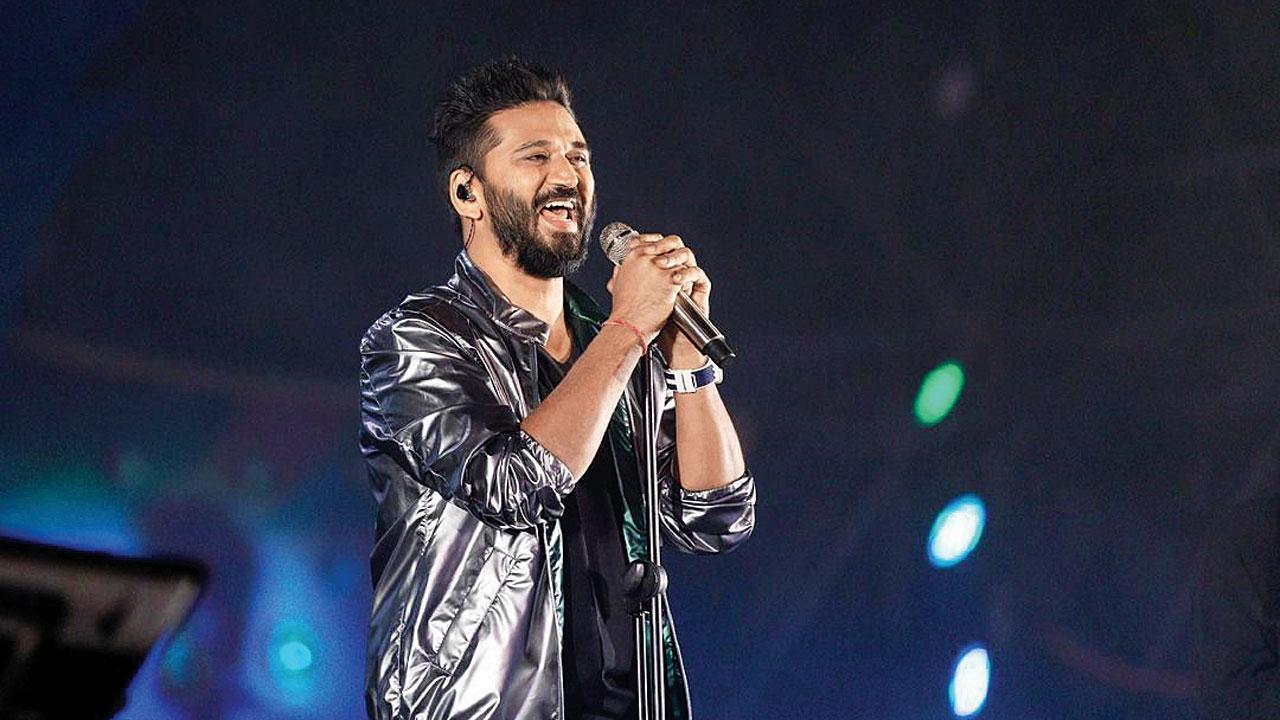
Debarati S Sen (BOMBAY TIMES; October 14, 2023)
In 2009, Amit Trivedi’s soundtrack of Dev D changed the way Hindi film music sounded. Over the years, his willingness to experiment with diverse musical landscapes, blending of traditional elements with contemporary sounds, resonated with music lovers and his songs like Iktara (Wake Up Sid), London Thumakda and Kinare (Queen) to the electrifying beats of tracks from Udta Punjab gave Indian cinema a refreshing musical identity.
In a candid conversation with the musician at his Andheri studio, we discussed his love for freedom as a music composer, how he works multiple mediums whether it's films, OTT or the independent space, and more. Excerpts from our interview…
Mostly, all your film work has been complete albums. But there are many that have three to four composers working on one single film. Did you consciously take a stand against such albums?
Yes, I have said a no to such work. I won’t do film albums that have more than one composer. I feel bad for composers who do that because the public will not know ki kiska gaana kya hai and so your identity will be lost. In the long run, no one will remember. But if it is an individual composer then people would know and recall far more easily. For example, if it's Pathaan, we all know it is Vishal-Shekhar.
Did you ever have to give up your creative freedom for others? For the director or producer of the film?
That keeps happening. I won’t take names but when my fans feel ‘this song isn’t an Amit Trivedi one’, those are the times when I have faced this interference! In those songs mujhe creative freedom nahi diya gaya tha. Curb kartein rahein. Yeh mat karo, woah karo etc. And that is when the result is like that. Whenever I have not had any interference, those tracks and albums have worked extremely well like a Dev D, Udaan, Lootera, Kai Po Che, Queen. In Udta Punjab thoda bahut interference tha, but not much. I did the music for Qala in just three days. I didn’t let anyone interfere at all, kisi ko mauka hi nahi diya! That’s my learning after all these years in this industry!
You’d completed the first six songs of the Dev D album in six months, and it was released without any changes. Has that ever happened in recent years?
It happened with Qala and Jubilee. It is such a pleasure to work with filmmakers like these. They just let you be. They give you that freedom to create. Their ideas and visions are really great. What they want to say in their films is also unique and working on such projects is an experience. To be a part of that vision and getting to create the way you want to and the freedom to bring in what you can in that space, is magic. But if you are chasing a certain parameter of success, whether it is commercial or there is a certain mindset, it is a different ballgame, and I don’t operate from that level.
It’s been 15 years as a composer in the Hindi film music industry. Would you say your journey has been more about ups than downs?
Life is like that – ups and downs toh rehta hi hai. Mostly ups and very little downs so far, and it has been a beautiful journey and I am immensely grateful for that. Jo bhi bura hona hai woh toh hota hi hai. But then, I have a habit of rubbing things off and moving forward constantly. I never look back. Never have. Always aage chalo. Keep working. I never look at the lows in life.
10 Years of Kai Po Che: I composed songs in less than a week-Amit Trivedi
8:16 AM

Soumya Vajpayee (HINDUSTAN TIMES; February 22, 2023)
Music composer Amit Trivedi looks back at the album of Kai Po Che!, which he feels, continues to be revered. From Shubhaarambh and Manja to Meethi Boliyaan — the songs of the film continue to inject freshness in the minds of music lovers despite being a decade old. Surely, Trivedi couldn’t have a better reason to rejoice.
“Though the songs are 10-years-old, they continue to be revered. They are an inseparable part of all my concert playlists, as they still receive so much love. There cannot be greater joy for me as an artiste,” says the singer.
Interestingly, the 43-year-old delivered the film’s soundtrack in “less than a week”. “I was so inspired by Gattu’s (director Abhishek Kapoor) passion for the film and music that it rubbed off on me. It helped me create the soundtrack so quickly. He was surprised when I delivered the songs in just four days. In fact, he felt I hadn’t worked hard enough on the album, as I managed to deliver the songs so soon. A few days later, he got back to me saying he’d go ahead with the first scratch, as the music grew on him,” Trivedi laughs.
He continues, “Working on the album was so much fun. Since the movie was set in Gujarat and encircled around the lives of three friends, I stuck to the essence of the script. I am a Gujarati myself and it was a pleasure to create a vibrant and festive song like Shubhaarambh. It had a Garba-like, folk vibe. The movie was about friendship, so we also had Meethi Boliyaan, which described the bond [of friendship] really well.”
If he had to revisit the album today, would he want to change anything? Pat comes his reply, “Nothing.” He concludes by saying, “Since sounds keep changing, perhaps I would arrange the music differently. But honestly, I’d not want to change anything about the music of the film.”
10 Years Of Kai Po Che: Sushant Singh Rajput was like high voltage; Rajkummar Rao was just so easy-Abhishek Kapoor
8:14 AM
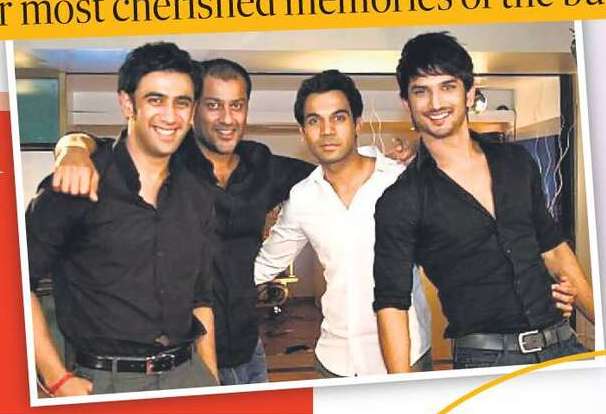
Rishabh Suri (HINDUSTAN TIMES; February 22, 2023)
Director Abhishek Kapoor feels nostalgic remembering his critically acclaimed film, Kai Po Che!. The movie marked the Bollywood debut of late actor Sushant Singh Rajput and also featured actors Amit Sadh and Rajkummar Rao in lead roles.
Ask if he has a knack for launching actors in films successfully, right from Rajput to Sara Ali Khan in Kedarnath (2018) and pat comes his response. “It is always instinctive. Sometimes, you also cast new people because you don’t get the actors you want. There is no recipe. I wanted to cast Sushant because I had known him for years.”
Talking about late actor’s first day on set, the Chandigarh Kare Aashiqui (2021) director says, “He (Rajput) was like high voltage. Yes, he wouldn’t talk much. There are actors who talk about their craft. [However], this guy was the complete opposite. He was not articulate about his process when you spoke to him. It showed in his performance that he would transform [into the character]. He is no more today. He is highly treasured.”
Speaking about Sadh and Rao, Kapoor says, “Amit Sadh had the most complicated character. Rajkummar was just so easy in his role. All three of them had terrific rapport.”
The 51-year-old tells us that there is nothing planned as of now to mark the 10-year milestone achieved by the film. “I am just starting to shoot a new film. I am so consumed with that. I don’t have the time.”
The award-winning director adds, “Completing 10 years is, of course, a milestone. The fact that we are still discussing about the film means a lot.”
I wish the Omicron variant had not come and dampened the spirit of Chandigarh Kare Aashiqui-Abhishek Kapoor
8:20 AM

Rishabh Suri (HINDUSTAN TIMES; February 21, 2022)
Filmmaker Abhishek Kapoor is known for making films that carry a message, be it Kai Po Che! (2013) or his recent Chandigarh Kare Aashiqui (CKA, 2021). The Ayushmann Khurrana and Vaani Kapoor-starrer also reflected Abhishek’s trademark style and earned positive reviews.
But the movie’s box-office collections suffered the consequences of the theatre closures caused by the Covid-19 crisis. Abhishek says, “I wish the Omicron variant had not come and dampened the spirit of the film. A week into the film’s release, theatres had to shut down.” But the 50-year-old is happy that when the movie was streamed on a web platform later, it received appreciation again.
Another film whose reaction Abhishek remembers is Kai Po Che!, which completes nine years of its release on February 22: “We worked very hard on that film, with the finest of actors and crew. If you want the film to be more than what it is, then more than one department has to shine.”
He also adds that adapting best-selling books into films wasn’t easy, as was the case with this film, which was an adaptation of Chetan Bhagat’s The 3 Mistakes of My Life. He says, “It was an original script. But when you take a book, especially a successful book, it is tough.”
Lastly, how can one discuss his career without mentioning late actor Sushant Singh Rajput, who made his film debut in this one. The filmmaker recounts, “He was a hard-working and excited boy. He had the energy needed for the character of Ishaan.”
To those with two left feet, worry not! Just make sure you dress to kill on Navratri-Prachi Desai
8:06 AM

Onkar Kulkarni (BOMBAY TIMES; October 15, 2021)
Though she hails from Gujarat, Prachi Desai’s memories of Navratri are spread over various parts of the world. In a candid chat, the Rock On!! actress shares how watching people play garba is much easier than doing it, connecting with loved ones virtually to celebrate the festival and the craziest thing she once did during Navratri. Read On…
You hail from Surat, Gujarat, where Navratri is celebrated in full gusto. How special is the festival for you and what are the most vibrant memories that have stayed with you so far?
Over the years, this season has taken me places. I have beautiful memories of celebrating the festival not only in Gujarat, but also in Shillong, during a film shoot. I also remember celebrating it in the USA with my family. Navratri has been a carousel of memories that I created while travelling around the globe. I remember, as a kid, attempting to fast during Navratri. I would get this tiny little hand woven potli from my grandmother which had dried fruits in it. That is all that we were supposed to eat for the day, but we would barely make it through the first four hours of the morning and find ourselves sneaking into the kitchen to gorge on food. I feel that Navratri is a celebration in the honour of the Goddess. So, everyone celebrating the festival should reflect on that. It is the celebration of victory of good over evil after all, so one should just feast and dance away.
Navratri calls for showing off your dancing skills. How much do you enjoy playing dandiya or garba? Any tips for those born with two left feet?
I absolutely love to watch people do garba and dandiya. As a little girl I would fancy watching people dancing for hours in their beautiful glittering attire. I feel it is as fun to watch as tough it is to perform. While growing up, I learned a few steps with friends and classmates to perform in school, but over the years I forgot them. It’s a dance form, which is incredibly high in energy and graceful. To those with two left feet, worry not! Just make sure you dress to kill and clap along as you diligently follow the person next to you going round in the circle.
Which is your favourite garba/dandiya track and who is your favourite singer?
A lot of the traditional, folk Gujarati garba and dandiya songs are wonderful. Of late, I have become fond of the songs from the Gujarati film Hellaro. I also absolutely love Shubhaarambh from Kai Po Che. There are so many outstanding singers to choose from, but to name a few, I would say Shruti Pathak, Bhoomi Trivedi, Parthiv Gohil and Divya Kumar.
What’s your Navratri style quotient?
There’s an undeniable magic about the traditional white-red-black mirror-work lehenga cholis and outfits, but I love the more colourful mix-and-match style as well. I often upcycle outfits during festivals and in day-today wear. I’m a strong believer of recycling and reusing. I also pass on my outfits, once I am ready to part with them, to those who would like to wear them. When it comes to shopping, I like picking up outfits from Gujarat and Rajasthan whenever I travel there. They have an amazing collection of beautiful traditional designs that are extremely attractive.
Due to the Coronavirus pandemic, the celebrations have gone virtual, what’s the one thing you miss about the festival?
Watching the celebrations full of bright lights, colours and high spirits is what I miss the most. But one mustn’t dampen their spirits and find a way to still celebrate in their own way, through virtual celebrations with friends or sharing recipes with family members and definitely not miss out on eco-friendly decorations and lights at home.
What’s the craziest thing that you have done during Navratri?
I think the craziest was when a bunch of us in our high school hostel stayed up all night trying to get the steps right for the weekend celebration on the ground. Post the event, we didn’t make it back to the hostel in time, so we spent the night on the ground, bare feet in lehengas, dancing the night away tirelessly in our hideous amateur make-up. Don’t ask me if I was wearing purple eye shadow (laughs!).
I hope Sushant’s beautiful mind has forgotten all the heartache and hardship that he was going through-Amit Sadh
8:23 AM

On Sushant Singh Rajput’s death anniversary today, Amit, who had shared screen space with the late actor in Kai Po Che!,talks about the deep friendship that developed between them during the film’s shoot and says that it will take him time to get over the fact that Sushant isn’t around anymore
Renuka Vyavahare (BOMBAY TIMES; June 14, 2021)

Amit says, “To get over the fact that Sushant isn’t around anymore will take time. I will always remember him. He has left good work behind. Whenever I will miss him too much, I will watch Sonchiriya and raise a toast to him. Wherever in heaven he is, I believe he is happy and busy. I hope his beautiful mind has forgotten all the heartache, sadness and hardship that he was going through here. I am sure he is in a much better place.” After a brief pause, the actor adds, “From day one, what struck me about him was the fact that he was a cool guy who shared a great bond with his fans.”
Talking about what he admired in the late actor, Amit says, “Sushant’s enthusiasm for his work was admirable and he maintained that consistently throughout his relatively short, but celebrated career. To retain that hunger for your craft and ambition is a remarkable quality to have.”
Reminiscing their Kai Po Che! days, Amit shares, “Some of the best memories of my film career are from the time spent on the sets of the film. During the shoot, I remember Gattu (director Abhishek Kapoor) saying, ‘You guys won’t have this experience again’, and he was right. We did different films, had different experiences, journeys and they were great as well. However, Kai Po Che! was special because of the bond that we three (Sushant, Rajkummar and I) could create. We were inseparable and that camaraderie was so pure. Sushant was the light and energy of that bond. He and I went to the gym together, discussed books and autobiographies. He loved Marlon Brando’s book Songs My Mother Taught Me. He was full of life and enthusiasm. Whenever anyone talks about the way he passed away, I freeze. Nobody should have to leave like that.”
The actor’s sudden demise evoked a dialogue around tolerance within the film industry and our need to be kind to one another. “As someone who is a part of the film industry, I hope we all forget our insecurities, animosity, anger and tiffs. Let’s be more forgiving and make this place more livable. Let’s have the courage to be kind to one another and look after each other. We are one industry; we are good people. I am sorry, I get emotional when I think about it,” he signs off on an emotional note.
I can still feel Sushant Singh Rajput because of Kai Po Che-Amit Sadh
8:17 AM

As told to Akash Bhatnagar (MUMBAI MIRROR; November 19, 2020)

After I came on board, I did a lot of workshops with Rajkummar (Rao), Sushant (Singh Rajput), and our director Gattu (Abhishek Kapoor). I also had a dialect coach to help me speak Gujarati convincingly. It was Sushant and my first film. Raj was also comparatively new and there was this hunger in all three of us to prove ourselves in our chosen field. We soon became best friends even away from the camera and would travel in the same car together. Gattu was the catalyst in our bonding. All three of us had substantial roles and enough screen time so there was no sense of insecurity.
With a lot of prep already done, the set didn’t feel unfamiliar when I finally walked into it. The big difference between a TV and a film set is the scale. The intention was never just to get an ‘okay’ on a scene, but to do it till we got it right. There was a lot of love and patience and no pressure whatsoever. It felt healthy!
My first shot was for the song “Shubharambh” while we are fixing the shop my uncle had got for us. At that time, Sushant was a big TV star and Raj, too, was doing some good off-beat films. I felt almost like Omi myself, as he is in the first half, a bit lost, and that was half the battle won. After the take, Gattu came up and hugged me, assuring me that I’d be a ‘revelation’.
It had been over six years since I faced the camera for a TV show, so Kai Po Che! was like a new beginning and will always be a special film. I’m just a little sad now because Sushant is no longer with us. But I can still feel him because of that film. He will always be alive in my memory.
Yes, it is about Sushant Singh Rajput, but it is also about my life-Kangana Ranaut
8:19 AM

After Sushant’s death, I turned to understand what happened — and that was when I realised my perceptions were also wrong, what he had actually gone through, and I was overcome with guilt and shame: Kangana Ranaut explains why she is so vocal about seeking #JusticeForSushantSinghRajput
Anshul Chaturvedi (BOMBAY TIMES; July 24, 2020)
 When you first heard the news that Sushant Singh Rajput has died, what were your thoughts?
I have to admit that I was not following Sushant and his career. I don’t follow anybody. But my first reaction was shock, sheer disbelief. To me, he was (at that point) just another star, very promising and very talented. I would admit that at first, it looked like an impulsive thing that he might have done. I thought maybe because everyone is locked down, and this is a very unusual situation, so maybe that got to him? I was not thinking about all the layers.
Sushant and I, we never really crossed paths. But we were always really close, you know. For example, when he was new, we had a common friend called Sandip Ssingh. He even came to one of my birthdays I think, my 25th birthday, with Ankita Lokhande. I remember speaking to Ankita that night and not him. Later, I knew that he was doing Ram-Leela, and then he did not do it. I used to get all the updates. Kamal Jain, who was the producer of Manikarnika, worked with Sushant in the Dhoni film also. Every now and then, he used to talk about Sushant. When I was learning horse riding, he used to say that he organised the training for Sushant also. He used to wake up at 4am and finish the training at 6am. Once at Kamal ji’s office, I had reached and Sushant had just left. There was some kind of connection, but nothing direct.
(After his death) I called Kamal ji, and I spoke to him. And Ankita being a dear friend, I spoke to Ankita. I spoke to Sandip. Because that’s what you do, right? You try and understand what just happened.
Kamal ji told me that Sushant spoke to him days ago and said, ‘Make a big film with me. Kamal ji, you have to announce a big film with me. Everybody has banned me.’ That’s what he said to Kamal Jain. From there, I was very curious about this situation.
And then I understood his personality. I asked Kamal ji, how he was, I asked those regular questions — was he into drugs or a sex maniac as people had portrayed him? I had read blinds about him that he is having sex with anything that moves. And Kamal ji was like, ‘What rubbish! He was a genius, no drugs, he was very health conscious’ and all of that. And one thing he said — that he was very ambitious. But he wasn’t thick-skinned. If you are ambitious and thin-skinned, how is that gonna work?
When I spoke to Ankita, she said right from the beginning, there was so much humiliation that he could not take it. This is how she summed it up. She said that I knew this boy since he was working in serials, he became a top actor there, and then he did auditions after auditions, rejections after rejections, and then he got into the big bad world of Bollywood. (Then) every filmmaker wanted this boy from Bihar, they were fighting for his dates and he was so grounded. But one thing that she also said about him was that he was not thick-skinned. He would sit on Twitter when he was new and would fight with fans, asking ‘Why did you think that about me? Why did you say that about me? I am not this person that you are saying.’ Ankita told me that she used to tell him ki abhi ye toh hoga na. Everybody will have their perception of you, why are you so bothered about it? He just could not take that, he could not take what people thought about him. She said, over a period, the bad PR, the ganging up, the public humiliation, he just could not take it. He has had enough — that’s what she said.
I want to be very honest. I can’t say that Sushant came and told me all this but I gathered my perception of him and I understood that he was trapped, jaise Abhimanyu ko chakravyuh mein ghera jata hai. And a few personality traits of him did not work for him, one of which he mentioned, that he cannot express himself.
I spoke to Abhishek Kapoor ji and he said, ‘Kangana, woh shaheed ho gaya.’ I am quoting these people because I cannot tell you the whole conversations, but everyone summed it up in their own way. Abhishek in his interviews said that he was not the same boy from Kai Po Che by the time of Kedarnath. He had changed. Woh ghut gaya tha, he said, he had changed, they had choked him way before he actually choked himself.
At what point of time did it come to your mind, after absorbing all of this, that you need to speak about and talk about his case in the public space, in the manner you have been doing?
See, I don’t want to be standing on some high ground and be like, I always knew Sushant. No, I did not. And to be honest, when I would read these blinds after blinds, news after news that he is a rapist, he is a sex addict, he is doing drugs, he is beating up his directors, I remember thinking vaguely, ‘What is up with this boy? He needs to get control of his life.’ That was my perception of Sushant — but when I actually went deeper into the matter, I was taken over by an unbearable amount of guilt and shame. The kind of trap that they laid for him and the prejudice of an outsider, I saw it from (the perspective of) an outsider, who has been called a witch, a whore, what not. When I actually got to know about him, I was taken over by a strong sense of guilt and shame. And I recorded my first video, and I was shaking. I remember I was on the verge of crying because everything was clear to me that what had happened and honestly, it was just spontaneous.
How do you respond to the charge, frequently raised this week, that you are using Sushant to fight your personal battles and target people in the industry whom you are not on good terms with?
Someone like me, who has said no to Yash Raj Films, to Khans’ films, to Bhansali films, to big brands that have fairness attached to them — I could have done a lot for promotions. An actor gets more noticed for wearing a fancy dress than for acting in a film. The kind of media culture that we have here and internationally, it is influenced by the Kardashians. You don’t need somebody’s death to promote yourself. People can just do a TikTok video and have 10M followers. I can do Instagram or Twitter if I want to. I can do so much to promote myself.
About taking revenge from my enemies — I have always been vocal about that from Day One. I don’t need to ride on someone’s shoulders to take revenge.
Nobody has the right to tell me that you stop talking about your enemies because we will only talk about Sushant. Yes, it is about Sushant, but it is also about my life, because these people are still ganging up on me. I will talk about my enemies because maybe, we have lost Sushant, but there is still hope for my life. I will talk about it! You can’t tell me that now you shut up because you are still alive.
So for people to say that I am taking revenge from my enemies, of course, I am! Is there any doubt about it? One does not have to be a genius to figure that out. I want to live, I want to survive, I want to make it big. I won’t let people trap me, ruin me. I will do everything to fight them. So, I think it is a very lame argument to say that you should not be talking about your enemies.
The people who you often refer to as the power centres — none of them have engaged with your charges. On the other hand, we’ve been seeing a sort of a sharp, public digital spat between you and many who, themselves, are also ‘outsiders’. Why is that happening?
They are not gonna dirty their hands. None of them are addressing what I spoke about. Right now, if they talk, they will be trolled. So, who do they send? These outsiders. So they know which lives are valuable for them and which are not.
If I am talking about some points about how he was killed, you talk about those points na. Why are you talking about what I said ten years ago? Yaar, ten years ago my issues were different. Ten years ago, I did not know English, I was a skinny, frizzy-haired, scrawny-looking girl. People mocked me, made fun of me, but nobody was threatened by me. Forget my ten-year-old videos, yaar. Let’s talk about Sushant Singh’s murder!
So they are coming and saying that ten years ago you were saying this, of course, they are gonna get trolled. Of course, they are gonna lose their reputation. But they will not send their own talent to do that. These people are only turning outsider against outsider, because they don’t want to dirty their own hands. I had put such big charges on them, why are they not coming out in public and talking?
What does ‘B-grade actor’ mean?
(Pause) People like us, when we come from outside, we are enamoured by them. And that’s what even Ankita told me about Sushant. He wanted to be accepted. She said, “Kangana, Sushant was exactly like you… he was very intellectual, he would not gossip about anyone, and was very invested in what he did. He had that small-town personality.” But she said that “the only difference was that he wanted to be accepted. You somehow have gotten over that urge.”
It is true that in the beginning, even I wanted to. I went through that phase where I straightened my hair, I stuffed my lips with botox, I started to do films like Rascals, I wore a bikini — I wanted to be desperately accepted. I went through that. I wanted to be on the cover pages of magazines. I wanted to win awards. But it is not going to help. I was still B-grade and they did not accept me.
So I want them to know. When Swara Bhasker says that ‘I’m Sonam Kapoor’s best friend’, that’s not how the world perceives her. No! No matter how much Taapsee Pannu says that everybody loves her, and she has gotten equal opportunities, no! People do not perceive her as somebody who is an equal to an Alia Bhatt or Ananya Panday. No! So that’s what I try to convey — that no matter how much you try and fit in, you are not fitting in. If you are not seeing it, let me show you — in their world, you are still B-grade. I have been through those galis, I know where it goes! So that’s what I try to convey to them. If you think you are fitting in and now you have also become insiders, no, you’re not.
-------------------------------
In 2017, you and Sushant were being considered for a movie by Homi Adajania?
Yeah. I still remember that day when Homi called me to his office. I was about to step out and I was given the legal notice that Hrithik Roshan had sent me about criminal charges. In a dazed state, I went to Homi, and he narrated me a love story and I could not just focus on it because I was so shattered. I told him I would revisit it, but nobody knew my state of mind. After that, for one year, the kind of filth that I faced, the kind of butchering that I faced, I didn’t sign any film that year, but I vaguely remember that story. It was a love story about an urban couple.
When this whole thing happened, it occurred to me that if I had done that film, would our lives have been different now? I don’t know. I just don’t know. It is so unfortunate at so many levels. Would I be his friend and would I have given him a perspective for not longing for acceptance? I don’t know what I would do on finding such an amazing person.
That was so unfortunate and this makes me feel so bad. Had I done that film, what would our lives be, I don’t know. I can only think about it.

This isn’t the time for evoking or provoking-Amit Sadh
8:21 AM

Rishabh Suri (HINDUSTAN TIMES; June 23, 2020)
Jolted by the sudden demise of Sushant Singh Rajput, his Kai Po Che! (2013) co-star Amit Sadh feels grief is a very personal thing, and everyone has a different way of expressing it. The actor, who recently posted a heartfelt video online, isn’t ready to talk about Rajput’s demise. All he says is, “Whatever I had in my heart, I have spelt it out. I’m exasperated with my emotions right now. We need to let it be. This isn’t the time for dialogue, for evoking or provoking.”
Rajput’s Raabta (2017) co-star Kriti Sanon recently touched upon how one is expected to share “RIP posts online” after a loved one’s death, and called social media a ‘toxic’ place. Sadh says, “Once you start ignoring the bad, you don’t have to tweet or say anything. And if there are people who feel that, it’s their prerogative. You shouldn’t get bothered.” And the same applies to users too, not just celebs. “Somebody has gone, respect and remember that person by not saying anything. Whatever way you want to, just grieve, take as long as you want,” he asserts.
What the actor, 37, is also not okay with is people bringing in “their issues” at sensitive times. “You’re fighting your battles on somebody’s grave?” he asks.
In such time, Sadh feels that we must introspect, and not use Rajput’s death as an incident to blow up our issues. “The voice inside will tell you when you’re right or wrong. This is just a wake-up call,” he signs off.
Fenil's Bollywood Talk # 626
10:19 AM

A LOOK AT SUSHANT SINGH RAJPUT’S BOX OFFICE PERFORMANCE
June 14 seemed like any other Sunday. But then, at 2 PM IST, news came in that prominent actor Sushant Singh Rajput has ended his life. It was a bolt from the blue and has led to brouhaha like never before. Instead of getting into it, let’s look at the track record of this actor at the box office.
Sushant Singh Rajput has been a part of 11 films till now. Of which, 9 have already released in cinemas. Drive released on Netflix while Dil Bechara, the official remake of The Fault In Our Stars, remains unreleased. Out of 9, 6 films were decent successes at the box office.
He started his career with Abhishek Kapoor’s Kai Po Che, released on February 22, 2013. Despite having newcomers and being a bit of a niche film, it created buzz among urban audiences. It opened at Rs. 3.68 crore which was great and it’s lifetime was Rs. 43.58 crore. The same year, he was then seen in Yash Raj Films’ Shuddh Desi Romance. This film created a bigger hype which led to a fine opening of Rs. 6.38 crore. Incidentally, it co-starred Parineeti Chopra, whose sister Priyanka Chopra’s film Zanjeer released on the same day. Zanjeer was more commercial and yet had a dismal opening of Rs. 2.84 crore. Shuddh Desi Romance meanwhile netted a lifetime of Rs. 46.26 crore. It became clear that in a span of 6 months, this newcomer had given two successive hits.
In 2014, he was seen in a 20-minute appearance in Aamir Khan’s PK. The actor rocked the show despite limited screen time and in fact, dominated the climax. It emerged as an all-time blockbuster, earning Rs. 337.72 crore.
Few months later, in April 2015, he acted in Detective Byomkesh Bakshy, directed by Dibakar Banerjee. Despite being very niche, Sushant’s presence helped the film get an opening of Rs. 4.01 crore. The word of mouth was positive but wasn’t enough to attract audiences in hordes due to it’s theme. Hence, it ended it’s lifetime with Rs. 26.21 crore. This was Sushant Singh Rajput’s first flop.
1 ½ years later, in September 2016, Sushant Singh Rajput bounced back with M S Dhoni - The Untold Story. It was based on the life of celebrated cricketer Mahendra Singh Dhoni. Despite having a run time of 185 minutes, it had created humongous excitement and had an opening of Rs. 20.13 crore! Sadly, the word of mouth was a bit mixed. Hence, it had a lifetime of Rs. 119.09 crore. Though this was a huge figure, the high cost of the film prevented it from being hailed a ‘Super Hit’. It was, at best, a hit.
In June 2017, he gave another flop in the form of Raabta. It was a much-talked about film thanks to Sushant’s pairing with Kriti Sanon. Songs worked but trailer didn’t. Hence, the opening was poor at Rs. 4.63 crore. Word of mouth was horrible and hence, collections came down in the weekend instead of increasing. Its lifetime was just Rs. 21.68 crore.
Almost after 1 ½ years, Sushant Singh Rajput’s Kedarnath released. The word of mouth was mixed but the opening was huge, at Rs. 7.09 crore. It’s lifetime was huge at Rs. 70 crore. 6 months later, he was seen in Sonchiriya. This was an odd man out. Films like Raabta and Detective Byomkesh Bakshy at least had some sort of respectable opening. Sonchiriya, meanwhile, opened horribly at Rs. 1 crore! There was no growth and the lifetime was a mere Rs. 5.63 crore! The word of mouth was excellent but the theme was such that audiences were just not interested.
Sushant Singh Rajput’s last theatrical release was Chhichhore. It was directed by Dangal director Nitesh Tiwari and produced by Fox Star Studios and Nadiadwala Grandsons. It opened at Rs. 6.92 crore which was decent. However, the word of mouth was crazy and hence, audiences went to see it in hordes. From Rs. 6.92 crore on Friday, it jumped to an insane Rs. 16 crore on Sunday! The numerous holidays in the weekdays along with public response helped the film immensely. It’s lifetime was Rs. 147.32 crore and hence, it emerged as a super duper hit!
Hence, one can see, Sushant Singh Rajput’s track record, despite flops, was quite good. Even opening day numbers were fine, though it was never record breaking in most films. Yet, the opening day figures prove audiences liked his work and came to see the films for him, amongst other reasons. It’s highly unfortunate that he’s no more today. If he was, he would have done quite well for himself and given us many more entertaining and meaningful films. RIP.
In Kai Po Che, Sushant was at his bindaas best—super confident and super talented-Ronnie Screwvala
8:33 AM

As told to Himesh Mankad (MUMBAI MIRROR; June 15, 2020)

Like me, he cherished memories and even during the release of Kedarnath, as excited as he was about this role, we spoke more about Kai Po Che! with him, as always, reflecting on his past and his highs. We met again during Sonchiriya’s release and he confided that this was by far his toughest role till date. In recent times, our discussions revolved around his love for science and astronomy.
He had no regrets. Rest in peace Sushant, may you find the peace you were looking for.
Sushant Singh Rajput tribute: This can't be the end, says Mayank Shekhar
8:28 AM

Mayank Shekhar (MID-DAY; June 15, 2020)

The last time I met Sushant Singh Rajput, he was deeply engrossed explaining to me, over a smoke, his move to theatre. The project he was working on involved a series of performances of the same play, before live audiences, over time. But captured with multiple cameras for the screen — editing/picking best angles, shots, takes — the way it would be done for any other film! Didn't ask him if Virtual Reality (VR) had anything to do with it, because that's what he saw as the future of film.
This was in September last year. Right before the release of Nitesh Tiwari's Chhichhore — returns plus expectations wise, arguably, the biggest sleeper-hit in Bollywood ever! Stage would've been Rajput's next big step. And he came from television. Having trained in acting under Barry John, he dropped out of a prestigious course (engineering) in a top Delhi college, before moving to Bombay.
These are the exact footsteps of the other Bollywood star, who moved from the capital — Shah Rukh Khan. Rajput's life in many ways would be a dream, coming true — the kind of success story that inspires the middle-class, metropolitan young. He said he had also based it on the SRK line from Om Shanti Om: "Kabhi kisi cheez ko shiddat se chaho, toh saari kaynaat... (If you will it; it happens)." Can tell you one thing – it works, he said.
At a more practical level, traditionally, the transition of lead actors from television (small screen, as it were) to cinema has been seen as tough, to near impossible — with the former deemed as graveyard for the latter. Chiefly because people begin to identify so strongly with the characters on TV that the actor's actual persona disappears from public imagination altogether. It's the opposite of stardom, as it were. Rajput instantly connected with the masses, first, as Manav in Ekta Kapoor's Zee TV soap Pavitra Rishta (2009-11).
At the International Film Festival of India (IFFI), in Goa in 2017, I witnessed a very different kind of stardom, walking through the aisle towards the stage with Rajput, with crowds on both sides chanting what sounded to me like, “Modi, Modi, Modi.” Was actually “Dhoni, Dhoni, Dhoni!” That's the part he'd played in the Indian cricket captain's biopic, Neeraj Pandey's M S Dhoni - The Untold Story (2016).
He began his film career also as a cricketer, in Abhishek Kapoor's Kai Po Che (2013). That hit film, in many ways — and this happens once in few years — became the fountainhead for multiple stars/careers. Amit Sadh became a popular actor from the same film. Rajkummar Rao's filmography as one of Bollywood's top lead actors kicked off from Kai Po Che.
Rajput, of course, shone over the rest. He had the dominant role in the film. What followed was a contract with Yash Raj Films — the huge-budget detective thriller, Dibakar Banerjee's Byomkesh Bakshy (2015) and Maneesh Sharma's rom-com Shuddh Desi Romance (2013). Both films centred on him, besides a supporting role in the Rajkumar Hirani blockbuster PK (2014).
No matter what your personal opinion on his choices may be — whether it's Rajput as the coolie Mansoor Khan in Abhishek Kapoor's Kedarnath (2018), or the bandit Lakhna in Abhishek Chaubey's Sonchiriya (2019) — he was new, merit-based Bollywood.
Risen up the ranks from TV soaps, and dance reality shows (Zara Nachke Dikha and Jhalak Dikhhla Jaa). Proving his worth as a household name, and dancer, essential entries on a mainstream star's CV. Part of Bollywood's competitive audition culture. Attaining stardom based on the content of films, rather than the accoutrements of show-business alone.
Check that filmography again. It's worth a retrospective already. Can't say the same for a lot of veterans. I asked Rajput about Kai Po Che being a pleasant pivot for new talents from outside those with family businesses in films. He gave the audience in Goa gyan on how “we derive security from prediction, which is evolutionary. But preparation is only essential to know what not to do.” Okay, had to leap to connect with that bouncer!
On the idea of success, he spoke further about “impact bias — a popular, revolutionary subject in behavioural economics, because it's counter-intuitive to how we usually think,” since it practically proves that “successes or failures actually don't affect us in the same way that we imagine. If you enjoy a process itself though, you get so good at the skill, that it automatically places you in the top percentile of people on the (happiness) index.” Hmmm.
On script selection, he declaimed, “This is absolutely the time to encourage failure, rather than success. According to research, 65 per cent of school kids right now will eventually take up jobs that don't currently exist. The disruptive technology to enable those jobs is yet to happen. We're at the stage of deception, since we're unaware.”
One-on-one with Rajput, to me, felt like engaging with an esoteric, futuristic seer — a Sadhguru for the Silicon Valley — at any rate, the most well-read among new Bombay stars. He was a rank-holder across India's top engineering entrance exams — the other middle-class aspiration gone right. This, after having nearly flunked his Class 12 pre-boards, because his mother had just passed away.
He also held entrepreneurial ambitions, networked with the government's think-tank NITI Aayog, and generally came across as someone trying to build his brain, besides his body, in a Bollywood gym. And, yeah, he could take a socio-political stand. Over the Karni Sena controversy over Padmaavat (2018), Rajput decided to drop his last name, ashamed of people from his caste baying for lead actor Deepika Padukone's blood.
The first time I saw him, will admit, I did not like him at all. We were on a flight from Delhi together. He was returning from Chandigarh, where his sister lives. This was right after Dhoni's release. The entire flight-crew had taken a picture with him. One flight-attendant had missed out. He refused to get up and pose for her.
While chatting with him, I kept bringing up Bihar, since he was a Patna-born. He kept deflecting the conversation to Delhi. We spoke about the film Dhoni and the digital technology used to merge MSD's body with his, for a couple of hours straight. That's when he seemed most comfortable. Maybe his work alone gave him the sanctuary to ease out, and feel at home.
He was self-admittedly an introvert, painfully shy; seeming socially awkward. This may seem ironic about a person who picks up acting, the most public profession there is. But it's quite a common trait. Some of the best actors I've interviewed — Akshaye Khanna, Ranbir Kapoor, Nawazuddin Siddiqui — have seemed the hardest to break ice with. That apart, the inert personality, in fact, helps them inhabit other humans/characters/parts more easily, perhaps.
Also there is this bizarre drug called fame that comes with an actor's success. In ways that it is so unique to the profession, that it's impossible to tell how the psyche might respond to public love and adulation, tending towards obsession, that surrounds every move you make, every step you take. Somebody's watching you. Don't know, does it get lonelier then?
How do you take third-rate gossip about yourself, sold to millions of salivating voyeurs as the “blind item” — written by moralistic cowards, with not even the courage to name the person they're maligning in public? Rajput regularly featured in this high-brow literature — often made out to be a wannabe, sex-crazy drunk. It's hard enough to make it as an outsider. Look at that six-pack/stamina, besides the healthy body of work. I'd want to be that drunk.
By all accounts, Rajput suffered from clinical depression. The Hindi television news reporter covering his death on my screen says, “The police are going to investigate depression ka kaaran.” Exactly. Depression has no kaaran (reasons). That's the lesson he taught us and left. Surely there must've been some trigger. But observe his life from the outside. Most of India would give their right arm for it. Yet, no one I know could sense the darkness that lay within.
In the first scene of his last release, Chhichhore, the young boy in the film jumps off a building to kill himself. Rajput plays the father. The entire film is about him explaining to the son the futility of suicide. And the various chances that life has on offer. Nine months later, Rajput hangs himself to death in his own Bandra apartment. This can't be the end of that. The world is already in the middle of a pandemic. For too long, we've been characters in a zombie script. Whoever wrote this sub-plot, screw you boss; seriously.
Success changes people’s perception of you and the way they look at you-Rajkummar Rao
8:39 AM

Neha Maheshwri (BOMBAY TIMES; October 19, 2019)
The years of struggle that Rajkummar Rao has seen has helped him shape his career with great maturity and confidence. From playing the second fiddle in several films to becoming a poster boy of content-driven cinema, he has come a long way. Rajkummar talks to BT about how he does not want to limit himself as an actor, how box-office success is not the only thing that drives him, and the life lessons he has learnt from his parents. Excerpts...
Made In China chronicles the journey of Raghu Mehta, a failed businessman aspiring to make it big. You, too, have toiled for years before making a mark in Bollywood. Did that make Raghu’s journey more relatable?
Made In China revolves around Raghu’s journey, from being a nobody to trying to be somebody, and I could totally relate to it. Like me, he, too, doesn’t have a plan B and has a never-give-up attitude. Raghu has struggled a lot with people around him and his extended family is not in favour of him exploring another business idea because he has failed so many times. When I was struggling in Bollywood, I was also told by people to try other mediums. However, I was prepared to face the struggle. I knew that no one would launch me the moment I landed in Mumbai. For two years, people only considered me for character-driven parts. Sometimes, they would either not call me or make me wait, and eventually, they would turn around and tell me that they needed a conventional looking actor with a great physique. However, I didn’t lose hope and had faith that someday, someone would look at me the way I am and cast me. Dibakar Banerjee gave me that opportunity in Love Sex Aur Dhokha (2010). Success changes people’s perception of you and the way they look at you. People have cast aspersions on many actors because they didn’t look conventional. But, these actors proved them wrong and the same people started praising them. This has happened with me as well. Initially, some people thought that I wasn’t cut out for lead roles, but today, they think differently. From then to now, it’s been an exciting ride. I am happy with my career graph, and the way cinema is shifting shapes and people are coming up with great ideas and stories, which are being lapped up by the audience. It’s a great sign for us.
You have been a front-runner for content-driven cinema. Do you ever crave to play the quintessential Bollywood romantic hero?
I am a big fan of the typical Bollywood kind of romance. I love to watch it, but I am not too sure if I can pull it off. Also, I feel that cinema has become more real. Having said that, larger-than-life films are still being made and are doing great numbers at the box office. There should be place for all kinds of films. People will get bored if we keep making only realistic films.
While you had a great run at the box office last year, your films in 2019 (Ek Ladki ko Dekha Toh Aisa Laga and Judgementall Hai Kya) didn’t have a similar impact on the BO…
I knew exactly what went wrong with my films, which didn’t work. There are times, when you make a good film, but it doesn’t work. However, it’s a personal experience which I wouldn’t be able to share. Sometimes, you realise that a film won’t work at an earlier stage itself, but then, it’s not just about the box-office result, but also about enjoying the process, and becoming part of a good film. Failures teach you a lot more than success, as you learn what went wrong and what not to repeat. I try to live in the present and not think too much about the future. I give my all to every character I am playing at that time, and then, I move on to the next project without thinking about what’s going to happen to it.
You had said in an interview that the industry is quick to typecast actors. Currently, you are the go-to actor for content-driven cinema? Do you ever feel that you are being typecast?
I don’t think I have been typecast. There is still a lot of fire inside me and I don’t want to typecast myself ever. I want to surprise my audience by doing as many films as I can and play different parts. I don't want anyone to slot me in any bracket and think that I can only do certain kind of films. I like challenges. I want people to throw any character at me and it is my responsibility to portray it with conviction. A lot of people ask me about my dream role. I don’t have one. Every role I do becomes a dream part for that moment and for that period. Just the dream of becoming a film actor was a big one for me, and I am happy that I am living that dream every day.
You are known to sink in your teeth into every character that you play. You lost seven kilos for Trapped and grew a paunch for Made In China. While it’s considered to be a big deal in Bollywood, in Hollywood, many actors have undergone drastic transformation...
I have always said that it’s part of my job, and I am not doing anything extraordinary. It’s the demand of my character. If I am playing Subhas Chandra Bose, I have to look like him and not someone from Delhi. It’s my responsibility towards my characters that I have to fulfill. But yes, when you undergo a drastic transformation like Joaquin Phoenix did for Joker, people appreciate it. It’s amazing to see an actor put in so much for the character without using prosthetics. I think that’s phenomenal. I also like what Christian Bale and Matthew McConaughey do. I find their work inspiring. They do it because they want to be true to their characters and not for appreciation from people.
For Made In China, I made my tummy a little heavy, because I wanted to look different in the film. I ate a lot of white rice and cheese and also worked out a lot so that the other muscles were intact. It’s fun when you try to do something different and people appreciate it. But eventually, it’s for yourself; it’s a very lonely process that you go through during that time. As an artiste, you do it for yourself. There were times when my director (Mikhil Musale) was happy with a shot, but I wasn’t and I would go in for a retake because I wasn’t satisfied. You repeat the process till you take out something real from within. Primarily, it’s to satiate the artiste in you and then you do it for your co-actors. If that happens truthfully, it will reflect in the film and the audience will see it. One doesn’t know what will work for the audience. How will they connect with you if you are not in the moment? If you are truthful in that very moment to yourself, your craft and your co-actors, the audience will definitely connect with it. You are not breaking the fourth wall and talking to them; they have to believe in what’s happening in that particular scene. Since I am trained in a film school, I understand performances really well. I can tell the difference between a true performance and when someone is faking it.
This film is more of a situational comedy. What’s your view on adult comedies?
It is situational and there are very responsible actors involved in the film. Nothing in it is vulgar and crass. It’s a family entertainer. But as they say, never say never. If the story excites me as an actor, I don’t find it vulgar and crass, if it’s situational and not just about gags, then I won’t mind doing an adult comedy. But that’s not the plan right now.
You have been a part of several heroine-centric films and two-hero projects. After having tasted the kind of success that you have, a lot of actors would refrain from sharing screen space in so many projects…
I did Ek Ladki Ko Dekha Toh Aisa Laga (2019) and Queen (2014); both of them were women-centric stories. I never judge a story on the basis of how my character is shaping the film. The story is paramount, and if my character is impactful and offers me something new and different, I say yes to it. For me, it’s never about playing lead parts, but always about associating with great stories. I love what I do and genuinely feel passionately about my work. It’s as simple as that. I am not doing it to prove a point to anyone. For me, it’s a sacred thing to go on a film set. Insecurity and other things corrupt the environment on the set and then, it reflects in your work. I would never want to feel like that. I have done Bareilly Ki Barfi (2017) and Kai Po Che (2013), so I don’t mind being part of a two-hero or three-hero project. I am very secure as an actor. It’s not that I am going to fight a battle, I am going to do something I really love. I love being on a film set, where everyone is working like one big family.
While you are doing exceptionally well in your career, on the personal front, you suffered two irrevocable losses over the past couple of years when your parents passed away. How have you coped with the loss? Even with all the success, does it get lonely?
I wish my parents were part of this journey and that void will always be there. But apart from that, I am very happy and content with the way work is going and the kind of cinema I am doing. It’s an interesting phase in my life. I do feel lonely. That’s why I am working. When I am working, my mind is busy with a lot of things. But when I am home, travelling, or not doing much, it hits me. Fortunately, I have my loved ones, who keep me grounded and rooted. But I don’t have to put any extra effort to stay grounded, as that’s how I am. With the kind of upbringing my parents have given me, I will always be this way. They have taught me to work hard and be real. They have taught me a lot about honesty and helping others. It’s not difficult to be honest. It’s easier to speak your mind.

Ishaan was the most innocent and lovable; I realized viewers would feel his loss acutely-Abhishek Kapoor
8:04 AM

As told to Roshmila Bhattacharya (MUMBAI MIRROR; September 27, 2019)
 One would think that adapting a book was easy because it’s all there already. But Kai Po Che! was the most difficult to crack in terms of script. We went through many drafts as we tried to figure the culmination. While I liked the three characters, Ishaan Bhatt, Omkar Shastri and Govind Patel, and was excited about bringing this story of three friends to the screen, it played out very differently in Chetan Bhagat’s novel, The 3 Mistakes Of My Life. And from the onset I wanted certain changes, including a different climax.
For me, the film, at the end of the day, was not just a story about the trio but about what happened in Gujarat in the aftermath of the Godhra massacre. I believed that for the audience to feel the pain and the sense of loss this state was experiencing, they needed to go through similar pain and loss for which one of the three principal characters had to go. And since Ishaan was the most innocent and lovable of them, a guy with unfulfilled cricketing dreams which he was trying to live out by mentoring a local talent, Ali Hashmi, they would feel his loss acutely. And I thought what would make his death even more gut-wrenching and horrific was that it came at the hand of Omi who had loved Ishaan blindly, but since he did not have a mind of his own, he had allowed his fundamentalist politician uncle to radicalise him.
I discussed the changes I had in mind, which I was convinced would make the characters more interesting, including this twist in the tale, with my writers, Pubali Chaudhuri and Supratik Sen, and also got Chetan on board. Once we all agreed, we decided to shoot the climax around a winding staircase which we had already established in a few scenes earlier. We shot in a remote village in Rajasthan. The staircase was created by the production design team on location. The reason we chose it, was because when the shot rings out, you are not sure who is hit. Omi was chasing Ishaan and Ali while Govind was chasing Omi when this happens. It’s only when a pool of red blood spreads on Ishaan’s white Tee that you realise he’s the one who’s hit, an instant before his body goes hurtling down to land spread-eagled and a shocked Omi drops the gun.
However, I was equally sure that the story couldn’t end there. The boys had survived an earthquake, failed business, shattered dreams and even if the riots took away one of them, I wanted to end the film on a positive note. So, we had Omi coming out of jail after a decade, by which time Govind and Vidya are married and have a son whom they have named Ishaan. And Ali, now a grown-up, is for the first time playing for India. And as Omi, who’s gone straight to the stadium, watches from the stands, Ali starts his innings with a flourish, dispatching a ball from the Aussie bowler to the boundary with a Ishaan-like cover drive. And in this rising star you see hope for the future which came out of death and destruction. That for me was what made the culmination of Kai Po Che! fulfilling. There was a lot of material in the book, but as a story-teller I was convinced that I was not going to go crazy on the riots and what was right and who was wrong. I’m not qualified to judge, so what I did was present a human story that touched a chord and is still remembered.
I made the film coming out of Rock On!! which bagged the National Award for Best Feature Film in Hindi while Arjun Rampal was adjudged Best Supporting Actor by the jury. I approached a lot of big names but none of the established actors wanted to be a part of an ensemble cast. So, then, I opted for Sushant Singh Rajput, a fine actor who had done a lot of TV, Amit Sadh who is equally talented, and Raju (Rajkummar Rao) who is today’s answer to Sanjeev Kumar. He’s the kind of phenomenal actor who, till you say “Cut”, will keep performing, pure magic on camera.
I’ve never thought of taking this story forward. There are some stories that lend themselves to a sequel and some that leave you satiated. Kai Po Che! is the latter. Some films you look back on and wish you had done certain things differently. This one evokes no regrets or “what ifs”.
I’ve done enough guest appearances-Amit Sadh
7:32 AM
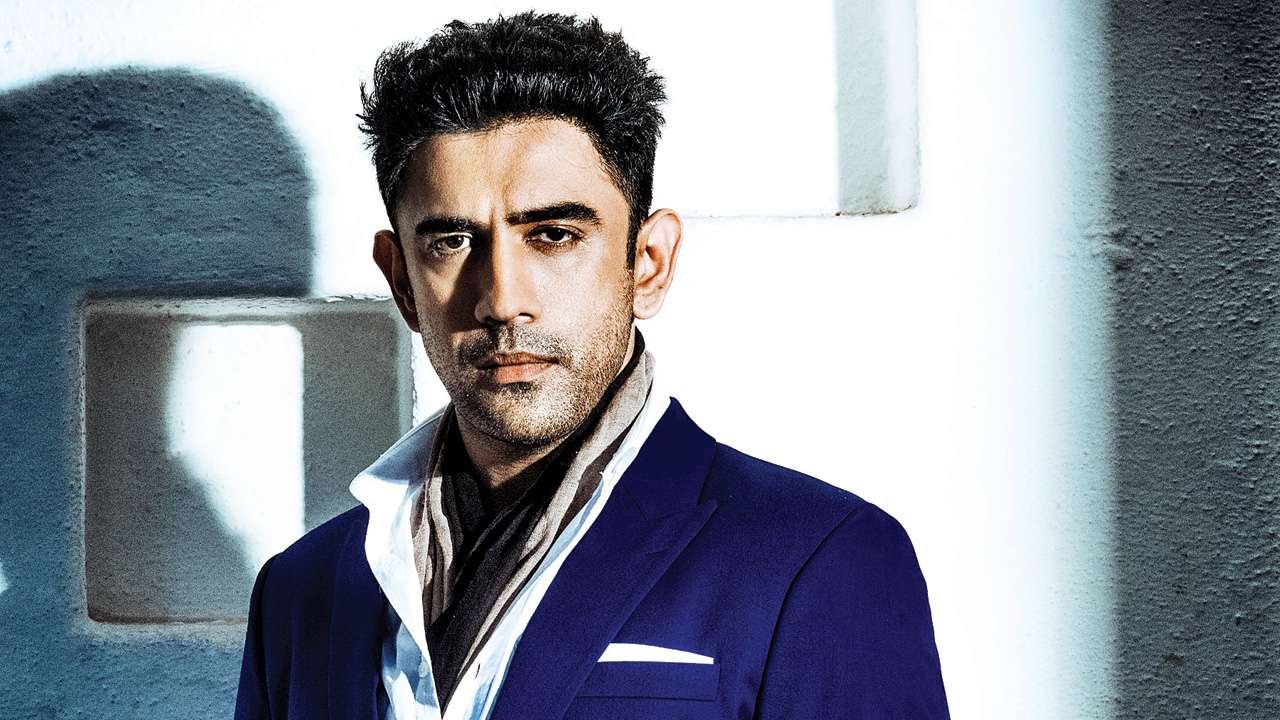
Chaya Unnikrishnan (DNA; August 17, 2019)
As the distraught father of four children in the digital film, Barot House, Amit Sadh has been winning rave reviews. The ZEE5 original is a suspense drama about a family that’s caught in a series of murders. The actor likens the viewers’ response to what he received for his first web outing, Breathe. “To be honest, I didn’t know it’s making such an impact — the calls, the messages and reviews that I am getting are similar to what I got for Breathe. I am a little numb. I am happy as an actor that it is unanimously accepted by everyone. This doesn’t happen often. It happened with Kai Po Che! (2013) and Sultan (2016). It’s like a rainbow, which doesn’t come every time and I am enjoying it,” he smiles. The Gold actor tells us how he prepped for the role, his upcoming projects and why after Super 30 he hasn’t signed any film yet.
Both, in Breathe and Barot House, you have played complex characters. Why are you drawn to such roles?
I am a huge fan of Leonardo DiCaprio and Matthew McConaughey. When you are starting your career, you are pushed to do so many different things. But now, I think I have found a corner, a groove of what kind of stories I want to be part of and what type of characters I want to play. I have a soft corner for damaged people or those who are not supposedly quintessentially perfect but have the instincts to be protective. Like Kabir Sawant in Breathe was a protector, even in Barot House, the father is a provider. I want to do real-life characters from real-life situations.
How did you prep for the role?
It was a hell of a ride because I had to dig in a lot. I had to be in the zone for hours, day in and day out so that the consistency of the character and the draft was constant. When you lose someone, you don’t eat properly, don’t sleep and you are grieving. There is a certain method to show that — how you do it is up to you — don’t drink water, food, or torture yourself by remembering your bad past. I wanted people to feel my pain. We all have untapped or locked emotions. I had to stretch them and dig into things that I have healed from. It’s a taxing process, but when you finish it, you feel light. There is a psychological cleansing. Now, when people see it and give their interpretation, it brings a smile to your face.
You are part of the web series, India Strikes Back, but there’s a film on the subject. How will your show be different?
I am a huge fan of that film (Uri: The Surgical Strike), too. It’s a great movie. But that is a movie format and this is a web series. You will get to see more details here. It’s an intriguing subject, so, I am sure people will be interested in watching all the details which are difficult to show in a film. We have about 10 episodes — you’ll get to see how special forces function, the democracy, the decision making when you are at war, etc. We have really worked hard — I literally hurt and bent my back with 40-kg armour, shooting the entire day. After this series, my respect for the services and people in uniform has doubled.
You have worked with Abhishek Bachchan in the second season of Breathe. How was the experience?
It was great fun working with him. I always call him big bro. I have looked up to him in films like Guru and Yuva. Those were actually my learning curves before I even entered movies. I feel privileged and happy that he has brought new energy to Breathe. He is a talented actor and his fans will love him for what he has done in it.
Have you signed any films after Super 30?
Honestly, I don’t have any film right now. I am gearing up for India Strikes Back followed by Breathe 2. Let’s see, after watching all these if the producers and directors will think of giving me something special. This time I am going to wait, and not sign anything. I have done enough guest appearances; I want my fans to watch me in a full-fledged role in a film.
Do you feel you haven’t got your due in movies?
I don’t think like that. I have movies like Kai Po Che, Sultan and Gold. Everyone has their own interpretation about what is due to them, but yes, my fans keep messaging me on social media saying I am an underdog, or that I haven’t got my due. I came with Rs 200-300 in my pocket to Mumbai and aaj Hindustan mujhe janta hai. But, I do feel why I am not getting the parts that I want and somewhere I am grateful to the digital platform which has given me a new ray of hope. I am proud of my work here and I will continue to be on it. However, I am an actor and I want to do movies. The way I go to watch The Rock in Fast And Furious, I want people to come and watch me. I had three scenes in Super 30, but I got a good response. Still, as of now, I am not going to do guest appearances. I am waiting for that right film.
This country hasn't changed much in the last 20 years-Abhishek Kapoor
3:36 PM
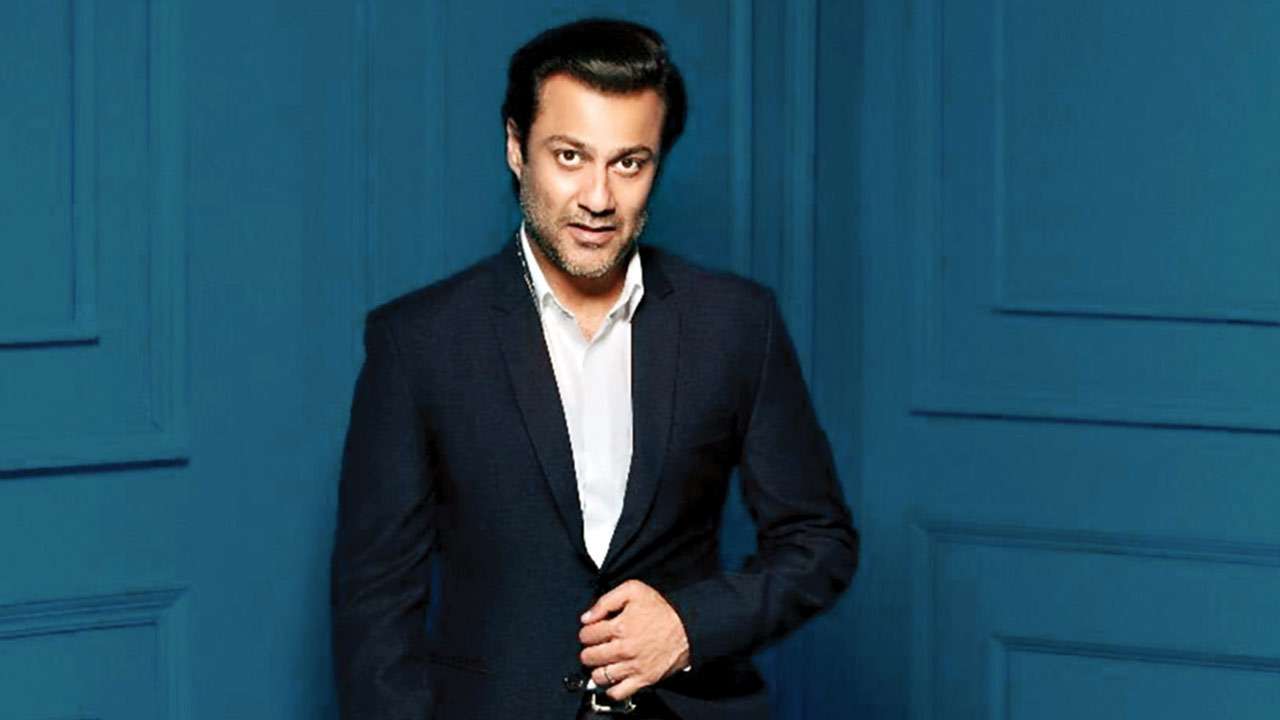
Meena Iyer (DNA; December 21, 2018)
Abhishek Kapoor had to literally walk through fire to see his tragic love story, Kedarnath, through. For starters, it couldn’t release in Uttarakhand, where it is based. Also, the film, made against the backdrop of the 2013 floods in the pilgrim state, almost drowned under financial hurdles (not of his making). But hats off to the filmmaker who doggedly brought his labour of love to fruition and emerged victorious.
Gattu, as he is popularly known, reveals his state of mind today and hopes to move forward with those fresh scripts that he has been giving finishing touches to.
Now that Kedarnath has released, how are you feeling?
I feel good. This one was quite a tough one to make. However, I’m happy that people are liking it. So, it feels great (smiles).
It’s a downer that it couldn’t release in Uttarakhand.
Yes, it is. I wish they would hear the voice of the rest of the people who are watching Kedarnath in theatres and enjoying it. There’s nothing offensive in the film. The censor board (Central Board of Film Certification) has gone through it with a microscope. They have done their job. There is nothing for anyone to fear it or get offended by it. Sometimes, you can’t win them all.
It hasn’t happened to you in the past.
It has never happened to me.
You had the honour of introducing Sara Ali Khan. She got a lot of praise for her performance.
Yes, Sara is quite a spark. She’s got a great personality, and she brings that to her part. There is a lot of her in her character (Mukku/Mandakini) that has gelled really well.
Did you revisit and analyse your movie post its release?
I’m happy with the way it’s gone. I made the movie I wanted to make it. As a filmmaker, you evolve. If you see any of my films, you’ll realise that I don’t repeat myself. They are not in the same world, they have non-identical characters who are from diverse strata.
This one (Kedarnath) is a different animal and it’s made for the people. And the kind of stories and problems we touch upon are deeply Indian. This country hasn’t changed much in the past 20 years. We’re still dealing with the same old issues that exist even today.
Is that why a part of the movie has a slightly retro feel? Was that deliberate?
Yes, it’s deliberate. Every time, you can’t make a film to please the critics. It’s important to know your craft and have enough control over it. But it should not come in your way, with who you’re talking to. If you’re addressing certain issues, there should be clear communication for whom you are making a movie. I don’t think filmmakers should get confused about their target audience.
This movie is made for the people at large because I really believe that this is a story for the present day. We’ve never been more divided due to our communities than we are today.
Your film does touch upon community and caste.
Community, caste and our places of worship. Everything that can divide us is dividing us. Next will be which door you can enter the temple from and which door you can’t. These people can enter, those people can’t. This is an extremely important film in the present-day scenario. And the simpler it is told, the better. That’s why it’s made in a certain way.
I’ve made movies in the past, too. You aspire for different things at different stages of your life. In the earlier phase, you want critical acclaim so that people recognise you for your craft. After you have established that you know your craft, then you have a platform to say something beyond just repeatedly trying to prove yourself. And I think that’s the film I attempted and that’s what I made.
Did Kedarnath satisfy you as a filmmaker?
It has an old-school vibe to it. The additional part is that we have the backdrop of a beautiful 2,000-year-old temple, where the deity sits, that has gone through a storm. And when a calamity of that kind hits, all the silly issues that we create among ourselves go back to nothing. We should see the bigger picture of where we’re going as people, that’s what the film is trying to say.
There was an opinion that said you should have given more to the love story between Sara and Sushant.
That is all talking in retrospect. I really respect your opinion, because you’ve seen the film with more clarity than me because I’m so close to it.
But there are expectations from you because you are the kind of director who puts his passion into the story-telling.
That’s not the problem. It’s the kind of expectations that people have of me after they’ve seen Rock On!! (2008), Kai Po Che! (2013) and Fitoor (2016). And whether they have liked it or not, they have not seen that as a filmmaker, my attempt is to unlearn, go back to zero and make a film like a newcomer again, so I can discard my previous work. Every time a filmmaker helms a movie, it’s not the truth. There are different sides to it and a director shows his perspective on things, which is his truth.
To get into a new film, I can’t carry my ego, image or credibility. I’m servicing an idea. I have to listen to it as it will tell me how it has to be told. So, I try to leave my ego out of it and just start off as if I’m absolutely new again.
I wanted to tell some of the critics, ‘Why don’t you see it for what it is?’ They are thinking yeh bhi ho sakta tha, yeh Abhishek kar sakta tha, because they are probably calibrating what I could have done in a crafty way. Maybe it didn’t require that much of craft. Instead, it required that much simplicity, so that the last guy sitting in the theatre could hear us. That was the attempt.
How soon will you move on to your next film?
I’ve been working on exciting stuff lately. Some probably with new people, some with established actors... they are different kinds of material. So, I can’t wait to start them. Maybe in the next 10 days, I’ll take a short vacation and then jump right into the next one.
I found inspiration in Academy Award-nominated actor Jake Gyllenhaal-Amit Sadh
8:14 AM

As told to Avinash Lohana (MUMBAI MIRROR; November 19, 2018)
I had just five months for prep before I started filming Reema Kagti’s sports drama Gold which was inspired by the national hockey team’s historic win at the 1948 Summer Olympics when they beat England as a free nation. I played field hockey player Raghubir Pratap Singh who had his muse in Padma Shri-awardee Kunwar Digvijay Singh aka Babu, one of the greatest dribblers in the game. The game Reema expected from me was of international standard and though it was a daunting prospect, I wanted to give the sport my all.
However, there was this niggling concern that five months may not be enough to up my game. I found inspiration in Academy Award-nominated actor Jake Gyllenhaal who had played a boxer in the 2015 American sports drama Southpaw. In one of his interviews, Jake had admitted that he quickly realised that six months was too short a time to pick up the sport. So, what he did was train for two hours every morning. The practice session was arranged by his studio. Then, he trained for a few more hours in the evening too by setting up a boxing ring in his backyard. His words really charged me up and I extended my five months of prep to 10 by practising twice a day, devoting two hours to each session. So enthusiastic was I that at times the makers had to arrange for boys to practice with me in my extra time. On occasions they even banned me from certain sessions because I just wouldn’t stop training.
We had some great coaches like former international field hockey player Michael Nobbs who had coached the Indian men’s field hockey team between 2011-13 and Clarence Lobo who was recently conferred with the Dronacharya Award for his contribution to hockey through coaching over the last 25 years. Both of them have been the reason for the kind of hockey you see me play in the film.
I remember on the first day of our practice sessions, many were scrutinising me wondering if I would be able to produce the kind of hockey required. Looking at them I wondered if they would end up kicking me out of the film. Even Michael was watching us play on Skype and I don’t think he was very impressed with my performance on the field that day. But a few months later, after a shot, I could see that he was impressed with the change in my game. Such memories I will always cherish.
I even forged a great bond with Sunny Kaushal, who played Himmat Singh, another team player whose character was modelled on Balbir Singh Sr, three-time Olympic gold champ who played a key role in India’s wins in the 1948 Summer Olympics. Sunny was one of the reasons I played the way I did on screen and for my character turning out so well.
We were two strong threads in the plot and spent a lot of time practising with each other. My all-time favourite shot was the smash. All our efforts were worth it in the end because as the popular saying goes, “As you sow, so shall you reap.” The kind of feedback I got for my performance after the film released reinstated my faith in hard work.
 Cut to 2013 and Abhishek Kapoor’s Kai Po Che! (below) for which I had to learn the Gujarati dialect. Two years later, for Subhash Kapoor’s Guddu Rangeela (right) I worked on the Haryanvi dialect and it was Awadhi for Gold. I had language coaches for all these films and while most of these sessions were scheduled for over 10 or more classes, I started getting a hang of it by the third or the fourth workshop itself. I love working on new languages and have a knack for them.
Moving on, I play a member of the Special Forces in my next show and have worked even harder on the training for this one. I spent around three weeks with certain members of the Special Forces so I would look, behave and even walk with them, sometimes lugging 40 kg of weight. I also underwent weapon training, including firing with the IWI Tavor, an Israeli bullpup assault rifle. My physical training in the gym also went on for two months. This has been my most challenging role after Gold.
I enjoy the prep because there is so much I get to learn during the process. I am hungry for such opportunities.

Garba requires particular moves and I will need some training and rehearsals-Rajkummar Rao
7:51 AM

As told to Roshmila Bhattacharya (MUMBAI MIRROR; October 1, 2018)
For my last release, the horror comedy Stree, I learnt to use a sewing machine as I play a ladies’ tailor to perfection. I had told my director, Amar Kaushik, that I didn’t want to use a body double, I wanted to do everything myself, which included stitching clothes. Growing up, I had seen people in my neighbourhood in Gurgaon and Delhi using these sewing machines. I also remember going to the tailor with mom. Back then, I thought it was easy, but the first time I sat on the chair and started using a sewing machine, I realised just how tough the job was.
Your hand-feet coordination has to be perfect, one wrong move, the thread snaps and you have to start again. It’s all about reflexes and getting used to the sewing machine. So, before I left for the shoot, I took a week to 10 days training from a tailor in Mumbai. In Chanderi too there was a machine on the sets and I would sit on it every day trying to make it look like mine. That was important to play the character convincingly. I didn’t stitch a dress or anything, just parts of a blouse.
 Bareilly Ki Barfi was another challenge because even though it is not
really a double role, I was playing two distinctly different
personalities. While Vidrohi was loud and full of swag, Pritam was a shy
and submissive sari salesman. I visited a showroom in Juhu for a couple
of days to observe the salesmen there and learnt how to drape the sari
from them.
Bareilly Ki Barfi was another challenge because even though it is not
really a double role, I was playing two distinctly different
personalities. While Vidrohi was loud and full of swag, Pritam was a shy
and submissive sari salesman. I visited a showroom in Juhu for a couple
of days to observe the salesmen there and learnt how to drape the sari
from them.
To differentiate between the two characters, I worked on my voice too, giving the character different pitches. Pritam was soft-spoken while Vidrohi made sure everyone around heard him. Both had pronounced UP accents. I have an ear for accents and since I was a child, I’ve been mimicking people’s accents. That came in handy after I became an actor. Just the other day someone pointed out that I have covered almost the whole of the country, playing a Malayali, a Bengali, a Rajasthani, a Gujarati and a Haryanvi. I’ve played characters from Delhi, MP, UP and Bihar as well. And since I want my performances to look authentic, I try to sound like a guy who belongs to the region, putting in the extra effort to learn new languages for these characters.
From an Uttar Pradesh accent in Bareilly Ki Barfi, I moved to Rajasthani for Citylights and the local diction of Madhya Pradesh for Stree. Now, it’s Gujarati for the struggling businessman in Made In China which I am currently filming in Ahmedabad.
I have to walk the thin line here and speak Hindi the way a Gujarati would. Gujarati doesn’t come naturally to me because I didn’t have any friends from the state while growing up. Today, half my team on this film is Gujarati but since they are based in Mumbai, their language doesn’t have the detailing I was looking for. So I spent time with the locals in Ahmedabad, even visited some families to pick up nuances.
Bangla which I needed to learn for the Bose biopic was easier as FTII has a rich Bengali culture. I’d chat with the Bengalis there. Patralekhaa (his steady girlfriend) is also a Bengali and that helped.
 The toughest language for me was Malayalam as it’s so different from Hindi. I was in touch with a couple of my friends from Kerala
all through the Aligarh shoot. I also called up Anish John, my FTII
batchmate and now a leading sound designer, and would speak to him in
his mother tongue, trying to pick up some lines and speak them in the
right accent. As the journalist, Deepu Sebastian, I was required to
converse in Malayalam in a couple of scenes.
The toughest language for me was Malayalam as it’s so different from Hindi. I was in touch with a couple of my friends from Kerala
all through the Aligarh shoot. I also called up Anish John, my FTII
batchmate and now a leading sound designer, and would speak to him in
his mother tongue, trying to pick up some lines and speak them in the
right accent. As the journalist, Deepu Sebastian, I was required to
converse in Malayalam in a couple of scenes.
Having taught drama and dance to students at DAV Public School in Gurgaon, dancing is something I enjoy, but I’ve realised that grooving to a song onscreen is a totally different ball game. I didn’t have time to rehearse for Stree as I was shooting for another film and had to pick up the steps on the sets, but that won’t work for Made In China as Mouni (Roy) and I have to do the Garba. This requires particular moves and I will need some training and rehearsals.
For Shahid, Hansal sir (Mehta, director) and I would sit in an Andheri court for hours wanting to bring that realism to the screen. I also learnt how to count currency for a small scene in Kai Po Che! If you look at cashiers in the bank, you will notice that while talking to you they will be flipping through a bundle of notes without even looking down once. I can tell you that’s not easy. I practised with a stack of cash for days so that by the time we shot the scene, I would look like a natural.

Subscribe to:
Posts (Atom)