Showing posts with label Kabul. Show all posts
Showing posts with label Kabul. Show all posts
Your child not only carries your DNA, but also carries your sense of your spirituality and life state with them-Tisca Chopra
9:48 AM

No matter how busy actor-writer-filmmaker Tisca Chopra is, her calendar always has ample space for her daughter. “The secret sauce is time spent together,” wrote Chopra when she posted photos of herself tucking into sushi and ramen with 11-year-old Tara at a restaurant. The Kasauli-born actor whose earnest performance as mommy to a boy with dyslexia made her one of the most adored reel moms, has penned two books and is now directing her first feature film. She spoke to Neha Bhayana about her childhood in Kabul, and her idea of discipline
Neha Bhayana (THE TIMES OF INDIA; February 11, 2024)
You’re an actor, director, author and a mommy. Which, according to you, is the toughest role?
Mommy, hands down. There is no Sunday off for a mommy. In fact, Sunday is more mommy than most other jobs. Besides, I think your child not only carries your DNA, but also carries your sense of your spirituality and life state with them. So, if your child is being a little cranky or not getting along with people, you can see a direct reflection of how you have been behaving and how you’re getting on with people and what you’re doing with your own life. A child is a mirror of a very, very high magnification in your face. So, one has to face up to that and understand that one needs to see where one is messing up. I see it like that. At the same time, there is no more satisfying feeling than your child curled up in your lap, looking up at you, adoring you and saying, “Mamma, story.” One would not swap that for anything.
Your second book ‘What’s up with me?’ talks about pimples, periods and other problems related to puberty. What made you want to write a book for adolescent girls?
Several years ago, I went to a chemist to buy a pack of sanitary napkins. The man at the counter told me, “Idhar aayiye, side mein.” Then he wrapped the packet in a newspaper and put that newspaper in a black polythene. Out of the corner of my eye, I could see a guy going to a paan-beedi dukaan next door and openly buying a pack of cigarettes and some gutka. It struck me that you can openly buy something which is going to cause damage to your health, but something that happens to half the planet or is going to happen to half the planet has to be concealed and covered as if it’s an object of shame. That got me thinking about this whole conversation and the strange behaviour that we have towards menstruation. And this is in Mumbai, not a small town. All of these thoughts started a conversation in my head and then came the idea of a book about navigating the phase of puberty which is extremely hard for most girls. The moment a girl gets her period, society starts treating her differently. A lot of the common notions are very cultural — don’t touch the achaar, don’t go near the temple and so on. I wanted to instil a sense of pride in girls with regard to the miracle that the female body is, instead of shame and guilt.
Has Tara read it?
She was my first reader. When I gave her a copy, she disappeared for about an hour. And she came back and said, “I like it. It’s nice.” That meant a lot to me because I wanted to book to talk to little girls.
Very few people know that you are the grandniece of Khushwant Singh. Are you too drawn to writing?
I think I’m essentially an introvert. I have always relied on reading and writing as being the mainstays of my life. Now, of course, there’s also screenwriting, movie watching and storytelling via the movies that we make. It comes from having a very rich inner life. I was a single child for a very long time. My brother was born when I was six. And then he wasn’t good company till he was at least five or six years old himself. By then I was 12. So, I had to rely a lot on my own resources. And we lived in Kabul. It would be a biting cold night. And then you wake up the next morning and there is a white sheet spread over everything. It felt like a blank canvas to draw your own fairy tales upon. My parents would go away for parties and I’d be left thinking of stories, reading, doing stuff myself. So, I think that kind of aided my imagination.
Boredom inspires creativity, doesn't it?
It does, provided there is no device. If you have a tablet or a phone, then free time is all going into YouTube videos and all of that. So, one has to navigate that space a little bit more carefully in the current time.
Are you strict about screen time?
I try to be. But she’s a dodgy little creature, my child. She does her own thing often enough. But so long as she’s aware that there is a certain limit. She’s a good kid.
You seem to have fond memories of your years in Kabul (her father was principal of India International School there). What do you feel when you read about the situation there today?
I remember when the Bamiyan Buddhas were blown up, I was howling. My father had taken us there. There was a metal staircase going up to the head of the Buddha and from the top one could see two beautiful, azure lakes that looked like little pieces of heaven. It was the most magnificent sight. Of all the great men who walked on the earth, the one who wanted peace for every single person was the Buddha. It is still unfathomable to me that they destroyed the statues. The country seems to attract war, war-mongering and conflict. It bothers me because when we stayed there, it was some of the most joyful, beautiful years of my life.
How did your upbringing influence your choices as a parent?
We had a lot of interface with nature when we were growing up, so I feel a bit sad that my daughter is being brought up in Mumbai. I remember always being outdoors. The only time we were stuck indoors was when it was snowing. Later, we used to go make snowmen and roll in the snow and go skiing and do all sorts of fun things. I can’t offer my daughter that because of our jobs. I think that’s a gap. We try to do safaris whenever possible but it’s not the same thing.
Do you believe in being a friend to your child?
I haven’t encouraged the friend concept because friendship necessarily entails equality. And I make it a point for her to know that she and I are not equal. We’re equal in God’s eyes and we’re equal human beings. But there are some rules that she will have to follow. It’s not that I am not friendly with her. It’s not that she can’t talk to me. I tell her: “Friends may come and go, but mothers aren’t going anywhere. Whether you like me, don’t like me, agree with me or disagree with me, I’m here. You’re likely to only have one mother and that’s me. And let’s get on from there. I’m your mattress. I’m your rock. I have your back, no matter what.” (pauses) I am a slightly tough parent. But sometimes when I see her face and she goes like (curls her lips downward to demonstrate), I just melt.
She has her way with you?
Sometimes she does, but not all the time.
What’s your take on the new wave of gentle parenting and positive discipline these days?
My father is an educationist, so I have an in-house counsellor in him. One day, my daughter forgot her tiffin at home. I was planning to send my driver to drop her tiffin to school. My dad was around and he said: “Well, that’s good parenting but that’s not effective parenting.” I asked him what he meant. He said that if she doesn’t get her tiffin, three things will happen. One, she will never forget her tiffin again. Two, she will find a way to cope in school. She will either speak to her teachers or her friends. She will have to develop people skills because she would need to eat. And three, I will learn to let my kid be in difficult situations without letting it bother me. I understood what he meant so I didn’t drop the tiffin to school. And she did find a way. She actually had a better time because she ate from a lot of her friends’ tiffins and it was really fun. But she also realized that she can’t do this every day. So, she hasn’t forgotten her tiffin since.
I feel that my job is to get out of the way and be there to just sort of gently guide the flow of her life. I don’t want her to look at me as being the center of her universe. I need to help her find the center of her own universe and to make her the center of her own universe. I don’t want parenting to be an ego trip where I am like, “You listen to me. Me. I am the one who is saying it.”
You have openly spoken about your casting couch experience and how you managed to escape. How are you preparing your daughter to deal with such unpleasant situations?
I think there’s a while before she needs to be told about any sort of couch situation because she’s quite protected. However, they’ve been taught about good and bad touch very well in school. And, I have seen her and all her friends. They are very, very hyper aware kids. They know what is ok and what isn’t. I’m happy about that. I do tell her that there are people who will make you uncomfortable. There are people who will say things that you don’t want to hear... so long as it’s not dangerous to your physical self or your mental health. But if it is, bring it up to me or your teachers or whoever’s around. Do not keep quiet. Don’t take stuff lying down. But don’t become a bully either.
Indian parents tend to be obsessed with marks. What, according to you, are the important life lessons they should focus on instead?
I always tell my daughter that a valuable life is a life that contributes something to the world. You're here to bring joy to the world through your talents, whatever those might be. She’s a fantastic keyboard player and a singer. So, I think she understands this at a fundamental level. I don’t know if she’s done anything about it so far. But she’s a bit of an agony aunt for her friends so it’s started off good. I feel that every skill at the end of the day, whether it’s banking or acting or driving a truck is a human skill. You’re only trying to make the lives of human beings better through whatever it is that you’re doing. If that sense of ego is dropped from the job that you're doing, and you’re not looking at it as self-aggrandizement and self-propulsion, then you’re actually creating something. Like in the case of art, you’re creating it for the sake of art because you believe in that story. You have something to say, you have a point of view that you want others to know and you want to give them joy through that. And that’s where one sees maximum fulfilment.
You have become a director. Do you find it difficult to go for outdoor shoots, leaving your daughter behind?
Tara has been travelling with me since the beginning. She was just a year old when we were shooting in the interiors of Maharashtra in Chiplun. She used to hang around on set, admiring the turkeys that would wander around. I remember there was a little kitten that would come to our room to eat our leftovers. Things got tougher when she started school. My husband is a pilot so he was on flights. But now it’s a lot easier because she’s older and my parents have moved to Mumbai from Delhi. They live in the same building. So nanu and nani are there to take care of her. I don’t have so much stress. But it does break my heart a little bit because every time I come back, she’s grown a little bit and I’ve missed out on some experiences.
Tigmanshu Dhulia cancels Afghanistan leg of The Great Indian Murder 2 shoot due to the political scenario
8:02 AM
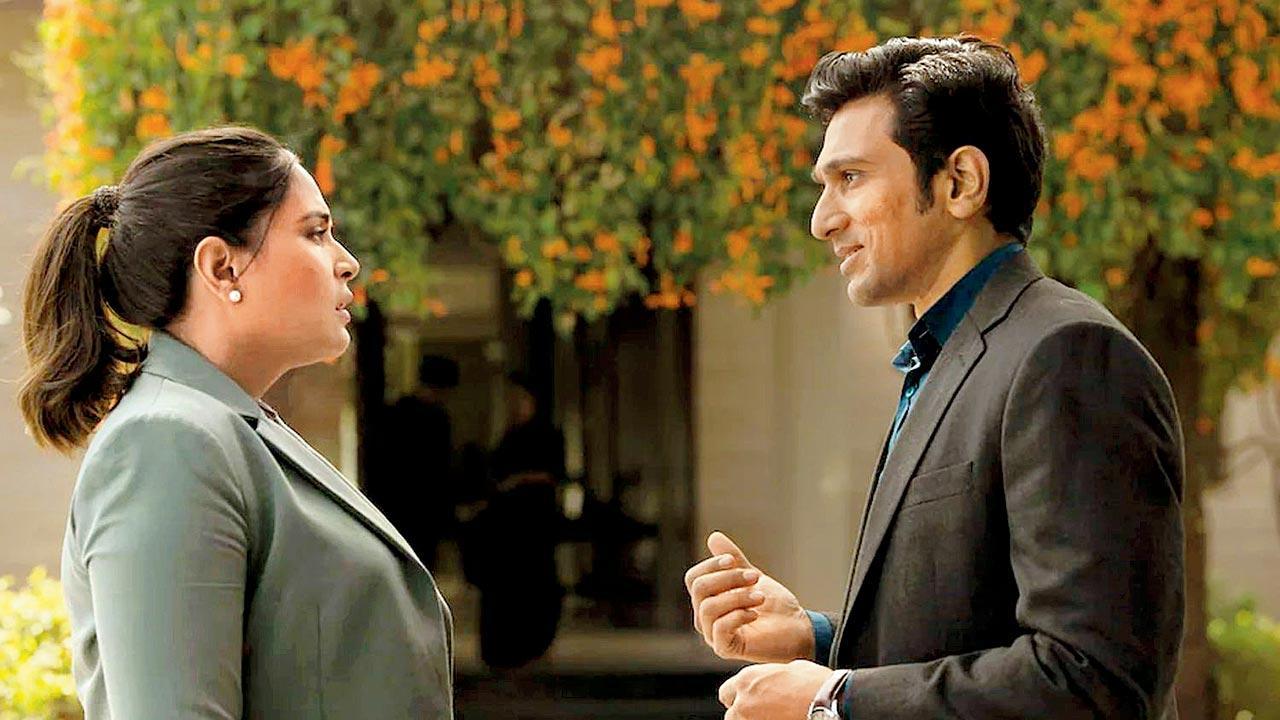
Sources say Tigmanshu has cancelled Afghanistan leg of The Great Indian Murder 2 shoot due to the political scenario; scouting for similar locales in India
Mohar Basu (MID-DAY; May 25, 2022)
Having left the first season of The Great Indian Murder on a cliffhanger, writer-director Tigmanshu Dhulia is gearing up for the second edition. A chunk of the upcoming instalment of the Pratik Gandhi and Richa Chadha-starrer was to be shot in Afghanistan, primarily in and around Kabul. However, owing to the current situation in the war-torn country, the makers have cancelled the plan. With the series expected to go on floors by July, the team is now working at a brisk pace to find alternative locations.
A source close to the production team reveals, “Filming in Afghanistan is out of the question because of the change in the country’s leadership. We are now looking at places with a similar landscape.” It is heard that the makers are considering Uzbekistan, and parts of Gujarat and Rajasthan for the stint.
The Disney+ Hotstar series is adapted from Vikas Swarup’s bestseller, Six Suspects, and traces the murder investigation of a politician’s son. While one of the suspects was shown dead at the end of the first season, the spotlight will now be on the remaining five characters — essayed by Ashutosh Rana, Raghubir Yadav, Paoli Dam, Sharib Hashmi and Shashank Arora.
I am unable to reach my friends in Afghanistan-Saumya Tandon
8:06 AM

The actress had shot for an international project in Kabul in 2008
Neha Maheshwri (BOMBAY TIMES; August 25, 2021)
People across the globe are still in a state of shock over the manner in which the Taliban swiftly took over Afghanistan. Many are fervently praying for the safety of their friends in the country. Saumya Tandon, who had visited Kabul in 2008, says that she is worried for her friends in Afghanistan. Saumya says, “It’s heartbreaking to see what’s happening in Afghanistan and how people are scrambling for their lives… the visuals are extremely disturbing. I shudder to think what the future has in store for them. I hope and pray that they are safe.”
The former Bhabi Ji Ghar Par Hai! actress feels a strong connection with the Afghans and remembers their warmth, hospitality and generosity. She recalls, “I had been to Afghanistan and stayed in Kabul for a month to shoot an international project, in which I played an Afghan girl, Khushi. The story was about a girl, who aspired to be a doctor and fulfils her dream despite facing resistance from people and society. It was a story of women empowerment and what’s happening right now is ironic.”
Saumya says, “I got an opportunity to explore Afghanistan and it was such a beautiful experience. The cast, comprising Afghan actors, helped me with the language. The locals are so warm and giving. When I visited shops and the minute the owners realised that I was from India, they would give me things for free, as gifts. The people there have a very strong sense of self-respect. They like to do things for others. What I experienced during my stay was so different from the perception I had of the country, which has been facing war for so many years. The locals always had nice things to say about India, because they felt that we have always supported them. I shot at the Indira Gandhi Hospital and they showed me a lot of places, which India helped them build.”
While she enjoyed her time shooting in Afghanistan, Saumya was also worried about her safety. She recounts, “There were two women in the unit, including my co-actor and a crew member. They told me how difficult it was for women and how much they had to fight for their freedom. My co-actors spoke about the constant terror they lived in. They were living in fear and uncertainty for many years and look what has happened to them again.”
The actress made several friends during her stay in Kabul and is now worried for their safety, as she hasn’t been able to connect with them. She says, “After the recent unrest, I tried contacting my Indian friends through whom I had gone there, but I didn’t get any reply. I hope they are safe. I just want to reach out and ask them if they are okay because the visuals that we are seeing are very disturbing. I feel helpless, but my prayers are with them and my heart goes out to them.”
In Afghanistan, I couldn’t step out alone at night to get medicines for my unwell mother-Warina Hussain
8:04 AM

Renuka Vyavahare (BOMBAY TIMES; August 23, 2021)
The events that unfolded in Afghanistan recently have left people around the world shaken up. Taliban’s takeover resulted in chaos, confusion and an alarming sense of unrest and fear among the people of Afghanistan and many others who are currently stranded there. Bollywood actress Warina Hussain, 25, moved from Afghanistan to Uzbekistan years ago due to the longstanding political turmoil in the country. After that, she migrated to India 10 years ago, and she made the country her home. Warina, who made her Bollywood debut in 2018 with Loveyatri, says that she can relate to those wanting to leave Kabul in the aftermath of the Taliban seizing power.
“My life was a struggle. I have no father. If you don’t have a man in your family, it’s more difficult. Since the conditions in Afghanistan were not good, we went to Uzbekistan,” the actress had revealed in a previous interview. The family stayed there for four years before moving to India as they could speak Hindi and English. Given the craze for Bollywood films in Afghanistan, Warina and her mother were familiar with Hindi over Uzbek or Russian. After modelling in Delhi for a while, she moved to Mumbai, where she finally made her foray into Bollywood.
The actress whose family has now migrated to the United States, said, “I was supposed to join them, but I chose to make Mumbai my home. I have worked hard to establish a career for myself here.”
Talking exclusively to Bombay Times from the UK, where she is currently shooting for a film, Warina voiced her thoughts on the raging crisis in Afghanistan. Excerpts from the conversation…
Afghanistan is facing a massive humanitarian crisis today. Visuals of people trying to cling onto flights to leave the country or crowding the airport in the hope to seek refuge in other countries are tragic. What were your first thoughts on seeing the events unfold on news channels?
I saw myself in each Afghan person clinging onto a flight for the sake of survival. My life, like theirs, is the result of migration from a war-torn country.
My family moved from country to country in search of a better life. Finally, we arrived in India, a liberal and loving country that welcomed us and we made it our home. Like anyone else fighting for survival, I began working at a young age and had no idea I would one day become a Bollywood actress. After years of struggle, a big launch by Salman Khan sir (who produced Loveyatri) and an opportunity by A R Rahman sir (99 Songs), made me eternally grateful. Having walked in the shoes of someone who has migrated, I can tell you that it is not an easy journey. Not every immigration ends up being a success story. That is why, for the past few days, all I have been thinking about is the survival of the Afghan people. Since the war in Afghanistan began, the number of Afghan refugees fleeing for their lives has increased dramatically, raising the question of how long will they be able to do so. If the country does not achieve the long-awaited peace it deserves, what I have suffered, what my mother has faced, and what others are facing now will become the tale for future generations, too.
The Taliban claimed in their press conference that the rights of women in Afghanistan will be respected ‘within the framework of Islamic law’. Do you trust these reassurances?
The cruel memories of the past still send shivers down our spine, and given the current uncertain situation, trust is a luxury the Afghan people cannot afford anymore.
You have predominantly lived in an Afghanistan that did not have Taliban rule. At that point, was life better for women in terms of safety and education?
Yes, I have lived in an Afghanistan where I enjoyed family picnics and the smell of independence. However, since it was still a country with newly gained independence from the Taliban, it had its dos and don’ts. For instance, a girl couldn’t go out alone at night. There were times when I couldn’t step out alone at night to get medicines for my unwell mother. It’s the product of many years of war, which has tainted people’s views. If we actually want to talk about a peaceful Afghanistan, we need to go back to the time of my grandmother and her forefathers, when Kabul was known for its fashion, art and culture, tourism, trade, and independence were all part of everyday life. Speaking of leadership, it’s high time the people of Afghanistan have the basic freedom of choosing their own leaders.
How do you think the current political situation in the country will impact women and their rights?
I am afraid that all these years of progress will vanish into thin air, and that after years of fighting for women’s rights, women will once again be treated as second-class citizens and deprived of basic rights.
Would you feel safe enough to visit your country under Taliban rule as a Bollywood actress?
Whether I’m an actor or not, I’ll never be comfortable visiting any country where women are restricted from simply being free humans.
A lot has been spoken about the implementation of Sharia law (religious law) in Afghanistan by Taliban. How does it affect women and children?
Khadija, Prophet Muhammad’s wife, was one of the first to accept Sharia. A religious law was created for the safety of women and also because of injustice, and today, injustice is still occurring under the name of religion. I’ve heard of girls being forced out of their homes against their will to marry men they despise. These men should be held accountable for the lives of innocent mothers and children killed in bomb blasts. One cannot deny basic human rights to people while asking them to follow Sharia law.
As an Afghan working in India, what are your expectations from the Indian government or other countries at the moment?
I am confident that India, as a friend of Afghanistan for decades, will do its bit. However, I would like to urge the United Nations to step in, because the concept of a peaceful country is preferable to simply relocating asylum seekers. One may flee, find a better life, but the identity crisis, multi-cultural problems, and deep-down homesickness will remain. One will always struggle to answer the question, ‘Aren’t we all one world?’
It was because of this war and turmoil that my family was forced to flee Afghanistan-Warina Hussain
8:11 AM

Sugandha Rawal (HINDUSTAN TIMES; August 22, 2021)
The visuals of people desperate to leave Afghanistan reminds actor Warina Hussain of her traumatic past, and revives memories of her family leaving the country in the middle of a turmoil.
“It’s eerily similar to 20 years ago. It was because of this war and turmoil that my family was forced to flee Afghanistan, now I see others losing their homes,” she says of the crisis after the Taliban took charge.
The actor left Afghanistan as a child, and has been in India for over a decade. But memories of what was once her homeland are still alive. “My memories will always be of family picnics, food, and a beautiful spring in Kabul, which I doubt will ever be the same again; the only air one will now breathe will be of suppression,” she says in dismay.
As a refugee, she can understand how difficult it is. “I was fortunate that India accepted me and became my home but I’m afraid that isn’t the case for everyone. Such a country’s conditions result in thousands of refugees and asylum seekers arriving in neighbouring countries, where immediate accommodation may be difficult,” says the actor, who made her Bollywood debut with Loveyatri in 2018.
Hussain appeals for other countries not to abandon Afghanistan. “And for the United Nations to intervene. It’s the wish and plea of a woman who doesn’t want her fellow Afghan women to be treated as second-class citizens,” she ends.
All the militancy aside, Afghanistan is a beautiful country with warm and hospitable people-Satyadev
8:09 AM

Filmmaker Jennifer Alphonse and actor Satyadev recount the experience of shooting for their film Habeeb in Afghanistan and tell us why the current situation is heartbreaking for them
Suhas Yellapantula (BOMBAY TIMES; August 21, 2021)
The chilling visuals coming in from Kabul and other parts of Afghanistan as Taliban took over the country has shocked the world. But for filmmaker Jennifer Alphonse and South actor Satyadev, the sense of grief feels personal. They had shot in Afghanistan in 2017 amid death threats for a Hindi film titled, Habeeb, with the help of local Afghani artistes and technicians. The makers of Habeeb released a lyrical video, giving the first glimpse of the film, but for Jennifer and co, there’s only one thing on their minds — the safety of their Afghan friends.
Speaking to us, Jennifer says, “It’s heartbreaking to see the situation in Afghanistan right now. We shot in Kabul, Jalalabad and Panjshir along with a crew of 20 Afghani artistes and technicians. I’ve remained in touch with them and many of them are still stuck there. In fact, I spoke to one of my friends from Afghanistan recently and I just felt helpless. To listen to their plight is terrible and we can do nothing, but pray for their safety.”
Jennifer and her crew shot for 30 days in Afghanistan. They are the second Indian film crew (after Khuda Gawah in 1992) to shoot in the region. “I’m probably the only Asian woman to have shot a film there. When I first told people that I’m going to Afghanistan to make a film, they thought I was crazy. It was a war zone and there was a risk to our safety. But I think the passion for cinema is what drove us to go ahead and shoot there. I felt if I have to die making a movie, so be it,” says Jennifer.
For Satyadev, the current situation in Afghanistan brings back memories — both good and bad — of the time he spent in the war-torn region. “Although people had warned us not to go there, I was adamant as an actor that we should take the risk and shoot in real locations in Afghanistan. The day after we landed, there was a bombing at the national assembly there and everything was on red alert. We received death threats, but we were determined to go ahead with the shoot. Having travelled so far, there was no question of turning back,” he says.
Admittedly, one day the cast and crew were handcuffed and held at gunpoint by the militants as well. “Only after we promised to never return to the place did they let us go. It was a spine-chilling, unforgettable experience.”
Jennifer chips in saying, “The Taliban consider cinema as haraam and we received threats from them on a daily basis. But it was our passion for cinema that kept us going. Thankfully, we had protection from Afghan police — there were eight to nine officers with us all the time. Sometimes, we’d hear gunfire while shooting. The Afghan officials would get irritated with us at times because they were at war with the Taliban and here we were, making a movie.”
The risks of shooting in a war-torn region notwithstanding, Satyadev says they had a great time interacting with the locals. “All the militancy aside, it’s a beautiful country with warm and hospitable people. They are very proud of their culture and introduced us to authentic Afghani cuisine, which was delicious. I’ll always cherish my trip to Afghanistan, it was an unforgettable adventure,” says the actor.
Jennifer adds, “In no other country have I seen people treat Indians the way Afghans do. As soon as we tell them that we are Hindustani, they greet us with a hug or a warm handshake. It breaks my heart to see them in anguish today.”
Satyadev hopes the people in Afghanistan can find peace soon. “The visuals from the Kabul airport particularly hit hard. It was the same place that we had landed at not so long ago. We may be the last Indian film crew to shoot there for a long time. But I genuinely hope things get resolved soon, so that people can go and explore this beautiful country,” the actor adds.

I remember leaving Kabul overnight as a child due to the escalating violence-Tisca Chopra
8:27 AM
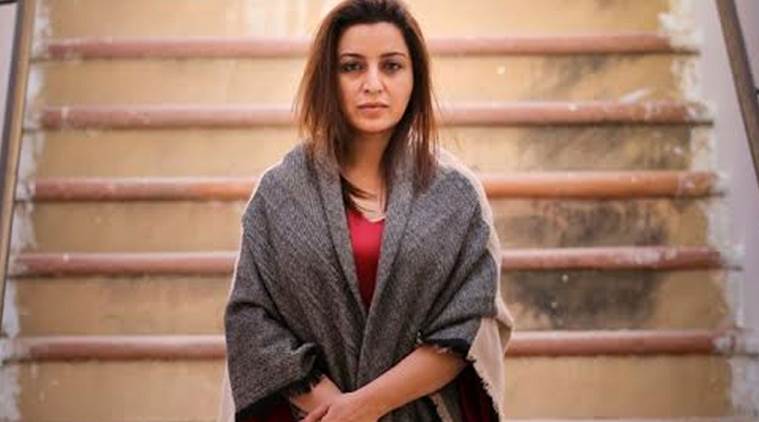
The actress, who lived in Kabul for ten years, says her “whole childhood is connected to that land” and that the pictures and videos of people attempting to flee the country have left her heartbroken
Divya Kaushik (BOMBAY TIMES; August 19, 2021)
For Tisca Chopra, who spent 10 years of her childhood in Kabul, the photos and videos of Afghanis attempting to flee the country as Taliban took over the capital city of Afghanistan, were “disturbing and heartbreaking”.
“I worry for the women and children of Afghanistan under the Taliban regime because the freedom to work, education... all that might no longer exist. So many women fought so hard for years for progress, for their basic rights, and all that might just disappear, which is heartbreaking. From what we all have been seeing on the Internet, and whatever I have been reading and watching about Afghanistan, everything is disturbing. My whole childhood is connected to that land. I can understand the sense of betrayal that the Afghanis might be feeling. What are they going to do? The images of people hanging to the wheels of the aircraft that was leaving, falling to their death, were heartbreaking. For them, death was better than living in that country. To see such images, to think about what those people must be going through is disturbing,” says Tisca.
Tisca, who recently shared a picture of her as a child in Kabul on social media, says that Afghanistan “is the land of utmost beauty and utmost turmoil.”. “It is very tragic that the beauty and splendour of something so beautiful has to be cursed by something like this. It’s a strange dichotomy that the land faces. It’s constantly been in turmoil over years. I have so many Afghan filmmaker friends, now settled in different parts of the world. I have been talking to them and they all are so heartbroken. It is going to be the worst for women and children. I just hope something could prevent what we all could see is now going to happen in Afghanistan,” she says.
Reminiscing about her growing up years in Kabul, Tisca says that even that was a time of war for the country. “I don’t think Afghanistan has never not been at war. In my childhood I have seen some very violent incidents, like a tank burning in the middle of the street, just two streets away from my house. We went to somebody’s house on Christmas and had to stay there for three days because curfew was declared in Kabul. These were just some of the things that we saw while growing up in Kabul. My dad was the principal of India International School and we were very good friends with the entire Indian community that was staying in Kabul at that time. It was a close-knit community and those friendships exist even now. I remember we had to leave Kabul overnight as it was getting very violent and the Indian embassy asked all the Indians to evacuate. Leaving overnight was very similar to what is happening now, but at least we had a chance to leave. I never had the chance to visit Afghanistan again and it looks like I am not going to get it for a long time now,” says Tisca.
Sanjay Dutt-starrer Torbaaz to get an October 2020 release
8:08 AM

In the making for almost three years, producer of Sanjay Dutt's Torbaaz to release the film in October
Uma Ramasubramanian (MID-DAY; March 14, 2020)
Over two-and-a-half years since the project went on floors, Sanjay Dutt's Torbaaz is finally gearing up for release. Producer Rahul Mittra says that the actioner, which revolves around child suicide bombers in Afghanistan, is eyeing an October 2020 release. "This is the worst time to even think about releasing one's film, as all movies are being pushed [due to the Coronavirus scare]. But I can assure you that Torbaaz will be a 2020 offering; we are planning to release the film in October."
Interestingly, while Dutt has been mum about Torbaaz, he took to social media yesterday to announce that his other offering, KGF Chapter 2, will hit the marquee on October 23.
Torbaaz, which also stars Nargis Fakhri, had rolled in Kyrgyzstan in December 2017, followed by another shooting stint in May 2018. After a spate of intermittent shoots, the Girish Malik-directed venture reached the finish line in February last year. Ask Malik why the post-production took almost a year, and he attributes it to the visual effects employed in the thriller. "The film is high on VFX; we have recreated the entire city of Kabul with the help of special effects. Such films take time." Mittra chimes in, "Since we had to [depict] Afghanistan, we did a recce for six months to get the right location [and zeroed in on Kyrgyzstan]. So, one can't say that the film is delayed because such processes take time."
People in India say that I have come from the land of bombs-Warina Hussain
8:13 AM

Rachana Dubey (BOMBAY TIMES; November 3, 2018)
She was a model in Delhi before she moved to Mumbai and then made a debut in LoveYatri. But, before she came to India, Warina Hussain used to call Kabul, Afghanistan home. Understandably, like most Afghans, Warina has a strong command over Hindi and it stems from the fact that Bollywood plays such an important role in Afghani culture. Talking about the influence of Hindi movies in her home country she says, “I haven’t been to Afghanistan in a while. When we were there, my mother was among the first few women who started driving. My naani (grandmom) would tell me stories about the good times, before everything turned bad. She often told me about Fridays when families rented out VCRs and watched movies at home. My naani would seek fashion inspiration from the films she saw. She would stitch clothes for my mother and aunts, imitating fashion from Bollywood movies. Even today, if you ask anyone there about bell bottoms, they won’t know what you’re talking about. But, if you said Amitabh Bachchan pants, any Afghani would give you exactly what you seek. That is the influence of Bollywood in my country. Everyone, including our king, Mohammad Zahir Shah, was very fashion conscious.”
She reveals that Afghanistan used to be a progressive state. She adds, “My naani wore skirts and travelled with my grandpa on a bike. They attended music concerts, too. But then everything changed under the political turmoil. At times, people in India say that I have come from the land of bombs. But, things have now begun to change now. Girls go to colleges and universities. Afghanistan’s current health minister is a woman. Girls faced a lot of atrocities in my country, but today, it’s different. Kabul is progressing. Our cinema has not developed yet, but the music industry is picking up.”
Subscribe to:
Posts (Atom)