Showing posts with label Kabir Khan interview. Show all posts
Showing posts with label Kabir Khan interview. Show all posts
Kabir Khan on stepping away from Ek Tha Tiger sequels: "Even James Bond is not made by the same director every time"
8:54 AM

Vinay MR Mishra (BOMBAY TIMES; September 13, 2025)
Thirteen years after its release, Kabir Khan’s Ek Tha Tiger (ETT) has earned an international honour recently – a place at the International Spy Museum in Washington DC, alongside legendary works like James Bond films and Mission: Impossible. For Kabir, the feat is “sweet and flattering”.
He shares, “I’ve always said that the success of a film is never about the money it makes at the box office. Of course, that is important, but what really makes a difference is for how long that film is spoken about and how long it captures people’s imagination. Thirteen years after the release of the film, if it is still being spoken about with such love and respect and being given this position, then that’s what true success is.”
‘Action doesn’t need any more promotion in India’
Kabir doesn’t believe that this achievement will lead to makers attempting more action films. “Action doesn’t need any more promotion in this country,” he says, adding, “In fact, I have a feeling that there are too many action films happening.”
‘Action films need to get back to raw action’
Kabir goes on to explain that Ek Tha Tiger succeeded because its action was rooted in drama and emotion rather than spectacle alone. “There was a very strong, dramatic reason for the action in the film. The action sequences need to go with the narrative. Then you’re really invested in the action because it becomes a part of the drama and storytelling. No one is going to be wowed by only seeing massive action scenes on screen now. Ultimately, emotions move you. Action films need to get back a little more to the sort of raw action which went along with the storytelling, as opposed to over-the-top action that we are seeing, which has no emotion running through it. We’re just doing it to show grand visuals with VFX and AI,” Kabir says.
‘If you see my filmography, you won’t notice a single sequel in it’
While Ek Tha Tiger went on to become a massive success, it also had two successors – Tiger Zinda Hai and Tiger 3. Ask him why he stepped away from the sequels, and he replies, “If you see my filmography, you won’t notice a single sequel in it. I believe sequels are what producers need to do because they create an IP, exploit that IP and the success of that IP. But for a director or a storyteller, there’s a fatigue that comes in with a story. Once I’ve completed that journey, something really compelling needs to pull me back to that. Otherwise, I feel I need to move on and get onto something new. If one were to follow the conventional wisdom of the industry, I would just continue making sequels of all my successful films. There would be like three Tigers and three Bajrangis and maybe another New York. However, that’s not the way that I have been attracted to stories as a director. At the end of the day, even James Bond is not made by the same director every time.”
The love Bajrangi Bhaijaan gets even today proves that humanity exists-Kabir Khan
11:02 AM
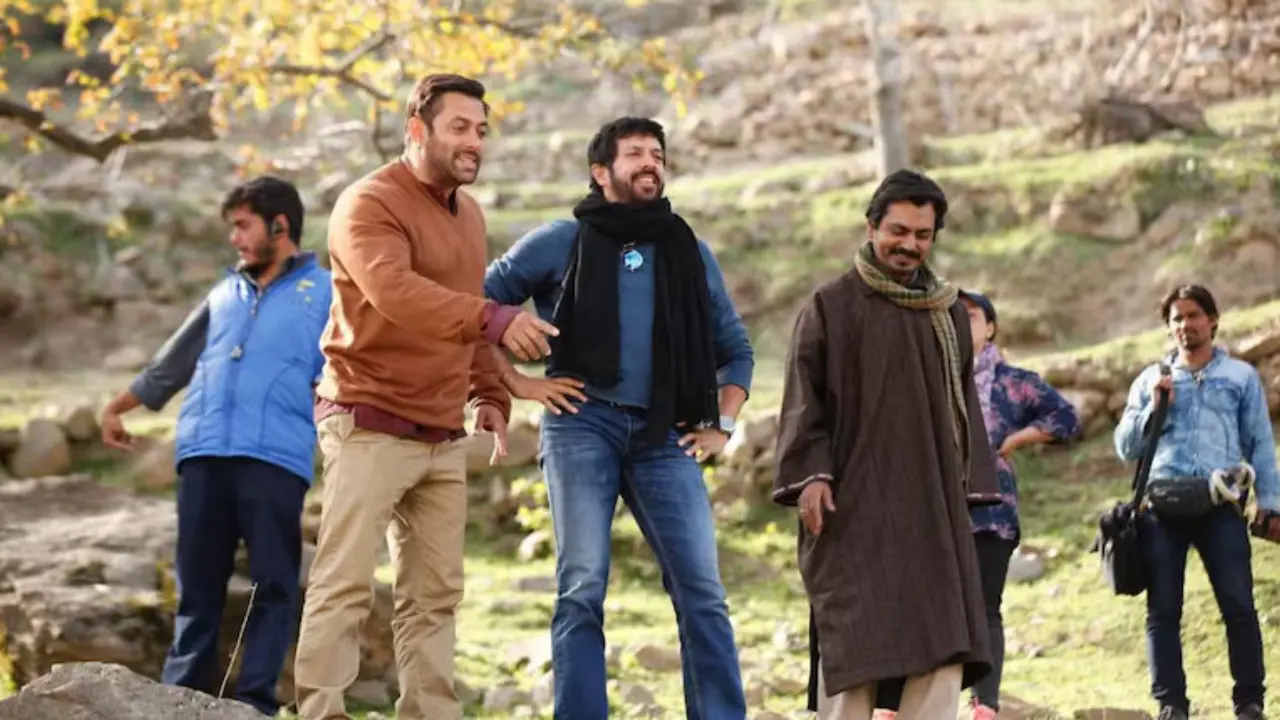
Natasha Coutinho (BOMBAY TIMES; July 19, 2025)
Kabir Khan’s Bajrangi Bhaijaan, which featured Salman Khan in one of his most endearing roles, recently clocked 10 years. It tells the story of a kind-hearted man who embarks on a journey to reunite a mute Pakistani girl with her family across the border. The film struck an emotional chord with audiences worldwide, with people often asking the director about a sequel to the film.
‘Discussions about Bajrangi Bhaijaan 2 keep happening’
Kabir is often asked about a possible sequel to the movie. He says, “At a time when people are objecting to anything and everything, the kind of love the film gets even today, proves that deep down humanity exists. We got the timing of the film right, which is why it resonated with people. Of course, Salman and I have discussed Bajrangi Bhaijaan 2, but we don’t want to make a sequel just for the sake of it; when it happens, it will be done well.”
‘2000 girls were auditioned for the role of Munni’
Recalling the casting process for Bajrangi Bhaijaan, Kabir tells us, “I knew if we didn’t find the right Munni, the film wouldn’t stand, so 2000 girls were auditioned, of which 10 were finalized. Shooting with children isn’t easy, so we had a 10-day workshop. She also had to have the stamina to shoot a six-month-long film in places like Kashmir and Rajasthan. That’s how we finalized Harshaali Malhotra, who met all requirements.”
‘I was apprehensive about approaching Kareena because of the length of her role’
Speaking of how Salman and Kareena Kapoor Khan came on board, he shares, “Salman and I had just delivered a big action film, Ek Tha Tiger, and conventional wisdom says one must repeat what is successful. But for me, Bajrangi was always Salman, and when I narrated the script, he felt strongly about the political angle and jumped on it. His love for children came across in the film, and it became his first production. I was apprehensive about approaching Kareena because the length of her role was less. Her character was the voice of reason, and I asked her to hear the entire script. By the end of the narration, she had tears in her eyes.”
‘Nawazuddin Siddiqui’s Chand Nawab was inspired by a Pakistani journalist’
Kabir says that Nawazuddin Siddiqui’s character Chand Nawab was directly inspired by Pakistani journalist Chand Nawab. The real Chand Nawab became famous after a video of him went viral in 2008, where he was seen struggling to deliver a news report at a crowded railway station in Karachi.
Kabir says, “I had worked with Nawaz in New York and couldn’t find an appropriate role for him in Ek Tha Tiger. So, when we were casting for Chand Nawab, I just showed him the viral video and he fell off his chair laughing, saying he would do the film.”
‘The police had to take Salman out of Chandni Chowk’
The film’s locations in Kashmir and Rajasthan are now famous as ‘Bajrangi Bhaijaan points’. The director recalls, “I love shooting in real locations. I tried shooting with Salman in Chandni Chowk, but a senior police officer told me that 20,000 people had gathered there. A decoy car with police had to take Salman out of Chandni Chowk. Reaching Munni’s village, which was in Aru, involved an hour’s trek for the cast and crew every day with all our camera equipment. Today, all those locations are known as Bajrangi Bhaijaan points. We would organize Kashmiri food feasts every 10-12 days and take days off so the team could travel and explore Kashmir. Even today, I regularly travel to Kashmir.”
‘Munni’s only dialogue in the film wasn’t clear’
Recalling some challenging moments Kabir adds, “We had to scout for a dargah to shoot ‘Bhar Do Jholi’ an important qawwali in the film. Getting Adnan Sami on board was Salman’s idea and in the end everything worked out well. Later, after we shot the climax with Harshaali and were working on the sound mixing, which had to be delivered the next morning, suddenly we realized the words ‘mama’ -Munni’s only dialogue in the film wasn’t clear. We called two security guards to test it and they couldn’t understand what Harshaali was saying. My daughter Sairah was around the same age, so I woke her up from her sleep, took her to the studio and got her to record Munnai crying out ‘mama’ that’s how the film got delivered in time."
My daughter would dance to Katrina Kaif’s songs, which we would record and send to her-Kabir Khan
9:55 AM

Natasha Coutinho (BOMBAY TIMES; July 11, 2025)
Few know that Kabir Khan, director of films like Kabul Express, Ek Tha Tiger, Bajrangi Bhaijaan and Chandu Champion, is also a skilled dancer. He has now found a dance partner in his daughter Sairah, who has been training in several dance forms since the age of three. We spoke to the filmmaker about the dancer in him, while Sairah shared her career plans.
I dabbled in dancing a lot in DU: Kabir Khan
Talking about his love for dancing, Kabir shares, “I dabbled in dance a lot when I was in college, we had a good choreography team at Delhi University, where I graduated from. It’s safe to say we were good because we won awards at the university and in Lady Shri Ram College where my wife Mini (Mathur) studied. I spent six months on the production of the musical West Side Story with choreographer Ashley Lobo. It also featured Parvin Dabas, Gauri Khan and others, so that was a phase when I was dancing a lot. Mini showed her dancing chops on Jhalak Dikhhla Jaa, and now Sairah dances better than both of us put together. So yes, dance does run in the family.”
‘I’d put up performances for my parents as a kid’
Talking about how she fell in love with dancing, Sairah says, “My parents enrolled me in a ballet class when I was three years old, and I started enjoying it. I was very dramatic as a child and would put on performances for them. I was dancing to Sheila Ki Jawani when I was two. I trained with Ashley Lobo, did professional certificate courses in different styles, and now I dance simply because I enjoy it.”
To this, Kabir adds, “We enrolled her in the class because she had already started dancing. She would dance to Katrina’s (Kaif) songs, which we would record and send to her.”
‘Documentary filmmakers are considered serious people, but they are the most interesting people I have met in my life’
Reminiscing about his journey from dancer to documentary filmmaker to finally directing large-scale commercial movies, Kabir shares, “Dancing is about team building, and was something I really enjoyed. I’m still in touch with many people from the West Side Story production. Gauri and I became friends during that project. Documentary filmmaking is what I studied – I did my master’s in filmmaking. At some point, I felt those films lacked a wide audience, and I felt frustrated. That’s when I wrote Kabul Express, based on my journey with a friend in Afghanistan. I landed a three-film contract with YRF, and the rest is history.”
Does the tag of a documentary filmmaker paint him as a serious person? “Documentary filmmakers are considered serious people, but they are the most interesting people I’ve met in my life,” says Kabir, adding, “They have varied experiences because of their travels. Just last year, I caught up with many documentary filmmakers at a festival in Kathmandu, and the interactions, as always, were quite interesting.”
I love being in front of the camera, but maybe not as an actor: Sairah
Sairah is often asked if she would take up after her parents. But she has other plans. “I’m hoping to study at New York University first,” she says, and continues, “Both my parents’ movie sets have always been a playground for my brother and me. My brother Vivaan has taken to filmmaking. While I love being in front of the camera with the spotlight on me, maybe not as an actor. But let’s see.”
Pics: Prathamesh Bandekar
The Americans were bullshitting when they were saying, so-called good Taliban, bad Taliban-Kabir Khan
11:12 AM

Noting that the news cycle has moved onto other pressing issues, director Kabir Khan says his short film Setara is an attempt to remind people of Afghan women’s plight
Mohar Basu (MID-DAY; March 7, 2025)
In a recent interview, director Chaitanya Tamhane told mid-day that stars and filmmakers should make one film for the kitchen and one for the soul. Filmmaker Kabir Khan has been living that motto from the start of his career. In his filmography, there are blockbusters like Ek Tha Tiger (2012) and Bajrangi Bhaijaan (2015), as well as hard-hitting offerings like Kabul Express (2006) and New York (2009).
“It’s not a conscious thing, I just go with what my heart tells me to do. I've never been, thankfully, a victim of this race of being commercially viable. I've never done that. I've been fortunate, despite that, I've had some really big commercial successes. Which is important in this industry, it keeps you relevant, it keeps you going, it allows you to do anything you want. I've often said that, for me, my success is not about how much money my films earn me, or the producers and stuff. For me, my success is, till the day I can select what I want to do, and nobody's telling me, no, don't do this, do this. The day I'm told to do something according to a brief, then I know that I'm okay servicing a script, and I'm just doing it, maybe for money, maybe to just keep myself busy, maybe to pay for the rent of the office. But up till now, I'm fortunate that I've just been able to pick up the films that have really struck a chord with me. Because it's very important, you have to have that passion for a project for a year and a half. If you pick it up for the wrong reasons, it won't last you more than a month. By the time you're on set, you'll say, 'Why am I doing this?',” says the director.
His search for such stories led him to My Melbourne. The anthology, which sees four directors – Imtiaz Ali, Rima Das, Onir and Khan – unite to tell short stories, is releasing in India on March 14. Khan’s short Setara tells the true story of a 15-year-old Afghan girl rebuilding her life in Melbourne after fleeing the Taliban, and finding a sense of belonging through cricket. A chance encounter brought this subject to the director.
“This is, of course, something completely out of the blue. Mitu called me and said, I'm trying to do this anthology, and will you come? And first it began as, will you just mentor one director. And then there are different subjects, there's the gender aspect, there's the disability aspect, there's the LGBTQ aspect, there's race relations. She asked me - will you do the race relations? I said, yeah. And we kept looking for stories, and actually, because all the stories, all four of them are picked up from real life. She kept sending me a few that some of the writers are developing, and nothing was really striking the chord. It was decided I'll only do this if I really get excited about the story. And then this thing started because my film, 83, was getting the award at the Melbourne Festival, so me and Kapil sir travelled there. At one of those receptions, I saw these four, five, girls in their hijabs coming in really excited. I said, why are these girls so excited to see Kapil sir? And then I realized they were members of the Afghan women's cricket team, which had to run away from there. And that's how it started. This is such a fascinating story that Melbourne has played host to this team after they ran away from Afghanistan. And it immediately struck a chord with me because I think it brought so many things that I feel for together. Afghanistan is a place I've always felt for. I love the underdog stories. We found this 16-year-old cricketer called Setara. See, it's not 83 when I'm taking a year to train the boys. It's a five-day short film. And I saw her bowling. I said, oh my God, it's unbelievable. She's so thin and tiny. And when she bowls on the field, it's magic. We workshopped her for a bit. She has such a beautiful face. Her face tells a story. I said, you don't need to act, you can be yourself. I'll tell you when I want you to do something. Otherwise, you just be yourself. She was fabulous. Better than a lot of trained actors I've worked with. So to the point, subtle, never getting overwhelmed by the cameras.”
As we talk about Afghanistan, we recollect Meryl Streep’s statement about cats having more freedom than women in Kabul. Having studied the country since his days as a documentary filmmaker, Khan rues the current situation.
“The Americans were bullshitting the world when they were saying, so-called good Taliban, bad Taliban. What the hell? There's no good cancer, bad cancer. Cancer is cancer. It's going to get to you, right? So when they were basically trying to pull this fast one on the world because they wanted to somehow not be held responsible for just overnight upping and leaving this country after 25 years of being there and leaving it to people who want to do this. So they made us believe that this is Taliban 2.0. Initially, the Taliban played along with them because I'm sure they were paid money. And, but, now you see, they're worse than the first version. What girls like Setara are going through, they’re so similar in the way these girls are having to abandon their... You know why it's sadder, see, Taliban - the first version came on the heels of 25 years of unbroken civil war. So, they were going through hell and then came a worse hell. This is worse because suddenly you had 20 to 25 years of relative peace. You allowed a generation to dream and then you shut them down again. There's a whole generation of girls who were born post the departure of the Taliban in 2001 and just when they were ready to spread their wings and fly, you said, okay, girls, we're going back to square one. Nothing for you. No jobs for you, no school for you, no university for you, no living life as a regular human being for you. It's worse and what is sad is we're slowly, day by day, forgetting it. There are many more important things coming on our news. Gaza takes prominence, Ukraine takes prominence, everything is going to take prominence. Who's talking about Afghanistan today? So, in a certain way, at least, these little films keep provoking a conversation, some level of thought. People are going to just forget about what's happening in the world. It's very easy for these mindsets to travel and these mindsets are everywhere. We shouldn't fool ourselves into believing that these mindsets don't exist. Any patriarchal society has this mindset. I am happy I made this film and I'm so happy to see this girl who is full of enthusiasm for the future that she's ready to sort of grasp with her own hands. You can come from the experience and the trauma that you went through and, in a way, the film talks about that. It's like the mother says, just put your head down and do what's necessary. Don't play cricket. You've escaped this thing. But she holds strong. Cricket was fine in Afghanistan when you were playing it. We haven't gone through this entire experience so that you can come here and waste your time playing cricket. Just study, make something of your life, get a job. And this girl says, why? This is me. I will do that. In Afghanistan, you never thought that the two are mutually exclusive. So, why are you thinking one will stop me from the other and she refuses to bury her dream. It's a very uplifting story where she defies all odds including her own mother and goes and pursues her dream. I hope the film made her become more confident. Otherwise, they were always on a bit of a back foot. They were always traumatized by that experience. Cricket really, in a certain sense, made her find her place.”
Pawan Putra Bhaijaan is what Salman Khan is calling it-Kabir Khan
8:29 AM

After Salman confirms Bajrangi Bhaijaan 2 is in the works, director Kabir Khan says team hoping to arrive at a promising story
Uma Ramasubramanian (MID-DAY; January 10, 2022)
At such a time in cinema when film announcements are treated with utmost secrecy, Salman Khan took fans by surprise by confirming that a sequel to his 2015 hit, Bajrangi Bhaijaan was in the works.
“Salman doesn’t follow [protocols] of formal announcements,” laughs director Kabir Khan, adding, “he talks from his heart”. While he admits that writer K V Vijayendra Prasad, who wrote the original, is penning the second script, Kabir says they will only go ahead if a winning story arrives their way.
“Pawan Putra Bhaijaan is what Salman is calling it. It is definitely being written, He mentioned that it is happening because he is excited. I have not read the script, but Vijendra sir will [always] write something exciting. The idea of [creating] a sequel never excites me. I will never make a sequel to my film only because [the original] was successful. If [I find] a great story, I will be happy to make one.”
The opportunity to collaborate with Salman is motivation for Kabir to consider the film. “We had a lovely association. Had it not been for that collaboration with Salman, my career and position in this industry would not be what it is. But, everything does boil down to the script. We’ll see what happens.”
If further restrictions are imposed, we will release '83 on the web, soon-Kabir Khan
8:07 AM

'83 director Kabir Khan says discussions for a web release may gather steam if cases continue to rise
Uma Ramasubramanian (MID-DAY; January 3, 2022)
Despite a two-year long wait, navigating umpteen proposals from OTT giants, and fighting against all odds to have his film premiere in cinema halls, Kabir Khan is encountering one among the most challenging phases of his career. Inarguably, there couldn’t have been a more inopportune time for the release of the Ranveer Singh-starrer '83, which, despite positive reviews, hasn’t been able to attract enough eyeballs due to the Coronavirus pandemic.
With a spike in cases leading to the shut down of cinema halls in Delhi again, the film’s box-office collections are likely to take another hit. Acknowledging that the developments are “disappointing”, Khan says, “This film was ready with us 18 months ago. We wanted people to see it on the big screen, because that is how it was designed. But, such are the times that we live in. We tried hard to acquire a safe spot for the film, but the day of its release, there was a spike in cases. By day four, Delhi theatres had shut down.”
Having noticed his displeasure, Khan’s muse Kapil Dev enabled him to find solace. “He said, ‘When we won the World Cup in 1983, we didn’t get money. We got respect. You made this film [to get] respect, and you are getting that. Concentrate on that.’ Only he could have explained this with such positivity.”
The big budget offering evidently has many takers from the web platform, and Khan’s team is in the process of revisiting their decision. “We don’t know if we will have to shut down tomorrow, or will be afforded another five to six days. If further restrictions are imposed, we will release the film on the web, soon. But, I am keen [that] people take precaution and go to the theatres to watch it.”
Trade sources have highlighted that while 83, and Hollywood films like Spider-Man: No Way Home released around the same time, the latter, unlike the former, enjoyed a successful BO run. But Khan won’t “dwell on the negatives”. “We have never got the kind of appreciation that we are getting for this film. A section of the trade pretends like there is no pandemic. These are minor distractions.”
I had access to Deepika Padukone & could ask her to play the role, but I feared I may end up over casting-Kabir Khan
8:12 AM
Though aware that it was a brief part, 83 director Kabir Khan on how he trusted only Deepika to bring Romi Bhatia’s “strong energy” on screen
Uma Ramasubramanian (MID-DAY; December 26, 2021)
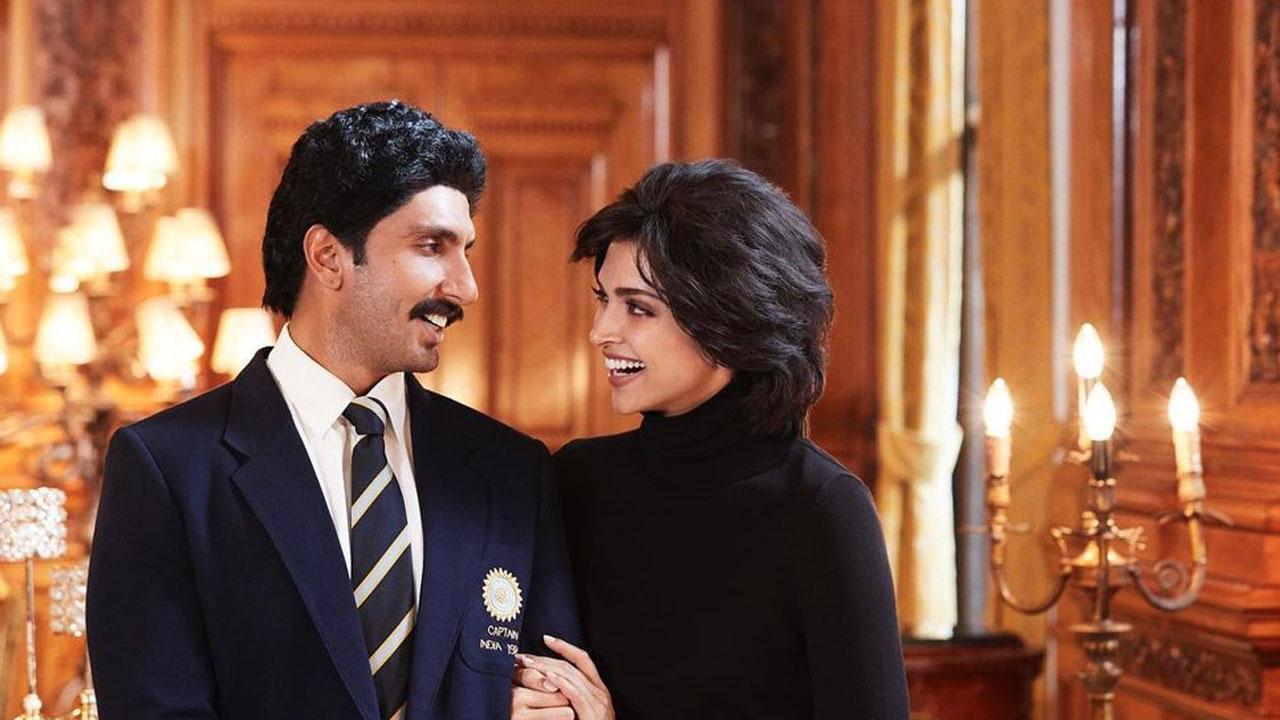
Last week’s release, 83 has Ranveer Singh at the front and centre offering a retelling of India’s victory at the 1983 Cricket World Cup. The actor, who portrays then-captain Kapil Dev, is aided by a strong ensemble cast that makes up the on-screen Indian cricket squad. While the spotlight is naturally on them, Deepika Padukone does justice as Dev’s wife, Romi Bhatia. Casting Padukone in such a brief role might be an unusual decision, but director Kabir Khan says she was the only choice to essay the part.
“When I was writing the screenplay, I realised Kapil is incomplete without Romi. There is a strong energy behind him in the form of Romi. I had access to Deepika and could ask her to play the role, but [the fear was that] I may end up over-casting. When you cast a superstar like Deepika and the screen time [offered] is not much, you can go wrong,” admits the filmmaker.
But the more he studied Romi’s character, the more he saw Padukone in it. “Deepika has such great energy on screen. So, I wanted her to establish that energy in the film. I told her it was not a long role, but a significant one. She was so moved by the story that she said, ‘I want to be part of this.’” Padukone’s belief in the material also led her to come on board as one of the producers.
The reason for Padukone’s affinity to the character might go well beyond the script. “It resonated with her because she is also the daughter of a world champion [Prakash Padukone]. She has seen her mother go through similar struggles when her father was training.”
The sports drama has opened to rave reviews. Asked what it takes to make a story engaging when the world knows the plot beforehand, Khan says, “When you enter the theatres, you know [the gist]. But when the lights go off and the images start coming on the screen, you will get immersed in that world. You will follow their struggles and triumphs. Sports stories are popular because ultimately, they talk about the triumph of the human spirit.”
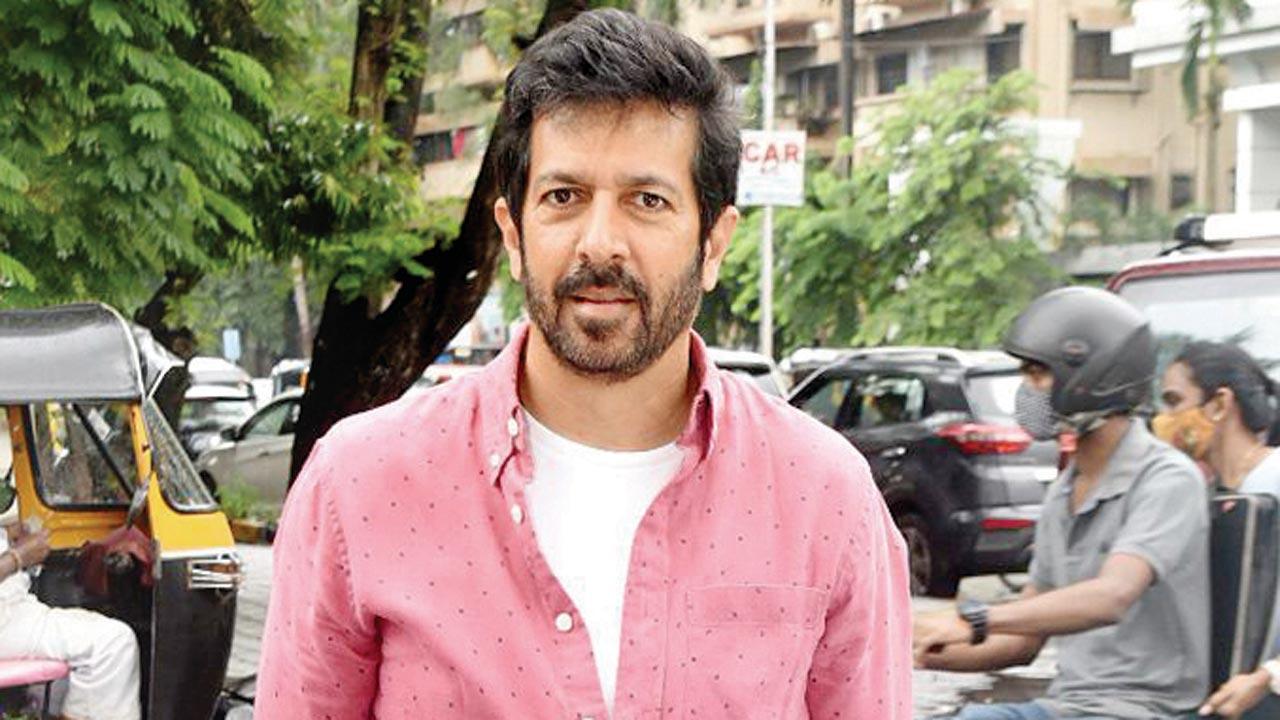
'83 is the classic story to be able to distinguish jingoism from true patriotism-Kabir Khan
8:13 AM
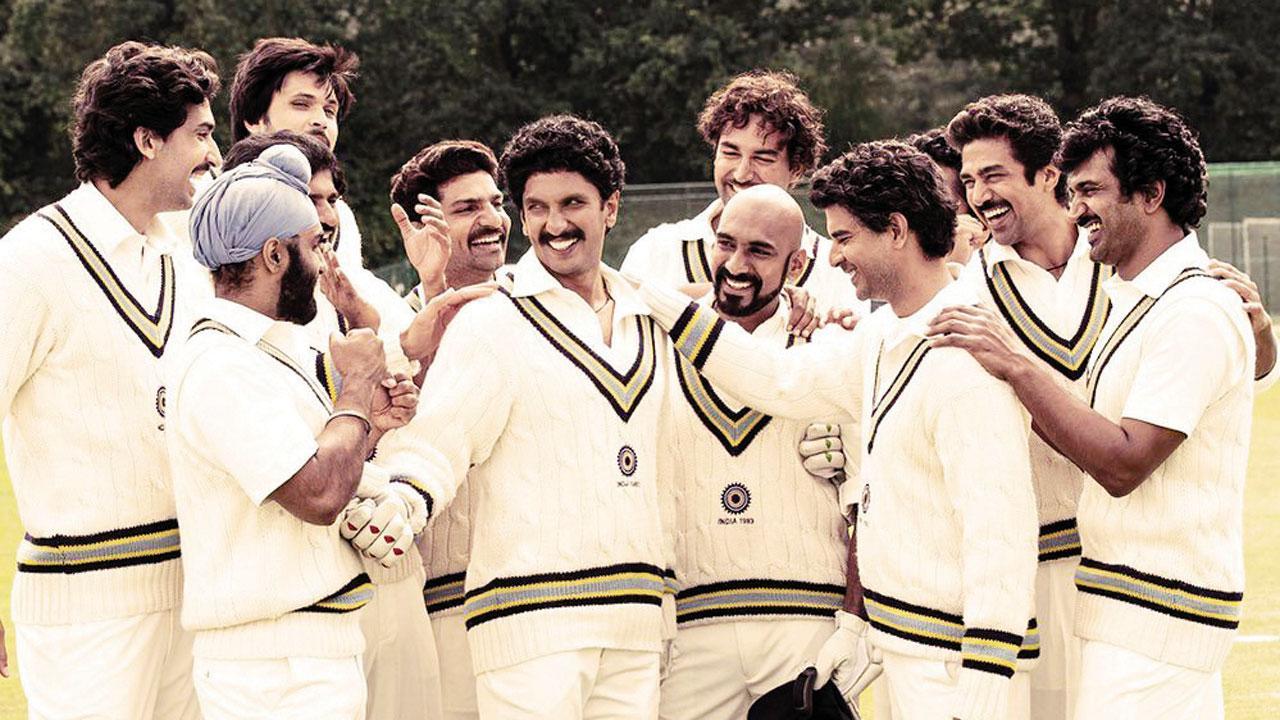
Asserting that his sensibilities wouldn’t allow him to adopt a jingoistic tone, 83 director Kabir says Ranveer-starrer tells off-the-pitch story of India’s World Cup victory
Uma Ramasubramanian (MID-DAY; December 21, 2021)
Kabir Khan could have well pursued an OTT release for '83. But that wouldn’t come close to how he had envisioned the ambitious film playing out. After all, the filmmaker wants “theatres to turn into stadiums” when Team India comes on screen. So, after a “frustrating” wait of almost 20 months, Khan is ready to revisit the 1983 Cricket World Cup on the big screen with the Ranveer Singh-starrer.
“The real story lies off the pitch. Everybody knows what happened on the pitch. A sports story shouldn’t be about sports; it should be about the triumph of human beings. The challenge for the filmmaker is how to make the [World Cup] journey exciting. How can you [make the audience] root for them, or feel nervous when they are in a tight spot? I want people to discover what we went through to pick up that World Cup,” says the director.
The victory at the Prudential Cup 1983 remains one of the biggest milestones in Indian sports history. When offering a retelling of the iconic feat, one may tend to adopt a jingoistic tone. But Khan assures that his sensibilities wouldn’t allow him that. “Ideologies are in-built. I would never go jingoistic. '83 is the classic story to be able to distinguish jingoism from true patriotism. I believe patriotism is a celebration of a country where you don’t need an enemy; jingoism needs a counterpoint. In '83, there are opponents, but they are not enemies. Our boys played only for the country. To see how they made every Indian proud is what I call true patriotism.”
Building the on-screen Team India was not an easy process. The director, however, says that Singh was his first choice to portray then-captain Kapil Dev. “Not in a million years would Ranveer and Kapil Dev look alike. But Ranveer is a chameleon. He changes his voice, body language and expressions. That’s what he has done [to become] Kapil Dev. One of the first things I told Ranveer was, ‘This is not a look-alike contest. You need to adopt his personality.’ Today people are going crazy, saying he looks like Kapil Dev.”
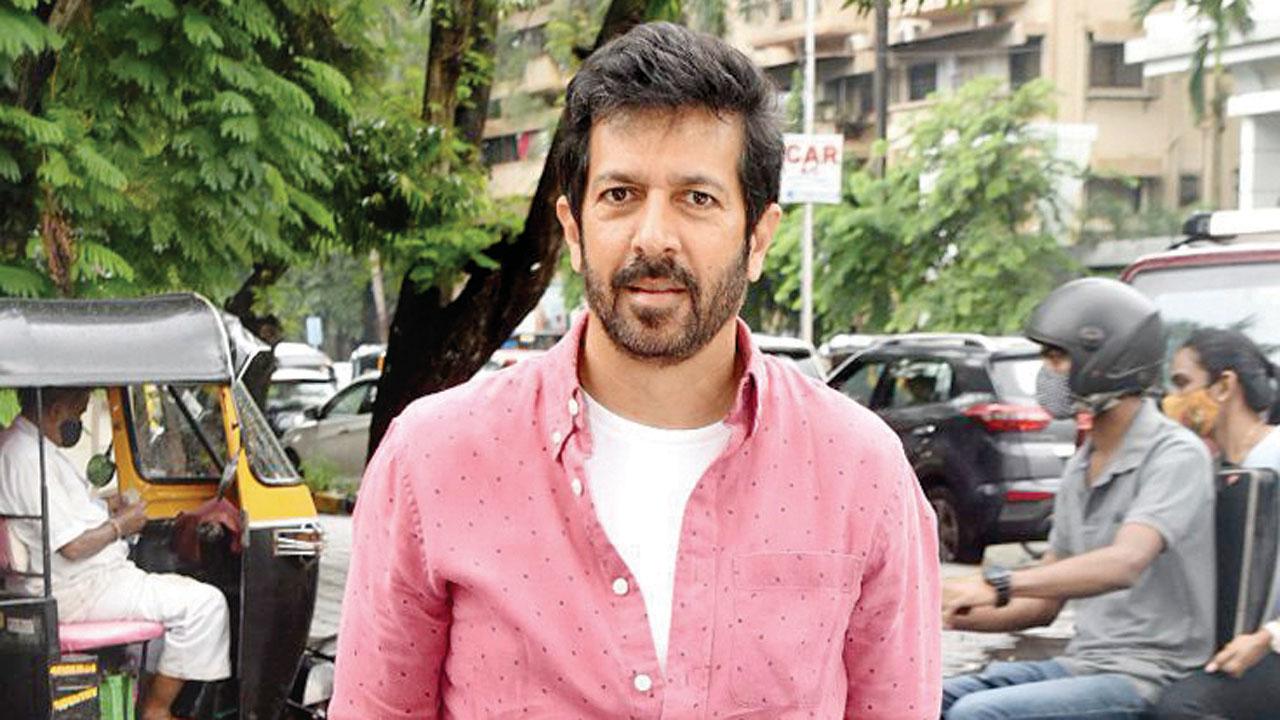
The Taliban won’t allow Afghanistan film industry to survive-Kabir Khan
8:14 AM

Sugandha Rawal (HINDUSTAN TIMES; August 20, 2021)
Filmmaker Kabir Khan is disturbed and concerned about the ongoing Afghanistan crisis with Taliban gaining power, and he fears it will first cut the entertainment cord of the country. “It is bizarre that after 20 years Taliban can come back. It makes me remember one little incident from my documentary, where we were interviewing some of their members. One senior Taliban member just looked straight into my camera, said, ‘You think we are gone, we will be back’,” he says.
The 52-year-old, who documented his own experiences in his directorial debut, Kabul Express (2006), is worried about the safety of the people. “One of my friends, actor Bashir has been forced to go underground,” he reveals.
The director feels artistes are anyway soft targets. “In the first avatar of Taliban in 1996 -2001, they did not even allow photography. I have serious doubts whether they will let the film industry, which is pretty dynamic now, survive. We know their opinion on cinema and music. The Taliban ideology will not allow them to continue.”
But is he planning a follow up to his documentary? “It is early days. I want to see how it all pans out. But there could be a possibility of doing some work,” he adds.
Rohit Shetty & I will only come out with our movies when the comfort is palpable-Kabir Khan
8:27 AM

Radhika Bhirani (HINDUSTAN TIMES; May 29, 2020)
It’s not the time for blame game, believes Kabir Khan as multiplex chains have openly expressed dismay about films being released directly on OTT platforms as a result of the pandemic. But the filmmaker, whose big-ticket sports drama '83 was waiting in the wings to release just weeks later, when the Coronavirus lockdown was announced, says that he is ready to wait — not just for theatres to open, but for a time when a sense of comfort prevails.
Speaking for his own film and even Rohit Shetty’s Sooryavanshi, two high-profile titles which were going to be released just weeks apart from each other, Khan tells us, “We will be ready (to release when the lockdown opens), but having said that, we will only come out with our movies when the comfort is palpable, and when we feel that ‘Okay, the fear has gone away, and people might feel comfortable to put on masks and gloves, to watch a film. Both, Rohit and I, would want the audience to enjoy our films on the big screen. It’s not like the lockdown will open and we will throw our films to test the waters.”
While he understands that theatres and multiplex owners have their reasons to feel disappointed, he also points out at the producers’ predicament. “Everybody has invested a certain amount of money in their films and they may be seeing that in the near future, they’re not going to be able to recover the costs because there’s no clarity about when theatres will open,” explains the 49-year-old filmmaker. In this scenario, he says, it’s not wise for producers to lose on “both counts” - theatrical revenue and the chance to secure a bigger price from an OTT platform.
In Srikkanth’s words, ‘We will play the World Cup on the way to a holiday in the US’-Kabir Khan
8:41 AM

Kabir Khan, whose sports-drama chronicles India’s 1983 World Cup win, says players hadn’t expected to go very far in the tournament
Himesh Mankad (MUMBAI MIRROR; May 9, 2020)
 The Kabir Khan-directed ’83, featuring Ranveer Singh as former Indian cricket captain Kapil Dev, was all set for an April 10 unveiling. However, theatres across the country had to down shutters due to the lockdown brought on by Coronavirus. The sport-drama chronicles Indian cricket team’s historic World Cup win. “It’s the greatest underdog story ever because before 1983, India had won just one match in World Cup history, and that too against East Africa. So, to go on and defeat West Indies, a team which had never lost a World Cup match till then was a great achievement,” points out the filmmaker, quick to add that it is also an amazing story of the human will’s triumph. “You can replace cricket with kabaddi and it would still hold weight.”
Kabir reveals that Krishnamachari Srikkanth had tied the knot in March 1983, about three months before the World Cup. As soon as he learnt that the team had been selected for the tournament, he planned a trip to the US. “Srikkanth, along with six other players, was all set to fly out as soon as the group stage ended, confident that India would be knocked out of the contention soon. All seven had booked their tickets from Mumbai to New York via London. In Srikkanth’s words, ‘We will play the World Cup on the way to a holiday in the US.’ Nobody, including the team, believed that we had a chance of making it to the semis, let alone the finals and lift the trophy,” Kabir recounts. However, once their winning streak started, the players began to cancel their tickets, one by one. Kapil Dev gave them hope with his conviction that they could be world champions, with tables turning after each win.
In the finals at Lord’s, after Sunil Gavaskar was out for two, Srikkanth, who had opened with him, stitched a good partnership with Mohinder Amarnath, taking India past the 50-run mark before losing his wicket to Malcolm Marshall for an aggressive 38 (off 57 balls, an impressive feat at the time), that included seven boundaries and one memorable on-the-knees square drive off Andy Roberts. As India was approaching the 100-run mark, Amarnath lost his wicket to a beauty from Holding for 26 runs, but went on to orchestrate India’s win with an incredible spell of three wickets for 12 runs in seven overs. After being bowled out for a paltry 183 in 54.4 overs, India skittled out Clive Lloyd’s team for 140 in 52 overs in their first World Cup final.
For Kabir, it was difficult to incorporate all these behind-the-scenes stories into the screenplay. “I had 100 fantastic stories and I could pick only 25 from the mountain of material I had with me. That’s the reason it took me close to a year-and-a-half to finalise the script,” he explains, saying the most difficult process was to limit the number of stories he could tell. “The film is not just from the players’ point of view, but also that of the commentators and the spectators. There are several layers.”
With the lockdown continuing even after 45 days and the number of cases mounting, there is still a lot of uncertainty around the film’s theatrical release. While there is talk of a direct-to-digital release with a global streaming major reportedly offering the makers an unheard-of sum, Shibasish Sarkar, who is producing ’83 with Sajid Nadiadwala, Vishnu Induri, Madhu Mantena and Deepika Padukone, had confirmed to Mirror (April 14) that ’83 will be among the first films to arrive once normalcy returns and cinema halls open.

Within 48 hours, Shah Rukh Khan was there recording for us-Kabir Khan
8:12 AM

The filmmaker says Shah Rukh Khan was ‘extremely gracious’ and rendered his voice as a narrator for his new web series within 48 hours
Kavita Awaasthi (HINDUSTAN TIMES; January 28, 2020)
 Kabir Khan recently released his latest directorial, The Forgotten Army — Azaadi Ke Liye, and many viewers were surprised to hear the voice of Shah Rukh Khan as the narrator in the web show. “As this is a true story, we have a bit of real footage in the beginning of each episode and Shah Rukh has very graciously voiced the introductions to all the episodes. I have known Shah Rukh since my college days in Jamia Millia Islamia (Delhi), as he was my senior, and we also participated in a stage show, Westside Story, together. I also studied from his notes he gave me during college and for people who don’t know, he was a brilliant student,” shares Kabir.
The series starring Sunny Kaushal and Sharvari is based on true events tracing the story of the brave soldiers from the Indian National Army who marched towards the capital, with the war cry ‘Challo Dilli’, to win back their country from the British. Before making the web show, the filmmaker had made a documentary in 1999, called The Forgotten Army, and since then, he tried to make a film on this subject multiple times, and he also spoke to Shah Rukh about it.
“I wanted to do this film with Shah Rukh and we spoke about it many times but we never took it beyond a point. I reached out to him with no expectations. You can’t just ask a superstar to do something in a project. So, when I was making the web show, something in me urged me to reach out to him and he was extremely gracious. Within 48 hours, he was there recording for us. And that was incredible as with Shah Rukh, discussing a film takes a year but with this, he did it within two days,” says Kabir, revealing that the actor refused to be compensated for the same.
Kabir admits that while this was the “easiest part” of shooting the show, the tough part was actually shooting the series on location which included shooting in jungles, rivers, war torn land, and doing action scenes there. “I always react to locations and feel alive there. Put me in a studio and my creative juices dry up. I go brain dead. This is a story that needed to be told using in the real locations, including the tropical jungles of South East Asia, the banks of the river Kwai, Thailand, and borders of Burma to recreate the battle between Burma and India. The locations were tough and every day, we would drive for two hours followed by a trek for two more,” says the filmmaker.
It’s a conscious decision to have a larger than life political backdrop for my films-Kabir Khan
7:52 AM

Kavita Awaasthi (HINDUSTAN TIMES; January 13, 2020)
When filmmaker Kabir Khan made a documentary in 1999, called The Forgotten Army, little did he know that his endeavour to make it for television would take 20 years. The documentary got him a lot of attention and became his “calling card”, which led to his debut directorial, Kabul Express (2006). But the thought of making his “dream project” never left him.
“I was naïve when I wrote a film script and didn’t realise that no one would be willing to give so much money to a documentary filmmaker in Mumbai. After every film, I would ask Aditya Chopra (producer) that can we make this into a film? He would tell me to wait and I kept making other films. But then, I met the heads of this OTT and while ideating, I brought up my story and felt it would lend itself to an original limited series and things materialised,” says Kabir, sharing that he can’t get enough of the untold chapter from this significant Indian history. The upcoming series helmed by Kabir, The Forgotten Army - Azaadi Ke Liye, is based on true events tracing the story of the brave soldiers from the Indian National Army (INA) who marched towards the capital, with the war cry ‘Challo Dilli’, to win back their country from the British.
Kabir loves that the show ultimately happened on a digital platform as it “doesn’t need to be over simplified for a universal appeal” and how he “didn’t have to curtail the logistics” of the shoot. Making a web show also means no pressure to deliver numbers at the box office. Ask him about the same, and he says, “Probably yes. But I don’t take box office numbers seriously because if you do that, then you drive yourself crazy. No one understands box office. It is liberating to not be judged on the opening day figures.”
Most of Kabir’s films — New York (2009), Ek Tha Tiger (2012), Bajrangi Bhaijaan (2015), Tubelight (2017) — have elements of terrorism or war and he admits that he likes it that way. He adds, “It is a conscious decision to have a larger than life political backdrop to my films with a human story at the fore. As an audience, I would always struggle while watching mainstream cinema as often it has no context. I can’t connect to love stories set in la la land. Therefore, my favourite filmmaker is Mani Ratnam who always has context in his films. Whether it is war or terrorism, the attempt is to bring a strong political and social context to my films. And the beauty of history is that it is always relevant.”
You didn't have to prove you were Indian to be in the INA-Kabir Khan
8:57 AM

Kabir Khan's upcoming web series tells the story of the foot soldiers and captains of Subhash Chandra's Bose's INA, a script he has nurtured over 20 years. He thinks there couldn't be a better time to release it
Aastha Atray Banan (MID-DAY; January 12, 2020)
It was 1999, and director Kabir Khan was 25. It was an exciting time, he says, as he readied for the journey of a lifetime. He was setting off on a road trip from Singapore, through Malaysia and Burma, back to India. What made it better was that his co-travellers included, Captain Lakshmi Sahgal and Gurbaksh Singh Dhillon, both aged 86 and former veterans of Subhas Chandra Bose's Indian National Army (INA). Formed in Singapore in 1942, the INA, led by Bose, aimed to march to Delhi and oust the British. Khan admits his obsession with what was locally referred to as the Azad Hind Fauj. "I was just a few years out of film school then and I got the opportunity to travel with them for my documentary, The Forgotten Army. This was the first time since World War II, that they were retracing the route the Fauj had taken. It was also the first time anyone from the INA was going back to Burma. It was special for them. As for me, I was being told the story by those who were part of history," Khan says on the eve of the launch of his Amazon Original show. The five-part series chronicles the story of Lieutenant Sodhi and his army of men and women fighting for Indian independence.
His interest in the Fauj ensured he didn't forget that he had long wanted to turn the documentary into a feature. But he knew, it was an ambitious project. It took him 20 years to recreate it in a fictionalised format. "The story never left me. The reason I don't make sequels is that once I have made a movie, the story is done. With this one, I felt, it needed a larger canvas. It was a promise I had made to Captain Sahgal and Captain Dhillon. When I made the transition to features, this was the first script I wrote. It kept growing inside me, and the research was internalised in the form of this goldmine of information that I had heard from them," says the two-time National Award winner.
Every day of those three months he spent with the two veterans, now deceased, is etched in his memory, even as they were being watched by the Burmese administration and intelligence. Almost every scene in The Forgotten Army is based on true events, as narrated to Khan. He recalls a time when Dhillon and Sahgal insisted on locating a cave in the jungles of Burma, where they had taken refuge. This was 1944. It was at a place called Mount Popa, and it was their last station. "Captain Sahgal would joke that her husband, Prem Singh Sahgal, who was instrumental in the army, would have named his child Popa [if he had his way]. Their home in Lucknow is named Popa."
They wanted to find the cave that they had operated from. By then they had been reduced to a guerrilla outfit. The three looked for four days, and on the fifth, they met with success. "We went in. Captain Sahgal had told me that her husband had placed a Buddha idol in the middle [of the cave]. And sure enough, there it was. I get goosebumps when I think about it even now."
The story, he says, is about the foot soldiers. Khan, a student of Jamia Millia Islamia and a history buff reflects on India's current climate when he says, "It's important that we watch a story of true patriots at this time. One of the main characters in the story says, 'to be able to fight for the INA, nobody is going to ask you if you are Indian enough, or ask for documentation. You just need to know you are Indian, and that's enough'."

Subhash Chandra Bose reviewing soldiers of the Indian National Army in 1944. Pic/ Getty Images
Image: Kabir Khan brings Singapore to Film City for The Forgotten Army
8:21 AM

Kabir Khan chronicles how he recreated Singapore's City Hall in Mumbai for The Forgotten Army
Sonia Lulla (MID-DAY; January 10, 2020)
 Kabir Khan's The Forgotten Army will trace the making of the Netaji Subhas Chandra Bose-led Indian National Army, the Indian military wing formed by Indian prisoners of war who were captured after the fall of Singapore. Since a large portion of the story plays out in Singapore of the 1940s, the director recreated parts of the island city-state in Mumbai.
"While we shot the scenes of current-day Singapore in the country itself, the grandeur of old Singapore had to be recreated in Mumbai. [We did so] with the help of archival footage and cutting-edge technology," says the director proudly, adding that his team scoured through extensive archival footage available as part of pre-production. "In fact, we have used some of that actual footage in the show."
A story about Bose's valiant army would be incomplete without a mention of the leader's iconic speech, Tum mujhe khoon do. Singapore's City Hall, which bore witness to the landmark speech, was replicated in Mumbai's Film City. "It was important for me to recreate the iconic places of Singapore to present an authentic account of the incidents that transpired. [We've shot] hair-raising moments, such as the Japanese attacking the British Army on bicycles, [and] 30,000 soldiers marching from Singapore City Hall shouting 'Jai Hind' while raising their rifles. We also shot at the INA memorial in Singapore. Most sets were built with the help of blueprints, with VFX used to [enhance them further]. We had around 900 people on set working round the clock."
There were snipers sitting on top of mountains in minus 15 degrees to keep us safe-Kabir Khan
7:00 AM

Roshmila Bhattacharya (MUMBAI MIRROR; December 20, 2019)
 On December 15, 2006, Kabir Khan rode into Hindi films on the Kabul Express. Thirteen years later, he admits he could make an entire film on the making of his debut directorial. In fact, a lot of what he went through himself, found its way into the script.
Before the Taliban took control, Kabir and his executive producer on the film, Rajan Kapoor, had gone to Afghanistan to make a documentary for the Red Cross on the effect of war on children there. That project remained incomplete, but stayed on their mind, and when they saw the Taliban regime crumbling, the duo decided to return to the war-ravaged country and complete it. “But while other journalists and filmmakers were entering via Peshawar, we knew that being Indians we would never get a visa for Pakistan, so, we flew to Uzbekistan, then, drove down to Tajikistan and tried to cross the border into Afghanistan. But the airports had been bombed out, snow storms had caused an avalanche, so, roads were blocked while the rivers were flooded. Even the helicopter we were to take, crashed on the eve of our departure,” Kabir reminisces.
They were stuck there for two weeks, and, on Rajan’s urging, returned to the air base one last time where they learnt that two Russian helicopters were on their way to Kabul with medical supplies. For $2000, one of the pilots agreed to smuggle them across in the cargo. “But just before we were to reach Kabul, the pilot took the chopper down to 15-20 feet above ground, and told us to jump out with our bags as we couldn’t be seen travelling in an Air Force plane. We had no choice but to comply. Surrounded by snow-capped mountains, the first thing we saw, as we touched terra firma, was a Mujahideen walking towards us with his Kalashnikov cocked. And I told myself, ‘This is how your end was written’,” the filmmaker shivers at the memory.
As the man walked towards them, both Rajan and he started shouting in desperation, “Hindustan, Hindustan”. Surprisingly, he responded, asking, “Hindustan? Amitabh Bachchan?” In answer to their nod, he broke into a Big B song and when told that they were on their way to Kabul, made a quick call. “And like John (Abraham) and Arshad (Warsi) in the film, we entered Kabul riding in a military tank,” he chuckles.
They were shooting in December 2005, in real locations, and after around two weeks, they were asked to meet the Indian ambassador who informed them that he had got an intelligence tip-off that the Taliban had sent five men with instructions to kidnap and kill Kabir, Rajan, John and Arshad. “There had been a lot of stories in the international media about a Bollywood unit filming in and around Kabul and this had upset the Taliban who had sent out spies to track where we were living and shooting, before dispatching the hit men. And when the world’s most dreaded terrorist organisation sends out death threats, you couldn’t but take them seriously,” points out Kabir.
The two actors were sent home and the unit may have returned too, but the government felt that if the Taliban managed to chase them out without them completing their shoot, it might tarnish the country’s image. “The Afghan security minister got in touch and assured us that we would be given adequate security. We were provided with 60 commandos, equipped with everything from rocket launchers to guns. After reviewing the arrangements, the military attaché assured us that the Taliban did not have the firepower to take on this kind of security,” recalls Kabir, adding that this was the only time his producer Aditya Chopra called to assure him that no film from their production house had been stopped midway and that they would recreate Kabul anywhere in the world if need be. Knowing this, Kabir was told to decide what he wanted to do. He decided to stay back and shoot in Kabul once John and Arshad assured him they were returning too. “Not too many heroes would risk their lives to complete the film of a first time director, but they were truly brave and showed a lot of faith.”
And for the duration of the shoot, the unit rode around in a mile-long motorcade of SUVs with guns sticking out of every window in a radius of 100-km outside Kabul. “Some of the locations were still under Taliban regime and inaccessible but we pulled it off thanks to the support of the local government and its people. There were snipers sitting on top of mountains in minus 15-20 degrees to keep us safe. We were there for two months and shot the film over 38 days with a lot of local, non-trained actors. My first film ran on pure passion, sheer grit and a lifetime of courage,” Kabir signs off.
Overwhelmed, Ranveer Singh broke down when I shouted “Cut”-Kabir Khan
8:43 AM

Kabir Khan on the moment his leading man held the real 1983 trophy, recreating history with the sports-drama, and why the game superseded everything else for him
Roshmila Bhattacharya (MUMBAI MIRROR; October 12, 2019)
 Every sportsman preps up for months for a major sporting event. How long was yours?
Our prep took two years, my longest and most exhaustive, given that everything about the story had to be authentic. Even though 36 years have passed since India lifted the cricket World Cup for the first time, everyone over 40 recalls it. There’s footage available online.
Director Nitesh Tiwari says he’s looking forward to Kapil Dev’s 175 against Zimbabwe because while he’s seen the final many times on TV, he’s yet to see this historic innings.
No one except those present at the Nevill Ground at Tunbridge Wells have seen it. BBC was on strike on June 18, so the match was never recorded. There’s not a single second of footage available. It was a challenge to recreate it.
How did you do it?
From the few photographs and references, and by tapping into the memory bank of Kapil Dev, the players and old-timers, along with spectators who’d watched the match from different stands. If this was fiction, it’d be too far-fetched to be true because when Kapil Dev walked in, India’s top order – Sunil Gavaskar, (K) Srikkanth, Mohinder Amarnath, Sandeep Patil and Yashpal Sharma – was back in the pavilion with the scorecard reading 17 for 5. Thanks to his superhuman effort, we ended up with 266, and then, bowled out the opponents for 235. No one had seen a cricketer bat like that, before or after, not even Kapil sir. I’m glad I got to reconstruct his career highlight for the world to see.
Sunil Gavaskar says it was the greatest ODI knock he’s seen…
He called it a “game-changing innings” and when the interviewer alluded to the scorecard, he clarified that he didn’t mean just that game, it changed the game of cricket forever.
Your memories of the final?
We’d landed in Hyderabad that morning and I watched it with the family at my native home. I was still in school and didn’t understand why people came out on the streets to burst fireworks. Later I realised June 25, 1983 marked the coming-of-age not just of Indian cricket but of the country as well.
I approached ’83 as a documentary, going back to my journalism days to speak with anybody who had a story to tell. A senior barrister of Indian origin settled in the UK admitted that till June 25 he’d been just one of the boys at his tony public school. The day after our boys defeated favourites West Indies in their third consecutive World Cup final at Lords, he was being asked, “Hey, aren’t you an Indian?” Suddenly, it was cool to be one because we were the world champions. This win was a turnaround for the Indian diaspora.
How was it recreating that grand win on camera?
We shot for five days at the Lord’s stadium in London, entering the members-only Long Room where no camera had ventured before, the dressing rooms and locker rooms, then, stepped out on the balcony where the World Cup was presented to Kapil sir. And guess what? They brought out the real World Cup for Ranveer (Singh, who is playing Kapil Dev in the film) too. Overwhelmed, he broke down when I shouted “Cut”.
Among those on the balcony was also Clive Lloyd’s son who, like Gordan Greenidge and Malcolm Marshall’s sons, is playing his father in the film. We had legends like Kapil Dev, Gavaskar to Vivian Richards dropping by. That day, Clive Lloyd, captain of the ’83 West Indian team which had crashed to 140 all out to give Kapil us an unlikely win, was there to support his son. When we urged him to come closer, he quipped that he didn’t want to see the Cup being given away for the second time in his life.
Virat Kohli and his boys were the favourites to lift the World Cup this year, but they lost in the semis. Now, everyone’s looking to you to bring the World Cup home.
(Laughing) You are alluding to the memes that popped up the morning after India’s shocking defeat to New Zealand and put the smile back on our faces. We’d planned to take the day off to watch the final at Lord’s and were equally disappointed. On paper, we had the best squad ever, but World Cup is cricket at its best. And that makes our ’83 achievement even bigger because we were the lowest-ranked team and many believing India should be kept out of the competition as it’d bring down the standard of the game. Twenty-four-year-old Kapil Dev and his boys, many in their early 20s, were the underdogs who’d not won a single match in the history of the World Cup and fought against all odds to beat the reigning champs. That’s something not many know. They believe we were the superstars even then. I’m proud to chronicle this incredible journey of not just our icons, Sunil Gavaskar and Kapil Dev, but also players like Madan Lal, Roger Binny and Yashpal Sharma, whose achievements have since been forgotten.
The weather played spoilsport for many teams, including India, during the recent World Cup. But it was a smooth run for you.
Yes, the weather Gods were kind; we had a 20-day schedule in Scotland and it rained for six days. On three of those six days, we were shooting indoors, the other three were off days. We did not lose a single day, everything from the cast to the locations to the action just fell into place seamlessly.
Everyone’s raving about Ranveer’s uncanny similarity with Kapil Dev in the film.
Look, for me, it was never a lookalike contest. For every character, I cast a person who matched the persona of the original. In the last few films, Ranveer’s lived his roles. It’s a rare gift he has, along with the effort he puts in. Even in our film, after 10 minutes you’ll forget it’s Ranveer on screen. With visual effects and prosthetics, I could have made him a replica of Kapil sir. But at the end of the day, it wasn’t about the look but whether he was convincing playing a cricketer through 45 days. At times, even Kapil sir’s daughter Amiya who is an AD on the film, would find it eerie. Even the rest of the boys trained in the sport for a year and for the squads of other countries, we roped in real cricketers because the game was top priority.
Deepika Padukone was cast as Romi Dev because she and Ranveer are a couple now...
No, she is a brilliant performer whom I have always adored and wanted to work with. We are lucky she came on board not just as an actor but as a producer too. Romi ma’am is a significant part of Kapil sir’s support system; Deepika embodies her energy effortlessly.
Two years of research and just two hours of screen time. You have enough left for a book...
Yes, a book is on the cards. So much happened during the tournament and we have so much research and visual material. I’ve made films before ’83 and I’ll make more after this, but this journey was unbelievable. I want to chronicle it for future generations.
We’ve heard that next up is a big action film with Sajid Nadiadwala.
I myself don’t know what I am doing next. Tubelight, ’83 and The Forgotten Army, all happened in close succession and after three hectic years, I want to take off for a while before I figure out which of the two-three ideas I’ll flag off.

If things weren’t recorded back then, they are now-Kabir Khan
4:59 PM

Kabir Khan on why his Ranveer Singh-starrer is a definitive story of India’s first cricket World Cup win
Himesh Mankad (MUMBAI MIRROR; September 20, 2019)
 On September 10, director Kabir Khan kicked off the second and final schedule of his next directorial, the Ranveer Singh-starrer ’83, in Mumbai. In the month-long shoot, he is filming on a set that recreates backdrops from the era that no longer exist in London.
The filmmaker believes that his sportsdrama will be a definitive film on India’s historic cricket World Cup win in 1983. “I may sound a tad pompous, but if things weren’t recorded back then, they are now. We interviewed hundreds of eye-witnesses who told us how exactly things unfolded. A lot of effort has gone into staying true to the details of the shots played,” Kabir smiles.
The director goes on to share that he was “overloaded” with anecdotes and stories when he was writing the script. “I spent more than one and a half years with people who witnessed the games—from commentators and players to the people in the stands. I had to evaluate every story, and then decide which of them would make it to the script,” he reveals, adding, “It’s good to have so many great stories to choose from.”
By his own admission, his leading man is a chameleon as an actor. “Ranveer is one of those gifted people who can turn into any character. If you see his last few roles, it’s difficult to believe that they are all played by one person. He has spent a lot of time with Kapil Dev (Indian skipper in 1983 whom the actor portrays in the film) in Delhi and has beautifully picked up his persona. More than the make-up, his expressions have done the work,” Kabir maintains.
The filmmaker also admits that his game improved significantly while prepping for the Sajid Nadiadwala, Madhu Mantena, Shibasish Sarkar and Vishnu Induri production. “Which Indian boy doesn’t know cricket?” he asks, adding, “I’ve always been into sports and played cricket a lot in school and college, but never at a higher level. In the course of this film, all of us became slightly better because we had world-class coaches working with us, from Kapil Dev himself to Balwinder Sandhu. Cricket was being played on camera and off it too.”
It’s like we had won the World Cup too-Kabir Khan
8:47 AM

Kabir Khan is ebullient as he wraps up a three-month shoot for his Ranveer Singh-starrer in London, bang on schedule
Himesh Mankad (MUMBAI MIRROR; September 2, 2019)
 On Sunday, Kabir Khan wrapped up a three-month schedule of his sports drama, ’83, in London, which features Ranveer Singh as then-skipper Kapil Dev who led Team India to its first cricket World Cup win in 1983. For the director and the team, it was an emotional moment as they had become close, like a family, during the shoot, and felt a sense of triumph after wrap-up, quite like the historic win. “It was like we had won the World Cup too,” Kabir laughs. “I knew ’83 was an ambitious film and we have achieved more than what we had planned.”
 The director, who is also producing the film with Sajid Nadiadwala, Madhu Mantena, Shibasish Sarkar and Vishnu Induri, goes on to add that since logistically it was a difficult shoot, he airdashed to London every month for a year to work with the local production crew to get the required permissions. “Securing permissions to film at some places, like inside Lord’s cricket ground, was not easy. This is the first unit that has ventured into the players’ locker room and the long room there,” he points out, saying since they were recreating a real event, there was a lot of detailing involved in terms of locations and replications. “We had to make half of London look like it did in ’83. Shooting at Lord’s on the last day was magical.”
The film kicked off in London on June 5 and a major chunk of the shoot coincided with the 2019 World Cup. While many matches were interrupted by rain, Kabir’s screen journey was hassle-free. “We have been blessed by the Gods of cricket. We got so much goodwill from legends like Sunil Gavaskar, Kapil Dev, Jimmy Amarnath, Balwinder Singh Sandhu and Clive Lloyd that even the rain god helped us out,” Kabir exults. “When we were shooting interiors, it would rain the entire day, but the minute we stepped out, it would stop. It’s rare and next to impossible for anybody to complete a big shoot in the UK on time. On paper, we were to end on September 1, and we are done,” he signs off on an ebullient note.
Ranveer Singh visited Lord’s Cricket Ground to get a feel of what it’s like for Team India to play in England-Kabir Khan
8:47 AM

Director Kabir Khan talks about Ranveer Singh’s recent visit to the Lord’s Cricket Ground in London and the prep for his film titled 83 that recaps the story of India’s first win in the cricket World Cup
Rachana Dubey (BOMBAY TIMES; August 26, 2018)
It was in June this year when India celebrated the 35th anniversary of their thumping win at the 1983 Cricket World Cup held in England. Team India, considered an underdog side at that point, beat a leading side like West Indies to bring home the World Cup for the first time in history, which was repeated decades later in 2011.
Director-writer Kabir Khan will showcase India’s first World Cup win in cricket in his upcoming film, aptly titled 83. Earlier this month, Ranveer Singh, who headlines the cast of this period sports drama, was seen watching an India V/s England test match at the Lord’s Cricket Ground in London with Kabir and Sachin Tendulkar.
The prep for Kabir’s venture has finally begun, which he had proudly shared on social media. Ranveer is expected to undergo a month-long training under Kapil Dev, whose part he emulates in the film. However, Kabir insists that his film traces the journey of the entire team that registered the win and not any one player in particular.
 Talking about his visit, the filmmaker, says, “While the prep for the film has begun, I’m still researching the subject. I was at the Lord’s, going through bundles of hand-written score-sheets, which have been beautifully preserved by them. It’s a ball-by-ball record of the matches that became a part of history.”
When asked about Ranveer’s visit to the ground, Kabir says, “Ranveer visited Lord’s Cricket Ground to get a feel of what it’s like for Team India to play in England. After that match, he also visited places, like a museum there that houses memorabilia from that World Cup. He was there for a few days. I stayed back for a few more days to visit libraries, meet people and trace records of those times.”
In his previous chat with BT, Kabir had told us about the incredible behind-the-scene stories, which he has culled out of people who had seen the historic matches in 1983, and witnessed Team India’s rise to its well-deserved stardom. “Apart from the technical information around the game, there is not too much information readily available about 1983. Luckily, we could track down people who had fascinating anecdotes about the team and the atmosphere in India and England at that time. What we’re trying to recreate is perhaps the most defining moment for cricket as far as India goes. So, we have to be careful with the technicalities while showing the sport. I am spending time with the players of the team and getting the background information from them. What happened on the field is present on video. It’s what really led to that win that forms the thrust of the narrative,” says Kabir.
While the casting process is on, it’s said that Kapil Dev will train some of the key actors in the film, particularly Ranveer Singh. Bring this up, and Kabir says that Balwinder Singh Sandhu, who was in the 83 squad and eventually became one of the best coaches for Team India, will be a part of the entire filming process, while individual players will train actors who will emulate them on screen.
“There will be a detailed training for all the actors involved because there is a section of the audience that knows these players thoroughly and they need to be satisfied. We have to get everything bang on. Kapil Dev is one of the greatest players we have ever had and he will be a part of the project in as many ways as possible,” the director sums up.
Subscribe to:
Posts (Atom)