Showing posts with label Jubilee. Show all posts
Showing posts with label Jubilee. Show all posts
Jubilee definitely helped build my confidence but I still faced a lot of challenges-Wamiqa Gabbi
7:56 AM

Akash Bhatnagar (HINDUSTAN TIMES; June 27, 2025)
Wamiqa Gabbi is currently basking in the success of her latest release, Bhool Chuk Maaf. But as the actor reveals, this moment has been a long time coming. Though her breakthrough came with the 2023 web series Jubilee, she admits the road ahead wasn’t as smooth as one might expect.
“Jubilee definitely helped build my confidence,” says the 31-year-old, “but I still faced a lot of challenges afterwards.” She adds, “I was getting some offers, but I was also getting rejected. Things didn’t magically become easy for me after Jubilee. It took me a while to process all the rejections and understand why they were happening.”
Wamiqa reflects on the realities of the industry, saying, “That’s when you start to understand the other things at play — the politics, the layers of reasons behind those rejections. It’s not just one or two factors. You have to break through all those barriers just to make yourself visible. And then, you’re simply waiting for the next opportunity to prove yourself again.”
As someone without a film industry background, she admits the mental toll is real: “As an outsider, everything depends on what I did in my last project. There’s always a chance I might not get another opportunity. So, all my energy goes into giving my best in the moment, while hoping for another chance to show what I can do. It’s a tough journey.”
Believe it or not, I lost weight the old fashioned way-Ram Kapoor
8:06 AM

Ram Kapoor talks about losing 55 kgs and why this transformation is deeply personal
Neha Maheshwri (BOMBAY TIMES; December 30, 2024)
Ram Kapoor is making headlines with his impressive weight loss journey, having dropped 55 kgs over the past 18 months. However, he emphasises that the transformation wasn’t motivated by his career. He shares, “I’ve been incredibly fortunate that audiences loved me even when I was overweight and didn’t fit the industry’s typical mould. At my heaviest, I was 140 kgs while working on Neeyat and Jubilee. Those roles suited my size, but I was unhealthy. I’d feel breathless after walking just 20 steps. I was diabetic, had a foot injury and struggled even with basic movement. It was then that I realised I couldn’t go on like this.”
Turning 50 was a wake-up call for the Bade Achhe Lagte Hain actor. He says, “I have two children, and I felt the need to set a positive example for them by prioritising my own health. Over the last six months, I pushed myself to shed 55 kgs, bringing me down to 85 kgs. The transformation is deeply personal.”
‘Believe it or not, I lost weight the old-fashioned way’
Transformations like these often spark speculation about surgeries and weight-loss drugs. Ram says, “Believe it or not, I did it the old-fashioned way, by changing my mindset, lifestyle and habits, without any surgery or external aids. That said, there’s nothing wrong with medical options if they help someone. For me, it was about a complete mental and physical reset.”
‘Fitness isn’t about the number on the scale; it’s about feeling healthy’
Losing weight in your 50s is no easy feat, especially with challenges like slower metabolism, increased fat storage and reduced muscle mass. Opening up about how the actor overcame these hurdles, he says, “It’s definitely harder. I realized this had to be a lifelong change, not a temporary fix. It’s not about following a diet for a few months; it’s about changing who you are as a person. I’d lost 30 kilos twice in the past, only to gain it all back. This time, I didn’t focus on quick results or just willpower. Instead, I focused on fitness, what I eat, how much I sleep, my exercise routine, hydration and fasting intervals. Fitness isn’t about the number on the scale; it’s about feeling strong, energetic and healthy. Staying fit is a constant work in progress, and one’s life revolves around continuous improvement.”
‘If you are not fit, you will end up relying on others’
He credits his success to working on his mental health first. He says, “Think about the last 15 years of your life. Do you want to be self-reliant or dependent on others? If you are not fit, you will end up relying on others. I was unhappy with who I had become. When you’re emotionally at rock bottom, change becomes possible. I hit that point — I was angry and disappointed with myself. That’s when I decided to stop making excuses and start rebuilding.”
He adds, “Today I feel like my 25-year-old self again, physically, mentally and emotionally. I can walk for 12 hours without stopping. It’s a complete turnaround from where I was.”
‘I know the roles will evolve in alignment with my transformation’
Over the years, Ram, known for his acting chops, has seamlessly transitioned from television to films and web series. He now looks forward to roles that align with his transformed self. He shares, “Some director friends warned me, saying I was taking a risk because my identity as the ‘big guy’ was so well-established. I understood their concerns, but this journey was never about my career — it was about me and my children.”
He adds, “I’m grateful for a thriving 25-year career, but there comes a time when you have to prioritize yourself. That said, I know the roles will evolve. In fact, early next year, you’ll see me in a web series playing a much younger lead character. I have embraced the new me wholeheartedly.”
‘My family realizes the depth of my change, which goes far beyond the physical transformation’
Ask him about the response from his family to the new him and he replies, “My family understands the depth of my change, which extends beyond the physical transformation that most people notice first. While others focus on the visual shock of my weight loss, my family understands it’s a much deeper and personal journey. They witnessed my repeated attempts at weight loss, where I would try and fail, again and again. But this time, they’ve seen a fundamental shift in who I am as a person and redefined myself entirely.”
Money used to foster art. Today that relationship is lopsided-Anubhav Sinha
9:40 AM

(L-R) Vikramaditya Motwane, Aanand L Rai, Anubhav Sinha, Raj Nidimoru and Krishna DK
Renuka Vyavahare (BOMBAY TIMES; March 10, 2024)
The directors panel moderated by Mayank Shekhar, for FICCI Frames 2024 comprised acclaimed and diverse voices like Anubhav Sinha, Raj & DK, Aanand L Rai and Vikramaditya Motwane. The process of producing movies along with directing and writing, money dominating art and stifling emerging talent, and the need for diversity in our cinema - the session raised some crucial points.
‘Representation has marginally increased’
The discussion on representation behind the camera evoked interesting reactions. Vikramaditya Motwane, who is known for Udaan and Lootera, pointed out, “The number of female directors today as opposed to when I started out has increased. The number of female HOD’s on my crew have grown exponentially. Even on the set of the series Jubilee, I could see that and it’s not a quota thing. The women were present because they are talented.”
Anubhav Sinha shared a slightly different perspective. He added, “Representation has marginally increased. I hope it gets better. I make a conscious effort with the recruitment teams to ensure this happens. When we wrote scripts earlier, all the important characters were upper caste. Sometimes caste is inconsequential, but I ensure those surnames are there. We need to be mindful of that.”
Talent should be the only deciding factor
Raanjhanaa director Aanand L Rai stated that talent should be the only deciding factor for artists and technicians to get work. “Caste and gender don’t matter,” he claimed. Rai, known for the Tanu Weds Manu films, also took the opportunity to speak about AI. He explained, “Anything artificial can’t touch your heart. Maybe in the coming times, AI attains the intent that humans have. That intent is important. The day it (AI) gets it, I will start using AI.”
We have various regions represented, not just gender.
DK of Raj & DK, who have made The Family Man and Go Goa Gone, shared how writing can lead to representation. He said, “When we write our stories, we look for diversity. We create strong female characters. We have various regions represented, not just gender. This automatically leads to diversity in casting. When we pick our technical crew, most of us tend to choose people who suit the project. It’s a reality that in the DOP department, women are outnumbered by men. But when it comes to costume design or production design, women are in the forefront. We ensure the writer’s room has female representation to ensure the film isn’t a sausage fest..”
‘I don’t think indie films exist in theatres anymore’
Are emerging directors getting platforms to showcase their talent? Do they have the freedom to make the kind of indies that were made 15 years ago? Voicing his opinion on this, Vikramaditya said, “We got a break by making indie movies, but I don’t think indie films exist in theatres anymore. It’s easier to get a romcom made because you get a star, and you get a producer. I got to make Udaan back then, but today I don’t see that happening a lot. There are exciting new directors today like Natesh Hegde, who made Pedro or Karan Gour, who made Fairy Folk, but their work is not seen. I feel there were better opportunities back then.”
‘The flight of a director is terribly curtailed today’
Sinha believes that today “money has all the power” over creativity and that kills the director’s instinct. “Back then, the call rested with the directors. We had the confidence to follow our instincts rather than the data thrown at you as to what works and what doesn’t. Now even the distributor will talk to you about the pacing of the movie. Everyone knows everything! The flight of a director is terribly curtailed today,” he said.
‘Years ago, we had independent producers backing us’
Talking about how money drives the movie business and how that leads to creativity getting stifled, Anubhav Sinha said, “Years ago, we had independent producers backing us. Money used to foster art. Today that relationship is lopsided. Money has all the power. This algorithm is a cage. If you tell me this is what the audience wants, it intimidates and kills your instinct as a director. When a 12th Fail works it is called an aberration. When an action film, works, it’s a trend. I don’t understand why,” questioned Sinha, who has directed films like Mulk, Thappad and Article 15.
‘We became producers to make our films right & make them the way we wanted to’
All the directors present at the session unanimously pointed out that no director becomes a producer by choice. They do it because it gives them control over their own content. Raj Nidimoru elaborated, “We became producers to make our films right and make them the way we wanted to. You direct, write, conceptualize, create it… that’s why we call ourselves filmmakers. My first business card said filmmaker. If you produce your work, you have the final say in marketing, posters and publicity. It’s what any filmmaker would want. This is the time to express yourself. You have so many ways to do it.”
Jubilee star Wamiqa Gabbi joins the shoot of Varun Dhawan-led action fare in Kochi
8:17 AM

Breakthrough talent of 2023, Jubilee star Wamiqa joins the shoot of Varun-led action fare in Kochi; thrilled to collaborate with Jawan maker Atlee
Mohar Basu (MID-DAY; December 15, 2023)
A big-ticket film seems like the perfect way for Wamiqa Gabbi to round off the successful year that she had with Jubilee, Charlie Chopra And The Mystery Of Solang Valley, and Khufiya. The actor, who recently completed her Tamil film Genie, will now begin shooting for the yet-untitled project that is backed by Atlee and led by Varun Dhawan. We hear director Kalees, who has been Atlee’s long-time assistant director, has kicked off an extensive schedule in Kochi with the leading man.
In August, Kalees, who makes his directorial debut with the action fare, had conducted the first schedule with Dhawan in Mumbai. Apparently, at the time, the actor had incurred an injury due to which the stunts had to be left for the next leg in December.
A source tells mid-day, “Now, Varun and Wamiqa will shoot a straight one-month schedule in Kerala. The director plans to call for a break only after January 20.”
Keerthy Suresh is paired with Dhawan in the movie, the working title of which is VD18. The source adds, “Keerthy, along with Radhika Apte, was shooting for Yash Raj Films’ next project in Mumbai. She is expected to join the VD18 unit soon.”
While reports suggest that it is a remake of Atlee’s Tamil hit Theri (2016), little is known about the project, except that the leading man plays a cop. The makers are being discreet about the characters and the actors’ looks in the film.
Gabbi, who shone bright in Vikramaditya Motwane’s Jubilee, has been one of the breakthrough talents of the year in digital entertainment. She is naturally eager for the next chapter as she finds her footing in Bollywood.
Confirming the shoot, she says, “Being part of VD18 is a thrilling experience for me. Collaborating with Varun Dhawan and Keerthy Suresh under Atlee sir’s [guidance] is a creative journey I’m eager to explore. I will always be grateful for 2023, the year that [propelled] new beginnings. To end the year on the set of my next is the perfect curtain call.”
When your car drives to KIFF at Nandan cinema, Kolkata, you know the energy is full of cinema-Aditi Rao Hydari
8:11 AM

Ruman Ganguly (THE TIMES OF INDIA; December 15, 2023)
Aditi Rao Hydari, who was in town to attend the closing ceremony of the 29th International Film Festival on Tuesday, had a candid chat with us over a cup of coffee.
“Kolkata is home to some incredible cinema, so I feel this sacred energy here as an actor. The city has a positive vibe that one cannot miss. My life has a lot of Bengali influences, so I feel comfortable and extremely loved whenever I come to this city,” she told us, adding, “Bangla cinema has always been spoken about in the world. I grew up watching Bangla films and I must admit that my taste for films has a lot to do with that learning.” She also spoke about her connection to Bengali cuisine, how Mani Ratnam helped shape her career and more. Excerpts:
‘BANGLA IS SUCH A SWEET LANGUAGE’
Speaking about the Bengali influences in her life, Aditi said, “Our cook at home is Bengali, and so was my childhood nanny, Nomi di. So, I love Bengali dishes such as Sorshe bata maach, Patla macher jhol, Mochar ghonto, shukto, chorchori and many more. I had aloo posto and bhaat for lunch; it tasted heavenly. I also love sarees from Kolkata, the cotton ones – Dhaniakhali. I don’t have time to go saree shopping this time, but I’m going to buy ghee to add in the shukto I have at home. Everyone at home loves notun gurer rosogolla, so I’m buying that too.”
When asked if she can speak Bangla, the actress said, “I can understand it, but I’m not a fluent speaker. Nomi di used to keep telling me, ‘Tatari koro, taratari khaoa sesh koro’ (laughs). Bangla is such a sweet language.”
‘I’M A DIRECTOR’S ACTOR’
Speaking about her approach to acting, Aditi said, “I am 100 % a director’s actor, but at times I do ask questions so that I can internalize the character. The director has a vision for the film and we actors just support that, so I prefer to listen to my director. But great directors give you room to explore and ask questions, make mistakes. And I feel it is good, as you learn from it.”
She added, “As an actor I don’t judge the characters I play, but at the same time I must be responsible for what I do on screen, as those films are watched by a lot of people. We need to feel responsible for what we put up on the big screen.”
-------------------------------------------------
Bengali films are so rich in content. The industry boasts of directors such as Satyajit Ray, Ritwik Ghatak, Mrinal Sen, Rituparno Ghosh… the list is endless. I’ve also watched Bengali films by many contemporary directors
-------------------------------------------------
It was wonderful to work with Bumba da (Prosenjit Chatterjee) in Jubilee. He is just amazing! He was the first one to be on the set and the last to leave. A true front bencher, I must say
-------------------------------------------------
I’ve come up from a mixed family, heritage, and lineage, whatever you call it. And I feel lucky to be an actor of Indian cinema, which is so diverse in nature. There are so many stories to be told in different languages
-------------------------------------------------
I’m very proud to be a Mani Ratnam student; I became an actor because of him. I enjoyed doing two films with him so much. Cinema is magical and I love magic. I want to be part of it all my life
-------------------------------------------------
Rhythm, musicality, silences and finding music in silence are things I’ve grown up with. My teacher used to tell me dance is not just about showing a mudra, it’s about how you use the silence between two movements. To me, acting is about finding the music in the silences
-------------------------------------------------
I couldn’t be part of dada’s (Arindam Sil) film Har Har Byomkesh due to date problems. But if he offers me a Bengali film again, I’ll be honoured to be part of it.
-------------------------------------------------
When your car drives to a film festival, you know the energy is full of cinema and that is exactly what I felt when I came to Nandan. Everybody here loves cinema so that energy is infectious. KIFF is such a prestigious film festival of the country. It is an honour to be part of prestigious film festivals as you are surrounded by artistic people with a vision and great filmmakers.
-------------------------------------------------
Awards are huge inspirations for me. I feel like a little child. It’s so exciting when you bag an award. When you get that love through an award it is indeed fascinating and inspires you more to do good, better work. It is lovely for your work to get recognized.
-------------------------------------------------
I have never lived in Kolkata, but my mother, who is a classical musician, used to visit the city. So, I used to come here with my mother.
-------------------------------------------------
Everybody should be a child forever in their heart. I get teased a lot by everybody that I am still a five-year-old child within, and I’ll never grow up. That’s fine, as I learnt that from my nani (grandmother). That’s the only way to be in life. I guess I love the company of little kids and animals the most, as they are the purest and unafraid of what they say. So, I am a five-year-old forever.
I won’t do film albums that have more than one composer; public will not know ki kiska gaana kya hai-Amit Trivedi
8:54 AM
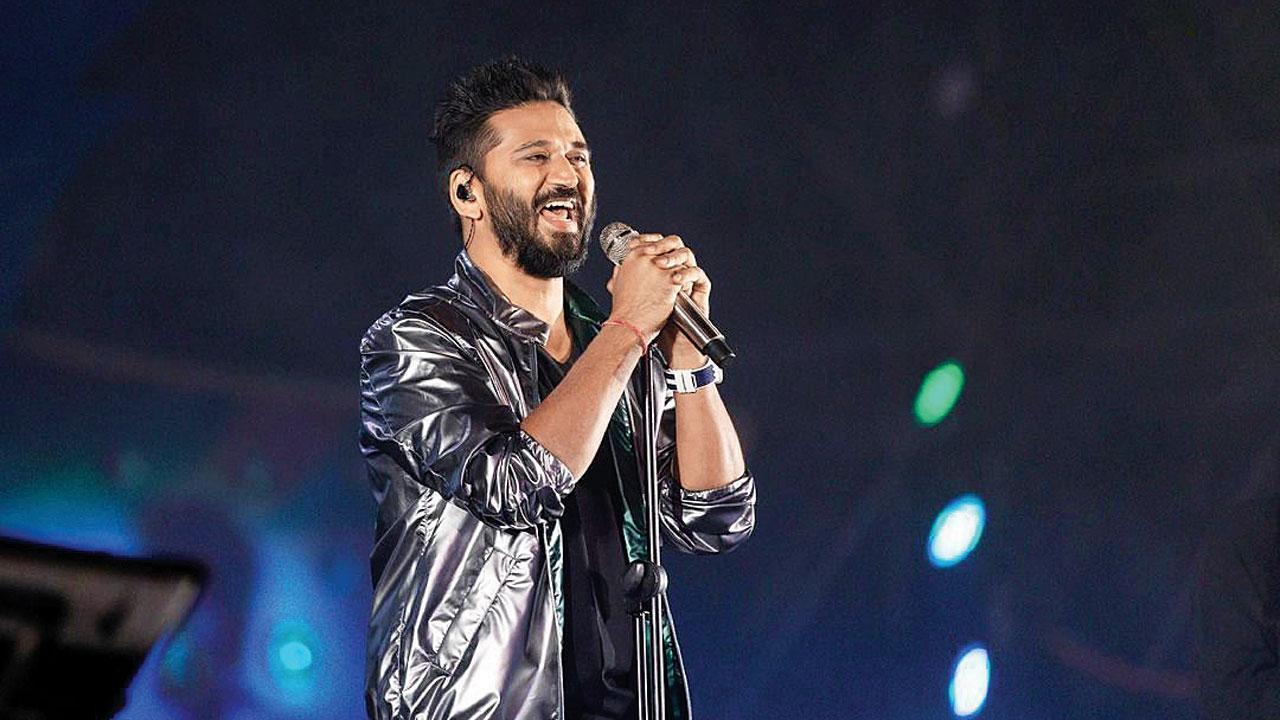
Debarati S Sen (BOMBAY TIMES; October 14, 2023)
In 2009, Amit Trivedi’s soundtrack of Dev D changed the way Hindi film music sounded. Over the years, his willingness to experiment with diverse musical landscapes, blending of traditional elements with contemporary sounds, resonated with music lovers and his songs like Iktara (Wake Up Sid), London Thumakda and Kinare (Queen) to the electrifying beats of tracks from Udta Punjab gave Indian cinema a refreshing musical identity.
In a candid conversation with the musician at his Andheri studio, we discussed his love for freedom as a music composer, how he works multiple mediums whether it's films, OTT or the independent space, and more. Excerpts from our interview…
Mostly, all your film work has been complete albums. But there are many that have three to four composers working on one single film. Did you consciously take a stand against such albums?
Yes, I have said a no to such work. I won’t do film albums that have more than one composer. I feel bad for composers who do that because the public will not know ki kiska gaana kya hai and so your identity will be lost. In the long run, no one will remember. But if it is an individual composer then people would know and recall far more easily. For example, if it's Pathaan, we all know it is Vishal-Shekhar.
Did you ever have to give up your creative freedom for others? For the director or producer of the film?
That keeps happening. I won’t take names but when my fans feel ‘this song isn’t an Amit Trivedi one’, those are the times when I have faced this interference! In those songs mujhe creative freedom nahi diya gaya tha. Curb kartein rahein. Yeh mat karo, woah karo etc. And that is when the result is like that. Whenever I have not had any interference, those tracks and albums have worked extremely well like a Dev D, Udaan, Lootera, Kai Po Che, Queen. In Udta Punjab thoda bahut interference tha, but not much. I did the music for Qala in just three days. I didn’t let anyone interfere at all, kisi ko mauka hi nahi diya! That’s my learning after all these years in this industry!
You’d completed the first six songs of the Dev D album in six months, and it was released without any changes. Has that ever happened in recent years?
It happened with Qala and Jubilee. It is such a pleasure to work with filmmakers like these. They just let you be. They give you that freedom to create. Their ideas and visions are really great. What they want to say in their films is also unique and working on such projects is an experience. To be a part of that vision and getting to create the way you want to and the freedom to bring in what you can in that space, is magic. But if you are chasing a certain parameter of success, whether it is commercial or there is a certain mindset, it is a different ballgame, and I don’t operate from that level.
It’s been 15 years as a composer in the Hindi film music industry. Would you say your journey has been more about ups than downs?
Life is like that – ups and downs toh rehta hi hai. Mostly ups and very little downs so far, and it has been a beautiful journey and I am immensely grateful for that. Jo bhi bura hona hai woh toh hota hi hai. But then, I have a habit of rubbing things off and moving forward constantly. I never look back. Never have. Always aage chalo. Keep working. I never look at the lows in life.
Atlee sir’s trust in me has boosted my self belief-Wamiqa Gabbi
8:25 AM

After a string of OTT successes, Wamiqa Gabbi says fronting Jawan director’s next is a conscious step to become a commercially viable star
Priyanka Sharma (MID-DAY; October 11, 2023)
You know you’ve cracked Bollywood when the maker of this year’s biggest blockbuster casts you in his next. Wamiqa Gabbi is in the enviable position of being a part of Atlee’s next Hindi production, led by Varun Dhawan. The yet-untitled film is the remake of Atlee’s Tamil hit, Theri (2016), and will be helmed by his former assistant director Kalees. Gabbi is naturally elated that the Jawan director showed faith in her.
“I feel lucky and excited to be able to explore opportunities across mediums. For Atlee sir, who just gave the industry the [year’s] biggest hit, to trust me with his next is huge! I am overwhelmed. His trust in me has boosted my self-belief. I hope to do action in the film,” says the actor, as she looks forward to the film rolling this month.
The big Bollywood action fare is Gabbi’s first step towards mainstream Hindi cinema. In a way, it’s natural progression for the actor who has struck gold this year with her OTT offerings—beginning with Vikramaditya Motwane’s Jubilee, and following it up with Vishal Bhardwaj’s Charlie Chopra & The Mystery Of Solang Valley, and Khufiya. A fine balance between commerce and creative satisfaction, she says, is the key to be the artiste that she aspires to be.
“Medium is a producer’s lookout. As an actor, I will still work on my character, go to the set and perform. I understand one thing: if I want to do my kind of work, I need to have that [draw]. Otherwise, people will say, ‘We can’t put money on her.’ So, I am making these choices. But even while doing so, I am cautious and not in a hurry. In the name of mainstream cinema, I don’t want to do projects that I won’t enjoy.”
Rising popularity has clearly brought more opportunities. On the flipside, it has also brought people’s opinions on how she should shape her career. But Gabbi, like many artistes, is guided by her heart.
“Many people tell me how to go about my career, and I do listen to them. But when it comes to making choices, I see whether a project touches my heart or not. I have said no to so many projects that people said would be good for my career.”
Every day I’m made to feel like I should lose weight-Wamiqa Gabbi
8:29 AM

Niharika Lal (BOMBAY TIMES; September 24, 2023)
Wamiqa Gabbi, who stole the spotlight in Jubilee, says that she is expected to look a certain way, and she sometimes succumbs to these pressures. The actress, who was in Delhi recently, shares that she is asked to lose weight all the time but her character in Jubilee taught her to be confident and believe in her talent.
She asks, "Aapko lagta hai main moti hoon? Mujhe roz aise feel karwaya jata hai ki aur patle hona hai. Toh aapko khud lagne lag jata hai ki mujh mein problem kya hai? Aise-aise keede jo dimag mein daale jate hain woh pareshan karte hain. We tell in our films - shaql par nahi dil pe jao. We (the film industry) tell something else to the public in our films, and we follow something else in our real life."
I’ve learned to not be hard on myself: Wamiqa
Wamiqa says, “What’s it about body weight and figure? The way you are and the way you talk to people, that’s more important. But jaise-jaise kaam badh raha hai, aur perfect ho jao, ek bhi kami nahi honi chahiye.”
How does she deal with it? “There are days when it doesn’t matter, and then there are days when I promise myself – okay, I will not eat, I will work out. But there are many other bigger issues in life,” she says.
Wamiqa says earlier she used to feel bad for missing her workout even for one day, and would have a hard time getting motivated to resume. “Now I feel main 15 din baad bhi workout kar rahi hoon toh woh bhi count hota hai. Maine khud ko maaf karna shuru kar diya hai. I can’t silence people, but I can control how their words affect me.”
‘MY ROLE IN JUBILEE TAUGHT ME TO BE PROUD OF MYSELF’
In Jubilee, Wamiqa plays Niloufer Qureshi, an aspiring actor from the 1940s-50s. She is ambitious and confident, and critics praised how the character had the body type of actresses from that era. “Niloufer made me feel really confident. Usko nahi fark padta tha ki woh moti hai. She knew that people loved her for who she was. She taught me that if you are proud of yourself, what people say don’t matter.”

I was being extra pleasing just to meet people who were in important positions in the industry-Sidhant Gupta
8:49 AM

Onkar Kulkarni (BOMBAY TIMES; September 1, 2023)
Sidhant Gupta, who won immense praise for playing a pivotal role in Jubilee, believes that the Vikramaditya Motwane web series has paved the way ahead for him. After his television show Tashan-E-Ishq (2015), he got several offers, but he chose to step away from the medium to seek creative satisfaction through movies. He talks to us about how his career has taken a new turn with the OTT show.
‘I can spend a lifetime on Vikramaditya Motwane’s set’
Sidhant, who hails from Jammu, gives the credit for all the appreciation he has received for Jubilee to Motwane. He says, “I can spend a lifetime on a Vikramaditya Motwane’s set, which is a vibe. The atmosphere is so creative. The set only allows characters to be present. It doesn’t allow you to walk in with the baggage of your filmography. Everyone’s doing their own work and treating each other with respect.”
‘I found a dream role in Jubilee’
Talking about his role, Sidhant tells us, “There was something about Jay Khanna which the audience could connect with. He knew that life goes beyond the bubble of pain and fear. I could connect with this character, because, like Jay, even I have a never-give-up attitude. The show changed my life 360 degrees. The character gave me a perspective and brought out aspects of me like never before. This was like a dream role. Aise roles baar-baar nahi likhe jaate. I don’t know how it found me.”
‘I kept rejecting TV shows as there was no creative satisfaction’
Sidhant’s story is different. While many actors have used TV as a stepping stone to get an entry into films, Sidhant grabbed a role in a movie right after he moved to Mumbai to pursue a career in showbiz. He was seen in Tutiya Dil (2012) and Badmashiyaan (2015). The TV show Tashan-e-Ishq got him noticed, but somehow, he felt disconnected from the medium.
He says, “TV gave me popularity. After doing the show for a year, I quit because that was not what I had come here for. Then, I did a cameo in Bhoomi (Sanjay Dutt starrer). The film didn’t work at the box office. Meanwhile, I kept rejecting TV shows as there was no creative satisfaction, and I felt that I was doing the same thing over and over again. For me, acting goes beyond earning just fame and money.”
‘When you become like everyone else, you lose your individuality’
Sidhant feels that it is easy to lose your individuality in the movie business. He says, “I wasted a lot of time being like others in the industry. I was being extra nice and extra pleasing just to meet people who were in important positions in the industry (to get work). When you become like everyone else, you lose your individuality. What I liked about working with Motwane is that he encourages you to show your edgy side. He also gives you that comfort to be whatever you are and own it, and that has been the best part of my experience of working in Jubilee.”
‘Acting is not just about facing the camera and delivering lines’
To change gears in his career, Sidhant took a break to focus on himself and work on his acting skills. He shares, “I went to London in 2018 and took acting workshops. After my first session, for the first time, I felt the magic of being an actor. I realized that acting is not just about facing the camera and delivering your lines. I found an intention that went beyond the little things I was trapped in. It also liberated me and helped me get rid of my self-doubts.”
The most beautiful thing was that Mumbai made me accept my loneliness-Wamiqa Gabbi
8:42 AM

From initially disliking the city’s matchbox houses, to eventually finding her independence, Jubilee star on how Mumbai made her ‘an adult’
Letty Mariam Abraham (MID-DAY; July 28, 2023)
Theirs isn’t a story of love at first sight. Instead, it’s a story of two parties taking an initial dislike to each other, looking past it to patiently learn about one another’s strengths and frailties, and coming together to form a lasting friendship.
“I had eyes like Aishwarya Rai Bachchan’s. I believed that Mumbai was waiting to give me a red-carpet welcome, that every filmmaker would be eager to cast me. A lot of my delusions were broken by this city. My parents gave birth to me and took care of me, but Mumbai made me an adult,” smiles Wamiqa Gabbi.
Mumbai figured in Gabbi’s plans for as long as she could remember. From a tender age, she had only one goal—to be an actor. Even as she was raised in Chandigarh, she tried her luck in Hindi films. At 14, she made a blink-and-miss appearance in Imtiaz Ali’s Jab We Met (2007) as Kareena Kapoor Khan’s cousin. After two years, she had a walk-on role in Love Aaj Kal (2009).
In 2013, at the age of 19, she was emotionally ready to leave Chandigarh to actively pursue her dream of seeing herself on the big screen. When she packed her suitcase to try her luck in Mumbai, her father, Govardhan Gabbi, had only one piece of advice for her: “Aise rehna ki raat nu neend aa jaye, aur jab sheeshe vich dekho, toh khud ke saath nazre mila sako. [Live life in such a way that you can sleep peacefully at night and face yourself in the mirror.]”
But Mumbai and she weren’t quite ready for each other. What followed was a string of auditions, some bit roles, and staying in rented apartments. Like any new girl in the city, Gabbi was initially shocked to see matchbox-sized flats that often housed more than one person.
“I remember seeing a room [online] and finalising the deal. When I got here, I saw they were matchbox-sized, which was a stark difference from my Chandigarh house. The room adjacent to mine had two girls living in one room. Even when you opened the windows, you couldn’t feel the fresh air. I went to a friend’s place, called my dad and told him that I could not stay here,” recounts the actor.
The multiple rejections also took a toll on the actor. “I used to feel special in Chandigarh—at home, in school, in college—but Mumbai made me feel ordinary. That is when you understand that you need to become extraordinary on this ordinary ground. I can’t call my experiences a struggle, when there are so many people who don’t have the same privileges that I was born with. I never had to worry about where my next meal will come from. But I came to do one thing, act, and I was unable to do that. I was under-confident and started disliking myself. But that was also part of my personal journey.”
Gabbi then trained her focus on Punjabi and south films, largely shuttling between Chandigarh and Hyderabad, and flying to Mumbai only if a project came her way. Yet, something told her that Hindi films would happen eventually. Sure enough, Kabir Khan’s 83 (2020) came her way, and by the end of 2019, the actor shifted base to Mumbai, renting a bungalow in Madh Island, where she lived with her six dogs and help.
This time around, Gabbi had wised up and knew that the city rewarded only those who persevered. And persevere she did. Between 2020 and 2022, the actor landed three big projects—Disney+ Hotstar’s Grahan, Netflix’s Mai, and Amazon Prime Video’s Modern Love Mumbai. Finally, it felt like the island city was beginning to accept her.
“In my initial years, I never felt Mumbai was my city because I never considered it as such. Once I changed my views on it, [things got better]. The city taught me to be independent. [During my first stint], my electricity supply would often get cut because I would forget to pay the bill. How could I accept a city that made me feel so lonely? But the most beautiful thing was that Mumbai made me accept my loneliness. That’s why I fell in love with this city,” she smiles.
This year, she broke through with her performance in Vikramaditya Motwane’s Jubilee, in which she played a ’50s aspiring actor who rises to the top. She followed it up with Modern Love Chennai, and Vishal Bhardwaj’s short film Fursat, and the recent Charlie Chopra. There is a lot happening on the personal front too. The actor has bought a house in Andheri, and is in the process of shifting there. “It is way smaller and way more expensive than my Madh house,” she laughs, left helpless by the city’s unreasonable real-estate market.
She has grown up a lot in the past three years. Now, when she loses a film, she doesn’t lose sleep over it, instead simply moving on to her next. “My dad always says, ‘Jo hota hai, achche ke liye hota hai. Jo nahin hota hai, woh aur bhi achche ke liye hota hai.’” And is there anything that hasn’t changed in these years? Her awestruck reaction to Gateway of India, she says.
“Every time I go to Gateway, I cannot take my eyes off it. When I go to south Mumbai, or in the nooks and corners of Bandra, it feels like I’m in the city of dreams.”
Mumbai meri jaan?
Love about Mumbai
That it has a mixture of good and bad people. But once you find your tribe, especially in the art scene, it’s beautiful.
Hate about Mumbai
The waterlogging, but I do love the rains.
Expectations from Mumbai
I have no grand expectations. I believe it has been extremely kind to me.
Did Mumbai live up to it?
Growing up, I always saw myself [playing a role]in Devdas. Jubilee [came close to] that for me. So, in a way, yes, it did.
Will it remain forever home?
I love being in Mumbai. But for me, home is where there is a lot of space and where I can see the sky without skyscrapers.
Raj Kapoor and my father Biswajeet would call each other up and plan their parties-Prosenjit Chatterjee
8:31 AM
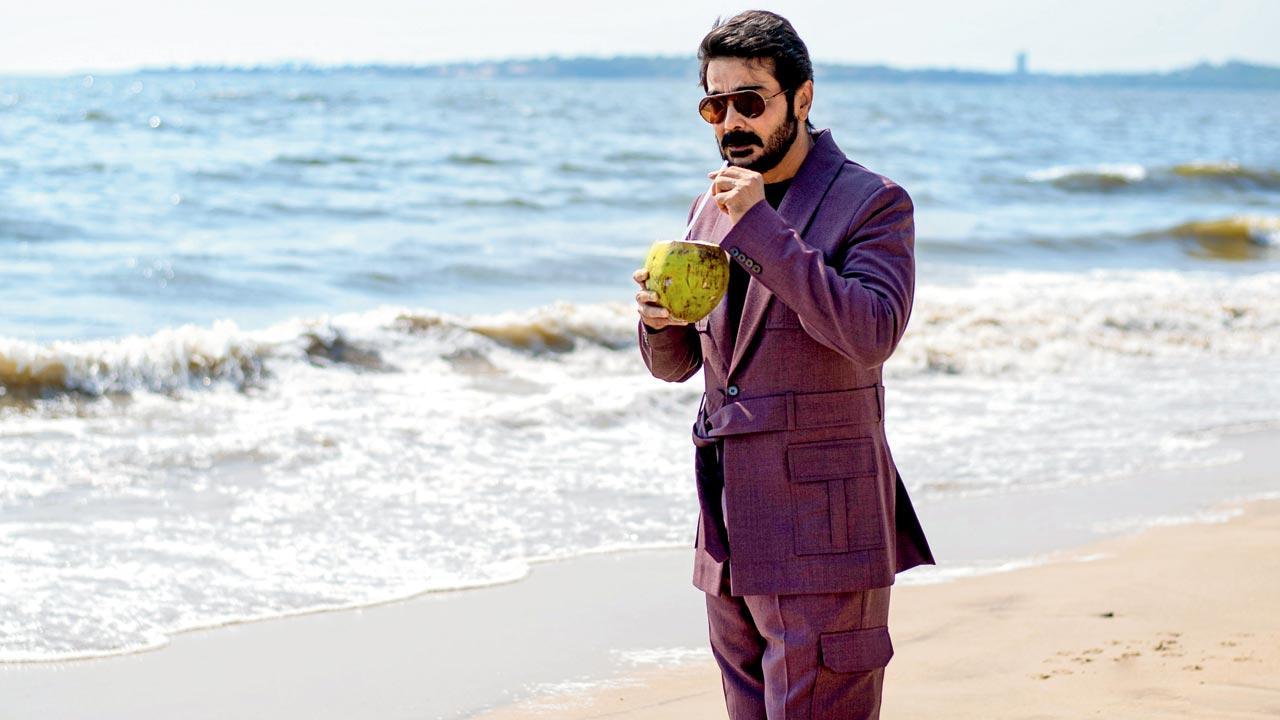
Prosenjit Chatterjee, Bengal’s ‘all three Khans rolled into one’, on finally taking the leap, with a permanent address in the city, where he’s been an on-off guest for 60 years
Mayank Shekhar (MID-DAY; July 28, 2023)
Bhalo kore bujhte paari, bolte paari na [Can understand Bengali, can’t speak it],” is how we break ice with actor Prosenjit Chatterjee, lovingly known as Bumba Da, over a Zoom call, because he’s on a shoot outside Mumbai. He’s suitably impressed.
Although, it must be said, such rudimentary understanding of Bangla, or Bengal, for that matter, can barely equip you to grasp the superstardom of Chatterjee, 61, from Kolkata. For whom Mumbai is now the new home: “I’ve bought a place in Andheri, got a car, driver, the full set-up.”
Younger Hindi audiences have lately discovered him in Vikramaditya Motwane’s series Jubilee (Prime Video), as the fit, dapper, Srikant Roy—a Don Corleone-like patriarch of the Hindi film industry, modelled on Bombay Talkies’ Himanshu Rai. Or as Jaideb Sen (based on crime journalist J Dey) in Hansal Mehta’s Scoop. Jubilee, his OTT debut, was his 349th production (mostly as the lead).
In the ’90s, when Chatterjee was a young lead actor in Bengal, and producer Pahlaj Nihalani “a star-maker in Bollywood”—having launched careers of the likes of Chunky Panday, Neelam, Suniel Shetty, Divya Bharti, Govinda—Nihalani sat the latter down once to introduce Chatterjee.
“Chi Chi,” he told Govinda, Bollywood’s hero no 1: “What are we even doing? Just look at this boy—he’s already crossed 200 films!” A one-man industry, alright.
Since his breakout hit in Bengali cinema with Sujit Guha’s Amar Sangi (1987)—the song ‘Chirodini’ from its soundtrack is an anthem in Bengal, still; the film ran for over 75 weeks in theatres—Chatterjee says he would “open around 12, 16 to 18 films a year [in Bengal]. In one of the years, I had 22 releases!”
Nihalani first got him over to Bombay/Bollywood, in 1990, Chatterjee recalls: “Pahlaj ji had produced a Bengali film with me. During the shoot, he’d tell me about what a star I am! Those were the days, you know—arrey, tu fight bhi itna accha karta hai, dance aur romance bhi, look good [you fight, dance, romance so well].”
His Hindi debut hence followed: “A grand launch party was held at Hotel Sun-n-Sand, with all Bollywood biggies attending. It was a big Bombay party.” Nihalani’s film Aandhiyaan, directed by David Dhawan, also marked the return of the living legend Mumtaz, who’d by then moved to America.
Mumtaz played Chatterjee’s mother in the movie (available on YouTube), which is a bizarrely Oedipal love story, if you may, between mom and son, with young Chatterjee as an overgrown school-kid, also literally dancing around trees with Mumtaz.
That said, Chatterjee recalls, “I got lots of offers from Bombay producers. People say I wasn’t pushy. But I was already working 20-22 hours a day in Kolkata, and booked for the next three years. Also, I am an emotional man. I knew my stardom came from the work of great many Kolkata directors, technicians, co-actors… I had to be with them.”
Chatterjee is quick to point out, on his own: “It’s not about being in your comfort zone. It’s playing to your strengths, to get to where you want. It’s the same with stars from the South. Look at Kamal [Haasan] ji—after Ek Duuje Ke Liye [1981], he didn’t shift base to Mumbai. I’ve learnt from my seniors.”
Which is in contrast to female, Bengali stars in Bollywood: “Oh, they’ve always ruled. There is the concept of the ‘Bangali beauty’. But they’re also great actors.
“I was speaking to Moushumi [Chatterjee] Di, recently. Or you take Sharmila [Tagore] ji. Jaya [Bhaduri/Bachchan] ji changed the pattern of acting, when she did films like Guddi (1971).
“People wanted to see Dharam [Dharmendra] ji and Rakhee [Gulzar] ji together.” Evidently, the male equivalent of the Bengali beauty standard in Bollywood have been Punjabi heroes.
Chatterjee himself is hardly new to Bollywood, or Mumbai, though. His association goes back to early ’60s, when his father, the popular Hindi film actor, Biswajeet, moved to the city. Biswajeet owned a bungalow on 7th Road in Juhu, and now lives in a swanky apartment nearby. He’s been in Juhu for “60 years since”.
Chatterjee recalls, “In 1963, when I was about five or six, along with my mother, sister, and [paternal] grandfather, we shifted to Bombay as well.
“I started schooling here. Only that my grandfather developed health issues. The water didn’t suit him. In those days, the bahu [daughter-in-law] had to take care of the sasur [father-in-law], since my grandmom was no more. And so we moved back to Kolkata.”
The parents subsequently divorced. Ever since, he says, his father has been “a guest in Kolkata, and I’ve been a guest in Mumbai—visiting every year during summer holidays, when I was a child.”
The Bombay of his growing up years doesn’t sound too far apart from his period piece, Jubilee: “I’ve played on Dilip [Kumar] Sahab’s lap. I think Biswajeet ji and Saira [Banu] ji were doing a film together. They’d go out for late dinners. Dilip Sahab liked to stay in. He’d asked to leave the bachcha [the kid] behind with him!”
“We spent a lot of time in Shakti [Samanta] Da’s house. And with Raj [Kapoor] ji. In fact, Raj ji and my father shared their birthday, December 15. They would call each other up and plan their parties, accordingly—Raj ji would host his on Dec 14, and my dad on Dec 15, and alternate it the following year.”
What does he miss from that Bombay? It’s an easy question, clearly: “Oh, the studios, the peculiar smell of raw stock, and the make-up room, where everyone gathered. Spot boys, that belonged to the studios then, who knew everybody’s personal tastes/requirements.
“The huge shooting floors, that could capture so much depth on camera. You can tell from the films of the time—there were no green screens and CGI then. Vikram [Vikramaditya Motwane] captured that really well in Jubilee. I know that technology has changed, and we don’t need such studios anymore. But those were our temples. RK Studio, in particular.”
RK is quite close to where we’re speaking to him over Zoom. It’s just turned into a posh apartment block: “I know. I feel something inside me, when I see it!”
Surely, it’d be the same with similar establishments in Kolkata. The other thing peculiarly common to Mumbai and Kolkata film sets, regardless, is the use of the endearment ‘Dada’ (elder brother), for all males in the technical crew—‘Spot Dada’, ‘Make-up Dada’, etc.
The ‘dada’ in Mumbai sets, of course, comes from Marathi. Which, Chatterjee reckons, has far more in common to Bengali cinema than one recognizes: “For years, I’ve been great friends with people in the Marathi film industry. They share their works with me. I share mine. Our storytelling styles are quite similar.”
His reasoning is simple: “Cinema bears its roots in literature and theatre, that are strong in both Bengali and Marathi cultures. I’m sure other cultures too. But in Bengali cinema, 49 out of 50 actors come from stage. As with Marathi. Likewise, both Marathi and Bengali languages have deep bases in literature.”
And how’s Mumbai and Kolkata different, outside the set, of course, given that the former is also now his home base. Culturally, in the absence of the ‘adda’, he says, “In Kolkata, if you’ve worked for a few hours, it’s fine for you to go, ‘Okay, bahut ho gaya kaam [enough work]. Aadha ghanta adda maarte hain [let’s chill for half an hour]. It’s impossible to do that in Mumbai. People interpret this [trait] differently [as lethargy, perhaps]. But I don’t see it that way.”
Also, he adds, “Both cities are changing a lot. Look at the night-life. Kolkata has gone ahead of Mumbai, in that regard. In Mumbai, I have started seeing streets clearing up after a point in the night. On Park Street in Kolkata, it feels like Christmas all year! People have really started enjoying life a lot there, especially after the pandemic.”
Chatterjee’s own social scene in Mumbai, it seems, starts and ends with Hotel Sun-n-Sand! The Juhu hotel, known as an adda for ’70s Bollywood, especially—you can watch it in practically every other film of the era—that, Chatterjee confesses, has been his home away from home, all along.
“I’ve been coming to Sun-n-Sand for the last 30 years. Now that I live in Andheri [West], my gym is still in that hotel. And if I’m free for even an hour, I just drive up for a cup of coffee there. My father had a suite in the hotel, I think, for a year and half, when he got his break in Bombay, with Bees Saal Baad (1959). I had a suite for quite a long time too.”
Which is true for several stars of the bygone era, the likes of Raaj Kumar, Dev Anand, who used to have an earmarked, year-round, staycation suite, in the sea-side hotel, that appears boutique, only by current standards. Waiters and old-timers often point to those suites as city landmarks of sorts. Which one was his? “402.” Okay, his Bangla fans got a shrine in Mumbai!
Chatterjee comes across as a creature of habit—something that might show in a lot of his mainstream works, that rightly kept the Bengali film industry’s fire burning, all through the decades, that he’d fuel it with dozen-odd movies a year. There was a switch of sorts, he reckons, in his head, therefore his career—“for about 10-12 years now.”
Its genesis lies in the much loved, middle-of-the-road director, Rituparno Ghosh (1963-2013), who offered him a “special appearance; just two days’ work” in the decidedly artsy, Unishe April (1994).
Chatterjee says, “He lit up a matchstick that was inside me. [Until then], I was making films for the audience, and I love them. If they don’t exist, neither do I. But while I am a star, I have to be the actor as well.”
Chatterjee worked with Ghosh for nine films. Dosar (2006), we tell him, is our favourite. The big one, of course, was Ghosh’s Chokher Bali, where he starred with Mumbai’s Aishwarya Rai.
He argues, “You know, people these days talk of ‘pan-India’ films. But Ritu Da, and Mani Ratnam [from Chennai], have been making them forever. When [Ratnam’s] Roja [1992] or Chokher Bali released, we just watched them in theatres, no matter where we were in the country. We never called them ‘pan-India’ films, did we?”
Working with artistic directors like Buddhadeb Dasgupta, Gautam Ghosh, and others, Chatterjee says he began travelling to international film festivals: “When I went to Toronto first, I realised, this is a completely new world, and they should equally look forward to my films. The idea is to win a new audience every day. In Mumbai now, it’s gratifying when people, who don’t know me from my past works, come up to me, in the gym, or when I’m out.”
And that’s been his North Star since. Especially, when he was offered Jubilee, before the pandemic: “I haven’t ever said yes to offers [from Mumbai] right away. As with Dibakar Banerjee’s Shanghai [2012], when he came to meet me in Kolkata. Or Vikram [Motwane]. I want to be convinced about why they want to cast me, first. When Hansal Mehta called me for Scoop, I just knew it was the sort of character that was missing from my repertoire.”
Also, this time on, Chatterjee could sense a wider tectonic shift taking place, among both the audiences, and the Hindi film industry: “It’s become possible for actors from across India to perform together. And it’s not just about films.” Meaning, the braver new world of OTTs as well.
Hence, Chatterjee, bought himself a permanent address in Mumbai: “I had done it before the pandemic. But, of course, I couldn’t move in then.”
And he’s also clear-cut about his professional goal. “I want to do big productions in Bombay, bearing in mind our treasure of [Bengali] literature, that our forefathers had so beautifully tapped into as well. Having been a student of cinema for 40 years, I want to direct now,” Chatterjee reveals.
As for Mumbai and his acting career, the most legendary story about him is how he’d turned down Maine Pyar Kiya, offered to him by the Barjatyas, before the role went to Salman Khan: “Well, I don’t like talking about it. The fact is the film gave Indian cinema its hugest star.”
Evidently, not the one who enjoys looking back much, Chatterjee is only excited for what’s ahead: “David Dhawan was the first person to call me, after he watched Jubilee, you know? He just went, ‘Yaar, tu phaad diya yaar, woh [Bollywood debut] Aandhiyaan ka hero nahin hai tu abhi’ [Killed it, you don’t seem like the hero from Aandhiyaan anymore].” Well, he’s also a Mumbaikar now.
Mumbai meri jaan?
Love about Mumbai
From the film industry perspective, it’s a city that hugely respects talent. They shower you with love and hugs for your body of work alone.
Hate about Mumbai
Honestly? Traffic. It’s gone to another level now, and it scares me. I’m sure things will improve with the metro.
Expectations from Mumbai
I hope, in the next four to five years, Mumbai will give me a home for my creative expression—an intellectual shelter, as a student of cinema, to reinvent myself.
Did Mumbai live up to it?
Especially, after Jubilee, I’d say, yes.
Will it remain forever home?
As it is, it’s my mother, who connects me to Kolkata, and my father [actor Biswajeet], to Mumbai. And now I have a home here as well.
I won’t say sirf OTT par hi alag cheezein ho rahi hain-Aparshakti Khurana
8:33 AM

Aparshakti Khurana says like the web space, a lot of offbeat subjects are being showcased in Bollywood too these days
Rishabh Suri (HINDUSTAN TIMES; July 18, 2023)
Aparshakti Khurana enjoyed playing a key character in filmmaker Vikramaditya Motwane’s OTT release Jubilee, something he hasn’t done a lot in Bollywood. Has OTT been a better platform for him in terms of getting meatier characters? “As an actor, I am not limited to one type of role. Main sab kuch karta hoon. I am not the one who will say, ‘Mujhe OTT hi karna hai’. I take everything with a pinch of salt. Jo aata hai, kar leta hoon,” he says.
The 35-year-old goes on to share that like OTT, even films are exploring offbeat subjects these days. “Variety toh har jagah hi hai. It’s just that on OTT, the stories are explored in depth. A lot of different kinds of films are being made in Bollywood too, Bhediya, Drishyam 2 and An Action Hero (all 2022), for instance. They all have an audience too. So, I won’t say sirf OTT par hi alag cheezein ho rahi hain,” says the Dangal (2016) and Stree (2018) actor.
Shedding light on the advantage of working on web shows, he says that characters get more time to become believable. “Writers can do more justice to the world and characters. Films mein aap nahin dikha paate ho ki hero ke baap ke dimaag mein kya chal raha hai. Sometimes, you can’t even do that with the protagonist in a two-hour film,” says Khurana, who will next be seen in the film Berlin.
Working across mediums doesn’t take away from my stardom, it elevates it-Prosenjit Chatterjee
8:18 AM
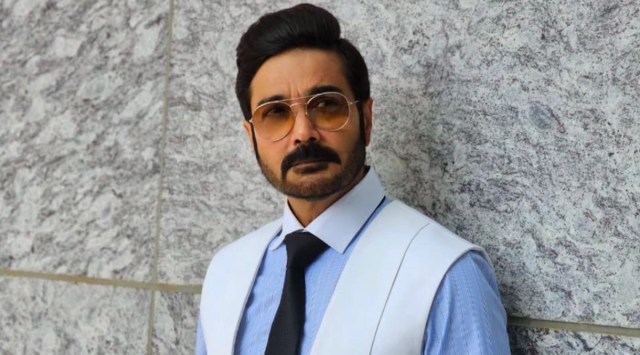
The actor, who made his web debut with Jubilee, talks about experimenting with various mediums, his long, successful career in films and more...
Madhureeta Mukherjee (BOMBAY TIMES; July 2, 2023)
Superstar of Bengali cinema, Prosenjit Chatterjee, recently made a remarkable debut on OTT with Jubilee. The actor, who has reigned in his industry for over three decades, as a leading commercial star and has also shown his acting prowess in parallel cinema – which is rare, says that even today, he feels like a frontbencher on set. And in his words, Prosenjit says, “I am ready to take on any challenge to do different kinds of roles, such is my hunger as an actor.” In a conversation with us, he talks about how he lives and breathes cinema.
You recently made a remarkable web debut with the show Jubilee and followed it up with Scoop. Prior to this, in the Bollywood space, you were seen in Shanghai. As a superstar in Bengali cinema, didn’t you want to explore more roles in Hindi cinema, or was the work that was offered to you here not creatively exciting?
After my debut film in Hindi (David Dhawan’s Aandhiyan), while I was shooting in Mumbai for a Bengali film, Pahlaj Nihalini told me, ‘You are a big star, chalo film karte hai.’ I did some more films here, but I never planned or structured my career in Bollywood. I was a rockstar in mainstream Bengali cinema. I had 22 releases in one year. I felt that I was not alone and that I was taking an industry along with me. In Bengal, people would say that I was number 1 and 2, 3, 4, in mainstream cinema. I wasn’t sure that if had come here (Bollywood), I would have become Shah Rukh Khan. If I had taken that chance, I probably wouldn’t have done justice to the filmmakers in Bengali cinema, as they were the ones who believed in me and made me a star. Today, I can do that because I don’t have those challenges. My intent is to get one new audience every day. I like the fact that my audience cuts across generations. I love to work with new directors. Yes, I am a star, but I broke that image for my films. OTT is the future, and all the big actors are doing it. I don’t think working in different mediums takes away from my stardom, it elevates it.
You made a shift from mainstream to middle-of-the-road Bengali cinema at some point, was that well thought through?
Yes, it was planned. I knew back then that the language of cinema would change. Even before I did Srijit Mukherji’s Autograph, I saw the growth of multiplexes. Every ten years, in our cinema, there has to be a shift in the audiences’ tastes. In my own way, I have observed and studied the change that is going to happen. For over 30 years, I have been a mainstream commercial actor, and I am grateful that this is not my area now. I had created a record of sorts—where I was shooting in my own city (Kolkata) for 19 days at a stretch but didn’t go home for 19 days. Back then, there were no vanity vans, so I would sleep in my car. Now I tell the younger actors, ‘Abhi aap log isko aage le jao (laughs!)’. I am enjoying what I am doing now.
But you do believe that commercial cinema needs to thrive, right?
Yes, absolutely! It has to survive, but we have to do it differently. What is commercial cinema – one that will be watched by people in large numbers? But why do we think that the audience will not understand good cinema – whether it’s commercial or not? We are underestimating the audience. Rituparno Ghosh would tell me that he cast me in Chokher Bali, as he, too, wanted to cross that border. So, I feel I need to support this kind of cinema (middle-of-the-road). Chokher Bali that was made 20 years ago, was a pan-India film, but at that time, no one would talk about it. We didn’t do it for business, today, it is a business model.
Bengal has given us so many iconic filmmakers and actors, what do you think the Bengali film industry needs to do to expand the reach of their cinema and get their footprint pan-India?
Cinema of every language has its own strength, and we need to tap that. Bengali cinema won’t be able to do a Baahubali or an RRR right now, and it’s not because of the budget. Bangla’s strength lies in its literature. We need to make subjects that stem from there and resonate across audiences. Why did I like Kantara? It’s because it struck a chord as it spoke about something close to their culture, which I wasn’t aware of. We need to give the larger audience those subjects that are close to our culture. I would love to do South films and Marathi films. The Marathi film industry has such great actors and directors.
Is your son Mishuk showing a keen interest in becoming an actor?
He is a big fan of Shah Rukh Khan and Bengali actor Dev. He’s a good footballer, and now he’s turned 18 and I feel ki usko actor banna hai. I have told him that I will help him prepare and guide him as I know what a commercial actor needs to do and be. But then, mein usko market mein chhod doonga. I have told him that I am not going to launch him, even I wasn’t launched by anyone. His journey has to be his.
Initially, OTT was all about sex and violence, which is not the case any more-Prosenjit Chatterjee
8:30 AM

Actor Prosenjit Chatterjee feels this is the right time to explore the digital space
Sugandha Rawal (BOMBAY TIMES; June 10, 2023)
The latest addition to the growing list of mainstream actors foraying into the OTT space, Prosenjit Chatterjee made his web debut with Jubilee, and followed it Hansal Mehta’s investigative drama, Scoop. Calling it the “right time” to explore the digital space, the actor feels the medium has moved on from the “sex and violence” phase — that it heavily relied on initially — and is now embracing wholesome stories.
In Jubilee, the actor, mainly known for his work in Bengali cinema, essayed the role of a fictional yesteryear film tycoon, Srikant Roy — a ruthless, ambitious yet vulnerable movie maker. Meanwhile, in Scoop, he portrays the character based on late journalist Jyotirmoy Dey, whose murder in 2011 shook the entire media fraternity.
In a candid chat, Chatterjee opens up about his journey so far and comparisons with other mediums that’s inevitable.
After your OTT debut, there wasn’t much gap before your second show also released. Was it a conscious choice to have back-to-back outings?
No, it wasn’t. While Jubilee was a very planned thing, I did not know Scoop would be out so soon. Jubilee was pushed almost by a year because of the pandemic. Such decisions are not in my hands. Also, I did Scoop only for Hansal, who is a dear friend.
Was there any particular moment that led to the decision that you want to venture into a new medium?
We can’t sit and plan such things. Like, we didn’t know OTT platforms would be so big in India, or Jubilee would become this big — critically, technically, and commercially. I started my career through Bengali films, and have seen the industry change in the last 40 years. I’m always keen on working with new directors. As an actor, it allows me scope to reinvent. And both these OTT shows did that.
You talked about the growth of OTT platforms during the pandemic, and we have seen content and talent from regional industries garnering a lot of praise. Do you feel these language barriers are finally being broken?
When we say India produces the largest number of films and shows, we are not just talking about Hindi, Bengali, Punjabi, Tamil, Telugu, or Marathi. But collective projects. With OTT platforms coming in, the best thing we all can say is that we are making Indian content. I might be sitting in Mumbai or Punjab, and making content that will be watched across the country. We are pan India in the true sense because of the medium. In terms of the storytelling, too, there are some stories which directors can’t do [justice to] in cinemas, but digital is a great platform to tell those stories. Not to forget documentation, which isn’t there is case of theatrical releases. For instance, Jubilee, even after 20 years, if somebody wants to watch the show, they can watch it.
The medium often gets called out for being too explicit and at times, vulgar — either in the language or scenes. Do you feel there needs to be censorship for the web?
Not censorship, but there has to be a way similar to television. The small screen has some rules and regulations. They should be for the OTT world, too. Also, the responsibility lies with the makers about the content they put out. However, I feel that phase has gone. Initially, it was [all] about sex and violence, which is not the case any more, at least not as much as it was earlier. That’s the reason why people are now watching [shows such as] Rocket Boys, Jubilee or Scam 1992. Audiences have also started watching content from a different perspective, which is great.
How do you define the present OTT phase?
OTT reaches out to a wider audience base. The vision is the same as television, though it will take some more time to get there.
My brother couldn’t even finish the first episode of Jubilee due to his deteriorating health-Nandish Singh Sandhu
8:32 AM

Syeda Eba Fatima (HINDUSTAN TIMES; May 23, 2023)
Nandish Singh Sandhu experienced the biggest high of his career and an irreplaceable loss in his personal life at the same time. The actor’s younger brother, Onkar Singh Sandhu, 37, lost his battle to cancer while the actor was busy with the promotions of his web series, Jubilee. Calling it the “biggest loss of life”, the 41-year-old says, “He was the closest to me. We grew up together in Rajasthan. Though he was just four-and-a-half years younger to me, I would treat him like my baby.”
The actor never allowed challenges in his personal life to overshadow his work commitments. Ask how he managed to continue working despite the pain he felt and Nandish says, “Apart from my responsibility towards the project (Jubilee), it was his (Onkar’s) wish. He always wanted good things for me. He always said, ‘Bhaiya, whatever happens, work is the biggest thing. You should never compromise on that.’ He wanted to watch Jubilee, but couldn’t even finish watching the first episode of the series because of his deteriorating health.”
While Onkar knew he was on death bed, Nandish recalls how his brother would only care for his well-being. “He knew he was going. In fact, we all knew he doesn’t have too much time. But he would always say, ‘I know bhaiya good things are coming to you’. So I knew that if I was not true to my work after he left, he wouldn’t be at peace. Today, wherever he is, he is going to be the happiest to see me work,” the actor ends.
So much focus on the glamour, and so much silence around our work-Alokananda Dasgupta
8:17 AM

Jubliee musician Alokananda Dasgupta is ready to indulge in conversation around her work as she says enough interest in the composition of the background score exists among music aficionados
Sonia Lulla (MID-DAY; May 22, 2023)
Alokananda Dasgupta can romance characters in ways that perhaps even those who create them cannot. The daughter of the late Buddhadeb Dasgupta refers to herself as a morbid person, yet, she infuses life into every conversation when discussing her work on score composition. Her latest endeavour brought her back under the familiar wings of Vikramaditya Motewane after the duo’s celebrated association for Sacred Games. In this interview, she discusses what drew her to Jubilee.
Edited excerpts from the conversation.
You’ve probably developed a comfortable equation with Vikramaditya, considering your past projects. Does he discuss the brief with you or does he leave you to it?
For this project, he said that while he was creating a period project, I needn’t worry about that. He wanted that to be reflected via the songs. For the background score, he said that while I should avoid using instruments that didn’t belong to the era, I did not need to think about the period that the series was set in while creating the music design and melody. He wanted me to only focus on the narrative and characters. He knows me well, and knows that vague things work for me. He used words like ambition and pride, and those words helped me build the characters.
What was the initial idea that you had when this was offered to you?
In Sacred Games, there were elements that deal with death and life. I am a morbid person, so, dark things work for me. I didn’t know how I could bring out my darkness in Jubilee until I came across these words. In [music] school, we’d speak about the life of tragic heroes. Think about the characters in this project; such characters have always existed, and are timeless. The [character] has everything he desires; he makes one mistake that’s fuelled by pride, and that leads to his downfall. This is [seen in] Macbeth, it’s [seen in] my friends, and also in characters in my family.
I chased these two words, drew a draft of each character, and thought of how their [trajectories] are different, even though they are both [consumed] by pride and ambition. I realised that this is equally morbid. Morbidity need not only be death. There is a scene when one character leaves his house and everyone stares at him because he is a [star]. I’ve used an element which is like bipolar music. It’s a grand celebration, and an ode to joy. But then, I used certain melodies, and changed keys and motifs to make it darker. That paradox is what I tried to create with instrumentation.
As a composer who studies the characters you are set to work on, how did these characters influence you?
Initially, the team shot a small chunk. I was shown some rushes, and then they went on their major shoot. When I had initially read the script, it was all in theory. I am someone who is inspired by moving images. Reading and discussion don’t provoke within me what visuals can. I knew it was a period drama, and shed light on the politics between characters. But, when I saw the first clipping of Binod [character] in the dressing room where Jamshed was applying make-up before his act, I was moved. This was the first time when Binod [was shown in poor light]. The image of him sitting, the colour palette used, it was all inspiring. Music composition is not all romantic, and not every frame will inspire you. But this one was inspirational. It was ominous, it had elements of [Satyajit] Ray, and was like a horror still without it being a regular horror. That made me understand the multiple layers in this story. I knew I had found something dark to sink my teeth into. I connected it to [Roman] Polanski’s Macbeth, when he sees Banquo’s ghost. When I was composing it, my father was on his death-bed. Everything was so dark. All of these things combined with that one image.
Given how deeply invested you are in your projects, do you believe this job takes a mental toll?
I know I am a film composer, and not an independent one. It drains me, and is exhausting. But, I have understood that I need to [accept my work], because I will never stop being self-critical. I am not trying to wallow in self-pity, but the work I do is not glamorous enough to bring me to the forefront. People still think music means songs alone. My popularity count is marginal. I’m not seeking that, but I’ve made peace with the fact that this will be a solitary process. But, this is how I know to express myself. If you take this away from me, I will have repressed feelings.
Is there anything about your work that you believe needs to come to the forefront?
I have my complaints. I understand that everything in the industry is about survival. But, there are so many people who stay up at night and look up the background score of a Nordic series. I would love to talk about the process for people to know that not all of it is only about the songs. I don’t do 10 shows, or own a studio with 15 programmers, but [there are people who are still interested in my work]. People want to know how a score is composed. There is so much focus on the glamour, and so much silence when it comes to the work of a score composer.

I thank God I didn’t give up. Thank God, I didn’t know how to give up-Sidhant Gupta
8:44 AM

Vinay MR Mishra (HINDUSTAN TIMES; May 7, 2023)
“I have never felt so much love,” says Sidhant Gupta, basking in the glory of his recent release, Jubilee. The actor, who turned 34 last week, adds, “[The birthday] was different. Suddenly, life has meaning,” he muses.
Does that mean he’s just come off a period of dormancy, maybe even an existential crisis? “I was [going through one] before the lockdown,” he confesses.
Like many, Gupta’s life came to a ‘standstill’ during the pandemic. “I took a pause and wondered, ‘Why am I blaming the whole world for my choice to be an actor?’” he recalls, adding that this realization helped him take his “life’s steering wheel” in his own hands. “You have to find the reason why you want to do this work and it has to go beyond everything. This birthday is when it all felt very meaningful,” he says.
The Inside Edge actor’s turn as a penniless, aspiring filmmaker in Jubilee caught everyone’s attention, with some even billing him a star in the making. The actor says that although he has been active for over a decade now, he, too, “discovered” himself not too long ago. “I thank God I didn’t give up. Thank God, I didn’t know how to give up,” he shares.
What does he mean by giving up? “There are moments where you feel that nothing is going your way. Like after television, when I wanted to just move away from it because I wasn’t really happy. I did films such as Bhoomi (2017) and nothing was going my way. I didn’t have any work, except TV, where you don’t have space to create,” Gupta ends.
FICCI Frames: We are upset, deformed madmen who hang around here despite not being paid for many years-Sudhir Mishra
10:13 AM

Niharika Lal (BOMBAY TIMES; May 6, 2023)
Does Bollywood exist? Is filmmaking an industry? Are filmmakers part of a system or are they freelancers doing their own projects? Is showbiz actually a business? When these questions were asked to four filmmakers – Sudhir Mishra, Hansal Mehta, Sriram Raghavan, and Abhishek Chaubey – at a session titled ‘Creating the magic of cinema’ at FICCI Frames, they shared how the magic of movies works on them.
The filmmakers, who have spent over 20-25 years making movies, spoke about how the industry is more than just the term Bollywood, it’s a place where people support each other, and that it’s an industry based on emotions.

‘BOLLYWOOD DOESN’T EXIST; WHAT EXISTS IS A RESPECT FOR EACH OTHER AND A DESIRE TO SHARE OUR WORK’
Talking about the film industry, Hansal said, “Bollywood doesn’t exist. There is no Bollywood. What exists is a lot of respect for each other and each other’s work. There is a desire to share what you have done with each other. Say, the preview of Udta Punjab – every director who was assaulted was there to support and watch the film. That for me is an industry – where you are supporting each other’s’ work.”
Agreeing with Hansal, Abhishek, who has directed films like Udta Punjab and Sonchiriya, recalled, “When Udta Punjab got into all sorts of problems, a press conference was organized. Literally, the entire industry turned up...They are talking in one voice for the film of a guy they don’t even know really well. In that sense, it was brotherhood or fraternity, or whatever you may call it. We are not an industry in the traditional sense, but we pretty much are. I love the medium of movies and I thrive on it. It is the only sensible thing I do in my life.”
Hansal said that for him, an industry is where filmmakers appreciate each other’s work and learn from it. He recalled, “When I saw Vishal’s (Bhardwaj) film Maqbool… I called him, and said, ‘Vishal, I wish I had made my first film after I saw this. I would have learnt from this and made a better film.’ That’s what happens when you see the work of a colleague and you see the work around you. When I saw Jubilee, I messaged Vikram (Motwane), ‘How do I even try to become like you?’ I think that, for me, is the beauty of the industry.”
Recalling when his first film (Jayate, 1999) made it to the Indian Panorama section (of International Film Festival of India), Hansal was told that Sudhir Mishra was on the jury. “I knew that Sudhir Mishra made Dharavi (1992). When I met him, he hugged me and said, ‘Bahut achhi film banayi hai yaar tu ne,’ and that was it! It’s now been 26 years since that day and I think that pat on the back, that hug was the industry. Everything comes out of passion and emotions. It is an industry based on emotions.”

‘WE ARE SLIGHTLY UPSET, DEFORMED MADMEN WHO HANG AROUND HERE DESPITE NOT BEING PAID FOR MANY YEARS’
Sudhir, known for films like Chameli and Hazaaron Khwaishein Aisi, said he “never liked the word Bollywood” and would rather call it “the Indian film industry”. He added, “That’s why I’m very comfortable with Vetrimaaran or somebody in the Kerala industry or Bengal, because we always grew up in the independent cinema movement. (It’s not) that people are understanding internationally our cinema (now)… they understood it with (Satyajit) Ray, no? Now, you have to set up stalls. When Ray was making films, you just had to walk around Cannes and say ‘Hey, Satyajit Ray film’ and everybody went to you. There has never been a person like him.”
Sudhir added that the money aspect of filmmaking is necessary, but that’s not what cinema is about. “I think we are all fanatics and we love this muse called cinema. We are slightly upset, deformed madmen who hang around here, and like he (Hansal) said, we have hung around here despite not being paid for many years. I often put in my director’s salary to complete the post-production. Why? It’s kind of lunacy... People who are in cinema can’t do anything else. I think that’s why they stick around. The medium loves us. It cured me. I’m sane because of it. There is so much that it does for me. Can I screw it for money? No.”

Sukhmanee Lamba, who plays Kiran in Jubilee, reveals she had initially auditioned for Wamiqa Gabbi’s role
8:09 AM

Sukhmanee, who plays Kiran in Jubilee, on how she had initially auditioned for Wamiqa’s role
Priyanka Sharma (MID-DAY; May 1, 2023)
Fate works in mysterious ways. Sukhmanee Lamba has been noticed for her role of doctor Kiran, who goes on to marry Sidhant Gupta’s character Jay Khanna, in Jubilee. Oddly though, Lamba had not auditioned for this part in the beginning. The actor reveals that she was hoping to step into the shoes of Niloufer, a role that was eventually portrayed by Wamiqa Gabbi.
“I did two-three rounds of audition for Niloufer, but it didn’t work out for some reason. But Vikram sir [Vikramaditya Motwane, creator-director] loved my screen test so much that he wanted me to be a part of the show. So, he asked me to play Kiran and didn’t even audition me for it,” she recounts.
The acclaimed web series came her way after a long wait. In 2017, Lamba made her acting debut with Alia Bhatt-Varun Dhawan’s Badrinath Ki Dulhania. While she thought the film would set the ball rolling on her career, things panned out differently.
“[The wait] was disheartening in the beginning, but being a theatre actor, I began working on myself, and saw every audition as a chance to perform. My perseverance paid off in 2019 when I [landed] Jubilee. But it didn’t roll until 2021. So, I have learnt that patience is one’s biggest support system.”
I’ve never said this publicly, but I think Bhavesh Joshi Superhero should have been a woman-Vikramaditya Motwane
8:17 AM
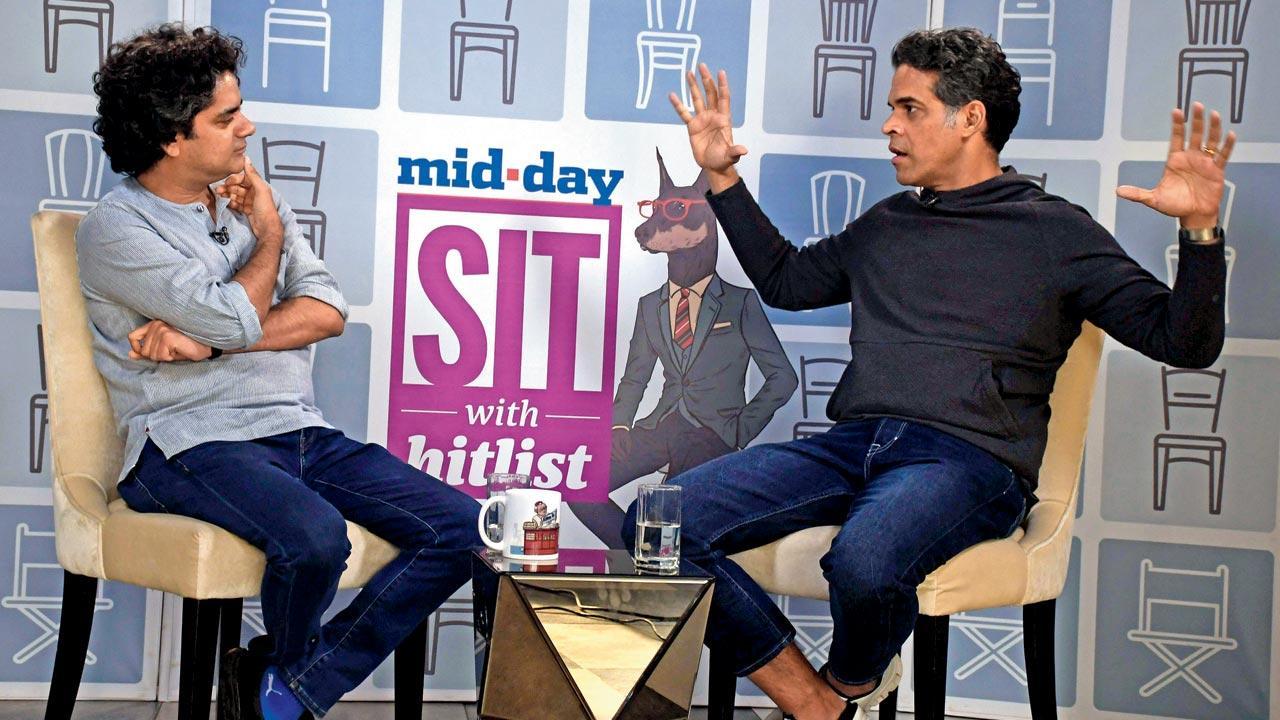
Vikramaditya Motwane joins Hitlist editor Mayank Shekhar for the latest edition of Sit with Hitlist. Pics/Ashish Raje
Motwane, on the movies — from Udaan (2010) to Jubilee (2023), both near-masterpieces!
Mayank Shekhar (MID-DAY; April 27, 2023)
At age 25, Vikramaditya Motwane was set to direct Amitabh Bachchan for his debut film, Bombay Talkies. It’s about a great filmmaker making his return to the sets after years. And what all had changed about Hindi cinema, including stardom, in the interim. Bachchan was going to play this aged director — think of him as Hrishikesh Mukherjee, who was alive then, he says.
The star in the movie, I’m guessing, would have been an arrogant, prick type. Motwane found it impossible to cast a lead actor for this part. Which is why the film never got made. Until then, Motwane had extensively assisted Sanjay Leela Bhansali. Which, firstly, explains the access to Bachchan.
We only wondered about it because of the title, Bombay Talkies. Which is what his latest series, on Amazon Prime Video, Jubilee, is modelled on. Namely, Himanshu Rai’s (Prosenjit Chatterjee) state-of-the-art film studio in the 1940s, along with Devika Rani (Aditi Rao Hydari), down in Malad, in Bombay.
And which once had in its payroll stars like Ashok Kumar (Aparshakti Khurana), Raj Kapoor (Sidhant Gupta), Dilip Kumar, Madhubala… All these characters have been heavily fictionalized, of course. And Jubilee itself has no relation to that Bachchan script.
It’s actually a mammoth exercise in world-building, without the filmmaker getting overawed by it — sticking to drama and storytelling still. While so classical in its production design and shot-taking, it isn’t placed wholly inside a filmy bubble either. So many such films/series consciously tend to be — including the best ones, like The Offer (on the making of The Godfather), or Mank (on Citizen Kane).
It isn’t full of the usual exaggerations that naturally come with surveying showbiz either — take the best film on contemporary Bollywood, Luck By Chance, for instance.
Jubilee captures the real world around it, equally. Whether that be the bloody Partition, or the Cold War. Once you buy into this world — and it takes a while, perhaps fourth episode onwards — we know no other Indian series that progressively gets better with every minute. It may even age better with time!
Also, it’s to do with the dialogue. Compare it to Mira Nair’s A Suitable Boy, from the same time-setting. It sounds so coy, because they’re too obsessed with the period. Motwane says, “We wanted the language to be accessible. The language may not be completely correct to the period. But it’s not incorrect.”
“No one can point out and say, people needn’t speak like that. In fact, somebody’s criticism, which was actually funny was, ‘Gaaliyaan uss waqt kab hoti thi (When did people use expletives so much?)’ Gaaliyaan picture mein nahi hoti thi (Actors didn’t abuse on screen). That doesn’t mean people in real life weren’t abusing. Of course, they were.” For all its grandiose scale and sharp, layered storytelling, you come off Jubilee, exhaling, “Madan Kumar, behn****!” Isn’t it?
Motwane recalls the idea really took off in 2016: “What if we did our own definitive story of the Indian film industry, from the ’40s and ’50s onwards — the behind-the-scenes, the producers, directors, actors, press, all that sort of stuff coming together. This could be a season, or multiple seasons. Atul [Sabharwal] wrote a cracking pilot, Amazon loved it, and suddenly we were off in the races.”
It took seven years to see the light, because Motwane got busy with Sacred Games for Netflix, shortly thereafter.
If Jubilee does go through multiple seasons, leading up to Bombay cinema, late ’90s onwards as well, there will be few filmmakers more qualified to relive the times than Motwane.
On one end is Bhansali, who he was the chief handyman for, on Hum Dil De Chuke Sanam (1999), and Devdas (2002), that he represented at Cannes, along with the director. At the other end is filmmaker Anurag Kashyap, who he’s partnered with since the unreleased Paanch. There aren’t more separate filmy worlds that you could belong to simultaneously in Bombay!
Bhansali and Motwane’s mother once ran an advertising production house together. He first met Kashyap on the sets of Deepa Mehta’s Water, where his job as the “wrangler” was to ensure the procrastinator Kashyap, as all writers are, delivers dialogues on time — not an easy task!
“Anurag’s wife, [editor] Aarti [Bajaj], his ex-wife now, was with me at XIC [Xavier Institute of Communications], when we were doing a film production course in 1994-95. Anurag had done the same course a year before that. He says I met him then. I have no recollection of this.”
Also, few directors own a CV as varied as Motwane’s — so far as filmmaking departments go. What all has he been credited for? Let’s start: Sound design? “Yes, for Devdas, and Paanch.”
Choreography? “Directed songs for Paanch. For Water as well. Well, choreography is a broad term. Because there was no dancing in Water. Deepa wanted me to help her with songs, because she felt I had a better music sense.” Acquired from Bhansali, one’s guessing.
Okay, cinematography? “Short films: Shaanu Taxi, Midnight Lost And Found.” How about acting? “Acting in cameos in certain places, which I am not very proud of.” Like, Kashyap’s No Smoking (2007)? “Yeah, everybody sees me in No Smoking!” What’s left, production design? “No, I don’t like that part.”
Yet, in terms of capturing the fuller gamut of Bollywood, his most uncanny credit might well be as the writer of a film by director Vivek Agnihotri, titled Dhan Dhana Dhan Goal (2007).
No, seriously, how did that happen? “So, UTV was producing this film. Vivek had approached them. He said he had this story idea about football. He wanted a really good writer. They called up Anurag, who said he doesn’t know anything about football. But he knows this guy, who knows everything about football. So, they approached me. I have loved this game since I was eight years old. I said, let me write you an original script instead.” What, they gave him a DVD to rip? “Something like that!” Something like that, as in?
“So, well, I wrote the script. But the film that got made was not exactly the way that Anurag and me, to put it mildly, kind of wanted. I liked the time though. Beggars can’t be choosers. We got paid for the work, and that was more important than anything else. I still believe the original script of mine is one of the best things I have written.”
Motwane’s first script to be made into a film, after Bombay Talkies got aborted, of course, was the near-masterpiece, coming-of-age, Udaan (2010), that went straight to Cannes in the prestigious Un Certain Regard section, where he was competing against, among others, Jean Luc Goddard: “That was really trippy!”
It’s set in Jamshedpur (now in Jharkhand), about a boy who finishes school with ambitions in arts and poetry, but is forced into the mundane, by a disciplinarian father, who brooks no dissent.
It’s almost the opposite of Motwane’s own life, since he was actually driven into the media world, because his mother needed help with a TV show she was producing for teenagers. He was a teenager then, chilling all day in the Mithibai College canteen.
What did he even know of a strict boarding-school or small-town life, let alone the Tata Steel township, Jamshedpur, to get it so right with Udaan, we wonder. Motwane says Udaan was originally set in Nashik, in his head, because that’s a similarly industrial, small-town he knew, since his father owns an audio-equipment factory there.
“They live in nice little bungalows. The town is very organized. So, I wrote it as a generic place, in fact. Because I knew that world. I could not write in Nashik. It’d be too close to home. And I didn’t want it to be that. So, I wrote it like a Ghaziabad or Faridabad kinda set-up — outskirts of Delhi, where the family lives. The boy sneaks out, comes into Delhi-proper, to party and stuff.”
And then he handed the script to director Imtiaz Ali: “Imtiaz read the script and he’s like, ‘You know what, just take a train, go stay with my family in Jamshedpur. Have a look. I am reading this, and I can see those streets.’ I was going to cast Imtiaz’s younger brother, Sajid, in the lead, at that time. This was 2005.”
“Sajid and I hopped on to a train, went to Jamshedpur, spent four to five days with his family, saw the place — this was perfect! I moved the film to Jamshedpur. The film finally got made in 2009, which is also great, because by then, the viewership had changed; audiences had changed. In 2005, multiplexes were still not what they were by 2010, when we did the film with UTV, with a 225-screen release, which is a big deal for a small film.”
Kashyap produced Udaan, post the commercial success of Dev D (2009). This also means the original lead actor, Imtiaz’s brother Sajid, would have passed his teenage by then. Young Rajat Barmecha was brought in for the Holden Caulfied type protagonist. The homework Motwane gave him was “the literature I’d read growing up, movies I’d watched — 400 Blows, Richard Price’s books, and a lot of things that come into Catcher in the Rye…”
The directorial career that Motwane scripted for himself after Udaan is indisputably marked by a range that’s hard to match — going from a period piece (Lootera) to super-hero (Bhavesh Joshi Superhero), a one-man survivor drama, set in a building, suggesting the dystopia of cities (Trapped), to the ultimate Mumbai-mafia sweeping-epic (Sacred Games), that he was the showrunner for — first Indian to hold that title (in case Limca Book of Records is interested in listing!).
The leaps are so wide that it piques your interest to know what inspired each film, since none suggest self-expression alone. Firstly, where the heck did AK vs AK (2020) come from — a meta movie that firstly defies genre, about a director and actor playing themselves. The director turns rogue, kidnaps the actor’s daughter, to film in real-time, what happens next! Wut?
“It’s just such a great one-line idea. Which is what excites you most. As a young filmmaker, you fight the fact that the idea of your film should be encapsulated into one, single line. As you grow older, you realise that one, single line is what drives you forward. Writer Avinash Sampath, who’s now become a good friend of mine, sent the script to us. He’d written it for Aamir [Khan] first. I was sure Aamir is never gonna do it, so let’s not even try!
“There is Akshay Kumar, who we did approach, and it was a very interesting meeting — I mean, he didn’t sort of outrightly say, ‘Get out of my office,’ but it was close enough! For a while, I was making it with Shahid [Kapoor], which kind of happened, and then it didn’t. The [actor] AKs kept changing. The [director] AK, that is Anurag Kashyap, was a constant. He’s a fantastic actor.”
Well, Kashyap says he sucks at acting! “I think he is fab. In fact, everybody on the AK set was talking about Anil Kapoor. I think Anurag, especially in the last scene, is incredible. You actually tear up, when shit happens to him.”
Okay, how about Lootera? It’s practically a Bengali film! “Practically. And that [part is all Satyajit] Ray. I wanted to do a thriller, with a love story in it, as opposed to a tragic love story. Our first trailer got it right. And then there became a problem with the pitching to the audience. People were expecting to watch this epic love story. And they probably went, ‘Hang on a second, this is not that!’”
Maybe because he plays with such diverse subjects —you sense that probably puts Motwane in a more objective position to judge his own work in hindsight — most think of their films as so much like their heart’s outpouring, that it’s hard to discuss it with them, without fawning over with delight. Consider Motwane’s take on Bhavesh Joshi Superhero (2018).
While he loves the film the way it is, immensely, he says, “I’ve never said this publicly, but I think Bhavesh should have been a woman. As in, Siku’s character should have been female. [Firstly] the world thinks there’s a guy, who turns out to be a girl. When she unmasks, you go, ‘What the f***’.
“Also, then the film is not about a friend, saving a friend, in terms of the Ashish Verma character. He is actually deeply in love [with the female superhero], but has never been able to tell [her that]. The conflict is way deeper. The layers get more interesting too.”
As for reasons for smoothly jumping styles and genres, where each Motwane movie is unrecognizable from the other — unlike a subtle or strong voice/style that laces through most auteurs; think Bhansali, Kashyap — the impetus is quite simple.
“It’s the excitement of trying something new. So, Jubilee is exciting, because it is something I have never done before — a classical style of storytelling, 10 playback songs, and all that stuff — the fact of telling a specific story, in the form that is most suited to it. I feel that the film is always the boss. I am not.”
Motwane says his forthcoming film is titled Control. It’s a ‘computer-generated’ movie, flitting between screens, centred on an Instagram influencer: “Again, it is a cyber thriller, it is new. I get excited by it. And you learn. Every film is an audition for the next one, having learnt from the last one!” That said, surely, if one looks deep enough, they’ll be able to spot a personal thread.
Take Jubilee, for that matter. Consider a character called Jotwani, a film businessman, who shows up in it. It’s unclear exactly what he does in the movies. Maybe there is some association with working with sound or audio equipment. That’s precisely what his paternal family dealt with.
If you go through any archival footage of public rallies of politicians from the ’50s, or pre-independence vintage, the most common brand-name you’ll notice is Chicago Radio, that’s attached to the microphone.
That company was started by Motwane’s great grandfather. His grandfather thereafter also once produced a film: “It was called Andolan, in 1949, with young Kishore Kumar in the lead. It was a film about the freedom struggle. It didn’t do well, which is why nobody in the family talks about it. Because I think the family lost a lot of money on it.”
You also see the Sindhi refugee camp in Jubilee. Given his own Sindhi lineage, we wonder if there is a personal history to it as well? “So, my family didn’t have to make their way during Partition. We were already here from the 1930s. The business was already set up. But for a while, my family house in Khar was a refugee camp. I have seen photographs. People were also demarcated into tents in garden-area or permanent structures, depending on the social status of the refugees.”
Motwane says he learnt of his family’s film lineage, only much after he became a filmmaker: “Nobody tells me anything! Now, I’m the family archivist.” He’s named his production company, Andolan, after his grandfather’s maiden and only production.
AK vs AK and Jubilee are Andolan productions. Of course, the more famous production company he’s been associated with is Phantom Films, which shut down, following allegations of negligence, dealing with a sexual harassment case against one of the partners, Vikas Bahl, in 2017. Prior to that, it was a company rolling out quality films after another.
We recall an interview about Phantom, where Motwane compared it to Pixar, in terms of credibility and ambition: “Very ambitious! Peak-Phantom was something else. Eventually, we would have all perhaps gone our own ways, anyway. Maybe running our own companies under the umbrella of Phantom as the larger studio. It was an unfortunate end to what was a good journey.”
“Interestingly enough, I actually met Tanmay Bhat and Rohan [Joshi] and we were talking about how peak-AIB and peak-Phantom happened at the same time. Some great stuff went down.” The comedy collective, All India Bakchod, similar to Phantom, folded up, following a #MeToo storm.
Is there anything that Motwane thinks they could have done differently over the workplace sexual harassment issue? “Externally, we could have [handled it better]. But again, this is in hindsight. If you’re going through something you haven’t before, you may not know how to handle it. From a professional, empathetic and personal point of view — I am saying all three — we could have done better.”
While this is obviously the first time Motwane has been on Sit with Hitlist, our long-form conversational series, it does occur to me that he’s regularly mentioned in chats with other guests. With Kashyap, of course.
The last one was with actor Abhay Deol. As it turns out, Motwane and Deol were buddies in school: “He used to invite us over to his house to watch movies.” Isn’t that a close enough Bollywood connection for someone who claims to have grown up far removed from showbiz in general, with no practical understanding or ambition to enter films as such?
“But it’s a movie star’s house, ya. That way, Abhishek Bachchan used to be in my school [Jamnabai Narsee] for a couple of years. His cousin Namrata is a close friend. I have been to Abhishek’s birthday parties in Madh Island, where [Amitabh] Bachchan made an appearance. This is peak-Bachchan, in 1984. You are seeing the hero of your dreams, standing in front of you! He’d come off the set, wearing boots. We hero-worshipped him, and I’d gone to Dharmendra’s house to watch movies. There used to be a badminton court. Maybe it’s still there. We were like, wow, Dharmendra plays baddy here!”
As for Abhay: “It’s when he returned from LA that we became close. Because when he came back, we shared an interest in the same kind of music and movies. We were hanging together, and writing some stuff together.
“We worked together on [the script of] Dev D, and on a couple of things before that. I was actually in the room, when Imtiaz [Ali] narrated to him Socha Na Tha [his debut film]. So, yeah, that historical moment happened in my presence! We have tried a couple of times [to work together] and then it just has never happened, and then we have sort of given up.”
The other time Motwane figured similarly, in conversation, was with Saif Ali Khan, who was rather salty, we have to say. He wholly trashed the second season of Sacred Games altogether — speaking about how a friend and him had popped a champagne to catch it together at home. A little later, they just shut off the frickin’ TV. Rather harsh!
“But that’s Saif. You can’t hold a grudge against things he says. He speaks his mind. That is exactly the way he is. I totally love him for that. You can say things back to him, and he will take it. He respects that. We respect him.”
That said, Sacred Games season one (S01), that Motwane put together for Netflix, based on Vikram Chandra’s tome of the same name, was incredibly received. While Netflix seldom shares its viewership numbers, they were quick to point out that two out of three viewers of Sacred Games came from outside India — making it truly the first Indian global show.
What one noticed was the sheer audacity of the characters. Again, the world-building. And just the use of uninhibited, uncensored visuals, language, grime, grit, and the madness of Nawazuddin Siddiqui’s Gaitonde, opposite the vulnerability of Saif’s Ali Khan’s Sartaj.
And then, whatever happened to Sacred Games in the second season — the thriller lost its sheen, veering into spaces so separate from the first. For all the criticism its way, it was hardly the ghastly season it was made out to be. Just not close enough to the first.
Motwane admits, “I think what happened with Sacred Games is that on S01, we had the luxury of time. Once Netflix said, okay, fine, we are going to do it — we got about a year to write the stuff, before starting shoot. I just wanted to do it without any assistance. I wanted to create a writers’ room, come together, make it without having to say, ‘Oh let’s get some firangi to come in and guide us on how to do this, because we’ve never done it before!’”
“What happened on S02 was that we had to turn it around in 12 months! So, while I was almost in the middle of shooting [S01], there is already the idea [that you have to start to work] on what to do with S02. While I was on post-production, the writing was actually happening. By the time I’m free to be able to get far deeper into [the writing of] S02, it’s too late for me to make my presence felt.”
“In the way that I wanted to make it felt. Which is not to say [there’s] anything wrong with the writing. It’s just that, okay, it’s not mine. It has gone in a different way from what I would have done.”
Time, Motwane says, is what he had the luxury of, with Jubilee (2023; seven years). As with Udaan, of course (2010; five years).
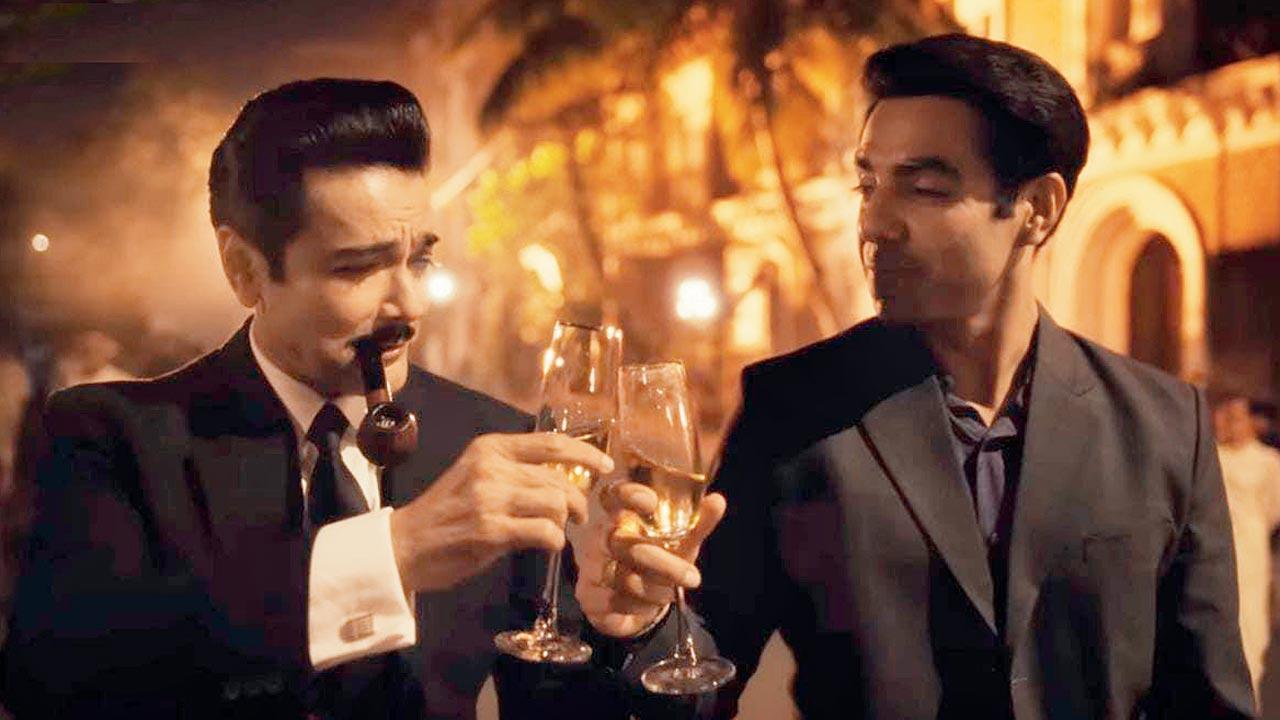
Subscribe to:
Posts (Atom)