Showing posts with label Jharkhand. Show all posts
Showing posts with label Jharkhand. Show all posts
Those who hadn’t watched Sereng tried to create a narrative that I was showing love jihad-N P K Purshotam
2:36 PM

As Sereng, a film from Jharkhand, becomes a breakthrough for the local film industry with shows planned for Delhi and Mumbai, Sunday mid-day speaks to its director about making an inter-faith love story that’s being panned for having a Muslim protagonist
Priyanka Sharma (MID-DAY; May 31, 2026)
Over 1000 km north from Mumbai, a love story is causing a rebellion, albeit on screen. Quintessentially, Bollywood has been the stable of romances of all kinds for a huge part of the Indian audience. But it seems like the intimate, largely overlooked film industry of Jharkhand has delivered a story of love that its people can call their own: Sereng, a film in the Nagpuri language.
But the rousing success of the feature is significant not only because it’s a huge win for the local cinema, but also because it’s political and defiant, something mainstream Hindi cinema has strictly stayed away from, lest it receives the wrath of the country’s volatile political climate.
“We are planning to arrange select shows in Mumbai, Chennai, Delhi, Hyderabad, Bengaluru, and Goa,” director N P K Purshotam tells Sunday mid-day over a phone call. Sereng, which stars Vivek Nayak and Shweta Prajapati, registered the biggest ever opening week collection — Rs 10 lakh — for a film from the Jharkhand industry.
Released on May 8, the film has so far amassed Rs 25 lakh. It isn’t that the film industry hasn’t seen such acclaim before. In fact, the 2024 Hindi-Kurukh film Humans Of Loop earned a terrific response internationally, so much so that it entered the Oscars 2025 race in the best original screenplay category.
But what Sereng does is use something as commercial as a boy-meets-girl story to speak on all matters considered taboo. And with packed cinema halls, it only shows that the Jharkhand film industry has a voice that cannot be ignored anymore.
“Weeks ago, I had emailed Meenakshi Shedde [film curator] about my film and just a day before its release, I got an email from her that said she wanted to send the film to the Toronto International Film Festival [TIFF]. I have submitted it. Let’s see what happens,” he smiles.
A tribal girl, Maaghi Munda, migrates to Ranchi after surviving a tragedy and finds an unlikely companion in Seraj Ansari, a musician. The film explores the themes of displacement, women’s agency, and corruption, but a section is not able to move beyond the names of the lead characters — Maaghi Munda and Seraj Ansari. As Purshotam sees people walk out of theatres visibly moved by the film, he finds it hard to make sense of the word “love jihad” that some are attaching with it.
“When we released our visual assets, no one objected to anything. The romance between the two characters is in the trailer itself. But just before the release, a big group started calling for a boycott. I was shocked. When the film released, word-of-mouth was so strong that the second show was housefull. Many political leaders praised it. But those who hadn’t watched the film tried to create a narrative that I was showing love jihad. But there is no love jihad in the film. There’s a dream that the two characters weave of getting married to each other. The story shows the guy’s contribution to her evolution, and she wants to be with him. There are some propagandists, some adivasi leaders, who wanted to hog the limelight, hence claiming that the film was a negative influence on women,” he explains.
Puroshotam is unfazed, owing to his conviction in his creation. “I told these people to watch the film and then debate with me. But no one dared to do that. A Hindu nationalist leader, Bhairav Singh, who is a big face of RSS-BJP in Jharkhand, said that he would burn effigies after watching the film. After watching the film, he hugged both the actors and praised the film. In an interview, he said that the film should be sent for the Oscars, but added, ‘Seraj se bachke rahiye [Be wary of Seraj]’. He is repeatedly making that statement. So I told him, ‘The Seraj that you have seen might be different. But if my Seraj is not hurting you, then why are you saying all this?’”
What makes the filmmaker particularly happy is that the things he has achieved with this film are far greater than the controversy it finds itself in. For a man born in the small town of Simdega, who would borrow cameras from his friends to shoot for a day, and made his first short film in just Rs 60, Sereng is a big-screen expression of his socially conscious voice.
Seraj is shown as a Pasmanda Muslim. But this is not the first time that the director has brought in front under-represented communities. In his claim-to-fame short, Bandha Khet (2021), which he shot in his village with a Rs 500 budget, his protagonist belonged to a marginalized caste.
“When I screened the film in my village, I was asked by savarna people, ‘Why have you made a scheduled caste person as your hero?’ I don’t know how they look at this but, for me, it’s a character. I have always felt that cinema is a medium through which you can give a very strong message to society. My village falls under the red zone area. It is a huge area for the Maoists. I remember how the village used to be shut at least three days a week because of the Maoist movement. In Sereng, I have explored why a young person becomes a Maoist. There are job issues, internal conflicts, political conflicts, and outer interference. But when he turns into one, he criticizes it. He tells his sister, ‘Hum ek aise daldal mei phas gaye hain jahan se nikalna mushkil hai [I am stuck in a marsh which is difficult to escape]’,” he shares.
Sereng is Purushotam’s second feature after Dahleez (2022), which was removed from theatres within a week, “despite running housefull,” he says, “Because Yash Raj Films’ Jayeshbhai Jordar (2022) had arrived.” Now, it’s been almost a month, but Sereng continues its run in theatres.
The films I couldn’t find money for, I have put my own money-Manoj Bajpayee
8:01 AM

With Joram depicting Adivasis’ plight in Jharkhand, Manoj says role required little prep as he was familiar with inequality meted out to the community
Mohar Basu (MID-DAY; December 6, 2023)
Joram is so much more than a thriller. Devashish Makhija’s directorial venture tells the heart-wrenching story of a father who goes to great lengths to safeguard his daughter. Through them, the movie looks at the plight of the Adivasi community in Jharkhand. It is these layers that resonated with leading man Manoj Bajpayee.
“The father-daughter equation [drew me]. The father’s voice is crushed completely; both of them are silent and yet, they connect,” says the actor, when we get on a call with him.
The movie premièred at the Busan International Film Festival and won praise at several international film festivals. With Bajpayee at the centre of the narrative, one can be assured of a moving performance. But he tells us something unexpected. Contrary to his practice of diving deep into his character before facing the camera, he admits this film required little prep as he had grown up around the people reflected on screen.
“I come from a village [Belwa, Bihar] where we co-existed with people who can be branded Naxalites. These are people who fall into the SC/ST category. Growing up, I knew them, observed them and lived around them. The inequality is powerfully felt. It always bothered me. Their anger can be understood, and an ultimate solution is yet to be found,” he laments.
It is heard that Joram could be shadow-banned in Jharkhand because of its depiction of Adivasi oppression. Bajpayee harbours no apprehension as he says,
“The film was passed by the CBFC [Central Board of Film Certification] with ‘U/A’ certification, without a single cut. The committee that watched our film had three people from Jharkhand, who found the portrayal authentic. This is not a political film. It discusses the lives and circumstances of people coming from an area we don’t usually discuss.”
The thriller is his third release this year after the delightful Gulmohar and the hard-hitting Sirf Ek Bandaa Kaafi Hai. How does he remain driven to tell such unique stories? “I always go back to the reason I became an actor. There was never a dream to be a big star or do commercial films. I have done those films, so that I could do movies like Joram. The films I couldn’t find money for, I have put my own money. When you choose unconventional stories, it’ll be difficult. This is a movie where we talk not about its earnings, but about its layers.”
Salman Khan's die-hard fan finally gets to meet his idol after 21 long years
8:43 AM

A 22-year-old from Jhariya, Jharkhand, arrived in Mumbai 21 years ago to catch a glimpse of Salman Khan, and never left. His every decision since, including opening a scrap shop beside the superstar’s residence in the hope that a neighbour calls him to collect raddi, has been spurred by crazed love and dogged devotion
Aastha Atray Banan, Arpika Bhosale (MID-DAY; November 12, 2023)
Birju Shaw is not a man who dwells on what didn’t work out. Clichéd though it may be, the self-made entrepreneur instead believes in another cliché—everything happens for a reason. So, even though he has waited 21 years to meet his favourite actor, Salman Khan, he’s not nervous. At least not yet. “Nervous kyun, ma’am?” he asks, while clipping on the car seat-belt with [yet] a steady hand.
We and Shaw are on our way to Yash Raj Films Studio in Andheri. This newspaper has been on this mission for the last two months. mid-day was doggedly determined to fulfil a jabra fan’s dream. If it happened around Diwali, it would only make it sweeter.
It’s the dream that brought Shaw, 44, from Jhariya in Jharkhand to Bandra riding on Howrah Mail Express. This was in 2002. “I didn’t come here to make a living—I came to see Sir. I thought, miloonga aur wapas chala jaoonga’. But things rarely work out as planned.”
Shaw was 22 then, with a young wife whom he had married four years ago, and a baby girl. He arrived in Mumbai on a hot Sunday in April, and spotted Govinda shooting on the steps of the Asiatic Library in Horniman Circle. He was finally in tinsel town! “Main khush tha! Pehle hi din hero ko dekha!”
The next day, he reached the famed address on Bandra Bandstand, Galaxy Apartments, where Khan lives with his family. “You know how they show in the movies…The hero has a bath and comes to the balcony to dry his hair with a towel…That’s how I had envisioned it. I waited till evening [outside Galaxy], but it didn’t happen. I didn’t eat or drink anything that day. I was disappointed but decided I wouldn’t go back home.”
Like lakhs of others who arrive by bus or train and alight at CSMT and Mumbai Central to try their luck in the city of dreams, Shaw hustled. His first job was changing Rs. 2,000 notes for a businessman at the bank for smaller notes, standing in line for hours. He’d make Rs. 200 for this, and did it for two months.
He collected enough money to start a puri-bhaji stall at Flora Fountain, which shut down in two days because a worker ripped him off by stealing. He then worked at a chai tapri near Wankhede Stadium; then at an agarbatti shop in Colaba. You’d imagine that the harsh knocks would have dissuaded him, but every chance he got, Shaw returned to Bandra. “I came here every Sunday! I’ve spent trying days on the footpath, but the desire to meet him never died.”
Khan’s body of work managed to evoke such devotion. Shaw names a song: O O Jaane Jaana from the 1998 Kajol-Salman hit Pyaar Kiya To Darna Kya.
By 2005, he was working at a bookstall at Flora Fountain; this is when Aamir Khan’s Mangal Pandey released. The premier was at Inox Theatre at Nariman Point. “I knew Salman would come!” Shaw jostled through the crowds as Rani Mukerji, Bipasha Basu, John Abraham and Salman Khan walked the red carpet. He was within touching distance. “Many of the stars touched our hands,” Shaw remembers, “But Salman sir didn’t even say hi. ‘Is this whom I have come to see?’ I thought, disappointed.”
This, Shaw, a Class X graduated, says, was a turning point. His goal now became to give his two children the education he never got. But he kept one eye on Khan. Fandom would sneak back each time he would read a news report about the star helping people in need, and giving himself to charities.
Shaw says he feels his idol’s life changed after the hit-and-run case of September 2002. “I feel he wanted to be good after that, to change what had happened. I had heard many tales of how he helped people around him. Phir mujhe unpe pyaar aya,” he says, “Insaan change ho sakta hai.”
Shaw moved from the book trade to the raddi business; from Flora Fountain to Sion Koliwada; from the footpath to a chawl in Dombivli. In 2007, he moved his family to Mumbai; his son was only two months old then. Hope continued to linger as Shaw wondered, “How can I get to Bandra West to be close to him?” By opening a scrap shop on Waroda Road, a stone’s throw from Galaxy Apartments, he was hoping that a neighbour to the star may call him to collect scrap, giving him a chance to catch a glimpse of the star.
And then one day, it happened.
“There was one Mehta saab who called me. He lived on the same floor as Salim Khan [Khan’s scriptwriter father]. Salman sir was exiting his father’s flat, coffee cup in hand. But since I was in the middle of dealing with Mehta saab, I didn’t get the chance to stop and speak to sir. After that, I managed to spot him on similar occasions.”
But that’s not what you call a “meeting”. “A meeting is when you chat, exchange words,” Shaw says.
Shaw now runs The Topaz bookstore and scrap shop at Waroda Road. His daughter Anjali is an advocate at the Bombay High Court, and son Alok (named after Khan’s role as a dutiful son in Baghban) studies science at Wilson College; he dreams of being a chef.
Shaw credits this social mobility to Khan. “If I had not come to Bombay, my daughter would not have grown up to be a lawyer.”
We are curious as our car turns into Veera Desai Road: What will you tell your idol? “What can I ask him? I cannot ask him a personal question like why he didn’t decide to marry.”
While Khan’s team was chalking out the promotion plan for the recent season of Bigg Boss, mid-day had reached out to them to share Shaw’s story. We followed up when we knew Khan would once again interact with the public to promote his upcoming release, Tiger 3. His team told us that when Khan heard of Birju’s story and love for him, he decided this was worth his time.
As Shaw unclips the seat belt to alight from the car, we see that his hand is not steady. “Maybe, I spoke too soon,” he chuckles, almost out of breath. But it doesn’t show as he sits patiently on a plastic chair outside the main studio building, clutching a gift for the star on his lap. It’s a rare book, a collector’s item—The Epic of Heroes—which he has been holding on to for 15 years.
Shaw’s relationship with the written word is nascent and yet he has managed to make himself a connoisseur of little-known, tough to find literature. “This book has stories of people from before the Mughals; they are unheard of. The most unique thing about the book is that the pictures in it are hand-crafted colour plates; you cannot find this today,” Shaw elaborates. He hopes Khan will appreciate the gift, given his own passion for painting.
Khan is inside a tent, a makeshift waiting area, where he is meeting others who have an appointment before us. We hear that one of them is an American of Indian origin, who has written a thesis on the star. Khan’s co-star from Tiger 3, Katrina Kaif, pops in at some point, and leaves in 10 minutes.
We are finally called in. The star is all grace and patience as Shaw tells him his story. Shaw knows that his dream to have had a glimpse of the star on his balcony now feels immature; he’s glad that didn’t happen. “I would have gone home,” he says, misty-eyed. “I wouldn’t have brought my children to Bombay, and they wouldn’t be who they are.”
He asks Khan if he can give him a hug; Khan smiles indulgently. He presents the star with a special paper for an autograph. Khan asks him to turn around so that he can use Shaw’s back to sign it. “Sir! Of course!” he says with military-like obedience, and flips about like a child playing hopscotch. He gleefully looks around the room and then back at us as Khan scribbles: Great to meet you Birju. Lots of love and all the best, Salman.
It’s clear to everyone in the room now that this isn’t a regular fan; Shaw is a disciple. Before we leave, Khan whispers something to Shaw. “What did he say?” we ask him on our way back.
“That,” he says, “is between me and my God.”

Shaw opened his shop, hoping to be called into Galaxy one day, to collect scrap and get a glimpse of Salman

Postcards From Jharkhand gave me an opportunity to see my home state in a way that I hadn’t done before-Rasika Dugal
8:16 AM

Rasika Dugal on re-exploring her home state Jharkhand and experiencing the culturally rich locale for the new show Postcards From Jharkhand
Letty Mariam Abraham (MID-DAY; August 7, 2022)
There’s very little that Rasika Dugal hasn’t done in her 15-year-long illustrious career. So, when the opportunity to host a mini travel series for National Geographic came her way, the actor grabbed it with both hands. The bonus was that the project had her revisiting her home state—Jharkhand.
“Postcards From Jharkhand gave me an opportunity to see my home state in a way that I hadn’t done before,” says Dugal, who found it tough to explore the state in just 10 days. “I wished I had double the time to soak in every experience before moving on to the next.”
Happy to share the beauty of the culturally rich state with others, Dugal informs that the Jharkhand government is actively working towards encouraging tourism in the state, and she wanted to rectify her functional travels to the state by hosting the series. “It took me seconds to say yes. It has always been on my wishlist,” says the actor.
Dugal indulged in cultural activities and gorged on the native delicacies. “I had relished Litti Chokha but had never eaten Futkal chutney,” adds the actor, who claims to have climbed the tree to pluck Futkal (scientific name Ficus Geniculata) for the first time.
“I painted Sohrai art on walls along with the women of the village and [saw] the entire Chau dance performance in an open-air space. I realised there was so much to know and learn about the place I grew up in,” says Dugal hoping to revisit the state again at leisure.
South blockbusters have sent a shiver down the spine of Mumbai film industry-Manoj Bajpayee
8:31 AM
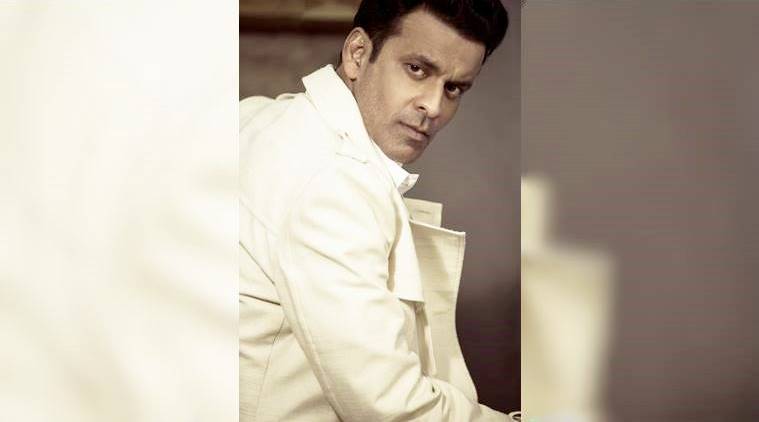
Anshul Chaturvedi (BOMBAY TIMES; May 2, 2022)
In the phase where halls were shut and anticipated blockbusters were on hold, OTT revitalised and rebranded Manoj Bajpayee yet again. However, he isn’t riding that wave to do mainstream projects at all. “I had a resolve that I will attach myself with middle of the road or independent cinema, and I am sticking to it,” he explains. And as to mainstream Hindi cinema, he has a word of caution: It has largely missed addressing the non-multiplex audiences for a while and so is unprepared for the current surge of the south. Excerpts from a chat:
You have acquired quite a degree of prominence via OTT in the phase when halls were closed and big-budget movies were on hold. But you haven’t used that to work with a big studio – you are instead working with a number of filmmakers who are, for want of a better word, non-mainstream. Stardom nahi chahiye aapko?
Star kaun hota hai hamare yahan? Dekhiye, star toh wohi banega, jo exhibitor aur distributor ki requirements ko puri karta ho. Woh requirement kya hai? Requirement hai: Larger Than Life. Extravaganza. Pushpa ne uss gap ko fill kiya, RRR ne kiya.
I had a resolve that I will attach myself with either the middle of the road cinema or with the independent cinema, and I am sticking to that. It is also about empowering all these filmmakers so that not only do I get to play those roles that I always wanted to play, work with scripts that I always wanted to be part of, but also, in that process, some very talented people are being empowered. And today one can take these decisions because of OTT. Kyunki agar woh (film) theatre mein nahi aayegi toh woh OTT pe aa jayegi.
When I work with Rahul Chittella (for Gulmohar), it gives me immense joy not only to play the character that I am playing, and be part of the film, which I am so proud of, but also I see a fantastic director-writer coming into the film world. Isiliye mere liye Rahul Chittella, Devashish Makhija, Kanu Behl, Dipesh Jain, ya phir Abhishek Chaubey, Ram Reddy – all of these directors have become very important for me. Mere liye bahut important baat hai. Main yeh nahi keh raha hoon ki industry ka har actor woh kare jo main kar raha hoon. Nahi, lekin woh mera resolve hai. I have been following this without even talking about it. But now I have to say this. I have to tell people what I am doing and why I am doing it. Inki filmein karte hue mujhe badi aantrik santushti hoti hai.
Independent cinema means smaller pay cheques for the actors, right?
That is true. Inke saath jab main kaam karta hoon toh mujhe apni bhi bahut saari sahuliyaton ko – jo dimag mein hai ki bhai yeh sahuliyat honi chahiye, ki itne saal ho gaye mujhe kaam karte hue, mujhe luxury chahiye – uss luxury ko mujhe cut down karna parta hai. Which is very good!
You are chasing the creative element over material luxury, or is this some sort of personal CSR, that you have to give back to the industry?
This is a responsibility that I have taken upon myself. I do things in a personal capacity, where I feel I have to give back, but I don’t talk about it. Many of us in the industry do what we can, where we can, but we keep it to ourselves.
Secondly, har actor ki yeh journey hai. Jahan bhi woh pahuncha hai uske liye bahut tyag karna pada hai. Maa-baap ka tyag karna pada hai, bhai-behen ka tyag karna pada hai, apne comfort ka tyag karna pada hai, apne ghar ka tyag karna pada hai. Woh kai raat rota-rota soya hai, bhookha toh chhor hi dijiye.
Har actor – actor as opposed to star?
Even stars. There are stars who have become so huge in our industry who have come from middle-class families. They have sacrificed so much before they have become what they’ve become. Lekin jab woh ban gaya hai toh (log) kehte hai samaaj ke liye kuch kyun nahi kar rahe ho? Samaaj ke liye karna na karna uska apna chunav ho sakta hai. Hum uss ke upar dabav nahi daal sakte hain. Kya yeh dabav hum corporates pe daalte hain? Kya hum unke accountable hone ke liye unke ghar ke bahar pradarshan karte hain? Nahi karte hain. Kyunki wahan par pradarshan kar ke humein kuch nahi milne wala evaj mein. Jab main Twitter pe ek star ko gaali deta hoon, toh uske evaj mein bahut kuch mil jata hai. Ek pehchan milti hai – ek identity.
(Pauses) We have always been looking for identity – for heroes. Unfortunately, we found our heroes in film stars. But they could not be. They cannot be. They are entertainers. They are actors.
This resolve to work with the names you have spoken of – is this purely on the basis of how good a filmmaker they are or is this because somewhere in your mind you are saying let me act as a bridge or let me use my stronger presence in box office because now I’m a name with a stature there, so let me bring this greater aura to their movies?
The intention comes from two-three things. I have always been looking for subjects that are genre-bending or stories which are not told or filmmaking that is not very familiar to our audience. These are my personal interests. When I watch a film say by Inarritu (Mexican filmmaker Alejandro González Iñárritu), it is a very new way of storytelling and I want to be a part of it. Where and how can I be a part of it? Definitely, Inarritu doesn’t know me. He is not going to cast me. So I have to find my own filmmakers here, whose films or storytelling I can be a part of. And yes, my own professional credibility will empower them to take the film forward.
Why is this space more interesting for you than conventional, mainstream Bollywood?
Had I chosen, say, only mainstream format, or maybe gotten a place as a celebrated villain, then I would have been finished long back, because even heroes look for new villains after five years. I would have been used, abused, and thrown away. Maybe because I wanted to do things differently, in my own way, so that I could be relevant, these filmmakers came to my mind as a rescue or as an alternative to really keep me going, keep my interest in filmmaking and acting going. And I’m still as interested. I am still as interested and enthusiastic and as angry as ever. That anger is only towards making these films possible for my own self and for the audience. I am really seeing to it that they get a platform and medium where they can showcase their work. Purely that.
Now, from Delhi, I have to go to Jharkhand where Devashish Makhija and the unit is waiting for me (for Joram). They want a certain kind of discipline from Manoj Bajpayee and they are not going to compromise on that. And I am not ready to compromise on my effort either. So everything is back-breaking, kneebreaking.
In 2012, Gangs Of Wasseypur in mainstream cinema and in 2021, The Family Man on OTT – they seem to be the projects that gave you the comfort to do things on our own terms, to be able to pick and choose, right? When you get a hit in the industry, it gives you the space for a while to make your choices
You said it. You just nailed it. You know, one Gangs Of Wasseypur (2012), one Rajneeti (2010), and then Special 26 (2013) has given me so much strength to do Aligarh (2016), Bhonsle (2018) and Gali Guleiyan (2018) and so many others...If I do Aligarh or Bhonsle, for me it is self-satisfying. I sleep very peacefully after doing it. And then The Family Man has given me choices that I never had till now.
That’s how I tried to maneuver my career. I always needed one project which could empower me, give me that strength to go ahead and be a part of these filmmakers’ vision which could help me to reinvent myself, and rekindle my energy. It’s all mutual when I am doing these films. For my next scene (as he was at a set) I’m ready to go, I’m all prepared. I’m ready to go. Everything is prepared. But having said that I must tell you that I am not a genre-specific person. After five-six films, you may see me in a complete mainstream film doing all sorts of stuff because it has attracted me, not the genre but the matter, the film as such or the passion of the director.
So you are saying that you’re not taking high moral ground ki mainstream nahi karna hai. But you are saying that I don’t need to be seen in mainstream for my inner satisfaction. If it works, it works, if it doesn’t work then it doesn’t work.
If it doesn’t work then it doesn’t work. I have done Baaghi 2 and Satyameva Jayate. I have done many films in the past, so the filmography itself says that I have done those films. I have never regretted, rather I have enjoyed because I don’t judge them. Because for me cinema is far more important. Films are important.
(Pauses) Itni blockbuster ho rahi hai (from the south). . . forget about Manoj Bajpayee and the likes of me for a minute, it has sent a shiver down the spine of all the mainstream filmmakers from the Mumbai film industry. They really don’t know where to look.
The south industry is shaking up Mumbai?
Yes! I have been part of Tamil films and Telugu films. I exactly know why this is happening.
Educate us. One reads so much about actors saying ‘the culture’ is different in making South films but one doesn’t get the specifics. Kya culture hai, koi samjhata nahi.
Koi nahi samjhaega aap ko kyunki apne aap ko criticise karna padega. Maine kaam kiya hai wahan pe. They are unapologetic, they are passionate, and every shot they take as if they are taking the best shot in the world. And so much thought and passion goes into it. Not even once do they talk about the audience in a demeaning way. They don’t say that the audience will understand. ‘Yeh massy hai, yeh chal jayega’ – they never talk in this language. They shoot a film as they have envisioned it, they don’t dumb it down for the audience because they hold their audience in the highest regard and their passion is supreme.
If you see Pushpa or RRR or KGF, the making of it – it is immaculate. Each and every frame is actually shot in a manner as if it were a life and death situation. This is what we lack. We started thinking about mainstream films only in terms of money and box office. Hum criticize nahi kar sakte na apne aap ko. So hum unko ‘different’ keh kar alag kar denge.
But it’s a lesson. This is a lesson for Mumbai industry mainstream filmmakers on how to make mainstream cinema.
As an observer, what you seem to be arguing broadly is that if somebody is looking for cinematic satisfaction as a viewer, he’s saying maybe OTT is giving me better choices. As an actor across all genres, you are doing half a dozen films outside of ‘mainstream’ Bollywood saying that is giving me more satisfaction and more space, and it excites me more. So your excitement quotient is not being met by the mainstream, at least at this moment in this space. But on the other hand, when it comes to the larger-than-life scale – then the south is doing better than Bollywood. Right?
I will tell you one thing – do you know that Ram Charan and Junior NTR and Allu Arjun and Pawan Kalyan were already stars in the B, C cities before their recent films became big hits. Their older films were already being watched in a dubbed version in all the interior places. Those were the films which were actually satisfying the B, C cities of this country. But we were satisfied with the multiplexes and popcorn films thinking that we are making the best mainstream cinema which is reaching everyone. No, it was not reaching everyone. That section – the audience of the smaller cities, the single screens – was really not entertained. They (mainstream Bollywood) stopped addressing those viewers. When multiplexes become very expensive and far away from their (audiences’) reach, then who is their star? Who is entertaining them all this while? For you, as a person who buys a ticket in a multiplex in Delhi, when you see RRR, Junior NTR is someone you have seen for the first time – but not for the viewers in the B, C cities. They have already seen him.
Someone told me before RRR’s release – “Bhaiyya, aap Junior NTR aur Ram Charan ko le kar chale jaiye Haryana ke kisi gaon mein, woh aaj bhi mob ho jayenge. Aap ka (Bollywood) superstar wahan mob nahi hoga kyunki woh audience unki filmein nahi dekhte hain. Woh inki filmein dekhte hai, dubbed version.”
That’s because Hindi cinema wasn’t giving them this content?
Upper middle class ko jab hero mila, aur multiplex bhi usi waqt aaye, uske baad humne ye space miss kar diya. Lekin multiplex mein jaana sabke bas ki baat rahi nahi. Ab Zanjeer, Naseeb, Khalnayak kahan banti hai? Ya Vishwanath? Kalicharan? Hamari upper middle class ka hero NRI ban gaya tha. Upper middle class ka aspiration woh raha. The successful huge megastars that we have created – they were not megastars of B, C cities.
----------------------------------------
‘THE MESSAGE WAS TO SPREAD HARMONY WHEN WE FIRST SHOT BHAGWAN AUR KHUDA TWO YEARS BACK’
Recently, a two-year old video (Bhagwan Aur Khuda ) of Manoj reciting a poem on harmony between religions has been circulating. He tells us, “This video was made during the lockdown. I was in Uttarakhand and Milap (Zaveri, film writer and director) wrote this poem and sent this to me, asking me to recite it. Mujhe poems recite karna waise bhi achcha lagta hai, and I really liked what he wrote, so I recorded it and sent it back to him. He then called me to say ki isko shoot kar ke bhej do agar wahan koi assistants hain jo mere saath phanse hue hain. It so happened that two assistant directors were there, stuck along with me, Sagar and Ashok. So we spent some time and shot it together.”
He reminds us that he also shot for another video during the first lockdown – Bambai Me Ka Ba for Anubhav Sinha. While it was initially posted online two years ago,it’s been seen more recently than it probably was then. “Jab uss samay daala tha tab bhi kaafi chala tha, lekin iss samay jis tarah se iss ka swagat ho raha hai woh unprecedented hai,” says Manoj, adding, “Mera apna maanna hai ki Bharat ko aage jaana hai toh sab ko saath mil ke chalna hoga. The message was to spread peace and harmony when we first shot this two years back. I am of course surprised that it has gone viral at this point. But as to why, perhaps the simplest answer is in what one of my co-actors messaged me: It was relevant then, it is relevant now, and it will always be relevant.”
‘I DELETED WHATSAPP TO STOP EXPECTATIONS’
While reaching out to Manoj for this interaction, we realised that our WhatsApp messages to him weren’t landing. The actor subsequently clarified that it was on account of him having deleted the app. “WhatsApp pe bahut saare known, unknown messages aate hain, everyone expecting you to respond to them quickly. There are invitation to all kinds of functions and then people expect you to respond in a positive manner. There are so many forwards – many of which are not in sync with my sensibilities – spams, unknown numbers and bulk messages coming in every day, unknown calls coming every day. It’s humanly not possible for any of us to entertain each and every message and answer them in positive. And your answer should match their expectation, which was getting a little too much. I also wanted to just keep a lot of time for my reading, for watching content and spending time with my family rather than just being stuck on the phone and being busy answering people. So I think it was just very, very important for me to delete it so that the expectations stop.”
Sir producer Shiladitya Bora turns director with Vinay Pathak-starrer Bhagwan Bharose
3:52 PM

Mohar Basu (MID-DAY; December 6, 2021)
Producer Shiladitya Bora backed acclaimed films Masaan (2015) and Newton (2017) during his stint at Drishyam Films, before branching out as an indie filmmaker and bankrolling Sir (2018). Now, the producer is expanding his skill set by turning director with Bhagwan Bharose. The drama, featuring Vinay Pathak and Masumeh Makhija, was recently wrapped up in Deogarh, Jharkhand.
For Bora, Bhagwan Bharose marks the realisation of his dream. “Many a time, I came close to directing my first feature, but failed. Finally, after a wait of close to 20 years, I wrapped up the shoot of my directorial debut. You need divine intervention to pull off a film independently, and I got that in abundance,” he says.
The director adds that if all goes well, the coming-of-age drama will reach the audiences before 2022-end. Pathak, who describes the movie as a sweet and special story, adds, “I’m lucky to be a part of Shiladitya’s first directorial venture. May this be the start of his illustrious journey.”
I came to Jharkhand with a lot of prejudice and fear about the safety of people-Avinash Tiwary
8:29 AM

As he shoots his next in Palamu that was once a hotbed of Maoist activity, Avinash Tiwary surprised by the changing face of the area
Mohar Basu (MID-DAY; September 22, 2021)
The natural beauty of Jharkhand has rarely been explored on screen by Hindi cinema, one of the few exceptions being Konkona Sen Sharma’s A Death In The Gunj (2016). Now, it is learnt that Bulbbul (2020) actor Avinash Tiwary has been stationed in Palamu — an area that was once a hotbed of the Maoist movement — since mid-August. He is said to be shooting for the screen adaptation of Bihar Diaries, which is based on Amit Lodha’s book of the same name and backed by Neeraj Pandey.
While Tiwary is tight-lipped about the project, he can barely contain his love for Jharkhand’s scenic beauty. “I came here with a lot of prejudice and fear about the safety of people. But the production team has ensured everyone feels secure and comfortable during the long schedule. To see young women jogging early in the morning without any fear, prepping for various sports and staff selection exams has made me believe in the evolving culture of the place,” he says.
The actor made the most of the opportunity by visiting the Palamau Tiger Reserve in Betla. “[The lack of] law and order in the past might have been one of the [reasons] the place was not explored much. The area has evolved beautifully, and can probably become a hotspot for wildlife and astrophotography enthusiasts.”
He hopes that more filmmakers showcase the state’s beauty on screen, thus encouraging sustainable tourism in the area.
A look at the states which are allowing 100% and 50% occupancy in cinemas
9:25 AM

Box Office India Trade Network
Jharkhand will be the last state to open cinemas with cinemas being
allowed to open on 1st March in Ranchi, Jamshedpur, Dhanbad etc. It will
be a 50% occupancy but that should be pushed up to 100% in time like in
most places.
India now has 100% occupancy allowed in most places with the real
concern as far as Hindi cinema goes being Maharashtra which is close to
30% of the Indian theatrical business for a Hindi film. The state has
seen a rise in case lately which means the 50% occupancy rule likely to
stay in Maharashtra for the time being.
There is one month to go till the release of some Hindi releases which
can bring in some footfalls so the hopefully the Coronavirus trajectory in
Maharashtra will be downward by then.
The situation across India in
terms of occupancy at the moment is as follows.
Maharashtra - 50%
Gujarat - 100%
Delhi - 100%
UP - 50% (Noida and Lucknow operating at 100% but most cities are still at 50%)
Punjab - 100%
Chandigarh - 100%
Haryana - 50%
Himachal Pradesh - 50%
Jammu / Kashmir - 100%
Rajasthan - 50%
Madhya Pradesh - 100%
Chhattisgarh - 100%
West Bengal - 100%
Bihar - 100%
Jharkhand - 50%
Assam - 100%
Odisha - 50%
Andhra Pradesh - 100%
Karnataka - 100%
Tamil Nadu - 100%
Kerala - 50%
This leaves Maharashtra, Uttar Pradesh, Haryana, Himachal Pradesh, Rajasthan, Jharkhand, Odisha and Kerala as the only states in the country to fully allow 100%. The above places contribute around 50-55% of the all India business for a Hindi film.
I got a job of cleaning utensils by the gutter for Rs 100 a day-Adarsh Gourav
8:25 AM

Going behind the scenes with Adarsh Gourav nee Balram from The White Tiger, already the Himalayan, global debut lead of the year!
Mayank Shekhar (MID-DAY; January 23, 2021)
It was a Chachi 420 situation, Adarsh Gourav, 26, recalls of the time he’d checked himself into a high-end hotel in Saket in South Delhi. In the morning, he’d step out wearing clothes similar to his character Balram Halwai from The White Tiger. At night, he’d go out shopping/socialising to the mall nearby, as Gourav.
Sensing something fishy, sundry hotel staff would follow him to his room, from a distance. “To fuel the suspense,” Gourav had instructed that no housekeeping staff be allowed in.
The night before he checked out, the hotel staff entered his space and were quite “scared” to see chart papers and pictures of Priyanka Chopra Jonas, Rajkummar Rao, Mahesh Manjrekar lying all over.
They were convinced he was a contract killer: “I was just fooling around with them,” Gourav says, revealing a naturally cheeky personality that merges so seamlessly, as he slips into Balram in Ramin Bahrani’s film as well.
But what was he really up to, during the day, anyway? Working at a ‘redi’ — a roadside tea/pakoda type stall in the neighbourhood. To get a hang of a person from the underclass, engaged in a menial job — in the existing world that he wants to desperately exit from.
It took Gourav a few days to find this pakoda job, because he’d introduce himself as Balram to his potential masters. And they’d want to see his identity card before hiring.
A Good Samaritan did have him on board, which is how he got “Rs 100 a day, to clean utensils by the gutter, with bandicoots running all over. I was just thinking, what am I doing here? I needed to get the hell out,” Gourav laughs.
Which is essentially Balram’s life in his village, before he becomes the driver in the city - both in Aravind Adiga’s Booker-winning angry novel, set in Delhi in the late noughties, and the Iranian-American Bahrani’s realistic adaptation, that dropped globally on Netflix on January 22.
Gourav also spent a couple of weeks in a village called Charkhari Basti in Jharkhand (where Balram is roughly from), befriending a family — living among them anonymously, to simultaneously relive his character’s backstory: “My biggest high of being an actor is the preparation time. That’s where I have real fun. I got three and half months for Balram!”
Gourav is himself from Jamshedpur, the steel township in Jharkhand that, in terms of childhood years, he also shares with Priyanka Chopra, his co-actor and co-producer on The White Tiger. In eighth grade, he moved to Mumbai with his parents, given his father’s transferable job.
One of the reasons for this move, he reveals, was his talent for Hindustani classical music. He’s a trained vocalist. His family felt the city would offer him better opportunities to pursue music as a formal career.
It was during his performance at the Kala Ghoda Arts Festival in Mumbai that someone from the audience checked if he might be interested in acting. As a teenager, he was “thrilled” at the prospect of being on TV. The gentleman asked him to meet with his portfolio. He came over with passport-sized photos to the casting office, as if applying for an Aadhar card.
“They were, like, what are we going to do with this? And so I went to Studio 19 in Juhu, paid Rs 3,000 to get my portfolio shot.” This helped Gourav land his first role on screen, as the younger version of Shah Rukh Khan, in Karan Johar’s My Name is Khan (2010).
On each day of his three-day shoot, different members of his family would troop in to the set to gawk, awe-struck by how movies are made — “Karan Johar looks taller in real life” — knowing that this was a one-off opportunity for young Gourav.
Only in 2013, did he take up acting seriously as a profession, circling around Mumbai’s audition sub-culture — testing for parts in ads and films, doing roles of varying lengths. After several fallow months in 2019, by the time Gourav was finalised for his dream lead debut, with The White Tiger, his co-star Rajkummar Rao knew of him as a talent of sorts from roles in Mom (2017), Rukh (2017) and SRK Jr.
“His commitment inspired me a lot,” Rao says, delving on how much of the gritty movie is an outcome of both of them jamming, and the director Bahrani, “taking his actors to a point that they start living in the moment.”
The White Tiger opened to rave reviews (especially for Gourav), first in the US, where it had a limited theatrical release, with multiple allusions made to Bong Joon-ho’s Parasite (2019) and Danny Boyle’s Slumdog Millionaire (2008). This serves as good omen for an Oscar consideration.
“I’d be lying if I told you we hadn’t thought of that [global stage with an Academy nom],” says producer Mukul Deora, who’s had the rights to Adiga’s book for a decade. Adiga’s 2008 book in turn is dedicated to Bahrani himself. They were close friends and room-mates at Columbia University. Between Bahrani, who’s read multiple drafts of the novel, and I — we’ve been with The White Tiger for quarter of a century,” Deora says.
To quote a dialogue from the film, The White Tiger is basically about how “there are only two castes in India - upper and lower. For the poor, only two ways to get to the top - crime and politics.” As true for Slumdog.
Although if and when Tiger > Slumdog, it’s because Gourav > Dev Patel. Infinitely so. Because Gourav is basically Balram, as he realised off-screen in Delhi, when a mini-truck driver, randomly outside the same Saket hotel, asked him to lift construction material from the boot once, for “Rs 20 chai pani!”
Having cracked one half of the syllabus (the backstory), the toughest nut, according to Gourav, was playing the Bangalore version of his character, who becomes rich and successful!
“I literally played it by the book. In the evenings, at the hotel, I would read multiple textbooks on body language - posture, how to sit, appear confident, be alpha in a room.” Guessing Balram from The White Tiger also would’ve gone through the same unlearning.
I am not flying home to Chandigarh for my family's safety-Yami Gautam
8:17 AM

Rachana Dubey (BOMBAY TIMES; June 6, 2020)
Before the lockdown, Yami Gautam was looking forward to moving into a new home in Chandigarh with her family. She was also on the verge of announcing three new films. In a conversation with BT, she spoke about being alone in Mumbai during the lockdown and why she isn’t in a hurry to fly back home, though we are now in the Unlock 1.0 phase. Excerpts:
You were busy completing your films and all set to announce new projects, when the lockdown was implemented. Was it a setback for you?
I like to see everything positively. I would have loved to tell the world about the three films that I had signed. I was busy with last-minute meetings on these projects. Since I couldn’t wrap up my work in time, I wasn’t able to go home. In times like these, you have to be patient. The financial and creative structures will go through a change, and I hope for the better. There will be apprehension in the air for a while and the industry will take some time to get over this.
Was it challenging to adapt to a new lifestyle, where you had to stay indoors for a long time?
I’ve inherently been an introvert and liked being indoors. Yes, I loved taking long walks in the open, which has not happened in a while. I miss that and also having my family around me. Other than that, life did not change so much. During the lockdown, I cooked, painted, read books, watched a movie or a show, did yoga and meditation. Though I am alone in Mumbai, I don’t feel lonely. I have my house help here at home with me. She’s from Jharkhand and she, like me, could not travel back home. So, we’ve been keeping each other company.
During such tough times, has it been difficult to live without your family?
It’s important to acknowledge that being alone in a city can get to anyone. It’s natural to complain about the situation, but we must also look around us and see what’s happening. We saw so many people walking long distances to reach home, not knowing where their next meal would come from. A lot of us don’t have to go through this and should be grateful for it. Acceptance is the only way to get through this positively.
Now that flight operations have resumed, do you plan to fly to Chandigarh to be with your family?
Though I cannot wait to be back in Chandigarh, I have two reasons to stay back in Mumbai. Primarily, it’s for my family’s safety. Right now, you have to be excessively cautious while travelling. Also, I have to finish the dubbing for my film, Ginny Weds Sunny. Once, I finish that I could think of going back. As for my house help, she prefers to be here because there have been Coronavirus cases in her village and travelling home is not advisable at the moment.
It has been an extremely emotional journey for me-Sonu Sood
8:26 AM

Kavita Awaasthi (HINDUSTAN TIMES; May 17, 2020)
Just a few days ago, actor Sonu Sood organised 10 buses for migrant workers to take them back home to Gulbarga, Karnataka. Now, the Dabangg (2010) actor has organised multiple bus services to take migrant workers to Uttar Pradesh (UP). Amidst the ongoing Coronavirus crisis,, Sood has taken extra precautions and after several efforts, managed to get official permissions from the UP state government to send migrants to their home towns.
“Helping him in the endeavour to help hundreds of migrants meet their families is Sood’s good friend Neeti Goel, who’s also a part of this initiative. Multiple buses left from Wadala, Mumbai on May 15 to various parts of UP including Lucknow, Hardoi, Pratapgarh and Siddharthnagar, as well as to cities in Jharkhand and Bihar. Sonu was present to bid goodbye to the migrants and even made arrangements for their meals,” says a source.
Opening up about the same, Sood says, “It has been an extremely emotional journey for me, as my heart pains to see these migrants staying away from their homes and trying to walk all the way home. I will continue sending migrants home until the last migrant reunites with his family and loved ones. This is something really close to my heart and I will give it my all.”
Most of them in Jamtara live in bungalows fancier than that of Amitabh Bachchan-Soumendra Padhi
8:18 AM

Soumendra Padhi was inspired to make the show after reading newspaper reports about a village, Karma Tanr, in Jamtara
Shaheen Parkar (MID-DAY; January 10, 2020)
After his Manoj Bajpayee-starrer Budhia Singh – Born to Run (2016), based on Orissa's youngest marathon runner, Soumendra Padhi is set to bring forth the crime drama, Jamtara — Sabka Number Ayega.
The web series, which drops on Netflix today, is inspired by true events in a village in Jharkhand, considered to be India's phishing hub. mid-day had previously reported about the ongoings in Jamtara in a 2017 issue.
Padhi was inspired to make the show after reading newspaper reports about a village, Karma Tanr, in Jamtara. "I was astonished to know that most of these youngsters, despite dropping out of school, have the acumen to dupe unsuspecting people and siphon off lakhs, if not crores of rupees, from accounts. I was told that one of the guys used to work at a call centre in Bengaluru. He knew the advantages of phishing; now, it is considered a lucrative business in the region."
A visit to Karma Tanr proved to be an eye-opener for the director. "I was shocked to see their lifestyle. Easy money has afforded them an extravagant lifestyle. Most of them live in bungalows fancier than that of Amitabh Bachchan; they all have the latest state-of-the art gadgets too. Making fraudulent calls is as easy as making any other call, for them. The show focusses on a group of young men running a lucrative phishing operation till a corrupt politician and a cop make their life difficult. "
The cast includes Amit Sial, Dibyendu Bhattacharya and Aksha Pardhasany. "We shot in Jamtara and Nashik. There are several local actors from Jharkhand, and some from the National School of Drama, among the cast," says Padhi.

Arjun Rampal and Sonu Sood unite for a comedy titled Sarvggun Sampanna based in UP and Bihar
7:47 AM

Actors in a comedy set in UP and Bihar that is set to roll in March-April
Avinash Lohana (MUMBAI MIRROR; January 10, 2018)
 Actor-filmmaker Sonu Sood is ready with his next production. Titled
Sarvggun Sampanna, it will feature him and Arjun Rampal in the lead and
is being directed by Karan Kashyap who has served as an assistant on
films like Bunty Aur Babli, Chak de! India, and Raavan.
“It’s a comedy set in Uttar Pradesh and Bihar which revolves around these two guys. We have been working on the script for the past eight-nine months. We’ll cast the actress soon,” confirms Sonu. He had bonded with Arjun over fitness while shooting for J P Dutta’s Paltan in Ladakh. “I felt Arjun could do justice to the role, which is really powerful. Arjun has loved the script.”
The film will be shot in March and April while the actors are scheduled to begin with reading sessions and workshops once Arjun returns from his Jharkhand trip. “Sonu had recently visited Farrukhabad, which is near Lucknow, to inaugurate a gym dedicated to his late mother, Mrs Saroj Sood. During the trip, he also decided to do a recce of the city and nearby places with the film’s director. Sonu was excited about the script as most of his college friends are from Bihar and he has been to the state a couple of times. They even plan to source costumes from UP and Bihar to make the characters look authentic,” informs a source close to the development.
Meanwhile, Sonu who is currently shooting for the Kangana Ranaut-starrer Manikarnika: The Queen of Jhansi, admits that he had always wanted to produce films. “When I was shooting for my first film, all my co-actors would tell me that I was headed in that direction but I never thought it would happen. But I learnt the craft in the course of the 70-80 films I have done across languages and realised that producing films would allow me to tell stories of my choice,” he says, explaining that it’s easy to act and produce a film simultaneously. “That lets you understand the script and the role well and helps design the film accordingly.”
Next up on production front for Sonu is a biopic on ace badminton player P V Sindhu. “The team has locked the script and is currently scouting for an actress to play the titular role,” adds the source.
Begum Jaan declared tax free in Jharkhand
7:50 AM

MID-DAY (April 10, 2017)
Srijit Mukherji’s upcoming release, Begum Jaan, is undeniably painting the town red. The film has been declared tax free in Jharkhand from its release day — April 14. Starring Vidya Balan in a compelling avatar, the movie not only promises path breaking performances, but also a hard hitting narrative that is sure to remain etched in the audience’s memory for a long time to come. Vidya plays a brothel madam.
A better part of Begum Jaan, set in the pre-Partition era, has been shot in Jharkhand. In fact, this is the first film of such scale to be shot almost entirely in the state.
Producer Vishesh Bhatt says, “Jharkhand played a lovely host. I extend a big thanks to the state government for this gesture. It will help the film to be available to more people because of the low ticket prices from day one.” What’s more, it has got a Rs 2 crore subsidy under Government Policy of Promotion of Jharkhand as a Film Destination.
Mukherji and Bhatt tweeted about the development yesterday, thanking the chief minister, Raghubar Das, for making the movie tax free.
Begum Jaan also features Ila Arun, Gauahar Khan, Pallavi Sharda, Rajit Kapoor, Ashish Vidyarthi, Chunky Pandey, Vivek Mushran, Ridheema Tiwari, Flora Saini, Priyanka Setia, Raviza Chauhan, Mishti Chakraborty, Poonam Singh Rajput, Sumit Nijhawan, Pitobash and Rajesh Sharma along with Naseeruddin Shah in a special appearance. The film is produced by Mukesh Bhatt, Vishesh Bhatt and Play Entertainment.
Sleep-deprived Vidya Balan to take a break after Begum Jaan's current schedule?
8:02 AM
Sleep-deprived Vidya Balan to take a breather before the next schedule of her film gets rolling
Shaheen Parkar (MID-DAY; July 11, 2016)
Playing the title role of Begum Jaan in Bengali filmmaker Srijit Mukherji’s Bollywood debut seems to be taking a toll on Vidya Balan. The actress, who essays the character of a brothel-keeper in the historical film, has been shooting at Patjor, a small village in Jharkhand. The actress, however, has been staying at Shantiniketan in West Bengal, a two-hour drive from the shoot location.
Says a source, “Vidya has to get up at 4 am daily for the commute. Since the film is a costume drama, getting ready takes time. An early start to the day ensures that things start rolling by 10 am. The unit has been shooting since last month and the grind is getting to her. By the time she is back at Shantiniketan, it gets late. She gets to sleep for barely four to five hours.”
Begum Jaan is based on Srijit Mukherji’s Bengali film, Rajkahini (2015), starring Rituparna Sengupta. Adds the source, “The shoot has also been exhausting due to the high temperature in the areas. Getting in and out of elaborate costumes, jewellery and hairdos is also gruelling. But the actress enjoys getting under the skin of her character. She is wearing personal vintage costume jewellery for the film.”
The current schedule is slated to wrap up on July 17. The unit will then move to New Delhi next month for the next shooting stint and a weary Vidya, we hear, is looking forward to uncompromised rest at home until then.
A source close to the actress says, “The shoot has been pretty exacting, but Vidya loves challenges and wants to push the envelope. The break, no doubt, will do her a world of good.”
Begum Jaan actress hospitalized; others working in extremely stressful conditions?
7:55 AM

Fainting spells, 'falling sodium-potassium levels' wreck havoc on the sets of Srijit Mukherji's Hindi debut
Natasha Coutinho (MUMBAI MIRROR; July 5, 2016)

“Raviza was given the day off but instructed to report on the sets the next day for shooting of the climax sequence. Some of the others have suffered fainting spells but as soon as they lurch back, they are held up by ADs and made to face the camera. A few more are laid low by viral fever but are still working. Shooting starts every day from 6 am and continues till post midnight, leaving little scope for rest. Vidya is the only one who has been keeping regular working hours,“ says a source from the sets. Producer Vishesh Bhatt chose not to respond to our text but director Srijit maintained that all's well with his debut Bollywood film and these are but minor hiccups, “Raviza has not been hospitalised. The sodium potassium level in her blood fell suddenly because of which her head was swimming for an hour. The doctor on the set attended to her and she recovered within an hour and we were soon back to shooting with her. The schedule has not been easy because of the erratic weather - scorching one moment and rainwashed the next. But we are braving along,“ he asserted.
First, technicians walk out of Begum Jaan. Now, nature plays spoilsport?
8:18 AM

DNA (May 30, 2016)
It’s not going to be smooth sailing for Vidya Balan’s Begum Jaan. The cast and crew of the Hindi remake of the Bengali film Rajkahini, directed by Srijit Mukerji, was to begin shooting in Jharkhand this week, but now the cyclonic weather has put a dampener on their plans. The actress has been asked to stay put in Mumbai till June-end when shooting will begin.
Earlier too, Begum Jaan had run into trouble. They were to start shooting when several department heads — cinematographer Ravi Chandran, costume designer Payal Saluja and production designers Amit Ray and Subrata Chakraborty — walked out for financial reasons. Also, the location was changed from Punjab, to Hyderabad, to Rajasthan and finally Jamshedpur and Ranchi in Jharkhand. While the crew landed in Jharkhand, Vidya and some of the cast were to join them this week when the news of the cyclonic weather reached them. The actress had to put her travel plans on hold once again. Vidya will now start shooting by June end as the sets will be ready by then.
Producer Mukesh Bhatt, however, denies there has been any change of plans or delay in shooting, “It’s nothing like that. Yes, there was a cyclone in Jharkhand and there was some damage to the sets we had constructed which we are re-building again. They will be put up overnight. But we were always starting the shoot in June. It was to begin on June 11 but now because of the cyclone, we are starting on June 13. Vidya will join us then.”
About Rajkahini
Rajkahini is a period drama based during the time when India got independence from British rule in 1947. It is centred around 11 female characters led by brothel owner Begum Jaan, who puts up a fight with the women in the brothel when they are asked to relocate because the boundary line dividing East Pakistan and India has been drawn right through the middle of the brothel.
Jharkhand boy makes acting debut in The Amazing Spider-Man 2
8:04 AM

Seema Sinha (BOMBAY TIMES; April 23, 2014)
Born and brought up in Jharkhand, Prashant Rai never imagined he would make his acting debut with a Hollywood film. The young actor, who currently resides in New York, plays a tourist in Marc Webb’s The Amazing Spider-Man 2. He features in a fight sequence between spider-man (Andrew Garfield) and Electro (Jamie Foxx).
About his experience, he says, “The set was extravagant with eight huge cranes lifting Andrew. Working in minus five degree temperature on windy nights is unforgettable.” An alumnus of New York’s Stella Adler Studio Of Acting, Prashant was personally trained by Broadway fame Rosalyn Coleman Williams. “That helped me get work easily through a mere audition,” he says.
Vinod Khanna almost gets hit by stone hurled by a mob in Jharkhand
7:46 AM
Sonali Joshi Pitale (MID-DAY; April 14, 2014)
Filmmaker Ashuu Trikha and his team recently wrapped up a long schedule of their film, Koyelaanchal, in Jharkhand. The unit shot in remote places in Jharkhand with its cast headlined by Suniel Shetty and Vinod Khanna.
A crewmember says, “As soon as we started shooting, we had to follow a lot of rules as we were shooting in areas near the coalmines and Naxal strongholds. We had to cover our faces with masks so to not inhale coal dust. We also had to eat jaggery and chickpeas to purge the dust from our system.”
On one occasion, a crowd surged around the set and soon the situation spun out of control. A source says, “With inebriated people creating a ruckus, we had to pack up for a day. We returned to the set only to find broken props.”
Trikha confirms the story, and reveals that a stone was hurled at Vinod Khanna during the film’s shoot. “In such areas, you can never tell who is a Naxalite and who isn’t. During the shoot, someone threw a stone at Vinod (Khanna). Luckily, he ducked in time. Undeterred by this incident, he continued shooting for the scene. The locals punished the miscreant on their own and we didn’t have to get the police involved,” he says.
Trikha adds, “Many of the locals we hired worked in coalmines; they would be intoxicated all day and they’d not come on time for the shoot. Thankfully, we had security personnel in Ramgarh who helped us stick to our schedule.”
Subscribe to:
Posts (Atom)