Showing posts with label Javed Akhtar. Show all posts
Showing posts with label Javed Akhtar. Show all posts
Javed Akhtar calls Western influence on Indian music an ‘embarrassment’
10:53 AM

Vishakha Pandit (HINDUSTAN TIMES; August 22, 2026)
With 1942: A Love Story returning to theatres this week, its music also got a new audience. As lyricist Javed Akhtar, who wrote songs such as Ek Ladki Ko Dekha and Kuchh Na Kaho, relives those melodies, he also contrasts it with the current state of music in Indian films and the influence of West in it. He says the influence has created an “embarrassment” around the traditional role of songs in Indian storytelling. “Ab jo log Western cinema se expose hue hain, unke andar ek embarrassment hai. Nayi generation sawal karti hai ki ye gaane ka kya chakkar hai?” he says.
Akhtar, however, argues that songs should not be dismissed simply because they are unrealistic. “Film mein gaane hero ga raha hai, party mein khade ho kar gaa raha hai, toh badi fake baat hai. Fake toh kya hai? Art ne theka liya real hone ka?” he says.
For him, a song’s worth lies in what it adds to the experience. “Wo interesting ho, seductive ho, aur koi achhi value aapko de raha ho, sense of beauty de raha hai, that is also a good value,” he says.
The 81-year-old also sees contemporary film music as increasingly divided between two extremes. “Ek toh jin mein double meaning ho, aur doosre jin mein koi meaning nahin. Toh beech mein ek meaning ka gaana nahin bachta,” he says.
Akhtar believes the problem is not the presence of songs in films, but their weakening connection with the narrative and characters. He also believes the current state of film music cannot simply be blamed on writers or composers. “Ab unhone jo kiya hai, woh ek bahut hi bada compromise hai. Ab ke gaane background mein hote hain, jinka aam taur se foreground se koi vaasta bhi nahin hota hai. Gaane toh achhe tab honge, jab unn mein koi narrative ka participation ho, character ka representation ho,” he says.
There is also an ongoing debate around the lyrics and visual treatment of contemporary songs. Recently, Guru Randhawa’s Fine Shyt faced criticism over its portrayal of women and alleged misogynistic undertones, while Badshah’s Tateeree drew backlash over its explicit lyrics and visuals. Akhtar’s comments come amid this wider conversation around the responsibility of artists and the place of meaning and context in popular music.
“Don’t blame the writer or the music director; they are very talented people. What they have done is a huge compromise.”
Shabana Azmi on what happened at Chalo Sansad march in Delhi: "Tear gas and lathi charge were unwarranted"
4:37 PM

Niharika Lal (BOMBAY TIMES; July 22, 2026)
Five days before she reached Jantar Mantar, Shabana Azmi and Javed Akhtar had written to PM Modi as concerned citizens and former nominated members of the Rajya Sabha, urging him to begin a dialogue with Sonam Wangchuk and the students. The letter was emailed, faxed and personally delivered, and an acknowledgement promised a response within two days.
When no reply came, Azmi decided to join the protest herself. “We waited two days, then three, then four. On the fifth day, I decided I would come here,” she said at Jantar Mantar on Monday.
Azmi maintained that her presence was never about herself. Standing in solidarity with the students, she said her presence was meant to draw attention to the young people who had shown the courage to raise their voices.
She also rejected claims that the students were being used for political ends. Speaking to a news channel, she said, “It was a sea of young people. I have never seen such a scene in my life… I have never been involved with any political party. I have never been a member of any political party. On record, I’m telling you, nor do I intend to be. I have never been a member of any political party because I have always believed that joining a political party means the party’s truth becomes your truth, which could be a one-sided truth. When I was in Parliament, we (she and Javed Akhtar) were Presidential nominees. We were with no party.”
‘MAIN HAMESHA NAHI BOLTI HOON. JAB MUJHE KOI CHEEZ ANDAR SE JHINJHORTI HAI TAB BOLTI HOON’
About the protesters, Shabana Azmi told reporters at Jantar Mantar, “They are saying violence kiya, jo bilkul sachh nahi hai. Ek tarfa jo sach bata rahe hain woh nainsaafi ho rahi hai yahan.”
When asked how she responds to being repeatedly labelled anti-national, she said, “Iss baat ko dil se nahi lagana chahiye. Mujhe kitni baar anti-national kaha gaya hai.”
At 75, Azmi said she sees speaking out not as activism but as a moral compulsion. “Main hamesha nahi bolti hoon. Jab paani hadd se guzar jata hai, jab mujhe koi cheez andar se jhinjhorti hai tab bolti hoon... ab meri 75 saal umar ho gayi hai, main bahut kuch dekh chhuki hoon.”
She added that she understands the resolve required for a hunger strike because she has experienced it herself. In May 1986, she joined filmmaker Anand Patwardhan and activist Gurubai Bhaskar Hamza in a five-day hunger strike demanding rehabilitation for slum dwellers displaced from Colaba in Mumbai. The protest was successful.
Throughout the protest, Azmi posted several videos from Jantar Mantar and recited a verse by her father, Kaifi Azmi: “Koi toh sood chukaye, koi toh zimma le, uss inqalab ka jo aaj tak udhaar sa hai.”
-----------------------------------
Upala KBR (MID-DAY; July 22, 2026)
When you express solidarity with others, you come back strengthened. That’s something Shabana Azmi always believed in. And the veteran actor experienced it over the past three days as she joined the ongoing protests — led by Abhijeet Dipke’s Cockroach Janta Party (CJP) — at Jantar Mantar in New Delhi, demanding education reforms and the resignation of Union Education Minister Dharmendra Pradhan over the NEET paper leak.
Since July 19, Azmi has been at Jantar Mantar, even joining thousands of youth in the Chalo Sansad march on July 20. Talking to mid-day from New Delhi, she said, “These young people have been pushed to the wall, and they have chosen to resist with courage and dignity.”
The actor criticized the police that resorted to lathi charge and tear gas even as the students protested peacefully on Monday. According to Dipke, over 150 protesters were undergoing treatment in hospital due to the violence.
Expressing her disapproval over the police’s handling of the situation, Azmi said, “What impressed me most was that despite their pain, their anger, and the provocation, the students remained determined to protest peacefully. The tear gas and lathi charge were completely unwarranted and condemnable. Who treats young students this way when all they are asking for is dialogue?”
A dialogue with the students, in fact, is what Azmi and her husband, noted writer and lyricist Javed Akhtar — both former members of the Rajya Sabha — sought from Prime Minister Narendra Modi. Azmi revealed that they wrote a letter to the PM, urging him to understand the students’ concerns.
“We received an acknowledgement, saying that we would get a reply within two days. When four days passed without any response, I decided to go to Delhi in support of the students. We are constantly told that our youth are our greatest strength. Then why were their voices not even being heard? When I went to Jantar Mantar, I saw hope and strength. We often dismiss Gen Z as careless or disengaged. I think the failure is ours. We have failed to provide them with the leadership that inspires trust. Yet today they are inspiring us, even to the extent of risking their own lives for what they believe is right,” said Azmi, referring to the protesters’ hunger strike.
The actor’s participation has been criticized by some sections, who claimed her presence was giving a political colour as she is seen as aligned with Left-wing politics. “I have never been a member of any political party,” she asserted, before adding that a patriot must hold those in power accountable for the betterment of the country.
“Democracy is strengthened by questioning, not weakened by it. I’ve been called many things over the years. Both Javed and I are criticized with equal intensity by Hindu and Muslim fundamentalists, which says something about our refusal to belong to any ideological camp. The real question is not what people call me. The real question is whether young citizens asking for dialogue deserve to be heard.”
Hearing their concerns and acting on them is the need of the hour, Azmi insisted. For her, the students are the “real story”. “Throughout history, young people have been the harbingers of change. They are our greatest investment. Let us nurture them, undertake the educational reforms they have been demanding, overhaul a system that too often fails them, and give every young Indian an equal opportunity to realize their potential.”
When I saw Lagaan's first cut, I realized what a masterpiece it was-Javed Akhtar
9:36 AM

Twenty-five years later, Aamir Khan, Ashutosh Gowariker, Javed Akhtar & AR Rahman reflect on the journey of making the Oscar-nominated classic Lagaan
Debarati S Sen (BOMBAY TIMES; May 28, 2026)
Twenty-five years after Lagaan: Once Upon a Time In India changed the landscape of Hindi cinema, its creators came together at Mumbai’s Mehboob Studios on Monday evening for a nostalgic conversation about the film.
The panel discussion, moderated by Meiyang Chang, featured actor-producer Aamir Khan, director Ashutosh Gowariker, lyricist Javed Akhtar and composer A R Rahman, who reflected on the enormous risks, doubts and creative ambition behind the film.
Released in 2001, Lagaan, a period sports drama set in a drought-stricken village under British rule, earned an Academy Award nomination for Best Foreign Language Film, introducing Indian mainstream cinema to a global audience.
FROM DOUBT TO A CULT CLASSIC
Opening the evening, Aamir admitted that no one involved with the film imagined its legacy would endure for decades. “We never thought people would remember this film for 25 years. At that time, we didn’t even know whether the film would work or whether audiences would like it. It feels exciting that something we made so many years ago is still relevant.”
Calling the gathering the first official event marking the film’s silver jubilee, Aamir added that the team remains overwhelmed by the affection the film continues to receive.
A STORY BORN OUT OF FAILURE AND FAITH
For Ashutosh, Lagaan emerged during a difficult phase in his career. The filmmaker recalled that after two unsuccessful films, he wanted to create something entirely original and emotionally stirring.
He said the idea began with seven unlikely heroes, men burdened with differences and conflict who eventually unite for a common cause. As the screenplay evolved, so did his dream team. “Only Aamir was in my mind for the role,” Gowariker shared, adding, “Along with that, mere mind mein yeh zaroor tha ki iss film ka music A R Rahman ko karna chahiye aur lyrics Javed Akhtar ka hona chahiye, and the entire HOD list including Bhanu Athaiya ji for costumes.” But convincing Aamir proved difficult.
‘BAHUT BURI KAHANI HAI YAAR’
One of the evening’s most entertaining moments came when Aamir revisited his now-famous rejection of Lagaan. The actor revealed that when Gowariker first narrated the premise - villagers playing cricket against the British to avoid paying tax - he was convinced the story would fail.
“I told Ashu, ‘Bahut buri kahani hai yaar. This story does not make sense to me,’” Aamir recalled. Three months later, Gowariker returned with a completed script and requested a full narration of three-four hours. Aamir admitted he agreed to listen with “zero expectations”, believing he would reject the film once again. Instead, he found himself completely absorbed.
From the moment he started narrating, I was hooked,” Aamir said. “When the narration ended, I was gobsmacked. I had never heard such a brilliant script before.”
Even then, the actor hesitated. Producing the film himself felt like a terrifying prospect, especially after watching his father struggle as a producer in the industry. “Mujhe der saal laga before I said yes to Ashu for Lagaan,” he said.
ON SEEING THE FIRST CUT, I REALIZED IT WAS A MASTERPIECE: JAVED AKHTAR
Javed Akhtar confessed that he too believed the project was commercially risky, perhaps impossibly so for its time. He recalled feeling protective towards Aamir, whom he had known since childhood, having written Yaadon Ki Baaraat, one of the young actor’s earliest screen appearances. "Maine socha agar main nahi samjhunga toh inhe kaun samjhayega?" he said, with the wry warmth of a man recounting his own spectacular misjudgement.
“I felt this film was a perfect list of things that would never make a film work in those days. Uss zamane belief tha ki period films don’t work. Next was cricket ek film-friendly game nahi hai, after all Aamir’s Awwal Number had flopped. Heroes wearing dhoti – that wouldn't work in a 2000 film, box office nahi manega. Even my Gaabar Singh decades ago was seen wearing pants. And throughout the film, characters cricket seekh rahein hain. I was worried for them, ye kya film hai.”
He said Lagaan seemed to contain every element considered “unmarketable” in Hindi cinema then: a period setting, cricket as the central theme, heroes in dhotis, and a narrative built around learning a sport rather than conventional action or romance. “I called then both and bahut samjhaya ki yeh film na banaye. But, bahut khushi ki baat hai ki they did not listen to me and went ahead and made the film. And I decided ki main apna kaam imaandaari se karunga, picture jaisa bhi ho, gaane acche hone chahiye. When I saw the first cut, I realized what a masterpiece it was. I am very proud of this film.”
RAHMAN ON CREATING A TIMELESS SCORE
For A R Rahman, the challenge lay in ensuring the music matched the film’s epic emotional scale. The composer said he approached Lagaan with the intention of making its soundtrack timeless, which led him to collaborate with legendary singers Lata Mangeshkar and Asha Bhosle alongside Javed Akhtar’s lyrics. Rahman also shared a moving memory from the film’s background score sessions, explaining how he experimented with hybrid orchestration techniques because certain instruments were unavailable in India at the time.
Describing one recording session, he recalled seeing Aamir sitting silently in tears after hearing the music. “He asked me, ‘What have you done to my movie?’ - in a good way,” Rahman said with a smile. “That was the first time I saw the birth of a producer who was so emotionally invested in every aspect of the film.”
I have come this far is as I have the luxury of time and the freedom because I’m single-Jamie Lever
3:08 PM

Set to perform in the city this week, comedienne-actor Jamie Lever gets candid about her comedy style and the privileges of being Johnny Lever’s daughter
Priyanka Sharma (MID-DAY; May 17, 2026)
This is that time in Jamie Lever’s comedy calendar when she’s revising her act, tweaking jokes, adding something and subtracting what doesn’t work. The last-minute changes are on, as the comedienne gears up for The Jamie Lever Show in the city in less than a week. Giving her company in her pursuit is her uncle and mentor, Jimmy Moses. “I spent three months working on the script. My uncle has been with me throughout. As they say, comedy is a serious business,” she begins.
Lever shares she consciously approaches even a dancing reel on Instagram with the same sincerity. “A lot of young girls are looking up to me. I get messages like, ‘Didi, I’m inspired by you. We want to be multifaceted like you.’ So, I want to ace every performance, whether I am with Salman Khan on Bigg Boss or I am making a small reel,” she explains.
Naturally, there are consequences, or compromises as Lever, one of the busiest comediennes in the country, puts it. “I compromise a lot in my personal life. I’ve reached an age where one should have kids. There are these thoughts like ‘I’ve come so far, but I don’t have a lot of things that my friends have.’ But I give priority to comedy,” she says. “The only way I have come this far is because I have the luxury of time and the freedom because I’m single.”
If today her goal is to inspire younger women, the 20-something Lever had a far more personal one. “When I began, my fight was just to prove myself, to prove that I deserve to be here. My dad also said, ‘Tu thodi na paise ke liye kaam kar rahi hai. But if you want to be in this field, you have to prove yourself.’”
She recalls how protective he had been as a father, and how it surprised her that when the time came, he took a step back and let her take the stage. “He was shocked when I shared my wish to be a comedienne. I remember I was in the UK, doing a Masters in Marketing. I had a job. So, he had no idea. I also used to think that I might not get the permission to do it, and that I didn’t have what it takes to be a comic.”
“Since childhood, he has been very protective. He had a lot of rules: no sleepovers or trips, no coming home late. From there, to letting me be in this field and lending me his support the way he did was a big shift. When I decided that I was going to work in this field, my mother was surprised by how my dad’s heart just changed. He let me go out of his protective arms. My mother says that he changed as a human. He told me, ‘I could see some talent in you and I don’t want to be the one to stop that.’”
Today, of course, the father-daughter duo performs on stage, another anomaly in a society where despite several female star kids, the expectation remains that the male child will continue his father’s legacy. “Growing up I didn’t even have any examples of a comedian’s daughter making it in comedy,” she says. It was around 2012 that Lever began her career, performing at The Comedy Store, Mumbai. She made her television debut on the 2013 season of Comedy Circus, titled Comedy Circus Ke Mahabali.
While her father let her out from under his wings, his surname went with her, and Lever confesses it has brought immense privilege. “When I started my journey, I automatically had a fan following, which I did not have to work for. And that happens with star kids,” she says.
Being her father’s daughter also means easy acceptance from within the industry. Over the last few years, Lever has risen to popularity mimicking several Bollywood celebrities like Farah Khan, Kareena Kapoor Khan, Sonam Kapoor and the late Asha Bhosle.
“I get a lot of support from the industry because everybody feels ‘Yeh toh apne Johnny bhai ki beti hai’. In fact, so many people tell me to mimic them. Once, Usha Uthup ji called me, saying, ‘You have mimicked Asha [Bhosle], do me too.’ Javed Akhtar called me to his house and asked me to perform for him and Shabana ji,” she shares. But the comedienne is mindful that impersonations don’t turn into insults.
“I have always been clear that I can’t disrespect my father’s colleagues or his fans. Just imagine if I were to do below-the-belt comedy, it would be so disturbing for his fans,” she says, adding, “My dad always told me, ‘Don’t take advantage of this privilege’.”
Boman Irani puts up gala to celebrate screenwriters; Aamir Khan, Karan Johar to attend the event
2:46 PM

Priyanka Sharma (MID-DAY; April 30, 2026)
During the 2020 lockdown, actor and director Boman Irani began Spiral Bound, an initiative that trained aspiring screenwriters. Six years on, it has grown into a nurturing hub for writers. The actor, who had announced a writing competition after conducting 870 sessions, is set to felicitate the winners at a special gala in Bandra on April 30.
Irani told mid-day that the idea of the competition was to instill confidence in the writers. He explained, “Many of them are afraid to share their work. They are unsure whether the writing is good or bad. So, I told them to just write, send it ahead, and come for the gala.”
Noted writer and lyricist Javed Akhtar will felicitate the winners. Other attendees include Aamir Khan, Anil Kapoor, Karan Johar, Sooraj Barjatya, and Anupam Kher.
Irani added, “I told the students that so many people are turning up to support writers. If we don’t support writers, we can’t complain that we are not getting [good] stories.” We got to support the writers, pay them well and give them a place on that stage. They set the ball rolling, and if you don't respect and encourage that, we have no right to complain,” he said
Top 10 among the applicants will be announced at the event, while the best three will be rewarded with a trip to Moscow.
Irani shared. “The Russian Film Confederation is sponsoring them a trip to Moscow. The trip will take place in June. And it’s not just about the trip, what matters is that they can turn around and say that their writing got them there, something that everyone say has no money and gratification. But there is a prize, a victory and gratification. And that’s what I'm proud of, because what it's doing is waking up people. Finally you get messages from people, saying, ‘I'm so glad you did this. Finally I'm not afraid to put pen on paper’,” he said, adding that Spiral Bound precisely aims to make writers more confident about their skills.
“No one is ever scolded or reprimanded in the class, even if they ask stupid questions. Ask the questions. Clarify your doubts. There's so much of learning. It's not just a community. It's not a support group. It's where serious, hardcore, high-level learning happens. I've been trained by Oscar-winning writer Alexander Dinelaris Jr, whose next is with Tom Cruise. He teaches me, I share. It’s as simple as that,” Irani said.
Apart from teaching, Irani also makes sure he helps students earn opportunities by recommending them to the right people in the industry.
“It has to be done, right? Otherwise what’s the point of all of this? We had a girl in our class in 2020. I have her a prompt to write a scene. She wrote the scene and it had four-five lines in it. But I told her to apply what we teach. Today, she is writing multiple web series. I'm not trying to be ‘Mr Nice Guy’. I have a great love for cinema and I'm looking forward to good movies. So, this is out of a very selfish reason.”
During Covid, Asha Bhosle and I became very close because we were stuck in Lonavala and Khandala-Shabana Azmi
4:11 PM

Shabana Azmi on the artistry, fearlessness and charm of Asha Bhosle
Debarati S Sen (MUMBAI MIRROR; April 21, 2026)
For Shabana Azmi, the voice of late Asha Bhosle has always been more than music — it is a feeling, a memory and a lifelong companion. Her tribute reflects not just admiration for an extraordinary artiste, but deep affection for someone who became family over the years.
A VOICE THAT DEFINED GENERATIONS
For Azmi, Asha Bhosle is far more than a celebrated playback singer - she is an irreplaceable artistic force. “Asha ji has been my most favourite singer of all times. Unki aawaz mein jo ras hai jo shararat hai — it’s unmatched,” she says, capturing the essence of a voice that brought emotion, playfulness, and depth to every song.
Over the years, the legendary singer lent her voice to several songs picturised on Azmi, elevating her performances on screen. Memorable collaborations include Phir Se Aaiyo Badra Bidesi from Namkeen and Ambar Ki Ek Paak Surahi from Kadambari, where Asha’s evocative singing perfectly complemented Azmi’s nuanced acting. In Sameera (1981), Bhosle sang multiple tracks, including Zindagi Hum Tere Haal Par and Jaane Na Doongi, further strengthening their artistic association.
MEMORIES BEYOND MUSIC
While their professional collaborations were significant, it is the personal moments that Azmi cherishes most. “During Covid we became very close because we were stuck in Khandala and she with family were in Lonavala,” she recalls. “She would cook the most delicious meals for us and between Javed and her we would be regaled with hilarious anecdotes from the industry and cheeky humour,” she says.
These shared experiences reveal another side of the legendary singer — one marked by warmth, wit, and generosity. “Her memory is phenomenal and she could be very candid,” Azmi adds, evoking evenings filled with laughter, storytelling, and companionship.
FEARLESSNESS AND A SPIRIT OF REINVENTION
What stands out most for Azmi is not just Bhosle’s voice, but her fearless approach to life and music. “What I admire most is her gumption, her fearlessness and her desire to take risks and push her own parameters,” she says.
This spirit of constant reinvention has defined Bhosle’s remarkable career, allowing her to experiment across genres and remain relevant across decades — qualities that Azmi deeply admires. “Her voice will remain immortal but what I will cherish are the memories she has left behind for us,” she says.
Javed Akhtar opens up about Asha Bhosle's ‘agni pariksha’ moment
10:45 AM

As told to Upala KBR (MID-DAY; April 13, 2026)
They say that a small tree can never grow under the shade of a big one, but if anyone proved it wrong, it was Asha ji. Lata ji [Mangeshkar] was a goddess [in Hindi playback singing]; no singer could hold their own in front of her. Many singers tried to sing like her. But Asha ji developed her own style of singing and created her own identity. The Mangeshkar sisters ruled the Indian film music industry for over 55 years.
Life experiences create depth, and that was present in both of them. She sang her first song when she was only 10 years old. That means an 83-year career and what an impact she has left!
I will always remember what Ashaji told me once. She said, ‘When you look for happiness in life and relationships, you may be hurt. True happiness lies only in your work. If you think you have done your work well, that will give you true satisfaction.’
Among my favourite songs that I had written for her is Radha Kaise Na Jale from Lagaan [2001]. There is also Kanha Jo Aaye Palat Ke from Sardari Begum [1996]. When I would write the lyrics, I would know that only Ashaji could sing it.
In Rahul Rawail’s film [Aur Pyaar Ho Gaya, 1997], she was to sing a song with Nusrat Fateh Ali Khan. It was a challenging tune, and Asha ji realized it was her agni pariksha. She heard it twice with rapt attention before going behind the mic. When she sang it, Nusrat Fateh Ali couldn’t stop saying, ‘Waah, waah!’
My sister, a star
Javed Akhtar recalled how he interviewed Lata Mangeshkar for a TV channel, where she reflected on her sister Asha Bhosle’s versatility. He said, “Lata ji told me, ‘Asha can sing the songs that I have. Lekin Asha ne jo saare gaane gaye hai, woh saare gaane main nahin gaa sakti’.”
The fact that I share such a cordial bond with Honey Irani goes to her more than me-Javed Akhtar
4:46 PM

Amina Ashraf (BOMBAY TIMES; February 28, 2026)
The Urdu Academy in Lucknow was housefull as writers, professors, theatre practitioners, historians, veterans and cultural figures gathered to welcome literary stalwart Javed Akhtar on the occasion commemorating theatre doyen Shankar Dayal Tewari’s 105th birth anniversary. At the event, the free-wheeling conversation on art, literature, society and cinema naturally opened with Lucknow, as Javed Akhtar spoke about the pride he feels in having spent his early formative years in the city.
Lucknow’s influence, he said, has never faded. “From etiquette to morality, everything I am, comes from here, and even today, that influence remains. Main jab Lucknow aata hoon, toh ehsaas hota hai logon ke manners, taur-tareeqa, baat-cheet mein ki aaj bhi kitna Awadh baaki hai. You see people who left Lucknow 25 years ago, settled elsewhere, still hold pride that they are from this city. They know that if you’re from Lucknow, you have to carry yourself in a certain language and demeanour.”
Drawing a vivid metaphor, he compared his relationship with the city to a fish and water. “It’s like a fish living in water. As long as it’s there, it doesn’t realise the value of water. But when the fish goes out and then comes back, only then does it truly understand what water means. That’s Lucknow for me,” he said.
Lucknow’s distinctive Language, too, became part of the discussion. “It is interesting that people of Lucknow traditionally do not use main; they use hum. People who are not from Lucknow find it a symbol of arrogance. The reason was never pride. Hum speaks of promoting a neutral gender. It is almost vulgar to say, “main jaa rahi hoon or main jaa raha hoon that’s a crude way to talk.”
An alumnus of Colvin Taluqdars College, Akhtar credited the school with shaping his ambition and taste. Recalling an anecdote when he got taunted for asking for expensive shoes, “Children today are born and brought up with sensitivity; it was not the case during our childhood,” he said.
“Today’s parents talk about childcare and understand sensitivity, abhi toh sheeshe ke bachche hain. Hamare zamaane mein jab chaaha peet diya, jab chaaha kuch keh diya. Ya toh mujhe meri aukaat ke hisaab ka school milta, par mujhe Colvin bhej diya. I was around eight years old and wanted the expensive shoes my classmates wore. Rona dhona macha kar, mujhe vo joote dila diye gaye the. Later, I was taunted so much for it that it is still etched fresh in my mind, ‘Bhai, inke toh ameer shauq hain. 19 rupaye ka joota pehente hain, jo ki school fees se zyada ke hain. 17 rupaye school fees aur 15 rupaye inki tuition fee hai’. So altogether I was an expensive child of the family,’’ he laughs.
‘Poets were discussed as important people in my home’
Javed, who spent days struggling on the roads of Mumbai before finding his footing, reflected on his journey from Jaadu to Javed Akhtar. Asked whether he inherited literature or struggle from his father, the veteran lyricist-poet Jaanisar Akhtar, he expressed, “A child, while growing up, never receives lectures on upbringing. However, the environment involuntarily affects him. Through the osmosis process, he somehow absorbs the air of the atmosphere he lives in.”
That atmosphere, he said, was steeped in literature. “The kind of home I grew up in, there used to be detailed discussions of poets and literature on a day-to-day basis. Poets were discussed like important people. Ghar mein kitaabon ki baat hoti thi. Kaafi literary magazines toh free mein aa jaati thi because of Majaaz Lakhnawi, the famous poet and writer. He was my maternal uncle. ”
‘Honey is one of my three best friends today’
Reflecting on his personal life, Javed Akhtar spoke with usual candour about his marriage to ex-wife Honey Irani and his relationship with actress Shabana Azmi. “I have been fortunate in these matters. Honey is an exceptionally good person. It’s okay if our thoughts, value system, thinking and aesthetic had big gaps. However, fundamentally, a person who might share a different personality from you can also be an amazing person. The fact that I share such a cordial bond with Honey goes to her more than me. Both of us have been very civilized right from the beginning,’’ he said.
Their priority, he said, was always the children. “We made sure nothing touched them, that the father isn’t saying one thing and the mother another. Both of us were sensitive that things should not go sour. There is no parting which is not painful, but it’s the job of civilized people to minimize that. If you ask me who my three best friends are today, Honey would definitely be one of them. In this whole scenario, there was also a great deal of grace, large-heartedness and maturity from Shabana too. She never resented these matters. In fact, she was always helping and cooperating with Honey, which resulted in no collateral damage to the kids. Now they are very good friends. I think all the parties have behaved extremely maturely and civilized, which is rare.”
‘Lucknow shaped my personality’
Asked about growing up in the city of Nawabs, the legendary lyricist-screenwriter held forth on his Awadhi roots, expressing, “Once I was having a debate with someone on language, and he said but weren’t you born in Gwalior? Yes, I was, but I stayed there for only a few months. I came to Lucknow as a child and left when I was 12. Psychologists say that by the age of eight, your personality is already shaped. So if there’s anything good or bad in my personality, Lucknow is responsible for it,” said Akhtar.
‘We are no longer ready to accept our hurt’
Shifting to contemporary cinema, when asked how present-day storytelling can reflect the anger of today’s youth, Javed Akhtar said that while aggression continues to exist, society has grown increasingly uncomfortable acknowledging emotional vulnerability. “We all have a lot of aggression. However, society has developed a morality where people do not want to accept that they are hurt.”
Drawing a comparison with Hindi cinema of earlier decades, Akhtar pointed out how emotional expression has significantly changed. “In an average Hindi film of the 1950s and 1960s, you would find at least two sad songs. Today, you hardly see that. We are no longer ready to accept our hurt and our defeat. For us, everything appears hunky-dory. In such a pretentious world, if a middle-class individual grows up, how will he express his anger? He develops a complex about showing sadness,” he said.
These songs will be a part of Border 3 and 4 as well-Mithoon
10:49 AM

As Javed Akhtar terms the recreation of old songs ‘creative bankruptcy’, Border 2 composer Mithoon says tracks like Sandese Aate Hain will always be part of the franchise’s soul
Priyanka Sharma (MID-DAY; January 26, 2026)
The year couldn’t have begun on a more celebratory note for Mithoon. January reverberated with the sounds of his songs from Border 2. People around him might have a different opinion on recreations, but as the composer-singer sits for a chat with mid-day, he is only filled with love and pride about revisiting the classic tracks of Border (1997) for the sequel. Excerpts from the interview.
How did your first meeting with director Anurag Singh go?
Bhushan Kumar [producer], Anurag Singh, and Nidhi Dutta [writer and producer] said they were planning a sequel to Border. Some things are non-negotiable. For example, everybody in the room knew that Border 2 would be incomplete without a couple of elements — one is Sunny [Deol] sir. The second is its iconic songs like Sandese Aate Hain and Toh Chaloon. Everyone felt I should be given the task of recreating them. But I was clear from day one that I wanted Anu Malik ji’s approval because those two songs are owned by him, and Javed [Akhtar] saab, who has written them. Anu ji agreed. That set the ball rolling.
How did you navigate the pressure of recreating these songs?
I don’t relate to pressure. Whether it’s an original song or a recreation, I don’t feel pressure because if you let it get to you, the battle is lost there itself. These are songs that people still relate to. In fact, there could be a Border 3, 4 or more [instalments], these songs will always be a part of its ethos.
Javed Akhtar revealed that he refused to write Border 2’s lyrics as he felt that recreating old songs is a sign of creative bankruptcy. How do you view it?
Javed saab is entitled to his opinion. But there are new characters in this movie, and they needed a fresh perspective. That is where the director and all of us felt the necessity to add a couple of new antras to the track. Again, it was in sync with the song.
So, do you disagree that using old songs for a sequel equals creative bankruptcy?
I do. I recreated Udd Jaa Kaale Kaava and Main Nikla in Gadar 2 [2023]. It’s what the story demands, and certain songs are etched into certain stories forever.
Celebs react to A R Rahman's 'communal bias' remark
3:05 PM

A R Rahman hints at losing work in Bollywood due to bias. Industry veterans reject the claim, praising his talent and success
HINDUSTAN TIMES (January 18, 2026)
Oscar winner A R Rahman is considered one of the best Indian musicians. His work has garnered global acclaim. So when he says he lost out on work in India due to communal bias, people are bound to notice.
In a recent BBC interview, when asked if he faced any prejudice in the Indian industry when he started out in the 1990s, Rahman indicated that he has felt communal undercurrents lately. However, his industry colleagues have rejected Rahman’s doubts. HTC
JAVED AKHTAR, LYRICIST
Javed Akhtar told IANS, “I have never felt this way. I meet people here in Mumbai. They have great respect for him. Rahman is such a big man. Even a small producer is afraid to go to him. But I don’t there is any communal element in this. Why don’t you see him? He will definitely come.”
ANUP JALOTA, MUSICIAN
Singer Anup Jalota has also dismissed Rahman’s remarks that the latter is getting less work because of communal bias against him. “This is absolutely not true,” Jalota said adding that the amount of work that Rahman has done in 5 years is what others do in 25 years. “What more can be said… He has done a lot of work and delivered excellent projects,” said Jalota.
SHAAN, SINGER
Shaan told IANS, “I have been singing for many years and am not getting much work, but I don’t dwell on it. I don’t think there’s any communal angle. In music, what matters is doing good work and making good music, not worrying about such things.”
A R Rahman, Composer
“Maybe I never knew, or it was concealed by God, but I didn’t feel it. In the past eight years, maybe, because the power shift has happened… People who are not creative have the power now to decide things, and this might have been a communal thing also, but not in my face. It comes to me as Chinese whispers that they booked you, but the music company went ahead and hired their five composers. I said, ‘Oh, that’s great, rest for me, I can chill out with my family.”
I joke that Javed Akhtar and I have a good marriage because we meet so rarely-Shabana Azmi
9:31 AM

Shabana Azmi, who teamed up with her husband Javed Akhtar for an ad recently, discusses the screenwriter’s ease on screen and how they gave their own spin to the lines
Upala KBR (MID-DAY; January 15, 2026)
Forty-one years into their marriage, Shabana Azmi and Javed Akhtar continue to do new things together. The duo recently shot a commercial for a jewellery brand, their first together. It was the campaign’s theme of soulmates that did the trick for Azmi. “I have a soft corner for the word. I truly believe Javed is my soulmate,” she smiles.
For decades, we’ve seen the actor light up the screen with her presence and talent. But seeing the veteran screenwriter share the frame with her and hold his own was a delight.
Mention this to Azmi, and she says, “We’ve had an overwhelming response, [with many] saying it’s so natural. That’s because we made up our own lines despite being given the content! Javed is getting many acting offers now because he is so effortless in front of the camera.”
In a world that tries to find romance in the maze of dating apps and situationships, breadcrumbing and benching, Azmi and Akhtar’s enduring love story is one for the books. What’s the secret?
Similarities and differences are the key, notes the actor. “Javed and I are each other’s best friend. We come from identical backgrounds and share a common worldview. Our interests are similar, except for sports, about which I don’t have a clue,” she laughs.
Their dissimilarities are plenty as well. Azmi shares, “He doesn’t move from his seat, which drives me mad. He complains that I am always moving around the house and incapable of sitting still! I joke that we have a good marriage because we meet so rarely. Both of us are busy travelling in opposite directions. The fact is Javed is wise and reliable. I trust him implicitly, and I hope he feels the same way about me.”
Shabana Azmi’s tips for a successful marriage:
- Have a life outside your marriage. Independence is the glue that binds husbands and wives.
- Javed and I have a magic wand, which are the words ‘Drop it!’ When we are in the middle of an argument that threatens to become nasty, we use it. We raise [the subject] again weeks later when we are calm.
Lucky Ali vs Javed Akhtar: Singer ‘apologizes’ for calling him ‘never original’
8:17 AM

HINDUSTAN TIMES (October 24, 2025)
Days after calling him “ugly as f**k”, singer-songwriter Lucky Ali ‘apologized’ to veteran lyricist Javed Akhtar. Ali (67) wrote in an X post that his words were not meant to offend. He wrote on Wednesday, “what I meant was that arrogance is ugly... it was a mistaken communique’ on my part... monsters may have feelings too and I apologize if I hurt anyone's monstrosity... (sic)”
This comes after his post on October 20, “Don’t become like Javed Akhtar, never original and ugly as f***,” over Akhtar’s (80) interview with India Film Project from last year that resurfaced online. Citing a scene from Sholay (1975), which he co-wrote with Salim Khan, Akhtar had said, “There was a scene where Dharmendra hides behind Shiv ji’s idol, and he speaks from that place. Hema Malini thinks Shiv ji is talking to her. Is it possible to have a scene like that today? No.”
Akhtar also remarked, “(Filmmaker) Raju Hirani and I were in Pune, and I said that don’t become like Muslims. Make them like yourselves. You are becoming like Muslims. It’s a tragedy.”
Akhtar did not publicly respond to Ali’s comments till the time of going to press.
Sholay’s jailer Asrani passes away at 84; Javed Akhtar says, "Fame harmed his acting career"
9:06 AM

Bella Jaisinghani (THE TIMES OF INDIA; October 21, 2025)
Mumbai: Even as his most iconic film ‘Sholay’ was playing as a Diwali highlight on television, legendary comedian and character actor Asrani passed away at the age of 84 Monday, reports Bella Jaisinghani. His familiar face and nasal twang brought smiles to generations of film audiences through 300 films over a career spanning 50 years.
“He was feeling weak for the past 15 days and had respiratory difficulty four days ago. He was hospitalized in Juhu. The final rites were performed in Santacruz crematorium with wife Manju (Bansal) and friends in attendance,” said secretary Babubhai Thiba. Manju was an actress who featured as Asrani’s wife in his famous Champak Bhoomiya avatar in ‘Aaj Ki Taaza Khabar’.
The death of the actor known for his iconic line, ‘Angrezon ke zamane ke jailor’, evoked a wave of sorrow nationwide. Born Govardhan Asrani to a carpet dealer in Jaipur in Jan 1941, he completed his school and college education in his native state before heading to FTII Pune to make a career in cinema.
After being advised to try his luck in cinema by Kishore Sahu and Hrishikesh Mukherjee, Asrani was first noticed in ‘Satyakam’ then ‘Mere Apne’ (1971) followed by Abhimaan. He accompanied Rajesh Khanna in nearly 25 films from 1972 onwards, including ‘Namak Haram’ and ‘Bawarchi’. He lent able support to Amitabh Bachchan especially as his Sindhi secretary in ‘Abhimaan’ and P K Shrivastav in ‘Chupke Chupke’.
Asrani’s memorable roles include Roti, Prem Nagar, Chhoti Si Baat, Rafoo Chakkar, Sholay, Balika Badhu, Fakira and Anurodh. He got to express more nuanced performances in Koshish and shades of grey in Nikaah and Ab Kya Hoga.
The multifaceted artist also experimented with singing as a horse cart driver in Alaap. Asrani later wrote and directed ‘Chala Murari Hero Banne’ which along with ‘Salaam Memsaab’ cast him as hero.
A diverse range of directors from Hrishikesh Mukherjee to Basu Chatterji, onward to David Dhawan and Priyadarshan, exploited his talent well. Asrani also enacted scores of Gujarati films as hero, and directed a few.
He won the Filmfare Award for Best Comedian for Aaj Ki Taaza Khabar and Balika Badhu. The audience of the 2000s became familiar with him through Hera Pheri, Chup Chup Ke, Hulchul, Deewane Huye Paagal, Garam Masala, Dhamaal, Malamaal Weekly, Bhagam Bhag and Bhool Bhulaiyaa.
Akshay Kumar mourned his loss saying, “Speechless with grief at the passing of Asrani ji. We had just shared the warmest of hugs just a week back at the shoot of Haiwaan. Bahot pyare insaan the. He had the most legendary comic timing. From all my cult films Hera Pheri to Bhagam Bhag to De Dana Dan, Welcome and now our unreleased Bhoot Bangla and Haiwaan.. I had learned so much from him.. thank you for giving us a million reasons to laugh.”
NCP (SP) MP Supriya Sule to his alma mater FTII, people and institutions mourned Asrani’s death. One fan wrote a beautiful epitaph on social media. Quoting his dialogue from Sholay, he said, “Aadhe idhar jao, aadhe udhar jao. Baaqi mere peechhe aao! Truly no one can follow your footsteps, Asrani Sahab.”
------------------------------------
Komal RJ Panchal, Upala KBR (MID-DAY; October 20, 2025)
It’s heartbreaking that on Monday, as the country was in a jubilant mood celebrating Diwali, the man who made us chuckle and laugh over the years, through his comic acts, was no longer with us. Veteran actor Govardhan Asrani, better known by his mononym Asrani, passed away on October 20 in Mumbai.
Confirming the news to mid-day on late Monday evening, his personal assistant Babubhai said, “Asrani sahab was admitted to Bharatiya Arogya Nidhi Hospital in Juhu four days ago. He passed away between 3.00 and 3.30 pm today. His funeral is done.”
In a career spanning over five decades, Asrani gave Hindi cinema many memorable characters, most iconic among them being his quirky jailor act in Sholay (1975).
As mid-day reached out to Javed Akhtar, who had written the action drama along with Salim Khan, the veteran screenwriter shared, “He was an extremely versatile actor. He achieved tremendous fame for the jailor’s role in Sholay, but at the same time, it harmed his acting career too. That became his image. Asrani had such a range of acting; I can never forget his dialogues in Bawarchi.”
Asrani’s command over his craft implied that he shone in supporting roles — as the able manager in Abhimaan (1973), or the street-smart guy in Chhoti Si Baat (1975).
Sholay director Ramesh Sippy remembered Asrani as someone who was “very easy to direct”. “He became the character so naturally. He had worked with me earlier in Seeta Aur Geeta for a cameo, and we thought he deserved another chance because he did that scene so well. He was 10 times better [in Sholay]. We will miss a great human being and a fine talent,” he said.
As long as both sides abuse me, I’m fine-Javed Akhtar
4:09 PM
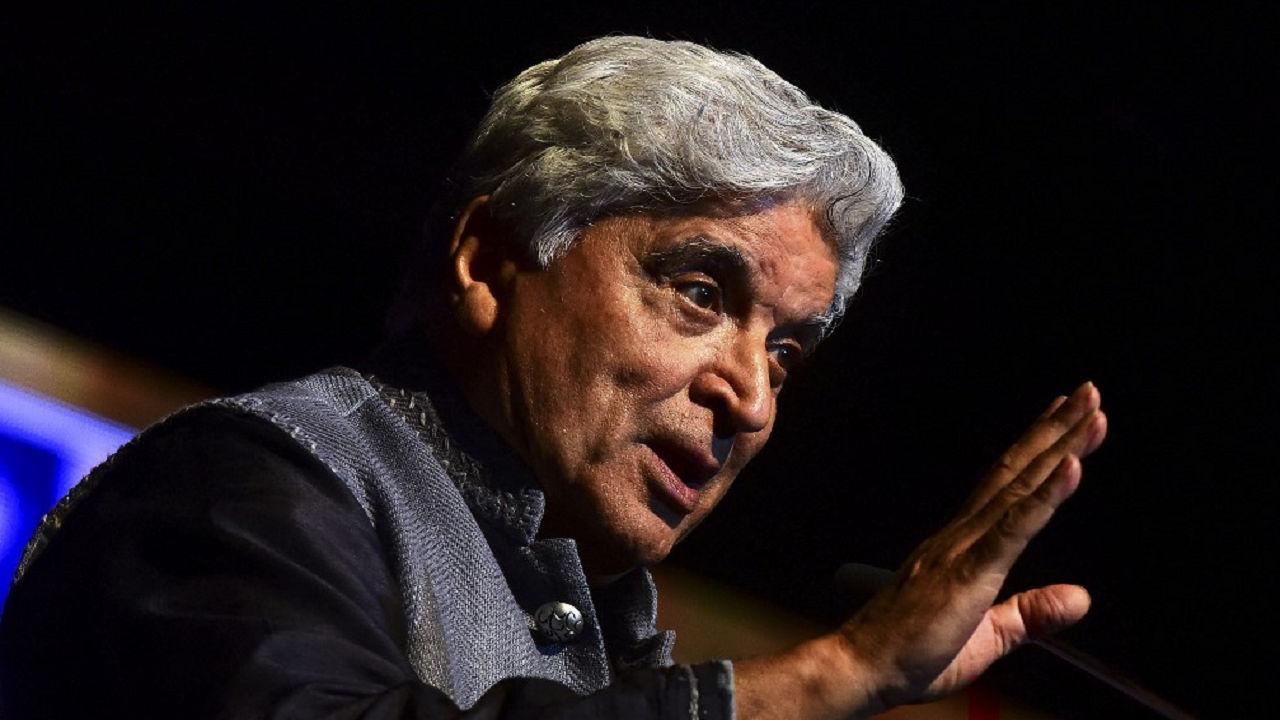
Lyricist Javed Akhtar, who was barred from speaking in Kolkata by a Muslim organization for being an atheist, opposes any religious group claiming ownership of a language
Alka Dhupkar (MUMBAI MIRROR; September 9, 2025)
After an event in Kolkata was cancelled over lyricist-poet Javed Akhtar being invited, writer Taslima Nasreen wrote on X about how he had once helped organize her book launch in Mumbai in 2000 despite religious groups threatening violence. “Today, however, there is no Javed Akhtar to bring Javed Akhtar to Kolkata and defeat the fundamentalists,” she wrote in the post.
Akhtar was to speak on the contribution of Urdu literature to Hindi cinema at the event organized by the Urdu Academy, before two Islamic organizations raised objections. Both organizations opposed his attendance because he had publicly spoken about being an atheist and promoted atheism.
While the Jamiat Ulema-e-Hind threatened protests and claimed Akhtar could make statements that upset communal harmony, the Wahyahin Foundation said they had invited Akhtar to a debate.
Speaking to TOI Plus, Akhtar said he had no intention of participating in any debate on his views of God orreligion. He also spoke about why a religious community can’t stake a claim to a language and why the Muslim groups have misunderstood Urdu literature entirely. Edited excerpts :
When Hindu trolls tell you to ‘go to Pakistan’ and some Muslim groups brand you a ‘kaafir’, how do you deal with hostility from both sides?
It is a great source of satisfaction to me. As long as the Hindu extremists and the Muslim extremists abuse me, I’m fine. If one of them stops, then I’ll be worried. I’d wonder what has gone wrong? Have I lost my balance? As long as both sides are equally upset with me, it means I’m doing fine.
Religious censorship has existed for a long time, but does its growing encroachment threaten the fundamental right to freedom of expression?
It (religious censorship) has always been a threat to freedom of expression. In the West, there are certain societies with a higher level of tolerance than what we have in India and South Asia. But religious intolerance is everywhere in the world.
Whenever I criticize religion, I don’t know why, but one particular community gets upset. For me, all religions are the same and I don’t differentiate between them. I don’t like any of them.
Religious sentiment is deeply personal, yet even constructive criticism of religious practices often becomes a sensitive issue…
This religious intolerance is understandable because whatever they (religions) believe in cannot be justified by reason or argument. Faith doesn’t need any argument, any logic, any reason, any witness, or any evidence. But you conclude, or you accept one, without the support of all these rungs of the ladder. Then, they have no choice but to bring in their sentiments. They say ‘our emotions are hurt’ or ‘our sentiments are hurt’. Have you ever heard anyone say our religious arguments or logic have been hurt?
Whenever someone voices modern views against orthodox practices, the response is rarely dialogue and is almost always a threat. Doesn’t this harm the religious sphere?
You know, I’ve been invited by a mufti from Kolkata to have a debate about whether God exists or not. I am willing to debate with anybody, anywhere, but first of all, they need to tell me what is the audience will be that will be there? Will they be your people who will not listen to reason and may get violent? If you were reasonable people, you would have said to me that since I was coming to Kolkata, why don’t I have a debate? You wouldn’t have stopped me from coming to Kolkata. You wouldn’t have asked Urdu Academy not to invite me.
In such an atmosphere, what gives you the courage to keep speaking your mind?
Maybe stupidity. But somebody should speak, somebody has to push the envelope. But you can only push the envelope up to a point and wait. In the next generation, somebody will come and push the envelope further. You cannot be a revolutionary because that is counterproductive. You will be helping the fundamentalists, because a common man will not be able to digest everything.
How far do you see yourself having pushed that envelope through your work so far?
That’s for others to decide. I am very careful, and I don’t always speak my mind. You may say that it is cowardice, but it is to try to make people more reasonable. You can only take one step at a time.
These are people who have no idea what Urdu literature is. All the important poets, except for the exception of Iqbal, were Leftists. This isn’t in the 20th century, but even hundreds of years ago. The kind of poetry Meer, Ghalib, Khayyam, Majaz, Faiz and other poets after them have written, show all of them are totally irreligious people. All of them were free thinkers and mentioned their religious beliefs tongue in cheek.
Like Meer wrote 200 years ago: Jaae hai ji najat ke gham mein aisi jannat gayi jahannam mein (When one loses tranquillity to the yearning of salvation, then may a heaven like that be banished to hell)
Or Ghalib says: Hum ko maaloom hai jannat ki haqeeqat lekin dil ke khush rakhne ko ‘ghalib’ ye khayal achha hai (We know the truth about Paradise, But to keep the heart happy, O Ghalib, this thought is good.
These were the most popular poets of their time. You know, the Quran was translated into Urdu for the first time in 1798 by Islamic scholar Shah Abdul Kadir in Delhi. All the muftis at the time issued a fatwa against him, questioning how he could translate a holy book in this heathen language, this dirty language which talks of lovers and wine?
Not everyone religious is an extremist. They could ask why you are against faith. How do you deal with this question?
They may say they are believers, but rational. How is it possible? They are just less irrational than others. But if you believe in anything which is beyond logic and reason, then you are irrational.
The Roman Empire was very advanced for its time, and the Romans worshipped Jupiter, who was a very important God for them. Today, if you hear that I worship Jupiter every morning, how would you react? What is wrong with worshipping Jupiter? And yet, I would seem mentally challenged today, though it was fine at that time. But if 10 crore people start worshipping Jupiter, you would say it’s a faith. It is the number of idiots that gives dignity to a stupid idea.
How Javed Akhtar was silenced in Kolkata in the name of Islam
4:05 PM
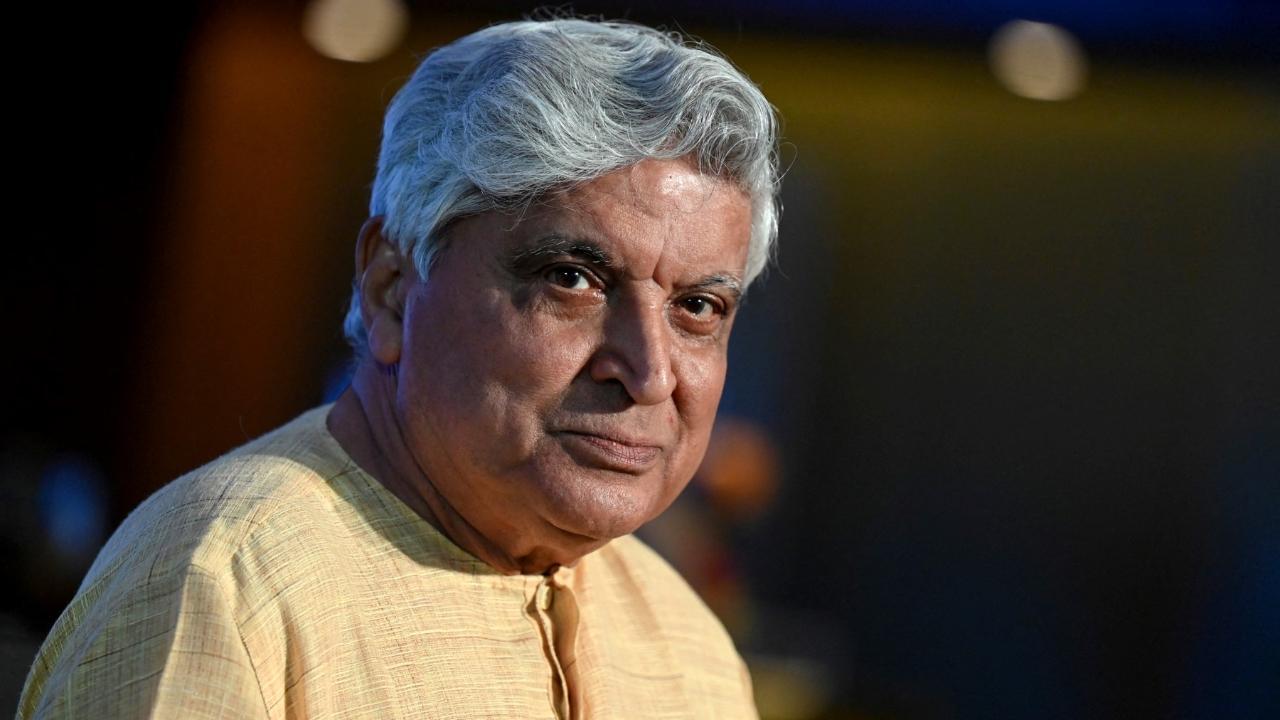
A state-run Urdu Academy postponed its festival after objections from two Islamic groups over Akhtar’s invitation. This cancellation has now reignited concerns about the state yielding cultural space to sectarian forces
MUMBAI MIRROR (September 4, 2025)
The Urdu Academy’s four-day festival in Kolkata was meant to be a celebration of cinema, Urdu, and poetry. Instead, it may now become a symbol of the suppression of free speech. Hours ahead of the inaugural session, the state-run body called off the event after two Islamic organizations objected to the presence of poet-lyricist Javed Akhtar, citing his outspoken atheism.
The cancellation has sparked a debate on whether political caution and religious sensitivities are shrinking the cultural space for Urdu in Bengal.
The four-day literary-cum-cultural festival organized by the West Bengal Urdu Academy to celebrate Urdu’s contribution to Hindi cinema was scheduled to run from August 31 to September 3.
The Hindu reported that, according to sources in the Urdu Academy, the state government intervened to avoid any unrest ahead of the 2026 Assembly elections. Officials were concerned that protests or even an ink attack on Akhtar could mar the event, the Hindu added.
“Due to unavoidable circumstances, the four-day programme, Urdu in Hindi cinema, scheduled from August 31–September 3, is being postponed,” said Nuzhat Zainab, Secretary of the Academy. When asked for specifics, she reiterated, “As I said, due to unavoidable circumstances.”
Two Islamic groups led the opposition
The opposition to Akhtar’s participation came from two groups — the Jamiat Ulema-e-Hind and the Wahyahin Foundation. Both wrote to the Urdu Academy demanding that his invitation be withdrawn, framing their objections in terms of faith and cultural propriety.
In a letter dated August 25, reproduced by India Today, the Jamiat had warned of “democratic protests” if the invitation was not withdrawn, drawing parallels to their earlier campaign against Bangladeshi author Taslima Nasreen in 2007. “If our people’s requests are not heeded, we will be forced to adopt another method prevalent in democracy,” the group said.
The controversy inevitably evoked the memories of 2007, when sustained protests by religious groups forced Bangladeshi writer Taslima Nasreen to leave Bengal after she was accused of blasphemy.
The Wahyahin Foundation said it was “surprised” at the Academy’s decision to choose Akhtar as chief guest and warned that his views could negatively influence young people. The group emphasised that his presence was not in line withthe spirit of an Urdu festival.
For the protesting groups, Akhtar’s identity as an outspoken critic of religious practices across faiths made his invitation to an Urdu event unacceptable.
Javed Akhtar’s atheist identity
Akhtar has long described himself as a rationalist. “I am an atheist and I say it publicly. I want people to be reasonable and rational,” he had tweeted back in 2019.
He has compared religion to alcohol, suggesting that while moderation may not be harmful, most people tend to overindulge, leading to intolerance and conflict. In another instance, he remarked that “all the religions without exception, belong to the dark ages.”
Despite his criticism of organized faith, Akhtar also identifies as a “cultural Muslim,” acknowledging his heritage while firmly rejecting religious dogma. Over the years, he has been equally critical of both Hindu and Muslim fundamentalists, once remarking, “As long as both – the communal Muslims and communal Hindus – are targeting me, I am doing the right thing.”
The postponement of the Urdu Academy festival has sparked wider concern about shrinking cultural spaces in Bengal.
Human rights activist Shabnam Hashmi reminded that “India is neither a Hindu Rashtra nor an Islamic country” and stressed that atheists have the right to live and speak freely. For now, the Academy insists that the festival will be rescheduled. Whether Javed Akhtar will still be part of it — and whether such a space can be secured for rationalist voices — remains an
Javed Akhtar’s run-ins with Islamic fundamentalists
JUNE 2025: Liberal Muslim activists penned an open letter accusing Akhtar of legitimising discrimination against Muslims after he linked anti-Muslim housing bias to Partition trauma; demanded unconditional apology. Its authors, led by activist journalist Asad Ashraf, accused him of using the “warped reasoning that Hindu supremacists use to justify... systemic discrimination” against Muslims and “fanning the flames of communal logic in the guise of being balanced”.
MARCH 2025: Backed cricketer Mohammed Shami for not fasting during Ramzan; told him not to “give a damn” to “reactionary bigoted idiots.” Taking to social media, Akhtar wrote, “Shami saheb, don’t give a damn to those reactionary bigoted idiots who have any problem with your drinking water on a burning afternoon at a cricket field in Dubai. It is none of their business. You are one of the great Indian teams that is making us all proud. My best wishes to you and our whole team.”
MAY 2020: Sparked an Azaan loudspeaker row with a tweet calling it a discomfort; AIMIM accused him of echoing an RSS-style rhetoric. He’d written, “In India for almost 50 yrs Azaan on the loudspeaker was haraam. Then it became halaal and so halaal that there is no end to it but there should be an end to it. Azaan is fine but loudspeakers do cause discomfort for others. I hope that at least this time they will do it themselves.”
OCTOBER 2019: Supported TMC MP and Bengali actress Nusrat Jahan after clerics attack her for celebrating Durga Puja; challenged them to also condemn lynch mobs. He wrote, “I support Nusrat unconditionally and whole heartedly. Now may I ask you if you have enough conscience and guts to oppose and condemn the lynch mobs and stand up for the poor victims.”
MAY 2010: Received death threats after calling a cleric “insane” during a TV debate on fatwas against working women.
Boney Kapoor to throw a lavish party in Bandra's Pali Hill for Shabana Azmi as she turns 75
9:23 AM

Upala KBR (MID-DAY; September 15, 2025)
Grand birthday celebrations are admittedly not Shabana Azmi’s style. But when it’s your milestone birthday, your family and friends will certainly make it an affair to remember.
mid-day has learnt that producer and close family friend Boney Kapoor is hosting a big bash to mark Azmi’s 75th birthday on September 18. On the guest list are the veteran actor’s family — Javed Akhtar, Zoya and Farhan Akhtar, Baba and Tanvi Azmi — as well as her friends Vidya Balan, Urmila Matondkar, Richa Chadha, Tannishtha Chatterjee, Anil Kapoor, Karan Johar, and more.
Many don’t know that Boney and Azmi go back a long way. The two collaborated on his first production, Hum Paanch (1980).
A source shares, “They struck up a friendship then, and over the years, have become almost family. So, when the discussion about celebrating Shabana’s birthday came up, Boney said he would host it. The bash will be held at his Pali Hill address on September 18, and will see Azmi’s friends from films and theatre in attendance.”
Before that, her group of friends — which calls itself Dher Saara Pyaar and comprises Tanvi, Balan, Matondkar, Chatterjee, Chadha, Divya Dutta, Dia Mirza, and Konkona Sen Sharma — has a girls’ day chalked out.
The source says, “On September 17, they will have a spa day, pampering themselves. Their celebration already started over the weekend as Sandhya Mridul launched her book of poems, Untamed. That was followed by dinner.”
The group is excited to meet Azmi’s other girl gang, Carpe Diem — with whom the actor recently took a trip to Iceland — at the birthday bash (Zindagi na milegi dobara, Shabana style, Aug 21).
Shabana Azmi visits Iceland ahead of 75th birthday: "We walked 50 minutes through largest glacier in the world"
10:30 PM

Shabana Azmi talks glaciers, puffins, and lifelong friends as she reflects on her recent Iceland trip with her girl gang to celebrate her 75th birthday in advance
Upala KBR (MID-DAY; August 24, 2025)
What’s the best way to celebrate a milestone birthday? Take a trip with your girl gang à la Shabana Azmi. The veteran actor returned from a trip to Iceland with her close friends, ahead of her 75th birthday on September 18. “We wanted to see the Northern Lights in Iceland for years,” she says.
This year, the group — which comprises Azmi’s school and college friends, and calls itself Carpe Diem — decided to tick it off their bucket list. The trip doubled up as the actor’s advance birthday celebration.
“We walked 50 minutes through the largest glacier in the world and climbed to the windiest place where it’s a miracle we didn’t get blown away in search of puffins! The best part of such trips is that we bond in different ways. Everybody talks and nobody listens,” she laughs.
The actor has another group, which calls itself Dher Saara Pyaar, in the Hindi film industry — this one includes Tanvi Azmi, Vidya Balan, Urmila Matondkar, Dia Mirza, Konkona Sensharma, Richa Chadha, and many more. Tell Azmi that contrary to her intimidating image, she has a way of bringing women together and she says, “That image dissipates in less than a day of knowing each other. I can be daft, curious, and wilful, and both groups love to make fun of me. We are an irreverent lot that rally together in fun and critical situations. Javed [Akhtar, husband] keeps saying that he has never seen me happier than when I’m with my girlfriends.”
Next month, Akhtar will host a grand celebration to mark her big day. “I’d rather not have a big event, but Javed has a thing about celebrating my birthday. I’ll also do a seven-city tour of Broken Images in September and October.”
When I was offered the role in Sholay, I thought it was very small-Hema Malini
3:06 PM

Vinay MR Mishra (BOMBAY TIMES; August 13, 2025)
As Sholay celebrates 50 glorious years, Hema Malini, who played the iconic Basanti, looks back at the film that not only became a landmark in Indian cinema, but also changed her life forever. “We never thought that Sholay would become an iconic film. We never expected it at all. We thought it’s going to run for 25 weeks or 75 weeks. Those days, a film’s success was based on how many weeks it ran. But Sholay went beyond all that,” says Hema Malini, in a conversation with us.
Calling the film directed by Ramesh Sippy and written by the legendary duo Salim-Javed, a rare piece of cinema, Hema Malini adds, “So many films are made in a year. But nothing is like Sholay. It was a film made with full conviction. It had such beautiful dialogues and performances by every artiste. Even an actor with one dialogue made an impact – that speaks volumes about the screenplay. It touched the entire nation’s heart.”
Sholay, often regarded as one of the most influential Indian films of all time starred Amitabh Bachchan, Dharmendra, Hema Malini, Jaya Bachchan, Amjad Khan and Sanjeev Kumar in pivotal roles. Five decades later, her association with Sholay remains fresh across the globe. “Even today, when I travel to places like Georgia or Russia, people remember me as Basanti. A time came when my name almost became Basanti. People recognised me as Basanti,” she laughs.
On working with Dharmendra, she says, “We were already doing many films together. I must say, Dharamji’s role was definitely designed by the writers and director, but he added so much to it. He would say, ‘I’ll do this, I’ll do it like that.’ He made Veeru his own.”
Recalling memorable moments from the shoot, she recalls, “The railway station sequence was difficult to shoot. Basanti is taking Jai and Veeru from the station to the village, and she keeps talking. That was a sweet and interesting scene.”
‘When I was offered this role, I thought it was very small’
Talking about what drew her to the part, she says, “I did not think Basanti would become so iconic, however, I did think it was very different as the character provides comic relief, but also had a strong sense of loyalty and love, especially in her relationship with Veeru. I was doing Seeta Aur Geeta then, which was a big hit. When I was offered this role in Sholay, I thought it was very small. But I agreed to do it because of the association with the director and producer.”
-------------------------------------------
With ‘Sholay’ set to clock 50 years of release, Hema Malini reflects on the cult film’s making; disapproves of the original, unreleased climax that is being screened at festivals
Oshin Fernandes (MID-DAY; August 13, 2025)
We agree with Hema Malini when she says that if one hasn’t watched Sholay (1975), they have “missed out on something in life”. But then, it’s almost impossible to imagine anyone in the country not having devoured director Ramesh Sippy’s action drama. Almost everyone knows of Jai-Veeru’s friendship, immortalised on screen by Amitabh Bachchan and Dharmendra. The late Sanjeev Kumar’s dialogue ‘Loha garam hai, maar do hathoda’ and Amjad Khan’s line ‘Kitne aadmi the?’ have become a staple in pop culture. The film, which completes 50 years of release on August 15, has over the decades reaffirmed its position as the most iconic Hindi film.
Hema Malini disapproves of changed ending
To mark the 50-year milestone, the classic’s restored version was screened at Il Cinema Ritrovato Festival in Italy in June with the original climax, which shows Kumar’s Thakur killing Gabbar Singh with his spiked shoes. Before Sholay’s 1975 release, the Central Board of Film Certification (CBFC) had found the ending too violent, and as a result, it was changed to depict Gabbar being taken away by the cops. The unreleased version will also be screened at the Toronto International Film Festival (TIFF) on September 6.
Holding the released version dear to her heart, Malini shares, “I heard the last scene was changed, which I don’t agree with. It should remain untouched. They have no business changing it.”
Hema Malini thought Basanti was a 'small role'
Her attachment to the classic is understandable. But had Malini, who played the effervescent Basanti, imagined that the film would achieve cult status? “We thought it was a very nice film, shot differently like the Hollywood ones,” says the senior actor. In fact, she was initially hesitant to come on board when Sippy approached her for the role.
Malini recalls, “He told me, ‘You do this role. It is very impactful.’ I agreed immediately, but in my mind, I [thought], ‘This is a small role, no problem’. I felt like I’m doing a favour when in fact, they had done me a favour.”
The senior actor vividly remembers her first day of shoot – she had to film the temple sequence where Dharmendra’s character tricks her, and was handed a three-page dialogue. She credits Javed Akhtar, who penned the film with Salim Khan, for easing things for her. “I was a little worried because the dialogues were interlinked. Then Javed saab told me, ‘This is how you have to speak’. From that day, I never looked back.”
With Basanti easily one of her career-defining roles, she is open to the idea of the character getting a spin-off. Does she have any actor in mind who could step into her shoes? “There are many artistes ready to do it, and they should do it. I can’t specifically mention somebody’s name. It’s not difficult to do Basanti’s role. The personality has to suit [them] and the look has to come [together].”
Chandra Barot deserved far more credit for Don-Javed Akhtar
10:25 AM

Renuka Vyavahare (BOMBAY TIMES; July 21, 2025)
Veteran director Chandra Barot, 86, best known for making the 1978 cult classic Don, passed away in Mumbai. The filmmaker was battling pulmonary fibrosis for the past seven years. Barot’s directorial debut Don was written by Salim-Javed (Salim Khan and Javed Akhtar). The film, which featured Amitabh Bachchan in a dual role, also starred Zeenat Aman, Pran and Helen. The film, which continues to be a landmark in Hindi cinema, was remade by Farhan Akhtar in 2006 with Shah Rukh Khan in the lead. Barot began his career in the Hindi film industry as an assistant director with actor-filmmaker Manoj Kumar.
Remembering Chandra Barot, Javed Akhtar told Bombay Times, “I remember meeting him around 12-15 years ago at an event. It was a fleeting meet and we promised to meet each other soon which sadly never happened. I will always remember him as the most gentle, easy-going man with a great sense of humour. He had no ego hassles and was extremely humble. Working with him and cinematographer Nariman A Irani on Don, was a great experience.”
‘Don was perhaps one of Amitabh Bachchan’s first solo hits’
The 1978 action-thriller went on to become a massive hit, cementing Big B and Salim Javed’s domination and stardom. However, Barot largely stayed out of the limelight. The acclaimed screen writer and lyricist explained, “It’s strange how the industry operates. Don was immensely successful. I remember he was planning to work with Vinod Khanna after that. There was a big announcement, but the film didn’t take off. He was also in talks with Dilip Kumar. I don’t know what happened there. I am not sure if this is the right time to say this, but he deserved far more credit for Don than he received. It was perhaps one of Amitabh’s first solo hits. Most of his previous hits were multistarrers.”
‘Don didn’t mull over melodrama’
Speaking about what made Don a cult classic, Javed saab added, “Don was the first caper of Hindi cinema. It was one of its kind. Like other films of those times, Don didn’t mull over melodrama, had no emotional backstory or rely on histrionics. I remember Chintu (Rishi Kapoor) saying in his classic tongue in cheek way, ‘The whole film looks like a trailer!’ What he meant was the film had that ‘on the move’ tempo and it was all Barot’s vision. He invented that style and that to me was most unique. It was a well-made film.”
‘I will always be loyal to my Don’
Don was remade by Javed saab’s son Farhan years later, but he says in all honesty, “I will always be loyal to my Don. Don for me is the 1978 original, a film written by Salim-Javed. The films made later by Farhan are definitely successful and well-made, but I will stay loyal to my film.”
Can AI fall in love with someone?-Javed Akhtar
11:05 AM
Debarati S Sen (BOMBAY TIMES; July 19, 2025)
Legendary lyricist-screenwriter Javed Akhtar believes that artificial intelligence will never surpass the emotional depth that artistes possess. He says, “When it comes to creativity, AI will always go for data and will take out from whatever so-called creative things that are already existing. Most of the data that is readily available is below average or substandard, so AI will take stuff from that.”
The writer emphasised that art requires individual perception, which machines lack. He adds, “Real art, real creativity, is rare. Most of the art is emulative, copied and unoriginal. AI depends on previous data, but real art does not. It depends on life and very personal experiences.”
He further explained, “Creativity is a process. Can AI fall in love with someone? Can it get upset unnecessarily, can it be depressed for a while, can it be excited for no reason at all, can AI dislike somebody? It can’t! You have to be equally unreasonable (to be creative) also because all creativity is a combination of reason and being unreasonable. It is a combination of a conscious mind and a subconscious mind. Is it possible or will it be possible in the near future for artificial intelligence to do that? For a machine all this is not possible, but our human mind does it.”
Akhtar feels that while AI may competently imitate styles and create serviceable works, it cannot create masterpieces like a Monalisa or a Shakespearean play. Urging balance, he signed off, “Let’s not get frightened of AI, because it can also be of great help, as long as there is logic and it is dealing with facts and reality.”
Subscribe to:
Posts (Atom)