Showing posts with label Jagjit Singh. Show all posts
Showing posts with label Jagjit Singh. Show all posts
Artistes don’t want to work hard, instead they call it a struggle-Manan Bhardwaj
9:51 AM
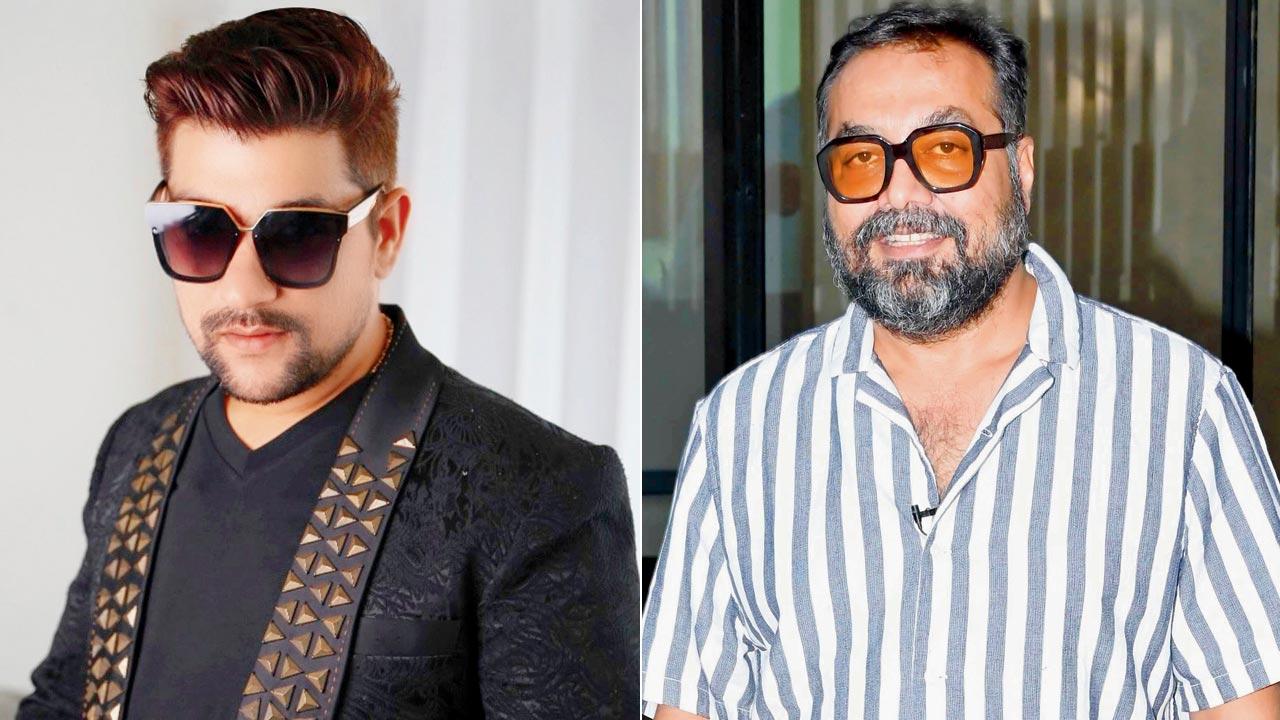
Manan Bhardwaj, who has composed nine songs for Anurag Kashyap’s ‘Nishaanchi’, slams musicians for furthering their careers by networking instead of working hard
Priyanka Sharma (MID-DAY; September 22, 2025)
Imagine meeting your idol to compose one song for him, and ending up scoring nine songs. Manan Bhardwaj finds himself in this delightful position with Anurag Kashyap’s latest release, Nishaanchi. His relationship with Kashyap goes way back. “He has been my idol,” says a beaming Bhardwaj, as he opens up about collaborating with the filmmaker, getting closure to his 2009 heartbreak, and why he prefers sitting alone in his room and scoring music over networking. Excerpts from the interview.
Take me back to the first meeting you had with Kashyap for Nishaanchi.
Around one-and-a-half years ago, I got a call to compose only one song for the film. I had a Zoom call with Anurag sir, where he explained what he wanted. And today, I have composed nine songs for the film! Our wavelengths matched. Both of us are action-oriented and frank. So, collaborating became fun.
What was the song that Kashyap called you for?
It was Jhule Jhule Paalna. But I made Neend Bhi Teri instead. The situation for this song was specially added in the film. Anurag sir told me, ‘After your songs, I had to increase the film’s length by 15 minutes’.
What’s the most unique part of working with Kashyap, whose films are known for their fresh soundscapes?
Anurag sir told me, ‘Manan, make songs not for me, not for the public, but for yourself. Make whatever you want to make and let me hear it’. I kept giving him songs, and he kept putting them into situations. The songs and the film go hand-in-hand.
Also, Anurag sir has been my idol. In 2009, I drove from Delhi to Mumbai to meet him. We didn’t even have Google Maps then. When he says, ‘I added scenes because of Manan’s songs’, it’s bigger than any award.
Were you able to meet Kashyap during your 2009 visit?
No. I was told by someone that Anurag sir needed a number of songs for his film, and I should come down. I took the whole set-up with me. I went to his office; he was not there. After that, I understood it was a lie. So, I stayed in Mumbai for a day. The next day, I promised myself that it will happen someday.
There is a timeless feel to your music, which is rare to find nowadays. Where do you think Hindi film music stands today?
In the Indian music scene, supply is way higher than consumption. How many songs can a person listen to? I myself hardly listen to one or two contemporary songs, otherwise I listen to the songs of Jagjit [Singh] saab and Nusrat Fateh Ali Khan saab. It’s our responsibility as composers to make the listeners engage with both old and new music. I try to make music that has meaning, where the listener is able to relive an emotion that they’ve felt in the past.
How do artistes stay true to their voice after success as it’s easy to get corrupted in the industry with expectations, competition, and fear of failure?
Artistes are corrupting themselves. I stay away from all this. I visit Mumbai only to meet a few special people and do official meetings. I never party here. Why do people visit top music directors’ houses for Ganpati? So that they can build contacts. Those singers haven’t understood that contacts will yield nothing. Instead, if you sit at home and make four songs, one of them may become a hit. The problem is artistes don’t want to work hard, instead they call it a struggle. Don’t you dare call hard work a struggle! Artistes are becoming their own enemies — they should focus on working hard and moving ahead. They shouldn’t harbour jealousy, nor should they unnecessarily expand their circle.
Music logon ko theatre tak kheench ke laata hai-Kumar Sanu
2:50 PM

Debarati S Sen (BOMBAY TIMES; January 25, 2025)
In his career spanning almost four decades, Kumar Sanu has sung around 22,000 songs in 26 languages. And recently, he also recorded an English number, 9 to 5, with his daughter Shannon K. In a conversation with us, the Aashiqui singer spoke about his initial struggles, the challenges he overcame in the music world, and the joy in collaborating with his daughter.
For someone who has been singing for around 40 years, you initially did not aspire to be a singer. How do you reflect on your journey?
I didn’t dream of becoming a singer. I was a tabla player and a good painter. However, circumstances changed my decision. I was around 16 years old when I started doing stage shows in Kolkata. My desire to become a singer grew, and I began singing in hotels there. When I came to Mumbai, I sang in hotels and saved money to make a demo cassette that I’d play for music directors. Jagjit Singh ji discovered me and introduced me to Kalyanji-Anandji. I would do covers of Kishore Kumar’s songs. Later, for Jaadugar, they made Amitabh Bachchan listen to my songs, and he agreed to have me as the playback singer. That’s how it all began. I struggled for around 18 years in Mumbai before I became a name.
At the beginning of your career, you were called Kishore Kumar’s clone. How did you deal with that?
After Aashiqui became a hit, things changed. Mere upar ilzaam tha ki main Kishore da ka nakalchi tha, but Aashiqui gave me the opportunity to get rid of that. Uss picture ke gaano ko log tees saalon ke baad bhi bhule nahin. After Aashiqui, I kept getting offers. It went from, ‘theek hai, gawa le isse’, to ‘Sir, please mera gaana gaa dijiye’. I’ve seen it all.
The number of songs that Bollywood films feature today has reduced considerably. Do you think that earlier film songs were a big draw for the audiences?
Films flop miserably despite makers spending crores on them. They should understand that they have to pay close attention to the story and the music and give a free hand to the music director. I believe that music logon ko theatre tak kheench ke laata hai.
You once said, ‘Main Bollywood politics jhel raha hoon’. What did you mean by that?
Yeh politics hamaare legendary singers ne bhi jheli hai, hum bhi jhel rahe hain, aur future singers bhi jhelenge. It’s not new, but the industry wasn’t as cruel earlier. People were kind-hearted. But I believe you can’t stop talent. With the help of politics, you may get fame temporarily, but only real talent will last for years. I also feel songs have changed. Earlier, there were more melodies, great lyrics and Urdu shayari, but abhi halkapan hai. It may change again in the future.
I admire my dad’s positive attitude, says Shannon
Recently, Kumar Sanu and his daughter Shannon, an independent singer who began her Bollywood career with Happy Hardy and Heer recorded an English song.
Ask him about the experience, and he says, “Initially, I didn’t want to sing the song because there was a portion in English. Shannon ki accent ke wajah se main darr raha tha (laughs). My younger daughter Annabelle is a songwriter and she insisted that I sing this song. Now, I am glad I did it.”
Talking about collaborating with her dad, Shannon shares, “He was very concerned about the diction. He wanted to make sure that he justified the language and would keep asking me how to pronounce certain words. It was fun for me, I’m not sure about him!”
The young singer says that her father is her inspiration in every way. “I admire his positive attitude towards life. It is so easy to fall prey to negativity around, but dad’s positive spirit, way of looking at life, and attitude are things that I really admire and hope to emulate,” she says.
Sarfarosh was a right mix of realism and commercialism-Sonali Bendre
8:06 AM

Niharika Lal (BOMBAY TIMES; May 7, 2024)
During a visit to the capital in 1991, ad filmmaker John Matthew Matthan was taken aback by the sight of deserted streets in the early evening hours, police personnel checking all vehicles to assess and avert security threats. Delhi was on a high alert, which made Matthan realise that in Bombay, he had never heard of similar terror-related security concerns. It’s this realization that led to the making of Sarfarosh.
For his debut film, John – the writer, director and producer of Sarfarosh – had approached Aamir in 1992, but due to scheduling conflicts, the film finally went on the floors in 1995 and was released in 1999.
Aamir, who essayed the role of ACP Ajay Singh Rathod in the film, had mentioned in an interview that he agreed to do the film because he believed there were certain societal issues that needed to be addressed through cinema. On being asked if he was aware of the political implications of the film, he had said, “Ofcourse, that’s why I did the film.”
I can’t believe it’s been 25 years since Sarfarosh: Sonali Bendre
The actress told us, “I can’t believe it’s been 25 years since Sarfarosh. I owe Sarfarosh to my director John and nobody else. I had done ad films with John. He was so clear that he wanted me in that role. Sarfarosh was a right mix of realism and commercialism. Everything was just right in it. Though till date, I have not seen Sarfarosh. I have not seen any of my films. Now I see it in bits and pieces when it comes on social media.”
‘Naseeruddin Shah was initially considered for the role of Salim’
The director initially considered casting Naseeruddin Shah for the role of Salim, but the actor had declined to play a cop. So instead, John offered him the role of Gulfam Hassan, the ghazal singer, which Shah accepted. When it came to creating the villain for Sarfarosh, John said he needed a character with good access to places. During that period, only Pakistani cricketers and ghazal singers frequented the country.
The director told us, “I couldn’t have portrayed a cricketer as the villain in my film. So, I thought, why not a ghazal singer? Ghazal singers were often invited to high-profile gatherings, so I thought of using that for the plot.”
CBFC had asked the makers to remove Pak & ISI references
John recalled, “A few months before the film was submitted to the CBFC for certification, in February 1999, then-PM Atal Bihari Vajpayee had visited Lahore on the inaugural run of the Delhi-Lahore bus service. So, the CBFC wanted us to remove references to Pakistan and ISI. But after several discussions, the film was passed without any cuts.”
The film released on April 30, 1999, and shortly after, the Kargil war officially began on May 3, and went on till July 1999. John added, “I remember visiting the theatres in July; they were packed. People felt that the film was topical.”
‘It took Nida Fazli a year to write Hoshwalon’
About the iconic song Hoshwalon from Sarfarosh, the late lyricist Nida Fazli had said in an interview, “Director John Matthew Matthan asked me to get Jagjit to sing it, initially composed by Jatin-Lalit. But after he heard it, Jagjit refused to sing it because the metre and rhyme were out of sync. But Aamir wanted only Jagjit to sing for him. So I spoke to Jagjit again. Eventually, he agreed on one shart – that he would compose it.”
John shared with us, “It took Nida Fazli ji a year to write Hoshwalon.”
DID YOU KNOW?
• Sarfarosh was listed 33rd among Variety’s top 100 films of the week in 1999.
• Nawazuddin Siddiqui played a small role in the film.
• There have been multiple discussions to make a sequel to the film
• The film was shot in Mumbai and Jaisalmer. While Gulfam Hassan’s haveli was the Mohangarh Fort, Mirchi Seth’s den was the Mandir Palace in Jaisalmer

For Tum Bin, even if we used Indian music, the rhythm was westernized, say Nikhil-Vinay
7:54 AM
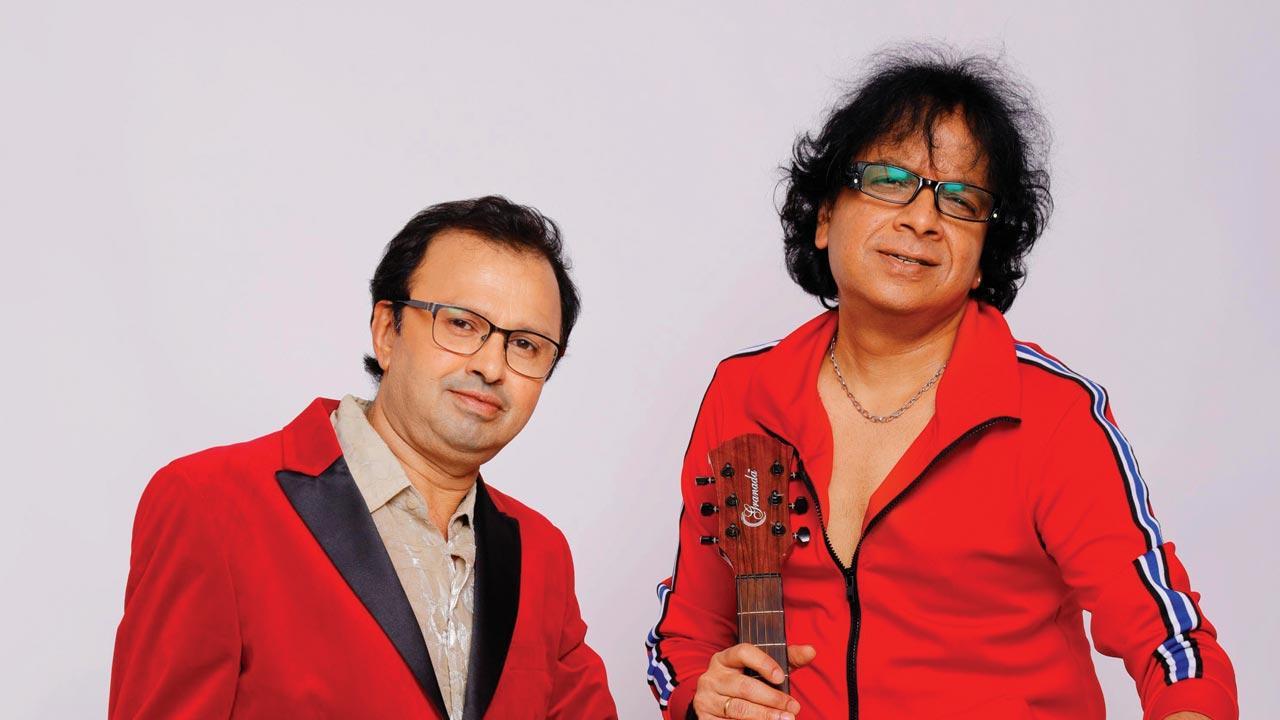
As Tum Bin clocks 20 years, composer duo Nikhil-Vinay on the making of the romance saga’s soundtrack that found admirers in abundance
Sonia Lulla (MID-DAY; July 19, 2021)
As Anubhav Sinha’s 2001 offering Tum Bin clocks 20 years this month, one half of composer duo Nikhil-Vinay say the revered 12-track album of the film was among the defining ones of their career. The recipe for crafting a sore that appealed to the younger generation, they say, was to employ electronic music, and stray from employing too many Indian tunes.
“We knew the songs couldn’t sound very traditional. If you listen to the tracks, you’ll notice that they don’t have the tabla or dholak. They have a groove. In fact, even if we used Indian music, the rhythm was westernized,” says Nikhil Kamath.
The only exception that they made to the pattern was for the track Koi Fariyaad, which needed to carry the weight of what the protagonist was enduring. “It was based on Priyanshu Chatterjee’s character. He had killed a man, and was now in love with his lover. The situations were challenging. So we needed a song, and a voice like that of Jagjit Singh, to do justice to it,” he says, adding that Meri duniya, and Chhoti chhoti ratein were among the hardest numbers to crack.
On the plate for the duo are songs with artistes like Reshmi Kumar, Tori Dattaroy, and Imran Belim. “We will also start working on Margaon: The Closed File, a mystery web series starring Suchitra Krishnamurthy, and Zeenat Aman.” A collaboration with the lyricist of Tum Bin, Faaiz Anwar, who has penned tracks like Aaoge Jab Tum from Jab We Met, is also on the cards.
Anubhav Sinha opens up on Tum Bin’s connection with a phone…and John Abraham
2:26 PM

Roshmila Bhattacharya (MUMBAI MIRROR; July 16, 2020)
 Phones had long fascinated him and one day, in the late ’90s, when mobiles had just come to India, a thought flashed through Anubhav Sinha’s mind: What happens if the phone of a man, the victim of a road accident, suddenly rings and a voice starts speaking… It was an interesting situation and the writer-filmmaker had initially planned to develop it as a thriller, but a couple of years later, it ended up as a story about falling in love. Tum Bin, arrived in the theatres on July 13, 2001, and “Tumhare Siva Kuch Na Chaahat Karenge, Ki Jab Tak Jiyenge Mohabbat Karenge” still resonates.
Talking about the song, the film’s writer-director recalls he was in Canada in the middle of filming a scene when his co-producer Bhushan Kumar called and excitedly insisted he stop and let Vinay (of the composer duo Nikhil-Vinay) sing a song to him over the phone. He complied and got the above-mentioned song, which played in the title sequence, introducing the lead characters played by Priyanshu Chatterjee, Himanshu Malik, Raqesh Bapat and Sandali Sinha, who are still remembered for this one film.
Interestingly, Anubhav reveals that John Abraham, whom he had directed in a music video, had auditioned, too, at his insistence. “I was walking in as John was walking out and in answer to my 'How did it go?' he shook his head, saying, 'I can’t, I just can’t' and hurried away. Back then, this boy from Andheri East didn’t know much Hindi and I guess all those flowery lines must have made him very uncomfortable,” the filmmaker reminisces with a laugh.
 Anubhav and Bhushan had earlier collaborated on a few music videos successfully. When they graduated to making a feature film, they were sure it would have excellent music. So, Anubhav would spend all day with his composers and lyricists at Bhushan’s small office in Juhu. There, Faaiz Anwar saab narrated many shers to him, only for Abubhav to ask if he could come up with something better. “One day, I was shooting a music video when Faaiz bhai called and started reciting a sher to me over the phone. The lines, 'Ek Lamhe Mein Simat Aaya Hai Sadiyon Ka Safar, Zindagi Tez, Bahut Tez, Chali Ho Jaise' struck a chord instantly and he told me somewhat angrily that it had taken him 82 shers to get my approval,” he chuckles.
The ghazal was crooned by Jagjit Singh, whom Anubhav had hero-worshipped for years. Yet, when the legendary singer was dubbing it, the filmmaker admits he did not like the way he was singing it, but didn’t know how to tell him that. Besides, they were hard-pressed for time as he had a flight to catch. “As I was leaving, Jagjit ji threw a friendly arm around my shoulder and walked down with me, saying 'You’re not happy, I can see it in your eyes. Take what we have done as a reference to shoot with in Canada, I will see what I can do with it here.' True to his word, he returned to the studio a couple of times and re-dubbed it. Today, the final version of 'Koi Fariyaad' is unforgettable,” he avers with a satisfied sigh.
In 2016, Anubhav came up with a sequel, which followed the life of Taran who loses her fiancé in a skiing accident, and frankly admits that it was a bad decision. “After the debacle of Ra.One and all the bad press it got me, I was so low on confidence, I couldn’t make a film for five years. And then, even though the story wasn’t driving me, I decided to make Tum Bin II because I just wanted to make another film and a sequel seemed commercially viable. The intention was wrong and my heartfelt apologies to the fans, who, even after all these years, still croon 'Tum Bin Kya Hai Jeena, Kya Hai Jeena, Tum Bin Jiya Jaaye Kaise, Kaise Jiya Jaaye',” he signs off, even as a phone rings in the background, leaving you wondering if it will spark off another movie, maybe a thriller this time.
Shefali Shah croons Jagjit Singh's nazm for her film Once Again
8:45 AM

In her first attempt at singing for reel, Shefali Shah renders a ghazal sung Jagjit Singh for her upcoming film Once Again
Sonil Dedhia (MID-DAY; August 31, 2018)
In an industry that's willing to give its actors a spotlight to showcase their varied skills, it's surprising that Shefali Shah, a trained singer, hasn't yet lent her voice to a track for reel. Fortunately, the actor, who has a wide array of film and television ventures to her credit, has finally decided to serenade fans in the upcoming romance drama, Once Again.
Having rendered a track originally sung by ghazal maestro Jagjit Singh, Shah tells mid-day the development followed a chance discussion she had with director Kanwal Sethi. "During a script-reading session, we were discussing the romantic relationship of the protagonists [Neeraj Kabi and hers]. It reminded me of the nazm [by Kafeel Aazar Amrohvi]. Our director casually asked me to sing it. I did, and he found the voice apt. He requested me to sing in the film."
Shah is quick to assert that she isn't trying to flaunt her singing prowess with this act. The scenario in the film, she says, facilitates her involvement as a singer. "It [singing] is just what my character does. Like a lot of women, she hums in the kitchen," she says, alluding to the fact that technical brilliance behind the mic isn't something that could be demanded from such a character, and hence , not from her either.
While she trained in singing for several years, her practice took a back seat after other professional commitments took priority. "I gave up on it then, but I do sing when I am alone, or [in company of] close friends."
Once Again puts the spotlight on the love story of a middle-aged couple. Shah's character, a businesswoman who supplies tiffins, falls for an artiste, played by Kabi, who is her client. A relationship develops over food and notes that are exchanged with the tiffins. But, when word about it gets out, she is subjected to ridicule.
Chitra Singh's big win: ED raids T-series, YRF, Saregama Cos for Rs 2,000 crore royalty evasion
8:15 AM

Dharmendra Jore (MID-DAY; November 4, 2017)
Legendary ghazal singer Jagjit Singh's widow Chitra was extremely content on Friday, when the Enforcement Directorate (ED) hit all the right notes by raiding the Mumbai offices of the country's biggest music labels, for not paying music composers and lyricists royalty for years.
As per the officers' primary assessment, the fraud could be to the tune of Rs 1,500-2,000 crore. This amount was to be paid as royalty to the rightful owners of the copyright.
ED has found in its probe that the music industry captains collected royalty from consumers, but did not pay 50% of its share to music composers and lyricists. The case is being probed under Prevention of Money Laundering Act (PMLA) 2002 and Indian Copyright Act which was amended in 2012.
Taal order
Chitra, who has offered ghazal connoisseurs unforgettable numbers with her late husband, had filed an FIR with ED last December. Following investigations, ED raided the top most music companies - T Series, Yash Raj, Universal, Sony and Saregama, on Friday.
"I wasn't sure as nobody was helping me. It's been a tough fight for a single woman like me. But ED took up my case, thanks to a bunch of nice officers in Mumbai. Now I'm confident that the agency will take my case to its logical end and punish the guilty," Chitra told mid-day on Friday.
Hitting a sour note
"Two top ghazal singers (one of them is a known bhajan singer) did not help me when I decided to fight, which would benefit them as well. These are the people who would frequent my home and say they respected my husband so much," she added.
Chitra said that after seeing the effectiveness of her complaint and the subsequent investigations, the singer duo has approached her lawyers in New Delhi with a plea that their case should also be taken up. "What can I say about these people? I'm cooking the food and now these 'selfish' people are out to eat it. But I took the step without anybody's support only because I wanted fellow workers to be protected against cheating by big players," said Chitra.
"I'm happy that several other people in the
industry I may not know personally will now get justice. All of us were
cheated big time," Chitra said.
A source in ED said, "Hiding facts amounts to criminal offense. All stakeholders were told that the composers and lyricists were paid royalty as per the rule, whereas the money collected for this purpose was parked with (recording) companies or individuals other than the people eligible for getting their dues." Industry sources said some legal issues related to the India Performing Right Society Limited (IPRS) and Phonographic Performance Limited (PPL) too should be blamed for the mess. IPRS is a copyright society that issues licenses for public performances. The society pays royalties to legal heirs of deceased members. PPL has been functioning as the copyright society for sound recordings. It is mandatory for those who play pre-recorded music to take prior license from them. ED has summoned Bhushan Kumar of T Series for interrogation on Saturday, said sources in ED, Mumbai.
The petition
Last year, Chitra Singh had petitioned the Delhi High Court alleging that the IPRS was still issuing licenses for her husband's work, though not competent to do so under the Indian Copyright Act, and the said concerts breached various intellectual property rights held by her as his surviving heir. She alleged that she had not received any royalty for such concerts. The Delhi HC had ruled that the IPRS was incompetent to grant licenses as per Section 33 of the Copyright Act.
Kabir Bedi steps in for Om Puri for the Yaadien musical tour in US in March
7:44 AM

The actor has taken over as the presenter of an upcoming musical tour for ghazal maestro Jagjit Singh after the latter's untimely demise on January 6
Avinash Lohana (MUMBAI MIRROR; January 16, 2017)
 Veteran actor Om Puri, who
passed away on January 6 following a sudden heart attack, was slated to
join the US musical tour Yaadein in March, a tribute to the late singer
Jagjit Singh, as a presenter. Now, the organisers, filmmaker Ashoke
Pandit and singer-composer Tauseef Akhtar, have roped in Kabir Bedi to
step in Puri's shoes.
“We rehearsed for nearly two months with Omji. He had shared a warm
equation with my guru Jagjit Singh so it was great to have him on-board.
We're really going to miss him on the tour now,“ informs Tauseef, who
will be leaving with his team for the 10-city musical tour on March 15.
Veteran actor Om Puri, who
passed away on January 6 following a sudden heart attack, was slated to
join the US musical tour Yaadein in March, a tribute to the late singer
Jagjit Singh, as a presenter. Now, the organisers, filmmaker Ashoke
Pandit and singer-composer Tauseef Akhtar, have roped in Kabir Bedi to
step in Puri's shoes.
“We rehearsed for nearly two months with Omji. He had shared a warm
equation with my guru Jagjit Singh so it was great to have him on-board.
We're really going to miss him on the tour now,“ informs Tauseef, who
will be leaving with his team for the 10-city musical tour on March 15.Tauseef and Om had gone for biometrics for their visas on January 5 and the interview was scheduled for the following day. “Like always, Omji was in his elements and looking forward to the show. He hugged me tightly before leaving and said, 'Kaleje vich thand peh gayi' in Punjabi,“ reminisces Tauseef, who had trained under the late ghazal maestro for ten years since 1989.
Prep with Kabir has kicked off. Ashoke reveals that the presenter will be taking the audience though the illustrious life and career of Jagjit Singh though anecdotes and experiences. “We plan to offer a tribute to Omji too during the show. There isn't a single day when we don't remember him,“ he signs off.
I didn’t want to compete with the music of the original Tum Bin-Ankit Tiwari
7:43 AM

Ankit Tiwari on recreating late Jagjit Singh’s ghazal, Koi Fariyaad; admits he was initially reluctant to attempt the classic track
Sonil Dedhia (MID-DAY; November 22, 2016)
Composer-singer Ankit Tiwari seems to be hitting the right notes. The year began on a high for him with Airlift, and he followed it up with Rustom, Rocky Handsome and Baaghi. His latest composition, Koi Fariyaad, a recreation of the eponymous track sung by late ghazal maestro Jagjit Singh in Tum Bin (2001), has been lauded by music lovers. In a tête-à-tête with hitlist, Ankit discusses the challenges of working | on the music of the film’s sequel, and insists he is yet to showcase his talent in full.
The new version of Koi Fariyaad is doing quite well.
I have grown up listening to the songs of Tum Bin. It was a dream come true when I was approached to compose music for the film’s sequel. Initially, I was hesitant to recreate Koi Fariyaad, which is a classic. It’s a beautiful rendition by Jagjitji. It was definitely challenging to make a new melody without disturbing the song’s originality. When I decided to go ahead with the soundtrack, I was clear that I didn’t want to compete with the music of the original track.
Is recreating old classics like walking on the edge?
Recreating a song is a good idea if done aesthetically. Some recreations have been accepted since the composers have been able to maintain the originality. However, there are many that have not done well, as they’ve been tampered with.
You are known for composing romantic numbers. Does that limit your potential?
Tum Bin 2 is my first solo composition, and the soundtrack features songs for different genres. So, I don’t think I am limiting myself to romantic tracks. I feel I still haven’t got the opportunity to showcase my talent completely.
How do you look at competition?
Many budding and deserving artistes are getting a chance to showcase their prowess in the industry. It’s a good time to be in Bollywood. At the same time, I don’t pay much attention to competition. I’m aware I still have a long way to go, but am confident of my abilities. I will have to deliver consistently to be on top of my game.
The Jagjit Singh concert that wife Chitra will finally attend
8:15 AM

While fighting for royalty over Jagjit memorial concerts, wife to attend tribute show on his death anniversary
Shlipi Sampad & Soumya Vajpayee Tiwari (MID-DAY; September 26, 2016)
It all started with recreating Jagjit Singh’s iconic number, Koi Fariyaad, from Tum Bin (2001) for the trailer of the film’s sequel. Following a rousing response on YouTube (10 million views in five days), director Anubhav Sinha and producer Bhushan Kumar have planned a tribute concert on the ghazal king’s fifth death anniversary on October 10.
What’s more, it will see the participation of his wife, Chitra Singh, who has been locked in a legal battle with event organisers and performers for using the musical maestro’s songs and pictures without coughing up royalty. On September 14, mid-day (PM edition) had reported about how she has been running between courts to reclaim her legendary husband’s properties.
When we reached out to Chitra, she told us the tribute concert is being organised by the Jagjit Singh Foundation. Titled Tum Bin Misses Jagjit at Rang Sharda, Bandra, will bring music industry stalwarts under the same roof. Sources share the line-up includes Talat Aziz, Mika, Ankit Tiwari, Arijit Singh and Rekha Bhardwaj. “In fact, Rekha will perform a duet with her filmmaker-lyricist husband Vishal Bhardwaj for the first time. Celebs from the fields of film, sports and business will also be invited and it will be streamed live for fans. Since Koi Fariyaad featured in each of Jagjitji’s concerts, the tribute event will have the soulful track being presented in various renditions,” says an insider.
The original ghazal, penned by Faaiz Anwar, was composed by Nikhil Vinay. The recreated version used Jagjit Singh’s voice recorded in 2000. Producer Bhushan says, “This is the first time I have seen audiences waking up to music in such a big way. It generally takes a week to ascertain fan reaction to a film’s music, but in this case, it has been phenomenal in every sense. Koi Fariyaad, a ghazal, has challenged the perception of the youth’s music consumption. That’s what prompted us to organise a concert to pay homage to the legend.”

I have sole right to Jagjit Singh's legacy-Chitra Singh
7:51 AM

After sold-out concerts, late Jagjit Singh’s wife runs between courts to reclaim his songs
Soumya Vajpayee Tiwari (MID-DAY; September 15, 2016)
On September 9, Singapore’s Esplanade hosted a sold-out show headed by singer-composer Shekhar Ravjiani of Vishal-Shekhar fame, for an audience dominated by the Indian diaspora soaking in memories of India as Ravjiani sang late Ghazal king Jagjit Singh’s iconic number, Tere baare mein jab socha nahin at the tribute.
Singh, who passed away at 70 in 2011, saw phenomenal success in a four-decade-long career, and was credited with polishing the Ghazal genre and bringing it global acclaim. He was also honoured with the Padma Bhushan and the Sahitya Akademi Award. But his wife, Chitra Singh, also an accomplished singer who in the early years had shared the stage and acclaim with Jagjit Singh, is far from happy.
She says the Singapore concert isn’t the only one that’s a thorn in her flesh. Earlier this year, similar performances surrounding her husband’s repertoire were organised in Mumbai, Delhi and Pune, and she had no role to play in their organisation, neither did the organising firm offer her the royalty she deserves. “I’ve always wished that Jagjitji’s songs are sung out of love and admiration to keep his legacy alive, not to commercially exploit his hard-earned goodwill by those with failed careers. My lawyers noticed that Panache, the event organisers behind the tribute concerts in Mumbai and Delhi, not only used Jagjitji’s name with pictures, but also played a video of an earlier concert in the backdrop, while musicians performed live on stage. It was a gimmick to fool Jagjitji’s innocent fans and create a sensation. This is not done. I own rights to all of Jagjitji’s properties,” she said.
Chitra is locked in an ongoing battle with IPRS (Indian Performing Right Society), the body in-charge of disbursing royalty to performers, including singers, lyricists and music composers, owed to them and their kin when their music is played at public platforms. Considering Jagjit passed away in 2011, and the Copyright Act was amended with regards to the IPRS in 2012, the matters of royalty became more complicated for Chitra.
In February 2016, Chitra moved the Bombay High Court against IPRS for intellectual property infringement, but lost. This, she chased with another case in the Delhi High Court in March. That turned out in her favour with the court ruling that in the case of Jagjit Singh tribute performances, IPRS would no longer be the one to issue permissions.
She draws attention to what she considers a breach of faith by violinist Deepak Pandit and tabla player Abhinav Upadhyay, long-time colleagues of Jagjit Singh, having accompanied him at concerts for 25 years. Ironically, the two participated in the tribute concert held this April in Pune, and the Singapore event too. “My lawyers made Deepak and Abhinav party in the case because they have acted as masterminds of the tribute shows. Despite the court’s ruling in March, Panache, Deepak and Abhinav went ahead with the Pune concert in April. IPRS was clearly instructed to cough up the royalty my husband deserved,” Chitra said. While she is happy to have his fans and other musicians keep her husband’s memories alive, she wants that the Jagjit Singh Foundation be the one to hand out licences and permissions for said tributes, and not IPRS. Chitra holds the post of chairperson of the non-profit foundation.
When mid-day contacted Abhinav Upadhyay, he defended himself saying the only purpose of organising tributes was to continue to promote the late singer’s music. “Of course, Chitraji should get all royalty that is due to her. But that matter is between her and IPRS. As far as seeking her permission for concerts goes, the songs that Jagjitji sang were written by various lyricists and composed by different musicians. She doesn’t have sole authority to grant permission on their behalf. I performed at the [Singapore] concert only to promote Jagjitji’s music. Perhaps Jagjit Singh Foundation should take an active part in keeping his music alive.”
Sheetal Madnani, senior manager, legal, IPRS, said, “Chitraji withdrew from the IPRS when she took matters to court. Owners of his music, like Sa Re Ga Ma [and other labels], have already intervened in the matter, because she doesn’t have any ownership of the songs. About the Singapore concert, there is a society similar to the IPRS in Singapore. Payments from the concert will go to that body. The IPRS hasn’t received any royalty from the said concert yet. We receive a cumulative amount generated from various live performances, radio channels, television, etc, twice a year.”

Nida Fazli: Perfect synthesis of Hindi and Urdu poetry
7:33 AM

Colleagues and friends remember the poet-lyricist who passed away on Monday
Roshmila Bhattacharya (MUMBAI MIRROR; February 9, 2016)
Seventy-eight year-old eminent Urdu writer-poet and Hindi film lyricist Nida Fazli suffered a heart attack at around 11 am on Monday. By the time he was rushed to a hospital, the man, who has given Hindi cinema one of its best ghazals, "Hosh walon ko khabar kya bekhudi kya cheez hai, ishq kije phir samajhiye zindagi kya cheez hai," was gone.
"His demise is a great loss. He was a poet of great stature and calibre, the perfect synthesis of Urdu and Hindi poetry," said writer-poet-lyricist Javed Akhtar, in an emotionally choked voice, later in the evening. "While on the one hand he was influenced by Ghalib and Meer, on the other, he was inspired by Tulsi, Kabir, Meera and Rahim and wrote both, dohas and ghazals with equal ease. But while dohas and ghazals are traditional songs, his content was modern, coached in a language that reached the common man."
Fazli emerged in the '60s as an established poet. When only in his '20s he followed the progressive writers' movement and was a product of the new wave. Born in a Kashmiri family in Delhi on October 12, 1938, he grew up as Muqtida Hasan in Gwalior. His father, Dua Dubaivi, was a poet but Fazli did not agree with his politics. While his father found Jinnah inspiring, Fazli himself was influenced by Maulana Abul Kalam Azad. So after the Partition, when his family migrated to Pakistan, he stayed back in India. He was only nine.
Writer Javed Siddiqui who was his friend for almost three decades since they met at a film party, lauds him for bringing a new look, new style and new subjects to the old form of Urdu ghazals. "He was well versed in Hindi dohas and Hindu mythology, the changing world view and techniques of filmmaking. He was all for Hindu-Muslim amity and one of the most progressive and broad-minded persons I've met," asserted Siddiqui, who lives close by and met him at least once in two months, but they spoke more frequently on the phone. They last met in January. Siddiqui recalled fondly how upset Nazli was when he published his first novel, Roshandan, a compilation of biographical sketches for "encroaching on his jurisdiction".
Fazli had moved to Mumbai in 1964 and wrote for magazines then. His first collection of Urdu poetry was published in 1969. The book dealt with Marxism and got him banned from mushairas for a while but he was soon back on the poetry reading circuit and his shayaris and books kept him busy till the end.
After the untimely death of Javed Akhtar's poet-lyricist father, Jan Nisar Akhtar, in 1976, Fazli landed two songs in Kamal Amrohi's Razia Sultan (1983), "Tera Hijr Mera Naseeb Hai" and "Haryala Banna Aaya Re". "A unique aspect of his poetry was that it wasn't the 21st version of something you had heard 20 times before. He may have had his muses but what he said was original, his views and verses were his own," maintained Javed Akhtar.
He went on to work with Raj Kapoor and Yash Chopra. His "Khud Se Jo Waada Kiya Tha" was sung by Pamela Chopra for Silsila but not included in the film. But he wrote two films for Chopra, Nakhuda (1981) and Vijay (1988). He also penned "Ghar Se Masjid" for Mahesh Bhatt's Tamanna (1997). Some fundamentalists were upset that he equated offering pooja and prayers to making a crying infant laugh. "Today I am reminded of those lines, "Ghar se masjid hai bahut door, chalo yun kar len, kisi rote hue bachche ko hasaya jaye". They are beautiful," said Siddiqui.
 The Padma Shri and Sahitya Akademi Award winner also collaborated with
ghazal maestro Jagjit Singh on many albums. And it was on Jagjit Singh's
suggestion that Jatin-Lalit approached him to pen a ghazal for
Sarfarosh, whose score they were working on. "We had known him since we
were kids, Sulakshana (Pandit) didi had sung several of his ghazals. He
asked us to sketch the situation to him and was so impressed, he agreed.
I remember Jatin, Jagjitji, my assistant and me sitting together
watching him write. He'd say 'Hosh walon' was one of his best ghazals.
He was happy it was incorporated in an Aamir Khan film," reminisced
Lalit.
The Padma Shri and Sahitya Akademi Award winner also collaborated with
ghazal maestro Jagjit Singh on many albums. And it was on Jagjit Singh's
suggestion that Jatin-Lalit approached him to pen a ghazal for
Sarfarosh, whose score they were working on. "We had known him since we
were kids, Sulakshana (Pandit) didi had sung several of his ghazals. He
asked us to sketch the situation to him and was so impressed, he agreed.
I remember Jatin, Jagjitji, my assistant and me sitting together
watching him write. He'd say 'Hosh walon' was one of his best ghazals.
He was happy it was incorporated in an Aamir Khan film," reminisced
Lalit. "Hosh walon" struck an immediate chord with everyone and Lalit recalled that at concerts, when Jagjit Singh noticed the audience getting restless, he'd immediately break into this song and they would settle down. "If "Munni Badnaam Hui" was our item song, then "Hosh Walon" was Jagjitji's item song, his Brahmavaan," he maintained. "Nida Fazli was one of our last great shayars. With him an era has come to an end...
Hatred can't suppress my hunger for listeners' love-Ghulam Ali
8:11 AM

INDIA TODAY (October 7, 2015)
Renowned Pakistani singer Ghulam Ali's concert in Mumbai was cancelled on Wednesday after Shiv Sena's film wing put out a threat saying there will be a "Sena style protest" if the singer came to perform in Mumbai. The organisers of the event had a meeting with Shiv Sena chief Uddhav Thackeray, and not with the chief minister of Maharashtra who had said that the state will provide security for the concert. India Today's Managing Editor Rahul Kanwal spoke exclusively to Ghulam Ali. Here's the English translation of the interview with the singer.
It is matter of regret that your concert in Mumbai has been cancelled. What's your reaction?
No worries. The programme needed a conducive environment. I am sure it's the will of Allah that it will not happen. It is a matter of love and leisure, and God forbid some incident may happen. The programme can only be enjoyed in a peaceful environment.
Do you think that music should be placed above diplomacy, politics and hatred?
Music is work of love. I go to India because people love music. And this is not just the case of Pakistan or India, but I have been performing all over the world. People call me with love.
You have performed in India so many times in the past. People love your music here.
Yes, that's the case even now. There are so many people in India who will be saddened with this decision.
Were you looking forward to this concert?
Certainly.
The concert was in the tribute of your friend and ghazal singer Jagjit Singh?
Yes, in his remembrance, on the occasion of his death anniversary. I was supposed to give my tribute to him. It was a matter of honour for me, because he was my brother, and we had tremendous love and respect for each other.
Any message from you to your well wishers, and also the people who spread hatred
My only request to them is to choose peace over hatred. Tension has no role to play in this work of peace. I am always at the service of my listeners wherever they are.
And to the people who spread hatred?
They have their own opinion, but that cannot suppress the love of my listeners. All I can say that I am hungry for love.
Subscribe to:
Posts (Atom)