Showing posts with label Jaane Jaan. Show all posts
Showing posts with label Jaane Jaan. Show all posts
Balaji Telefilms bets on films, digital as traditional TV loses steam
9:40 AM

Javed Farooqui (THE ECONOMIC TIMES; July 11, 2025)
Balaji Telefilms is restructuring its business strategy with a sharper focus on movies and digital content, aiming to reduce its reliance on traditional television, which is under pressure due to pay-TV erosion and industry consolidation impacting margins.
Historically, television has been the company’s core business, with Balaji dominating primetime for years and delivering a string of popular shows.
During the company’s Q4 and FY25 earnings call on July 4, Group CEO and CFO Sanjay Dwivedi said the company is at the cusp of a turning point, driven by internal consolidation, strategic partnerships, and a redefined content distribution strategy.
“Over the next 2.5 to 3 years, movies will become the group’s primary growth driver, followed by digital, with television as the third focus area,” Dwivedi told investors. “We look at the content business broadly, whether TV or digital, alongside our motion pictures division and our B2C digital operations, including platforms like YouTube, Meta, and our proprietary app.”
A key initiative during the year was the merger of ALT Balaji and Marinating Films into Balaji Telefilms, streamlining operations, reducing cost redundancies, and enabling significant tax benefits. This consolidation is expected to improve resource allocation across its core verticals, movies, television, and digital content.
Among the notable developments was a long-term content partnership with Netflix. Described by Dwivedi as “not a one-show, one-movie, or single-format deal,” the multi-year agreement spans various formats including direct-to-OTT films, telenovelas, binge-watch series, and reality shows. The collaboration builds on Balaji’s earlier Netflix projects such as Kathal, Pagglait, and Jaane Jaan.
Balaji also revamped its digital strategy, moving away from a purely subscription video-on-demand (SVOD) model to a hybrid framework that incorporates both SVOD and ad-supported video-on-demand (AVOD). “Relying solely on SVOD has been a financial drag,” said Dwivedi. “Our app now operates on both ad-supported and subscription-based models.”
This shift helped reduce ALT Balaji’s cash burn from over Rs. 120-145 crore annually to just Rs. 35 lakh per month. The platform currently has over two million active users and added 3.29 lakh subscriptions in Q4, including 1.73 lakh renewals. Still, Dwivedi emphasized that ALT Balaji would now form a “smaller piece” of the broader digital strategy, as the company expands its presence across platforms.
Balaji Telefilms, he said, is keeping production costs for its app-based content low, with shows costing around Rs. 2.5–3 lakh each. This means the app will not significantly burden the company’s balance sheet.
The platform is still a small part of the overall business, but the company plans to diversify its offerings and launch a cleaner, more refined version of the app in the future, he noted.
On the B2B front, Balaji has built a digital content order book worth over Rs. 300 crore, with projects commissioned by platforms such as JioHotstar. “Three shows were delivered in the last fiscal, two of which—Power of Paanch and Kull—performed strongly on JioHotstar. We are also in talks for second seasons,” said Dwivedi.
To further broaden its digital reach, Balaji launched Kutting, a short-form vertical video platform similar to Instagram Reels and is developing regional content in Tamil and Telugu. The company’s new YouTube channel crossed one million subscribers within a month of its launch.
The film division, which Balaji expects to be its main growth engine over the next three years, is gaining momentum. Using a pre-sale and co-production model, the company recovers 85-90% of production costs before release. “We don’t greenlight any movie until digital rights are secured,” Dwivedi noted. “Across our film portfolio, we’ve delivered a 22% return on capital over six years.”
The upcoming movie slate includes Vrushabha starring Mohanlal, set for a Diwali 2025 release; Bhooth Bangla featuring Akshay Kumar and directed by Priyadarshan; and Vvan, a collaboration with The Viral Fever starring Sidharth Malhotra. Balaji plans to double its annual movie output from three to six films.
Despite its legacy in television, the segment is facing yield and margin pressures. “TV yields remain under stress, still down by more than 25% compared to pre-COVID levels,” Dwivedi said. Flagship shows like Bade Achhe Lagte Hain Phir Se and Kyunki Saas Bhi Kabhi Bahu Thi are ongoing, while discussions are underway with Colors for new titles, including a fresh season of Naagin.
For FY25, Balaji reported revenue of Rs. 453 crore, down from Rs. 625 crore the previous year. However, net profit surged to Rs. 84.6 crore from Rs. 19.4 crore.
The company also raised Rs. 130.7 crore in new capital during the year, with participation from promoters. The funds are being allocated across movies (Rs. 65 crore), digital and music content (Rs. 33 crore), and general corporate purposes (Rs. 32.5 crore). “In three years, we expect movies to be our primary business, followed by digital, with television becoming the third revenue stream,” Dwivedi reiterated.
Looking ahead, Balaji is optimistic about rising content demand and platform growth. The company recently launched Kalnagri, an AI-generated show, as part of its push into tech-driven content creation.
However, Dwivedi ruled out a digital business spin-off for now. “Once the business scales and there’s enough investor interest to unlock value, we can consider evaluating that option,” he said.
Every five years, I ask myself, what new can I do now?-Kareena Kapoor
8:03 AM

Renuka Vyavahare (BOMBAY TIMES; October 9, 2024)
Kareena Kapoor Khan will complete 25 years in the movie business next year. Her filmography boasts of an eclectic mix of memorable characters and no-nonsense, courageous leads. From Refugee (2000) to Crew and The Buckingham Murders this year, Bebo has had quite a journey. However, despite delivering some fine performances over the years, she is often in the focus for her trendsetting style and glamorous avatars.
The actress talks about her longevity in the industry and how she believes she has a long way to go.
‘It took many films for people to take me seriously as an actor’
When we asked her about glamour overshadowing acting talent at a recent event, the actress said, “People tend to overlook an actor’s gravitas if you are glamourous. If you see my choice of films, it proves this perception wrong. I have had a glamorous image, but I’ve never looked at myself like that. I prefer to keep my ear to the ground because it’s important for an actor to know the reality of a situation. I am focused on my performance. It took many films for people to take me seriously as an actor.”
She further added, “Today, when a film like Buckingham Murders releases, people take notice because I have constantly been at it, proving myself. That’s also one of the reasons behind the longevity I have been able to achieve as an actor. I have constantly tried to prove myself as an actor for the past 25 years. And I don’t want people to say you have done it all, now what? I have a long way to go.”
‘Perhaps, people like to see me in roles like Geet or Poo because the masses can connect to it more’
While Poo and Geet often walk away with all the glory, Kareena’s comic timing in films like 3 Idiots, Good Newwz and Crew have won a lot of appreciation, along with much critical acclaim for films like Omkara, Udta Punjab, Talaash, Jaane Jaan and The Buckingham Murders.
She elaborated, “In the last 25 years, the first decade went in people assuming that I was Poo, and the other went in people thinking I am Bhatinda ki sikhni Geet. Maybe I am a mix of both. I want people to know that I am an actor who is very passionate about her job.”
Talking about staying connected to the audience, she said, “People like to see me in roles like Geet or Poo more, perhaps because they are more connected to the masses. In the next 25 years, I will try to play more different roles. While I have done films with superstars, which have been hits, I have also had a career that I have simultaneously built to prove myself as an actor. The X factor combined with talent and, of course, 30 per cent of luck is what takes you places.”
‘Sustaining yourself in the industry is tougher, so I like to make varied choices’
Speaking of longevity in her career, the actress reminisced, “At 17-18, it was all about wanting to be in every film. If you sustain for a decade, it’s about reinvention, which is scary in an industry which is male-dominated. Over the years, apart from me, there have been other brave actresses too who have taken big strides. Every five years, I ask myself, what new can I do now? It’s not just about being a part of successful films but leaving behind a legacy. I come from a family (the Kapoors) where I have been challenged because they all are such amazing actors, but I want to leave my mark somewhere. Every 10 years, there is someone new, so how am I going to last? Sustaining yourself is tougher, so I like to make varied choices, be it The Buckingham Murders, Singham Again, Crew or Jaane Jaan, which dropped on a streaming platform. I feel it would have done great on the big screen, too.”
I would like to see some actors being papped outside an acting class too someday-Vijay Varma
4:38 PM

Renuka Vyavahare (BOMBAY TIMES; February 22, 2024)
No one does dancing-on-the-grave-derange better than Vijay Varma. Dahaad was a testament to his ability to take you to the darkest corner of the human psyche. While he excels at nailing unhinged parts, it was his big-hearted Moeen (Gully Boy) that made him a household name. From being overlooked at the red carpet to being stopped for a photo, he shared his journey with Bombay Times in a heartfelt chat on a quiet afternoon in his quaint seaside apartment in Mumbai. Excerpts..
Gully Boy put you on the map and it was a gamechanger for you. But it takes years of hard work to be an overnight success, isn’t it?
I belong to a Marwari family, born and raised in Hyderabad and we are into business. We don’t believe in education as that’s for people who want to do jobs and we do business (laughs). Before Gully Boy, there was a lot of trial and error, waiting, false starts, misstarts and non-starts. I was cast for something but that didn’t take off, did a film but it didn’t release, far too many defeats than victories. It was a tough 7-8 years of wait. Right before Gully Boy I was at my lowest low because I was waiting for some films to release. They finally released and did nothing for me. They went unnoticed. I felt I don’t stand a chance in the film industry. When Gully Boy casting happened, I went in all jaded thinking even if I do this film, no one is going to notice me anyway. I was so used to not being looked at. I had a small part in it (Moeen) and to my great fortune, it did wonders for me. It changed the course of my career. People didn’t want to know my name or look at my face before that. They didn’t care. It took me a decade just for casting directors to recommend my name to someone and that someone to know it. On the contrary, those who belong to film families, everyone knows them already and that’s a massive advantage.
How does it feel to be acknowledged and recognized today? You have come a long way.
It feels like insaaf hua hai. Justice has been served. This was in the works for long. It’s heartening to see that a lot of brilliant actors are getting the spotlight today. You need to up your game as well. From being a supporting actor to a leading man, it’s been quite a journey for me and it’s not a common graph. Irrfan was a massive inspiration for me because his journey was also tough. He became a pioneer of sorts, a role model for people like me. Also, you don’t always need to look outside. You need to have that insatiable hunger for work, and I have that even now. No appreciation should stop you from wanting to do more work.
The definition of a hero has also evolved over the years, isn’t it?
When we went to the film school, I remember there were people who taught horse riding, action etc because that was the making of a hero. Before that the focus was on voice and speech. Today it’s about ‘actor banna hai toh gym ja beta. Get the body and shed your clothes’. If you are someone who enjoys the gym, please go. If you think that it isn’t one of the main requirements for an acting job, you don’t need to. I would like to see some actors being papped outside an acting class too someday! It should be made fashionable to get papped outside an acting school.
As someone who excels at playing a range of dark characters, does the impact of a film or series on people weigh on your mind or do you view these roles as characters that exist in society, and hence deserve to be portrayed?
I want to act. I don’t want to be a role model because that’s a lot of weight on my shoulders. I am not a leader. I don’t want to change people’s lives. I want to have a great life myself. I am very clear about that. I want to make something of my life, and I have no other means to do that except through the work that I do. A role model is someone who is willing to take charge and be responsible for others’ choices and wellbeing. I don’t want the baggage of being a role model. I don’t have great leadership qualities either.
Isn’t cinema a catalyst for change though?
I was part of a film called ‘Pink’. It sparked a dialogue on ‘consent’ and made it a household conversation. ‘No means no’ became a thing so yes, cinema can be effective, but does it have the power to change the world? I don’t think so. Policies have the power to change the world. If you are a gullible vulnerable person who can be affected by certain content, you should be careful about what you watch. For someone like me who has an appetite for watching all kinds of stuff, I don’t think that can affect my life in a way that it can change me. It can give you an insight. It opens a door to looking at something that maybe I wasn’t looking at before but that’s about it. What I do with it is my choice, whether I act on it or not.
Glorification of negative characters has been an ongoing debate. Do you set any boundaries when you essay these characters?
I’ve played all kinds of men. Men who are terribly broken, evil, suffering, or torturing others. The projects that I have been a part of, never glorified these men. It has to do with how a director perceives the world. It’s their take, their moral and ethical graph. Actor is a medium for that story to be told and thus needs to be a blank slate or a canvas on which anything can be painted. If we start questioning the morality of each character, I don’t think I would be a part of any stories that I did. If I was too scared to play a serial killer or the wife-beating abusive husband, I wouldn’t have had the opportunity to play a deranged person, which is a lot of actors’ dream (role), to portray that unhinged side of human psyche. If I was trapped in the idea of masculinity, I wouldn’t have agreed to play a man who gets beaten by his wife and mother-in-law (Darlings). You must break these notions and step out of your comfort zone.
When people like you for taking the risk, it’s a different high. I also want to do roles where people say, “Isn’t he the sweetest” (laughs)! Kaalkoot is one of my favourite works. ‘Jaane Jaan’ was also quite refreshing for me as an actor. I am drawn to characters that surprise me. The reason I stay away from run of the mill roles is due to their predictability. I need to discover something new and discover myself through my roles.
Do you fear being stereotyped?
I did Pink at the time because I didn’t know the repercussions of playing a negative role. But soon after, I realized everyone wanted me to play a negative character. I was inundated with those offers. That was a wakeup call for me. People do start seeing you a certain way if something has worked. That’s when I chose to do different roles and not let that perception get to me. It just takes one good performance to break that stereotype and I knew I had that in me. I wasn’t worried because I knew I had Darlings, Jaane Jaan and Kaalkoot coming my way, too.
It's raining men: Why alpha males are in cine spotlight
2:44 PM

Macho action movies dominated the box office this year while female-led films have been releasing only on OTT
Shruti Sonal (THE TIMES OF INDIA; December 10, 2023)
Men in thick, flowing beards. Shotguns that seemingly come with infinite shells. Fights on top of helipads, trucks, bridges. A background score that drowns out everything else. And, a box office register that doesn’t stop ringing for angry young bros.
This roughly sums up the year’s blockbusters. Of course, nothing matches the misogyny of Sandeep Reddy Vanga’s A-rated ‘Animal’. It has the male character cracking jokes around menstruation, gratuitous violence and even the hero asking a woman to lick his shoes to prove her love for him.
“Like revenge tourism, 2023 was the year for revenge movie-watching in India,” says Girish Johar, Mumbai-based producer and film business expert. “Action has always been a safe bet. However, after the pandemic, filmmakers and producers know they need big-scale, larger-than-life films to pull audiences out of their homes. Other types of films, they prefer to watch on OTT,” he adds.
The statistics bear this out. The top seven grossers in 2023 all belonged to the action genre, including ‘Jawan’, ‘Pathaan’, ‘Gadar 2’, ‘Jailer’, ‘Leo’, ‘Animal’ and ‘Tiger 3’. ‘Rocky Aur Rani Kii Prem Kahaani’, which took the eighth spot, stood out as one of the only rom-coms that emerged a hit. There were several female-led films such as Kareena Kapoor Khan-starrer ‘Jaane Jaan’, Tabu-led ‘Khufiya’ etc but they did not hit the theatres and were directly released on OTT platforms.
ADRENALINE RUSH
Through the years, Hindi cinema’s male protagonists have shown several shades. The 1950s showed a tempered masculinity, gentled by the trauma of independence and partition, hopeful about the future. Think of Guru Dutt’s romantic artist — philosophical and doubting. Raj Kapoor’s tramp is bewildered by industrial modernity, Dev Anand is a louche charmer. None of them is particularly muscular, some even have an androgynous quality. In these early movies, there was a resistance to social norms, a questioning and conflict around tradition, even as many films implicitly reaffirmed gender conventions.
Of course, the straitjackets of virtue and good-girlism confined women. They were usually props and symbols, whether as deified mothers and bhabhis, vamps and ‘items’, or even ‘heroines’: love interests with no independent character arcs or complexity. But the men had range.
The ’70s moved from Rajesh Khanna singing about lost love, to Amitabh Bachchan’s smouldering rage at unfulfilled promises to the working classes. In the ’80s, this subaltern male anger turned into a darker thing, with lawlessness and vigilantism as central themes. It was pretty much standard to show stalking and harassment as a prelude to love. The movies lingered over rape, showing it as a titillating spectacle, and as a method to teach other men a lesson, as a loot of izzat.
The post-liberalization era saw themes of love and rebellion emerge, with romantic heroes grabbing the spotlight. However, a 2002 study of Hindi movies from the late ’90s said moderate sexual violence against female characters was “depicted as fun, enjoyable, and a normal expression of romantic love”. Now, a new hype masculine ideal has gathered strength.
While the depiction of violence in films isn’t new, the present surge marks a ‘shift’ in the use of it, says Geetanjali Chadha, professor of gender and cinema at Ashoka University. “During the ‘angry young man’ era, the violence had a purpose. It was more about the difference between the rich and the poor, and made the audience root for the underdog. Today, it’s closely tied to nationalism, strength, and glamour. The women too are no longer passive, often playing a key role in accepting it,” she says.
Economics plays a role too, points out Shrayana Bhattacharya, economist and author of ‘Desperately Seeking Shah Rukh’, which analyzed the moviegoing experience in India through the lens of gender and class. “Because men hold 82% of the country’s income, movies that depict strong men may do better at the box office than those that depict more vulnerable men or stronger female parts,” she explains.
SHRINKING SPACE
However, while the action genre means good business, it has also raised questions about the shrinking space for women moviegoers and women’s stories. Paridhi, a 22-year old from Delhi, says the rise of such ‘alpha male’ characters, shrinks her options. “The problem is not with violence, but the glorification of it. I also went to watch ‘Pathaan’ and ‘Jawan’ in the theatres, but with ‘Animal’, the clips really made me uncomfortable. Looking at its collections, other male actors will definitely gravitate towards this genre too.”
However, Nikhil Taneja, co-founder of youth-centred media organization Yuvaa, and host of the podcast ‘Be A Man, Yaar’, says he isn’t convinced that hypermasculinity is the only thing that works. “There’s a space for alternative conversations, even in action films. In ‘Pathaan’, for instance, Shah Rukh Khan has a female boss, and is saved by a female spy. In ‘Jawan’, he has an army full of young women,” he points out.
However, he adds that it’s important to understand why many young males today are tilting towards ‘alpha male’ content, espoused not only by films like ‘Animal’ and ‘Kabir Singh’, but also podcasters such as Andrew Tate. “I have interacted with over 15,000 students across campuses in the last four years for research work. While women dealing with various forms of patriarchy are often able to find sisterhood and community, men have told me they lack positive communities to talk about loneliness, which leads to bitterness, anger, and violence,” he says.
In a scenario like this, they often turn to characters they can relate to, or those who vindicate their emotions, he says, adding that therefore, filmmakers should have a certain degree of accountability of what they’re putting out there.
“Toxic characters should be represented on screen, but they have to be self-aware and have context. For instance, in films like ‘Darr’ and ‘Anjaam’, everyone knew SRK was the bad guy and he met his fate in the end. However, in some films being made today, if the directors put a cool background track as the character commits violence, they make it a character worth aspiring for. Men look at it and think it’s cool.”
Jasmeet K Reen,, writer of the critically acclaimed ‘Darlings’, feels that artistic freedom is paramount, and the audience can be the only judge. Her Alia Bhatt-starrer depicted a woman breaking free of a marriage filled with physical and psychological abuse. Some scenes were graphic, and the writer grappled with how to depict them.
“Every filmmaker has their own ideology which, whether they like it or not, reflects in their films. If I’m making ‘Darlings’, what I feel, what my ethics are, what I feel about sexism, what I feel about gender, what I feel about violence, it will show in the film. It also means that everybody has a distinct voice and I cannot control how other people should tell their stories,” she says.
Shah Rukh Khan, Suhana Khan’s thriller will go on floors by January 2024 in Mumbai
8:50 AM

Mohar Basu (MID-DAY; November 20, 2023)
It will be a busy December at the Khan household as Shah Rukh Khan gears up for Dunki’s release, his daughter Suhana Khan makes her acting debut with The Archies, and son Aryan Khan takes his maiden directorial venture to its last leg. The new year will certainly begin on a special note for the superstar and his actor-daughter as they face the camera together.
Earlier, the duo were to kick off the shoot of their yet-untitled next, to be helmed by Sujoy Ghosh, in October. But now, mid-day has learnt that the Siddharth Anand-backed spy thriller will go on floors by January-end or February 2024.
What exactly caused the change? Several factors, we hear. A source reveals, “Initially, Sujoy’s plan was to take the film on floors right after the late September release of Jaane Jaan. But the script required some more finishing touches, with the writing team perfecting every beat. They are aware of the high expectations around the movie, since it sees the superstar share screen space with his daughter for the first time. Shah Rukh and Suhana too have been tied up with promotions of their respective films. By December-end, the two will start the table reads, and the film will roll latest by February.”
The first leg will be shot in Mumbai.
Salman Khan is sharp as a knife; Shah Rukh is made of special cloth; Aamir is too focused on himself-Kareena Kapoor
9:03 AM
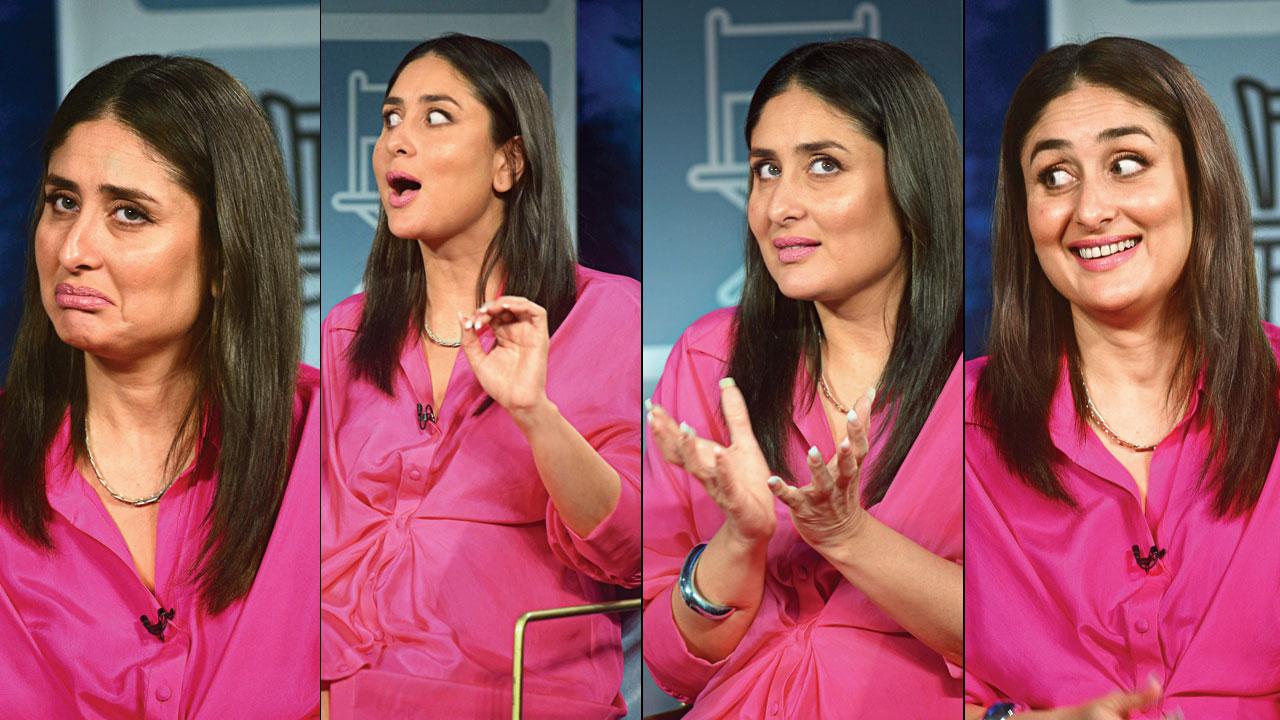
Kareena Kapoor Khan on her cinema, clan, and version 2.0
Mayank Shekhar (MID-DAY; October 14, 2023)
I think it works for actor Kareena Kapoor Khan to not come across as way too interesting, during interviews—scratching merely the surface, without engaging too hard during a conversation. One, it keeps the mystique alive, for a star-actor, who’s been under the Bollywood spotlight for 23 years, straight.
Also, forget an overpowering intellect, for a second—there is rarely a correlation between an incredibly interesting conversationalist, and an equally fine actor, on screen. In fact, the reverse might often be truer.
Take Kareena, when she’s out with roles far too different from her public image—seamlessly slipping into lives of distant others. She inevitably surprises.
She says, “I have always tried to balance out the stardom/persona, with character-driven films, all through. I was 22, when I did Chameli [2003; that shines a light on a sex-worker’s life, over a night]. Back then, there weren’t mainstream actors attempting such a role. Likewise, Dev [2004], Yuva [2004], Omkara [2006]…”
At one point, Kareena, 43, reiterates, “Of course, the big-ticket films will be there. But I don’t wanna do stardom anymore. Would rather dig deep into challenging parts.”
This is in context of Jaane Jaan (2023), that she debuted on OTT with, starring alongside Jaideep Ahlawat, Vijay Varma—equally stars in their own right, although from another sky, namely, streaming.
This choice for Kareena was personal: “I binge-watch crime thrillers at home—I’ve watched all of Harlan Coben’s books that have been made into shows on Netflix. So, I always thought that if I come on a streaming platform—it should be in a genre that I would like to see, myself!”
As she also points out, she’s seen Mare Of Easttown six times already—and that kinda explains her next release, The Buckingham Murders, that premièred at the British Film Institute festival.
Over three weeks since Jaane Jaan dropped on Netflix—based on the crime thriller, The Devotion Of Suspect X—it’s been on the world top 10 chart, for non-English films, on the global platform. Kareena paints a picture of sheer vulnerability in the movie—single-parenting a teenaged girl, while they grapple with an accidental murder.
It’s a whole new world for her, she admits. And the process remains the same. Which is? Mainly to learn your lines, yes: “Because that’s how you can manoeuvre a moment on a set. I’m a prepared actor. But I like to leave room thereafter for the director, co-stars, and the collective energy, that makes a scene and film work. I’m not set in my head.”
She essentially rubs off the energy in the room, she says. And that, of course, changes from room to room, doesn’t it? With Jaideep as co-star, and the role of Maya, for instance, Kareena says, “You have to be more focused. The [co-stars’] modus operandi is different.”
Which is diametrically different from, say, a Salman Khan film—whether Bodyguard (2011), or Bajrangi Bhaijaan (2015)? “With Salman, you have an actor playing on his confidence, and his super-duper stardom. He is confident to another level. And while it may seem so on the set, it’s not like he is unaware, or that he’s not listening, or is kinda sleeping… He’s listening to everything, and is sharp as a knife. Whereas Jaideep is sincere, constantly thinking about his character.”
Over two decades in Bollywood that’s been dominated by the Khan trio, it might be fair to suggest that the female co-star who’s been by their side all along might well be Kareena. Sometimes even picking parts more for the size of the film, than her role. She’s obviously in the best position to define that pop-culture phenomenon more closely.
I ask her to explain the three Khans, ideally through anecdotes, for how they roll, separately. With Shah Rukh Khan, she says, “He’s all those things you hear about him, and more—truly the Shah, or Emperor, or Conqueror, as they say. For him, the film is about everybody, who’s on the set—from the co-star, to the light boy on the tarp. You sense none of his stardom, once he’s in front of you, and how he multi-tasks, while making everyone feel special. He’s made of a special cloth.”
Kareena was 21, when she starred opposite SRK in Asoka (2001): “That was a truly brave film for his maiden home production. He took it all the way to the Venice Film Festival. It’s incredible, the vision for 20 years ahead, that’s he’s had. Back then, he knew that cinema was going to change, and he invested hugely in a VFX studio.”
The super-hero film, Ra.One (2011), with SRK and Kareena, was a result of that. As we speak, with Jawan (2023), SRK has made an astounding comeback for himself, and Bollywood itself.
It’s also not far away from the unexpected debacle of Aamir Khan’s Laal Singh Chaddha (2022), which was Kareena’s last release in theatres—a hard labour of love: “With several years of production gone into it.”
Kareena had her second child shortly after the film came out. And she barely had the time or mental space to mull over its commercial failure: “Recently, Aamir and I were at the inauguration of NMACC [Nita Mukesh Ambani Cultural Centre]. That’s when we first met after Laal. Well, I saw his face, and I could see how he was looking at me, apologetic and sad, at the same time: ‘What happened?’ Together, we’ve delivered big films, 3 Idiots [2009], Talaash [2012]. But you know what? It doesn’t matter. I wrote a long letter [on WhatsApp] to both Aamir and the director [Advait Chandan], telling them that our relationships and talent don’t depend on the outcome of a film.”
I wonder if she’s personally analyzed what went strikingly south with a movie so sincere and sweet, that the audiences simply stayed away?
“I think it was the post-COVID times. People were looking for some more fun in their entertainment. And Laal Singh Chaddha is dark. Even while we were making it, Aamir discussed with me if we were going too dark with my character, Rupa. I said, no, let it be—that’s what it is.”
As a Khan co-star, of course, Kareena has the same things to say about Aamir that’s earned him the title, Mr Perfectionist: “He’s too focused on himself; obsessed. Sometimes I’d tell him, ‘Bahut ho gaya yaar’. You can’t do anything else while working on the film—all the conversations and people are centred on one thing. But that’s Aamir for you. And we’ve loved him for that.”
It’s not that I say this because Kareena is before us. The fact is, my favourite Khan for a star-actor is, in fact, her husband, Saif. He’s defined urbane cool in unmatched ways, over a career as long as his Khan
contemporaries.
Also, taking creative risks with subjects that were so OTT, before there were streamers—take the English film, Being Cyrus (2005), for instance. She obviously agrees, “He’s the finest artiste, doing his own thing, a Laal Kaptaan (2019)…”
It must be mildly upsetting, though, that their own pairing wasn’t to the mainstream delight—whether that be Kurbaan (2009): “Hey, Tashan [2008] was a cool flick! It’s got the songs, and characters, and a cult value! So was Agent Vinod [2012], with a cool yet desi intelligent kinda James Bond.” Fair enough.
While Kareena would love to pair opposite Saif, he tells her something rather keenly observant: “Saif says that he wants to be the best in a film. But he loves me so much that he would want me to be the best.” This is a conflict of interest, alright!
Kareena’s own filmic story actually begins with her sister, Karisma, who got into the movies, first. Also, the first female from the Kapoor family to show up on screen. She’s a fourth generation actor, from what’s widely considered the first family in Bollywood—her great grandfather Prithviraj Kapoor, onwards.
Still, the fact is, it’s actually her mother, Babita, who raised her, almost single-handedly—the reason she’s in the movies!
Kareena says, “I’ve got my confidence and an independent streak from watching my mom. She’s the lioness, who raised the cubs, that is my sister and I. The fire in me comes from her, and she has the same fire for her children even now, when we discuss work. Three women under one roof can do anything! That’s how she took on the world and pushed Karisma’s career. She personally took her down South, to meet Rama Naidu.”
Ah, that’s how Prem Qaidi (1991) happened! Remember, Harish? Also, Anari (1993)! With Telugu superstar, Venkatesh, who’s also found a new audience, you would’ve noticed, with the recent Netflix series, Rana Naidu.
Babita was the ‘Bollywood mom’, as was the prevalent practice in the ’90s: “She would always be with my sister. By the time, I made my debut, times had changed. She wouldn’t come on the set with me. She adapted with the new generation. Also, cinema changed from the ’90s.”
Kinda crappy decade the ’90s were, for mainstream female actors, no? I prod Kareena. She says, “Well, everybody still dances to Lolo’s songs at parties!”
Either way, it’s worth noting that up until the end of that decade, while producers and stars in Bollywood were only too happy to introduce their male children into films, they resolutely chose to keep their female progeny at a safe distance.
Clearly, something was amiss? That they didn’t think the film industry was a great place to work for women? Kareena is decidedly non-committal: “I think these were personal decisions. [With the Kapoor family], it could well be that light-eyed actresses don’t make it! In the ’60s and ’70s, it was simply a choice they made. My mom-in-law [Sharmila Tagore], for instance, continued to work after marriage, and even after Saif was born. She was a game changer of sorts.”
Even with Karisma, Kareena recalls her father, Randhir, “an open-minded cosmopolitan”, was clear: “Lolo would have to find her own way, and that he can’t help her [vis-à-vis a debut/launch vehicle].”
Lolo, being Karisma’s popular nickname. It’s derived from Italian actor-model, Gina Lollobrigida, Kareena confirms: “Now, I don’t know where Bebo [Kareena’s own nickname] comes from!”
She’s however named after Leo Tolstoy’s Anna Karenina, the novel Babita was reading, when she was pregnant with Kareena. Okay, another legend confirmed then. Has she read the book she’s named after?
“Have you seen the size of the book? Mere baal safed ho jayenge [I’ll grey, before I finish it!]. It’s lying at home. Guess who’s obviously read it!” Meaning, her husband, Saif, who’s more of a reader.
“Well, I may give off the vibe that I’m not a reader, which is not true. I do read, but more [in the crime fiction space] Scady [Scandivanian] stuff, like Joe Nesbo. Saif has a different taste, having been an art history student.”
Speaking of names, her new title, Jaane Jaan, is actually named after a film, starring her father, Randhir—who, I tell her, and not because she’s around, that he’s one of my favourite Kapoors, definitely underrated. Her own favourite Randhir films are the same as mine—on top, the crazy comedy, Biwi-o-Biwi (1981), then Chacha Bhatija (1977), which is before Kareena was born.
And that would be true for Randhir’s own stardom, that was quite something in the ’70s, and but it faded by the ’80s: “I was too young, when my dad had stopped working, as such. That’s why my mom had to step in to bring us up, and figure out the odds and ends, until Lolo started working. He did direct two-three films [Heena was one of them]. But he’s had a sporadic kinda career.
“He’s actually loved living life, a lot more—he’s a funny and warm man, with a large social circle, meeting close friends... There are a hundred of them. And they would have not one thing wrong to say about him. He gave more time to that side of his life. It’s something I’ve learnt to do with my circle as well. He’s given us a lot of love.”
The other thing that’s seeped into her personality is a middle-class upbringing, therefore: “My mother came from a humble background. Her father was a character actor, Hari Shivdasani. My grandmother was British. They met on a tour in the 1940s. Growing up, it was clear, that we would be provided the bare necessities. I could buy [expensive] clothes and other stuff, once I got a job.”
Karisma debuted at 15; Kareena, at 20: “My 20s weren’t about partying, shots, nightclubs... They got spent at Mehboob Studios. And I loved that! And it’s been my life since—early to bed, by 9.30 pm, up early. You’ll hardly find me at film parties, although I can have a late-night, once in a while.”
Once you start checking boxes, you realize, Kareena actually has a new-age doppelgänger. An actor who met and clicked with her husband (later), similarly, on a film set, having known him for years before that.
With a maternal grandmother, who’s British, while her paternal family is from the films. She broke out with a Karan Johar film. As did Kareena, in many ways. And now, they’re also related. That’s Alia Bhatt, who confesses to being Kareena’s biggest fan. It may appear she has modelled herself on her as well.
Kareena smiles, “She’s tried to keep that artistic balance. I’m a huge admirer of her choices. And that’s what ultimately makes an actor. I didn’t know her as a child. But of course, now Alia’s part of the family [married to Kareena’s cousin, Ranbir]. Recently we had a picture together that got everyone talking about how we must work together. And then Karan [Johar] started getting the same messages. The onus is on him to cast us then!”
Easily, the role that got Kareena pop-culture cred was as Poo, short for Pooja (as all Sidharths are Sids, and Adityas, Adys). It’s the snobbish fashionista’s role from Karan Johar’s Kabhi Khushi Kabhie Gham (2001) that got her all the teenage love: “I think the lingo and the language of the character is even more relevant today! The reason it worked was because I had so much fun playing the part—a rare mainstream, female role [that stands out] in a film full of [male] stars.”
As you can tell, it was inspired by Alicia Silverstone from Clueless (1995). Kareena had obviously seen that teen-com: “But, no, I was totally inspired by Karan. He just knew the part really well.” Looping back to the Alia-Kareena potential casting by Karan—if that does happen, I joke, it’ll fire up online trolls screaming, nepotism all over again!
Kareena sighs, “Now, what nepotism, yaar! I’ve been around for 23 years. People have seen my fair share of debacles. And I’ve proven myself. I keep coming back.”
What can’t be denied, however, is the edge, in any profession, for that matter, that one enjoys, by observing it from a close distance, being raised around it. As with films too.
She agrees, “For me, that happened with being on Karisma’s sets, growing up. I was lucky, yes. But the first time you face the camera is still the first time. And there is an X factor that you can’t take that away from someone. So, what you’re referring to is just a one percent advantage.”
Kareena debuted with a relatively broody/artsy, Refugee (2000), with Abhishek Bachchan, after dropping out of Hrithik Roshan’s debut, Kaho Naa Pyaar Hai (2000). K3G cemented her stardom of sorts. Refugee was a fair starting point for her displaying her chops as a sensitive/sensible lead.
What followed was a series of films that would baffle the moviegoer—take the forgettable Yaadein (2001), or Main Prem Ki Diwani Hoon (2003), among many that you rightly can’t recall.
Both the movies mentioned, she points out, were by the star-filmmakers of the time—Subhash Ghai, Sooraj Barjatya. Was she picking directors over scripts? “I was too young then. You can’t say no [to such big films]!”
An actor, of course, only acts. There is much else at play for her to take full responsibility for a role, let alone an entire film. At some point, given the offers, she had decided on a sabbatical, refusing to sign up any: “I was saying no to some of the biggest movies.” She’s quite well-known for that too. Take Queen (2014), I remember. She’d passed on that as well.
“Oh, no, that’s much later,” Kareena says, talking of the late noughties. How did she plan on reviving her career then? “With a ripped, six-pack, planning to blow up with the world, walking on high speed [shot], on to the big screen! I hadn’t worked for a year and half.”
The film? Tashan! The goal? Size zero! As goes the old John Lennon cliché (which like all clichés, being true)—life is what happens, when you’re busy making other plans.
Actor Shahid Kapoor sent over director Imtiaz Ali for a script narration. Imtiaz had only debuted with Socha Na Tha (2005). She hadn’t seen that film. Shahid had. She was happy with his script. Jab We Met was born. Rest is history, and chemistry, of course. But all through the making of Jab We Met, Kareena says, she wouldn’t stop talking about Tashan!
“Imtiaz just kept saying, ‘I don’t think you’re getting it!’” In terms of the impact her character is likely to have. It did. Kareena as Geeta remains her most prized picture yet.
Although my personal favourite, in terms of performance alone, is Kareena as Aaliya, in Govind Nihalani’s Dev, based on the 2002 Gujarat riots. It’s the role with immeasurable depth you wouldn’t expect Kareena (or any other commercial/mainstream star) to pull off, so effortlessly. That’s the visceral, surprise element she brings to the screen, that’s hard to decode about her, least of all in a press interview.
Beyond movies, her hugest production is obviously her son, Taimur, a media blockbuster ever since he was born. And which also explains nepotism more realistically—it starts with intense public interest in star-children, in general.
Something that social media and paparazzi feed on. Taimur’s been India’s most famous child, way before he’s likely to even contemplate his profession.
There’s little Kareena could do about it: “If he’s with me, he will be photographed.” I wonder how other celebrity couples manage their child’s privacy. Nobody, for instance, knows what Rani Mukerji and Aditya Chopra’s kid looks like. There must some method to it.
It can backfire too, Kareena reasons, “I could cover his face. That would be more scarring.” Infant Taimur even had a weekly column with his name for a pseudonym in a popular Mumbai daily. I wonder if he’s seen it?
“He hasn’t. But I’m sure he will, if he googles himself.” His growing up could be a curious case study on fame, while his mother claims he’s been totally unaffected by the unwanted attention: “He’s a smart boy. He knows that he has famous parents. And that’s what this is about.”
None of which Kareena had to face, through school/college (Jamnabai, Welhams, Mithibai), while being a celebrity child herself. And she’s been a Bollywood star since teenage. All through which she’s seen the media landscape evolve, equally. Back in the noughties, the reporting around film stars were inevitably about catfights in fanzines and gossip rags!
She was then in her 20s, a decade she regrets a little for “saying and doing foolish things, in order to prove oneself.” These would make it to the press, covering movies, that was still aimed at a niche readership—“Kareena, Priyanka in a catfight in Antwerp!” Okay, that’s not a true story, apparently.
The smart phone and social media turned everyone into a semi-paparazzi and gossip writer. It gets to Kareena, at times: “Everyone wants your time, and a piece of you, which wasn’t there before. It’s tough to balance this out—to not have a bad day, or be tired, being under the spotlight 36 out of the 24 hours of your day!”
An old, 2019 video, featuring N Narayanmurthy, for instance, randomly went viral recently. Wherein the Infosys founder talks about Kareena as his co-passenger on a flight once. And that he wasn’t pleased with her fobbing off unnecessary attention from the public around her. Narayanmurthy’s wife, Sudha Murthy, is a voice of reason in that video. She tries to explain Kareena’s POV. Something Kareena does well herself.
Only, that since everything becomes controversial for a day, online—I can see Kareena’s entourage dancing behind her to cut short the interview, while I wonder if she’s opened up enough?
They’re unhappy with the questions, they complain to my colleague, during the interview. Which is strange, and it’s never happened during our conversation series, Sit with Hitlist, over five years.
The same thing occurred during Kareena’s The Guardian profile, more recently (as noted in the piece). She is actually eloquent enough to take her questions, with absolute ease, and reasonable charm. It’s hard to figure why her own/personal team would unusually attempt bad press towards the employer/client!
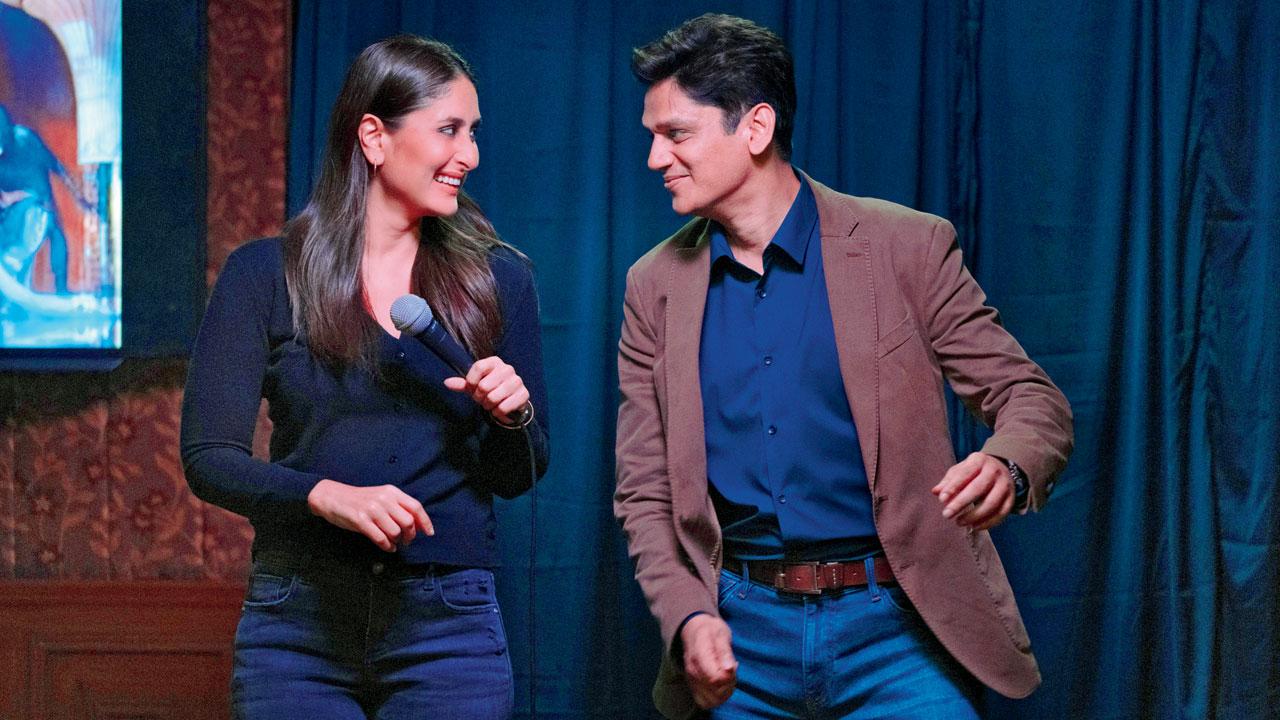
Vijay Varma trained hard for those sequences. You cannot fake martial art moves-Sujoy Ghosh
8:40 AM

Vijay Varma, who is a fan of Jackie Chan and Bruce Lee, on how Jaane Jaan fulfilled his desire of doing martial arts on screen
Upala KBR (MID-DAY; September 30, 2023)
In a gripping scene in Sujoy Ghosh’s Jaane Jaan, Vijay Varma and Jaideep Ahlawat take on each other at a martial arts class. The physical fight symbolizes the battle of wits between Varma’s cop character Karan and Ahlawat’s Math teacher character Naren in the murder thriller. Varma, who describes himself as a “couch-friendly guy”, says that he had to undergo a two-month training in martial arts to be able to pull off the sequence.
“Two of the toughest scenes for me were my opening [fight] sequence, and the face-off with Jaideep. I had undergone immense training for these stunts. From being a couch-friendly guy to hitting the gym every morning, going for yoga retreats and following a strict diet, I altered my lifestyle for the film,” says the actor.
Since dropping on Netflix last week, the Kareena Kapoor Khan-led film has been receiving wide praise. It fulfilled Varma’s desire of seeing himself performing martial arts on screen.
“I’m glad the audiences have given Jaane Jaan so much love. I’ve always admired Jackie Chan and Bruce Lee, and hoped I could perform stunts like them some day. This film made it possible.”
When adapting Keigo Higashino’s The Devotion of Suspect X for the screen, Ghosh saw Varma’s character as a charming cop. The director is impressed that the actor not only worked out rigorously to attain a lithe frame, but also picked up martial arts.
“We needed Vijay to be an athletic martial arts expert who is a police officer, but his superpower is his charm. He charms his way into everything. He had to portray physicality with intelligence because his character is sharp and focused. Vijay trained hard for [those sequences]. You cannot fake martial art moves. Everything shown is raw and real.”
By the way Kareena Kapoor delivers scenes, you know she is a mom-Sujoy Ghosh
8:25 AM

As Kapoor makes her OTT debut with Jaane Jaan, director Sujoy Ghosh praises her for bringing life experiences to her role of a fiercely protective mother in the moody thriller
Upala KBR (MID-DAY; September 23, 2023)
She has been your classic big-screen movie star, her stardom going hand-in-hand with her acting prowess over the past 22 years. How does one then convince Kareena Kapoor Khan to trade the allure of the big screen for OTT? With a solid script, says Sujoy Ghosh. On Thursday, his directorial venture Jaane Jaan dropped on Netflix, marking Kapoor’s foray into digital entertainment.
“I didn’t have to convince her. Kareena has an uncanny acumen for scripts. When she read Jaane Jaan’s script, she knew this is what she wanted to walk in with, as her first digital appearance. I’ve gone to Kareena with many scripts, but this worked for her,” smiles Ghosh.
In the Jaideep Ahlawat and Vijay Varma-led moody thriller, based on Keigo Higashino’s popular novel, The Devotion Of Suspect X, Kapoor plays a single mother in Kalimpong who becomes a prime suspect in a murder. Ghosh admires how she brought her own interpretation to the role.
“Kareena brought a lot of her life experiences to Jaane Jaan — like looking after her children while being a working woman, and her fierce protectiveness towards them. By the way she delivers the scenes, you know she is a mother. This is not to take away from her as an actor. In a sequence, where Vijay tells her he is leaving for Mumbai, the way she looks at him is brilliant. I didn’t have to explain much to her about the scene, she just got it.”
There’s something else about her that has left him impressed and intrigued. “I’ve never seen Kareena mug up her dialogues on the sets. The whole day she’d shoot with me, then go home to be with her family. So, I want to know when she learns her lines,” he asks, laughing.
The director’s love for mystery thrillers has seen him work with Vidya Balan on the Kahaani franchise. Does he find any similarities between the two actors?
“Both are in a league of their own. It’s impossible to compare them. [A similarity between them] is that they are so dedicated to their craft. They immerse themselves into every role they play. They treat acting like something holy; they won’t take it for granted.”
Next, Ghosh is set to helm an action-thriller starring Shah Rukh Khan and his daughter Suhana. While he is tight-lipped about the project, we ask him if he is considering making Kahaani 3. “Not right now, but if I have a good script later, yes. I can make up to Kahaani 10, but I need a good script.”

(Crisp) Movie Review: JAANE JAAN by FENIL SETA
2:31 PM

Jaane Jaan's (released today on Netflix) setting is eerie and intriguing. The way director Sujoy Ghosh has set the mood adds to the impact. The 140 minute long film is not nail-biting as such. Yet, it is very engaging and doesn't bore even for a moment. A few moments stand out and the suspense in the end is unexpected. However, one can't help but draw parallels to a popular Hindi film franchise, which has a similar plot. This affects the film largely. Secondly, the ending is abrupt and one wishes that was not the case and the makers had thought of another witty plot point. Lastly, a few developments are not easy to digest. Speaking of performances, Kareena Kapoor is apt for the part and delivers a splendid performance. Jaideep Ahlawat and Vijay Varma have given several accomplished performances in the past. Yet, they are sure to amaze viewers in Jaane Jaan. Saurabh Sachdeva is impressive yet again. Karma Takapa (Sundar Singh) leaves a mark. Naisha Khanna (Tara), Lim Laishram (Prema), Markush Lepcha (Dipok) and Habib Al Aidroos (Naidu; forensic doctor) are decent. All in all, Jaane Jaan is a decent watch.
My rating - *** out of 5!
My rating - *** out of 5!
Fenil's Bollywood Talk # 796
2:21 PM

NEW RELEASES TO FACE A TOUGH TIME; JAWAN TO BE THE FIRST CHOICE FOR MOST MOVIEGOERS
The Shah Rukh Khan starrer Jawan continues its dream run. By the end of the second week, it would have earned Rs. 460 crores in Hindi at the Indian box office. If it manages to do another Rs. 60-65 crores, it’ll end up beating Gadar 2 and Pathaan and emerge as the biggest Hindi hit ever. What will also benefit the film is that it has no major competition from the new releases.
The biggest release of the week is The Great Indian Family. It stars Vicky Kaushal and Manushi Chhillar. Backed by Aditya Chopra’s Yash Raj Films (YRF), the family comedy is directed by Vijay Krishna Acharya. The film was made way back in 2021 and is YRF’s first release after the blockbuster Pathaan. The promotions started late but have been very aggressive. Yet, the buzz and awareness are limited. The target should be to cross the first day numbers of YRF’s last year’s release Jayeshbhai Jordaar, which was Rs. 3.04 crores. If the word of mouth is positive, it can see a huge jump on Saturday.
The other big Hindi release is Sukhee, starring Shilpa Shetty. It’s a story of a woman in her late 30s who ditches family responsibilities to live for herself. The idea is interesting but the trailer has got an okay response. Hence, even its screen count is limited. The first-day earnings of the film would be around Rs. 40-50 lakhs.
Then there’s the Hollywood film, Expend4bles, which will have paid previews from Thursday, September 21. It’s an action franchise comprising several old Hollywood actors. The series has never been big in India. Nevertheless, it can surprise and emerge as the biggest grosser out of all 3 films.
Lastly, Jaane Jaan premiered on Netflix today. Starring Kareena Kapoor, Jaideep Ahlawat and Vijay Varma, it is directed by Sujoy Ghosh and looks like an engaging thriller. Thanks to the star cast and trailer, it’ll be the most talked about film this week.
On camera, many actors freeze. But Nawazuddin Siddiqui, Ranbir Kapoor own their space-Saurabh Sachdeva
7:27 AM

Animal, Jaane Jaan actor, Saurabh Sachdeva, on picking projects that show him in a new avatar
Priyanka Sharma (MID-DAY; September 15, 2023)
There are two elements that are recurrent in Saurabh Sachdeva’s current cinematic line-up—all of his roles are diverse, and each of his co-stars is a phenomenal talent. After starring in Nawazuddin Siddiqui-led Haddi, he will now be seen in Sujoy Ghosh’s Jaane Jaan, with Kareena Kapoor Khan, and in Ranbir Kapoor’s Animal, which releases in December.
The actor’s cinematic choices, he says, are determined by the diversity of the roles that he is offered. “The decision to be versatile comes from me spending years on [improving] myself as an actor, and my teaching abilities as an acting coach,” says Sachdeva, who wanted to “surprise” viewers with his act as a transgender person in Haddi. “I am happy that I didn’t make a mockery of the character.”
Both Siddiqui and Kapoor are bound by their commitment to the craft, he says. “I have seen many actors, who are great on stage, but, on camera, they freeze. But Nawaz and Ranbir own their space.”
I’m running to keep up with the audience-Sujoy Ghosh
4:08 PM
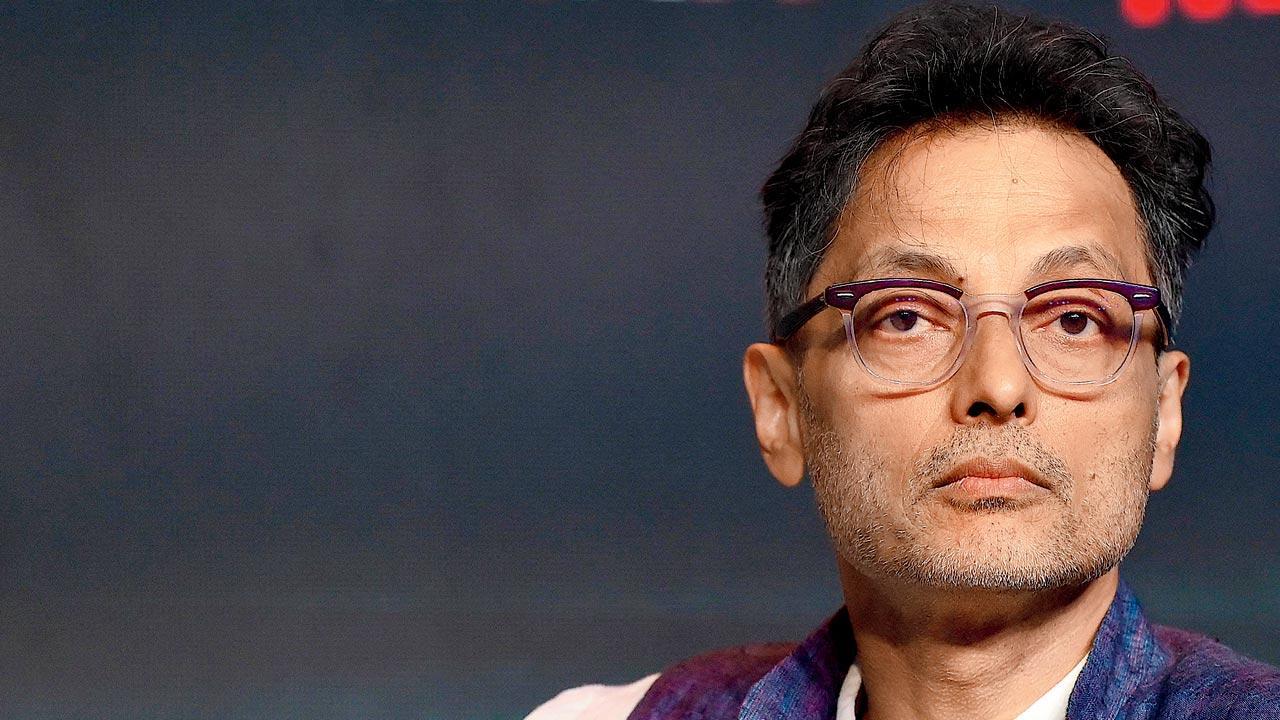
Filmmaker Sujoy Ghosh speaks of adaptations, choosing too-pretty-to-leave Kalimpong as location and keeping up with audience tastes in the build-up to his Kareena Kapoor-starrer Jaane Jaan
Sucheta Chakraborty (MID-DAY; September 10, 2023)
“It was a doomed love story and I loved it because the only other love story I could think of in comparison was King Kong,” filmmaker Sujoy Ghosh tells us about his upcoming Netflix film Jaane Jaan, which is based on the 2005 Japanese novel The Devotion Of Suspect X by Keigo Higashino. It’s a book brought to him years ago by friend and screenwriter Kanika Dhillon. He recalls being drawn to it instantly.
“You don’t know whether it’s a good story or a bad story, but it’s a story you have identified with,” he explains. “It really got to me because I saw characters in that book who were big [and] honourable. It was something I was not used to. In Japanese culture, honour is a very big thing and [people are] big hearted. I wish I was like Naren [Jaideep Ahlawat’s character]. I wish I had that kind of honour instilled in me, the values, beliefs and morals that he has.”
Since Anukul, Ghosh’s 2017 short film starring Parambrata Chatterjee and Saurabh Shukla, based on a short story written by Satyajit Ray, this is the first time that Ghosh has adapted a story for the screen. “I was dying to,” he tells us excitedly.
“These people are experts in what they do. They’re born to write stories. I would love to have all my films based on books if I had my way.”
Aranyer Din Ratri, Bengali author Sunil Gangopadhyay’s novel, which was famously adapted for the screen by Saytajit Ray in 1970 has been on his mind for long. “But it is too scary.” There is the burden of responsibility and the need to be loyal and respectful to the source material because there is the looming sense of someone having worked very hard to put the story together. “I shouldn’t be messing with a story just because I can.”
Rabindranath Tagore’s short story Kabuliwala is a work he says he hopes to adapt one day. “I will do it before I retire,” Ghosh smiles. “Have to do one Tagore, at least.”
Jaane Jaan is set in the hill town of Kalimpong in West Bengal, a location that Ghosh has used previously in 2016’s Kahaani 2: Durga Rani Singh. But the Kalimpong of the new film is different. “That’s how it should be,” he insists.
“Even the Kolkata of Kahaani versus the Kolkata of Te3n [which he produced] versus the Kolkata of Bob Biswas [which he wrote and co-produced] are different. At least I hope they are. That’s the whole trick. You should shoot in the same city, but the city should also be a character. The city should reflect the story that you’re telling. My world is very important; it should be a character in the film.”
Misty and far away from the city bustle, Kalimpong in the Himalayan foothills, Ghosh tells us, lent itself perfectly. “I feel any character within a story is believable if the world in which they are is believable. Now, if you’re showing somebody who’s academically inclined, who wants a quiet life, who is looking to restart her life, you would need a world which is smaller. It’s a smaller community where people know each other.”
His own familiarity with the terrain also undoubtedly contributed to his choice. He recalls a time when he and a friend hired a car and went to Kurseong and from there to Kalimpong and Darjeeling. “We kept falling in love with the places and didn’t want to leave, and then my wife had to call us back,” he laughs. “I could do a whole film by the banks of the Teesta.”
While creative concerns and a director’s sense of discipline remain largely the same while making a film for the OTT space, what changes for Ghosh is the way the film is presented.
“If I know that you’ll see my film on a mobile, an iPad, a computer or a television screen, my framing would change a little,” he says, explaining that for a theatrical film he can include more wide shots. “I try to keep that in my mind, but don’t let it dictate me. In Jaane Jaan, you’ll know that the framing is a little different from, for example, a Badla or a Kahaani.”
The process he finds pushes him to think differently, an important requisite “to move with the times”. “We have to learn to serve people who watch films on their mobiles. Whether we like it or not, they do.”
Ghosh began his filmmaking career in 2003 with the ‘cool’ indie musical comedy Jhankaar Beats and has since gone on to make several hit thrillers starring industry A-listers. The biggest change in his life he feels, however, is technology.
“When I started out, technology was never a faculty of filmmaking. Now, it’s as important as editing or cinematography or directing because you have so many possibilities if you know how to harness technology in your film, to create the world, to tell your story. And it’s changing rapidly. A lot of my friends do some amazing things with technology and I don’t know how to, but I would love to learn.”
There is also the matter of the audience’s evolving tastes. Ghosh says that at the time when he started out, people were not that exposed to global cinema. “But now, I’m competing with the evolution of taste. When you see my film, your benchmarks are different. You’re not just seeing a film, you’re also assessing it. Technically, is it sound? How well has he shot it? How good is the VFX? If I give you a lazy film, you’ll be able to spot it a mile away. Their expectations and demands from a film are changing, and I am just running to keep up with them.”
Subscribe to:
Posts (Atom)