Showing posts with label Ira Dubey. Show all posts
Showing posts with label Ira Dubey. Show all posts
My friends started out with me, but raced ahead-Ira Dubey
9:16 AM

Accepting that everybody has their own career path, Bollywood actor Ira Dubey on her connection with Fatima Jinnah as she gears up for Freedom At Midnight 2
Letty Mariam Abraham (MID-DAY; February 18, 2025)
In the last decade-and-a-half, Ira Dubey has largely concentrated on acting, be it in a wide range of plays or in shows like Potluck and Scoop. But now, the actor is ready for the next step in her career—writing and direction. Will wearing multiple hats be overwhelming? Maybe. But Dubey is excited about the road ahead that will see her not only direct her first film but also return to the new season of Freedom At Midnight where she plays Fatima Jinnah, a leading women’s rights activist in Pakistan. In conversation with mid-day, she talks about life of an actor on stage, films and OTT, her love for writing, and battling self-doubt. Edited excerpts from the interview.
Does juggling writing, acting and producing a show get overwhelming?
One has to try and find [the time]. I have been a stage actor for almost 20 years. Theatre is close to my heart. I won’t ever give it up. If you had the good fortune of having theatre in your life, I don’t think you’d ever give it up for that very reason. Whether it’s Naseer [Naseeruddin Shah] sir or late Om Puri or Shabana ji [Azmi] or my mother [Lillete Dubey], some of our finest actors come from theatre and still go back to it. That’s because it’s an actor’s medium more than a film.
Are you planning to foray into direction as well?
I’ve been a festival director and I’ve directed [plays] for stage, but I haven’t helmed anything on film yet. I’m writing something that I would like to direct. The journey of writing and directing films began last year. Every time you want to try on a different hat, you become a student. I didn’t go to film school to learn directing, I haven’t assisted any directors. But then, some of the most successful directors never studied film. It can be overwhelming, but you have to strike a balance. When you live in a city with rent and bills to pay, [it becomes difficult] to sustain your writing career and enjoy yourself. I have to balance that now with finding the time to write and research.
How do you deal with writer’s block?
I don’t even know if I have experienced writer’s block. I used to enjoy writing very much when I was younger. I used to write poetry, I was a voracious reader. I used to read a book a day up to my 20s. Then, life took over and I focused more on my acting career. I moved away not only from reading, but also from writing. So, it’s like I’m opening a very old door. Writer’s block is something that you have to [go through]. It’s like that famous Robert Frost quote: The best way out is always through.
Do you battle with self-doubt?
I think all of us do. I think self-doubt is healthy in a way, and in some ways, it’s not. Again, it’s about finding out how you walk that line. I’m a perfectionist. I was an overachiever in school. It has taken me 15 years to find that part of myself. You don’t have to be the master at everything you do. It’s more about coming into your own, knowing that a lot of it is about the process, and is not result-oriented.
When did you start asking yourself these questions?
Some of it began after I lost my dad in 2015, and some I’ve always had. I went through a dark period in my 20s. It’s something I may talk about in a film someday. There are certain low periods in everybody’s life. How you deal with those and emerge out of them teaches you so many things in retrospect. Going through [a dark phase] in my late teens and early 20s, and then losing my father at 31 propelled me towards this self-awareness.
How do you view your film career?
I don’t know where I am in my film career, to be honest with you. I always quote this example—my mother started working in films in her 40s. Clint Eastwood started directing in his 70s. People’s careers have turned around in their 50s and 70s. Life is unpredictable. When I look back, there were moments in those 15 years where I have been very frustrated, wished things were different, been envious of other people and wondered why things were happening for them and not for me. I have friends who started out around the same time as me, but they’ve raced far ahead of me. I felt the pinch. But at the end of the day, the belief in yourself, your ability, and your talent are far more important because those will carry you forward.
What is the status of Potluck season 3 and Freedom At Midnight season 2?
We were hoping there will be a third season of Potluck. The second season of Freedom At Midnight will be out in August. In 2017, I was asked to do a reading of a book called Mr And Mrs Jinnah: The Marriage That Shook India. I completely fell in love with the book and acquired the rights to develop a two-season show that didn’t ever get made. I remember meeting Nikkhil [Advani] and Mira Nair [for it]; she was quite interested, but she needed time as she was working on a couple of things at the time. Just before COVID hit, I had to give it up because somebody wanted the lifetime rights and I couldn’t afford that. In 2022, Nikkhil offered me Fatima’s character in Freedom At Midnight. Nikhil’s partner, Madhu Bhojwani, had watched me in three plays and loved me in them. The role just made perfect sense. I didn’t give a damn about the fact that she had grey hair or that she was older. Fatima is an absolutely fascinating character.
I am glad actors no longer need to be conventionally beautiful-Lillete Dubey
8:57 AM

Raima Ganguly (BOMBAY TIMES; September 2, 2023)
"Bengalis are very culturally inclined. So, Whenever I come here, I’m sure that the audience will be very responsive” said actress and thespian Lillete Dubey, who is in town to stage her directorial, Vodka And No Tonic (organised by Nanni Singh) – a play that revolves around the fragility of human relationships. We caught up with her for a chat, during which she told us why she feels that the film industry happened to her accidentally, how relationships are at the heart of her work, and more. Excerpts:
Slowly the winds are changing, and I am so glad! With OTT and new-age cinema, being ‘conventionally beautiful’ is no longer a prerequisite for an actor.
'I first came to Kolkata 35-40 years ago to perform at Kala Mandir. Kolkata is a culturally conscious and developed city, be it in the field of literature, music or any art form. It’s very open. And that’s a thing when you come to perform in a city that is culturally alive — it’s open to all themes.'
'Acting in TV and movies was not my game plan. I used to do a lot of theatre since college. Then I did something in Hum Log and some work in cable TV too. It was fun. It was purely by accident that I was offered a role in Zubeidaa. It was a lovely role, so I thought why not. However, I don’t feel challenged by cinema. It’s great fun, but I don’t think there has been any role that has challenged me.'
I picked up these stories (of Vodka And No Tonic) to not remember the pandemic or what we went through. I wanted to look at relationships through the lens of the crisis. There is one thread that binds all my works – relationships. Irrespective of what the theme is, relationships connect it to the audience.
On her bond with her daughters
Theatre is in their blood, but neither decided to go that way professionally. Neha, when she was in college, did Monsoon Wedding and a couple of other films. After college, she took a sabbatical and realized that her heart was not in it. So, she went abroad to pursue Masters in psychotherapy and is now a trained psychoanalyst. Theatre is something she enjoys, but it’s not her career choice. She’s a very spontaneous actor. On the other hand, Ira did a major in theatre. She is producing and co-producing plays and also working on stage, OTT and films. When I work with her, she’s my actor and we navigate things differently. But though Neha is not completely in it, the three of us do discuss theatre and it’s a great feeling.
The showrunners were sure that Potluck would have at least 10 seasons-Rajshree Ojha
8:17 AM
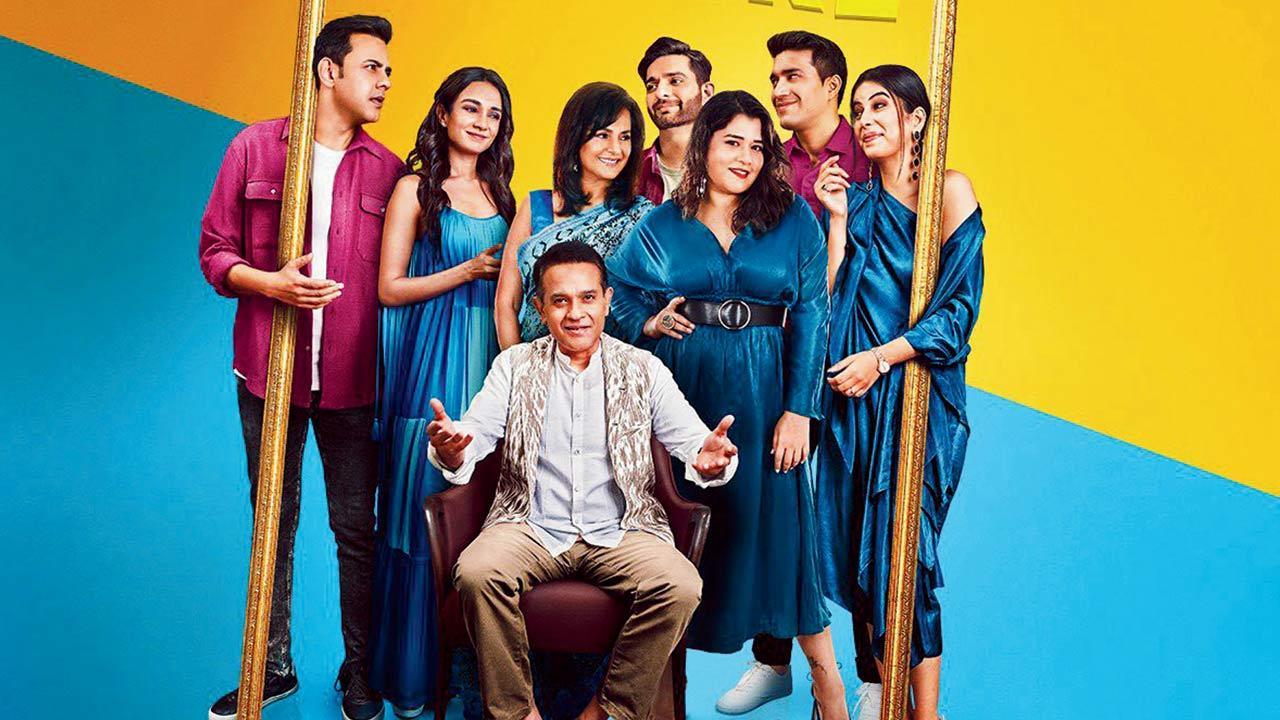
Potluck director Rajshree Ojha discusses her plans for the sitcom franchise after garnering a positive response for the second instalment
Letty Mariam Abraham (MID-DAY; March 14, 2023)
During the pandemic-induced lockdowns, streaming platforms doled out crime thrillers one after the other. Director Rajshree Ojha’s Potluck (2021), a light-hearted show about the Shastri family that sticks together despite their personal highs and lows, came as a breath of fresh air. Almost one-and-a-half years on, the director is back with the second instalment of the Sony LIV comedy series. In a chat with mid-day, Ojha talks about how the narrative of a tight-knit family lends itself wonderfully to multiple seasons, and how she has the third season ready in her head.
Edited excerpts from the interview.
How has the response been to the second season?
It has been a positive response. The results are so good that we will start the third season soon. I feel Potluck has found its niche audience.
Was the second edition’s script ready when you shot for the opening season?
The showrunners were sure that Potluck would have at least 10 seasons. To be honest, I wasn’t so sure. I like the show’s vibe, so I was sure that it should have at least three seasons. It is in the space of a sitcom, so it can continue to tell the story, like say Gilmore Girls. All we needed was the audience. My biggest fear for the second season was that it was released over a year [after the first instalment]. [I feared that] people forget [a show], especially with so much content out there.
Was there pressure to keep the narrative light?
Personally, I like to find humour in the most horrendous situations; it takes away the pressure. I always try to bring in [an element of] craziness. In this season, Dhruv [Harman Singha’s character] loses his job, and I’ve made such a drama about it. We, as Indians, [have a penchant] for melodrama.
Which episode did the cast find most hilarious?
There is a scene between the three guys [Singha, Cyrus Sahukar, and Siddhant Karnick] in which they are trying to console Dhruv, who has lost his job, but Cyrus kept cracking up. Everyone was tired laughing at one point. There is a birthday/anniversary scene, which turns hilarious. Also, a scene in the end credits — with Cyrus and Ira [Dubey] in the bathtub — will leave you in splits.
Did any actor surprise you with their performance this season?
I think Harman was fantastic; he is a director’s actor. Sometimes, when I pushed him, he would get why I am doing so. There was a scene where he was having an internal struggle, which he did beautifully. Ira is my other favourite. [Her character] is shown joining a new office, plus she is trying to fit in. She captured that essence well.
So, is the plan for season three ready?
Of course. We are set to have a wedding, which is in my head [at the moment]. But I don’t know what the showrunners are thinking. I think people would be keen to see who Aalim’s [Karnick] parents were, and whether he and Prerna [Shikha Talsania’s character] unite.
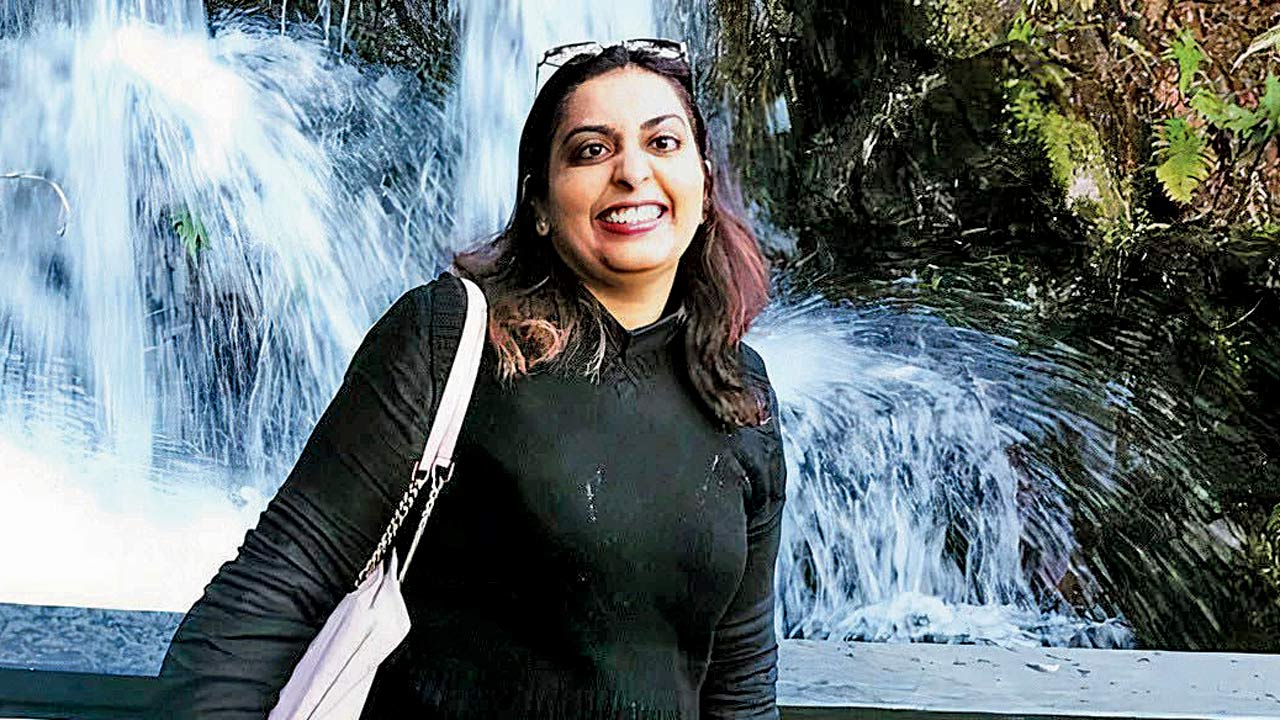
Human interaction is a very important part in being human-Lillete Dubey
8:09 AM

Navneet Vyasan (HINDUSTAN TIMES; May 27, 2020)
With a career spanning more than two decades, Lillete Dubey has firmly established herself as one of the finest thespians and artistes in the country. And, now, for the first time in her career, like many others, the actor finds herself in a state of pause, and a much needed one, due to the Coronavirus lockdown. “One of the great revelations for me,” she says, “is that all these days, I have been a social dinosaur. I have always believed that your work is your calling card. But at the same time, now, I have also realised the importance of professional and personal need to communicate with people.”
Dubey has utilised this time to pursue a more reflective way of living. “I am not on social media, so I haven’t been venting out my feelings on an individual level,” says the Best Exotic Marigold Hotel actor, adding that a lot of people are doing that, which is fair enough. “I am not making any judgements. But I found that people went two ways — either they went inwards, a little reflective, and loved and enjoyed and valued the time that they got with themselves, or many went outwards, to connect with people. I went the former way, and the only time I went out was for a digital event to support theatre where I was joined by Ira (Dubey; daughter),” concludes the actor.
Although the actor affirms the fact that people will hesitate to get back to the theatres, she also feels that OTT might just be a feasible option for many. “Maybe, we are entering an era were digital is going to become far more important, though I will never believe that we’ll replace theatre and films. They should co-exist. Human interaction is a very important part in being human,” says the Lunchbox (2013) actor.
Now, Lillete Dubey brings Devika Rani on stage
8:09 AM

Ira Dubey is the First Lady of Indian Cinema in a play, produced and directed by her mother with Joy Sengupta as Devika’s husband Himanshu Rai; opens in Mumbai on September 7
Roshmila Bhattacharya (MUMBAI MIRROR; July 24, 2019)
 On September 7, Lillete Dubey will bring in her birthday with a new stage production, Devika Rani: Goddess Of The Silver Screen. The actress is directing daughter Ira Dubey who plays the First Lady of Indian Cinema with Joy Sengupta as her debonair filmmaker-husband Himanshu Rai. The play opens at the Tata Theatre in Mumbai, after an inaugural performance in Pune on August 31.
Though Lillete has done many plays based on world literature, the primary aim of her theatre company has been to give a platform to original Indian writing, be it Vijay Tendulkar, Mahesh Dattani or more recently Twinkle Khanna whose short story, Salaam, Noni Apa, from her book, The Legend of Lakshmi Prasad, was adapted by her for the stage. Having already experimented with a play on Gauhar, the singer from Kolkata who popularised Hindustani classical music, Lillete was not in the mood for another biopic. But then, she ran into an old college friend, Kishwar Desai, who was also on the jury of the Montreal English Theatre Awards (META) and confided that along with a book on the 1919 Jallianwala Bagh massacre, she was also writing on the cinema of Devika Rani and Himanshu Rai based on five years of research and several unpublished letters. Instantly excited, Lillete asked her if she’d also like to write it as a play and Kishwar was quick to agree.
“It’s not an already made script which guarantees a safe and successful run. After seven-eight drafts, we’ve finally decided what we want to tell. While we will start with and touch on films with women-centric topics, like Achhut Kannya, the play is not a filmography for the archives. It’s a personal story of a woman who was the grand-niece of Rabindranath Tagore, who’d been educated in London, and who broke the glass ceiling 80 years ago to enter a profession which did not draw women from respectable families then,” she points out. Lillete adds that the winner of the Padma Shri and Dadasaheb Phalke award, did not only act in movies, with her husband she set up and ran India’s first listed studio, Bombay Talkies, which introduced legends like Ashok Kumar and Dilip Kumar. “It’s a fascinating story which unfolds against the backdrop of the Second World War with the studio employing many Germans.”
And will the journey also touch on the big ‘scandal’ of the ’30s, when Devika Rani eloped with co-star Najam-ul-Hasan during the filming of Jeevan Naiya which landed lab assistant Kumudlal Ganguly, rechristened Ashok Kumar, his break as an actor? “Oh yes, and also the reason she returned home, one of them being adultery which was a punishable offence then and she could have been jailed,” she says.
Quiz her on her choice of Ira to play the titular role and Lillete reasons her daughter is a talented actress who speaks flawless English and can be both feisty and vulnerable—demure bride and dragon lady—on stage.
For Ira a biopic is always exciting, particularly one that goes back in time. “In Devika’s case, we know what she looked like and have seen her films so there’s a lot of research involved in getting the way she walked, spoke and dressed right. At the same time, one doesn’t want to make a caricature of a real person. The challenge is to capture her spirit so people believe that this is Devika Rani,” she maintains.
Her director mother points out that Ira is slim, petite and can carry a tune well and for that instant, will convince you it’s Devika Rani sitting on the branch with Ashok Kumar and crooning, “Main Ban Ki Chidiya”. “She’s the right age given the role spans from 18 to 36,” adds Lillete, informing that the play ends with the actress-filmmaker’s retirement from showbiz to marry Russian painter Svetoslav Roerich and move to Himachal where she made documentaries on wildlife, before settling down in Bangalore, where she died at the age of 85, a Garbo-like figure.
Talented Joy, for her, is also apt for his part. “He has the right look to play Himanshu, who was 16 years older than his wife, and shares a great working relationship with Ira. We also have him speaking Bangla in a few scenes,” she smiles, revealing that Kishwar has written the play with almost 50 characters with each actor playing at least three different characters. Pia Benegal is doing the costumes.
A working birthday is not everyone’s cup of cheers, but after three years, it’s become a norm for her. “It means there’s time yet before I have to start thinking of hanging up my boots or should that be sandals,” laughs Lillete, equally kicked about her real-life role of a grandmother to daughter Neha’s 10-month twins. “For the first time in my life I am experiencing pure love. These babies are mine only to spoil and indulge,” she signs off with a smile.
Dear Zindagi team members rock the show during wrap up bash
8:16 AM

Gauri Shinde returned to the Khar resto-bar, where she shot portions of her upcoming film, to throw her cast and crew a bash
Natasha Coutinho (MUMBAI MIRROR; July 23, 2016)
After wrapping up her upcoming film, the Alia Bhatt starrer Dear Zindagi, in May, Gauri Shinde rallied around her cast and crew for a party on Thursday night. Alia, Shah Rukh Khan who plays her therapist in the film, cast members Kunal Kapoor, Ali Zafar, Angad Bedi, Ira Dubey and lyricist Amit Trivedi were in attendance.
"The party was held at a Khar restaurant where a part of the film was shot. Alia's boyfriend (played by Angad Bedi) is the owner of the place in the film. Some dramatic sequences were shot there. The guests nibbled on pizzas and chicken tikkas, the drinks flowed. Pakistani actor-singer Ali Zafar was the designated entertainer of the night and belted out some hit numbers. Ira who plays Alia's bestie in the film seemed excited about her offbeat release M Cream, while Kunal discussed his next with Tigmanshu Dhulia," a guest informed Mirror.
Alia who'd especially flown in from Amritsar, where she was filming an Independence Day event, arrived straight from the airport, looking pretty in a flowing pink dress. King Khan sauntered in post midnight and had everyone in splits with his witty remarks. The party wrapped up around 1.30 am with the revellers planning their next bash which is expected to happen soon.

People were shocked to see that India had young people the way they were in M Cream-Agneya Singh
10:47 AM

Agneya Singh’s debut film uses the urban legend of M Cream to raise that pertinent question — what does it mean to be a young Indian today?
Aastha Atray Banan (MID-DAY; July 3, 2016)
"It was the dichotomy of today’s youth that I wanted to capture and reflect. There is a mix of apathy and activism, conformity and the need to stand out — I wanted to talk about each of those stereotypes,” says filmmaker Agneya Singh, whose debut feature M Cream will hit screens later this month. Singh, who is political journalist Seema Mustafa’s son, is a Delhi boy who studied filmmaking at New York University’s Tisch School of Arts. But, it was his early years spent hobnobbing with his Delhi University friends that shaped the idea of the movie.
Burning the film festival circuit since 2014, the movie, produced by Agniputra Films, has gathered a lot of awards for the young filmmaker — it won the Grand Prize for Best Feature Film at the Rhode Island International Film Festival and the Best Foreign Feature at the Indie Spirit Film Festival, among many others. “Those awards were the step we needed to bring the movie to India and release it. You know how it is with small- budget movies. But it has done well at festivals abroad, and managed to get a release, but in limited theatres and only in the metros,” he says.
The 26-year-old’s road trip film is named after the urban legend of Malana Cream, a premium marijuana herb that’s supposed to give you the ultimate high, and, is supposedly found in the village of the same name in Himachal Pradesh. Four different friends — each unique — set out to find M Cream, and discover themselves and raise some pertinent questions along the way. “Protagonist Figs, played by Imaad Shah, believes in drugs and parties. Jay, played by Ira Dubey, is a do-gooder and wants to change the world — an arm chair revolutionary. Maggie, played by Auritra Ghosh is a rebel without a cause and Niz, played by Raaghav Chanana, is all about ‘live and let live’. Some are privileged while some are middle class. As they spend time together the real issues are raised.”
M Cream, he says, is just a plot device that talks about the main question — what does is mean to be a young person in India today? “It’s all about taking a stand today. Young people need to do that. It’s about having the courage to have an opinion.” It also raises the question of the youth of the country using drugs, but is being talked about in a way different from the recently released Udta Punjab. “I belong to the school of thought that says that marijuana, the herb, should be decriminalised and made legit. I really hope that the movie starts that debate,” says Singh.
He also says he made the movie to make sure the world saw a different side of India. “Mainstream movies are too commercial, and indie movies focus more on the gritty, rural side of India — the India they think the West wants to see,” he says. And, going by the response he got at each screening, it seems he succeeded. “People were shocked to see that India had young people the way they were in the movie. You could take them out of the movie and they could fit anywhere in the world, right? It was to show them that we, here, exist, like this, not like they think we do.”

Why the North East has been off Bollywood's radar as a shoot locale?
8:31 AM

Shaheen Parkar (MID-DAY; October 25, 2015)
Mary Kom’s biopic, starring Priyanka Chopra, was not shot in the boxing champ’s home state, Manipur. The makers preferred to opt for Himachal Pradesh instead. The North East has not been on Bollywood’s radar as a shoot locale. The seven sisters — the states of Arunachal Pradesh, Assam, Manipur, Meghalaya, Mizoram, Nagaland and Tripura — despite their pristine locations, are missing from Bollywood’s map.
Over the years, producers have preferred to log air miles to East European nations (Bollywood’s current hotspot) or traverse from Alaska to New Zealand.
As National award-winning filmmaker Jahnu Barua, who hails from Assam, points out, “The rest of India has been allergic to the North East since independence. There is this fear psychosis as it is the border area. They just do not want to take notice of the region.” Fortunately, that seems to be changing now.
Play it loud
The sequel of 'Rock On!!' (2008) is presently being shot in Shillong, Meghalaya. The film revolves around a music band, and Meghalaya is emerging as the rock capital of India.
The makers of the film — which stars Farhan Akhtar, Shraddha Kapoor, Arjun Rampal and Prachi Desai -- wanted to capture the music festival scene in Shillong which is now on the go-to-list for rock music aficionados.
Filmmaker Biswajeet Bora, who is from Assam, points out, “Most filmmakers feel it is not feasible to shoot with big stars in the area due to the lack of fancy five-star hotels, but things have changed a lot in the region. They have to put their fears to rest.”
Bora shot his recent film, 'Aisa Yeh Jahaan', starring Palash Sen and Ira Dubey in the Golaghat district of Assam.
Another project
Close on the heels of the 'Rock On 2' unit, is Vishal Bhardwaj, who is shooting his Saif Ali Khan-Shahid Kapoor-Kangna Ranaut starrer 'Rangoon' in Arunachal Pradesh. Knowing B-Town’s herd mentality, this might just have others following suit.
As 'Rangoon' is set against the backdrop of World War II, the region lends itself as the perfect location. Bharadwaj’s film will unfold in Ziro valley in Arunachal Pradesh which is considered a heritage site.
With two film productions in the North East, Bollywood is likely to wake up from its slumber and tap the region’s full potential.
Veteran filmmaker Shyam Benegal was part of a task force to develop the region as a shoot location. He says, “Five years ago, the Meghalaya government was keen that Hindi films be shot in the state. I was part of the initiative to promote it as a destination, but we had just one meeting and then things became quiet on that front.”
Benegal visited several breathtaking locations in the state. He says, “I wish I could have shot a film there. When I visited the place, I was stunned by the natural beauty. The Meghalaya government showed great interest. We visited several spots in the state which could be ideal locations. They were keen to offer several incentives to attract filmmakers, but things did not take off.”
Logistical issues
What Benegal saw as a possible deterrent were the connectivity and infrastructural requirements. As he puts it, “A film unit consists of a large number of people all their needs have to be taken care of.” But Barua feels what matters more is the mindset, rather than the logistics, “People need to understand the region. They need to know about the area. Due to the Mongoloid physical features of the people, they are considered to be different from the rest of the country.”
Barua always shoots his films in Assam to highlight the culture and politics of the state. “Most Bollywood stories do not match the North East region. The stories do not reflect the people of the region. They feel you cannot have people with Mongoloid physical features in their films. It is all in the thinking; it needs to change.”
This sentiment is echoed by actor Adil Hussain, who is from Goalpara in Assam. Best remembered as Sridevi’s husband in 'English Vinglish' (2012), he says, “It is because of the attitude of the political class that the area has been neglected. Films are being shot all over India, even Kashmir. Bollywood only looks at commercial viability. It is driven by profits, rather than art. They would rather go to an exotic foreign locale than go to the North East. The North East is considered a sensitive area, they do not want to put their money at stake by shooting in the region.”
Birthday blast
In November 2013, when Aamir Khan chose to bring in his wife Kiran Rao’s 40th birthday in Assam, it at least made Bollywood realise the region’s tourist potential. The star was accompanied by filmmakers Karan Johar and Ayan Mukerji. Though they raved about the state’s natural beauty, planning a film in the state remained a distant dream.

Unsafe terrain
Safety seems to be a big concern for filmmakers. Benegal explains, “Decades of insurgency and unrest has a lot to contribute to Bollywood skipping the north east. But Bora has a different opinion, “Things have changed a lot now. There were issues, but all that is now the past. There are several Western tourists who visit the Kaziranga National Park in Assam. Meghalaya has already become a rock music hotspot, so why can’t Bollywood shoot here?”
Things may be changing, but as Barua maintains mindsets do not alter, at least not soon.
“The people of the terrain have gone through a lot,” says actress Ira Dubey, who shot in Assam for her film, 'Aisa Yeh Jahaan'. “There have been natural disasters and political unrest, but what I observed after spending time in Assam during the shoot, was the resilience of the people. There is so much positivity, the people are warm and clean-hearted.”
Ira also learnt the Assamese folk dance, Bihu, for a song (pictured, above). “It looks simple, but there are some delicate hand movements which you have to get right.”
Talking about her experience of shooting in Assam, she says, “There was a scary episode when we were flying in a chopper from Arunachal Pradesh to Assam. We had to do an emergency landing, but we were fine. Later, I learnt that the two pilots, who had flown us, had perished in a crash.” So is this fear psychosis that makes industry folk keep off the North East for shoots? Mary Kom (pictured below) director Omung Kumar chose not to comment about why he did not shoot in Manipur for his film. But for his upcoming biopic on Sarabjit Singh, he plans to shoot in the actual locations in Punjab.
So why did he skip Manipur? He has no answer — like most of the B-Town folk who just do not seem to want to tread the region.

When Bollywood made an exception
>> Deepak Bahry’s 'Kurbaan' (1991) with Salman Khan and Ayesha Jhulka was shot in Shillong in Meghalaya. The red jeep used in the film by Sallu belonged to a local store owner in the Laban area of Shillong, who became a star himself after the shoot.
>> Rakesh Roshan’s 'Koyla' (1997) starring Shah Rukh Khan and Madhuri Dixit was shot in Arunachal Pradesh. One of the film’s tracks, Tanhai Tanhai, was filmed in the Shungetser Lake and Nuranang Falls in the Tawang district of the state. After the shoot, Shungetser Lake came to be referred to as the Madhuri Lake.
>> Kalpana Lajmi shot her Naseeruddin Shah-Shabana Azmi starrer 'Ek Pal' (1986) in Shillong, Meghalaya, and Jorhat, Assam. Her Raveena Tandon-starrer Daman (2001) was shot in Guwahati, Assam.
>> Jahnu Barua’s 'Har Pal' was shot in Shillong, Meghalaya, with Preity Zinta and Shiny Ahuja. It was filmed in 2007, but did not see light of day.

Best part about Dilliwaali was working with Divyendu, Jackie-Ira Dubey
8:17 AM

BOMBAY TIMES (March 14, 2015)
Playing the quintessential
effervescent Delhi girl in her upcom ing film Dilliwaali Zaalim
Girlfriend wasn't tough for actress Ira Dubey, who has spent a good
share of her academic life in the Capital. She says, “My character Nimmi
is pliant yet gutsy. I tried to make her as relatable as I
could. She knows how to stand up for herself
when wronged. The best part about the experience was associating with
talented actors like Divyendu (Sharma), Pradhuman Singh and the
inimitable Jackie Da (Jackie Shroff). Our director Japinder Kaur made
sure that each character is fresh and the narrative has a contemporary
Delhi setting. “Japinder adds about Ira, “We needed somebody who
looked intelligent and I felt she has the aura of a strong woman. Her
beauty is just a bonus.“
The film that is produced by Manjeet Kaur and Tarnpreet Singh, also has Prachi Mishra playing the lead. The movie's music is on T-Series and is distributed by Waves Cinema. The movie is slated for release on March 20.
The film that is produced by Manjeet Kaur and Tarnpreet Singh, also has Prachi Mishra playing the lead. The movie's music is on T-Series and is distributed by Waves Cinema. The movie is slated for release on March 20.
Ira Dubey revisits memories of her first film The Morning Fog & shooting with tigers
9:41 AM

As told to Yolande D'Mello (MUMBAI MIRROR; March 8, 2015)
This photograph was taken 12 years ago while shooting my first film, The Morning Fog. I was in the second year of college, studying Theatre at Yale University.
I remember, I had come home for the summer when director Aminta Goyel, who was a senior at Cathedral & John Connon School, called to tell me that she wanted me to play the lead role in her experimental film. Apparently, she had seen me perform at school plays and enjoyed my work.
In the film, my character Koko came from an affluent family, had a love-hate relationship with her mother and was obsessed with tiger conservation. The high point for me at the time was when we flew to LA to shoot with a female tiger named Asia. I was left starry-eyed.
Imaad (Shah) plays a classmate who had a crush on my character. In the film, we didn't have too many dialogues. That is till I get lost in a forest off Lonavala and he takes out a search party to rescue me. He is shy and reserved in real life too. In one scene, he had to serenade me by playing the guitar which was sweet but a little awkward.
Ten years later, I was thrilled to be shooting with Imaad again for M Cream, a film by Agneya Singh and Aban Raza. It was an immediate throwback to our first interaction.
This film is about four friends who take a trip to Himachal Pradesh to source hash. They end up on a journey of self-discovery. When I got the call, I thought I was playing Magi, the quirky, high society friend and an easy typecast, given my previous films. Mum (Lillete Dubey) warned me about this when I entered films. Thankfully, theatre is far more diverse though in all fairness Hindi cinema is evolving quickly as well.
In the film, I play Jayashree Bose, a passionate activist. Imaad's character and mine hate each others' guts though they ultimately fall for each other. Now, Imaad and I are dear friends so it was a joy to work together. He is warm and great fun when he opens up. After the movie of course, he returned to his cocoon as I like to call it.
I remember, one incident in the film which called for me to wear a skimpy chiffon dress and run a certain distance. We reworked the shot eight times while the temperature dipped to two degree Celsius.
Usually, I'm very professional at a shoot but I was freezing and ended up yelling at the director in front of the entire crew.
After we wrapped up for the day, I was walking back to base camp when one of the locals, who was helping us with production, walked up to me and said, 'Mehnat ka phal milega'. There I was all bundled in blankets unable to stop smiling at the sweet stories you come across on set.
Subscribe to:
Posts (Atom)