Showing posts with label Indian Performing Rights Society. Show all posts
Showing posts with label Indian Performing Rights Society. Show all posts
After a 14-year battle, lyricists and composers finally secure their share of royalties
8:45 AM

Priyanka Sharma (MID-DAY; May 17, 2026)
Every time you paid for a caller tune, somebody earned from it — except often the people who wrote and composed the song. After a 14-year legal battle, a landmark ruling by the Calcutta High Court on May 8 has finally handed Indian lyricists and composers their due. As per the new mandate, telecom companies such as Vodafone Idea Limited have to secure a separate license from the Indian Performing Rights Society (IPRS) to commercially use songs as caller tunes and ringtones.
Lyricist and screenwriter Mayur Puri, director at IPRS, tells mid-day, “The big corporates create roadblocks for the writers and music composers to be paid. This fight is not for the 10 to 20 big people, it’s for the poorest of the people working in the community,” he said.
While the 2012 Copyright Amendment Act granted creators royalty rights, corporates refused to comply. “Authors always had the right from 2012, but the problem was compliance,” Puri lamented.
Until this judgment — hailed by creators as the industry’s ‘Magna Carta’ — companies only signed agreements with music labels or producers. “We have no access to those contracts. We don’t know how much a song was sold for. But now, if a company has to use a song, they will have to pay the producer, the label, the composer, and lyricist,” he said.
On Magna Carta
The Magna Carta was the 1215 charter that curbed the monarch’s absolute power. Similarly, the 2012 Copyright Amendment ensured creators could no longer be denied their 50 per cent royalty share, while the recent verdict enforced that right.
Timeline of the legal battle
2012: The Indian Parliament passes landmark amendments to the Copyright Act, granting lyricists and composers royalty rights.
2018: IPRS files multiple lawsuits in the Calcutta High Court against telecom companies for refusing to pay creators.
2024: The court delivers the first major ruling in favour of creators.
2026: The High Court delivers its final verdict, ordering the release of pending payments to artistes.
Music labels act swiftly to silence ‘non-digital’ breaches
8:31 AM

File 197 civil suits & 172 police complaints in three years amid losing over Rs. 2k cr from copyright infringements
Rashmi Rajput & Rajesh N Naidu (THE ECONOMIC TIMES; September 12, 2025)
Mumbai: Music labels are increasingly initiating action against hotels, restaurants and event organisers among others for playing copyrighted music on their premises without permission, said intellectual property rights lawyers, music companies and analysts.
They have filed 197 civil suits and 172 police complaints in the past three years over copyright infringement outside the digital space, said legal firms.
“There has been at least 30% growth in civil suits filed by music labels for copyright infringement in the past three years,” said Himanshu Deora, partner and head of IP Practice at law firm King Stubb & Kasiva.
Operators of hotels, restaurants and private spaces must obtain a licence from the copyright holder for playing original music, and failure to do so is a civil and criminal offence under the Copyright Act, 1957. This requirement has often been ignored due to a lack of awareness, absence of robust government machinery to handle non-compliance and utter disregard for the law.
But music labels have now become aggressive in protecting copyright, said lawyers and industry executives.
“Copyright infringement in sound recordings remains a pressing challenge. Despite the Copyright Act, 1957, unauthorised public communication of music is still rampant,” said Deora. “Businesses such as hotels, bars, event organisers, and digital platforms must recognise that unauthorised use of music is a cognisable and non-bailable offence.”
According to the estimates shared by music labels, industry analysts and law firms, labels are losing more than Rs 2,000 crore a year from copyright infringements in the non-digital space. Labels have been able to recover as low as 3% to 10% of the royalties due to them, said industry experts.
“There is a big need for a single-window system for monitoring, selecting and administering the copyrights and royalties due to musicians and labels, especially in non-live and non-musical events,” said Shivansh Jindal, chief executive of Merchant Records, a label owned by music composers Salim and Sulaiman Merchant. “Today, the total amount of recovery of music royalty is apparently 3%,” he said.
There are two key industry bodies which monitor copyright infringements. Phonographic Performance Ltd issues licences for playing original recordings of music labels in a commercial or non-commercial set up. The Indian Performing Right Society provides licences and collects royalties on behalf of music authors, composers and music publishers.
"Every unlicensed use of music robs not only music companies—regional music firms that take immense risks in creating and acquiring it—but also lyricists, composers, singers and musicians whose art sustains our culture," said Phonographic Performance managing director and CEO GB Aayeer.
Music labels also collaborate with third-party entities to spot copyright infringements, especially in private spaces like five-star restaurants, said Vaibhav Muley, lead analyst for media and entertainment at Yes Securities. “Even though the publishing income from the non-digital side has been increasing, it is still below 10%,” said Vaibhav Muley, lead analyst for the media and entertainment sector at Yes Securities.
In recent years, labels such as T-Series, Sony Music Entertainment India, Universal Music India and Rajshri Entertainment have filed civil cases against hotels, restaurants, salons and other private corporations for playing their music without a licence.

IPRS announces royalty distribution of Rs. 600 cr; Javed Akhtar says "long-overdue recognition for work of Indian music creators"
9:34 AM
The Indian Performing Right Society (IPRS) has announced a landmark royalty distribution of Rs 600 crore, marking a transformative moment for music creators in India
Debarati S Sen (BOMBAY TIMES; June 4, 2025)
In a significant development for the Indian music industry, the Indian Performing Right Society (IPRS) has declared a record-breaking royalty distribution of Rs 600 crore — heralding a game-changing moment for composers, lyricists and music publishers in India. Lyricist and IPRS Chairman Javed Akhtar and others spoke to us, and described this achievement as “not just a number,” as it represents “long-overdue recognition for the work of Indian music creators.”
'It signifies a turning point for our industry'
Javed Akhtar stressed the broader significance, “This milestone reflects our collective progress and reinforces the importance of fair compensation in sustaining creative excellence.”
He called creators, “the backbone of every cultural narrative” and underscored IPRS’s commitment to empowering artists by “strengthening access to IP awareness, simplifying digital enrolment and licensing, creating opportunities for cultural exchange and collaboration, and ensuring accurate metadata.”
‘We’re working to ensure Indian music receives its rightful place and revenue globally’
With IPRS now the fourth largest rights society by revenue in the Asia-Pacific, Javed highlighted ongoing efforts to enhance India’s global footprint. “We are deepening international collaborations, adopting global best practices, and working to ensure Indian music receives its rightful place and revenue globally. The world is listening to India, and we’re making sure our creators benefit from it. Our focus is on stronger licensing frameworks, timely and transparent royalty distribution, expanding outreach, and constant advocacy.”
‘We are tackling artist challenges through outreach and technology’
Lyricist-screen writer Mayur Puri echoed these priorities, detailing the hurdles many artists face, including, “lack of awareness about their rights, delayed royalty payments, the complexity of music documentation, and a persistent issue of missing credits.”
He explained, “Incomplete or incorrect metadata leads to creators not being properly credited or paid.” To address this, IPRS is intensifying localized outreach, simplifying registration through digital tools, and running continuous education programs. Mayur emphasized, “Our focus is on widening our reach, especially in regional and digital-first spaces; strengthening our licensing network; and enhancing transparency and tech integration to ensure artists are paid fairly, faster, and with full visibility. At the heart of it all, it’s about putting creators first.”
“AI must not dilute the value of human creativity”
On the challenges posed by artificial intelligence, they shared a unified stance, “AI must not dilute the value of human creativity,” Javed declared. “IPRS is actively engaging in discussions around regulation to ensure creators’ rights are protected and that any content derived from their work is fairly acknowledged and compensated.”
Rakesh Nigam, CEO-IPRS, added, “We are closely working with international organizations such as CISAC and WIPO to engage in ongoing dialogues around AI and copyright. We participate in forums focused on metadata standardization, cross-border licensing, and developing best practices to ensure fair compensation in the age of AI and automation.”
Indian music industry sees record royalty distribution of Rs. 600 crore
7:44 AM

Sharmila Ganesan (THE TIMES OF INDIA; April 26, 2025)
In a landmark moment for India's music industry, the Indian Performing Rights Society (IPRS) reported a historic royalty distribution of over 600 crore in the financial year 2024–25—the highest in its history. This achievement was disclosed to TOI following a closed-door roundtable hosted by the non-profit at a five-star hotel in Juhu. The event featured Sylvie Forbin, Deputy Director General of the World Intellectual Property Organization's (WIPO) Copyright and Creative Industries Sector, alongside key industry stakeholders.
Coinciding with Forbin's first visit to India, the conference served as a platform to deliberate urgent issues at the intersection of copyright, technology, and policy in the AI era. With more than 100 million songs now available on digital platforms, inconsistent or missing metadata results in misattribution, lost royalties, and a lack of accountability. Against this backdrop, IPRS's milestone significantly elevates its stature in the global music rights ecosystem.
In the previous three years, the society distributed over Rs 1000 crore in royalties to over 8,200 members. Last year, the sum jumped from Rs 304 crore to over 500 crore—a 65 percent leap over the previous financial year of 2021-2022. The surge in collections and distributions was propelled by strategic licensing deals with OTT platforms, telecom companies, and broadcasters—signalling a digital transformation of India's music economy. Streaming platforms contributed over 70 per cent of the royalty in recent years.
"Accurate royalty distribution isn't just about numbers; it's about justice for creators," said Rakesh Nigam, CEO of IPRS. "Music copyright societies like IPRS allow creators to focus on making music, while ensuring fair compensation—encouraging ongoing creativity and innovation."
Founded in 1969 under the Copyright Act of 1957, IPRS facilitates legal music use while ensuring fair compensation for authors, composers, and publishers. It manages music rights by monitoring usage, collecting royalties from music users, and distributing them to its members. With over 17,000 registered creators, artists, and publishers across India, IPRS has seen exponential growth in licensing revenue, crossing 700 crore for the fiscal year.
Nigam added that the 600 crore milestone this year reflects not only operational and technological improvements but also a growing recognition of creators' rights in the digital age. "The increase in our collection has not come because users came knocking on our door to present us with their cheques," writes Nigam in the annual report for 2023-24. "In the last five years, IPRS has been at the forefront of the legal battles to uphold the legal rights and fair compensation of its members," says Nigam.
IPRS has been investing in ERP systems and conducting awareness initiatives like 'My Music My Right', which covers critical topics including music publishing, copyright, royalty management, and industry trends.
At the high-level roundtable helmed by IPRS Chairman Javed Akhtar, discussions explored the implications of AI in music creation. "The roundtable was not just about rights and royalties," said Akhtar. "It was about acknowledging that creators are the backbone of every cultural narrative." Forbin emphasized inclusive, globally-conscious policymaking that considers the needs of creators in emerging economies. "I'm impressed by India's proactive approach to the AI revolution," she said.
With the rise of streaming, traditional methods of royalty tracking have become outdated, say experts. "AI-enabled tools are essential to trace song usage across platforms, prevent misattribution, and ensure fair compensation," said Nigam, stressing the need for Indian creators to be active in global dialogues via WIPO's initiatives like the AI Infrastructure Interchange and CLIP (Creators Learn Intellectual Property).
To empower independent musicians, especially in Northeast India, IPRS recently signed an MoU with Nagaland's Task Force for Music and Arts (TaFMA). The partnership led to Nagaland-based artist Abdon Mech being selected to represent India at the Artisjus Songbook Camp 2025 in Budapest, Hungary, from May 6 to 10. "It's a true creators' paradise," said Mech.
World Music Day: IPRS and ISAMRA musicians talk about their long struggle for copyright and royalties
4:44 PM

On World Music Day today, musicians, who are part of copyright and licensing societies in India like the IPRS and ISAMRA, talk about their long struggle for copyright and royalties, and how its bearing fruit
Soumya Vajpayee (HINDUSTAN TIMES; June 21, 2024)
The lack of copyright compliance remains a hot topic in Indian music industry. On World Music Day today, artistes who are a part of copyright and licensing societies in India, such as the Indian Performing Right Society Limited (IPRS) and Indian Singers’ and Musicians’ Rights Association (ISAMRA), talk to HT City about the ongoing struggle.
It’s unlikely for a music aficionado in India to not know about the issue surrounding the distribution of royalties for music creators and not just music labels and producers, which started in the 1960s. With music societies like the Indian Performing Right Society (IPRS) and the Indian Singers and Musicians Rights Association (ISAMRA) spearheading the mission, the industry has come a long way.
On World Music Day today, musicians Sonu Nigam, Shaan, Sameer Anjaan and ISAMRA Founder-CEO Sanjay Tandon, in an exclusive sit-down with HT City, delve into the topic of music copyright and how these societies — which are of the musicians, for the musicians and by the musicians — safeguard the democracy of music in India by ensuring justice for all the stakeholders, including composers, singers and lyricists.
Sanjay Tandon (Founder, Director and CEO of ISAMRA)
Unfortunately, in India, copyright is the least talked-about subject. If you compare the music of India to the scene in the US, UK and Europe, it’s suffering because these places have a proper copyright structure in place. In the initial years, more than the money, establishing the principle that you have a right is the greatest challenge. Also, while a lot was being done to safeguard the rights of composers and songwriters, singers were not really thought about. So, I decided to spearhead that mission.
Sameer Anjaan (Lyricist and Board of Director at the IPRS)
I had returned from London in 2002 after a meeting with PPL (UK’s music licensing company) and Nadeem (one half of the composer duo Nadeem-Shravan) told me how important it was to preserve my rights as a lyricist. He said, ‘Future digital hai aur agar humare rights humare paas nahin honge, toh humein kuch nahin milne wala’. So, I met Sanjay (Tandon) and sought his support for the IPRS. We wanted to take the matter to the government. We were lucky that Javed (Akhtar; lyricist and Chairman of the IPRS) sahab became a part of this mission.
‘Javed sahab nahin hote toh kuch bhi nahin hota’
Sameer Anjaan says, “Javed Akhtar sahab felt so strongly for the rights of the fraternity that he decided to spearhead the mission and since he was a Member of Parliament, it worked in our favour. He had a meeting with all music labels so that we could mutually sort things rather than going to court. But they weren’t ready. In fact, some music companies said, ‘Hum royalty nahin, aapko bheek de rahe hain’. Javed sahab was told, ‘Aap jo gaane likh rahein hain, chup chaap likhiye, warna woh kaam bhi aapko milna band ho jayega’. Uske baad, Javed sahab ne kaha, ’Ab baat meri zidd pe aa gayi hai’. He did research for three years about copyright from across the world, made a file and took a delegation to meet the government. It symbolised our unity as a fraternity, and both the ruling party and the opposition supported us. That’s when the Copyright Act was amended.”
‘Lata ji was always with us’
Sanjay Tandon says, “In August 1991, Lata ji and I attended a conference in Delhi and a minister in his speech said that singers are mere vocal instruments. That hit us hard. She was so upset that she wanted to walk away. Post that, I told her, ‘The mistake is ours. Bina roye to bachche ko maa doodh bhi nahin deti... Kya humne as a music community kabhi apna haq maanga?’ She asked me to promise her that alongside fighting for composer and lyricist rights, I would also fight for the royalties for singers. Lata ji, Sonu ji, Alka (Yagnik; singer) ji and Kavita (Krishnamurti; singer) ji fought for the rights of the singers since the beginning and Lata ji would accompany us to all the meetings. Her contribution to our mission was unparalleled.”
Shaan (Singer and Board of Director at ISAMRA)
A lot of our contemporaries who joined us in the mission were not hopeful of a result. Kitni baar humari himmat bhi toot jaati thi. Kaafi singers ne yeh assume kar rakha tha that if they joined us, they wouldn’t get work. They were so fearful of getting on the wrong side of the music companies. But ab sab cheezein sahi direction mein hain aur woh singers jo pehle shak karte the ab dekh sakte hain ki sabke ghar mein cheques aa rahe hain. It’s great that all music companies are now with us and we work in tandem.
Sonu Nigam (Singer and Board of Advisor at ISAMRA)
Jab se main iss industry mein aaya hoon, main nirantar ismein laga raha (fighting for musician rights and royalties). A lot of singers became part of the mission and quit after a while. But some of us, who were at the peak of our careers, were perseverant to not give up. We wanted to fight for the rights of our fraternity and we also lost work because of that. I am glad that we have come a long way and our efforts are bearing fruit. Achcha lagta hai jab humari meetings hoti hain. Saari music companies aur hum log pyaar se milte hain, achcha khaana khate hain and we discuss the way forward. Mere baare mein jo bhi negativity unmein (music labels) thi, ab sab theek ho gaya hai, so I am busy again (laughs).
Fact check
- Earlier, songs belonged to composers, lyricists and the music labels. Singers were neither considered owners of the copyright, nor were entitled to any royalty. In 2012, this anomaly was fixed with a landmark amendment to the Copyright Act, 1957, which recognised ‘Performer’s Rights’ of the singer of a commercially recorded song for 50 years from the beginning of the calendar year in which the performance is made.
- Until March 2024, the IPRS claims to have distributed Rs. 500 crore among the artistes. “And this is still the tip of the iceberg,” says Anjaan.
- The royalties start ticking from the day a song is released, and is credited to the artiste after almost a year.
- The IPRS distributed its first royalty, Rs. 14,000, for the song Aayega Aanewala (Mahal; 1949) in 2013.
- The ISAMRA distributed its first royalty, Rs. 51,000, for the song Lag Jaa Gale (Woh Kaun Thi; 1964), says Tandon.
Rs. 100 cr royalty con case against Yash Raj Films closed
8:52 AM
Ahmed Ali (THE TIMES OF INDIA; May 25, 2024)
Mumbai: After nearly five years of investigation, Economic Offence Wing (EOW) of Mumbai police has closed a cheating case registered against Yash Raj Films for allegedly pocketing over Rs 100 crore in royalties belonging to lyricists, singers and musicians who performed in their films since 2012.
The police have classified the case as ‘C’ summary, which means it is neither true nor false. This occurs when a criminal case is filed due to a mistake of facts or when offence complained about is of civil nature, making the information given to police is neither true nor false.
EOW’s general cheating cell submitted the closure report before the court concerned last week, stating that there appears to be no misappropriation of money by the accused company.
The report mentioned, “The complainant had alleged that YSF had taken the licence fees from the user company/ exploiters company for songs in the agreement letter or received royalty in another way and they have used it for personal use which is not true. Also, during the course of investigation, it is seen that the amount of royalties paid by the accused company from time to time to songwriters and musicians who are members of the plaintiff have been received/accepted by the plaintiff company.”
The report further stated that the issue has arisen due to lack of clarity in the provisions of the copyright agreement regarding the calculation of song royalty amounts. This lack of clarity or commonality in the law or the provisions of copyright in India has led to legal cases pending in the courts. As a result, it does not appear that any cognizable crime like embezzlement has been committed in the said case. Terms and conditions of contract are related to civil matters, and therefore, court is requested to approve the ‘C’ summary report.
The case, filed by Indian Performing Rights Society (IPRS) in 2019, accused Bollywood production house Yash Raj Films of allegedly pocketing Rs 100 crore belonging to lyricists, musicians, singers, and music producers. IPRS alleged that the production house prevented it from collecting royalty from telecom companies, radio stations, and music streaming platforms by pressuring artists to sign illegal agreements.
I had to constantly message the music company for 7-8 days to credit me for Merry Christmas songs on YouTube-Varun Grover
8:58 AM
Leading from the front in enabling writers to get their due credit in the music industry, Varun Grover, as part of his association with The Indian Performing Rights Society, urges listeners to support artistes
Sonia Lulla (MID-DAY; February 19, 2024)
Via its nationwide campaign, My Music, My Rights, the Indian Performing Rights Society (IPRS) launched the Raga to Rock event, aimed at initiating dialogue on the need to support creators for the establishment of a sustainable industry. Writer Varun Grover, who addressed questions on the means to create a system that’s viable for artistes, emphasized the need to help individuals who envisage a full-time career in the field. In this interview, he spoke of the importance of creating a future that ensures artistes earn a sustainable livelihood from their craft. Edited excerpts from the interview.
When we speak about just giving authority and ownership of music to its creators, do you believe there is one set of artistes who suffer more than the others?
Yeah, absolutely. I think lyrics writers within the music industry suffer the most because people are made to believe that a song [is created] on its own and only the singers get the love and credit for it, because they sing it across venues. For that reason, they have the same status as actors in a film do. I don’t have a grudge against their success because they have the talent and put in the hard work. But, mostly, a singer is credited for a song; a composer comes in the second [place] and then it is the lyricist. Nowadays, several composers have their own [labels], but writers are seen as dispensable. Also, given the nature of the music industry today, composers are considered the heads of departments, and have more power. So, writers end up getting the least credit.
Why do you think we have reached a situation where writers are not given their due credit?
It has always been like that. There was a time when even All India Radio would only announce the names of the singer and the composer, and wouldn’t name a lyrics writer. Then, Sahir saab [Ludhianvi] had to protest to get them to start including the names of writers. Even when the era of television began, only the singers, and, at times, the composers would be credited. It’s a fight that has been underway, and occurs when a new medium is created. Now, with streaming platforms becoming dominant, this must occur again.
Recently, I wrote the entire album of Merry Christmas, and had to fight, and constantly message the music company for seven to eight days to credit me on the YouTube videos of the songs. In the headline, they would only credit the singer and composer. I had to ask for it, even though I have written the entire album. I don’t know why there is this cultural mindset in India where writers are considered lesser artistes than other musicians. A lot of them, whom I know, are very mild-mannered and not aggressive. That’s why, people take advantage of them.
The fight we are involved in is on two levels—one is the moral rights, which is that credit should be duly given. That [requires] a change in the mindset of the common listener as well. The second is getting fair royalties for fair play.
When I became a writer 20 years ago, I did ghostwriting for a lot of people. They would tell me that they would pay me. But they wouldn’t pay me. In one scenario, I had asked the director of a show whose pilot episode I wrote for the payment, and he asked me how much I would pay to be associated with the project. That’s the unfortunate state of the industry.
Considering how predominant and wealthy this industry is, one would assume that the scope for such exploitation is limited. Why does this grey space exist when we have contracts?
Music is kind of abstract. Words are still solid and real, but music is abstract. Someone can change a couple of instruments and beats and call it different. While writers can still copyright our work, I don’t know if there is a way to copyright a tune, because music is so intricate. So, it’s a difficult scenario to deal with.
What were the measures you’ll discussed when it comes to dealing with this scenario?
I think young musicians must be careful when it comes to deciding who they choose to trust. If you are working in bad faith, that’s a sad scenario. Lots of bodies like the IPRS and SWA [Screen Writers’ Association] are trying to put together a good contract for newcomers and everyone else so that nobody is exploited. They should sign contracts before they submit any work so that they don’t reach a place where they would need to accuse someone of stealing something they submitted.
All the bodies came together to create this after we got inspired by how WGA [Writers’ Guild of America] got together to fight for their rights. I hope we don’t have to go on strike, but, if it comes to that, I’ll be very aggressive.
Who do you believe should have ownership of a song?
The authority, in terms of the intellectual property of the song, should remain with the composer and the author, who are the music director and the lyrics writer. At the third level should be the singer. So, these three people should perpetually retain it. Subsequently, whichever music company comes on board, they should license the song for a stipulated number of years, and then share profits. Anything that [results] from one person’s efforts should stay with them. Being a musician is a lifetime’s effort.
Is there something about this subject that you think we haven’t addressed?
Just that I wish that the public also supports the artistes. There are so many music apps that people listen to, right from the time they wake up. I hope they give thought to the artistes who make the music and support them in their fight to earn their rights. We only ask to be treated with respect. It is only in India that we must fight for these things. There’s no royalty system for writers.
Music industry hits a high note with Rs. 12,000 crore revenue
2:21 PM

Over 20,000 songs created by 40k musicians help achieve this mark
Javed Farooqui (THE ECONOMIC TIMES; December 5, 2023)
Mumbai: The Indian music industry generated Rs. 12,000 crore in revenue last year involving more than 40,000 music creators, says an EY report titled ‘The music creator economy: The Rise of Music Publishing in India’. However, India’s global revenue ranking still trails other developed markets, the report stated.
At Rs. 12,000 crore, the report noted that the music industry contributes around 6% of the media and entertainment industry revenue. It added that music is integral to streaming, films, television, radio, gaming, and social media.
Music revenue from streaming and broadcast stood at Rs. 5,692 crores and Rs. 4,350 crores, respectively. Filmed entertainment and concerts & events contributed Rs. 1,200 crores and
Rs. 805 crores, respectively, to the overall music revenues.
Rs. 805 crores, respectively, to the overall music revenues.
The report added that the recorded music revenues of labels crossed Rs. 2,500 crores in 2022 and are projected to touch Rs. 3,600 crores in 2024. It noted that the music publishing revenue will touch Rs. 845 crores in 2022–23 and is expected to touch Rs. 1,690 crores by 2026–27.
Ashish Pherwani, Partner, Media & Entertainment, EY India, said the music segment’s sound recording revenues have been driven by both local and international labels for a long time.
He added that music publishing revenues remain much smaller, given the differing views on its applicability, litigation, and low awareness.
Of the Rs. 845 crores revenue earned in 2022–23, almost Rs. 525 crores of the music publishing revenue came from the Indian Performing Rights Society (IPRS), which pays royalties to music creators by collecting license fees on their behalf from music users.
About Rs. 320 crores of music publishing revenue was earned by the music publishers directly. “The IPRS has over 13,500 authors as its members and continues to grow its revenues as more music users comply with publishing requirements,” Pherwani noted.
According to the report, Indian songs are among the most popular in the world, holding seven spots on the Top Ten YouTube Global Charts for 2022.
The Indian music market is highly inclined towards film music, with 70% of music consumption and 75–80% of recorded music revenue being driven by film music. While India’s music business is governed primarily by the Copyright Act, divergent court decisions have resulted in differing viewpoints on its applicability and/or its quantum, the report stated.
This divergence in implementation, it added, has resulted in low compliance with the Copyright Act.
I have finished writing two scripts-Javed Akhtar
8:22 AM

The veteran talks about his comeback as a scriptwriter after over a decade
Abigail Banerji (HINDUSTAN TIMES; November 11, 2023)
Having worked in the Hindi film industry for over five decades, Javed Akhtar has seen and heard it all. The screenwriter-lyricist, who co-wrote Luck By Chance in 2009 with his daughter, director Zoya Akhtar, and also wrote the screenplay for Ekk Deewana Tha (2012), is set to make a comeback to script writing.
“I have finished a couple of scripts. It might be too soon to talk about them and take the names of people, but I found producers for them,” says the 78-year-old. He adds, “I have done the narrations for the scripts and they liked them. I am writing another one and working on new songs.” Javed has also penned a song for the Shah Rukh Khan-starrer Dunki.
Not one to pigeonhole himself, the Padma Bhushan awardee is happy that there has been a change in the way lyricists get their due now, but he hopes for more. “There is still some [pay] disparity that exists, but it’s not as bad as it used to be. Young songwriters like Amitabh Bhattacharya and Irshad Kamil are doing well. They are also being paid decently. But I feel lyricists deserve much more and hopefully, things will get better,” he says.
However, with regards to lyricists getting adequate credit for a song, the veteran feels “there is a lot left to be done”. “If you watch any song on YouTube, you will find credits for the music director and the singer, but the name of the lyricist, more often than not, is missing. All lyricists should be credited, not only when your daughter is the producer of the project,” says the lyricist, who recently penned two songs, Sunoh and Va Va Voom, for Zoya’s upcoming directorial The Archies.
To ensure that lyricists are getting their monetary due, Javed, who is the chairman of the Indian Performing Right Society (IPRS), is working to get things back on track. The veteran explains, “With the kind of royalties that we now collect, the income of the writers and composers have increased manifold. There are many successful people, who don’t work anymore, but they can live off just the royalties.”
The IPRS was recently ranked as the fourth largest society in terms of revenue collected in the Asia-Pacific region, according to the CISAC Global Collections Report 2023. He adds, “Now there’s a total balance of power between the artistes and the music labels and producers. Neither can take any major decisions without the other.”
Bombay High Court rules in favour of musicians as it upholds 2012 Copyright Act
8:19 AM
Lyricists, composers heave a sigh of relief as High Court upholds 2012 Copyright Act; rules in favour of musicians by directing FM Radios to pay royalties for their work
Sonia Lulla (MID-DAY; May 8, 2023)
It’s been a long-awaited win for music composers and lyricists in India who, despite the existence of the Copyright (Amendment) Act, 2012, had to fight for royalties for their work. Days after the Bombay High Court granted the rights of The Indian Performing Right Society Limited (IPRS), a music copyright society in India registered under the Copyright Act, 1957, against private FM radio broadcasters, lyricists and composers have heaved a sigh of relief.
“It shouldn’t have taken so many years, but now that we are here, we are very happy,” says songwriter Sameer Anjaan, also part of the IPRS board of directors.
Anjaan, who along with legendary songwriter and IPRS chairperson Javed Akhtar fought the case for more than five years, says through this win, they have tried to secure the future of the upcoming generation of musicians.
“Sometimes, it feels odd that despite the [existence] of the 2012 Copyright Act, this litigation existed. Now, the next breed of musicians can secure their future, even if they have a few songs to their credit,” he says.
Lyricist screenwriter Mayur Puri, another member on the board of directors, says the arduous fight has been a result of musicians and lyricists standing their ground despite running the risk of offending corporates.
“Whether it’s Javed saab, me, or anyone who has raised this cause, we have done so at a cost to our careers. We cannot repay Javed saab for what he has done. This is an important milestone. I know the opposition we have faced over the years,” he says, quick to add that dealing with individuals who continue to hesitate to give artistes their due, will be the bigger fight.
“People think royalty is something extra that they need to pay for, but this is a basic right. I’m happy, but I’m also scared, because I know they’ll come for us again.”
Composer Vishal Dadlani seconds his opinion and says there is the need to treat royalty as a right instead of a favour. “This judgment means that finally the work that a creator of music does will provide for him or her for as long as it is relevant or being consumed. This should, in fact, have been a basic right that any creator enjoyed. It’s sad that it has taken this long to happen, but it’s wonderful that it finally has. For years, we have been treated as intruders when we’ve claimed authorship of the work we have done,” he says.
Dadlani’s friend and colleague Salim Merchant adds that the development is significant when one considers the market size of FM radio. “It generates big revenue, but composers weren’t able to get their share.” Lyricist Shellee urges people to share a thought for lyricists who “don’t even do concerts, unlike other artistes”. “This is a revenue [stream that they can avail].”
Lyricist-singer Swanand Kirkire gives a shout-out to those artistes whose work is still celebrated, even as they continue to struggle with their finances. “This is their money, but they couldn’t access it to make a living. In times of emergency, like during the pandemic, this could have been the money they could have used. Finally, they will be benefited even if one of their songs is played on the radio.
Lyricist Raj Shekhar highlights the dichotomy that existed until now — while an artiste’s music may brighten a person’s day, the person who created that piece of art would be living hand-to-mouth. “At this moment, I remember Javed saab’s lyrics from the song Mitwa — ‘Sach aur sahas hai jiske mann mei, ant mei jeet usi ki hai’.”
The case
While the The Copyright (Amendment) Act, 2012 aimed to establish a framework to share revenue with artistes, it was subsequently challenged by corporates. The IPRS has fought the case for a decade to enable composers and lyricists to earn royalty for their work.
Javed Akhtar lauds BJP govt for supporting IPRS: "Despite being in opposition at one point, they helped IPRS and continue to do so"
8:06 AM
Samarth Goyal (HINDUSTAN TIMES; May 1, 2023)
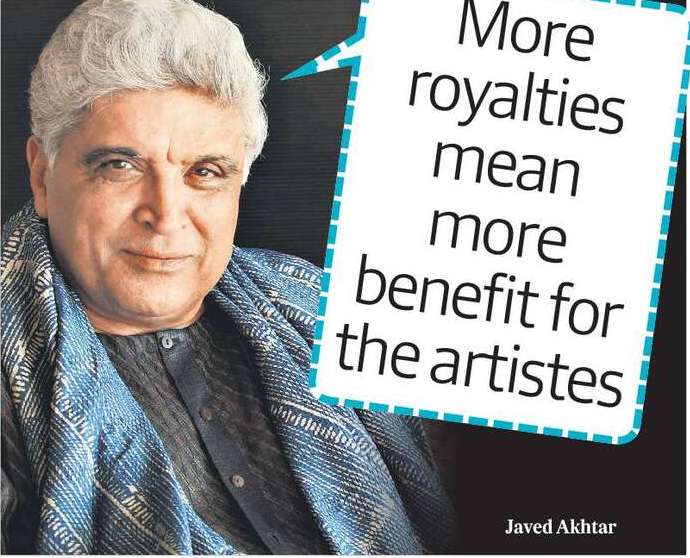
Lyricist-writer Javed Akhtar, who took over the Indian Performing Rights Society (IPRS) as its chairman in 2017, has played a noteworthy role in ensuring the shift in royalties distribution over the last six years. According to a recent report in ANI, under Akhtar’s leadership, IPRS touched Rs. 400 crores in revenues and surpassed Rs. 300 crores in royalties distribution in the financial year 2022–2023.
“We took over IPRS in 2017 when the income was between ₹40-45 crore,” Akhtar shares, acknowledging the role of the current government in the feat under the leadership of Prime Minister Narendra Modi. “Despite being in opposition at one point, they helped IPRS, and now that they are in power, they continue to support us,” he adds.
One of the key achievements that Akhtar sees in the music industry is the decentralization and democratization of royalties, with more sources coming to IPRS. “The more royalties come in, the more it will benefit artistes,” he shares.
In the digital era, IPRS is also looking to adapt to new-age technology for the benefit of its members. For instance the launch of Backoffice has been a major milestone in these terms, bringing increased transparency to the overall system. “It is creating more avenues for communication,” observes Akhtar, adding, “However, the new sources (of streaming music) should not be used to evade the fair share of artistes.”
The amendments to the Copyright Act in 2012 cleared the way for a new beginning for IPRS. But challenges remain in implementing the law. Akhtar explains, “We are currently in court against those who are not complying with the law. We are striving to find a mutual solution by engaging with the government.”
Whenever Bollywood has failed to offer good music, indie music has come to the rescue-Priya Saraiya
8:31 AM

Kanksha Vasavada (BOMBAY TIMES; March 4, 2023)
Singer-lyricist Priya Saraiya, who has lent her voice to Gulabi and Sun Saathiya, is creating awareness about the rights to royalty of composers and lyricists as a committee member of the Indian Performing Rights Society Ltd (IPRS). In a conversation with us, Priya talks about balancing Bollywood and Gujarati music and more. Excerpts:
‘ARTISTES CAN CLAIM THEIR ROYALTY NOW’
Priya strongly believes that music creators deserve due recognition for their work. On why bodies like IPRS are the need of the hour, she says, “The amount of music created and consumed now has increased many manifolds over the last few years. Now is the time when music creators across industries realize that they can claim the rights for their music, and earn royalty by reaching out to bodies like IPRS.”
‘WHENEVER B’WOOD HAS FAILED TO DELIVER GOOD SONGS, INDIE MUSIC HAS FILLED THE GAP’
An artiste sitting in the remotest part of the country can become an overnight sensation by simply uploading their music or a video on social media. On being asked how this has helped youngsters, Priya says, “There are so many talented musicians who did not get a platform earlier. Social media has bridged the gap now, especially for small town musicians. Earlier, doing playback in Bollywood was a dream for youngsters – now they can live it.”
Indie music’s comeback has changed the way we consume music. Priya says, “I grew up listening to songs from the ’80s and ’90s. Whenever Bollywood has failed to offer good music, indie music has come to the rescue. The ’90s was not an era of Bollywood music, that’s when Lucky Ali, Palash Sen, Shaan and Kailash Kher released singles and audiences loved the music.”
‘LANGUAGE IS NOT A BARRIER FOR GEN Z, THIS AMPLIFIES THE REACH OF A SONG’
While her Bollywood songs may have more recall value, Priya is no stranger to the Gujarati music industry. Ask her about how Gujarati music has evolved over the years, and Priya tells us, “There was a time when nothing was working for the Gujarati industry, neither the films, nor the music. I remember when the music of Bey Yaar, and the single Laadki, had released together; that was the moment when the audience knew they wanted good movies and good songs. The best thing is that, language is not a barrier for this generation, which naturally amplifies the reach of any song.”
‘SACHIN AND I SHARE A GOOD RAPPORT’
We ask Priya about her equation with her musician-husband Jigar Saraiya and his partner Sachin Sanghvi, as a fellow artiste. She says, “Jigar and I often discuss music at home. Sometimes when he is confused, I help him. And he chips in when I have a musician’s block. As for sharing constructive and honest feedback with them, yes, I am very frank with them. Why won’t I be? Ultimately, we share that kind of rapport and I can comment on their music. I only want the best for the two of them. Sachin and I share a devar-bhabhi relationship, we are family, so being honest with him isn’t too difficult.”
‘THE SHELF LIFE OF A SONG DEPENDS ON HOW LONG IT STAYS ON YOUR PLAYLIST’
In a day and age where the success of a song is based on the number of views or hits it garners online, Priya feels that a good song will always find its audience. “Audiences are not fools. If a song is genuinely good, if people really like and enjoy it, it will get real views. If not, the song might have several million views, but they won’t matter after a point of time. The shelf life of a song depends on how long it stays on your playlist.”
Religion does not make a nation; it is not enough of a glue-Javed Akhtar
8:57 AM
Urging the men in power to let creative individuals have their way, Akhtar on helping musicians via IPRS
Sonia Lulla (MID-DAY; February 27, 2023)
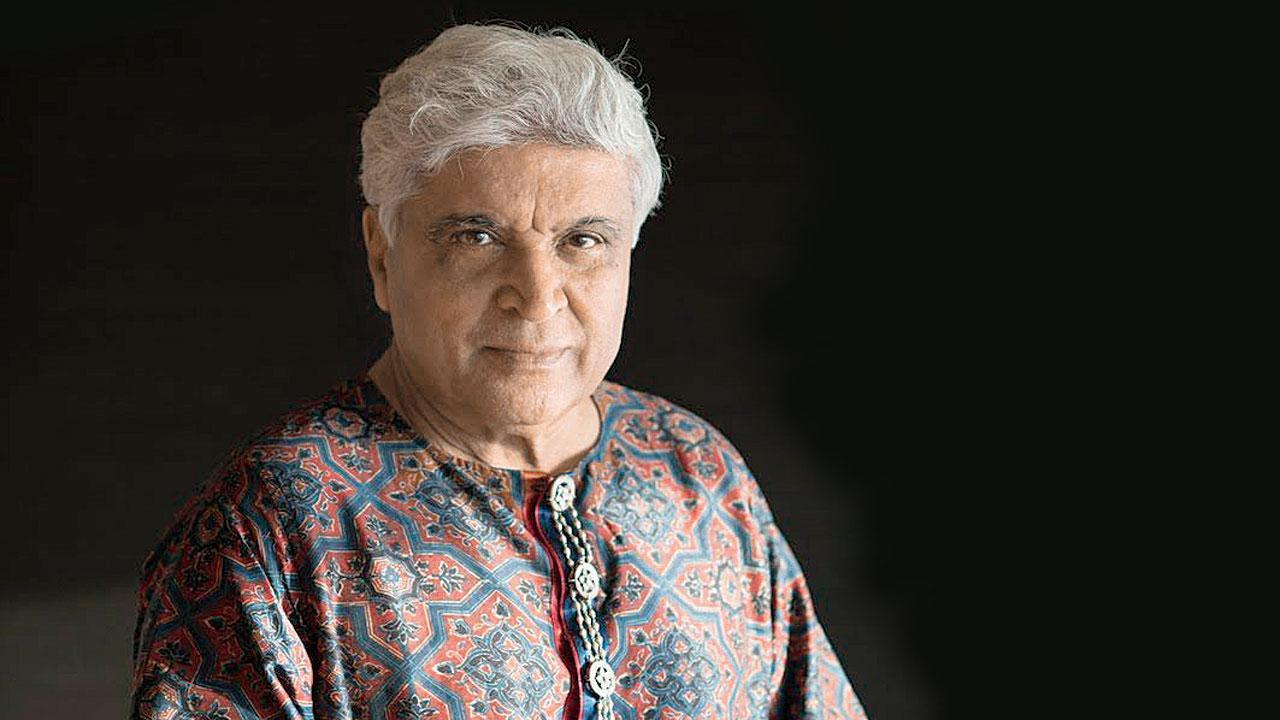
Poetic as he is, Javed Akhtar used his literary prowess to press upon an extremely pertinent fact — Nations that have used religion to establish their identities have often led the country to disaster. “Arre wo [Pakistan] nahi bana sake, duniya nahi bana saki, aap kya bana lenge? I do not know what a Hindu rashtra is, I do not know what a country based on religion is. Religion does not make a nation; it is not enough of a glue,” he said at a city event, reiterating one of the most pertinent issues of the hour with words that were as simple as they were powerful.
Among the most prominent figures of the Indian film industry, Akhtar has left no stone unturned to serve the needs of musicians. In many ways, he spent the fair part of the last few years contributing to the cause of digital India. Ever since he took charge as the chairman of the Indian Performing Right Society (IPRS) in 2017, Akhtar has provided a seamless path for musicians to avail the association’s services via its online portal.
“We had noticed that the connection was low. Fake accounts were pruned, and a sense of mutual understanding [was developed]. Today, our collection has reached Rs 300 crores, because we have cleaned the distribution system and made it transparent,” he says of the association’s efforts to legitimize the use of copyrighted music and enable people to deal with collection royalty.
“Earlier, there was no proper accounting, now, everything has been [made available] online. We have come miles, and we have miles to go,” he says, adding that the team has also lent a helping hand to musicians in vulnerable situations, “many of whom were not even members of the IPRS”.
On his plate currently is the task of getting medical insurance for the members. He is also arranging workshops to help talented musicians learn the tropes of composition. “They can compose ghazals or songs, but composing tunes without words is an alien concept for them. We have competent musicians who will help them.”
Having dominated Bollywood for years, and joined hands with musicians across industries, Akhtar has a word of caution for those in power. “The kind of music that marketing departments want, and the tendency to impose their will on creative people, is not desirable. That is the reason behind the diminishing ability of film music. If there is monotony, with every song trying to be an item number, what is the point? Anyone who wants depth will look elsewhere. This is why non-film music is expanding. I hope people understand that by insisting on a certain kind of music, no one [stands to benefit].”
Living rooms were reconstructed to minimize noise, blankets were used for dubbing-K J Singh
7:59 AM
Days before hosting an IPRS session on the influence of tech in music, audio engineer K J Singh imagines an industry that will be ‘truly mobile’
Sonia Lulla (MID-DAY; August 9, 2021)
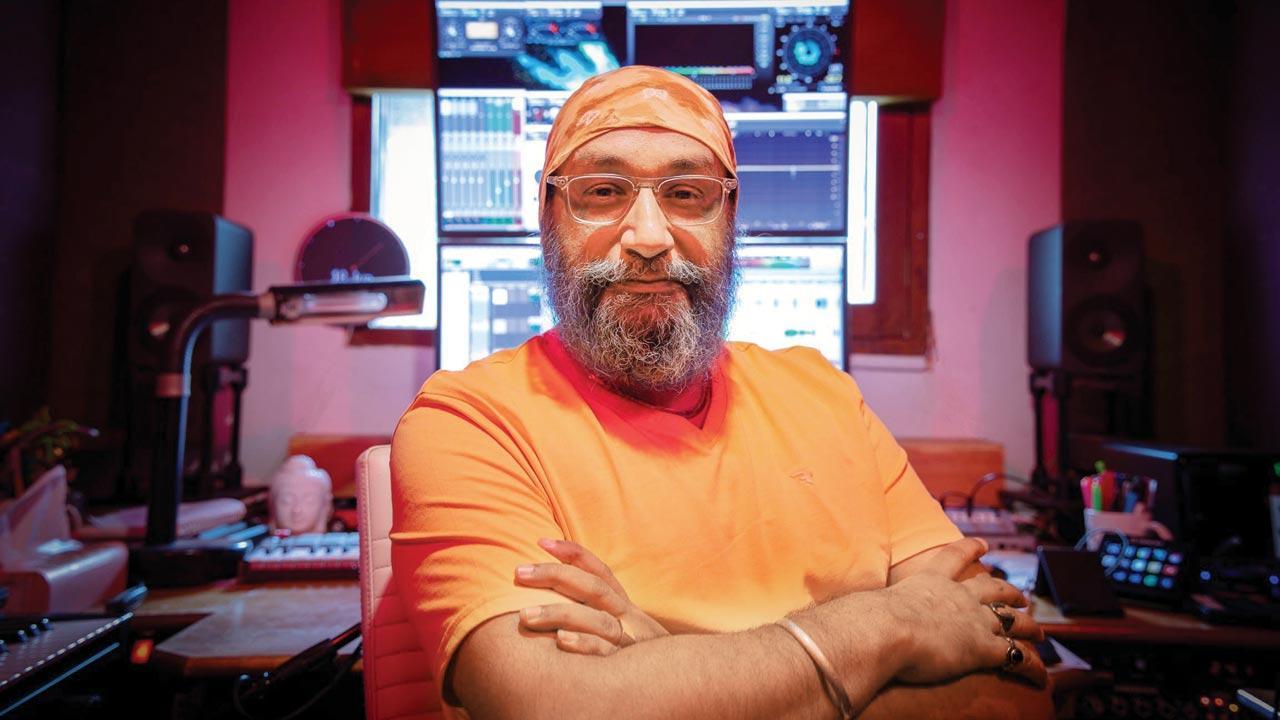
“The best place to record is in a [walk-in] closet,” says K J Singh in the midst of this discussion, highlighting how the music industry was caught scrambling to comprehend technology during the Coronavirus pandemic. The National Award-winning Indian audio engineer, who has worked closely with AR Rahman, has been part of the industry since music was consumed on cassette.
The advent of digital synthesisers, he says, was among the early factors that changed the course of music-making. “We no longer had to have all artistes gather at the same time to record a song. Early influences of the synthesizers can be seen in the works of R D Burman, and it became clear that listeners were enjoying those tunes. Technology made it easy to replicate acoustic sounds. I could create sounds of drums and bass on the computer, and we no longer needed live musicians for it,” says Singh, who hosted a session on the subject yesterday, as part of the Indian Performing Right Society’s (IPRS) session, New Era of Music.
He admits that it was only during the pandemic that the worth of technology became fully evident. “Those on the fence needed to upgrade themselves, else they’d be isolated. In the first wave, the aim was to simply produce work that could suffice. In the next, people considered ways to enhance the quality of productions. Living rooms were reconstructed to minimize noise, blankets were used for dubbing, and better quality microphones were purchased.”
Singh makes several references to music gadgets and softwares that have revolutionized the final product of an audio file, however, it is development that has made the process of recording live from different parts of the world, that is noteworthy. “It is what enabled me to create a song while sitting in Bombay, with someone who was in Turkey. There’s something called latency, which is the time lag that can become part of a recording, should it be simultaneously worked on from distant places. We now have softwares to compensate for that, and that has made it possible to truly be mobile, as a musician.”
Of course, filmmakers have several commercial benefits to reap from such developments. “While working on 7 Khoon Maaf, we needed a Russian actor to record a few lines again, because, during post-production, we realised that something was amiss in that section. The team had planned to fly him down, have him record it, and send him back. Of course, it was going to be a costly affair. So, I told Vishal [Bhardwaj, director] that we could employ a software that, if simultaneously used from different parts of the world, and in similar studio settings, could create good quality output. The job was done over the internet. We could communicate with him as he lay his vocals on the file that we had in hands, at our studio.”
Lyricists fight for credit on apps, streaming platforms
8:41 AM

Songwriters, long given short shrift in Bollywood, are now up in arms for recognition and royalties
Rishabh Suri (HINDUSTAN TIMES; July 26, 2020)
After nepotism and favouritism, another debate seems to be in the making in Bollywood. Recently, songwriter-singer Swanand Kirkire tweeted, “OTT pe lyricists ka naam na hona sirf credit ka na hona nahin hain balki Lyrics Writer ke Wajood ko na maanana hai”.
Last year, the Indian Performing Rights Society (IPRS) filed an FIR against a production house seeking around ₹100 crore in royalties due to composers and writers since 2012. Danish Javed, of the Screen Writer’s Association, says, “If lyricists get their name on a publishing platform, as a member of the IPRS, they get part of the royalty,” he says. We got in touch with some prominent lyricists on this.

SWANAND KIRKIRE (3 Idiots, Barfi!, Lage Raho Munnabhai)
Music companies and big labels put songs on YouTube, and don’t give proper credits. They don’t get back when we point out. Some platform did get back recently saying ‘thanks for bringing to our notice’. They didn’t even say it was a mistake. Apps don’t credit the lyricists anywhere in their algorithm. You can’t search a song by a lyricist’s name. You can search the music director’s name. I can search for songs I’ve sung as I am a singer too. I get a detailed history what’s happening with my song, how many are streaming it, which state or country they belong to, but lyricists have no way to find that out.

SHELLEE (Shahid, Manmarziyaan, Jawaani Jaaneman)
I wrote a song in 2014, Beparwah, for Shahid. Why is my name missing on YouTube? People comment ‘soulful lyrics’ but my name is missing! There’s a rule: if the name is missing, the royalties from the song won’t come to you, be it YouTube or music apps. Music apps have a different algorithm. If we are given credits, we’ll start getting royalty. But what about the royalties of the past? We don’t do gigs or concerts like singers. We get paid peanuts once, and nothing after that. Even if the spelling of your name is wrong, you won’t get royalty. IPRS controls the domestic royalties, we need more transparency in it too.

VARUN GROVER (Gangs of Wasseypur, Fan, Udta Punjab)
I have been talking about it for years now. Many official channels on YouTube, and music company channels of Eros, Sa Re Ga Ma, Shemaroo, Ultra, don’t credit lyricists or give wrong credit. We have a list of these song credits. Gulzar, Javed Akhtar, Shailendra, these legends have credits missing on YouTube channels. Apps pick data from music companies who provide them their libraries. In their library itself, they don’t have the lyricist’s name! Some apps work on the American mode, where they think composer is the songwriter. They don’t even have space for lyric credits in their software. You can’t search if you want to.
SAMEER ANJAAN (Aashiqui, Kuch Kuch Hota Hai, Dhoom 3)
The Screen Writer’s Association is taking a big step because I think people do this knowingly. They have a huge nexus and intention behind not keeping the writer or composer’s name, because then royalties will not go to the right place. But now we are trying our level best to make them (apps) aware. Then we will take legal action.
Also, about last year’s hit Dilbar Dilbar (Satyameva Jayate), a leading publication said, ‘Music by Tanishk Bagchi, lyrics by Shabbir Ahmed’, when the original song was by Nadeem-Shravan, and lyrics by me. Shabbir wrote one line in the beginning, rest of the song was original.

Let’s celebrate our musical geniuses-Javed Akhtar
8:34 AM

Today, on World Music Day, IPRS Chairman and veteran lyricist-writer Javed Akhtar talks about the initiative launched online to acknowledge all those behind the words and melodies that have remained with us over the years
Rachana Dubey (BOMBAY TIMES; June 21, 2020)
The Indian Performing Rights Society (IPRS) has launched a campaign called #CreditTheCreators on social media to acknowledge the work done by the artistes behind a composition. Music industry veterans like Javed Akhtar, Sameer Anjaan and Swanand Kirkire are spearheading the initiative on social media and nominating colleagues to participate in it.
Speaking about it, veteran lyricist and writer, Javed Akhtar, chairman of the IPRS, told BT, “The idea is to remind people about those songwriters, composers and singers, who have not received their due, although their creation is widely known. There is such a vast bank of respectable work that composers, singers, musicians and writers have created over the decades. The West woke up to fusion in the 1960s, but the music directors in our films had mastered it back in the 1930s; clearly, they were far ahead of the composers and music creators from other parts of the world. If you listen to the songs from old films of the 40s and 50s by artistes like Pankaj Mullick, Talat Mahmood, Naushad, Anil Biswas, C Ramchandra and several others, you will realise that the tunes of the lyrics were based on Indian ragas, but the orchestra had instruments like guitar, piano, trumpet, cello and violin. That synchronisation was so beautiful. So, it’s time to remind people about what we already have with us and to celebrate the geniuses that we’ve had among us, because often we may hum their songs, but not remember them. And that needs to change.”
Talking about why the current generation often does not acknowledge and honour the treasure trove of music that we have, Javed said, “In schools, colleges and even homes, we don’t familiarise our young with poetry, its Indian tradition, roots and classic ragas. How will they have the knowledge suddenly when they grow up? We need to make this change in our education system where we must put the spotlight on our varied folk-art forms, music, poetry, dances, songs and let our children know that these things exist and take pride in them.”
We must give till it hurts. If you give comfortably, it means you’re not stretching yourself enough-Shabana Azmi
7:58 AM

From Mumbai to Mijwan, Shabana Azmi and Javed Akhtar’s relief work continues; migrants and 800 non-members of the IPRS also reached during the pandemic
Roshmila Bhattacharya (MUMBAI MIRROR; June 4, 2020)
 During the Coronavirus pandemic, images of daily wage-earners trekking in the scorching summer heat with wife and children, clinging to little bundles of what constitutes their entire life in the city, is imprinted on our minds. But for Shabana Azmi and Javed Akhtar, these people are not just migrants heading back home. “My domestic staff are all from Bihar, Orissa and West Bengal, my manager is from Goa, I was born in Hyderabad, my husband in Gwalior. The hard fact hits home, that almost 3/4th of the city’s people are migrants who had arrived in search of work,” the actress-activist points out.
And because the connect is immediate and empathetic, the couple has been doing their bit for those going through tough times. “I have personally donated to CINTAA (Cine & TV Artistes Association). Javed and I have provided 4000-plus meals in the city’s slums,” informs Shabana. Javed adds that the Indian Performing Rights Society (IPRS), a copyright society mandated by the government, has also been helping out its 3,700 members with rations and cash donations. Apart from that, he, along with Shankar Mahadevan and the music label Sa Re Ga Ma, have made direct cash transfers of Rs 2,500 per week, per person, through the lockdown to 800 vulnerable members of the music industry who are not registered members of the IPRS. This is being facilitated by the IPRS.
Meanwhile, back in Kaifi Azmi saab’s native village, Mijwan, relief work continues in full force. Shabana says that till June 1, the Mijwan Welfare Society was able to reach 50,000-plus individuals in 152 villages under 26 districts in Uttar Pradesh, Bihar, Rajasthan, and Delhi. “Vinod (Kumar Pandey, CEO) had left for Mijwan on March 6 and was supposed to be back in 10 days. He is still there, working closely with the authorities since April 2, to spread awareness and support the daily wage earners with dry food grain kits (consisting rice, dal, atta, soya chunks, sugar, salt, oil) and hygiene kits (soaps and masks). With transport networks snapping, people have been using their own cars to deliver supplies. I feel it is abba’s blessings that people have been able to overcome fear and follow this path,” asserts an emotionally overwhelmed Shabana, adding that till June 1, they have distributed 1,04,777 kg of food grains, 6,306 handwash soaps, 860 sanitary pads and 27,098 cloth masks.
Educated in the use of masks and social distancing, some of the village girls working at the Mijwan Welfare Centre, who assist stylist Manish Malhotra with embroidery work, have been making cloth masks on their 28 sewing machines. “They started out by making 7,000 masks in a week for chef Vikas Khanna, who donated five automatic sewing machines to enable them to increase their output. Thereafter, they have been taking orders of a lakh and above, and are currently targeting a million. This is not just great community service, but also helps keep them gainfully employed,” reasons Shabana, pointing to her “shining star” Renu. She walked the ramp with Deepika Padukone and Ranbir Kapoor at a Mijwan fashion show a few years ago and is currently training over 50 village girls in chikankari while pursuing a masters degree in sociology. “In the last 20 days, Renu has made more than 3000 three-layered cotton masks which were distributed to people from different villages in Azamgarh and Varanasi districts.”
She is particularly excited about the Rozgar Dhaba, a community information centre, where returning migrants and daily wage earners get help with regards to employment opportunities, government schemes, health initiatives and documentation, among other things. “So, while continuing our relief work, we have simultaneously started working on rehabilitation. We will have to become a more inclusive, more altruistic, less hard-hearted society. Mutual benefit will have to become the guiding principle. We must give till it hurts. If you give comfortably, it means you’re not stretching yourself enough. Let us not lose sight of the fact that the maximum work needs to be done during 'normal' periods, so that a natural disaster does not turn into a human disaster,” Shabana concludes.
I hope the government takes care of our industry-Javed Akhtar
8:25 AM

Kavita Awaasthi (HINDUSTAN TIMES; May 20, 2020)
While music has helped many to deal with the lockdown, the music fraternity, too, has been impacted due to the Coronavirus outbreak. But they have The Indian Performing Rights Society Ltd (IPRS) helping those who are in dire need.
Writer-lyricist and chairman of the IPRS, Javed Akhtar shares, “IPRS was established to help the music fraternity. Our membership is of around 5,000, including composers, lyricists, musicians and post the first lockdown, we gave ₹7,500 each to 3,500 people, and after it was extended, we gave more.”
IPRS has six writer-composers and six music companies contributing to the fund. There are some non-member musicians, who are also being helped by the board in their own individual capacity, shares Akhtar.
He points out that “entertainment is the first thing” that is dropped from the list of priorities during crisis, but Akhtar hopes that the government steps in to help the entertainment industry. “If we don’t start shooting, there won’t be recordings and people won’t be paid. The way the government has announced relief packages for other industries, I hope they do so for the us as well as we are a huge revenue source,” he says.
The veteran writer admits that while he is “comfortable” the pandemic has made him realise how vulnerable we are. He says, “We are all helpless in this crisis. Life will go on but there should be sensitivity towards the environment.”
Indian Performing Right Society to distribute Rs 3 crore among 3,000 members of the music fraternity
8:19 AM

Rachana Dubey (BOMBAY TIMES; March 30, 2020)
Last week, Javed Akhtar had posted a video, stating that the Indian Performing Right Society (IPRS) will help over 3,000 of its lesser privileged artistes, musicians and composers monetarily, to sail through the Coronavirus crisis.
While talking to Bombay Times, the lyricist-writer and the chairman of the IPRS, said that the decision was made unanimously during the society’s first-ever board meeting held virtually, through video and conference calls, a few days before the complete lockdown had set in.
“No one opposed the idea because each one of us understands the gravity of the situation. Royalties earned from music are collected by us and they go to the publisher, author and composer. Depending on their body of work, certain companies and individuals collect far more royalty than others. I felt that we should do something for those who don’t have enough royalty coming their way to sail through this difficult time,” explained Javed, adding, “We drew up a list of about 3,000 people from the music fraternity and hopefully, this week, we will be able to start sending them monetary relief so that they have the means for basic supplies.”
Originally, the idea was to distribute a smaller amount every week, but Rakesh Nigam, the CEO of IPRS, said, “We have decided to send out the amount in one go so that people can stock up sufficient supplies. We have a welfare and benevolence fund formed by using a percentage of the royalties earned by our members. We’re using about `3 crore from that fund to help those in need. We will look at doing something more if the situation persists for too long. We don’t accept donations, and neither do we run a business that supports us. We’re doing it using what we have legally and rightfully earned with our hard work.”
IPRS accuses Yash Raj Films for pocketing Rs 100 cr worth royalties belonging to artistes, music producers
8:25 AM

While IPRS has called the Rs 100 cr it is claiming from YRF just the “tip of the iceberg”, the FIR itself could open a Pandora’s box, with more cases being filed in the future
Vallabh Ozarkar (MUMBAI MIRROR; November 20, 2019)
 The Indian Performing Rights Society (IPRS) – which represents composers, lyricists and music producers – has accused Bollywood production house Yash Raj Films (YRF) of unauthorisedly collecting over Rs 100 crore in music royalties belonging to IPRS members.
In an FIR filed with the Mumbai Police’s Economic Offences Wing (EOW), IPRS has alleged that the production house has prevented it from collecting royalties from telecom companies, radio stations, and music streaming platforms by pressuring artistes into signing illegal agreements.
While the IPRS has called the Rs 100 crore it is claiming from YRF just the “tip of the iceberg”, the FIR itself could open a Pandora’s box, with similar cases being filed in the future against other production houses and studios.
The FIR, which names YRF directors Aditya Chopra and Uday Chopra, says that production house cannot collect royalties on behalf of artistes and music producers as it is the sole and exclusive right of IPRS. It concludes that since YRF has forced artistes to sign “dubious” contracts it is clear that it has been pocketing the money that rightfully belongs to these lyricists, musicians, singers and music producers.
The FIR claims that while YRF has managed to extract royalties from two TV broadcast platforms, it has not been able to get telecoms, radio stations and music streaming platforms to pay up.
“The FIR has been registered under sections 409 (criminal breach of trust) and 34 (common intention) of the Indian Penal Code and relevant sections of the Copyright Act,” said a police officer who did not wish to be identified.
IPRS is a representative body of owners of music -- including composers, music directors, lyricists and the publishers of music (film producers and/or music companies/labels) and is also the sole authorised body to issue licences permitting usage of registered music within India. It collects royalties on behalf of its members for commercial use of music at radio stations, television channels, streaming sites and public performances.
There was no comment received from YRF till the time of filing this report. While an executive of the production house requested Mumbai Mirror to send a questionnaire by email, there was no response received by this paper. Repeated calls and messages also went unanswered.
Subscribe to:
Posts (Atom)