Showing posts with label Hum Dil De Chuke Sanam. Show all posts
Showing posts with label Hum Dil De Chuke Sanam. Show all posts
With AI, it’s harder to judge the authenticity of a singer-Kavita Krishnamurti
8:29 AM

Debarati S Sen (BOMBAY TIMES; June 1, 2025)
In 1971, Bollywood playback singer Kavita Krishnamurti began her musical journey with composer Hemant Kumar, alongside the iconic Lata Mangeshkar. Fast forward to November 2024, she lent her voice to The Sabarmati Report, adding another milestone to her career spanning over five decades. With over 23,000 songs to her credit, she’s worked with Salil Chowdhury, Laxmikant–Pyarelal, RD Burman, OP Nayyar, Naushad, AR Rahman and others.
In a candid conversation at her Andheri home, she spoke about her journey, the changing music industry, the impact of technology, AI and more. Excerpts…
You have been a part of the music industry for over five decades, do you remember the experience of recording you first film song?
I began doing concerts with Hemanta Da (Hemanta Mukherjee) while still in college. One day, he called me to Rajkamal studio, saying, “Chole esho at 10 am, don’t go to college tomorrow.” Sitting with his harmonium, he taught me four lines of Shokhi Bhabona Kahare Bole — a beautiful song. I had no idea why, until the door opened and Lata Mangeshkar Ji walked in. I don’t know how I didn’t faint! Hemanta Da, who called her Lata, said, “You’ll sing four lines with her. (Lata r shathe charte line gaite hobe)”. During the final rehearsal, standing beside her, I completely forgot my lines. I was so mesmerized that I lost track of my cue! Hemanta Da reminded me, “Now we’re going for a take—don’t forget your lines. Lata is a perfectionist, one take okay.” We did two takes, and I finally sang. That was my first film song, Shriman Prithviraj (1972). And my first lucky mascot was Lata Ji.
What do you feel about the evolution of the music industry from the era of live orchestras to the digital age, and how it impacted you as a playback singer?
I consider myself very lucky to have witnessed and worked with legendary artists while also collaborating with younger composers like Jatin-Lalit, Anu Malik, Nadeem-Shravan, Anand-Milind, and A R Rahman. I started in the ’70s when playback singing was done with a full orchestra—one mistake meant redoing the entire song. Music directors had an incredible ear; Pyarelal Bhai could pinpoint a single violinist in a 30-piece orchestra playing the wrong note. He’d say: You (His name) sitting in the third row, the fifth violinist, you were told C major, but you are playing C minor. Correct that note.’ That was the precision of that era. Today, everything is computerized. I slowly adapted to these changes, but by 2004, when technology completely took over, I found myself stepping back.
With advancements in technology and AI today, what are your concerns about the use of artificial intelligence in music?
It's difficult for the common listener to distinguish between a naturally skilled singer and one enhanced by pitch correction and AI. Musicians can recognize true artistry, but for the average person, technology has blurred the lines. With AI refining sur and even creating harkats, the authenticity of a singer is harder to judge. While AI is a breakthrough in medicine, its role in music raises concerns and AI in music is a question mark for me, as it opens the door to potential misuse.
However, at the same time, technology is good too. I'm not so young now and for me, to think that I can sing one line and take a breath, and then sing the next line, really helps. Earlier, I would record entire songs in one go, but now recording line by line, with breaks in between has become a habit and makes the process easier.
You’d mentioned a poignant encounter with the legendary Geeta Dutt. What struck you the most?
Guru Dutt's youngest brother, Vijay Padukone, was my Rakhi brother. He introduced me to advertising jingles while I was a student in St Xaviers. I first met Geeta Dutt at a studio in Worli during my debut jingle recording. As the door opened, I was struck by her beauty and presence. I touched her feet and sat down. She was recording a butter commercial in Hindi and Bengali that I had to sing in Tamil. Her voice was pure magic. Though she was in the twilight of her career, facing personal loss and financial struggles, her aura remained intact. She barely spoke, just said, ‘Bhalo theko’. At that time, she was famous but had no money—yet nothing could take away her personality or her gift for singing. For me, Lata Ji and Asha Ji are the greatest singers I’ve ever met, but there are songs that only Geeta Dutt could have sung. Waqt Ne Kiya Kya Haseen Sitam—I don’t think even Lata Ji or Asha Ji could have delivered it the way she did.
You've sung for some of the biggest music directors. Tell us about a few of your favourite songs.
That's tough! But if I had to choose, I’d say Hawa Hawai, Dil Ne Kaha Chupke Se, and my songs from Hum Dil De Chuke Sanam. I love the ones I did with Rahman, like Tu Hi Re, Dheeme Dheeme, Kay Sera Sera. Maar Daala from Devdas is a favorite too, along with the title track of Hum Dil De Chuke Sanam and Hamesha Tumko Chaha from Devdas. Yeh sab mujhe bahut pasand hai.
I was the first designer to travel abroad and buy clothes for my commercial films-Neeta Lulla
4:49 PM

As told to Vinay MR Mishra (BOMBAY TIMES; December 21, 2024)
My relationship with Bombay Times goes back to its inception. I was first featured in the paper as a quirky, edgy designer, as I used to wear a lot of blue jeans, white shirts and oxidised silver jewellery. The first time film fashion was written about was by Bombay Times, and it was for the film Hum Dil De Chuke Sanam. I was so nervous about it as I thought my career had ended because this had to be the best work of my career for BT to feature it!
Film fashion was considered a no-go. It was all about high fashion, as fashion was just evolving in India. Bombay Times played an integral part where fashion was concerned. We have come a long way from film fashion not being accepted to it becoming a norm. Of course, it’s taken three decades. I was the first designer to travel abroad and buy clothes for my commercial films, which was due to the lack of brands available in the country. Every pair of jeans was stitched and the jewellery was curated for the films. I used to go abroad (to London, Paris, and Amsterdam) to buy raw materials, fabric, and whatever else I needed for the film.
What people don’t understand is how important the role of film fashion is to society. Whatever you shoot goes down in history. Everyone is looking at Mughal-E-Azam for inspiration to date. Even Jodha Akbar has gone down in history. I entered the industry because I saw the works of Xerxes Bhathena, a designer who had studied fashion and gone into mainstream fashion. I had this huge thing for Sridevi, and I wanted to be Xerxes Bhathena, who used to dress up the actresses in gold outfits. Back then, the director would never give us a script. They’d say, ‘This dress had to be made for the song. Just make it’. And then we were left wondering what it was for? We would be given requirements two days or, sometimes, even a day before.
We have come a long way from film fashion not being accepted to it becoming a norm
Sanjay Leela Bhansali heard Tadap Tadap's tune nine times and even cried-Ismail Darbar
8:31 AM

Mimansa Shekhar (HINDUSTAN TIMES; February 26, 2024)
There’s hardly anyone who hasn’t danced to Dholi Taro Dhol Baaje or Nimbooda during garba dandiya nights. Even the other songs from the Salman Khan and Aishwarya Rai Bachchan-starrer are considered evergreen. As the film completes 25 years, music composer Ismail Darbar reminisces about the good old times.
“When I did Hum Dil De Chuke Sanam (HDDCS), Sanjay (Leela Bhansali, director) and I fought in every recording. But we also managed to strike a long-lasting friendship,” recalls Darbar, who made his Bollywood debut with the blockbuster.
Recalling how he landed the project that her terms “difficult”, the composer says, “Kunal Ganjawala (singer) randomly recommended my name to Sanjay. I had composed an album that never came out, and I made Sanjay listen to those tunes during our music sitting. I made him listen to the title track, and he loved the song and complimented me.”
The 59-year-old revealed that, despite lauding his strong sense of music, Bhansali refused to officially get Darbar onboard even after four months. “After four months, I gave Sanjay an audio tune that he heard nine times and even cried. That song was Tadap Tadap Ke. That’s when Sanjay said, ‘Today I’ve completed my film’. It was such a powerful song. According to Sanjay, he now knew the film’s interval and the end,” shares the musician. The director finally signed Darbar after six months, when he composed the classical number Albela Sajan, based on Raah Ahir Bhairav.
Looking back now, Darbar feels Chand Chupa might sound like a simple composition, “but even today people can’t sing it correctly.”
The 1999 hit was a risk for Darbar because that was the era of A R Rahman (music composer) supremacy. Although he believes, “if I had thought A R Rahman’s style would work, this album would’ve never been made,” giving credit to Bhansali’s confidence in him. “He might fight with you, but he’ll listen to you too. We had a different kind of madness that I’ll always cherish,” Darbar adds.
Revealing some trivia about the film’s title, Darbar tells us that the film was originally titled Duvidhaa, which he didn’t like. When he questioned Bhansali, the filmmaker changed it to Afreen. Darbar again pointed out that, for a film based in Gujarat, having an Urdu title didn’t seem right. Ultimately, on the composer’s suggestion, the movie got its final title — Hum Dil De Chuke Sanam.
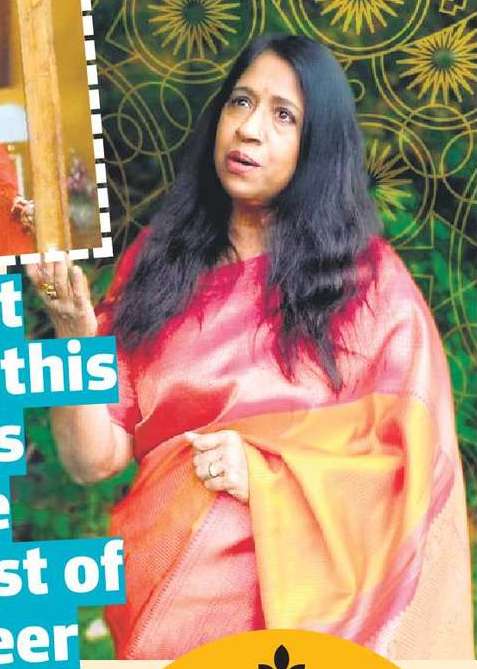
The best song of Hum Dil De Chuke Sanam was also the toughest of my career-Kavita Krishnamurti
8:30 AM
HINDUSTAN TIMES (February 26, 2024)
For Kavita Krishnamurti, Hum Dil De Chuke Sanam (1999) will always be a turning point in her career. The singer, who lent her voice to as many as six songs in the Sanjay Leela Bhansali film, feels grateful to have been associated with a project that helped her show her versatility as an artiste.
As the timeless album clocks 25 years, she recalls, “When I heard the tracks in the rehearsal room, they were so beautiful. I was also happy to work with Ismail Darbar (composer).”
While the entire album is special to her, there’s one song that Krishnamurti holds especially close to her heart — the title track. “It’s such a powerful song; the best in the movie but also the most challenging one of my life,” the 65-year-old shares. She adds, “There are so many notes in that song. I was extremely worried [if I’d be able to do it] as I was suffering from problems with my nose.”
Yet, things worked out beautifully and the song ended up being one of her best works. “Some days, things just work out. The song got okayed quickly and I didn’t face a lot of problems. I think God was holding my hand that day,” she fondly remembers.
Speaking of the first song she recorded for the film, Krishnamurty reveals, “It was Aankhon Ki Gustakhiyan. But, none of us were happy with it. After a few days, I redid my portions. Then, it had come out well.”
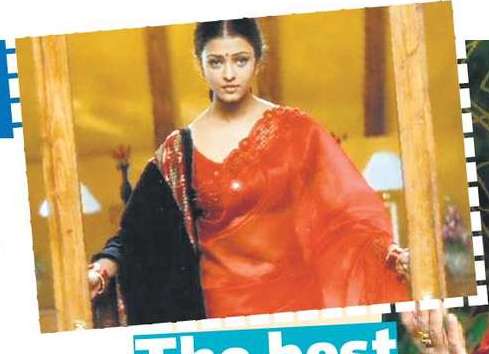
Perhaps one of the most popular tracks from the film, Nimbooda is also one of her personal favourites. “It was such an item song. In my heart, I just felt this song is going to do well for me commercially. And it did,” Krishnamurti tells us, while lauding actor Aishwarya Rai Bachchan for bringing the song alive on screen.
In fact, the singer gives a huge part of the credit of the album’s success to Bhansali’s vision. “He is the king of visuals. God has given him special aesthetics. So, HDDCS is a marvellous sangam of composition, sound and picturization,” she wraps up.
Vikram Gokhale is one of the greatest actors that I have ever worked with-Sanjay Leela Bhansali
8:03 AM
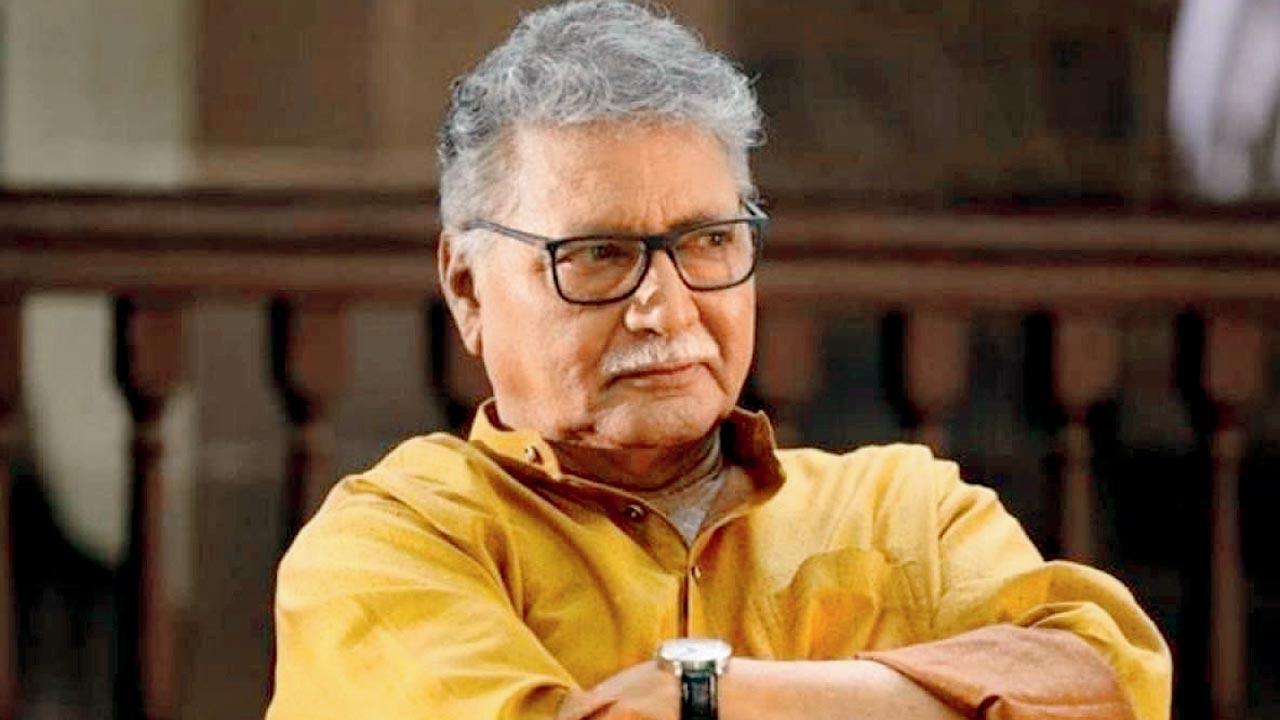
Bhansali, Kulkarni, and Manjrekar remember the actor’s tremendous talent and down-to-earth nature
Priyanka Sharma (MID-DAY; November 27, 2022)
National Award-winning actor Vikram Gokhale, who was a stalwart in Indian cinema, television and theater, has passed away following multiple organ failure. The actor, aged 77, breathed his last at a hospital in Pune, his daughter told mid-day. “We would like to thank everyone for their good wishes, support and prayers through this difficult time,” she said.
Gokhale remained synonymous with substance throughout his five-decade-old career that saw award-winning performances in both Hindi and Marathi. He debuted in the Hindi film industry with the Amitabh Bachchan-starrer Parwana (1971). Even in an ensemble that comprised popular stars, Gokhale stood out, courtesy his tremendous talent. In fact, it remained his strength to elevate even the smallest appearances and the thinnest characters offered to him.
What also set Gokhale apart from his contemporaries was his reliance on minimalism. Whether it was as the strict patriarch in Sanjay Leela Bhansali’s Hum Dil De Chuke Sanam (HDDCS, 1999) or the portrait of grief in Anubhav Sinha’s Tum Bin (2001), Gokhale performed with just his expressions, where others needed words.
“Vikram ji is one of the greatest actors that I have ever worked with. I feel people should learn from his legacy. Despite being a great reader, orator, and so well-read, he was simple-hearted. When I met him, he was like a friend and colleague, who often told me, ‘Sanju main tere saath hoon. Tu bol kya aur kaisa karna hai’. He was a great colleague to be on the set with, as he was always there for [me]. Vikram ji introduced me to Indian classical vocalist Pandit Ajay Pohankar, who suggested the Albela sajan raag [a version of which is used in HDDCS]. It was hard, but he [barely] took an hour to learn the song,” says Bhansali, adding that he learned the nuances of the craft when he saw Gokhale perform.
“Vikram ji was the complete master of his craft. Always in control of every aspect—in words, dialogue, expressions, and diction. He was spontaneous. We don’t get actors like him anymore.”
Thicker than his association with the Hindi film industry was his relationship with Marathi cinema and stage. In return, Marathi directors did justice to his talent, as he became one of the tallest stars in the fraternity, also earning a National Award for his work in Anumati (2013).
Gokhale’s Anumati co-star and longtime collaborator, Neena Kulkarni, fondly remembers him as the one of the most knowledgeable artistes she had ever met. “He was an intelligent and responsible actor. You could talk to him for hours on the process of acting. He was also well-informed about everything—from literature to politics. His performances are acting classes for the next generation. In Godavari [2006], he had just one dialogue, but he delivered it in variations; that is education in itself. I will obviously miss [my] friend, as we go back a long way. The fact that we have portrayed all relations from husband-wife, lovers to siblings and to me even playing his daughter-in-law was a running joke between us,” she reminisces.
“He used to call me Maya,” says Mahesh Manjrekar, who directed Gokhale in Natsamrat (2016), after which, they did another movie together, Me Shivaji Park (2018). “Vikram Gokhale was an institution in the field of acting that has shut down today. He was the most complete actor in the industry. He could enhance a scene by just using a handkerchief and make it look believable. I have seen him in theatre doing everything, including comedy. [Even though we were] young, he always treated us on par with each other. He was a close friend. Vikram was a director’s actor, but I never had to tell him what to do. Despite his acting prowess, he was casual about it on the sets,” adds the director.
-----------------------------------------
HINDUSTAN TIMES (November 27, 2022)
Vikram Gokhale, a towering personality in the Indian theatre and cinema space, died on Saturday, after days of being hospitalised. The actor, who was 77, suffered multiple organ failure and breathed his last around 2pm, Shirish Yadkikar from Deenanath Hospital, Pune, confirmed.
Born in Pune, the actor comes from an illustrious lineage. His father, Chandrakant Gokhale, was a renowned theatre and film actor, while his great grandmother, Durgabai Kamat, is credited for being the first female actor in Indian cinema. Having worked in Marathi theatre productions, Gokhale made his Bollywood debut in 1971 with Parwana. Thereafter, he starred in hits such as Hum Dil De Chuke Sanam (1999), Bhool Bhulaiyaa (2007), De Dana Dan (2009), Mission Mangal (2019), etc. A man of many talents, he donned the director’s hat in 2010 for the Marathi film, Aaghaat.
In 2013, his Marathi film Anumati fetched him the National Film Award for Best Actor. While he retired from stage work in 2016 due to an ailment, he continued working in films. He was last seen in Nikamma.
The last rites took place on Saturday evening, ANI reported. htc
Smita Jayakar
I worked with Vikram ji since the beginning of my career, in Marathi and Hindi projects. He was a very good friend and an amazing human being. I met him two months ago at a wedding in Pune. He didn’t look very healthy, but I did not imagine he’d leave us within two months. It is a big loss.
Neena Kulkarni
I’ve played his wife, girlfriend, sister and in our last film, his daughter-in-law. You would not see an actor like him. The fearlessness of Vikram Gokhale is what I’ll take from his life. I’ve lost a very good friend.
Subodh Bhave
The first commercial play I watched was Vikram ji’s. I was zapped by his performance. I’ve been fortunate enough to work with him in a few films. He was like my father, as he has played my father on screen. I’m certain that he’ll be talking to God passionately about plays.
Ameesha Patel
The more that is said about Vikram Gokhale, the less it is. I had the privilege of working with him in Bhool Bhulaiyaa, I got to learn a lot. His death leaves a huge void in the industry.
Shilpa Shetty Kundra
Vikram Gokhale ji was a fantastic actor, a thorough professional. I worked with him in Nikamma. He had great memory. He remembered an entire scene and did the whole monologue in just one shot.
Vikram Gokhale, who stamped authority on screen, takes his final bow
8:01 AM
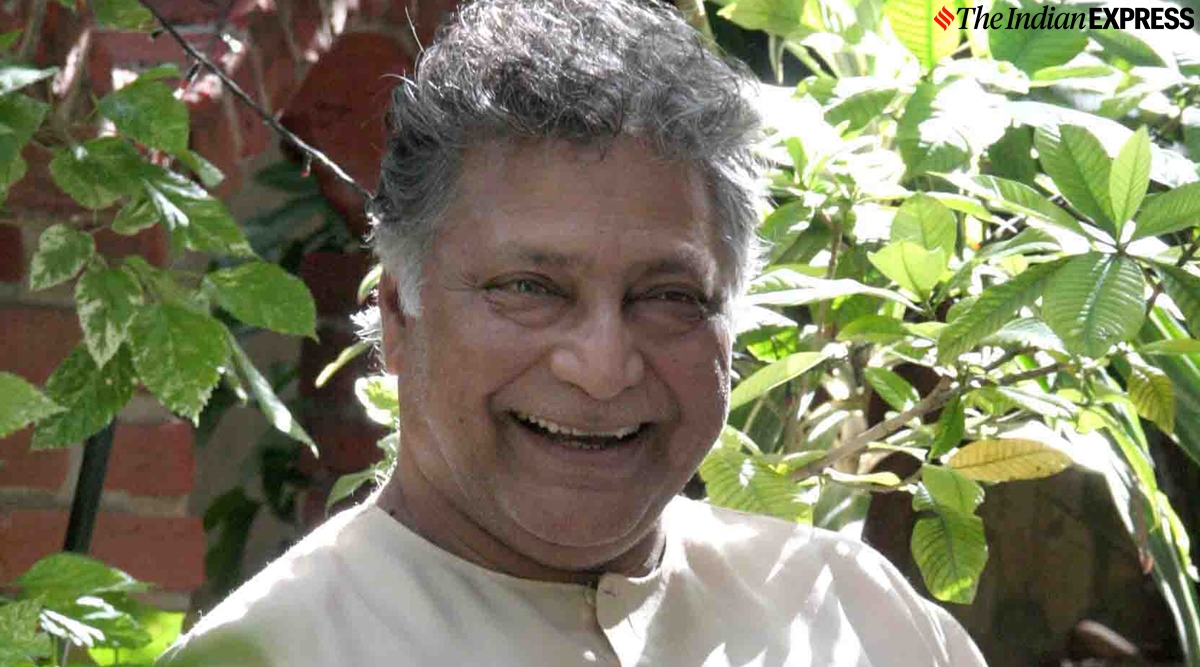
Shiladitya Pandit (THE TIMES OF INDIA; November 27, 2022)
Pune: Noted theatre, film and television actor Vikram Gokhale, who delivered a towering performance as the dignified and stern Hindustani classical music guru in the Bollywood superhit ‘Hum Dil De Chuke Sanam’ (1999), passed away at a hospital due to multi-organ failure on Saturday. He was 77.
Among those who expressed their condolences on social media were actors Akshay Kumar, Anupam Kher and Manoj Bajpayee. “Indian cinema lost (a) gem of an actor,” posted Bajpayee, who acted with him in Aiyyary (2018).
Popular in both Marathi and Hindi films, Gokhale received the National Film Award for best actor for his portrayal of a distressed old man struggling to pay his comatose wife’s medical expenses in Gajendra Ahire’s Marathi film, ‘Anumati’ (2013). And he was first-rate as the confidant of an angst-ridden stage legend in director Mahesh Manjrekar’s ‘Natasamrat’ (2016). Gokhale also received the Sangeet Natak Akademi award in 2011 for his contributions to the stage.
“He gave a new dimension to the acting style prevalent on the Marathi commercial stage before the 1970s,” said long-time friend and occasional collaborator Satish Alekar.
Actor and director Amol Palekar, who collaborated with him in the musical ‘Thoda Sa Roomani Ho Jayein’ (1990) said, “I particularly remember his performance in the play ‘Barrister.’ It is a landmark performance in Marathi theatre. Future generations should learn from it. However, theatre did not provide him the roles that were worth his salt. His style of acting, or rather under-acting, was so effective and good, few can achieve with dignity. Unfortunately, the film industry did not provide him his due, particularly the Marathi film industry.”
Versatility was his calling card. The actor lent grace and added depth to the characters he performed. Gokhale’s expressive eyes and commanding voice - he was also a voice coach later - were fundamental to the creation of the socially conservative guru who’s generous at heart but also bound by tradition in Sanjay Leela Bhansali’s ‘Hum Dil De Chuke Sanam’. And yet, in ‘Thoda Sa Roomani…” he handled the role of a remote town’s district collector, who’s the object of an unfussy young woman’s (Anita Kanwar) secret attraction, with equal aplomb. He also acted in a bunch of TV serials: from ‘Katha Sagar’ and ‘Udaan’ in the DD monopoly days of the 1980s to ‘Virrudh’ and ‘Kuch Apne Kuch Paraye’ in recent decades.
Pune-born Gokhale acted in over 200 films and TV shows and was a worthy descendant of his pioneering ancestors starting with great grandmother Durga Kamat, considered the first actress in Indian cinema, and her daughter, Kamla Kamat, both of whom made their debut in Dadasaheb Phalke’s ‘Mohini Bhasmasur’ (1913).
Gokhale’s father, Chandrakant, was also a veteran of the stage and film, and was also a well-known philanthropist, a tradition carried on by his son. His family supports war veterans at the Queen Mary Technical Institute and works for welfare of orphans.
He also nailed his political colours to the mast, criticizing politicians for casting aspersions on Veer Savarkar.
Gokhale, who had caught everyone’s eye playing Lord Krishna in the 1977 film, ‘Yehi Hai Zindagi’, was recently seen in the Hindi comedy-action flop ‘Nikamma,’ but received critical acclaim in the 2021 Marathi film Godavari (2021).
-------------------------------
BOMBAY TIMES (November 27, 2022)
Veteran actor Vikram Gokhale, who was undergoing treatment at a multi-speciality hospital in Pune, passed away on Saturday afternoon. He was 77. Shirish Yadgikar, the PRO of the hospital, confirmed the news and said, “It’s with a sad heart that we announce the passing of Mr Vikram Gokhale. He passed away in the afternoon. Our condolences to the family and near ones.”
Gokhale’s family friend Rajesh Damle said, “The last rites were carried out at Pune’s Vaikunth Smashan Bhumi at 6 pm yesterday.”
The senior actor’s condition had been critical for the last few days, and he had been kept on the ventilator. On Friday, the hospital authorities shared that the actor had shown some signs of improvement, but on Saturday morning, they shared that his condition had deteriorated.
As per his family, Gokhale was suffering from multiple health issues and had multi-organ failure, post which he was put on life support.
Throughout the course of his long and successful career, Gokhale appeared in both Hindi and Marathi films. The veteran actor came from a family of actors. His father, Chandrakant Gokhale, was a renowned Marathi theatre and film performer. After working in Marathi theatre at an early age, he made his film debut with the Amitabh Bachchan-starrer Parwana when he was 26. Following that he acted in several Marathi and Bollywood films, including Amitabh Bachchan’s Agneepath in 1990 and Hum Dil De Chuke Sanam with Salman Khan and Aishwarya Rai Bachchan in 1999.
The powerhouse performer worked in Bollywood films like Agneepath, Khuda Gawah, Insaaf, Salim Langde Pe Mat Ro, Bhool Bhulaiyaa, Mission Mangal and Aiyaary, among others. He made his directorial debut with Aaghaat, a Marathi film that released in 2010. His body of work in the Marathi film industry includes films like Natsamrat, Lapandav, Kalat Nakalat, Vazir, Bala Gau Kashi Angar, Anumati, Mukta, Me Shivaji Park and AB Aani CD.
He was also well-known for the TV show Ya Sukhanno Ya. For his contribution to the world of theatre, he was presented the Sangeet Natak Akademi Award in 2011. In 2013, his Marathi film Anumati won him the National Film Award in the Best Actor category. This year, he was seen in the Bollywood film Nikamma along with Shilpa Shetty and Abhimanyu Dassani. His Marathi film Godavari released earlier this month. He is survived by his wife, Vrushali Gokhale, and their two children.
At the time of going to press tributes were pouring in from the industry. Sonali Kulkarni said, “With Vikram kaka’s passing, the film industry has lost a true artiste who built his career on hishonest performances and passion. I was fortunate to know him and work with him. He was a source of encouragement for everyone and someone who built a name for himselfacross various platforms and languages. My prayers are with his family and near ones.”
Akshay Kumar posted, “Very sad to know of the demise of Vikram Gokhale ji. Worked with him in films like Bhool Bhulaiyaa, Mission Mangal, had so much to learn from him. Om Shanti (sic).”
Manoj Bajpayee said, “Indian cinema lost a gem of an actor. Had the privilege of working with him in Aiyyari and shared few great moments with him on the set! Saddened to hear about Shri Vikram Gokhale ji’s demise. My thoughts & prayers are with the family (sic).”
—Inputs by Mihir Bhanage and Shashank Sane
My family and I live and breathe cinema-Helen
8:10 AM
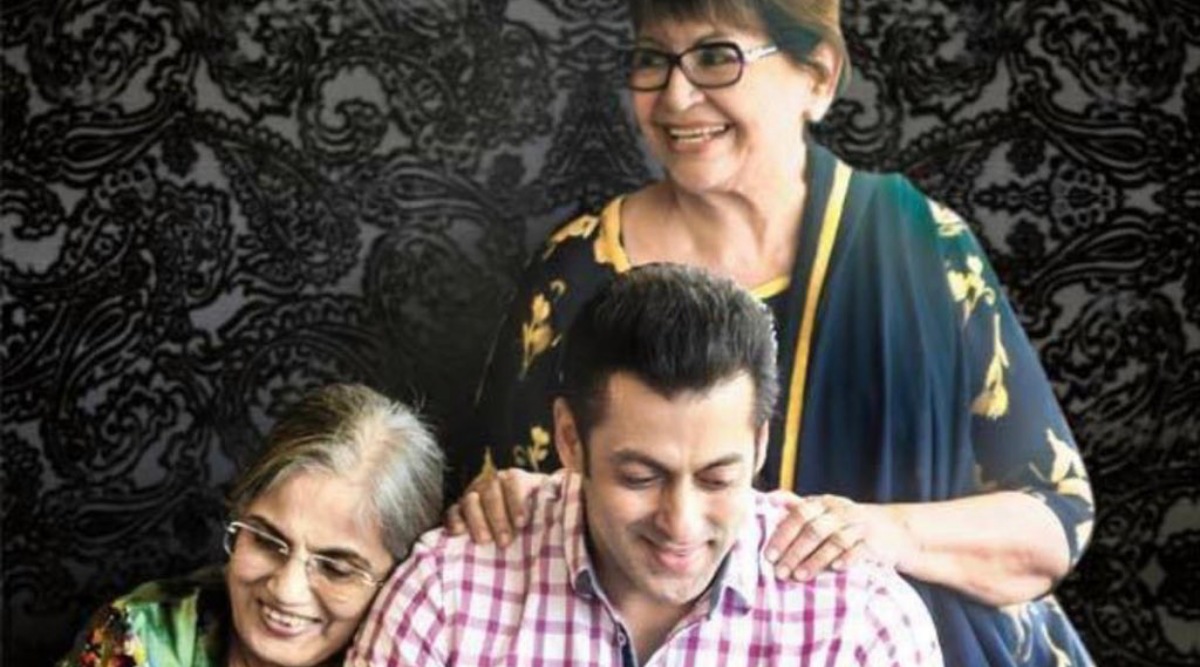
The iconic dancer and actress is all set to return with Abhinay Deo’s Brown ,a neo-noir crime drama, which will also feature Karisma Kapoor
Neha Maheshwri (BOMBAY TIMES; May 10, 2022)
“I have never felt distanced from cinema,” says the legendary Helen, who shimmied a trail on the silver screen with her sassy and iconic dance moves for years. Boasting of a career that spans the 1950s to the 1980s, the elusive and gorgeous 83-year-old is all set to return to face the arc lights with Brown.
The Abhinay Deo-directorial, a neo-noir crime drama (based on the book City Of Death by Abheek Barua) which recently went on the floors, will also feature Karisma Kapoor. The yesteryear actress says, “Crime dramas are riveting to watch these days because each story is treated so differently. No two crime drama series are alike. Also, it is not a genre that I have dabbled in earlier, so, I am really looking forward to it. In fact, I am happy that I am being offered meaningful roles by brilliant filmmakers and creators. The character in Brown is truly me. I identified with the way she leads her life and it prompted me to agree immediately. Besides, Abhinay knows exactly what he wants from every actor and that put me at ease. I am truly enjoying being back on sets.”
Helen admits to feeling nervous about returning to the screen. She says, “My family and I live and breathe cinema. But I was nervous about the changes I’d find after returning on set after so many years. However, I was pleasantly surprised to find that the changes that have taken place have been good. In our time, table-reads, workshops, etc were things that only happened in Hollywood. All of these things had not reached us back then. Now it’s a fascinating way to work, where you come together and meet your co-actors. The energy in the room is enthralling.”
While her outings in Bollywood have been sporadic in recent times, she is still remembered for her cameo appearance as Salman Khan’s mother in Hum Dil De Chuke Sanam (1999). Ask her about her reasons for staying away from showbiz and she replies, “Nothing exciting came my way.” Is there any project on cards with Salman? “As of now, nothing,” she replies.
Helen is considered as one of Bollywood’s finest dancers and some of her songs are classics, even remixed several times over. This is evident even on current dance reality shows, where her songs are some of the most popular numbers among the contestants. What’s surprising is that she has never appeared as a celebrity judge on any of these shows. And she has no plans to change that even in the future, “I won’t be able to dedicate the time required by reality shows,” she explains.
However, the veteran actress is all praise for the new generation of dancers. “Times have changed. I see that the dancers today are a dedicated lot. They work really hard to make each dance a spectacle,” she says.
I want Sanjay Leela Bhansali to make the film he wants to make; Nothing changes between us as friends-Salman Khan
7:58 AM

Salman Khan on why his next collaboration with Sanjay Leela Bhansali was called off three days before it was to roll
Hiren Kotwani (MUMBAI MIRROR; August 27, 2019)

Since it was announced, Inshallah ( In-shaa-Allah as spelt by SLB), Salman Khan and Sanjay Leela Bhansali’s collaboration 20 years after Hum Dil De Chuke Sanam (1999), has been grabbing headlines. With Alia Bhatt as the leading lady, the film was to take off on Wednesday. But on Sunday night, the actor tweeted, “The film with Sanjay Leela Bhansali is pushed but I will still see you all on Eid, 2020. Insha-Allah!! (sic).” The post had rumour mills buzzing, more so following a statement on Tuesday afternoon from the director: “Bhansali Productions has decided to not go ahead with Inshaa-Allah for now… Further announcement will be out soon… God Willing (sic).”
While the development has shocked the film fraternity and the audience, a source privy to the development informed Mirror that the decision was mutually taken by the actor and the filmmaker after an amicable closed-door meeting. By then, satellite and digital rights had been sold and sets built in different studios. After looking at the complete picture before shooting began, they figured that instead of In-sha-Allah, they’d prefer to collaborate on another project in the future.
Salman and SLB's friendship blossomed during their first film together, the latter's directorial debut, Khamoshi: The Musical. They went on to make Hum Dil De Chuke Sanam during which friction erupted when SLB succumbed to pressure from his distributors and Aishwarya Rai’s character Nandini went back to her husband Vanraj (Ajay Devgn) instead of reuniting with Salman’s Sameer. Buzz is, Salman wasn’t happy about Shah Rukh Khan bagging SLB’s Devdas either and dropped out of his Bajirao Mastani, planned with him in the lead. They put their differences aside when Salman agreed to a special appearance in Saawariya, Ranbir Kapoor and Sonam Kapoor’s debut film, in 2007, and subsequently agreed to collaborate on an adaptation of the Hollywood film, The Prestige, till SLB chose to cast Hrithik Roshan in Guzaarish (2010). In an interview to Mirror (March 20, 2019) the filmmaker had admitted that they have had a few issues in the past. “But whenever we met, even sporadically, we picked up from where we’d left off without dwelling on the past and the differences of opinion we might have had. My fondness for him is pure, and Salman, once he offers his friendship, even if you don’t meet or talk in five years, he’s there waiting for you.” The previous day, they had officially announced their fourth collaboration together, In-shaa-Allah, in which Salman was reportedly playing an Orlando-based businessman with Alia as a 20-something aspiring actress from Varanasi.
In the same interview, SLB said that from his understanding of Salman as a man, an actor and as a superstar, In-shaa-Allah was the right film for them to collaborate on. “I’ve been working on it for the last year-and-a-half, starting three months before Padmaavat released, to take my mind off things that were happening at that time. I wrote and reworked it till I felt it was ready, then, went to him,” he had informed. Salman was quick to give his nod to the project.
But a few weeks ago, reports started coming in about financial issues and creative disagreements between the duo. However, according to a source, “Salman didn’t insist, forget dictate, any changes in the script but Bhansali and he have amicably decided to not make this film for now”.
Meanwhile, on Tuesday evening, Salman announced, “Itna mat sochna mere baare mein, Dil mein aata hoon.. aur Eid pe bhi (sic).” Since the cryptic tweet was strongly reminiscent of a punchline from Kick, “Mere baare mein itna mat sochna, Main dil mein aata hoon, samajh mein nahin”, which released on Eid 2014, it fuelled speculations that the actor was planning to push Sajid Nadiadwala’s Kick sequel, which had been initially announced as a Christmas 2019 release, to Eid 2020. But according to the source, the tweet was made in jest.
“Salman has shortlisted two subjects and will take a call on which film he wants to make next and announce it soon. Shooting of Dabangg 3 is almost complete, he’s looking to start his Eid 2020 outing next month,” added the source.
While Salman remained non-committal on his Eid 2020 release, he cleared the air on In-shaa-Allah while talking to Mirror. “Sanjay was a friend even before we started working on Khamoshi. He had come to meet me through Manisha Koirala. After that, we collaborated on Hum Dil De Chuke Sanam. When he came to me with this film, I liked it and we decided to work together again. One thing I can say is that Sanjay won’t do gaddaari with his film. I want him to make the film he wants to make. Nothing changes between us as friends and I’m sure nothing has changed in Sanjay’s heart for me. I’m extremely close to his mother (Leela) and sister (Bela). I wish him all the best. He and I will still work in future on a film, Inshallah,” Salman said.
I don’t deserve to work with Sanjay Leela Bhansali yet-Sharmin Segal
8:19 AM

SLB’s niece Sharmin Segal says to be directed by the filmmaker is a privilege one must earn, asserts she won’t misuse her filmi background
Himesh Mankad (MUMBAI MIRROR; June 25, 2019)
 After Ananya Panday, Karan Kapadia and Pranutan Bahl, Sharmin Segal, who also hails from a film background—she is the daughter of film editor Bela Segal and the niece of filmmaker Sanjay Leela Bhansali—is gearing up for an acting debut. Titled Malaal , the film also marks the acting debut of Jaaved Jaaferi’s son, Meezaan. Excerpts from an interview:
What’s it like to be launched by Sanjay Leela Bhansali?
Even though he’s related to me, it’s an unreal feeling because he decided to invest time and money in me.
Did you always want to become an actor?
I always wanted to be a doctor, but while doing stage shows in school, I noticed that people were reacting positively to my characters. I realised that this is the only profession that lets you experience different lives in one lifetime. When I was an assistant director on Bajirao Mastani, the purpose was to understand a film set. Sanjay sir was aware that I wanted to be an actor, but I didn’t speak to him formally until after returning from acting school in the US. Obviously, he was never going to direct my first film; one must earn that privilege and I don’t deserve to work with him yet.
 Did you audition for the role?
Sanjay sir auditioned both Meezaan and I, and then put us under Mangesh sir’s (Hadawale, director) guidance, categorically telling him, “You don’t have to take them if you don’t want to,” but Mangesh sir liked our audition.
And what about the prep?
Mangesh sir made us write a back-story for our characters to help us understand them better. There were acting workshops and he took us around Mahim and Dadar to show us Maharashtrian culture.
Not much was known about the film when it was under production…
I agree with Sanjay sir’s logic that we shouldn’t be over-exposed before the release. He believes that if people like your work, success will follow.
Your take on nepotism?
It does exist, and it is easier to become an actor or a director if you know people in the industry. But nepotism exists everywhere—be it law, business, or medical professions. If you had it easier than your peers, you must do your job with integrity. The nepotism debate is not going to stop me from following my passion, but I’ll make sure to not misuse the opportunity. It’s a grey area and that no-one can control.
Any memories of visiting a SLB set?
I remember going to the sets of Hum Dil De Chuke Sanam. I moved all the props around during the shoot (laughs). I even cut my birthday cake with the entire cast. And of course, Bajirao Mastani; watching him work on that film changed my perspective on things.
How was it working with Meezaan?
We have been friends for over seven years. I am glad that I’m making my debut with him because we came on the sets with a certain amount of comfort level.
What next after Malaal?
There are no offers yet. Even if there were, I’d rather wait for Malaal to release first. I don’t want to misuse the opportunity just because I am Sanjay sir’s niece.
Tabu mesmerizes everyone with her singing on Sa Re Ga Ma Pa Li'l Champs
8:08 AM

Natasha Coutinho (MUMBAI MIRROR; May 11, 2019)
 Long-time friends and frequent co-stars Ajay Devgn and Tabu recently made an appearance on the Zee TV show Sa Re Ga Ma Pa Li'l Champs along with Rakul Preet Singh, who shares the frame with them in their next, the romcom De De Pyar De.
And while shooting for their turn, Tabu inadvertently served as a buffer for Ajay, when the show’s judges - Amaal Mallik, Shaan and Richa Sharma - requested the actor to sing a song. Instead of obliging the trio, Ajay immediately pointed out that Tabu is a talented singer, saying, “Not many people know that the Bollywood diva sitting among us has a beautiful voice and is a fabulous singer. I think everyone would want to listen to her instead. I am such a bad singer that I don’t even sing in the bathroom. The only reason I agreed to sing in Hum Dil De Chuke Sanam (Sanjay Leela Bhansali’s 1999 film), was because I was portraying a character who was a terrible singer.”
Ever the sport, Tabu sang her “all-time favourite”, “O Saathi Re” from Ajay’s Omkara, followed by “Ankhiyan Jo Hanju” from Ayushmann Khurrana’s Vicky Donor. She rounded off the brief gig by jokingly requesting Amaal to give her an opportunity as a playback singer in his next, to which the composer readily agreed.
Salman Khan's next with Sanjay Leela Bhansali to be called 'Hum Dil De Chuke Sanam 2'?
8:09 AM
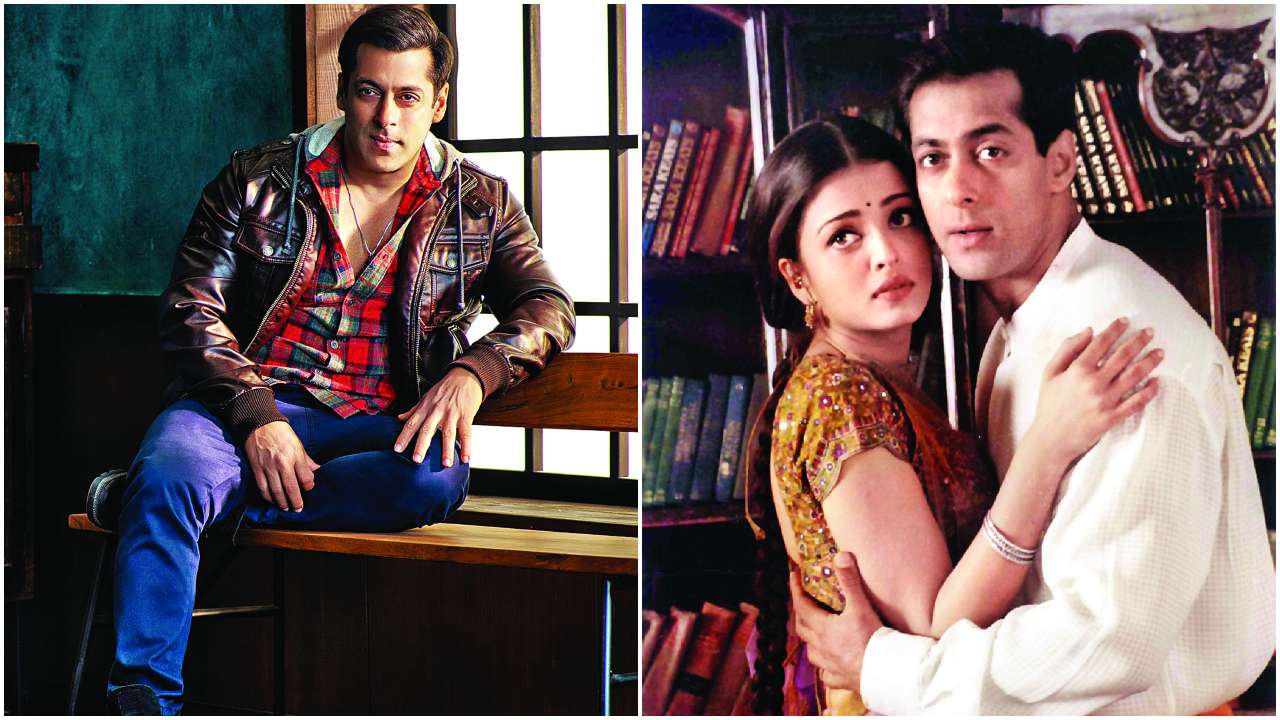
Nayandeep Rakshit (DNA; February 26, 2019)
Over the weekend, Bollywood heavyweights Salman Khan and Sanjay Leela Bhansali made news about coming together for a love story 12 years after Saawariya.
“Sanjay, who is penning the script, has narrated the idea to Salman and he is on board. Though the film isn’t a sequel or a remake, it may be called Hum Dil De Chuke Sanam 2. SLB feels that the movie has all the elements that Hum Dil... had. So, the title feels like a natural fit for part two. However, it will have a different story and new characters. An A-list heroine will be cast opposite Salman, but the makers haven’t approached anyone as yet,” a source says.
The plan is to start the project by the end of 2019. “Salman starts Dabangg 3 in the last week of March. Once he finishes the third instalment of the cop franchise, he will begin work on this project. The movie is being readied for a 2020 release,” adds the source.
Salman Khan brings Sunil Grover's Mashoor Gulati back on Dus Ka Dum
8:12 AM

Sunil Grover revisits one of his most popular TV avatars, this time for his soon-to-be co-star’s gameshow
Natasha Coutinho (MUMBAI MIRROR; June 20, 2018)
Almost a year after Sunil Grover’s popular character Dr Mashoor Gulati from The Kapil Sharma Show went off the air, the much-loved character is set for a comeback. On Sunday, the actor-comedian shot for a special episode of Salman Khan’s gameshow, Dus Ka Dum, with singer Neha Kakkar as fellow guest.
Speaking about teaming with his Bharat co-star, Sunil told Mirror, “Salman is such a fun-loving guy to work with; he doesn’t make you feel that he’s a star. Usually, there is a lot of pressure to deliver but Salman made it easy for everyone on the sets. I’m looking forward to working with him in Bharat now, we are expected to roll by July end.”
Revisiting the highlights of his turn on the 52-year-old actor-host’s show, Sunil said, “We made a parody of 'Chaand Chhupa Badal Mein' (from Hum Dil De Chuke Sanam). I would add one line to the song, so would he… it turned out quite beautifully. He was in a fun mood, and I lost track of whether I was winning or losing the game. It was just so much fun.”
And what about getting to play Dr Gulati again? “It was nostalgic because the character has a certain innocence about him. When I was playing him, I’d sometimes find it difficult to believe it was me. It was nice meeting Dr Gulati after such a long gap,” Sunil smiled.
The actor-comedian’s TV stint came to an abrupt halt following a mid-air scuffle with Kapil Sharma in February last year, after which Sunil had staged a walk-out from their show.
Now, with two big films — Bharat and Vishal Bharadwaj’s Chhuriyaan— Sunil said he is looking forward to “better times”. “We are prepping for the last schedule of Vishal ji’s film,” he said.
I had come to this industry to make music albums, not film songs-KK
8:15 AM

Elina Nayak (BOMBAY TIMES; March 17, 2018)
Krishna Kumar Kunnath, popular as KK, has been mesmerising us with his powerful and soulful voice for over two decades now. Whether it’s Chodh Aaye Hum Woh Galiyan, Tu Ashiqui Hai, Tadap Tadap Ke, Zara Sa, Khuda Jaane, Tu Hi Meri Shab or Tune Mari Entriyaan, his songs are still evergreen in our hearts. The singer shifted to Mumbai from Delhi in the 90s to pursue his dreams of making an album. Little did he know that one day he would end up becoming one of the top playback singers in the country. The singer gets candid in a freewheeling chat about his plans to compose his own music, the dying Indipop scene in the country and more. Excerpts:
We don’t get to hear you often in Bollywood these days. You’ve been very choosy with songs for some time now. Is that a conscious decision?
It’s just that there are plenty of singers out there, so I feel that I should start doing what I came here to do initially. Singing happened to me — all thanks to God, and my friends and family, who pushed and encouraged me. Plus, I got the opportunity to sing some very beautiful songs over the years. However, I had come to this industry to make albums, not films. In 1999, I did Pal, and then Tadap Tadap (Hum Dil De Chuke Sanam) happened at the same time. I couldn’t help it, and I still continued taking up as many of the songs as I could. I thought that maybe if I do films too, it would open up new avenues for me. At the time, I thought I would continue playback singing for a few years before going back to the original plan. However, those few years have turned into 22 years now (laughs). I have come to a situation in my life, where I have to be stingy. Trust me, it takes a lot of time to forget yourself, to forget the artist in you, and to sing songs for another composer. You are always like, ‘chal, I’ll sing Awarapan for you’, ‘I’ll sing Ding Dong Ding for you’, ‘I will do Khuda Jaane for you...’ But this is not me. I’m a music director’s singer. I want to start discovering myself and my own music. I hope I have that vision and focus to compose and write my own songs, and I hope to come up with a single this year. I’m not a mediocre guy, who’ll do something just for the heck of it. I need to live my life. I want to do five to six film songs a year at the most. The time has come, when God is like, ‘chal, now you do your kind of songs’. I’m slowly getting back on my track.
Anybody and everybody is turning into a playback singer today, thanks to auto tune. Though helpful, do you think technology can be a curse too?
The thing is, everyone wants to sing today, which is good, because singing gives you a high. It relaxes your mind and body, and it make you happy. All this is fine to an extent, but what will you do when you perform live on stage? You can’t just say ‘chalo, main bhi ek video bana leta hoon, because iska koi faida nai hota’. How will it help you? You can look pretty in videos and pictures, but if you don’t sound good live, people will think — ‘OMG, yeh toh model hai... samne kuch aur hi hai’. To actually be a professional in this field, you need a lot of hard work and commitment. It’s not easy.
There was a time when Indi-pop, as a genre, created an alternative fan base that could compete with Bollywood music. Today, it’s almost vanished from the scene. What do you think is the reason behind it?
To start with, I do hope the independent scene grows, because we have so much talent out there. There was a time when we had to get our songs shot, make videos with recording companies, and then release them. Today, we have YouTube. All you have to do is sing and upload your songs, and next thing you know, you are an internet sensation — like Dhinchak Pooja. She is popular, but there’s a difference between being trendy, and being an actual serious musician, who can generate good music and stay here for good. Singing can only happen if you believe in it. It can’t be like, ‘let me have some fun temporarily’. The moment you put your best foot forward, and take it to another level, you become stronger.
What do you do when you’re not singing?
I love to go on long drives. That’s my way of chilling, and it’s my favourite pastime as well. Moreover, I’m a total family guy, who loves cooking, watching movies with family, and sitting and chatting with my wife and two kids. Sometimes, we chat the whole day, about various topics, and end up arguing, fighting and then patching up again (laughs). So, if I’m not working, I’m home.
You’re not active on social media either...
I’m not a social media person, nor am I on any messaging apps, I’m not active anywhere. It takes a lot of time and investment, and like I said, if I’m not working, I’m with family. I’m very selfish about my time, because it’s my time and I’ve been like this for the last 22 years now. I connect with my fans by performing live or when I meet them in person at malls, on the roads, or anywhere else. They come to me with lot of love and passion, and lot of faith in my music, so that’s when I oblige them.
I wish the lyrics of the songs nowadays were more meaningful-Kavita Krishnamurthy
8:20 AM

Soumya Vajpayee Tiwari (MID-DAY; January 9, 2018)
Bollywood has missed her voice over the past few years. But Kavita Krishnamurthy’s stance is simple — she’ll step inside a recording studio for a song that’s worth her while.
Counted among the most successful playback voices in the Hindi film industry, she hasn’t lent her voice to a commercial Bollywood project since 2011 (her last song was Tum Ko from Rockstar). “I don’t refuse to sing for Hindi films, but I haven’t got any good songs in a while. Whatever I have sung in the past few years haven’t been great either. After recording so many songs, there is no point in singing just because you have to, professionally,” the veteran tells mid-day.
Old is gold
Be it expressing the innocence of first love in 'Pyar Hua Chupke Se' or the playful flirtation in 'Aankhon Ki Gustakhiyan', the singer has been the voice behind many musical gems in the '90s. She rues that the songs today lack magic. "I treasure the songs from 'Devdas' (2002), 'Hum Dil De Chuke Sanam' (1999), 'Khamoshi: The Musical' (1996) and '1942: A Love Story' (1994). I doubt something like that will ever come my way. I'm longing for an excellent piece to be offered, something I can work hard for."
Ask her what makes her miss the tracks that were churned out in the past, and the singer discerningly says, “Some of the songs that are made these days are interesting. But I wish the lyrics were more meaningful. I don’t like over-programmed tracks. Sometimes, I feel they [the composers] use the auto-tuner too much.”
Young guns
While the music industry leaves a lot to be desired with regard to penning lyrics, she agrees that it does boast of bright talents when it comes to singing. “The brightest stars right now are Shreya Ghoshal, Sunidhi Chauhan and Arijit Singh. They have stood out within a short span of time.”
Music and me
With over a 40-year-long career behind her, the Padma Shri recipient continues her longstanding romance with music even today. Last year, she toured the UK with husband, violinist L Subramaniam, performing with the London Symphony Orchestra (LSO). “Recording with the LSO at London’s Barbican Centre in November was extraordinary. I sang with the orchestra, and it was an original piece written specifically for my voice. That has never happened to any Bollywood singer before,” says Krishnamurthy.
For now, she is focussing on her new multi-artiste album. “It features Pandit Jasraj, Shaan, Sonu Nigam, Hariharan, Lucky Ali and Suresh Wadkar,” she says.
Why are Karva Chauth sequences lacking in our Bollywood films?
8:11 AM

Abhimanyu Mathur, Divya Kaushik & Riya Sharma (BOMBAY TIMES; October 12, 2017)
Given the role Bollywood
played in amping up the appeal of Karva Chauth, which was celebrated
recently, it is surprising to see the presence of the event diminishing
on screen lately. Remember the song Bole Chudiyan from Kabhi Khushi
Kabhie Gham and the elaborate Karva Chauth sequence with Kajol fasting
for SRK, and Kareena Kapoor for Hrithik Roshan? The festival has been
celebrated in most family-oriented Bollywood dramas with the
participation of the entire clan, where the sequence captured the
essence of the festival and showed women getting together to pray for
their husband's long life. But which was the last film where you saw the
festival being showcased as ostentatiously as the way it has been? Gone
are the days of elaborate Karva Chauth song sequences and actresses
decked up from head-to-toe performing a puja beside a picturesque vision
of diyas floating in a pond. It is now a diminishing trend in
Bollywood. We spoke to actors who have been part of such films in the
past and they say that the reason is the growing number of realistic
movies which echo the trends of the present time.While some say that
these tracks won't work for the younger, modern generation, others think
that realistic movies have no space for the festival.

GONE ARE THE DAYS OF THE 'MERA PATI SIRF MERA HAI' TRACKS IN MOVIES: DIVYA DUTTA
 Divya Dutta acted in Baghban, which was one of the last multi-starrer
dramas to feature a Karva Chauth sequence. The film released 14 years
ago and Divya feels that the reason why films don't feature these sequences anymore is
because of changing cine stories. “If you look at the kind of stories
in our films, you won't find many where a Karva Chauth scene would fit.
The audience doesn't want that either. They don't have the patience to
watch extravagant gestures like that in
films anymore. Gaane bhi ab toh lip sync nahin hote. They are just in the
background. Toh Karva Chauth sequence ki toh baat hi nahin
aati. Filmmakers have realised this. Gone are the days of the 'mera pati
sirf mera hai' tracks in movies. The audience of today wouldn't go for
that,“ she says.
Divya Dutta acted in Baghban, which was one of the last multi-starrer
dramas to feature a Karva Chauth sequence. The film released 14 years
ago and Divya feels that the reason why films don't feature these sequences anymore is
because of changing cine stories. “If you look at the kind of stories
in our films, you won't find many where a Karva Chauth scene would fit.
The audience doesn't want that either. They don't have the patience to
watch extravagant gestures like that in
films anymore. Gaane bhi ab toh lip sync nahin hote. They are just in the
background. Toh Karva Chauth sequence ki toh baat hi nahin
aati. Filmmakers have realised this. Gone are the days of the 'mera pati
sirf mera hai' tracks in movies. The audience of today wouldn't go for
that,“ she says.
 DECREASE IN FAMILY MOVIES IS THE REASON WHY WE DON'T HAVE KARVA CHAUTH SCENES ANYMORE: SATISH KAUSHIK
“Nowadays, not many directors are making family movies. We see realistic movies or movies from the thriller genre and that is one of the reasons for this. Plus, the present generation believes in equality they do not want only women to fast for their husbands, they strongly believe that if women can do this, why not men? The present generation does not accept that women should only pray for their husbands. For them, it should be both ways. But I think agar aaj bhi dikhaya jaye Karva Chauth scene Hindi movies mein, toh humari desi audience pakka pasand karegi,“ says Kaushik.
 I THINK ONLY A FEW DIRECTORS IN OUR INDUSTRY TODAY CAN THINK OF WEAVING A KARVA CHAUTH SEQUENCE IN A STORY: SONU SOOD
“I think, 10-15 years ago, Karva Chauth sequences were imperative for the plot of those movies that had romance and family drama as their highlight. I think that was a good way to present the tradition in a certain glamorous way. What I also liked was how the festival changed from just a family, traditional sequence to something that took the love story forward in our films. I think only a few directors in our industry today can think of weaving a Karva Chauth sequence in a story, even if it is a modern family drama,“ says Sonu.
 TODAY, FILMS ARE MORE REALISTIC AND KARVA CHAUTH IS NOT AN IMPORTANT SEQUENCE OF A MODERN STORY: ALOK NATH
“Karva Chauth has been a part of our films like other festivals and it suited the kind of films that were made earlier quite well. Over time, love stories have changed, the portrayal of love on screen has changed and the way love is expressed has changed in our films. Karva Chauth can hardly be a part of movies that are being made today. Today's films are more realistic and in the real world today, we would find women who are okay not keeping a fast for their husbands. They make a choice not to, and so is shown in our films as well.“
GONE ARE THE DAYS OF THE 'MERA PATI SIRF MERA HAI' TRACKS IN MOVIES: DIVYA DUTTA
Divya Dutta acted in Baghban, which was one of the last multi-starrer
dramas to feature a Karva Chauth sequence. The film released 14 years
ago and Divya feels that the reason why films don't feature these sequences anymore is
because of changing cine stories. “If you look at the kind of stories
in our films, you won't find many where a Karva Chauth scene would fit.
The audience doesn't want that either. They don't have the patience to
watch extravagant gestures like that in
films anymore. Gaane bhi ab toh lip sync nahin hote. They are just in the
background. Toh Karva Chauth sequence ki toh baat hi nahin
aati. Filmmakers have realised this. Gone are the days of the 'mera pati
sirf mera hai' tracks in movies. The audience of today wouldn't go for
that,“ she says. DECREASE IN FAMILY MOVIES IS THE REASON WHY WE DON'T HAVE KARVA CHAUTH SCENES ANYMORE: SATISH KAUSHIK“Nowadays, not many directors are making family movies. We see realistic movies or movies from the thriller genre and that is one of the reasons for this. Plus, the present generation believes in equality they do not want only women to fast for their husbands, they strongly believe that if women can do this, why not men? The present generation does not accept that women should only pray for their husbands. For them, it should be both ways. But I think agar aaj bhi dikhaya jaye Karva Chauth scene Hindi movies mein, toh humari desi audience pakka pasand karegi,“ says Kaushik.
I THINK ONLY A FEW DIRECTORS IN OUR INDUSTRY TODAY CAN THINK OF WEAVING A KARVA CHAUTH SEQUENCE IN A STORY: SONU SOOD“I think, 10-15 years ago, Karva Chauth sequences were imperative for the plot of those movies that had romance and family drama as their highlight. I think that was a good way to present the tradition in a certain glamorous way. What I also liked was how the festival changed from just a family, traditional sequence to something that took the love story forward in our films. I think only a few directors in our industry today can think of weaving a Karva Chauth sequence in a story, even if it is a modern family drama,“ says Sonu.
TODAY, FILMS ARE MORE REALISTIC AND KARVA CHAUTH IS NOT AN IMPORTANT SEQUENCE OF A MODERN STORY: ALOK NATH“Karva Chauth has been a part of our films like other festivals and it suited the kind of films that were made earlier quite well. Over time, love stories have changed, the portrayal of love on screen has changed and the way love is expressed has changed in our films. Karva Chauth can hardly be a part of movies that are being made today. Today's films are more realistic and in the real world today, we would find women who are okay not keeping a fast for their husbands. They make a choice not to, and so is shown in our films as well.“


Asha Parekh was born to be my heroine, but I came late-Sanjay Leela Bhansali
8:07 AM

MID-DAY (April 9, 2017)
I first fell in love with the screen image of Asha Parekh when I saw Pyar ka Mausam at my favourite theatre, the Imperial on Mumbai’s Lamington Road. Here was a beautiful woman singing those beautiful songs, Main Na Miloongi, Aap Se Miliye and Na Jaa Mere Humdum. I never liked her doing mournful melodies till I saw her emote to Na Koi Umang Hai in Kati Patang. She was at her best when she was playful, mischievous and impish. I fell in love with her. Her gamine quality didn’t come in the way of her being taken seriously, not for long.
Although she was identified as the happy-go-lucky heroine, she was also appreciated for her performances in Chirag, Kati Patang and Main Tulsi Tere Aangan Ki. Unfortunately, I haven’t yet caught up with Do Badan. I remember weeping copiously when I saw her in a widow’s white sari, standing under that leafless tree singing Na Koi Umang Hai in Kati Patang. I was heartbroken. I didn’t like seeing her sad. When I later got to know Ashaji personally, I realised she was an intrinsically happy person. And she projected what the French call joie de vivre in her performances.
I became an Asha Parekh fan a little late in her career. After Pyar Ka Mausam (1969), I went back to her films. I was bowled over by her Dil Deke Dekho, absolutely by her exuberance. Ashaji was unlike any leading lady of her times. Uninhibited and gregarious, and yet feminine. I loved her orange lipsticks and matching jewellery. And those bright georgette saris which she patented. She could make the potentially unconventional look quite normal. And what a dancer! My favourite is the title song of Aya Sawan Jhoom Ke where the skies open up almost in accordance with her dance moves. And there was Chhayee Barkha Bahaar in Chirag (1969). She was the rainbow and sunshine in her rain song.
Come to think of it, she did full justice to some of the most beloved compositions of R D Burman like Aaja Aaja in Teesri Manzil and Shankar Jaikishen’s Jiya Ho Jiya in Jab Pyar Kisi Se Hota Hai. I could go on and on.
One of my favourite films of Ashaji was Caravan. I hated Aruna Irani in the film for teasing and tormenting Ashaji. At an impressionable age, my thought was, ‘Why is she being so cruel to Ashaji? She is such a nice lady.’ And that she is.
When I eventually got to know her personally. I realised she was every bit as positive a human being as she was projected on screen. I met her after the release of my film Hum Dil De Chuke Sanam. She had seen the film and invited me home. It was a dream-come-true. I had to pinch myself to believe I was actually visiting the woman whose songs I had that secretly been dancing to all my life. Her father was a wonderful man. Ashaji has inherited her absolutely endearing nature from her parents. Her father owned a business premise three buildings away from where we lived. He helped us without ever asking a question. May be it was partly because we, too, were Gujaratis. But a good human being is not about belonging to any one community.
Whenever we called at his home for help, Ashaji would pick up the phone like the daughter of any household. She was so normal in spite of being the actress with the maximum number of hits to her credit in her time. She would go to Yogendra Desai for her dancing lessons. I found her to be completely down-to-earth when I met her. Around then, she lived in her famous bungalow in Juhu by the seaside. To this day, it remains the most magnificent home I’ve ever seen. So classy and elegant, I felt I had entered a world of enchantment. And there she was, the lady I had grown up watching, serving us Gujarati delicacies with her own hands. It was the most amazing evening of my life. Later, with a friend I visited her new home, the one she lives in now. And she was just as warm, hospitable and charming.
Over the years, Ashaji hasn’t changed at all. I regret the fact that I couldn’t cast her in a movie. She was born to be my heroine. But sadly, I came a little too late. There is an inherent sur and rhythm to her personality that I find very attractive.
Among her contemporaries, only Sharmila Tagore had the same amount of glamour and charm. Everyone, especially the generation, which grew up on the movie of the 1960s, misses her. I couldn’t ever think of her playing mother to some 55-year-old hero.
Even when Ashaji is not singing and dancing, she seems completely happy with herself. Her eyes still sparkle with the same gift of life evidenced in Ziddi, Aan Milo Sajna and Nadaan. Among today’s heroines, I see that sparkle only in Alia Bhatt’s eyes.
Ashaji is as real as it can get. Though, a legendary star, she has never behaved like one.
Extracted from Asha Parekh The Hit Girl, An Autobiography with Khalid Mohamed, with permission from Om Books International

The word 'insecurity' has never been a part of my dictionary-KK
7:27 AM

Powerhouse singer KK opens up about music, its changing world and future plans
Priya Sugathan (BOMBAY TIMES; March 4, 2016)
His reputation as a singer
is as formidable as the fact that he is elusive. Not this time though.
We manage to catch up with Krishna Kumar Kunnath aka KK in his studio, a
place that's bursting in colours - vivid and muted in turns. Just like
the singer, whose self-effacing demeanour can transform completely
behind the mic or on stage. Completing 20 years in the industry, the
46-year-old says that he wants to explore more, even as he watches his
son Nakul (21) and daughter Taamara (17) unleash their musical genes in
their own
studios. Looking back at his journey from Delhi to Mumbai, KK gets
candid about life in the music lane...
Two of your songs have caught on well - Yeh Nasha (Rhythm) and Tu Bhoola Jise (Airlift). Why do we not hear you singing more often now?
In the 20 years that I've been in the industry, I must have hardly done 10-15 songs in a year. I like to pace out my songs. I haven't consciously done anything to reduce my work. I do travel a lot for my shows though - it could be for 15-20 days a month. When I came in to the industry, there were only a handful of artistes. But the playfield is huge now. If you think of it that way, the workload obviously reduces for everybody. So if I was doing 10 songs earlier, I may be doing five now (laughs).
But don't you think the entry of new singers has also put seniors at a disadvantage?
There's a reason they are there. The old always makes way for the new. Besides, music is a universal space, where everyone can co-exist peacefully. If you go abroad, Billy Joel shows sell out fast, even when there are new singers like Adele now. That's how life is - when I came to the industry, there was someone else moving out.
Does live performance come easier to you, compared to recording in a studio?
I expend a lot more energy in recording a song than at a show. It's like food - doing a gig is like eating and having a party, but recording is like cooking, where you're putting all things together and the ingredients need to be right. My wife Jyoti tells me that I come from the studio more tired than I do after a show. I don't take on shows for more than three consecutive days. More shows are often taken up for money or out of insecurity. And the word 'insecurity' has never been a part of my dictionary. God has been kind enough to not overload me with a lot of work.
You don't have formal training and yet you came into your own with a difficult song like Tadap Tadap Ke from the film Hum Dil De Chuke Sanam.
From the beginning, I was able to earn a song by just hearing, it is something that I've been blessed with. My father was very fond of music, my mum was a performer and her mother was a music teacher. So I think all that has passed on to me. My teachers told my dad to put me in a music school, so I went to one for exactly two days. I later learnt that Kishoreda had never learnt music, so I had even more reasons to not go to a music class.
Do you now regret not learning classical singing?
I have friends and colleagues who are into classical singing, but I don't feel any less for not having learnt it. Maybe I can't do the alaaps, but I am called to do light classical. In fact, when I first heard Tadap Tadap, it was a completely different song for a rocker boy like me. It made me delve within me. Another factor was that Ismail saab (Darbar) and Mehboob had a lot of faith in me as a singer. Today, when I do shows, there's not been a single concert where I have not sung this cult song.
What do you think of actors turning singers?
Some of them can hold a note.
Like?
Farhan (Akhtar) is a good singer. He's got an unconventional voice. If an actor who can sing wants to have a go at it, he must. Irrespective of sycophants, he will realise it sooner or later if he is cut out for it or not.
What about singers turning actors?
Shekhar (Ravjiani) did a good job recently. If an actor can try singing, then why can't singers try acting?
Would you?
No. I'm good behind the mic.
Which actor do you think is best suited for your voice?
I have never understood how my voice can suit anybody. I just go and sing my song - whether it's Tu Jo Mila (Bajrangi Bhaijaan) or Ajab Si (Om Shanti Om), Tu Hi Meri Shab Hai (Gangster) or Ding Dong (Kucch Toh Hai), or Awarapan (Jism) or Alvida (Life in a Metro) - there's never been a conscious decision to sound like anybody else.
What are you listening to now?
A lot of silence. My father passed away last month, so I've been in a different frame of mind. I am listening to a little bit of classical now and it helps me calm down. Also, I am trying to work on my own album - not exactly an album, but on some material that I am writing. I feel that what I have done till now is just a little bubble in the music world. This feeling has been there for some years, but it's leading to something definite now (smiles).
Two of your songs have caught on well - Yeh Nasha (Rhythm) and Tu Bhoola Jise (Airlift). Why do we not hear you singing more often now?
In the 20 years that I've been in the industry, I must have hardly done 10-15 songs in a year. I like to pace out my songs. I haven't consciously done anything to reduce my work. I do travel a lot for my shows though - it could be for 15-20 days a month. When I came in to the industry, there were only a handful of artistes. But the playfield is huge now. If you think of it that way, the workload obviously reduces for everybody. So if I was doing 10 songs earlier, I may be doing five now (laughs).
But don't you think the entry of new singers has also put seniors at a disadvantage?
There's a reason they are there. The old always makes way for the new. Besides, music is a universal space, where everyone can co-exist peacefully. If you go abroad, Billy Joel shows sell out fast, even when there are new singers like Adele now. That's how life is - when I came to the industry, there was someone else moving out.
Does live performance come easier to you, compared to recording in a studio?
I expend a lot more energy in recording a song than at a show. It's like food - doing a gig is like eating and having a party, but recording is like cooking, where you're putting all things together and the ingredients need to be right. My wife Jyoti tells me that I come from the studio more tired than I do after a show. I don't take on shows for more than three consecutive days. More shows are often taken up for money or out of insecurity. And the word 'insecurity' has never been a part of my dictionary. God has been kind enough to not overload me with a lot of work.
You don't have formal training and yet you came into your own with a difficult song like Tadap Tadap Ke from the film Hum Dil De Chuke Sanam.
From the beginning, I was able to earn a song by just hearing, it is something that I've been blessed with. My father was very fond of music, my mum was a performer and her mother was a music teacher. So I think all that has passed on to me. My teachers told my dad to put me in a music school, so I went to one for exactly two days. I later learnt that Kishoreda had never learnt music, so I had even more reasons to not go to a music class.
Do you now regret not learning classical singing?
I have friends and colleagues who are into classical singing, but I don't feel any less for not having learnt it. Maybe I can't do the alaaps, but I am called to do light classical. In fact, when I first heard Tadap Tadap, it was a completely different song for a rocker boy like me. It made me delve within me. Another factor was that Ismail saab (Darbar) and Mehboob had a lot of faith in me as a singer. Today, when I do shows, there's not been a single concert where I have not sung this cult song.
What do you think of actors turning singers?
Some of them can hold a note.
Like?
Farhan (Akhtar) is a good singer. He's got an unconventional voice. If an actor who can sing wants to have a go at it, he must. Irrespective of sycophants, he will realise it sooner or later if he is cut out for it or not.
What about singers turning actors?
Shekhar (Ravjiani) did a good job recently. If an actor can try singing, then why can't singers try acting?
Would you?
No. I'm good behind the mic.
Which actor do you think is best suited for your voice?
I have never understood how my voice can suit anybody. I just go and sing my song - whether it's Tu Jo Mila (Bajrangi Bhaijaan) or Ajab Si (Om Shanti Om), Tu Hi Meri Shab Hai (Gangster) or Ding Dong (Kucch Toh Hai), or Awarapan (Jism) or Alvida (Life in a Metro) - there's never been a conscious decision to sound like anybody else.
What are you listening to now?
A lot of silence. My father passed away last month, so I've been in a different frame of mind. I am listening to a little bit of classical now and it helps me calm down. Also, I am trying to work on my own album - not exactly an album, but on some material that I am writing. I feel that what I have done till now is just a little bubble in the music world. This feeling has been there for some years, but it's leading to something definite now (smiles).
My obsession with love triangles will continue-Sanjay Leela Bhansali
8:33 AM

Tushar Joshi (DNA; January 4, 2016)
 Sanjay Leela Bhansali is fascinated with love
triangles, first Hum Dil De Chuke Sanam, then Devdas, followed by
Saawariya and now Bajirao Mastani. There’s something about unrequitted
love that makes him revisit the subject over and over again. And other
filmmakers who don’t own up to their obsessions, Sanjay accepts them.
Sanjay Leela Bhansali is fascinated with love
triangles, first Hum Dil De Chuke Sanam, then Devdas, followed by
Saawariya and now Bajirao Mastani. There’s something about unrequitted
love that makes him revisit the subject over and over again. And other
filmmakers who don’t own up to their obsessions, Sanjay accepts them.  He
smiles, “I think this will continue all my life. I really don’t know
why I am so attracted towards it, is it a personal state of mind to go
into this zone. But yes I pick up stories where the love story does not
necessarily end but for me that’s the happiest end the love story could
have.”
He
smiles, “I think this will continue all my life. I really don’t know
why I am so attracted towards it, is it a personal state of mind to go
into this zone. But yes I pick up stories where the love story does not
necessarily end but for me that’s the happiest end the love story could
have.” He continues, “If Devdas came and died outside Paro’s house
to see one glimpse of her, then that’s a happier ending for me than a
far more greater ending of a man in love with a woman holding her hand
and going into a sunset. That tribute Devdas gave to love, to see that
vision of her before he died, that is true love. Hum Dil De Chuke Sanam
had the same premise. I think the incompleteness of these love stories
that attracts me immensely. If it’s complete, it’s not love, I lose
interest in it. The greatest stories like Romeo Juliet, Heer Ranjha,
Sohni Mahiwal can never be complete because it is the feeling of being
in love, not getting that love and then dying or separating... That for
me is the highest form of love and it fascinates me. It’s pure love. I
don’t do love stories where the hero or heroine has options or a plan B,
I didn’t get you so now I moved on to the other person. This doesn’t
work for me. All the films I have done are of pure unadulterated love.
He continues, “If Devdas came and died outside Paro’s house
to see one glimpse of her, then that’s a happier ending for me than a
far more greater ending of a man in love with a woman holding her hand
and going into a sunset. That tribute Devdas gave to love, to see that
vision of her before he died, that is true love. Hum Dil De Chuke Sanam
had the same premise. I think the incompleteness of these love stories
that attracts me immensely. If it’s complete, it’s not love, I lose
interest in it. The greatest stories like Romeo Juliet, Heer Ranjha,
Sohni Mahiwal can never be complete because it is the feeling of being
in love, not getting that love and then dying or separating... That for
me is the highest form of love and it fascinates me. It’s pure love. I
don’t do love stories where the hero or heroine has options or a plan B,
I didn’t get you so now I moved on to the other person. This doesn’t
work for me. All the films I have done are of pure unadulterated love.Aishwarya Rai-Salman Khan gift their love song to Deepika Padukone-Ranveer Singh
10:14 AM

Sanyukta Iyer (MUMBAI MIRROR; December 3, 2015)
 When Sanjay Leela Bhansali started work on the album of his upcoming
Ranveer Singh-Deepika Padukone period romance, Bajirao Mastani, which
comprises of 10 songs and one official soundtrack, he decided to bring
back one of his favourite songs from his 1999 film Hum Dil De Chuke
Sanam.
When Sanjay Leela Bhansali started work on the album of his upcoming
Ranveer Singh-Deepika Padukone period romance, Bajirao Mastani, which
comprises of 10 songs and one official soundtrack, he decided to bring
back one of his favourite songs from his 1999 film Hum Dil De Chuke
Sanam. "Albela Sajan Aayo Re", sung by the late Sultan Khan, Shankar Mahadevan and Kavita Krishnamurthy, followed Salman Khan's Sameer through his musical education with Pandit Durbar (Vikram Gokhale) in the veteran musician's magnificent mahal and sunset-kissed deserts. Matching him, taal se taal was Pandit's fiesty daughter Nandini, played by Aishwarya Rai.
For Bajirao Mastani, the song picks up its tempo to provide a backdrop to Bajirao as the Peshwa warrior comes of age. "Bhansali sir retained the original lyrics and roped in six singers, including me, to sing it," informs Shashi Suman, who rose to fame with Indian Idol 5, getting a big Bollywood break as an assistant composer in Bhansali's Goliyon Ki Rasleela: Ram-Leela. Shashi went on to compose the songs in Mary Kom as well.
Shashi reveals Bhansali, who's fond of Hindi and western classical music would surprise everyone by humming songs no one had heard before. "He knows more ragas than the musicians and would instruct us to switch from high to low, into different alaaps, during recording," he adds. Bhansali had initially planned to reunite Salman and Aishwarya with Bajirao Mastani. Twelve years later, Ranveer and Deepika are reliving the magic of the Hum Dil De Chuke Sanam romance through the song.
When Hum Dil De Chuke Sanam released, I watched it so many times-Chandan Roy Sanyal
9:04 AM

Chandan Roy Sanyal is that actor you wouldn't even realise you have seen in many films because he is so adept at becoming the character he plays
Indu Mirani (BOMBAY TIMES; April 25, 2015)
Why do we see so little of you?
This is something that is not in my hand, but it also in my hand in a way because you get I offered a few scripts and you choose fewer because you want to do a certain kind of cinema and do it right. I believe there's a long way to go and rather than spending my time doing something I won't enjoy doing or people won't enjoy watching, I should spend my time doing something worthwhile.
You have an Honours degree in Mathematics. How did acting happen?
Acting happened by chance. I come from a lower middle class family from Delhi and my growing up years was a little difficult. Then I came across literature, read up on existentialism and then ventured into theatre. Theatre had a balming effect on me. It became my catharsis and inspiration to acting. Acting gave me happiness.
Your parents didn't approve of you becoming an actor. Have they made peace with it now?
My parents disapproved of it but when they started seeing me on screen, they sort of understood it. But they still don't get it that you don't have to step out everyday and go to work because if my mother calls and I'm at home, she's like 'what are you doing at home'.
You are playing the antagonist in Jazbaa. How was it working with Aishwarya Rai Bachchan?
When Hum Dil De Chuke Sanam released, I was in school and watched it so many times. It gave me so much happiness. When I see myself standing in front of her and she comes up to me and says, 'Hello Chandan, I saw you in Kaminey and you were amazing,' it's such a joy. In fact there was a scene where I had to strangle her and when I told her that it was such an irony that I am with the world's most beautiful woman and I need to strangle her, she started laughing.
You turned filmmaker with Hiroshima. How was the experience?
It makes you grow as a human being and as an actor. What you realise is that so much goes on behind the camera. From the writing to casting to execution to sound, and I did it all and I came up with that 6 minute film.
You have done a lot of dark, off beat roles. Ever plan to do something mainstream?
I would love to do mainstream but the kind of fabric one needs to be in those films, it has to fit me well. I don't want to make a fool of myself because the audience these days are very intelligent. They'll look at me and say, 'bik gaya yeh.' For me Kaminey and D-Day were commercial, but there was also something artistic about them. I'm trying to find the middle line.
One actress you would love to work with...
Waheeda Rehman because I am a sucker for old world charm. During the day I am always listening to 50s Hindi music from Shankar Jaikishen to Raj Kapoor, so I am always in that zone and she's the only one left from that era.
This is something that is not in my hand, but it also in my hand in a way because you get I offered a few scripts and you choose fewer because you want to do a certain kind of cinema and do it right. I believe there's a long way to go and rather than spending my time doing something I won't enjoy doing or people won't enjoy watching, I should spend my time doing something worthwhile.
You have an Honours degree in Mathematics. How did acting happen?
Acting happened by chance. I come from a lower middle class family from Delhi and my growing up years was a little difficult. Then I came across literature, read up on existentialism and then ventured into theatre. Theatre had a balming effect on me. It became my catharsis and inspiration to acting. Acting gave me happiness.
Your parents didn't approve of you becoming an actor. Have they made peace with it now?
My parents disapproved of it but when they started seeing me on screen, they sort of understood it. But they still don't get it that you don't have to step out everyday and go to work because if my mother calls and I'm at home, she's like 'what are you doing at home'.
You are playing the antagonist in Jazbaa. How was it working with Aishwarya Rai Bachchan?
When Hum Dil De Chuke Sanam released, I was in school and watched it so many times. It gave me so much happiness. When I see myself standing in front of her and she comes up to me and says, 'Hello Chandan, I saw you in Kaminey and you were amazing,' it's such a joy. In fact there was a scene where I had to strangle her and when I told her that it was such an irony that I am with the world's most beautiful woman and I need to strangle her, she started laughing.
You turned filmmaker with Hiroshima. How was the experience?
It makes you grow as a human being and as an actor. What you realise is that so much goes on behind the camera. From the writing to casting to execution to sound, and I did it all and I came up with that 6 minute film.
You have done a lot of dark, off beat roles. Ever plan to do something mainstream?
I would love to do mainstream but the kind of fabric one needs to be in those films, it has to fit me well. I don't want to make a fool of myself because the audience these days are very intelligent. They'll look at me and say, 'bik gaya yeh.' For me Kaminey and D-Day were commercial, but there was also something artistic about them. I'm trying to find the middle line.
One actress you would love to work with...
Waheeda Rehman because I am a sucker for old world charm. During the day I am always listening to 50s Hindi music from Shankar Jaikishen to Raj Kapoor, so I am always in that zone and she's the only one left from that era.
Subscribe to:
Posts (Atom)