Showing posts with label Hindi Medium. Show all posts
Showing posts with label Hindi Medium. Show all posts
Complaining about nepotism gives a loser’s vibe-Vishal Jethwa
10:42 AM
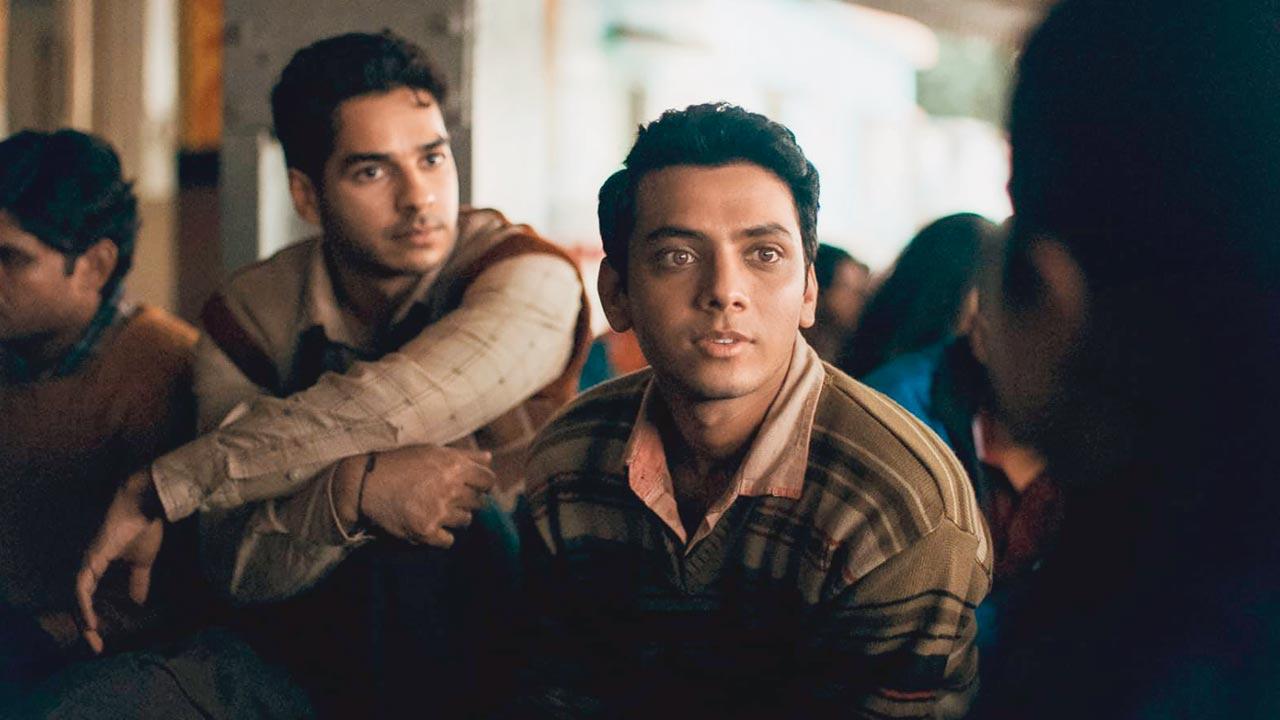
Oscar-bound film ‘Homebound’s actor Vishal Jethwa on taking inspiration from Shah Rukh Khan and Akshay Kumar
Mohar Basu (MID-DAY; October 5, 2025)
It’s been a few days since the country’s most talked-about film hit the screens. Naturally, leading man Vishal Jethwa is still absorbing the wave of love and acclaim for Homebound — India’s official entry to the Oscars.
When we get on a call with him, he starts with, “Everyone is talking about the film, and the fact that it’s officially entered for the Oscars,” he says. “Usually, when a film is selected, there’s some debate — people ask, ‘Why this film? Why not another with a better story or performance?’ But this time, I’ve only heard appreciation. That makes me so happy.”
For Jethwa — who had blink-and-miss roles opposite Irrfan Khan in Hindi Medium (2017) and in the Salman Khan-starrer Tiger 3 (2023), then played the antagonist in Mardaani 2 (2019), and a patient suffering from Duchenne muscular dystrophy in Salaam Venky (2022) — the journey to this moment is not lost on him.
Recalling his first big-screen appearances, he says, “I did a role of a tea vendor in Hindi Medium, a 30 to 40-second character with Irrfan sir. I’m glad I at least got to share that much screen time with him.”
Now, people are hailing his act as the moving performance of the year. “Someone told me I’m the next Irrfan Khan,” he says, almost incredulous. “I felt very strange. I couldn’t accept it at all.”
Jethwa, well aware that he is an outsider who has carved a place for himself, doesn’t wish to engage in conversations about nepotism or the lack of a godfather in the industry. He acknowledges that the journey is challenging but accepts that even those with a film background “don’t have it easy”.
Rather than complaining, he says, “I take inspiration from people like Shah Rukh Khan and Akshay Kumar, not from those who keep complaining about nepotism. I accept that nepotism exists. But if you keep complaining about it, it gives a loser’s vibe.”
Jethwa credits his director Neeraj Ghaywan for shaping his performance as Chandan in Homebound. The actor shares that the director advised them “to live the character” rather than act the part. Ghaywan asked him to read Annihilation of Caste.
“My [knowledge] about caste and religion is mostly bookish. Experiencing it is very different. Shooting the film changed me. It changed how I looked at society and identity. He’s a director who truly walks the talk. He wanted us to deliver lines in a way that was authentic, not preachy.”
Despite international acclaim, Homebound’s theatrical performance in India has been mixed. Jethwa says he hasn’t tracked the numbers closely, “I don’t think a film like Homebound is made for monetary reasons. Still, I want people to go to the theatres so the message can reach more people.”
New discovery
While film offers are pouring in, what surprised Vishal Jethwa more was when post Cannes, companies and designers approached him for fashion. “Another wing has opened up in my life,” he says.
For us, it’s a matter of pride if Pardesiya even gets compared to A R Rahman's work - Sachin-Jigar
10:41 PM
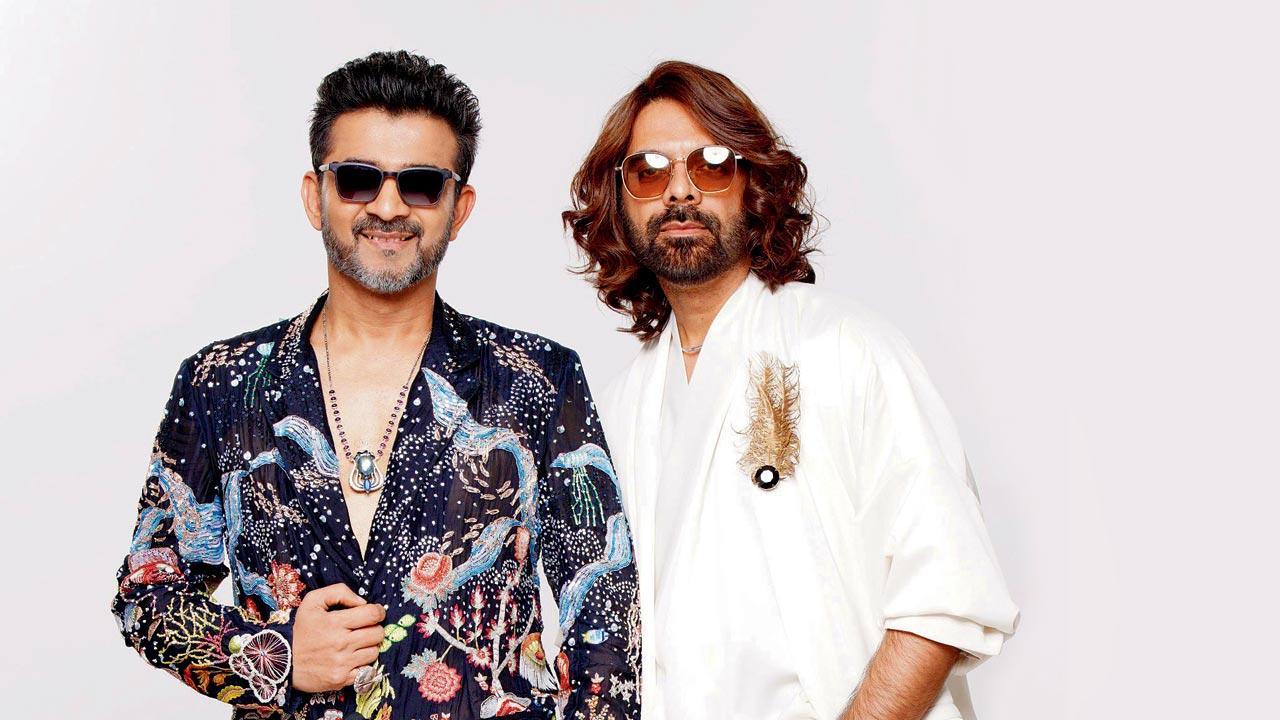
As listeners say that ‘Pardesiya’ is influenced by AR Rahman’s music, Param Sundari composers Sachin-Jigar reflect on how the album is their tribute to the maestro. They also share that they are proud that their work is being compared to A R Rahman's
Mohar Basu (MID-DAY; August 25, 2025)
Few composer duos in Hindi cinema today straddle madness and melody as deftly as Sachin–Jigar. Over the past decade, they’ve swung between quirky tracks like Kamariya, romantic numbers like Mileya Mileya, and chartbusters like Aaj Ki Raat. Ahead of their latest outing, Param Sundari, the duo talks about their mindset, music, and their tribute to the master. Excerpts from the interview.
What’s the secret of a long-term collaborative equation?
Sachin: It is destiny. We never sat in business meetings to plan this partnership — it just happened. I first met Jigar to share some workload, and there’s no way two people living so far apart could’ve just decided to become a jodi. It feels like something beyond us put us together. Let me give you a recent anecdote: I needed Jigar not just as my business partner but as family, and he came through for me. That’s when I realised I admire him beyond music. He’s five years younger but has this politeness, manners, and ability to communicate that I really look up to. He’s also the rebel in our duo, the one who pushes.
Jigar: The common thread between all of us is that we’re mad but sane enough to know that we’re mad! Otherwise, who decides to make a song “Baba Ji Ki Booti”? And when we did that track, everyone sang — Raj, DK, Anand, Kunal, me. Whoever was in the room. None of us was in it for stability. I think it’s that madness that connects us and keeps us together.
Last year was stupendous for you, with Aaj Ki Raat becoming 2024’s most-streamed song. When you start a new project after such a success, what is your mindset?
Sachin: Jigar doesn’t sleep — and he doesn’t let anyone else sleep either! (laughs) For him, the moment a song works, that gate is closed. He won’t allow us to repeat ourselves in the same way. That forces us to think differently, and that’s why we’ve managed to stay versatile. For me, that success gave me a certain ease. I’ve lived through the struggle of not finding popularity, so to be on the other side feels nice. But we were never in the game for just hits or flops. We came here to make good music, and even after success, that hasn’t changed.
Our mantra is never to define a “Sachin–Jigar sound.” We don’t want people to say, this is exactly what they always do. We move on, leave that sound behind, and try something new. If others want to pick it up, great. If not, no problem. That’s why after Stree 2, we thought, okay, we’ve done the madness in Stree, we’ve done dance numbers, now how do we break out again? That’s how Param Sundari happened. It’s become an unplanned pattern with us — one big dance number, then one big love song, then something unexpected.
Jigar : We’re also conscious of not getting typecast as “the commercial dance anthem guys.” So if we’ve just done a massive dance track, next time we’ll want to balance it with a love song or something soulful.
When the Param Sundari teaser dropped, it went viral, with Sonu Nigam’s voice everywhere on social media. How did that feel?
Sachin: A day before Jigar and I flew to Dubai for the Param Sundari music session, Dinesh Vijan called us to his office and told us this is a once-in-a-lifetime opportunity. Instantly, [A R] Rahman sir started playing in my head. Roja [1992] changed my life forever — if I’m a composer today, it’s because of those five years of listening to him. So working on Param Sundari felt like living a dream.
Jigar: South Indian music has also inspired us a lot because it stays rooted in its culture. Even in the most commercial films, you’ll hear classical influences. I trained in classical singing for 10–12 years, and often had to “unlearn” some of it to compose for cinema. But “Param Sundari” brought everything we wanted together, it felt like a dream we didn't want to wake up from. As for Sonu Nigam: growing up, albums like Yaad, Deewana, Jaan were my everyday listening. First it was a dream to see him live, then to hear him sing songs we produced. The first track we ever programmed was sung by Sonu Nigam. That was already a big moment.
But as composers, we never got to record him again. We always kept it inside us. One day, we have to make a tune worthy of his voice. I was such a huge fan, I would literally pray to him before going to school! (laughs) So when we composed Param Sundari, we both knew deep down: this is it. We didn’t even say it out loud to each other, but we knew this was the song for Sonu Nigam.
We called him, he heard it, came to the studio, and recorded it in half an hour. It was magical. For us, it’s the greatest tribute — to have the man who inspired us be part of our music. Recently, he called and told us how much love he’s receiving for the song. To hear that from your idol — that’s the biggest moment of the year.
With the first track going viral, the flip side is that the rest of the album has to match up. Do you worry about how people will receive a song?
Jigar: Definitely the latter. That’s not our job. Once we put our music out, it belongs to the audience. As fellow creators, we may form opinions, but as listeners, people have the right to completely own or dismiss what we make.
We learned early in our careers to detach ourselves from the fate of a song. It hurts when a track you love doesn’t do well, but once you release it, it’s no longer yours. You’ve shot the arrow, and it’s out in the world. What feels “good” to me might not land with someone else, and that’s okay. So yes, we’ve made peace with it. Especially today, when there’s such great indie music and such strong new artists coming through, we’re not greedy. We just try to give our best and then leave it to the universe.
Has it happened that you expected a song to be a big hit and it didn’t catch on?
Jigar: Many times! One example is Happy Ending [2014]. The album actually caught on months later. At release, it didn’t get the traction we hoped for, though we felt it was a true coming-of-age album in terms of sound and concept. The first song, Jee Phaad Ke, generated noise, but the other tracks didn’t bloom immediately. And because once a producer sees one song breaking through, he’ll naturally invest all his energy and money into pushing that one, the rest often get sidelined. We always believed the album would find its way — and it did, but very late. There are other examples too. A beautiful song like Pinjra Tod Ke in Simran, or Hoor in Hindi Medium with Atif Aslam. We thought they’d immediately catch on. They didn’t at first, but later people came back to them, and now they even request us to perform them on shows.
Sachin: It’s a part of the game. That’s why having the first song of an album break through is actually a huge victory. Because imagine if you’re waiting until the fourth track for something to click — by then the producer may lose hope, and the entire album can collapse.
Jigar: For us, every film’s music carries big stakes. Actors want to be seen in a good light, producers are investing heavily, directors have worked hard. If the first song doesn’t land, there’s panic. And in those moments, you have to put art aside and think practically: we have to make this work. When the first track works, it also gives us the liberty to experiment with the rest of the album. For example, because Stree worked, we could make Stree 2 completely different — even put a ghazal on a beat. That was a risk, and it only happened because the first one clicked. So yes, we’ve learned that “first song tracking” is the safer and better place to be in, even if the others don’t explode in the same way.
Dinesh Vijan, Amitabh Bhattacharya and the two of you almost function like a unit. And every time this unit comes together, it delivers. What makes it work?
Sachin: Dinesh is extremely critical of his own work, and Amitabh Bhai is the same. He’ll come back after six days to change just one word in the last line of an antara, or fight with us about a line even before a shoot mix is delivered. That level of self-criticism keeps the bar high.
The truth is, at the end of the day, no matter how many aspirations or ideas we all come in with, there’s only one song to be made. That perspective keeps us grounded. We keep checking each other.
Dinesh loves to experiment — he’ll come to us with a reference, or say, “Here’s this Afro-inspired song, can we make it a love track?” He’s always hustling, always infusing new ideas. Jigar, as I’ve said, is the rebel — he refuses to repeat himself, and he shares a bond with Dinesh that goes beyond work, which makes them almost like brothers.
Jigar: For me, I try to stay objective, to keep perspective when things get too passionate. And Amitabh Bhai has this magical ability to bring in a word or phrase that sparks a whole song. Among the four of us, someone always has the starting point.
Because this unit has delivered before, we have the courage to keep pushing further — to take one more risk, one more step. The balance of being able to check each other and push each other is what keeps us both grounded and moving forward.
Also, we’ve been through failures together — films that didn’t work, songs that vanished without a trace. That’s why now, even if something doesn’t work, it doesn’t shake the association. Our bond isn’t dependent on hits. It’s dependent on whether we’ve fulfilled each other’s creative soul. If between the four of us, we’ve inspired and satisfied each other creatively, then that’s success, no matter how far the song travels.
On social media, people are calling Param Sundari’s music derivative and influenced by A R Rahman. Do you worry about that?
Sachin: Never. From the beginning, this song came from a place of pure art, dedication, and a tribute to the master. For us, it’s a matter of pride if one of our songs even gets compared to his work. I look up to Rahman sir not just for his work, but for the person he is. On the inlay card of his first independent album [Vande Mataram], he wrote: ‘Hope to become the song of an independent India.’ That’s the man we’re paying homage to.
Jigar: When people say Param Sundari feels familiar, for us, familiarity isn’t bad. Familiarity can make you feel at home, and once you’re there, you can surprise the listener with new things hidden inside.
I told Mahira Khan she can now be in a Sanjay Leela Bhansali film-Shailja Kejriwal
8:44 AM
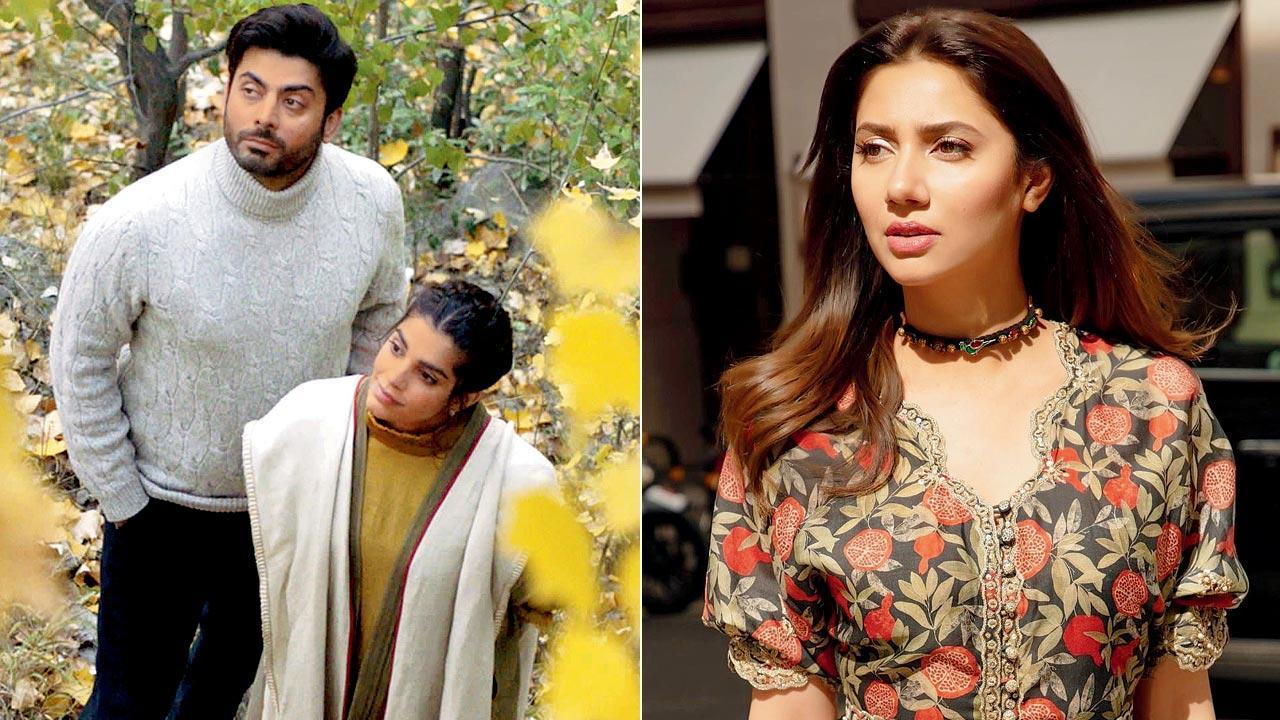
As Bombay HC overturns petition for ban on Pak artistes, Zindagi head says cross-border exchange of talent will benefit both industries; hopes her Fawad-led series Barzakh will stream in India
Mohar Basu (MID-DAY; October 26, 2023)
In the aftermath of the 2016 Uri attacks, members of the Hindi movie industry collectively decided to stop collaborating with Pakistani artistes. Last week, in a significant move, the Bombay High Court overturned the petition that sought a ban on Pakistani artistes working in India. Hailing the decision is Shailja Kejriwal, chief creative officer, special projects, Zee Entertainment. It may be recalled that one of Zee’s channels, Zindagi, which used to air Pakistani content, had to shut operations after the Uri attacks. The channel was revived in 2020 as a digital arm of ZEE5.
With the Bombay HC’s latest decision, Kejriwal is hopeful that Bollywood will team up again with talent across the border. “For both industries, it makes sense to collaborate. Every creative industry needs to be populated with diverse minds. This industry can’t thrive between Juhu and Bandra. A few years ago, we weren’t cross-pollinating enough with the south movie industry, but look how they’ve marched ahead! Now, we can mix and match talent. It’s not just about actors, but also about directors. Asim Abbasi [Churails], Saim Sadiq [Joyland], and Bilal Lashari [The Legend of Maula Jatt] are all great storytellers,” she says.
Coincidentally, her next production, Barzakh, fronted by Fawad Khan and Sanam Saeed, is slated to drop in Pakistan. Will they also be looking at an OTT release in India now? “All these decisions will be made only a month or so down the line. Streaming platforms will also open up with this ruling and be more accepting in what they pick up.”
This ruling is expected to effect change on ground. So far, Pakistani shows are available for viewing in India on the Zindagi app, but not on the corresponding television channel. The channel airs Asian content, from Turkish dramas to Ukrainian offerings. Now, will Pakistani shows be back on the tube? The changes, she says, will be slow at first.
“People get nervous because content business is a monetary move. This nervousness will stay at the start, but will subside eventually. I want to understand whether this means we can also broadcast, and will it even extend to OTT and theatrical. The clarity on these will come over the next few weeks. Broadcast is crucial because then the content penetrates into the Indian market.”
What was the response from collaborators in Pakistan? “Pure joy,” she beams. “Artistes on both sides are overjoyed. I was talking to Mahira [Khan] the other day; we were chatting about about how she can now be in a Sanjay Leela Bhansali film. Mahira said, ‘Aapke mooh mein ghee shakkar.’ It’s about symbiotically benefitting from each other’s industries, monetarily and emotionally. When Saba [Qamar] did Hindi Medium, we benefitted too. The film made over Rs. 100 crore at the domestic box office.”
Is a tax-free film ticket cheaper? Experts share their views
8:18 AM

Every year, several films are declared tax-free by some state(s). In the past, some films have had eight to nine states declaring them tax-free. But what does that really mean – for the cinemas and for moviegoers?
Niharika Lal (BOMBAY TIMES; May 16, 2023)
HOW MUCH CHEAPER IS YOUR TAX-FREE TICKET?
In December 2018, two GST slabs were announced for films – 18% for tickets above Rs. 100, and 12% for tickets below Rs. 100. This tax is divided between the state and central government (State GST and Central GST). When a state declares a film ‘tax-free’, it exempts half of the entertainment tax, which would be either 9% or 6%, as per the ticket price. For the multiplex audience, since there are hardly any tickets available below Rs. 100, the default exemption would be 9%.
TAX-FREE STATUS HAD A BIGGER IMPACT IN THE PRE-GST ERA
Cinema hall owners say that declaring a film tax-free had a bigger impact in the pre-GST years, when every state had different entertainment tax and the state governments could exempt the whole amount. Now, with GST in play, a moviegoer still needs to pay Central GST even for tax-exempted films.

‘TAX-FREE EXEMPTION DECLARATIONS CREATE AWARENESS ABOUT A FILM’
Rajender Singh Jyala, Chief Programming Officer PVR INOX Limited, says, “Whether a film will perform better after tax exemption largely depends upon its content. For a moviegoer, tax-exempted tickets used to be cheaper in the pre-GST era. Now, when a film is declared tax-free (it is more about that) it creates awareness about the film among the audience. Hence, even if the film is declared tax-free in only one or two states, the film performs well in other states too.”
‘IT WORKS AS A PUBLICITY TOOL AND INCREASES LONGEVITY IN THEATRES’
Producer Girish Johar, several of whose films were declared tax-free in pre-GST years, says, “There are three reasons why producers want their films to be declared tax-free. First, it lures moviegoers to watch a film, second, it works as a publicity and marketing tool because a state government is endorsing your film; and third, the film gets longevity and instead of four weeks, it may end up getting eight weeks in the cinema hall.”
WHAT MAKES A FILM ELIGIBLE TO BE TAX-FREE?
There’s no fixed criteria for a film to claim exemption. Usually, socially relevant films or inspiring stories are made tax-free. From films on issues, such as Toilet: Ek Prem Katha, Chhapaak and Hindi Medium, to biopics like Mary Kom and historical films like Tanhaji: The Unsung Warrior have been declared tax-free over the years.
Sometimes states also declare films tax-free to show solidarity with its theme and in some cases producers apply for a tax-free status. In their film policy, some states have the provision of declaring a film tax-free when a certain portion of a film is shot in the state. Overall the decision resides with the state government.

If you look at the animals in The Jungle Book and in Bhediya, you will say that ours is as good-Dinesh Vijan
8:05 AM

Madhureeta Mukherjee (BOMBAY TIMES; November 22, 2022)
We have seen filmmakers create a whole universe with action, cops, comedy, even superheroes. But in our cinema and in today’s times, creating a horror comedy universe is rare, and let’s say, not a job for the weak-hearted. There in comes Dinesh Vijan, who leads Maddock Films, a place which he says, ‘Is a home for anyone who wants to tell a story, no matter where you come from’. After Stree and Roohi, he’s all set to release Bhediya in theatres on November 25 — a creature comedy starring Varun Dhawan and Kriti Sanon, directed by Amar Kaushik that is also backed by Jio Studios. Dinesh passionately talks to us about what drives him, how we need to unearth great stories from within us, and what made him pave new roads, and sometimes take the forests less travelled. Read on...
It’s hard enough to land a good comedy with the audience, and blending it with horror and thrill, and also building a universe around it with a string of movies, is tricky and needs a lot of conviction and courage. What pushed you in this direction?
Honestly, I have never looked at any film that I have made as a risk. When I made Hindi Medium, some people told me it was a risk, and before that, it was Badlapur. When you hear a concept from a director or writer, your first thought has to be, ‘I can’t not make this film’, and that’s what drives me to make it. Instinct is everything for me. If there is a voice from inside that tells me that I should make a film, I do it. After being in the business for 18 years, our strength is that we don’t take ourselves seriously. We don’t think we know it all. We believe that we have to constantly learn and evolve.
You have made films like Cocktail and Agent Vinod that are urban and contemporary, and also Love Aaj Kal (which, of course, did go into retro mode). And then, you gradually started moving towards stories that were very different in tonality and texture — more rooted in our culture and shot in small towns. Did you observe the audiences changing tastes for content before making that shift, or was this something that happened organically?
Agent Vinod taught me how to make Badlapur. I learnt what went wrong and how to correct it with director Sriram Raghvan (who directed both). Agent Vinod and Raabta (directed by me) have taught me more than all my films. If you are willing to learn, failure teaches you much more. In fact, Raabta taught me that trends had changed. Through the making of Love Aaj Kal, I was learning how to be a producer. I think that Saif (Ali Khan) and I made a pretty good debut production. Sometimes, it takes about ten years to find your voice and understand what satisfies you. Hindi Medium was a game changer for us. Badlapur and Hindi Medium made me realise that if you have a pure story, strong writing, the right man to direct the film (it’s not necessary that he has to be the best in the business) and good actors — you will hit home.
Most of your films are set in small towns, including Bhediya (shot in Arunachal Pradesh’s Ziro in Lower Subansiri, Sagalee in Papum Pare and Pakke-Kessang district). Do you believe that smaller towns are a hotbed for greater, rarer and untold stories which can emerge from only there?
A while back, we were aspiring to make films that were more like the West and I feel that around 2015 that changed. With Badlapur and Hindi Medium, even I realised that the power has moved as much to small towns, as the people there are actually going to the theatres a lot more. I looked inwardly and found a treasure. There are so many stories buried in these towns and cities. My dad always made me travel a lot and would tell me that, ‘You must know your country’. I owe a lot to him. Most people in the cities don’t know what the rest of India is. Your instinct as a filmmaker also comes with the life that you have lived. Amar Kaushik happens to be a Forest Ranger’s son, so like I said, it is about getting the right man to direct your film.
You made Badlapur with Varun Dhawan, and in a recent interview with us, he said, “When I asked Dino ki tu hamesha mere paas itna teda story kyon leke aata hai, he told me ki ussi mein hi mazaa hai. I want to put you in an uncomfortable zone.”
I think that’s when they are at their best. I have been telling Varun that this is his 2.0 version. He has given his blood and sweat to this film. Now when I see the film, I can’t imagine any one other than him in this part.
Would you say that Bhediya has been the most challenging film of your career — in terms of scale, subject, VFX, shoot, etc?
It’s the best film I have produced. With Bhediya, our instinct said yes, but we also knew that if we didn’t create a wolf that is of international standard, this film won’t work. And I can tell you that if you look at the animals in The Jungle Book and ours, you will say that ours is as good. When you see the film, you will feel like we have not used VFX, it looks real. We went to one of the best VFX companies in the world and made the film in a record time of about 18-20 months. And also, it’s about what the film leaves you with at the end. There are few films that talk about conservation. This is a film that you would want your kids and young adults to watch. I think what Indians now want are films emerging from their culture, but made at par with international standards. And they want it to be affordable in the theatres. If we can achieve that, we are home.
In recent times, there has been a lot of doubt and skepticism in the industry about what will work on the big screen. Maybe there isn’t one right answer, but do you believe that every theatrical release will need to be a visual spectacle to get the numbers? Or does great content minus the visual impact, too, have the power to bring back larger volumes to the theatres?
The world is gravitating towards the first statement you made. Do I completely believe in it? Maybe we will have more clarity in the next twelve months, but as we are talking about it, we have made one (spectacle film). However, we also have a variety of other kinds of films coming up. We have to accept that the digital medium is a reality because most people are in relationships with their phones. We need to understand the screen size, as your film will get consumed on all mediums, so we have to make films keeping that in mind. My first love is theatricals, and we make films for the big screen, but we can’t ignore other mediums. The West is largely in the spectacle kind of cinema space. I feel we need to pull up our socks and deliver high quality films. The film has to completely engage you, which most our films haven’t been doing lately. You need to have an experience — whatever that might be. Today, if you ask me whether a Hindi Medium would still do well, I would say, yes, it would. If I give you a really good comedy with a high concept, will you watch it in the theatre? I think you will. Bhool Bhulaiyaa 2 wasn’t a spectacle film, but it’s done such good numbers.
In the last two years, like many businesses, the film industry, too, has had to navigate through a lot of uncertainty. Was it all a huge learning experience for you as a filmmaker and a phase that changed your outlook and perspective?
Even pre-COVID, I was telling my friends that there is going to be a huge change in our cinema. I am happy that we instinctively made Bhediya, which will hopefully keep us relevant. Today, we have to fight to be relevant and win back the audience’s confidence. We have to achieve these two things. We are competing with the West, but we have to look at what we have. If we look deep inside, look at our culture and find those stories, we are going to be able to create that experience for them. And that is their own experience; it’s not America saving the world. It’s none of that. And it begins with writing. We have to reward our writers. My writers are empowered, they have a say and I believe in them. And we (Maddock Films) are a home for anyone who wants to tell a story, no matter where you come from. I was like that, as I don’t come from a film family. I am the first-generation coming into this industry, and all my directors are too. I want my directors to feel that they have got the best wingman in me and that I completely have their back.

If things are get better, I would love to work again for my fans in India-Saba Qamar
8:42 AM

As she returns to Indian screens with Mrs & Mr Shameem, Pakistani star Saba on how the series challenges definition of masculinity
Mohar Basu (MID-DAY; March 13, 2022)
The last we saw Saba Qamar was in Hindi Medium (2017), as she sparkled alongside the late Irrfan Khan. The India-Pakistan tension over the past few years might have kept desi fans away from Qamar, but the actor returns to Indian screens with Mrs & Mr Shameem. How does she feel about reconnecting with the Indian audience after five years? “I’ve always been told that art has no boundaries. I’m excited to be back after so long because the feedback and love that I’ve received from my Indian fans has been overwhelming,” she begins.
The Zindagi series, to be aired on ZEE5, struck a chord with her immediately. With Nauman Ijaz playing Mr Shameem, the series challenges the archaic definition of masculinity. “Shameem’s character is not transgender or gay; he is effeminate. He has the right to love, and probably knows the definition of love much better. The script and the concept caught my attention right away. An actor is known for taking on projects that are different from one another. The beauty of acting is that you’re ready to take up newer challenges every day.”
Qamar is proud that Mrs & Mr Shameem discusses a woman’s perception of what a man should be like. She believes stories like these are paramount to bring about a shift in the popular gaze. “Such shows can play an important part in changing the perceptions of our society, only if the society is ready to benefit from them. I hope we are ready to learn something new right now. The world is changing,” she says, optimistically.
Before we part, we end the chat with the one question on our minds: As an actor who had a brush with Bollywood, does she miss working here? “Art should be free and should not have any boundaries. If things are get better, I would love to work again for my fans across the border.”
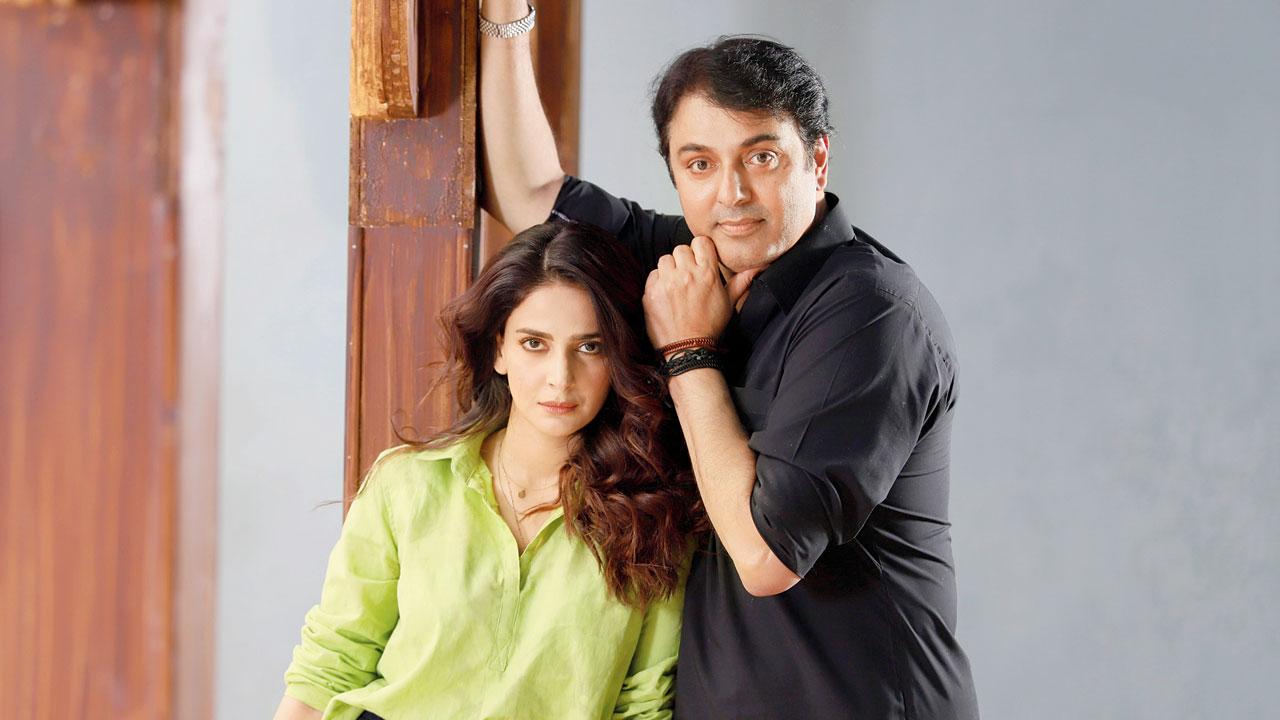
Saba Qamar and Nauman Ijaz in Mrs & Mr Shameem
5 years after Hindi Medium, Pakistani star Saba Qamar returns to Indian screens with Mrs & Mr Shameem
8:51 AM
Mohar Basu (MID-DAY; March 2, 2022)
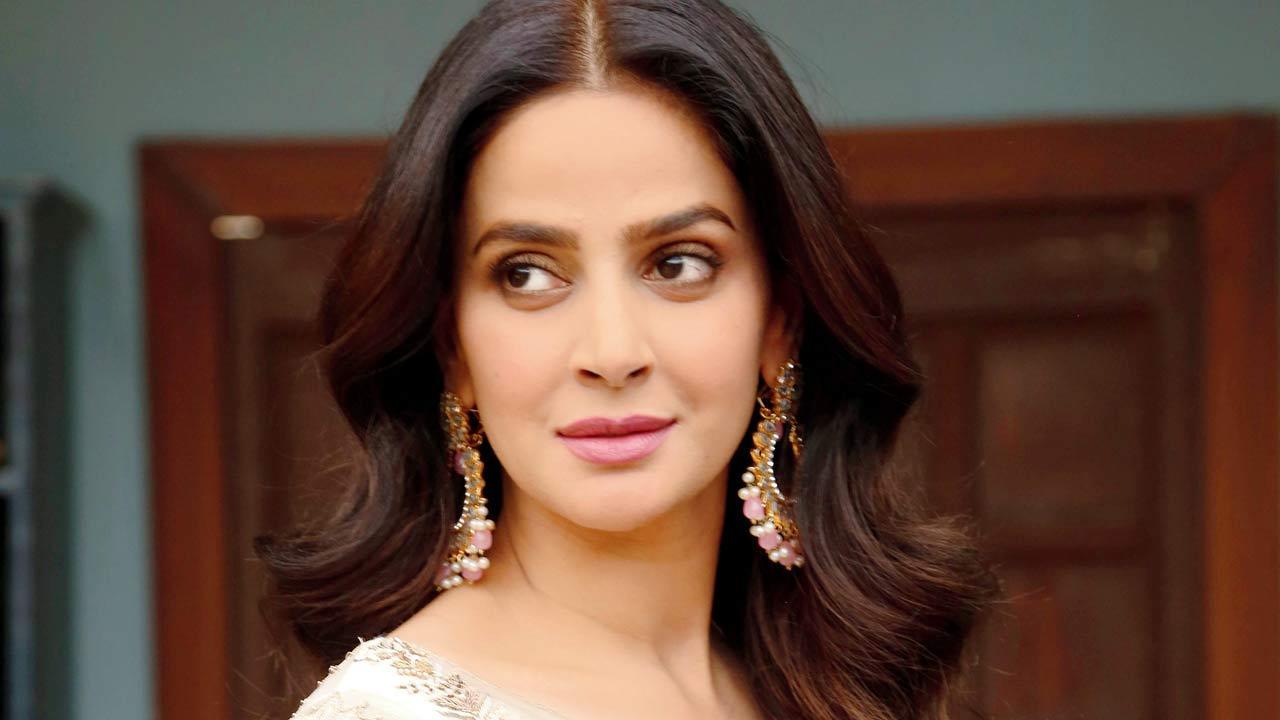
Saba Qamar had a brief tryst with Bollywood when she shone alongside Irrfan Khan in Hindi Medium (2017). Five years on, the Pakistani star is ready for a date with the Indian audience again with Mrs & Mr Shameem, a Zindagi original that will premiere on ZEE5.
Helmed by Pakistani director Kashif Nisar, the 20-episode series tells the love story of Umaina and Shameem. It was Umaina’s independent streak that drew Qamar to the role. “Umaina is fearless, strong and not afraid to express herself. She is a true wild child,” says the actor.
Writer Sajjad Gul is known to highlight social issues through his stories, and Mrs & Mr Shameem is no exception. Qamar notes that the romantic drama bats for gender equality. “It’s time men and women are given the freedom to choose their paths, and not be restricted to play by the rules. The show demonstrates this perfectly,” she says.
Nauman Ijaz, who plays the male lead, says that Gul has crafted a hero unlike the ones seen in films. “He redefines how an ideal man should be. Throughout the show, you’ll see him practise respect, love and concern for his family and friends. But unfortunately, he is made fun of for being ‘effeminate’.”
I always felt ke agar Irrfan Khan ko samajhna hai, toh unki khamoshi ko samajhna hoga-Deepak Dobriyal
8:05 AM

Deepak Dobriyal reminisces about the quiet moments spent with his friend Irrfan, who he co-starred with in films such as Maqbool, Hindi Medium and Angrezi Medium
By Deepak Dobriyal (BOMBAY TIMES; April 25, 2021)
‘HE WAS ALWAYS SURROUNDED BY FRIENDS WHO ARE WRITERS, POETS AND FILMMAKERS’
Whether real life or reel life, Irrfan bhai would see things in a creative way. His creative thought process would dominate his lifestyle. He would always be surrounded by his good old friends who are writers, poets, filmmakers, and so, the topic of discussion would always be art and literature. Even on sets, whenever he would have free time, he would discuss poetry and creative ideas with people. He would always think about art and wouldn’t shy away from appreciating an artiste. Agar unke saamne koi achha performance kar raha ho toh woh unki aankhon mein dikh jaata tha. You could see it.
‘THE SILENCE IN IRRFAN BHAI’S PRESENCE WAS MAGICAL’
His way of life was very simple. He was a nature lover. During one of the outdoor schedules Irrfan bhai, his son Babil, wife Sutapa and I were sitting on a terrace. That evening, for three hours straight, we just kept looking at the bats that were flying in the sky. There was silence. Nobody was talking to anybody, but just enjoying the sight. The silence in Irrfan bhai’s presence was magical. Considering he’s a star, his co-stars or people around him would always try to chat with him. But I always believed that agar aap unhe samajhna chaahte ho toh unki khamoshi ko samjho. Aapko aadha Irrfan toh unki khamoshi mein hi samajh aa jaayega. Maine woh aadha Irrfan jaan ne ki koshish ki. Between all this, I can still hear his laughter and when I am alone and think about it. It leaves me with a smile. He was so much fun to be around. During our schedules, the two of us and a couple of more people would go trekking, swimming, for a walk in the park or to watch a film.”
‘THE SUCCESS OF HINDI MEDIUM MADE HIM VERY HAPPY’
With Hindi Medium doing good at the box office, Irrfan was extremely happy. He was always called a fine actor and an actor of a different league, par unki filmein paise nahi kamaati thi. Hindi Medium broke that notion and that made him very happy. He hoped that Angrezi Medium would do good business, too.
‘I HAD MESSAGED HIM THAT I WANTED TO MEET HIM’
The last time I met him was in London during the shoot of Angrezi Medium. Later, I had messaged him several times that I wanted to meet him, but he wasn’t too keen on meeting anyone.
— As told to Onkar Kulkarni

Ranveer Singh would be right for my biopic-Sukhbir
8:11 AM

Ankur Batra (BOMBAY TIMES; January 29, 2021)
When singer Sukhbir’s 90s hit songs Taare Gin Gin (Hindi Medium) and Sauda Khara Khara (Good Newwz) were featured in Bollywood films, he remembered his days of redoing old tracks on stage to make them peppier again.
Dubai-based Sukhbir, a Kenyan national, remembers taking Heera group’s Dowain Jaaniya on stage. “If someone says ‘Oh, we have grown old listening to Taare Gin Gin or Nachdi’, I tell them that Dowain Jaaniya was my era. And when they (Hindi cinema) played a bit with my songs, I was happy,” says Sukhbir.
He feels the recreated versions of his songs proved vital in bringing the older version back to life. “Some fans complain that my old songs reworked, whereas the new listeners have started connecting with it. Now, with Nachdi song too it helped people revisit the old times. Bollywood has extended the life of my songs.”
HINDI MEDIUM GAVE ME AN OPPORTUNITY TO MEET IRRFAN SAAB
Talking about his meeting with Irrfan, he says, “When Taare Gin... was remade for it, I met Irrfan ji. Such an amazing soul he was. After the shoot woh mujhey kabhi nahi miley. Gazab insaan thay woh.”
BLACK GOGGLES HELPED IN STRIKING WORK-LIFE BALANCE
“When I remove dark black shades, no one recognises me. Once Kapil Sharma could not recognize me. Once, when Mika Singh, Guru Randhawa and I were together, they got mobbed but no one looked at me, only because I was without shades,” he says about his trademark look.
ENTERING PUNJABI CINEMA
Sukhbir, who will be seen in a Punjabi film, will also be singing in it. “The talks are on. When I was offered the film, I gave it a lot of thought. I am curious to explore it,” he signs off.
-----------------------
‘Ranveer would be right for my biopic’
“I want Ranveer Singh to play my character if a biopic is made. However, if Deepika (Padukone) will play my wife then I will replace Ranveer and will play myself (laughs!),” he says. The singer,who dreams of flying a plane, needs to clock in another 26 hours to get his license. “One day, I want to fly a plane singing at the top of my voice,” he says. However, his son Kabir (6), wants to be an astronaut and fly a rocket. “I have twins — Kabir and daughter Kiran. My wife, Dimpy, wants them to follow their dreams.”

In today's world, art needs to make a statement, says Shailja Kejriwal on relaunching Zindagi channel
8:51 AM

Fawad Khan's Humsafar was part of its roster till 2016
Four years after Pakistani shows were pulled down from Indian television, Zindagi chief Shailja Kejriwal reveals how channel is being relaunched with original series
Mohar Basu (MID-DAY; July 23, 2020)
 Last year, it was heard that Saba Qamar (right), the leading lady of Irrfan's Hindi Medium (2016), was set to headline a ZEE5 show. The development was difficult to stomach since Indian cine bodies had announced a collective ban on Pakistani artistes post the 2016 Uri attacks. Nine months since, we seem to have found the answer as ZEE5 announced the relaunch of Zindagi channel, which used to curate Pakistani, Turkish and other Middle-Eastern dramas for the Indian audience. In 2016, it removed shows developed in the neighbouring country from its slate.
Shailja Kejriwal (left; below), chief creative officer — special projects, Zee Entertainment, reveals that the channel will also develop original content in its second outing. "The love for Zindagi shows has remained undeterred [in these years], and we believe that art is the biggest propagator of social change. It is a mix of these two factors that encouraged us to bring Zindagi on ZEE5. While we offered the best curated shows in phase one, this time around, the offering extends to producing original content."
 The decision may face flak given the strained equation between the two neighbouring countries. However, Kejriwal is optimistic. "In today's world, art needs to make a statement. Borders shouldn't exist beyond the politics of things and love must override the circulation of hate," she says.
Laying out her vision for the first year, she informs that 29 shows are on the anvil, including Shehr-e-Zaat, Mastana Mahi and Aunn Zaara. "We will announce our first original shortly."
Quiz her if she is referring to the Qamar-fronted show, and she weighs her words, "Saba is doing a project for us. We had a wonderful time working together over Skype and Zoom calls. She is happy to do something for us after witnessing the massive success of Hindi Medium."
Kejriwal notes that the channel had made Fawad Khan and Mahira Khan household names in India. "In its first round, it brought many new faces to this country and they became overnight sensations. We will do it this time, too. There's a certainty of Mahira, Fawad and Saba returning [to the screen]."

Mahira Khan headline the channel's new offerings
Ranbir Kapoor has big shoes to fill, baap baap hota hai-Shatrughan Sinha
9:35 AM

Veteran actor Shatrughan Sinha remembers his charismatic friend and co-star Rishi Kapoor, who went on to become the poster boy for romance
Himesh Mankad (MUMBAI MIRROR; May 4, 2020)
 It was a devastating week for the Hindi film industry, with two celebrated actors, Irrfan Khan and Rishi Kapoor, passing away. Shatrugun Sinha, who has worked with Irrfan in Aan: Men At Work and Rishi Kapoor in multiple films, including Manmohan Desai’s Naseeb, describes one as an ‘actor-star’ and the other as a ‘star-actor’. “Irrfan was a combination of struggle, determination and conviction. He made his dream come true through hard work. I watched Hindi Medium and Angrezi Medium and his acting will be a textbook experience for younger generation of actors,” asserts the veteran actor-politician, adding that his friend, Rishi, was the most charismatic star of Hindi cinema. “After Rajendra Kumar and Rajesh Khanna, he became the poster boy of romance with his style.”
 Rishi Kapoor had revealed that it was not Shatrughan Sinha but his body double who shot the difficult dance moves in the Naseeb song, “Rang Jamake Jayenge”. Admitting that it is true, he retorts that the audience enjoyed to see him in that song.
Sinha believes Ranbir Kapoor is a worthy son of a worthy father and a brilliant actor. “But Ranbir has big shoes to fill because baap baap hota hai. One can’t compare the two at the moment,” points out Sinha, who during the lockdown, is watching films with daughter Sonakshi and sons Luv and Khush. “We recently watched Parasite and also some shows. They work out at home and the family takes walks in the balcony.”
The actor was last seen on screen in a special appearance as a lawyer in Yamla Pagla Deewana: Phir Se. “I can’t say no to Dharam ji, he is a senior and an elder brother. I did that role out of respect for him. I was also supposed to make an appearance in a song, which featured the Deols with Salman Khan and Sonakshi. Unfortunately, I was in London and couldn't be a part of the song,” he rues, adding that there are a lot of film offers. “I will take a call once normalcy returns.”
Irrfan Khan was the only actor from India to make a mark in mainstream Hollywood cinema
8:40 AM

Box Office India Trade Network
Irrfan Khan passed away after a two year battle with neuroendocrine tumour. The actor was just 53 years old. Irrfan Khan started his career in television in the mid 80's and worked mostly in television through the 90's and came to the notice of the Hindi film industry in the early 2000's. It was the work in thrillers from the Bhatt camp like KASOOR, GUNAAH and FOOTPATH which led the way to more assignments in the Hindi film industry.
The biggest achievement of Irrfan Khan as an actor was that he is the only actor from India to make a mark in mainstream Hollywood cinema with films like LIFE OF PI and JURASSIC WORLD. There have been many that have tried (male and female) but only Irrfan Khan manage to succeed.
The popular films of Irrfan Khan in Hindi cinema were PIKU, HINDI MEDIUM and GUNDAY. It is a coincidence that the last film to release before the lockdown was an Irrfan Khan starrer, ANGREZI MEDIUM. This film remained in theatres for four days before the entire country went into lockdown.
I was worried that being out of sight would mean out of mind-Irrfan Khan
7:57 AM

Anshul Chaturvedi (BOMBAY TIMES; March 11, 2020)
 Last year, Irrfan battled pain and fatigue to shoot for Angrezi Medium. This year, the challenge of doing the same for the film’s promotions turned out to be too demanding. The accomplished and sensitive actor says that he had feared that being out of sight would inevitably lead to being out of mind as well, but social media and other forums bring him warmth, and reassurance, through the prayers and wishes of his fans
When Irrfan was 21, he was in Jaipur, looking to go to NSD, had lost his father, and the family finances were not in great shape.
He has spoken of it as being “a very complex point of time” amidst a lot of pressure. We ask him how often his mind went back to his personal memories as he filmed Angrezi Medium — the story of a teenaged girl from Udaipur who has lost one parent and wants to go out and live her dreams, but money and other challenges put pressure on her and the family.
“It was personal — but from an entirely different perspective”, he explains. “My child in Angrezi Medium loses her mother when she is very young. I wasn’t... mine was a crisis of whether to pursue my dream or take care of my responsibility. For Champak (the character in Angrezi Medium) the dilemma is whether to let my daughter chase her dream or not... perhaps it would have been my father’s dilemma if he was alive. The crisis is of the father, not of the child, in this scenario. My mother was sure she wanted me not to chase my dream and stay with her, which, I recall, gave me lot of heartache. The culmination of Champak’s decision is perhaps what I would have wanted my mother to do... Let the child fly!”
In 2017, Irrfan had made the point that “A film which does not have songs, which does not make too much of noise, people start calling it an art film; that is the tragedy of our times. This is a new kind of cinema which is emerging, and I think it has to pick up and it has to become bigger before Hollywood actually gulps you.” Would he place projects such as Hindi Medium and Angrezi Medium in that ‘new kind of cinema’?
 “Yes I would, and this new kind of cinema is evolving and earning money because people are getting the taste of characters and new stories... the actors are getting their due and sticking to their guns. A whole lot of new actors are now on the horizon who are not typical ‘hero’ or ‘heroines’. They are new characters. And this will grow. Hollywood still has power because of their finesse, but Indian content is definitely gaining momentum... it’s there to stay. Though the publicity is the same, just as the older content was publicised. The film is perhaps much fresher than the publicity!” he jests.
Like in Hindi Medium, his character in Angrezi Medium is not averse to bending rules, though in an endearing manner. Post Slumdog Millionaire, Danny Boyle had said that Irrfan had “an instinctive way of finding the moral centre of any character”. From the inspector in Slumdog to the kidnapper in Madaari to the father finding all sort of options to support his daughter in this project, how does he go about understanding what his characters do, even when — especially when — they aren’t always heroic?
His nuanced response is what you would have expected.
“It’s important to find the moral centre because otherwise one would never be able to relate. To play a character’s inside world it’s important to find his moral fabric. I can’t be judgemental while looking at a character. For the character to work for me, I have to find his emotional world. Even if I played Hitler, I would need to find out what he does, how he does it and when he does what.”
“Stories are beyond judgment”, he adds. “They are there to leave you with an impression — sometimes sad, sometimes happy, sometimes touched, to leave you misty-eyed with a smile, or angry. That’s where one explores. There should be always room for the audience to explore beyond judgement. For that I need to connect very strongly with the character.”
In his note from London in 2018, Irrfan had said, “People have been wishing me well, praying for me, from all over the world. People I know, people I don’t even know.” Even though he isn’t stepping out to promote his film, his fans have been simultaneously “inside very emotional” about his personal battle, and “outside very happy” at his return to the big screen, just like his character in the trailer. How much do their vibes and messages drive him?
“It is a reassurance”, is his simple response. “Their wishes are like guiding angels that keep replenishing me. I had thought out of sight might be out of mind.” That, of course, hasn’t been the case. He explains further that his engagement on social media began on PR advice but served to remind him that his fans hadn’t forgotten him in the least. “As my PR says, ‘sir, Insta mein daalte rahiye, Facebook etc also... bahut important hai...’ I was always kind of amused with social media. But when this (fans wishing and praying for him) happened, I was reassured that I wasn’t out of mind just because I was out of sight. I was always against publicity of a film. But I never knew it will manifest this time in this way!”
We had gone across when Irrfan was shooting at Revla Khempur near Udaipur last year. The pain, the fatigue, the physical challenge was visible. Yet, at the same time, Homi and him were posting memes online and laughing incessantly on the set. We ask him, in what frame of mind has he shot this movie? How have the director, the crew, been with him — walking on glass or letting their hair down?
“Unfortunately I was in pain sometimes even while shooting”, he recollects, “but Homi has an infectious energy and Dinoo a rare positivity and Anil Mehta (our cameraman) a rare sensitivity. The crew was warm and so, laughing away, we crossed the river.”
Now that we’re talking about Homi, let’s remind Irrfan what Homi said about the actor: “He came in like an almost clean slate, wondering whether he’d forgotten acting. But there was never a false beat with him; Irrfan is incredibly organic.” Did he really wonder if he had ‘forgotten’? Did the personal battle make it tougher for him to act, or did it make him even sharper, living in the moment?
“I forgot how to act and then I wanted to forget and come clean,” he answers. “My personal battle has made me more sensitive in a good and a bad way. I was a man of few words, and now they’ve become fewer,” responds Irrfan — in few words, of course.

There are plans for a Chinese Medium too-Dinesh Vijan
8:22 AM

Dinesh Vijan reveals that he would like to spin a franchise out of problems related to education, faced by both parents and children, across generations and countries
Roshmila Bhattacharya (MUMBAI MIRROR; March 9, 2020)
After Hindi Medium and Angrezi Medium, are you planning to carry this franchise forward?
Yes, since education is a universal subject, it should be. There are plans for a Chinese Medium, but it would all depend on my friend Irrfan Khan.
Chinese Medium?
Yes, Hindi Medium released in China and was a hit. Angrezi Medium, too, will find its way there in a few months. I was in the country four weeks after the first film opened on April 4, 2018, dining at a private room in one of the restaurants when one of the waitresses, having heard that the producer of Hindi Medium was there, came running to tell me she’d seen the film with her young daughter and it had really connected with her. That set me thinking.
Now, with Angrezi Medium, we have taken the story out of our country, and because the daughter is older and wants to study in the UK, the crisis is bigger for Irrfan’s character, who, this time, is a single parent. Since the Chinese are all around the globe and are sending their kids abroad for higher studies while struggling with the language barrier, I think the world now deserves a Chinese Medium.
Talking of China reminds one of the Coronavirus. Has the outbreak prompted a rethink on the release date, March 13?
While safety is a concern, except for the Delhi-NCR belt, the number of cases is not all that alarming yet, and from Baaghi 3’s opening numbers, it is evident that people are still going to the theatres. This film has been made against all odds, with a lot of love, and I believe we should release it now rather than pitch it four months later. My dad has been looking out for me from up there, that makes me confident to take every risk.
I recently showed the film to 14 of my mother’s friends, my younger sister Pooja, my niece Alia and four of her buddies, all in their 20s, and their reactions were most heartening. The kids could empathise with Radhika’s (Madan) Tarika since they are the same age, my sister saw it from the perspective of a parent, and my mom could see only my dad in it. Irrfan, as Champak Bansal, made them laugh, he made them cry. It’s his best performance; absolutely flawless!
What was it like working with Irrfan?
It was a life lesson. We get so caught up in the business of living, that we chase after the wrong aspirations. With Irrfan, I learnt to value the little moments that usually pass us by, the emotions that really matter. As soon as it was ready, I had taken the script to him and he gave his “yes”. After Homi (director Homi Adajania) came on board, we were all set to go on the floors, but then, Irrfan fell ill. I couldn’t imagine making Angrezi Medium with anyone else, so we waited a year for him. I remember on the second day of shoot in Udaipur, I watched him give a really emotional shot. I’d never seen him do anything like this before. When I told him this, Irrfan replied, “Yaar Dinoo, maine mere illness ko nichod kar iss performance mein daal diya hai.” For me, this film will be memorable for the time I got to spend with this fabulous actor and fantastic human being. He’s made all of us better people.
What made you think of Homi to direct it?
Homi, like me, appreciates writers and good writing. So, if you have a good script, he’s the best guy for the job. And in this case, he could emotionally connect with it too. He is a phenomenally good father to his two little boys and has always wanted a daughter. Also, Irrfan and he have wanted to do a film together for a while, so, it all worked out well.
Angrezi Medium also reunited you with Kareena Kapoor…
Kareena is an independent woman, and really connected with her character, Naina, an undercover cop. In one scene, Irrfan tells her that as a kid, we hold our parent’s finger and learn how to walk, and then, we grow up, leave that finger and walk off. I think Kareena did this film for that one scene alone. Dimple (Kapadia) ma’am and her track, that of an estranged mother and daughter, parallels Irrfan and Radhika’s. It’s a kind of a simile to the growing chasm between father and daughter and what it could lead to. The beauty of Angrezi Medium is that it presents a picture from both perspectives, that of the parent and the child, while attempting to bridge the centuries-old generation gap.

Hindi Medium gave Irrfan Khan & chance to catch up on lost time and conversations-Deepak Dobriyal
8:20 AM

Rachana Dubey (BOMBAY TIMES; March 9, 2020)
 In 2003’s Maqbool, he played Irrfan’s henchman. In 2017, he played his neighbour in Hindi Medium, and in 2020, he will be seen as his brother in Angrezi Medium. In between these, with films like Omkara (2006), 1971 (2007) and the Tanu Weds Manu series (2011 and 2015), he gained credibility as an artiste who can pull off any character with ease. Over to Deepak Dobriyal who talks about his journey so far, why he has never asked for a role and why he loves working with Irrfan. Excerpts:
Angrezi Medium brings you back with Irrfan, and this time, you both play brothers. Post Hindi Medium, you were seen in films which were relatively smaller and niche. This film must be really important for you?
It is very important for me because yes, the films that I did after Hindi Medium had a relatively niche and smaller audience, which would draw footfalls only on the basis of word of mouth. I had not done a commercial mainstream film since then. Being a part of commercial set-ups is just as important for any actor. My role in Angrezi Medium is not just long in terms of screen time, but also crucial to the story. I was getting a chance to work with Irrfan bhai all over again. In the last decade, we could have worked on so many films together, but things didn’t work out. Hindi Medium ke baad, dobara unke saath kaam karne ka chance meri sabse badi lalach thi. Our tuning had worked out so well in Hindi Medium; I was getting a chance to enhance it further. We had a great time off camera, which is evident in the way we have enacted our scenes together. Our chemistry as brothers seems natural. Also, films like Angrezi Medium are important because while you work to enhance your career graph and impress your existing audience, you also have to find inroads into the hearts of the younger generation. I’ve done so many characters, but youngsters don’t remember what I did before Tanu Weds Manu Returns. You have to make yourself accessible to the young generation of audience with the kind of work that they can appreciate. If you think that unko cute ke chakkar mein kuch bhi thama denge toh chalega, you’re wrong. They’re intelligent and discerning.
How do you think your equation with Irrfan has evolved over the years?
I was his henchman in Maqbool (2004), which was a small role. Irrfan bhai cared for me even back then. I remember, there was a patch when I fell ill. I reported to work despite having a fever and he figured that. He got me a three-day break and kept a tab on my health. A gesture like that can never be forgotten. I had promised myself that I will always be there for him, come what may. After that, we stayed in touch and met a few times as well. He loved my work and I loved all his films. I wanted to work with him again and when Hindi Medium came by, I grabbed it. It gave Irrfan bhai and me the chance to catch up on lost time and conversations. At that time, we used to shoot all day, go swimming at night and have meals together. On the shoot, he stopped people from interfering with the way I was trying to improvise my scenes. He supported me like a brother and he subtly showed that he trusts me. That helps enhance a scene so much more. Bhai khiladi aadmi hain. He can handle anything in a scene and make it look great. Iss baar, Angrezi Medium shoot karte waqt hum Thames ke kinaare baithte the London mein. We used to watch cricket together. All of us on the set made sure that we keep the atmosphere light and fun. When he would come on the set, we would first make him laugh and feel at ease, and then start work. Irrfan bhai’s enthusiasm kept the spirit of the team really high.
It’s taken the Hindi film industry a lot of time to start valuing actors who support a film. Was it difficult to hold your own and find your space in the industry in all these years?
I can’t believe it’s been that long! In these years, I never went around asking for work. I continue to audition for roles. The reason I never asked for work is that I always thought, ‘What if there is someone who can do the part better?’ By asking for that role, I am being unfair to that actor. And after asking for it, if I don’t do it well, it would be grave injustice to the role and to the person jiska mauka meri wajah se kho gaya. That’s the reason I don’t even approach my writer friends because I don’t want them to work with a bias. I’ve always worked with the mindset that if I deserve something, it will come to me on merit. That has earned me respect. Mohtaaji ka to angle hi nahi rakha maine. That’s why it took me a long time to get this far. I’ve always worked with the intention of being able to do something different and doing it really well. I don’t just want to be seen in a film. When you work with that in mind, it shows. In my downtime, I introspect and go back to Omkara. I always try to remind myself what it was about that role that worked for me. Also, I’ve learnt that to be able to play different roles and break out of your comfort zone, you have to keep learning new things. A footballer and a chess player have their energies in different places. You have to know kiski energy ko kahan channelise karna hai. Acting is like yog sadhana, you have to surrender to it, for it to work for you.
Recently, BT did a story in which actors, directors and writers underlined the importance of supporting actors in films today. Do you think it’s taken very long for the industry to value this talent pool?
Everyone is an actor in front of the camera, koi category nahi hoti hai. Accha idea, aur acchi performance koi bhi kar sakta hai. Character actors are called so because their dedication to a role is way higher. The first condition for anyone to be an actor is that they have to become a character. I find the term supporting actor or character actor derogatory. Sapne har actor ke bade hi hote hain, par haqeeqat har kisiki alag hoti hai.
You could be a great actor, but you probably don’t fit into every mould. No one invests money in an actor who will not be able to draw an audience to the theatre on his own, right? I didn’t have that guarantee in those early days, but I had the promise of a good performance. Even when I had a small role, I did it like it was the central character. It takes years to find your ground in this business. Once you find it, you will fly.

It’s been a roller-coaster ride… We cried a little and laughed a lot-Irrfan Khan
8:21 AM

Irrfan Khan reveals that his illness has brought the family even closer, explains how his upcoming release is different from Hindi Medium and flashbacks to unforgettable moments from his films
Roshmila Bhattacharya (MUMBAI MIRROR; March 3, 2020)
In all these years, one never connected with Irrfan Khan with questions in mind. The conversations would be freewheeling; about life, living, learning, evolving, and along the way, we spoke about films, too.
But after an illness took him out of the country for treatment, one had to think of questions to touch base with him, and it felt like a challenge. So, I did the next best thing, I wrote him a letter, weaving some queries in and he responded to them, agreeing that interviews are about conversations. But, conveying a smile through an emoji, observed that “from where I stand every challenge challenges our creativity”.
After a year-and-a-half, he has a film, Angrezi Medium, coming up for release, produced by his Hindi Medium filmmaker, Dinesh Vijan. And while he hopes that everyone enjoys it, Irrfan is anticipating some “healthy criticism” as well. The film revolves around a father-daughter relationship, with the latter aspiring to go abroad for higher studies. Does Irrfan think it is important to give our children an education abroad, with reference to the film and his own sons, Babil and Ayan, in particular? One could picture him sitting across, frowning in concentration, as he mused, “Is it important? No. Is it crucial? No. It’s a very subjective thing… It depends on where your child’s passion lies. But it’s not imperative, for sure.”
He shared that his older son wanted to major in films and had got into the London (Film) School without his help. “Since it is Asif Kapadia’s (his The Warrior director) alma mater, I thought it will do Babil good. But if one is going (to study abroad) just because it’s cool, I think it’s a waste of time,” Irrfan pointed out with the practicality one has come to associate with him, saying his son will definitely like to come back. “He misses India very much. He is slogging hard and he is not a celebrity child in the institute abroad, which works for me,” he added.
It’s been over two years since we met, the last interaction being just before Hindi Medium and I wondered if he remembered ‘Roshomilla’, which is how he has always addressed me. “I cannot forget Roshomilla, but chances are I will call you rosogolla by mistake again because that’s what my Bengali wife (Sutapa Sikdar) is feeding me. Since I am unwell, whenever I have a sweet craving, she insists it’s healthy since rosogollas are made of chhena (ricotta cheese) and not mawa (dry milk),” he wrote back, and I could hear him guffaw across the miles separating us from him.
On the subject of Hindi Medium, he stated that the film had been accepted well as it struck a chord with the audience, more so with parents, some of whose dreams had died because they could not put their kids into their dream schools. “Our country does not pay for our education, it’s not free, so education from a good school is like a medal for most middle-class Indians and the admission process is traumatic,” Irrfan pointed out.
In the film, his Raj Batra, a nouveauriche boutique owner desperate to get his six-year-old daughter Pia into the school of his wife’s choice, takes the extreme step of moving with his family to a poorer neighbourhood to avail of the Right to Education (RTE) quota for the underprivileged. In response to my query of how much like Batra he is, Irrfan shared that for him personally, it doesn’t matter if someone is from Welhams or Stephens. “I sent my kids to an alternative school with hardly any facilities in the formative years. I have met hundreds of successful children from government schools, and very mediocre, highly nonstimulated children from private schools. So, essentially, it’s about the individual, the child. If someone has to bloom, they will,”
Irrfan asserted, going on to emphasise that as a person he would never do what Raj did in Hindi Medium. “But then, I am not him and he is not me. That’s the fun in acting! How to find the essence even if you are not the same. I am not as street-smart as the character, but I know people like him exist, so, I could relate to him.”
He went on to explain the process of getting into character, saying it’s enjoyable to be somebody who shares some of your thoughts and vice versa. “The character evolves from its relatability to the actor. Then, boom, it’s there, for the actor to follow,” he stated, adding that he is also not an extrovert, like Angrezi Medium’s Champak Bansal. “But I am a father and with that small essence, I went ahead. The character happened and was played by Irrfan.”
There are other ways in which the two films are different even though both take the discussion on education forward in a light-hearted way. “I had a wife (Saba Qamar) in Hindi Medium, so we were parents to our daughter Pia (Dishita Sehgal) while in Angrezi Medium I am a single parent, so it’s a bigger responsibility. And it’s special because one doesn’t want to f*** up in bringing up their child… You’re always scared of being judged by the departed partner. The child is not only your child, but also the memory of your wife. You want the best for your child, but at the same time, you don’t want to let her go away as she is your only surviving bond,” he reasoned, adding that the kids, Pia (Hindi Medium) and Tarika (Radhika Madan) are also in different age groups so pose a different set of problems. “Actually, in Hindi Medium the problem is more related to parents while in Angrezi Medium, the concern for the child is the bigger crisis. The most interesting part was that my character, Champak, wants to play the mother of the child in a patriarchal society. This has its own unique problems.”
It’s been almost two years since Irrfan left for treatment for neuroendocrine tumour. I wondered how he looked at life today and the people he was with, in particular his wife Sutapa and their sons. “It’s been a roller-coaster ride, a memorable one. Happy moments were underlined because of the inherent uncertainty. We cried a little and laughed a lot. We became one huge body,” he shared.
He went on to write that he has become less judgemental as a person because things have stopped mattering so much. “You screen out noises …You are selective about what you want to filter in. I have gone through tremendous anxiety but have somehow managed to control it, then, let go. You are playing hopscotch all the time,” Irrfan confided. However, the extraordinary situation, he admitted, has made his boys extraordinary in their own way. “And the best part is that I’ve had all the time literally to see them evolve… A crucial time for a teenager, like the younger one. The older one isn’t a teenager anymore.” One could see him smiling, the smile of a father, as he relayed this.
And his wife? “What to say about Sutapa? She is there 24/7. She has evolved in care-giving and if I get to live, I want to live for her. She is the reason for me to keep at it still,” he stated emotionally.
One had missed these introspective conversations with him and promises that the next time he is in Mumbai, one would drop by with the fish curry he had craved for once. “I wish we would one day have the fish curry and you would say ‘Bon Appetit.’ Amen to that.” Irrfan signed off.

Irrfan Khan with younger son Ayan; with wife Sutapa and elder son Babil (right)
------------------------

Irrfan describes his Angrezi Medium family
Radhika Madan (His daughter Tarika Bansal): A hard worker
Kareena Kapoor (Naina, an undercover cop in London): DIVA! I wish she does more roles to exploit her potential
Dimple Kapadia (Kareena’s mother): Nostalgia, warmth...
Deepak Dobriyal (His brother Ghasiteram Bansal): Jugalbandi
Director Homi Adajania: Outrageous fun!
Producer Dinesh Vijan: A rare learner
-----------------------
MOMENTS & MEMORIES WITH IRRFAN
Without creation of a moment there is no story. Yet with so many stories, so many films, it’s very difficult to pinpoint a single one. But it’s the creation of these moments which drew me to acting...

THE WARRIOR (2001): There was this moment in the film where I was holding a sword, ready to kill a girl, when I look at her locket and a time-machine starts working for me… Something happens… I am in the desert, I have the sword in my hand, I drop it and in the blazing sunlight it has specks of snow… That for me was a great moment.

MAQBOOL (2003): The scene in the hospital where my character Maqbool watches Nimmi (Tabu) from outside. Since my face is against the glass, my sweat drips from it and it looks like the glass is crying. I will never forget the cue Vishal saab (director Vishal Bharadwaj) gave me for the scene, “Irrfan saab, iss shot mein daaku se Balmiki bante dekhna hai.”

THE NAMESAKE (2007): My character Ashoke Ganguli goes with his family to a beach. I walk with his son Gogol, down a thin strip of land, at the end of which there is only the ocean. And as we stand there, I realise that we have forgotten to bring the camera and tell my son, “Remember that we went to a place where there was nowhere left to go…” That was something special for me… I enjoy when a sentence is not contextual to that situation only.

PAAN SINGH TOMAR (2010): That moment when my character, Paan Singh, says, “Ee ka jawab kaun dego?” In the context of what had made him a dacoit—the situation which led him to be what he had become—it was not just a question but a passage of time. A summation of brutality, casteism etc… That was one moment I will always remember.
QISSA (2013): The scene where my character, a Sikh Punjabi named Umber Singh, is leaving his home during the Partition, with his wife and his three daughters. They break everything, poison the well, then, lock up the house and leave. That was writing excellence from (writer-director) Anup Singh.

Alia Bhatt signs Hindi Medium director Saket Chaudhary's social drama
8:20 AM

Makers currently on the lookout for male lead; director Saket Chaudhary conducting recce for shoot locations
Avinash Lohana (MUMBAI MIRROR; February 26, 2020)
Mirror had earlier reported (May 3, 2018) that after directing the Irrfan Khan-starrer Hindi Medium, Saket Chaudhary will work on another social-drama laced with humour and a message, to be produced by Sajid Nadiadwala. Saket had confirmed the news but refused to divulge details at the time. Now, we have learnt that Alia Bhatt has been roped in to play the lead role.
According to a source close to the development, the story is set in the Indian heartland. “Saket has been working on the script for a while now. He was keen on casting Alia, who liked the script and has given her nod. She is expected to sign on the dotted line shortly. Meanwhile, hunt for the leading man is still on. The team will finalise the shooting schedule once the entire cast is locked. Saket has also begun initial recce for appropriate locations,” the source informs.
The yet-untitled project will be Alia’s fourth collaboration with Sajid after the Imtiaz Ali-directed Highway (2014), for which she won her first Filmfare Critics Award for Best Actress. It was followed by Abhishek Varman’s 2 States and, more recently, the multi-starrer Kalank. This year, the actress is juggling four projects—Ayan Mukerji’s Brahmastra, Sanjay Leela Bhansali’s Gangubai Kathiawadi, SS Rajamouli’s RRR and Karan Johar’s Takht.
Angrezi Medium: Real father-daughter reunite for their reel counterparts
8:15 AM

Composer Sachin Sanghvi composes, while daughter Tanishkaa lends the playback for a song in the upcoming Irrfan Khan-Radhika Madan film
MUMBAI MIRROR (March 20, 2020)
 Among the several things that the Irrfan Khan-starrer Hindi Medium, one of 2017’s profitable and critically acclaimed films, left us with, is the climax song, “Ek Zindagi”, which celebrates the hopes and dreams of every child. The actor’s upcoming outing, Angrezi Medium, not only showcases a new version of the soulful track, but also reunites composer Sachin Sanghvi (of the famous duo Sachin-Jigar) with his singer-daughter Tanishkaa.
“It’s difficult for me to define how far I’d go for her, but I do know I’d do everything to see her happy. She was just nine when she sang in the first one (Hindi Medium) and it’s overwhelming to know that she’s doing it all over again,” beams the proud father Sachin.
The composer duo’s other half, Jigar Saraiya adds, ““Ek Zindagi”, has been the soul of the series, it defines the essence of the film and I’m happy that Homi (Adajania, director) and Dinoo (producer Dinesh Vijan) have retained it.”
Homi points out, “Chasing one’s dreams fearlessly is what 'Ek Zindagi' stands for.” Dinesh adds “I loved the original and I love this version even more. “Ek Zindagi, Sau Khwahishaa” (One Life, Hundred Dreams) reminds us to never let go of our dreams.”
The movie will see Irrfan as a doting single father who goes to bizarre lengths to fulfil his daughter’s dreams. Post the trailer’s release, a flood of messages from audiences across the globe requesting for the film to be released earlier have been coming in and the makers have done exactly this, brought forward its date with cinemas to March 13, 2020.
Jio Studios and Prem Vijan present Dinesh Vijan’s Angrezi Medium, a Maddock Films production, directed by Homi Adajania, which releases on March 13, 2020.
Kareena Kapoor to play a cop in Hindi Medium 2?
8:19 AM

Mohar Basu (MID-DAY; March 30, 2019)
Rumours have been rife that Kareena Kapoor Khan will join Irrfan Khan in the sequel to Hindi Medium (2017). In the latest development, mid-day has learnt that Kapoor will be seen as a cop in the Homi Adajania-directed venture.
A source close to the actor reveals, "While the film kicks off in April, Kareena will join the unit only by May-end during the London schedule. She will be seen as a cop in the satire. While she loved the script, Kareena was just as excited to play a police officer for the first time in her 19-year-long career. She intends to wrap up the sequel by November, in time to begin shooting for Karan Johar's period drama Takht." We sent a text to Adajania and producer Dinesh Vijan, who hadn't responded till the time of going to press.
Luka Chuppi feels different despite being a love story-Dinesh Vijan
9:59 AM

Rachana Dubey (BOMBAY TIMES; February 25, 2019)
Though he inherited a logistics and transport business from his father, at 23, Dinesh Vijan decided to back Being Cyrus (2005), a film that was ahead of its times and a huge risk to start out in Bollywood. Gradually, he learnt his lessons and found his bearing. After professionally parting ways with Saif Ali Khan, his first collaborator, Dinesh laid the foundation of Maddock Films, which is nine movies old today. He has a packed slate for the next two years that largely boasts of films that have no reference points. Over to the producer-director, who’s gearing up for his next release, the Kartik Aaryan-Kriti Sanon-starrer, Luka Chuppi...
Live-in, as a subject, has been attempted by several filmmakers. What then drew you to make Luka Chuppi?
My approach to cinema remains what it was when I started off. The story has to be so compelling that I can’t refuse it. My banner is defined by projects that have no reference points. Luka Chuppi reminded me of Hrishikesh Mukherjee’s films back in the day. They are layered films that make you laugh without evidently making an effort. This film is a comedy of errors about a family, about two people in love and what happens when you keep secrets from your family. It feels different despite being a love story. It’s a window into what is popularly known as small-town India. For me, that is India. Although it has many issues, it’s still vibrant and full of stories. As a filmmaker, my greatest learnings came from Raabta (2017), which received such polarised responses, and Hindi Medium (2017), which was loved by everyone. You have to find stories that resonate with India that exists outside metros.
Kartik Aaryan has worked in comedies before. Wasn’t it a challenge to cast him in Luka Chuppi?
Kartik hasn’t ever done a situational comedy. This is not a film where his character relies on dialoguebaazi. Here, he had to make us believe that his love for Kriti’s character is unconditional without being too loud. In the bargain, there’s a lot of situational humour. Kartik has pulled that off well. Even Kriti has done a good job.
Unique propositions come with a lot of risks, don’t you think?
I agree. It’s important to be a bit insecure because it makes you work harder and have a different perspective. The day I feel I know it all, it’s the end of the story for me. Raabta and Agent Vinod (2012) taught me that failures can teach you only if you want to learn. Learning and experimenting should never stop. I question myself at every stage and I’m open to being questioned. That’s how I keep my mind open to new ideas, and attempt to give the audience something novel every time.
This year, you have a film releasing once every two months. Do you think that you are biting off more than you can chew?
I don’t think so. If I still find something that pushes boundaries while being entertaining, I’ll back it. Year 2018 was phenomenal at the movies. Films that entertained, worked at the box office, more so the ones that came without reference points. Raazi, Stree, AndhaDhun…. So, we’ve worked on the fact that cinema changes once every three years. We find stories that are captivating. For that, we invest time and effort to cultivate writers and directors. Actors have become an extended family, too. In the process, we’ve nurtured some exciting projects like Made In China, Arjun Patiala and many more. I feel that we will be on our toes for at least the next 24 months, but it’s great.
You’re also a director, but your slate doesn’t have anything that you will helm.
A movie is like my mashooqa, I can get carried away with it. With so many projects releasing this year and the year after, I don’t think there is time for me to direct. If I take up a film, I’ll be away from everything for six months. When I made Raabta, I kept everything on hold. Now, it’s time for me to wait. We’ve hit a good run and we’ll try and keep the momentum going.

Subscribe to:
Posts (Atom)