Showing posts with label Himmatwala. Show all posts
Showing posts with label Himmatwala. Show all posts
South Mumbai single-screen theatre Central Plaza shuts its doors
8:39 AM

Owner blames govt for not doing anything to support single-screens
Shruti Ganapatye (MUMBAI MIRROR; August 29, 2020)
The 84-year-old Central Plaza in Girgaon, once known as Central Cinema, one of the last standing single-screen theatres in the city, has shut its doors forever. The business is no longer financially viable, the owners say, especially after the Coronavirus pandemic and lockdown. At least 50 single screen theatres in Mumbai have shut down in the past 10 years.
Known for its dominant Marathi culture, the Girgaon area had iconic cinema halls like Central Cinema, Majestic Cinema, which has shut down long ago, and Sahityasangh Mandir, a theatre for staging plays. Central Cinema was started in 1936 by a Parsi near Girgaon Church, a five-minute walk from Charni Road station. Later, Sharad Doshi and Dilip Vartak’s families bought it in the 1960s and ran it successfully till date. Once known for screening only Marathi movies, the theatre soon became popular for its Hindi blockbusters of Jitendra and later English movies too. Angrezi Medium starring the late Irrfan Khan was the last movie shown in the theatre just before the lockdown started.
Upset with the not-so-friendly government policies for single-screen cinema halls, Sharad Doshi said the single screens have no future. “The government has not done anything to promote art and culture in the city. The result is that the single screen theatres are dying a slow death. We were running six shows a day but still it was not financially viable. The government is giving incentives to the multiplexes but not to single screens,” he said.
Recalling the history of the theatre, Doshi said they introduced Hindi and English cinema to the audience as it was the need of the changing times. “It was one of the most popular theatres in South Mumbai. Many of Dada Kondke’s movies saw silver jubilee. Basu Chatterjee’s Shaukeen (1982) was the first Hindi movie shown in the theatre. Jitendra’s Himmatwala, Dil Chahta Hai and American Beauty were among the blockbusters screened here,” he said, adding Jitendra was brought up in Ramchandra building, diagonally opposite the theatre. Dada Kondke’s movies like Ekta Jeev Sadashiv, Andhala Marto Dola, Pandu Hawaldar and Ram Ram Gangaram were some of the movies that ran here for over 25 weeks. Other blockbusters screened here include Shejari Shejari, Shikleli Bayko, Malhari Martand, Woh Kaun Thi, Gumnaam and Pyar Kiye Jaa.
A researcher of old Indian movies, Arun Puranik expressed disappointment over closing of the theatre. “The theatre was a cultural hub in the area. Sant Tukaram was the first movie shown in the theatre on December 12, 1936. It had a world record of running for 57 weeks then. On Republic Day, 1951, the movie Shri Ganesh Janma movie was shown there. It is sad to see these iconic structures shutting down,” Puranik said.
Narrating the problems of the single screen theatres, Nitin Datar, president of Cinema Owners and Exhibitors Association of India said that the government intervention is needed. “In spite of no revenues, recurring costs for maintenance staff, salaries, electricity charges, interest on loans, taxes etc have to be incurred which are pushing cinema owners towards a debt trap and permanent closure. These are extraordinary difficult times which require extraordinary measures. We require the government’s assistance to enable use to survive,” Datar said. The association has given numerous requests to the state government requesting help.
Admitting the problem of vanishing single screens from Mumbai, Gautam Chintamani, film historian and author said they would need a new business model to survive in these times. “The definition of entertainment is changing. The movie releases are going to OTT. So, the theatres would need to change its business model. They could screen classic films like Sholay, Lawrence of Arabia which requires a big screen experience,” Gautam said.
Ravindra Biwalkar, a journalist and an avid movie goer, has fond memories about Central Plaza. “My building is next to the cinema hall and I have grown up watching many movies there - black and white in my childhood and then many Hindi blockbusters. The two vada pav stalls outside the theatre were the main attraction during the interval. There was an old person who used to sell ‘Gaane Ka Pustak’, printed lyrics of popular Bollywood songs,” Biwalkar recalled.
For my first shot, I had to play a violin; I made funny sounds to look more convincing-Tamannaah Bhatia
9:07 AM

As told to Akash Bhatnagar (MUMBAI MIRROR; July 15, 2020)
 I always wanted to be an actress, but I had no clue how to go about it as no one in my family was even remotely related to the film industry. All I had was lots of confidence and that’s what got me noticed when I was a 15-year-old schoolgirl, performing at our annual day function. Producer Salim Aftab, whose child was in the same school, was in the audience and noticed me. He was scouting for a leading lady for his film, Chand Sa Roshan Chehra, and offered me the role. I was surprised since I was just a kid, but I reckoned that I looked older than my years; which is probably why he approached me. It was hard convincing my parents as I was in the middle of my schooling, but once they agreed, they were very supportive. Had they insisted I complete my education first, I wouldn’t have been able to achieve what I have achieved.
For my first shot, I had to play a violin. Obviously, I didn’t know how, but I behaved like a pro, making funny sounds to look more convincing. The shot was okayed in the first take, but I was aware they were just being nice to me.
After this film, I did a commercial that was hugely popular and brought a lot of offers from down South. I loved the camera and so was willing to learn any language. I started with Tamil, then Telugu. So, by the time Himmatwala happened, I had done several films in South.
A day before my birthday, I had a photoshoot scheduled with Ajay (Devgn) sir. I was really excited for it, but when he was there before me, I was intimidated. Those eyes were intense; he was so serious. But when we started talking, he was really sweet. In our first shot together, in the good old ’80s tradition, I had to tie a cloth around his hand which he had cut trying to save me. It was my first proper Hindi film and I was really nervous. But in the little time we spent together, Ajay sir turned out to be a chilled-out co-star with a mischievous sense of humour. It took almost a month to break the ice, but after that it was smooth sailing.
"He had passion for music and josh for life": Music industry remembers Wajid Khan
8:33 AM

Sajid and Wajid, who made their debut as music directors with Pyaar Kiya To Darna Kya, have composed music together for 22 years
Tanvi Trivedi and Debarati Sen (BOMBAY TIMES; June 2, 2020)
 Wajid Khan, of the music composer duo Sajid-Wajid, passed away on the night of May 31. The 42-year-old composer, who was battling kidney-related issues, succumbed to COVID-19. The final rites were conducted yesterday in the presence of family members and a few close friends. Condolence messages poured in from the music fraternity as well as actors and filmmakers, who Wajid had worked with over the years.
Brothers Sajid and Wajid came from a family that is rooted in music. Their father Ustad Sharafat Ali Khan was a tabla player. The two composers, who made their Bollywood debut with Salman Khan’s film Pyaar Kiya To Darna Kya (1998), have been close to the actor. Their 22-year-long journey in the world of music saw them composing many hit tracks for films, including Chori Chori (2003), Mujhse Shaadi Karogi (2004), Partner (2007), Dabangg (2010), Rowdy Rathore (2012), Ek Tha Tiger (2012) and Satyameva Jayate (2018).
 Recalling how Wajid and he started their careers together, Sonu Nigam says, “We knew each other since our struggling days. While I used to wait outside recording studios, he had access to these places as he belonged to a musical family. Sajid and he composed the music for my album Deewana, and I have sung several songs for them over the years. They are like family to me. I knew Wajid from the time he was dating his wife. In fact, whenever they had minor fights, like most couples do, I would mediate between them.”
 Besides composing music for Salman’s films, Sajid-Wajid recently gave the music for his single, Bhai Bhai, which the actor released amidst the lockdown on the occasion of Eid. Alka Yagnik says, “I had sung many songs for Wajid, including some for Salman’s film Hello Brother. Wajid looked up to Salman Khan, who was like his godfather. Wajid was full of life and a prankster. He would crack jokes during our recordings, too. In fact, I had to scold him at times and say, ‘Wajid, ab kaam khatam karte hain.’ He was a good singer, too.”
 Singer and composer Adnan Sami, who knew Wajid for over 20 years, had met him last at his residence for dinner a few months ago. He said, “I had invited many of my friends from the industry for dinner. We had a great time catching up. The first song that I recorded for him, was the qawwali, Ruthe Yaar Nu Mana Le for the film, Chori Chori. My first meeting with him set the tone for the wonderful relationship that we shared over the years. He had a lot of josh for life.”
 Like Sonu and Adnan, singer-minister Babul Supriyo has had a long association with Wajid, too. He shares, “A few months ago, when I was in Mumbai, Sajid, Wajid, Shaan and I spent quality time discussing music over a lot of food at Shaan’s home. I also spoke to him a month ago about his kidney transplant and told him to take rest. His death is a big loss to the music industry.”
 Remembering the composer, Shaan says, “We would play cricket together and were great buddies. I remember many things about him… like how he got my kids to sing. He said, ‘Arre bacche gaa rahein hain? Chalo, I should be the first to give them a song’. Wajid created a situation in the film Himmatwala (2013) and got my sons to sing a song along with me. Since 2010, Sajid-Wajid made sure that I was a part of most of their projects. Wajid was someone who would always look out for a friend.”
RIP Kader Khan - the comedian who once taught civil engineering
8:10 AM

The life of actor-writer Kader Khan, a well-read man of high learning who took the Bollywood route of the hyper-escapist kind, is a classic story of rags-to-Bollywood-fame
Khalid Mohamed (MUMBAI MIRROR; January 2, 2019)
For months, a mammoth movie hoarding of Coolie No. 1, close to the overbridge of Mumbai’s Grant Road railway station, featured him solo. His beaming face was captioned with a typically aspirational quote, “Bungle mein rahenge, gaadi mein ghumenge, noton pe soenge” (“We will live in a bungalow, zoom around in a car and sleep on a bed of currency notes”).
Commuters on the overbridge would stop in their tracks, read the line out aloud and chuckle. If only wishes were an Alibaba’s cave of riches.
The dream-spinner Kader Khan —who passed away at the age of 81 at a Toronto hospital—was one of the major selling points of the 1995 wacko Govinda-Karisma Kapoor comedy Coolie No. 1 in which he had doubled up—he usually did — as an actor and writer.
Oftentimes you’d flinch at his rhythmic metaphorical word-play. Alternatively you’d wonder where some of his lines of dialogue popped up from. Example: “Inki zindagi ke lifaafe par, upar jaane ka ticket toh laga hi dena” (Billoo Badshah, 1989). Now, where could you find such a ticket to hell but in the realm of Kader Khan’s imagination?
Here was an unusual suspect indeed. Born in Kabul, as a child he moved to Mumbai with his parents. Three of his brothers had died out of abject poverty. The family found it equally tough going in Mumbai’s Kamathipura mohalla, an area of darkness identified with sex and hooch joints and assorted chisellers. The boy would spend his days at a nearby graveyard, people watching, imitating their argot and body language. When the parents divorced and the mother remarried, he had recalled that he was subjected to rough treatment by his step-father.
Clearing his school and college examinations, thanks considerably to his tenacity and native intelligence, Kader Khan went on to teach civil engineering at Byculla’s M.H. Saboo Siddik College of Engineering. Maxim Gorky, Anton Chekhov, Fyodr Dostoevsky and Saadat Hasan Manto, were among his favourite authors. Meanwhile, the plays on campus stage which he would write and act in had already sparked a buzz. An apocryphal story goes that he was talent scouted by Dilip Kumar at one such show and promised a film career.
This wasn’t ever corroborated by the writer-actor. On record, he would express his gratitude to Manmohan Desai, who had offered him the then-princely amount of over Rs 1 lakh to pen the dialogue of the Rajesh Khanna drama Roti (1974). His first job as a co-writer was for producer Ramesh Behl’s Jaya Bhadhuri-Randhir Kapoor youth romance Jawani Diwani (1972). Quite clearly, his classic story of rags-to-Bollywood-fame is so fraught with luck-by-chance plot twists, that it could make for a fascinating biography.
Admittedly the erudite side of the Khan wasn’t ever perceived by the audience which associated him essentially with the blockbuster films of Rajesh Khanna, Amitabh Bachchan, Jeetendra and Govinda. Since there was a boom in Hindi film production in south India during the 1980s, he would be jetting between Mumbai, Chennai and Hyderabad. The boy from one of the most derelict neighbourhoods of the city had become the most wanted components of the fantasy factory.
A passion book project on the poetry of Ghalib, Iqbal and Kabir, lingered in the margins. Moreoever, the only film, Shama (1981) which he produced, is barely remembered. Featuring Shabana Azmi and Girish Karnad, it was thumbed down, perhaps because it belonged to the onoxygen genre of Muslim socials.
Paradoxically refined and streetraffish, Kader Khan’s most famous writing milestones, of as many as 300 endeavours, proved to be Manmohan Desai’s Amar Akbar Anthony (1977) and Prakash Mehra’s Muqaddar Ka Sikandar (1978). This was at a juncture when Salim-Javed were rated to be the prime script maestros.
In the South, the Jeetendra-Sridevi blockbuster Himmatwala (1983) made him dip into double entendres, a device which was to be carried to the hilt in the several collaborations with David Dhawan. That Kader Khan’s dialogue and gags catered unabashedy to titillating the masses, were viewed as a compromise—justly or unfairly depending on your taste.
If Khan was embarrassed by the dumbing-down of his potential as a writer of Urdu-Hindi dialogue, he neither bristled nor justified his integration with the formulaic order. Shunning attention, he’d strive to blend in the woodwork as I evidenced on two occasions. At the now defunct Handloom House retail outlet in Fort, he avoided autograph-seekers by saying they were mistaken, he wasn’t Kader Khan but his judwaa—a real-life escape into those incredible double roles.
And when I approached him for a conversation at the shoot of Sharaabi (1984), he said, “I’m sure you’ve come to meet Mr Bachchan, not me.” He was right. Plus, I could sense he didn’t want to be harangued for his caeseless stock of double entendres. Interviews would pull him down, he surmised probably.
That was my loss entirely. It would have been insightful to know what made a well-read man of high learning take the Bollywood route of the hyperescapist kind. Later on, he was chary of explaining why he had taken on a Canadian citizenship.
As an actor, starting with the part of a prosecuting attorney in Yash Chopra’s Daag (1973), he had a lithe screen presence. The audience relished his gung-ho spirit, especially when it came to comic timing in the company of Shakti Kapoor. The two had become a yin and yang of sorts. In the more restrained of his dramatic roles, there was a trace of Dilip Kumar’s calibrated dialogue delivery and the employment of wounded eyes.
Inevitably, with time and age, Kader Khan slowed down. The steady takeover during the 1990s of Euro-romances affected his market distinctly, coercing him to switch to the medium of TV serials. He was last seen in the inconsequential films Ho Gaya Dimaagh ka Dahi (2015) as an eccentric patriarch, Aman ke Farishtey (2016) as a colonel and Masti Nahin Sasti as an ‘uncle’ (2017).
A litany of his dialogue is quoted to date, ranging from the punny “Main crorepati, tu arabpati, baaki sab chai ki patti” (“I’m a millionaire, you’re a gazillionaire, the rest are all tea leaves”, Hulchul, 1995) to the overtly socialist, “Hosh mein aa zaalim gareeb jaagne waala hai.. tayaar raho bhaiyo ab yeh khujane waala hai” (“Get real you cruel man, the poor are about to wake up and scratch the life out of you,” Hum, 1991).
Today, the hoarding close to the Grant Road overbridge, displays mega-stars, cooking ranges and cell phones. No one stops in their tracks to chuckle anymore.

With sons Shahnawaaz and Sarfaraaz
Ranbir Kapoor and Alia Bhatt would be ideal for Sargam remake-Jaya Prada
8:08 AM
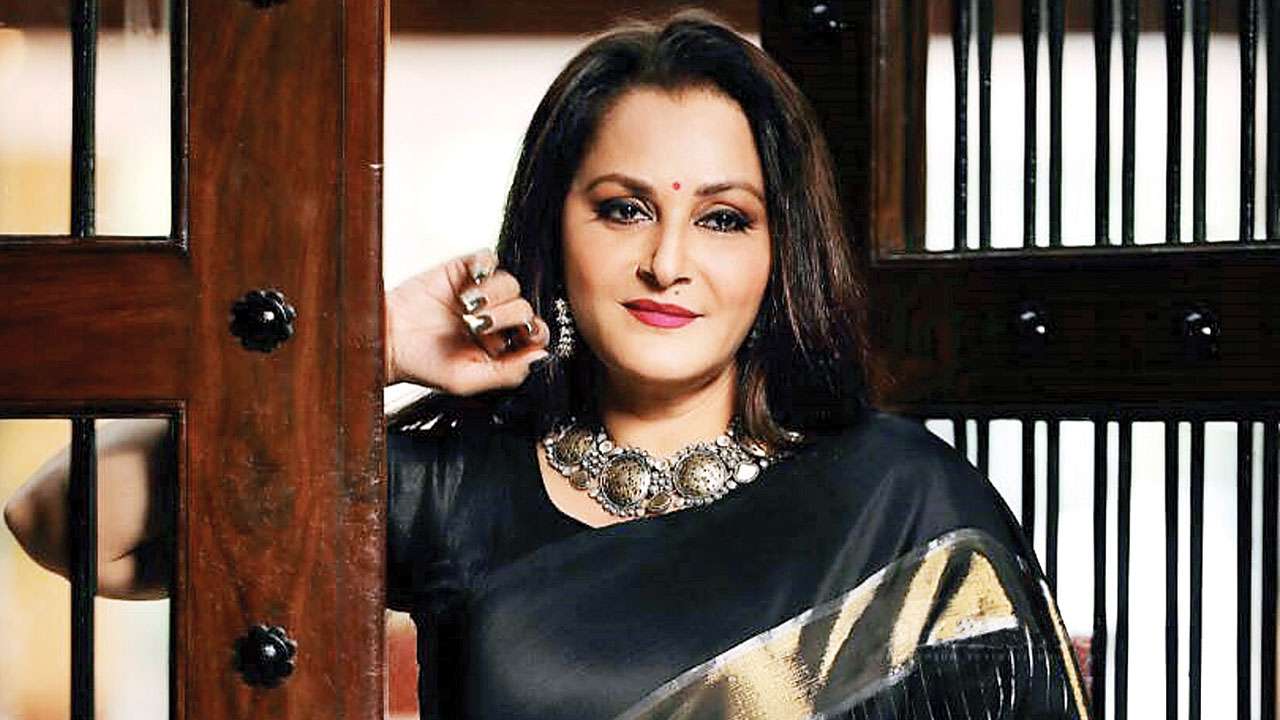
Chaya Unnikrishnan (DNA; August 27, 2018)
It’s lights, camera, action for Jaya Prada, again. The actress, who had a glorious career both in the South industry and Bollywood before she entered politics, is back in the limelight. After doing some regional films — Telugu, Malayalam and Bengali — the actress is all set to make her fiction TV debut in Hindi with Perfect Pati. We caught up with the actress to talk about her show and her plans to do more movies...
You must have been getting offers for shows earlier, too. What prompted you to do a fiction show now?
I always look for the content, script and my character. I found the role in Perfect Pati interesting. I play a mother-in-law who is a strong, dominating and progressive character. There are negative shades to her, too. I have a colourful style and since it is based in Rajasthan, there is that flavour. You’ll recall my song Gori Hai Kalaiyaan (Aaj Ka Arjun, 1990), in which I had a Rajasthani look — people will connect to that. Here, I have an ethnic look with a modern feel. Another thing I liked about the show was it is about today’s scenario. How the younger generation decides everything for themselves including their life partner. Every girl has a dream — she wants a perfect husband. But that is not possible. There will be ego clashes and one has to compromise. Every mother feels her son is very good. It will be intriguing to see if she stands by her beta or bahu.
Shooting for a TV show must be different from films. How is your experience?
It is hectic. And, I am doing TV and films. This year, I have done six regional films, but I get satisfaction when I am back to my home — Bollywood. I don’t differentiate between films and TV, particularly Hindi serials. Yes, doing both is difficult, and though I don’t end up having any time for myself, I am happy.
When it comes to cinema, do you see a lot of changes in it?
Yes, everything from performances, music to technology has changed. As far as music is concerned, you won’t get to hear the melodies of ’70s, ’80s and ’90s. Aaj rap milega sunneko. I miss the melody of my own songs (smiles). Technology has changed by leaps and bounds. Today you can make a Rs 200 crore film like Baahubali. As far as content is concerned, there are two categories — a true story like Raazi and a costume drama going back in time like Baahubali.
What about performances — do you think there is more scope for heroines now that it was in the ’80s and ’90s when you played the lead role?
Not really. Even that time in a film like Sharaabi, I had a lot of scope of performance alongside Amit ji (Amitabh Bachchan) or Sargam, which revolved around my character. Now, there are films like Padmaavat and Raazi. I think movies like Pad Man which reflect the society are being made more.
No South heroine after you and Sridevi has been able to make an impact in Bollywood like you both did. What according to you is the reason?
The main advantage Sridevi and I had was that we acted in films which were South remakes. What we had done in the South, we did the same in Hindi. Also, when both of us did the South films we were very young, and when we made our entry in Bollywood with the remakes, we handled it better. Sridevi did Himmatwala, a remake (of Ooruki Monagadu), in which I had played the lead role. I entered with Sargam, a remake of my Telugu film Siri Siri Muvva. Whether it was Tohfa or Maqsad they were all South remakes. Also, they were mainstream dance musicals and that along with the characters made an impression on the audience. Besides, before us both, Rekha and Hema Malini, who are living legends, had come from South and we learnt a lot from them.
With past Hindi films being remade, which movie of yours would you like to see being made today?
There are several films but I would want Sargam to be remade because it is a film for all-time. It was extremely successful, it ran in the theatres for one year! It proved to be my successful entry into Bollywood. It remains fresh. It was a beautiful film full of dance.
Who would you like to see playing your and Rishi Kapoor’s roles?
Rishi ji’s son (Ranbir Kapoor) will be the best to play his role. Woh koi bhi character apna sakta hai. Look at what he has done in Sanju. But it’s the director’s strength, too. And hats off to the screenplay. Honestly, we are all director’s artistes. As for my role, Alia (Bhatt) will be ideal to play it. She is sensitive, cute and a natural. She is really good.
What next?
I am back to doing films. I have already done a couple of Telugu films, one will be releasing soon, and one Bengali film. Soon, I will start shooting for a Marathi film and I am in the process of working out a Hindi movie. The industry is my home. The moment I said I am open to doing films, I started getting a lot of offers.
Sridevi’s rawness was her actual USP-Khushboo
11:13 AM

Chaya Unnikrishnan (DNA; February 27, 2018)
Like Sridevi, Khushboo, too, started her acting career as a child artiste with films like The Burning Train, Laawaris, Naseeb, and Dard Ka Rishta. After playing significant roles as the teenage sister of Anil Kapoor in Meri Jung and a couple of other movies as the solo lead, the actress migrated to the South film industry with a Telugu film Kaliyuga Pandavulu. Soon, she moved to Tamil films and within a short span of time, raced to the top. Here, the actress pays a tribute to Sridevi and talks about the tremendous impact she had on the South industry...
Ruling the South
“Sridevi was one of the greatest stars of the South — she ruled the Telugu, Tamil, Kannada and Malayalam industries for 10 long years before she came to Mumbai. She was working with the top actors from all the industries — Kamal Haasan and Rajinikanth in Tamil, Nageswara Rao and NT Rama Rao in Telugu and Prem Nazir in Malayalam, simultaneously. All the directors and filmmakers wanted to work with her. She was everyone’s favourite.”
First impression
“Like many people, the first time I saw Sridevi was in Himmatwala and fell in love with her — at that point, I was not doing South films. She was unabashedly glamorous. She was absolutely a mass heroine. We did get to see what a great performer she was in her later films. I would rate Lamhe as one of her best performances, but she did such brilliant comedy in Chaalbaaz and Mr India. She was the most sensuous person — it is not easy to seduce the camera without a character in the frame. We saw her doing that in Kaate Nahi Kat Te. She was seducing the audience through the camera. And she did it without an iota of vulgarity.”
She was revered as a talented performer
“It was only when I came to the South that I got to know what Sridevi was like. I watched her Tamil films like Sigappu Rojakkal, Moondru Mudichu, Varumayin Niram Sivappu, Meendum Kokila, 16 Vayathinile, and Johnny. That’s when you realise that beyond the childlike woman, she had a lot of oomph to seduce the audience on screen. She was an actor par excellence. I really thought she looked far more beautiful in her South films without her nose job, without the perfect Sridevi we saw in Bollywood. That rawness was her actual USP. In the South, they liked her as a talented performer. Every director and filmmaker wanted to work with her. She had a knack of doing films that did well.
I think you connected with her. For instance, her character of Mayil in 16 Vayathinile is associated with her so much that even today you cannot name anyone Mayil on screen. People will immediately compare it with the original. Or take the character she played in Johnny. She essayed a singer who is at the peak of her career, but she underplayed the loneliness so well. I don’t think anybody can even come close to what Sridevi has done.”
Celebrating Sridevi
Khushbu also talks about actresses being treated as goddesses. She was the first actress to have a temple built for her. She says, “This culture of being called a goddess came much later in the South. Audiences here loved Sridevi for the kind of roles she did in films like Varumayin Niram Sivappu, Johnny, Gaayathri, Sigappu Rojakkal, Guru and Priya. She was a glamourous girl, but I think they saw the transformation after she came to Bombay and became the heartthrob of the nation. It’s when the country looked up to her that people in the South realised that they didn’t celebrate her the way they should have. After she came from Bombay, she did Telugu films like Jagadeka Veerudu Athiloka Sundari with Chiranjeevi. I don’t think anybody would have presented Sridevi the way she was in this film, she looked beautiful. She also did Kshana Kshanam with Venkatesh and the film about a woman lost in the woods was mind-blowing. You could see the transformation in her — as you succeed you start understanding your work more, you have that space. Sridevi was a self-taught actress, you really have to hand it to her. People might have helped her to become what she was but the entire credit goes to her for adapting and transforming.”
The Tamil connect
“I haven’t worked with her but I had interacted with her at several events and parties. The Sridevi you get to see is not the Sridevi we know. She was very shy and an introvert, but she was fun loving, too. She loved to let her hair down and laugh. I can’t forget her childlike laughter. When we used to meet, we would start conversing in English, say ‘Hi’, then ask in Hindi, ‘Kaise ho’ and switch over to Tamil. It came naturally.
The country’s loss
We have lost a diva. Whether it’s Chennai or Mumbai, everywhere it’s the same. The nation is mourning. It hasn’t sunk in that Sridevi is not alive.”
DNA After Hrs editor Meena Iyer pays an ode to Sridevi
10:38 AM

Meena Iyer (DNA; February 26, 2018)
When I woke up to the news of Sridevi’s demise yesterday, I fervently hoped that it was a ‘death hoax’ and someone would call me soon to say, “It was a mistake. Sri is alive.”
But when my worst fears were confirmed and I learnt that she had passed away close to midnight on February 24 in Dubai with husband Boney Kapoor by her side, I just slumped in my chair. I felt a lot older and was so deeply saddened by the news that I’m yet to recover from it.
Okay, let me put things into perspective. Sridevi or Pappi, as she was called by her family, was not a friend. But she was the darling of the masses for over three decades. And for those of us who started Hindi cinema reportage at the start of the ’80s, she was someone who dominated our thoughts.
Personally and professionally, No 1 was always a lonely spot and Sri, who wore the mantle of top dog for the longest time, never let her mask slip in front of anyone but her immediate family. Fiercely protective about her private life, she hated being probed, whether it was about her mother who controlled her finances or Mithun Chakraborty, who had stolen her heart.
The only time she broke down (or rather the first time it became public knowledge) was at the start of the ’90s, when she lost her father, Ayyapan Yanger. She was shooting for Boney’s Roop Ki Rani Choron Ka Raja (1993) then. That was perhaps one of the earliest times when she sought refuge in his home in Lokhandwala. The company of Boney’s parents — Surinder and Nirmala Kapoor — gave her solace.
Interviewing Sri was always a task. A person of few words, getting an answer out of her was tough. Yet, I have notched up some really terrific interviews with her. Both of us spoke Tamil and perhaps that’s why Sri gave me more concessions than she did to other journos.
However, the atmosphere around her was crackling. She was deified all over South India, long before she came to Mumbai. Chances were that you would be trampled upon by her fans if you were travelling to a shoot with her. Like this one time when we went to Visakhapatnam for a shoot of a film called Jaani Dost (1983). She was pairing up with Jeetendra in the Hindi version and Krishna in the Telugu version. As bystanders, our jaw dropped because in the sweltering summer heat of Andhra Pradesh, at least 20,000 had come from nearby villages and townships just to get a glimpse of their devi.
She was riding such high in the ’80s that soon after Himmatwala and Mawaali (both of which released in 1983) followed by Maqsad (1984), she became the reigning queen of Hindi cinema.
But she was no fluke. Like Jeetendra, with whom she had done 15-odd films, had once told me, “As far as Sri goes, I admired her when she was a newcomer. I admire her even now.” He added, “She wasn’t the original choice for Himmatwala. It was supposed to be Rekha. But director K Raghavendra Rao asked me to see this new girl. Sri landed Himmatwala and the rest is history.”
Jeetu also recalled her dedication. “She was a fabulous dancer. And I was like a parrot. I would just parrot my steps and keep doing rehearsals. Though Sri got her steps right the first time itself, she would patiently rehearse with me. Her dedication should be applauded,” he said. Amitabh Bachchan, Vinod Khanna, Rishi Kapoor and Anil Kapoor clamoured to do a film with her. Dimple Kapadia, Amrita Singh and Meenakshi Seshadri mostly did those films that were rejected by Sridevi.
I remember the time in 1987, when we wrapped up an interview on a flight from Mumbai to Chennai where she told me, “I’m absolutely fed up of doing films where a heroine is just required to stand around as a showpiece.” By this time she was refusing more movies than accepting them. It didn’t matter to her even if the film was a Toofan (1989) with Amitabh.
In his biography by Harper Collins, Khullam Khulla: Rishi Kapoor Uncensored that I co-authored with him, Rishi says, “There was only one heroine who was a little reluctant to work with me, very likely because she was the bigger star at the time. Sridevi was making waves and I had hit a plateau when we worked together in Nagina (1986). She was also very reclusive. I was later told that she was an extremely shy person and very inhibited.”
“One of our most embarrassing moments was when we were shooting a song for Nagina at RK Studios. When you are in the midst of a ‘take’ and the assistant cameraman suddenly says the magazine has run out (when the camera needs a new roll of film), it is a very awkward moment for actors. The lights are on, you are in position, and you have to hold it, looking odd and static, while a new film is loaded. During Nagina, Sridevi and I found ourselves in that awkward situation, just standing there, waiting. When she suddenly spoke to me and said, ‘Sir, I have seen Khel Khel Mein four times,’ I was so taken aback. I could only mumble something about a film of hers that I had seen and that was it.”
“That was the only conversation I had with Sridevi all through the filming of Nagina. Otherwise, it was always ‘Namasteji’ and ‘Good Night ji.’
It was during the making of Chandni (1989) that we became friendly. She opened up to me and a new level of comfort also improved our performance. Yashji (Chopra) gave us a free hand in the film, leaving a lot of room for improvisation. It worked well since I had to be spontaneous and improvise on set, and so did Sri. She contributed a great deal towards making scenes work. The ‘cognac, sharab nahi hoti’ sequence, for instance, was entirely improvised. It was not in the original script. It was made up on the spot by Yashji, Sridevi and me.'
Sridevi is a terrific actor who balances method acting (which she picked up from Kamal Haasan) with spontaneity. She has also evolved over the years. When I saw her in English Vinglish (2012), I was floored. She has flowered into a highly-intelligent actor.
I was probably one of the first people to know that Sridevi was in a relationship with Boney Kapoor. For the first time, I had an inkling of it when we were shooting a song for a film in Goa. Sridevi had left the location before me. And, I was heading back to the Taj for lunch when I saw someone who looked like Boney from afar. But I wasn’t sure. Fortunately, the general manager of the hotel, Joe, was a classmate of mine. I called him up and asked, ‘Is Boney here?’ He said, ‘Who Boney?’ I replied, ‘Boney Kapoor.’ He looked up the name on the computer and reported that he wasn’t there. It occurred to me then that he may have used an alias, so I asked Joe, ‘Has an Achal Kapoor checked in?’ And the answer was, ‘Yes.’
Achal Kapoor is Boney’s real name. And that’s when I guessed what was brewing between the two. Three or four months later, after they got married, there were whispers that she was carrying his baby. The dress man of our film revealed that all her clothes were being altered and her trousers were being loosened. The director was also told not to take shots below the waist. But for the most part, Sridevi kept her personal life away from public scrutiny, and professionally, she was wonderful to work with. She was a fabulous actor. I had two huge successes with her, Nagina and Chandni. We also did Banjaran (1991), which was an average film.”
After her marriage to Boney, Sri’s world revolved around her home. She affectionately called him, “Papa” and he addressed her with many endearments including “Jaan”. When one dropped by to meet Boney at their Juhu bungalow in a quiet by-lane, Sri was the one offering chai and biscuits. She looked happy beyond words and of course once Janhvi and Khushi came, she just slipped seamlessly into domesticity.
On her return from Dubai, Sri and Boney were committed to fly to Mauritius to attend a function where she was to be Chief Guest. And a few weeks ago, this couple was also house-hunting in South Mumbai. Perhaps, they were looking for a plush address to settle sometime later in life.
Of course, all of that is now an unrealised dream. The queen of Indian cinema has passed away, leaving behind her a void that will never be filled.
Tragic how Sridevi passed away a day before Himmatwala's 35th anniversary-Jeetendra
10:37 AM

Jeetendra talks exclusively to midday after the sad demise of veteran actress Sridevi
As told to Upala KBR (MID-DAY; February 26, 2018)
I first met Sridevi at the 100th day jubilee function of one of her Tamil films. I walked up to this bright-eyed girl and congratulated her on her performance. Little did I know that we would be working together in a few months' time.
I was going through a low phase after Deedar-E-Yaar (1982) – the film suffered heavy losses, and brought me back to square one as an actor and producer. Sridevi, too, was coming out of Solva Saawan (1979), her debut film as a full-fledged heroine in Bollywood. The film didn't fare well and almost put her out of the Hindi film industry. So Himmatwala, directed by K Raghavendra Rao, was a turning point for both of us.
We all know how it changed both our fortunes. Not many know that Rekha was the original choice for Himmatwala. But I guess Sridevi was destined to do the film – she bagged the role and the film became one of the biggest grossers of the year. And with it, Bollywood woke up to the magic of Sridevi.
Today [February 25] marked the 35th anniversary of the film's release and it's tragic how she passed away just a day before... I was terribly shocked when I heard about her demise.
Sridevi was one of my closest co-stars and we did 15 movies together. She was an actor par excellence. What was even more admirable about her was her dedication to the craft – she would keep rehearsing a scene until she was fully satisfied with it. I had deep admiration for her discipline towards her work.
I remember I used to be nervous whenever I would have to dance with Sridevi. She was a fabulous dancer who would get the steps perfectly, right at the first attempt while I had to keep doing rehearsals to match up to her.
I have so many beautiful memories of Sridevi. It's still so difficult for me to come to terms with the fact that the woman, who ruled over everyone's hearts with her shy smile and bright eyes, is no more.
I’m too old to prove a point-Sajid Khan
8:06 AM

Deepali Singh (DNA; August 27, 2017)
The moniker ‘funnyman’ has often been used to describe Sajid Khan. However, if you check out his track record of the last two films he directed, Himmatwala and Humshakals, and go by the negativity surrounding them, you would probably wonder why. But the filmmaker, and sometimes actor, is genuinely funny. The ‘perception’, a word that springs up often as he tells me, sitting in his Juhu apartment, is that he’s no more the guy he used to be. “But that’s the thing about perceptions. They aren’t facts and that’s why they aren’t permanent,” says Sajid, who recently completed 10 years in the film industry as a director. “Ten years of Heyy Babyy, the first film I directed. Ten years of me as a filmmaker. All thanks to Sajid Nadiadwala. He should get the credit. Or the blame!” he guffaws loudly. See what I meant about the funny business. Over to the filmmaker...
How did you deal with the aftermath of Humshakals?
Humshakals chali, but the large perception was to make you believe that it was a disaster. It made Rs 63 crore, so box-office wise, it’s not a disaster. It’s Saif’s highest grossing film in the last four years, but somewhere the perception of the film was, ‘Oh bad film, flop film’. Bad film I can take, but flop film? That made me think further. Then the column in this paper came to the rescue. People got to know the real me. Being on Twitter helped. I didn’t want to fight back. I wanted to take a dignified stance. Chori toh nahi ki, daaka toh nahi daala. Kharaab film hi banaayi hai na, uske liye itni bhaari sazaa? Nahi beta, uske liye itni bhaari sazaa nahi, bees saal se jo tum film industry mein karte aa rahe thhey, logon ka mazaak udaate aa rahe thhey, ab yeh uska grahan hai. This is payback time. Stand in front of the firing squad with your head held high and take the bullets. It’s okay, eventually the bullets will run out. You will fall down and rise again, no big deal. That’s precisely what has happened. I don’t know about rising again, but I have fallen down many times. Sometimes it has taken me a while to get back, sometimes instantly. It’s never that I’ve never got up. So it has been a learning curve. Also, it has made me a slightly more responsible filmmaker. The script which we are writing next, is a comedy, but it stays away from the slapstick genre and comes in the situational comedy zone. One is trying to achieve that with lots and lots of rewriting on the script level itself.
Have you mellowed down over the years?
I think I have calmed down. I was in a state of complete chaos and unrest, shooting my mouth off, not caring for the repercussions. When Himmatwala didn’t work, the negativity factor attached to the reviews were more pointed towards me. That’s when I realised, that something has gone wrong. I told myself, ‘You’re a funny guy. Of course, you made fun of films and people when you were on TV but that, people more or less accepted. Why do you have to keep shooting your mouth off? You’re a director, not a trade pundit. One film didn’t work, they buried you in the ground. Shubh, shubh bolo. Funny ho jao, that’s what you are’.
What sort of perceptions do you think the column and social media helped break?
There were lots of perceptions about me, right from being gay to casting couch to being a drunkard to getting violent, none of what I am in real life. The column did help change a lot of perceptions about me, including ‘ise angrezi aati hai! BA pass hai! Matric pass hai!’ (Laughs) Sajid Nadiadwala has been the strongest guiding light in my life. He and Farah are the only two people who I give full freedom to slap me in public, and I will keep my head down because they are my elder brother and sister. I really look upto them. They were also of the same belief — let people know the real you. Because when people know the real me, they are like, ‘you’re not how we thought you were. You’re quite funny’. Largely thanks to my column and Twitter and my getting out and being more real with people in life, I feel, by now, the negativity has died down completely.
Why limit yourself to only funny films?
I’m not. Heyy Babyy is not a comedy. It’s a family drama. The last 40 minutes of the film, you only have tears in your eyes. Himmatwala was not a comedy. Himmatwala was a tragedy (laughs)!
The first time you directed was a short film, The Graveyard, for Ram Gopal Varma’s Darna Zaroori Hai. Wouldn’t you like to explore horror as a genre again?
Yes, someday, I am going to do an independent small budget horror film. That’s one genre I feel I can surprise a lot of people, like I did with that 11-minute short — the only time in life that I got good reviews (laughs)! I’m very influenced by the movies Shyamalan has been making of late, whether it’s The Visit or Split.
Sajid Nadiadwala and you had a nasty fallout and then you got back together again...
In 20 years of friendship, I think two years of fighting is allowed between best friends. It’s not like we got into arguments or fist fights or abused each other. We just lost out on each other. That was a very dark phase in my life and I was very lost. A lot of wrong people advising me against him and I think, vice versa. I know for a fact that he just doesn’t love me as a younger brother, he loves me like a son. I have not seen a more simple, more caring person than him. Irrespective of where we are, every morning and every night, we would have a two minute conversation — kya kiya, kya nahi. Almost like a relationship. That is what I missed in that period. I was consumed with the oldest factor, which is the worst between friends — ego. Main phone kyun uthaoon, let him call. So many people tried to get us back together. I lost out on Housefull 3 because of that. I was more at fault than he was because I was slightly more immature. He’s a far more mature person than I am. I used to seek his advice all the time. Ever since I became friends with him and started doing award functions, there was not a single show where I have not walked on the stage without giving him a call first. I would say ‘bhai stage pe ja raha hoon’. He would say, ‘good luck, vaat laga de, you’re the best’. He would give me that pep talk and it used to be like an injection that the doctor has given me. I would go with full confidence. Those two years during his absence, I missed that.
But now, you’re working together again...
I told him I don’t care if we ever work together again. Of course, I would love to work with him and he would love to work with me because we vibe well. We’re like Laxmikant and Pyarelal! But I’m so glad that I’ve got my best friend back. I will turn 46 in November. He’s been a part of my life ever since I was 26. You don’t f**k up two decades of friendship over small things. Nothing’s worth it. Our fights were not over a woman or property or money, it was over edits! I was fighting with him about why is my name small and yours big on the poster? Stupid things! But at that time, you’re consumed by self pride and ego and short-sightedness. You lose out on reality and believe everything is a conspiracy theory and it’s not.
You made three films with him which were hits, the ones he wasn’t part of, didn’t work...
He was the missing factor. He told me not to make Himmatwala. I should have listened to him... Some big producer told me I will work with you now because I know you’re dying to give it back. I said no, don’t be under that impression. I said I don’t have the fire to burn somebody’s house, I have the fire to light a diya, which hopefully will light up a good film. I have no ambitions to prove a point, I’m too goddamn old for that! I just want to make good films which hopefully will be successful.
You have worked with stars such as Akshay Kumar, Saif Ali Khan and Ajay Devgn, but none from the younger lot...
I’m sure when the right script comes along, they will be attached to it. Actors today are not interested in working with names but the correct script. That is why unknown new directors get breaks, and obscure directors also make big films. If you get the correct script, they will work with you, which is ideally the correct thing to do. Because who benefits the maximum? The audience. Rishton mein ab film nahi banti. Rishton mein jo film banti hai, woh ab kishton mein banti hai. Film banti hai abhi merit pe. You have to now identify the correct script and the correct cast.
From the younger lot, who is on your wishlist?
I would love to work with Ranbir Kapoor and Ranveer Singh. I would love to work with Varun Dhawan. I find him very entertaining, I loved him in the Judwaa 2 trailer. But you can’t go to a Ranbir or a Varun with a wrong script.
What sort of advice does Farah give you?
‘Cut your hair, lose weight, don’t smoke, I can’t send my kids to your room, they complain of smoke’. She’s like a mother hen to me. She has been telling me to write Heyy Babyy 2 and that is something Sajid, Akshay (Kumar) and I have discussed. I just feel it’s a little too early. Technically, the baby has just turned 10, let her become a teenager. I have an idea, about teens and young parents. There is a lot of unsaid familiarity and uncomfortable grounds where they both lie to each other. Today’s teen is far more troubled than earlier teens. Today’s parents are far more worried than ours were because today, one wrong move and your child’s future is destroyed. I would like to do something with that and keep it in the entertaining space that’s more real.
We’ve heard that your mother is funnier than you and Farah put together. Do you take advice from her?
Yes and no. She gets a little worried when she reads reviews. She used to read the reviews almost like a report card (laughs). But that’s okay.
You have acted in a very few films. Why’s that?
I was offered quite a number of films after Jhooth Bole Kauwa Kaate, but I never intended to be an actor in the first place. My biggest regret in life, later, was not meeting Rajkumar Hirani when he wanted me to do Arshad’s role in Munnabhai. Sanju also told me meet him. Maybe I was too busy with my TV work at that time and not keen on acting. I was offered Shaandaar recently and another film called Coffee With D in the main role. I don’t think I can be a lead actor, but a strong character actor. I’d like to do something I can pull off.
After all these years, Kishore Kumar is still number one-Amit Kumar
7:58 AM

With the fervour for Kishore Kumar songs still going strong on the legend's 88th birth anniversary, singer Amit Kumar Ganguly gets candid about life with his iconic father
Debarati Sen (BOMBAY TIMES; August 5, 2017)
The best of men have been
struck by the fickleness of time and relegated to obliv ion, not Kishore
Kumar. He just gets stronger. You can hear him everywhere - films,
radios, music reality shows, remixes, speculations (personal life or a
potential biopic), theatrics (Jhumroo) and even politics (his stand
during Emergency). It makes you wonder if it's really been 30 years
since he passed away in 1987. “He is still the number one!“ beams the
legendary entertainer's son, noted singer Amit Kumar Ganguly. In an
exclusive interview with Bombay Times, on the celebrated entertainer's
88th birth anniversary (August 4) week, Amit gets candid about life as
Kishore Kumar's son. Excerpts...
 Kishore Kumar's presence is as
all-encompassing in the world of entertainment and music even now, as it
was 30 years ago. What gives him an edge considering he wasn't trained
like his contemporaries?
Kishore Kumar's presence is as
all-encompassing in the world of entertainment and music even now, as it
was 30 years ago. What gives him an edge considering he wasn't trained
like his contemporaries?
I am his son and I am not going to be defensive, but the fact is that trained or untrained, this man has been an institution. He made his way from scratch to the very top. He succeeded in all the departments of his field without any so-called training. R D Burman (a great music director who was with my father from the beginning) and his father S D Burman (my father's guru) were once discussing various singers. When my father's name cropped up, R D said, 'Kishore da ke saamne jitney bhi bade ustad ko rakh do, during the actual take of any song, woh un sab ko utha ke phek sakte hain'. Pancham da used to say that 'syncopation' like tatada-ta-tada tadarum - would never sound as good when done by others. Who says he didn't know classical? I think he knew everything about music. He used to sing straight from his heart. He used to say, 'Main seedha gaata hoon, nakkashi (harkatein) kum karke, dil ko choona chahta hoon, so that even the street boys, the paan wala can relate to my song - unke mann ko lagna chahiye'. He was a technical man, he wouldn't take chances, but that didn't mean he did not know it. Unke samne bade bado ki chutti ho jati. I don't want to take names, but big singers would get nervous before him. He was one-of-a-kind. After all these years, he is still the number one. Aaj bhi sabse zyada gana unka hi bajta hai.
What are your memories of your father?
This bungalow (Gauri Kunj) was built by him. It may sound filmy, but we feel his presence here; we feel that his soul is still here. That's why we are blessed and have been staying here for so many years.
How does your brother Sumit relate to his memories? Or your daughter Muktika?
When my father left us, Sumit was only five and he does not have many memories of him. He tells me that I am the father-figure for him. My father always wanted Sumit to learn the piano. He used to dream of him being on a stage in Vienna, wearing a bow-tie and playing the piano, while we clapped in the audience. I made sure Sumit learnt the piano for four years. He's a brilliant musician. When it comes to singing, he's an original and does not sound like his father. We have a music company together and he looks after our offices here. Muktika is only 12. She's got a shundor voice, but we are not forcing her to learn singing. Her tribute song to her grandfather 'Mere Baba', two years back, went viral.
You sang Kishoreda's Himmatwala song, while Sumit reprised Bachna Ae Haseeno for a film - was it easy?
Singing the Himmatwala song (and another of his songs) was the biggest mistake. It's fine to sing his songs on stage. As a son, yeh mera haq banta hai. But I am not as great a singer as him, and singing his song on record was a blunder. Aaj bhi main apne aap ko kosta hoon. As for the Bachna Ae Haseeno song, Sumit just sang a few lines, which was okay.
When you do Kishore Kumar tribute shows, what are the responses abroad vis-a-vis back home?
I have been singing for more than 50 years now and have seen several ups and downs - success and more failures. Sab dekh liya hai maine in this whimsical industry. I have travelled all over India gully gully ghuma hoon doing tribute shows. We generally do 25 per cent Amit Kumar and 75 per cent Kishore Kumar songs. Main jitna bhi chahoon ki main pitaji ka gaana nahi gaaunga to avoid comparisons, I still get requests for his songs. People want to hear him. We always get full houses - be it in Mumbai (brilliant cosmopolitan audience), Pune (superb), Punjab (terrific) and even abroad, especially in England and America.
Songs in recent times that you feel should have been sung by Kishoreda?
I don't really listen to today's Hindi film music as they all sound similar. But I think the song sung by Arijit Singh, Ae Dil Hai Mushkil - woh agar Pitaji gaate toh accha hee gaate, he would have sung it beautifully. Hala ki Arijit has sung this song very nicely. Mujhe pasand bhi hai yeh gaana.
You share anecdotes from his life on your stage shows and radio shows. Do you ever plan to write a book on him?
Kitab toh mujhe likhna hi hai. My father told me to write a book on him when he is not around. Naam bhi soch liya tha - 'My Father As I Knew Him'. So, I will write a book as I've seen him up close for 35 years of my life.
I am his son and I am not going to be defensive, but the fact is that trained or untrained, this man has been an institution. He made his way from scratch to the very top. He succeeded in all the departments of his field without any so-called training. R D Burman (a great music director who was with my father from the beginning) and his father S D Burman (my father's guru) were once discussing various singers. When my father's name cropped up, R D said, 'Kishore da ke saamne jitney bhi bade ustad ko rakh do, during the actual take of any song, woh un sab ko utha ke phek sakte hain'. Pancham da used to say that 'syncopation' like tatada-ta-tada tadarum - would never sound as good when done by others. Who says he didn't know classical? I think he knew everything about music. He used to sing straight from his heart. He used to say, 'Main seedha gaata hoon, nakkashi (harkatein) kum karke, dil ko choona chahta hoon, so that even the street boys, the paan wala can relate to my song - unke mann ko lagna chahiye'. He was a technical man, he wouldn't take chances, but that didn't mean he did not know it. Unke samne bade bado ki chutti ho jati. I don't want to take names, but big singers would get nervous before him. He was one-of-a-kind. After all these years, he is still the number one. Aaj bhi sabse zyada gana unka hi bajta hai.
What are your memories of your father?
This bungalow (Gauri Kunj) was built by him. It may sound filmy, but we feel his presence here; we feel that his soul is still here. That's why we are blessed and have been staying here for so many years.
How does your brother Sumit relate to his memories? Or your daughter Muktika?
When my father left us, Sumit was only five and he does not have many memories of him. He tells me that I am the father-figure for him. My father always wanted Sumit to learn the piano. He used to dream of him being on a stage in Vienna, wearing a bow-tie and playing the piano, while we clapped in the audience. I made sure Sumit learnt the piano for four years. He's a brilliant musician. When it comes to singing, he's an original and does not sound like his father. We have a music company together and he looks after our offices here. Muktika is only 12. She's got a shundor voice, but we are not forcing her to learn singing. Her tribute song to her grandfather 'Mere Baba', two years back, went viral.
You sang Kishoreda's Himmatwala song, while Sumit reprised Bachna Ae Haseeno for a film - was it easy?
Singing the Himmatwala song (and another of his songs) was the biggest mistake. It's fine to sing his songs on stage. As a son, yeh mera haq banta hai. But I am not as great a singer as him, and singing his song on record was a blunder. Aaj bhi main apne aap ko kosta hoon. As for the Bachna Ae Haseeno song, Sumit just sang a few lines, which was okay.
When you do Kishore Kumar tribute shows, what are the responses abroad vis-a-vis back home?
I have been singing for more than 50 years now and have seen several ups and downs - success and more failures. Sab dekh liya hai maine in this whimsical industry. I have travelled all over India gully gully ghuma hoon doing tribute shows. We generally do 25 per cent Amit Kumar and 75 per cent Kishore Kumar songs. Main jitna bhi chahoon ki main pitaji ka gaana nahi gaaunga to avoid comparisons, I still get requests for his songs. People want to hear him. We always get full houses - be it in Mumbai (brilliant cosmopolitan audience), Pune (superb), Punjab (terrific) and even abroad, especially in England and America.
Songs in recent times that you feel should have been sung by Kishoreda?
I don't really listen to today's Hindi film music as they all sound similar. But I think the song sung by Arijit Singh, Ae Dil Hai Mushkil - woh agar Pitaji gaate toh accha hee gaate, he would have sung it beautifully. Hala ki Arijit has sung this song very nicely. Mujhe pasand bhi hai yeh gaana.
You share anecdotes from his life on your stage shows and radio shows. Do you ever plan to write a book on him?
Kitab toh mujhe likhna hi hai. My father told me to write a book on him when he is not around. Naam bhi soch liya tha - 'My Father As I Knew Him'. So, I will write a book as I've seen him up close for 35 years of my life.

Shooting se darr nahin lagta hai, promotion se lagta hai-Sridevi
8:02 AM

Madhureeta Mukherjee (BOMBAY TIMES; July 2, 2017)
She was a megastar, she
still is. An actress for whom the biggest filmmakers mounted lavish
projects, in an era that was massively male-dominated. Such was the magic
of this matinee queen. While she sensuously swayed in her classic
chiffons, million of hearts went aflutter. Sridevi could slip into being
Chandni or Charlie Chaplin with as much flair and brilliance. Or break
barriers, linguistic ones
too, and make a stellar comeback with a film (English Vinglish) after 15
years. Tell her all this flatteringly, and she looks back at you
casually and says, “I am very simple, all these praises scare me. I feel
like a newcomer.“
Comfortably settled on her couch for a long chat, sans make-up, her large eyes beam through her thick-rimmed glasses, as she talks about her upcoming film, Mom. And of course, she tells stories about how she raised her daughters as a superstar mom. Read on...
Mom is your 300th film, and you also complete fifty years as an actress. Is there anything about your career you would do differently, if you had a chance?
Not at all! I wouldn't want to change anything about my career. I hadn't planned any of this; it fell into my lap and I am grateful to God for it. I just want it to remain like this. My mom and I never thought that I would make my way into Bollywood. I was happy doing films down South. When my first Hindi film Solva Sawan (the 1979 remake of a Tamil film) was being made, I thought... 'Yeh picture toh South main hit ho gaya, so they are making it in a different language'. That's all. Then, I came to know that the film didn't do well and I went back to doing other Southern language films. It was as simple as that. Before Himmatwala (1983) happened, the producers had taken my dates for another Telugu film, and all of a sudden, they said that they weren't doing that movie anymore, instead, they were doing a Hindi film with Jeetendra. My first reaction was that if my Hindi debut was a flop, then why do they want me to do another film? They didn't bother to hear me out and went ahead with it. I kept thinking that these people are mad to be doing this (laughs!). I am glad that I did Himmatwala because after that, one film led to the other. Talking about Mom, the moment I heard it, I was drawn to the subject. It touched my heart. I had a good feeling about it and I always go by my instinct.
Your co-actors say that working with you is an opportunity of a lifetime. You were even called the first female superstar and I am sure many such titles rest on your mantle, and yet, you insist that you are a newcomer...
All these labels and praises scare me. I am very simple and I feel like a newcomer because I never stopped learning. I feel there is so much more to learn about the craft, in fact, this is just the beginning. Times have changed. In the earlier days, sometimes when we were on the set, we would ask the director, 'Sir, dialogues de do'. Meanwhile, the writer is sitting somewhere on the set and penning the dialogues. The team would tell us, 'Garam garam aa raha hai scene', but now, we can't function like that. The bound script is already with you, and you are well aware of the mood of the scene, your look, the clothes and everything else. But I guess, that was the style back then; people still did a great job and it worked in that era. Today, films are made differently and there are so many heroine-oriented movies. Filmmakers are willing to take chances, and explore these subjects. It is the best time to be in the industry and there is so much more I want to learn as an actress. I never went through a phase in my career when I said, 'This is enough; I don't want to do this anymore'. Acting has always been my passion.
You come from an era when stars were super exclusive. Nowadays, they interact directly with the fans, they chat with their fan clubs, et al. How have you coped with this huge change?
It is an amazing change and it is for the better, as fans can communicate with their favourite actors and share their views; we can also know their reactions directly. Earlier, we did maximum two-three interviews and left the rest to the fate of the film. Now, the promotions have become so aggressive, but we have to change with the times. I always say this dialogue (borrowed from Dabangg), 'Shooting se darr nahin lagta hai, promotion se lagta hai'. I had to cope with it, I had no choice. I joined social media during English Vinglish (2012) because I was coming back on screen after 15 years and the team thought that I should be a more happening mom. Yes, earlier, there was a certain beauty in the exclusivity and privacy we had, but now, we are clicked everywhere and anywhere - at airports, restaurants, salons, gyms - and we always have to be on our toes and see who is around us. Today, even if we want to keep our life private, I don't think that it is possible.
Actors who have worked with you say that you take 'being private' to a different level. Are you really so reserved, or do you fiercely guard your private life?
Some people think that I am very arrogant, but I am genuinely a very private and shy person. I open up to people who are close to me, and with them, I am a different person. So, I think that at times, my shyness has been perceived by some people as arrogance.
Boney Kapoor is producing a film with you after long. We heard that your daughters, Jhanvi and Khushi, were also very involved. There must be a lot of excitement at home about Mom...
Boneyji is very excited. Yes, he is doing a film with me after 20 years, the last one was Judaai. He's on top of the world seeing the reactions Mom's trailer has garnered. It was like a home production, where all of us were involved. We were looking for some one fresh and good-looking to play my husband and Jhanvi showed us Adnan Siddiqui's (Pakistani actor) picture. We all liked him right away and reached out to him. The director of the film, Ravi Udyawar, is new and I am often asked why I am working with new directors. I say, 'Why not?' I am lucky that I got a chance to work with Gauri Shinde (English Vinglish) and now, Ravi. He had a great vision for Mom and he was so passionate about it that I couldn't imagine any one else doing justice to the film.
We also heard that Boney and you would barely interact while shooting for the film on outdoor locations. Now, that's a different level of professionalism...
Really? I don't think that it is a big deal. When I am shooting, I don't want to see my husband around or even remember that he is my husband; I just want to focus on my work. Yes, it's true that I barely conversed with him while shooting; we were staying on different floors and just wished each other good morning and good night.
When you are doing an intense role like the one in Mom, or maybe one of your older films like Sadma (1983) - do you feel emotionally sapped? How much of the character and the emotion do you carry back home with you after the shoot is over?
Actually, Sadma wasn't an emotionally draining film for me; it must have been for the audience. I was playing a woman who was like a child; it was Kamal Haasan's character that was intense and very emotional towards the end. Jhanvi saw the movie when she was around six years old and she didn't talk to me for three days. She told me, 'You are a bad mamma. You were so mean to him'. I think Mom was an intense film for me. One of my friends who met me during the shoot and afterwards told me that I was a different person while shooting for the film. She said, 'Even the way you were walking and talking had changed. Now you are back to what you really are'. Interestingly, I didn't even realise that. It is a very emotional character, so I guess somewhere, it must have consumed a lot of my emotional energy. For me, all this lingers while the film is going on. After that, I switch back to normal, or else my children will throw me out (laughs!).
As a superstar mom, did you find yourself struggling to give your daughters a normal upbringing?
I brought up my kids the way my mom raised me. She gave me a normal upbringing, and when I had children, I did just that. When I am on the set, I am an actress, but at home, I am like any other mom. Of course, I tried to guard them as much as I could, but they were clicked everywhere we went and we couldn't help that.
There is so much talk about Jhanvi's launch and she has a huge role model at home to look up to...
I know that there is a lot of curiosity about her launch, but I want to say that it will be very unfair to compare Jhanvi with me. I began as a child artiste, I had done 60-70 films and I knew a lot about shooting, camera and filmmaking by the time I was her age.When Jhanvi does her first film, people should judge her as an individual, instead of comparing her with me. My journey has been long. So, it will be unfair to compare a girl who is just starting out her career with someone who has done 300 films.
The thought that she will be in the same space that you have been in for so many decades... does that make you nervous?
I guess it is a different feeling though it has not started yet. I never thought that she will go through this. I thought that she will study, do something else and then get married. And I will be free (laughs!). Today, children have their own mind and I have seen how my mom supported me, so I will support her in whatever she is willing to do.
Sometime around 2012, you had said that Jhanvi will not be an actress. How did that change?
At that time, she was younger and I thought that I could mould her and tell her what I wanted her to do (smiles!). Then, the shock dropped on me like a bomb. I thought that there is no running away from this and I have to face it. When she told me that she wanted to be an actress, I told her that there will be many problems and it won't be an easy ride. It is a very tough world out there and being an actress comes with a lot of hard work and sacrifice. As a mother, I obviously thought, 'Why should my child go through this? I have worked so hard for so many years... ab sab settle ho gaya. Let them have a peaceful life'. Having said that, I believe that whatever I am today, I owe it to this industry. I have so much respect for it. Stardom has never been easy and even going ahead, it won't be. If Jhanvi has made this choice, I have to be there for her. I will take it up positively and give it my 100% as a mom. My close friends tell me that I have to be strong about it and take care of myself. Well, it looks like I have to prepare myself more than her. With Jhanvi doing films, it feels like I am starting all over again.
Comfortably settled on her couch for a long chat, sans make-up, her large eyes beam through her thick-rimmed glasses, as she talks about her upcoming film, Mom. And of course, she tells stories about how she raised her daughters as a superstar mom. Read on...
Mom is your 300th film, and you also complete fifty years as an actress. Is there anything about your career you would do differently, if you had a chance?
Not at all! I wouldn't want to change anything about my career. I hadn't planned any of this; it fell into my lap and I am grateful to God for it. I just want it to remain like this. My mom and I never thought that I would make my way into Bollywood. I was happy doing films down South. When my first Hindi film Solva Sawan (the 1979 remake of a Tamil film) was being made, I thought... 'Yeh picture toh South main hit ho gaya, so they are making it in a different language'. That's all. Then, I came to know that the film didn't do well and I went back to doing other Southern language films. It was as simple as that. Before Himmatwala (1983) happened, the producers had taken my dates for another Telugu film, and all of a sudden, they said that they weren't doing that movie anymore, instead, they were doing a Hindi film with Jeetendra. My first reaction was that if my Hindi debut was a flop, then why do they want me to do another film? They didn't bother to hear me out and went ahead with it. I kept thinking that these people are mad to be doing this (laughs!). I am glad that I did Himmatwala because after that, one film led to the other. Talking about Mom, the moment I heard it, I was drawn to the subject. It touched my heart. I had a good feeling about it and I always go by my instinct.
Your co-actors say that working with you is an opportunity of a lifetime. You were even called the first female superstar and I am sure many such titles rest on your mantle, and yet, you insist that you are a newcomer...
All these labels and praises scare me. I am very simple and I feel like a newcomer because I never stopped learning. I feel there is so much more to learn about the craft, in fact, this is just the beginning. Times have changed. In the earlier days, sometimes when we were on the set, we would ask the director, 'Sir, dialogues de do'. Meanwhile, the writer is sitting somewhere on the set and penning the dialogues. The team would tell us, 'Garam garam aa raha hai scene', but now, we can't function like that. The bound script is already with you, and you are well aware of the mood of the scene, your look, the clothes and everything else. But I guess, that was the style back then; people still did a great job and it worked in that era. Today, films are made differently and there are so many heroine-oriented movies. Filmmakers are willing to take chances, and explore these subjects. It is the best time to be in the industry and there is so much more I want to learn as an actress. I never went through a phase in my career when I said, 'This is enough; I don't want to do this anymore'. Acting has always been my passion.
You come from an era when stars were super exclusive. Nowadays, they interact directly with the fans, they chat with their fan clubs, et al. How have you coped with this huge change?
It is an amazing change and it is for the better, as fans can communicate with their favourite actors and share their views; we can also know their reactions directly. Earlier, we did maximum two-three interviews and left the rest to the fate of the film. Now, the promotions have become so aggressive, but we have to change with the times. I always say this dialogue (borrowed from Dabangg), 'Shooting se darr nahin lagta hai, promotion se lagta hai'. I had to cope with it, I had no choice. I joined social media during English Vinglish (2012) because I was coming back on screen after 15 years and the team thought that I should be a more happening mom. Yes, earlier, there was a certain beauty in the exclusivity and privacy we had, but now, we are clicked everywhere and anywhere - at airports, restaurants, salons, gyms - and we always have to be on our toes and see who is around us. Today, even if we want to keep our life private, I don't think that it is possible.
Actors who have worked with you say that you take 'being private' to a different level. Are you really so reserved, or do you fiercely guard your private life?
Some people think that I am very arrogant, but I am genuinely a very private and shy person. I open up to people who are close to me, and with them, I am a different person. So, I think that at times, my shyness has been perceived by some people as arrogance.
Boney Kapoor is producing a film with you after long. We heard that your daughters, Jhanvi and Khushi, were also very involved. There must be a lot of excitement at home about Mom...
Boneyji is very excited. Yes, he is doing a film with me after 20 years, the last one was Judaai. He's on top of the world seeing the reactions Mom's trailer has garnered. It was like a home production, where all of us were involved. We were looking for some one fresh and good-looking to play my husband and Jhanvi showed us Adnan Siddiqui's (Pakistani actor) picture. We all liked him right away and reached out to him. The director of the film, Ravi Udyawar, is new and I am often asked why I am working with new directors. I say, 'Why not?' I am lucky that I got a chance to work with Gauri Shinde (English Vinglish) and now, Ravi. He had a great vision for Mom and he was so passionate about it that I couldn't imagine any one else doing justice to the film.
We also heard that Boney and you would barely interact while shooting for the film on outdoor locations. Now, that's a different level of professionalism...
Really? I don't think that it is a big deal. When I am shooting, I don't want to see my husband around or even remember that he is my husband; I just want to focus on my work. Yes, it's true that I barely conversed with him while shooting; we were staying on different floors and just wished each other good morning and good night.
When you are doing an intense role like the one in Mom, or maybe one of your older films like Sadma (1983) - do you feel emotionally sapped? How much of the character and the emotion do you carry back home with you after the shoot is over?
Actually, Sadma wasn't an emotionally draining film for me; it must have been for the audience. I was playing a woman who was like a child; it was Kamal Haasan's character that was intense and very emotional towards the end. Jhanvi saw the movie when she was around six years old and she didn't talk to me for three days. She told me, 'You are a bad mamma. You were so mean to him'. I think Mom was an intense film for me. One of my friends who met me during the shoot and afterwards told me that I was a different person while shooting for the film. She said, 'Even the way you were walking and talking had changed. Now you are back to what you really are'. Interestingly, I didn't even realise that. It is a very emotional character, so I guess somewhere, it must have consumed a lot of my emotional energy. For me, all this lingers while the film is going on. After that, I switch back to normal, or else my children will throw me out (laughs!).
As a superstar mom, did you find yourself struggling to give your daughters a normal upbringing?
I brought up my kids the way my mom raised me. She gave me a normal upbringing, and when I had children, I did just that. When I am on the set, I am an actress, but at home, I am like any other mom. Of course, I tried to guard them as much as I could, but they were clicked everywhere we went and we couldn't help that.
There is so much talk about Jhanvi's launch and she has a huge role model at home to look up to...
I know that there is a lot of curiosity about her launch, but I want to say that it will be very unfair to compare Jhanvi with me. I began as a child artiste, I had done 60-70 films and I knew a lot about shooting, camera and filmmaking by the time I was her age.When Jhanvi does her first film, people should judge her as an individual, instead of comparing her with me. My journey has been long. So, it will be unfair to compare a girl who is just starting out her career with someone who has done 300 films.
The thought that she will be in the same space that you have been in for so many decades... does that make you nervous?
I guess it is a different feeling though it has not started yet. I never thought that she will go through this. I thought that she will study, do something else and then get married. And I will be free (laughs!). Today, children have their own mind and I have seen how my mom supported me, so I will support her in whatever she is willing to do.
Sometime around 2012, you had said that Jhanvi will not be an actress. How did that change?
At that time, she was younger and I thought that I could mould her and tell her what I wanted her to do (smiles!). Then, the shock dropped on me like a bomb. I thought that there is no running away from this and I have to face it. When she told me that she wanted to be an actress, I told her that there will be many problems and it won't be an easy ride. It is a very tough world out there and being an actress comes with a lot of hard work and sacrifice. As a mother, I obviously thought, 'Why should my child go through this? I have worked so hard for so many years... ab sab settle ho gaya. Let them have a peaceful life'. Having said that, I believe that whatever I am today, I owe it to this industry. I have so much respect for it. Stardom has never been easy and even going ahead, it won't be. If Jhanvi has made this choice, I have to be there for her. I will take it up positively and give it my 100% as a mom. My close friends tell me that I have to be strong about it and take care of myself. Well, it looks like I have to prepare myself more than her. With Jhanvi doing films, it feels like I am starting all over again.

Queen remake has been shelved-Tamannaah Bhatia
7:49 AM

Sonil Dedhia (MID-DAY; April 12, 2017)
Last November, Tamannaah Bhatia had been finalised for the Tamil remake of Kangana Ranaut-starrer Queen (2014). In an interview with mid-day, she had said she’d like tips from the National Award-winning actress to prep for the role. However, it seems the project has been sent to the cold storage. “We were supposed to do that film, but it’s not happening anymore. The reason is unknown to me, but I know it’s shelved,” Tamannaah says on the sidelines of Bahubali 2 promotions.
Like most fans of the war-drama franchise, the actress too is excited about the release of Bahubali: The Conclusion, which will finally unlock the mystery behind the question: Kattappa ne Bahubali ko kyun maara? “The first part will be re-releasing soon, and that’s a first for me.” Post Bahubali ( 2015), Tamannaah adds, filmmakers are looking at her in a different light. “I am getting better offers since directors feel that I am versatile and can be more than just a girl next door. I am also consciously trying not to be repetitive.”
Ask her if she thinks she will get another film as big as Baahubali in future and she says, “This film happened to me after I went through a lean phase in my career with films like Himmatwala (2013), Humshakals (2014) and Entertainment (2014). So, I think my reality is way better than my imagination, but I still hope that many more Baahubalis happen in my life.”
I'm itching to come back to filmmaking-Farah Khan
1:55 PM

Farah Khan, who's been judging reality shows, wants to return to direction ASAP
Letty Mariam Abraham (MID-DAY; December 28, 2016)
News about director Farah Khan's upcoming project, supposedly a celebration of girl power, hit headlines for multiple reasons over the past few months. Soon after murmurs of Parineeti Chopra and Alia Bhatt being cast as the leading stars died down, speculations about the film being postponed due to Farah's unavailability, also did the rounds.
But the filmmaker, who recently finished judging a dance reality show, only to jump into mentoring duties for a music reality programme, says, "My film will kick off next year. I'm itching to come back (to filmmaking) but I don't want to jump the gun. I am extremely excited about my two girls, but we need to tweak the second half. It's a unique concept and I may take another three to four months to get it right."
The choreographer-turned-director has garnered several admirers over the years owing to the multiple hats she dons. Yet Farah's hubby, Shirish Kunder, she says, has never complimented her. "In fact, I'll be worried if he begins to do so. He is brutally honest with me, which is lovely when you say it but not quite the same when you hear it. Kabhi toh kuch jhoot bhi bolde (Sometimes he should just lie). There is no validation from his side."
The list of films Farah has helmed since her debut with 2004's Main Hoon Na can be counted on one's fingers; yet, the project she's often trolled for is one she hasn't directed. "I face a lot of flak for making Himmatwala (directed by her brother Sajid Khan), but I want to remind people that I haven't made that film," she asserts. Farah confesses to having received several offers for a biography. "But a story on my life would seem like a script from the '70s. I've always said, my life is a bad script waiting to happen," she signs off.
Why Ajay Devgn is never blamed for his flops
8:27 AM

DNA (August 16, 2016)
When a film flops, it’s the lead actors, especially
the hero, who gets the flak for choosing a bad movie. Just see what’s
happening with Hrithik Roshan and Mohenjo Daro. However, Ajay Devgn
seems to be an exception. When he did Himmatwala, which was a disaster,
it was director Sajid Khan, who was blamed for the bad remake of the
’80s film. Again, when Action Jackson flopped badly, the film and its
director Prabhu Dheva got panned for the lack of plot among other
things. In both cases, Ajay was left relatively unscathed. A director,
who has worked with him, observes, “It’s puzzling how Ajay never gets
the blame when his film fails. Woh sumdi mein nikal jaata hai, while the
director ends up with all the brickbats.”
Perpetrators of crimes should be shot dead in the streets-Ajay Devgn
8:14 AM

Upala KBR (DNA; August 13, 2014)
I have known him now for more than 18 years and Ajay
Devgn has remained the same — a man of few words, reserved, succinct, to
the point and brutally honest. He is one of the few stars to have
remained unchanged by success. If there’s a cause he believes in, which
is close to his heart, he will take it up. When I meet him this time,
Ajay is in an angry mood. Media reports of alleged rape cases,
especially against children, and the sheer helplessness of it all, is
making him breathe fire. Over to Ajay Devgn or Bajirao Singham (it’s as
if the reel hero has become a real one), the character he plays in his
next release Singham Returns...
How different is Singham Returns from the first one?
It’s bigger, made on a larger scale, is much better and deals with a larger issue. Audiences will enjoy themselves thoroughly and get entertained. Women and children loved the first film. I took a lot of time to figure out why, but my theory is that women loved it because they can identify with the character of Singham. They want someone to stand up against all the wrong being done to them. It’s about respecting them and taking a stand for them. It’s not a message-oriented film, but somewhere down the line you connect with what’s happening in the country, the character of Singham. This time around, there’s a connect with the youth also.
What makes Ajay Devgn get angry and say aata majhi satakli off-screen?
Everything that I feel is unfair or unjust makes me angry. So many times, I have stood up for whatever I feel strongly about, even in our film industry. When I get upset and irritated, I just disconnect with that situation. If I can, I go and help and sort out the situation, otherwise I disconnect from those people whom I find doing something wrong. Sometimes what I read in the media also upsets me — like men allegedly molesting or eve-teasing women on the streets. If I saw something like that, I wouldn’t drive by. I would take stop and pull those people up. I think it’s really disgusting and what sort of mindset they have to be treating women so badly and raping children. I think there’s a mental problem there. They must not be normal, because a normal person cannot be capable — of forcing himself on a woman or child. And if you can, what kind of frustrated person are you?
Given such a situation would Ajay Devgn react like Bajirao Singham?
I would love to kill that person! That’s an instinctive reaction. I am not saying one should do that, but that’s the first reaction that comes. I know the law takes its own course, but it makes you feel so frustrated sometimes, when you have women around you in your family, you have a daughter. You feel like they (the perpetrators of these crimes) should be shot dead in the streets in front of everybody because that will set an example. Or they should be hanged. Now that is an extreme reaction and not what our society is made of, but that reaction comes straight from your heart. You can’t disrespect women! You know that it should not be done. Somewhere, some line has to be drawn. The court has to take strict action and not take years to give verdict and just hang such people. I really believe that rape is worse than murder because when a person is murdered his/her life is over. The suffering is over but with rape the suffering begins. That’s terrible!
What does Singham mean to you?
For me, Singham is not a hero who will go out and fight 20 people, he is a characteristic which should be and is there, in every human being. Singham is very righteous, trying to do the right thing and brave despite all the odds against him. Obviously, because it’s a film there’s action, superhero kind of stuff etc, but you can pick up these little moments of what Singham does and in real life, you all can do that. It will make a lot of difference. As simple as somebody handicapped on the road and you help him cross it — even that’s a Singham moment. I have done so many things at so many times, but if you ask me where and when I don’t remember because I don’t collect memories like okay, it’s a good thing I did. But yes, we all do things for our people. That’s why we are releasing Singham Returns on August 15 because it connects with the theme of the film and also because it’s a good weekend. These days weekends have become very important though it’s not as big as Eid, Diwali or Christmas, still it does make a difference.
These festival weekend releases have never mattered to you?
No. Because I don’t know when I will be completing my film for a festival release. Though this time, we did that for Singham Returns - to meet the target release date of August 15 but every time you can’t do that.
Like Krrish and Dhoom, do you and Rohit Shetty plan to take the character of Bajirao Singham and the film forward as a franchise with Singham 3, 4, 5, etc?
It depends on how well this film does. Singham was appreciated a lot and it was pressure from the audience and people around us who said that they want to see a sequel. If there’s a good reaction for Singham 2, we will definitely carry it forward. I am excited about Singham Returns, but am not nervous because I know we have made a good film. I have been nervous so many times before the release of some... I knew that the film wouldn’t work because while shooting, we realise that. But where Singham Returns is concerned, that’s not the case. It works. I also know that there are a lot of expectations, but I feel we have met those expectations so when people see the film they will not feel that they expected more. The audience will get what they want.
You always make films which are not completely nonsensical or titillating.
Yes. Though my films don’t have a preachy message, I have one conscious thought that I do not want to do films that are vulgar and that will embarrass kids. In my films, we will avoid vulgarity and indecent exposure. If there’s exposure it is only as much is required and aesthetically done, but not just to titillate. I think like this, not just for my children but for everybody. As a responsible actor and human being, you need to do it. I have done in the past, a few embarrassing films, and I have realised and confessed to that. I went to the media and said that I won’t be doing films that are vulgar with double-meaning dialogues etc. I have had my share and I have apologised for it.
Were you approached for Sanjay Leela Bhansali’s Bajirao Mastani?
Yes, I was approached for the lead role. There were talks but we couldn’t agree on the terms and conditions which were dates, money everything.
Bhansali felt that your character Bajirao Singham would be too close to the character of Bajirao in his film. Do you agree with him?
There was a disagreement on terms and conditions. But while Singham Returns is releasing now, his film will release in December 2015 so there’s a lot of time for people to identify me with the character in Bajirao Mastani. Do I agree with him? What you just told is something I have heard for the first time. I would like to tell people to think up better excuses and be honest enough to admit that we couldn’t agree on the T&C, which is what I am saying. What is wrong in hiding that? Let’s be honest about that. Why give excuses? Because you look like a fool! Did you buy it? (laughs). So they sound ridiculous. Even I can make better excuses.
Are you doing Tusshar Kapoor and Shabina Khan’s Hindi remake of the Tamil horror film Kanchana?
As of now I am. They are working on the script. Once Singham Returns releases, I will be hearing their script. A lot of people think I will be playing the transgender, but a lot of things have been changed from the original. That is why there is speculation about me playing the transgender. That is why they are working on the script and the final draft has to be read.
Are you a director’s actor or now that you are a director yourself, do you insist on doing your own take in a scene?
I am a director’s actor. Where I have a rapport with the director, I do suggest things, but finally, it is the director’s call. I would never insist on my way of doing it. It just depends on who convinces me.
As an actor, when your film doesn’t do well (Himmatwala included), you have accepted the blame yourself.
Why shouldn’t I? It’s my mistake. Why would I blame the director? You have taken a call in your head and decided that this is going to work. You can’t blame the director for it. He has not misled you. He has done what he has told you what he was doing. It is your judgement finally that takes the call on doing a particular film. Every actor has his own take on it, but I would not blame the director. I feel the whole team should take the blame.
Shah Rukh Khan’s visit on your sets was a surprise to many. Did it come as a surprise to you too?
I really don’t know if it came as a surprise to a lot of people. Was there ever a cold war or even war between us? Where did he or I abuse each other in print? A lot of it was media-created. It wasn’t a surprise for me because Shah Rukh and I have met earlier also and whenever we meet, we meet very amicably and warmly. There has never been any issue of us disliking each other.
You don’t socialise with him or invite him to your parties…
That doesn’t mean that we are enemies. I am not a very social person. Who do I invite and where do I go? It’s not just one person. Who am I friends with? It doesn’t mean that you socialise with someone just because he’s a friend and if you don’t that makes you enemies. It doesn’t happen that way. We are colleagues, we all work in the same industry and we are there to cooperate and help each other whenever required. Sometimes there are clashes because of products, but that doesn’t mean it’s a personal issue. I don’t even socialise with my friends - Salman (Khan), Abhishek (Bachchan) and Sanju (Dutt).
Is it true that you are not happy with the way Prabhu Dheva’s Action Jackson has shaped out?
That’s not true. I have been shooting for it. The only regret is that it got delayed because we couldn’t finish the film on time, and I couldn’t change the release date of Singham Returns. There were various factors for the delay – sometimes schedules got delayed or cancelled, but these things were not in our control, so nobody is to be blamed for it. Now it’s releasing on November 7 this year.
Now, it will clash with Akshay Kumar’s The Shaukeens?
I have no idea about that. All I know is that we announced our release date four months ago.
There was much animosity between YRF and you. Have you patched up and moved on?
There was never a problem to ‘patch up’. I don’t have issues with them at all. I was fighting a case -- not against them, but against the system -- and that case is also now over. Nothing came of it. We both have moved on, I guess. I had a chat with Ashish (Patil) from YRF and realised that Adi (Aditya Chopra) was fighting for his product and I was fighting for mine. Our stands are clear. Who was right and who was wrong doesn’t matter. Everybody will try and protect his own baby. And the day our films released, it was over. Once that got over, I think we should forget the issue and move on.
If you were approached for a film by YRF, would you do it?
If it’s a great role and film... of course, I will do it!
You are not part of the Khan camps. Do you feel you are like a lone wolf working on your own?
I don’t believe in camps. In fact, I am open to working with everybody. I work with people I am comfortable with. I don’t interfere in anybody else’s business and so, am not in any camp. I have managed to survive successfully despite this... and on my terms and conditions!
Next time, I'll work harder to woo the critics-Sajid Khan
9:05 AM

Roshmilla Bhattacharya (MUMBAI MIRROR; July 25, 2014)
Buzz is, the studio backing your next film wants to back out now that Saif Ali Khan is no longer associated with the project. True?
Not true. This is a film that I signed in 2012 after Himmatwala but it was supposed to take off only after Humshakals. I never work on two films at a time. After Himmatwala too, many had said Humshakals wouldn't roll but it did and made money too. Now, after a 15-day break, I've started working with my writers on the new script. We'll develop it over the next two months and roll with the film early next year.
Seems, you were paid Rs 18 crore and though the studio now want to renegotiate, the money is non-refundable.
Not true, it's fabricated.
A lot has been written about you lately...
Yes, a lot of gossip...I guess it's because of my past as TV host. I used to crack jokes about the film industry and the fraternity, laugh while reviewing films. When I turned director, it gave people a chance to hit back at me (pauses). But I don't wish to hit back. I'm known to be outspoken but now I'm slowly learning to be politically correct.
Does this have anything to do with Himmatwala's failure?
I admit that after Himmatwala, I was depressed. The film recovered its money but was termed a flop because it failed to strike a chord with the audience.
Ditto for Humshakals...
No, kids and families connected with Humshakals, it grossed Rs 63 crore. I wish it had done better. I wish the youth had connected with it, the critics had liked it too. But even when Housefull 2 made Rs 115 crore it got bad reviews. Next time, I'll work harder to woo the critics.
The critics pointed out that Humshakals was frivolous, even regressive...
Humshakals is a slapstick comedy, That is why I dedicated the film to the masters of slapstick comedy - Peter Sellers, Jim Carrey and Kishore Kumar.
And how different is the next film going to be?
It will be youth-centric, the humour cooler, with a strong dose of romance.
So you are finally moving away from your comfort zone, slapstick comedy?
I haven't specialised in slapstick comedy. During Humshaklas the idea was to focus on visual comedy and not dialogue. The kids loved it, the youth didn't. Now we'll focus on comedy which is more situational and real.
Is this the only film you have on hand?
There are other offers too but I don't want to take names.
What kind of a star cast do you have in mind?
This script needs stars in their early or mid 20s.
Then Saif Ali Khan would be miscast?
If he'd done it, it would have been a different script.
Before Himmatwala, you were making tall claims that the film would do a business of Rs 200 crore...
That was childish, arrogant, immature and boastful. But in the last two years, I've changed. I will be 43 soon and have matured. I didn't make such claims for Humshakals. I've realised that I'm a filmmaker and not a box-office pundit. I'll never speak that way again.
Did Sajid-Farhad replace you in Housefull 3 because Humshakals failed to meet expectations?
I was approached for Housefull 3 a year ago, and it was launched in January. So my not doing it has nothing to do with Humshakals. I've become a soft target largely because I'm not reacting to what people are saying. I don't want to react, I won't.
Sajid Khan's Humshakals takes a dig at Farah's Tees Maar Khan
9:00 AM

Ankur Pathak (MUMBAI MIRROR; June 20, 2014)
When Tees Maar Khan released in 2010, it was flogged by the critics. And now the Akshay Kumar-Katrina Kaif starrer is getting another beating, this time at the hands of the dud's producer-director Farah Khan's brother, Sajid Khan.
The director has gone ahead and filmed a sequence in his upcoming comedy, Humshakals, where Farah's film is used as a device to torture Saif Ali Khan, Riteish Deshmukh and Ram Kapoor.
The scene depicts the three leading men being tortured by the jailer, played by Satish Shah.
Said a source, "It's quite shocking and funny at the same time. It comes at a point when the trio is imprisoned and the jailer is thinking of innovative ways to inflict terror on the inmates. And at one point, he uses some tape to ensure their eyes remain open and then makes them watch Tees Maar Khan. A quick dig at Himmatwala, Sajid's last release, follows."
Both Himmatwala and Tees Maar Khan were dubbed as some of the worst films ever made by critics.
Subscribe to:
Posts (Atom)