Showtime creator Sumit Roy, Heroine director Madhur Bhandarkar talk about depicting inner workings of the industry
9:57 PM
Jab We Met is ghar ki khichdi, you want to see it again and again. It doesn’t get old-Kareena Kapoor
8:27 AM

Directors told me that while crossing traffic signals, they never thought of making a film around it-Madhur Bhandarkar
8:17 AM

Who better than Deepika Padukone to represent India at Cannes?-Madhur Bhandarkar
7:43 AM

Happy Birthday Kareena Kapoor: In her first 2 years as an actress, she had appeared in 6 films, 3 of which were record openers!
3:45 PM

The Hindi film industry has seen several actors and actresses ruling the roost and breaking and setting new records. However, Kareena Kapoor, who celebrates her 41st birthday today, stands out when it comes to giving record openings. Believe it or not, in her first 2 years as an actress, she ended up giving as many as 3 record openers!
Kareena debuted with Refugee on June 30, 2000. It starred another debutant, Abhishek Bachchan. It was J P Dutta’s next after the monstrous blockbuster, Border (1997). The pairing of debutants and star kids Abhishek Bachchan and Kareena enhanced curiosity. Anu Malik’s music too was a rage. The film collected Rs. 1.56 crore and it was the biggest opening day ever till then, bigger than the films of the Khans and any other ruling stars! Even its weekend collections of Rs. 4.52 crore were the highest ever! Refugee’s record of first-day remained for four months and it was then broken by Hrithik Roshan-Preity Zinta starrer Mission Kashmir (2000). This Vidhu Vinod Chopra action thriller collected Rs. 1.64 crore on its opening day.
Kareena Kapoor’s second film, Mujhe Kucch Kehna Hai (2001), opened well, at Rs. 81 lakhs. It sustained very well and ended up collecting nearly Rs. 17 crore, that is, as much as Refugee. Thus, it got the Super-Hit verdict. This was followed by Yaadein (2001). This film had generated hype as it was directed by Subhash Ghai and because of the electrifying chemistry of Hrithik and Kareena, both of whom had given record openers a year before. Yaadein opened at Rs. 1.59 crore, that is, more than Refugee’s and less than Mission Kahsmir’s day 1 earnings.
And then came Ajnabee (2001). Along with Kareena Kapoor, it also starred Akshay Kumar, Bobby Deol and Bipasha Basu. The film was well packaged and marketed. The bold subject, the impressive posters and trailers and hit music enhanced curiosity. Yet, no one was prepared when this Abbas-Mustan suspense thriller took an earth-shattering opening. It collected Rs. 1.65 crore, a lakh more than what Mission Kashmir earned on release day. Ajnabee managed this feat despite releasing in non-holiday, adult-certification and despite releasing in lesser screens (325) than Mission Kashmir (400). Ajnabee was also Akshay Kumar’s first record opener.
Sadly, Ajnabee held the record for only a month. On October 26, 2001, the Sunny Deol-starrer Indian released and collected Rs. 1.80 crore on day 1. It clashed with Asoka, starring Kareena Kapoor and Shah Rukh Khan and it had a decent opening of Rs. 1 crore.
Finally, Kareena’s fifth and final film of 2001 was Kabhi Khushi Kabhie Gham. This was Karan Johar’s second film after the much loved Kuch Kuch Hota Hai (1998). It starred as many as six big actors – Shah Rukh Khan, Amitabh Bachchan, Kajol, Jaya Bachchan, Hrithik Roshan and Kareena Kapoor. It was released on December 14 and broke records by a huge margin. It’s opening day collections were Rs. 2.38 crore and weekend collections amounted to a huge Rs. 7 crore. It ended up making Rs. 55.65 crore at the box office and thus became a blockbuster.
In short, by the time 2001 ended, Kareena Kapoor had appeared in 6 films, 3 of which were record openers, and 2 of them had record weekends. Kareena probably holds this record of giving the maximum record openers in the beginning of her career.
Lastly, there’s another feat of Kareena Kapoor, worth mentioning. Ajnabee was also released today, on Kareena’s 21st birthday. In fact, she is the only actress or a rare actress who has had not 1 but 2 releases on her birthday – Ajnabee and Heroine (on September 21, 2012).

Neither Gandhi nor Godse are shown as heroes in Solar Eclipse: Depth Of Darkness-Govind Namdev
9:51 AM
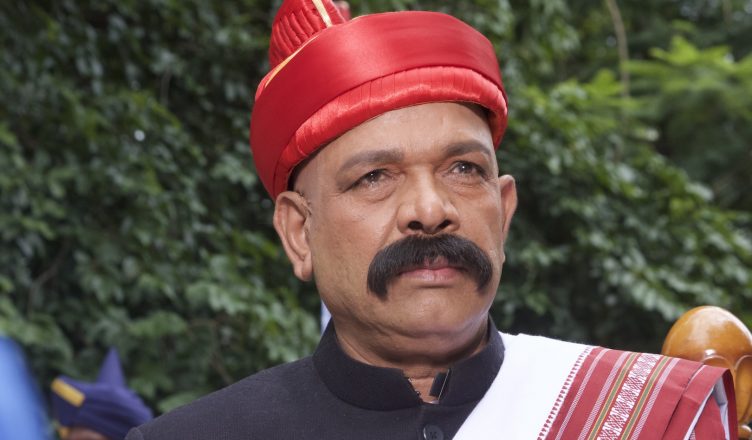
He has enhanced the impact in a lot of films with his intense performances, mostly negative ones. But Govind Namdev has now started to surprise audiences. He played the role of freedom fighter Lokmanya Tilak in the recently released Chaphekar Brothers. And in the upcoming film Solar Eclipse: Depth Of Darkness, he essays 2 roles, one of that of Morarji Desai. In this exclusive chat, Govind Namdev speaks about these 2 films, looks back some of his recent memorable films and also sets the record straight on the Shah Rukh Khan starrer Raees.
Tell us about your experience of playing 2 real life characters – Bal Gangadhar Tilak in the recently released Chaphekar Brothers and Morarji Desai in Solar Eclipse: Depth Of Darkness?
In Solar Eclipse: Depth Of Darkness, actually I am playing 2 characters – one of Morarji Desai and one of Dr Parchure, who was one of the accused of the assassination of Mahatma Gandhi. When you are playing real life characters, you need to do an in-depth research besides the basic research that we anyways do for all types of roles. People know Tilak and Morarji Desai very well. So we have to be absolutely sure that we don’t portray them in an objectionable manner. Hence I had to study a lot. Thankfully, there was a lot of information available about Lokmanya Tilak. I tried to understand how he used to walk, get up, talk etc. Also, the expressions are very important and to get it right was quite a challenge. It’s time consuming but it gives me lot happiness. Moreover, playing such powerful characters is also a learning experience. It adds to your personality. Your thought process changes. We mostly think of ourselves but when we read about these famous personalities, you realize that one should also contribute to society. Chapekar Brothers and many people of those times used to happily accept death sentence. Khushi khushi sooli pe chadh jaate the. Their love and passion for their motherland used to make me cry. That was the time when even talking against the British Empire used to have disastrous consequences. Yet, these people were never afraid for their lives, served the country and when the time, they embraced death as well.
Solar Eclipse: Depth Of Darkness deals with the assassination of Mahatma Gandhi. At a time when some people hail his killer Nathuram Godse as a hero, do you think the film might face problems?
Solar Eclipse: Depth Of Darkness is not a story about Godse or even Gandhiji for that matter. The film is about a situation and it’s the situation that’s the hero here. What was the politics at that time, what were the decisions, how did people react to those decisions etc is what’s the crux of the film. Neither Gandhi nor Godse are shown as heroes in the film. Hence, we are sure that the film will not cause any problems.
Chapekar Brothers faced some issues at the Censors. Do you think Solar Eclipse: Depth Of Darkness might also get butchered similarly?
Again, I don’t really think the film will face any problems with the Censor Board.
When do we see it releasing in India?
The film will release in the West on January 19, 2017 and only then it will see a release in India.
You have done plenty of memorable roles, but most of them were that of the villain. However, you played the role of a conscientious man in Madhur Bhandarkar’s Heroine? How do you look back at that particular role?
Madhur Bhandarkar is a friend. He saw me in that role and asked me if I’d like to play it. Then we had the usual discussions – how to correctly portray the character, how to bring out his moralistic point of view to the fore – and once that was done, I signed on the dotted line. Contrary to beliefs, I don’t think I got stuck in negative roles. I have played a variety of roles. And that’s also one of the reasons why I signed Heroine as it was something different from what I have played in the past. It was a nice experience.
Another memorable role of yours in the recent past has been in OMG Oh My God. Your portrayal of Siddeshwar Maharaj was unanimously loved. There were talks of a sequel to OMG Oh My God. Any update on that?
They just have an idea of the film. It’s been scripted. But chances of it being made are 100%!
You said in an interview that your family members were quite upset since you used to do a lot of villainous roles. Now that they see you doing biopics, has their stand changed?
Yes, it has and they look at it positively. They have also understood that what I am doing is a part of my job. After all, I am just acting. It’s not like I am like the characters I portray on screen. My family members used to argue that I am being looked as a villain – that’s the image that’s being generated. I countered, saying that at the same time, I am also looked as someone who’s doing a good job as an actor!
In the beginning of the interview, you said that essaying characters like Tilak brought a positive change in you. Were you similarly impacted while essaying negative characters?
Impact hota tha par ulta hota tha! Yeh bahut important sawaal tumne pucha hai. By doing the villainous roles, I realized that I was changing. I used to leave all the negativity behind on the film set. And I used to feel very pure when I used to reach home. I used to love my wife more, I used to shower more love on my children! At the same time, I used to wonder what makes a person turn evil? Why did people murder, rape, harm others? You must have also noticed that those who play villains regularly, they were all good-natured in real life. Take Pran for instance. You’ll never hear anything negative about him or his way of working. Same goes for Amrish Puri, Mohan Joshi and Prem Chopra. Ussi kataar mein main bhi khada ho gaya hoon!
There are reports that you are playing Mahira Khan’s father in Raees…
I am not a part of Raees. Maybe, they thought of me for that role. But I am not doing that film. I understand that a lot of articles on Raees mention my name, including on Wikipedia and IMDb. Since, I am not net savvy and not on Twitter, I haven’t been able to clarify about it.
Which other films are you doing?
I am shooting for a film by Lekh Tandon. Manish Tiwari recently started a film and I am a part of it. I have also the upcoming film of Ajay Chandhok.
Your earlier film with Ajay Chandhok, Khallballi: Fun Unlimited didn’t get a release in theatres…
Yes, it didn’t release. It’s a very important and significant flick. Similarly, there’s another film of mine that didn’t release, Dussehra, starring Neil Nitin Mukesh in leading role. It has shaped up very well.
Does it hurt when a film of yours doesn’t get a release as it fails to find a distributor or due to any such reason?
Yes, especially when I have done a good job in a film or when the film is making an important comment. There are some films made just for ‘shauk’ and when such films get stuck, I don’t really feel that bad though!
Mary Kom gets more shows than Entertainment
12:28 PM

In a city like Noida, MARY KOM has an unbelievable 95 screenings daily. KICK had 120, SINGHAM RETURNS had 110 while a film like ENTERTAINMENT had 70. Basically at multiplexes it has more screenings than ENTERTAINMENT everywhere.
The film would have been expected to beat HEROINE which is the biggest opener where female is the major star of the film but on this release it should easily surpass it if the film is to do well. HEROINE grossed around 7 crore nett on its opening day. The film has the external factors in its favour like a blockbuster and even tax free status in imp[ortant states like Maharashtra and and now it remains to be seen if the film anything go for it internally in terms of content.
Should no-pregnancy clause be included in an actress’ contract?
7:57 AM

Bharati Dubey (MID-DAY; March 19, 2014)
While there is no confirmation yet about this, an actress letting go of projects due to pregnancy is not exactly new in Bollywood. It maybe noted here that Kareena Kapoor replaced Aishwarya Rai-Bachchan in the film, Heroine, after director Madhur Bhandarkar learnt that Rai-Bachchan was pregnant.
Interestingly, in a recent interview to hitlist, Vidya had said, “I have signed contracts which specify that I can’t get pregnant for the next two years.” But with recent media reports stating otherwise, the no pregnancy clause has come under the spotlight again.
Mukesh Bhatt, who is producing Hamari Adhuri Kahani starring Vidya Balan and Emran Hashmi, says, “It is mandatory to have a no pregnancy clause as the actress needs to show her commitment towards a project. It is a healthy clause and is needed in today’s times.” Bhatt’s film is supposed to go the floors soon. But now with reports of Balan’s alleged pregnancy, the fate of the film is uncertain. He says that he had met the actress just before she left for the US and will be meeting her once she returns to India next week. “I don’t think Vidya is pregnant. She would’ve told us if she was expecting.I have complete faith in her; she will not keep anyone in the dark. And even if she is pregnant, I am happy for her.”
Given that a lot of money is riding on films — as also the fact that they are all being made in a stipulated period of time — the stakes today are higher than in the earlier days, says Hema Malini. The actress, who was pregnant during the making of Satte Pe Satta, says, “Back then, film shoots would go on endlessly and it was not always possible for an artiste to wait for the producer to finish shooting. Today the no pregnancy clause should be made mandatory, but only for a certain time period, say a maximum of six months. If the artiste gets pregnant before the film goes on the floors, she should inform the producer. But if the film gets delayed for other reasons, then it’s wrong to expect the actress to wait. She can’t be held responsible in such a situation.”
 Some more industry people are
drumming up support for the clause. When Aishwarya was replaced by
Kareena in Heroine, actress and activist Shabana Azmi had tweeted, “Insurance companies in Hollywood insist on many clauses, including no-
pregnancy to safeguard their huge monetary investments It’s not
sexist at all.”
Some more industry people are
drumming up support for the clause. When Aishwarya was replaced by
Kareena in Heroine, actress and activist Shabana Azmi had tweeted, “Insurance companies in Hollywood insist on many clauses, including no-
pregnancy to safeguard their huge monetary investments It’s not
sexist at all.”Madhur Bhandarkar, who allegedly incurred losses to the tune of Rs 4 crore when he realised that Aishwarya wouldn’t be able to do the film due to her pregnancy, had vented his frustration to hitlist, “The entire event would not have taken place if the actress would have informed the state of her health … an impending maternity. The truth was hidden from us.” Indeed, when a huge sum is invested in pre-production — which includes workshops and developing the heroine’s look — a pregnancy can put a spanner in the works. But interpersonal relationships are equally important say some industry insiders.
For instance, producer Ramesh Taurani says that in Bollywood, work is centred around the rapport between the concerned people, and contracts are secondary. He says that it’s alright for an actress to give importance to her personal life. “At the end of the day, it is just about a film and I don’t think it’s a big deal. If a film hasn’t gone on the floors, the question of monetary loss does not arise at all.”
 It may be pointed out here that Kareena Kapoor, who walked out of
Goliyon Ki Raasleela Ram-leela soon after her marriage, allegedly prompted filmmaker Sanjay
Leela Bhansali to say that he didn’t want a married heroine to play
Juliet in the film.
It may be pointed out here that Kareena Kapoor, who walked out of
Goliyon Ki Raasleela Ram-leela soon after her marriage, allegedly prompted filmmaker Sanjay
Leela Bhansali to say that he didn’t want a married heroine to play
Juliet in the film.Kareena makes a valid point: “We are constantly trying to ape the West. If we want the no pregnancy clause to be included in the contract, then actors here should be insured just like they are in Hollywood.”
Lawyer Ameet Naik, a legal consultant to many producers, says that a no pregnancy clause is a must. “The idea is to secure the producer for making a significant investment for his film’s production. The lead actress of a film conceiving during the filming schedule can cause irreparable damage to all stakeholders of the film. Also, there is no insurance cover for such a contingency.”
After 12 years of marriage, Juhi Chawla continues to work in Bollywood, and she is yet to see such a clause. “Today’s world is contract driven. Soon they may have to be signed by all newly married actresses.”