Showing posts with label Haseen Dillruba. Show all posts

Taapsee Pannu returns for Haseen Dillruba 3, with script work officially underway

Taapsee Pannu returns for 'Haseen Dillruba 3', with script work officially underway

The writing for Taapsee Pannu’s third Haseen Dillruba film has begun, promising more seductive thrills, drama, and high stakes
Priyanka Sharma (MID-DAY; May 4, 2025)

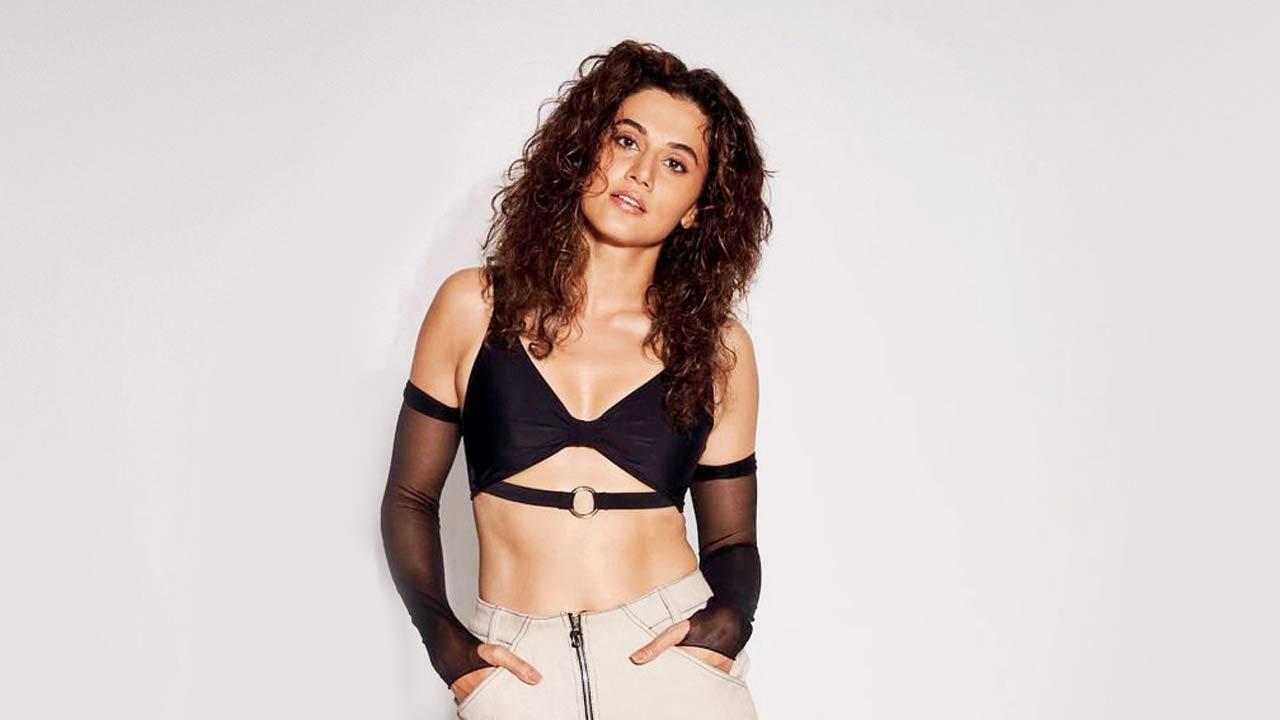
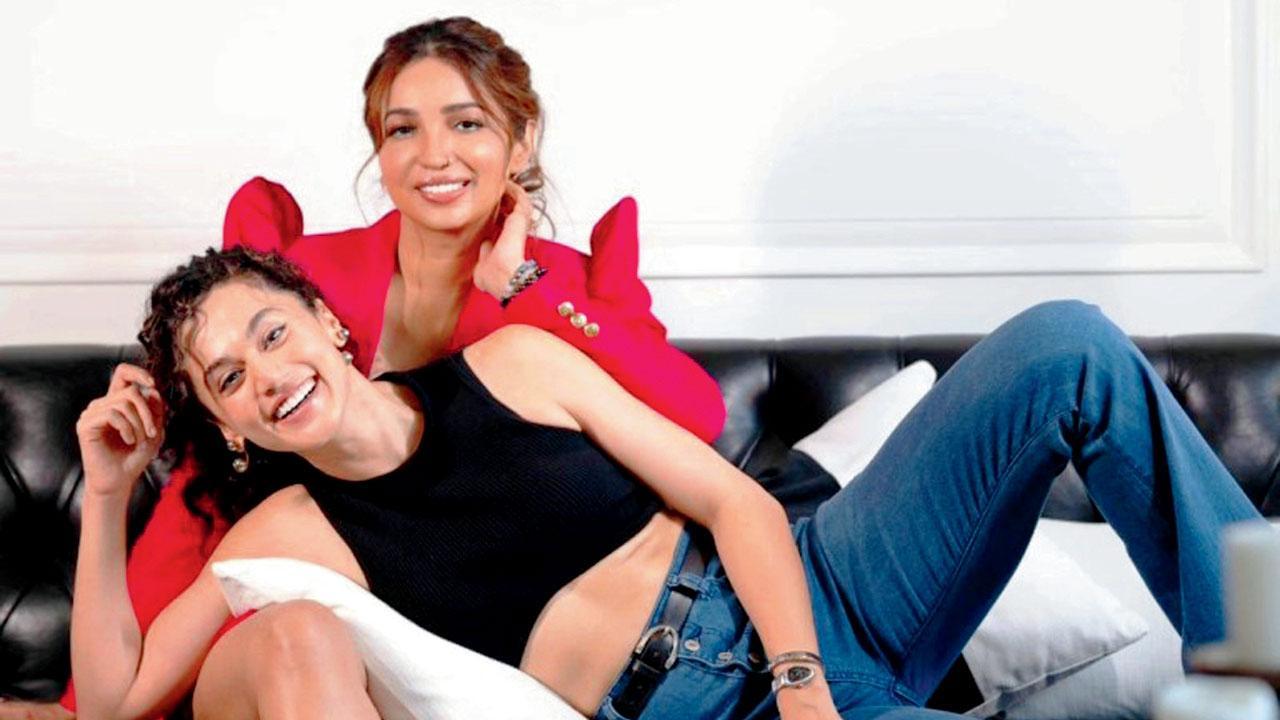
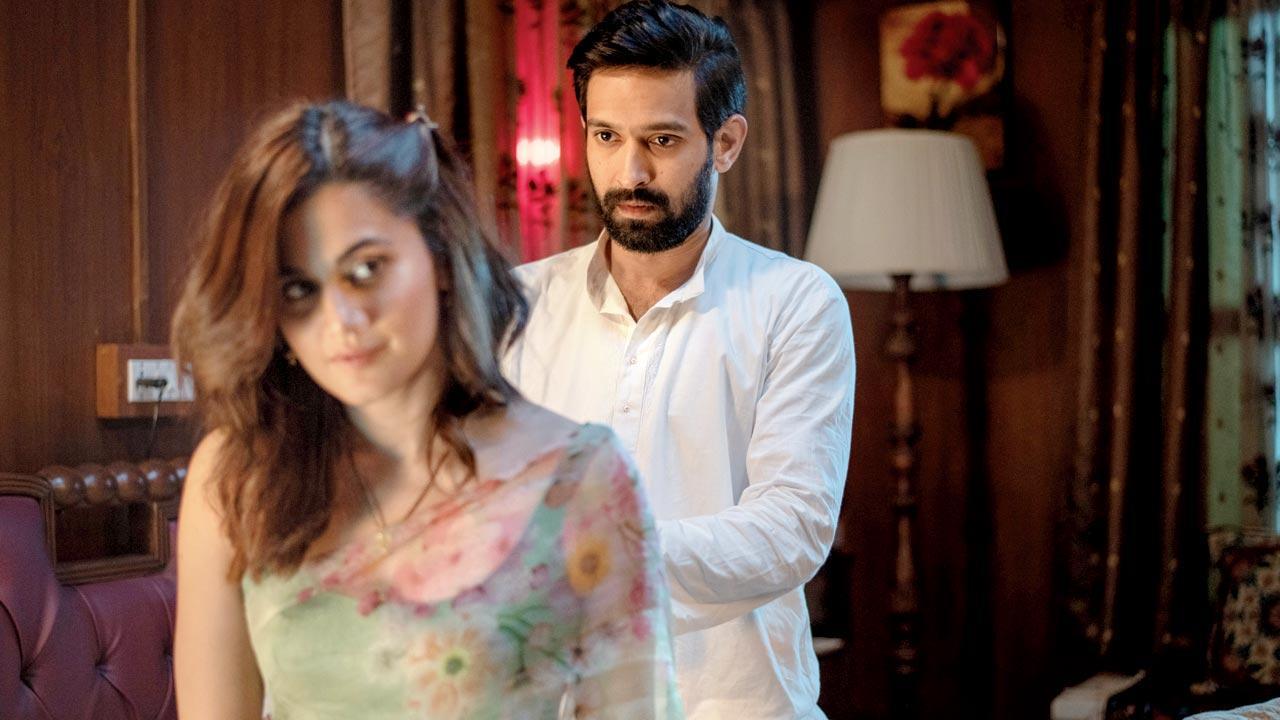
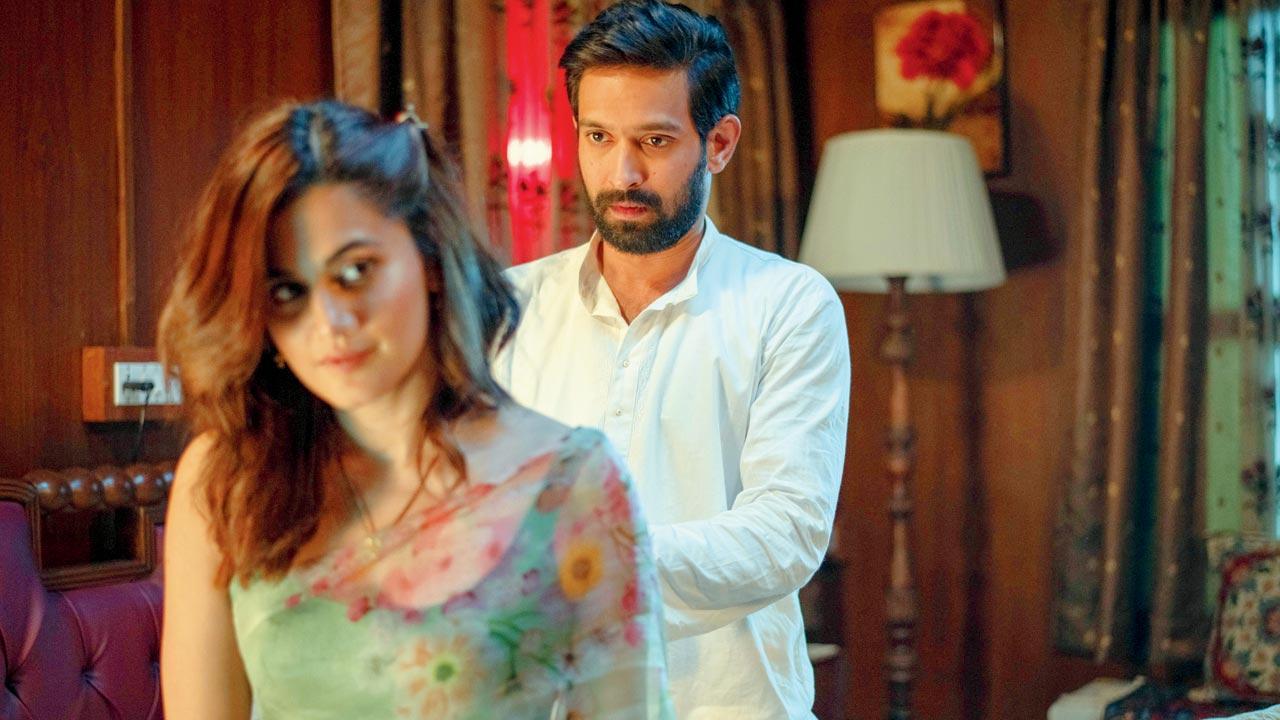
She is back to put her charm on display and seductively woo the men in her life. The fiery femme fatale of one of Netflix’s popular thrillers isn’t done just yet. Taapsee Pannu returns for the third instalment of the Haseen Dillruba franchise. A month after the actor and the film’s writer-producer Kanika Dhillon teased the third edition in an online interaction, mid-day has learnt that work on the script is officially underway.

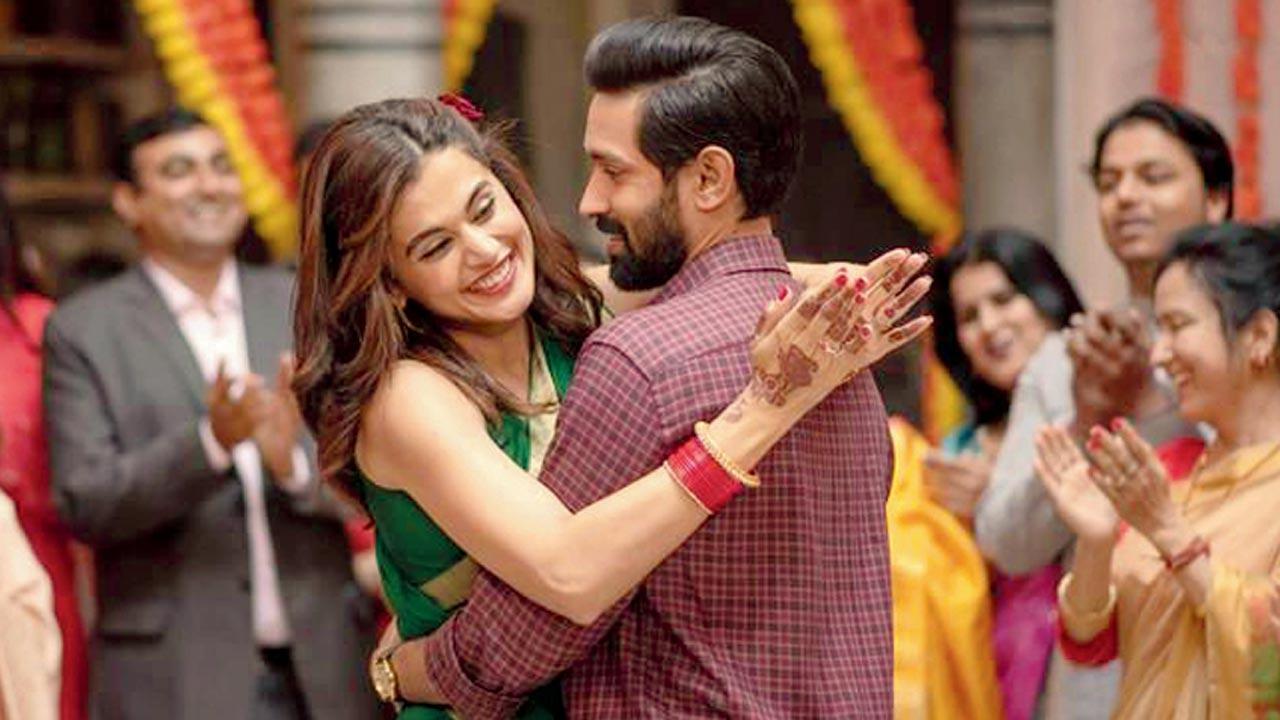
“The prep is in full-swing. The team knew that the love story between Rani and Rishu [played by Vikrant Massey] with its pulpy narrative had scope for another part,” says a source. The romantic crime thriller originally premiered on the OTT giant in 2021, quickly earning cult status for its mix of small-town charm, seductive tension, and unexpected twists. Its sequel, Phir Aayi Haseen Dillruba, released in August 2024, continuing the twisted tale of love.

Now, insiders suggest that the third part will raise the bar even further. “It is one of the most successful titles for the platform. So, the aim is to create a more fun, juicy and thrilling third part,” the source adds. 

Pannu has wrapped up Gandhari and is filming Mulk 2, directed by Anubhav Sinha. Despite her packed schedule, she will dive back into the world of passion and peril by end of the year.

Taapsee Pannu refuses to use a stunt double; we are so much in awe of the leaps she takes-Kanika Dhillon

Taapsee Pannu (in black) fronts Kanika Dhillon’s Gandhari

Having churned out OTT hits with Haseen Dillruba franchise and Do Patti, writer-producer Kanika Dhillon reveals she is developing a drama for theatres after the actioner Gandhari
Priyanka Sharma (MID-DAY; February 25, 2025)

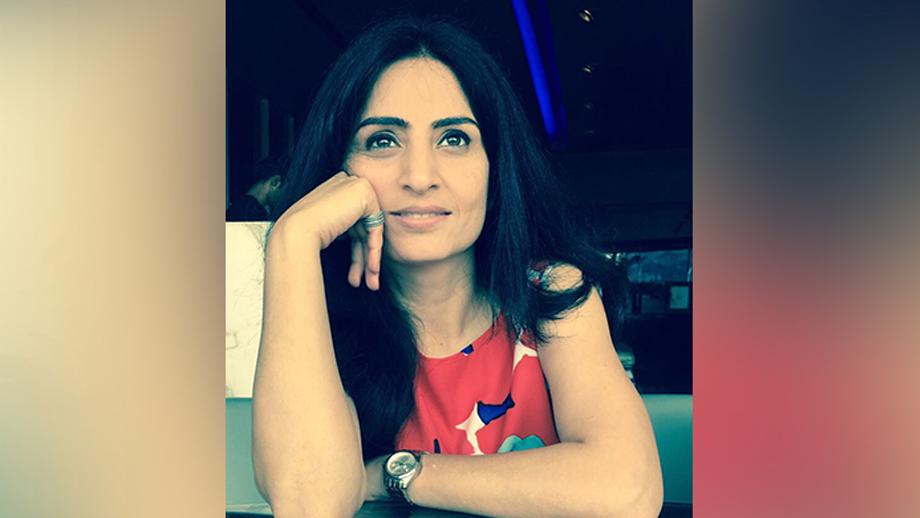
Kanika Dhillon has a new dream. After establishing a wide audience base with the Haseen Dillruba franchise and Do Patti (2024) on OTT, the writer-producer is big-screen bound. “My next after Gandhari will be a theatrical offering. As a writer, I have done big-screen films like Kedarnath [2018] and Dunki [2023]; now, as a producer, the big screen is the dream,” Dhillon reveals.

So, what’s her next all about? She remains tight-lipped about the details, only saying, “The story will be drama pro max.” But before she sets foot in the world of drama, another genre has her undivided attention—action. Gandhari, which marks the writer-producer’s reunion with her frequent collaborator Taapsee Pannu, is currently being shot. Devashish Makhija’s directorial venture revolves around Pannu’s protagonist, a mother who is out to rescue her child.

Dhillon is evidently excited about foraying into the action genre, as she says, “I love action films. Taapsee, at one point, was keen to do action. Our stars usually align. When you start something new, you need someone to take that leap of faith with you.”

In Pannu, she has found a collaborator who, like her, goes all out when telling a story. “Taapsee refuses to use a stunt double. In one moment, I see her pulling off a stunt and we are all clapping, and then I wonder, ‘Has she landed well?’ We are so much in awe of the leaps she takes,” Dhillon shares.

The writer-producer recalls that when Gandhari was announced last year, the industry was “curious” about how Pannu and she would tackle the genre that is believed to be a male domain. Over her 18-year journey, Dhillon says she has battled many such perceptions steeped in sexism. “First, they used to say pulp doesn’t work; then they said women don’t write pulp. Today I am called for panels and they say, ‘You have created an only-pulp franchise.’ Before I get a thumbs up, I always have to cross a ‘No’,” she says, adding that gender stereotypes in the industry aren’t only restricted to what women write, but also extend to their appearance.

“Initially, I used to hear remarks like, ‘Have you come to audition?’ But I decided that I won’t hide behind mota chashma and kurta, or any stereotype of how a writer should be. So, I started dressing up. I was furious with that condescending judgment.”

At 17, I was just competing, just chasing. At 37, I have stopped running the race-Taapsee Pannu


Anshul Chaturvedi (BOMBAY TIMES; August 22, 2024)

Taapsee Pannu talks about the journey from ‘running like a headless chicken’ in her 20s to the sorted, more self-assured 30s.

You turned 37 this year. Many years back, Vidya (Balan) had said in an interview to us that ‘at 34, I feel much more confident than I was at 17 - I don’t miss the younger years, I don’t regret ageing.’ Is the sentiment the same with you?
Yeah, yeah, same here. I 100% agree. Mere profession ki demand aisi rehti hai ki tum regularly accessible raho, ya regularly media se baat karte raho, but I’ve a life beyond films. My time is very precious. And my mental state is very precious to me. So I’ve started protecting myself in terms of who I expose my mind or myself to. I don’t want to lose my vulnerability by trying to build a wall and be the template type for everyone just because that’s what sells or that’s how you should be. I don’t want to get affected very easily.

This comes with contradictions, doesn’t it? Building a complete wall changes your personality. But being unguarded lets people walk all over you. You find your mid points, your windows in the walls?
Yes, yes. One of my reasons to become an actor was not to do a 9-5 job. Now if I start building a wall, then it will start feeling like a 9-5 job. You are always second-guessing the intention of the person sitting across you – which is just occupying too much of my mindspace when I’ve so many other things in my life to do, things that are not only about my image or my work. So I started protecting myself. I decided that now, I am going to expose my mind or my ideas to only people who I know are safe spaces. That is why I have (in) the last couple of years stopped talking to a lot of people. I kind of don’t go out and be seen just because ‘jo dikhta hai woh bikta hai’.

I have stopped running the race of being the most seen, the most viewed – the search for the superlative adjective, mera ab khatam ho gaya hai. I have realized nothing is the ‘most’. No matter where you reach, there will always be people above and below you. There is no point in running that stupid race. I want to enjoy the time I’ve here rather than always trying to run behind a milestone – and then reaching there and probably realizing ‘oh abhi toh kuch aur aa gaya hai’. It’s never gonna end in this profession.

In what ways are you at 37 different from what you were at, say, 17?
Every way. I think I have much more control over my mind. It’s not as easy to trigger me now as it was probably at 17. Age se hi fark padta hai woh.

But there is no guarantee of age equals maturity, is there?
17 pe it will be very easy to trigger someone. Now, obviously, people can still continue to be like that. But that is the difference in me. Uss time toh I was like the majority, but now I feel it’s not easy to trigger me because I kind of started to see things from a perspective. Does it even matter in the long run? Why am I investing my effort and time on this right now? And I realized there is nothing called coming first anymore. It’s about whether you are really happy while doing what you are doing every day.

Otherwise, I was just chasing, I was just competing in everything. Competing at getting maximum attendance to scoring maximum to winning the most number of accolades to all these competitive exams where you are given rankings. All these things, they have changed now. And I think a clarity of priorities has now come to me – it had in fact started coming to me as my 30s started.

“The 30s” is a tricky space – so much is written about it on social media. For many, hitting 30 is like ‘the best years are after me now’, that sort of sentiment. There is also the age-related stereotyping in industries such as showbiz. How did you handle the 30s transition in an industry where everything is so magnified, literally, wrinkles and beyond?
My 20s went in coming to terms with the fact that I’ve become an actor. I was wrapping my head around this profession. Meri life mein most things have happened late – compared to what I see girls doing now. Though I have no regret. I’m so glad I completed my education properly. Then I started from scratch. I went south and learnt a new language. I’m glad that I went through the drill because it kind of honed my patience and my tolerance. The 20 to 30 transition was therefore mostly accepting ki haan, now I know where I am and what I’m doing. Most of my contemporaries – not contemporaries, they’re actually relatively junior – they start in their teens. Either they have been made to go into this profession or they don’t know any better, so everything happens very early.

Main jab 30s mein pahunchi toh maine realise kiya ki – I didn’t even realize where my 20s went. Like when I started off in the Hindi film industry, I was probably in mid-20s already, which is late for a lot of girls to start. I keep thinking about it ki yaar maine apne career mein woh rom-com wali cheezein kari hi nahi hain. Kyunki when I came here, I didn’t have an option but to take up the more serious parts because there were other relatively younger or relatively more popular girls who were doing my age wale parts. By the time I became popular and influential enough, I had lost that 25-26-year-old space. I had crossed 30. Now, I’m too old to do the parts that I really wanted to do when I was 25-26. I was forced to get older roles because those were the only parts open for someone like me. And now, I don’t have an option. I don’t really know also how much I can add to a character in her 20s because the twenties have changed so much from 10 years back, when I was that age.

But I have no regrets. I really feel happy that I am this age. They also give me roles which they say are aged 28 – which is supposed to be a golden number, apparently.

There are a lot of girls who are not okay with the script saying this character is 32 or 33. And they are like why can’t it be 28? And I am like how does it make a difference kyunki screen pe koi bol nahi raha hai tumhari age. It is in your head ki you are 28 or 32.

But I feel I have a better grip over my character if it’s in the 30s because I kind of knew myself better when I was in 30s than in 20s. Because 20s mein hustling hi itni zyada chal rahi thi ki I was like a headless chicken – achha abhi south mein ho gaya, abhi Hindi mein aana hai, next kya karna hai, main ye nahi kar sakti, mujhe woh mil nahi raha hai. With so much going on, I didn’t have the frame of mind to sit down and realise ki hota kya hai ye 20s? It just went in hustling – I didn’t enjoy them.

Even on screen, I never got to play someone in 20s. I was paired opposite people almost double my age in my south career. So much so, that there was a point I remember when an actor – who was my age or a year or two older – refused to star opposite me and said no, she looks older than me. Because I had worked with actors who were older to him. So, for him, I was older. So, my age was actually defined by my co-actors who I work with!

It’s not like that has gone away. It’s there even now. There are so many times that actresses are not chosen opposite certain stars saying that iski screen age zyada lagti hai. That’s what happened to me in those early years. I took an opportunity to star opposite big stars, thinking it’s a big film, only to fall into the trap and realize that younger stars now don’t want to work with me.

Now, of course, my trajectory is such that it doesn’t really matter to me anymore. But even now, the big so-called young superstars who are 40+ don’t want to star opposite girls who are 30+. They themselves might not be young, but they want younger girls opposite them.

It doesn’t affect me as much it affected me 10 years back. Now I just laugh at it – how frivolous and shallow it is.

No regrets, though?
No. Regret is too heavy a word. But yeah, I miss having those rom-coms in my kitty where I could look like a college girl and dance around. Last I tried to do it in Judwaa 2 (2017), when I was 30. And people just couldn’t digest it at that point. They were like, ‘No, you’ve gone too far in a different direction. It’s awkward to see you like that (laughs).’ So, yeah, I lost out on that.

Actresses try to do the fun, younger stuff first. I didn’t have that option, so I had to take the heavy lifting stuff first and then there was point of no return.

Maybe Vidya ke saath bhi yehi hua hoga, maybe Tabu ke saath bhi yehi hua hoga. My question is why do we wait for these actresses to turn so called middle-aged to realize how relevant they are when they have been consistently doing that level of work?

Our love stories actually don’t give much space to older women in the way they are written, do they?
You know, not just writing, I’m telling you from the other side, because I have a script – which is about this mid-30s woman who falls in love with a much younger boy. And you won’t believe it, the problem is the people who are financing it. Ek major platform se toh we got a mandate like – how is this even right? Because a mid-30s woman – she was married and had a kid with someone else, and later on, she
falls in love with someone else. It was rejected on ethical grounds. That this is just so not right! And imagine an OTT platform telling you that right now. Theatre ki toh hum abhi baat hi nahi karenge.

I remember there was a proper upmarket woman – like the mother of someone who’s my age – who, after seeing Manmarziyaan said to me, ‘But that was wrong, haan. What the character did with Abhishek Bachchan (his character). Itna achha aadmi tha. Shaadi karne ke baad why did your character go back to Vicky Kaushal’s character?’

Matlab, even women will not see a woman as a normal human being who can make mistakes. She should always be projected and presented like a devi. There are the two Ds – Devi or Daayan. It cannot be midway. I remember this during Thappad also – that you put her on such a pedestal that it is difficult for her to be treated like a normal human being. I had to take help of a writer like Kanika (Dhillon) who wrote Manmarziyaan, who wrote Haseen Dillruba, and ended up doing those grey characters. So much so that now if I do too much of a white character – people will not accept it (laughs)!

Which I’m very happy about. I’ve no qualms about it. Like I said, I have missed that bus of doing the righteous, miss-goody-two-shoes kind of roles, but I am glad that this lane that I have chosen doesn’t have many who are like that.

Even the ones who I feel have the potential to be in this lane – probably they have still not settled the fact in their head that this is a good enough lane and a competitive enough lane to be a part of. They still think that to be that big Bollywood heroine the only raasta is the mainstream, classic way.
Which wasn’t your route. When I entered the Hindi film industry, I realized that there are far more good-looking women who are able to do that stuff (mainstream) very well. I can’t compete with that. I decided I might as well push myself in another direction rather than force-pushing myself in these big commercial films where either I will not get through at all, or even if I get through it, it will be the leftover stuff. Now that I’ve kind of become a producer and I’m trying to put together stuff, I’ve realized how even women in the industry think when they approach a subject. In interviews, they talk a lot about how there are not enough scripts or there are not enough people making such films…

…but when such scripts come, they don’t take it?
No, they don’t, and I have seen this first hand, and so now my whole perspective has changed. There are a lot of things that I’ve learnt after becoming a producer.

I may well be wrong, because I’m the wrong gender to say this – but is it a mistake to assume that all women are feminists?
Oh, yeah, and it is also a mistake to assume that all men are not feminists. I have come across so many of them who are more feminist than probably I was. Feminism is not gender specific.
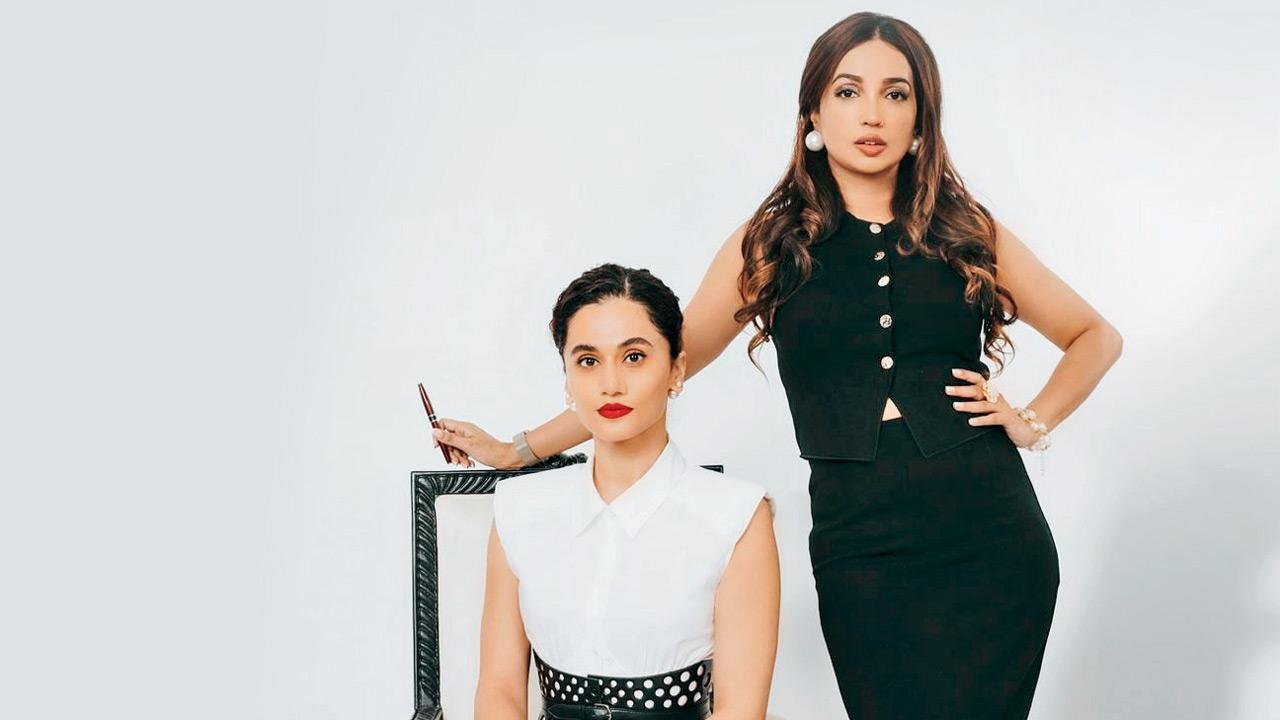
I did spy action films 10 years ago when they weren’t a trend-Taapsee Pannu

Taapsee Pannu: ‘Did spy actioners when they weren’t a trend’

Reprising her morally grey role in Phir Aayi Hasseen Dillruba, Taapsee on how her film choices aren’t driven by box-office trends or people-pleasing attitude
Priyanka Sharma (MID-DAY; August 9, 2024)

What was it about Rani that we rooted for her in Haseen Dillruba (2021), despite knowing that she was a murderer? A part of the magic lay in the writing. But credit goes equally to Taapsee Pannu who brought her feisty attitude as well as vulnerability to the character. Reprising the role in Phir Aayi Hasseen Dillruba, the actor admits that playing the morally dubious Rani is tricky.

“With slightly grey characters, the idea is to approach them in such an honest way that the audience feels that even they can make such a mistake. If you are able to convince viewers of that, you are victorious. In the sequel, Rani is doing all the wrong things, but for the right reasons,” she grins.

In Phir Aayi Hasseen Dillruba, Rani and Rishu—essayed by Pannu and Vikrant Massey respectively—continue to evade the police, but are faced with a new romantic entanglement in the form of Sunny Kaushal’s character. Getting into the Netflix sequel, Pannu kept in mind what the audience liked about her character.

“I noticed the things on which memes were made. People liked the way Rani uses gender not to be a victim, but to get her way. So, I retained that.”

In her 11-year Bollywood career, she has steadily carved an image of an actor whose films spark discourse—be it about consent through Pink (2016), or domestic violence with Thappad (2020).

Tell her it’s a fantastic place to be in, and she laughs, “It has become a borderline problem. It has become difficult to get cast in a film that doesn’t have a message. Nevertheless, I’m not regretful because people work hard for decades to create some kind of image.”

With image, come expectations. Pannu is aware that the audience expects message-driven movies from her, while a section feels that she only picks roles of the “alpha” female. Does this get to her?

“It disturbs me at times. But then I [remind myself] not to lose myself as an actor. I constantly tell myself that I won’t sustain in the long run if I do things to please people. So, I only do things that I feel good about. I’m here for the long run; I’m not a trend. I’m not here to be the actress of the season. I did spy action films 10 years ago [Baby and Naam Shabana] when they weren’t a trend. So, I don’t want to do that now. I don’t like being a part of a trend. People might call me pompous, but I would prefer being someone who can start a trend. I don’t know if I’ll be able to do that.”

Anurag Kashyap rightly says Taapsee Pannu and I are both mad. Rani is a mix of us-Kanika Dhillon

Kanika Dhillon

As netizens critique Pannu’s ‘toxic’ character in Phir Aayi Hasseen Dillruba, writer Kanika welcomes the debate; says there must be conversation about imperfect people
Mohar Basu (MID-DAY; August 5, 2024)

In Kanika Dhillon’s words, crocodiles star in a leading role alongside Taapsee Pannu, Vikrant Massey and Sunny Kaushal in Phir Aayi Hasseen Dillruba. Any Bollywood film lover can guess where the inspiration stems from.

“I have been a Khoon Bhari Maang [1988] fan. I’ve always wanted to write a moment that would be a hat-tip to that film. The shot in the trailer, where a crocodile comes next to their boat, is personal,” smiles the writer-creator.

Coming three years after Haseen Dillruba (2021), the romantic thriller follows the lives of Pannu’s Rani and Massey’s Rishu as another suitor enters the equation. Dhillon says the sequel is a pulpy offering, just like the first part.

“I loved creating this world of Haseen Dillruba. The audience’s love was unprecedented. Taapsee was gung-ho [about the sequel] from the concept level. Vikrant backed me completely. The mauj comes from my artistes who tell me to make a movie that’s raw and riskier. Now, we have gone bolder. The audience reminded me last time that they are ready for risqué stories. So, we shouldn’t fear giving them the unconventional.”

But the opinions on the trailer have come by the bulk. The line about Rani being ‘badchallan’ has triggered a dialogue about toxic stories being glorified. The writer-creator says she has been tackling the character’s toxicity since part one.

“A section of the audience picked on these aspects of the film, and rightly so. These are healthy debates. Movies about imperfect characters and their flaws must start these conversations. All reactions that come to me are welcome. But I would feel bad if my stories are met with indifference. I love being polarizing. I’m an artiste. If I have written a story, I’m aware that it is made for all factions of society.”

Rani is the centrepiece of the Netflix film, as she uses love and betrayal to her advantage. Does Dhillon view the character as an alpha?

“Rani is the heroine, Rishu is the hero, Abhimanyu [Kaushal’s character] is the catalyst to the plot. I am Dinesh Pandit [a bestselling novelist in the film], and Pandit’s words dictate everyone’s actions. He is the alpha. The film is edgy, wicked and messy, and the audience should know this is in no way a sanitised world. My actors helped me land the story the way I wanted. Anurag Kashyap rightly says Taapsee and I are both mad. Rani is a mix of us. Taapsee is a woman of spine, and someone who stands her ground.”

Kanika Dhillon plans a cinematic universe with Taapsee Pannu’s Haseen Dillruba and Kriti Sanon’s Do Patti characters

Women run the world

Writer-producer Kanika plans to create female-led cinematic universe with crossover between Taapsee’s Haseen Dillruba and Kriti’s Do Patti characters
Upala KBR (MID-DAY; June 29, 2024)

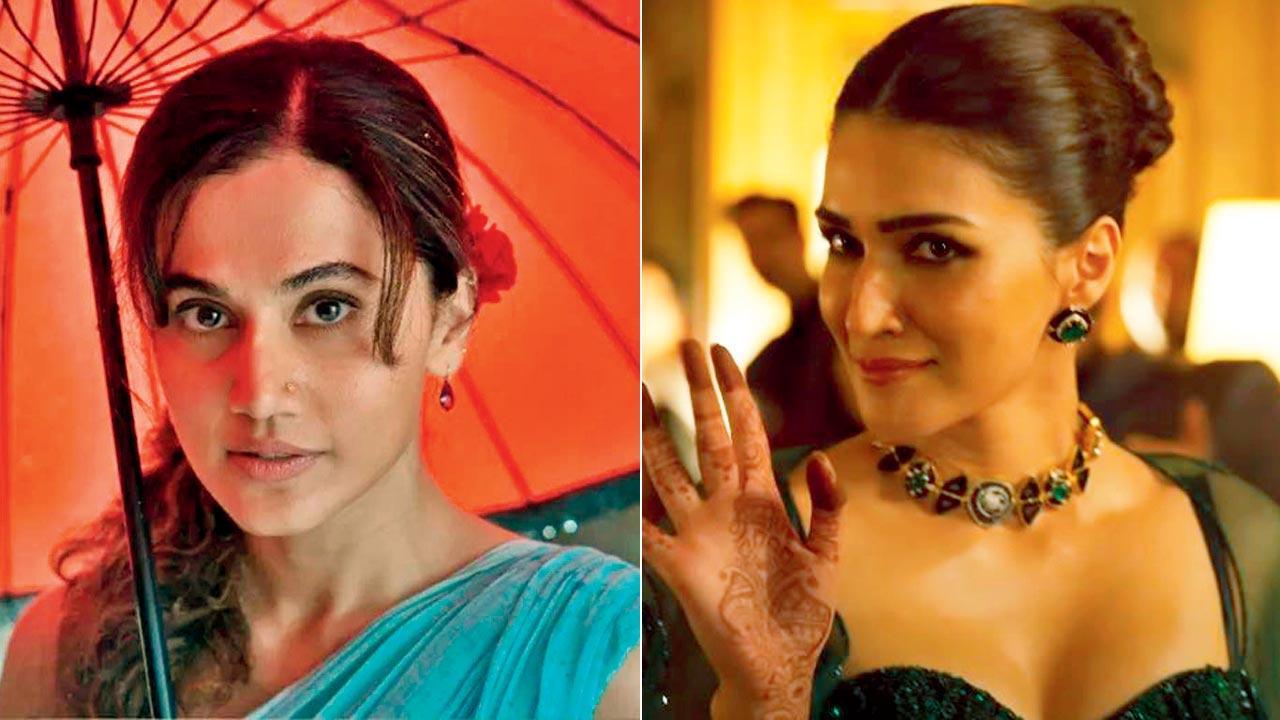
Ever wondered what would happen if Kangana Ranaut’s quirky Bobby from Judgementall Hai Kya (2019) met Taapsee Pannu’s fiery Rani from Haseen Dillruba (2021)? Writer-producer Kanika Dhillon often finds herself toying with that thought. In recent times, the screenwriter has given Hindi cinema many strong women on screen, be it in Manmarziyaan (2018), Kedarnath (2018) or Haseen Dillruba. Now, it is heard that Dhillon, who has turned producer with the upcoming Do Patti, is considering creating a cinematic universe populated by some of these characters. Like in YRF’s spy universe, these stories will be distinct, yet see the characters crossing paths with each other.

One could argue that in terms of the genre their films belong to, the characters are far removed from one another. But what unites them is that they are fierce, decisive, and not ones to shy away from making mistakes.

A source reveals, “Haseen Dillruba emerged as the most-watched Hindi film on Netflix in 2021, leading the makers to create the sequel, Phir Aayi Hasseen Dillruba. Then, there is Do Patti that sees Kajol as a cop chasing down Kriti Sanon’s character Saumya Sood. Kanika is planning to create a crossover universe with certain characters soon.”

Having launched her production house Kathha Pictures in 2023, Dhillon has chalked out plans for the way ahead.

Eager for the new chapter, she says, “My women are imperfect,  strong-headed, and make stupid decisions. There is a natural tendency to create these characters that resonate with people. I have some strong female-led stories in the pipeline, but it’s a bit early to talk about the star cast.” 

Is there a plan to build a cinematic universe comprising these characters? Say, a crossover between Pannu’s Rani and Sanon’s Saumya?

“Yes, why not? There are a lot of strong, messy female characters in my upcoming movies. At the same time, Rumi from Manmarziyaan, Rani from Haseen Dillruba, and Bobby from Judgementall Hai Kya were loved. I’m hoping the [upcoming parts] will receive as much love. So, isn’t it the best time to bring unique stories and strong characters to cinemas?”

Taapsee Pannu never asks, 'who is the male lead'?-Kanika Dhillon

Kanika Dhillon: Taapsee Pannu never asks, who is the male lead?

Describing Phir Aayi Hasseen Dillruba as ‘wilder’ than its 2021 original, Taapsee Pannu and writer Kanika Dhillon on how they push each other to create spirited female characters
Mohar Basu (MID-DAY; September 21, 2023)

You may not always agree with the characters’ decisions, but they don’t give a damn. That is the beauty of the parts created by actor Taapsee Pannu and writer Kanika Dhillon—from Manmarziyaan’s (2018) Rumi to Haseen Dillruba’s (2021) fiery Rani. The actor-writer duo are now ready with the romantic thriller’s second instalment, titled Phir Aayi Hasseen Dillruba (PAHD). Dhillon had so much fun creating unpredictable characters in Pannu’s Rani and Vikrant Massey’s Rishu that a sequel, she says, was inevitable.

“I didn’t want new lead characters for the sequel. We have gone more wicked with Rani and Rishu. During the narration, Taapsee joked, ‘Aapne kya kha ke script likha?’ Phir Aayi is wilder than the first part,” says Dhillon.

Lust and betrayal were at the heart of the 2021 Netflix film, which told the story of Rani who pursues a love affair after marrying the mild-mannered Rishu. Sunny Kaushal joins the cast for the Jayprad Desai-helmed sequel.

Even as she is tight-lipped about how the murder mystery moves ahead, Pannu says, “Here, the situations are messier. I knew I had to up my game. Rani is a seductress. This time, we knew that being daring will pay off, because it did the last time. The audience enjoys radical things. I didn’t fear failing anymore, so I played it with abandon.”

Though Haseen Dillruba was lapped up by viewers, Rani’s decisions were widely debated. How does the judgment affect their work?

Pannu reflects, “We faced backlash and judgment for Manmarziyaan too. But both characters are decision-makers. It’s never the men who force them; it’s their choice. Feminism is not about equal opportunity alone, it’s also about a woman’s free will. I like flawed characters that kickstart a conversation.”

Pannu admits that the ability to remain wild takes a hit as one grows up. But their pursuit to bring uninhibited women to screen bonds Dhillon and her. After PAHD, the two have Dunki in the pipeline. “We are now making wilder characters. Creating something predictable doesn’t work for either of us,” says the actor.

Dhillon adds, “Taapsee’s faith in me makes me take risks. There have been times when I have considered other actors for roles that I’ve written, but they ask questions like, ‘Who is the male lead?’ Taapsee never asks such questions. She is [confident] about shouldering a film.”

My personal ego is way insignificant in front of a good script-Taapsee Pannu

MY PERSONAL EGO IS
TOO SMALL IN FRONT
OF A GOOD SCRIPT

Having done back-to-back thrillers, Blurr being the latest, actor Taapsee Pannu says she doesn’t care about the ‘slotting’
Monika Rawal Kukreja (HINDUSTAN TIMES; December 12, 2022)

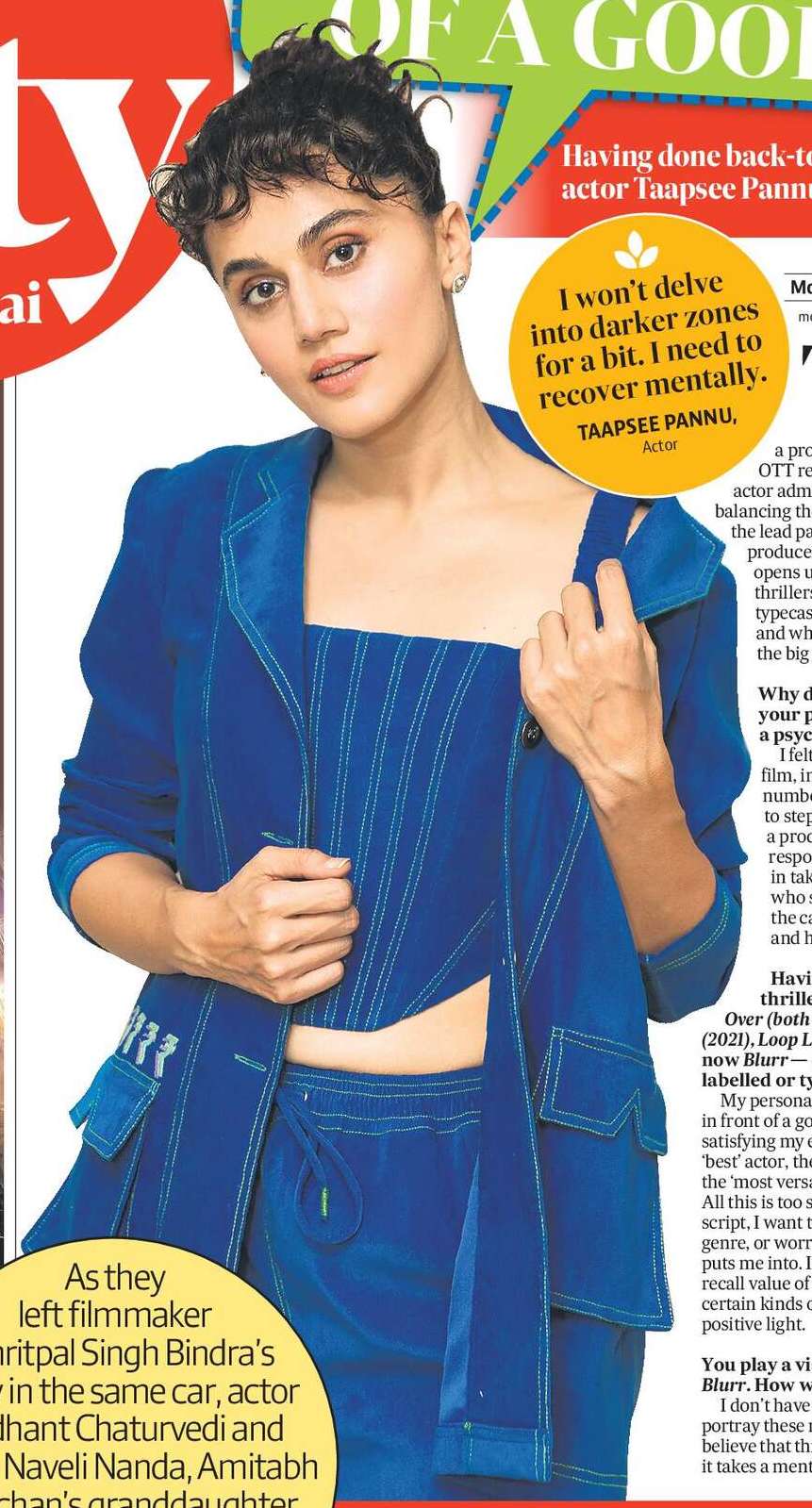
Taapsee Pannu is in a “happy, comfortable space”, having finally debuted as a producer with her latest OTT release Blurr. However, the actor admits it wasn’t easy balancing the “dual task” of playing the lead part and being the producer. In a candid chat, Pannu opens up about plans to not do thrillers for sometime now, the typecasting culture in Bollywood and why she wants to return to the big screen soon. Excerpts:

Why did you choose to make your production debut with a psychological thriller?
I felt that this is a controlled film, in terms of locations and number of people, so it’ll be nice to step into and test my skills as a producer. Also, I wanted to be responsible and instrumental in taking decisions in terms of who should be in the film in the capacity of cast and crew, and how the film should look.

Having done back-to-back thrillers such as Badla, Game Over (both 2019), Haseen Dillruba (2021), Looop Lapeta, Dobaara and now Blurr — do you fear being labelled or typecast?
My personal ego is way insignificant in front of a good script. I can’t keep satisfying my ego of being called the ‘best’ actor, the ‘highest-paid’ actor or the ‘most versatile’ actor in the industry. All this is too secondary. If I get a good script, I want to do it irrespective of the genre, or worrying about what slot it puts me into. I feel if you have a strong recall value of me as an actor for doing certain kinds of roles, I still look at it in a positive light.

You play a visually impaired girl in Blurr. How was the prep like?
I don’t have any tricks as an actor to portray these roles than to actually believe that this is happening to me. So, it takes a mental toll and burns me out. After Blurr, I decided to just go light on my filmography and not delve into darker zones, because I really need to recover mentally.

On set, did the producer in you take over sometimes while acting?
Before the day started rolling and after pack-up, I was fully in the producer zone, but even while acting, I was subconsciously bothered. And that dual role of being a producer kept haunting me a bit. After the film got over, I told myself that I need to choose either for a particular project and not be an actor on board, unless absolutely necessary.

Lately, a lot of your films released on OTT. Do you miss being the quintessential big-screen heroine?
I didn’t have an option with those projects coming on OTT because that was the best possible medium to at least present my work to audiences, when theatres were shut. I’d still want to go back to being on the big screen because that’s what I’m an audience to. However, after Haseen Dillruba, I saw the plus side of OTT — which is accessibility and its insane reach.

But isn’t the novelty factor getting lost on OTT platforms, with several films and shows being made on similar lines?
No. Just because one kind of a genre, a whodunit thriller worked, doesn’t mean people stopped making them. Be it films or docudramas about these psycho killers, they’re a rage right now on OTT. So, you won’t stop making a film on them just because so many such series already exist.

Now that Blurr is over, how are you getting back to your lighter self?
After Blurr, I immediately jumped into Woh Ladki Hai Kahaan, an out-and-out comedy. The director told me, ‘You’ve gone through a lot in the last couple of years with the kind of films and roles you’ve done. For this, I just want you to be yourself and have fun’. This was literally the only brief I got for my character. In fact, all my successive films that I’ve done or signed up, including Dunki, are all relatively light and more fun. So, that helps me detox.

Strong, real, imperfect: Is OTT redefining female characters?


Renuka Vyavahare (BOMBAY TIMES; September 17, 2022)

Kate Winslet’s scruffy, vaping detective in Mare Of Easttown went on to become one of the most-talked-about characters on OTT last year. The actress attributed the success of the series to viewers, who are ‘starved’ of shows that realistically portray women and their bodies. She revealed in an interview that she was fascinated with people falling in love with a wildly flawed, messy, broken, fragmented, difficult woman. The moral ambiguity of Jennifer Aniston’s Alex Levy in The Morning Show was equally intriguing.

Are women-fronted stories on streaming platforms increasingly straying from the conventional perceptions, even in India? Do women no longer need to be good or bad, victims or warriors, in order to be leading ladies?

‘OTT HAS CREATED SPACE FOR FULL-FLEDGED FEMALE CHARACTERS’

It is not that Shefali Shah hasn’t impressed us with her performances on the big screen for years, but today, she is among those actresses who are setting the OTT space on fire. The digital space has changed the course of her career. She says, “OTT has definitely changed the game for me. Unfortunately, a lot of heroines were accessories in films before. On OTT, there are full-fledged female characters. They are not just fillers for a project around the main hero.

Shefali adds, “Characters are now written for women of all ages. In commercial cinema, the shelf life of women for lead roles used to be between 18 and 25 years. Uske baad seedha maa bana do. Like in real life, even in cinema women would be recognized by the relationship they had with the key people. Mera role kya hai? Iski maa ka role hai, uski behen ka role hai. Woh sab relationships hai. Mera role kya hai? It’s ridiculous and changing finally.”

‘IN THE ’90S, ACTRESSES HAD TO PORTRAY A GLAM & DAINTY IMAGE BEFORE LANDING A SUBSTANTIAL ROLE’

Raveena Tandon, the quintessential ‘sheher ki ladki’ of Bollywood in the ’90s, made her OTT debut and a powerful comeback to acting with the web series Aranyak. The whodunit set in the hills showed the actress in a completely different light. But why didn’t Bollywood trust her more often with such roles? 

Raveena says, “The film industry is evolving, and female-led stories have found a home today, on streaming platforms and in Bollywood as well. If you look at the 90s and early 2000s, actresses had to portray a glam and dainty image for years before landing a role that would actually do justice to their acting prowess, but with streaming platforms, that gap has bridged. The streaming space definitely allows for more freedom to explore and tell more nuanced female-led stories.”

She further adds, “My character in the series – Kasturi Dogra is one of the main reasons why I chose Aranyak for my streaming debut. She is a strong, ambitious cop, but not perfect. Aranyak and many other stories today are those of real, strong, imperfect women that deserve to be told.”

‘WE CAN NOW WRITE STORIES OF FIERCE, INDEPENDENT, IMPERFECT WOMEN’

Screenwriter Kanika Dhillon (Haseen Dillruba) agrees that OTT has changed the game for female characters. She says, “OTT is definitely giving a medium to storytellers where we don’t need to portray unidimensional women, or women as a subplot to the men. We can write them as ‘leading ladies’ in the true sense. Historically, the term leading lady is used for a female actor paired opposite the male actor leading the story, however, small or insignificant the role, as long as there is a romantic angle. But I am glad, we can now write stories of fierce, independent, imperfect women who truly lead stories and carry the project on their shoulders.”

Speaking of the business and creative point of view, she explains, “OTT has a major role in providing the platform that can make these female stories economically viable, give them reach and an audience, at par with a male leading the story. When I write for OTT, I am unfettered by the norm, historical patterns, and market diktats, compared to other mediums. So yes, I can definitely have my women go the Madonna route. As she says, ‘I am tough, I am ambitious, I know what I want and if that makes me a b***h, okay!’ Rather than a coy, de-mure, lovable ‘Hindi film heroine’! And with this kind of an attitude, I can write my characters without adhering to stereotypes of a certain approved look and standard of beauty or behaviour.”

‘OTT HAS MORE WOMEN IN POSITIONS OF POWER SO THAT HELPS IN GETTING NUANCED FEMALE STORIES ACROSS’

Renuka Shahane wrote and directed Tribhanga, a film that follows warring women from a dysfunctional family, starring Kajol, Tanvi Azmi and Mithila Palkar. As a writer and director, she says, “I couldn’t get my mind out of Mare Of Easttown. OTT allows you the space and possibility for nuance. When you go to a theatre to watch a film, the idea is to get entertained. There is nothing wrong with that, but it keeps you from having certain emotional experiences. OTT exposes you to global content, so you also feel compelled to follow your conviction. I wanted to do this (what I did with Tribhanga) for a long time on the big screen but didn’t take the risk. With prominent female actors like Deepika Padukone, Kangana Ranaut, Priyanka Chopra or Alia Bhatt becoming producers, more incredible female stories will find a voice. OTT has started that revolution of sorts. There is space for all genders and ages, which is rare in films. I liked Fleabag and the female characters in Bombay Begums, and even the tone and humour of Sumukhi Suresh’s Pushpavalli. OTT has a lot more women in positions of power so that helps for sure in getting nuanced female stories across.”

‘NON-LEAD FEMALE CHARACTERS ARE REDUCED TO ‘HEROINE KI DOST’ OR ‘HERO KI BEHEN’ ON THE BIG SCREEN’

Aahana Kumra says that OTT is a breath of fresh air for female artistes. She says, “It has given us a voice. Non-lead female characters are simply reduced to heroine ki dost or hero ki behen in films. If you turn 40 or 50, you will end up playing a mom-in-law in TV serials doing kitchen politics. OTT has ensured that stories are far more powerful now. Thanks to these platforms across languages, incredible female roles are now being written across the globe. I don’t need to wear layers of makeup and look pretty always. I can look realistic.”

She adds, “Of course, there have been some powerful female characters in films in the past as well. I can’t deny that, but they are more relatable now. Shefali Shah in Delhi Crime, Konkona Sen Sharma in the short Geeli Pucchi (part of the anthology Ajeeb Daastaans) were incredibly realistic. I just hope we don’t get stuck in the loop of star-driven culture that plagued our films before. I hope the digital platforms don’t go that road as I am getting an inkling of that already.”

Tamannaah Bhatia believes that OTT has helped us shed our inhibitions as a society to a huge extent. She shares, “The digital space is breaking stereotypes for sure! Now we can pick roles without thinking log kya sochenge. That time of finding the courage to play a hatke part is long gone. Hatke roles are the real parts today.”

Haseen Dillruba team developing a sequel?

Dillruba seeks a dangerous adventure again?

Sources say Haseen Dillruba team developing a sequel to Taapsee-Vikrant’s pulpy thriller
Mohar Basu (MID-DAY; July 6, 2022)

One would think that the journey of Rani and Rishu, essayed by Taapsee Pannu and Vikrant Massey respectively, reached its resolution in the climax of Haseen Dillruba (2021). But it looks like the Netflix film, which was lapped up by the audiences despite critics’ mixed reviews, is set to get a sequel. 

Sources say that the producers have greenlit the second instalment, which has moved to the writing stage. A source reveals, “There is interest in the film because it broke into the Indian market in a way that no other Hindi movie on Netflix was able to. Its success can be attributed to its story and pulpy treatment. The producers and the streaming giant are pursuing the idea of a sequel. Writer Kanika Dhillon is toying with the idea of picking up the narrative from where the first part ended.”

In telling the story of a seemingly mismatched couple, Haseen Dillruba explored lust and infidelity, before switching gears to become a fast-paced murder mystery.   

When asked about the sequel, Pannu remained non-committal, stating, “All I can say at this point is that I can’t deny [the news].”

I used to get an Army wali feeling while prepping for Rashmi Rocket-Taapsee Pannu

Taapsee Pannu: Used to go for a run at 5 am every day

Taapsee on attaining athlete’s physique for Rashmi Rocket while filming Haseen Dillruba
Uma Ramasubramanian (MID-DAY; September 30, 2021)

Trolls, with their short-sightedness, may not be able to see beyond Taapsee Pannu’s so-called “masculine” frame in Rashmi Rocket. But it’s evident that the actor has put blood, sweat and tears into her transformation as an on-screen athlete. With the Akarsh Khurana-directed film going on floors in November 2020, Pannu had to kick off her training at least two months before. She reveals that she juggled the intensive training with the shoot of Vinil Mathew’s murder mystery, Haseen Dillruba.

“During the entire schedule of Haseen Dillruba in Haridwar, I used to wake up at 5 am. It would be cold, almost 7 degrees. I used to go for a run on the track, come back, shoot from 9 am to 9 pm, and sleep at 10 pm, [only to] wake up at 5 am the next day for a run. I had to repeat that cycle every day. I used to get an Army-wali feeling while following that process,” laughs Pannu, surprised at how she balanced the two dramatically different projects together.

The actor closely worked with her fitness army — gym coach Sujeet Kargutkar, athletic coach Melwyn Crasto, physiotherapist Prachi Shah and nutritionist Munmun Ganeriwal — to achieve the mesomorphic body type associated with sprinters. “My life has changed completely [due to the regimen], right from my body clock to [what] I eat now and how my body reacts,” says the actor, who plays a sprinter in the ZEE5 drama that revolves around gender testing in Indian sports.

We have already done 70 Netflix Indian originals, 90 more are in the pipeline-Reed Hastings

Netflix CEO Reed Hastings

Reed Hastings, founder and co-CEO of Netflix is bullish about India. In an interview to Pankaj Doval, Sidhartha & Surojit Gupta, Hastings and the company’s vice president for content, Monika Shergill, detailed the India strategy and spoke on a range of issues from what Indians are watching to regulation. 
THE TIMES OF INDIA (September 23, 2021)

Excerpts from the conversation:

What is India strategy for now and the content play you are engaged in?
Reed Hastings: Many of the shows that Monika is doing here are extraordinary. We have launched 70 Indian Netflix originals already. Some have won international Emmy. The White Tiger got a lot of positive accolades. Monika is expanding regional content from the South. Now we have got 90 shows in the pipeline already that are developed. 70 done, 90 commissioned and in the pipeline.
Monika Shergill: The way the Netflix model works beautifully as we have experienced across countries is that consumers come to Netflix for both quality and diversity. For us what actually works is diversity, because your Netflix is different from my Netflix. Which is why when we say we have done 70 titles in India — this is across doc series, this is across content like Indian matchmaking, content like the Emmy award-winning Delhi Crime, Jamtara which is on phishing, the crime dramas.

The new slate actually what we are coming out with will be a significant sort of step change in the market, also the way we have planned it, hoping very humbly that it lands like that, is the velocity of content, the kind of stories that we will bring at scale and at velocity which Netflix is globally known for. So that is what we are aiming to do from the end of this year.

Are you planning any acquisitions because there are very good production houses in the country and some of them in vernacular language space?
Hastings: Titles yes, but production companies like that we are not competing with them. So if we start buying one or two — all the others are worried. So we think all the commissions that we are doing is with local production companies, which builds their capacity. And then they contract with us, they do something with us, they do something with Prime. So they get to build strong businesses, without being dependant on us and that’s how we build the industry, with independent production. So I think we are better commissioning content or acquiring titles, not companies.

What kind of genres actually work in India? What are Indians watching?
Shergill: You can see that on the one hand, there is a Sacred Games which has done so well. And on the other extreme end, there’s a Haseen Dillruba which has actually exploded across 22 countries, and has been on the top 10 list and has worked in tier one, tier two cities and across. And then documentaries have gone up by 100%. Kids content on Netflix has gone up by 100% viewing. We have had K dramas, which have actually gone up nearly, I don’t know, 400%. Romance as a genre is very less serviced in India, it is in cinema. But the kind of romance people want to see which K dramas have been showing in a very small set of audience. But that audience base can expand is a taste. We are very, very big on crime.

Should streaming content be regulated?
Hastings: In every county we provide extensive parental controls. We really want each family to be able to set and enforce their standards. We give our families tremendous control. The Internet has changed the perceptions of control, broadcast television and movie theatres. In many countries, they are more controlled and the Internet is more open. So that’s a change societies are adjusting to. But the way we are reacting to it is to provide each family with the controls they want. If you and your wife are watching you don’t need any controls, if you got 14-year olds then you want a lot of controls. So we are very flexible that way.

Would you agree that the content that’s flowing in needs to be controlled or regulated, right from the point where you are broadcasting it and not at the point of consumption?
Hastings: It’s a little of both. Because look, we self-regulate too like the industry, and try to be thoughtful about that. So we don’t have any pornography. I mean, we don’t, there’s lots of things we don’t have. Okay, so we essentially self-regulate in terms of the kind of content we have. But some of our content, you know, as Sex Education. It’s very funny but you know, it’s not good for a 14 year old. So we have both.

What are the unique things that you notice about India when compared to other markets?
Hastings: I think as you said, the broadband, the mobile prices being so low in India, you know, Rs 200 or 300 a month, it is extraordinary and not like any other country.

What percentage would be on mobile? And how much on television?
Hastings: It’s about half and half on mobile and television in India.

We are at the cusp of a content tsunami in digital space: Monika Shergill, Head – Content, Viacom 18 Digital Ventures

If we shun cinema that doesn’t fit into one’s definition of morality, we’ll have to snub The Godfather, Darr...-Vikrant Massey


Titas Chowdhury (HINDUSTAN TIMES; July 13, 2021)

Haseen Dillruba has won rave reviews for its representation of the complexities of human relationships, but some sections of the audience have slammed the film for glorifying toxic relationships. However, its leading actor Vikrant Massey remains unperturbed.

“I believe I’m an honest libertarian and it’s my responsibility to not shun any voice,” he says and asserts he’d rather focus on adulation coming his way. “There’s no right or wrong in any form of art. I’d want to request anyone unable to recognise a film as a piece of art to get off from their position of privilege and visit three-tier cities, towns and villages in our country. It’s easy to hold an expensive phone and voice out your opinion on social media.”

The Ginny Weds Sunny (2020) actor rues the burden of morality which actors and filmmakers are expected to carry. “People shouldn’t carry their baggage of morality when watching a film or reading a book,” Massey says and cautions, “If we talk about shunning cinema that doesn’t fit into one’s definition of morality, we’ll have to snub classics such as The Godfather series, Braveheart (1995), Baazigar and Darr (both 1993), as well.”

Haseen Dillruba's sequel looks like a genuine possibility-Vikrant Massey


Buoyed by audience’s love for Haseen Dillruba, Vikrant dissects how film’s ending lends itself to second edition
Mohar Basu (MID-DAY; July 12, 2021)

With Haseen Dillruba, two things were firmly established — that there are enough takers for a twisted romantic thriller. Secondly, there is little that Vikrant Massey, who perhaps got the most delicious part in the love triangle, can’t pull off with conviction. For the actor, playing Rishu in the Taapsee Pannu and Harshvardhan Rane-starrer was a way of shattering his good-boy perception.

A week into the film dropping online, we start our chat with the question everyone is asking on Twitter: Is there a sequel on the cards? “It looks like a genuine possibility. People want it, and if there is public demand, we will think about it. The film ends at a delicious point, and Kanika [Dhillon] is a masterful writer. Sequels depend on producers; if they are game, we will be too. When this film came to me, I was looking to play a grey part. Basis my off-screen personality, the public perception is, ‘How sweet is this boy!’ But as an actor, I need to bring to screen every facet of human personality. I am fortunate that I am not pigeon-holed, and want my audience to find something new with each [of my offerings].”

Where the Netflix film scores on its strong performances, it also has its weak points, particularly the central idea that true love comes with a shade of sadomasochism. A section of netizens have pointed out that the film glorifies toxic love. The actor defends the depiction, saying, “If people don’t like a film, that’s fair. But they need to understand we don’t live in a utopian world. It’s almost like bachcho ke saamne sach mat bolo. We weren’t justifying [the behaviour]. It’s a story that belongs in a pulpy fictional world.”

In the pipeline is the shoot of Shah Rukh Khan-backed Love Hostel that sees Massey opposite Sanya Malhotra. With the lockdowns interrupting shoots, he says inhabiting a character becomes challenging. “The first day is a jhatka start, but with the help of the team, we find our groove again.”

I did not want to dwell too much on the morality of my Haseen Dillruba character-Vikrant Massey


Vikrant Massey, who is winning praise for his Haseen Dillruba act, says he relished character’s transformation from all-white to grey in thriller
Uma Ramasubramanian (MID-DAY; July 6, 2021)

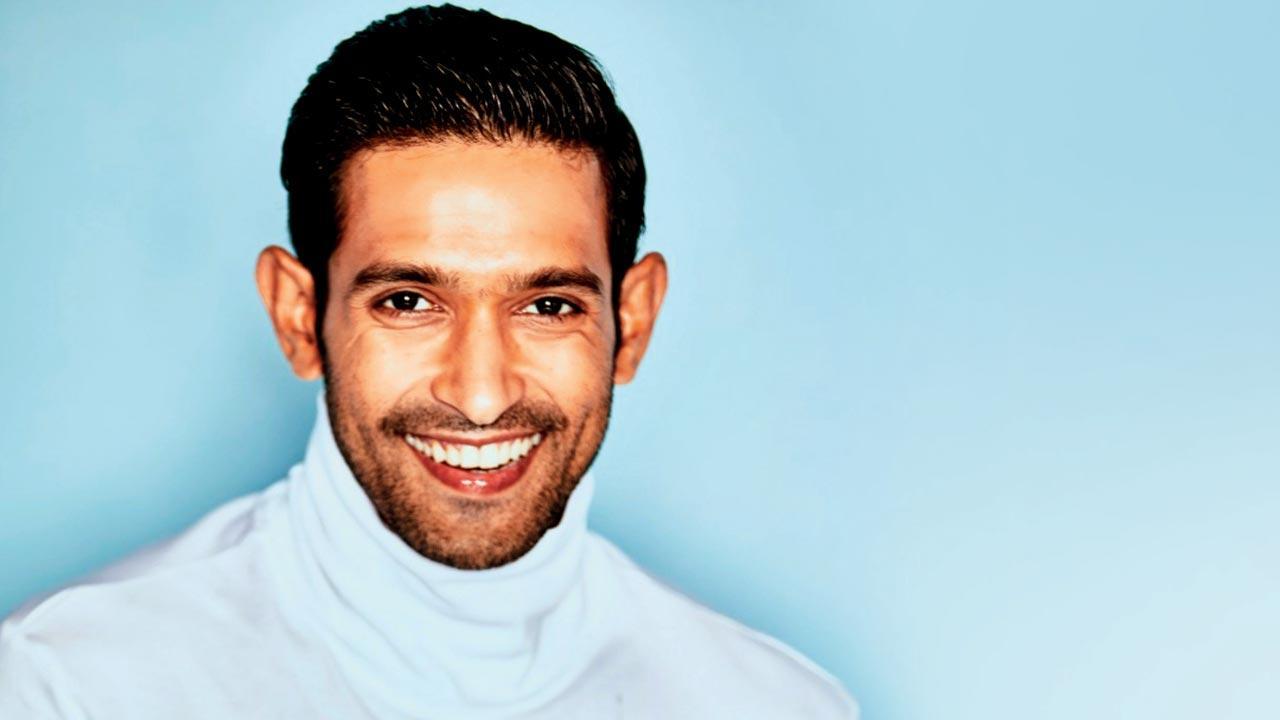
"We seldom find romantic thrillers in our country,” says Vikrant Massey, who felt he had struck gold when he read the script of 'Haseen Dillruba'. Over the weekend, as the Taapsee Pannu and Harshvardhan Rane starrer dropped online to mixed reviews, Massey was unanimously praised for his nuanced portrayal of mild-mannered Rishu who can’t quite keep pace with his gregarious wife. His idea of love is shattered when his wife cheats on him. “In a lot of ways, I relate to the character. I am a simple guy like Rishu, but I have never been pushed against the wall the way he was. I don’t know how I would react if I am cheated on. Luckily, I haven’t faced it,” says the actor. 

Massey’s soft-spoken electrical engineer may appear strait-laced, but writer Kanika Dhillon has a knack for etching out grey roles, and Rishu is no exception. The actor says he enjoyed how his character takes a dark turn in the Netflix murder mystery, thus benefiting from a dramatic arc. “He reacts the way that anyone could — you can call it male ego, hurt or anger. The beauty of this role is that it has layer after layer, like an onion, and he is motivated by true love. I did not want to dwell too much on the morality of the character, or assess his actions. It was a work of fiction, and we went all out to bring these parts to life.”

Through its three leads, the Vinil Mathew-directed film explores emotions of lust, betrayal and revenge. Massey believes that in tackling the complex subject of infidelity, the film is merely mirroring the happenings of society. “I see cinema speaking the uncomfortable truths of society and representing reality. Be it extra-marital affairs or the debate around monogamy and polygamy, these things are [happening around us].”

(Crisp) Movie Review: HASEEN DILLRUBA by FENIL SETA

The first hour of Haseen Dillruba is funny and intriguing. The way the film starts and then goes on a flashback mode sets the mood. One expects fireworks in the second half and a great, unpredictable finale. Sadly, the developments in the later half of the film are very difficult to digest. The ending is unpredictable; you would definitely not see it coming. But it still doesn’t work and it pulls down the impact. This is because it doesn’t make sense at all. If the idea is to shock the audiences, the plot needs to be sensible to some extent, especially in a film like this. Sadly, common sense was sacrificed for shock value. Technically, the film is top-class and performances are exemplary. Taapsee Pannu delivers yet another powerful performance. The role allows her to showcase her acting talent to the maximum and she makes good use of the opportunity. Vikrant Massey plays a complex role with élan. He, too, gets a chance to show his talent and its sure to benefit him. Harshvardhan Rane has limited screen time but he looks dashing. Performance-wise, he’s first rate. Aditya Srivastava is apt for the part. Yamini Das contributes to the laughter quotient in the first half. Sadly, she gets neglected later on. Daya Shankar Pandey gets limited scope. Ashish Verma (Afzar) is decent. All in all, Haseen Dillruba rests on an interesting idea and consists of crazy characters. But its not utilized well with the climax turning out to be a major disappointment.

My rating - ** out of 5!

Fenil's Bollywood Talk # 680

WILL HASEEN DILLRUBA TURN OUT TO BE A GRIPPING WHODUNIT?

The lull in theatrical business due to the second wave has once again prompted several films, intended to release theatrically, to take the OTT route. 2 weeks back, Sherni premiered on Amazon Prime, for instance. And now Haseen Dillruba is all set to arrive on Netflix tomorrow, that is, on July 2. The trailer has been intriguing and got viewers excited.

Haseen Dillruba stars Taapsee Pannu, Vikrant Massey and Harshvardhan Rane and is a murder mystery. From the trailer, it is evident that Vikrant Massey, who plays Taapsee Pannu’s husband, is murdered. Harshvardhan is someone with whom Taapsee allegedly has an affair. The film also features Aditya Srivastava, known for playing Inspector Abhijeet in the popular TV show, CID. Haseen Dillruba is directed by Vinil Mathew, who had debuted with the much-loved romcom, Hasee Toh Phasee. Ananad L Rai has produced it and Kanika Dhillon is the writer.

Recently, there was a controversy when Kanika Dhillon’s credit was prominently mentioned in the trailer of Haseen Dillruba. This is rare in the trailers of Netflix films; in fact, the trailers don’t even mention the director. Navjot Gulati, writer and also who made Jai Mummy Di, alleged that this was possible as Kanika is married to Himanshu Sharma, the co-producer of the film. Kanika, Taapsee and many others reacted sharply to this allegation. However, it ignited a discussion on this issue. Several people hoped that this would be a norm from now on for Netflix films and not an exception. Nevertheless, this episode helped Haseen Dillruba to remain in the news.

Haseen Dillruba looks bold and unconventional. It is rightfully releasing on Netflix as its target audience has a subscription to the streaming platform. Of course, it has to be worth watching to get substantial viewership. However, the presence of popular actors and thrill factor is sure to get many viewers to see it, at least over the weekend.

I can only thank the ones who turned Haseen Dillruba down for whatever reasons-Taapsee Pannu


Believing that her grey character in Haseen Dillruba offers wide scope to perform, Taapsee shocked that her peers rejected the murder mystery
Uma Ramasubramanian (MID-DAY; June 30, 2021)

Taapsee Pannu has no qualms admitting that she wasn’t the first choice for 'Haseen Dillruba'. If anything, she believes the Vinil Mathew-directed film was destined for her, and rightly found her after a few hiccups. The actor relished the dark murder mystery so much that by the end of the narration, she was game to portray the character of Rani. 

“I don’t know why others did not want to do this part. Certain roles are not author-backed, but they are what I call ‘an actor’s candy’. This is one such character. There was no emotion that the character didn’t have the scope to show. So, I was shocked that I was given this role on a platter. I can only thank the ones who turned it down for whatever reasons,” she quips, confident that she has an ace up her sleeve in the Netflix film.

At first glance, Haseen Dillruba — which features Vikrant Massey as Rani’s husband and Harshvardhan Rane as her lover — is your classic love triangle gone wrong when the husband is found dead. But add Pannu and writer Kanika Dhillon to the equation, and the film rises above a typical thriller to talk about society’s inherent bias against women. “A crime done by a woman is perceived differently. Similarly, when a woman is accused of infidelity, we are perceived to be morally destroying our society. But when a man [cheats], the [conversation] becomes, ‘Arre, bechare se galti ho gayi’. As an actor, I am showing the side of a woman, which is considered taboo. I am more than ready to be judged. Ever since I decided to be an actor, I have been judged for my choices.”

While she brings the different shades of a woman on screen, she says that her beliefs don’t align with Rani’s. Asked how difficult it is to portray a character she doesn’t identify with, Pannu says, “It’s like you are psyching your brain to do something you don’t believe in. But it’s the cost we pay for being an actor.”

Taapsee Pannu's first few takes are gems-Vinil Mathew


'Haseen Dillruba' director Vinil Mathew says leads Taapsee Pannu, Vikrant Massey’s different approaches to acting make them a crackling pair
Uma Ramasubramanian (MID-DAY; June 22, 2021)

'Haseen Dillruba' is a departure from the sparkling 'Hasee Toh Phasee' (2014) for director Vinil Mathew. But the director was sold on writer Kanika Dhillon’s murder mystery, relishing the volatile characters and the twists they brought. Mathew says that lead actors Taapsee Pannu and Vikrant Massey, who play newlyweds in the film, have only elevated the material further with their uninhibited performances.

“Taapsee and Vikrant are stellar performers with different approaches. Vikrant has a theatre background, so he improvises a lot, enjoys rehearsals and attempts multiple takes where he keeps tweaking his performance till it hits the perfect note,” states the director.

The Netflix film marks his first collaboration with Pannu, who is at the top of her game after Thappad (2020). Mathew believes she is a rare combination of spontaneity and studied performance. “Taapsee is a qualified engineer, and perhaps that is why she has a methodical approach to her prep. She is sharp and perceptive, mapping her character’s trajectory early on. She then combines it with her spontaneity. Her first few takes are gems.”

The whodunit is centred on Pannu’s Rani, who begins a torrid affair with Neel Tripathi, essayed by Harshvardhan Rane. Things get out of hand when she becomes the prime suspect in her husband’s murder.

Kanika Dhillon vs Navjot Gulati: Battle over story credit accelerates in Bollywood


Sugandha Rawal (HINDUSTAN TIMES; June 16, 2021)

The feud between writer Kanika Dhillon and writer-director Navjot Gulati after his tweet over credit has stoked a debate around the missing uniformity while acknowledging talent in films. After Gulati tweeted about Dhillon getting a separate writer’s credit slate in the trailer of Haseen Dillruba, she slammed his “sexist” post, finding support from Taapsee Pannu, Aniruddha Guha and Bejoy Nambiar. But the conflict has opened a dialogue around credit system in films.


Why imply sleeping is the only way to success?
“I want to ask this gentleman who did he sleep with to get Jai Mummy Di (2020) credit?” questions Dhillon slamming him for making a remark on her marriage with Himanshu Sharma, who co-produced the film starring Pannu.

On Gulati’s claim that his post was misunderstood, she fumes, “The message is not interpreted as sexist — it is sexist!”

She continues, “After being slammed, he will come up with silly excuses. This is a classic sexist behaviour.”


Why make it gender war?
Gulati is disturbed by the issue getting diverted. “My main intention is that if one person is credited, then everyone should be credited. Why don’t OTT platforms bother to give credit. If every writer starts getting credit after the row, I will openly apologize to Kanika Dhillon,” he asserts.

If that is “turned into anything related to gender” then he is not willing to take all the blame. “If I am making a joke, shouldn’t we as a society have a sense of humour. Kanika has turned it into a war,” he says.

Industry speaks
“The writers should get credit. But if the writer’s credibility is not high, then I don’t know if the producer will give them top billing,” says film-maker Vivek Agnihotri.

To this, director Nambiar adds, “We don’t have a uniform system. The move will push platforms to recognise the need to do that”. Filmmaker Jai Mehta adds that giving credit is important as it validates writers’ hard work, giving them “recognition, money and popularity”.