Showing posts with label Haider. Show all posts
Showing posts with label Haider. Show all posts
7 Khoon Maaf is a punk rock feminist film-Vivaan Shah
2:43 PM

Neha Maheshwri (MUMBAI MIRROR; February 18, 2026)
As 7 Khoon Maaf completes 15 years on February 18, actor Vivaan Shah, who made his debut with 7 Khoon Maaf, looks back at the film that shaped his understanding of cinema and confirmed his decision to become an actor.
With the distance of time, Vivaan places the film within a wider literary and cinematic tradition. He says, “I see 7 Khoon Maaf as part of a kind of Gothic trilogy by Vishal ji, which includes Maqbool and Haider. All three films contain elements of the Gothic and the macabre in the architecture, the aesthetics, and the emotional landscapes of the stories.”
He says, “Even Omkara and Kaminey carry shades of rural and urban Gothic respectively. 7 Khoon Maaf, Maqbool and Haider also hint at earlier classical literary influences such as Dante and Marlowe, who must have influenced Shakespeare himself. There is even a touch of Indian Gothic of the kind associated with Ismat Chughtai and Saadat Hasan Manto.”
Joining director Vishal Bhardwaj’s set at 19 proved to be a turning point. He says, “Working with Vishal ji was a dream come true. I had been a fan of his from a very early age. I never wanted to be a professional actor, but when this opportunity came my way, I plunged into it even before I had made up my mind.”
The experience led to an epiphany. He says, “On the sets of 7 Khoon Maaf, I decided that I was going to dedicate myself full-time to this profession. I learned an extraordinary amount, including language, speech, diction, tone, cinematic vocabulary, and the art of acting itself. Working with Vishal ji was like a masterclass, almost like film school. He is our Stanley Kubrick. The more you watch his films, the more you learn.”
The film demanded that Vivaan portray the passage of time, a challenge that went beyond prosthetics. He says, “We had an extraordinary prosthetics team from America, which helped immensely, but it was still a challenge from an acting standpoint. Watching Priyanka Chopra do this was one of the most illuminating experiences of my life.”
He says, “I have immense gratitude towards Priyanka for how kind, patient, and helpful she was. I was young, lost, and a novice, but she guided me through an extraordinarily complex character and story. She is one of the greatest actresses and human beings I know.”
Reflecting on her performance, he says, “She gave one of the most mind-blowing performances ever. It was almost like a Sunset Boulevard, Greta Garbo kind of performance. She has the grandeur of cinema icons like Bette Davis and Joan Crawford.”
Fifteen years on, Vivaan believes the film’s politics remain relevant. He says, “Great works of art remain immutable with time. 7 Khoon Maaf is extraordinarily progressive and forward-thinking. It is a punk-rock feminist film.”
In O'Romeo, I was the heroine. Triptii Dimri used to take just 2 minutes to get ready-Shahid Kapoor
3:25 PM

Shahid Kapoor has defined the conflicted hero. Now, he talks creative honesty, family validation and bridging the gap between mass and meaningful cinema
Sonal Kalra (HINDUSTAN TIMES; February 13, 2024)
Actor Shahid Kapoor has played brooding men before, but as O'Romeo releases today, he appears surprisingly at ease. Calm, measured, almost detached from the chaos his character brings to screen. Excerpts...
O'Romeo is your fourth outing with filmmaker Vishal Bhardwaj. Does the script even matter now, or when he calls, is it an immediate yes?
In spirit, I would say yes to the latter! But from a professional POV, no. I don’t think any artist can give themselves to something unless they connect with it. When the connection is not there, there is always something missing in the product. In O'Romeo, of course it’s the titular part; I play Ustraa. And with Vishal Bhardwaj, it’s always a world that he creates. Ustraa’s attitude is that of Romeo. If, as creative people, you don’t connect, it is wrong for you to do the film. If you won’t be honest, it is unfair for everybody else. I very much connected with this film. I had one preset in my head before I met him, and I was very clear that at this stage in my career, I don’t want to do a film that is too experimental or a film meant for a smaller, intellectual audience and not for a wider audience, who have a simpler mindset and whose approach to filmmaking is that they go to theatres to get entertained. There’s the cinema you love and the cinema that people love. The whole endeavour has been for years to find a Ganga-Jamuna moment between them, to meet a middle ground. This film is an attempt at achieving that; it’s meant for an intelligent audience but also very much like a typical, mass audience.
In terms of intensity, where would you rank Ustraa, alongside Haider and Kabir Singh?
I wouldn’t place him in the same space as Haider and Kabir. Ustraa is a very entertaining character. What’s unique about him is that he is dark yet soft, and can also be very funny. He is a complete laundiyabaaz, yet falls in love to a degree that he loses himself. He’s a gangster but scared of his grandmother, played by Farida Jalal ji.
You want to be thrown into something that challenges you. My scenes with Nana Patekar sir are also special.
Which sequence in O'Romeo was the toughest or made you feel proud?
The toughest real estate in this film was actually my body! It was covered in tattoos; it would take two and a half hours to put them on before I got on set. Triptii Dimri, my co-star, had a no-makeup look. I told her, “In this film, I am the heroine. Tu toh do minute mein ready ho kar aa jaati hai set pe!”
O'Romeo isn’t like a superhero film where 75% of the work is done by costume and VFX. Then we had action sequences at night. I had undergone major hip surgery during one such sequence. That was very challenging.
Whose approval matters the most once they see your film?
First, I need to be happy with what I have done, which is always a challenge. Even above me, it’s the filmmaker. If they are not satisfied, there’s no point to the entire experience. I should be able to add more value than they expected. For me, the filmmaker comes first.
Beyond that, I have a very talented family, whether it’s my mother Neliima Azim, father Pankaj Kapur, brother Ishaan Khatter, or wife Mira Kapoor. They support me unconditionally, and I am always curious to know their views. They’re all very different from each other.
How affected are you by social media today?
Anybody who says they’re not affected, I don’t know... I wonder if they’re living under a rock. But anybody who says it deeply affects them is putting themselves in a dangerous place.
When you go on social media, you don’t know who is writing, under what name, or under what circumstances. It’s important not to live in a bubble. People around you will praise you. You live a privileged life. But you don’t know what the wider audience feels. It’s a difficult journey. Open up, but be mindful of how much you allow to sit in your system.
Main hamesha yeh kehta hoon – aapke bolne ki aukaat honi chahiye, tabhi mooh kholna chahiye. Yeh maine bachpan mein seekha tha.
What trait angers you?
In this profession, people can be very dual-faced with stars. Saamne kuchh, peeche kuchh. I don’t like that. I respect people who disagree and have a reason for it. There are rebels without a cause. Then there are those who stand by what they believe. Honesty and authenticity are very important.
Do your kids know they’re children of a star? Do they watch your movies?
The minute their dad stops doing adult films, I guess! When he decides to do frothy stuff. The next one is Cocktail 2. I did Teri Baaton Mein Aisa Uljha Jiya (2024). What ignites me as an actor are shades that aren’t just white.
When I look back, I feel so fortunate that I could register my time with Haider-Vishal Bhardwaj
8:08 AM

Niharika Lal (BOMBAY TIMES; October 3, 2024)
Haider, based on Hamlet and set in 1995 during the peak of militancy in Kashmir, narrates the story of a family against the backdrop of politics. Talking about filming it in Kashmir, Vishal Bhardwaj says, “At that time, the average Kashmiri youth felt that Bollywood had cheated them, always portraying them as terrorists in phirans with AK-47s. So, they weren’t very cooperative. But later, when they saw the film, they called me.”
As the film completes 10 years, Vishal feels it was destined to be made. He says, “Now, when I look back, I feel so fortunate that I could register my time with Haider.”
As the film completes 10 years, we spoke to co-writer, director, composer, and producer Vishal Bhardwaj about the making of Haider, which has inspired numerous dissertations and research papers.
How Haider came into being
Vishal says, "I had been planning a Shakespeare trilogy and was working on Hamlet. Earlier, I had a different setting in mind for Hamlet. It was set in an espionage background. But when Gulzar Sahab read it, he mentioned that it felt like just another CIA movie with the tragedy of Hamlet in it. He was absolutely right. Then, simultaneously, things happened. I remember Rekha (Bhardwaj) reading Basharat’s book (Bashrat Peer's Curfewed Night) and her reaction to it. After that, I read the book and realized that, for a long time, I had also wanted to make a film about Kashmir. All these things came together. The structure became clear, we knew our characters, and of course, the history was there. It didn't take much time because there was so much clarity in our thoughts and in what we wanted to create."
Vishal Bhardwaj says that there are multiple scenes in the film that are not just memorable from the film, but from his entire career. He says, "And I'm not just talking about Shahid's monologue, which is very obvious. It was written for the gallery. But there are also 2-3 scenes between Tabu and Shahid, where they're in the Chinar Bagh before the interval, when they confront each other. Then there's a moment in the film when Shahid finally finds his father’s grave, and he breaks down. That scene was really... I had prepped Shahid, and we wanted to shoot with a telephoto lens, so the camera was really far. I told Shahid, 'Don't feel insecure because it's not a close-up. It's actually a very big close-up, and creatively, we want to shoot it with the tele-lens from very far'. He performed that scene so beautifully. He started crying, and we had two cameras capturing it. The way he was crying, I didn’t have the heart to shout cut. The camera was 400 meters away, and in the snow, I walked up to him, let him cry, and then hugged him, saying, 'It's cut, Shahid. It's done'."
Recalling another moment, he says, "We were shooting in the basement of a bungalow. So, -5°C felt like -15°C. Just as we were about to take the shot, Irrfan came to me and said, 'These lines are too few. Earlier, there were just 1-2 lines. I feel like saying more. I wish there was a poem written here'. I said, 'Okay, give me an hour, and I'll write a poem'. Everybody waited, and I wrote the poem right then and there. And then Irrfan performed it. My God, the way he performed it! When Shahid is leaving, and he recites that Faiz line, - Gulon mein rang bhare, baad-e-naubahaar chale, chale bhi aao ke gulshan ka karobaar chale. The way he says it - such a beautiful romantic couplet - and the way he performs it like a coded message in an espionage film. Irrfan ki kami na, every day in some way or the other, I feel the void of him not being here."
'I told Tabu that such parts are rarely written and that I'd be in pain all my life if she didn't play the role'
For casting, Vishal says, Tabu and Irrfan were both in his and Basharat's mind when they were writing those parts. He says, "But it took a long time to woo Tabu into that. She was very reluctant to play the mother. She rejected it twice, saying, 'No, I’m not going to play this. Why do you keep coming back to me? ' When I wrote the first draft and we started casting, after the rest of the cast was finalized, I went to her again, and she said, 'No, I’m not playing the mother.' The third time I went to her, I said, 'I'm coming to you because you're my friend; otherwise, I would have taken it on my ego. But you're my friend, and I want you to know that you're being blinded by the fact that you're playing a mother. Why don't you see it as Gertrude? See it as Gertrude's role, not Hamlet's mother'. I think that struck her. When she realized that, I told her that such parts are rarely written and that I'd be in pain all my life if she didn't play the role. And then she agreed to do it."
As for Irrfan, he says,"Uska toh jawab hi nahi tha. When he read the script, he said, 'This is such an important film to be made'."
One of the scenes in Haider was shot at a location where no film was shot in 30-35 years
The film was shot by cinematographer Pankaj Kumar, who was also the cinematographer for Ship of Theseus and Tumbbad. Vishal recalls, "At that time, Tumbbad hadn’t been released yet, and I was very impressed with the work on Ship Of Theseus. I then requested Anand Gandhi to show me some parts of Tumbbad, and when I saw it, I knew Pankaj was going to be my cameraman. I decided to shoot on location."
Haider’s ‘Hum hai, ya hum nahi’ monologue at Lal Chowk reminded people of Hamlet’s ‘To be or not to be’ and introduced the Indian audience to ‘chutzpah’.
About the scene’s shoot, Vishal says, “At that time, Lal Chowk was a different zone, and we were shooting behind Lal Chowk in the Press Club. And we shot it! It was destined. This film was destined to be made.”
Vishal recalls that there were multiple such locations. He says, “We went and shot at the Zaina Kadal Bridge, and nobody had shot there in the last 30-35 years since militancy started. And we went there and shot with mainstream stars like Tabu, Shahid, and Irrfan.”'
Jhelum hai ya Khul Kabhi, uss tarah ke gaane - that's the pace of my soul. It’s actually a texture of me'
Vishal Bhardwaj says that music was very close to the script of the film. He says,"Uss tarah ke deep romantic gaane banana, ya uss pace ka gaana banana jis tarah ka gaana Jhelum hai ya Khul Kabhi, uss tarah ke gaane - that's the pace of my soul. My real self is songs like Khul Kabhi Toh or Paani Paani Re (from Maachis) - those kinds of songs. It’s actually a texture of me."
Jhelum
"Jhelum gaana mera bahut purana composition hai. It had such a deep connection. The day my father died, I had composed the song that morning. I was sitting with him, and in the afternoon, he passed away. That song had such an emotional bond with me that I didn’t have the courage to use that composition for 30 years. Then Haider, being a father-son story, felt like the right place to use it. I never told this to anyone. That’s why Jhelum remains a very, very special song to me."
Bismil Bismil
"We created this song like a mousetrap where Shahid performs a play within a play. I wanted to create our own Ek Hasina Thi, Ek Deewana Tha moment in my way for Hamlet (laughs). Karz had a similar situation where Rishi Kapoor performs in front of Simi Garewal about the murder. Sukhwinder ko bahut khula gaane ki aadat hai - he's used to improvising a lot - but I told him, 'Is gaane mein track pe gaana padega, this is like an opera. We are telling a story in it'. Itna khoobsurat Gulzar sahab ne likha hai. I had only given him the phrase Bismil bismil bulbule bismil, and from that, he wrote an entire epic. He’s a master."
'Bismil is so un-Bollywood like'
The song was choreographed by Sudesh Adhana, who is a professor of contemporary dance in Norway at Oslo University. Vishal Bhardwaj met him when he was directing an opera in Paris at the Châtelet Theatre called The Flowering Tree.
Vishal says, "In that opera, I used long, oversized puppets by Dadi Pudumjee, a great puppeteer, and he introduced me to Sudesh. I worked with them for two months continuously in Paris, and right after that, I started shooting Haider. I brought all the sensibilities I learned during the opera, working with Dadi Pudumjee and Sudesh. It was so unconventional, so un-Bollywood-like. I'm saying this and I belong to Bollywood. And Sudesh won a National Award for that choreography."
Vishal shares, "There was a guy who was president of (student union) Kashmir University. When we were shooting in the university, a lot of problems occurred - there was a lathi charge, bottles were thrown, pata nahi kya-kya hua. The CRPF had to take us out and safeguard us. It felt like a battle between students and cops. The next day, we were shooting at another location, and that guy was there. We were showing the court chamber, and there was a character of a stenographer, and he was playing that role. After the shoot, he came to me and said, 'I was in disguise and wanted to check what you were shooting! (laughs). I think we made a mistake. You're not making the kind of film people usually come here to make'. When the film released, he somehow found my number and apologized to me for half an hour."
Did You Know?
-In July, when Vishal attended a tourism conference in Kashmir, he was told that after the film, the Martand Sun Temple where Bismil was shot became a popular tourist attraction, which prompted the ASI (Archaeological Survey of India) to remove encroachments from the site.
- Gulzar shot the song Tere Bina Zindagi Se Koi Shikwa Toh Nahi; at the same Martand Temple where Bismil was filmed.
- Khul Kabhi song from the film was Arijit Singh's first collaboration with Vishal Bhardwaj
Aadha lagta hai Irrfan Khan ke bina-Vishal Bhardwaj
10:07 AM

At an event titled Irrfan: A Retrospective, Vishal Bhardwaj and Naseeruddin Shah came together to talk about Irrfan’s unforgettable performance in Maqbool and share other anecdotes about the actor
Harshada Rege (BOMBAY TIMES; February 1, 2024)
It’s impossible to think of Maqbool without Irrfan, but few know that the actor was not the first or even the second choice for the role. Filmmaker Vishal Bhardwaj shared, “Ek actor ke liye toh Naseer bhai ne bola tha ke tumhe goli maar doonga (laughs).”
After the recent screening of Maqbool at an event titled ‘Irrfan: A Retrospective’, filmmaker Vishal Bhardwaj and Naseeruddin Shah shared many such anecdotes from the making of the film, which clocked in 20 years on January 30, and spoke about their association with the actor, who passed away in April 2020.
The first thing that struck me about Irrfan was his eyes: Naseer
Remembering his first meeting with Irrfan, Naseer said, “I met him for the first time when he was rehearsing for a play with Ratna (Pathak Shah). People had told me that he liked me a great deal. When I was introduced to him, he was very matter of fact, there was no fawning. Like everybody, the first thing that struck me about him was his eyes. He had absolutely amazing eyes. I had no idea of the depth of his range. There couldn’t have been a better choice to play Maqbool than Irrfan. Personally, he was very affectionate towards me, and I was very fond of him, but we didn’t meet very often. So, I can’t say that we were close friends, which is something I missed out on, but I continuously admired his work and his attitude towards it.”
Irrfan understood the silences in the script: Vishal
Vishal said, “During Maqbool, we were all discovering ourselves. Naseer bhai supported me a lot and did many workshops. The thing about Irrfan was that he was so effortless that at times, you would feel he hadn’t prepared for the scene at all. He understood the silences in the script so well. Dosti, dosti mein saara kaam ho raha tha, aur lag raha tha ke kuch special ho raha hai. We were grappling with many things, jaise ke paise kam the. Film release hone ke baad jo reaction aaya tab realize hua ke bahut extraordinary kaam hua hai.”

I wasn’t being modest when I said that I envied Irrfan as an actor: Naseer
Talking about Irrfan’s brilliance as an actor, Naseer had once said that he envied him. Elaborating on that, the actor said, “He always seemed to be performing so effortlessly, never did I feel, while watching him perform, that he was straining for an effect or trying to make an impact. My feelings about his movies are uneven. I haven’t liked them all, but there has never been any moment of falseness that I have detected in Irrfan’s work anytime. I wasn’t being modest or anything; I genuinely meant it when I said that I envied him because I know that at his age, I certainly was not that capable or had that much of an understanding of the craft of acting.”
No box-office success can match the pride that Maqbool gives me: Vishal
During the evening, Vishal played a song that Irrfan had sung and sent him during his cancer treatment that brought everyone to tears. The filmmaker said, “Irrfan had a great sense of humour. Even when he was unwell, he would make fun of the doctor. He had caught the doctor’s gestures and would mimic them. Sutapa would keep scolding him ke tameez se baat karo, tumhara ilaaj kar raha hai. Har baat mein Irrfan ka… Main toh andar se toot gaya hoon, kyunki aadha lagta hai Irrfan ke bina. Jab bimar the, tab mujhe messages bahut bhejte the aur gaane bhi gaake bhejte the…”
When asked if he would make any changes for better performance at the box office, Vishal said, “This reminds me of an actor who, after reading the script, said that the hero is a loser (laughs). No box-office success can match the pride that it gives me now.” Is there is anything he would change if the film were made today, Vishal said, “The only thing I would change is bring Irrfan back, but that isn’t possible.”
Vishal and Irrfan’s nok-jhok
Reflecting on the relationship they shared over their many collaborations, Vishal said, “Abhishek Chaubey ki ek film thi Ishqiya, uske pehle Anurag Kashyap ki ek film thi No Smoking. Both the producer and the director wanted me to be associated with it, toh maina apna naam de dediya. That movie flopped badly. After that, when we started shooting Ishqiya, Irrfan told me that he had given away all the dates meant for Ishqiya. He said, ‘Aapki film toh flop ho gayi, toh mujhe laga aap toh aage banaoge nahi.’ Toh mein bahut gussa hua, aur hum dono ki do-teen saal baat bandh hui thi.
Phir main jab 7 Khoon Maaf bana raha tha, I was unable to cast for the part that he eventually played. When I called him for it, I told him that I had a small role for him. He said, “Aap jo bhi bolenge main karunga, mujhe toh aapko manana hai.” Par jab editing ka time aaya, toh woh role kaatna pada. He got angry.”
He added, “For Haider, when I spoke to him, tab unhone kaha ke pehli shart yeh hai ki jo part kaata tha 7 Khoon Maaf mein usse YouTube pe release karo. Maine kaha theek hai, par aaj tak woh nahi mila. Haider ke waqt unhone kaha ke main paise bahut loonga tumse, kyunki tumne mere saath yeh gadbad ki thi. I said the role is yours and the money is also yours because I knew nobody could play the Ghost. After the trial of the show, he said, ‘Agar aisi entry deni thi toh paise kyun diye?’”
Sutapa's memory of Maqbool
Irrfan’s wife, Sutapa Sikdar, and son Babil were also present at the event. Sharing her memory of Maqbool, Sutapa said, “They were shooting the film in Bhopal, and I was pregnant with our younger son Ayaan. Suddenly, the doctor said that I might have the child. So, Irrfan rushed back, once he reached here, he started speaking to Ayaan, ke bahut nuksaan ho jayega Vishal ka, tu aisa mat kar. And the child actually seemed to have heard him. He was born two months later.”

Main marr gaya tha kya? Bala should have had a Sahil Khattar (instead of Ayushmann Khurrana)-Sahil Khattar
8:14 AM

The actor says it’s time for makers to be more realistic and make the right choices for characters in their films
Vinay MR Mishra (HINDUSTAN TIMES; February 11, 2022)
Ever since the trailer of filmmaker Sanjay Leela Bhansali’s next released, there are conversations around whether a real-life transgender should have played the part essayed by actor Vijay Raaz. Sharing his two cents on the debate, actor Sahil Khattar says it’s time for Hindi films to be realistic and “uplift the minorities”.
“If transgenders are looking for an opportunity and there is an actor, then why not give them a chance? The same goes for somebody short, fat or bald,” he says, adding, “If you really want an authentic character, then why not go for these actors first? If they don’t act well, then that’s a different point. But at least consider them. If we don’t uplift the minorities in Bollywood, who else will?”
Ask him if he feels a film like Bala (2019), where the protagonist was bald, should have been offered to him and pat comes his reply: “Main marr gaya tha kya? Bala should have had a Sahil Khattar (instead of actor Ayushmann Khurrana). And not just Bala, even other films such as Haider (2014) and Pushpa: The Rise - Part 01 (2021; actor Fahadh Fassil played a bald character). If (actor) Shahid Kapoor had to copy my look (in Haider), they should have taken me instead,” he jests and adds, “I hope (filmmaker) Rohit Shetty makes a film on a bald cop. India will get it’s Rock (referring to Hollywood actor Dwayne Johnson).”
Talking about the industry, Khattar, who was last seen in director Kabir Khan’s 83, feels no actor from the OTT space has got a bigger film debut than him. “Nobody has got as big a debut (as me) from digital to the movies and I’m proud of that. I think I deserve that seat at the table,” he says.
Khattar also mentions that currently, he is trying to figure out if he really wants to pursue acting. “I’m wondering if I really want to be a Bollywood star or I should just do a few acting gigs and produce projects,” he ends.
Army Day special: Soldiers insist they want to see 'less jingoism, song & dance; more authenticity & originality' in war films
8:13 AM

Niharika Lal (BOMBAY TIMES; January 15, 2022)
While the Army has featured as a character – central, as well as peripheral – in several Bollywood movies, few have gotten the nuances of military life right or managed to nail the details related to Army personnel and the war zone down to the T. On Army Day, we spoke to some serving and retired Army personnel on how they think Bollywood movies captured their lives and battles, including all the things they got right – and wrong – on screen.
‘HAQEEQAT, LOC: KARGIL, SHERSHAAH ARE AMONG THE MOST REALISTIC FILMS’
What is surprising is that over a dozen officers (retired and those still serving) – when asked about their favourite Army films – could only think of two-three names that did justice to the Forces. Among these was Chetan Anand’s Haqeeqat (1964), starring Dharmendra and Farhan Akhtar’s Lakshya (2004) starring Hrithik Roshan – both of which featured a realistic portrayal of soldiers’ lives.
Major (retd) Sandeep Sangwan, who is also a defence consultant for the upcoming film Pippa, starring Ishaan Khatter and based on the Indo-Pakistan war of 1971, says, “If one were to judge a film on the parameters of weapons, equipment, uniform and the movement of the troops, then Border, LOC: Kargil, Lakshya, Uri: The Surgical Strike, and Shershaah score the highest.”
Major Mohommed Ali Shah, a former Army officer, who has acted in several films and web series, says, “Films that I feel were quite close in their depiction of the life of soldiers are Lakshya and Uri — if we don’t count the drone scenes and jingoism in the latter. Uri showed operations like no other film had before, and had all the accurate details, be it the uniform or the operations procedure.”

‘DON’T APPRECIATE FILMS WITH SOLDIERS DANCING ON THE BATTLEFIELD, GLORIFICATION OF WAR AND JINGOISM’
While several defence personnel may have appreciated Border, Lt Gen Zameer Uddin Shah, former Deputy Chief of Army Staff, who fought in the Battle of Longewala, isn’t a fan. He says, “The image that Indian films often portray of a soldier — as an alcoholic who sings and dances in the mess, and at times even on the battlefield! — isn’t true. Wars are nasty, but our films glorify them and have so much jingoism. Either they don’t hire any defence consultant or they don’t listen to them. I think Haqeeqat is a film that is better out of the lot, and I do think that films have improved in recent years.”
An Army officer who didn’t wish to be named, adds, “War is glorified and even politicised at times in Bollywood films, and they often imply that all soldiers do is to fight, which is definitely not true. Soldiers are quite well informed and they have to study and do a lot of research too, which is unfortunately never shown in films. Apart from films like Haqeeqat, I really liked Shaurya — inspired by Tom Cruise’s A Few Good Men — in terms of its portrayal of Army personnel. It is quite a wonderful film.”

‘WHAT’S THE POINT OF MAKING A FILM BASED ON THE LIFE OF A SOLDIER AND NOT GETTING THE BASICS RIGHT?’
Major Sangwan believes that to get the details right, it’s important to have defence experts on board. “While filmmakers do a lot of research when it comes to uniforms, they would not know the nuances of the uniform as compared to a person who wore it. While an artiste may believe they are wearing a ‘costume’, a uniform is not a costume. In fact, while portraying a soldier, one should know every aspect of that uniform.”
Major Shah adds, “Many makers have this misconception that they can’t show an accurate uniform on screen because ‘it is not allowed’.”
Having starred in the military drama series Avrodh: The Siege Within (2020) — for which he was also a defence consultant — and the film Haider (2014), he believes it is, in fact, necessary to get the details right. “In Haider, it was just a matter of a few scenes, but even then we got these details right. When there is a web series or a film based on the life of a soldier, if you can’t get these basics right, then what’s the point?”
Major Sangwan adds, “For Pippa, we trained junior artistes on how to talk, mannerisms, and decorum so that nuances weren’t lost. As compared to 20-30 years ago, films today are also more realistic because makers can use CGI, VFX, and other special effects.”

I have never returned any awards and neither would I do so in the future-Vishal Bhardwaj
8:09 AM

Rishabh Deb (BOMBAY TIMES; February 3, 2020)
Stressing that students and citizens are within their rights under the Constitution to come out and protest, filmmaker Vishal Bhardwaj said it was unfair on the part of the government to brand people against them as “urban naxals”. Speaking on the first day of the Deccan Literature Festival in Pune, Bhardwaj said, “It is sad that we are at a point where anyone criticising it is being branded an anti-national.”
Vishal added that as an artiste, he is deeply affected to see what is happening around him today. “The violence, shooting, hatred and fear is affecting everyone. We have to keep protesting against this. In a democracy, protesting is a fundamental right of every citizen and we should not be denied the right to do so. Gandhiji and other freedom fighters also protested against the British and we got our independence. My film Haider would have faced a lot of difficulties were it to release today, but maybe I would have made something else. You see, creativity takes a different form and shape, it cannot be killed, because art is like a stream of water and a boulder cannot stop it from flowing.”
On the ‘award wapsi’ movement, Vishal said, “A lot of my friends have told me to return the awards. I told them that the awards they were asking me to return were not conferred by the current government. Later I received two National Awards under the current government — one for Haider and one for Talwar. If I return those awards, I will be disrespecting the jury that has no relation with politics. So I have never returned any awards and neither would I do so in the future.”
Art ka kaam hai aaina dikhana, talwar leke maarna nahi-Vishal Bhardwaj
7:36 AM

Itishree Misra (BOMBAY TIMES; December 16, 2019)
On the last day of a recently concluded literature festival, filmmaker, singer, composer Vishal Bhardwaj shared his thoughts on an array of subjects. With acclaimed films like Haider, Maqbool and Omkara to his credit, the recipient of seven National Film Awards in various categories offered some insights into the contextual relation between his work and Shakespeare’s plays. He commented on the factors that drove him to adapt certain works of the Bard with an Indian context.
Vishal elaborated, “I realised that I cannot get the depth in plot lines and character study that Shakespeare achieved. Hence, I thought of recreating his works in the Indian context because a good storyline transcends caste, creed and nationality.” The filmmaker, who was born and educated in Meerut in his formative years, added that seeing a lot of gangsters in the city was crucial to his adaptation of Othello into Omkara, which was filmed in Lucknow. He also underlined the importance of using local dialect in a movie and the portrayal of characters, while criticising Bollywood for sticking to ‘filmy’ language.
Insisting that he wanted to tackle social issues in India with the plot lines that Shakespeare created, the filmmaker also spoke about Kashmir, which was at the core of his film, Haider, starring Shahid Kapoor. “It’s essential to bring the issue of the Kashmir valley into focus. For an issue that is historic, complicated and massive, it’s vastly under-represented in Indian cinema. Most of the work that has been done on this subject has been through an outsider’s perspective. Hence, I wanted to delve into a fresh perspective, the inner perspective of the valley. That’s why I set the story of Haider, based on Shakespeare’s Hamlet, in the state.”
Talking about his first film, Maqbool, which was adapted from Macbeth, Vishal delved deep into the police officers played by Om Puri and Naseeruddin Shah. “In the traditional style, the witches would have probably been shown as aghoris, but mera aur mere co-writer ka yeh idea tha ki jo bhi log hain, woh hamare ird-gird ke hi log hain, so we should make the witches people whom we encounter frequently, and those who are an integral part of our society. So usmein sabse pehle yeh hi aaya ki cops make the best witches, which they prove every day as you all see. Iss tarah Om Puri aur Naseer sahab Maqbool ki witches bane.”
As the evening progressed, Vishal narrated some of his poetic works to the audience, while expressing his nervousness to narrate them in front of Nana Patekar, who was seated with the audience. In reference to his inclination towards poetry, he gave an anecdote from the sets of Haider. Vishal said, “In Haider, there was a dialogue of two-three lines that was supposed to be recited by Irrfan. It was one of the poetic verses derived from Shakespeare’s Hamlet. However, Irrfan didn’t quite like the dialogue, and couldn’t connect with it. So, in that moment, I decided to rewrite that whole poetic sequence, which I believe, turned out to be one of the strongest cuts of the movie.”
When the house opened up for questions, the audience asked him to speak about the stylistic variation across his works and how he sees those differences in the context of his repertoire as a filmmaker. Vishal responded, saying, “Ek artiste ka sabse bada darr hota hai ki usko kisi ek cage mein na qaid kar diya jaye, ya ek category mein na daal diya jaye. I try to explore a lot of genres and make a conscientious effort to explore varying subjects. That’s why main consciously try karta hoon ki meri har film ka subject alag ho.”
Nana Patekar, at that point, casually asked Vishal, “Main kab kaam kar sakta hoon tumhare saath? Aur kitne saal mujhe wait karna padega yeh jaanne ke liye ki main bhi thoda sa actor hoon? Zara soch ke jawaab dena, main bahut serious hoon.” Looking embarrassed and delighted simultaneously, Vishal said, “Ismein sochne wali koi baat hi nahi hai. Main aapka fan hoon, aur aapko yeh pata bhi hai, lekin main usko abhi tak prove nahi kar paya hoon. I’m looking forward to working with you.”
The audience also asked Vishal to elaborate on how art could potentially influence the society. The filmmaker replied, “Yeh kaam art ka nahi hain na, yeh kaam toh janta ka hai... Art ka kaam hai aaina dikhana, art ka kaam talwar leke maarna nahi hai. It’s the job of the people to draw a meaning out of art and evaluate their choices. The job of art is to hold a mirror to the society instead of attempting to make the decisions for the audience. That decision-making is based on the fabric of the nation.”
— With inputs from Yashi Agarwal

Shraddha Kapoor wants to look glamorous but at the same time, she wants to be taken seriously-Tanya Ghavri
8:06 AM

As told to Ankita Chaurasia (MUMBAI MIRROR; November 26, 2019)
 I started styling Shraddha Kapoor even before Vishal Bhardwaj’s Haider released and her style has undergone a complete makeover since. Now, she is willing to experiment a lot more instead of sticking with safe silhouettes and colours. She is doing a mix of Indian and international designers and, as a result, her looks are not boring or repetitive.
Earlier, she used to opt for more fit-and-flare or A-line dresses. While those silhouettes did enhance her lithe frame, I wanted her to experiment more because I knew she would be able to pull it off. The best thing about Shraddha is that she is not fussy. If you tell her something works, she is open to the idea. She herself is quite informed about international fashion trends and now you will find her wearing everything—from a peplum and a column, to a ’60s and even a ’20s style dress.
She is extremely versatile but she never overdoes it. For her, less is more. And she likes to keep her clothes age appropriate. In her early-twenties, she went for cutesy, fun numbers. In her mid-twenties, we did a lot more feminine looks with her. Then, there was an androgynous phase which we still dabble in from time to time because there’s nothing like a well-tailored pantsuit on her.
But now, she is more into elegant dressing. She wants to look glamorous but at the same time, she wants to be taken seriously. You won’t catch her wearing anything that’s too childish, like pedal pushers or dungarees. At the same time, she wants to bring in the playful element with a lot of colours, even neons. Right now, she is being particularly partial to sheath dresses. We dress her according to the occasion mostly, while also keeping her mood in mind. Shraddha is a great client to dress because she has a clear image of what she wants. She tells me the vibe she wants to go for and I shortlist looks based on that. Then she chooses the one she thinks looks best on her.
Shraddha won’t ever wear anything bizarre as she doesn’t want to look silly. For instance, she understands that though it is November, it is still very hot in Mumbai, so we can’t go with boots. Even though it is a global Fall trend, here it would be a faux pas. She is very practical that way.
Her personal style has always been casual chic, and it remains that. She likes to stick to the basics like track pants with cool bomber jackets to make the look edgy. These days, she also likes traditional salwar-kameezes in sustainable fabrics. And she loves to wear saris. She draped herself in her mother’s traditional sari for Diwali.

1. RISE AND SHINE: An ombre halter dress, this one is a fit-andflare number by an international designer. It cinches at the waist, accentuating one of the best features of a tall, skinny girl like Shraddha. The overall look is very feminine and that’s what we were going for here
2. RETRO RULES: We did this oversized boyfriend jeans with a cropped jacket, which has a very vintage ’80s vibe. We paired it with silver hoops with her hair tied in a messy bun
3. THINK PINK: We chose this colour-block dress for the Hyderabad launch of Saaho. Shraddha wanted to go for a vibrant colour, and this elegant pink-and-red outfit fit the bill. We balanced it with nude heels and minimal make-up
4. ‘AB’SOLUTE: Shraddha’s torso is in great shape and the crop top highlights it beautifully. We paired it with paperbag waist pants. The look was hippie chic and alternative, so we went with open hair and big gold hoops. Can’t go wrong with black and gold
5. RED ALERT: A half-blazer jumpsuit, this was a lastminute pullout. It was for a video interview and I thought that the colour would look great on camera. Shraddha agreed. She quickly paired it with some oversized hoops and was good to go...
Shahid Kapoor to team up with Vishal Bhardwaj for the fourth time?
7:42 AM

Akash Bhatnagar (BOMBAY TIMES; November 22, 2019)
Shahid Kapoor, who is riding high on the success of Kabir Singh, and getting ready to kick off the Hindi remake of the South film Jersey, in which he plays a 36-year-old cricketer who wants to be picked for Team India, has set tongues wagging with a recent visit to the office of Vishal Bhardwaj. The actor-director duo has collaborated on three occasions—Kaminey (2009), Haider (2014) and Rangoon (2017). And on Wednesday, instead of playing the usual game of hide-and-seek, the two were happy to pose and smile for the paparazzi.
Shahid and Vishal, who share a great personal equation and professional relationship, have always been vocal about their keenness to work together again. A source told Mirror that they have been discussing a subject and a fourth film could be on the cards.
During the release of Haider, Vishal had raved about his lead actor saying, “I cast Shahid in Haider not because he was Pankaj’s (Kapur) son but because I needed a young actor and he’s the best in his age group. I’d done away with Othello’s last monologue because I felt it was too stagey but I have retained Hamlet’s. And listening to Shahid rattle off a sixpage monologue in the climatic scene where Haider turns mad, I was reminded of Pankaj’s body language and Naseeruddin Shah’s voice.”
Sporting a beard is very masculine-Shahid Kapoor
2:43 PM
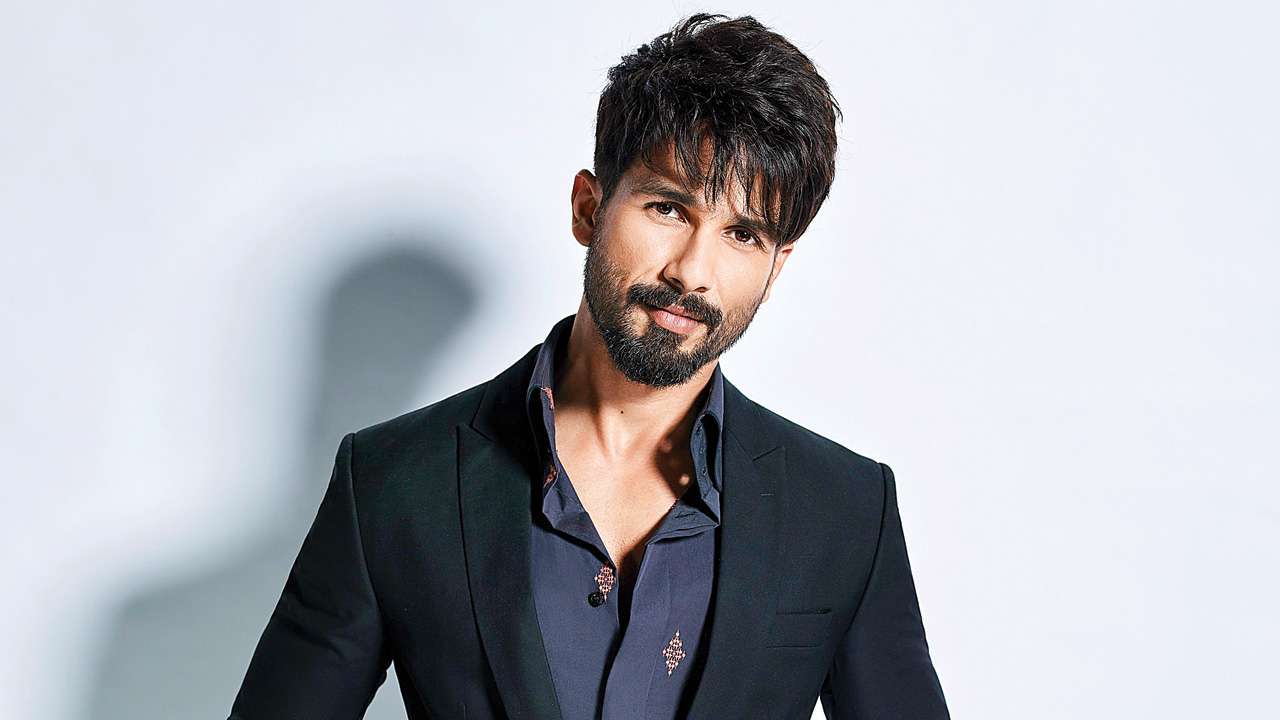
Deepali Singh (DNA; April 27, 2019)
With great power comes great responsibility! But in Shahid Kapoor’s case, it seems that the great responsibility has come with a great beard! The actor, who was once known for his chocolate-boy looks, has soon emerged as the poster boy of facial fuzz among the current crop of Bollywood heroes.
While he started his career as a clean-shaven guy in his first film, Ishq Vishk (2003), he has consequently played a number of roles where he was required to sport bristles. And he did that with aplomb!
Whether it was Haider (2014), where he displayed close-cropped mane as well as a well-trimmed beard, or Udta Punjab (2016) where his rockstar character required him to sport long locks and a thick fuzz to go with his perfectly toned abs — Shahid’s facial hair was a talking point. For his role as Maharawal Ratan Singh in Sanjay Leela Bhansali’s magnum opus Padmaavat (2018), it took the actor almost four months to grow the long moustache and beard required for the regal avatar. He sports different looks in his upcoming film Kabir Singh — including a clean-shaven one — but it is the one where he showcases a burly hipster beard, which had the netizens falling in love with his rugged avatar.
The 38-year-old, who clearly enjoys sporting the five o’ clock shadow, says, “I’ve got into the grooming game and I feel it’s an extension of me. Usually, I just use a brush and a comb to keep it in shape and some nice beard oil once in a while to keep it healthy. Sporting a beard is very masculine, I do enjoy it.” Quiz him which has been his favourite appearance and he replies, “It has to be Kabir Singh. I really like it because it’s so raw and dishevelled. I just grew out my hair and beard like I don’t give a s**t. It was liberating!” he laughs.
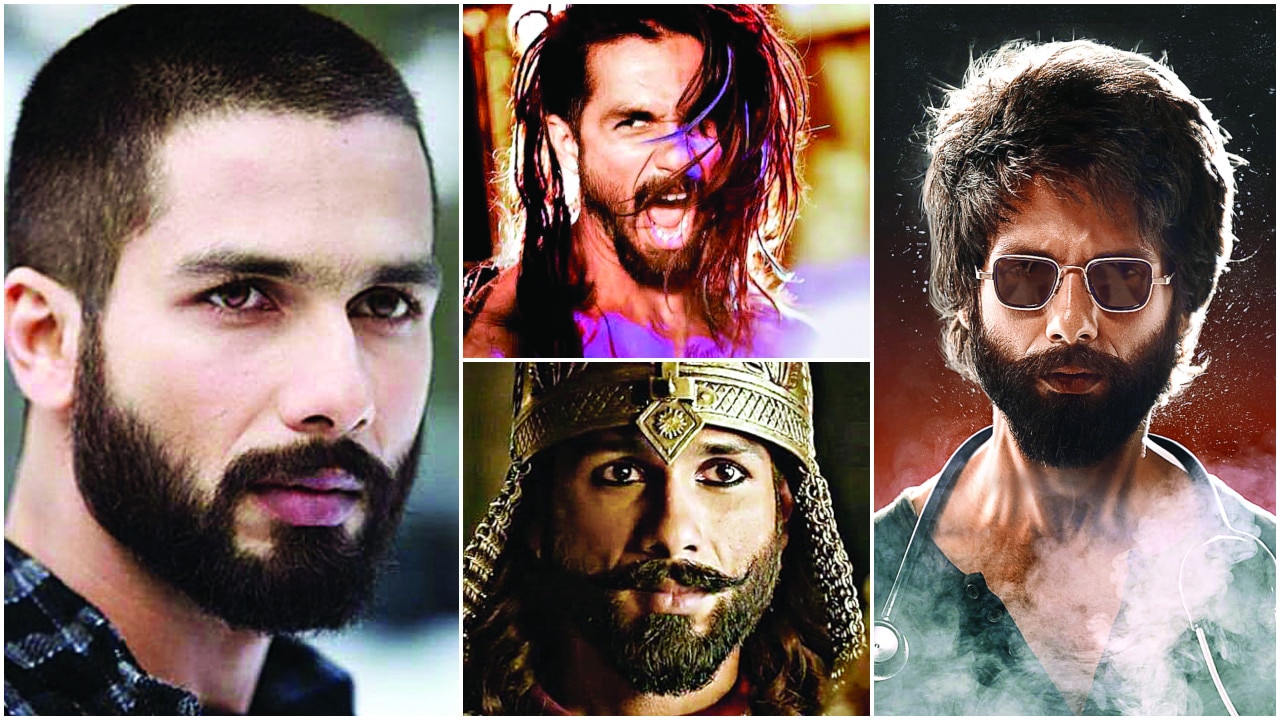
Shahid Kapoor (Clockwise from top left) Haider; Udta Punjab; Kabir Singh; and Padmaavat
I was told to remove Shakespeare from my script or my film wouldn’t get money-Vishal Bhardwaj
8:12 AM

Niharika Lal (BOMBAY TIMES; December 19, 2018)
The last day of Jashn-e-Rekhta saw the venue swarming with people who had come to attend Vishal Bhardwaj’s session, and while most were expecting a discussion on politics, Shakespeare and Bollywood, they were left pleasantly surprised when Vishal unveiled his inner poet and started reciting shayari from his all-time favourite, Bashir Badr, as well as his own. Vishal’s shayaris were unique not only because of topicality, but also because he spoke about the modern man’s woes like Google Maps, network, phone and e-mails, too.
‘JAB ISS TARAH KA SUPPRESSION HOTA HAI, USS WAQT ART ZYADA KHILTI HAI’
Vishal Bhardwaj spoke about the Sabarimala temple issue through his first shayari, which concluded with, “...pujte ho devi ko lekin aurat ko mandir mein nahi jane dete, aap bhi bas”. Talking to the audience, he said, “Aaj ke waqt mein toh ‘Bol ke lab azad hain tere’ bahut hi zaruri hai. Mujhe lagta hai jab bhi iss tarah ka suppression hota hai, uss waqt art sabse zyada khilti hai, kyunki jab tak koi dabayega nahin hamare gale ko, toh hamari cheekh kaise niklegi?”
Vishal also spoke about how phones keep making their way into his ghazals, saying, “Meri ghazlon mein phone ghoom-phir ka aata rehta hai, mere har naye sher mein phone aa hi jata hai.” He then went on to recite his phone-inspired ghazals, “‘Aankh ka lihaj tha ya ke hausla na tha, usne text mein likha keh sake jo lab nahi.’ Ek aur hai, ‘Woh baat karte-karte hi khamosh ho gaya, mujhko laga network toot gaya’. We also keep checking travel time on Google Maps even if we know that we won’t go, so I wrote this, ‘Tumse milna namumkin hai, phir bhi dhoondte hain Google pe ki ab nikle toh kab tere ghar pahunchenge’.”
‘IRRFAN WANTED A FEW MORE LINES SO I WROTE ‘MAIN’ IN HAIDER’
In Haider, Irrfan recites a nazm, Main – “Darya bhi main, darakht bhi main … Jhelum bhi main, chinar bhi main … dair bhi hoon, haram bhi hoon … Shia bhi hoon, Sunni bhi hoon, main hoon pandit … main tha, main hoon aur main hi rahoonga,” – which became quite popular after the film’s release. Talking about why he wrote these lines, the director said, “There was a scene between Irrfan and Narendra Jha, and Irrfan asked me to give him more lines. I told him that if I will write more, toh woh shayari ho jayegi. Usne kaha, haan mujhe shayari karni hai, that’s when I wrote this.”
‘FINANCER TOLD ME NOBODY WILL GIVE YOU MONEY’
Talking about literature, Vishal Bhardwaj said that the film industry resists literature because they consider it to be boring. He said, “On my script, it was written, ‘inspired from Shakespeare’, and a financer friend told me that I should remove Shakespeare’s name from my script because nobody would give me money. Whenever we talk about literature, the first thing that one assumes is that it must be boring because anything related to literature is boring, which is definitely not true. In school, Shakespeare scares you, I think the age when I read Shakespeare was the right age, for me. In gang wars, people kill each other and it ends there, but I wanted to go deep to find out the equations of a gang war. Maine bahut shiddat se usko chaha tha, toh woh mujhe mil gaya.”
Before the session ended, Vishal sang some songs for the audience including, Yeh Ishq hai and Pehli baar mohabbat ki hai, and the audience responded by giving him a thunderous applause for the performance.
Most men see me as a fellow man and not a woman refusing them-Tabu
8:11 AM

Priyanka Dasgupta (BOMBAY TIMES; November 24, 2018)
Fresh from the success of AndhaDhun, Tabu was in Kolkata as the special guest at the 24th Kolkata International Film Festival’s closing ceremony. During her stay in the city, she talked to us about Gulzar saab’s influence on her career, her equation with Irrfan and her current priorities:
After AndhaDhun,there have been talks about your portrayal of strong women characters. How do you portray dark characters effortlessly?
For me, every character takes the same amount of immersion. I don’t have any special approach for playing dark characters. That’s because I never looked at them as dark characters per se. For me, they were real people.
Simi in AndhaDhun is the cheating wife of a has-been star who is at once a seductress, an aspiring actor, a step-mother and an accomplice in a crime. Despite being the primary antagonist who is deeply flawed, it is difficult to hate her. So it is for Nimmi in Maqbool,Ghazala Meer in Haider and Anne Mathew in Golmaal Again. Do you consciously create empathy for grey characters?
I don’t think of people as out-and-out black or white. I don’t see people as good or bad, though some deserve to be seen as purely dark (laughs). I think it is easier for me to diminish the evil in people and be able to see the good. I never thought that these characters should get empathy from the audience. They live their lives and do what comes to them, according to the script. If people have empathy or hatred, then that’s their perception. That’s what I am bringing out in them.
Do you ever revisit your own films?
Rarely. I don’t think I can be my own audience as long as the film is not complete. I come from a generation that had no monitors on the sets. You had to go with the director’s conviction and be happy with it. I still work like that. But yes, there are a few scenes that speak to me. In AndhaDhun, there are many such scenes. Like, when I first go to Ayushmann Khurrana’s house to see if he is wearing a mask. Then, there is the ‘tu toh bohot bundle aurat hai’ scene. I also love the car scene in the climax. What I like about Sriram (Raghavan) is that nothing of his craft is manufactured. He is never trying to be dark and morose. He never manipulates a response. That is why people liked his AndhaDhun and I enjoyed acting in it, too. I also revisit the chinar scene from Haider. There are some really nicely written scenes in Maqbool — especially the Meri Jaan scene with Irrfan.
Haider and Golmaal Again are from two completely different spaces. Have you asked directors why they cast you in films from such diametrically opposite genres?
It’s the faith of the directors. They haven’t stereotyped me in their heads. Rohit Shetty must have believed that I can carry off Golmaal Again even after Haider and Drishyam. Gulzar saab came to me with Maachis when Ruk Ruk Ruk was on TV. I had asked him how he visualised me in such a role but he never replied. Both Sajan Chale Sasural and Maachis had released the same year (1996). Maqbool came to me after I did Biwi No. 1 in 2000. That was also the time I did Astitva and Chandni Bar.
Maqbool is one of the rare instances in Indian cinema where the leading lady was so dark and conniving. Yet, there was love and romance. I wonder what Vishal (Bhardwaj) saw in me that he felt I would be able to bring that layer. In Haider, which I did in 2014, my character had so much of internal silence. Physically, too, she was so different from the cop I played in Drishyam the next year.
With Indian cinema celebrating women whose beauty lies in their vulnerability, how did your portrayal of conniving women gain acceptance?
Acceptance isn’t in my hands. Acting isn’t a mechanical or technical job and I can’t dissect the process. On a lighter note, perhaps from a Vishal to a Rohit, everyone is seeing a planner and a manipulator in me (laughs out loud).
Irrfan had once described you as someone ‘deeply spiritual, who straddles many ends’…
It’s only after I read this interview of his that I realised how deeply and aptly he understands me. He always says that there is a comedian in me that very few know about. I am looking forward to having him back and doing a comedy with him.
You’ve refused more offers than you have accepted. Didn’t that hurt egos in a male dominated industry?
(Laughs) I think most men see me as a fellow man and not a woman refusing them. I have never done this gender-segregation in the workplace. How does gender matter if a person is doing right or wrong? I have worked from a young age and lived like a man.

Varun Dhawan is a superb dancer and knew that I could not fall short-Shraddha Kapoor
8:20 AM

As told to Natasha Coutinho (MUMBAI MIRROR; October 29, 2018)
 I love that as an actress I get to play different people in every film,
travel to places across the country and the world and learn a lot of
things along the way. There’s so much work that goes on behind the
scenes to make a film, and then, over a weekend, its fate is declared.
It may not always be a hit or even get noticed, but I reiterate, it’s a
lot of hard grind.
I love that as an actress I get to play different people in every film,
travel to places across the country and the world and learn a lot of
things along the way. There’s so much work that goes on behind the
scenes to make a film, and then, over a weekend, its fate is declared.
It may not always be a hit or even get noticed, but I reiterate, it’s a
lot of hard grind.
Currently, I’m training for the biopic on badminton champ Saina Nehwal. I begin my training at 6 am with my coach Eshan Naqvi who is also my co star in the film. He’s a fantastic being, a professional shuttler himself and has been helping me pick up the game quickly. I’ll continue practice even after the film wraps up. I enjoy the sport and being a morning person, I like waking up at 5 am. This way I maximize my day.
One of my biggest challenges was Remo D’Souza’s ABCD sequel. I started prep around five months before the film went on floors since I had to match steps with professional dancers. Even my co-star Varun Dhawan is a superb dancer and knew that I could not fall short. I trained in Krumping, B-Boying, Hip-hop and a lot of other contemporary dance forms and was happy the effort translated well on screen.
One film that got me really excited about the prep was Ek Villain, also featuring Sidharth Malhotra and Riteish Deshmukh, because I had to learn how to ride a Bullet. The team had arranged for biking lessons and though it took me some time to learn how to ride, once I did I was very comfortable on the mean machine and even did my own stunts in the scene where my character Aisha is thrown out of the window. Despite the fact that I was in a harness, it was something new and exciting. I also performed some daredevil stunts for Baaghi with Tiger Shroff.
I played a fashion designer in Batti Gul Meter Chalu and to carry off the role convincingly, I learnt from the film’s stylist how to take measurements. I enjoy doodling and that came in handy while making sketches. One of my closest friends is a designer, so it was nice to get his sensibility though my character, Lalita Nautiyal, had no sense of coordinating her look even though she believes, she is pretty cool and hip. It was fun experimenting with quirky looks and learning to speak the Kumaoni dialect of Uttarakhand where the story unfolds. We did lots of readings with our writers and the focus during the shoot, was to get the lingo and the accent right.
 For Haider (left) too, another film with Shahid set in Kashmir, I had to
work on my accent. Also, there’s a scene in the film where I had to knit
while speaking my lines. Vishal (Bhardwaj) sir was very particular that
I should know how to knit so I would look comfortable holding the
needles and handling the wool. So, before we started shooting, I
actually got a teacher who would come home every day and teach me how to
knit.
For Haider (left) too, another film with Shahid set in Kashmir, I had to
work on my accent. Also, there’s a scene in the film where I had to knit
while speaking my lines. Vishal (Bhardwaj) sir was very particular that
I should know how to knit so I would look comfortable holding the
needles and handling the wool. So, before we started shooting, I
actually got a teacher who would come home every day and teach me how to
knit.More recently, for the Haseena Parkar biopic, since I had to play a much older woman, I had to wear a body suit and had silicone prosthetics in my mouth. It took me around 45 minutes every day to get into my get-up and once I did, it was difficult to talk.
Flashbacking to the Aashiqui sequel, my character Aarohi, moved to Mumbai from Goa so I had to understand and relate to her small-town upbringing. She’s a singer and though I didn’t sing for that film, since I love music it helped me relate to her. I remember my first meeting with Mohit (director Mohit Suri). I had oil in my hair and was wearing glasses. And it was this girl-next-door look that bagged me the film. He felt I was perfect for the part after seeing me so casually dressed in person.
Before I wind up, I have to point out that prep is not just about physical transformation and learning new skills. You also need to relate to a character at an emotional level. For Luv Ka The End that released in 2011, I was playing a heartbroken young girl who is out to seek revenge. And believe me, that was one tough prep.

The actress with Sidharth Malhotra in Ek Villain; in Aashiqui 2 (right)
On a film set, where there is so much chaos, I find inner peace-Sanya Malhotra
8:25 AM

Rachit Gupta (BOMBAY TIMES; September 23, 2018)
It's not every day that actresses slap, kick and hit each other on a film set. But that’s exactly what Sanya Malhotra had to do in Vishal Bhardwaj’s upcoming film, Pataakha. While she didn’t have the proverbial catfight with costar Radhika Madan, she did have to claw and gnaw her way into a feisty and challenging role. In a chat with BT, Sanya talks about the unique experience of working in a no-holds-barred movie. She reveals that acting was her dream profession and being in front of the camera is the only thing that gives her inner peace. Excerpts...
Vishal Bhardwaj is one of the most acclaimed directors in Bollywood, and most accomplished actors aspire to work with him. So, how does it feel to get this rare opportunity, so early on in your career?
It’s definitely a privilege, but I wouldn’t call it luck, because I don’t believe in that concept. There’s a new trend where people make a positivity journal, so on the same lines, the team that manages my professional commitments told me to write down the names of all the directors who I want to work with. I wrote Vishal ji’s name first on that list. His films and music have always inspired me. I remember watching Haider (2014) and for 15 minutes into the end credits, I could not get up from the chair. That’s when I asked myself, ‘Main kab actor banungi aur kab mujhe Vishal Bhardwaj jaise director ke saath kaam karne ka mauka milega’?
 While it may be a dream come true to work with him, does his reputation and aura ever get intimidating, especially for a new actor like you?
I believe that an actor and director should share a strong bond. Theirs should be a creative relationship and their bonding and understanding should be such that an actor should not hesitate from sharing his/her inputs on every shot. Having said that, I used to be scared of Vishal sir. During the initial days of the shoot, I would abstain from putting forth my point of view, fearing what he would say. It’s not like he had some intimidating aura around him, but mujhe aisa lagta tha ki Vishal ji jaise kalakaar meri kyun sunenge? I once dreamt that I went up to sir and asked him a few doubts about a scene, and he snapped back with, ‘Yeh bekaar ke sawaal matt poochha karo!’ (laughs!).
The trailer of Pataakha features you and Radhika Madan, who plays your on-screen sister, swearing and bashing up each other. How difficult was it for you to get into the skin of your character, Chhutki?
We attended several workshops with Atul Mongia (casting director) and prepped a lot for this film. I’ve had to work very hard to play Chhutki. Main man se Chhutki banne ko tayyar thi, lekin tann se nahi. While I am an introvert and a shy person, Chhutki is not. I wanted to play the role, but at the same time, I was hesitant and my inhibitions were stopping me. The workshops and the way Vishal sir and his entire team guided us, helped me to get into the skin of my character.
You said that as a person, you have a lot of inhibitions. As an actor, what does it take for you to drop these inhibitions, because at some level, they can affect your performance, right?
I think I stop being myself in front of the camera. Off camera, I may be an anxious and nervous girl, but once the camera starts rolling, I become a different person. I try really hard to not let Sanya come out when I play any character. Playing Chhutki has been a liberating experience, because the role did not give me a chance to be timid or socially awkward. I just had to be that boisterous, moohfat and feisty girl. It actually helped me get rid of a lot of my inhibitions as an actor.
Coming back to Pataakha,the film features two warring sisters, which is something we don’t traditionally see in our movies. You have an elder sister, too. Tell us about your equation with her during your growing-up years...
People may think that two sisters are always on the same page and that they share a great rapport, but I did not have that sort of an equation with my sister, Shagun. While growing up, I would hate her. We used to fight like cats and dogs, pull each other’s hair out, slap and scratch each other. My sister is just three years older than me, but I never understood her, and I could never relate to her. In fact, I used to feel that I will never be able to like her. But when I came to Mumbai, I started missing her. After so many years, I’ve finally become fond of my sister. I am pretty sure that the bittersweet relationship between Chhutki and Badki in Pataakha will resonate with sisters like us.
Your roles have helped you learn languages other than Hindi. Do you have a knack for picking up languages?
I’ve worked in another film, Photograph, where I play a Gujarati girl. It’s not like I’m consciously picking parts with wacky accents; it’s just happening in the most organic and natural way. Picking up the Rajasthani accent for this film wasn’t too much of a challenge, because it is quite similar to Haryanvi that I learnt for Dangal. It’s a lot of fun to work with these accents. The voice modulation and dialogue delivery become very creative. In fact, I wouldn’t mind signing up for a film where I play a Maharashtrian character, because I now want to learn Marathi (laughs!). I love the sound of
languages like Marathi and Bengali. Your debut film broke box-office records around the world. Does that put pressure on you while selecting projects? Also, do you anticipate the same kind of success for all your movies?
It does not work like that. After Dangal, I was waiting for Photograph to start. People used to ask me why I hadn’t signed my next film. They used to say, ‘Oh, but Fatima (Sana Sheikh, her co-star from Dangal) has already signed her next big film’. At that point, I realised that I had two options. I could either react to these talks and jump into a film for the sake of it, or I could wait and really soak in the feeling that I was living my dream. I have always wanted to be an actor. I like to enjoy every single day of my life, because I am living my childhood dream. I don’t like to push myself, because I am not that kind of person. I want to really appreciate the work I do. I don’t want to race ahead of anyone, nor do I want to succeed in a hurry. Acting is the only thing that makes me happy and calm. On a film set, where there is so much chaos, I find inner peace. I am content with where I am.

I’ve never focused on the results-Shraddha Kapoor
8:29 AM
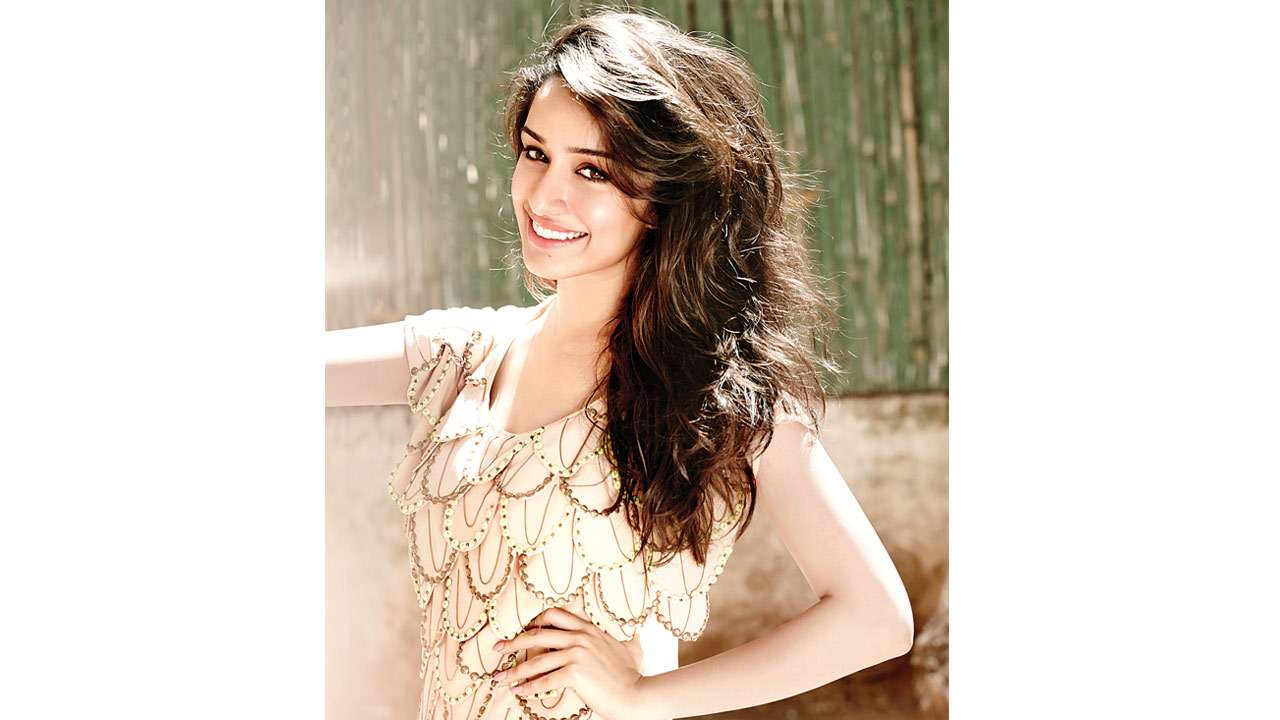
Hiren Kotwani (DNA; September 17, 2018)
The spark in Shraddha Kapoor’s eyes is unmistakable. The actress is justifiably upbeat because she is fresh off the back of her superhit outing Stree and has Batti Gul Meter Chalu (BGMC), which releases this Friday. “For every film I do, I focus on giving it my 110 per cent and hope people will go to watch it and be entertained,’’ the light-eyed beauty says when we catch up with her for a tête-à-tête. She also tells us about her upcoming films, sweating it out for her turn as Saina Nehwal in the national badminton champ’s on-screen memoir, rumours of a link-up with photographer Rohan Shrestha, and more. Excerpts...
The success of Stree must have come as a career boost after your films last year didn’t fare too well...
I’ve never focussed on the results. Hits and misses are not in your hands. When a movie succeeds, it feels great. At the same time, I can’t be complacent about it. I have to keep working hard and do the best I can. I find it shocking yet amazing that Stree has become a blockbuster. I had hoped for it to do well, but didn’t know it would be such a huge hit.
Your next release is BGMC. What was your first reaction to the script?
My first reaction was, ‘Wow!’ The content is so special. It’s a well-written story on a prevalent issue about how power companies can affect big as well as smaller towns. This is the first time I’ve been offered something with a social connect. I had loved Shree Narayan Singh’s Toilet - Ek Prem Katha, which conveyed an important message in an entertaining manner without being preachy.
How was it working with Shahid Kapoor again after Haider?
It was a great experience — especially on something that is so different from our first film together. Haider was an adaptation of William Shakespeare’s play, while this is a socially-relevant subject. It was great to explore this genre with Shahid. Having worked with him in the past, there was a comfort level that helped us essay our parts effortlessly.
Tell us about your experience of shooting in a small town like Tehri where the comforts you’re used to are not available easily.
As a matter of fact, I don’t want things to be available easily. I also need a good dose of nature every now and then to keep me calm. Uttarakhand is such a fabulous place that you feel you’re in heaven because there are no crowds, traffic and constant honking. I didn’t want the shoot to end. I just wanted to stay there and disconnect from everything. After the shoot or on a day off, I would sit in my balcony and lose myself to nature for hours. Even as a shot would be readied, I would take off to look around. I felt I needed it.
What was your greatest takeaway from a socially-relevant film like Batti Gul Meter Chalu (BGMC)?
As an actor, I felt it was a great opportunity to be a part of a film that can stimulate Indians’ thinking about issues in the country today. If people connect with this movie, it will make a big difference.
What scope does your Lalita 'Nauti' Nautiyal have in a story that revolves around Shahid's character?
BGMC is as much the story of the two friends as it is of Shahid’s Sushil Kumar Pant and how an important issue affects one of them. Lalita has a strong conscience from the beginning, she never approves Sushil’s ways or the fact that he is a kapti lawyer. She stands for what she believes is right and wants to fight for justice for their friend.
You also have Saaho with Baahubali star Prabhas coming up...
It’s also my first bilingual project. It’s a challenging film because, after every scene in Hindi, I have to do it in Telugu, which I have never spoken before. I would spend hours mugging my lines. It’s amazing working with a director and a team who are so passionate about cinema. I haven’t done a movie or a role like this before. And, of course, working with Prabhas is a great experience.
One hasn’t heard much about the biopic on Saina Nehwal since its announcement. What’s happening on that front?
It’s going on floors this month and I’m eagerly waiting to put my best foot forward. I feel badminton is the second most difficult sport after basketball. It’s a huge challenge to play the sport professionally, like Saina. When you see her in action on the court, she is in a fast forward mode. It’s an extremely rigorous and exhausting task and I’m giving it all I can.
Usually, actors working in onscreen memoirs only focus on that project. Did prepping for this one get tougher since you had alluring subjects like Stree and BGMC?
There are no rules for prepping for a bio. Every actor has their own way of working. You know the director’s vision and you have to come up with the best possible way to do justice to it. Since last year, I’ve been practising badminton off and on. Even on days that I wasn’t shooting, I would train in the mornings.
According to the grapevine, photographer Rohan Shrestha is the man in your life. Is that true?
I’m not bothered by link-up rumours. It’s the part and parcel of being an actor. I’m happy focussing on acting. It would be a cliché to say that I’m married to my work and films. I will just say that I don’t want to speak about my personal life.
There are no heroes or villains in AndhaDhun-Tabu
8:19 AM
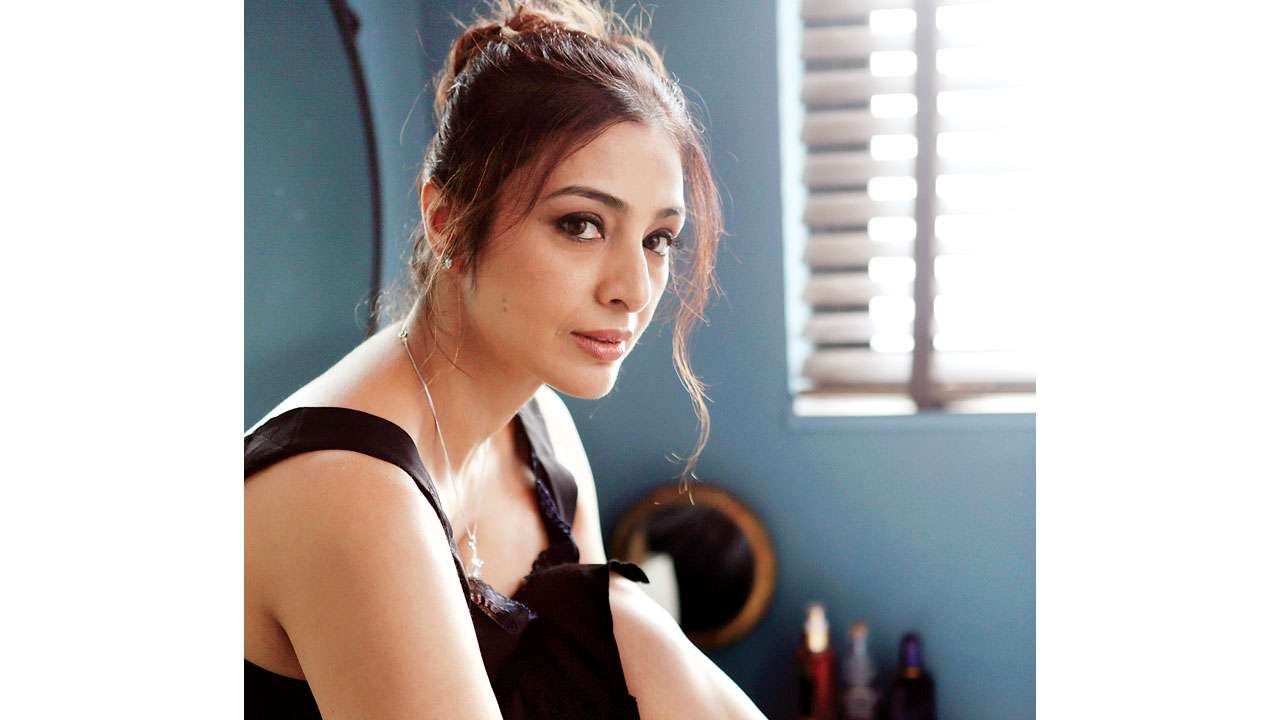
Deepali Singh (DNA; September 6, 2018)
Tabu loves a good laugh. And that comes as a pleasant surprise for anyone who speaks to her for the first time. After all, the National Award-winning actress is known for her intense performances in movies such as Maachis (1996), Astitva (2000), Chandni Bar (2001), Maqbool (2003) and Drishyam (2015).
During the 20-minute phone conversation, she often breaks out into peals of laughter. Tell her that we expected a much more serious conversation, and she responds, “Main aise hi sabko ullu banati hoon. If I make you laugh, then you won’t ask me any serious questions.”
The powerhouse performer has had a busy last few months, with Golmaal Again, Missing and a cameo in Sanju. Now, she will be seen in Sriram Raghavan’s AndhaDhun along with Ayushmann Khurrana and Radhika Apte. The trailer, which released on September 1, has piqued everyone’s interest, but Tabu is guarded when she speaks about her role and the plot. “It’s a film that one really can’t say anything about because saying even one thing will be a spoiler,” she says. Over to the actress...
This is the first time you’re working with director Sriram Raghavan. How was the experience?
He is a fabulous director. You can’t encapsulate the stories of his films and put them in just one line. His movies are about people who are stuck in certain situations and their journeys. What’s unusual is the way he conceives the characters and the material he gives them to do because the characters are as real as they are bizarre.
How important is your role to the plot?
Importance toh I can’t say; I hope it’s very important (laughs). But in all of his films, you cannot pinpoint and say that the story is about these one or two central characters. Every character is crucial to the plot, even if they are there for one scene or from the beginning to the end. All I can say is that Sriram Raghavan has a very interesting take on my role.
Would you classify it as a thriller?
We can’t put AndhaDhun in this genre. I don’t believe in classifying so much. However, movies do get classified, especially with Sriram because he’s a master in that zone. But this film is like a rabbit hole, which goes from here to there and you don’t know where the story is going to go.
A bit like Badlapur, would you say?
Correct. There are no heroes or villains in this movie either. They are just being themselves, carrying out their own desires or aspirations and doing the best in the situation that they are in.
You did a lot of comedy films in the initial years of your career, but it was after a series of serious roles that one saw you in Golmaal Again last year...
Yes, and it was one of the best experiences I’ve had in a really long time. I always wanted to be a part of the Golmaal franchise, even if it was a cameo and told Rohit (Shetty) about it whenever we met. I enjoyed watching those films, especially Tusshar’s character. My role turned out to be quite interesting and intense. And I had so much to do. The other guys have been there for 11 years. I was the new entrant, though I’ve known Ajay (Devgn) and the others for so long. It was a win-win situation for me. I knew them all, it was a fantastic set-up, it was so crazy. You can imagine the fun that we must have had on sets. There was Johny (Lever) bhai whose side I did not leave during the entire film! I was only sitting with him and laughing all day. It was fantastic to work with Rohit and the movie became such a huge hit. I have a great connection with Golmaal.
You’ve worked with Salman Khan earlier in films such as Hum Saath Saath Hain (1999) and Jai Ho (2014). Now, you’re working with him again in Bharat. However, you have never been cast opposite him...
I’ve never been offered a film opposite Salman. But we have done some great work together and I’m happy with it. When you enjoy working with someone and share a comfort factor, it’s like being with family. For me, the experience is more important than who I’m paired opposite.
You like taking sabbaticals, but now, you have quite a few films back-to-back after a long time...
Yes. A lot of good work, mere matlab ka kaam, has been offered to me (smiles). The type of roles I have done in the past four-five years were the kind I really wanted to do. I don’t think anybody would have said no to those characters, whether it was Life Of Pi (2012), Haider (2014), Fitoor (2016), Drishyam (2015) or now, AndhaDhun and Luv Ranjan’s next. For me, it’s always been exciting to play multi-layered characters who have their own strength and personality. I’m so glad that in the past few years, these varied roles have come to me that have so much to contribute to a story. In a film like Golmaal Again, my character was the sutradhar while in Fitoor, I had an intense role that loomed large over the love story of two young people. Vishal (Bhardwaj) has given me the two best roles of my career (Maqbool and Haider) (smiles).
Was your character in Drishyam a tough one, too…
It was so powerful and had so many shades. And yes, it was really difficult to pull it off. It was about knowing how much to let go and how much to hold back. She could easily look like the villain. But if you don’t play on her power and strength, she would look weak and you cannot afford to do that. She needs a powerful mind to combat exactly what the hero is trying to pull off on her. So, it was a combination of all those traits and was written beautifully. I think it was one of the most well-written characters for female actors.
So will the sabbatical come later?
No ya, I’m busy till March. But I don’t intend to take a sabbatical. Kitne loon yaar (laughs)! I’ll take small breaks instead. Actually, one gets time in between because everything is so well organised now. The style of working has changed and it allows you to do your own thing as well. Anyway, I like to do my own thing (smiles).
In Pataakha’s warring sisters, Vishal Bhardwaj sees India-Pakistan rishta
8:26 AM

The trailer of his upcoming film Pataakha — a tale of two perpetually warring sisters — will be unveiled at midnight, the night India and Pakistan “truly became two nations”
Aarushi Nigam (BOMBAY TIMES; August 14, 2018)
Tonight, the countdown to midnight is going to end in a desi dhamaka as Vishal Bhardwaj drops the trailer of his next, Pataakha. You don’t want to miss it for the same reason as everyone else — who doesn’t love a good fireworks display? And fireworks there are aplenty, with Sanya Malhotra and Radhika Madan playing sisters who can’t stand each other’s presence, charging at one another at the slightest of provocations.
 And it’s this tale of love-hate sisterhood that Bhardwaj finds to be the perfect metaphor for India and Pakistan, ergo, the trailer’s release date, which is the midnight between August 14 and August 15. “That is when India and Pakistan were born as two separate nations,” explains Vishal. “Jaise families mein hota hai, brothers and sisters fight and the lines get drawn and walls get erected within houses, lekin jab unke bachche hote hain, their relationships are unaffected, they mingle, woh chachi ke ghar khana khane jayenge… India-Pakistan ka rishta kuch aisa hi hai. Whenever we meet as people, here or abroad, or we visit each other, there is so much love. They love our films, we love their music and their musicians. But on official platforms, when the PMs meet or delegations meet, no one can see eye to eye,” he says.
So what is his perspective on the psyche of sisters, and the psyche of the India-Pakistan relationship? He says, “Siblings fight like crazy for the most superficial of reasons – isne mera kapda le liya ya isne yeh bol diya. Baad mein kisi ko yeh yaad nahi rehta ki ladayi kyun hui thi. India and Pakistan were born from the same subcontinent and have been fighting continuously for more than 70 years. Kuch hi saalon mein 100 saal ho jayenge iss ladayi ko. Just like Badki and Chhutki in the film, we are so used to fighting since birth, we don’t know any other way to be. Agar kal ko Kashmir resolve bhi ho jaye, we wouldn’t know what to do. And so like in our movie, we have quoted Atal Bihari Vajpayee ji as saying that we can choose our enemies, but we can’t choose our neighbours, so the sisters have to learn to coexist. We have tried to use this story to give our own take on Indo-Pak relations in a lighthearted manner. India-Pakistan hi hamari Badki aur Chhutki hain.”
And then he adds, “Unfortunately, iss love hate relationship mein love almost reh hi nahi gaya hai, only hate is remaining. But I say that when the Berlin Wall could fall and the two Germanys were back to being one, why can’t the Attari-Wagah Border dissolve one day?” Interject that it sounds like a great idea – in theory – and he says, “I know. But one can dream. Kitna maza aaye agar kisi ka Lahore mein biryani khane ka maan ho toh woh aaram se Lahore chala jaye!” But for starters, Vishal would be happy if “Imran Khan and Narendra Modi saw Pataakha’s trailer”.
What kind of reception does he anticipate for this sisterly sentiment, especially on Twitter? “Jo evolved audience hai, they will get the sentiment,” he says, “But Twitter pe aise log zara kum bolte hain. The loudest voices are not the most rational. Abhi kuch din pehle, I was travelling, and at an airport, a gentleman came to me and said, ‘I love your work and your films, but aap please yeh anti-national baatein karna band kar deejiye.’ I said, agar main yeh baat karta hoon ki ladayi band ho jaaye, that we live in peace, how is that anti national? He said, ‘You talk of being friends with Pakistan, how can we be friends with Pakistan? And then you make films like Haider…’” Vishal talks of fears on the other side too, giving an example from an international forum he was at: “A senior Pakistani diplomat sitting in the audience got up and said, ‘India and Pakistan cannot reunite. Agar India-Pakistan ek ho gaye, toh humaari toh identity hi khatm ho jayegi.’ I asked, kaise khatm ho jayegi? We each have our own distinct identities.”
So how did the idea for Pataakha come about – from a wish to tell the tale of two countries via two sisters, or vice versa? Vishal replies, “I had read a short story by Charan Singh Pathik about two sisters, and I said, let’s see if we can flesh this out into a whole film. He actually knows two sisters like that, in a small village in Rajasthan.” Which brings us to the casting. “I was very excited to be working with newcomers after such a long time,” Vishal says, “Sanya had already done Dangal, but she played the quiet, subdued younger sister. Pataakha has her in the fiery, fighter avatar. Radhika Madan too was wonderful. Right from when I saw her audition, I felt she had something. And then Vijay Raaz, who has so far been mostly cast in gangster roles, plays their poor father. The girls don’t have a mother, aur baap se woh sambhalti nahi hain. Sunil Grover, I have loved him as Gutthi and loved his comic timing on his comedy shows. It feels great to be back in the space I was in when I did Makdee and The Blue Umbrella, where there were no big stars but the characters were wonderful.”

Despite the exodus, my relations with the people in Kashmir are unchanged-Raazi actor Ashwath Bhatt
7:41 AM

Anshul Chaturvedi (BOMBAY TIMES; May 24, 2018)
Long before Raazi’s ‘humanising the enemy’ narrative was accepted by the audience, one of its actors, Ashwath Bhatt, who left Kashmir in the exodus of 1990, had learnt that understanding the other side is far bigger for your own growth than hating it. He tells us how doing theatre and working with students from conflict zones like Syria and Palestine has put his own community’s suffering in perspective, and why when he visits Kashmir today, he talks of inclusiveness and not conflict.
You belong to Kashmir. How different is the Kashmir of the 1970s,what we see in Raazi, from how things are today?
I just came from the Valley recently. Ten days, I was in the Valley for an event which was to bring communities together. I have been very vocal and I told people — main Kashmir mein bolta hoon, Delhi mein bhi bolta hoon, aur London mein bhi; I don’t change my tone.
Unlike the Valley’s politicians ...
Yes, they come to Delhi and say one thing and go back to Kashmir and say something else. They say one thing in Kulgam and one thing in Pattan and one thing in Baramulla. I said to people there that two things concern me a lot as far as Kashmir goes. First, if there has to be reconciliation, there has to be truth. And truth of both sides, not one way. Har cheez ke do pehloo hote hain jeevan mein. Yeh shayad mujhe theatre ne sikhaya hai ki har character black and white nahi hai. Grey bhi hai life mein kuch. So, I talk a lot about it — truth and reconciliation. The second thing I said is, what am I giving to my next generation? One generation is already gone. Chhote-chhote bachchon ki buses par pathar maar rahe hain log. Kaun sensible, samajhdar aadmi bachchon ki bus par pathar maarega? Mujhe yeh bahut hurt karta hai. Koi bhi mazhab ka ho, bachcha hai, usko main pathar maar raha hoon. It makes me uncomfortable and destroys me mentally. Toh yeh maine Kashmir mein kaha, ki yeh do cheezein soch lena aap, jo kar rahe hain hum log. Yes, I want to be in my hometown, I want people to come, whosoever wants to go and whosoever wants to live wherever. But the second thing is, what are you giving to the next generation? Main Kashmir 2006 se jaa raha hoon. Main England se aaya and then I have been regularly going for research; I wrote a film, Lamhaa, and at different points, I had different encounters. Main Hizb ke militant se le kar ek chhote se ex-militant tak sabse mila hoon. I am making a documentary as well. It’s called The Other Half Of Paradise.

Yes. Mujhe uss par bhi gaaliyan padi. ‘Kashmiri Pandit hote hue tumne Kashmiri Panditon ko koi Ready line nahi falood di’ was a point of view. Maine kaha, yaar, tum meri integrity par question mat karo na yaar. Main koi balancing act wala aadmi nahi hoon. Aise toh Vishal Bhardwaj se bhi yeh sawal poocha gaya tha Haider (right) ke time par. Vishal ji se meri baat hui thi. He said, ‘Ashwath, isme kitne point of view hain Kashmir ke. Aap ek film mein har cheez cover nahi kar sakte ho. Mera yeh apna point of view hai’.
Kya hai ki sachai kadwi hai Kashmir ki. Koi sachai na sunna chahta hai, na bolna chahta hai. Agar hum sach bolenge toh sab cheezein theek ho jayengi, lekin sach itna kadwa hai ki koi sunna hi nahi chahta hai.
Aap kisi se baat bhi karte hain imaandari se and you want to help people, woh kehte hain aap kis agency se hain? Arre bhai main kisi agency se nahi hoon, na main press ka hoon. There is a trust deficit now in Kashmir.
You were slammed for Lamhaa’s writing, but not for playing a Pakistani officer who is normal, relatable?
No, now I think the audience has grown. Maturity aayi hai. Ab unko lagta hai acting kar raha hai yeh. When Anupam Kher can play a character that is almost Geelani, what’s wrong with me playing a Pakistani Major?
I did Phantom also with Kabir Khan. I asked him in the first meeting, what is your vision. He said look Ashwath, everybody is doing their job. RAW is doing its job and ISI is doing its job and I want to show ki uss job ke dauran yeh kahaani chalti hai — the killing of Hafiz Saeed — joh movie mein dikhaate hain. Maine kaha khwaab achha hai. Film mein hi poora kar lijiye. Lekin jab woh film aayi, kya hua usme? They (ISI) create havoc in half of the subcontinent and we treat them like idiots. In films, we show that they don’t have brains. They’re not idiots.
You’re suggesting we tend to create this artificial structure of a mindless, random entity on the other side — just the thing Meghna is not doing in Raazi, right?
Yes, because we make everyone we don’t like a demon. It doesn’t work like that. Everybody is human. We also have skeletons in our cupboard. If you look at films, jab Kargil hua toh suddenly you had patriotic films, with ‘Doodh maangoge toh kheer denge, Kashmir maangoge toh cheer denge’, because that catered to people. Gadar hua toh hand pump nikaal kar Pakistan ko aapne hila diya. It doesn’t happen like that.
I’ve researched a lot for Raazi. I saw Pakistani Army videos because koi reference hai hi nahi uske alawa. Fortunately, I must be the only actor — or a rare actor — who had dinner in a Pakistani cantt. I was a guest of DG Lahore Shabbir Ahmad sahab (Director General of Parks and Horticulture Authority, Lahore, between 2003 and 2006) in 2004. I was working with a German (theatre) company at that time and we were supposed to tour South Asia. Uski recce ke liye main aaya tha. My passport says I’m not supposed to go there but I’m sitting there with Shabbir Ahmad sahab. Shayad kismat mein tha ki ek din Pakistan Army ka Major play karoonga.
Also, the way Meghna has dealt with Raazi, it’s very human. Sehmat went as a spy but she didn’t intend to harm anyone. She intends to get things done for her own watan. She is told ki ek din tumhe zaroorat pad jaaye aur kisi ko maarna pade... But then, what is driving her is that it’s all for the nation. By the end, she is totally heartbroken; she is gone, only alive physically. So, it’s not the story of India-Pakistan but of a human being, the lowest denominator.
You’re not edgy when talking about Kashmir, despite being uprooted at the age of 15. Has it been this way from that point of time itself?
I have mellowed down. I still have huge anger because my only question was what is my fault that my mother cries 24 hours a day? Neend mein bhi aansoo nikal rahe hote thay. What’s her fault? She has not hurt anybody, harmed anyone. But I’m not angry. I’m not saying sympathise with anybody. Lekin ek cheez hai empathy, jo bahut zaroori hai life mein. That can be for anyone.
M K Raina, Vir Munshi and I were discussing the other day in Kashmir ki artist chahiye. Moti Lal Kemmu ji (noted playwright and Kunal Kemmu’s grandfather) also passed away recently. Woh guru thay hamare. Unka bhi yahi concern tha till his death — ki artist paida hona chahiye community mein. Jis community mein artist marr jayega, uss community mein kuch nahi bacha. Writers nahi paida honge, thinkers nahi paida honge, painters, sculptors — we need people who have diverse backgrounds. For me, what is more important is aapne language bachaya apna? Who was stopping you from saving your language? Who was stopping you from saving your culture, or telling your children — the next generation — ki beta, Kashmiri mein thoda-bahut baat kar lo.
How are your associations with the Valley today, your earlier neighbours, associates?
Mere saare relations waise hi hain. Aaj bhi unhi Musalmaan gharon mein jaata hoon. Unko mama tab bhi bolta tha, aaj bhi bolta hoon, unki beti ko main behen bolta hoon. Gaya toh hospital se doctor le kar gaya unke liye. Raazi ke time par main gaya toh unko le kar gaya. Jinhone mera ghar jalaya main unse bhi mila, chai bhi pi unke saath baith kar. Our old neighbours told me that our carpet is in another neighbour’s house — uss par namaaz padhta hai woh. My father said a very amazing line, he said ki uss aadmi ko sochna hai ki kya uss kaleen pe woh jo namaaz padhega, woh qubool hogi?
Hamare yahan duniya aati thi — India se, baahar se bhi because my grandfather was a big name — Dwarka Nath Bhatt. He had so much faith that he said sabka ghar jalaa sakte hain, mera nahi jalaa sakte. But yeh jo saari cheezein hain... mujhe yahi lagta hai ghoom-phir kar ki shukr karo hum Syria mein nahi hain iss samay. Aap Iraq mein nahi ho. ‘Hamare saath ye hua’ — khatm karo yeh narrative. Inclusive banaiye na.

Subscribe to:
Posts (Atom)