Showing posts with label Guru Dutt. Show all posts
Showing posts with label Guru Dutt. Show all posts
After Meena Kumari and Madhubala, Guru Dutt’s biopic in works
10:06 AM

Meena Kumari, Guru Dutt, Madhubala. Pics/mid-day archives, YouTube
Mohar Basu (MID-DAY; September 11, 2026)
The fascination with the lives of Hindi cinema’s legendary stars shows no signs of slowing down. While Madhubala and Meena Kumari’s biopics are in the making, mid-day has now learnt that late Guru Dutt’s life and legacy will be brought to the screen. Manish Goswami’s production house Siddhant Cinevision has acquired the adaptation rights of ‘Bichde Sabhi Baari Baari’, Dutt’s biography by novelist Bimal Mitra, with plans to develop it as a multi-part series.
Mitra shared a close personal and professional association with Dutt, which began when the latter adapted his acclaimed Bengali novel, ‘Saheb Bibi Golam’.
A source shared, “The author spent considerable time with Dutt at his Mumbai home and Lonavala farmhouse, working on scripts and having long conversations with him. Those interactions became the foundation for the memoir. ‘Bichde Sabhi Baari Baari’ also shone a light on Dutt’s troubled marriage to singer Geeta Dutt, his bond with Waheeda Rehman, and the actor-filmmaker’s anxieties and vulnerabilities.”
mid-day contacted Goswami, who said, “It’s premature to discuss the details.”
Main Vaapas Aaunga is stunning. It’s an act of rebellion by the filmmaker-Mahesh Bhatt
10:50 AM

Vinay MR Mishra (BOMBAY TIMES; July 8, 2026)
For over five decades, Mahesh Bhatt has worn many hats — filmmaker, producer, mentor and one of Hindi cinema’s most fearless storytellers. As he turns producer for the play Wo Subah Hum Hi Se Aayegi, the filmmaker reflects on theatre feeling more truthful than cinema today, the need for artistes to resist playing safe, and Sadak 2 being his final directorial.
‘Theatre is the mother of all storytelling’
For a filmmaker who built his career on emotionally raw cinema, it is perhaps fitting that Bhatt now finds himself gravitating towards theatre. Producing Wo Subah Hum Hi Se Aayegi has reignited his belief in what he calls storytelling in its purest form.
“Theatre is the mother of all storytelling. At this stage of my life, I find myself drawn more to essentials, to the bare bones of truth. Theatre strips away all the machinery. There are no retakes, no visual effects, no AI. All that remains is a naked, trembling encounter between the performer and the audience. In this age, information floods us like a tsunami and truth is slipping out of our fingers. Everything is curated. Even our so-called wounds are curated and varnished. Theatre is one place you need to go to when you’ve lost your path,” Bhatt says.
‘The thirst to make stories that listen to the heart continues in the industry’
When asked if filmmakers today are playing it safe creatively in the age of algorithms and box office pressures, Bhatt, known for films such as Arth (1982), Saaransh (1984) Naam (1986) and Aashiqii (1990), disagrees. “We did have Main Vaapas Aaunga. It’s stunning. It’s an act of rebellion by the filmmaker. I may have stopped making movies, but the thirst to make stories that listen to the beat of the human heart still exists in the industry,” he shares.
‘Time is the only critic’
He is careful to clarify that his criticism is not directed at a younger generation of filmmakers. Instead, he believes they are often pressurized into chasing immediate success. “One of the greatest challenges of these times is how to avoid massification. Most of the young filmmakers I see have enormous fire in them, but they want to be successful like yesterday! So, you cut yourself. You prune yourself. I am not cynical about young people. The audience has the latitude and the bandwidth to oscillate between different kinds of cinema. Yes, some films may not move the needle immediately. But there are movies that are judged by how they survive the passage of time. Time is the only critic,” he explains.
‘If art doesn’t have the audacity to take risks, then it is not art’
Bhatt recalls a remark by acclaimed Hollywood filmmaker Francis Ford Coppola that has stayed with him. “‘If art doesn’t have the audacity to take risks, then it is not art.’ There is an entrenched belief in the marketplace, which they hurl at you every hour, that only tentpole movies — films that cater to the lowest common denominator and testosterone — will work. They have their place. But they cannot be the only stories we tell. I would say that, having played on both sides, having oscillated between intensely personal movies and hardcore commercial films, I found success on both sides,” he mentions.
‘How the world chooses to remember me is their privilege’
Despite a career spanning over five decades, Bhatt says he has no desire to dictate how history remembers him. Recalling a recent event in Delhi centred around a retrospective on Indian cinema, he says, “I was invited because the organizers felt I was a force that spoke to India in the ’80s and ’90s, and India spoke to me. Then you discover there was Mehboob Khan before you, Guru Dutt, and so many filmmakers before Independence. You realize you’re just another brick in the wall. You are not a monument. You’re lucky if you make certain films that connect with the hearts of the people living in your time. Some endure; some sink. We like to believe our work becomes monumental, but memory is the first casualty. Just as I choose how I remember people, they will choose how they remember me. And how the world chooses to remember me is their privilege,” he ends.
On his 100th, Guru Dutt’s classics return in 4K to theatres for new generation
7:59 AM
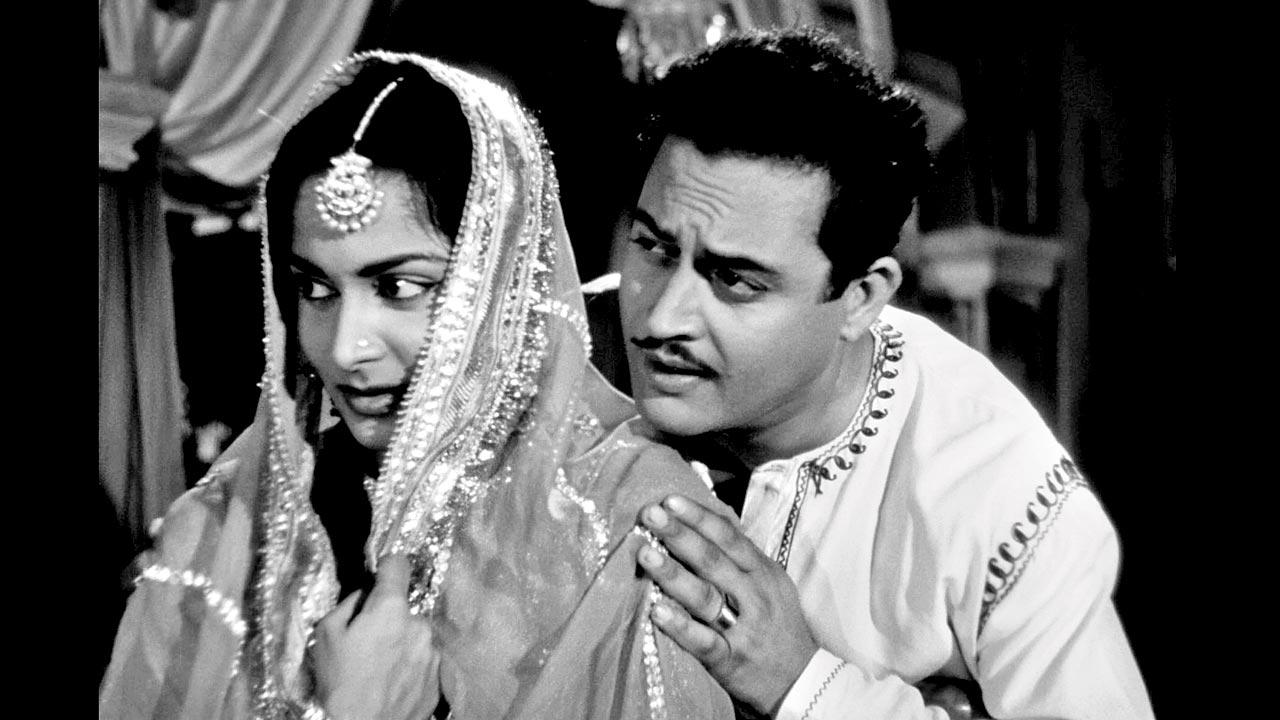
Mohua Das (THE TIMES OF INDIA; August 3, 2025)
This August, a filmmaker long gone returns to the big screen, sharper and clearer than ever. For the first time, a new generation will watch Guru Dutt's haunting silences, aching glances, and songs that still break hearts, where they belong: in theatres. Old fans may get misty-eyed; new ones will understand why he remains the tragic poet of Indian cinema. And yes, the lush, romantic Chaudhvin Ka Chand, comparing a beloved's face to the full moon, will still shimmer with the same charm. Only now, in 4K.
As part of Dutt's centenary celebrations, a nationwide theatrical release of his 4K-restored classics will run from August 8 to 10 across 250 cinemas in India. For the first time, films like Pyaasa, Aar Paar, Chaudhvin Ka Chand, Mr & Mrs 55, and Baaz — released originally between 1953 and 1960 — will play in their digitally remastered glory.
Put together by NFDC-NFAI in association with Ultra media group, this retrospective offers a rewind into Dutt's moody and musical world, which defined both his storytelling and his on-screen presence.
"Guru Dutt's films are timeless masterpieces that have influenced generations of filmmakers and audiences alike. This initiative is not just a tribute to Dutt's legacy, but also a significant cultural movement to bridge generations through cinema," says Sushilkumar Agrawal, MD & CEO of Ultra, which owns the rights to these films.
At the heart of the line-up is Pyaasa (1957), a haunting portrait of an idealistic poet adrift in a world that doesn't value poetry. Aar Paar is vintage noir-meets-Bombay jazz, while Chaudhvin Ka Chand remains one of Indian cinema's most enduring tales of friendship and love, set against the backdrop of Lucknow's Nawabi culture and beautifully captured in Technicolor. Mr & Mrs 55 is Dutt's rare rom-com, a witty take on post-Independence gender roles, and Baaz, his swashbuckling directorial debut.
Born Vasant Kumar Shivashankar Padukone in Bengaluru and raised in Kolkata before he made Mumbai his canvas, Dutt was a filmmaker who turned heartache into high cinematic art. His moody, slow-burning frames and monologues redefined the language of Indian cinema. A pioneer of artful anguish, he made melancholy a separate genre sculpted in shadow and song with films like Pyaasa and Kaagaz Ke Phool.
Off-screen too, the line between the artist and his art often blurred. His life, famously, mirrored the aching heart in his films. Critics and fans alike continue to draw parallels between his reel and real selves, often quoting "Yeh duniya agar mil bhi jaaye toh kya hai" not just for his characters but for the man himself. Dutt died in 1964, at just 39, under circumstances still described as a possible suicide.
The centenary screenings will also spotlight his family still tied to cinema. For Dutt's younger brother Devi Dutt, now 87, who produced films like Masoom and worked on Gandhi, it's a full-circle moment. "It's a dream come true to see his masterpieces restored to their former glory," he said.
He sees the re-release as a bridge across generations. "Guru Dutt's films are a window into the soul of Indian cinema, with poetry, music, and storytelling."
Would Guru Dutt have approved this restored visual retelling? "Given his passion for storytelling, I'm very sure he'd have been happy to see his work re-released in theatres all over India."
On whether today's audiences will connect with these stories, he's optimistic. "His themes of love, loss, and the human condition are timeless. And visually, his use of lighting and cinematography might impress even those used to modern techniques."
For young viewers, Devi says, it's also a glimpse into a different India. "There's nostalgia, but also history. That mix might just make them see his work in a whole new light."
Dutt's legacy continues through his granddaughters, Karuna and Gouri Dutt, both assistant directors who've worked with filmmakers like Anurag Kashyap, Neeraj Ghaywan, and Sudhir Mishra. The big-screen revival, they say, is a chance for viewers to see not just the visuals but his vision, which they describe as "sharp, poetic, and still ahead of its time."
Jawaan bachche Guru Dutt ki biopic nahin kar sakte-Waheeda Rehman
8:27 AM
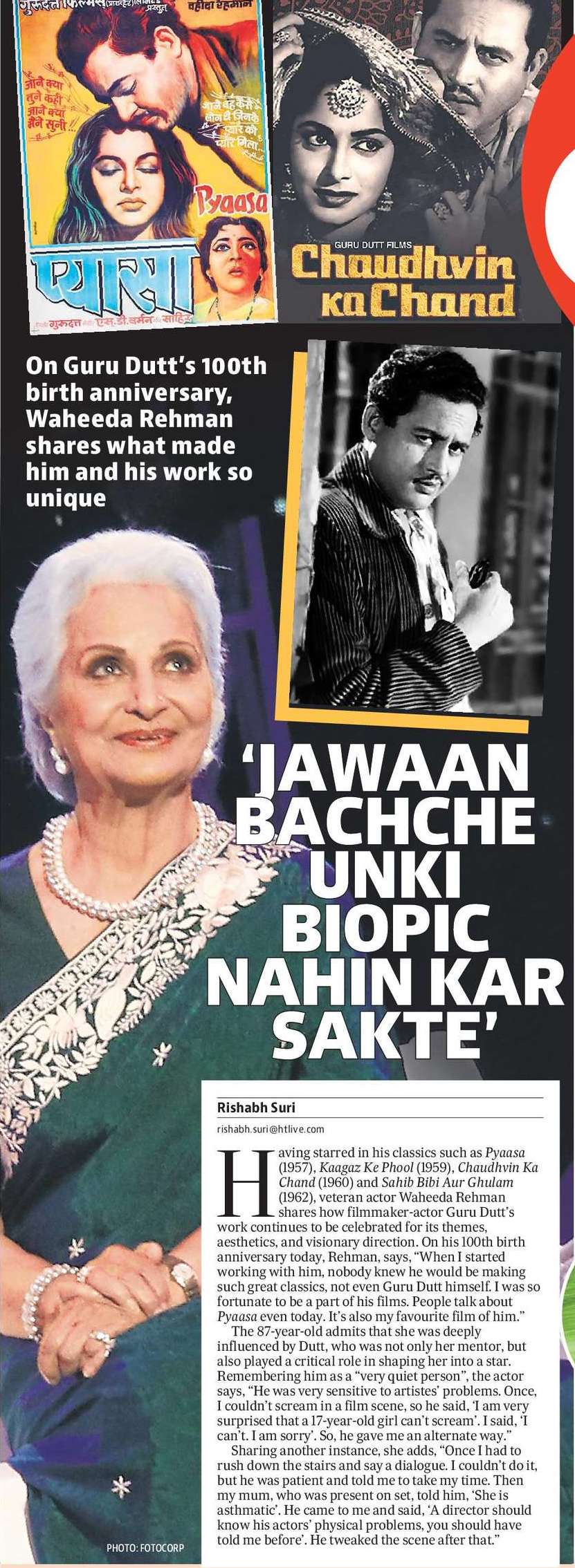
On Guru Dutt’s 100th birth anniversary, Waheeda Rehman shares what made him and his work so unique
Rishabh Suri (HINDUSTAN TIMES; July 9, 2025)
Having starred in his classics such as Pyaasa (1957), Kaagaz Ke Phool (1959), Chaudhvin Ka Chand (1960) and Sahib Bibi Aur Ghulam (1962), veteran actor Waheeda Rehman shares how filmmaker-actor Guru Dutt’s work continues to be celebrated for its themes, aesthetics, and visionary direction.
On his 100th birth anniversary today, Rehman, says, “When I started working with him, nobody knew he would be making such great classics, not even Guru Dutt himself. I was so fortunate to be a part of his films. People talk about Pyaasa even today. It’s also my favourite film of him.”
The 87-year-old admits that she was deeply influenced by Dutt, who was not only her mentor, but also played a critical role in shaping her into a star. Remembering him as a “very quiet person”, the actor says, “He was very sensitive to artistes’ problems. Once, I couldn’t scream in a film scene, so he said, ‘I am very surprised that a 17-year-old girl can’t scream’. I said, ‘I can’t. I am sorry’. So, he gave me an alternate way.”
Sharing another instance, she adds, “Once I had to rush down the stairs and say a dialogue. I couldn’t do it, but he was patient and told me to take my time. Then my mum, who was present on set, told him, ‘She is asthmatic’. He came to me and said, ‘A director should know his actors’ physical problems, you should have told me before’. He tweaked the scene after that.”
MAN WITH A VISION
Highlighting his brilliance, she shares how he decided to change a song while the film was running in cinemas: “Chaudhvin Ka Chand was shot in black and white and colour films were coming up then. The film became a hit, and then he thought: ‘If the title song was reshot in colour and added to the film, it’d be more successful’. And it did make a difference. People went to the theatres again and again to see the title song in colour.”
BIOPIC ON GURU DUTT?
There have been reports about a biopic on Dutt’s life, reportedly starring Vicky Kaushal. Ask Rehman which actor works best to play Dutt, and she says, “Pankaj Tripathi, Pankaj Kapur or Naseeruddin Shah ke face aur kaam mein maturity hai. Aaj ke bachche bahut jawaan hain. Unko play karne ke liye maturity chahiye. Jawaan bachche nahin kar sakte.”
Indian Film Festival of Melbourne to screen Guru Dutt's Pyaasa and Kaagaz Ke Phool
8:26 AM
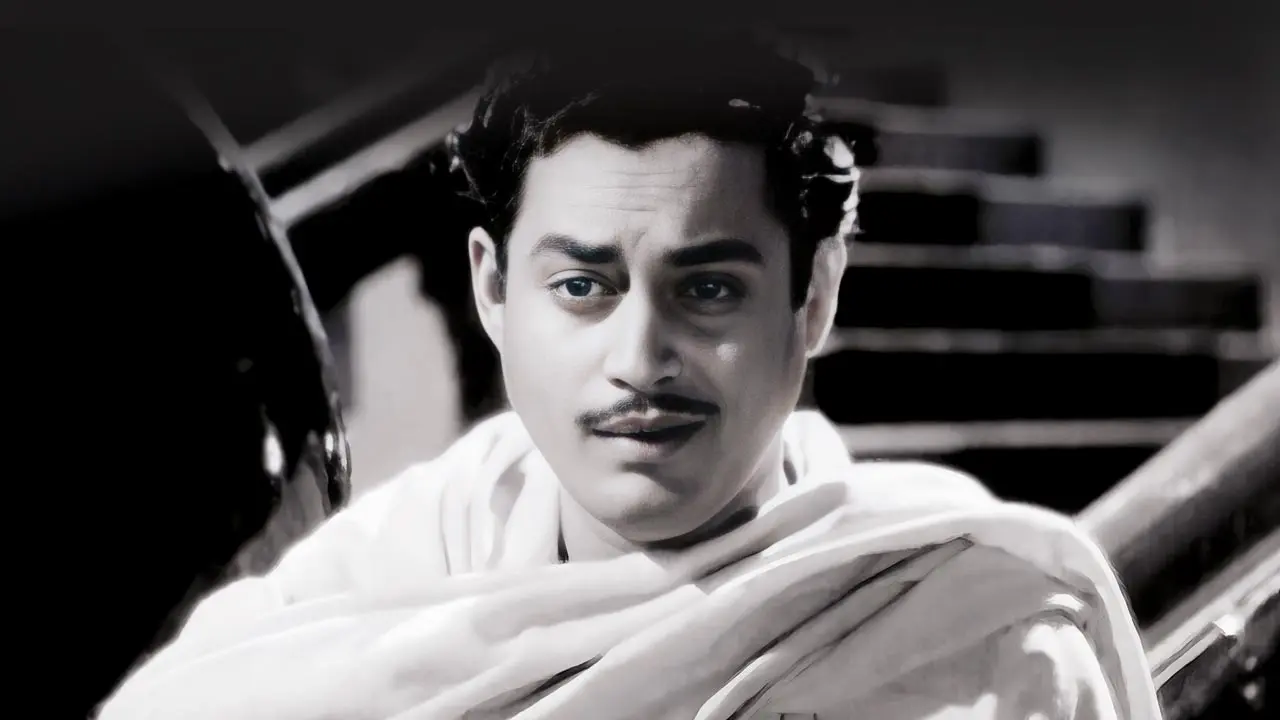
Indian Film Festival of Melbourne to mark Guru Dutt’s birth centenary with special screenings of Pyaasa and Kaagaz Ke Phool
Mohar Basu (MID-DAY; July 9, 2025)
Few could explore themes of love, disillusionment, and artistic struggle on screen as beautifully as Guru Dutt did. That’s probably why the actor and filmmaker’s cinema continues to strike a chord over 60 years after his demise. To mark the late filmmaker’s birth centenary, the Indian Film Festival of Melbourne (IFFM) will honour his legacy with special screenings of his most celebrated works, Pyaasa (1957) and Kaagaz Ke Phool (1959).
The screenings, the dates of which will be announced early August, are expected to draw over 2000 cinephiles from across Australia to Melbourne. The event will be part of a curated retrospective celebrating Indian cinema’s golden age. Dutt greatly influenced Hindi cinema in his two-decade career, giving us classics like Pyaasa, Kaagaz Ke Phool, Chaudhvin Ka Chand (1960), and Sahib Biwi Aur Ghulam (1962).
Noting that he continues to inspire today’s generation of filmmakers, Mitu Bhowmick Lange, festival director, said, “Guru Dutt was far ahead of his time, both in terms of cinematic technique and the emotional depth of his narratives. His films, Pyaasa and Kaagaz Ke Phool, are not just classics, they are cultural treasures that speak to the soul of Indian cinema. This tribute is our humble way of remembering his genius and introducing his timeless work to new global audiences.”
100 years of Guru Dutt: The filmmaker who changed the way we ‘see’ songs
9:14 AM

Namrata Joshi (THE TIMES OF INDIA; July 6, 2025)
Guru Dutt was a man of many parts — a consummate actor, a perceptive writer, a trailblazing director and an accomplished producer. A significant element of his oeuvre, worth a deep dive on his birth centenary this July 9, is his flair for conceiving and conjuring up musical set-pieces that haven’t just stood the test of time but become touchstones for visualizing a film song for generations of filmmakers.
Take the most popular composition in Dutt’s romantic noir, ‘Jaal’ (1952). It comes as a double bill — two different versions in two distinct situations. Lata Mangeshkar’s sad counterpart — Chandni raatein pyaar ki baatein kho gayi jaane kahan —to the preceding S D Burman-Sahir Ludhianvi song sung by Hemant Kumar— Ye raat ye chandni phir kahan — is striking in the way Dutt slips it into his storytelling.
Fisherwoman Maria (Geeta Bali) is pining for the stranger Tony (Dev Anand) she has fallen hopelessly in love with. Her father Carlos (K N Singh) has warned the bad boy to stay away from his daughter and got her formally engaged to Simon (Ram Singh). After the church ceremony, she returns to the same spot by the beach where Tony had once serenaded her — the guitar placed in the backdrop a symbolic reminder of lost love. Once Dutt sets up the scene, he opens it deftly with Hemant’s call for love playing in the background, as a prelude and launchpad for the Lata melody. He then keeps weaving the Hemant line in and out as a memory of Tony that won’t fade.
It’s a unique aural throwback. Voice as a memory. “Filmmakers commonly use flashback of images. Guru Dutt does an audio flashback through a song split over time,” explains author-filmmaker Nasreen Munni Kabir, who made ‘In Search Of Guru Dutt’, a three-part documentary on the actor-writer-filmmaker-producer and has written two books on him.
Another song used by Guru Dutt to great cinematic effect is in the romantic comedy ‘Mr and Mrs 55’ (1955). Unlike ‘Jaal’, here the song is in the same time frame but divided across two separate spaces. Geeta Dutt warbles Preetam aan milo (originally a 1945 non-film song of C H Atma) that Anita (Madhubala) is shown listening to on the radio. As her aunt Seeta Devi (Lalita Pawar) switches it off, Dutt cuts to Preetam (Dutt himself) packing his bags to leave town with the song playing on his radio as well. The song becomes a subtle representation of the couple’s estrangement. Later, in the climax, it again plays behind the scenes but this time as a marker of their reconciliation.
“Dutt had a unique understanding of the form, the shot-taking and editing across time and space. His songs are pure cinema,” says Kabir. Dutt’s songs were integral and drove the narrative, be it any genre he directed — the early crime thrillers, the romantic dramas in the middle and the two classic tragedies that have immortalised him. A Guru Dutt song had an identity of its own while always being in harmony with the larger picture. “Just listening to the songs can give you the vision of a Guru Dutt film even though you may not have seen it,” says film historian Pavan Jha.
The magic of black and white and his steady collaborator, cinematographer V K Murthy, were keys to his singular craft such as the signature tracking shots, the eloquent closeups, use of light and shade, the looming shadows and the elemental melancholia alongside slivers of desultory merriment. “The vision was Guru Dutt’s, but Murthy was the one to execute it,” says Jha. Their most potent collaboration was in Waqt ne kiya (‘Kaagaz Ke Phool’, 1959) with the play of light writing exquisite poetry on Waheeda Rehman’s face.
There are several seminal aspects to a quintessential Guru Dutt song. The special way he framed the scenes like the iconic “poet Vijay (Dutt) as Christ image” in Ye duniya agar mil bhi jaaye to kya hai (‘Pyaasa’, 1957). Or the way he designed Saakiya aaj mujhe neend nahin aayegi in ‘Sahib Bibi Aur Ghulam’ (1962), a film credited to Abrar Alvi with speculations of Dutt having ghost-directed parts of it. In the song, the lead Meenu Mumtaz’s face is brightly lit to keep the focus on her, while the background dancers stay in the shade. The years spent at Uday Shankar’s cultural centre in Almora would have been crucial in imparting Dutt a sense of rhythm that is reflected in the tempo and flow of his scenes and song sequences. Dutt alternates between the Baul singer and Gulabo (Waheeda Rehman) in Aaj sajan mohe ang laga lo in ‘Pyaasa’ to create an inimitable mix of the sacred and the profane as an expression of her inner desires.
Though he gets identified with melancholy, some of his best songs have a conversational beat and a sense of playful banter like Taqdeer se bigdi hui and Aaj ki raat piya (‘Baazi’, 1951); Chori chori meri gali aana hai bura (‘Jaal’); Mohabbat karlo jee bharlo, Ye lo main haari piya, Babuji dheere chalna, Kabhi aar kabhi paar and Sun sun sun sun zaalima, all in ‘Aar Paar’ (1954), the last one with another version, Ja ja ja ja bewafa.
On the other hand, a seemingly fun song like Sar jo tera chakraaye in ‘Pyaasa’ becomes an oblique but effective comment on class divides. And who can forget the scathing critique and protest embedded not just in Sahir’s words, but the many tableaus of nation’s troubles and the wry cynicism of Dutt’s face filmed in Jinhe naaz hai hind par wo kahan hain?
Guru Dutt is one of the rare Indian directors to have made a film both his crowning achievement and a grand box-office failure — ‘Kaagaz Ke Phool’ (1959). Instead of lengthy dialogue, the almost five-minute song Ud ja ud ja pyaase bhanware captures the once-successful Suresh Sinha (Dutt) — now lonely and forgotten — meeting his end on his rightful director’s chair.
It’s with the likes of Guru Dutt that songs have spoken louder, and more profoundly, than words.
100th anniversary special: How Guru Dutt made the camera sing
9:12 AM
The director of Pyaasa and Kaagaz Ke Phool, whose 100th birthday anniversary falls on July 9, brought a lyricism to his craft that shone through in some unforgettable tracks
Avijit Ghosh (THE TIMES OF INDIA; July 6, 2025)
Songs are bookmarks of mainstream Hindi films. Long after a movie disappears from theatres and memories, they suddenly waft over a cabbie’s FM radio or emerge on an algorithm-driven app. They become a movie’s reference point, keeping them alive. In Guru Dutt films, the songs are more eloquent. Works of care and empathy, they not only take you on a guided tour of his art and aesthetics, but also offer a peep into his emotional world.
The songs also carry his signature. Dutt, who spent his early years in Kolkata, loved dance, having trained at visionary dancer-choreographer Uday Shankar’s centre in Almora and performed with his troupe. The films he made had a dance director but his contribution to their picturization is well-acknowledged.
“He was the first to make the songs visually interesting... he gave them much thought, he would spend nights thinking of song situations,” lyricist Majrooh Sultanpuri is quoted as saying in Yasser Usman’s biography of the actor-producer-director.
Tight close-ups, interplay of light and shade, symmetry of movement — Dutt, in tandem with cinematographer V K Murthy, produced a bouquet of soundtracks that feel contemporary even today, both visually and musically. They also provide meanings beyond the frame. Here are four songs, all from black-andwhite movies directed by him, that offer a glimpse into his craft:
HOON ABHI MAIN JAWAAN AE DIL
FILM: Aar Paar, 1954
MUSIC: O P Nayyar
LYRICS: Majrooh Sultanpuri
SINGER: Geeta Dutt
In ‘Aar Paar’, Dutt lensed songs in the unlikeliest of places: a construction site (‘ Kabhi aar kabhi paar’), a taxi (‘Ee lo main haari piya ), a garage (‘Sun sun zalima’). ‘Hoon abhi main jawan ae dil ’ is set in a storeroom of sorts. The actual filming hardly uses 10ftx10ft space. But we never feel the need for more.
The track begins with the sound of the accordion. The movie is halfway through and we see the back of a familiar head, the one always with a tilted cap and mostly a cigarette on lips. The protagonist follows the music. Philosophically, ‘Hoon abhi main jawaan ae dil’ is the B side of ‘Babu ji dheere chalna, pyaar mein zara sambhalna’.
The gangster’s moll (played by Shakila) who invitingly sang those words of warning, while dancing amidst covetous men in a crammed nightclub, did not follow her own advice. She has fallen for the amiable rake whose heart belongs to another girl. Unrequited love has taken the fire out of her eyes. But she doesn’t want to be pitied. When she falls on the ground and the protagonist picks her up, she gently brushes him off. She has lost in love, but she isn’t a loser. Through these little directorial gestures, Dutt imbues her persona with strength and beauty. The song is filmed in tender close-ups, underlying the director’s empathy for the outsider.
JAANE KAHAN MERA JIGAR GAYA JEE
FILM: Mr & Mrs 55, 1955
MUSIC: O P Nayyar
LYRICS: Majrooh Sultanpuri
SINGER: Geeta Dutt, Mohd Rafi
Offices served as avenues for fun numbers in the past, too, notably ‘Lara lappa’ (film: Ek Thhi Ladki, 1949). But in this romantic comedy by Dutt, we witness Office Romance 2.0 in the energy and the effervescence of funnyman Johnny Walker and Yasmin, the dimpled steno with eyes that seem eager to spring out of their sockets. The newspaper office transforms into the most romantic place in the world.
Majrooh prefers using ‘jigar’, instead of the normally used ‘dil’ for heart. And it adds to the song’s distinctiveness. So does the expression, ‘Kahin maare dar ke chuha to nahi ho gaya’. How many times before or since have we heard of the heart being compared to a rat? Crawling on the floor in search of a lost heart, amid chairs, tables and typewriters, never looked cuter.
THANDI HAWA KAALI GHATA
FILM: Mr and Mrs 55, 1955
MUSIC: O P Nayyar
LYRICS: Majrooh Sultanpuri
SINGER: Mohd Rafi, Geeta Dutt
We don’t feel the breeze blowing. Or, see the dark clouds the song talks about. Shot by an open swimming pool at Bombay’s well-known PM Hindu Bath in Chowpatty, ‘Thandi hawa kaali ghata’, could have been just another number that a heroine and her friends sing in a 1950s movie. Only that it is better and different. The camera showcases and maximizes every inch of the physical space that the outdoors offers. The track is marked by a fluidity and symmetry of movement, evident in every frame. The girls slide slowly on the railing. The distant men swim to its melody. And the boys dive into the pool to its rhythm. It is the twirling umbrellas, though, that’s the song’s takeaway visual. Holding these, the group of girls, with the ethereal Madhubala in lead, frolic and frisk like a musical marching band. The track is more than its infectious melody and easy-on-the lips lyrics. It is a celebration of space, freedom and dancing umbrellas.
BICHDE SABHI BAARI BAARI
FILM: Kaagaz Ke Phool, 1959
MUSIC: S D Burman
LYRICS: Kaifi Azmi
SINGER: Mohd Rafi
He walks into an empty studio, a metaphor for his own isolation. Everything is in the shadows. He, too, is a shadow of his old self. This was his empire. The empire remains, but the kings have changed. He is a trainwreck now; broken in personal and professional life. The protagonist’s life, told in flashback, begins with the song that has the melody of a requiem, its words his distilled truth of the film world. The track sets the movie’s tone, prepares us for the denouement.
The movie ends with the song, too. The man who had created the star is worn out, like the sweater he is wearing. But she, his one-time protégé, recognizes him. He can’t bear to talk to her and runs away as the song plays in the background. When he steps out of the studio gates, she cannot catch up with him as fans besiege her. The film cuts back to the scene where it all began. The perch where he sees his life flash by. How it starts and how it ends. The silence that accompanies the protagonist’s death is music at its best. It’s hard to encapsulate a life in a song. Guru Dutt Padukone captures it.
Just before he died, Dutt had planned a visit to TOI office
On Oct 7, 1964, a reporter from TOI visited Guru Dutt Studios, where ‘Baharen Phir Bhi Aayengi’ was being shot. Dutt was playing a journalist in the film and asked the reporter if he could visit the newspaper’s Bombay office for research. A visit was planned. But three days later, Dutt was found dead. There was a Hindi novel by his side, and a glass with a pink liquid — sleeping pills Sonaril crushed and dissolved in water. The movie would be finished with Dharmendra in the lead.
(Source: Guru Dutt: An Unfinished Story by Yasser Usman)
------------------------------------------------
COMING SOON: SEVEN RESTORED DUTT FILMS
Seven Guru Dutt films, including the iconic Pyaasa (1957), are being restored by National Film Archives of India (NFAI) as part of the National Film Heritage Mission (NFHM), a govt-funded initiative for digitisation and restoration of Indian cinema.
The other films are: Baazi (1951), Jaal (1952), Baaz (1953), Aar Paar (1954), Mr. & Mrs. 55 (1955), and Chaudhvin Ka Chand (1960). Barring the last, which was directed by M Sadiq, the other films were all directed by Dutt, whose 100th birth anniversary falls on July 9.
“The restoration is likely to be complete by Aug 15. The larger aim is to exhibit the restored films on the big screen after discussion with the rights holders,” said Prakash Magdum, managing director, NFDC-NFAI. NHFM’s budget is about Rs 550 crore.
Experienced industry professionals have been brought in for the task. “Senior cinematographers, familiar with Dutt’s cinematographer V K Murthy’s work, are supervising the restoration,” Magdum said.
The restoration is being done keeping in mind a film’s genre. Chaudvin Ka Chand was a blockbuster romantic drama where Dutt played the lead. The film’s music, composed by Ravi, was a chartbuster. “It was important for us to maintain the vocal texture as well as the innocence in the vocals to do complete justice to the landmark songs in this film,” said Leenali Khairnar, manager, film preservation, NFDC-NFAI.
“The music was rather muffled in the original print we had. We were fortunate that another print with a matching film type had the desired quality and punch. We restored from the primary print and replaced the songs from the alternative source, which allowed us to bring out what was perhaps intended by Dutt,” she said.
Earlier this year, NFDC-NFAI had restored Muzaffar Ali’s Umrao Jaan (1981). Sholay (1975), now in its golden jubilee year, was restored by Shivendra Singh Dungarpur’s Film Heritage Foundation. — Avijit Ghosh
Casting Guru Dutt: Why Kollywood courted Bollywood’s brooding romantic
8:27 AM

In The 1960S, Amid Flops And Personal Storms, The Actor Took A Step Back From Making Movies, Spurring South Indian Directors To Quickly Cast Him In Hindi Remakes Of Regional Hits
Vamanan (THE TIMES OF INDIA; June 21, 2025)
Apart from his short life span of 39 years, film-maker/actor Guru Dutt had this in common with the epochal Tamil poet Subrahmanya Bharati: Like the latter, he had recognition and apotheosis thrust upon him only after his death. Even as Bharati’s seminal lines of poetry are eternally etched in the Tamil consciousness, the songs of Dutt’s films project evergreen lyrical hues of great human significance. Who can forget the anthemic refrain in ‘Pyaasa’ penned for Dutt by the incomparable Sahir Ludhianvi, ‘Yeh duniya agar mil bhi jaaye tho kya hai’ (To what avail is personal victory in a world bereft of human values)!
More directly underscoring the Tamil literature connection of Dutt was his little-known fascination for the work of the prince-turned ascetic and poet, Ilango, and his urge to picturise his epic ‘Silappadhikaram’ with Waheeda Rehman playing the role of Madhavi, the other woman in the life of the epic’s protagonist Kovalan who suffered the tragic fate of decapitation for a crime he had not committed. But that was not to be because of Dutt’s untimely death in Oct 1964 either due to a deliberate or involuntary overdose of alcohol and sleeping pills.
Known as the grand master of romantic gloom and the alchemist who transformed commercial Hindi cinema’s pedestrian formulas through his individualism, artistry and vision, Dutt’s reputation skyrocketed in the decades after his demise, with Time magazine listing his ‘Pyaasa’(1958) among the hundred all-time great films of world cinema in 2005.
In the early 1960s, consequent on the resounding failure of his ambitious ‘Kaagaz Ke Phool’, India’s first cinemascope film in 1959, after the commercial and critical success of ‘Pyaasa’, Dutt became chary of directing films and preferred to essay roles rather than wield the megaphone, though there is speculation that he might have ghost directed some parts of his successful film ‘Sahib Bibi Aur Ghulam’ (1962) which he produced and played a significant role in.
It was at this point that South Indian film producers found it opportune to cast the famous but unassuming director-actor in their quickly made Hindi films based on proven regional language subjects. Guru Dutt too, tired of the tempests raging in his life, both because of his difficult relationship with his wife Geeta Dutt, as well as his growing attachment to Waheeda Rehman whom he had groomed as a heroine, found working in the efficient Kodambakkam studios to his liking.
The first South Indian Hindi film in which Guru Dutt played the male lead was ‘Bahurani’ (1963), which has a gutsy young wife standing up for her newly wed, somewhat mentally challenged husband, against her violent brother-in-law. The film had been earlier made in Telugu as ‘Ardhangi’ (1955) and in Tamil as ‘Pennin Perumai’ (1956). In the Tamil version, Gemini Ganesan had essayed the role played by Guru Dutt in the Hindi re-make. Guru Dutt was directed in the film by the veteran Telugu-Tamil filmmaker T Prakash Rao who had such hits as Sivaji Ganesan’s ‘Uthamaputhiram’ (1958) and MGR’s ‘Padagotti’ (1964) to his credit. The film, however, did not make waves.
N Vasudeva Menon, an AVM studio manager who had become a producer and studio owner himself, booked Guru Dutt for ‘Bharosa’ (1963), a remake of the Tamil ‘Thedi Vandha Selvam’ (1958), an ordinary film about a wronged hero with a golden heart. It was a role in which Guru Dutt was comfortable in, though the film did not have much to write home about.
The famous producer A L Srinivasan, known for his connections with Hindi film personalities and all-India film trade bodies, liked Dutt so much that he booked him for ‘Suhagan’ (1964), the Hindi remake of his own Tamil hit production, ‘Sarada’ (1962), which deals with a husband who can have physical relations with his wife only at the risk of dying. Director K S Gopalakrishnan had been fearful of directing a filmmaker of Dutt’s stature but the latter put him at ease.
More than ‘Suhagan’, it was the time Dutt spent with Gopalakrishnan in his village, Malliyam, near Mayiladuthurai, that proved unforgettable. Gopalakrishnan’s associate, the respected dramatist and writer Komal Swaminathan has recalled Dutt’s easy manner and friendliness in his memoirs. Dutt would spend hours together in the hot sun angling for fish in a village tank. At a time when prohibition was being firmly implemented in Tamil Nadu, Dutt enjoyed potfuls of country toddy with the relish of sipping his favourite Chivas Regal!
After all this merriment, some in place, some out of place, Dutt’s unexpected death came as a shock to the ‘Suhagan’ unit, and producer ALS had to release the film with the message, “I humbly dedicate this film to the everlasting memory of the late Shri Guru Dutt, my friend and your favourite”. Commercial hype apart, Guru Dutt has proved to be of the great favourites of world cinema.
(The writer is a Chennai-based journalist)
With AI, it’s harder to judge the authenticity of a singer-Kavita Krishnamurti
8:29 AM

Debarati S Sen (BOMBAY TIMES; June 1, 2025)
In 1971, Bollywood playback singer Kavita Krishnamurti began her musical journey with composer Hemant Kumar, alongside the iconic Lata Mangeshkar. Fast forward to November 2024, she lent her voice to The Sabarmati Report, adding another milestone to her career spanning over five decades. With over 23,000 songs to her credit, she’s worked with Salil Chowdhury, Laxmikant–Pyarelal, RD Burman, OP Nayyar, Naushad, AR Rahman and others.
In a candid conversation at her Andheri home, she spoke about her journey, the changing music industry, the impact of technology, AI and more. Excerpts…
You have been a part of the music industry for over five decades, do you remember the experience of recording you first film song?
I began doing concerts with Hemanta Da (Hemanta Mukherjee) while still in college. One day, he called me to Rajkamal studio, saying, “Chole esho at 10 am, don’t go to college tomorrow.” Sitting with his harmonium, he taught me four lines of Shokhi Bhabona Kahare Bole — a beautiful song. I had no idea why, until the door opened and Lata Mangeshkar Ji walked in. I don’t know how I didn’t faint! Hemanta Da, who called her Lata, said, “You’ll sing four lines with her. (Lata r shathe charte line gaite hobe)”. During the final rehearsal, standing beside her, I completely forgot my lines. I was so mesmerized that I lost track of my cue! Hemanta Da reminded me, “Now we’re going for a take—don’t forget your lines. Lata is a perfectionist, one take okay.” We did two takes, and I finally sang. That was my first film song, Shriman Prithviraj (1972). And my first lucky mascot was Lata Ji.
What do you feel about the evolution of the music industry from the era of live orchestras to the digital age, and how it impacted you as a playback singer?
I consider myself very lucky to have witnessed and worked with legendary artists while also collaborating with younger composers like Jatin-Lalit, Anu Malik, Nadeem-Shravan, Anand-Milind, and A R Rahman. I started in the ’70s when playback singing was done with a full orchestra—one mistake meant redoing the entire song. Music directors had an incredible ear; Pyarelal Bhai could pinpoint a single violinist in a 30-piece orchestra playing the wrong note. He’d say: You (His name) sitting in the third row, the fifth violinist, you were told C major, but you are playing C minor. Correct that note.’ That was the precision of that era. Today, everything is computerized. I slowly adapted to these changes, but by 2004, when technology completely took over, I found myself stepping back.
With advancements in technology and AI today, what are your concerns about the use of artificial intelligence in music?
It's difficult for the common listener to distinguish between a naturally skilled singer and one enhanced by pitch correction and AI. Musicians can recognize true artistry, but for the average person, technology has blurred the lines. With AI refining sur and even creating harkats, the authenticity of a singer is harder to judge. While AI is a breakthrough in medicine, its role in music raises concerns and AI in music is a question mark for me, as it opens the door to potential misuse.
However, at the same time, technology is good too. I'm not so young now and for me, to think that I can sing one line and take a breath, and then sing the next line, really helps. Earlier, I would record entire songs in one go, but now recording line by line, with breaks in between has become a habit and makes the process easier.
You’d mentioned a poignant encounter with the legendary Geeta Dutt. What struck you the most?
Guru Dutt's youngest brother, Vijay Padukone, was my Rakhi brother. He introduced me to advertising jingles while I was a student in St Xaviers. I first met Geeta Dutt at a studio in Worli during my debut jingle recording. As the door opened, I was struck by her beauty and presence. I touched her feet and sat down. She was recording a butter commercial in Hindi and Bengali that I had to sing in Tamil. Her voice was pure magic. Though she was in the twilight of her career, facing personal loss and financial struggles, her aura remained intact. She barely spoke, just said, ‘Bhalo theko’. At that time, she was famous but had no money—yet nothing could take away her personality or her gift for singing. For me, Lata Ji and Asha Ji are the greatest singers I’ve ever met, but there are songs that only Geeta Dutt could have sung. Waqt Ne Kiya Kya Haseen Sitam—I don’t think even Lata Ji or Asha Ji could have delivered it the way she did.
You've sung for some of the biggest music directors. Tell us about a few of your favourite songs.
That's tough! But if I had to choose, I’d say Hawa Hawai, Dil Ne Kaha Chupke Se, and my songs from Hum Dil De Chuke Sanam. I love the ones I did with Rahman, like Tu Hi Re, Dheeme Dheeme, Kay Sera Sera. Maar Daala from Devdas is a favorite too, along with the title track of Hum Dil De Chuke Sanam and Hamesha Tumko Chaha from Devdas. Yeh sab mujhe bahut pasand hai.
Guru Dutt biopic in the works, makers desire Vicky Kaushal as lead
8:57 AM
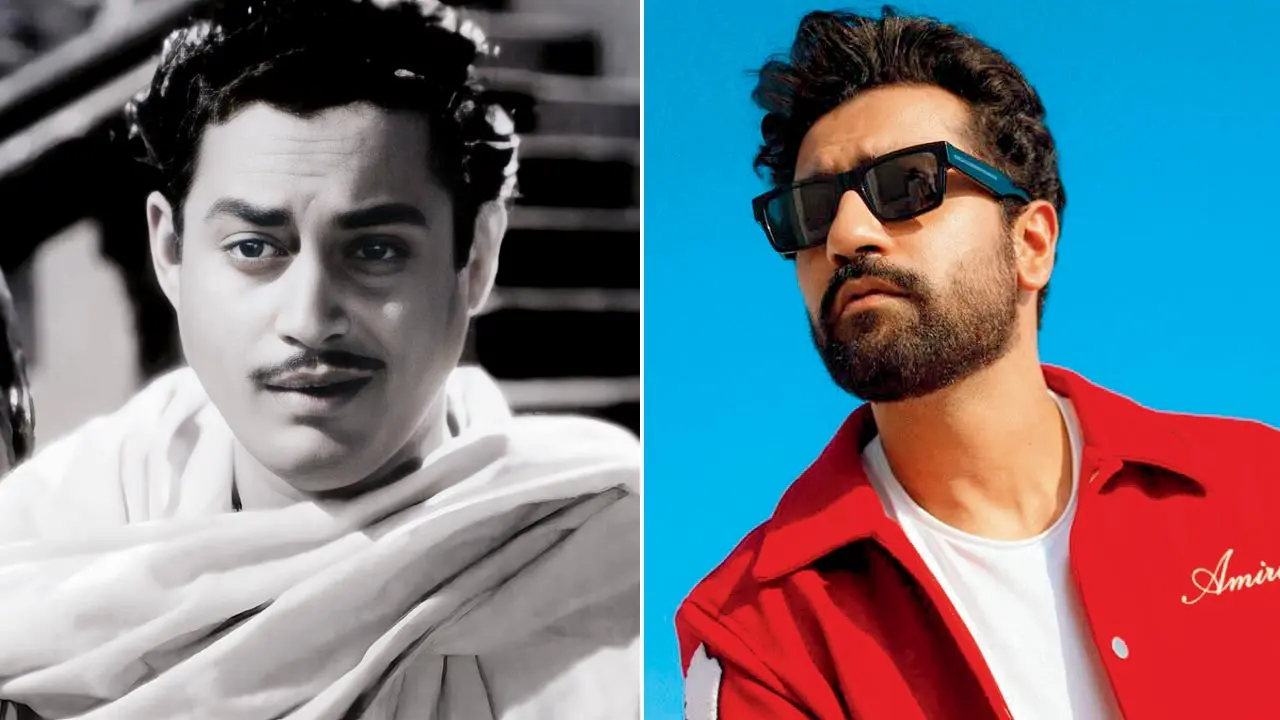
Ultra Media head Rajat Agrawal in talks with directors to helm a biopic on Guru Dutt and adapt his movies into series; wants Vicky Kaushal to play the filmmaker
Upala KBR (MID-DAY; May 30, 2025)
Imagine Hindi cinema without Pyaasa (1957). Or Kaagaz Ke Phool (1959). In his tragically short career, Guru Dutt enriched Indian cinema in a way that only few could. It’s only fitting then that Bollywood may get a biopic, and a long overdue one at that, on one of its most influential filmmakers soon. mid-day has learnt that Ultra Media & Entertainment Group, which owns the rights to Dutt’s movies, is not only considering adapting some of his finest works into web series, but also planning a biopic on the actor and filmmaker.
Rajat Agrawal, COO and Director, Ultra, reveals, “While biopics are always challenging because they need to emulate an individual’s greatness and achievements, we would be happy to collaborate with producers and a modern-day director, who is a fanatic of Guru Dutt, and see where the project goes.”
He adds that he has initiated conversations with two directors to bring the filmmaker’s journey, which was marked by successes and turmoil, to screen. “I have spoken to two highly revered directors, who are interested in recreating his movies into web series, and also make [a film] on his life. Once we have something definite, we can talk about it in detail. We are in touch with his family members.”
Stepping into the shoes of Dutt will be no mean feat. Does he have an actor in mind who can depict the artiste’s magic and melancholy truthfully? “Naming one actor would be difficult as there is a plethora of talent, but I feel Vicky Kaushal can bring Guru Dutt ji’s emotional depth,” shares Agrawal.
Earlier this month, the media group unveiled the restored versions of Dutt’s classics — Pyaasa, Kaagaz Ke Phool, Chaudhvin Ka Chand (1960), and Sahib Bibi Aur Ghulam (1962) — at the Cannes Film Festival 2025 to mark his birth centenary. Ahead of the legend’s birth anniversary on July 9, a week-long tribute is being planned as part of which Dutt’s restored films will be re-released in Indian theatres.
Agrawal elaborates, “All his movies have been restored in the original black-and-white version to give the same nostalgic feel. However, we are looking at colourising a few songs to see the audience’s reaction. There will also be curated exhibitions and panel discussions on his timeless legacy by prominent filmmakers.”
It always feels patriotic to do a film that goes to a prestigious festival-Neeraj Ghaywan
9:07 AM
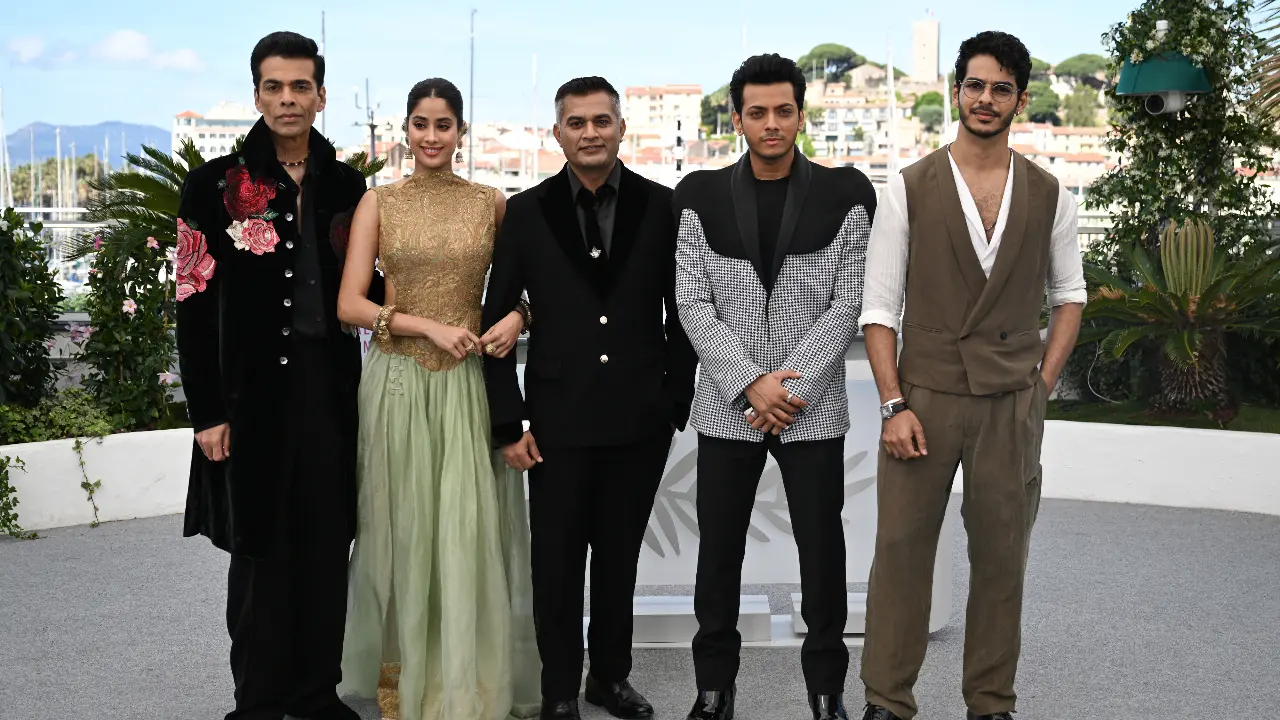
Niharika Lal (BOMBAY TIMES; May 22, 2025)
When Neeraj Ghaywan first attended Cannes, it was in 2015 for his directorial debut Masaan. The film was selected in the Un Certain Regard and won two awards – FIPRESCI Award and the Prix de l’Avenir Prometteu. A decade later, he’s back at the fest with Homebound (2025), another human story, but this time with a little help from some very big names including Martin Scorsese and Karan Johar.
As Ghaywan’s new film made the screening in the Un Certain Regard section this year, the filmmaker was joined by the team at the red carpet, the makers discussed Homebound at the Bharat Pavillion at Cannes.
‘WE SEE URBAN STORIES IN FILMS, AND THEN THERE IS A GAZE THAT IS TOWARDS SMALL-TOWN INDIA’
“The story that I wanted to say was about these two friends,” Neeraj said during a discussion at the India Pavilion at Cannes ahead of Homebound’s screening. He added, “What I also feel is that more than 60 per cent of our economy, our people, live in villages, and in our films, we don’t see villages anymore. We see urban stories in films, and then there is a gaze that is towards small-town India. But where are we talking about the stories from the heartland? That was one of the motivators for Homebound.”
The filmmaker continued, “Whenever we talk about films across the world, say, people of colour, creed, they’re all spoken of in numbers. They are part of the statistics. And when you say that, it’s like you’re trying to persuade your urban guilt – like hiding your apathy by showing false sympathy. I felt, what if we pick one person out of that statistic and see what happens in their life and how they arrive at this point? That will make for some great story, and will truly represent the kindness, empathy – that has been my intent so far.”
I feel this collaboration is quasi-disruptive in a way: Neeraj Ghaywan
Talking about collaborating with Karan, Neeraj said, “I’ve been wanting to work with Karan. (He also directed Geeli Pucchi, a part of the Ajeeb Daastaans anthology in 2021). I feel this collaboration is quasi-disruptive in a way. Independent filmmakers are always trying to figure out how to go about it.
Either we’re doing co-productions or seeking government funding, which comes with a lot of paperwork. But here, if Karan is producing my film, then it’s a different thing altogether – it paves the way for different kinds of possibilities. Our default perception is: go to a co-production, make it happen. But for me, this is a new model.”
NEERAJ AND I WANT TO TELL EMPATHETIC, HUMAN STORIES: KARAN JOHAR
“Neeraj Ghaywan and I come from two different schools of cinematic syntax,” Karan Johar said, “but I think one thing that lies common in both our belief systems is that we want to tell empathetic, sensitive human stories. That is common in both our cinemas. And it has nothing to do with syntax – it has to do with the heart the film offers.”
He explained, “I think when you see Masaan and when you see Homebound, you realize that interpersonal relationships, the handling of the emotional aspects of both the movies, and the spectrum of emotions they cover are the same.”
Karan said that’s what he tries to do in his films too. “My syntax is more theatrical, more opulent, a little more on-the-nose, because that is the kind of filmmaking I love and what I grew up watching. But even when I was eight or nine years old, while I loved the glory of Yash Chopra and the social drama with the opulence of Raj Kapoor, I also loved the empathy of Guru Dutt and the deep-rooted messaging of Bimal Roy. I could enjoy the brilliance of Satyajit Ray and dance to a song from a Raj Kapoor film in the same breath,” he said.
‘We’re beaming with pride that we have this kind of representation’
About Indian cinema finding global resonance, Karan said, “One important thing for me is: how to take our cinema to the world, apart from catering to our domestic audience. Last year, we had Payal Kapadia shine at Cannes with All We Imagine As Light (2024), and now she is on the Cannes jury.
This makes my heart so full. We are all beaming with pride.”
He added, “And the very next year, we have Homebound – this means we really are on the global map. I know these are baby steps. Every year, we have to make sure our stories continue to travel.”
‘Being at Cannes is proof that I’m not a one-film wonder’
“When Neeraj Ghaywan sir told me our film was selected, I was happy but didn’t grasp how big it was. After reading up, I understood its value – and it boosted my confidence as an actor,” says Vishal Jethwa, who made his Cannes debut this year.
“My dream was as simple as standing outside the Yash Raj Films (YRF) gate just to see what it looked like. Today, I’m part of a Karan Johar film directed by someone as brilliant as Neeraj sir. Attending Cannes with Homebound is a massive moment in my life. My debut (Mardaani 2) was successful, but some of my later films didn’t perform well at the box office. This film, however, has taken me to an international platform. It feels like proof that I’m not a one-film wonder – that I’m here to stay and meant for good things.”
Indian parents should get over obsession with marks-Boman Irani
8:29 AM

In this excerpt from ‘Raising Stars: The Challenges and Joys of Being a Bollywood Parent’ by Rashmi Uchil, the Bollywood veteran talks about his own journey from waiter to actor, and the lessons he learnt
THE TIMES OF INDIA (December 3, 2023)
The other day I met a girl at the airport and she asked me for advice. She wanted to get into scriptwriting and was asking me how to go about it. I told her “Go the long haul. Invest time and effort in getting an education. Go back to the drawing board and pay your dues.” I learnt very early in life the importance of paying your dues.
After passing from school, I went to the Taj Hotel to get a job as a waiter. A Parsi gentleman Sam Bhada interviewed me. He asked me, “What kind of job do you want?” I replied in style, “Food and beverage.” He said, “Idiot, the whole hotel industry is about food and beverage. Which department do you want to work in?” I replied, “Rendezvous”. He snorted, “Rendezvous, the French restaurant, right at the top. Go to the basement. Start with room service.” He taught me a lesson for life — PAY YOUR DUES. I started with room service and worked my way to the top. Ultimately, I reached ‘Rendezvous.’
Einstein has said that every child is a genius. However, if you judge a fish by its ability to climb a tree, the child will always think of himself to be dumb. I was not good at math in school. I did not have a head for numbers. That part of my brain was not working at all. However, the other part of my brain was working overtime. I knew more about cinema as a kid than Steven Spielberg knew as a kid. That gave me a lot of confidence. I took solace in the movies, and read about directors, from Hitchcock to K Asif. As a child, I was crazy about the movies. I became a student of cinema.
I have seen the movie ‘Funny Girl’ 42 times. The usher at the cinema hall would tell me, “Roj roj aata hai picture dekhne, tere ko kya samajh mein aata hai?” My mother recognized my interest in movies and encouraged me to see a movie every day. My grandmother would tell her, “You are spoiling the child rotten,” but she was firm. She insisted going to the movies was an education.
I have watched ‘Pyaasa’ a million times — once for the poetry of the lyrics, once for the cinematography, and once to watch how Guru Dutt delivers dialogues. From the age of 11, I have been making notes, writing scenes, and enacting them. I remember telling Naseer Saab (Naseeruddin Shah) that I regret not going to drama school. He said, “You do not need to regret that. You are a sponge. You have been educating yourself since you were a child. Sitting at your potato shop, you have been observing people. I have seen how you observe people.”
I have learnt my technique through books and I have learnt my craft through people. We did not have internet those days. We did not have many resources at our disposal which I think worked to an advantage. When you have very little, you suck out the most from what you have as much as you can. When you have all the tools available, you do not know which ones to choose.
To be honest and hardworking is always very important. If I am giving a shot and the director says, “Great”, I should not leave it at that. If I know within me that the shot could be better, I must give another take. That’s ethics. What is your conscience saying about any situation you are in? Are you doing the right thing? Did I go home with the knowledge that this is the best shot I could have given? That is ethics. I am very happy that I am dissatisfied. There is a lot I have to do. I am working at it very hard. When parents lead productive lives, children are inspired to do so too.
Everything begins at home. If your child is being sloppy, rude, and arrogant at home, as a parent you need to get him in line. If you let it pass, later in life it will adversely affect his career and relationships.
Gender equality begins at home. In my house, there is no gender bias at all. My son is a totally hands-on father. He changes diapers, and goes with his wife to the doctor to give the baby vaccination shots. Parents need to share responsibility. If the mother is taking up lessons in history and English, the father needs to teach math and science. Dumping everything on your wife is just not fair.
Kids nowadays are under a lot of parental pressure. When it comes to education, parents push their kids to score more marks. The child has scored 92% in math and the parent says, “92 se kya hota hai, math mein 96 lana chahiye.”
Not all kids will be good at math. If your child has scored 76% in math in the final exam that is the best they can do. Accept that. Parents tend to brag, “Pata hai mera beta class mein first aaya.” It boils down to ego. Focus on what the child is good at. Find out the child’s interests and strengths. What does the child have a flair for? Which subject interests him the most? Find out what he is brilliant at. Get over this obsession with scoring 96% in math. Ten years down the line you see people who did score 96% in math in professions not even remotely connected to math. Marks are not the yardstick of intelligence.
One parenting advice I’d like to give is — don’t scream at your kids. Children do not listen when parents scream. If you want to put your point across, do it at the right time and space. Wait for a quiet moment, look the child in the eye, and then convey your message. You must put your point across in a rational manner. Shouting does not help.
Excerpted from ‘Raising Stars: The Challenges and Joys of Being a Bollywood Parent’ by Rashmi Uchil with permission from Fingerprint! Publishing
When explaining the role of Srikant from Jubilee, Vikramaditya Motwane told me, ‘I just want The Godfather’-Prosenjit Chatterjee
8:34 AM
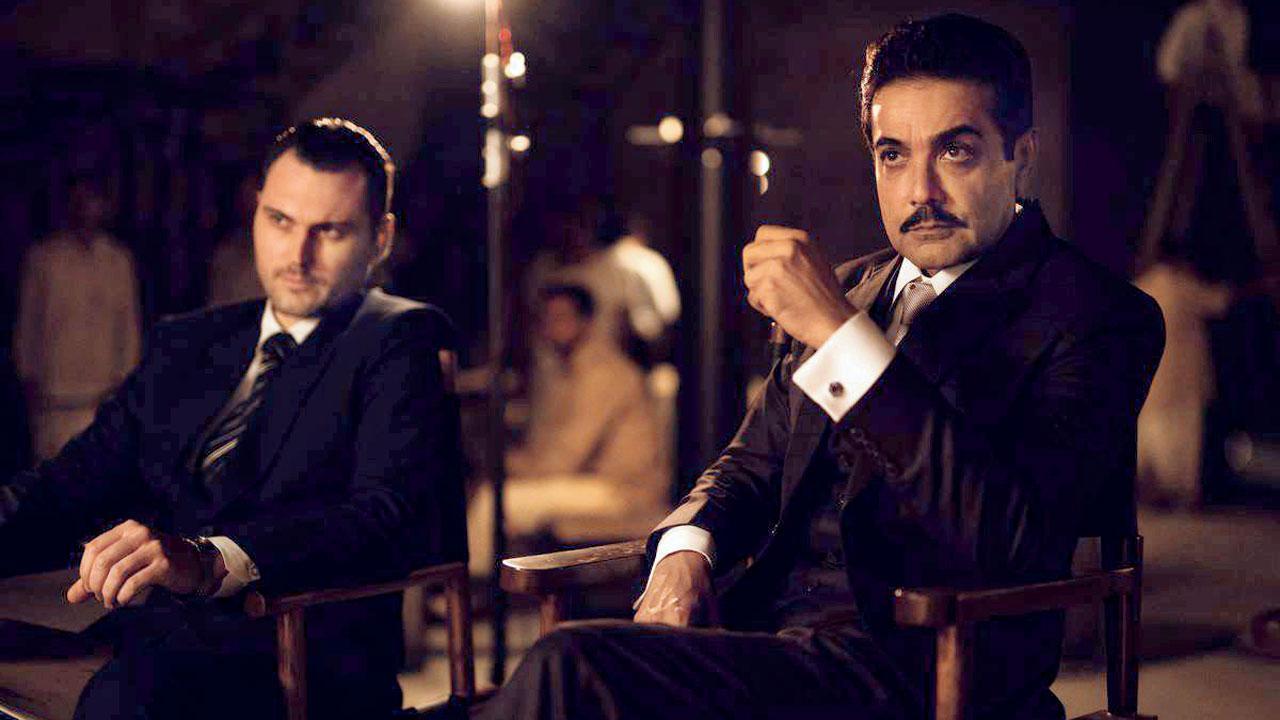
As he makes his OTT debut with Motwane’s widely praised Jubilee, Bengali superstar Prosenjit Chatterjee on how he approached his movie mogul role
Upala KBR (MID-DAY; April 10, 2023)
“Since Friday, his phone hasn’t stopped ringing,” Prosenjit Chatterjee says. Some calls are from members in the Hindi film industry, others from his peers in Bengali cinema. They all have the same thing to say — that Jubilee deserves a round of applause. “I couldn’t have asked for a better OTT debut,” beams Chatterjee, who has dominated Bengali cinema for almost four decades.
With Jubilee, creator-director Vikramaditya Motwane goes back to the Hindi film industry of the ’40s and ’50s. Chatterjee plays Srikant Roy, a powerful movie mogul owning Roy Talkies and a star-maker in his own right. The actor says he had two reasons to give his nod to the Amazon Prime Video offering — his love for that era’s cinema, and the opportunity to work with Motwane.
“Vikram is one of the finest directors of new-age cinema. When he narrated the subject to me, he said that from the day he started penning it six years ago, he had only me in mind for Srikant Roy. What makes him one of the finest directors is that even today, he [behaves like] an assistant director — he will do everything himself. Also, I know about people from that era, and their contribution to Indian cinema. One of my favourite films has been Guru Dutt’s Kaagaz Ke Phool [1959]. When I entered Jubilee’s set, I hugged Vikram and told him that he had fulfilled one of my dreams.”
Motwane’s character brief to the senior actor was pithy: “Srikant Roy is a king who only believes in his cinema”. Chatterjee brought in gravitas and restraint to the part.
“Aditi [Rao Hydari] and my characters are simmering with emotions, but cannot show them. After playing many roles, we get the maturity to handle such parts; expressing [every emotion] through our attitude, eyes and body language. [When explaining the role of] Srikant, Vikram told me, ‘I just want The Godfather.’”
The Bengali superstar is probably best remembered in Bollywood for his act in Shanghai (2012). Asked why he hasn’t been seen in Hindi cinema after Traffic (2016), he quips, “Vikram didn’t [consider] me for his last projects. I need good directors who know my body of work. Hindi movie directors, including Anurag Kashyap and Anurag Basu, have said that it’s not easy casting me as the roles are not challenging enough. I’ve been around for over 30 years. David Dhawan, who gave me my first Hindi film [Aandhiyan], told me I was mind-blowing in Jubilee. I have reached a position today where the roles have to excite me, not the project alone.”
Up next, he has the Bengali film, Shesh Pata.
Films will mature and society will view things from a new perspective-Javed Akhtar
8:24 AM
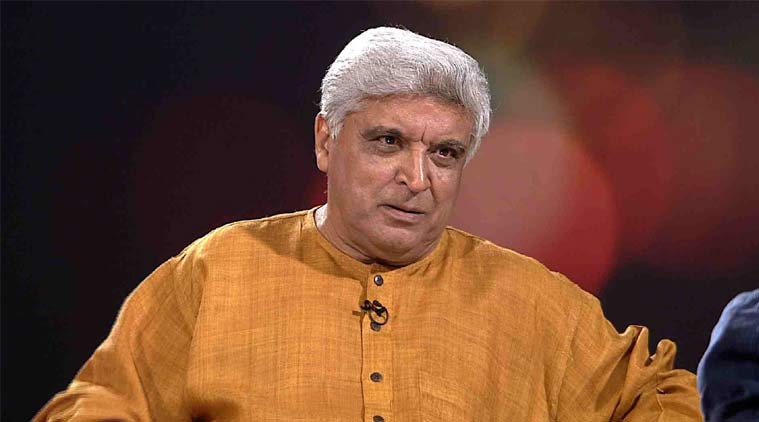
Mihir Bhanage (BOMBAY TIMES; March 6, 2022)
“Jab tak koi nuksaan na ho, tab tak honest rehna chahiye,” quipped writer-poet Javed Akhtar, when asked about his nonchalant responses to questions on a variety of topics. Akhtar, who was in Pune for the ongoing Pune International Film Festival (PIFF), was at his witty best as he spoke about films, their impact on society, and the effect of OTT platforms on showbiz.
In a session moderated by Dr Jabbar Patel, veteran filmmaker and chairman and director of the festival, Akhtar took a trip down memory lane as he recalled his journey in Hindi cinema. “Guru Dutt was the reason I came to Mumbai at the age of 19. I wanted to be a director, but ended up being a writer. When people in my college would ask why I was studying in college when I wanted to get in the film industry, I would tell them – ‘So that when a film magazine or newspaper publishes my bio-data, the academics column would say graduate’,” he said.
Akhtar, who counts Mother India, Ganga Jumna, Pyaasa, Jaal, Shree 420 and Guide among his favourite films, said that storytelling and music have been a part of Indian culture since forever. “If any Indian tells you that they don’t like films, you should cross-check their passport,” laughed Akhtar, adding, “Even before films, we had plays. Watching a story unfold in front of your eyes, with music accompanying it is something generations of Indians have grown up on.”
For someone who has been in the industry for over five decades, the veteran writer has seen the evolution of Indian cinema. Credited with penning the screenplay of Prakash Mehra’s Zanjeer, along with Salim Khan, Akhtar shared that the ‘Angry Young Man’ tag that got associated with Amitabh Bachchan wasn’t a deliberate attempt on their part as writers.
He further added, “A writer should write as part of society, not as an observer sitting on a pedestal and dishing out sermons. All works of fiction in the world are autobiographical to some extent because the writer draws from personal experiences to create a story that resonates with others, too.”
While earlier there was a clear demarcation between popular and parallel or arthouse cinema in the Hindi film industry, that line has been blurring in recent times. Akhtar said, “For the current generation, the new-age filmmakers, the journey is about finding themselves or the essence of India. This is one of the reasons why stories from small towns of the country are increasingly coming forth.”
He added, “Today, people want to watch films like Article 15 or Kaala. The younger generation is mature enough to understand these topics. I’m hopeful that our films will further mature from their views and society will have the moral courage to look at things that are considered embarrassing and hurting from a new perspective.”
With the popularity of OTT platforms, there’s been a shift in the way viewers consume content. When asked how he sees this from a writer’s perspective, Akhtar said, “OTT is a fabulous zone for not just writers, but makers as well. Stories or subjects that don’t fit the feature film format are being told via web series. These platforms offer freedom of time and are breaking the language barrier”
The kind of cinema B R Chopra, Raj Kapoor, Guru Dutt used to make is coming back, thanks to OTT-Raj Babbar
8:12 AM

Titas Chowdhury (HINDUSTAN TIMES; January 4, 2021)
After 28 years in politics, actor Raj Babbar has now decided to recommence his career as an actor. In November last year, the former Member of Parliament, made his comeback with the web series Dil Bekaraar that marked his debut in the digital space.
“After my term ended, I thought of resuming acting. Fortunately, Dil Bekaraar came my way. Now, I’m being offered many films and web series,” he says, adding he featured in small roles in his friends’ films while busy with politics.
Like everyone else, Babbar, 69, has been caught by the OTT bug and wants to be a part of more web shows. “During the lockdown, I watched a few good shows and some amazing performances by actors from India as well as the world. That, subconsciously, had an effect on me. OTT platforms are a win-win situation for actors as well as filmmakers and writers. The medium completely belongs to them and we, actors, can do wonders now that we can showcase so many nuances,” he elaborates.
But what has truly captured his attention is the return of good content. “I grew up watching films made by filmmakers Guru Dutt, Satyajit Ray, Raj Kapoor, Ritwik Ghatak, Mehboob Khan, V Shantaram, and B R Chopra. I feel the kind of cinema these stalwarts used to make is coming back, thanks to OTT,” he says.
Quiz Babbar about the young lot of actors and he says, “They’re energetic and brilliant. They work hard and have the power to grasp the audience’s attention. They’re aware of the current atmosphere and so, they become prepared.”
Sanjay Leela Bhansali used to hit us, abuse us, and I’m sure dada ji (Raj Kapoor) used to do the same-Ranbir Kapoor
12:27 PM

Ranbir Kapoor speaks about the differences in filmmaking now versus in late Raj Kapoor’s time
Sanchita Kalra (HINDUSTAN TIMES; December 16, 2021)
Before beginning his acting journey with filmmaker Sanjay Leela Bhansali’s Saawariya (2007), Ranbir Kapoor assisted him on Black (2005). And he recalls how he learnt some lessons about filmmaking then.
“Mr Sanjay Leela Bhansali used to really treat me as an assistant director... He used to hit us, abuse us, and I’m sure dada ji (late filmmaker-actor Raj Kapoor) used to do the same. It only hardens you and prepares you for the world. You understand filmmaking, there is much more to it,” said Ranbir, who was in the Capital recently. When quizzed what he’d ask his grandfather if he was still alive, Ranbir said , “I’d like to have a drink with him and chat. I’m very interested in making a biopic about him.”
The 39-year-old also highlighted the differences in the filmmaking process today versus his grandfather’s time, saying: “They truly made films like kings. I’m not saying my age as a filmmaker and actor is only running behind the commercial aspect of filmmaking. I think cinema is something we learn from people like Raj Kapoor, Guru Dutt — the kind of stories they sold, the kind of values they spoke of in their films, they inspire us (even now).”
Ranbir also shared that he has heard stories of Raj Kapoor’s house being mortgaged and his late grandmother Krishna Kapoor’s jewellery being sold to complete a film.
He clarified that things aren’t as rosy in showbiz as they appear on the surface, particularly when it comes to certain notions that people may encounter when aspiring to be actors. “There’s this misconception that in order to get into movies, you must take dance classes, learn horseback riding, and become an actor. But there’s a lot [more] that goes into what we do. There’s an understanding of storytelling and complex human emotions,” he shared.
As the discussion steered to his father, late actor Rishi Kapoor, Ranbir recalled that as a kid, he used to be “petrified” of him. He added that even though his father seemed to be hard on the outside, he was kind. “We miss him dearly,” Ranbir ended.
Many people still don’t know that I am Johnny Walker’s son; my father would’ve been proud of that-Nasirr Khan
8:01 AM

Tanvi Trivedi (BOMBAY TIMES; October 27, 2021)

He says, “I don’t know how people attached Khan to my surname, but then I went with it. Otherwise, my real name is Nasirr Kazi. My father changed his name for his own reasons in the 50s, but people changed my name on their own.”
Nasirr is happy that he got work in the industry on his own merit. He shares, “People didn’t even realise that I was Johnny Walker’s son and so they didn’t expect me to follow a certain career path. If we sit down to compare the two eras, it is impossible because comedy and films were much simpler in those days when my father acted with stars like Dilip Kumar and Guru Dutt. Now, a child is almost born with a mobile phone, so he will perhaps not find that kind of humour appealing. But, I do feel that people and things were far simpler in those days than now.”
The actor is currently seen in the TV show Shubh Laabh. He has been a part of many films, too, in the past. Ask him about not getting good offers in films, and he says, “My father had his own struggles in the 50s, he made it on his own, left it all and then enjoyed his life. I also want to follow that. Why my films didn’t work or why a certain TV show did not work, is not in my hands. The fact is every actor has gone through his share of struggle. I have learnt now that inner peace and satisfaction are more important. Work is a part of your life, not your whole life. I have seen top actors sliding down and unknown people becoming stars. So, it is all about just enjoying your work.”
I wouldn’t want anyone in Guru Dutt's family to be unhappy about the biopic-Bhavna Talwar
8:33 AM
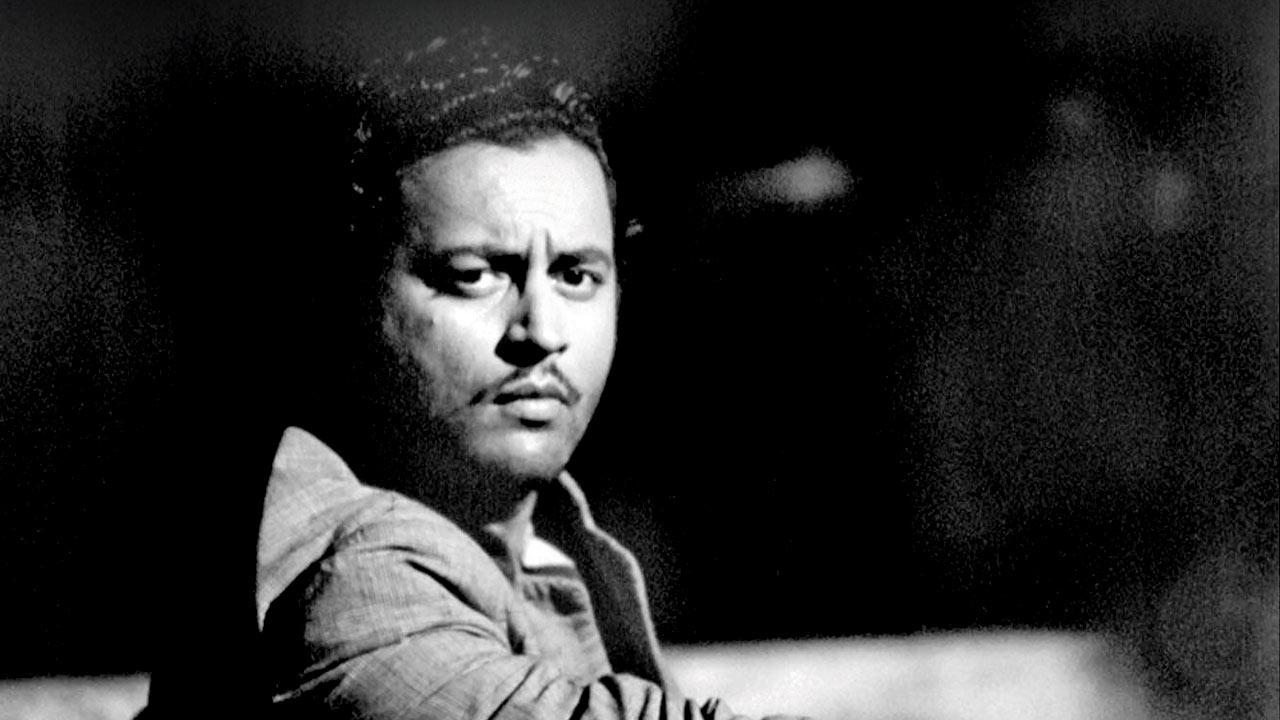
Master storyteller’s daughter slaps legal notice, alleges copyright infringement after Bhavna Talwar announces film on auteur; director says will seek kin’s permission “at some point’’
Upala KBR (MID-DAY; January 16, 2021)
Considered one of the most unique voices in Indian cinema, it is hardly surprising that Guru Dutt continues to inspire filmmakers, decades after his passing. From Anurag Kashyap and Sanjay Leela Bhansali to Rakeysh Omprakash Mehra, many directors have unsuccessfully attempted to offer a retelling of the maverick actor-filmmaker’s life - one that was all the richer for his deeply introspective works Pyaasa (1957) and Kaagaz Ke Phool (1959), and yet, tinged with loneliness and personal sorrow.
Last year, Bhavna Talwar became the latest director to take a stab at making his biopic as she announced Pyaasa. However, mid-day has now learnt that Neena (Sana) Memon, the only surviving child to Dutt and wife Geeta Bali, has sent a legal notice to Talwar, stating that the former is the sole copyright owner of the late actor’s life story. The legal notice, a copy of which is in possession of this paper, states that her film will be construed as “infringement of copyright under the Copyright Act.” Kaleem Khan, spokesperson of Memon, says, “Sana Memon has not assigned any rights to a third party, production house or studio.”
When mid-day reached out to Talwar, who has previously helmed Dharm (2007), she said, “I am not aware of any legal notice sent by her.”
Talwar, who has spent the past seven years developing the script, says it traces Dutt’s early success and his evolution into a true artiste creating seminal works. “The film won’t portray [any incident or person] incorrectly, and one wouldn’t want anyone in his family to be unhappy about it. The information that I have referred to is available in public domain. So, I am not worried about [copyright infringement]. I have delivered the script, and this is a film that I will make. I am sure the producer, Sheetal Talwar, will do what is right and will reach out to the family at some point.” mid-day reached out to producer Sheetal Talwar, who didn’t respond till press time.
Geeta Dutt believed that the bungalow was haunted, says Lalitha Lajmi on Guru Dutt's wife in new book
8:37 AM

Waheeda Rehman, Guru Dutt`s love and muse, cut off from him after the Berlin Film Festival screening of Sahib Bibi aur Ghulam. Dutt, who was married to singer Geeta Dutt, is said to have drunk alcohol on the entire flight back home
In a new biography, which explores the man and the myth that was Guru Dutt, the actor's sister recounts how his wife Geeta blamed their Pali Hill home for all that was going wrong in their relationship
MID-DAY (January 10, 2021)
Berlin, 1963
Sahib Bibi Aur Ghulam was India’s official entry at the 13th Berlin International Film Festival. On 26 June 1963, its lead actors, Guru Dutt and Waheeda Rehman, attended the festival along with the film’s director, Abrar Alvi. The screening took place the next day but the film failed to create any flutter as the international audience could not relate to the overt melodrama and the very Indian theme. This, despite the fact that the film had been trimmed specially for the festival. There were hardly twenty-five people in the theatre and their interest in the film could not be sustained. The film was outrightly rejected.
Guru Dutt walked out of his own screening.
On this very same trip, Waheeda Rehman — Guru Dutt’s protégé, and the one and only lead actress in his films for a substantial part of his career — conclusively yet gracefully conveyed the end of her relationship with Guru Dutt.
‘Yes. The last time I saw him must have been in Berlin,’ said Waheeda Rehman. Things had started to unravel towards the close of their last shoot together for Sahib Bibi Aur Ghulam. Guru Dutt’s younger sister, the eminent artist Lalitha Lajmi, remembers, ‘Waheeda and Guru Dutt had almost parted. She used to invite us both sometimes for dinner and my brother knew she was friendly with me. I heard Guru Dutt went with a bouquet of flowers to her home and the doors were not opened to him. Perhaps it was after this incident I had visited him and for the first time he told me not to keep in touch with her any more.’
The very next day, Guru Dutt left Berlin.
Legendary filmmaker B R Chopra recalled, ‘That man, Guru Dutt, drank all the way back from Berlin to Bombay while keeping all to himself in a corner seat. We knew all about Waheeda having told him, point-blank that she had made up her mind about him and that was it. She also discreetly left Guru Dutt to find his own way back. Guru Dutt was clearly heading towards turning into a mental and physical wreck…I instinctively knew that it was the beginning of the end.’
Guru Dutt used up all the sleeping pills that he had carried with him to Berlin. He didn’t sleep for the next four nights. ‘He said to me, “I think I will go mad”’, recalled Bimal Mitra, the writer of Sahib Biwi Aur Ghulam and undoubtedly a giant in the literary world from Bengal.
Bombay, 1963
Back in Bombay, his wife Geeta Dutt—the glorious singer who had broken playback singing traditions to bring a fresh naturalness to Indian film songs—had started blaming their bungalow for all their woes. They shared only a decade old but widely celebrated story—the star singer and the struggling filmmaker having found love in tinseltown. Deep down she believed that their relationship had developed an irreparable rift only after they shifted to this bungalow in the very posh locality of Pali Hill.
Lalitha Lajmi, who witnessed the relationship from the early days of courtship till the end, further recalls, ‘She believed that the bungalow was haunted. There was a particular tree in the house and she said there’s a ghost who lives in that tree, who is bringing bad omen and ruining their marriage. She also had something against a Buddha statue that was kept in their huge drawing room.’ According to Lalitha, it was Geeta who had suggested that they must leave.
This prospect was heartbreaking for Guru Dutt.
It had been his dream house—but never the home he had always longed for. Guru Dutt had twice attempted to kill himself in this house and survived both attempts.
Once, after surviving a suicide attempt, a close friend asked Guru Dutt, ‘Why should you have done it? You have fame, you have wealth, you have the adoration of the masses. You possess all that most people crave for! Why are you so dissatisfied with life?’
Guru Dutt replied, ‘I am not dissatisfied with life, I am dissatisfied within myself. True, I have all that people crave for. Still I don’t have that which most people possess—a nook where one can repair [retire] to after the day’s task is done, where one can find some peace and forget one’s cares. If only I could get that, life would be worth living!’
From a house that had been home to the birth of so many great stories on celluloid, it now only birthed insomnia for Guru Dutt. So despite living in one of the most beautiful bungalows in Bombay’s prime real estate, Guru Dutt would leave the house early every morning and reach his studio with sleep-deprived eyes. The studio wouldn’t be open at that hour and silence hung all around it. Guru Dutt’s man Friday, Ratan, would open the lock of the small chamber—a seven feet by seven feet room with a precious small bed. This is where Guru Dutt would lie down quietly and finally find sleep.
‘I always wanted to be happy in my household. My house is the most beautiful among all the buildings in Pali Hill. Sitting in that house, it does not look like you are in Bombay. That garden, that ambience—where else can I find it? Despite this, I could not stay in that house for much longer,’ once shared Guru Dutt.
Away from his luxurious and palatial bungalow, this small room was where he would find peace and sleep.
And then, on the morning of his birthday — ten days after his return from Berlin — he called in workers and told them to demolish his Pali Hill bungalow
‘I remember it was his birthday. He loved that house and he was heartbroken when it was demolished,’ recalls his sister Lalitha Lajmi.
‘But what is the real reason for demolishing the bungalow? Bimal Mitra asked him. That bungalow was…?’ ‘Because of Geeta,’ Guru said in a low voice.
‘What does that even mean?’ Mitra asked Guru took a puff of his cigarette, and gently explained, ‘Ghar na hone ki takleef se, ghar hone ki takleef aur bhayankar hoti hai.’ (The pain of having a home sometimes can outweigh the pain of not having one.)
It seems like sharp reminder of the scene from their film Sahib Bibi Aur Ghulam where Guru Dutt, playing a middle-aged architect, goes back to the haveli and asks the workers to pull it down. His life and cinema kept merging with each other like that.
About a year later, the last shot he gave was for the film Baharen Phir Bhi Aayengi. Playing a reporter, he hands over his resignation letter to his editor and says, ‘I am leaving.’
Excerpted with permission from Guru Dutt: An Unfinished Story by Yasser Usman, published by Simon & Schuster India
Mother India actress Kumkum passes away at 86; Naved Jafri pays tribute
8:23 AM

MID-DAY (July 29, 2020)
Mother India actress Kumkum breathed her last on July 28 at the age of 86. The veteran actress was part of a number of yesteryear hit films like Mother India, CID, Kohinoor, Ujala, and Naya Daur, among others.
Late veteran actor Jagdeep's son, Naved Jafri, took to Twitter to pay respect to the actress. He wrote, "We have lost another gem. I have known her since I was a kid and she was family, a superb artist and a fantastic human being, innalillahe wa innailaihe raajeoon. Rest in peace kunkum aunty #ripkumkum #kumkum"
Kumkum hailed from Hussainabad in Sheikhpura district, Bihar.
Her most memorable film appearances include Mr X In Bombay, Mother India, Kohinoor, Ujala and Naya Daur.
She also starred in the first Bhojpuri film, Ganga Maiyya Tohe Piyari Chadhaibo, in 1963.
But her popularity rests mostly on the songs that were picturised on her, be it Madhuban Mein Radhika Nache Re, from Kohinoor (1960), Kabhi Aar Kabhi Paar from Aar Paar (1954) or Yeh Hai Bombay Meri Jaan from 1956's CID.
She was discovered by actor-director Guru Dutt in the 1950s, who case her in Aar Paar in an uncredited role. She later earned a small role in Dutt's Pyaasa.
Subscribe to:
Posts (Atom)