Showing posts with label Gurinder Chadha. Show all posts
Showing posts with label Gurinder Chadha. Show all posts
Global boom in women’s football sparked the idea for Bend It Like Beckham sequel-Gurinder Chadha
2:50 PM

Renuka Vyavahare (BOMBAY TIMES; December 2, 2025)
British filmmaker of Indian origin Gurinder Chadha’s Bend It Like Beckham (BILB) was a game-changer that brought a fresh, spirited take on Punjabi culture and Bollywood to western cinema in 2002. Chadha’s films paved the way for diverse storytelling long before Bridgerton made interracial love stories mainstream. Her upcoming project, Christmas Karma — a Bollywood-inspired adaptation of Charles Dickens’ A Christmas Carol starring Kunal Nayyar — continues that tradition. Currently in Mumbai, Chadha spoke with Bombay Times about the much-anticipated BILB sequel, her love for Bollywood and telling stories of immigrants. Read on...
‘Bend it Like Beckham sequel is in the works’
Well, I am exploring the idea. I loved working with Eva Longoria on Christmas Karma, and we were talking about BILB because Eva co-owns several football clubs. I was never interested in returning to Bend It Like Beckham because it’s such a special film for so many people, but the incredible growth of women’s football around the world has made me excited to return to this world. So many international players have told me that Bend It Like Beckham inspired them to play, so I want to celebrate women’s football and look at the challenges that are still there for women to thrive on an equal playing field. I’m excited to bring back all of our beloved characters and see where they are in their lives now. Can you imagine? Jess Bhamra in her forties!
Your Bollywood twist to classic tales started with Bride and Prejudice (adaptation of Jane Austen’s Pride & Prejudice). People speak of Bridgerton and inclusivity now, but you did it two decades ago with a diverse casting and a cross-cultural storyline. Do you think the film deserved more love at the time?
What can I say, I am always ahead of the game (smiles). The world takes time to catch up with me, but it’s okay. Bride & Prejudice is very popular around the world. I was surprised — I was in LA and had gone for dinner to my friend’s place, and her niece (an Italian girl around 12) told me that when she and her friends have sleepovers, this is the movie they watch and the one they dance to as well.”
It’s that time of the year when people binge on holiday movies. What’s your take on this genre of films?
I feel it’s like a soothing balm for a lot of people. I grew up celebrating Christmas in England as a child, with stockings and cookies. My father would place carrots and whiskey out for Santa Claus. Then he would get up in the morning and say, ‘Look, Santa came and drank my whiskey!’ And we would exclaim, ‘Oh my God! Santa drank your whiskey!’ It was party time, where we all ate together. That was our version of Christmas. So, I was going to make my unique version with a holiday movie that celebrated Christmas the way we did. I am super happy because I have the first Christmas bhangra song in the world in my movie.
The anti-immigrant sentiment is on the rise in the west. Your film, Christmas Karma , an adaptation of A Christmas Carol with a Bollywood twist, tells the story through the lens of an immigrant. Why do you think it is so important to tell immigrant stories?
It’s all about economics. The first thing that people do when things go down is blame the immigrants. It’s a worldwide phenomenon. The problem in England is that there are no manufacturing jobs. The people at large don’t have the educational qualifications to do the kind of jobs that they would like and earn the kind of money that people who are educated and work hard have. So there are scapegoats with nowhere to run. My children and their generation see race in a very different way. They actually don’t see colour. Times are changing, but I also feel there is something called the English culture. I grew up with it. For some people, it is also important to have English culture and traditions. We should uphold our traditions, but not lose theirs either. So, this Christmas film is from a nation of both cultures and also about what Christmas means to someone like me, or say, Jess Bhamra from Bend It Like Beckham, and how she would be celebrating with her family. It’s a very British interpretation, and I think the message and meaning of Christmas is to give thanks, to do charity and to be kind.
You have worked with Aishwarya Rai Bachchan, Huma Qureshi and now Kunal Nayyar. Which Indian actor would you love to collaborate with next?
I want to work with Shah Rukh Khan and Aamir Khan. There are so many great actors in India that I’d love to work with. If I ever get a chance, I want to make a Punjabi film. I do have a subject, and I am talking to someone. Let’s see if I can make it happen. I’d love to make a film in India in an Indian language. I have done so many crossover films now, it would be a great experience to do something different.
On Virat Kohli settling well in London
Gurinder met Virat Kohli at a charity event in London. Does she follow cricket and can someone like him be the centre of her film in the near future, given his global fan following?
She replied, “I think it’s his wife (Anushka) we need to ask. She’s the actor. We met at a charity sporting event and there was a lot of security around him. At one point, I tapped him on his shoulder and he just turned around and said ‘Oh ma’am, ma’am!’ And he called me ma’am, Oh My Lord! And then we got out and he told me, he loves London and he’s settling in well. So that was a nice interaction. My father loved cricket but I am not an expert. I think a true cricket lover should make a film about Virat – it would be a smash!”
I don’t make films for bigoted racists or colonialists-Gurinder Chadha
9:40 AM

Director Gurider Chadha and producer Anushka Shah
As Gurinder Chadha’s Christmas Karma gets ready to arrive in India, the British filmmaker reflects on her growing up in Southall, carrying her Indian heritage everywhere and the sisterhood she feels with her peers Mira Nair and Deepa Mehta
Priyanka Sharma (MID-DAY; December 7, 2025)
It’s been two weeks since Gurinder Chadha released her upcoming feature, Christmas Karma, in the UK, the country where she lives. It’s a week before she releases the film in India, the country she carries with her everywhere. Like her film, Chadha has always found her belonging there and here.
So, as we sit with her, in a Mumbai suburb club, to talk about the film, we can’t help but ask her, “What’s home for you?” “Southhall is my home,” Chadha replies promptly, while browsing through her phone gallery to show us the street she grew up in.
“And I always end up going back to those streets. I was there last week and I did a little activity with local school children to open their Christmas festival. I saw one particular area where the first Indian shop in Southall opened, where my parents used to go. Next to it was a playground where I played as a little girl,” the filmmaker shares with a child-like excitement.
Her love for her British roots and Indian origin is reflected throughout her filmography. Christmas Karma is no different, in that context. But something else is different this time, Chadha says. “When I adapted Jane Austen’s Pride And Prejudice (as Bride & Prejudice), no one asked why Gurinder Chadha should do this. But because the country’s moved a bit to the right, there are people who feel emboldened, and they are asking, ‘Why should Gurinder Chadha do Charles Dickens? How dare she make a film on Christmas? It’s our holiday’.”
In such times, a film like Christmas Karma that puts an Indian immigrant in the UK at the centre of the story is only timely. Chadha says, “There’s a fight going on for who decides what British cinema is and whose voice is considered to be British or not. It’s really important that those questions are being asked at a time when racism is on the increase. I make films for those fighting the good fight, ones who talk about inclusivity. I don’t make films for bigoted racists or colonialists.”
But it’s not to say that the director doesn’t feel isolated at times. “Sitting here, we’re all Indian women, right? I’m not anything unusual to you. In England, I’m a complete anomaly. Where are the Indian women? Where are the actual directors?”
That’s a question that does need to be asked. Throughout her career, Chadha has been a force to reckon with when it comes to telling stories of the Indian diaspora, including successes like Bend It Like Beckham (2002), Bride & Prejudice (2004). But there haven’t been voices after her that have been able to make themselves heard and seen. The first thing to understand, Chadha says, is the struggle that theatres in the UK have been facing since the COVID-19 pandemic.
“In England, people are saying, ‘It’s a miracle that you’ve got a film made, because there’s so little getting made right now.’ Post-pandemic, it’s been a tough time for all film industries, everywhere. So, that is also something to be kept in mind,” she says. But that just scratches the surface. The bigger obstacle for any South-Asian filmmaker in the west is still rooted in his/her identity.
“When you try and make a film with a person of colour as the lead, it’s very hard because people don’t see it as necessarily as mainstream and commercial as we think it is. And this is when I have proved the opposite with my films. I have examples. I have numbers to support it. I tell them, ‘I don’t understand. Why are you hesitant? Look at the successes.’ I am shocked by the lack of films from the diaspora. I also didn’t make a sequel to Bend It Like Beckham because I felt that that was a film that I couldn’t really emulate,” she says.
But her single-minded pursuit to tell stories of Indian immigrants stems from a personal emotion, which she is not sure motivates the generations of filmmakers that came after. Even Christmas Karma, the adaptation of Charles Dickens’ A Christmas Carol, is born out of the endeavour, Chadha says, of showing that the struggles of her ancestors, who had to leave their land behind, weren’t in vain.
“Christmas Karma comes from the same wheelhouse as Bend It Like Beckham. It’s a human empowerment movie. It’s about having the muscle memory of knowing that your parents and your grandparents went through some kind of migratory movement. In my case, it was a partition that my grandparents went through. Then my parents were born in East Africa. I was born in Kenya, but I grew up in England. And you carry all that with you. So, the successes of my generation are really about wanting to show that our parents’ lives were worth it. And their struggles were worth it,” she smiles.
And in her endeavour, she always ends up finding allies. Even though the director initially struggled to find investors for Christmas Karma, she eventually found a partner in producer Anushka Shah, whose Civic Studios has backed the project. And if her films have been unifiers for Indians around the world, in her life, she has forged a sisterhood with Indian women, who walk the same path as hers.
One such bond is what she shares with filmmakers Mira Nair and Deepa Mehta. The trio has a WhatsApp group as well, which goes by the name “Behenji Brigade”.
“Mira gave this name. I congratulated her on Zohran’s (Mamdani, Nair’s son) win. I messaged her, ‘Bohot Mubarak, Mira. What wonderful news to wake up to. It is great that my son has such a role model to look up to. Kya baat hai.’ Then Deepa wrote, ‘Bilkul, Mira. Many, many congratulations. Waah Bhai Waah.’ Mira said, ’It’s the dawn of a new day. We’re bursting with joy,’” Chadha shares.
And if there’s another friendship that the filmmaker is proud of, it’s with Bollywood star Priyanka Chopra, who even sang a Hindi cover of George Michael’s Last Christmas for Chadha’s film.
“She is just amazing. She is always sending me messages, where she would say, ‘Keep breaking new ground.’ She doesn’t have to do that. She sang the song to support me. Priyanka is also a woman who left the safety of Hindi cinema and went abroad, and had to knock on doors to get recognition. She did it the hard way. Maybe some people in India don’t see that struggle but I have seen it. I know what it is like for her because I know what it has been like for me.”
I want to bring Bend It Like Beckham 2 before the World Cup-Gurinder Chadha
8:51 AM

Akash Bhatnagar (HINDUSTAN TIMES; November 16, 2025)
Gurinder Chadha is set to give Christmas a Desi twist with her upcoming release Christmas Karma, starring Kunal Nayyar, Billy Porter and Eva Longoria. The film comes six years after her 2019 directorial Blinded By The Light.
Ask her why it took so long, and the 65-year-old says, “There were three years of Covid and lockdown. After that, there was the actors’ strike. It took a while for the film industry in the West to recover, and it still hasn’t fully. You’ll find studios are either making big blockbuster films or streamers are making films. It’s a tough time. The streamers have had a big impact on independent filmmaking globally. But I think it’s picking up.”
The director reveals that Christmas Karma is a musical and her ode to the late Italian-American director Frank Capra. “Every year, I watch Frank Capra’s It's A Wonderful Life (1946) on Christmas. It’s an essential viewing because it’s actually quite like an Indian film. I make my children watch it too, and I sit there and cry. I felt like I wanted to make a film that made me feel like that. So, Christmas Karma is my version of Frank Capra’s film,” she says.
One of Gurinder’s most popular works is the 2002 film Bend It Like Beckham. Earlier this year, she hinted at working on a sequel. She shares, “I couldn’t think of an idea that will better the movie. But given the success of women’s football, the way the Indian diaspora has flourished around the world, and the impact the film has had socially and culturally, there is a global expectation. So, I’m exploring what we are going to do, how we are going to do it, and I have some good ideas. The FIFA Women’s World Cup is in 2027, and I want to make sure we do something that feels as exciting as being at a match there. Hopefully, we will release it before the World Cup.”
Reflecting on the impact of the film on the Indian diaspora, especially in the West, Gurinder says, “My whole reason to make films was because I wanted to see people on the screen that looked like me in the cinema in the West. It was a very rare occurrence. We were either on the margins or not there at all. So my purpose was to put someone that looked like me right in the centre of the frame.”
I have been thrown out of films and learned about it via the press-Huma Qureshi
9:17 AM

Huma Qureshi, who features in the new edition of the thriller series Mithya, says extending a helping hand to artistes is essential considering the cut-throat competition prevalent in the industry
Priyanka Sharma (MID-DAY; November 4, 2024)
Twelve years after she made her industry debut, Huma Qureshi holds several lessons that she learned as a newbie close to her heart. Evidently then, when it came to extending support to her Mithya co-stars Naveen Kasturia and Avantika Dassani, the actor ensured the duo received the same help that she did, early on in her journey.
Recalling an incident with late actor Om Puri from the shoot of Viceroy's House (2017), she says, “We were filming a difficult scene in Gurinder Chadha’s film. It was my first international production, and I was overwhelmed. There was an emotional scene involving Om sa’ab and me. As a newcomer, I didn’t know what I could and couldn’t say. I didn’t know if I could ask for another take. Om sa’ab sensed that I was hesitating [to ask for another take], and said, ‘Gurinder, one for me.’ I looked at him, and he said, ‘Do one for me.’ It was an act of kindness. He was great, but he knew I wanted one more take. I can never forget that. A lot of people did that for me when I started out, so I try to pay it forward.”
Qureshi, who features with the actors in the new edition of the thriller series, says extending a helping hand to artistes is essential considering the cut-throat competition prevalent in the industry. In an attempt to “break the dysfunctional cycle”, she steers clear of the tendency to treat others poorly simply because she was often subjected to hostility.
“I have been thrown out of films and learned about it via the press. I keep telling myself that nobody is targeting me and that I shouldn’t play the victim card. You have to elevate your own game. However, today, I am vocal about how I feel if something wrong happens with me, even if I may not go to the media to discuss it.”
Chadha’s Mithya: The Darker Chapter follows the 2022 original drama that explored the intense rivalry between half sisters.
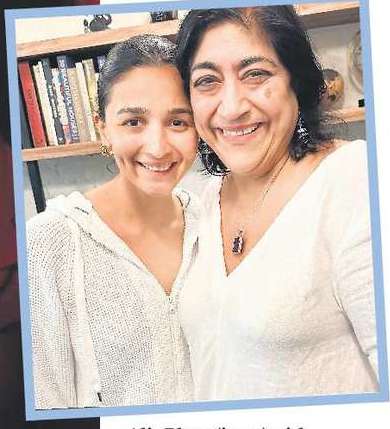
Gurinder Chadha dismisses reports about Alia Bhatt playing Indian princess in her film
8:37 AM
HINDUSTAN TIMES (April 7, 2024)
There has been a lot of chatter around actor Alia Bhatt being the top choice for Gurinder Chadha’s upcoming musical about an Indian princess. Now, the filmmaker has responded to the speculation and set the record straight.
On Saturday, the Bend It Like Beckham (2002) director tweeted in reaction to a new report with the headline, “Alia Bhatt to star in Gurinder Chadha’s next, backed by Disney?”
The filmmaker used Caps lock to catch the attention of her X followers and tweeted alongside the article, “This is not true. I’m not sure where this started. The script is still in the works. Alia and I had a meeting about another project, and I attended her charity gala recently.”
The Bride and Prejudice (2004) maker has been signed on by the international studio to helm an original musical around an Indian princess. A recent report by Mid-Day claimed that Bhatt was in discussions with Chadha for the film, stating that they met in January this year. “The two (Alia and Gurinder) have been in talks for a while. The final casting will happen only after the script is developed, but Alia is among the top casting choices,” the report quoted a source as saying.
The rumours further intensified when Chadha attended the Hope Gala in London, which was hosted by Bhatt, last month.
Is Alia Bhatt Gurinder Chadha's top choice for Disney musical feature about Indian princess?
8:30 AM

Sources say Alia, who recently met Gurinder at Hope Gala in London, top contender to lead filmmaker’s Disney musical about Indian princess
Mohar Basu (MID-DAY; April 5, 2024)
Filmmaker Gurinder Chadha, the mind behind Bend It Like Beckham (2002) and Bride & Prejudice (2004), has been signed on by Disney to helm an original musical feature inspired by a dynamic princess from Indian history. It’s not surprising that the film, which is being written by Chadha and screenwriter Paul Mayeda Berges, has quickly caught everyone’s attention.
While there were murmurs about Alia Bhatt being a strong contender for the lead role, the rumours intensified further when Chadha attended the actor’s Hope Gala in London last month.
Sources reveal that Chadha and Bhatt had met in January this year when the filmmaker flew down to attend Aamir Khan’s daughter Ira’s wedding.
A source tells mid-day, “The two have been in talks for a while. The final casting will happen only after the script is developed, but Alia is among the top casting choices.”
Bhatt, who recently wrapped up her home production Jigra, will soon begin shooting for Sanjay Leela Bhansali’s Love & War opposite actor-husband Ranbir Kapoor and Vicky Kaushal. She also has the YRF spy film with director Shiv Rawail.
The source adds, “After playing a singer in Bhansali’s period drama and an undercover agent in Rawail’s movie, a Disney princess will be a great addition to Alia’s repertoire. Leading the big-budget international project will also be a step forward towards making her presence felt in Hollywood after Heart Of Stone [2023]. If things fall in place, she will kick off work with Gurinder in the second half of 2025.”
----------------------------------------
HINDUSTAN TIMES (April 7, 2024)
There has been a lot of chatter around actor Alia Bhatt being the top choice for Gurinder Chadha’s upcoming musical about an Indian princess. Now, the filmmaker has responded to the speculation and set the record straight.
On Saturday, the Bend It Like Beckham (2002) director tweeted in reaction to a new report with the headline, “Alia Bhatt to star in Gurinder Chadha’s next, backed by Disney?”
The filmmaker used Caps lock to catch the attention of her X followers and tweeted alongside the article, “This is not true. I’m not sure where this started. The script is still in the works. Alia and I had a meeting about another project, and I attended her charity gala recently.”
The Bride and Prejudice (2004) maker has been signed on by the international studio to helm an original musical around an Indian princess. A recent report by Mid-Day claimed that Bhatt was in discussions with Chadha for the film, stating that they met in January this year. “The two (Alia and Gurinder) have been in talks for a while. The final casting will happen only after the script is developed, but Alia is among the top casting choices,” the report quoted a source as saying.
The rumours further intensified when Chadha attended the Hope Gala in London, which was hosted by Bhatt, last month.
Both, Gurinder Chadha and I, enjoy history-Shriya Pilgaonkar
8:26 AM

Deepali Singh (DNA; June 15, 2019)
After Shriya Pilgaonkar auditioned for the British TV series Beecham House, she didn’t hear from them for quite some time. “One day, I was suddenly called to their office and I thought I was going for a meeting, but they started taking measurements for the outfits!” she recalls with a laugh. Directed by Gurinder Chadha, the period drama set in 1795 was shot across London and Rajasthan and was an engaging and interesting process for the Mirzapur actress. Shriya tells us more about the show and her role...
Was it daunting to be a part of an international production?
I have done a French film earlier, but this is my first British series and one of the primary parts. In that sense, I was a little nervous about it, especially because it’s a period drama and this is the first time I’m speaking English on screen. Everyone had to undergo voice lessons and diction training workshops because the English spoken in a period drama is a little different from how one would speak otherwise. It’s slower and the sentences are fuller. I wasn’t daunted as I was excited about the experience. Also, it was a diverse cast and crew from all over the world and I was really looking forward to that setup.
Tell us a bit about the show and your character.
It’s a drama about family, relationships, love and loss. These are universal themes. Hence, they’re quite relatable. My character is an intriguing one. There is not much known about her. She is a young girl who comes to the house as the caretaker to John Beecham’s baby and ends up falling in love with his brother. She is ambitious, adventurous and loyal. A part of her wants to explore the world and she is always torn and conflicted about what she wants to do. What makes her more intriguing are the choices she makes. She is unafraid and uninhibited.
How was it to work with Gurinder Chadha?
She really represents diversity in the true sense because she is able to keep her team together, which I think is the most important quality of a director. She has a good understanding of the script and working with actors. Both of us enjoy history. There was so much energy on the sets and she deserves credit for that.
What’s next?
I have a film titled Bhangra Paa Le with Sunny Kaushal and Anubhav Sinha’s Abhi Toh Party Shuru Hui Hai. Then I have Haathi Mere Saathi, a trilingual with Rana Daggubati. It’s my first Tamil-Telugu project. There is also a project for an OTT platform.
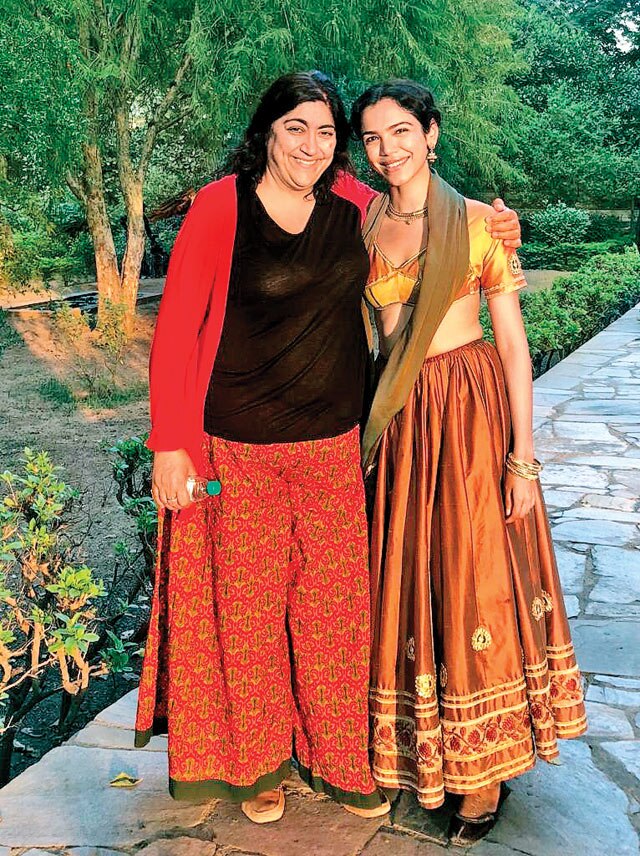
Gurinder Chadha helped us develop our characters, and find our place in the ensemble cast-Shriya Pilgaonkar
8:03 AM

Making her international debut with Chadha’s Beecham house, Shriya Pilgaonkar on establishing herself amidst a powerhouse of international talent
Mohar Basu (MID-DAY; April 19, 2019)
Pulling off a promising act as Ali Fazal’s wife in the web show Mirzapur, Shriya Pilgaonkar felt like a débutant all over again after the show’s success earned her further recognition. “It has changed the momentum of my career. More interesting work is coming my way now. For the first time, I’m experiencing this kind of recognition. When I least expect it, people randomly call out to me by [my character’s name], Sweety. People tell my parents to convey their love for me,” says the actor, whose ill-fated character was eventually killed off in the thriller. “Even then, I get messages from people on Instagram suggesting ways in which my character could be brought back into the series. They are hilarious, but also flattering.” Is she then set to make a return to the show? “I don’t know yet.”
Up next, Pilgaonkar moves on to another promising offering. Gurinder Chadha’s British historical drama Beecham House has established names like Lesley Nicole and Tom Bateman as the headlining cast. Pilgaonkar, who slips into the part of a nursemaid in the show that is set in Delhi before the British rule, says, “Gurinder is a powerhouse. This is the first time I’m doing a period drama, so I was nervous, at first. I took this opportunity to read up about the time period that the show is set in. I also took voice and diction lessons, which were interesting. Gurinder helped us develop our characters, and find our place in the ensemble cast. I had seen the works of some of my co-actors, including Lesley, Mark Warren and Bateman. So, I was excited to work with them.”
Having auditioned for the role of Chanchal, a “feisty and charming girl with a mysterious past”, who turns up at John Beecham’s palatial Beecham House to take care of his baby, Pilgaonkar describes her character as one who is adventurous. “Chanchal has many shades to her. She is unpredictable, and discovers a lot about love throughout the course of the series.”
Shooting for the show took place in London's Ealing Studios last year. “We shot the India schedule in Jaipur and Udaipur.”
Chalo China is like Chalo Dilli on steroids-Lara Dutta
8:13 AM

BOMBAY TIMES (March 31, 2019)
Lara Dutta has always lived life on her own terms. “From the day that I entered the industry, I’ve hated being labelled. So, all my efforts have always been about doing something new,” she tells us. The actress, who forayed into production a while ago, has now turned entrepreneur with a beauty range that she soon plans to expand. Excerpts from an interview with BT on her plans...
Of late, you have been very selective about your acting assignments. Are you planning to turn full-time producer?
Life has changed over the last few years; my priorities have changed and things have been different on the professional front as well. I have moved from being just an actor to being a producer, and it’s not your usual ‘actress-producer’ tag. I didn’t want to make films in which I was acting. The move to be a producer was triggered by the fact that there was so much incredible material available. I’ve loved reading all my life — I have vociferously read books, newspapers and magazines and in the process, I came across these incredible stories that I felt strongly about. That’s why, in the past two years, I have curated material in an attempt to find the right medium for every story. I won’t say that I am just a producer; once an actress, always an actress and even at the age of 60, if you put me in front of the camera, I would be happy.
As an actress, is the transition also happening in terms of the platform where you perform? You have worked on Gurinder Chadha’s international TV show Beecham House...
That opportunity came out of the blue, when Gurinder asked me if I would be interested in playing Begum Samru. It’s a character I have followed and loved for many years. I shot for the show in Jaipur last year and we will premiere internationally on April 7. It’s the first time I’ve done something in English. Though most people thought that my orientation was there rather than in Hindi cinema, it took me 14 years to get there (laughs!). Working in a medium and set-up that’s different from films has been very interesting.
Does that mean that you will not act in Hindi movies now?
Of course, I will. In fact, we had planned a sequel to Chalo Dilli, titled Chalo China. Eros and I owned the IP on that project equally, and we had completed a lot of work on that film, but because of some unavoidable reasons, it got buried for a while. But now, the project has been revived. I hadn’t thought of starring in a movie this year, but Chalo China is happening and it's a fun film, especially for the loyal fans of Chalo Dilli. To put it simply, Chalo China is like Chalo Dilli on steroids (laughs!). Both Vinay (Pathak) and I are reprising our roles and it’ll be a bigger and more entertaining experience.
Are you also looking at platforms like TV and the digital space as a producer?
I was lucky enough to step into production even before the digital revolution began, so my company already had content that could be formatted for different platforms. Currently, we have a fantastic series that we are doing internationally, in collaboration with a big production company in the US. Its subject is sensitive and also relevant to the current global scenario. We’ve got the rights to the book, The Meadow, written by two award-winning journalists, Adrian Levy and Cathy Scott-Clark. The series has been a huge learning experience for us as small independent producers from India. It’s been a whole new world, the way they work in the West. In Bollywood, work relationships are very personal, and everyone adjusts, but overseas, everything is done by the book. Timelines are sacrosanct, and you have to have your paperwork in place before you begin shooting. Apart from production, I am also doing a series of interviews with new-generation, pathbreaking and influential young entrepreneurs for a UAE-based network. The shoot for that chat show will kick-start this month.
Apart from the Chalo Dilli sequel, is there any other film that you’re looking to produce? There was news last year that you are producing a film on the women’s basketball team from Chhattisgarh…
Yes, we have the rights to that project and we’re attempting it as an international film, the same way Danny Boyle’s Slumdog Millionaire was made. Basically, it’s stories that originate from India, but are meant to reach a wider audience around the world. We also have another film, Kahin Door, which is being directed by Sushil Rajpal, who is a National Award-winning filmmaker. It was meant to be a smaller film, but it’s become bigger now. We now have a bigger actor attached to the project.
Women are constantly working towards breaking the glass ceiling, especially in cinema. As a producer, what is your career aim?
In Bollywood, everybody waits for an announcement of actors signing films with top production houses. So, my focus is to make a production house that slowly builds itself and becomes that big. At some point of time, it won’t be about who I am working with or signing on for a movie, but about our production house creating acclaimed content and building that kind of prestige in the industry. That’s what I want to build my way towards. Also, maybe be it’s a little premature, but I know from within that I want to be a director. I feel that’s going to happen sooner or later.
Are you on a quest to reinvent yourself?
The quest isn’t about reinvention as much as it is about growth. Every new decade in your life will bring you new goals. I don’t see myself as reinventing the old Lara. I just never looked back. I have never rested on the laurel that 19 years ago, I won the Miss Universe title. For the last five years, I’ve been mentoring beauty pageant contestants with the Times of India, to help them achieve their dreams and goals, but I’ve never rested on past glory. What I like about myself the most is that I’ve changed considerably in the last 19 years as a person. Today, when I look back, it feels like that was somebody else’s life. From the day that I entered the industry, I’ve hated being labelled. So, all my efforts have always been about doing something new. I may be articulate, but if my opinion doesn’t add value to a situation, I see no point in opening my mouth. I would rather focus on things that make a difference to me and my life. That is why I spent the last few years creating my own brand, Arias. It’s part of something I am doing with Mahesh (Bhupathi, husband) and it’s part of a larger plan. Arias Skin Care is something that I’ve worked on for the last few years, making sure that we formulate the best products that we can give the Indian market. The idea essentially stems from the fact that international cosmetic and skin-care brands don’t create anything specific for Indian skin types or climatic conditions. I have used products from around the world and I know that there’s nothing tailormade for us. Arias is going to be launched at the beauty world trade fair in Dubai, in mid-April, corresponding with my birthday. But that’s just the beginning of the brand. In the consequent months, Arias will encompass other products like clothing, furniture and more. It’s a bit scary because there is massive amount of input that goes into creating something like this.
You recently posted about your eighth marriage anniversary on social media. Does personal life take a backseat when you dedicate time to your entrepreneurial dreams?
It doesn’t feel like eight years at all. Actually, it’s been eight years of marriage and two years of knowing Mahesh before that, so it’s been 10 years in total. I think it was a shock for both of us that we’ve been together for a decade. Time has flown by and it’s been good fun being by Mahesh's side. Our little kid, Saira, takes up all our energy that’s left... Life’s busy and it’s all good as both Mahesh and I try to be good parents.
How valuable is the support of your husband and family, especially when you’re out there pursuing your ambitions?
I come from humble beginnings. I didn’t have a dad who had bags of money and the disposition that, ‘Jao beta, jo tumhe karna hai karo. I'll finance whatever you want to do in life’. Not having that creates a hunger within you to succeed at all cost. I also married a man who was self-made and came from a similar background. Mahesh has always pushed me hard to achieve more. He sees my potential and what I am capable of doing. I always tell him and myself that I never want to sit at home doing nothing, because I would drive him and myself mad. I love challenging myself and putting myself in situations which seem to be beyond my capabilities. I never saw myself being an entrepreneur; in fact, I wanted to be a journalist. I wanted to be a war correspondent just like my idol, Christiane Amanpour. That’s the kind of stories that I wanted to tell and now, that’s what I am doing.
Last year, when the #MeToo movement took Bollywood by storm, you and Mahesh were vocal in your support of the campaign...
Last year saw some great conversations in the film industry. The #MeToo movement and the discussions on gender disparity, in terms of remuneration and opportunities, have brought many truths out in the open. Talking about these things also brings a lot of backlash, because at the end of the day, the film industry operates on personal equations. So, taking a stand on such subjects can fetch some amount of backlash, but when Mahesh and I took a stand on the #MeToo movement, we were supported by most quarters. When it comes to pay parity between men and women, there are girls in the industry who can initiate conversations and make a difference, but they don’t do so. My only request to all the women in the film industry is that when you take up a cause, whether it’s #MeToo or pay parity, we should follow it regardless of where the stick falls, on our side or the other. It’s important to support the cause regardless of the outcome.

Check out Pallavi Sharda's Indian princess look in Gurinder Chadha's Beecham House
8:39 AM

Playing an Indian princess in Beecham House, Pallavi decodes her look in the period drama
Mohar Basu (MID-DAY; November 12, 2018)
The joy of working on a Gurinder Chadha project aside, Pallavi Sharda says Beecham House also gives her the opportunity to explore a period drama. Set in the 19th century, the film sees her play an Indian princess. She credits her look to the styling team who did a thorough research of the styles prevalent in the era. “Our costume team, headed by Joanna Eatwell, undertook research into what women of that era wore. They have created the costumes in keeping with the hues, textures and silhouettes of the time,” says Sharda, who was last seen in Lion (2016).
The six-part series revolves around British soldier John Beecham, played by Tom Bateman, who begins life anew as a trader in Delhi.
Describing her character Chandrika as one who “clings viscerally to her roots”, Sharda, who is currently shooting in the capital, says, “She is close to John Beecham, but no one in the house understands why. Her mysterious intentions make weaving her character together fun. She typifies a warrior-like Indian woman who knows what she believes in and is prepared to fight for it.”
She prepped for her part by gaining an insight into the political climate of the period. “I researched the political and social dynamics of the time. Books like Shashi Tharoor’s Inglorious Empire: What The British Did to India were informative. Gurinder is a fantastic director who knows what she wants, and I enjoy those magic moments of free fall when I can be putty in her hands.”
Gurinder Chadha to film biopic on rapper Apache Indian
7:55 AM

"Tell India to look forward to the Apache Indian movie, which will hit screens in India in a few years," the rapper teases, adding that director Gurinder Chadha is penning the script
Sonia Lulla (MID-DAY; September 21, 2018)
Currently in India to promote his upcoming single, Punjabi Girl, Birmingham-born Steven Kapur, popularly known as Apache Indian, revealed to mid-day that a film about his life is in the pipeline. "Tell India to look forward to the Apache Indian movie, which will hit screens in India in a few years," the rapper teases, adding that director Gurinder Chadha is penning the script. "She's doing it," Apache says when he's prodded about whether the deal with the filmmaker has been sealed.
Talking about the biopic, he adds, "The film is my true story. It's about my 27-year-long career and will take [the viewer through my life in] England to Jamaica, and then India."
Meanwhile, the singer is also touring the globe to promote his upcoming album On The Weekend, which includes the single, Punjabi Girl. It marks Apache's collaboration with Raftaar. "The album is out on September 28, which will be followed with a tour [in India]. I've just performed in London with Jay Sean."
The album marks his return to the genre he loves the most — reggae. However, with the album boasting of collaborations from artistes across the globe, Apache adds that fans will be treated to varied forms of music. Having shot for the video in Mumbai, the rapper adds that viewers will get to witness a dance face-off, also involving Raftaar and him.
I was nervous about attempting Kathak with Madhuri Dixit-Huma Qureshi
8:02 AM

As told to Rohit Bhatnagar (MUMBAI MIRROR; August 27, 2018)
When I signed Dedh Ishqiya, I was really excited about starting the shoot as I would get to work alongside Madhuri (Dixit, co-star) ma’am — I had grown up watching her on screen — but I was nervous about attempting Kathak with her. The song was choreographed by Remo D’souza and it was like a beautiful crash course for me. I practiced the dance form diligently for almost a month. During the filming, it was taxing to shoot the dance sequence with the heavy costume.
 Another crash course by way of a film assignment came with Rajinikanth
sir’s Kaala. While shooting for the film, I picked up a smattering of
Tamil. Even though someone else had dubbed for me, I was keen to acquire
a basic understanding of the language. Jenny, the associate director,
who I was close to, would spend hours working on my dialogues with me
and I would ask her for the meaning of every Tamil word. I also observed
her dialect while she spoke. She was my true Tamil teacher on the sets.
Before that, I had picked up the Hindi dialect of Uttar Pradesh 10 days
before starting work on Anurag Kashyap’s Gangs Of Wasseypur (left). While the
nuances of the language took time to grasp, getting the accent right was
relatively easier. There was not too much research involved for the
character but going to Benaras and hanging out with the locals made my
job easier.
During the shoot of the Marathi film Highway, I picked up the language while interacting with the people on the sets. I played a television actress in the film who is travelling from Mumbai to Pune for a pandal opening. However, I didn’t have to speak much Marathi, it was mostly Hindi. I am still learning the language.
White is the hardest film I have shot for. I was trying to learn Malayalam for the part and the pronunciation was tough. For one scene, I had to dance in a white cotton saree in the middle of London city while lip-syncing to a song. It was tough.
I played an explosives expert in D-Day, for which I learnt hand-to-hand combat and weapon-handling. Obviously, I didn’t learn to make a bomb but had to understand the process for the part. I focused a lot on weapon loading and safety. It was one of the most extensive trainings I have undergone for a part.
I am a director’s pet. Before I started shooting Badlapur, I got hold of Sriram Raghavan’s entire DVD collection and watched the films closely for reference. After that, I worked a lot on my looks and disposition as a sex worker. Since my character had to age through the film, I had to understand how an aging sex worker behaves, talks and dresses. We didn’t want to reduce the character to a cliché, but I did try to make it sexy in the younger parts.
 The most interesting film, prep-wise, was Luv Shuv Tey Chicken
Khurana (right), during which I did a lot of cooking and chopping. I remember,
once I was trying to chop an onion, when my director Sameer Sharma
bullied me into doing it faster. I must have chopped around 2-3 kilos
of onion during rehearsals. Kunal (Kapoor, co-star) would often look
lost in the kitchen and I would guide him in things like how to stir a
pot. I was like a food expert on the sets.
For Viceroy’s House, a period film, I worked a lot on my character’s appearance. Gurinder (Chadha, director) was particularly clear about the way she wanted my character to look and act. I played a woman from the 1930-40ss and I had pictures of people who worked in the Viceroy’s house for reference. For character inputs, I also met an old lady who was 19 at the time of Partition and had met Gandhiji as a child. I also acquired a British accent for the film.
Shriya Pilgaonkar bags Gurinder Chadha’s TV series Beecham House
8:00 AM

Sachin, Supriya Pilgaonkar’s daughter Shriya on featuring in Gurinder Chadha’s TV series with Tom Bateman, Lesley Nicol
Natasha Coutinho (MUMBAI MIRROR; August 27, 2018)
 Shriya Pilgaonkar, the 29-year-old daughter of actors Sachin and
Supriya, has joined the cast of Gurinder Chadha’s TV series Beecham
House. Her co-star is Tom Bateman who has featured in Hollywood films
like Murder On The Orient Express and Snatched. It is currently being filmed in London and also features Brit actor Marc Warren known for shows
like The Vice and State Of Play and Lesley Nicol of Downton Abbey.
The actress who was earlier seen in Shah Rukh Khan’s Fan, besides a Marathi and French film, informs that Beecham House is essentially a period drama set in Delhi, on the cusp of the 19th century, before the British rule in India. “It is the story of the residents of this palatial house and what happens when John Beecham arrives with a mysterious child and his caretaker. My character, Chanchal, is an intriguing, ambitious, passionate and secretive girl with a mysterious past. She has an interesting track and I’m looking forward to seeing how the evolves,” informs an excited Shriya who has always enjoyed lessons in history.
 She
goes on to reveal that they have been shooting at London’s Ealing
Studios. “We are shooting in London against a 1902 setting for five
weeks. Many classics and TV series have been filmed here, including
Downton Abbey which I really like,” says Shriya, admitting that she’d
auditioned for the part a while ago and when she didn’t hear from the
makers she’d assumed that she had lost out, only to get an message to
leave for London immediately. “Some of the best things come out of
nowhere!” she exults.
 Shriya describes Gurinder as a “powerhouse” who is driven to tell
diverse stories and points out that as someone who enjoys direction, she
finds the filmmaker inspiring to work with. “Beecham House has been a
passion project for her,” she avers, equally gung-ho about her
interaction with SRK during the Fan shoot, saying it was almost surreal
getting a glimpse of the man behind the star. “He is so witty and
well-read, and that made me love him even more.”
Her next Hindi film is Anubhav Sinha’s political satire, Abhi Toh Party Shuru Hui Hai, which will be releasing soon. There are two other films in the pipeline that will roll next year.
Quiz her on her actor parents and the profession, and she says, she’s a lot like my father who wants to do it all, be it in front of the camera or behind it. “My parents have always been supportive and allowed me to explore. I never took acting as a career choice for granted, I’ve worked hard to carve my own niche and that’s what makes them proud. I want to do it all, be in front of the camera and behind it ,” she signs off.
Huma Qureshi to play Indian royal in Gurinder Chadha's next?
8:37 AM

Mohar Basu (MID-DAY; August 10, 2018)
Rumour mills are rife that Huma Qureshi is set to reunite with her Viceroy's House director Gurinder Chadha for the six-part India-set television series Beecham House, which will air in the UK.
Earlier this year, news emerged about Chadha working on her passion project, which revolves around British soldier, John Beecham, who attempts to escape his past of profiteering with the East India Company by acquiring a mansion in 19th century Delhi. The mansion, however, harbours dark secrets that unfold as the series progresses. The story also unfolds at a time when the 1,000-year-old Mughal rule is over and the British vie with the Maharajas to claim India as their own.
While the role that Qureshi has been cast for is unknown, it is suggested that she plays an Indian princess. A source informs, "If the deal goes through, Huma will headline the show. She has been appreciated for her performance in Viceroy's House and shares a great equation with the filmmaker. Hence, it comes as no surprise that the she has been approached for the TV show. She is an ideal fit for this author-backed role. Her physicality suits the part."
The shoot, we're told, is schedule to commence at the end of this month. The actor is apparently working on chalking out her dates, post which she is expected to sign on the dotted line. mid-day reached out to Qureshi's team, which refused to comment. Written by Chadha, Paul Mayeda Berges, Shahrukh Husain and Victor Levin, the series will be filmed in India as it eyes a 2019 release on ITV.
As soon as Dama Dam Mast Qalandar would start playing, Om Puri would start dancing-Gurinder Chadha
7:36 AM

MID-DAY (July 5, 2017)
 Filmmaker Gurinder Chadha says late actor Om Puri would often dance to Hans Raj
Hans’s version of Dama Dam Mast Qalandar, which is part of her upcoming
film, Partition: 1947. The Huma Qureshi-starrer features Puri, who
died in January, as her father. “In a scene, he finishes his food and
is set to go to bed, but as soon as Hans Raj Hans’s song would start
playing, he would start dancing. I had to tell him, ‘you don’t have to
dance’. But, he enjoyed the music. He enjoyed being on the sets. This is
the memory I have of him,” Chadha said in an interview.
Speaking at a promotional event, Chadha also said that the song, Do Dilon Ke, which has been composed by AR Rahman and sung by Shreya Ghoshal and Hariharan, reminded her of the tragic stories she heard from her maternal grandmother about the Partition, while growing up in England. “I grew up in England and I made a film like this in India. It is a big deal. We do feel terrible about the things we witnessed, not just in India, but in Europe and America. We fear for our children. I have two small children and want them to live in a world where people love and respect each other.”
The song puts the spotlight on the fondness that Edwina Mountbatten and Jawaharlal Nehru shared for each other. “I believe that Nehruji and Lady Mountbatten were very close, and I wanted to show that... But, I was not interested in learning anything about this relationship as that is not the story... It takes away from the story of the ordinary people and the Partition.”
I am dying to meet Karan Johar's twins, Roohi and Yash-Gurinder Chadha
7:45 AM

Sonil Dedhia (MID-DAY; July 3, 2017)
"I am dying to meet Roohi and Yash,” filmmaker Gurinder Chadha says, alluding to Karan Johar’s newborns. The British- Indian director, who is currently in the city to kickstart promotions of her forthcoming film, Partition: 1947, is mother to 10-year-old twins, daughter Kumiko and son Ronak, and says she can give the new father a lesson or two on handling them. “I sent Karan some tips to manage the twins and he told me, ‘keep then coming.’ It was really sweet. I also remember sending him a congratulatory message. I’ll call him and check if he is free while I am here,” she says.
For the BAFTA-winning filmmaker, India has always been a muse. “Indian culture is very inspiring. I really loved Bajrangi Bhaijaan (2015). It was a little cheesy, but it got me. I was also amazed with the production of Bajirao Mastani (2015). Of late, Indian producers have been creating great movies, like Piku (2015), Dangal (2016) and Vicky Donor (2012),” she says, quick to add that she intends to make a film in the country soon. “I have been talking to a writer. His story revolves around female foeticide, and is based in Punjab. The subject caught my attention, but I am planning to make it in my way. So, it will be a commercial film.”
If she were to get a chance, Chadha would love to collaborate for a third outing with Aishwarya Rai Bachchan, with whom she worked in Bride And Prejudice (2004) and The Mistress Of Spices (2006). “She looked gorgeous in Ae Dil Hai Mushkil (2016). I have always enjoyed working with her."
Bend It Like Beckham is getting a stage version in North America-Gurinder Chadha
7:58 AM

Gurinder Chadha is also working on a project on female infanticide, British TV dramas, and has Prince Charles to thank for her upcoming pre-Partition film
Natasha Coutinho (MUMBAI MIRROR; June 30, 2017)
Brit-Indian director Gurinder
Chadha, who’s currently in India to promote her upcoming film,
Viceroy’s House, (Hindi version titled Partition: 1947) has a lot more
up her sleeve. “I’m working on a fantastic project set in India,
focussing on female infanticide which I’d like to make with an Indian
actor. I also have a deal with Freemantle Media back in UK for some
high-end TV dramas and I’m also exploring some Hollywood scripts,” she
informs, before revealing the piece de resistance, “My 2002 film, Bend
It Like Beckham, which people still love, is getting a stage version in
North America. We’re casting for it at the moment.”
She, however, sighs over the fact that when you make a really successful film, everyone wants you to make it over and over again. “I’m hoping that with Viceroy’s House, I can woo them with a film that has nothing to do with football,” says Gurinder, who having worked with Aishwarya Rai Bachchan in Bride And Prejudice and Mistress Of Spices is up for the challenge of making a massy Bollywood film. “I had a lot of fun working with Aishwarya during Bride and Prejudice which was my version of a Hindi musical,” she reminisces, adding that when she is in New York now, she often meets Priyanka Chopra and recently bumped into her mother, Madhu Chopra too. “Priyanka’s really smart. She’s doing well in the US as an actor and is even producing. I’m sure we’ll see more of this in the future, with Bollywood actors becoming global stars.”
For now, the focus is on her next. She grew up in the shadow of the Partition with her ancestral home going to the newly formed Pakistan while she grew up in the UK. “I never had a homeland, my family belongs to the old India so we couldn’t relate to Pakistan. My grandparents got a refuge home in India but it wasn’t our ancestral land. In the UK, I was told in history class that the Partition happened because the English decided it was time to leave and since Indians were fighting amongst themselves, Viceroy Mountbatten had no choice but to divide the country to maintain peace."
“It was only in 2008, when I did the BBC documentary Who Do You Think You Are? that tracing my roots, I went from England to Kenya, India to Pakistan, where I was greeted with flowers and a shawl. Touched, I wanted to make something on the Partition,” she narrates, saying during her research, she acquired the rights to one of here father’s favourite books, Freedom At Midnight, and spent two years scripting it.
Later, she met Prince Charles at St James Palace and when she told him that she was making a film on his uncle Mountbatten, he recommended Narendra Singh Sarila’s book, The Shadow Of The Great Game: The Untold Story of India’s Partition. “He told me Sarila knew his uncle and the book showed how the British used Mountbatten. Two days later, I flew to India and was hounded by a young actor, who was so desperate to meet me that he was prepared to stand in the hotel lobby all day. He gave me a book his father had written on the Partition. It was the same one Prince Charles had mentioned. A few days later, Narendra Singh Sarila flew to London to meet me and Viceroy’s House was born,” she smiles.
The smile turns to a sigh when she recalls the late Om Puri. “I’m so sad he’s not here to see it. He was so happy when he got the script because a Punjabi woman was making it. Everyday after ‘pack up’ he’d compliment me saying, ‘Bibiji tussi bahut acha kaam kar rahe ho, you’re working really hard.’ He was proud that as a Punjabi I was handling the subject differently,” she flashbacks.
What about Huma Qureshi? The smile returns, “I didn’t know her at all but her audition tape was fantastic. She’s feisty and natural, a hattikatti Punjabi woman!”
It's not like I want to go to the West and make a mark there-Huma Qureshi
2:54 PM

After making her international debut with Viceroy's House, Huma Qureshi says she won't go out of her way to find work in the West
Sonil Dedhia (MID-DAY; May 30, 2017)
Ever since revered Hollywood filmmakers began actively roping in desi actors, including Irrfan, Priyanka Chopra and Deepika Padukone, an international outing, it seems, is on every Bollywood actor's wish list.
But Huma Qureshi, who has Gurinder Chadha's Brit-Indian drama, Viceroy's House, on her resume, says she doesn't intend to set base in the West. "I am happy with whatever work comes my way. I am like a gypsy. Wherever my work takes me, I will go. It's not like I want to go to the West and make a mark there," the actress tells mid-day.
Qureshi did not actively scout for an international project, but was eager to do Viceroy's House when she stumbled on the 'beautiful' script. "Gurinder wanted to make this film and luckily, things worked out in my favour. I am honoured to have bagged a chance to make my international debut with this film," she says, adding that the response the team has received has been overwhelming. "It has released in the UK, Canada and New Zealand. I am looking forward to its India release this August."
Qureshi will next be seen in Dobaara [an official remake of Hollywood flick, Oculus], in which she will share screen space with brother Saqib Saleem. "We never thought we'd get an opportunity to act together this early in our career," says the actress, adding that she has discovered new aspects of his personality while shooting for the film.
"I have realised that he is sensitive and looks out for everyone. I understand him better as a co-star than as a sister."
Om Puri never complained about night shifts-Gurinder Chadha
7:35 PM

As told to Avinash Lohana (MUMBAI MIRROR; January 7, 2017)
We had been trying to work together for a very long time, so when I had sent Omji the script of Viceroy’s House, he was delighted to be a part of the film, as it was set in the same time period as Richard Attenborough’s Gandhi which had released 35 years ago. He plays Abba to Huma Qureshi’s Aalia who is in love with a Punjabi Hindu boy.
In one of the party scenes, a junior artiste was supposed to hand him a plate of pakodas. The actor was so nervous he spoke his lines too loud and Omji turned to him and said, “Main andha hoon, behra nahin,” and the whole unit burst out laughing.
He was so jolly on the sets, never once complaining about the many nights shoots. He would arrange a few chairs together and lie down saying, “Wake me up when you need me.”
The last time we spoke, he wanted to see the film and I was going to show it to him on my next visit to India.
It would have been lovely to get his comments and have a drink with him. I’ll show the film to his wife and son.
OM PURI’S POSTHUMOUS RELEASES
Viceroy’s House: Set for a March 3 release, Gurinder Chaddha’s historical-drama chronicles life from inside the house of India’s last Brit Viceroy, Lord Mountbatten.
Tubelight: Kabir Khan and Salman Khan’s period-drama set to release on June 23.
Ram Bhajan Zindabad: The political satire hits screens on February 3.
15 August Bhagile 26 January: Was touted as Puri’s Marathi acting debut
A Death In The Gunj: Konkona Sen Sharma’s directorial debut, also featuring Kalki Koechlin, Jim Saarbh, Tillotama Shome and Vikrant Massey.
There were teething troubles while working with Gurinder Chadha-Huma Qureshi
7:51 AM

Huma on working with Gurinder Chadha for 1st international project
Sonil Dedhia (MID-DAY; December 29, 2016)
"A lot of Bollywood celebrities are going global, and that’s a good sign,” gushes Huma Qureshi, the latest to dive into Bollywood’s widening cross-over star pool with Gurinder Chadha’s Viceroy’s House.
The actress, known for experimenting with roles, insists she was resolute that “going international” would not be a cameo or a sympathy role. “Indians were stereotyped earlier, but that’s not the case anymore. Instead of cameos and sidekick roles, Indian actors are getting prominent roles in the West. I was always clear that I would not be doing any cameos, but a film if I could contribute to it [substantially],” she says.
Working with Gurinder was an enriching yet daunting experience for her. Recalling the first day of the shoot, Huma says, “She wanted us to be in character 24/7 for two months. I was taken aback because I am an instinctive actor and can get in and out of my character easily. I told her after an intense scene that I would like to be goofy, jump around and have some fun. For the first week, she was a little upset since she expected me to stay in the zone. So, there were teething troubles, but eventually, we both enjoyed working with each other.”
The actress adds that Gurinder was particular about the diction, so she insisted that the actress meet Jaya Thadani, an interpreter from the Partition era. “I flew to London to meet Jayaji, who had many interesting anecdotes to share about Mahatma Gandhi and Jawaharlal Nehru. It was inspirational and helped me get my characterisation right.”
Huma’s next ambition is to share screen space with Oscar-winning Hollywood star Lenoardo DiCaprio. “I can happily retire after I work with him,” she says.
Subscribe to:
Posts (Atom)