Showing posts with label Guide. Show all posts
Showing posts with label Guide. Show all posts
When they grow up, I want my grandchildren to visit the museum and look at these photos of my films-Waheeda Rehman
2:52 PM

The saree she wore to her first premiere, albums documenting her journey in cinema – Waheeda Rehman has donated all of this and more to Film Heritage Foundation for preservation. While handing over the priceless memorabilia, the veteran star says, “Achanak yeh (photos) dekhte hue laga uss time kaise films banti thi...”
Niharika Lal (BOMBAY TIMES; March 14, 2024)
Last year, when the Film Heritage Foundation (FHF) organised a screening of the restored print of Guide, Waheeda Rehman wondered, “But will people come to watch a film that was made 60 years ago?” To her utter surprise, not only was the screening a houseful one, the audience watched the entire film in rapt attention. Six months later, the veteran actress invited FHF archivists to her home to donate some of her precious memories, tracing her journey in cinema, so that the foundation could preserve them for posterity.
Among the items she handed over to the foundation was the saree she wore to her first film, CID’s (1956) premiere, some trophies, and photo albums documenting all the behind-the-scenes action from her memorable films like Kaagaz Ke Phool (1959), Chaudhvin Ka Chand (1960) and Bees Saal Baad (1962).
‘I hope this inspires others from the film frat to donate materials for preservation’
Speaking to us about Waheeda Rehman’s priceless donations, Shivendra Singh Dungarpur, Founder and Director of the Film Heritage Foundation, said, “It was a very emotional moment for me when she donated her precious personal memorabilia to the Film Heritage Foundation and entrusted us with its care and preservation for posterity. I am so proud that she chose us as her memory keepers. I hope that it will inspire others from the film fraternity to recognise the importance of our film heritage and donate their material to be preserved for posterity.”
60 years have passed, but I’ve kept the albums safe: Waheeda Rehman
When we met the veteran actress at her sea-facing abode in Mumbai, she was in a nostalgic frame of mind. Sifting through a stack of albums, Waheeda Rehman shares, “Maine mehsoos kiya ke jab hum personal photographs rakhte hain, woh kharab ho jati hain phir bada afsos hota hai. Maine socha FHF photos safely rahenge museum mein. Apne se lagaav aur obsession hota hai toh rakh lete hain magar uski dekh-bhaal nahi kar paate hain, aata bhi nahi hai. We don’t know how to preserve pictures. But now these photos will be safe. People who love films may like to visit and look at these albums sometime. When they grow up, I want my grandchildren to visit the museum and look at these photos of my films.”
As for how she acquired these photos, she said, “I used to request directors to give me working stills – the behind-the-scenes shots. I wanted them to share the shots in which the director is directing. Main kehti thi ‘woh sab leke dijiye aap’. There are so many albums. Sixty years have passed, but I have kept them safe. Sometimes, when I get into the mood, I clean the albums and dust them off.”
‘MUJHE PHOTOGRAPHY KA BAHUT SHAUQ HAI’
Waheeda Rehman has always been interested in photography. She shares she likes taking photos of birds, animals, landscapes, and people. About her safari sojourns, the actress says, “Mujhe photography ka bahut shauq hai. Our group is made up of like-minded people who love photography. Most of them are professional photographers. I have been going on these trips for 10 years now. I capture a lot of candid moments. I have visited almost all jungle safari destinations in India – only Gir is left. I have also travelled abroad for safari trips. One of my favourite places is Namibia – it was so beautiful, with sand dunes touching the Mediterranean Sea and waves”
‘I was always particular about what I’d wear’
Waheeda Rehman says, “It’s great to look glamorous, depending upon the character and situation. But just to reveal (your skin) for no reason, I don’t like it. People who do it, if they are comfortable and like it, it’s fine. But personally, I don’t like it. In Amrapali (1966), what Vyjayanthimala was wearing, that’s what people used to wear 2,500 years back. There used to be no top per se – it was all covered with pearls. I was always shy and particular about what I would wear and how I would wear it. There is a scene in Kala Bazar (1960) where Dev (Anand) goes to get flowers for me, and he slips of a cliff and I take out my saree and use it as a rope to save him when no one hears me calling for help. Maine Vijay Anand ko kaha, ‘Yeh toh main nahi karungi. Woh bhi outdoor mein!’ Toh woh bole, ‘Yahan maqsad figure dikhane ka nahi hai, yahan kisi ki jaan bachane ka hai.’ Mera kehne ka matlab hai ki jo marzi costume pehen lijiye – bikini pehen lijiye, swimming costume pehen lijiye magar dikhane ke liye matt peheniye.”
And how did directors during that era react to her views on costumes for her characters? She says, “With time, as I spent more years in the industry and became a top heroine, I managed to convince the directors, and they used to say, ‘Yes, you have a point.’”
‘Meri apni film maine kabhi theatre mein jakar nahi dekhi’
Last year, during the 100 years of Dev Anand celebration, Waheeda Rehman attended the screening of Guide. She said, “Tajjub bhi hota hai ki itni purani filmein log itni dilchaspi ke saath chupchaap dhyaan se dekhte hain; toh lagta hai kahin kuch achha hi kiya hai. What I really liked was that all those people in the cinema hall were silently watching the film. Kabhi beech mein gaane aate thay toh maine bahut saari taaliyaan bhi suni. Mujhe achha laga.”
However, the actress shares she has seen a few of her films in theatres. She adds, “Meri apni film maine kabhi theatre mein jakar nahi dekhi. Abhi bahut barson ke baad main Guide ki screening mein gayi thi aur meri beti Kashvi bhi mere saath thi to maine kaha usko, ‘Beta, aapko nahi dekhne ka dil karta hai toh aap keh do, hum chale jayenge. She was like, ‘What are you talking?’” (Laughs).
‘There are so many female directors, it’s wonderful’
“I really like it when women directors approach me. Two girls once came looking for me for the film Skater Girl (2021). It was a small role. I thought both these girls are struggling, and it’s not a big contribution, so I should do it. Now, there are so many female directors, which is wonderful. I feel sometimes, the sensitivity with which a female director perceives a scene, that’s something only a female director can do. Like in English Vinglish, the way her husband talks to her – it’s not mean, but jaise biwi ko jhadak diya – woh sab auratein zyada behtar samajh paati hain. Aaj kal kaafi achhe directors hain jaise Gauri Shinde. I also like Farah Khan’s films – in commercial cinema, the masala Manmohan Desai type films she makes. Commercial success toh bahut zaroori hai. Then there’s Zoya Akhtar and Kiran Rao.”
Dev Anand told me, 'If you want to do more films, you will have to shoot at night'-Waheeda Rehman
8:24 AM

On the sidelines of a special film festival to mark Dev Anand’s 100th birth anniversary, Waheeda Rehman remembers some of the moments she shared with the legendary actor
Waheeda Rehman (BOMBAY TIMES; September 26, 2023)
I met Dev saab on the sets of C.I.D. I was a fan, but never in my wildest dreams thought that I will be working with him in my first Hindi film. He never made me feel like ki main newcomer hoon aur woh established star hain. He made me feel so comfortable aur naturally woh ek understanding thi, toh humne ek ke baad ek saat (seven) picturein ki. And the best was of course, (Guide) saari duniya janti hai. He was so charming and decent. Kabhi kisi ki burai nahi karte thay.
Once he told me, “Waheeda kabhi fikr mat karo ki picture chalegi ya nahi chalegi kyunki ye jo zindagi ki slate hai, uspe tumhara mera naam toh likh diya gaya hai, toh woh koi mita nahi sakta. Toh aap kabhi socha mat karo. Picture nahi chali (toh) nahi chali. Chhor do. Aage dekho kya karna hai.” He was very charming. Jaise charming dikhte thay waise charming insaan thay. Bahut achhe insaan thay.
‘HE MADE ME SO COMFORTABLE ON THE SETS OF CID’
On the second day of the shoot I called him Dev saab, and he said no. Toh maine kaha achha Mr Anand? And he was like – ‘No, no, no, no.’ Maine puchha, phir kya bulaoon? Toh kehne lage Dev. Maine kaha aap mere se bade hain aur itne bade star hain, main kaise aapko Dev bulaoon. Ye hamare culture mein, hamari tameez mein nahi hai.’ He then explained, ‘Dekho agar koi saab kehta hai toh mujhe lagta hai ki main school teacher hoon. I don’t get that feeling that you are my colleague’. So, in the whole industry, he was the only hero jinse main first name basis pe baat karti thi.
C.I.D. ke liye hum Churchgate station pe raat ko shooting karne gaye thay. Raj Khosla took special permission for it. We both had to get into a running train. I was very nervous. Dusra shot hone tak raat mein mujhe neend aa jaati thi toh main so jaati thi do baje tak. So Dev asked me, ‘You want to do more pictures?’ It was my first film, so I said, ‘Haan karna toh hai’. To which he replied, ‘Then you will have to shoot at night’. Like a fool I asked ‘Par raat mein kyun kar rahe hain. Din mein kyun nahi kar rahe?’ Toh kehne lage, ‘Public khatm ho jayegi tabhi toh hamare liye permission milegi!’
It was really good and fun. It was so comfortable working with him, very casual, very charming.
‘I WAS A PART OF GUIDE ONLY BECAUSE OF DEV’
Meri kismat achhi thi aur Dev ne soch liya tha ki Guide mein Rosie ka role main hi karungi. That made me very happy and confident. I told him, ‘Ismein aap jo marzi scene cut karo, magar mera koi bhi dance cut nahi hoga’. It was the only film where I had got the chance to dance.
I was in Guide only because of Dev. He was the producer and he had given me the contract pehle se. Unfortunately, the directors Chetan Anand and Tad Danielewski (for the US version), they didn’t want me. I told Dev ‘Aapke dono directors mujhe nahi pasand kar rahe. Problem ho jayegi. Aap kisi aur ko le lijiye.’ He said, ‘Are you crazy? Meri marzi hai main kise loon. I am the producer. What makes you think like that?’ I told him to ask his publicist and friend Amarjeet. He confirmed it. Tad also said there’s going to be a very hot love scene. When I told Dev, he said, ‘You know I won’t do a scene like that. Tumko darane ki koshish kar rahe hain.’
Finally, although Tad stayed (for the US version, which didn’t have Waheeda), Vijay Anand aa gaye (in place of Chetan Anand for the Indian version).
— As told to Niharika Lal
WHY WAHEEDA DIDN’T ATTEND THE COLOUR PREMIERE OF HUM DONO
I don’t remember when I met him for the last time. When he did Hum Dono in colour (in 2011), toh uska premiere hone wala tha. Both the leading ladies of the film – Nanda and Sadhana – didn’t come for it. He had called me for the premiere, but when I found out both the leading ladies are not coming I asked ‘Fir main kaise jaungi? It will look like I’m taking away their (credit). It’s bad manners.’ Toh Dev kehne lage ‘You are a part of Navketan (his production house). You are not an outsider’. I said, ‘It is very sweet of you, but public kahegi ki na Sadhna hai, na Nanda hai, ye Waheeda beech mein kya kar rahi hai? Galat lagta hai na.’
‘Tum mera dil dukha rahi ho’ (Dev said), and I replied, ‘I’m sorry. Tell them kuch bhi kar ke aaye. Unke bagair main nahi aa sakti’.

Dev Anand insisted only I will play the role of Rosie in Guide-Waheeda Rehman
8:22 AM

Dev and Waheeda in Prem Pujari, his directorial debut
Waheeda Rehman, who paired with the debonair star in classics such as CID, Kala Bazar, Baat Ek Raat Ki and Guide, remembers the actor whose birth centenary falls on Sept 26
As told to Shruti Sonal (THE TIMES OF INDIA; September 24, 2023)
When I was first signed to star opposite Dev, I had no idea that I would be working with him. Those days we got to know about our costars at the last moment. When I went on the sets of CID, director Raj Khosla introduced me to the whole unit. When I saw Dev, I was surprised and shocked. I went up to him and said “Dev saab, it’s an honour to meet you.”
He replied, “Tum mujhe Dev saab nahi kahogi (You can’t call me Dev saab).” I told him that I was a newcomer, and he was a big star, so how could I call him by his first name? But he insisted. He explained very calmly that if someone uses words like ‘saab’ or ‘sir’, a distance is created and he doesn’t feel comfortable. As a result, he became the only person in the industry whom I called by name. Everyone else was “ji”, “saab”, and “sir”. He was just Dev for me.
Guide was made in Hindi and English. Vijay Anand directed the Hindi version; Tad Danielewski, the English. Both didn’t want to work with me. However, Dev insisted that only Waheeda will do the role. I told him not to force the directors. But he stood by me, and insisted that as the producer, he would take the call. I blushed when he told me that ever since reading the book by R K Narayan, he had only imagined me playing Rosie. I was taken aback when he told me that he knew that if problems arise, I would stand by him. That’s what happened.
There was a lot of chaos as we were shooting simultaneously in Hindi and English. Ego clashes between the two directors hampered the shoot. Dev was very upset and worried. A lot of time was being wasted. One day, he suggested that we should first shoot in Hindi, then in English. He asked me for additional dates and I agreed without a second thought. “See, I knew you’d stand by me,” he replied.
During that era, there were three big stars: Dev, Raj Kapoor, and Dilip Kumar. All were very talented, but there was something different about him. He was not condescending. He insisted on working with new directors and crew, and made everyone comfortable. He was a charming actor and a charming human being. He was also a decent flirt. Dev was always the most well-dressed person on the set. He had so much energy mentally and physically. If his clothes would get drenched in sweat or get soiled, he would run to his room, change, and then come back to take a shot. I used to joke, and call him an ‘Eveready Battery’, always charged. Dev also had an ear for good music and was very particular about the songs in his films. If he didn’t like a song, he would even tell (Sachin Dev) Burman da, “Dada, maza nahi aaya! Kuch aur banaiye.”
As I become older, it sometimes becomes difficult to recall the details of the time I spent with him. What I remember the most, however, is how broad-minded and progressive Dev was in his thinking. Also, he didn’t stick to the formulaic films or typical love stories that were being made in that time. He wanted every film of his to be different from the other. He had the guts to make Guide, which had a very bold subject. More than a love story, it was about three people who want to make something of their life. The characters were grey, and made unconventional choices. It was different, yet at the same time, very true to life and the people we see around us even today.
I am sure wherever he is, he is happy that his work is being honoured and remembered even today.
-----------------------------------------------------------
Pocket picked at Delhi premiere, but Jewel Thief kept quiet
A pickpocket pinched Dev Anand’s purse, robbing him of Rs 15,000 during the premiere of Jewel Thief (1967) at a New Delhi theatre. Adjusted for inflation, that roughly amounts to Rs 7.5 lakh today.
“I flew all the way from Darjeeling to Delhi to attend the premiere at the Odeon Cinema. The crowds were jumping up and down with delirious joy as I alighted from the car outside the theatres,” the actor writes in his autobiography, Romancing with Life.
“Suddenly a hand brushed my hip pocket. I checked for my purse, and found it missing. But I did not react, for the euphoria of the moment was too immense to cry over a meagre sum of Rs 15,000, lost in the enormous wave of goodwill and popularity,” he writes.
“Stardom cannot be earned or bought at a price. I let the pickpocket dance away in joy with my cash-filled purse,” Anand concludes.
Interestingly, Dev Anand had played a pickpocket in the film, Pocket Maar (1956).
Nostalgia drives re-releases of classics and popular movies
8:17 AM

Niharika Lal (BOMBAY TIMES; September 23, 2023)
When veteran actress Waheeda Rehman heard that four classics of Dev Anand, including Guide which also featured her, were being re-released, she wondered if moviegoers would be interested in watching 60–70-year-old films in cinemas. She was surprised to know that the shows of these films C.I.D. (1956), Guide (1965), Jewel Thief (1967) and Johny Mera Naam (1970), which will happen over this weekend as part of Dev Anand’s birth centenary celebrations, had been sold out.
"Restored and remastered films provide a higher-quality viewing experience. Post the pandemic younger audiences are going out for movies while the older audience has stayed away. Re-release of classic titles has enabled us to bring back this audience to cinemas."
- Gautam Dutta, Co-CEO, PVR INOX Limited
---------------------------------------------------------
“These special screenings offer a chance to relive iconic moments and share the magic of timeless films with a new generation of cinema enthusiasts. The response to re-releases has been overwhelming."
- Devang Sampat, CEO Cinepolis India
---------------------------------------------------------
"When I recently met Waheeda ji to invite her to the Dev Anand film festival, she was shocked to discover that there is a huge craze among people for these classics. She couldn't believe that the shows of these re-releases were mostly sold-out."
- Shivendra Singh Dungarpur, film archivist and director of Film Heritage Foundation
SOME MAJOR RE-RELEASES IN THE RECENT PAST
- Khalnayak, on completion of 30 years of the film
- Koi Mil Gaya, to celebrate its 20th anniversary
- RRR, before the Academy Awards ceremony
- Avatar, before the release of Avatar 2 Gadar, before the release of Gadar 2
- Dilwale Dulhania Le Jayenge, to celebrate Shah Rukh Khan’s birthday
‘Re-releases offer youngsters a chance to discover classics’
A part from the Dev Anand films, Kamal Haasan’s 1987 film Pushpak is set to be re-released in theatres soon. Exhibitors say that in the last year, several films have been re-released to celebrate actors’ birth anniversaries, film anniversaries, and even to hype some upcoming sequels. Industry insiders say that the reason why there’s such a huge demand for these films is because “re-releases give young moviegoers a chance to discover classics on the big screen and evoke nostalgia in the older generation”.
SPECIAL FESTS TO SCREEN OLDER FILMS VALENTINE’S WEEK FILM FESTIVAL
Movies like Titanic (English), Dilwale Dulhania Le Jayenge (Hindi), Ticket to Paradise (English), Ved (Marathi), Geetha Govindam (Telugu), Vinnaithaandi Varuvaayaa (Tamil), Hridayam (Malayalam), Googly (Kannada), Love Ni Bhavai (Gujarati) were re-released as part of the festival in multiple cities
DILIP KUMAR HERO OF HEROES
To mark Dilip Kumar’s birth centenary, Aan (1952), Devdas (1955), Ram Aur Shyam (1967) and Shakti (1982) were released in 31 cinemas in 21 cities
CHRISTOPHER NOLAN FESTIVAL
Interstellar, Inception, The Dark Knight and Dunkirk were re-released ahead of Oppenheimer’s release date
SUPERSTAR RAJINIKANTH BIRTHDAY SPECIAL
It was held in Chennai and Coimbatore last year with shows of Baba (2002), Sivaji: The Boss (2007), 2.0 (2018) and Darbar (2020)
BACHCHAN BACK TO THE BEGINNING
To celebrate Amitabh Bachchan’s 80th birthday, a film festival was organized in 17 cities where Kaala Patthar, Kaalia, Kabhi Kabhie, Namak Halaal, Abhimaan, Don and Deewaar were screened
Dev Anand classics to return to the big screen
9:33 AM
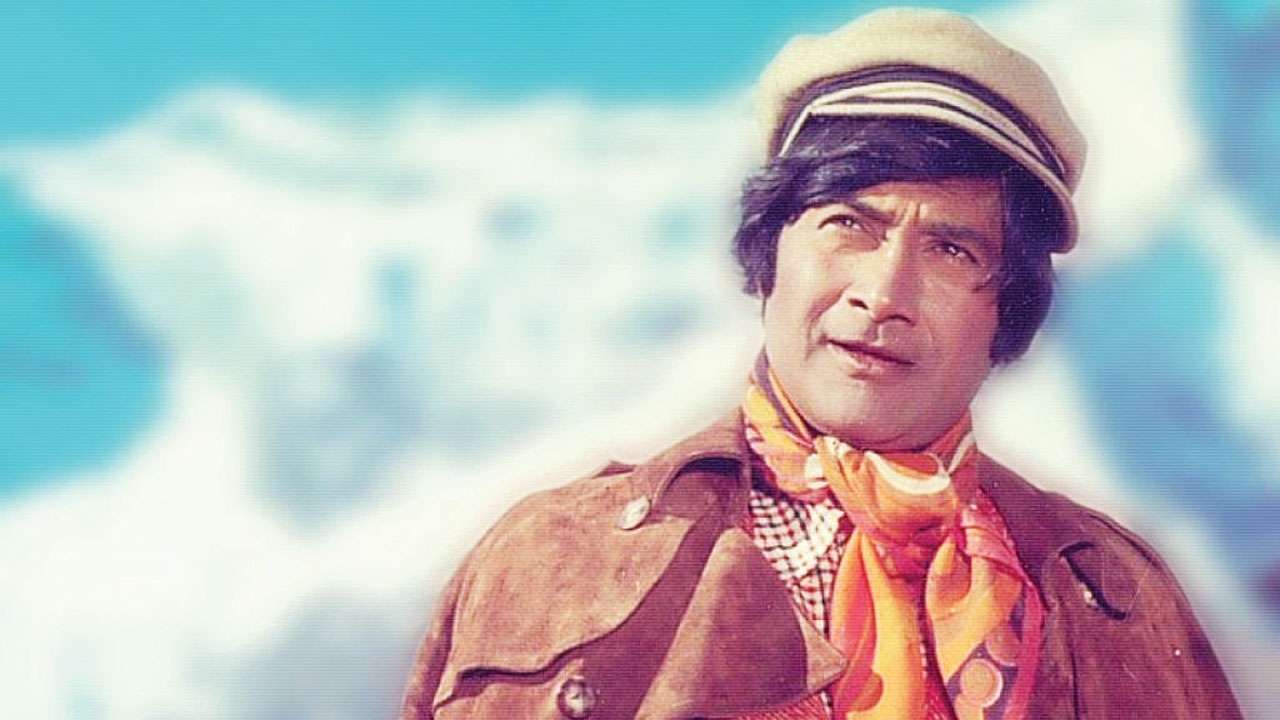)
Niharika Lal (BOMBAY TIMES; September 11, 2023)
To celebrate Dev Anand’s birth centenary, the Film Heritage Foundation (FHF) has curated a film festival for his fans, titled ‘Dev Anand@100 – Forever Young’, that will bring the superstar’s iconic films back to the big screen. The two-day film festival will be held on Sept 23 and 24 in 30 cities. These films have been selected by the Film Heritage Foundation (FHF) in collaboration with the NFDC (National Film Development Corporation of India) and NFAI (National Film Archive of India) which restored these films. I&B and FHF officials say that the idea behind this festival is to reintroduce Dev Anand’s films to a new generation and rekindle nostalgia for those who love his films.
WHAT’S HAPPENING
After ‘Bachchan Back to the Beginning’ and ‘Dilip Kumar – Hero of Heroes’ last year, exhibitors along with Film Heritage Foundation and National Film Development Corporation, are organizing a film fest to mark Dev Anand’s birth centenary on Sept 23 & 24.
‘We are grateful that Dev saab’s films are preserved & restored’
The films have been chosen to introduce the new generation to unforgettable Dev Anand characters – Inspector Shekhar in the thriller C.I.D., Raju, the tour guide, in Guide, Vinay/Amar in the spy thriller Jewel Thief and Johny Mera Naam’s Johny.
‘I WOULD JUMP THE BOUNDARY WALLS OF COLLEGE TO WATCH DEV SAAB’S FILMS’
‘As Dev saab turns 100 this year, I still remember how his attitude and singular style in his performances would get us out of our hostel beds in the middle of the night, jump the boundary walls of the college to the nearest film theatre repeatedly, just to witness the magic of his charm and energy. And on our way back we would sing along with his songs, his deliveries of dialogue and create this wonderful world he had structured for us to be remembered forever.’
— Amitabh Bachchan
The NFDC-NFAI is leaving no effort spared to ensure that these films are presented in the best possible way
It is important for the public to witness Dev Anand on the big screen once again, just as they did during his heyday decades ago. The NFDC-NFAI is leaving no effort spared to ensure that these films are presented in the best possible way, with hundreds of restoration artists technicians, graders, DOPs, sound engineers and archivists, spread across multiple cities, are hard at work to once again bring these films to life. The restoration of the films is being undertaken as part of the National Film Heritage Mission and funded by the Ministry of Information and Broadcasting.
-Prithul Kumar, MD NFDC and Joint Secretary (Films)
‘THERE CAN NEVER BE ANOTHER DEV ANAND’
‘I’m delighted that the festival will open with Johny Mera Naam, the first film I worked on with him. He was already a megastar when I was cast in this film, but he never made me feel like a newcomer. Afterward, we worked on several films that became big hits. His unique and inimitable style was a delight to watch, not only for the audience but also for me. I have very fond memories of Dev saheb. There can never be another Dev Anand’
— Hema Malini
‘LEARNED SO MUCH FROM DEV SAAB’
‘I grew up watching Dev Anand’s films. I have admired Dev saab since my childhood; he was my hero and mentor. He gave me my first break with Swami Dada (1982), and I was fortunate to work with him on several films. His energy surpassed even the youngest person on the set. I learned so much from him, and I am grateful that his films are preserved and restored so that young actors today can continue to learn and appreciate the work of a legend’
— Jackie Shroff
‘DAD STILL REMAINS THE EVERGREEN ROMANTIC SUPERSTAR’
As we celebrate his centennial, I’d like to say that dad’s movies were decades ahead of their time. I’m confident that the fest will be a huge success, and newer audiences will rediscover the youthful magic of my father – who will forever stay young on screen
— Suneil Anand, Dev Anand’s son
Image: Waheeda Rehman shoots in Udaipur after 54 years
8:00 AM

Neha Maheshwri (BOMBAY TIMES; August 16, 2019)
Veteran actress Waheeda Rehman will next be seen in the international film Desert Dolphin, which is based on skateboarding. The film, which is co-written by Vinaty Makijany, marks the directorial debut of Manjari Makijany, and is set in the rustic village of Khempur near Udaipur, Rajasthan. Vinaty and Manjari are yesteryear actor Mac Mohan’s daughters. The most interesting part, however, is the fact that Waheeda Rehman has returned to shoot in Udaipur after 54 years. She last shot in the ‘City of Lakes’ for Guide (1965). Feeling nostalgic about shooting in Udaipur, the actress says, “I have come to Udaipur after a very long time. I remember that when we were shooting for Guide, we had stayed at the Lake Palace Hotel. I was pleasantly surprised when the makers of this film organised a trip to the Palace, where I could relive those memories.”
Talking about coming on board for an independent project, she shares, “I have never thought of a project as big or small. I have always wanted to and have been experimenting. But in my 60-year-long career, I have never said yes to a project so quickly. To my knowledge, this is also the first time that I am working with a female director.”
Art director R Verman no more; son Abhishek Varman performs last rites
7:59 AM

Hiren Kotwani (MUMBAI MIRROR; July 31, 2019)
 Veteran art director R Verman, who had been ailing for a while and was recently admitted to a suburban hospital, succumbed to cardiac arrest on Tuesday around 12.30 am. He was 72.
His son, director Abhishek Varman (2 States, Kalank) performed the last rites at the Oshiwara crematorium. Later, filmmaker Karan Johar, actors Varun Dhawan, Arjun Kapoor and Alia Bhatt, and directors Shashank Khaitan and Anurag Singh met him to offer condolences.
Best known as R Verman, Ratna Verman Shetty was an alumnus of Mumbai’s JJ School of Art. Post completing his education, he started his own publicity designing and cine advertising company. The late Dev Anand’s production house was one of his major clients and Verman worked on his cult classics like Jewel Thief and Guide (above).
It was during this time that art direction piqued his interest and he began assisting noted art director Sudhendu Roy. He went independent in 1975 and worked on over 350 films, including Betaab, Khoon Bhari Maang, Thaanedaar, Hum, Khiladi, Andaaz Apna Apna, Karan-Arjun, Kaho Naa.. Pyaar Hai, Company, Aitraaz and 36 China Town.
Dadar's Chitra Cinema to shut down; Student Of The Year 2 to be its last day last show
7:59 AM

Dadar's Chitra cinema, one of the city's first AC theatres, will stop operations today after seven decades, thanks to poor business
Sonil Dedhia (MID-DAY; May 16, 2019)
It ran to packed house for days when Jackie Shroff's Hero released in 1983. Almost 36 years since then, it will open its auditorium for the final time today to screen Tiger Shroff's Student Of The Year 2. After an uninterrupted run for nearly seven decades, it will be curtains down for the 550-seat Chitra Cinema today.
Third generation owner and current proprietor Dara Mehta, who took over the business in 1982 from father P D Mehta, cites poor business as the primary reason for the shutdown. "Single screens are hardly doing any business today. While weekends would witness good footfalls, we would hardly have any patrons on weekdays. We haven't yet decided whether it will be given for redevelopment or let out to a multiplex chain."
It is difficult to imagine the parking lot, that wears an empty look these days, teeming with people in October 1961, each hoping to get a ticket to Shammi Kapoor's Junglee, which had released then. "I was very young then, but I remember that Junglee ran for over 25 weeks," Dara reminisces.
Started in the '50s by D B Mehta, Chitra derived its name from Chitrapat (which means cinema in Marathi), presumably to entice the Marathi population that formed the neighbourhood. While its older cousin Plaza Cinema screened mainly Marathi fare, this single-screen theatre served as the destination for Hindi film buffs, who would line up to watch Sholay (1975), Deewaar (1975) and several blockbusters that followed over the decades.
Dara says that the theatre has tried to counter every major threat — from VCRs to piracy. "We have always kept up with technology. We renovated the theatre around 20 years ago, and recently again in 2014. But today, the online streaming platforms have affected our business, too. Earlier, movies were the only source of entertainment. Now, people have countless options on OTT platforms."
Dadar resident Benaifer Motivala, 75, describes Chitra as an "integral part of my childhood". "From Guide [1965] to Waqt [1965] and even Ghajini [2008], I remember many films completing silver and golden jubilee here. The best thing was that they increased their price only marginally over the years. We will miss it."
In March, the shutters of another single-screen theatre, Chandan Cinema, came down for good.
Remembering its days of glory
Trade analyst Amod Mehra reveals that Chitra had the distinction of being one of the first air-conditioned theatres in Mumbai. "Not many are aware but it also had a small preview theatre during the '70s and '80s. Since there were three popular studios around — Ranjit Movietone, Rooptara and Shree Sound — filmmakers would book the preview theatre to see rushes of their movies. It's sad that single screens are slowly fading away."
Gaata Rahe Mera Dil was shot after Guide was completed-Mohan Churiwala
2:06 PM

Roshmila Bhattacharya (MUMBAI MIRROR; January 25, 2019)
He would have turned 85 on January 22 had death not snatched him away 15 years ago. But for me, Vijay Anand or Goldie Saab as I knew him, still lives on in the movies he left behind.
He is best remembered for the cult classic Guide which came to him on the rebound after Waheeda Rehman refused to work with Raj Khosla following an altercation on the sets of Solva Saal earlier, and the eldest Anand brother, Chetan, opted out after getting financial aid and army clearance for his war drama Haqeeqat. Goldie Saab who had turned down the offer to direct the film twice, agreed on the condition that he’d rework Nobel laureate Pearl S Buck’s original script on which the Tad Danielewski-directed English version was based. “I couldn’t have a film starting with Raju and Rosie jumping into bed within hours of her stepping off the train with her husband Marco,” he told me years later.
And while changing the first scene, and diluting the adulterous content of R K Narayan’s novel, Goldie saab also tweaked the ending, making it more spiritual and befitting a Hindi film hero. “In the English version, Raju after serving a jail sentence, lands up, broke, in a village where he is mistaken for a godman after a sadhu, seeing him shivering in his sleep, throws his saffron chaddar over him. While in the Hindi Guide Raju fasts for rains and breathes his last as the first of the life-saving showers come, in the English film, he keeps reiterating, ‘I can see the rains coming.’ But the film ends with the camera panning on a clear blue sky, implying that even in death he cheats the villagers who’d believed in him,” informs Mohan Churiwala, a close associate of Dev Anand. While Danielewski’s version didn’t impress anyone, Goldie Saab’s ‘Guide’ became a saviour even in real life as a drought-hit Gujarat turned to Raju to bring rain.
R K Narayan outraged by all the changes, publicly denounced the film, calling it “Misguided Guide”. But that didn’t dent its appeal. Guide was India’s official entry for the Oscars, losing in the second round to a Norwegian film. Half a century later, its regarded as a classic, and its songs remain evergreen. “The Lata Mangeshkar-Kishore Kumar duet, 'Gaata Rahe Mera Dil', was shot after the film was completed, in Ooty, because Dev saab wanted to incorporate a song by Kishore Kumar,” says Churiwala.
After Guide, Goldie saab was signed by Nasir Hussain for Teesri Manzil, initially planned with Dev saab. He was replaced by Shammi Kapoor after a fallout with Nasir saab at R K Nayyar and Sadhana’s engagement ceremony. While Goldie saab attributed the exit to a date clash, Aamir Khan was reported saying it was because his uncle had overheard Dev saab saying Nasir saab had signed Goldie to direct Baharon Ke Sapne, a small black-and-white film with newcomer Rajesh Khanna, while he was all set to helm a colour film with him. The next day, Nasir saab exchanged projects with Goldie saab on the condition that Teesri Manzil would not feature Dev Anand.
According to Churiwala however, the argument was over remuneration. “Dev saab wasn’t the kind of person to make an issue over money but during Jab Pyar Kisise Hota Hai he’d learnt that Nasir saab had borrowed money at a very high interest rate to finance his first production. So, he returned his signing amount, telling him to pay him after the film’s release. Nasir saab did settle his dues but did not pay him the price he commanded then, assuring him that he’d compensate him in their next film together,” informs Churiwala. He adds that at the engagement party, Dev saab jokingly asked Nasir saab what remuneration he had in mind for him in Teesri Manzil . “Nasir saab casually replied, ‘Don’t worry, I’ll take care of you.’ That sparked off Dev saab’s temper as he had said that earlier too many times and he stormed out of the party and the film. Shammi Kapoor when approached, called Dev saab and only after getting his go ahead agreed to a script narration.”
The Anand brothers did five more films — Jewel Thief, Johny Mera Naam, Tere Mere Sapne, Chhupa Rustam and Bullet. There was a sixth film, Jaana Na Dil Se Door, a tribute to Chetan saab. A father-daughter story with Indriani Banerjee in a double role, it was completed but not released. “And with it we lost a beautiful song penned by Kaifi saab (Azmi) for which he hadn’t charged a rupee,” sighs Churiwala. “Tu chala jo apni talash mein, To kahan kahan se guzar gaya, Har kadam pe tha inteha, Har inteha se guzar gaya…”
Whenever my films air on TV, I’m only correcting myself-Waheeda Rehman
8:36 AM

Zinia Sen (BOMBAY TIMES; November 12, 2018)
Veteran actress Waheeda Rehman, who recently attended the 24th Kolkata International Film Festival, talked about the cinema that she has been a part of, her highs and lows and the on-going #MeToo movement. Excerpts:
You visited Kolkata on invite from filmmaker-restorer-archivist Shivendra Singh Dungarpur, who is holding a film restoration workshop. Are there films of yours that you don’t get to see anymore?
Honestly, main apni filmein zyada dekhti nahin hoon. Whenever they air on TV, I’m only correcting myself. There’s no end to improving yourself. Having said that, if the prints of Pyaasa and Guide (below) get damaged, I’ll be disappointed. Yeh do mere favourite films rahe hain. Hala ki, Pyaasa was not about my character. I was a beginner, I was just there. I had a couple of songs, but it was Guru Dutt’s movie. Then in Guide, my dancing was exploited. People came to know that I could dance, too. I was told, ‘All South heroines say they can dance. You don’t give the feeling that you are a dancer’. I was like, ‘Why is that? If you are a dancer, should you be dancing all the time?’ Pyaasa gave the impression that I was very serious. When Guide happened, I told Dev Anand, ‘I am doing so many movies, serious movies… but this justifies my dancing’. I played a dancer.
You made it to IFFI, Goa, not so long ago as a recipient of the Centenary Award for Indian Film Personality and though this is your first visit to KIFF, films fests are not unknown territory for you. At a time when film festivals around the world are either pulling the plug or changing format, do you feel fests are becoming redundant?
Personally, I think it’s good to have international film fests. That way, we can come closer to cinema in different countries. Emotions all over the world are the same… pyaar, mohabbat, gussa, nafrat… but how each country deals with it is interesting.
You’d already made a name for yourself in the Hindi film industry when you came on board for Satyajit Ray’s Bengali film Abhijan (1962). What made you choose the film?
Jab Abhijan ka offer aya, Mr Ray was already on the world map. I had seen Pather Panchali and loved his work. I was thrilled to get the offer. I immediately said yes. I didn’t know the story and I was like, ‘Unhone bulaya toh kuchh toh hoga hi’. I went to Kolkata though I said I don’t know Bengali. Mr Ray told me that the character could speak Bihari, Bhojpuri, Hindi and Bengali and offered to record the dialogues.
After Lamhe, you took a 12-year break. Was it because of the lack of good roles?
I used to live in Bengaluru with my husband. My children went to a boarding school in Kodaikanal. Kaam karne wale hamesha kuchh na kuchh karna chahte hai, so I started a line of breakfast cereal. I was content and happy. Yash Chopra ji ke saath maine paanch filmein ki. He used to call me with a lot of affection, I would often think, okay let me do one with him. I gave a gap as nothing interesting was coming. Then, I shifted back to Mumbai as my husband was not well. That’s when the offer of Om Jai Jagdish (2002) came my way. I wasn’t too keen, but my husband died suddenly. Everyone around me said I should be working.
After that, you did 15 Park Avenue with Aparna Sen…
Aparna ne phone kiya. Shabana (Azmi) is close to me and if I remember correctly, she called up to say, ‘Waheeda ji kar lo’. I had met Aparna through Shabana. I saw Mr & Mrs Iyer and Chowringhee and admire her work.
A lot of women-oriented films, that are close to real life, are dominating Bollywood. Do you see a change?
I feel very good to see the diverse subjects today. There are simple, small films. Not many are thinking of making films on a grand scale like Manmohan Desai. If a star joins the cast, that becomes an add-on. Mulk, Badhaai Ho, Andhadhun and Raazi did so well. I am so happy. Earlier, the notion was that the lead cast had to be shown as lovers, bhai, behen, miyan-biwi, woh sab kuchh nahin. Down South, the audience is very liberal. I see that coming to Bollywood now.
What do you feel about the ongoing #MeToo movement?
Back in our days, women would only work in two departments — hair and costumes. When I made a comeback in 2002, I suddenly saw a lot of girls. There were women ADs, editors, sound recordists and art designers on set... they started talking about their problems. Mere waqt ke jo log the woh bahut sharif the. That time a change was happening and the industry was giving out the message that people from respectable families could work here. #MeToo is happening everywhere. But people like to read about celebs and that’s a problem.

I would love to do 'Guide' remake-Sonam Kapoor
8:13 AM

Nayandeep Rakshit (DNA; January 17, 2018)
It’s raining remakes in Bollywood and filmmakers are busy reprising classic numbers and movies. While Varun Dhawan just raked in huge moolah with the Judwaa remake, we asked Sonam Kapoor if she would want to be part of one too. The actress nodded, “I would love to do a Guide,” she continues. “Rosie from Guide is such a fantastic character. She’s strong, feminine, lovely — all at the same time. And Waheeda (Rehman) aunty looked beautiful and she was excellent in the film. It’s also one of my favourite classics of all times.”
I believe Harry could be the evolution of how Raj and Rahul would be-Shah Rukh Khan
7:51 AM

Hiren Kotwani (BOMBAY TIMES; July 9, 2017)
Even though Shah Rukh Khan
is doing a romantic film after a while, what's got us intrigued about
Jab Harry Met Sejal is the fact that he is playing a tourist guide in
it. That's a first for SRK, who has essayed a variety of roles in his
long innings in Bollywood. What also makes this Imtiaz Ali directorial
interesting is that after a long time, a leading man is playing a guide
on screen. When you think about guides, Dev Anand's Guide (1965)
instantly comes to mind. While SRK asserts that there is no comparison
with the classic, he says there could be many people in the world like
his character, Harry. We chat with the superstar about his new movie
and how Harry is different from his most popular romantic characters,
Raj and Rahul. Excerpts...
After a long time, we're seeing a leading man play a guide on screen.
I think it's extremely romantic to play a guide. Dev saab played a very intense one, there was Shashi Kapoor saab in Jab Jab Phool Khile and also Aamir Khan in Raja Hindustani. It's a romantic character. The guide is a metaphor for someone who takes you on a journey of self-revelation. This is an Imtiaz Ali film and has the tagline 'What you seek is seeking you'. We've not gone completely contemporary ki guide aise hote hain. Perhaps he's not happy with his job. He has his life experiences. The idea of the film is that he's supposed to be the one you're following and during the course of the story, he also finds what he's looking for.
For those familiar with Guide, Dev Anand's character is memorable. Do you think Harry, too, will become as memorable for the audience today?
It's difficult to compare Harry with Dev saab's Raju guide. Imtiaz writes so realistically. There are many people in the world who will be like Harry - they'll have a past, or may not have been able to do what they wished to do. Harry is a Punjabi, who has got his own issues in life. Somewhere, the guide starts taking guidance... it happens to all of us. I don't know how memorable it will be, but I think people will identify with Harry and connect with this honest love story.
Imtiaz's love stories are contemporary and don't follow the conventional format.
He deals more with the unsaid emotions - what two people are going through due to the different circumstances they are in. This film has a strong love story, it doesn't fly off the hook. It's not completely in a zone that is poetic, but is not prose either. Imtiaz was clear that he wanted to give it some earthiness. The emotions are much more grounded.
You are known as the King of Romance and Imtiaz is known for his unconventional love stories. How did the twain meet?
The one thing I will tell you is that every filmmaker who wants to make a love story will want to make one with me, even if they have already made enough. I'm not being pompous, but somewhere down the line, whenever there is a love scene or a moment of romance, each of these free-thinking directors turns around and say, 'Sir, yeh aap hi se toh seekha hai. Aap batao kaise karoge?' As an actor, I'd never like to change the language. For me, it's encouraging and means two things - one, they have seen it and learnt it from me and so, I shouldn't do it the same way. And two, I should speak the language of the director and not make it like how I had done it in an earlier film. I'm not playing this young bubbly boy; I'm playing a guy who has seen life. I believe Harry could be the evolution of how Raj and Rahul would be. He's decent, has a sense of humour and some anger. Inherently, a lover is someone who demands love, he doesn't beg for it and respects the woman he is in love with. When Imtiaz narrated the story, we did a few rehearsals. He had Anushka in mind and had spoken to her. The marriage happened because I respect his language and he respects the love I have for a love story.
In most love stories, the leading lady takes centre stage. Is it the same with Anushka's Sejal?
It has to. In Om Shanti Om, though it was about reincarnation, the girl was central to the plot - the old heroine and the new girl. Same is the case with Kajol in Dilwale Dulhania Le Jayenge and Deepika Padukone in Chennai Express. In this film, Anushka as Sejal is endearing, irritating and lovable, all at the same time. I've no inhibitions in saying this - she does play the most important character in the film. There is some real strength in her character. With Sejal, the love story moves forward.
You say Harry could be the evolution of Raj and Rahul. Do you think he could be the new ideal man that women would want in their lives?
I don't know about the image of a lover boy. I can be anything, Raj or Rahul. A part of me will always be like that. In this film, I essay a lover who has his own problems and weaknesses. Some women in my office seem to like Harry. He is a nice guy and I hope people like him or else the purpose would be lost. I don't know if he will replace Raj and Rahul, they are deeply embedded in people's minds. Maybe some experience of mine will reflect on screen. My personal experience has been beautiful, so it has been easy for me to become a beautiful lover on screen.
Filmi memories up for grabs at an auction by Osian's on June 22
7:43 AM
MID-DAY (June 9, 2017)
Rare glimpses of Bollywood over the years will be put up for auction here later this month. Original artworks by the likes of Baburao Painter and M F Husain, publicity material of leading banner-hoarding artists and designers apart from vintage photographs since the '50s will be part of Osian’s The Greatest Indian Show on Earth 2: Vintage Film Memorabilia, Publicity Materials & Arts Auction on June 22.
Structured across eight major sections, it will have original artworks by Satyajit Ray, Mani Kaul and Deepti Naval, to a focus on thespian Dilip Kumar from Mughal-E-Azam (1960). It will also include unique jubilee trophies of Bobby (1973), Deewaar (1975) and original publicity material art for Andaz (1949), Anari (1959) and Guide (1965) to rare vintage posters.
There will be focus on the Kapoors — the first family of Indian cinema — besides rare posters, showcards, lobby cards, photographic stills from the golden 1950s period to the era of Amitabh Bachchan and the Khan trio — Salman, Shah Rukh and Aamir. An opening preview will be held on June 16 at Osian’s. Its chairman Neville Tuli spent nearly 20 years to put together the foremost archive, library and collection on India’s cinematic heritage.
Rare glimpses of Bollywood over the years will be put up for auction here later this month. Original artworks by the likes of Baburao Painter and M F Husain, publicity material of leading banner-hoarding artists and designers apart from vintage photographs since the '50s will be part of Osian’s The Greatest Indian Show on Earth 2: Vintage Film Memorabilia, Publicity Materials & Arts Auction on June 22.
Structured across eight major sections, it will have original artworks by Satyajit Ray, Mani Kaul and Deepti Naval, to a focus on thespian Dilip Kumar from Mughal-E-Azam (1960). It will also include unique jubilee trophies of Bobby (1973), Deewaar (1975) and original publicity material art for Andaz (1949), Anari (1959) and Guide (1965) to rare vintage posters.
There will be focus on the Kapoors — the first family of Indian cinema — besides rare posters, showcards, lobby cards, photographic stills from the golden 1950s period to the era of Amitabh Bachchan and the Khan trio — Salman, Shah Rukh and Aamir. An opening preview will be held on June 16 at Osian’s. Its chairman Neville Tuli spent nearly 20 years to put together the foremost archive, library and collection on India’s cinematic heritage.
NFAI on the lookout for the English version of Guide
7:51 AM

Mihir Bhanage (BOMBAY TIMES; September 29, 2016)
In 1965, Hindi cinema's
evergreen star Dev Anand wowed cinegoers with his portrayal of Raju in
the much-acclaimed Guide. The film, an adaptation of RK Narayan's book
The Guide, is counted among the best Indian films and was appreciated
across the world. But did you know that Guide was made in English as
well? Nobel laureate Pearl S Buck was mighty impressed with Narayan's
book and wanted to collaborate with Dev sahab for a film version of it.
Guide was simultaneously made in Hindi as well as English. And the
English version was not a dubbed one. “The English Guide was shot
separately. It had the actors conversing in English and the dialogues
weren't dubbed from
Hindi,“ informs Prakash Magdum, director of National Film Archives of
India (NFAI).
The NFAI has sent out an appeal to film collectors who might have the English version and asked for it to be donated to the archives. This development came on Dev sahaab's 93rd birth anniversary on Monday. Guide, in English, was scripted by Buck and directed by Tad Danielewski. Magdum added, “We have the original print of the Hindi version but if we get the English version, even a digital copy, it would be one of the biggest achievements for us. Someone has posted a small clip from the film on our social media post and that gives us hope of acquiring the entire film.“
The NFAI has sent out an appeal to film collectors who might have the English version and asked for it to be donated to the archives. This development came on Dev sahaab's 93rd birth anniversary on Monday. Guide, in English, was scripted by Buck and directed by Tad Danielewski. Magdum added, “We have the original print of the Hindi version but if we get the English version, even a digital copy, it would be one of the biggest achievements for us. Someone has posted a small clip from the film on our social media post and that gives us hope of acquiring the entire film.“
Main bhi Guide: Shah Rukh does a Dev Anand in Imtiaz Ali’s next?
8:09 AM

Subhash K Jha (DNA; June 6, 2016)
Shah Rukh Khan continues to explore new avenues through his roles. After playing his own fan in Fan and a real-life bootlegger in his next release, he dives right into the role of a tourist guide in Imtiaz Ali’s next untitled film. According to a well-informed source the role is directly inspired by Dev Anand’s legendary turn as tourist guide in Vijay Anand’s Guide.
“Shah Rukh plays a tourist guide. Like Devsaab in Vijay Anand’s film, there are many twists and turns in the Shah Rukh’s character graph. He has a moral epiphany that changes his life and that of others he encounters,” says the source.
It looks like Shah Rukh is determined to bend the rules as far as possible even if it means forfeiting his regular blockbuster level of success.
Aamir Khan's manager Advait Chandan's directorial debut titled Aaj Phir Jeene Ki Tamanna Hai?
8:39 AM

Ankur Pathak (MUMBAI MIRROR; June 6, 2015)
Kaanton se kheench ke yeh aanchal...
Tod ke bandhan baandhe payal,
Koyi na roko dil ki udaan ko Dil woh chala aa..
Aaj phir jeene ki tamanna hai, Aaj phir marne ka iraada hai
 This iconic song immortalised by Lata Mangeshkar from Vijay Anand's
1967 film, Guide, remains unforgettable. Aamir Khan is taking the song's
legacy forward. His former manager Advait Chandan whose directorial
debut the actor is producing, has borrowed its title, Aaj Phir Jeene Ki
Tamanna Hai, from this famous chartbuster in the Waheeda Rehman-Dev
Anand starrer which went on to bag seven Filmfare awards.
This iconic song immortalised by Lata Mangeshkar from Vijay Anand's
1967 film, Guide, remains unforgettable. Aamir Khan is taking the song's
legacy forward. His former manager Advait Chandan whose directorial
debut the actor is producing, has borrowed its title, Aaj Phir Jeene Ki
Tamanna Hai, from this famous chartbuster in the Waheeda Rehman-Dev
Anand starrer which went on to bag seven Filmfare awards. Earlier Mirror (May 5) had reported that the film revolves around a young girl aspiring to be a singer. Now, the source tells us that it sensitively portrays the relationship between the girl and her mother who are attempting to reclaim normalcy in their lives. The six words penned by Shailendra for the Guide song perfectly sum up the film and so is an apt title.
"Currently, the film is in the pre-production stage and casting should be finalised in a month's time. The film is likely to go on floors later this year," added the source. "A test shoot has been planned which will first be shown to Aamir for his approval."
Dev Anand's son Suneil to re-release classic film Guide
9:49 AM

Subhash K Jha (DNA; February 8, 2015)
Suneil Anand, the legendary Dev Anand's only actor-son is all set to revive his father's most well-known film Guide which was directed by Dev's brother Vijay Anand. Suneil currently is giving finishing touches to his new acting assignment.
He says, "Yes,we are looking at reviving Guide in a technically enhanced format with high-quality picture and Dolby sound. Guide is my dad's most beloved film. It's also the film closest to his fans' heart. The film's theme is timeless. So we do feel it would be the right thing to do."
Suneil is also looking at putting together a museum of his dad's artifacts and mementos garnered from his movies.
However he says this project is not likely to take off in the near future. "The museum would take time, as we need to go through a huge moment of requisite permission. So it's a little premature to talk about it."
Being the mythical Dev Anand's son has never been easy for Suneil. He was launched by his father in 1984 in Anand Aur Anand where Dev and Suniel played father and son. The last film that Suneil appeared in was Master in 2001. But now Suneil is back to acting.
"I've just finished filming for our New Hollywood Movie, Vagator Mixer, a joint venture between our home banner Navketan and Junix Entertainments Inc, LA. We're now in post-production. I play the lead and have directed the movie. My partner Deen Bakshi plays a pivotal negative character," says Suniel, adding that the film has a national and international cast.
"We'll be releasing the film in its original English language and also in Hindi. It will also be dubbed in some south Indian languages," promises Suneil.
Other Bollywood movies re-released
Mughal-e-Azam
The first black-and-white Bollywood film to be digitally restored, coloured and restored, the epic K Asif saga about a Mughal emperor's love for a courtesan, which originally released in 1960, returned to screens in 2004. Lead actor Dilip Kumar, who wasn't present at the film's original premiere attended the relaunch.
Naya Daur
The 1957 B R Chopra hit returned in 2007, coloured and re-mastered with the intention of making it accessible to a new generation. About the consequences of progress, this landmark film had Dilip Kumar famously racing a tonga against a bus.
Sholay
The 1975 revenge saga directed by Ramesh Sippy became a cult classic. It saw a re-release in 3-D in 2014. Ketan Mehta's company did the conversion with the help of international technicians. Lead actors Amitabh Bachchan and Dharmendra actively promoted the re-release.
Garm Hawa
This 1974 film by MS Sathyu about post-Partition India was initially denied a certificate by the Censor Board at the time. The Balraj Sahni-starrer, made originally at a budget of roughly Rs 10 lakh, cost about 10 times as much to restore as the negative was badly damaged. The sound quality was digitally enhanced at a studio in Los Angeles.
Bollywood rewind: The tale of the first Bollywood crore
9:26 AM

In an era of Rs 400- crore hits, here’s a flashback to the first Hindi film to make a crore, and other financial milestones
Divya Unny (BOMBAY TIMES; March 16, 2014)
A few weeks ago, the unthinkable happened. A Salman
Khan film failed to hit the coveted Rs 100 crore mark in its first week
of release. This was a rarity for the Bhai of Bollywood, who has
delivered back-to-back super hits since 2010. Yet, Salman is unlikely to
be affected by the film’s flat performance. If trade experts are to be
believed, Khan made his Rs 100 crore even before Jai Ho hit screens.
Says trade analyst Komal Nahata, “The film, budgeted at about Rs 75 crore, including print and publicity costs, and was sold to Eros International for Rs 120 crore. Its broadcasting rights were about Rs 55 crore and music around Rs 13 crore. So, the film had made Rs 113 crore even before release. This isn’t too bad a start for a film.”
The current era though is a far cry from the times when films depended solely upon crowds filling up single screen theatres across India. There were no elusive ‘100-crore’ clubs.
First one crore movie

One of the first films the masses showered with love and money was Lanka Dahan (1917), a mythological silent film by Dadasaheb Phalke. Veteran film historian Amrit Gangar says coins from ticket counters were apparently collected in gunny bags and transported on bullock carts to the producer’s office. “Lanka Dahan was a silent film, but people went crazy about it. There were long queues at Majestic cinema in Bombay where people would fight for tickets and toss coins at the ticket counter because the film was mostly houseful.” However, it was in 1943, that Kismet, directed by Gyan Mukherjee, became the first film to reach the coveted box office milestone of Rs 1 crore. Who would have thought that the journey of the crore in Indian films would begin with a movie made for under Rs 2 lakh? It was a time when India was in the throes of patriotic fervour. The Quit India movement had just been launched. Kismet, a crime thriller with patriotic sentiments, tapped into this feeling.
In the lead role was Ashok Kumar, playing a Robin Hood-like character who doesn’t mind breaking the law for the greater good. Says film scholar and archivist PK Nair, “Ashok Kumar was a superstar and people loved his part as a pickpocket who dodged the system to help the public.” Kismet was produced by Bombay Talkies. “It ran in Calcutta’s Roxy theatre for almost three years. It was by all estimates the first film to make a crore. It was released in undivided India, so the crowd was bigger,” adds Nair.
The song ‘Door hato ae duniyawalon, Hindustan humara hai’ then became an anthem. “At that time, films were allowed to be made only on restricted raw stock, as it was expensive and had to be imported. Between 1939-45, films had to be made with a maximum 12 reels. However, the British made an exception for movies that were considered a boost to their war efforts. The song ‘Door hato ae duniyawalon’ took an indirect dig at the British, but they never found out how,” says Nair.
The golden ’50s
 Post-independence
was a golden era for Indian cinema, when the industry started to
flower. The Partition caused a disintegration of the hitherto
influential film companies, such as Lahore’s Shorey Studios and Pancholi
Studios, and the era of independent producers began. Producer-directors
like Raj Kapoor, Guru Dutt, Mahesh Kaul and Mehboob Khan, among others,
brought out one masterpiece after another. “Guru Dutt paid homage to
Gyan Mukherjee in his film Pyaasa, because Kismet was such a cult.
Pyaasa created history of its own,” says Nair. It was the showman Raj
Kapoor, however, who really flourished financially with films such as
Barsaat, Awara and Shree 420. “Shree 420 was the film that made over Rs 2
crore and broke Kismet’s record,” adds Nair.
Post-independence
was a golden era for Indian cinema, when the industry started to
flower. The Partition caused a disintegration of the hitherto
influential film companies, such as Lahore’s Shorey Studios and Pancholi
Studios, and the era of independent producers began. Producer-directors
like Raj Kapoor, Guru Dutt, Mahesh Kaul and Mehboob Khan, among others,
brought out one masterpiece after another. “Guru Dutt paid homage to
Gyan Mukherjee in his film Pyaasa, because Kismet was such a cult.
Pyaasa created history of its own,” says Nair. It was the showman Raj
Kapoor, however, who really flourished financially with films such as
Barsaat, Awara and Shree 420. “Shree 420 was the film that made over Rs 2
crore and broke Kismet’s record,” adds Nair.
Randhir Kapoor, Raj Kapoor’s eldest son, says “My father never thought of money. He used to make movies for the passion of it and he’d do anything to fulfill his creative urges.”
 Another filmmaker who did not compromise on his
grand vision was Mehboob Khan. After his film, Aan, become a massive
hit, he made Mother India (1957), included among the 100 best films of
World Cinema by Empire magazine, was made with 26-year-old Nargis Dutt
playing mother of two.
Another filmmaker who did not compromise on his
grand vision was Mehboob Khan. After his film, Aan, become a massive
hit, he made Mother India (1957), included among the 100 best films of
World Cinema by Empire magazine, was made with 26-year-old Nargis Dutt
playing mother of two.
In an interview to The Telegraph, the late Sunil Dutt, Nargis’ co-star in the film and her husband, had said “We were amazed with Mehboob Khan’s conviction to be able to pull off a film like this. We shot in several states across the country and he spent more than Rs 35 lakh on it, which was a big amount in those days.” Mother India, the first Indian film to be nominated at the Oscars (in 1958), made approximately Rs 4 crore and ran for over a year at Liberty theatre in Bombay.
 The star system started to gain prominence in the ’50s
as well. The decade marked the rise of Dilip Kumar, Dev Anand, not to
mention Raj Kapoor. Dilip Kumar became the first actor to charge Rs 1
lakh per film. Sidharth Bhatia, author of Cinema Modern: the Navketan
story, says, “In the ’50s some South Indian producers had approached
Dilip Kumar with an offer. When he refused to take it up, Sriramulu
Naidu, a producer from the South who was making Azaad, offered him an
exorbitant amount to act in the film, which Dilip Kumar accepted.”
The star system started to gain prominence in the ’50s
as well. The decade marked the rise of Dilip Kumar, Dev Anand, not to
mention Raj Kapoor. Dilip Kumar became the first actor to charge Rs 1
lakh per film. Sidharth Bhatia, author of Cinema Modern: the Navketan
story, says, “In the ’50s some South Indian producers had approached
Dilip Kumar with an offer. When he refused to take it up, Sriramulu
Naidu, a producer from the South who was making Azaad, offered him an
exorbitant amount to act in the film, which Dilip Kumar accepted.”
The advent of colour
At the start of the 1960s came another epic, K Asif’s Mughal-E-Azam. Asif’s dream was to release it in technicolour. But the film’s mammoth budget of Rs 1.5 crore kept the film under production for nine long years. Says Haya Asif, granddaughter of K Asif, “There was a scene in the film where they had to show pearls being thrown on the floor. He (Asif) wanted real pearls. The financers initially refused, but he got it done eventually.” The film ran for over three years and made over Rs 5 crore. “Ticket prices were hiked from Rs 1 to Rs 50 and Rs 100,” says Nair.
Interestingly, the advent of Eastmancolour in the ’60s was one of the biggest factors in the success of films in India. Then came foreign shoots, the trend starting with Shakti Samanta’s Shammi Kapoor-starrer, Singapore (1960). Raj Kapoor, too, filmed several films abroad. Manoj Kumar shot Purab Aur Paschim extensively in England, France, Rome and Switzerland.
Another expensive film of those times was Vijay Anand’s Guide (1965). Says Sidharth Bhatia, “Guide was made for about Rs 60 lakh and this budget doubled because the American filmmaker, Tad Danielewski, who was directing the English version, had a falling out with Chetan Anand after the first three schedules. So they had to revisit many places and reshoot the English version. Also, Guide was a rich film when it came to locations since a lot of it was shot in palaces. Though it did make money when it released, it was much later that people recognised it as such a cult.”
The ’60s saw ground-breaking trends with films such as Dosti where the producers (Rajshree Productions) spent on publicity. Says PK Nair, “I remember that Dosti was made for about Rs 20 lakh. They spent almost the same amount publicising the film because it did not have many stars. There were hoardings and full-page ads in newspapers, which was new for a Hindi film. The first film to put out a full-page newspaper ad was a South film called Chandralekha (1948).”
When multi-starrers ruled
 The
’70s saw the superstardom of Amitabh Bachchan, considered the first
actor to command a fee of Rs 1 crore per film. The decade also saw the
rise of the multi-starrers, a trend set by Manmohan Desai with films
like Parvarish and Amar Akbar Anthony. Rosie Thomas, professor of film
at London’s Westminster University, who has been studying Indian cinema
for the past 35 years, says, “I came to Bombay from England in the 1970s
and I spent a lot of time with Manmohan Desai trying to understand the
mindset of filmmakers. I distinctly remember a story session I sat in
on, where they were segregating Hindu, Muslim and Christian characters
with different coloured chalks on the blackboard. It was fascinating how
stories were deliberately being targeted towards sections of crowd so
that it reached maximum people.”
The
’70s saw the superstardom of Amitabh Bachchan, considered the first
actor to command a fee of Rs 1 crore per film. The decade also saw the
rise of the multi-starrers, a trend set by Manmohan Desai with films
like Parvarish and Amar Akbar Anthony. Rosie Thomas, professor of film
at London’s Westminster University, who has been studying Indian cinema
for the past 35 years, says, “I came to Bombay from England in the 1970s
and I spent a lot of time with Manmohan Desai trying to understand the
mindset of filmmakers. I distinctly remember a story session I sat in
on, where they were segregating Hindu, Muslim and Christian characters
with different coloured chalks on the blackboard. It was fascinating how
stories were deliberately being targeted towards sections of crowd so
that it reached maximum people.”
 In
1975 came Sholay, the highest grosser of all time for almost two
decades. Ramesh Sippy started to make the film with a budget of a crore,
but spent an additional Rs 2 crore. Among the many things that made
Sholay an expensive and challenging film to make was the number of
extras and production people on set, believed to be the highest in
Bollywood history. Sippy says, “There were more than 200 people on set
at any given time. We had to build roads from scratch for many action
sequences. The film ran for five years (amounting to Rs 15 crore gross)
because there were no DVDs or video tapes or multiple screens at the
time. If I release Sholay with 5,000 prints today, it’s never going to
run for that long. Today a film will have to make at least Rs 1,500
crore to be equivalent to what Sholay made in its time.” Sholay’s box office record was broken 19 years later by Hum Aapke Hain Koun (1994), which earned approximately Rs 69 crore.
In
1975 came Sholay, the highest grosser of all time for almost two
decades. Ramesh Sippy started to make the film with a budget of a crore,
but spent an additional Rs 2 crore. Among the many things that made
Sholay an expensive and challenging film to make was the number of
extras and production people on set, believed to be the highest in
Bollywood history. Sippy says, “There were more than 200 people on set
at any given time. We had to build roads from scratch for many action
sequences. The film ran for five years (amounting to Rs 15 crore gross)
because there were no DVDs or video tapes or multiple screens at the
time. If I release Sholay with 5,000 prints today, it’s never going to
run for that long. Today a film will have to make at least Rs 1,500
crore to be equivalent to what Sholay made in its time.” Sholay’s box office record was broken 19 years later by Hum Aapke Hain Koun (1994), which earned approximately Rs 69 crore.
Then came another monster hit, Dilwale Dulhaniya Le Jayenge. The film also marked the beginning of the end of the silver and golden jubilees. Very soon a new business model would redefine the industry, bringing in crores of money even though the film itself wouldn’t last at the theatre or in public memory beyond a few days.
The magic of multiplexes
Multiplexes and film studios changed the dynamics of the business. Increasing number of digital prints and extended weekend releases resulted in films raking in more moolah faster than expected.
 “Earlier,
a film released in about 25 cinemas with four shows a day, making it
700 shows a week. Today if a film releases in 100 cinemas with 25 shows
per day, that makes it 1,625 shows per week,” explains Nahata.
“Earlier,
a film released in about 25 cinemas with four shows a day, making it
700 shows a week. Today if a film releases in 100 cinemas with 25 shows
per day, that makes it 1,625 shows per week,” explains Nahata.
This and an aggressive marketing campaign paved the way for Aamir Khan’s Ghajini (2008) the first 100-crore film ever. The success of Ghajini was followed by 3 Idiots (2009), which garnered over Rs 202 crore till Shah Rukh Khan’s Chennai Express broke this record, Aamir’s film Dhoom 3 broke the record again with over Rs 260 crore.
But the winners are also the producers who make smaller budget films, and yet set cash registers ringing, leading to big profits.
 According
to filmmaker Mahesh Bhatt, that is an important yardstick for measuring
a film’s financial performance. Vishesh Films, owned by Mahesh Bhatt
and his brother Mukesh, have adopted this prudent approach. Mahesh Bhatt
says, “What gets lost in the hype over collections is profitability.
The mindset is to make expensive, big budget films, but the actual
profit of these films may not be very high. Unlike these, Aashiqui 2 was
made with a modest budget of 35 crore, and yet made almost Rs 100 crore.”
According
to filmmaker Mahesh Bhatt, that is an important yardstick for measuring
a film’s financial performance. Vishesh Films, owned by Mahesh Bhatt
and his brother Mukesh, have adopted this prudent approach. Mahesh Bhatt
says, “What gets lost in the hype over collections is profitability.
The mindset is to make expensive, big budget films, but the actual
profit of these films may not be very high. Unlike these, Aashiqui 2 was
made with a modest budget of 35 crore, and yet made almost Rs 100 crore.”
Filmmaker Shekhar Kapur says that in many ways, the most successful film in Bollywood history is Monsoon Wedding (2001). “That film was made within a crore and technically speaking is probably the most successful Indian film in years (it earned Rs 180 crore overseas). But they are not the people who aspire to be part of the crore clubs.”
Interestingly, Kapur’s Paani, being produced by Yash Raj Films, is said to be among the most expensive films to be made in India. “The budget will be not less than $150 million. At that rate my revenue should hit at least Rs 5,000 crore,” says Kapur.

Says trade analyst Komal Nahata, “The film, budgeted at about Rs 75 crore, including print and publicity costs, and was sold to Eros International for Rs 120 crore. Its broadcasting rights were about Rs 55 crore and music around Rs 13 crore. So, the film had made Rs 113 crore even before release. This isn’t too bad a start for a film.”
The current era though is a far cry from the times when films depended solely upon crowds filling up single screen theatres across India. There were no elusive ‘100-crore’ clubs.
First one crore movie
One of the first films the masses showered with love and money was Lanka Dahan (1917), a mythological silent film by Dadasaheb Phalke. Veteran film historian Amrit Gangar says coins from ticket counters were apparently collected in gunny bags and transported on bullock carts to the producer’s office. “Lanka Dahan was a silent film, but people went crazy about it. There were long queues at Majestic cinema in Bombay where people would fight for tickets and toss coins at the ticket counter because the film was mostly houseful.” However, it was in 1943, that Kismet, directed by Gyan Mukherjee, became the first film to reach the coveted box office milestone of Rs 1 crore. Who would have thought that the journey of the crore in Indian films would begin with a movie made for under Rs 2 lakh? It was a time when India was in the throes of patriotic fervour. The Quit India movement had just been launched. Kismet, a crime thriller with patriotic sentiments, tapped into this feeling.
In the lead role was Ashok Kumar, playing a Robin Hood-like character who doesn’t mind breaking the law for the greater good. Says film scholar and archivist PK Nair, “Ashok Kumar was a superstar and people loved his part as a pickpocket who dodged the system to help the public.” Kismet was produced by Bombay Talkies. “It ran in Calcutta’s Roxy theatre for almost three years. It was by all estimates the first film to make a crore. It was released in undivided India, so the crowd was bigger,” adds Nair.
The song ‘Door hato ae duniyawalon, Hindustan humara hai’ then became an anthem. “At that time, films were allowed to be made only on restricted raw stock, as it was expensive and had to be imported. Between 1939-45, films had to be made with a maximum 12 reels. However, the British made an exception for movies that were considered a boost to their war efforts. The song ‘Door hato ae duniyawalon’ took an indirect dig at the British, but they never found out how,” says Nair.
The golden ’50s
Post-independence
was a golden era for Indian cinema, when the industry started to
flower. The Partition caused a disintegration of the hitherto
influential film companies, such as Lahore’s Shorey Studios and Pancholi
Studios, and the era of independent producers began. Producer-directors
like Raj Kapoor, Guru Dutt, Mahesh Kaul and Mehboob Khan, among others,
brought out one masterpiece after another. “Guru Dutt paid homage to
Gyan Mukherjee in his film Pyaasa, because Kismet was such a cult.
Pyaasa created history of its own,” says Nair. It was the showman Raj
Kapoor, however, who really flourished financially with films such as
Barsaat, Awara and Shree 420. “Shree 420 was the film that made over Rs 2
crore and broke Kismet’s record,” adds Nair.Randhir Kapoor, Raj Kapoor’s eldest son, says “My father never thought of money. He used to make movies for the passion of it and he’d do anything to fulfill his creative urges.”
Another filmmaker who did not compromise on his
grand vision was Mehboob Khan. After his film, Aan, become a massive
hit, he made Mother India (1957), included among the 100 best films of
World Cinema by Empire magazine, was made with 26-year-old Nargis Dutt
playing mother of two.In an interview to The Telegraph, the late Sunil Dutt, Nargis’ co-star in the film and her husband, had said “We were amazed with Mehboob Khan’s conviction to be able to pull off a film like this. We shot in several states across the country and he spent more than Rs 35 lakh on it, which was a big amount in those days.” Mother India, the first Indian film to be nominated at the Oscars (in 1958), made approximately Rs 4 crore and ran for over a year at Liberty theatre in Bombay.
The star system started to gain prominence in the ’50s
as well. The decade marked the rise of Dilip Kumar, Dev Anand, not to
mention Raj Kapoor. Dilip Kumar became the first actor to charge Rs 1
lakh per film. Sidharth Bhatia, author of Cinema Modern: the Navketan
story, says, “In the ’50s some South Indian producers had approached
Dilip Kumar with an offer. When he refused to take it up, Sriramulu
Naidu, a producer from the South who was making Azaad, offered him an
exorbitant amount to act in the film, which Dilip Kumar accepted.”The advent of colour
At the start of the 1960s came another epic, K Asif’s Mughal-E-Azam. Asif’s dream was to release it in technicolour. But the film’s mammoth budget of Rs 1.5 crore kept the film under production for nine long years. Says Haya Asif, granddaughter of K Asif, “There was a scene in the film where they had to show pearls being thrown on the floor. He (Asif) wanted real pearls. The financers initially refused, but he got it done eventually.” The film ran for over three years and made over Rs 5 crore. “Ticket prices were hiked from Rs 1 to Rs 50 and Rs 100,” says Nair.
Interestingly, the advent of Eastmancolour in the ’60s was one of the biggest factors in the success of films in India. Then came foreign shoots, the trend starting with Shakti Samanta’s Shammi Kapoor-starrer, Singapore (1960). Raj Kapoor, too, filmed several films abroad. Manoj Kumar shot Purab Aur Paschim extensively in England, France, Rome and Switzerland.
Another expensive film of those times was Vijay Anand’s Guide (1965). Says Sidharth Bhatia, “Guide was made for about Rs 60 lakh and this budget doubled because the American filmmaker, Tad Danielewski, who was directing the English version, had a falling out with Chetan Anand after the first three schedules. So they had to revisit many places and reshoot the English version. Also, Guide was a rich film when it came to locations since a lot of it was shot in palaces. Though it did make money when it released, it was much later that people recognised it as such a cult.”
The ’60s saw ground-breaking trends with films such as Dosti where the producers (Rajshree Productions) spent on publicity. Says PK Nair, “I remember that Dosti was made for about Rs 20 lakh. They spent almost the same amount publicising the film because it did not have many stars. There were hoardings and full-page ads in newspapers, which was new for a Hindi film. The first film to put out a full-page newspaper ad was a South film called Chandralekha (1948).”
When multi-starrers ruled
The
’70s saw the superstardom of Amitabh Bachchan, considered the first
actor to command a fee of Rs 1 crore per film. The decade also saw the
rise of the multi-starrers, a trend set by Manmohan Desai with films
like Parvarish and Amar Akbar Anthony. Rosie Thomas, professor of film
at London’s Westminster University, who has been studying Indian cinema
for the past 35 years, says, “I came to Bombay from England in the 1970s
and I spent a lot of time with Manmohan Desai trying to understand the
mindset of filmmakers. I distinctly remember a story session I sat in
on, where they were segregating Hindu, Muslim and Christian characters
with different coloured chalks on the blackboard. It was fascinating how
stories were deliberately being targeted towards sections of crowd so
that it reached maximum people.”In
1975 came Sholay, the highest grosser of all time for almost two
decades. Ramesh Sippy started to make the film with a budget of a crore,
but spent an additional Rs 2 crore. Among the many things that made
Sholay an expensive and challenging film to make was the number of
extras and production people on set, believed to be the highest in
Bollywood history. Sippy says, “There were more than 200 people on set
at any given time. We had to build roads from scratch for many action
sequences. The film ran for five years (amounting to Rs 15 crore gross)
because there were no DVDs or video tapes or multiple screens at the
time. If I release Sholay with 5,000 prints today, it’s never going to
run for that long. Today a film will have to make at least Rs 1,500
crore to be equivalent to what Sholay made in its time.” Sholay’s box office record was broken 19 years later by Hum Aapke Hain Koun (1994), which earned approximately Rs 69 crore.Then came another monster hit, Dilwale Dulhaniya Le Jayenge. The film also marked the beginning of the end of the silver and golden jubilees. Very soon a new business model would redefine the industry, bringing in crores of money even though the film itself wouldn’t last at the theatre or in public memory beyond a few days.
The magic of multiplexes
Multiplexes and film studios changed the dynamics of the business. Increasing number of digital prints and extended weekend releases resulted in films raking in more moolah faster than expected.
“Earlier,
a film released in about 25 cinemas with four shows a day, making it
700 shows a week. Today if a film releases in 100 cinemas with 25 shows
per day, that makes it 1,625 shows per week,” explains Nahata.This and an aggressive marketing campaign paved the way for Aamir Khan’s Ghajini (2008) the first 100-crore film ever. The success of Ghajini was followed by 3 Idiots (2009), which garnered over Rs 202 crore till Shah Rukh Khan’s Chennai Express broke this record, Aamir’s film Dhoom 3 broke the record again with over Rs 260 crore.
But the winners are also the producers who make smaller budget films, and yet set cash registers ringing, leading to big profits.
According
to filmmaker Mahesh Bhatt, that is an important yardstick for measuring
a film’s financial performance. Vishesh Films, owned by Mahesh Bhatt
and his brother Mukesh, have adopted this prudent approach. Mahesh Bhatt
says, “What gets lost in the hype over collections is profitability.
The mindset is to make expensive, big budget films, but the actual
profit of these films may not be very high. Unlike these, Aashiqui 2 was
made with a modest budget of 35 crore, and yet made almost Rs 100 crore.”Filmmaker Shekhar Kapur says that in many ways, the most successful film in Bollywood history is Monsoon Wedding (2001). “That film was made within a crore and technically speaking is probably the most successful Indian film in years (it earned Rs 180 crore overseas). But they are not the people who aspire to be part of the crore clubs.”
Interestingly, Kapur’s Paani, being produced by Yash Raj Films, is said to be among the most expensive films to be made in India. “The budget will be not less than $150 million. At that rate my revenue should hit at least Rs 5,000 crore,” says Kapur.
Big ticket collectionBetween 2008 and 2013, over 25 films crossed the Rs 100 crore mark. Dhoom 3 holds the record for the highest grosser in Indian cinema, earning, over Rs 260 crore in India and Rs 169 crore in the overseas market so far
Subscribe to:
Posts (Atom)