Showing posts with label Gangs Of Wasseypur. Show all posts
Showing posts with label Gangs Of Wasseypur. Show all posts
Why should Huma Qureshi still have to struggle to get a major theatrical film? Hasn’t she earned that by now?-Saqib Saleem
3:43 PM

Ancela Jamindar (BOMBAY TIMES; August 21, 2026)
Saqib Saleem, who was in Ahmedabad recently along with his actress-sister Huma Qureshi to promote Baby Do Die Do, which he co-produced, says, “It is extremely difficult to release a female-led action thriller in theatres. It’s not because the audience doesn’t want to watch such films, but because of the gatekeeping within the industry. The people who decide what gets into theatres often don’t allow these films to be mounted and released properly. I feel Huma is a phenomenal actor. She has consistently proved herself with projects like Gangs Of Wasseypur, Delhi Crime and Maharani. So why should she still have to struggle to get a major theatrical film? Hasn’t she earned that by now?”
He adds, “I have produced two films before this, Double XL and Single Salma. Both were backed by studios and although the reviews and audience feedback were positive, neither film got a fair chance in theatres. They didn’t get enough screens or the right show timings. Even for our latest film, when a studio had certain unreasonable demands, I just decided to do this on our own and told Huma, ‘Let’s make this film, we’ll think about everything else later.’ I was blessed to have an incredible team. The vision behind our production house is to build an ecosystem where talented voices get the opportunities they deserve. We want to create a platform for people we truly believe in. I may not always make the biggest films, but I will give artistes the freedom to express themselves. I’ll create an environment where their voices are heard, because that’s often what’s suppressed in this industry.”
‘Producing a film is a completely different ball game’
Talking about the responsibilities that come with producing films, he says, “As a producer, my responsibility is to make sure the film reaches the right theatres and gets the right number of shows. It’s not easy, but I believe audiences don’t think about whether a film comes from a studio or an independent producer. They simply want a good story and a unique film experience. I am glad that Main Vaapas Aaunga, which is very different from the kind of films that are considered commercially successful today, found its audience in the second week. It gives me hope and shows that people want to watch different, unique films and not just formula-driven cinema.”
He adds, “Producing a film is a completely different ball game from acting. Acting is a demanding profession, but as an actor, your focus is largely on your character, dialogues and performance. As a producer, however, everyone on the set looks to you for answers. You’ll meet plenty of people who will discourage you, but you need to believe in yourself, build a good team, work sincerely, and not let the outside noise affect you.”
‘Even today, I’m a cricketer in my head’
Saqib, who has played cricket at the under-19 level, says the sport continues to influence the way he approaches filmmaking, “Even today, I’m a cricketer in my head. I still feel like I can play for India, and I don’t think that feeling will ever go away. I’ll always consider myself a sportsperson because cricket was my first love. Sports taught me that you start from zero every single day. For every new film, I have to start from zero. I can’t carry the baggage of my previous success.”
He adds, “That’s why I always relate filmmaking to cricket. Cricket is about building the right team and bringing people together to achieve one common goal. Producing is the same; my responsibility is to bring together the right people. I tell my directors, ‘I believe in your style. Make the film your way.’ Similarly, I choose actors who I believe are exceptionally talented. For instance, Sikandar Kher is a phenomenal actor. The same goes for Chunky Panday and Seema Pahwa. I like to cast actors who are immensely talented but haven’t always received the recognition they deserve. That includes Huma too; she’s a phenomenal actor. She has consistently proved herself with projects like Gangs of Wasseypur, Delhi Crime and Maharani. So why should she still have to struggle to get a major theatrical film? Hasn’t she earned that by now?”
Once I started doing movies, theatre se darr lagne laga-Nawazuddin Siddiqui
10:54 AM

Onkar Kulkarni (BOMBAY TIMES; July 28, 2026)
For an actor who has spent over two decades redefining realism on screen, theatre has always been home. That’s where his story started. Now, after a 30-year gap, Nawazuddin Siddiqui is finally returning to the stage with Naqaab, directed by Paritosh Painter. This also marks a personal milestone — the acting debut of his 15-year-old daughter, Shora.
The play premiered in Chicago on July 17 and will do a nine-city US tour. Nawaz opens up about why films had begun leaving him creatively unfulfilled, why theatre continues to be an actor’s greatest school, and the reason he wanted Shora to make her acting debut on stage, instead of the screen.
‘I started feeling that as an artiste I haven’t done something challenging for long’
Speaking about returning to theatre, Nawaz says, “When I came from the National School of Drama (NSD) to Mumbai, it was a struggle and then I started getting smaller roles. Once I started doing movies, theatre se darr lagne laga. Camera ke saamne maza aane laga. Aur phir theatre kiya hi nahi. Over the years, I started getting the feeling that as an artiste I haven’t done something challenging for long. Mujhe lagne laga ki shayad uss type ka kaam hi nahi ho raha movies mein where I can experiment. I am not dismissing cinema. Great work is happening in cinema too, but sometimes you get that feeling when you are doing films year after year.”
‘Depth wale characters hote hain theatre mein. Cinema mein limitations hoti hain’
Explaining why theatre intimidates even seasoned film actors, Nawaz says, “Cinema has retakes. In cinema you don’t get to explore much. In this play I am playing four-five characters. Depth wale characters hote hain theatre mein. Cinema mein limitations hoti hain. In theatre I can play Hamlet, Othello, but it is not possible in Hindi films. When they make movies, they want to play safe, and after all, they have to make money. So, I wanted to experiment and theatre helped me do that.”
‘Theatre actors have brought realism into this industry’
When asked if one of the reasons to turn to theatre was because today’s films no longer excite him, Nawaz reflects on the cinema that inspired him to become an actor.
“When I saw Parinda, I was shocked to see Nana Patekar’s role. When I saw Seema Biswas’s performance in Bandit Queen, I was blown away. Films like Satya, Maqbool and Sparsh excited me. These experiments broke industry clichés. If you see these films, you’ll realize that it’s theatre actors who have delivered some of the most realistic performances on screen. They brought realism to the industry. Today, cinema is all about the box office. People ask, ‘How much has the film made? Rs 100 crore? Okay, let’s go and watch it.’”
‘Shora hasn’t even seen much of my work’
Equally special for Nawaz is introducing his daughter Shora to acting through theatre rather than films. At just 15, she is playing a 26-year-old character in Naqaab. “Shora also wanted to act, so she trained under Paritosh Painter who’s directing the play.”
He firmly believes theatre teaches what workshops cannot. “Shora did five-six workshops in London, but it wasn’t enough. I thought let’s get her on stage and make her learn. We started from 50 instead of zero and she needs to reach 100. The role is very difficult. It will be easier for her to do films now.”
Nawaz admits his daughter doesn’t go easy on him. He smiles and shares, “She doesn’t like my roles. She hasn’t even seen much of my work. She has seen Gangs Of Wasseypur. If I make a mistake on stage, she tells me. She is critical of my work. I am not.”
I’ve realized that Cannes is often misunderstood as a place of screenings, red carpets, and parties-Guneet Monga
9:44 AM
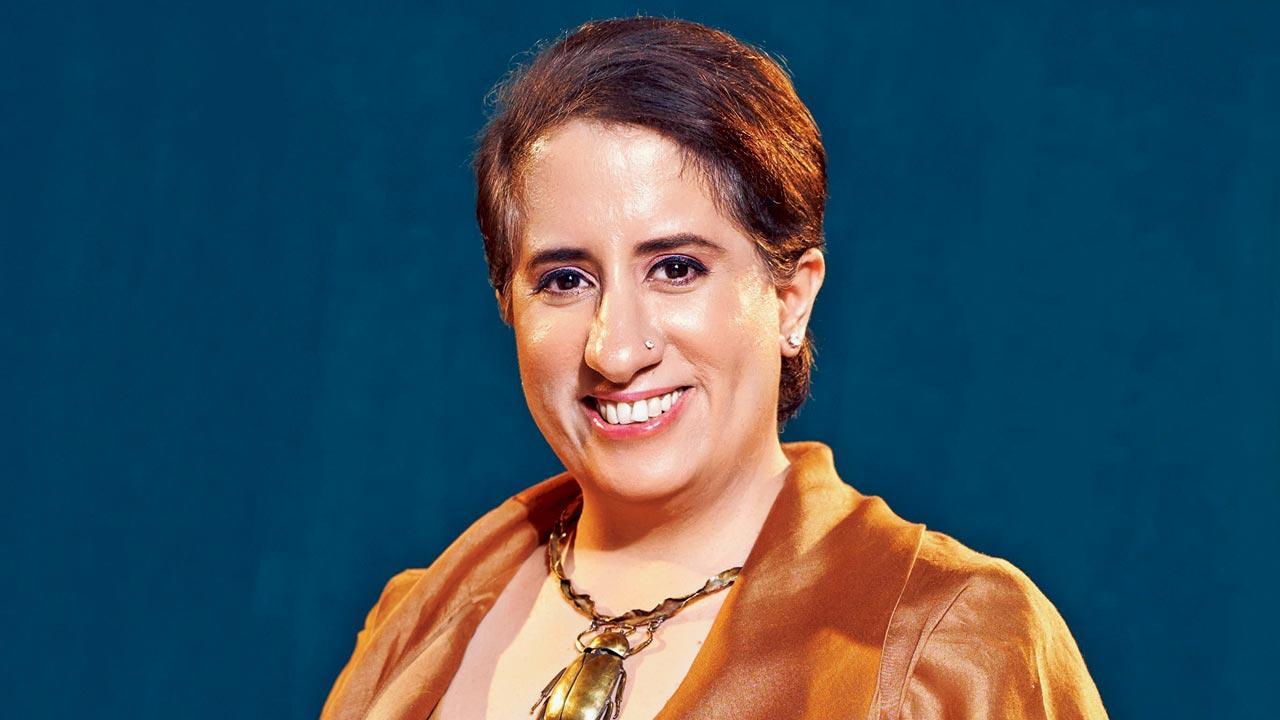
Guneet Monga (BOMBAY TIMES; June 12, 2026)
For those who’ve never been to Cannes, let me paint a picture with a familiar reference from home. Imagine a road by the beach in Juhu or Versova, Mumbai, a long stretch buzzing with activity. Now imagine that same road transformed into the epicentre of the global film industry for ten days. At Cannes, you walk constantly, between screenings, meetings, markets, and events. It’s a fitting metaphor for the journey itself: you walk for years, building relationships and credibility, so that one day your films can run.
That’s Cannes. It’s a place where filmmakers, producers, distributors, sales agents, festival programmers, financiers, and industry stalwarts from across the world converge in one compact space. You’re not just there to pitch your project; you’re there to shape its future, finding collaborators, planning its festival journey, discovering opportunities, and building connections that can last a lifetime.
Few places bring together so much cinematic ambition, talent, and possibility under one roof, or rather, along one strip of land.
This year marked my 15th year attending Cannes. As I walked through the city, I found myself revisiting the places that have defined my journey there, the cafes where deals were first discussed, the meeting spots that led to lasting collaborations, and the theatres that hosted premieres of films that went on to become milestones in Indian cinema, including The Lunchbox, Gangs Of Wasseypur, and Masaan.
For almost two decades in the film industry, I’ve lived by instinct, courage, and a lot of hustle. Finding my way through spaces I had once only dreamed of entering, and slowly realizing that sometimes the most powerful thing you can do is stop waiting for a seat at the table and build your own. That idea stayed with me for years. I’ve learned that talent was never the problem for women in cinema. Access was. Networks were. Exposure was.
Perhaps the most meaningful shift has been moving from navigating these rooms myself to helping others enter them. Through Women in Film India, we’ve been building bridges between Indian women filmmakers and the global film ecosystem, supporting three women at Cannes last year and four this year, creating opportunities for the kind of access and networks that can change the trajectory of a career.
This year, for the first time, two Indian women, out of just ten participants selected globally, were chosen to attend the impACT Lab at the Marché du Film in Cannes. Through a nationwide search conducted by Women in Film India, we were proud to support their journey to Cannes. In addition, two more Indian women producers were selected to participate in the prestigious Producers Network programme, further strengthening the presence of Indian women filmmakers and producers on one of the world’s most influential film industry platforms.
Not as guests, and definitely not as plus-ones. They walked in as scholars, selected through a national open call, evaluated by an industry jury, and sent there with the specific purpose of learning how the global film market actually works. They sat in rooms alongside filmmakers from across the world, participating in conversations that most Indian filmmakers never get access to at all.
That is the Cannes I come to every year. The one in the photographs is a different place entirely.
Over the years, I’ve realized that Cannes is often misunderstood as a place of screenings, red carpets, and parties. While all of that exists, the real value of Cannes lies elsewhere. It lies in the possibility of a conversation.
It is one of the few places in the world where every stakeholder in the film ecosystem comes together in one concentrated space. What matters is having the courage to walk up to someone, introduce yourself, share an idea, and begin a conversation. A single meeting can lead to a co-production partner, a festival strategy, financing support, international distribution, or a creative collaborator who stays with your project for years.
For independent filmmakers, especially, Cannes opens doors that may otherwise remain inaccessible. It is a place where films find advocates, where international partnerships are formed, and where entire futures can be shaped through a chance introduction. The connections you make there often outlast the festival itself and continue to influence your work for years to come.
The festival may command the headlines, but the market is where possibilities are created and where films truly begin their journey into the world.
India makes more films than almost any other country on earth, and yet our presence in these rooms remains disproportionately small. The reason is structural. Cannes operates on relationships built over years, on institutional backing, and on a deep understanding of how the global film ecosystem functions.
Think about what it takes to build that kind of presence. France has spent decades negotiating bilateral co-production treaties, funding international distribution, and maintaining a permanent infrastructure at Cannes that works on behalf of its filmmakers every single year.
If India is serious about strengthening its place in these global conversations, there is much to learn from countries that have approached international markets strategically. South Korea offers the clearest example. At this year’s Cannes, the Korean Film Council’s KO-PICK programme placed Korean producers directly within the Producers Network, backed by government funding, structured market access, and long-term international relationships. This is the result of decades of strategic investment, not just in producing films, but in ensuring those films have pathways to travel, find partners, and compete globally.
The lesson is not that India should replicate Korea’s model exactly, but that global success is rarely accidental. It is built through sustained participation, institutional support, and a commitment to creating opportunities for filmmakers beyond national borders. India’s support for independent cinema on the international stage is still evolving, but if we want our stories to travel further, we must invest not only in making films but also in building the networks, partnerships, and market presence that allow them to thrive internationally.
Co-productions fundamentally expand what is possible for a film. They unlock access to international financing, public funds, distribution networks, and long-term partnerships that are often unavailable to purely domestic productions. For a country with extraordinary stories and filmmaking talent, India’s next challenge is building the infrastructure around that talent, the market relationships, institutional support, and global presence that enable films to travel. Every producer who enters spaces like the impACT Lab or the Producers Network contributes to building that ecosystem, one conversation, partnership, and opportunity at a time.
The future of Indian cinema on the global stage will require filmmakers and producers to view Cannes not as a destination, but as an ongoing investment in their work. It means saving up to be there year after year, preparing months in advance, setting up meetings before boarding a flight, attending networking events with purpose, following up relentlessly, and understanding what international partners, programmers, and financiers are looking for rather than simply asking them to look at our projects. The opportunity is already there. The stories are certainly there. The talent has never been in question. What remains is our willingness as an industry to engage with the global ecosystem strategically, patiently, and collectively. If we do that consistently, the next decade of Indian cinema will not just be about taking films to the world, it will be about helping shape the future of world cinema itself.
And then there is the magic of Cannes that no schedule can account for. One of our scholars casually ran into Pedro Almodóvar. I found myself crossing paths with Pan Nalin, whom I had interned with nearly twenty years ago. That’s the thing about Cannes: every step of the way, you run into people you’ve admired for years, and people who may become part of your journey in the years ahead. The distance between a chance encounter and a life-changing opportunity can sometimes be just a few steps. At Cannes, you never really know what might happen next, and that’s precisely what keeps people coming back.
Neha Dhupia says casting director’s remark affected her for years
8:59 AM

HINDUSTAN TIMES (May 30, 2026)
Actor Neha Dhupia has opened up about the impact of harsh beauty standards in the entertainment industry, recalling how a casting director’s comment about her smile affected her confidence for nearly a decade.
Speaking on her show Double Date, which she hosts with husband and actor Angad Bedi, Neha shared the experience during a conversation with actors Huma Qureshi and Saqib Saleem.
Recalling an incident from the beginning of her career, Neha said, “Jab main ekdum nayi thi industry mein, I was going for an audition for a TV show. I was sitting in a casting director’s car and he looked at me and I smiled. He said, ‘You don’t smile. You look bad when you smile. You have more power on your face when you don’t smile.’”
The 45-year-old said the remark stayed with her for years. “After that I even won Miss India but you see my photos, I am not smiling. It affected me for 8-10 years before I recovered,” she said.
The actor, who won the Femina Miss India 2002 title and represented India at the Miss Universe 2002 pageant, also revealed that losing Miss Universe had impacted her confidence and that she took nearly eight to 10 months to recover emotionally.
During the conversation, Huma also spoke about dealing with social media trolling after her second film, Gangs Of Wasseypur - Part 2 (2012). She said the criticism pushed her into a shell and eventually led her to seek therapy and begin journalling.
I don't even have 8 hit films in 32 years. Doesn't my being here negate this language of trade and box office?-Manoj Bajpayee
10:28 AM

Anshul Chaturvedi (BOMBAY TIMES; March 31, 2026)
Manoj Bajpayee was in Delhi for a session at the IFFD (International Film Festival of Delhi). When an alumnus of Ramjas College, talks about cinema, in Delhi, a throwback is inevitable – the journey to come to Delhi to learn acting from his village in Bihar at 18, a lifetime back. The struggle, the uncertainty, and the 32 long years spent in an industry, that he strongly feels, is too star-centric. That industry, along with a media and the audience that is too star-struck, just does not give many talented actors their due in time, he rues. Not wistfully, but angrily. Anger about the years lost before they are given their due. About the discrepancy in money and stature – ‘second-class citizens’, he calls them. About the fixation of evaluating movies, and actors, basis their box office numbers. Read on to see the otherwise gentle Family Man in unchecked Shool mode:
Back in 2012, when you were in Cannes for the premiere of Gangs of Wasseypur, you had told me, ‘Indian media hamari baat nahi karta hai. Aaj ka media baat karta hai ki stars ne kaun se kapde pehne.’ You and Nawazuddin were saying that the stage that star kids reach with their debut – multicrore films, producers chasing you – you don’t reach that in many many years. I had asked you, 'aapko nahi lagta samay aapke haath se nikla ja raha hai?’ To which you had said something that has stayed with me:
‘Badi lambi ladai hai hamare liye - khud se bhi hoti hai, poora system lad raha hota hai. Ya toh khaane ko le kar jaddojahad hai, ya jo logon ke perceptions ban jaate hain hamare baare mein, usko le kar jaddojahad hai, hum apni jagah banana chahte hain, uski jaddojahad hai. A lot of our energy, which should have gone to our craft, instead goes into these fights. By the time people want to use your talent in the right way, tab tak bada late ho chuka hota hai. Like I am a very desperate man right now. I want to work with all the fantastic filmmakers. Mujhe lagta hai, mera samay nikla jaa rahaa hai, jaldi karo, jaldi karo...Yeh samay kyun nikla? Kyunki hum bina matlab ke jaddojahad me phanse reh gaye.’
How do you feel about that sentiment now?
I am at a stage when a lot of roles are physically not possible for me. Or I will not be able to do a mentally exhausting role - iss dar se ki kya main isko survive kar paunga? Kya koi ghatna toh nahi ghat jayegi. Kanu Behl hamare Hindustan ka ek bahut hi pahuncha hua filmmaker hai. Zyada log usko tavajjo nahi dete hain kyunki Rs 1,000 crore ki film nahi banayi hai usne. Lekin uss generation mein bahut hi kam brilliant, international level ka jise kahein, woh director hai Kanu Behl. I did Despatch (2024) with him, jo mujhe lagta hai meri behtareen film aur behtareen performance mein se hai. After that, he came to me with another story, but I told him, 'Kanu, kaash ki main 30-40 ki umr mein hota, toh teri film zaroor karta'. Kyunki Kanu ka apna ek process hai jismein aadmi bahut thak jata hai, mentally aur physically. Bahut demanding hoti hai uski direction. Mujhe afsos iss baat ka hai ki main uss umr mein nahi hoon ki main Kanu Behl ki film kar paoon. Late isliye hua. Late hua hai. Aur bahut late hua hai.
Uska karan sabse bada ye raha hai ki media aur darshak dono hi busy rahe stars ko celebrate karne mein. They don't care that a very talented Nawazuddin Siddiqui has been 15 years late in his career. No one cares that it's late for a Pankaj Tripathi. They got the respect and recognition so late - by then they can't do a lot of roles. But the good thing is that at least jab bhi woh aaye - aapne unke talent ko pehchana. Lekin, yakeen maaniye late ho gaya. Agar woh 25 saal ki umr mein ya 30 saal ki umr mein unko woh pehchan ya maanyata mili hoti toh bahut saare roles thay joh woh kar sakte thay. Ab uss age category mein woh log rahe nahin.
Hamare Hindustan mein talent ko kabhi celebrate hi nahi kiya gaya. If you go on social media now, you'll see that the films that are doing well - no one is talking about the performances in them, or the director's brilliant craft. What are we talking about? Today the film crossed Rs 100 crore - kal 150 ho jayega, koi dusra kehta hai nahi, 200 ho jayega. Films are celebrated as numbers or that actor's hairstyle was so good or who wore which designer. Hum log filmon ke baare mein ya kisi bhi kaam ko lekar ke - hum na talent ki baat karte hain, na craft ki baat karte hain. Humne apne aap ko ek darshak ke taur pe - ek media ke taur pe usi daayre mein rakha hai.
If box office numbers are so amazing that they decide everything... I've been in this industry for 32 years. I don't even have 8 hit films in these 32 years. So how am I here? Doesn't my being here negate this language of trade and box office? 8 filmein bhi hit nahi hai meri - Satya se le kar ke ab tak. Toh box office number kitne valid hote hain? Kahin na kahin darshakon ko ya filmmakers ko Manoj Bajpayee chahiye tha. Unke karan maine unki filmon mein kaam kiya.
Anurag Kashyap didn't take me in Gangs Of Wasseypur after seeing box office numbers. Meri kaabiliyat dekh ke liya tha usne. Ram Gopal Verma ke paas jab mujhe Satya mili thi tab dar-dar bhatakne wala ek actor tha main. Kabhi kisi serial ke episode mein dikh jata tha ya kisi actor ya producer ke darwaze pe dikhta tha.
The way we have started celebrating box office numbers - it not a sign of a good film industry. If I give a story, a script to a trade journalist and ask kitne hazar crore ka ya kitne 100 crore ka collection ye film karegi? No one will be able to tell. Ye sab batane lagte hain jab film lag jati hai. Iska matlab ye hai ki sab mithya hai. Ye sab bakwas hai. When the audience starts changing - the films will start changing.
So if a film is recognized and celebrated based on how much money it makes, an artiste’s stature is also recognized by how much money they command. Back then, you had shared that actors like you - the people you named earlier - the problem you face is that when you are cast in a big budget film, you get a side role, so you don't get big money. And when films cast you in the lead role, the people making it do not have big money. So either way - paisa nahi aata. Is that still the same or has anything changed?
Nothing has changed. Ek hero ne bahut achhi baat mujhse kahi thi - main naam nahi lunga. Maine kaha - bhai, aap bahut secure actor ho, yaar. Toh unhone kaha tha - yaar, bahut seedhi si baat hai. Tu bahut badhiya kaam kar raha hai. Lekin agar film hit ho gayi toh tere Rs 400 badhenge aur mere Rs 4 lakh badhenge. Toh aap samajh sakte hain hum kahan par hain?
Isi system se ladai karte hue mujhe itne saal ho gaye hain. I say it with a lot of pride that I got a lot of films, big films, but I said no to them because they treated those doing secondary roles as secondary citizens. Whether it is about the level of amenities or the level of pay.
That was my fight. That's why I tried that either I don't say yes to multi-starrer or if I do them, I make sure that the amenities that the others are getting, I also get the same. Self-respecting aadmi hoon.
In this tale of your struggle, I think a defining moment was the film 1971. You had told me earlier: 'Isko dekhne ke baad Anurag Kashyap ne aur mere bahut saare doston ne kaha ki this was the best film on the Army they had seen. Aur uske baad na uss film ki tickets sell hoti hain, na uss ko kisi awards function mein koi tarjeem di jaati hai toh bahut... I wouldn't say it broke me, but yes, it taught me a big lesson. Ki yaar agar ab kuch bhi karna pade, naachna pade Juhu Circle pe jaa kar toh woh bhi karenge, humko compete toh karna hi padega... Humari jaisi film ki koi jaankari nahi milti hai public ko, aur nah hi woh jankari lene ke liye kahi jayenge.'
It is very difficult for small films to compete in this industry. Chhoti filmein achha bhi kar rahi hoti hain toh unke shows ghata diye jaate hain. Meri apni film - Aligarh ho, Bhonsle ho, Gali Guleiyan ho - main khud dekhne nahi jaunga subah 9 baje. Toh main audience se kaise expect karunga ki jo exhibitor ne time diya hai 9 baje ka meri chhoti si film ko - woh audience dekhne jayegi?
Ye jo pura system hai - it is so flawed. And it is so dominated by hierarchy - ki ismein compete karna bahut mushkil kaam hota hai. Lekin mere bahut saare aise actors dost hain - unko jab main ye kehta hoon ki tum ye sab ladai lado toh kehte hain ki sir, hum log aapki terah nahi hain na.
Lekin main isliye ladta hoon kyunki main gaon se aaya tha. Aur main saara samaan le kar aaya tha toh ab wapis ja bhi nahi sakta hoon. I have no other option in my mind, but to fight - fight to survive, fight to showcase my talent.
Post COVID - ye pura system jo hai woh hil gaya hai, uske foundation hil gaye hain, power centre hil gaya hai industry mein.
Coming back to your first thing - lekin hamare liye toh late ho gaya na! Lekin saath hi saath main ye dekhta hoon ki kitne saare talent iss industry ne barbaad kar diye - some of them became alcoholic, some of them ended their lives.
When I look at all of that - I feel blessed and grateful ki at least upar wale ne, darshakon ne aur kuch ek directors ne mujhe woh jagah di jiska phal mujhe mil raha hai. Mujhe ek position diya - so, I feel grateful about it.
Talking about 1971, uski journey jo hai bahut hi inspiring hai. When the film released, the distributor couldn't even put up a poster outside any cinema hall. Aur mera manana hai, ya aap Anurag Kashyap se ja kar bhi puchhiye, jin logon ne bhi film dekhi thi uss samay - unhone kaha tha ye Hindustan mein banne wali best Army film hai.
But the film met a terrible fate. When we went to promote it, we were told there's no one in the theatre, so if you sell the tickets, people might buy.
If you are in this profession, toh haar maan kar kya kar loge? Kaun aap ke sar pe haath rakhega? Haar maan liya toh iska matlab jaiye phir!
But that is not the option. The option is to be here, and to keep fighting, to keep fighting to do good work.
That fight was, however, difficult for your director right?
After 1971, the film's director (Amrit Sagar) went into depression. When the National Award submission was announced, I was at a party in Delhi. An official told me Manoj ji aapki koi film hai toh bhej do submission ke liye. When I called the director, he said, 'mujhse aage se aise mazak mat karna yaar!' Daant diya usne mujhe woh itne depression mein tha. Maine uske father ko keh kar ke film ko submit karaya. When 1971 got two National Awards (Best Film and Best Audiography in 2007), maine apne director ko phone kiya toh woh rone laga gusse mein - ki tu mere saath itna bura mazak kyun kar raha hai. Sochiye aap kitna toot chuka tha woh!
During the pandemic, he called and said, '1971 ko toh koi dekh nahi paya. Isko hum log YouTube par daal de?' Usne creative bheja, maine khud daala, usko promote kiya. It became the first digital blockbuster (in India). 50 million views in no time. No time.
That proves that there is a lacuna in the system. There is a flaw in the system where we don't celebrate, we don't promote good work. We don't.
Personal level pe, individual level pe, media ka ek-ek aadmi, audience ka ek-ek jagrook aadmi decide karta hai toh woh bahut kuch badal sakta hai.
Akele actor aur creative log nahi badal sakte hain. Woh ek hi cheez kar sakte hain - tikey rahein.
Lekin, main aapk bataoon hum yahan tike hue hain. With or without your support, with or without your best wishes - hum tike hue hain. I am personally here - even after 32 years. I am here - working, fighting and fighting to do the work - all the time.
It’s no longer possible to make films like Gangs Of Wasseypur fearlessly today-Anurag Kashyap
2:24 PM

Yemen S (BOMBAY TIMES; February 6, 2026)
Filmmaker and actor Anurag Kashyap says his biggest fear today is not being able to make the kind of cinema he truly believes in. Speaking at the 17th Bengaluru International Film Festival (BIFFES) 2026 during the Fearless Filmmaking session on Saturday, Anurag said films such as Gangs Of Wasseypur and Mukkabaaz would not be made in the current climate.
“Gangs Of Wasseypur or Mukkabaaz would not have been made today because of the themes I chose to tell those stories with. And even if they were released, they would be heavily censored,” he said.
Anurag also noted that several honest filmmakers are attempting to find ways around censorship. “India is still better, and that gives me hope. If filmmakers can make cinema in Russia and China, we can too,” he said in conversation with critic and writer Baradwaj Rangan. “Movies that spark important conversations will be made in India at some point. We just need to wait,” he said.
‘The OTT format has destroyed the way cinema is experienced’
Cinema, Anurag said, has always been meant for the big screen. However, with the rise of OTT platforms and the convenience they offer, audiences are increasingly consuming films on smaller devices. “When I made Nishaanchi, I envisioned it entirely for the big screen. But times have changed. People now watch films at their convenience. The format has destroyed the way cinema is experienced,” he said.
Emphasizing the importance of the theatrical experience, he added, “The joy of cinema is watching it on a big screen. You can’t watch Mera Naam Joker or Sholay on a phone. These films are made for the theatre, and it’s a disgrace if they’re watched otherwise.”
‘Reaction to Toxic trailer was blown out of proportion due to social media’s controlled narrative’
Responding to the backlash around the trailer of the upcoming Kannada film Toxic, Kashyap said he enjoyed it and felt the reaction on social media was exaggerated.
“When a woman is in control of her sexuality and enjoys it on screen, it becomes a problem. But when male actors do the same, no one says anything,” he said, adding, “Social media controls the narrative, and this was blown out of proportion.”
Chitrangda Singh opens up on turning down Gangs Of Wasseypur, Tanu Weds Manu, Chalte Chalte
9:55 AM

Vishakha Pandit (HINDUSTAN TIMES; December 22, 2025)
Actor Chitrangda Singh who is loved by critics and audiences alike for her acting chops turned down films that went on to become successful at the box office. In a conversation with HT City, she says she listened to too many people and lost out on many good films. Including a Shah Rukh Khan-starrer.
The 49-year-old says, “I made some really bad mistakes. I said no to (filmmaker) Anurag Kashyap for the role Richa Chadha portrayed in Gangs Of Wasseypur (2012)... (Filmmaker) Aanand L Rai offered me the role Kangana Ranaut did in Tanu Weds Manu (2011), and I said no. At that time, I listened to too many people and made some bad choices. You think other people know better, but that’s not always true.”
Chitrangda also recalls missing out on Chalte Chalte (2003) opposite Shah Rukh Khan, not because she declined it, but because she had stepped away from work and changed her phone number: “SRK told me himself when we were shooting an ad together that they were looking for my number. I had left work for seven or eight years. That’s when it really hits you.”
Recently seen in Raat Akeli Hai: The Bansal Murders, she adds that visibility remains a constant challenge in the industry. “It has a very short memory. If you’re not around, people forget, and you have to keep reminding them of what you’re capable of,” she shares.
I’ve been shooting so much in Kohima that Nagaland government should give me a house-Jaideep Ahlawat
10:00 AM
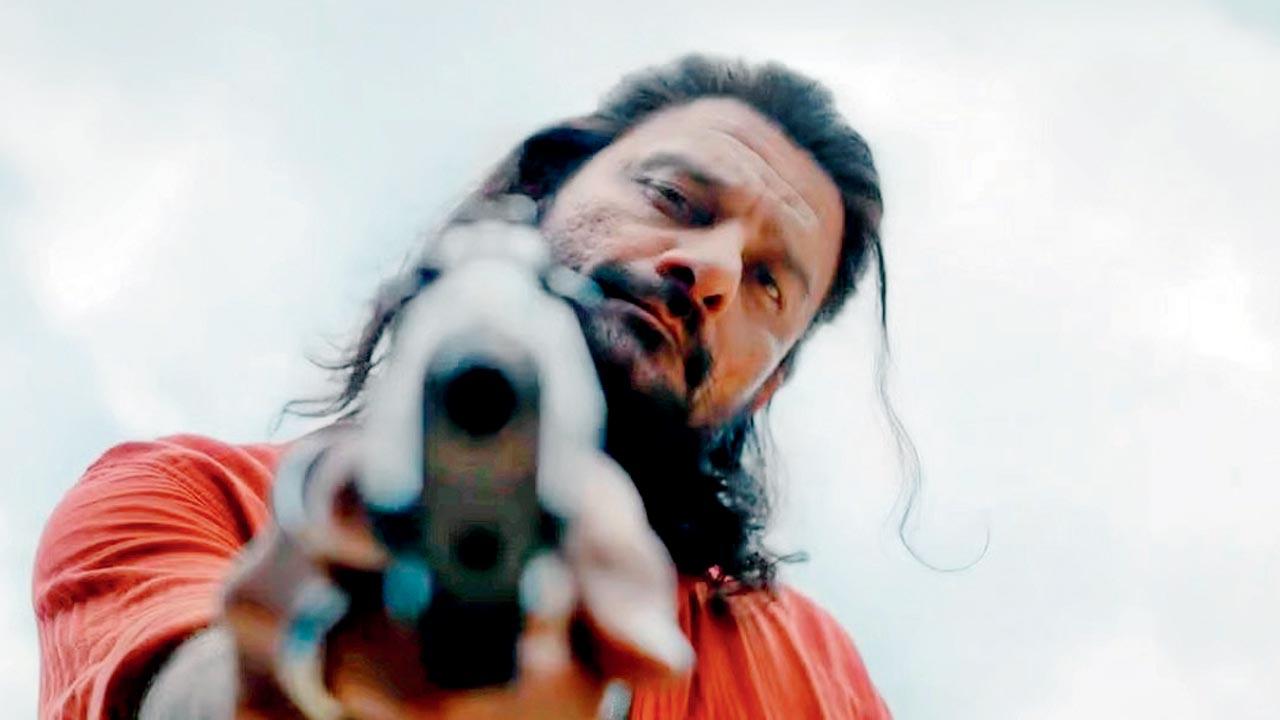
Jaideep Ahlawat discusses how he relished playing the antagonist in ‘The Family Man 3’ and returning to Nagaland after ‘Paatal Lok 2’
Mohar Basu (MID-DAY; November 27, 2025)
Nagaland was a silent witness to Jaideep Ahlawat when he transformed into the lawman Hathiram Chaudhary for the second season of the acclaimed Paatal Lok. For The Family Man 3, the actor returned to the state, only this time his character was firmly on the other side of the law.
“On day one, I remember thinking that my character is nothing like Hathiram Chaudhary. How do you process that? Then I realised that you don’t; you just enjoy both sides,” begins Ahlawat, who plays Rukma, the antagonist to Manoj Bajpayee’s Srikant Tiwari in the spy thriller.
The state and its politics have been a big part of Paatal Lok as well as the Raj Nidimoru and Krishna DK creation. What’s different, Ahlawat reflects, is his character’s perspective.
“There is a spot where I was standing as Hathiram once, and then later as Rukma. It’s the same place, two different men, but nobody can see [the similarity] because the art direction has changed so much. It’s an interesting feeling of being in the same place, but living a completely different life,” he says philosophically, before joking, “I’ve been shooting so much in Kohima that the Nagaland government should give me a house there!”
House or not, Ahlawat is certainly being rewarded. The actor’s portrayal of a drug smuggler and hitman in the Prime Video series is being widely praised. He shares, “I finally got the chance to let loose without worrying about conscience or consequences. It felt liberating in a twisted way to play someone like Rukma.”
The cherry on top was his reunion with Bajpayee, over a decade after they shared screen space in Chittagong (2012) and Gangs Of Wasseypur (2012). Tell him that their on-screen face-off was the most anticipated element of the new season, and he says it’s something he looked forward to as well. “Working with Manoj is like going back in time. There is a discipline that he brings. Doing an action scene together after all these years was a thrill. There is the greed to work with him, and this show is a dream come true!”
Ask Jaideep Ahlawat his most memorable sequence from the series, and he points to the elaborate action set-piece in the first episode — a gripping chase sequence between Manoj Bajpayee and him. “Manoj was driving the car, and I was riding the motorcycle [chasing him]. The camera didn’t have to cheat; it travelled from him all the way to me. There were no stuntmen involved. That’s my most memorable scene in this season,” he smiles.
Mujhe Gangs Of Wasseypur se sakht nafrat hai-Anurag Kashyap
10:56 AM

HINDUSTAN TIMES (November 3, 2025)
Filmmaker Anurag Kashyap has stunned fans with his blunt take on his cult classic Gangs Of Wasseypur. Speaking on a podcast with Digital Documentary, he said, “Mujhe Wasseypur se sakht nafrat hai. Jab bhi koi aadmi bolta hai na, ‘Sir Wasseypur’, mann karta hai joota utarkar maarun.”
The 53-year-old explained that his frustration stems not from the film but from the audience’s apathy during its release. “Jab Wasseypur release hui, tab toh tumne dekhi nahin. Chaar din chali thi theatre mein. Phir cinema hall mein Ek Tha Tiger (2012) aa gayi. Chaar din mein uss picture ne Rs. 22 crore kamaye. Studio usko flop bolta hai, aur uss film ko lekar aap chahte ho ki main dobara banaun? Kyun banaun main?” he said, adding that if viewers had supported such films in theatres, “Mera ghar usse chal raha hota.”
Released in two parts in 2012, Gangs Of Wasseypur earned a cult status despite an underwhelming box office run.
I bet people are envious that Martin Scorsese presented Neeraj Ghaywan's film-Richa Chadha
10:08 AM

Renuka Vyavahare (BOMBAY TIMES; October 4, 2025)
In July this year, Masaan celebrated a decade since its release. Richa Chadha reflects on one of her most defining roles and shares insights into what makes the film still so poignant and relevant. Masaan also marked the powerful directorial debut of Neeraj Ghaywan and beyond Richa, featured compelling performances by Shweta Tripathi & Vicky Kaushal. Excerpts from a chat with Richa…
Masaan was a landmark film of your career. What does this film mean to you, personally and professionally?
Even though Gangs Of Wasseypur gave me a breakthrough, it was Masaan that opened my eyes to the world. It gave me credibility. A film is forever. And I am so grateful that I have this in my filmography as early work. Also, it was the time of great innocence because I met Neeraj as the script supervisor on Gangs of Wasseypur. Varun Grover was the lyricist for Oye Lucky! Lucky Oye!. I knew these creators would become conscience keepers of the film business. But so sweet that we all began this way.
Neeraj Ghaywan’s stories often dig deeper and work as a social commentary on societal disparities. What was it like to work with him?
Neeraj is self-aware, conscientious, honest and compassionate. Every day on the film was a new learning. I wish I had the wisdom then that I have today, but even friendship with Neeraj is something that leaves you richer with more meaning, like an education of some kind. Look at Homebound (India’s official entry for the Best International Feature Film category at the Academy Awards). I bet people are envious that Martin Scorsese presented his film! Wow!
Vicky Kaushal started his career in a way with this film, what were your first thoughts on himas a co-actor?
I remember Vicky not just as a co-actor, but also as an assistant director on Gangs Of Wasseypur. He was always charming, very driven and hardworking.
There’s a lot of talk on how AI can be used to alter endings of movies while re-releasing them. It happened with Raanjhanaa. Varun Grover shared a funny video on how some believed the ending of Masaan could be happier. What are your thoughts on this?
I think Masaan was as happy as it could be. We are living in a world where we rush to repress our natural instincts and feelings. So, what if the ending of a film makes you feel sad? Are you hoping to go through life without feeling sad, angry, hopeless or frustrated ever? Sorry, I am not delusional. I think using AI to alter ends or beginnings is how some businesspeople think they are proving that they’ve become savvy with tech.
What makes Masaan so relevant even today?
Masaan is still relevant because it reflects the hypocrisy of a system that seeks to delegitimize and shame the youth for healthy curiosity about coitus, in the most populous country of the world. It showcases the hypocrisy of a society that hates a majority of its own people, based on their assumptions about a belief system from thousands of years ago.
Sushant Singh Rajput agreed to play the lead; we had made an announcement too-Anurag Kashyap
9:28 AM

Having found his Nishaanchi hero after a long wait of over eight years, Anurag Kashyap shares that he advised Aaishvary Thackeray against doing other films until his launch with the crime drama
Upala KBR (MID-DAY; September 17, 2025)
If the universe had listened to Anurag Kashyap’s wish, Nishaanchi would have been released eight years ago with late Sushant Singh Rajput in the lead. But each film has its destiny, and the upcoming crime drama was destined for Aaishvary Thackeray.
The filmmaker recalls, “Sushant Singh Rajput agreed to play the lead, and we had made an announcement too. But then he changed his mind as he signed two big commercial films — Drive [2019] and Dil Bechara [2020]. After that, I met other actors and they all wanted to do bigger movies. Then I decided to wait for a newcomer, who would be good enough to pull off this role.”
Kashyap’s eight-year wait paid off. Today, he is launching Thackeray and Vedika Pinto with Nishaanchi, which tells the story of twins Babloo and Dabloo who have contrasting life values. “If I hadn’t found Aaishvary, I’d still be sitting on this script,” says the director, adding that the debutant’s showreel left him impressed.
“In his showreel, Aaishvary did the most difficult monologues, including one of Manoj Bajpayee’s from Shool [1999]. When I cast Aaishvary and Vedika, I told their parents that if they’re doing this film, they cannot be doing anything else. They kept getting offers, but they said no to everything and trusted me. It’s difficult to mount a film like Nishaanchi if the newcomers take up another project and that doesn’t turn out to be good enough. It’s like what Aditya Chopra did with Ahaan Panday.”
As soon as Nishaanchi’s trailer dropped online, Kashyap’s fans compared it to Gangs Of Wasseypur (2012). The filmmaker says the crime drama is his attempt to go beyond the 2012 offering.
“After Wasseypur, everybody kept offering me the same thing. I wanted to step away from that. There’s more to North India than Wasseypur and gaalis. With Nishaanchi, I made a family drama with seeti-maar dialogues, like a Deewar [1975] or Trishul [1978], rather than a gangster film.”
Bal Thackrey's grandson Aaishvary's debut film Nishaanchi has a sequel too; Anurag Kashyap has already shot both parts
9:35 AM
Upala KBR (MID-DAY; August 11, 2025)
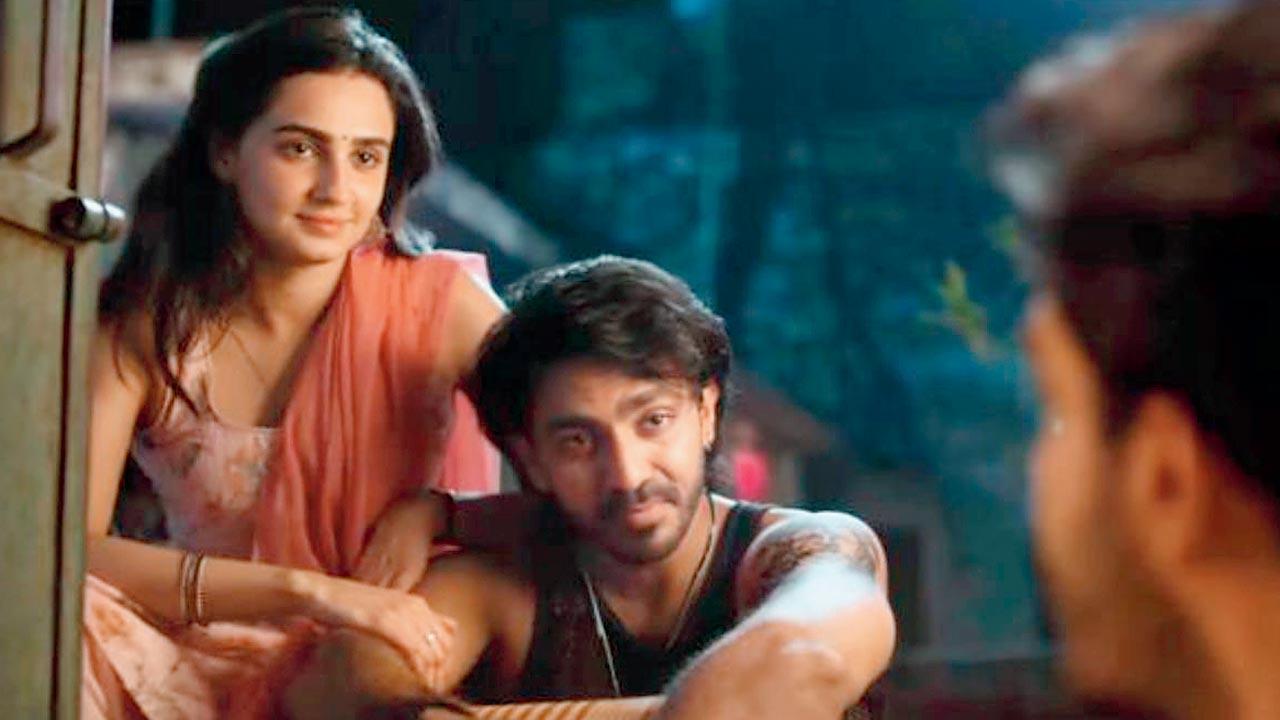
When the teaser of Nishaanchi dropped online last week, Anurag Kashyap’s fans enthusiastically noted that the gangster drama reminded them of Gangs Of Wasseypur (2012). Well, it looks like the film shares another similarity with the cult movie besides the genre. Sources tell us that Kashyap has mounted Nishaanchi — which marks the Bollywood debut of late Bal Thackeray’s grandson, Aaishvary Thackeray — as a two-part film. Not just that, the filmmaker shot the second instalment along with the first part in Lucknow earlier this year.
With Aaishvary in double roles and Vedika Pinto as the leading lady, Nishaanchi is slated to hit theatres on September 19. The sequel is expected to be big-screen bound in the coming months.
A source reveals, “The movie sees Aaishvary in double role of Babloo and Dabloo. While the first part delves into how they are forced into crime for money, the sequel will depict how the three principal characters — Babloo, Dabloo, and Rinku — undergo a transformation of sorts. The twin brothers’ contrasting personalities will change dramatically, and Rinku will become a gangster. Nishaanchi 2 will begin where the first part ends.”
Also starring Mohammed Zeeshan Ayyub and Kumud Mishra, Nishaanchi is set in the hinterlands of north India and revolves around the complex relationship between the twins.
“Like he did with Gangs Of Wasseypur, Anurag shot this as one long movie, but divided into two parts for the theatrical release,” adds the source.
The world wants to see how India lives, moves and dances-Guneet Monga
9:20 AM
Shreya Varanasi (BOMBAY TIMES; July 31, 2025)
When The Elephant Whisperers made history at the Oscars 2023, it wasn’t just a proud moment for Guneet Monga — it was a milestone for Indian storytelling. Sharing the spotlight with Naatu Naatu’s big win that same night, Guneet remembers being awed by the impact of Telugu cinema on the global stage.
In a chat with Hyderabad Times, the producer, who was in town for the ‘Golden Lens’ symposium hosted by YFLO, opened up about her journey, the growing resonance of local stories, and her admiration for Tollywood. “I’m a big fan and would love to produce a Telugu film someday, if the stars align,” she said. “I’m always thinking about how I can add value to a project, and if there’s a meaningful way to contribute, I’d be more than happy to be involved.”
‘RRR is one of the best examples of how local stories resonate globally’
For Guneet, the success of Indian films on the world stage boils down to authenticity. “RRR is one of the best examples of how a deeply local story can have global resonance. Whether it’s Baahubali or RRR, our culture, language, and music captivate audiences around the world.”
It’s not just the big, grand spectacles that travel well. Films like The Lunchbox, Masaan, and The Elephant Whisperers also struck a chord globally because they’re rooted, real, and unmistakably Indian, she reckons. “These are the stories the world wants. People may not travel here, but they’re deeply curious about India, our culture, our people, and even our dances.”
‘My memories of Hyderabad are all about great food and vibrant places’
Guneet finds something enchanting about Hyderabad every time she visits. “My memories of Hyderabad are all about great food and vibrant places. And what really fascinates me is the number of lehenga stores! I always find myself looking at those big wedding wear storefronts, they’re everywhere.” There’s one Hyderabad staple she’s looking to discover more of though. “A really good biryani! I don’t have a go-to spot yet, but I’d love to try one.”
‘Many films have left an impact on me’
Whether it’s the timeless charm of Bollywood or the quiet brilliance of international indies, Guneet draws inspiration from across the spectrum. “My first memory of cinema was watching Dilwale Dulhania Le Jayenge. I was completely obsessed with the love story and the romance,” she recalls, adding, “And then I remember watching Boyhood on a flight, it completely blew my mind. I couldn’t stop thinking about how someone could film for so many years (the film was shot across 12 years from 2002–2013) and piece it together. That kind of ambitious storytelling inspires me.”
‘Portrayal of women is something I deeply care about’
Known for championing strong women-centric narratives, Guneet believes the strength of a woman’s portrayal lies in thoughtful writing, not just lead roles. “One of the films I’m proud to have produced is Soorarai Pottru. Though it was Suriya sir’s film, Aparna Balamurali’s character sparked meaningful conversation,” she says, adding, “In The Elephant Whisperers, Bellie stood out so beautifully, just like Huma Qureshi did in Gangs Of Wasseypur.”
For her, what matters most is depth. “Even submissive characters must have redemption. The portrayal of women is something I deeply care about as a producer.”
‘I fall in love with scripts that move or challenge me’
Reflecting on her journey post-Oscar, Guneet said the recognition has opened doors and pushed her to dream bigger. “It expanded what’s possible for me as a filmmaker,” she said. But for her, it’s never about chasing a trend. “I fall in love with scripts that move or challenge me,” she added. Among the stories she’s hoping to bring to the screen someday is a full-fledged female-led action film. “I think we’re ready for that, and I’d love to be part of making it happen.”
‘We’re building a space for women in cinema to connect, be heard & create change’
At the ‘Golden Lens’ symposium hosted by YFLO, Guneet struck a chord with an audience of over 200 with a nearly two-hour-long conversation as candidly she spoke about the highs and heartbreaks of her journey. “Life gave me 10 ‘Nos’ before a single ‘Yes’, but I chose to celebrate every ‘No.’ Because each one took me a step closer,” she said, drawing applause.
She also spoke passionately about the Women in Film – India Chapter, part of the global WIF network. “Less than 10% of Indian film directors are women. That reality deeply concerns me,” she said, adding, “Through this chapter, we want to build a space where women in cinema can connect, be heard, and create lasting change.”
Unlike Bollywood, South films cast ‘actors’ in Rs. 200 cr movies-Nawazuddin Siddiqui
11:14 AM
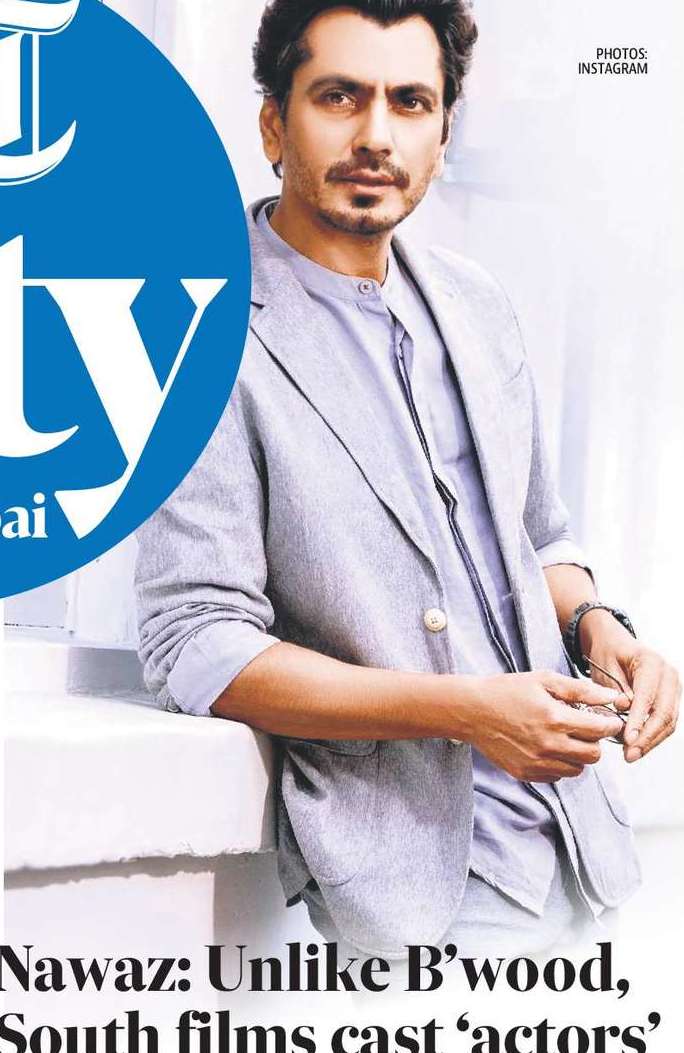
Mugdha Kapoor (HINDUSTAN TIMES; May 10, 2025)
Actor Nawazuddin Siddiqui has blamed Bollywood’s star culture for audiences’ declining interest in watching films in theatres. “There are two kinds of actors — industry actors and public actors. Industry actors ko public itna nahin chahti, but unki films aapke ghar ke darwaaze mein lagi hoti hai. Aapko majboori mein dekhna padta hai,” says Nawazuddin, whose film Costao premiered on OTT recently.
He adds, “People want to see public actors on screen. Be it Om (Puri) sahab, Irrfan bhai, Manoj Bajpayee ya Naseeruddin Shah, inko duniya dekhna chahti hain, par inki films itne bade scale mein release nahin hoti.”
The 50-year-old also points out the difference between Bollywood and the South film industries: “In the South industry, the films that make Rs. 500 crore or Rs. 1,000 crore at the box office features actors. In Bollywood, jinko lekar Rs. 100 crore, Rs. 200 crore ki movies banayi jaati hain, woh South ke talent se kahin match hi nahin karti. Unko mor (peacock) ki tarah sajaaya jaata hai gaanon, choreography aur action ke saath, uske baad bhi [hit ki] guarantee nahin hain.”
On being part of Gangs Of Wasseypur 3: “Film banegi hi nahin. Woh director (Anurag Kashyap) hi nahin chahta. The good thing about him is that he’s not stuck in nostalgia.”
Has he been approached for Bajrangi Bhaijaan 2? “I don’t have any information on a sequel being made. It depends on them (the makers). I cannot be ‘Main first mein tha toh mujhe bhi lo’. It doesn’t work like that. Agar unki zaroorat hogi, toh hum haazir ho jayenge.”
When asked if his 14-year-old daughter Shora Siddiqui wants to enter the film industry, Nawazuddin says, “Abhi toh nahin, she is completing her studies now. But she is interested in acting.” So, how does he plan to support her? “Usko training aur workshop karwaunga,” he shares.
Has anyone made a film worth Rs. 20-30 cr with Irrfan Khan, Manoj Bajpayee, Naseeruddin Shah?-Nawazuddin Siddiqui
10:37 AM
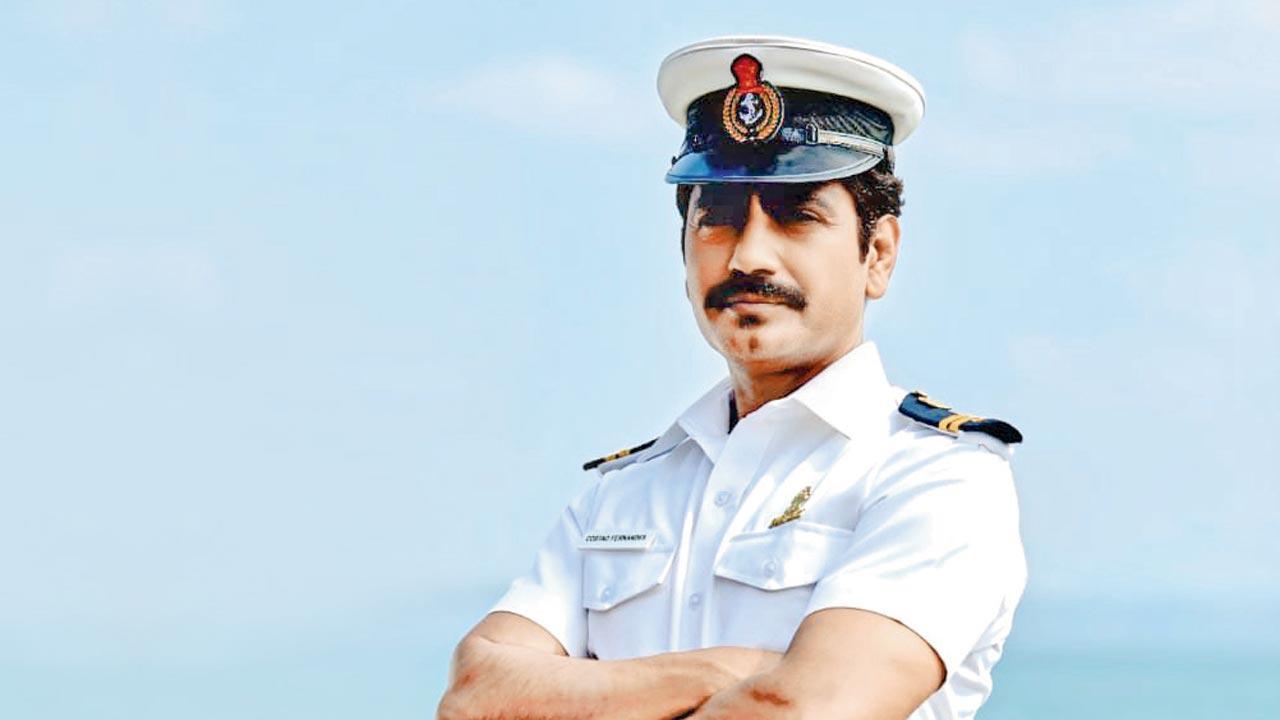
As Nawazuddin Siddiqui brings Costao Fernandes’s fight to life, he reflects on how the industry overlooks real performers for manufactured ideals
Priyanka Sharma (MID-DAY; April 28, 2025)
There were many inspiring qualities of customs officer Costao Fernandes that compelled Nawazuddin Siddiqui to come aboard his biopic. But what got him more excited was the way Fernandes laughed. “He laughs a lot, but there’s still something hidden behind his laughter. That was very interesting to explore,” Siddiqui tells us. The Zee5 biopic drama, directed by Sejal Shah, follows a gold smuggling case that Fernandes fought against in the 1990s. Siddiqui was awed by the officer’s courage and moved by his suffering when standing against a corrupt system.
Costao is an addition to his 26-year glorious filmography as an actor. As we remind him of the number of years he has been in the industry, he smiles and says, “The more I am experienced, the more I am scared thinking about acting because there are so many things to be explored. There could be 1,000 ways to perform a scene and the process of finding them is what I feel is interesting.”
Last month, at the Chandigarh Film Festival, Siddiqui had spoken about how he used to be annoyed at being called “unconventionally looking”. Even his NSD (National School of Drama) batchmate, lyricist Swanand Kirkire, in an interview, mentioned how the industry was cruel to him as he didn’t fit their definition of a hero. Does the actor consider it the industry’s failure that it doesn’t trust actors who don’t fit its stereotype of how a hero should look?
“But those, whom you are trusting, what are they doing? We are seeing what’s happening to the films that are coming nowadays with new actors,” he shoots back, before continuing, “The problem is, whether it was Irrfan [Khan] bhai, or Manoj [Bajpayee], Naseeruddin [Shah] saab or Om Puri saab, has anyone ever made a film with them worth Rs. 20-30 crore? Today, you shower praise at them and call them great actors, but no one ever made a big film with them. It happens only here. Internationally, they don’t differentiate between actors. They just cast a good actor. Here, we have categories like actor, hero, star, superstar. We have such great actors among us, you will spot them in movies or series in smaller roles. They aren’t supporting actors. They are great actors. Yet no one thought of making a film with them. And maybe no one ever will. We will be gone one day, but this will go on.”
Gangs of Wasseypur 3?
When we mention that director Anurag Kashyap got offers recently to make the third edition of Gangs Of Wasseypur, Nawazuddin Siddiqui promptly tells us, “Anurag won’t make it. Neither will I act in it. I get such offers so much. People even tell me, ‘Lets take your character of Faizal Khan from Gangs and make a film on him.’”
Earlier, people clicked selfies, but then asked my name; that’s changed now-Vineet Kumar Singh
9:51 AM

Akash Bhatnagar (HINDUSTAN TIMES; March 17, 2025)
Viineet Kumar Siingh has been a part of the film industry for over two decades, but the actor got his first big commercial success recently with the Vicky Kaushal-starrer Chhaava: “People now call me by my name, this has been the biggest change after Chhaava. Earlier, people would recognize me for Gangs Of Wasseypur (2012) and Mukkabaaz (2017). They would take selfies, but would then ask what my name was. Now, I don’t have to tell them that.”
Reflecting on the love for his latest release, Viineet adds, “I had told Vicky that the film would bring a big jump in his career. But we didn’t know the jump would be this big.” Though he has done some critically acclaimed films, the 46-year-old got recognition only after Chhaava, a commercially successful project.
Does it make him believe that box-office numbers matter more than talent? “You can pull off a film like that only if you have put in the hard work on honing your skills over the years. You need to keep believing that, ‘apna time aayega’. Even though my work wasn’t reaching a large audience before, the people in the industry always gave me respect,” he says.
Ask why this respect didn’t turn into commercial offers, and the actor says, “Badi filmon mein bahut kuch daav pe laga hota hai. So, the decisions are made keeping returns in mind.”
Industry treated me differently after Satya-Manoj Bajpayee
8:38 AM
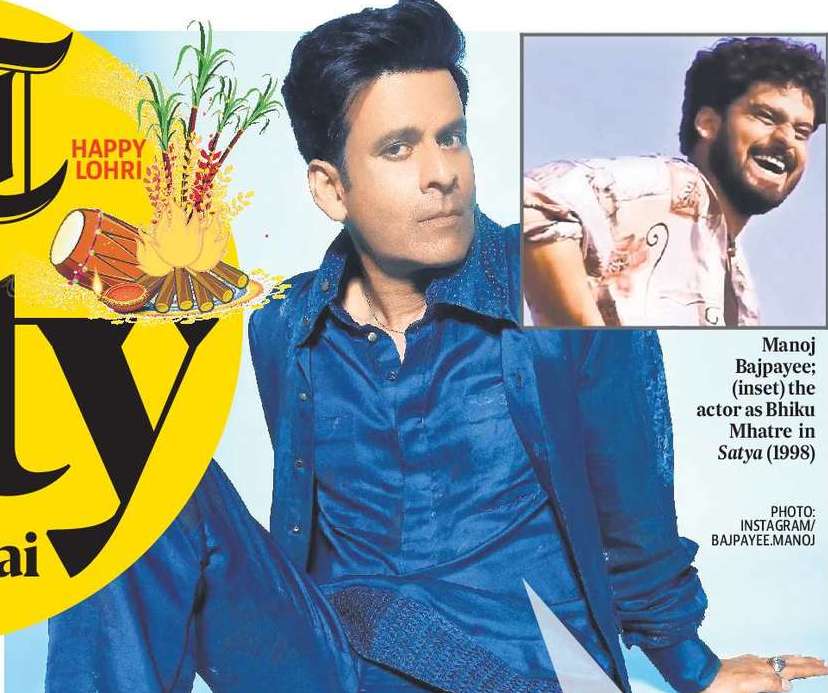
Rishabh Suri (HINDUSTAN TIMES; January 13, 2025)
Actor Manoj Bajpayee’s career took a dramatic turn with the release of Ram Gopal Varma’s iconic gangster saga, Satya (1998), in which he played Bhiku Mhatre, the head of a notorious Mumbai underworld gang. The role catapulted him into the spotlight, cementing his position as one of the most promising actors in the industry.
Now, with the film re-releasing in theaters on January 17, Bajpayee tells us, “There is a generation that has grown up without experiencing the magic of Satya. I am happy that they will get to watch on the big screen what they might have been hearing from their elders all these years. They can now find out for themselves why it was such a cult and unforgettable film.”
Not many know that Bajpayee sourced his outfits for the role, worked on his accent by picking it up from his cook, and devoted two months to preparation before the shoot. Reflecting on his career before Satya, the 55-year-old admits, “I wasn’t expecting anything for myself in this lifetime. However, I soon realized that God had different plans. I felt the difference in how I was treated by the industry post-Satya and I will always cherish the euphoria my character created.”
He adds, “For two years, whatever (films) I did after Satya was compared to it. For some people today, Gangs Of Wasseypur (2012) has created that magic, for others, it’s The Family Man, Shool (1999) and Raajneeti (2010). I am happy that I got an opportunity to experiment.”
“Satya not only changed my life, but also gave hope to so many people to leave their comfort zone and chase their dreams,” he wraps up.
Maqbool se mujhe itna faayda nahi mila jitna mujhe milna chahiye tha-Piyush Mishra
6:40 AM

Divya Kaushik (BOMBAY TIMES; October 26, 2024)
“Main film star to nahi ban paya rockstar zaroor ban gaya,” Piyush Mishra said this a few times as he sat on stage to introduce his band Ballimaaraan in Delhi before beginning his music tour Udankhatola. The singer, actor and writer was here to talk about his association with the band, his love for music and how at the age of 62 he has now became a rockstar.
“Gulaal, Maqbool karne ke baad bhi mai film star nahi ban paya kyonki mujh par koi paisa lagane ko tayyar nahi hai... Mujhe laga rockstar achhi upadhi hai ye li ja sakti hai. The kind of response I am getting from my concerts I feel agar mai khud ko rockstar kahunga to mujhe sharam nahi aayegi. I am enjoying this, I may be exhausted when I go on stage, but when I perform and if the show goes well, I am transported to other world. I feel like I have done something. Acting mein apna dum laga do uske bavjood woh response nahi milta hai, haan theater mein milta hai,” he said.
‘I think I am a gifted person that I can act, write, sing’
Piyush told the gathering that he started writing in his childhood and feels that this is something that comes naturally to him. He said, “I think I am blessed that I can act, write. I wrote Sharam Kar Lo (poem) when I was in class eight. Ye ho gaya, maloom nahi kaise ho gaya. I used to write, sing, paint, ye sab ho jaya karta tha. There was some force guiding me, I think I am a gifted person.”
“When I joined NSD I was a kid, but I became a youngster in NSD. When I moved to Mumbai, then Gulaal happened, Maqbool happened, Maqbool se mujhe itna faayda nahi mila jitna mujhe milna chahiye tha. Gulaal was a flop but was a hit on Internet. Then Gangs Of Wasseypur happened and I earned some money. I am 62 now, I only take work that I like.”
‘Jab mai Dilli mai tha Mandi House ke bahar jhaank ke nahi dekha’
Piyush shared, “I miss Mandi House a lot. Jab mai Dilli mai tha, Mandi House ke bahar jhaank ke nahi dekha. Mandi House mein toh meri jaan basti hai. Wahan ka ek bhi kona aisa nahi hai jahan maine rehearsal nahi ki ho. Mere samne kai generations nikli hain, Tigmanshu Dhulia ki generation, Adil Husaain ki, Nawazuddin ki, Pankaj Tripathi ki aur Zeeshan Ayyub ki generation. In sabko apni aankhon se dekhna aur mai ab bhi kaam kar raha hoon, ye bahut badi baat hai.”
‘I celebrated after Naseeruddin watched my play’
Going through the display reminded him of the “good old days.” One of the highlights of the exhibition was the red cycle.
“I don’t know how they (his bandmates) got it here. There is a brief story about this. On August 8, 1985 I did a play which was directed by the same person who directed the Hamlet, Fritz Bennewitz. Naseeruddin Shah came to watch the play, woh to khuda the uss waqt hamare liye. Naseer liked the play, he hugged me aur main toh bilkul hi pagal ho gaya tha. To celebrate that I decided to go to Badkhal lake in Faridabad on my brother’s bicycle. There was a milestone that read Gwalior 320 kms, I thought let’s go to Gwalior. I reached there in two and half days aur haalat kharab ho gayi thi. Ye cycle us lambi yatra ki gawah hai,” he shared.
Alia Bhatt is the best working actress at the moment-Varun Grover
8:13 AM
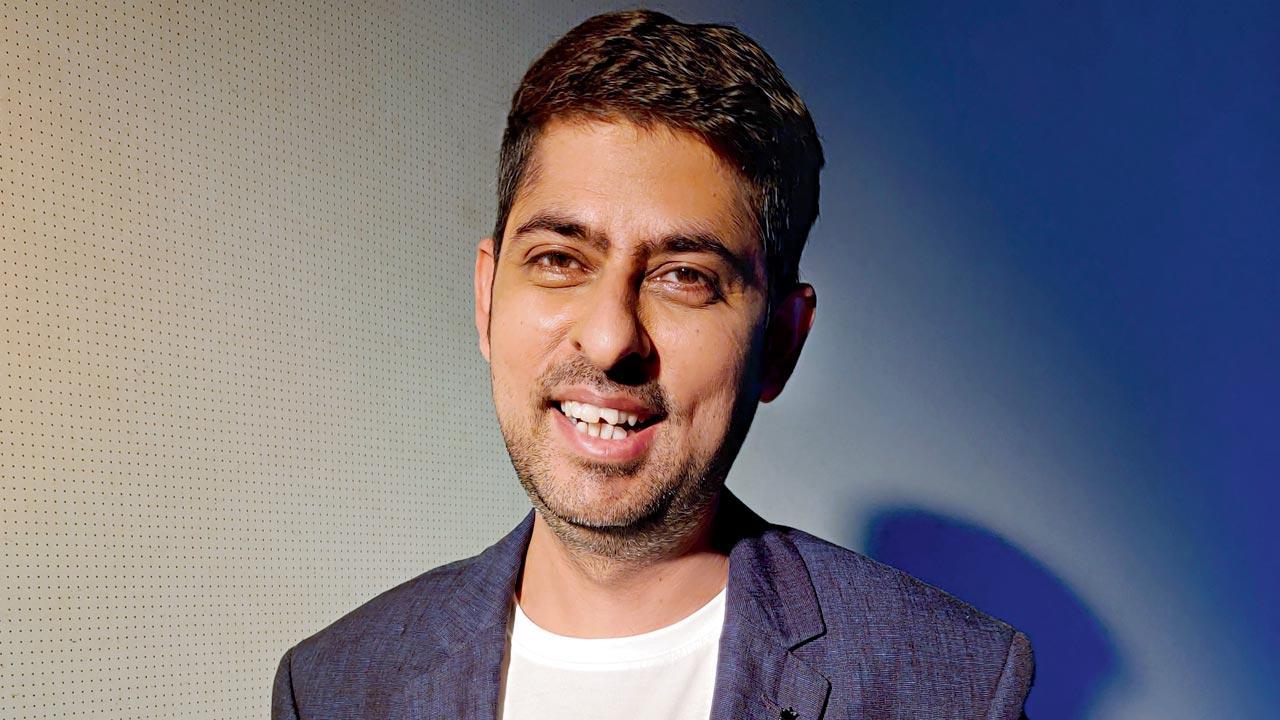
Returning to familiar territory with frequent collaborator Vasan Bala, Jigra lyricist Varun Grover breaks down the process of penning the lyrics for Alia Bhatt’s action drama
Sonia Lulla (MID-DAY; September 30, 2024)
Acclaimed writer Varun Grover’s social media pages serve as abridged collections of his diverse interests, ranging from stand-up comedy to documentaries about pertinent social issues, and his take on filmmaking. Considering the plethora of content he has contributed to, Grover, one would assume, wouldn’t be easily swayed when a new offer comes his way. But Alia Bhatt’s Jigra was different. It brought him back to the studio with director Vasan Bala, with whom Grover has forged a strong bond. It began “many many years ago”, with the film, Peddlers. The 2012 offering made it to the Cannes film festival but did not hit screens in India. Subsequently, they joined hands again for Monica, O My Darling (2022), which also included music by Achint Thakkar.
“That was a very good experience for all three of us. We forged a good bond, [and had similar] musical tastes and world-views. So, when Vasan offered this film to me after that experience, I was very excited.”
In the 12 years since the release of Gangs Of Wasseypur, the lyricist has had limited releases in the Bollywood industry. He cites that he prefers to keep an arm’s length from offers that seem all too similar to his previous projects.
“I want to exclusively work on scripts that I love. After Wasseypur, I got many offers for gangster-action films, or those set in the rural landscape. I refused a lot of work until Ankhon Dekhi [2014] came my way, which was a different film. When Vasan came to me with Jigra, I was excited because I love his work. Also, this one was starkly different from Monica O My Darling, which included fun and quirky music. Jigra is an emotional film, and Vasan wanted something dense when it came to the lyrics. But, he still wanted it to be offbeat; not sappy or sentimental. Because it’s also an action thriller, we didn’t have many pockets for music. The songs are used in the background. So, it adds to the emotional depth of the film.”
The trio’s WhatsApp group called ‘Monica Music’ was renamed ‘Monica Ka Jigra’, and they commenced work on bringing Karan Johar’s production to life.
“Vasan shared some Tamil songs that he liked, to serve as references. I shared what I thought would fit the zone that the film is set in. We had pieces from around the world, including qawwali, Brazilian, English, and Tamil music, being shared here. We worked on the theme song first, which is the title track. Achint sent options for the tune, and I started arriving at identifying the kind of vocabulary that would fit the film. Jigra Ho set the tone for the whole album; that track distilled the theme aptly. Once we were in that space, we knew how to play on. Another song is Tenu Sang Rakhna, and then there is Phulon Ka Taaron Ka, for which I have written additional lyrics. The original song is upbeat. But we tried to make it more emotional; like an acoustic version of that song.”
While it was beneficial to work with colleagues in whose company he could thrive, Grover was also egged on to put forth his best work when seeing the team of the film at play. Watching the makers bring their A-game to their respective processes implied that there was little room for mediocrity.
“You have to really be at the top of your game. I have been a huge fan of Alia’s craft and her choices. She is the best working actress at the moment. She is also the co-producer. So, there was certainly some pressure on me.”
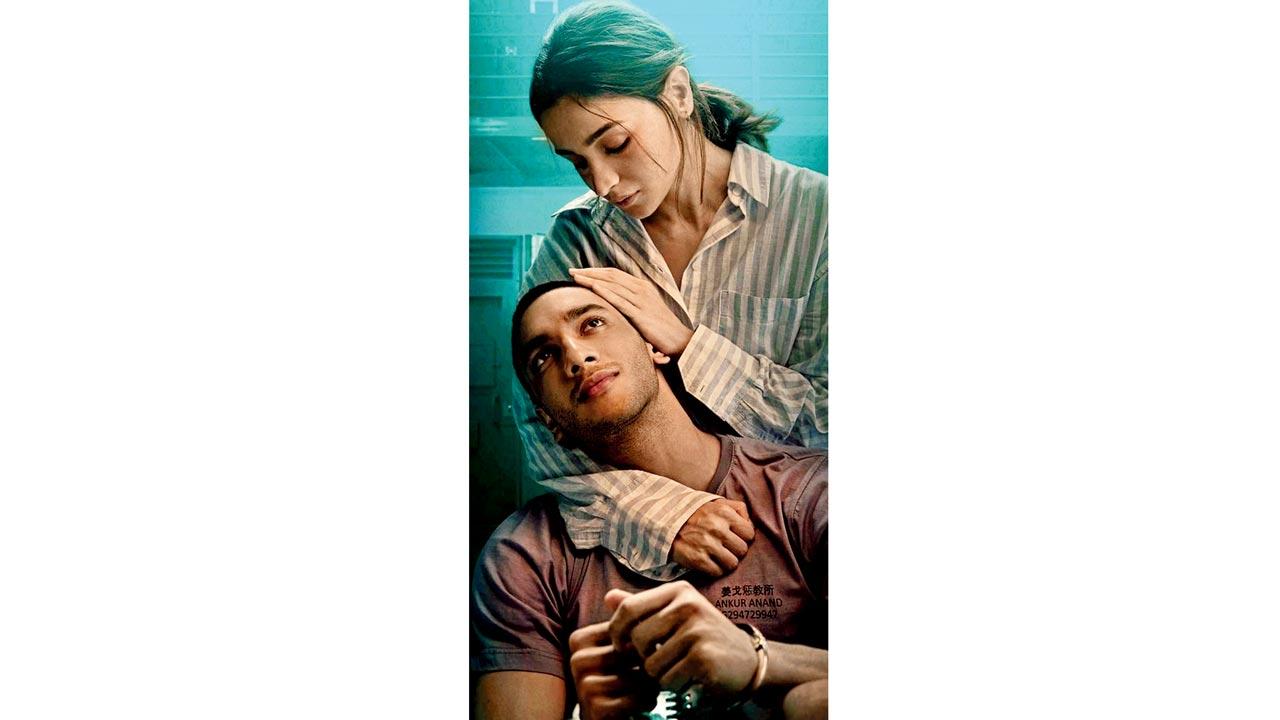
Analyzing the trend of re-releases: "Films are available for free online, but moviegoers want to see them on big screen"
8:21 AM
Niharika Lal (BOMBAY TIMES; August 31, 2024)
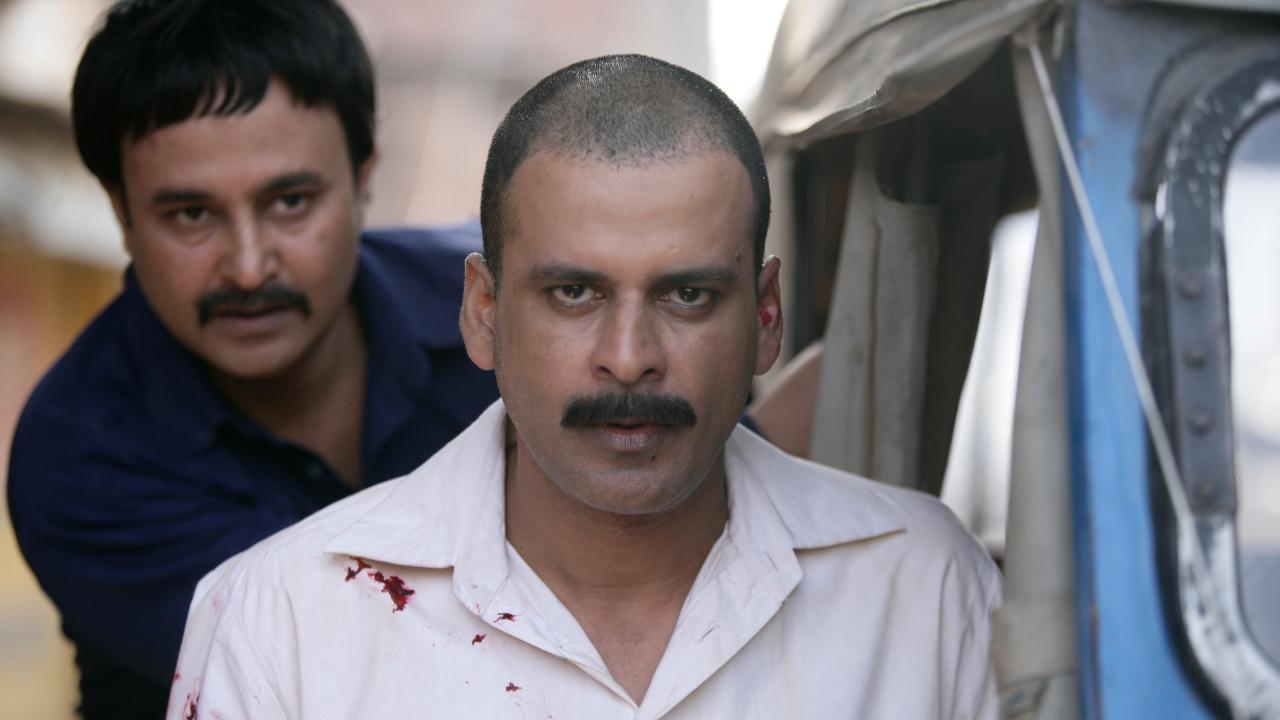
If the recent re-release announcements of Gangs Of Wasseypur and Rehnaa Hai Terre Dil Mein have you rushing to book tickets, you’re not alone. Cine buffs have been in for a treat with theatrical re-releases this year. Whether it’s to mark a film’s anniversary, generate buzz before a sequel, or simply revisit a cinematic hit, actors and filmmakers have been bringing their old films back to the big screen.
Films with a fan following being re-released
Ajay Bijli, MD of PVR INOX, says, “What’s interesting is that these films are available for free online, but moviegoers are still excited to see them on the big screen.”
Amit Sharma, MD, Miraj Cinema, adds, “September only has a couple of Hindi films scheduled for release. This is a major reason why cinemas are opting for re-releases of films with a strong fan following.”
‘The success of re-releases validates that people enjoy the theatrical experience’
Talking about re-releases, Yogesh Raizada, VP of Wave Cinemas, says, “Rereleases majorly work for two reasons – nostalgia for all things related to the 1990s, and a new audience that had only heard about these films but never had the chance to see them on the big screen.”
Kamal Gianchandani, president of MAI (Multiplex Association of India), adds, “The success of the re-releases validates how much people enjoy the theatrical experience. They are willing to come to cinemas despite these films being on TV and streaming platforms.”
A selection of Zoya Akhtar’s films were recently screened as part of her retrospective. Zoya Akhtar had said, “When we spoke about retrospective, there was one aspect of me which was like well, retrospective? Am I kind of done? And another part of me was jumping with joy that these films will be on the big screen again”
Imtiaz Ali’s Laila Majnu, which was first re-released in Srinagar, received an overwhelming response from the audience recently. “It gives us hope that people are coming to cinemas in huge numbers to watch old films,” the director said.
'A 3-4 week re-release calendar for Gangs Of Wasseypur'
Exhibitors say that the whole of September looks very empty and dull, with only a couple of Hindi films scheduled for release this month. This is a major reason why cinemas are opting for re-releases of films with a strong fan following.
Amit Sharma, MD Miraj Cinema says, "Whenever a film is re-released, it takes a little time to grow. People start learning about the film and its re-release. It's in the second and third week when the film starts picking up. So, we are planning a 3-4 week re-release calendar for Gangs of Wasseypur, which makes more sense."
'Playing of these older films in cinemas is a reflection of the fact that these films are doing well'
Kamal Gianchandani, president of MAI (Multiplex Association of India) says, "Some of these films can't even be classified as classics. There are several reasons for this - when these films were originally released, they were ahead of their time, or they simply didn't click with audiences. It's also a validation to how much people enjoy the theatrical experience that they are willing to come to cinemas to watch Rockstar or Jab We Met, despite these films being available on TV channels and streaming platforms. While there are various reasons why these re-releases work, the bottom line is that people are enjoying some of these older films, and it’s our job to bring them to all audiences. If people are enjoying older films in cinemas alongside new releases, then we are happy to offer them to our customers. Playing of these older films in cinemas is a reflection of the fact that these films are doing well."
Subscribe to:
Posts (Atom)