Showing posts with label Film Heritage Foundation. Show all posts
Showing posts with label Film Heritage Foundation. Show all posts
The Odyssey team stayed for 7 or 8 minutes; as they left, Tom Holland gave me a thumbs up, says Olympia owner
3:50 PM

Before they walked down the red carpet, Christopher Nolan, Matt Damon and Tom Holland found their way to a 108-year-old Irani café that still serves taxi drivers and Oscar winners the same cup. Here’s what else they got up to
Nisrin Saria (MUMBAI MIRROR; July 14, 2026)
There are two Mumbais every visiting celebrity encounters. One is all premieres, luxury hotels and flashing cameras. The other is discovered through recommendations. Over the past days, The Odyssey director Christopher Nolan and actors Matt Damon and Tom Holland found themselves on the latter trail.
At the Film Heritage Foundation in Ballard Estate on Friday, founder Shivendra Singh Dungarpur took Nolan through the Foundation’s restoration facilities, where the director watched technicians at work on a 70mm print. For a filmmaker who has spent years championing celluloid, it was a rare opportunity to see India’s preservation efforts up close. Nolan, fans would know, has also served on Martin Scorsese’s Film Foundation for over a decade. That Dungarpur’s Foundation has grown into one of the world’s leading centres for restoring and preserving films probably made it a fitting stop before The Odyssey reached Mumbai.
Photographer and filmmaker Sunhil Sippy, rarely someone to be overawed by famous names, found himself unexpectedly tongue-tied. He presented Nolan with a signed copy of Opium Of Time, his 2021 coffee-table book of monochrome photographs of Mumbai. “I was nervous when he asked me to sign it,” Sippy says. “I simply wrote, ‘What an honour.’”
That evening, Dungarpur took Nolan and actor Matt Damon to Trishna in Kala Ghoda, that has fed Bombay’s old guard for decades. Nolan was, reportedly, already familiar with that menu, having eaten there with his family on an earlier trip.
A taste of Mumbai
If Friday belonged to cinema, Saturday belonged to Mumbai. Hours before the premiere, Nolan, Damon and Holland walked into Olympia Coffee House in Colaba. Founded in 1918, the Irani café has changed little over the decades. Its marble tables have welcomed everyone from taxi drivers and office-goers to politicians and film stars, while regulars still arrive early for bun maska, chai and its famously limited roast mutton. When Mirror met owner Mufti Ilyas Abul Rahim Saji, 56, last evening, he laughed at how ordinary the afternoon had seemed.
“Around 2.30 pm, members of their team started coming in,” he says. “We thought they were regular customers. They had tea and snacks, left, then returned again.”
Only around 6 pm did anything seem unusual – because security personnel gathered outside before a van pulled up. “We didn’t recognize them,” Saji says with characteristic matter-of-factness. “They came in, sat down, had tea and spoke among themselves. Then it was time for my prayers, so I left.”
The advance team had told Olympia only that a few VIP guests would be dropping in and requested chai and bun maska. True to the café’s old-school hospitality, Saji decided that wasn’t quite enough. He asked the kitchen to send out saffron phirni and custard as well.
The Saji family bought a 50% stake in Olympia from its Iranian owner, Mohammad Mirab, in 1954, when Mirab and his cousins were returning to Iran. Three generations later, copper vessels are still used here, because, Saji insists, “the taste changes if the pot changes.”
What has never changed, he says, is the place’s philosophy. “Our customers range from taxi drivers to celebrities, but everyone is our customer and we treat them alike. Everyone gets the same service,” says Saji, explaining that they go by the principle of equality taught in Islam.
Manager Inayat Maridiya, 40, knew only that “VIP guests” were arriving. “They stayed for seven or eight minutes,” he says. “As they left, Tom Holland gave me a thumbs up. Only later did someone tell me he was Spider-Man.”
Saji laughs. “I’ve never watched the Spider-Man films.”
When word spread
By the next morning, celebrity had worked its familiar magic. Customers arrived asking for the table where Nolan, Damon and Holland had sat, and even the cups they had used. They were out of luck. “They’d already gone back into the kitchen and were mixed with the rest of the dishes, obviously,” says 30-year-old waiter Shahbuddin Khan. There were even those who hugged Shahbuddin, as though a little of Hollywood glamour might have rubbed off on him.
In less than 48 hours, three of Hollywood’s biggest names had visited three very different Mumbai institutions: one preserving the history of cinema, the other preserving the city’s everyday rituals.
It was Amitabh and Jaya Bachchan’s idea that I should establish a foundation to preserve our heritage-Shivendra Singh Dungarpur
4:08 PM

Niharika Lal (BOMBAY TIMES; February 20, 2026)
Indian classic films are finding renewed life on the global stage, with restored versions travelling to major festivals such as Cannes, Venice, Toronto, and now the Berlin International Film Festival. Organizers said the screening of In Which Annie Gives It Those Ones (1989) played to a packed house. The audience extended beyond cinephiles, with several attendees saying they came because they follow Arundhati’s work. Shivendra Singh Dungarpur noted that representatives from Criterion, Berlin Classics, and MoMA were present to discuss the renewed momentum behind Indian film restoration.
Arundhati Roy skips screening, Wim Wenders attends it
The film has been making headlines over the past few days after its writer and lead actor, Arundhati Roy decided to withdraw from the Berlinale after the film festival’s international jury president, Wim Wenders, said that filmmakers must stay out of politics. Announcing her withdrawal, Arundhati described the remarks as unconscionable.
However, Wim Wenders joined the Indian team at the Berlin Film Festival for the film’s screening. Before it began, director Pradip Krishen – who is also Arundhati Roy’s husband – addressed the audience.
He said, “I know she has a very special place for Berlin in her heart. Based on the two book tours I accompanied her on in Berlin, I believe Berlin loves her as well. But she has strong principles and strong beliefs, and I stand with her.”
‘It was Mr and Mrs Bachchan’s idea that I should establish a foundation to preserve our heritage’
As part of the festival’s focus on film heritage and preservation, a masterclass on Indian film heritage was organized in conversation with Film Heritage Foundation (FHF) founder Shivendra Singh Dungarpur, moderated by Josh Siegel. Dungarpur began by reflecting on the limited awareness of film preservation in India. Recalling his early efforts to restore Kalpana, a 1940s film by Uday Shankar, he described his shock at the condition of the reels.
“At the time, people in India barely understood what film preservation meant. Despite producing over a thousand films a year, we were losing our cinematic heritage. That realization led me to document what was being lost, which eventually became a film itself, and later to founding a preservation initiative. It was Amitabh Bachchan and Jaya Bachchan’s idea that I should establish a foundation to preserve our heritage.”
‘In Which Annie ... was initially called Chapter 5’
“The film was initially called Chapter 5 because it was about fifth-year students in that architecture school (as shown in the film). But we felt it was too generic a title. We wanted something that people in their 60s and 70s would relate to – and that’s why we chose the title we did. The film was screened on Doordarshan after 10.40 pm without any advance notice. It was almost as if the channel was ashamed to show it. After that, the film developed an underground following. It only lived on as a pirated, low-grade version on YouTube. It became a rite of passage for architecture students,” said director Pradip Krishen.
‘The focus has always been on grassroots’
Josh Siegel placed the discussion in a broader institutional context. “MoMA has a long history of presenting Indian cinema dating back to the 1930s, particularly from the 1950s. I cannot overestimate the contribution you have made,” he said.
Dungarpur explained that the foundation chose to work across regions and languages. “We began restoring films across languages and regions – Malayalam, Odia, Manipuri, and others and also extended our work beyond India, collaborating on archival efforts in Sri Lanka, Nepal, Bangladesh, and Bhutan. The focus has always been grassroots: training people, building smaller regional archives, and working directly on the ground.”
Restored Do Bigha Zamin to premiere at Venice
8:59 AM

The restored version of Bimal Roy’s film will have its world premiere at the Venice Film Festival in the Venice Classics section. Meanwhile, Bandini, Devdas and Madhumati are also being restored
Niharika Lal (BOMBAY TIMES; July 13, 2025)
Do Bigha Zamin (1953) marked a turning point in Indian cinema. While most films of that era were shot within the confines of a studio, director Bimal Roy broke the mould and took the camera to the streets, paving the way for realism in Indian filmmaking. Now the film, restored by the Film Heritage Foundation (FHF), the Criterion Collection and Janus Films, will be screened at the Venice Film Festival’s Classics section.
Gulzar, who worked with Roy, spoke to us about the film’s legacy. “It’s amazing that Do Bigha Zamin is restored and will be shown in Venice. The most important element is that all of his films were based on literature. Not many people know that Do Bigha Zamin is based on a poem by Rabindranath Tagore, with the same title.”
How was the film restored
Do Bigha Zamin was restored in 4K by the Criterion Collection and Janus Films, in collaboration with Film Heritage Foundation, at L’Immagine Ritrovata and Resillion, and in association with the Bimal Roy family.
The restoration process took over three years. It began in 2022, when the Criterion Collection/Janus Films and Film Heritage Foundation initiated the project. The FHF accessed the original camera negative and sound negative, which had been deposited by the Bimal Roy family at the NFDC–National Film Archive of India (NFAI) for preservation.
However, the sound negative presented several issues, including poor audio quality, interrupted dialogues, and missing sections. The original camera negative was also incomplete. A combined dupe negative - on Dupont/Kodak stock from 1954–55 was found at the British Film Institute (BFI) which was also used for the restoration
The restoration drew from the best surviving elements the 35 mm picture and sound negatives preserved at NFAI and the 35 mm combined dupe negative from the BFI.
Bimal da was the coolest director I have ever seen: Gulzar
I started working with Bimal da, who we used to call Dada, from the film “Kabuliwala” when I was his chief assistant. I have very fond memories of that time. People would say that Bimal-da was like a married print. In those days, the picture and sound negatives were separate and when they were brought together optically to make the release print, it would be called a married print.
Bimal da would shoot two shifts in a day – 7 am to 2 pm and 2 pm to 10 pm and would then sit in the editing room working till late night at Mohan Studios. People would say that he is married to films.
Bimal da was the coolest director I have ever seen. I learnt not only filmmaking from him, but the art of patience and stamina.
I am sharing a poetic portrait that I wrote on Bimal-da.
"The softly flowing river face shrouded in the evening mists
Eyes burning in the mistiness of a tawny visage
The spiral of smoke from the endlessly burning cigarette
The faraway voice heavy with sleep.
Shadowed below unknown thoughts that flew above
A face that seemed etched out of molten wax
The sound of every new dream transforms him
Making it seem he would neither sleep, nor wake, nor speak
A silent flowing river shrouded in evening mists."
(From the book “Caged . . .Memories Have Names”)
'Do Bigha Zamin changed the face of Indian cinema: Shivendra Singh Dungarpur, director of Film Heritage Foundation
Do Bigha Zamin changed the face of Indian cinema that brought filmmakers out of the studio to begin shooting on the streets. I am so happy that we were able to collaborate with The Criterion Collection/Janus Films to restore not only Do Bigha Zamin, but other classics of Bimal Roy like Devdas, Madhumati and Bandini, which are in the process of being restored.”
Do Bigha Zamin, is an unspoken autobiography of Bimal Roy: Rinki Roy Bhattacharya, Aparajita Roy Sinha, Joy Bimal Roy
After watching Vittorio De Sica’s film Bicycle Thieves, our father hoped Indian films would follow its deeply moving humanist vision. Do Bigha Zamin, is an unspoken autobiography of Bimal Roy who was cast off from his home in East Bengal in a similar episode like the hero, peasant, Sambhu Mahato. He never recovered from this cruel separation from his beloved birthplace.
Satyajit Ray on “Do Bigha Zamin”
“With his very first film Udayer Pathe (Humrahi in Hindi), Bimal Roy was able to sweep aside the cobwebs of the old tradition and introduce a realism and subtlety that was wholly suited to the cinema. He was undoubtedly a pioneer. He reached his peak with a film that still reverberates in the minds of those who saw it when it was first made. I refer to Do Bigha Zamin, which remains one of the landmarks of Indian cinema.”
Raj Kapoor on “Do Bigha Zamin”
Perhaps the best compliment came from Raj Kapoor, who upon watching the film, reportedly said, “I wish I had made this film.”
50 years later, Sholay to return to cinemas in restored version
9:36 AM
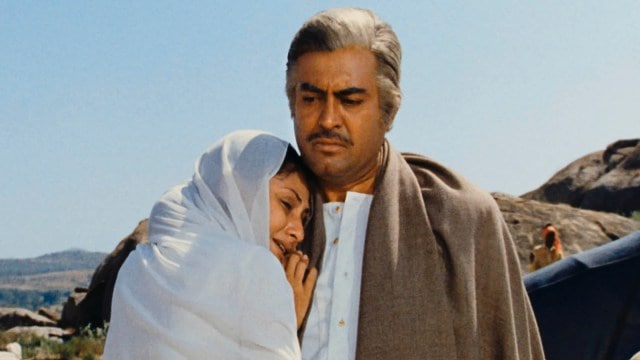
Niharika Lal (BOMBAY TIMES; June 23, 2025)
This August, Sholay will turn 50. And the celebration has already begun - thousands of miles away from Ramgarh - in a theatre where Fellini once ruled. Next week, Italy is hosting the world premiere of the newly restored, uncut version of Ramesh Sippy’s iconic film at II Cinema Ritrovato Festival.
When it was first released in 1975, Sholay turned into a phenomenon - running for over five years in some theatres. While Dharmendra calls it “duniya ka aathwan ajuba,” Amitabh Bachchan says, “At the time, I had no idea it would be a watershed for Indian cinema.”
Now, five decades later, the film is returning to theatres in a restored version. As it prepares for its comeback on Indian screens this August, we take a look at how the restoration came to life.
Shooting for Sholay was an unforgettable experience: Amitabh Bachchan
Reminiscing the film, Amitabh Bachchan says, “Some things in life remain permanently etched in your mind. Sholay is one such film. Shooting for the film was an unforgettable experience, but at the time I had no idea that it would be a watershed for Indian cinema. Its dramatic change in fortunes from being declared an unsuccessful venture, to its record-breaking box office run was an emotional rollercoaster for all of us.I hope that even 50 years later, the film will capture the imagination of new audiences across the world.”
Can’t wait for Sholay to begin its new lease of life: Shehzad Sippy
Talking about the restoration, Producer Shehzad Sippy, shares, "It has taken us three years, but we were able to find the original ending and some deleted scenes that the world will see for the first time at the grand premiere at the Il Cinema Ritrovato Festival in Bologna. I can’t wait for ‘Sholay’ to begin its new lease of life.”
‘This world premiere in Italy is a recognition of Sholay's place in global cinematic history’
“Sholay is often described as the greatest Indian film ever made,” says Shivendra Singh Dungarpur, Director, Film Heritage Foundation. As he talks about the restoration, he says, “I know every frame and every dialogue of the film by heart. Sholay was a masterpiece of passion that generations of Indians have loved and seen time and time again. Despite the fact that we could not use the original camera negative and that not a single 70mm print survives, we have left no stone unturned to ensure that this historic film has been beautifully restored. The Il Cinema Ritrovato Festival is renowned for its dedication to showcasing restored and classic films. This world premiere marks not just a celebration of a film, but a recognition of its enduring power and its place in global cinematic history."
I am thrilled to hear that the film is being restored: Dharmendra
I am thrilled to hear that the film is being restored and I am sure it will have the same success as it had 50 years ago. Who can forget the dialogues of Salim-Javed and the direction of Ramesh Sippy? So many scenes have gone down in the history of Indian cinema.
The restoration over three years
- In 2022, Shehzad Sippy began discussions with the Film Heritage Foundation (FHF) to restore Sholay
- Original 35mm camera and sound negatives were found in a Mumbai warehouse. Additional film elements were located at Iron Mountain in the UK, with support from the British Film Institute (BFI)
- Reels from Mumbai and London were sent to L’Immagine Ritrovata in Bologna for restoration. The original camera negative was too damaged to use. The team worked with interpositives from both cities
- A colour reversal intermediate found in London included the original ending and two deleted scenes
- The FHF also sourced the original Arri 2C camera used to shoot the film. With no surviving 70mm prints, veteran cinematographer Kamlakar Rao, who had worked alongside Sholay's DOP Dwarka Divecha, was consulted
- The final restored version combines two inter-positives and two colour reversal intermediates, bringing back the director’s original vision, including the lost scenes and original ending
Did You Know?
The original ending and previously deleted scenes that were not part of the widely distributed theatrical cut of Sholay. They have been included in the restored version.
Raj Khosla’s legacy to be celebrated on his centenary through screenings, panel discussion
8:56 AM

To mark director Raj Khosla’s birth centenary, Film Heritage Foundation to screen his hits, and host panel discussion with Asha Parekh and Mahesh Bhatt tomorrow
Mohar Basu (MID-DAY; May 30, 2025)
Ask cinephiles their favourite Raj Khosla movie, and the answers will widely vary — some will choose the noir CID (1956), others, the mystery drama Woh Kaun Thi? (1964), and some others, Dostana (1980). The one thing they will agree on, however, is that the director was a master across genres. It is this mastery that Film Heritage Foundation (FHF) aims to celebrate with the retrospective, Raj Khosla 100 — Bambai Ka Babu, at Regal Cinema in Mumbai tomorrow.
Marking the filmmaker’s birth centenary, the day-long celebration will feature a panel discussion with veteran actor Asha Parekh, filmmaker Mahesh Bhatt, and Amborish Roychoudhury, author of Khosla’s biography. Not just that, his classics — including CID, Bombai Ka Babu (1960), and Mera Gaon Mera Desh (1971) — will be screened.
Parekh, who had worked with the late director on several films, remembers him as one who put his leading ladies at the centre of the narrative, at a time when they were largely sidelined. “Do Badan [1966], Chirag [1969], Main Tulsi Tere Aangan Ki [1978], and Mera Gaon Mera Desh are among my favourite films. Before [working] with Raj Khosla, I was known more for my dancing and glamorous roles. Do Badan changed people’s perception of me as an actor who could perform serious roles. He was a fine filmmaker,” she reminisces.
Shivendra Singh Dungarpur, Director, FHF, notes that Khosla successfully dabbled in many genres in his three-decade career. “I’d describe him as the Howard Hawks of Indian cinema for his ability to successfully make films in every genre. He excelled in song picturisation, and was known for having strong female characters in his films.”
Simi Garewal guided Samit Bhanja during intimate scene shoot in Aranyer Din Ratri-Purnima Dutta
10:10 AM

BOMBAY TIMES (May 14, 2025)
On Monday evening, Simi Garewal shared on Instagram that she will walk the red carpet at the Festival de Cannes 2025 for the world premiere of the newly restored Aranyer Din Ratri, Satyajit Ray’s 1970 cinematic gem. The actress will present the screening alongside filmmaker Wes Anderson and actress Sharmila Tagore.
The film will screen on Monday, May 19 at the Salle Buñuel, Palais des Festivals. The restoration has been carried out by The Film Foundation’s World Cinema Project at L’Immagine Ritrovata, in collaboration with Film Heritage Foundation, Janus Films, and The Criterion Collection, with support from the Golden Globe Foundation. For Garewal, this return is deeply personal. “The month-long shoot was enveloped in magic,” she recalled in a 2012 Mumbai Mirror interview.
“No electricity, no running water — just moonlit walks, Rabindra Sangeet, and the incredible good fortune of working with one of the world’s finest directors.”
In Aranyer Din Ratri, Garewal played Duli — a feisty young Santhal woman who embodied the conflict between the urban and rural ways of life.
With her sharp gaze and fierce independence, Duli awakens desire but bows to no one. “For a week, Manik da wouldn’t let me shoot. He took me to the baati khaana (the liquor shop) where the Adivasis would gather at night to drink — and let me just observe. I saw women who were exactly like Duli, my character (sic).”
Discovered by Ray after a chance meeting at Raj Kapoor’s house, Garewal vividly remembers receiving his letter offering her a role: “It’s only a screen test for make-up. Not for your acting abilities – because I have no doubt whatsoever about that.” What followed was an intense process of transformation – both in character and craft.
Simi guided Samit during the shoot: Purnima Dutta
Revisiting the experience of shooting the film, Purnima Dutta, producer, said, “Simi became like a family member during those days. Though she was staying in a hotel, most of the time, she used to be at our house. I still remember, when I got busy, she used to lay the dining table and make sure we all ate together – she’s an extremely homely person. I remember Samit (Bhanja, who played Hari) was a newcomer in the industry, and was apprehensive of the intimate scenes he had to play. Manik da told him to get rid of his inhibitions, and Simi, being a seasoned actor, helped Samit overcome his awkwardness with portraying the scenes convincingly.”
Growing number of young people have gotten estranged from the experience of seeing films in theatres-Wim Wenders
8:48 AM
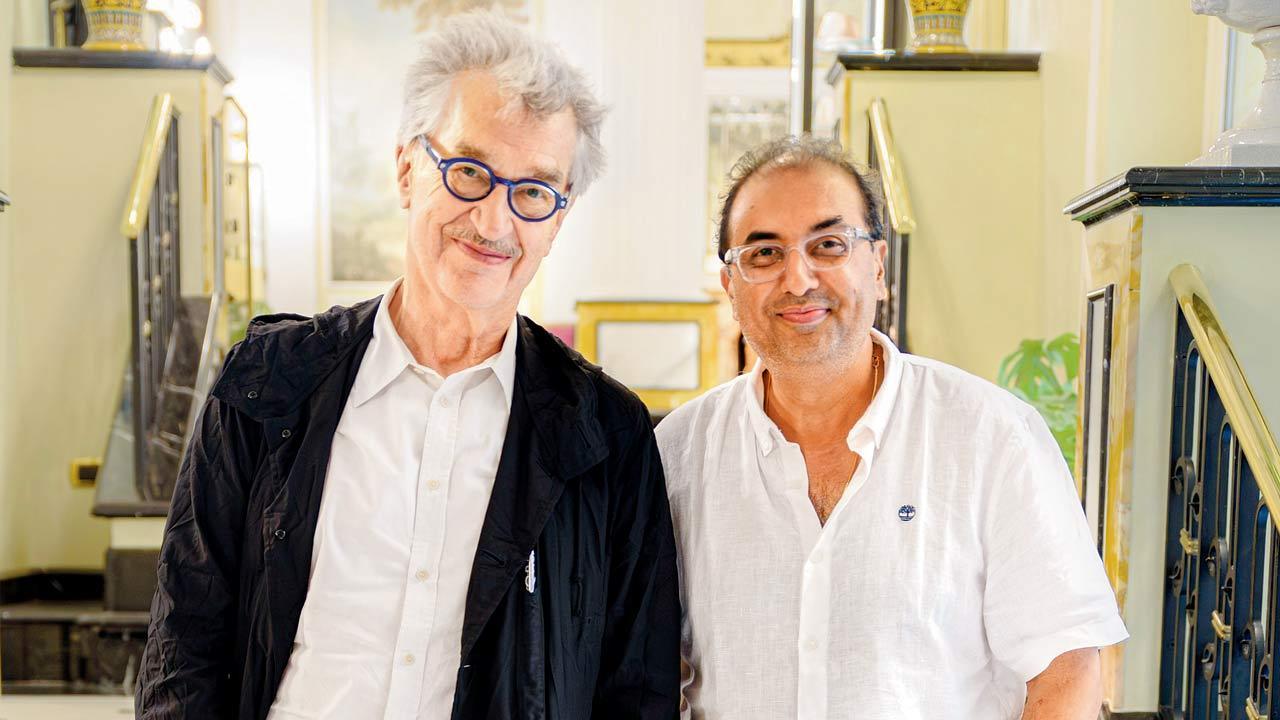
German filmmaker Wim Wenders talks about the future of films and the artistic challenges before the visual art
Avijit Ghosh (THE TIMES OF INDIA; February 5, 2025)
Wim Wenders is a master of modern cinema. The 79-year-old German filmmaker’s oeuvre includes Paris, Texas (1984), Wings of Desire (1987) and, more recently, Perfect Days (2023). Invited by Film Heritage Foundation, Wenders will be in India — his first trip here — today. In an email interview with TOI, he talks about the future of films and the artistic challenges before the visual art.
You have been making films since 1967. You have made road movies, character-driven films, science fiction, music video, TV commercials, opera. Perfect Days, which maps the life of a public toilet cleaner in Tokyo, has been much-acclaimed. What is your driving force?
My driving force is curiosity and to pose, again and again, the burning question: “How should we live?” The conditions under which we live as humanity change constantly and fast. We’re adjusting constantly. My films are not necessarily giving answers to that question, but they’re constantly in search of possible answers. Maybe the most poignant one in that regard was Until The End Of The World, a film that anticipated the impact of the digital revolution on our visual culture. It was shot in 1990 and tried to look 10 years ahead into the future; it takes place in the year 2000. Now that year is long gone, but the film still offers a powerful first look at what was going to happen to mankind.
As a philosopher of cinema, what would you say are the biggest creative challenges of the times? Is it Artificial Intelligence?
I’m not scared of AI. But I’m deeply disturbed by the deterioration of truth in public life and the massive and ever-growing amount of lies, of misleading and false information. We have huge parts of populations unaware of the propaganda and falsehoods they take as ‘reality’, for granted. The worst, however, is the common disinterest and lack of knowledge for history, even among politicians. You’d think that people wouldn’t go for the same nationalist paroles and promises that already ruined our civilization in enough wars and conflicts. But they seem eager to repeat the same recipes.
OTT channels such as Netflix and Amazon Prime have come to dominate middle-class lives across the globe. How do you see this development?
Streamers grow bigger and bigger. They were propelled fast-forward by the pandemic. They’re slowly pushing independent distributors and producers out of business. Also, a growing number of young people have gotten estranged from the experience of seeing films in theatres, together with others. They got used to getting all that “content” and much more at home. Some of them never really experienced movie theatres as a social institution, so they don’t even miss it. I find that a sad development in an overall world culture that makes people more and more solitary.
Films are a part of our cultural history and heritage. But celluloid fades. Since you have been personally involved in the restoration of your own films, how do you look at the process?
I’m happy that right now, all over the world, films are being restored, so that some of our greatest cultural treasures of the 20th century are being preserved. In India, the Film Heritage Foundation is doing amazing work. It is our connection and dedication to film preservation, I guess, that gave Shivendra Singh Dungarpur the idea to invite me to India for this five-city retrospective. My foundation is also extremely engaged in this field. Fifteen of the 18 films we show in India are restored versions. I can’t tell you how much I’m looking forward to talking with Indian audiences!
On a different note. You are a fan of Borussia Dortmund. French writer Albert Camus once said, “Everything I know about morality and the obligations of men, I owe it to football.” What does football mean to you?
I tend to agree with Camus. Football can be a great metaphor for the best in us, morally and as far as ‘character’ is concerned. But ever since he said this, the world has evolved, and not really for the better. “The Beautiful Game” has been extremely commercialized and therefore, much to my dismay, has lost some of its moral qualities and even some of its playfulness. I still follow it passionately, and I have my favourite teams in other leagues, not just in the Bundesliga in Germany. I follow Liverpool in England, Naples in Italy — both not always so much at the top of the game as today. Some of my teams have even disappeared in second leagues in France or Spain. But I keep my hopes up for them.
3-day Raj Kapoor film festival to be held in 40 cities and 135 cinemas from December 13 to 15
10:22 AM

A rare picture of Raj Kapoor editing the film Satyam Shivam Sundaram
Niharika Lal (BOMBAY TIMES; December 4, 2024)
To mark Raj Kapoor’s birth centenary, R K Films, the Film Heritage Foundation, NFDC, NFAI and cinemas have come together to organise a retrospective titled ‘Raj Kapoor 100 – Celebrating the Centenary of the Greatest Showman’. The three-day fest will showcase 10 films of Raj Kapoor across 40 cities and 135 cinemas from December 13 to 15.
Earlier this year, the Toronto International Film Festival (TIFF), Festival des 3 Continents, and the recently concluded International Film Festival of India (IFFI) in Goa paid tribute to Raj Kapoor with screenings and discussions. Considered the ‘the greatest showman’ of Indian cinema, Raj Kapoor’s screen characters and films drew a tremendous response from fans not just in India but abroad too, particularly in the erstwhile Soviet Union and the Middle East.
Discussing Raj Kapoor’s films and filmmaking, Ranbir Kapoor admitted at IFFI that he is a bigger fan of Raj Kapoor the filmmaker than Raj Kapoor the actor. He also spoke about how, throughout his entire career, Raj Kapoor's films had messages of socialist reform. Awara addressed casteism, and Shree 420 dealt with greed and so on.
Not just India, but Raj Kapoor's screen characters and films drew a tremendous response from fans abroad. His characters and songs were extremely popular in the Soviet Union and the Middle East.
This month, India will start the centenary celebrations of Raj Kapoor - the actor, director, and producer considered to be ‘the greatest showman’ of Indian cinema. The celebration, titled 'Raj Kapoor 100 – Celebrating the Centenary of the Greatest Showman', is a retrospective of his ten films.
To commemorate 100 years of world cinema in 1990, the then Soviet Union honoured Raj Kapoor alongside eminent global film personalities like Ingrid Bergman, Jean Gabin, Charlie Chaplin and Marilyn Monroe.
Raj Kapoor's stories are timeless and this festival is our way of reliving that magic and inviting everyone to experience his legacy on the big screen: Ranbir Kapoor
"We are incredibly proud to be members of the Raj Kapoor family. Our generation is standing on the shoulders of a giant whose every film spoke of the time that it was made and was the voice of the common man over decades. I think it is our responsibility and our privilege to preserve his films for future generations. His stories are timeless and this festival is our way of reliving that magic and inviting everyone to experience his legacy on the big screen. See you at the movies!”
Raj Kapoor was truly India’s greatest showman: Amitabh Bachchan
"Raj Kapoor was truly India’s greatest showman. His life was a celebration and I am sure he would have been delighted to see his films back on the big screen. Raj Kapoor was an artist who lived for cinema. Even today Awara is a film that is etched in my mind. Made at a time of newly independent India, the film was socialistic, reflecting the mood of the times. Talking about Raj ji’s incredible showmanship, the way he envisioned the dream sequence in the film had never been seen before. You are amazed by his fantastical imagination that visualized the surreal setting, the ethereal Nargis ji emerging through thick clouds of smoke, Raj ji surrounded by demonic figures and burning fires – there is a powerful, mystical symbolism in the dream sequence, and that is my favourite."
Raj Kapoor had an all-consuming passion for cinema: Shivendra Singh Dungarpur, Filmmaker and Director of Film Heritage Foundation
"Contemporary audiences in 40 cities will have an opportunity to watch ten landmark Raj Kapoor films that put Indian cinema on the world map spanning almost four decades. These were films that not only captured the imagination of the people but reflected prevalent social and political themes beginning from a newly independent India. Raj Kapoor had an all-consuming passion for cinema. His unforgettable avatar as a tramp that embodied the common man and till his last film he remained a great showman."
Raj Kapoor was not just a filmmaker; he was a visionary who shaped the emotional landscape of Indian cinema: Randhir Kapoor
“Raj Kapoor was not just a filmmaker; he was a visionary who shaped the emotional landscape of Indian cinema. His stories are more than just films; they are powerful, emotional journeys that connect
generations of viewers. This festival is our humble tribute to the greatness of his vision.”
Celebrations across the globe
- This year, The Toronto International Film Festival (TIFF) screened the world premiere of the 4K restoration of Awara to commemorate the 100th anniversary of Raj Kapoor who directed and starred in the film.
- To celebrate 100 years of Raj Kapoor, the Festival des 3 Continents in Nantes, France conducted a book discussion on Raj Kapoor and Anari, Awara, Shree 420, Jis Desh Mein Ganga Behti hai, Teesri Kasam was screened.
- The recently concluded International Film Festival of India (IFFI) rolled out a tribute to honour the 100th birth anniversaries of four Indian cinema legends including Raj Kapoor.
Honours and accolades for Raj Kapoor
- Raj Kapoor received the Padma Bhushan in 1971 and the Dadasaheb Phalke Award in 1988.
- Shree 420 won a National Film Award in 1955.
- Awara and Boot Polish competed for the Grand Prize at the Cannes Film Festival in 1953 and 1955, respectively.
India makes 2,000 movies every year; its a paradise for me-Giuseppe Tornatore
2:44 PM

Renuka Vyavahare (BOMBAY TIMES; September 29, 2024)
You don’t merely grow up watching the movies but living vicariously through them. Legendary Italian filmmaker Giuseppe Tornatore’s Oscar-winning film ‘Cinema Paradiso’ (1988) exuded this sentiment, working as the most heartening love letter to cinema.
The coming-of-age dramedy as seen through the eyes of a young boy Toto and his heartwarming friendship with an ageing projectionist Alfredo, reflects upon cinema not only shaping but defining our life journey – childhood, friendship, nostalgia, first love, loss and longing. It was thus fitting for Tornatore in his maiden visit to India, an initiative of filmmaker, archivist Shivendra Singh Dungarpur’s ‘Film Heritage Foundation’ to felicitate the movie industry’s unsung heroes - the projectionists. The three-day festival, which culminates today, showcased restored Italian classics. In an exclusive chat, Tornatore, accompanied by Dungarpur, shared his thoughts about India, Indian cinema, the longevity of his iconic movie and more. Excerpts…
You made Cinema Paradiso 36 years ago, and it’s a film that continues to be watched and discussed among movie lovers. What would you attribute its longevity to?
You are too generous. It's a big mystery to me that 40 years after its making, it continues to be so popular and close to the people in every country. I introduced it as the opening film of the festival here. People of every age call me, write to me about this movie even today. Yes, the movie is autobiographical in some parts. But not all autobiographical movies receive this kind of love, affection. It probably worked because the movie theatre is a space where generations of people grow up and see their lives unfold. Probably there was a certain honesty to it that touched people's hearts.
Filmmaker Luca Guadagnino, another Italian great, was in the city last year and he told us that India and Italy are similar in many ways. What do you think?
I agree with him. Yesterday I was walking down the street in the city with the crowd, and I immediately felt some familiarity. I asked myself why I felt this connection with this place, these people .Life in the streets of Mumbai, the pace, vibe here reminded me of the first big town I knew of back home when I was young -- Palermo in Sicily. Until six years ago, Palermo was the same… the sound, chaos, screaming, shops, street food, colours, fruit sellers. It was a very strong experience yesterday and I hope to spend some more time here before I leave.
You have been fascinated with film projectionists since your early years and were one yourself, so would you say it was apt that during your first visit to India, you felicitated the unsung heroes of our cinema here - the projectionists?
I’ll confess a secret to you. Initially, I thought movies were made in the cinema projection room. The concept of screening was not known to me. I started to go to a movie theatre like this (points to Mumbai’s Regal Cinema) when I was six. I didn’t understand how it was possible that the characters that looked so huge on the big screen managed to get there from the small window of the theatre at the back. For a long time, I believed that the shadow of this man (the projectionist) was the maker of the movie. I thought movies were made in the projection room. When I had the opportunity to check out that room, the projectionist seemed like a legend to me. I figured the movies were not made there, but the idea that I had of it before decoding the real situation stayed with me. I met other projectionists and became one when I was nine. That was my world. So, I’m very happy to have felicitated the projectionists here because it felt like I gave an award to all the projectionists that I met when I was young.
Are you familiar with Indian cinema?
I feel what binds Indian and Italian cinema is realism. There’s a lot of fantasy in both, but the soul and origin of this poetic cinematography in both cinemas are realistic. Satyajit Ray was the first big director I knew of when I was young. About a year ago I watched a movie, (Pan Nalin’s) 'Last Film Show', which I believe was inspired by Cinema Paradiso. The film was India’s official Oscar entry, (didn't win a nomination) so it was a big honour for him and for me. I have also watched some clips of commercial Bollywood movies, and I am curious about this world. Shivendra (Dungarpur) has promised me that he will take me to the shoot of these big Bollywood movies someday. I am pleasantly shocked by the number of movies India produces each year. The Indian film industry is one of the largest in the world. A country where around 2,000 movies are produced every year is a paradise for me.
In a constantly evolving digital world, how important is film preservation and restoration?
Tornatore: People connect with each other through movies. Even politically, they are important because art transcends borders. Movies are not restricted by any language anymore. Shivendra and people like him are working to preserve and restore big movies that are part of the history of humanity. Be it the work of Federico Fellini, Akira Kurosawa, Satyajit Ray, John Huston, or Alfred Hitchcock, to name a few. In the future, if people will have the opportunity to see these iconic movies, it’s thanks to Shivendra and all the people who work for this cause. They are important. They give eternal life to movies.
Shivendra: It's an unbelievable feeling to have him here, because to me, his film (Cinema Paradiso) embodies our collective love for cinema. His film represented all that I went through as a child. I was the Toto of his film. I continue to be Toto because my life is about showing films. We show films to people for free. It is probably the most emotional moment for me. That not only he's come here as a director, as an artist, but somebody who's kept cinema alive. And the fact that he started his career as a projectionist. He was a photographer, then he became a projectionist, and he honoured our projectionists. It's the most beautiful thing to have happened to cinema.
The Film Heritage Foundation is doing some great work to restore classics, but looking at the advent of technology and OTT platforms, do you fear that the longevity of theatres will be affected?
Shivendra: From my point of view, we’ve kept cinema alive. Going by the number of people who have come for us (at this festival), it shows that basically, classic films are back. Today, look at the number of classics being re-released in multiplexes. All that has happened because of Film Heritage Foundation’s initiative to bring back classics into theatres. Also, the fact that we are keeping single screens alive is great. Over 1800 people registered for this Italian festival. These films are available online, yet people thronged to the theatres for that experience.
Tornartore: People watch more movies today than they did 50 years ago. Thanks to the technology that gives you the opportunity to watch movies wherever you want and whenever you want. Okay. I don't like my daughter watching movies on her phone. But I would prefer her watching the movie on her phone instead of not watching the movie at all. People need movies. Movies never die. Maybe the traditional movie business is anachronistic, but that will change and they will find a new way to go ahead because today, the financing of a movie is crazy complicated. When the technology of movies change, we can produce movies in a simpler way than the past. But one thing I am sure of. In this world, people will always have the necessity to watch movies. So we have to make movies. Even if we don't want to, we’ll have to make movies. (laughs).
I envy your country, you still have many movie theatres-Giuseppe Tornatore
8:35 AM

Mohua Das (THE TIMES OF INDIA; September 28, 2024)
They say movie magic unfolds on the big screen, but Italian filmmaker Giuseppe Tornatore reminded us that there’s as much wonder behind the rectangular hole of the projection room with his 1988 film ‘Cinema Paradiso’ on the bittersweet nostalgia of old movie houses and the friendship between a boy and a projectionist. So, who better to honour these unsung heroes of cinema than the Oscar-winning director who was once a projectionist himself? On a rainy Friday morning in Mumbai, ahead of awarding two Indian projectionists as part of Film Heritage Foundation’s (FHF) festival, ‘Cinema Italian Style—Celebrating Tornatore and the Masters of Italian Cinema’, the 68-year-old director spoke to TOI about the lasting legacy of Cinema Paradiso, urgent need to preserve the theatres of yore and his unexpected enthusiasm for AI.
Welcome to Mumbai! This is your first time in India, any first impressions?
Yes, this is my first time in India, thanks to Shivendra (Dungarpur, founder of FHF) and the Film Heritage Foundation event. I arrived two days ago and had some time to explore. The city has a familiar atmosphere—some streets and the people remind me of Palermo when I was very young, around five or six. The crowd, the attitude—they’re so polite and open. I’ve taken many pictures. The only thing I don’t love is the sound of the klaxons (Italian for car horns) going pom-pom, pom-pom! (Laughs)
That’s a common complaint from first-time visitors!
It’s a short trip, but I’m very happy to be here. I’ve received invitations to India for years but never had the chance until now. I’m very fascinated by the culture and the people—not just from a tourist’s perspective.
Any Indian filmmakers or films that you admire?
The last Indian movie I watched was one year ago, ‘The Last Film Show’ (Chello Show) by Pan Nalin that was inspired by Cinema Paradiso and represented India at the Academy Awards. I really liked it. For me, though, the most important filmmaker from India is Satyajit Ray. In many of his movies, I felt an original point of view— an authenticity about his world. Some aspects remind me of our Italian Neorealism. I love that kind of cinema. But I’m not familiar with the new Indian movies. I’ve never seen a Bollywood film. I would like to, but in Italy, we don’t have any distributors that bring those movies to us. We hear about them with great curiosity. I’m told many people here know some of my films— that’s a privilege and a great honour.
It’s extraordinary how 36 years after Cinema Paradiso initially struggled at the box office before it went on to become a worldwide hit, continues to be celebrated. Why do you think it still resonates with people?
It’s a mystery. I don’t know why this movie, made little by little, is still so loved after 36 years. Maybe it’s the shared experience of generations going to the cinema—something universal. The story is simple, about the end of a small village cinema. Maybe that touched the emotions of everyone who loves cinema. There’s no other explanation. It’s a normal movie, nothing particularly special, yet people love it. After almost 40 years, I’m still busy with interviews and introducing it at big events—more than when it first came out. (Laughs) It’s very unusual!
Do you discover something new about the film every time you screen it for a new audience?
Yes, that’s why I say it’s a mystery. Some people tell me they watched ‘Cinema Paradiso’ again and cried— even their children love it. Young generations have an immediate, strong emotional connection with the movie. It’s one of those mysteries that only movies can give us.
Cinema Paradiso was inspired by your days as a projectionist and the closing of a beloved theatre in your village. India’s grand single-screen movie houses hang by a thread. Any thoughts on preserving these spaces? Do they still have a place in modern cinema?
First, I have to say I envy your country because you still have many movie theatres. In Italy and much of Europe, theatres aren’t as numerous as they were 20 years ago. It’s crucial to preserve these special spaces. The biggest mistake theatre owners made was they built a cinema and then forgot about it for years, not keeping up with modern comforts and technology. So people prefer their plasma screens and surround sound at home. This is a big issue in Europe, too. Theatres with uncomfortable seats or poor lighting get forgotten. But when people enter a beautiful, well-maintained cinema, they return. In Rome, there aren’t many theatres left, but the few that are well-kept do very well. Take Gian Luca Farinelli who has rebuilt a historic theatre (Modernissimo Cinema) in Bologna. Today, with technology changing so rapidly, you must offer the best quality to keep people coming back.
In Cinema Paradiso, you beautifully portray how these cinema houses were not just about watching a film but about community and a much-needed escape.
Yes, exactly. When I made Cinema Paradiso, Italy was experiencing a crisis with movie theatres. Many were closing every day. I had been living in Rome for many years, but when I would return to my village to visit my family, I noticed that all the cinemas were going. It was a shock, really traumatic for me. As a child, there were seven movie theatres in my village, but by the time I was 25, none were left. I wanted to capture that, to show the world what life in the cinema was like, especially at a time when people were beginning to forget that experience. The emotional instinct behind Cinema Paradiso was a deep nostalgia for that world—the energy of the theatres, with children screaming, people laughing, everyone knowing each other. In a village, you know everyone, and to have 200, 300 people in one room, all watching the same story—it’s a special feeling. That energy has been slowly disappearing, and I wanted to preserve it.
Nostalgia runs deep in your films. What’s that piece of the past that you most long for today?
Many young people don’t know what life in a movie theatre was like. Many of them don’t even go to the cinema. They love movies, of course, but often they watch at home or on their phones. They don’t have that communal experience. It’s important to show them what they’re missing. But this isn’t a new phenomenon. When I shot Cinema Paradiso, there were no cinemas left in the village where we filmed. The young boy who played the lead didn’t know what a movie theatre was. While we were building the set, he and his friends were curious, asking, “What is this?” One Sunday, I organized a free screening of E.T. for the village kids, but nobody came. When I asked the boy why, he said, “We’ve already seen it on television.” So this decline in cinema attendance has been happening for a long time. We need to stop losing this experience from our culture. We need to educate young people to participate in this special way of watching stories, in that silent communication that only happens in a movie theatre, with others.
Any modern storytelling techniques in cinema today that you’d love to try out?
Artificial intelligence! A few months ago, they did an experiment where they described a scene in just three lines—a young girl walking in Tokyo, her attitude, the way she looked around—and the computer, using AI, created the shot without any filming. Incredible.
So, you see promise in AI?
Yes! In the future, I might not need a producer or crew. I could write a story and create the film without a budget or losing time. Making a movie has always been hard and time-consuming. Spending years trying to find people who love the project as much as you isn’t easy. The idea of making a film without those obstacles sounds wonderful!
Some people find it threatening, though.
I know, I know. This technology is both amazing and dangerous. But making movies has always been difficult, so the possibility of making a film without hurdles, it’s exciting. Another thing I love is the experiment with virtual reality, this immersive experience. A few months ago in San Francisco, I tried a VR headset and it was unbelievable — the new way to tell stories through images. So when people ask me if cinema is dying, I tell them, no, we’re not at the end of movies, we’re at the beginning. Entering a world with endless possibilities for evolving the language of cinema. Cinema will never die.
Shyam Benegal's restored Manthan selected for Cannes screening
10:40 PM

Niharika Lal (BOMBAY TIMES; April 24, 2024)
The restored version of Shyam Benegal’s 1976 film Manthan will be screened at Cannes in the Cannes Classics section this year. Naseeruddin Shah, who began his career with Benegal’s 1975 film Nishant (which was in the competition at Cannes), and played the role of Bhola in Manthan, will present the film on the red carpet at the festival.
Manthan reminds the world of the power of cinema: Benegal
“I was absolutely delighted when Shivendra told me that Film Heritage Foundation was going to restore Manthan in collaboration with the Gujarat Milk Marketing Federation Ltd. Manthan is a film that is very close to my heart as it was funded by 500,000 farmers and was instrumental in the growth of an extraordinary cooperative movement that was aimed at breaking the shackles of economic inequality and caste discrimination whilst empowering the farmers. It will remind the world of the power of cinema as a vehicle of change and also the legacy of the great Verghese Kurien, the Father of the White Revolution.
Govind Nihalani and I have been following the progress of the restoration closely and I am amazed by the meticulous approach to the restoration. It is wonderful to see the film come back to life almost like we made it yesterday.
Film Heritage Foundation has been doing remarkable work in film restoration. Not only are they beautifully restoring films from every region of India, but bringing them back to the public at festivals and screenings around the world in a way that showcases our unique film heritage to contemporary global audiences.”
I am so happy to hear that the restoration of the film will be premiered at the Cannes Film Festival this year: Govind Nihalani
“It is remarkable that Film Heritage Foundation is restoring Manthan nearly fifty years since it was made. Being involved in the restoration has been an emotional experience. It has taken me back to 1976 when the entire unit lived like a family in the village of Sanganva in Gujarat for 45 days during which the film was shot. The shooting was challenging because we had to use a patchwork of different film stock – Eastman and Gevacolor besides Kodak, 35 mm for the film and 16 mm for the film within the film. I began my career as a cinematographer with Shyam Benegal first shooting ad films and then his early feature films. We’ve had an immensely creatively satisfying relationship over the years as Shyam involves you as a partner in the creative process of the film and not just as a cameraman. I am so happy to hear that the restoration of the film will be premiered at the Cannes Film Festival this year.”
I will be at Cannes to present Manthan: Naseeruddin Shah
“I started my career as an actor with Nishant followed by Manthan, both directed by Shyam Benegal. Manthan was a runaway success when it released almost 50 years ago and it is a film that is remembered even today. I remember that during the shooting of Manthan; I lived in the hut, learnt to make cow dung cakes and milk a buffalo. I would carry the buckets and serve the milk to the unit to get the physicality of the character. I am so glad that Film Heritage Foundation has restored this remarkable film and that this small film made with the support of the farmers has been restored with so much love and care. It is thanks to the persistence, hard work and efforts of Film Heritage Foundation that the film will be premiered in its second life, as it deserves to be, at the Cannes Film Festival and I am so glad that I will be there to present it myself.”
The restoration of a Shyam Benegal film has been on Film Heritage Foundation’s wish list for years: Shivendra Singh Dungarpur
“I am so delighted that Film Heritage Foundation will have a red-carpet world premiere of another one of our restorations of an Indian classic at the Cannes Film Festival for the third year in a row after Thamp in 2022 and Ishanou in 2023. The restoration of a Shyam Benegal film has been on Film Heritage Foundation’s wish list for years as he is one of India’s most venerated filmmakers whose early films were iconic in India’s Parallel Cinema movement. Manthan is not only one of his finest films from that time, but also the story behind it was so unique – that 500,000 farmers contributed Rs. 2/- towards the making of the film that told the story of the birth of the milk cooperative movement while touching on so many issues like caste, class, gender and economic discrimination. The film was integral to spreading the message of the benefits of the cooperative movement to farmers across the country and a vital part of building the movement and the storied brand.
The restoration process has been an incredible experience, especially working so closely with Shyam Benegal and Govind Nihalani to painstakingly bring the film back to life. Almost half a century later, the power of the narrative and the compelling performances of the actors, especially Smita Patil, remains undiminished. I wish she was here to see the beauty of the restoration.”
THE RESTORATION PROCESS
Film Heritage Foundation used the best surviving elements for the restoration – the original camera negative and the 35 mm print preserved at the NFDC – NFAI. Unfortunately, the sound negative was not available. We digitized the sound from the 35 mm print preserved at Film Heritage Foundation. The film elements were repaired by the Film Heritage Foundation conservators and the scanning was done in Prasad Lab in Chennai We found that due to the deterioration of the print, there were vertical green lines on many parts of the film. While the scanning and digital clean-up was done at Prasad under the supervision of L’Immagine Ritrovata in Bologna, the grading, sound restoration and mastering was done at the lab in Bologna. Both Shyam Benegal and Govind Nihalani, the cinematographer of the film, have been involved in the restoration of the film.
When they grow up, I want my grandchildren to visit the museum and look at these photos of my films-Waheeda Rehman
2:52 PM

The saree she wore to her first premiere, albums documenting her journey in cinema – Waheeda Rehman has donated all of this and more to Film Heritage Foundation for preservation. While handing over the priceless memorabilia, the veteran star says, “Achanak yeh (photos) dekhte hue laga uss time kaise films banti thi...”
Niharika Lal (BOMBAY TIMES; March 14, 2024)
Last year, when the Film Heritage Foundation (FHF) organised a screening of the restored print of Guide, Waheeda Rehman wondered, “But will people come to watch a film that was made 60 years ago?” To her utter surprise, not only was the screening a houseful one, the audience watched the entire film in rapt attention. Six months later, the veteran actress invited FHF archivists to her home to donate some of her precious memories, tracing her journey in cinema, so that the foundation could preserve them for posterity.
Among the items she handed over to the foundation was the saree she wore to her first film, CID’s (1956) premiere, some trophies, and photo albums documenting all the behind-the-scenes action from her memorable films like Kaagaz Ke Phool (1959), Chaudhvin Ka Chand (1960) and Bees Saal Baad (1962).
‘I hope this inspires others from the film frat to donate materials for preservation’
Speaking to us about Waheeda Rehman’s priceless donations, Shivendra Singh Dungarpur, Founder and Director of the Film Heritage Foundation, said, “It was a very emotional moment for me when she donated her precious personal memorabilia to the Film Heritage Foundation and entrusted us with its care and preservation for posterity. I am so proud that she chose us as her memory keepers. I hope that it will inspire others from the film fraternity to recognise the importance of our film heritage and donate their material to be preserved for posterity.”
60 years have passed, but I’ve kept the albums safe: Waheeda Rehman
When we met the veteran actress at her sea-facing abode in Mumbai, she was in a nostalgic frame of mind. Sifting through a stack of albums, Waheeda Rehman shares, “Maine mehsoos kiya ke jab hum personal photographs rakhte hain, woh kharab ho jati hain phir bada afsos hota hai. Maine socha FHF photos safely rahenge museum mein. Apne se lagaav aur obsession hota hai toh rakh lete hain magar uski dekh-bhaal nahi kar paate hain, aata bhi nahi hai. We don’t know how to preserve pictures. But now these photos will be safe. People who love films may like to visit and look at these albums sometime. When they grow up, I want my grandchildren to visit the museum and look at these photos of my films.”
As for how she acquired these photos, she said, “I used to request directors to give me working stills – the behind-the-scenes shots. I wanted them to share the shots in which the director is directing. Main kehti thi ‘woh sab leke dijiye aap’. There are so many albums. Sixty years have passed, but I have kept them safe. Sometimes, when I get into the mood, I clean the albums and dust them off.”
‘MUJHE PHOTOGRAPHY KA BAHUT SHAUQ HAI’
Waheeda Rehman has always been interested in photography. She shares she likes taking photos of birds, animals, landscapes, and people. About her safari sojourns, the actress says, “Mujhe photography ka bahut shauq hai. Our group is made up of like-minded people who love photography. Most of them are professional photographers. I have been going on these trips for 10 years now. I capture a lot of candid moments. I have visited almost all jungle safari destinations in India – only Gir is left. I have also travelled abroad for safari trips. One of my favourite places is Namibia – it was so beautiful, with sand dunes touching the Mediterranean Sea and waves”
‘I was always particular about what I’d wear’
Waheeda Rehman says, “It’s great to look glamorous, depending upon the character and situation. But just to reveal (your skin) for no reason, I don’t like it. People who do it, if they are comfortable and like it, it’s fine. But personally, I don’t like it. In Amrapali (1966), what Vyjayanthimala was wearing, that’s what people used to wear 2,500 years back. There used to be no top per se – it was all covered with pearls. I was always shy and particular about what I would wear and how I would wear it. There is a scene in Kala Bazar (1960) where Dev (Anand) goes to get flowers for me, and he slips of a cliff and I take out my saree and use it as a rope to save him when no one hears me calling for help. Maine Vijay Anand ko kaha, ‘Yeh toh main nahi karungi. Woh bhi outdoor mein!’ Toh woh bole, ‘Yahan maqsad figure dikhane ka nahi hai, yahan kisi ki jaan bachane ka hai.’ Mera kehne ka matlab hai ki jo marzi costume pehen lijiye – bikini pehen lijiye, swimming costume pehen lijiye magar dikhane ke liye matt peheniye.”
And how did directors during that era react to her views on costumes for her characters? She says, “With time, as I spent more years in the industry and became a top heroine, I managed to convince the directors, and they used to say, ‘Yes, you have a point.’”
‘Meri apni film maine kabhi theatre mein jakar nahi dekhi’
Last year, during the 100 years of Dev Anand celebration, Waheeda Rehman attended the screening of Guide. She said, “Tajjub bhi hota hai ki itni purani filmein log itni dilchaspi ke saath chupchaap dhyaan se dekhte hain; toh lagta hai kahin kuch achha hi kiya hai. What I really liked was that all those people in the cinema hall were silently watching the film. Kabhi beech mein gaane aate thay toh maine bahut saari taaliyaan bhi suni. Mujhe achha laga.”
However, the actress shares she has seen a few of her films in theatres. She adds, “Meri apni film maine kabhi theatre mein jakar nahi dekhi. Abhi bahut barson ke baad main Guide ki screening mein gayi thi aur meri beti Kashvi bhi mere saath thi to maine kaha usko, ‘Beta, aapko nahi dekhne ka dil karta hai toh aap keh do, hum chale jayenge. She was like, ‘What are you talking?’” (Laughs).
‘There are so many female directors, it’s wonderful’
“I really like it when women directors approach me. Two girls once came looking for me for the film Skater Girl (2021). It was a small role. I thought both these girls are struggling, and it’s not a big contribution, so I should do it. Now, there are so many female directors, which is wonderful. I feel sometimes, the sensitivity with which a female director perceives a scene, that’s something only a female director can do. Like in English Vinglish, the way her husband talks to her – it’s not mean, but jaise biwi ko jhadak diya – woh sab auratein zyada behtar samajh paati hain. Aaj kal kaafi achhe directors hain jaise Gauri Shinde. I also like Farah Khan’s films – in commercial cinema, the masala Manmohan Desai type films she makes. Commercial success toh bahut zaroori hai. Then there’s Zoya Akhtar and Kiran Rao.”
Martin Scorsese and George Lucas’ foundations to restore Kannada film Ghatashraddha
2:33 PM

Niharika Lal (BOMBAY TIMES; February 25, 2024)
Kannada film Ghatashraddha will be restored by the foundations of Martin Scorsese (The Film Foundation’s World Cinema Project) and George Lucas (Hobson/Lucas Family Foundation) at L’Immagine Ritrovata in Bologna, Italy. It is in collaboration with the Film Heritage Foundation (FHF). The source material for the restoration will be the original camera negative preserved at the NFAI (National Film Archive of India).
Earlier, FHF had collaborated with The Film Foundation’s World Cinema Project to restore Aravindan Govindan’s milestone Malayalam films Kummatty (1979) and Thamp (1978).
Girish Kasaravalli, director of the film, says, “Ghatashraddha marked my debut as a filmmaker in 1976. The fact that my film has been selected for restoration by the doyens among filmmakers is a matter of pride and great honour. It is heartening to know that the restoration work on the film will be completed well before 2026, which marks the 50th anniversary of its making. I can’t wait to see the restored version of my film in all its beauty.”
Shivendra Singh Dungarpur, director of the Film Heritage Foundation, says that they have been working on restoring films from every region of the country with a special focus on artistic regional films.
He adds, “While we are also involved with restorations of major films like Sholay and Bimal Roy’s films, we are also working on the restoration of Shyam Benegal’s Manthan. With 14 National Awards to his credit, Girish Kasaravalli’s film was an obvious next choice for us to propose for restoration to the World Cinema Project.”

Muzaffar Ali’s unreleased film Zooni to be restored
10:23 AM

Niharika Lal (BOMBAY TIMES; January 11, 2024)
Muzaffar Ali’s unreleased film Zooni (1988), starring Dimple Kapadia and Vinod Khanna, which revolves around the 16th-century Kashmiri poet Habba Khatoon, is set to be restored by the Film Heritage Foundation. Due to financial constraints and various other reasons, the film was halted midway in 1988.
'Muzaffar Ali has entrusted the script, reels of the film to the FHF'
Shivendra Singh Dungarpur, director FHF says, "I received a call from Muzaffar Ali last year, and he mentioned that he has two reel cans of Zooni, which could assist us in saving and digitizing the film. These films are in a severely deteriorated condition. We also received photos and the script of the film."
Whenever Muzaffar Ali shoots, he always has a photographer who captures the people and environment so that he can integrate those shots in the film. These stills will help in restoration of the film. Due to financial constraints and various reasons the film was halted midway in 1988.
I hope the essence of the film will emerge from restoration: Muzaffar Ali
Muzaffar Ali says, "I have great hope and expectations for Zooni. It was lying in the lab, and the lab didn't know what to do with it. As they were closing the celluloid section, we took the negatives and gave them to Shivendra, who has been meticulously working on film restoration. I think it's a wonderful job that FHF is doing, and that alone gives us hope. I can only say - ummeed ki tooti hui deewar se lag kar sau baar jo socha tha wohi soch raha hoon."
He adds,"I am quite impressed and amazed at what they are doing. I hope something beautiful will emerge, maybe not the real film but the essence and passion behind the film."

Lights, camera, rewind: Why old classics are new stars of cinema
8:44 AM

Reruns began as a way to lure audiences back into theatres after the pandemic, but have now taken a life of their own
Shruti Sonal (THE TIMES OF INDIA; October 15, 2023)
Twenty-two-year-old sociology graduate and theatre artist Darshana Choudhary had grown up listening to old Hindi songs, courtesy of her parents. One of the albums that played the most in her house was ‘Guide’, which had gems such as ‘Tere mere sapne ab ek rang hain’ and ‘Aaj phir jeene ki tamanna hai’. However, despite her fascination with the album, Choudhary had never watched the 1965 film. So, when it was announced that the film would be screened across multiple theatres in India to commemorate Dev Anand’s 100th birth anniversary, along with ‘CID’, ‘Jewel Thief’ and ‘Johnny Mera Naam’, she booked tickets instantly.
“I realised that such movies require the audience to surrender to them. I couldn’t do that on YouTube,” says Choudhary.
Like her, many young and old moviegoers across the country are filling up theatres to catch a rerun of films first released years ago. Like Dev Anand, similar screenings in PVRs and single screens have been held by the Film Heritage Foundation (FHF) to commemorate iconic films of superstar Amitabh Bachchan and Dilip Kumar. To celebrate his 45 years in Bollywood, director Vidhu Vinod Chopra’s best films hit the big screen on Friday.
Shivendra Singh Dungarpur, archivist and founder of FHF, is leading this initiative. “My dream was to make classics accessible to the public, and not just restrict them to film festivals. Most of these films are available on OTT platforms but I always felt that the films made with so much effort are our heritage, and deserve to be screened on the big screen,” says Dungarpur.
Ahead of Big B’s 80th birthday last year, Singh reached out to PVR, producers, and the actor himself, to figure out a way to screen films such as ‘Deewaar’, ‘Don’, and ‘Mili’. Most of the responses were skeptical, he says, including that of Bachchan, who very politely asked why people would pay to see such old films in the theatre again?
However, FHF’s persistence paid off and some exhibitors agreed to screen the films across three days in October. The event was a huge success, with most shows sold out. It was followed by similar screenings to pay tribute to Dilip Kumar in December last year, and then Dev Anand this September. The ticket prices ranged from Rs 100-150, and the posters were redesigned to appeal to the young and old.
The trend began last year, when theatres were struggling to bring back audiences after the pandemic, but has now taken a life of its own. “For Mr Bachchan’s films, we had screenings in 17 cities. For Dilip Kumar, it increased to 27 cities, and for Dev saab, we were able to reach 30 cities and 58 cinemas!” says Singh, with pride.
From big production houses such as Yash Raj Films bringing back their biggest romantic hits for Valentine’s Week this year to small-budget films with a cult following, there’s room for multiple genres and stories today. Among the upcoming releases is Kamal Hassan’s 1987 silent black comedy ‘Pushpak’.
Director and writer Pawan Kumar’s landmark Kannada film ‘Lucia’ was re-released in September, ten years after its initial run at the box office. This small-budget debut venture has been lauded by fans and critics for its alternate style of filmmaking. However, the director never thought that he’d see people buying tickets for it again. “Even at a time when shows of a big film like ‘Jawan’ were running housefull, people agreed to give a few screens to us. I took my daughter to see the film; she was not even born when it was first released,” Kumar says.
It’s the coming together of commerce, nostalgia, and heritage. Above all, it’s an excellent way to reach two generations, says Vebhuti Duggal, film studies professor at Delhi’s Ambedkar University. “For the generation that has seen the films and stars on screen, rewatching them with their family holds value and nostalgia. Then, there’s a generation that has only watched them on television or on YouTube, and has been curious to see them on the big screen,” she says.
Film producers and multiplexes are also waking up to the commercial value of classic films, like music labels did decades ago. “When the trend of remixing old songs or creating new renditions became popular, music labels such as HMV and T-Series remastered old tracks, and re-released them online, via cassettes, and vinyls,” she says.
For PVR Pictures’ chief executive Kamal Gianchandani, the trend is a sign of the value that the moviegoing experience holds even today. “It’s a big validation of theatres because all these films are freely available on so many platforms, and yet people choose to buy tickets. It also makes business sense because on a long-term basis, this is helping us get new customers. And as for those ones who already come to the cinema, this is helping us increase their frequency,” he says.
Beyond the commerce, Durganpur says the films are also helping drive conversations around the importance of preserving film heritage. More and more youngsters are attending workshops to know more about the process, and flocking to see screenings of rare prints of black and white films such as Kamal Amrohi’s Mahal (1949).
Choudhary says that a crucial part of the experience of watching old movies in a theatre is a sense of community. “We are together to celebrate a film that we love.”
Dev Anand classics to return to the big screen
9:33 AM
)
Niharika Lal (BOMBAY TIMES; September 11, 2023)
To celebrate Dev Anand’s birth centenary, the Film Heritage Foundation (FHF) has curated a film festival for his fans, titled ‘Dev Anand@100 – Forever Young’, that will bring the superstar’s iconic films back to the big screen. The two-day film festival will be held on Sept 23 and 24 in 30 cities. These films have been selected by the Film Heritage Foundation (FHF) in collaboration with the NFDC (National Film Development Corporation of India) and NFAI (National Film Archive of India) which restored these films. I&B and FHF officials say that the idea behind this festival is to reintroduce Dev Anand’s films to a new generation and rekindle nostalgia for those who love his films.
WHAT’S HAPPENING
After ‘Bachchan Back to the Beginning’ and ‘Dilip Kumar – Hero of Heroes’ last year, exhibitors along with Film Heritage Foundation and National Film Development Corporation, are organizing a film fest to mark Dev Anand’s birth centenary on Sept 23 & 24.
‘We are grateful that Dev saab’s films are preserved & restored’
The films have been chosen to introduce the new generation to unforgettable Dev Anand characters – Inspector Shekhar in the thriller C.I.D., Raju, the tour guide, in Guide, Vinay/Amar in the spy thriller Jewel Thief and Johny Mera Naam’s Johny.
‘I WOULD JUMP THE BOUNDARY WALLS OF COLLEGE TO WATCH DEV SAAB’S FILMS’
‘As Dev saab turns 100 this year, I still remember how his attitude and singular style in his performances would get us out of our hostel beds in the middle of the night, jump the boundary walls of the college to the nearest film theatre repeatedly, just to witness the magic of his charm and energy. And on our way back we would sing along with his songs, his deliveries of dialogue and create this wonderful world he had structured for us to be remembered forever.’
— Amitabh Bachchan
The NFDC-NFAI is leaving no effort spared to ensure that these films are presented in the best possible way
It is important for the public to witness Dev Anand on the big screen once again, just as they did during his heyday decades ago. The NFDC-NFAI is leaving no effort spared to ensure that these films are presented in the best possible way, with hundreds of restoration artists technicians, graders, DOPs, sound engineers and archivists, spread across multiple cities, are hard at work to once again bring these films to life. The restoration of the films is being undertaken as part of the National Film Heritage Mission and funded by the Ministry of Information and Broadcasting.
-Prithul Kumar, MD NFDC and Joint Secretary (Films)
‘THERE CAN NEVER BE ANOTHER DEV ANAND’
‘I’m delighted that the festival will open with Johny Mera Naam, the first film I worked on with him. He was already a megastar when I was cast in this film, but he never made me feel like a newcomer. Afterward, we worked on several films that became big hits. His unique and inimitable style was a delight to watch, not only for the audience but also for me. I have very fond memories of Dev saheb. There can never be another Dev Anand’
— Hema Malini
‘LEARNED SO MUCH FROM DEV SAAB’
‘I grew up watching Dev Anand’s films. I have admired Dev saab since my childhood; he was my hero and mentor. He gave me my first break with Swami Dada (1982), and I was fortunate to work with him on several films. His energy surpassed even the youngest person on the set. I learned so much from him, and I am grateful that his films are preserved and restored so that young actors today can continue to learn and appreciate the work of a legend’
— Jackie Shroff
‘DAD STILL REMAINS THE EVERGREEN ROMANTIC SUPERSTAR’
As we celebrate his centennial, I’d like to say that dad’s movies were decades ahead of their time. I’m confident that the fest will be a huge success, and newer audiences will rediscover the youthful magic of my father – who will forever stay young on screen
— Suneil Anand, Dev Anand’s son
Maine bhi in stalls mein baith kar awaaz lagayi hai - 'aey light light, sound sound'-Naseeruddin Shah
8:03 AM
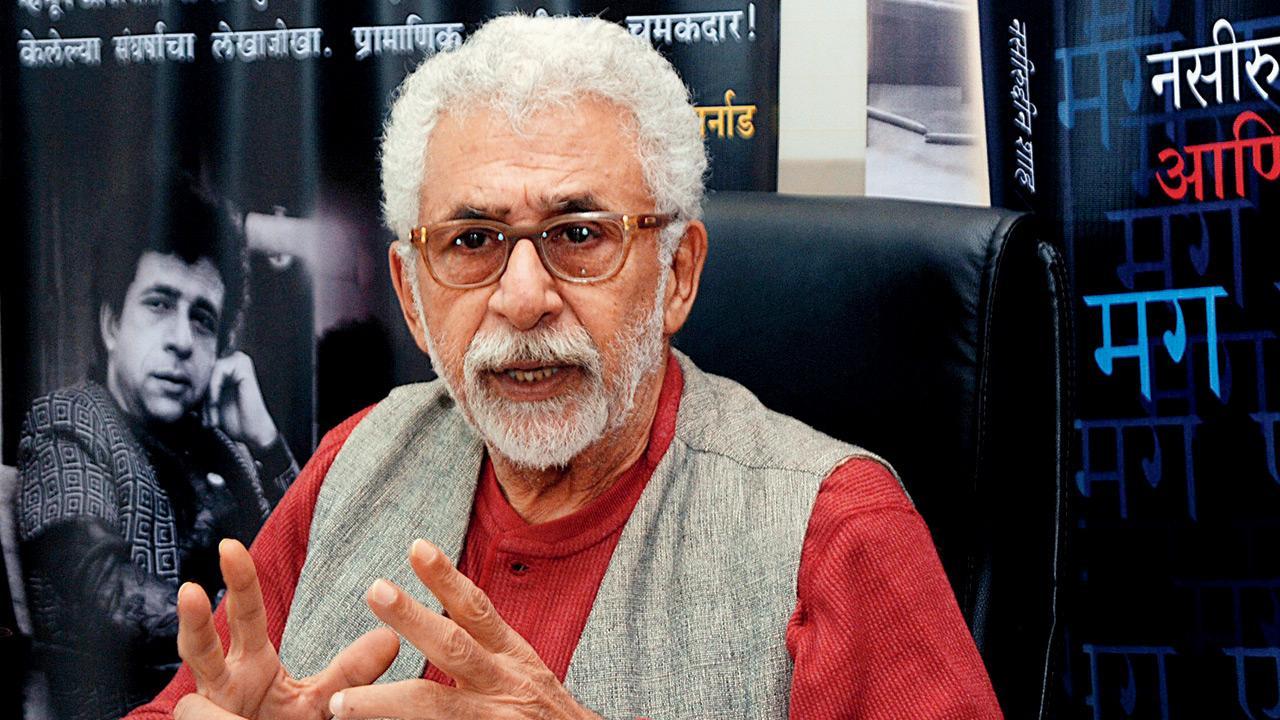
Naseeruddin Shah addressed the nuances of the industry as he gave a speech at a recent award ceremony in Mumbai
Niharika Lal (BOMBAY TIMES; July 31, 2023)
During an award ceremony to honour film projectionists in Mumbai, Naseeruddin Shah said that the unfortunate reality is that behind the glitz, many of those working in movies face low wages and are neither acknowledged, appreciated, nor rewarded.
The vast majority of film crews have to live with poor pay levels and even when a film is a box office hit, they never get any additional compensation.
Naseeruddin Shah said, "Those who stand in the rain, knee-deep in water, half-submerged, handling electrical wires or tirelessly carrying reflectors, or those who carry heavy lights on their shoulders all day without anyone even bothering to offer them tea or water, earn a fraction of what those sitting comfortably under fans, sipping sharbats, and throwing tantrums make. Unfortunately, that's how the film industry works. That's the nature of the beast. Afsos yeh hai ki yeh silsila film ban jaane ke baad bhi khatm nahi hota."
Naseeruddin Shah pointed out that this doesn't stop here, adding, "When a film becomes successful, toh iski asli malai distributors aur exhibitors naam ke darinde kha jaate hai and not those who toiled hard behind the scenes."
Giving awards to projectionists, he said, "Ye woh log hai jinhone apni puri zindagi andhere mein guzaar kar ke hamari zindagi ko roshan kiya hai. Film projection se mera rishta utna hi hai jitna kisi aam darshak (viewer) ka hota hai. Maine bhi in stalls mein baith kar awaaz lagayi hai - 'aey light light, sound sound'."
He said that he is thankful to the Film Heritage Foundation and its founder and director, Shivendra Singh Dungarpur, who felt the need to honour the projectionists and shed light on their invaluable contributions to the film industry.
Shivendra Singh Dungarpur said, "Because of the glitz and glam image that people have of the film industry, we often forget these unsung heroes and I feel that we must acknowledge those who work tirelessly behind the scenes."
Two Mumbai film projectionists among nine shortlisted for prestigious prize organized by Film Heritage Foundation
8:36 AM

Mohammed Aslam Fakih, 75
Two City Technicians Among Nine Shortlisted For Prestigious Prize
Sharmila Ganesan (THE TIMES OF INDIA; July 23, 2023)
In place of a recent Tom Cruise, a not-so-recent Abhishek Bachchan is strutting towards us. Two hours before the day's first show of 'Mission Impossible: Dead Reckoning', the sole screen at Regal Cinema is playing a grainy trailer of the 2012 action flick 'Players'. It's the only thing Mohammed Aslam Fakih has on 35mm that makes Simplex X-L whirr to life. Like a vintage car, the tall, retired six-decade-old analogue projector makes a comforting old sound each time its 75-year-old "mechanic" Aslam Fakih loops the film reel through its top and bottom rollers, animating the gears, soundhead and other parts whose names he didn't know when he first entered Regal's flip-switch-filled projection room as an apprentice on Independence Day in 1970.
"I miss using my limbs," smiles the analogue-watch-sporting projectionist even as both man and machine gear up for a special evening in the push-button digital age.
On July 26, just before Simplex X-L projects legendary director Kamal Amrohi's 1949 spine-tingler 'Mahal' on to Regal's screen part of Film Heritage Foundation's (FHF) film projection in practice workshop, the spotlight would be trained on Aslam Fakih instead of the other way around. The 75-year-old SSC pass Richard Burton fanboy -- who has spent half a century spanning Alfred Hitchcock to Christopher Nolan working at Regal -- is among nine faceless projectionists from across the country who have been nominated for a unique lifetime achievement award. Organized by FHF to honour the unsung technicians who have wound, rewound, oiled and toiled behind rays of light in cinemas for decades, the first-of-its-kind ceremony--which will see chief guest Naseeruddin Shah presenting a cash prize of Rs 50,000 each to three long-haul projectionists -- includes names such as Tardeo's 62-year-old Dara Mistry, the long-defunct New Empire's happy-go-lucky former projectionist, and Kolkata's Sukumar Ghosh.
The idea came from Shivendra Singh Dungarpur of FHF who would keep looking over his shoulder at the rays of light coming from the projection room as a child while bingeing back-to-back movies with his grandma, Usha Rani, in the stalls of a Patna cinema hall. Much like the young protagonist of the Italian classic 'Cinema Paradiso', Dungarpur was spellbound watching the projectionist at work during curiosity-induced interval-time trips to the projector room where he would sometimes see a man rushing in to grab a few cans of print and race off with them to another cinema on his bicycle.
"Till the early 2000s, you couldn’t screen a film on celluloid without a projectionist," says Dungarpur, who will never forget Khogse, a projectionist at Pune's FTII whose "projection was perfect when he was drunk" and M K Bangarappa aka Bangari who had screened films like Bergman’s 'Persona' and Kurosawa’s 'Rashomon' for the villagers in Karnataka's remote Heggodu village.
Keen to give them their due, FHF ran a social media campaign calling for nominations from around the country. Those who wished to nominate a projectionist had to download a form, fill in the details of the projectionist, how long and where he had worked and why they were nominating him. FHF then set up a selection committee comprising cinematographer and photographer Hemant Chaturvedi who has been travelling all over India for the last few years photographing single screen cinemas, acclaimed filmmaker Ashim Ahluwalia and Roosi Modi, the owner of close to 70 cinemas across India including Mumbai's Strand, Excelsior and New Empire who started as a projectionist himself. Spanning Kolkata to Kerala, the shortlisted nominees include National Film Archive of India's P A Salam and Lakhan Lal Yadav of Raipur's Raj Talkies who have spent five decades projecting celluloid.
For 62-year-old nominee Dara Mistry - a Girgaon bachelor whose earthy tongue pronounces Sean Connery as Shane Connery - the evening will mark his first time inside a single screen since Parsi New Year of 2014. Half an hour past that March midnight before Navroz, the gates that this doorkeeper-turned-projectionist used to open for a living had closed permanently. Mistry stepped out of Fort's New Empire theatre after the last show of 'The Pirates Of The Caribbean' to a notice announcing the closure of the century-old cinema inside which he had operated a projector called Century for 33 years. "That was 'the end'," laughs Mistry, now a Rs 12000-a-month-earning catering shop hand who sometimes watches old Dharmendra or Dileep Kumar starrers on his touchscreen phone after retiring to his projector-room-sized rental home.
"I can't afford to catch movies outside anymore," says Mistry, who became an office boy following the shutdown of New Empire.
"I had no experience in electricals. I learnt to check the fuse on the job," says Mistry.

Dara Mistry, 62
Subscribe to:
Posts (Atom)