Showing posts with label Eetha. Show all posts
Showing posts with label Eetha. Show all posts
When you see us dancing sensuously, you call it bold. Vithabai Narayangaonkar was true height of boldness-Shakuntalabai Nagarkar
2:30 PM

Shakuntalabai Nagarkar
Lavani was never just dance — it was dissent with ghungroos on. Now, even as Eetha brings Vithabai to the big screen, the art she gave everything to is fighting to survive
Bhushan Korgaonkar (MUMBAI MIRROR; June 28, 2026)
The teaser of Maddock Films’ Eetha has become quite popular. This Hindi film, is based on the life of Vithabai Bhau Mang Narayangaokar, the Marathi Tamasha Empress. Who was this Vithabai?
“She was a tigress, a real tigress,” says Lavani artist Shakuntalabai Nagarkar, winner of the Sangeet Natak Akademi Award, “Today, when you see us dancing, making sensual gestures, you call it bold. But Vithabai was the true height of boldness. All of us used to dance till the ninth month of pregnancy. But after childbirth, we would take the usual three weeks of rest. Vithabai, after delivery, did not rest even for three hours. She tied her ghungroos immediately and got on stage. People like you would say, ‘Oh poor woman!’ But what poor woman? She wanted to prove only one thing—that a woman is not even a hair’s breadth less than a man! Those were truly great days. Money was scarce, but art flowed abundantly.”
Was the past of Tamasha really so glorious? And what is its reality today?
For centuries, the Marathi dance form that has ruled the Marathi mind is Lavani, and the performance that entertains while also pricking the conscience is Tamasha. These forms belong to Mahar, Mang, Bhatu Kolhati, Dombari, Kalvat, Gondhali, Ghadshi and many other communities. Some of these communities are Dalit. Some are Muslim. Some are nomadic. Some are matriarchal. Lavani-Tamasha looks at the subject of sex with the most direct, simple, and unapologetic way. For these very reasons, the elite’s gaze upon it has always remained clouded, and social respectability has always stayed away from them.
When the village stayed awake
Once the evening meal was over, what called the villagers were the sounds of the paypeti (large harmonium played with both hands and both feet), dholki and tuntuna, along with the ringing of ghungroos. “Earlier, whether in villages or in cities, the means of entertainment were gossip and folk arts,” says Tamasha artist Mirabai Punekar, “And in Maharashtra, Tamasha and Lavani are the queens of folk arts!”
When night fell, the programme would begin with many gans, gawalns, batawni, rangbaji—that is, Lavanis—and other songs and dances, and after midnight, the much-awaited Vag, the folk drama, would begin. Its themes could be mythological, historical or social. Characters would enter one by one, and the audience would sink into the story. Before dawn, when the Vag-natya ended, people would head off to their work.
“Mostly men came,” says Mirabai, “Occassionally, women and children also came. Our songs and stories were all packed with raw, naughty humour!”
Beyond the Tamasha stage
This was the Dholki Fadacha Tamasha. Marathi cinema made it very popular after 1950. But there is another place where Lavani was performed even before this Tamasha tradition, and that is the Sangeet Bari. In his book Marhati Lavani, M V Dhond writes that references to kolhatnis and kasbinis—women who entertained men through song and dance—go back to the 13th century. Lavani is truly an ancient art rooted in Maharashtra’s soil.
Sangeet Bari refers to small, intimate gatherings where Lavanis are performed for a limited audience. These are small rooms where the paypeti, tabla and dholki players, along with the artist women, perform for four or five gathered men. The artists here are from matriarchal communities. Even today, there are nearly 50 such theatres along the highways of Western Maharashtra and Marathwada. In the Lavani performed here, Nazaakat and Thehraav (delicacy, subtlety, and poise) are central. “Because of such spaces, the semi-classical form called ‘Baithakichi Lavani’ was born and could flourish,” says music scholar Dr Ashok Ranade.
More than an item number
At present, Lavani seems to be getting a fresh lease of life through TV channels, cinema, events, YouTube and Instagram. Many film stars are seen performing Lavani. New choreographers and self-proclaimed stars are emerging. In all these spaces, only one reduced version of Lavani appears again and again—as a traditional “item number.”
Vigorous movements of the body, especially the waist and chest, winking, biting the lips, spins, jumps, acrobatics and a super-fast beat—this is what Lavani is, isn’t it? The answer is yes. Lavani can be this too, but it is not limited to this alone. It can be much more.
“Real lavani is when you perform in harmony with the words, with eye contact and feeling,” says Sangeet Bari artist Shabanabai Ashturkar, “We can play many forms of Lavani — Khadi Lavani, Baithakichi Lavani, Thaayichi Lavani, Khandeshi Lavani, Chhakkad, Social Lavani, Zagdyachi Lavani and more.”
Lavani is not merely performed; it is played, like a game. In it live thrill, freedom, resolve, improvisation, and above all, the active participation of both sides. “We don’t memorise Vag or Batawni; we remember the broad points,” says Tamasha artist Mandarani Khedkar, “Our real skill is in responding on the spot, while reading the response of both fellow performer and audience. We must hold the person before us for hours — otherwise they will drift to the next troupe, won’t they?”
This is the difference between Lavani-Tamasha and modern art forms. There is no invisible fourth wall borrowed from Western traditions; instead, there is an open exchange between artist and audience.
A language without shame
Earlier, Lavanis were written on many aspects of the body and bodily relations. Love before marriage, love after marriage, a kink, a sudden encounter with an old lover, the pull toward another man even while loving one’s husband, the ecstasy of union, menstruation, premature ejaculation, lack of erection, and excessive erection, among many other themes. Even today, some of these Lavanis survive in Sangeet Bari.
At an event in the Madras Music Academy, when Shakubai performed a Lavani on menstruation, scholars remarked, “There were once many Javalis on this very subject. In fact, all of this existed in our Dasi Attam. Your Lavani has preserved it well; we lost it in the name of respectability and sanitisation.”
At an NCPA programme, an 85-year-old woman, moved by the same Lavani, said, “Watching this today, I realized how simple and natural this act is. But our secrecy and false ideas of purity have given it a bad taste.”
Practice, perform, repeat
In classical dances, many movements are considered prohibited, but in Lavani they are celebrated. “When traditional Lavani artists move the waist, chest, lips and tongue, it appears alluring, but when others do the same, it appears vulgar,” observes Vaibhav Arekar, a Bharatanatyam dancer. The reason lies in years of practice and inherited culture. For generations, Lavani has been absorbed into their bodies, so it comes naturally to them. But when someone imitates it and tries too hard to appear “sexy,” it becomes repulsive or ridiculous.
Another hallmark of Lavani is that the artist sings and often dances at the same time. When traditional performers do both, one wonders how they never tire or even lose their breath. But that too is part of the craft — the discipline of practice.
Gholvane is truly the soul of Lavani – comparable to what gatabhava is in Kathak or viniyasa in Bharatanatyam. Taking a single line and unfolding its many layers, bringing a character or scene to life through that process—that is gholvane. When such a moment or a word, is repeated again and again, it doubles the joy of the performance. How can this joy be experienced through a four-minute film Lavani or a thirty-second reel? For that, one must make time and experience live Lavani at leisure in an intimate set-up.
Speaking truth to power
Tamasha has also done another important thing over the years: fearlessly questioning those in power and attacking social evils. “We are artists, how can we be timid?” says Padma Shri Raghuveer Khedkar, “We criticize the government openly, point out their mistakes, suggest reforms. We attack superstition and the ills of society. But all this comes with a layer of humour. First, the audience laughs heartily, then they think, and sometimes they even act.”
Pollution, environmental destruction, water scarcity, corruption, female foeticide, dowry deaths, rape, casteism and religious discord—countless Lavanis and Vags have been written on such themes. But what is the condition today? Is all this still alive?
Khedkar’s face falls. “Some of it survives. But honestly, we have reached a point where most people don’t want Vag or Batawni. They are too busy with their mobile phones. They only want beautiful, young girls dancing on recorded tracks.”
Can it survive the algorithm?
There has been a decline in these traditional art spaces. The Vag is fading; Baithakichi Lavani is becoming rare; and except for a few Sangeet Bari theatres, DJ music has taken over elsewhere. “Earlier, artists were safe; today, even with bouncers in place, there is still anxiety in our minds, and such incidents have happened too,” says Khedkar.
And yet, all is not lost. “How can it end?” asks Mirabai, “Art is in our blood. We simply cannot sit still. What we need is a discerning audience with good habits and good taste.”
And truly, this art and these artists need dignity — but just as much, if not more, we need their free and powerful expression. If their status rises, our own inner world will flourish too. Lavani must be given respect, yes, but not by sanitizing it. Its eroticism, rawness, boldness, ease, humour, directness, and cheekiness must remain intact.
A healthy society needs all kinds of arts. Just as a meal becomes nourishing and satisfying when it includes every flavour and variety, life too becomes richer when it holds all rasas and emotions. In today’s mechanical, technology-driven age, where division, hatred, violence and war are gaining ground, this becomes even more essential. The answer lies in bringing such traditional artists and their stories to the public. Films — and now reels and BTS content — have that power.
A film like Eetha will certainly give Lavani-Tamasha visibility beyond Maharashtra, but the real victory will come when this visibility moves beyond cinema and traditional artists are seen more often performing live, in their original flavour and form. This will benefit not just the artists, but us as well — and this will be the truest salute to Vithabai.
Through B Spot Productions, the author has revived Lavani for new audiences through productions such as Lavani Ke Rang, Love and Lavani and Rang Birangi Lavani, narrated in English and Hindi
No objection to the film's title, says Vithabai Narayangaonkar's daughter Mangala
8:36 AM

Preeti Atulkar (BOMBAY TIMES; July 3, 2026)
The title of Laxman Utekar’s upcoming film Eetha, featuring Shraddha Kapoor in the role of legendary lavani and tamasha artiste Vithabai Narayangaonkar, became a talking point a couple of days ago. According to reports, Mohit Narayangaonkar, a member of Vithabai’s family, has objected to the title and demanded that the late artiste’s full name be included in it.
The film and cultural department of a Maharashtra-based political party also urged the makers to change the film’s title, adding that there was no problem with the film itself.
However, Vithabai’s eldest daughter, 75-year-old Mangala Bansode Karavadikar, also a well-known tamasha artiste and a President’s Award recipient, has clarified the family’s stance. “We have no objection to the film’s title. I have spoken with Mohit and have requested him to not give out any further statements on the same. The title is appropriate because in those days, people from the villages where my mother performed would often call her Eetha,” she shares, adding that she had also told Utekar about this when he consulted her during the making of the film.
“I have been performing on stage since I was seven years old and have heard people address my mother by that name,” she says, adding, “We are happy that through this film people will come to know about my mother and how dedicated she was to her craft.”
Vithabai Narayangaonkar was honoured with medals from the President of India in 1957 and 1990. She was also conferred the title of Tamasha Samradni by the Government of Maharashtra.
Being in a race with others is boring-Kriti Sanon
10:09 AM

Actor Kriti Sanon reflects on creative risks determining her career choices, including Mimi, Tere Ishk Mein, and now Cocktail 2
Sonal Kalra (HINDUSTAN TIMES; June 25, 2026)
It began in 2024 and has continued well into 2026 — Kriti Sanon’s successful run at the movies shows no signs of slowing down. It started with Teri Baaton Mein Aisa Uljha Jiya, followed by the heist comedy Crew and a darker turn in Do Patti. 2025 brought the intense love story Tere Ishk Mein, and now, the breezy Cocktail 2.
When we point out that she seems content staying out of the rat race and away from social media rivalries, she says she is “actually very competitive”. She says, “When I see someone doing well, I feel like I also want to do well. Competition motivates me to do better. I feel like it also comes at a certain point in your career that you have a sense of security with yourself.” Things changed for the better, especially in 2021, she adds: “The validation that Mimi (2021) gave me, whether from the audience or through the National Award, made me feel like I had finally proved my talent and could now explore more... I am very critical of myself. So, I am always wanting to do better than what I have done before. It’s boring to be in a race with someone else and it just doesn’t give you peace.”
For Cocktail 2, have you received more compliments for your looks or your performance?
It’s a mix of both. I think any actor craves for that moment and day. Fortunately, this is a role that is very glamorous but also has its layers. I got lucky.
With sequels comes the pressure of matching the original. Does the positive response to Cocktail 2 feel especially rewarding?
I knew that there would be comparisons, and thankfully, this was not a sequel but a franchise. It’s just the vibe of Cocktail (2012) that was being taken forward in Cocktail 2… and the fact that it was one boy and two girls. Apart from that, there was absolutely no similarity; the story and the conflicts are completely different. I feel like Ally, my character, was not Veronica (Deepika Padukone’s character in Cocktail), and that’s what excited me. If I were doing a remake, then I think the pressure would have been way more.
One thing that is absolutely similar between you and Ally?
At the end of it, we all want to be loved, so I feel that’s a similarity. But I also feel even though she is really bindaas and free-spirited, in her heart, she really cares. The empathy part of it was interesting for me, and I connected with it.
Whose compliment after the film has touched you the most?
There have been so many coming from everywhere. Whether it’s Sajid (Nadiadwala, producer) sir or Sabbir (Khan, director) sir, who have seen me in my debut film Heropanti (2014), and now after this journey of about 12 years, playing a role like this; both sent me long, lovely messages. That was very emotional because when I did Heropanti, I was a baby who knew nothing and just learned everything on the job. The only thing that hasn’t changed is that I used to ask a lot of questions back then. And I am curious even now.
With each project, you’ve pushed yourself further. While success gives freedom to take risks, does it also make you cautious because there’s pressure to keep everything going well?
That also happens where sometimes it’s like, ‘Oh now I don’t want to spoil it, it’s a good run going on,’ But when you try different things like when I did Mimi (2021), a lot of people told me ‘Why do you want to play a mother right now’ or ‘Surrogacy is such a serious topic’ or ‘It’s too soon to take something on your shoulders’. The fact that I didn’t listen to it and went with my gut feeling gave me what it did (her first National film award).. So, that made me feel that okay, ‘I need to feel it from inside’. I need to really feel hungry towards doing a certain film. I need to feel challenged by the character and not repeat myself. When Tere Ishq Mein (2025) happened, it was such an intense film; it was emotionally and physically draining. As an actor, by the end of that film, I couldn’t do another intense project immediately. Fortunately, I had Cocktail 2 that came to me, and I was like, ‘This is a breath of fresh air and I would love to do this next.’
With so many different films working at the box office now, do you think audiences have always just wanted good stories, regardless of genre?
Yes. Aapko agar ek hi tarah ka khaana baar-baar denge toh aap bhi bore ho jaoge na? So, as an audience also, you want different kinds of cuisines and different genres of films. I think what we started thinking is ‘Oh, action is working. So, let’s make action films.’ But at the end of it, people want something that is engaging and different for them to not wait for the film to stream on OTT. People should have FOMO, ‘we have to go to a theatre and see it’. That experience needs to happen. Earlier, when OTT was not there, it took six months for a film to come on TV. So, there was a little more urgency to watch it. Now, mediocrity is not going to work.
What’s coming up next for you?
I am excited to find a script. Genuinely, I have not signed anything, and I am not in a hurry. Right now, quality over quantity for me, for sure.
An upcoming film that you are excited to watch?
Spider-Man: Brand New Day is coming. I’m excited about that. Dune: Part Three, too. Then there’s Eetha. Laxman Utekar sir is directing, the teaser is fab. It’s Laxman sir in his full element and avatar with Shraddha (Kapoor, actor). It looks very powerful.
Is marriage on the cards for you?
That will happen when it happens. I am not in a hurry. I think everything has its own time.
Kiara Advani, Sidharth Malhotra to clash at the box office in August last week
9:57 AM
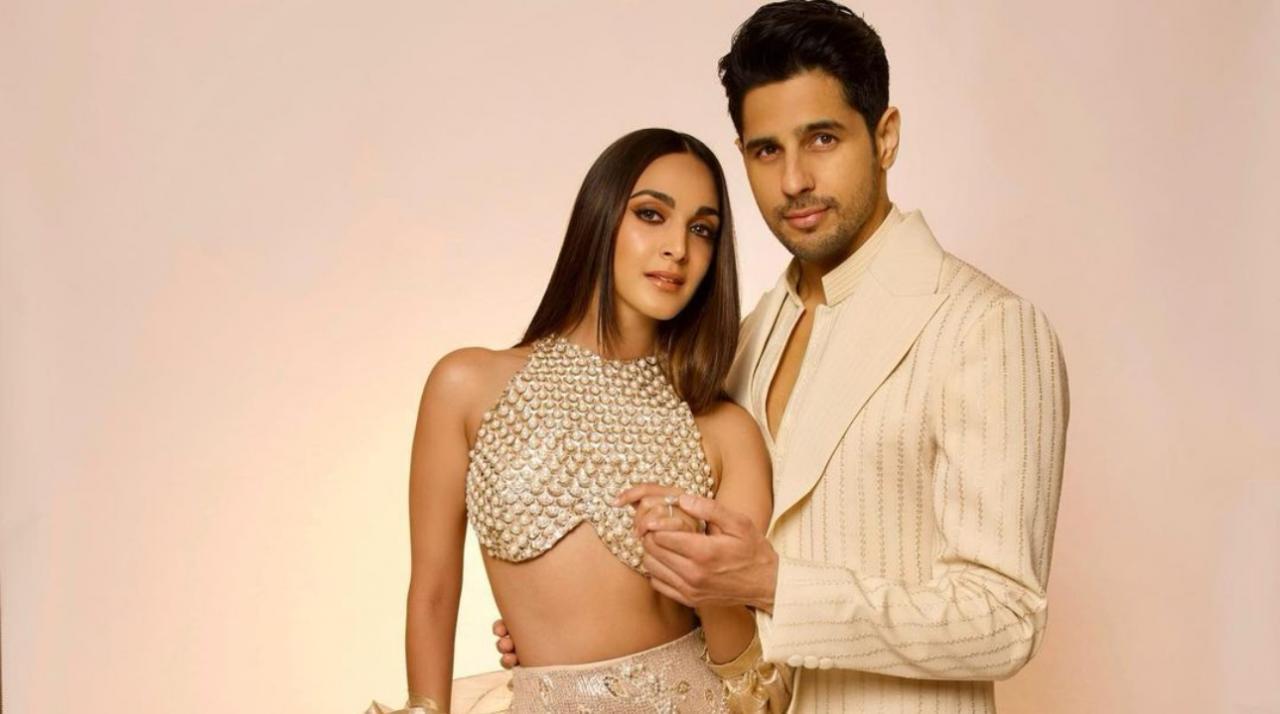
After several delays, Toxic gets a new release date, which will see it clash with Sidharth Malhotra’s Vvan and several other films
Vinay MR Mishra (BOMBAY TIMES; June 22, 2026)
After months of speculation, the makers of Toxic: A Fairytale For Grown-Ups have finally locked a new release date. Headlined by Yash, also starring Kiara Advani, and directed by Geetu Mohandas, the pan-India action spectacle will now hit theatres worldwide on August 26.
While Toxic arrives on a Wednesday, coinciding with Onam and giving it a two-day head start before the weekend, it will still face competition at the box office. On August 28, three other films — Khosla Ka Ghosla 2, Shraddha Kapoor’s Eetha and Sidharth Malhotra’s Vvan — are currently slated to release, setting up one of the busiest weekends on the 2026 release calendar. Interestingly, if the films release as planned, real-life couple Sidharth and Kiara will see their films clash at the box office.
Toxic was originally slated for an earlier release before undergoing several date changes. Industry buzz linked one of the shifts to a crowded release calendar and a clash with Ranveer Singh’s Dhurandhar The Revenge, which eventually secured the March 19 release slot. Toxic was later set for a June 4 release, but Yash confirmed in April that the team needed more time to align its global distribution strategy and international partnerships ahead of its worldwide rollout.
Akkshay Rathie, Director, Ashirwad Theatres Pvt Ltd, believes the situation remains fluid and that producers may still rethink their release strategies. “Two films with the ability to create a significant impact across the length and breadth of India ideally shouldn’t arrive together because every stakeholder wants to optimize revenues. Toxic is undoubtedly the bigger pan-India film in terms of geographical reach. Eetha may have stronger relevance in Maharashtra and certain markets, but Toxic has the potential to perform across urban as well as rural India,” he says.
Rathie adds that the announcement has caught the industry off guard and could trigger further movement on the release calendar. “This announcement has come completely out of the blue. There is still time and everyone will do whatever it takes to protect the best interests of their respective films,” he explains.
Kamal Gianchandani, CEO, PVR, believes that even if the clash is not averted, four films can be accommodated. He shares, “Cinemas have enough and more capacity to accommodate three or more films, especially when the movies are varied in sizes. We’ll see what decision other producers take on their release dates, because they often go back to the drawing board and rethink their dates.”
Sameer Munshi, VP, Miraj Entertainment Ltd, adds, “From an exhibitor’s perspective, this is a good clash to have. A packed release calendar indicates confidence in the theatrical business and gives audiences more choice. If the content works, all films can find an audience, even though Toxic is likely to be the clear opening-weekend leader.”
‘All filmmakers want to showcase their work well’
Deepak Mishra, director of Vvan, confirms that the movie is set to release on August 28, on the occasion of Raksha Bandhan. On the clash, he says, “We are the same industry. As artistes, we all want to showcase our work well. Eventually, the audience is the king. My best wishes to the Toxic team.”
When asked if there is a possibility that Vvan could be pushed to another date, Mishra says, “That will be a call that the makers will take. I am only focused on my work.”
I have never made choices that will embarrass me later in front of my kids-Randeep Hooda
9:23 AM

Two months into parenthood, Randeep Hooda says becoming a father has changed his everyday life, but not his creative choices
Priyanka Sharma (MID-DAY; May 20, 2026)
These days, Randeep Hooda finds himself smiling between takes. The actor, who welcomed daughter Nyomica in March with athlete-actor wife Lin Laishram, says fatherhood has brought him a joy he hasn’t felt since his teenage years.
“As a person, I feel a bit weaker in the knees. I want to go home more than ever since I got married because it is another reason to go back to. I often find myself sitting in a corner and smiling to myself thinking of my daughter,” Hooda tells mid-day, his eyes lighting up at the mention of the little one.
As he settles into fatherhood, the actor says every day brings a new lesson. “I am still a new dad. It has been two months, but there is more to discover every day. As my parents say, it is the best achievement of my life,” he grins.
While he is still in the early stages of fatherhood, we wonder whether becoming a parent will influence his creative choices. On that front, Hooda is clear that nothing has changed.
“I have never made choices that will embarrass me later in front of my kids or anybody else’s kids. So, that is not going to change,” assures the actor, who will next be seen in Eetha, alongside Shraddha Kapoor.
The Laxman Utekar directorial venture, based on Tamasha artiste Vithabai Bhau Mang Narayangaonkar, recently wrapped up filming. Refusing to divulge details about the project, Hooda says he could talk about it, but “I don’t know whether it will be in good taste”. He prefers to wait for the makers’ green signal before discussing the film further. “I don’t want to tom-tom about myself,” he smiles.
Shraddha Kapoor wraps up Eetha with a song chronicling Vithabai Narayangaonkar’s journey
10:40 AM

Upala KBR (MID-DAY; May 14, 2026)
When making a biopic on Tamasha artiste Vithabai Bhau Mang Narayangaonkar, it’s only fitting that you wrap the film with a song. That’s exactly what actor Shraddha Kapoor and director Laxman Utekar did. On May 5, Eetha — the biopic that plays out between 1940 and 1990 — reached its finish line with a massive montage song, featuring Kapoor and a crowd of 800 people, shot in Bhor, Maharashtra.
“The final song has a montage that chronicles the journey of Shraddha’s character from a young woman to her brush with fame and finally how she falls on hard times. Like the remaining numbers, this too has been choreographed by Vaibhavi Merchant,” said a source.
With that, it was the end of the 60-day schedule that began in March. Over the subsequent weeks, they shot in Madh Island in Mumbai, Solapur, Aundhewadi, Satara, and Nashik.
Vicky Kaushal to play Shahu Maharaj in Chhaava 2?
10:53 AM

Vinay MR Mishra (BOMBAY TIMES; April 3, 2026)
The buzz doing the rounds is that Vicky Kaushal and director Laxman Utekar might reunite for another historical biography. After the success of Chhaava (2025), the makers are planning a sequel of sorts.
A source close to the development shares, “While Chhaava was based on the life of Sambhaji Maharaj, this one is going to be based on his son, Shahu Maharaj. Vicky is apparently interested in collaborating with Utekar for this project, which is currently in the planning stages.”
According to our source, the movie is expected to go on the floors next year or early 2028. At present, Utekar is directing Eetha, starring Shraddha Kapoor, and is expected to begin work on the yet-to-be-titled sequel after completing the project. Meanwhile, Vicky Kaushal is currently shooting for Love and War and will subsequently start filming Mahavatar, a project based on Lord Parshuram. We reached out to Vicky and Utekar, but they were unavailable for a comment.
Earlier in an interview, Vicky decoded how patriotism is working at the box office. “I think patriotism can't be a formula and saying it is a formula is an insult to the emotion. Patriotism is our truth, which we will keep showing through our movies, literature and sports,” he said.
The actor added that patriotic films offer filmmakers a platform to express their pride in the country. “This is the way we can put our foot in the door and say that we are proud of the diversity, legacy and the truth of our country. I am so proud that I am a little part of this big moment where we are fearlessly representing India on a global map,” Vicky added.
Chhaava, directed by Laxman Utekar, chronicled the life of Maratha king Chhatrapati Sambhaji Maharaj and his conflict with Mughal emperor Aurangzeb. The film featured Vicky in the role of Sambhaji Maharaj, alongside Akshaye Khanna as Aurangzeb, and went on to collect ₹807 crore worldwide.
Randeep Hooda starts next project on misleading ads after wrapping Eetha schedule
4:14 PM
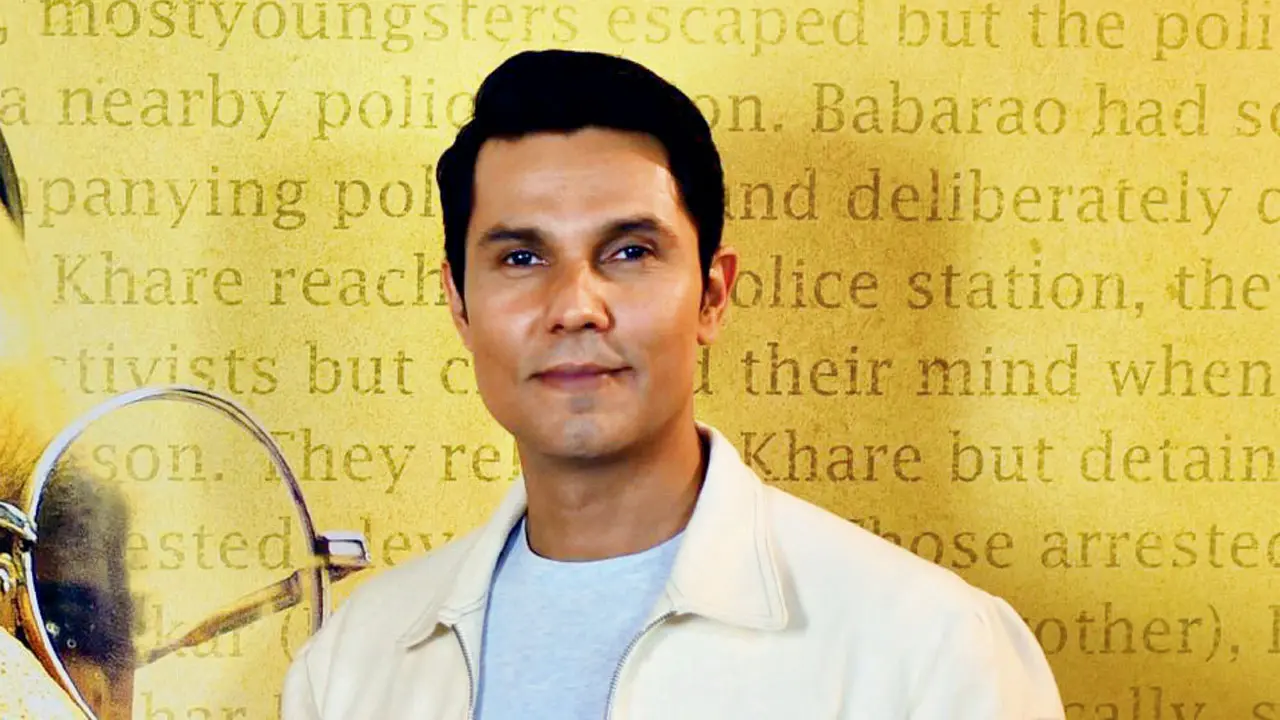
Mohar Basu (MID-DAY; March 17, 2026)
Within weeks of completing the Pune schedule of ‘Eetha’, Randeep Hooda has moved on to his next project. Sources have told mid-day that the actor is fronting director Anjit Bhatnagar’s maiden feature film, which revolves around misleading advertisements and their consequences. Bhatnagar has envisioned it as a hard-hitting drama set in Haryana.
By March-end, Hooda will head to a village in Haryana for an extensive schedule of the yet-untitled film.
A source close to the production revealed, “Randeep plays a Haryanvi Jaat. He completed the first schedule in Mumbai in late January, and is now prepping for the next leg. The makers will explore the socially relevant subject in a realistic manner.”
A Hyderabad-based production house is said to be backing the film.
Shraddha Kapoor returns to the sets of Laxman Utekar's Eetha weeks after toe injury
8:15 AM

After weeks-long break due to an injury, Shraddha Kapoor resumes the shoot of Tamasha artiste Vithabai Narayangaonkar’s biopic Eetha
Upala KBR (MID-DAY; January 30, 2026)
Weeks of rest later, work has come calling Shraddha Kapoor again. The actor, who is bringing Tamasha artiste Vithabai Bhau Mang Narayangaonkar’s story to the screen with Eetha, resumed filming for the biopic on January 4. Before this, director Laxman Utekar had called for a five-week break since the leading lady suffered a toe fracture in November 2025 (Intermission just as the show starts, Nov 22).
Sources told mid-day that the unit has now been shooting at Marve Beach near Malad, where the production design team has created a set of a village.
“Among the few sets that were built on the site in November, one reflected the interior of a house, and another, a bustling village. Laxman kept the sets standing until Shraddha healed. Now, they have resumed the shoot of a dance number that sees Shraddha’s character performing on a stage in the middle of a mela. Over 800 background artistes, who will be seen as people milling about at the mela, report to the set every day. Vaibhavi Merchant is choreographing the fast-paced number,” revealed a source.
Playing out between 1940 and 1990, Eetha will spotlight the Pandharpur-born artiste’s unusual rise in the world of Tamasha, her brush with fame, and her eventual financial distress. Currently, they are filming the portions that trace Narayangaonkar in her 40s — a part for which Kapoor has apparently put on weight.
We’ve heard that after this leg is wrapped in February, the actor will have a 10-day break. The source added, “Shraddha will use the time to shed weight. Soon after, she will shoot the portions that chronicle the protagonist in her 20s and early 30s. Originally the project was to be wrapped by February, but due to the fracture and the subsequent delay, the director is aiming to reach the finish line by April.”
Varun Dhawan-Sharvari starrer Luka Chuppi 2 pushed by 6 months due to Shraddha Kapoor’s Eetha
9:49 AM

Mohar Basu (MID-DAY; December 22, 2025)
As per original plans, pre-production of ‘Luka Chuppi 2’ was to begin in early 2026. But the buzz in the industry is that the Varun Dhawan and Sharvari-starrer has now been pushed by nearly six to eight months. Reason? From what we’re told, it’s director Laxman Utekar’s packed slate.
Utekar, who had helmed Kartik Aaryan and Kriti Sanon-led ‘Luka Chuppi’ in 2019, is currently neck-deep in the shoot of ‘Eetha’, his biopic on Tamasha artiste Vithabai Bhau Mang Narayangaonkar.
A source told mid-day, “Laxman is completely tied up with the Shraddha Kapoor film right now. ‘Eetha’ is demanding his full attention, and he doesn’t want ‘Luka Chuppi 2’ to feel rushed or compromised. After he wraps up ‘Eetha’ by mid-2026, he will train his focus on the rom-com’s sequel.”
The lead actors too have a busy date diary. While Dhawan is expected to begin work on ‘Bhediya 2’, Sharvari is currently filming for Sooraj Barjatya’s ‘Yeh Prem Mol Liya’. The source added, “A final call on the story and timeline will be taken in late 2026.”
Eetha shoot called off for two weeks after Shraddha Kapoor fractures her toe while filming a dance number
10:27 AM

Upala KBR (MID-DAY; November 22, 2025)
November was meant to be showtime for Shraddha Kapoor, who began filming for Eetha, a biopic on legendary Tamasha artiste Vithabai Bhau Mang Narayangaonkar, in Aundhewadi near Nashik (Behind the curtain, before the Tamasha, Nov 6). But last week, director Laxman Utekar had to hit pause on his film after Kapoor fractured a toe on her left foot.
The injury happened while she was performing the Lavani, a folk dance form that Narayangaonkar was known for.
A source shares, “Lavani music characteristically has fast-paced beats and a quick tempo. In this number composed by Ajay-Atul, Shraddha — sporting a vibrant Nauvari saree, heavy jewellery, and a kamarpatta — had to perform a series of steps in succession, to the beats of the dholki. To look the part of a young Vithabai, the actor has put on over 15 kilos. In one step, she mistakenly put all her weight on her left foot, and lost her balance as a result.”
While Utekar immediately called off the Nashik schedule, we’ve heard that Kapoor was keen to not let the days go to waste. She suggested that they rework the schedule to shoot close-up scenes.
The source adds, “After returning to Mumbai, they began to film on a set at Madh Island, where Shraddha shot some emotional sequences. However, after a couple of days, her pain aggravated and they had to discontinue the shoot. The unit will regroup two weeks later when she has completely recovered.”
Shraddha Kapoor learns rooted Maharashtrian dance forms lavani and gavlan for Eetha
9:45 AM

As legendary Tamasha artiste Vithabai Narayangaonkar’s biopic ‘Eetha’ rolls, sources say Shraddha Kapoor trained in dance forms Lavani and Gavlan for the role
Upala KBR (MID-DAY; November 6, 2025)
November has brought a new person and a new story into Shraddha Kapoor’s life. On November 1, the actor kicked off the shoot of Eetha, a biopic of legendary Tamasha artiste Vithabai Bhau Mang Narayangaonkar, near Nashik. But becoming Narayangaonkar — the famed singer and dancer, who had an illustrious career spanning over three decades — is no cakewalk. Word is that before heading to the set of Laxman Utekar’s directorial venture, Kapoor trained in the dance forms of Lavani and Gavlan for three months.
Sources tell us that Kapoor’s Maharashtrian roots made her Utekar’s top choice for the role. “With her mother Shivangi Kolhapure being Maharashtrian, Shraddha is deeply steeped in the culture. Another advantage was her dancing skill since it formed a big part of Vithabai’s life story. Shraddha picked up Lavani and Gavlan, the two folk dance forms that originated in Maharashtra. They are widely used in Tamasha, which traditionally combines storytelling with singing, dancing, and satire,” says a source.
Through Eetha, spanning the 1950s to 1980s, Utekar wants to introduce the audience to Narayangaonkar’s life story — how the Pandharpur-born artiste joined her family troupe at a young age and was driven to regain her family’s lost glory when her father fell on hard times. Soon, she tasted success with her performances. Even though she achieved fame and was honoured with the President’s Award in 1957 and 1990, she was reportedly in financial distress in the last years of her life.
Earlier this week, the unit began shooting in Aundhewadi, a village 50 kilometres away from Nashik. Sequences depicting Kapoor as Narayangaonkar in her prime are being captured in the first leg.
The source elaborates, “Shraddha is seen wearing a saree in kashta style, in the dance sequence that is currently being shot. Stylist Sheetal Iqbal Sharma did extensive research for the period film, including understanding the kind of sarees Vithabai favoured. After the week-long shoot, the team will film in Solapur, Satara, Nashik, and Kolhapur throughout November and December. Art directors Amit Ray and Subrata Chakraborty have zeroed in on all real locations. Barring a 10-day break in December-end, the director wants to shoot continuously till March.”
Randeep Hooda and Mohd Zeeshan Ayyub will be seen in crucial roles. Atul-Ajay have composed for the musical.
Subscribe to:
Posts (Atom)