Showing posts with label Dum Laga Ke Haisha. Show all posts
Showing posts with label Dum Laga Ke Haisha. Show all posts
Why does audience care about the opening of a film?-Bhumi Pednekar
9:34 AM

Actor Bhumi Satish Pednekkar urges support for small films beyond box office numbers
Sonal Kalra (HINDUSTAN TIMES; March 14, 2026)
Actor Bhumi Satish Pednekkar’s clarity of thought is refreshing in a world of rehearsed answers by celebrities. In the latest episode of The Right Angle with Sonal Kalra, she talks about her journey, troll culture and urges fans to support low budget films.
With audiences turning up to theatres only for big films, how can small stories win them back?
Small and medium-sized films are dwindling. Friday ko collections aane shuru ho jaate hain aur ek judgement de diya jata hai ki iss film ki opening nahin lagi. Agar nahin lagi toh kya it’s not a film that’s worthy of being given a shot?... I have people around me saying ‘haan lekin iski opening nahin lagi hai na’. I’m like why do you all care? This is not for you. This is for the business and industry people. Dum Laga Ke Haisha (2015) had opened at Rs. 1 crore! Agar tab yeh systems hote toh na mera, na Ayushmann Khurrana, na Rajkummar Rao, na Taapsee Pannu, kisi ke career nahi hote. I really feel bad. These are the films that actually change the society. Har cheez number ho gayi hai ab. We need to encourage small and medium sized films and that will only happen if we stop labelling them.
What’s that one thing you would look for in a role? What’s a prerequisite?
I don’t want to do any character that doesn’t have agency. In my last two pieces of work, The Royals and Daldal, both my characters had agency. I will never play a girl who conforms to all the stereotypes or all the conditioning that every other woman is trying to fight. I don’t have a problem playing a grey character or villain. If I am part of a magnum opus, and there are four scenes, but those scenes where I get to show something that I’ve never done, I will do it. It is not about the size of the role; it is about the impact.
Bhumi khud ye meaningful kahaaniyaan, cause-driven kahaaniyan dhund leti hai, ya ye kahaniyan Bhumi ko dhund leti hain?
This is just a part of me. My art has a lot of advocacy, and I as a person do, too. I am lucky that my first film, Dum Laga Ke Haisha (2015) taught me that cinema has a lot of power if you know how to use it well. Main jis tarah ke parivar mein badi hui hoon wahan pe maine hamesha dekha hai mere mother, father ko bahut community service karte hue. I was always taught ‘nation first, community first’. I think these learnings somehow reflect in my films. I have a lot of activism in me, and a lot of fun was made of it at one point.
What’s one similarity and one difference between the Bhumi of Dum Laga Ke Haisha and the Bhumi in Daldal today?
When I started my career, there was a certain innocence in that Bhumi that isn’t there today. A lot of that also comes with just spending these many years working. Agar kisi bhi profession mein hoti life, aapke experiences ek amount of hardening, and dar har insaan mein paida kar dete hain. The girl in Daldal is more mature. The similarity is that both are fearless. I was fearless then, and I am that now, too.
You’ve gone on record to say that you felt that it was a creative, emotional depletion that happened, which is why you took a break before Daldal. Would you want to elaborate on the break?
I felt it coming last year after shooting Daldal and a film. I couldn’t gather the strength to take that break. We are always told that, as a woman, how can you take a break? The clock is ticking, aur aapko yeh lag raha hai ki oh my God, now you know I am growing older… because this is your conditioning. I was very scared. I wasn’t able to give myself to acting the way I used to, maybe a little earlier. And it’s not like meri mehnat mein ya meri koshish mein koi kami thi. I felt depleted emotionally. I had seen a lot of struggle before I became an actor... I think once you become an actor, your life becomes monotonous in many ways because you are only working. You are going from one film set to another. If as an artiste I have nothing left to take from, ek ghada hota hai experiences ka, jo as an artiste aap apni performance mein daalte hain, wahi deplete ho gaya tha. Ek dum se vanilla ho gayi thi meri life, and I wanted to change that. I was an uninhibited actor, kyunki main kabhi race mein thi hi nahin. Main toh khud ki jagah bana rahi thi aur main race mein kab jud gayi, mujhe pata hi nahin chala. And that started affecting my mental health, everything.
Burnout is a reality, no matter which sector or age. What advice would you have, now that you’ve come back healed?
I have always been a planner. A lot of things that have happened in my life have been magic, and it has been God’s blessings. But I’ve always believed that you need to have a larger vision about what your life is. Even if you don’t have solid goals, there’s a larger vision, right? If you know what the next decade of your life is gonna look like and you feel that you need more skill, you need more time, or you just want to do nothing, that is also okay. You don’t owe anybody an explanation, nobody but yourself.
I think the industry needs to come together to stand up with each other when one sees negativity. It happened with actor Arjun Kapoor. So how do you keep yourself away from it?
I feel that people have forgotten ki by the end of it hum insaan hain. You can’t dehumanize a person you watch on screen. And all I want to say is that it’s easier to say, ‘It does not affect me’. It affects every one of us. How can it not? This is becoming a bit of a sickness.
I feel bad for all of these people who have so much negativity to say because there have been times where I have gone to this wormhole, and I would see it’s a woman who has pictures with her daughters. And I was like, ‘The way you are objectifying other women on social media, what if your daughter were to be objectified like that?’ It’s just not okay.
I would go a step further and say that we need strict laws against this, because this is not trolling; this is bullying. It is only a matter of time before a big incident happens, and then it will get nasty. Like, you know, you literally are telling people that, ‘I hope you die.’ What sort of darkness are you living in? What sort of sickness is here?
I can’t really see myself in a typical commercial potboiler-Ayushmann Khurrana
3:50 PM

Onkar Kulkarni (BOMBAY TIMES; May 5, 2023)
Ayushmann Khurrana is known for his distinct genre of films, which can be best described as out-of-the-box, quirky, brave, and rare. In a career spanning over a decade, he has broken some rules, made new ones, and marched ahead. At a recent session at FICCI Frames 2023, the actor spoke about how he has held his own as an unconventional actor, and what made him redefine the new-age mainstream hero in Bollywood.
‘I HAD NO OPTION, BUT TO TAKE THE UNCONVENTIONAL PATH’
Talking about what prompted him to make the unorthodox career choices that he did, he says, “I think in every era there has been space for every kind of character, every kind of actor. In the 2010s there was a definite void for an actor who was also a character, especially, around the time Vicky Donor (2012) happened. The protagonist was a part of an unconventional film that did commercially well, which was not the norm in the past. When I came to Mumbai in 2008, Ranbir Kapoor had just made his debut. At the time there was this void for actors in their 20s as most of them were in their 30s or 40s. When Ranbir made his debut, I was like, yeh toh aa gaya, ab main kya karunga? Then Ranveer Singh came into the industry in 2010 and again, it made me think… yeh bhi aa gaya ab main kya karunga? I had no option but to take the unconventional path and fortunately, it worked for me. I was an anchor on television, and Shoojit Sircar saw something in me (for Vicky Donor). I didn’t even audition for that film, and it all started there.”
‘THE ONLY TRIP IN MY LIFE IS TO DO SOMETHING THAT IS OUT OF THE BOX’
While the Andhadhun actor was eagerly waiting to step onto the silver screen, he was extremely cautious about picking the right film to make his debut, even if that meant turning down as many as six offers as a newcomer. “I was a television presenter at that time and was very secure. I was interviewing actors and learning from their success and mistakes. I had this notion ki agar meri pehli picture nahi chali toh mujhe doosra mauka nahi milega. I had six chances before, but the scripts didn’t resonate with me. Vicky Donor was a breath of fresh air. Shoojit Sircar was a credible director and I always thought that this film will earn a lot of credibility, but the kind of commercial success it got was beyond my expectation”.
When asked about the risks he has taken in his journey to becoming Bollywood’s unconventional star and being the one to create a certain genre of films which is unique to him, he explains, “I have built my entire career on risks. I cannot not take risks. I can’t really see myself in a typical commercial potboiler. I have always been an unconventional actor. The only trip in my life is to do something which is out of the box and something which is being attempted in Hindi cinema for the first time.”
He further adds, “I just focus on one film at a time, and I want the film to engage the audience in a certain way. When I had back-to-back commercial successes, all the subjects were unconventional. I never thought that I would be making a genre for myself, it is too much to think about. I was just taking one film at a time and doing my own thing.”
‘RISK-TAKING CAPABILITIES OF FIRST-TIME DIRECTORS ARE FAR MORE’
The actor has worked with several firsttime directors, like Hitesh Kewalya (Shubh Mangal Zyada Saavdhan), Raaj Shaandilyaa (Dream Girl) and Anirudh Iyer (An Action Hero). And what excites him about working with them is that even they have this urge to push boundaries, and of course, it also helps to keep the film’s budget in check. “The risk-taking capabilities of first-time directors are far more than the seasoned ones. The kind of scripts that I get, by default, are with first-time directors. Also, it is about the budgeting of these films. My films are not mounted on a 100-crore scale, so it’s easy to manage the budget of the film I do with a first-time director. The subjects that I pick are risky, and out of syllabus for Bollywood, hence, they have to be made on a certain budget, so that it works out well for everyone,” he says.
‘I MAY NOT BE THE MAIN DRIVER OF A FILM’S STORY’
What stands out in a film headlined by Ayushmann, is also the ensemble cast – who bring along their talent, quirk and energy to the subject. Elaborating on that, the Badhaai Ho actor says, “In my films, I am not really obsessed with my own character, I am obsessed with the whole story. I may not be the main driver of the story, as the characters around me are also very strong, whether it is Jaideep Ahlawat in An Action Hero, Rajkummar Rao in Bareilly Ki Barfi, Gajraj Rao and Neena Gupta in Badhaai Ho or Bhumi Pednekar in Dum Laga Ke Haisha.”
‘OTT IS LIKE THE IPL’
The actor who has never been bound by any medium, having started out as a radio jockey and then going to become a mainstream Hindi film actor, says that the digital medium excites him. He shares, “OTT is like the IPL where there’s emerging talent and has space for a lot of people. All we need to do is choose the correct medium for a correct project – that has been my learning from the pandemic. I love the OTT space. No medium is small, be it television or radio. Agar aap ek artiste hai toh aap theatre mein perform karke bhi khush ho sakte ho.”
Schools are going into lockdown because the air is so toxic. What kind of a world are we leaving behind?-Bhumi Pednekar
8:15 AM
Unnati Joshi (BOMBAY TIMES; March 22, 2023)
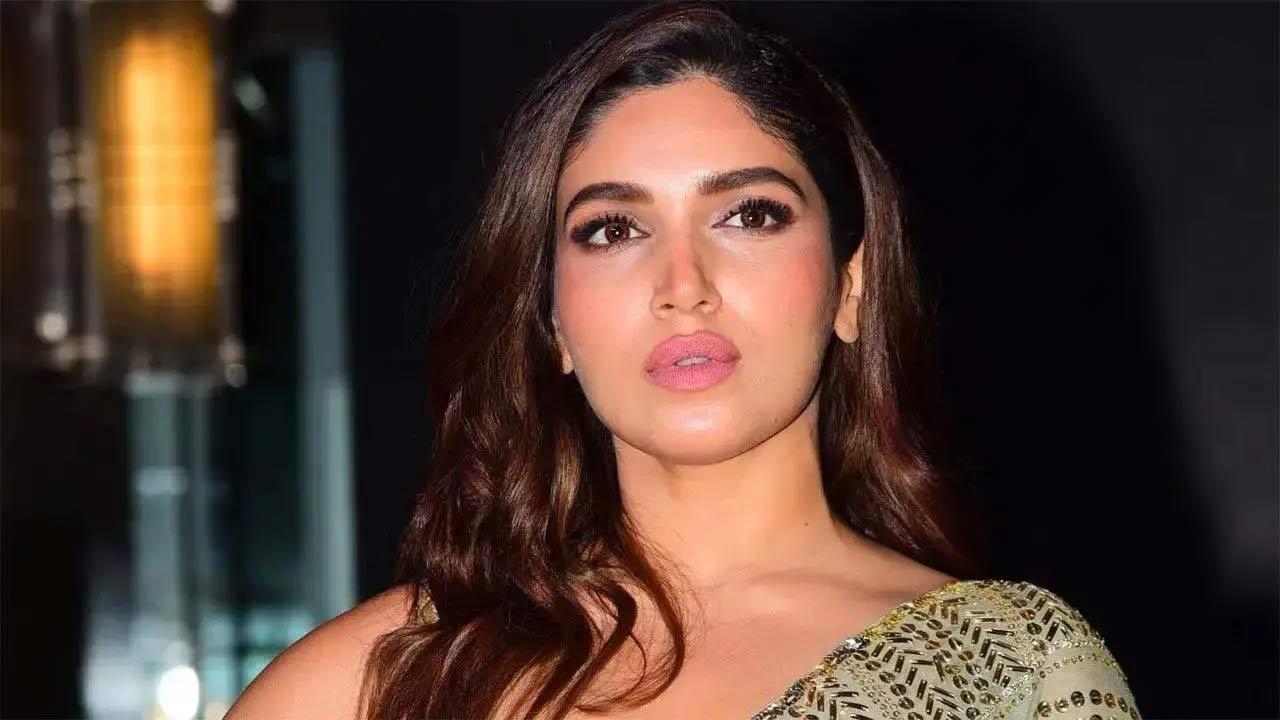
Bhumi Pednekar, who has been an advocate for climate-related issues, has always loved Delhi winters. However, she says that Dilli ki sardi no longer excites her. Courtesy: the smog. “Spring is definitely the best time to be in Delhi right now. But we have to understand we can’t always go to the second-best alternative. Is it fair that kids in the next few years will have respiratory problems? Schools are going into lockdown because the air is so toxic. What kind of a world are we leaving behind? Today, our summers and winters are so extreme. The biggest misunderstanding is that people think climate change will happen far away in the future. No! It’s happening now. We have had multiple heat waves, we experienced the coldest winter days this year, there have been floods and droughts, and this is not normal!”
“We must be really delusional if we believe that we aren’t going to face the adverse effects of climate change,” says Bhumi.
‘I FIND DELHI TO BE A MIX OF CULTURE AND DEVELOPMENT’
Talking about shooting in the Delhi smog, the climate warrior, who was recently named The United Nations Development Programme’s (UNDP) first national advocate for Sustainable Development Goals (SDGs) in Delhi, adds, “There were days when we had to push the shoot as the smog was so intense and we couldn’t see anything.”
Bhumi recalls, “I remember I would come back from the shoot and have bad allergic rhinitis, thanks to the pollution. I don’t want to live wearing a mask all the time, but that’s what we are going towards, and it’s heartbreaking.”
Despite that, Delhi remains one of her favourite cities. She says, “I love Delhi. I have grown up in the city and have my friends and family here. And what I love the most about the capital is the mix of culture with development. It really gives me a high when I go around Lutyens’ Delhi and cross the areas like the Parliament and the embassies. I think what’s beautiful about Delhi is that you will randomly see a historical monument and then there’s so much development around it. I love how both worlds co-exist. I also love the food here.”
‘WANT TO USE MY CRAFT TO MAKE SOCIETY A BETTER PLACE’
On the work front, Bhumi says she is looking forward to playing glamorous roles, but not ones that are about objectification of women. “I love glamour, and I love fashion. Most of my films don’t portray that, but in my personal life, that’s something I love. When I look at Sridevi in a chiffon saree in Chandni... uff! I want to do roles like that, but over time, we just reduced the importance of female characters tremendously. I would like to believe it’s changing now,” she shares.
The actress enjoys doing challenging roles. “Being an actor is a lot more than just looking amazing on screen and portraying different characters. It also comes with a little bit of responsibility. I got lucky because my first film was Dum Laga Ke Haisha, I tasted blood with that film and realized that doing unconventional parts is my power, and that’s how I can create a space for myself.”
She further adds, “I really enjoy challenging and pushing myself. I enjoy that my films bring about a certain amount of positive change in the world. I want to use my craft to make society a better place. I feel very proud that I have created a niche for myself, and I really hope that other women join me in that space, I will be happy to share it. There’s enough work for everyone.”
Never in my wildest dream did I expect that someday I will be the face of a project-Sanjay Mishra
8:15 AM

Deep Saxena (HINDUSTAN TIMES; February 12, 2022)
After his National School of Drama course, when actor Sanjay Mishra took up acting in early ‘90s, his only quest was to do impactful roles.
“My aim was just one — film chahe jaise bhi ho, people must say ‘Aap bahut acche thhe’, be it a comedy any other genre. Never in my wildest dream did I expect that someday I will be the face of a project. But, Ankhon Dekhi (2014) changed the game, followed by Masaan, Dum Laga Ke Haisha (both 2015) and Kadvi Hawa (2017). Thankfully, ab toh kamaal ka kaam aa raha hai,” he says while shooting in Lucknow.
He continues, “It’s rare that makers look at actors like us as a leading face of a project. Mukhya patra ke roop main log dekhte jaroor hain but himmat bahut kam log karte hain. But slowly, now it has started to happen. Drift has happened and the taste of audience has changed too. Hero, heroine ke alawa bhi ab kahaniyaan hain… due to which, now big productions houses see us as a leading face!”
Mishra further adds, “The best thing that happened to me is that so-called success came to me slowly but surely — warna log pagla jate hain (laughs). Climbing step-by-step, I kept my feet on the ground. And, that’s the reason I enjoy doing short films exploring deeper characters. The hunger to do new things keeps me going.”
The 58-year-old has an interesting mix of projects in his kitty. “I have shot for Rohit Shetty’s Cirkus, Anees Bazmee’s Bhool Bhulaiyaa 2, Colour Blind, Woh Teen Din... I shot a lovely film in Leh-Laddakh besides Teachers Day and Fugitive in Dehradun. Some more projects have happened but aajkal woh non-disclosure sign karwa lete hain sab…” he shares.
Last seen in 36 Farmhouse, Mishra laments that with the overflow of work, often he doesn’t have time to meet his family, “and my kids are solely dependent on their mother as I cannot give them time.”
Playing a freedom fighter would be my dream role-Bhumi Pednekar
8:12 AM
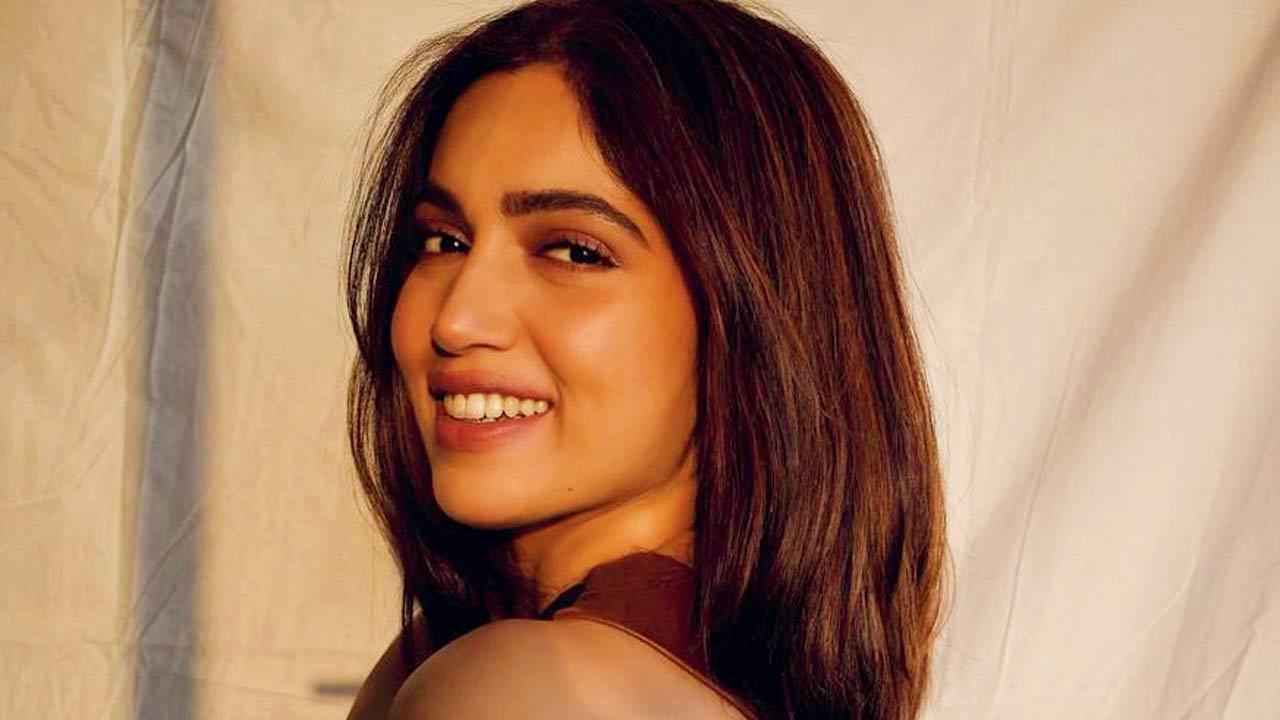
Responding to news of being a contender for film on freedom fighter Usha Mehta, Pednekar says she’s game
Mohar Basu (MID-DAY; January 6, 2022)
In a previous edition, mid-day had reported that filmmaker Ketan Mehta was considering roping in Bhumi Pednekar for a biopic on his aunt, freedom fighter Usha Mehta. Now, in an interview with this writer, the actor says essaying the part of a freedom fighter would be among her most cherished opportunities.
“Playing a freedom fighter would be my dream role. I am fascinated by such remarkable personalities. It would be an honour. I hope the universe listens to this,” says the actor. With a string of offerings, including Bheed, Rajkummar Rao-starrer Badhaai Do, Ajay Bahl’s Ladykiller, Govinda Naam Mera, and Raksha Bandhan with Akshay Kumar, within the span of one calendar year, Pednekar is set to explore a gamut of personalities for the big screen.
“All my films see me attempt to shatter stereotypes. That’s what I have done right from my debut film, Dum Laga Ke Haisha. I see myself playing ambitious, beautiful, and gutsy characters, because I relate to them. I am thrilled to be creatively expressing myself.”
Despite having tackled a variety of genres, Pednekar says there is one that she is still keen to give a go at. “A fantasy project. I would love to experience that, as an actor,” she signs off.
Most of my communication is about empowering my gender and I am ruthless about it-Bhumi Pednekar
8:14 AM

Bhumi Pednekar says she’s aware of the impact her films have made on society
Kavita Awaasthi (HINDUSTAN TIMES; April 5, 2021)
Bhumi Pednekar is vocal about many issues including the environment, gender disparity and women’s rights. And the same spirit reflects not just in her life but through her performances, too.
Having given impactful portrayals in her films including Dum Laga Ke Haisha (DLKH; 2015), Toilet: Ek Prem Katha (TEPK; 2017), Sonchiriya (2019), and Saand Ki Aankh (2019), she says, “As a person, most of my communication is about empowering my gender and I am ruthless about it. So, as an actor, when I have the means to reach out to so many people, I will use it. I consciously choose women who are here to prove a point and have an opinion, as sometimes, strong women might not have an opinion. I play women who will inspire other women to get a better life.”
Recently, Pednekar completed six years of DLKH and revisited her journey through many posts on social media. She is aware of the impact the role had on so many men and women after the film released, including herself. “There are days when I feel under confident. Then, I remember Sandhya’s journey and it gives me a boost of confidence and positivity. Sandhya, the kind of journey she had, that of battling body shaming issues, put out a message about body positivity for everyone. Or, If they think of Jaya in TEPK and her journey as the milieu she belonged to, the kind of step she took, leaving her husband which is a taboo, to fight for her basic right, is inspiring,” she says, adding she was glad to learn that many women followed in Jaya’s path and approached panchayats, who then decided on ‘no toilet, no bride’, which is the “kind of impact cinema” can have on people.
The actor has been shooting for Badhaai Do, co-starring Rajkummar Rao and reveals that the year is completely packed. “I feel I am in this for the right reasons and I am truly here as all I ever wanted to do was act. My happiest place in the world is in front of a camera. I think there’s a girl next door quality (in me) that people connect with and I try playing women whom you can relate with. Maybe that’s something that works for me. I find pride in celebrating the Indian woman in her entirety and maybe that works for me. I am doing some interesting films. The last six years, my trajectory has been a mixed bag of great characters, films that have done commercially well as well, so I have tried to maintain the same. I am all about experimenting and I have not let go of that. And this year will see a lot of that,” she concludes.
It's hard to be a professional actor around your screen idol-Ayushmann Khurrana
8:16 AM

Fan boy first, co-star later, Ayushmann Khurrana discusses working with Amitabh Bachchan in his latest release, Gulabo Sitabo
Mohar Basu (MID-DAY; June 13, 2020)
 For Ayushmann Khurrana, Gulabo Sitabo is the realisation of his long-standing dream of working with his favourite actor. With the Shoojit Sircar-directed venture bypassing a theatrical release for a world premiere on Amazon Prime Video, the dream may not have played out on a 70 mm screen. But that hardly diminishes its magic.
"After Dum Laga Ke Haisha [2015] released, Mr [Amitabh] Bachchan sent me a personalised note, appreciating the nuances of my performance. When I won the National Award for Andhadhun [2018], he sent a beautiful message," recounts Khurrana, believing that these moments were only leading up to Gulabo Sitabo, his first collaboration with the megastar. "It's hard to be a professional actor around your screen idol. I am glad he wasn't playing himself — the alpha male with a [deep] baritone. He was playing a character, wearing deceitful make-up. So, there wasn't a hint of the legend on set. But after pack-up every day, I would pinch myself to believe that I was, in fact, sharing screen space with him."
Written by Juhi Chaturvedi, the film thrives on the chemistry of its central characters — Bachchan as the cantankerous landlord Mirza, and Khurrana, his miserly tenant Baanke. "I had previously shot Bala in Lucknow. But on this set, I had to switch to a different accent, one that's typical of old Lucknow. My character in Bala had the Kanpuriya twang," he reflects.
The slice-of-life film marks Khurrana's reunion with Sircar, the director who started it all for him with Vicky Donor (2012). The actor is glad to shift gears from his previous offerings, under the guidance of his mentor. "I owe him my career. So, if he offers me a passing role in his film, I will do it. He is my guru. I have been doing message-oriented films over the years. But this movie doesn't offer social commentary. It's a pure form of cinema that doesn't commit to norms."
My first day on the set was nerve wracking. I gave 11 retakes-Bhumi Pednekar
8:22 AM

As told to Akash Bhatnagar (MUMBAI MIRROR; April 25, 2020)
 I used to assist casting director Shanoo Sharma and was auditioning actresses for Dum Laga Ke Haisha. Deep down, I had always wanted to act, but not many knew my secret, definitely not Shanoo. So, it was incredible when she ‘spotted’ me and convinced the director (Sharat Katariya) to gamble with me.
I needed months of prep because I was a city girl while my character, Sandhya, was from Haridwar. Also, she was overweight, so, I needed to pile on the calories in around 10 months. It was exciting to see myself reach an XXL size and the expression on people’s faces when told that I was the leading lady.
My first day on the set was nerve-wracking. I was still inherently urban and Sharat wasn’t convinced I’d pull off the role. He loved the supporting cast, but was doubtful about Ayushmann (Khurrana) and me. We were getting ready in a dharamshala as no vans could get into those narrow lanes, and he asked me if I remembered my lines so we didn’t end up wasting time. Since I wasn’t my natural self physically, I didn’t have Sandhya’s confidence and I was feeling rather lost and alone.
In my first shot, I had to chat with my mother on the phone, the morning after my wedding. An assistant director was sitting by my feet giving me cues. I would sometimes look at him, untutored in camera angles, and an impatient Sharat would scream at me.
“Bhumi don’t forget your lines,” was playing on loop in my head even as I wondered if I was standing on the right mark and was confused about where to look. I was surrounded by Sanjay Mishra, Sheeba Chadha, Alka Amin and Ayushmann, all of them in the same frame. It was intimidating, more so because we were shooting with sync sound and I was terrified I’d start speaking Bambaiya Hindi. I gave 11 retakes.
The first few days were really difficult. I felt Sharat was unhappy with my work, everyone was giving me advice and I was trying to do it all. Then, I started listening to my instincts, and finally got it right. I haven’t stopped it since. It was tough losing all the weight afterwards, but I’m grateful that I got an unconventional debut, as I learnt to push the boundaries as an actress.
The best part is I’ve a buffet of choices now-Ayushmann Khurrana
8:15 AM

Ayushmann Khurrana, who continued his box-office juggernaut this year too, says out-of-the-box films — also called ‘the Ayushmann genre’ by many now – will always be his staple
Prashant Singh (HINDUSTAN TIMES; December 28, 2019)
It won’t be wrong at all to say that he has been on a dream run since 2017. When Bala became actor Ayushmann Khurrana’s seventh consecutive hit, it was clear that he has gone beyond box office numbers and endeared himself to the audience enough to create a genre of his own. As the juggernaut continued in 2019 with Article 15, Dream Girl and Bala, talk of a new ‘Ayushmann genre’ became commonplace. “This year, I had a very wholesome experience [as an actor]. For me, the biggest takeaway is the audience’s love, which is only getting bigger,” says the actor, who has Shubh Mangal Zyada Saavdhan and Gulabo Sitabo lined up next year. Excerpts:
Since 2017, your dream run seems to be getting better...
The year 2017 was good, 2018 was better and 2019 has been the best so far. And I am really glad as it means I’ve created a certain kind of trust in the audience’s mind, which helps me with better openings for my films, and at the same time they expect something unique out of me. I feel this year saw three films of distinct textures – Bala was middle-of-the-road kind of cinema, Dream Girl had more of a single-screen appeal, Article 15 was a bit ‘multiplex-y’, though we wanted it to reach as many people as possible.
What was the top highlight for you this year?
It started with Article 15, which is the most difficult film – and my most fearless move – of my life, till now. While we were expecting critical acclaim, I’m very glad with its commercial success. I was also surprised with Dream Girl’s acceptance among the multiplex audience since that was the first time I tried to be slapstick and a bit front-footed with my performance. Both were two ends of a spectrum, and that’s why difficult too.
Do you feel more confident now as an actor?
Yes, I do. The best part is I’ve a buffet of choices now. So, I can pick movies and genres. Earlier, I took a lot of risks with first-time directors-producers, which paid off. Now, I’m getting to work with ‘big producers and directors’. I remember after Dum Laga Ke Haisha (2014), I didn’t do anything for a year and waited for the right scripts/directors. Now I’m getting lot of great scripts, and the idea is to get the best of the lot. So, good doesn’t excite me anymore — it has to be great.
How do you view the ‘out-of-the-box’ tag, now also called ‘the Ayushmann genre’ by many?
I am very happy with it. It is overwhelming and flattering. This is my zone and my staple. While people look out for those films, I enjoy doing them. I feel it’s pertinent to attempt the ‘taboo, socially-relevant’ subjects. At the same time, I’ll also make an effort that my ‘other kind of films’ do equally well too. And I’m sure they will also make ₹100 crore and more, maybe next year itself. So, let’s see.
A few days back, you mentioned in an interview that 2019 was an ‘eye opening year’ for you...
It’s been an eye-opener in the sense that I’ve realised people will accept good stories, regardless of the genre. When I said yes to Article 15, I was thinking about the commercial aspect of it, but the kind of acceptance the film got from the audience was unparalleled. Even vis-à-vis Dream Girl, since I have a loyal multiplex audience, I was thinking, ‘I don’t know whether they will accept me doing a commercial song-and-dance laden slapstick comedy’. But they did. So, I guess it’s an eye-opener for me that you just have to give people something unique, entertaining and, at the same time, engaging.
Did you realise that Bala was your seventh hit in a row? Were you keeping track?
Now, you are telling me about it, or else, my PR team updates me about such things but I never thought about it. I am very bad with numbers. Main khud puchta hoon, sometimes, ‘arrey, 6 hai yaa 7 hai (laughs)’. Aise top of mind nahi pata chalta. See, the idea is to just give unique content, which is also value-creating. I feel it can’t just be entertainment; there has to be something deeper which people should think about after getting out of the theatres. For me, it shows that thanks to the content I do, people have built a certain trust around me, and now, the numbers are also showing. Also, it’s not a meteoric, sudden rise. It started in 2017, and I am glad that I am taking baby steps towards success.
In terms of workload, do you, sometimes, feel like you are stretching yourself a bit too much?
That’s why I have taken a four-month break. Also, at this point, I can afford to take this break from films since two of my films are ready for release in 2020. Also, I think, ideally, I should have breaks in between. At the end of the day, we are artistes, and not machines. So, you need to recalibrate, re-energise yourself. So, the idea is to recharge your batteries, live more life, meet people, read books, and work on your different passions so that you are always excited about your core passion — which is, of course acting. That’s what I am doing right now. For four months, I will just travel, meet new people, spend time with family, jam with my band and write poetry. I think that’s very important.
In 2020, you have two upcoming releases. Will there be a third one?
There could be a third film later on in the year. But we are still contemplating [which one it can be]. Ideally, there should be a third film as well next year, maybe towards the end of the year. There is no plan [to have a certain number of films] till the time I’m getting great scripts. I’m okay with three films in a year as well, but not more than that maybe. At the same time, if I am not getting great scripts, I’m fine with doing nothing. In such a case, I won’t do anything and just do my musical events with my band. So, there is no desperation in that sense.
This year, you and your wife Tahira Kashyap also fought through her illness [breast cancer]...
Tahira isn’t just my life partner but a life coach as well. The way she dealt with the illness – with a happy mindset – is commendable. I feel it’s just a mind game. If you take that challenge head on and are excited about living, you can combat any challenge, that’s what she has taught me. I’ve learnt a lot from her and she is an inspiration. She introduced me to Buddhism, which I started to follow right before Bareilly Ki Barfi (2017), and things began to change. So, I think I owe it to Tahira as well as Buddhism.
Due to a busy, packed schedule, the musician in you isn’t getting much time and attention. Right?
Unfortunately, my live musical performances have taken a back-seat because, of late, I have been busy with my films. I sang two beautiful, love ballads in Article 15 and Dream Girl. But I didn’t get a chance to perform them in concerts as I’ve not gigged in a while now. But that will happen soon, maybe in January, I will go out with my band. In these four months, [during the break], I will be gigging for sure. As for my singles, last year, there was Chan Kitthan. I am singing in my films, but whenever I get time, I will come out with a new single, maybe, if there is a gap between my two films.
Let’s not forget that there simply aren’t enough meaty roles written for women-Bhumi Pednekar
8:19 AM

Bhumi Pednekar, adding she is here for the long run
Suktara Ghosh (MUMBAI MIRROR; November 29, 2019)
 Not many leading men and women of Bollywood can rival Bhumi Pednekar’s resume. The actor, armed with a kitty of six films, has proven her craft as well as her mettle in only four years. From piling on nearly 30 kilos—quite unheard of in this part of the world—for her debut Dum Laga Ke Haisha (DLKH), to playing a 60-year-old in Saand Ki Aankh, and soon a 19-year-old in the upcoming Dolly Kitty Aur Woh Chamakte Sitare, Bhumi seems to have already done it all.
2019 indeed, has been a special year. She’s had three releases, of which two are hits, and a fourth film, Pati Patni Aur Woh, is set to release on December 6. “I’m still processing it, but I’m more confident about my choices as an actor now,” says the 30-year-old.
Bhumi, in fact, oozes confidence. “I’m very ambitious, I want it all,” she says. And when she opens up on her craft, one doesn’t need to make much of an effort to spot the clear eye and steady head at work. Quiz her on the recent flak she received for playing a shooter double her age and using makeup to play a dark skinned lawyer in Saand Ki Aankh and Bala respectively, and she retorts: “By that logic, a naturally fuller woman should have played Sandhya in DLKH.”
“I’m an actor. It’s my job to transform into different characters,” she points out. “I respect people’s opinion, and I did take a step back to think about what they were saying. But I think I will continue to pick such roles because I like challenging myself. And let’s not forget that there simply aren’t enough meaty roles written for women.”
Bhumi though, seems to find her way to those that are. She almost hops with excitement while talking about Dolly Kitty…, Alankrita Shrivastava’s upcoming film co-starring Konkona Sensharma. “It’s a celebration of womanhood and I had a blast filming it,” she says. She’s also consciously looking to impart some of her real-life glam to her onscreen avatars. While she’s tight-lipped about how she’s prepping for Karan Johar’s magnum opus Takht, she has thoroughly enjoyed playing Vedika in Pati, Patni Aur Woh. “She is a strong woman who’s very aware of her beauty and the power she has over the opposite sex. I want to do these glam roles too. I have grown up on ’90s Bollywood… I love all the dancing and nakhras!” she laughs.
But it’s in her rooted-in-life roles that the actor undoubtedly finds her mojo. “My life has become infinitely more enriched since I began acting, and it’s because of these roles,” Bhumi says. “I realised I am so privileged that I can’t even imagine not having access to a toilet. Or take what Chandro and Prakashi Dadi have achieved—that is real feminism.”
Working with directors such as Abhishek Chaubey (for the hard-hitting Sonchiriya; incidentally, her only film that failed at the box office) too adds to her actor’s arsenal. The avant-garde filmmaker asked her not to emote through her eyes while playing a rape survivor in brutal Chambal. “It was very tough but it taught me a new tool,” she says, adding that she facetimes with the child actor, Khushi and 500 other kids, who are cared for by a Madhya Pradesh NGO, every Sunday. “They have become a huge part of my life.”
Given that most of her characters are from heartland India, Bhumi works hard to ensure their authenticity. “I read, do workshops, watch videos, try spending time in that region, talk to locals, read their literature, try learning songs,” she shares. “It’s a lot of homework. But the moment you start thinking like the character, a lot of things automatically fall into place.”
Her biggest school, however, was her time behind the camera—she began working as a casting director at 17 with one of B-town’s leading studios before switching sides. “The first thing you learn is that every person on the set contributes to your work. Actors are usually full of themselves, and think they are the fulcrum of a film. That’s not true,” she says. Those six years also taught her to be a professional. “I absolutely hate being late for work commitments. I’d get up at 2.30 am to get ready for the long makeup schedules of Saand Ki Aankh and Bala because I didn’t want to be late,” says the self-confessed workaholic, who feels guilty about not working one Sunday.
She also credits her parents and her growing up years between Juhu and Jaipur—where she spent idyllic holidays with her grandparents—for her intuitive understanding of people and characters. “My sister and I have been brought up in a secular, empathising environment. I’m a people’s person too. I used to chat with the didis and bhaiyas in school. I talk to my staff or people I meet along the way—it’s who I am,” she shares.
And does her empathy ever collide with her privacy? Bhumi says she enjoys her stardom and knows what comes with the territory. But she did find herself floundering when a fan began clicking selfies without asking her as she sat crying outside her grandfather’s hospital room in Chandigarh. “I was a mess. My nose was running, I couldn’t breathe. I didn’t know how to react. I simply walked off,” she says.
Bhumi has, by and large, managed to steer clear off the other bane of a celeb’s life these days—trolls. That is, till she started an online campaign to raise environmental awareness. “People tell me some very nasty things,” she laughs, adding that it’s her way to do a little bit for the world. She has brought in small changes in her personal life as well. “I used to be a shopaholic and loved hoarding makeup, for instance. Now, I know how much of our resources go into making these, and I’m really ashamed,” she says.
The actor also feels she has become a better person. “I’ve matured a lot, I take responsibilities and have de-cluttered my life. The people I have met have widened my horizons.” And what does the ‘future leader’ in her Twitter bio signify? “I want to be someone who has enough sensibility and brains to be emulated.” This girl’s sure got places to go.
I just go by my gut and intuition; I’ve become fearless-Ayushmann Khurrana
7:51 AM

Ayushmann Khurrana says post-Vicky Donor, he was okay to take advice from people, but today, he wants to be the ‘quintessential rule-breaker’
Prashant Singh (HINDUSTAN TIMES; November 4, 2019)
He has single-handedly made out-of-the-box ideas cool as well as commercially-viable, again. Although Ayushmann Khurrana has been on a roll since Bareilly Ki Barfi (2017), the actor — after hitting an instant high with his debut film, Vicky Donor (2012) — also experienced a low right at the start [of his career] with films such as Hawaizaada (2015), before bouncing back with Dum Laga Ke Haisha (2015). “I look at it all as a great learning experience/lesson of life. Now, I know every Friday is different and that nothing is permanent. So, you can’t be overconfident about anything. I am also glad I got some great scripts and made the right choices as well,” says Ayushmann as he readies for the release of his next film, Bala. Excerpts from an interview:
Almost all your films are driven by unique, clutter-breaking concepts. Is it happening organically or are you looking for such content?
It’s both! I have always looked for unique, clutter-breaking ideas because more than anything, such concepts excite me. Even if I do a masala film or it falls in the generic category, there has to be something unique. Bala, too, has been special and is close to me as I’ve given my heart and soul to it.
But don’t such ‘unique’ ideas come with a risk as a Hindi film hero is supposed to be a ‘Mr Perfect’?
I feel, we need more such concepts in India as we’re all imperfect. You have to put the common man on a pedestal and give him the confidence that it’s okay to be imperfect. It’s too far-fetched when one guy beats up 10 people as that’s not the reality. When a regular guy — who has his complexes — is portrayed on screen and gets glorified realistically, it gives confidence to a ‘regular’ person. I feel an important movement is taking place in Indian cinema where a ‘common man’ is feeling good about himself with such films.
At the same time, you also pepper your filmography with movies like Article 15 and Andhadhun (2018). How do you bring that balance?
See, ‘quirky’ films such as Bala, Dream Girl and Dum Laga Ke... came to me on their own but I’ve had to extract movies such as Article 15 and Andhadhun out of the directors as I’m not the natural or first choice for those films. I approached Sriram Raghavan and Anubhav Sinha myself. That [such films] will happen in the future, too. After two-three projects, I’d love to do films that aren’t in my ‘zone’, to surprise and shock the audience.
Talking of Bala, what was the first thing that appealed to you?
The first thing was overcoming your complexes. India is a complex country and we have a lot of flaws. Also, I feel life itself is about imperfections, and complexes could be of any nature — skin colour, height, weight or hair loss. So, it’s about accepting all of that and overcoming those fears. Bala isn’t just about receding hairline but also self-love. When I hear a narration, I react, consume and enjoy the script like an audience member and not as a star. And I enjoyed Bala’s narration as I could visualise the storyline.
Since Bareilly Ki Barfi, things have been going great as compared to the period right before Dum Laga Ke... What changed?
I have realised that there is no dearth of talent. So, just the choices that you make, bring in all the difference. And I feel fortunate that I’ve made some great choices. I’ve also stopped taking people’s advises. Now, I go ahead with my gut and intuition. I used to take a lot of advice post Vicky Donor. I used to think since they’re from the industry, they must ‘know better’. But in reality, no one ‘knows’. The idea is to be the quintessential rule-breaker and not follow rules.
I won't wear political ideology on my sleeve-Ayushmann Khurrana
8:42 AM

Even as he fronts films that challenge the status quo, Ayushmann Khurrana asserts his choice of being 'apolitical' off screen
Mohar Basu (MID-DAY; October 30, 2019)
 Six hits and a National Award later, Ayushmann Khurrana has become an industry disruptor of sorts. The actor, who consistently takes on movies that challenge the status quo while keeping an eye on the box office, says he has a bigger goal in mind. "From sparking a conversation on inequality in Article 15, to highlighting gender fluidity in society through Dream Girl and now discussing premature balding in men through Bala, I have hoped to deliver films that start a discussion in society. For me, that's the true meaning of cinema. Besides entertaining everyone, films need to make people ponder and encourage them to take an idea home with them," opines Khurrana.
For an actor who will fearlessly back a film with a powerful message — his upcoming film Bala aims to highlight the importance of self-love — Khurrana oddly emphasises that actors must be "apolitical". With multiple sightings of the Bollywood brigade with Prime Minister Narendra Modi this year, there has been much chatter about the politicisation of the entertainment industry.
Quiz him on this, and he chooses his words carefully as he says, "An actor can put a message across through his craft. I have addressed the issue [of caste divide] through Article 15. I don't need to venture out and be a revolutionary. I don't need to put my views on social media; they will reflect in my work. I don't want to wear my religion and political ideology on my sleeve. I used to wear a kada when I started out as an actor, but now I want to be a-religious, apolitical and a clean canvas. My characters shouldn't be viewed with the baggage of my ideas. I played a right-wing [character] in Dum Laga Ke Haisha [2015] and a left of the centre in Article 15."

With every film, I become more humble-Bhumi Pednekar
8:39 AM

The actor says portraying small-town characters was an eye-opener, but now she’d like to go beyond those
Pooja Sharma (HINDUSTAN TIMES; October 21, 2019)
In just four years, actor Bhumi Pednekar has established herself as a worthy artist. Her effortless portrayal of characters from small-town milieu and strong women on screen has impressed the audience and the critics alike. With hits such as Shubh Mangal Saavdhan and Toilet - Ek Prem Katha (both 2017) in her kitty, the 30-year-old is more confident to push the envelope in her upcoming five films, and take on the creative challenges. Excerpts:
You have been working on five films back-to-back. Do you feel overwhelmed?
Honestly, it has so happened that everything has come one after the other. I have been promoting Saand Ki Aankh. Then, I went to Korea for the premiere of Dolly Kitty Aur Woh Chamakte Sitare. Bala is also releasing soon, then I am finishing Pati Patni Aur Woh... Yes, I am a little stretched, but this is a fantastic phase, this is what I always wanted. It’s hectic but it’s a great time, I am not complaining at all.
If not acting, then what would you choose as your profession?
I definitely would have been doing something related to film-making, may be directing. But the kind of person I am, I would be doing something humanitarian for sure.
Was it difficult to play an older woman in your upcoming film, Saand Ki Aankh?
It’s extremely difficult, because the story starts at the age of 55. It was difficult to get into their mindset. How do you experience those years that you have not lived? They have lived life for 30 more years than us, how do you go through the experience of being a mother or grandmother, just how mature you become with age? It’s difficult to bring that in the character and that is the most challenging part. You can work the body language and makeup, but you can’t work the mindset. That’s something you have to do on your own. These dadis have positivity and a spirit to live life.
In Bala, you play a dusky girl. Is it challenging to make sure you give out a social message in a comedy, and do you feel it might go haywire, too?
I think there is a thin line in everything that you pick up which is not run-of-the-mill. You have to be extremely sensitive when you are speaking of human complexes. So, it could be me gaining weight in Dum Laga Ke Haisha or ageing for Saand ki Aankh, or it could be what I have done in Bala. As an actor, I feel as far as a character is not propagating the negativity attached to certain aspects of society, and is actually trying to clear that out, I would get on board. There are always two sides to a coin, but be it balding or skin colour – everything has been dealt with a lot of sensitivity. At the end of it, it’s the makers’ prerogative as to what their vision is for the film. As an actor, there’s only so much that I can do.
Does Playing small-town roles when you come from an urban background, change perspective in general?
100%. With every film, I become more humble. I have more gratitude for what God has given me. All these girls that I have played, are survivors. Their life has never been easy, but just their attitude of making their life better and caring about people in the toughest situations and not being ignorant... I can’t be ignorant towards what people are going through. I’ve always had a voice but now that I am an actor and a voice that people will listen to, I need to use my voice responsibly. That is what I’ve learnt in the last four years. Also, our country is so diverse and we’ve different kinds of worlds within. There are so many unexplored stories in small-town India that people want to watch and I want to tell. So, yes, I want to break away (from small-town characters) but definitely not at the cost of a good script.
Today, I wouldn’t put on 30 kg for a film-Bhumi Pednekar
7:02 AM

Bhumi Pednekar on things that have changed since her debut and what made her take up the role of a character in her next that is twice her age
Hiren Kotwani (MUMBAI MIRROR; October 3, 2019)
 The first thing that strikes you about Bhumi Pednekar is that she’s a complete contrast to the rooted-in-the-heartland characters she’s played. She admits that it’s a challenge for someone born and brought up in Mumbai. “Playing an urban city girl is like makkhan,” she quips, as she gears up for another small-town outing. Chandro Tomar from Baghpat, her character in Saand Ki Aankh, with sister-inlaw Prakashi, holds the record for being the world’s oldest women sharpshooters. That prompts the first query:
Had you heard of the Revolver Daadis before the film came to you?
I know of them as my mother is from Haryana and when they started shooting in ’97, they took a lot of people by surprise. The first time I saw them was on Aamir Khan’s chat show, Satyamev Jayate, and their story was inspiring. They had literally lived under the veil for around 60 years, had 40 children amongst them in a family of 80, toiled in the fields, in brickworks, made dung cakes and taken care of the kids. Then, they had stepped out of their comfort zone to take part in a competition sport which pitted them against retired police commissioners and army officers. Phew!
What’s the first thing that struck you when you were offered the film?
That a story like this can get into the rona-dhona zone. But I quickly discovered that despite living under patriarchy, Chandro and Prakashi are women who had led happy, fulfilled lives. The change happened because they didn’t want their granddaughters to have the same lives. Their achievements show us it’s never too late to pursue dreams.
Neena Gupta and Soni Razdan believe older actresses should have played these characters...
Casting is the filmmaker’s prerogative, and while I respect the opinions of Neena ji and Soni ji and those on the social media, I hope they will change their minds once they see the film. For me, playing Chandro daadi, who’s double my age, was the opportunity of a lifetime. Our stalwarts are the legends they are today because they took on such challenges.
What traits of the feisty daadi have you incorporated?
Chandro daadi is an intelligent woman who learnt English from listening to people around her. She doesn’t snap back during an argument but her response is a lesson in itself. While playing her, I also channelised my own naani, a Haryanvi Jat. The way they talk and walk, their habits and strengths are alike. I lost my nana on the day of the trailer launch; this film is my tribute to my grandparents who, having seen life, know it’s pointless to stress.
The daadis started shooting at 60, what would you do at that age?
I’ll serve humanity in some way. Age is just a number, life and change begins when you want it to. The daadis are 87 today and tireless, be it on the social media or at events. I’ve never heard them say they are tired. I want to celebrate life in the same way.
For your debut film, Dum Laga Ke Haisha, you’d put on 30 kg. Would you take up the challenge today?
No, I wouldn’t put on so much weight because I don’t have the time to knock it off. It took me a year to gain weight for Dum Laga Ke Haisha and another year to lose it. Logistically, I can’t do that now, but for SKA, I did add on 10 kilos to look convincing as an old woman.
Are you worried about gaining weight?
I’m very health conscious, it took a lot of hard work to shed the weight I’d put on for this film, more so because 10 days after I wrapped up Saand Ki Aankh I began filming Bala. Fortunately, all the goodies the daadis treated us to were organic, there’s no milavat in their lives.
I want to explore more territories-Ayushmann Khurrana
8:18 AM
Chaya Unnikrishnan (DNA; September 11, 2019)
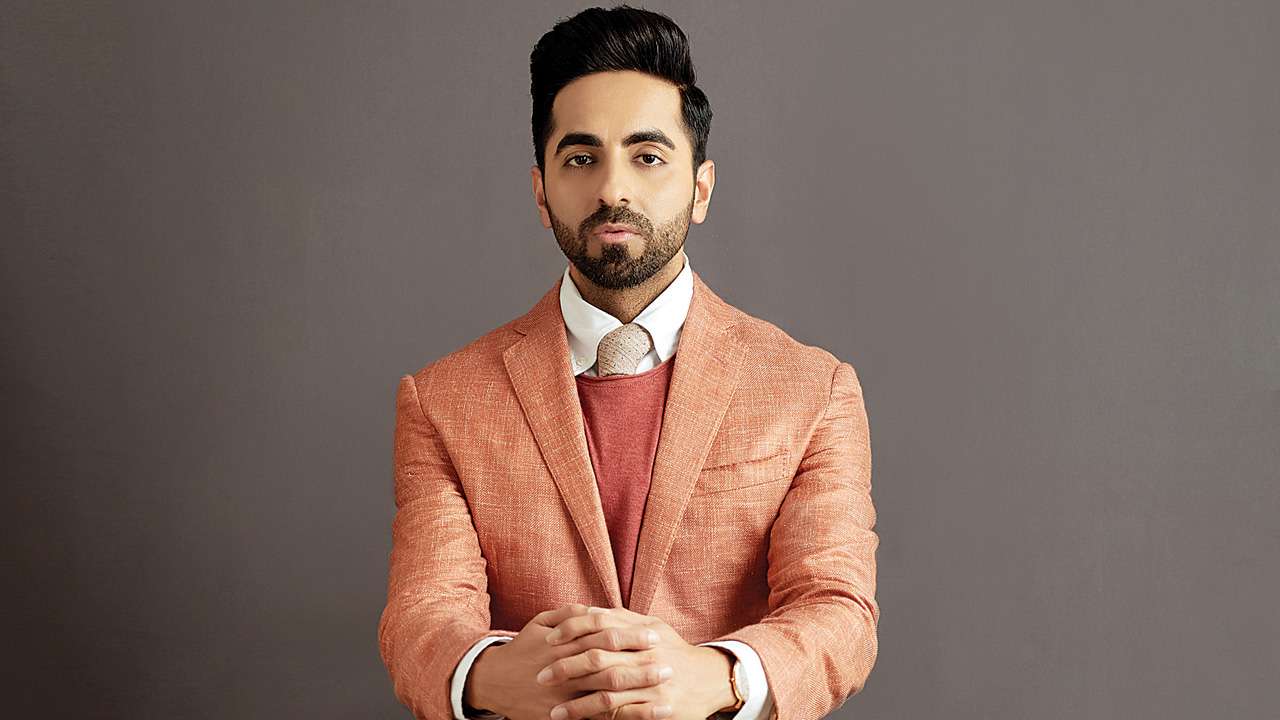
Ayushmann Khurrana is on a roll with five back-to-back hits in the last three years. Recently, he added another feather to his cap by bagging the National Award for his performance in AndhaDhun. To celebrate and take a break from work, the actor went on a week-long holiday abroad with his wife Tahira Kashyap Khurrana and children — Virajvir and Varushka. “Going to Australia with my family was the best detox — It was good fun,” says the 34-year-old, who is now back to the grind, promoting his next, Dream Girl. Here, he talks about his upcoming films and being hailed as the poster boy for quirky, content-driven movies.
You’re on a professional high and this year has been great for you...
Yes, I have a feeling of gratitude. It’s a thin line that I’m treading between contentment and ambition right now. I’m feeling happy and simultaneously, there’s this need to do more. You’re rewarded, awarded, getting good scripts, the buzz is good for the next film. and you still want to explore more territories. I am in that phase.
What appealed to you about Dream Girl?
It was unique in a way because it’s going back to the roots. Traditionally, in Ram Leela and all these folklore, plays or theatre, most of the actors who play female characters are males. This is the story about that guy. And for some reason, his father is not that proud of the fact that he’s playing a girl in Ram Leela. But, he is gifted — he can talk in two voices, both male and female — he utilises this talent of his and joins a call centre. Some men fall in love with him, and it is about how he deals with the situation. Not only is it unique, but also quirky at the same time.
Have you done such voice modulation in your theatre days?
No, but I’ve done something like this in my radio days, because, of course, it’s voice-driven. And I did some prank calls, too. Also, I remember when I was 14 or 15, I was dating my first girlfriend and whenever her dad used to pick up the phone, I would talk like a girl and ask for her (laughs). I’ve done that in the past because that time one’s going on the cusp of childhood and puberty.
How easy or difficult was it for you to make the transition to a female voice now?
It was fine, but it’s just that because our film was in sync-sound, the transition from the male to female voice was not that smooth. So, I went to the studio gave 40-odd takes and then hit the right note.
What’s the best feedback that you’ve got for the film’s trailer?
I got a message from Rohit Dhawan (filmmaker); he loved the trailer. This film, of course, is a tribute to the ’90s David Dhawan kind of comedy where there is more elbow room for an actor to perform. Not only audiences but I also got feedback from industry insiders, trade people, who normally send me congratulatory texts only after the film becomes a hit or something. On the basis of a trailer, I had got messages from them earlier for Badhaai Ho and now for Dream Girl.
The ’90s era is known for its masala entertainer and loud comedies...
Yes, and this film is my most masala, commercial outing. I’ve not played with subtleties at all. I have gone all out and played on the front foot as far as the acting or portrayal of the character is concerned. It goes slapstick also in between. That’s the tonality of our film.
Since you started with Vicky Donor, did that set the ground for you to attract offbeat scripts?
It did. I think every actor has one staple, one zone. Mine is quirky slice-of-life films. And, I’m really happy in this zone because they always offer something unique. At the same time, themes that have not been tested before in Indian cinema are explored. So, it gives you a lot of scope for people to get excited for the subject of the film. It started with my first film and went forward with Dum Laga Ke Haisha.
In between, you did films like Bewakoofiyaan and Hawaizaada, which were formulaic and didn’t do well...
That was because, I was not getting those kind of scripts. Immediately after Vicky Donor, I was struggling to get the right kind of script because it set such a benchmark. And then, there was actually no quirky subject that I was offered. They were not getting made after Vicky Donor. So, for two-three years, I had no choice. I was doing what I was getting. There was a learning curve also at the same time.
Now every actor wants to be associated with content-driven cinema. When did that transition begin?
I guess now it is happening because there’s solid competition from digital medium, from the OTT platforms. If you don’t have something unique to offer, the audience will think twice before spending money for the tickets because they can obviously see a lot of amazing stuff happening on the web. The trend began three-four years back, and everybody’s driven towards getting attracted to content-based cinema. But I guess it started with Vicky Donor because a subject like sperm donation was seen by family audience. That was kind of a case study.
So, you are the poster boy of quirky content-driven cinema?
You can say that. I’m proud to be a part of that wave.
Going ahead, you have movies like Bala and Shubh Mangal Zyada Saavdhan, which deal with bold subjects...
Next up is Bala, which is based on a guy suffering from receding hairline. In a country like India, I’ve explored far-fetched topics like sperm donation and erectile dysfunction (Shubh Mangal Saavdhan), but receding hairline is the most common among males. Fifty per cent of men after the age of 30 suffer from hair reduction, even women for that matter. So, we’ve explored that. Again, that’s quirky, motivational and a lot of fun. Then comes Shubh Mangal Zyada Saavdhan where I play a homosexual. This is the first mainstream film with homosexuality in its forefront. We’re not shying away from anything on that front. After that there is Gulabo Sitabo. It is a slice-of-life film, but there is no one liner I can tell you about it. In the movie both me and Bachchan Saab are at loggerheads.
Were you intimidated when you had to interact with Amitabh Bachchan the first time during the shoot?
I had met him socially but on the sets, it was very different. He comes really prepared with everything. He knows your lines also. He’s an institution, he’s a living legend. Thankfully, he is that co-actor who’s very collaborative. So, the butterflies were gone when I met him on the set.
In Article 15, one saw you in a completely different avatar. Are you considering any more such outings or playing a dark character?
I would love to, but I have films like Gulabo Sitabo and Shubh Mangal Zyaada Saavdhan coming out next year. Right now, I am taking it easy and waiting for the right script.
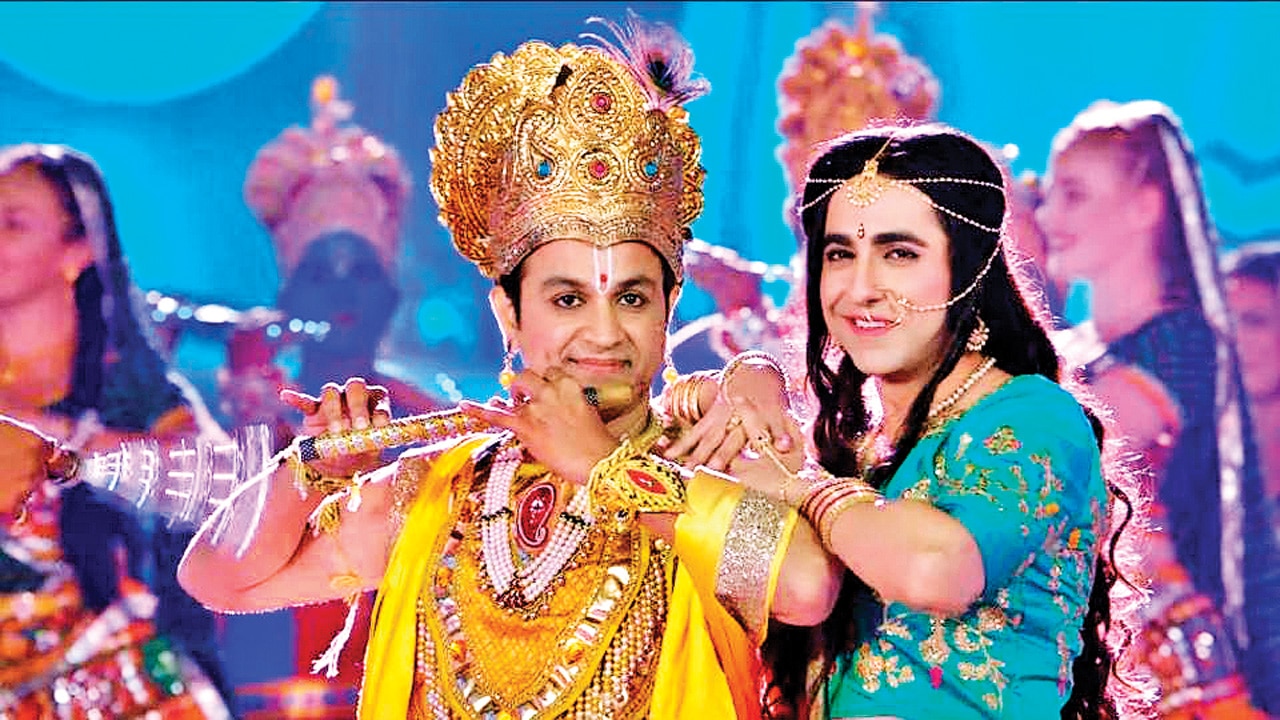
Lakshman Jhula shuts down, will Bollywood move on to Ram Jhula?
8:16 AM

Built in 1923, the bridge has appeared in films like Ganga Ki Saugand, Sonu Ke Titu Ki Sweety, Bunty Aur Babli and more
Niharika Lal (BOMBAY TIMES; July 15, 2019)
 On Friday, the Uttarakhand government shut the 96-year-old suspension bridge Lakshman Jhula in Rishikesh for the public after a Public Works Department (PWD) report stated that the bridge was in a bad condition and could not “sustain more traffic in its present state”. The development will not only have an impact on the locals and tourists but also many film producers as the iconic bridge is one of Bollywood’s favourite shooting locations.
Om Prakash, Additional Chief Secretary (ACS), PWD, Uttarakhand, said that orders were issued to have the bridge shut on the PWD-appointed consultant’s recommendation. “It is not certain when the bridge will be opened,” he said.
The bustling 450 ft iron suspension bridge has long been one of the most popular shooting locations in Rishikesh, where everything from movies to television shows to ad campaigns have been shot. It has featured in a number of films, including Amitabh Bachchan’s 1978 film Ganga Ki Saugand, Ayushmann Khurrana’s Dum Laga Ke Haisha and last year’s Batti Gul Meter Chalu.
SALMAN KHAN’S NEXT MAY BE THE FIRST FILM TO GET AFFECTED
Shooting for Sanjay Leela Bhansali’s Inshallah, starring Salman Khan and Alia Bhatt, is scheduled for next month in Rishikesh, Haridwar and Uttarkashi. A Rishikesh-based line producer says, “In April, Sanjay did a recce in Haridwar and Rishikesh. We don’t have the list of locations yet, but one of the major locations was Lakshman Jhula. It won’t be possible for his crew and him to shoot there now.”
‘ONCE THE AUDIENCE SEES THE BRIDGE, THEY KNOW IT IS RISHIKESH’
Line producers say that Lakshman Jhula in Rishikesh is as iconic as the Eiffel Tower in Paris, the Taj Mahal in Agra and the India Gate in Delhi. “Even for those scenes that are not shot on the Lakshman Jhula, directors instruct us to pick spots from where the bridge can be seen in the background, like it was seen in Qarib Qarib Singlle. Similarly, if a shot is placed in a restaurant nearby, they prefer frames in which the Lakshman Jhula is visible. Once the audience sees the bridge, they know the place,” says Nitin Pundir, a Rishikesh-based line producer. He adds, “Every year during the kanwar yatra, the bridge is shut because of traffic. Initially we thought that this time also it was because of the yatra but it seems the bridge is shut permanently.”

RULES WERE FLOUTED OPENLY, SAY PRODUCERS
While the spot has been popular for film shooting since the 1960s and 70s, permissions from multiple local authorities were required. And even back then, most of the time, rules were openly flouted. Javed, a Delhi-based line producer who was a part of the crew filming Dum Laga Ke Haisha at Lakshman Jhula, says, “Whenever we asked for permission to shoot at Lakshman Jhula, we were told to not allow more than 50 people together on it. But there was no way we could shoot with just 50 people. To shoot any sequence in a film, we need way more people including the actors, the key crew, the supporting cast and vehicles.”
A Delhi-based line producer adds, “While filming Dum Laga Ke Haisha, we had to put 20-30 dancers on the suspension bridge, which was against the set rules. But, we took the liberty to do that while shooting. Actually, in most cases, a situation like this is unavoidable. The situation is pretty similar with almost all the song sequences that are shot on the bridge.”
Another prominent line producer chips in, saying, “Riding a bike is not allowed on the bridge but the rule was flouted blatantly for multiple ad campaigns.”
TIME FOR THE SPOTLIGHT TO SHIFT TO THE RAM JHULA?
“Production houses can still shoot in Rishikesh, but it will be at Lakshman Jhula’s twin bridge Ram Jhula. It’s located only a few kilometres away. It’s not that popular right now, but we don’t have an option anymore,” line producer Pundir points out.
A Dehradun-based line producer states, “It’s a huge loss for several line producers because Lakshman Jhula is an iconic location. A lot of shooting-related queries from Indian as well as international production houses trickled in only for that location and of course, the Ganga ghat. However, it is better to take precautions than to regret later. Now that Lakshman Jhula is closed for good, it’s high time that we found our options. The state is blessed with a lot of natural beauty and there are plenty of untapped locations which will probably find their space in the spotlight now.”


Ayushmann Khurrana and I trust each other as actors-Bhumi Pednekar
8:00 AM

Reuniting with Ayushmann Khurrana for Bala, Bhumi Pednekar decodes what makes their on-screen jodi tick
Mohar Basu (MID-DAY; May 15, 2019)
After playing a 60-something sharpshooter in Saand Ki Aankh, Bhumi Pednekar has seamlessly moved to the universe of Bala. Through Pednekar's character of a dark-complexioned woman grappling with her insecurities and Ayushmann Khurrana's part of a prematurely balding man, the Amar Kaushik-directed satire shows society's obsession with superficial beauty. Currently shooting for the film in Mumbai, the actor says Bala is another attempt to portray relatable characters.
"I am drawn to characters that I can connect to, because they are layered and have a strong sense of being. Bala is a story where you feel like you know these people. That's what makes it such a strong script." As she reunites with her favourite co-star after Dum Laga Ke Haisha (2015) and Shubh Mangal Saavdhan (2017), it is interesting to note how Khurrana and she have cracked a winning formula with slice-of-life stories that offer social commentary. "Ayushmann and I trust each other as actors. He has been a special person in my life since I debuted opposite him, and since then, luck, thankfully, has been on our side. I'm glad that not only have our films done well, but our on-screen jodi has also been loved by audiences."
Besides Bala, the actor is sitting pretty with a line-up of projects that includes Alankrita Shrivastava's Dolly Kitty Aur Woh Chamakte Sitare and Karan Johar's Takht. Quiz her on her knack for choosing unconventional parts, and she says, "I go with my gut. My roles need to resonate with me as as well as the audience. The parts I have taken on so far have been integral to the story. I need to be convinced about what I bring to the table."
Will Ayushmann Khurrana and Bhumi Pednekar prove third-time lucky with Bala?
7:36 AM
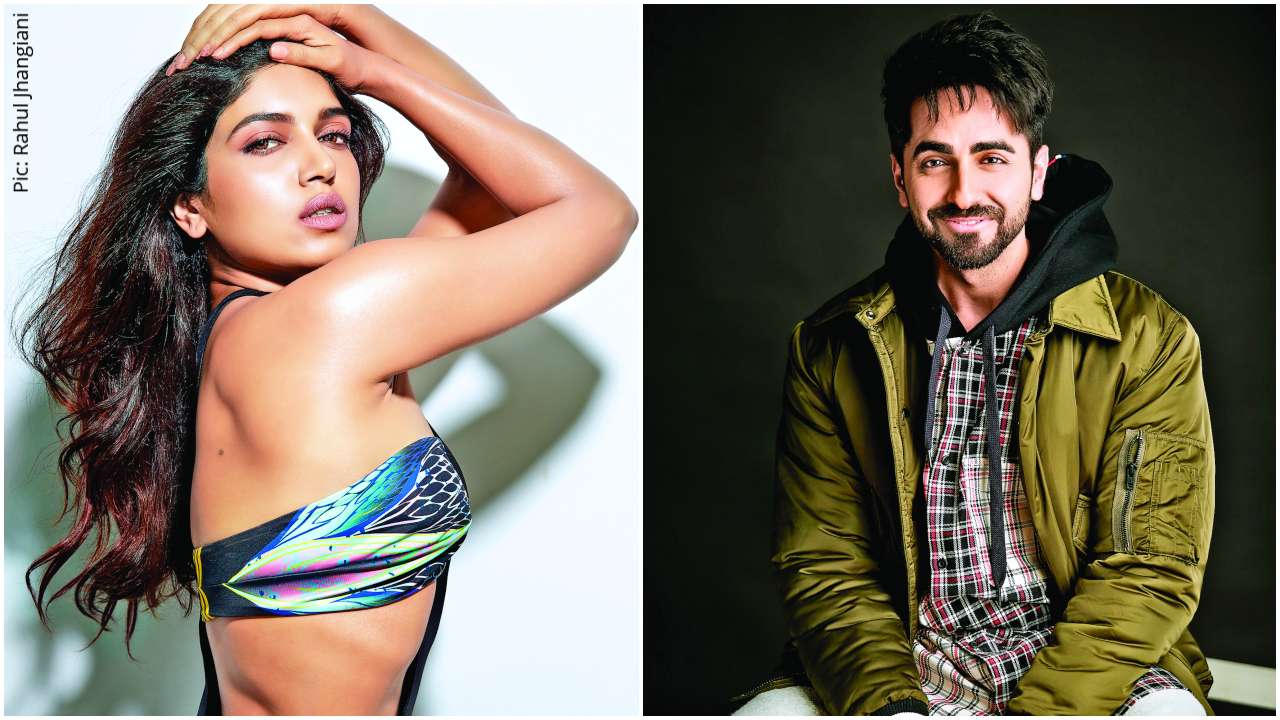
DNA (May 3, 2019)
Ayushmann Khurrana, one of the most talented names in Hindi cinema, will reunite with his lucky-mascot, the versatile Bhumi Pednekar this week. This celebrated actor duo, who won rave notices for Dum Laga Ke Haisha (2015) and Shubh Mangal Saavdhan (2017) is getting together for Bala, which is being helmed by Amar Kaushik (of Stree fame). Both their earlier outings proved to be box-office winners and the actors are hoping to pull off a hat-trick.
Ayushmann says, “Bhumi and I have great chemistry together because of our equation. I’m glad audiences loved us in our previous two films, which became big hits. Being a hit jodi definitely adds to the pressure of delivering good work and I’m confident that our new film’s script will connect with a global audience, given its universal theme. Bhumi is an exceptionally talented actress and it’s always fun to work with her. I’m hoping our third movie gets as much love as the previous two.”
Bhumi, on her part, says, “Ayushmann and I love slice-of-life films. I’m super excited to collaborate with him for the third time. We have been loved immensely in our previous two movies. I’m confident Bala will once again prove to be a fun watch. People expect our pairing to do quirky projects. Bala is a movie that takes on societal stereotypes in a hilarious manner. Ayushmann is a powerhouse actor, a great co-star and he always gets the best out of me.” Bala should roll any day now.
I asked Shoojit Sircar why he chose me for sperm donor's role. He said, 'You just look very sanitised'-Ayushmann Khurrana
8:26 AM

Happening star Ayushmann Khurrana on a hot streak breaks down his craft and shares how he took the quirky route and barged into Bollywood's coveted Rs 100-crore club
Mayank Shekhar (MID-DAY; December 20, 2018)
Firstly, why are you Ayushmann? Shouldn't it be Ayush-man, or Ayush-maan?
If your dad's an astrologer, you have no option but to be born with these spellings! I did not change the spelling, before becoming an actor.
And I believe he changed your name from Nishant, to begin with?
Yes, I was three at the time. I think I'm also the oldest Ayushmann in the world. Now, I see kids who are five or six, named Ayushmann, but none older.
While you're an accomplished lead actor now, someone clearly thought you had a face for radio, which is how you began your career, as an RJ!
(Laughs) I have evolved so much, not just as an actor, but also how I look. You only have to see my pictures [from much younger] — I used to have braces, crooked teeth, used to wear glasses, and was quite a nerd.
So it's radio, Roadies, then a sportscaster on IPL, you had done the full round before your first film.
I always wanted to be an actor but was pretty sure nobody would launch me. Television was a decent route though. I became a VJ on MTV. By default, every VJ gets a chance to be an actor. I had said no to at least five to six films before Vicky Donor (2012).
Do you remember reading any lousy scripts back then?
There was a script called KLPD: Kisses, Love, Pizza and Dhoka. It was a sex comedy. So, I went to Bangkok for a shoot that never started. There was some production locha, we came back. While I was there, I realised, something is off. I was 24. It was this weird story of four couples who fall in love with each other.
What is about filmmakers that they look at you and associate you in some odd way with [stories about] sex?
It's the innocence, the earnestness. I give the clean vibe. That's what Shoojit Sircar told me, when I asked him why he chose me for a sperm donor's role. Do I look like one? And he was like, 'You just look very sanitised.' He said you give a clean vibe, ki achcha ladka hai. Sanskari hai.
You got your first film role, with Shoojit Sircar's Vicky Donor, without a screen test. And your last role, in Sriram Raghavan's Andhadhun, is the first time you auditioned for a part. How did that happen?
I was hosting shows on MTV and Shoojit sir was like, I just want you to be as you are as a VJ: the loud Punjabi guy. So, I did not audition for the part of Vicky Donor. With the last film [Andhadhun], I got to know that he [Sriram Raghavan] had not short-listed anybody for that role. I got to know the one-liner from [casting agent] Mukesh Chhabbra. And I texted him [Raghavan]. He said this is not a slice-of-life film. I said that's why I have come to you. I always wanted to do a thriller, and was getting scripts as well. But, I wanted to work with Sriram Raghavan, because I'm a huge fan-boy.
Fan-boy because of?
Ek Hasina Thi (2004) — that transformed Saif [Ali Khan] for me. Badlapur (2015) transformed Varun [Dhawan] for me. And I wanted my transformation with him. Glad that happened.
Speaking of mentors, the idea of the Godfather has dramatically changed in showbiz. Would you consider MTV as the first, and then Yash Raj as the second?
I would call Shoojit Sircar and Aditya Chopra as my two mentors; and on TV, there was [producer] Siddhartha Basu, who gave me my first TV show, India's Got Talent. He [Basu] gave me a lot of training, to work on my diction and other aspects as an anchor. Similarly, we had lots of workshops for Vicky Donor, because I had been hosting for four-five years, and had to unlearn a lot of stuff, like looking into the camera, for instance. I had to ignore the camera, for a change, and become an actor. So I went to MK Sharma's Act One [in Delhi].
How did Aditya Chopra and you meet?
That was during Bewakoofiyaan (2014). I was not interested in that film and had issues with the script. I told him that I wanted to do this film [only] because I wanted to get into Yash Raj. I asked him why can't you [Yash Raj] manage me anyway? He said, no, you have to do a film with us; then we can manage you. Dum Laga Ke Haisha (2015) was offered to me a month after Bewakoofiyaan started. I was really excited about it. And he [Chopra] was surprised, because it was not a "hero wali" film. He said people won't like you in the first half. And I was okay with that. The script was so unique. After both films released, he began respecting me. He was like, you have an eye for scripts. Sometimes, he bounces certain scripts off me, just to have me read them.
What, according to you, is a good script sense?
I think I should relate to it first. Sometimes, I feel I'm the audience. Most people think audience will like it, even if you don't. But you have to be the audience, to begin with. This thought comes from my theatre background, because we used to write our own scripts. We did street theatre, which is meant to be dark and content-based. But we started making entertaining street plays.
Like singing, dancing, instead of activism, on the streets?
We would have guitars, percussions, so it was like a fun fair. We would do it anywhere — marketplace, college, university. There was a chant, something like, 'Zor se bolo, natak dekho. Saare bolo, DAV ka natak dekho.' DAV was our college. There was a saafa [turban cloth] spread out, and everyone would give money.
You also made money from passengers on college train trips from Chandigarh.
Frankly, most of the kids were from well-off families, so doing this was fun. We'd come to IIT Powai every year in second class sleeper train, sponsored by college. We'd play guitar, dholak, sing retro songs for passengers. I remember one person gave us Rs 500, and we were like kaun hai yeh aadmi? (Laughs). One of our Goa trips after Mood Indigo got sponsored this way.
Glad you said you're from a well-off family. Assuming you haven't slept on Mumbai streets, because everyone from Amitabh Bachchan to Shah Rukh Khan has that exact same story!
Well, we did once miss our train to Goa, and we had to stay the night on Mumbai Central. So yes, station pe soye thhe! I could afford a hotel room, but not for all my friends. It's not that I have a sob story. I came to Mumbai on a plane. Since I didn't have a place, I stayed with a friend in KEM Hospital's hostel. I would go to give auditions, but while coming and going out of the hostel, I'd wear a laboratory coat so no one catches me.

Most traditional Indian parents force their kids to study medicine, engineering. Your father forced you to come to Mumbai and become an actor.
Well, I took sciences in high school, cleared a dental college exam in Karnataka and when I went there, I realised I won't be able to do it. So, I came back to Chandigarh to study arts. After journalism, I thought of taking a sabbatical for two years, because I was not satisfied with myself as an actor. My father told me to go out there [to Mumbai] and learn on the job. He said there is no wrong time to do the right thing.
Now in this nepotism argument, a point that people miss is that there could be such a thing as new fame and old fame. Being from a famous family could just make it easier to deal with fame, because you've already closely seen the ups and downs. You went to an all boys' school, college, became a superstar with your first film, suddenly when there is so much female attention, for instance; did it shake you up?
That happened to me when I was 18. I was on the second season of a reality show called Pop Stars on Channel V, which was won by a group called Asma. I was the first back-up singer for that band; the only one from Chandigarh. I had suddenly become a star in the first year of college. Mera dimaag kharab ho gaya tha! I was getting attention from girls, apart from my girlfriend. I broke up with my girlfriend then, now wife [Tahira Kashyap]. One year after that was disastrous for me, because nothing happened. Then, I realised this is all fickle. Later, Roadies happened, when I was more mature. So I got exposed to these things early in life. And it wasn't sudden fame after Vicky Donor either. It was gradual. Yes, I did have marital issues after Vicky Donor, since everyone wanted a piece of me. As an RJ and VJ, I would work for around 12 days, and the rest were free. So, I had a lot of time for Tahira and we would travel a lot then. Suddenly, everything stopped. I didn't have a single minute for her, and the worst part was she was pregnant. I was a father when the movie [Vicky Donor] released, but I had no time for the family. I was consumed with my own success. It was a professional high and a personal low.
Has that been the story of your life?
Yes. Even now, there is professional high, but personally, very tough [phase]. We are together, but she [Tahira] has gone through cancer. It's always been like that.
If you had to choose between personal and professional, which one would you go for?
(Long pause) It's tough to answer. At the same time, you need to have a solid personal life. Because everything will go. But this will stay.
Getting back to your professional life, your films have also been timed in quick succession — in 2017, Bareilly Ki Barfi and Shubh Mangal Saavdhan released two weeks apart, same with Andhadhun and Badhaai Ho this year. If both went down, you'd be screwed!
It's a coincidence. You'd never want your films to come back-to-back, but I have realised, if your films are good, they will work. Last year [with Bareilly and Shubh Mangal], I was nervous, as both the films had similar texture, and our designers were the same. My mother-in-law, played by Seema Pahwa, was the same. People were getting confused watching the two trailers. Some went to watch Shubh Mangal Saavdhan but had booked tickets for Bareilly Ki Barfi, since both were playing at the same time. This time around, I wasn't nervous, as both Badhaai Ho and Andhadhun had different milieus.
The other back-to-back releases were Hawaizaada and Dum Laga Ke Haisha in 2015. Can you explain what made you choose Hawaizaada?
Just the one-liner I heard. I was fascinated with the character, who apparently constructed India's first unmanned plane before the Wright brothers. But, I realised that it's not necessary that a film that has a good one-liner will last for two hours [the same way]. Every failure is a learning. Hawaizaada should have been more real. I was not expecting a fantasy, or a love story, taking over from the facts and other elements in the film.
Apparently, Aditya Chopra called you up after Hawaizaada's release and said that nobody's luck turns around in 20 days, but yours will. Take us through the phone call.
I was in Chandigarh that time and I needed a break. I wasn't going through my social media, had switched off my phone and was just chilling. But he reached out and said that we have a release on February 27. I was shocked. Pehle hi lagi padi thi and itni jaldi ye aa raha hai (laughs). He said that this is going to be a blessing in disguise and will change your fortune. And it did.
You, Vicky Kaushal and Rajkummar Rao show up on Karan Johar's talk show, where guests are routinely asked to rank the three of you. What's also common between you all is that you've subverted the idea of on-screen masculinity through your roles. You come from Chandigarh, which is the most macho city ever. How did you get to subversion of masculinity from there?
This happened because the scripts are more real, and the credit should go to scriptwriters. Of course, as actors, we have chosen those scripts, and are taking their idea forward. Coming from Chandigarh, I have gone through a transition myself. Back in the day, I was slightly patriarchal. I wasn't exposed to certain things. I came to Mumbai, and before that, Delhi. I believe everyone goes through a change. The idea is to make every small-town guy be a part of that change. There are two different countries in India — urban, which is 25-30 per cent; and the other that's rural. We need to get these two together. I expect that change to happen [to everyone] through cinema, or literature.
Give me an example in the way you have changed?
My mother is a housewife. When I started dating Tahira, I told her that you don't need to work, and that I'll be the breadwinner. She was shocked. She told me it wasn't about the money. She wanted to pursue her passion for herself. I told her then that we can't marry. And she told me, 'That's cool. We should definitely not marry!' She has been instrumental in changing me. I was uncouth and was brought up among rustic guys in Chandigarh, Haryana and Punjab. I went to an all boys' school. I didn't even know how to talk to a woman. She turned me into a gentleman. Whatever I am today, I owe a lot to my wife.
When you go back, do you find your friends to be just the way they were?
Most of them have changed, but some have remained similar. During Diwali, I always go back to Chandigarh. I was having debates about the #MeToo movement hearing stuff like, 'Abhi kya bolne ki zaroorat thi. Dus saal pehle kyun nahi bola?' Everybody was making the same argument. And I was like, 'Kya kar rahe ho yaar? Ab toh badal jao!'
Speaking of #MeToo movement, I'm told, you've had an incident yourself. Take us through it?
It was a gay casting-director. I have nothing against him. I was new to the city, and he said, 'Why don't you come and show me your d*** and I'd like to feel it, and you'll get a role!' If I was gay, I would have thought about it. I was single at the time! I told him that I wanted to make it with my own talent; otherwise I wouldn't be happy getting the role. We had a healthy discussion and parted ways.
We're going to end with confirming two rumours about you. One, that you've actually donated sperm; true?
Yes! I did it in Allahabad, during Roadies, in 2004. Sperm donation was a task. Guys with the highest sperm count would go in the next round. So I was in top three. So Vicky Donor was like method acting for me [laughs]. Shoojit Sircar was shocked when I told him about this incident.
And you brush four times a day?
Yes! I have an OCD. It started when I had braces, and the food would get stuck, so I used to brush a lot. And this habit has continued.
Transcribed by Mohar Basu, Sonil Dedhia and Sonia Lulla

Subscribe to:
Posts (Atom)