Showing posts with label Dostana. Show all posts
Showing posts with label Dostana. Show all posts
Top 10 romcoms; Tanu Weds Manu Returns the only film with 1 cr plus footfalls
10:08 AM
Box Office India Trade Network
COCKTAIL 2 released this week and has done so so business till date though it will not feature among the top ten Rom Com films of all time. However, in terms of cost, its probably the second biggest rom com ever after TU JHOOTHI MAIN MAKKAAR. The genre is one which came to the fore in the last thirty years as before that there were hardly any rom com films made.
Basically comedy films and rom coms gained traction at roughly the same time because in the 50's 60's 70's and 80's, there were not many comedy or rom com films as North, East and Central India was very unkind to these genres most of the time. It is actually hard to divide which is Rom Com and which is a love story for a film but if a film has drama which is stronger than the comedy and forms much of the film then that goes towards a love story. Drama on the lighter side means Rom Com.
The biggest Rom Com till date is TANU WEDS MANU RETURNS and it is so far ahead of the rest that it makes you doubt that is this film actually a Rom com but a Love Story. It is not for sure as comedy dominates through the film. This film got 1.5 crore footfalls while no other Rom com has even picked up 1 crore. The footfalls of COCKTAIL (2012) are under 90 lakhs.
There is sure to be something different with TANU WEDS MANU RETURNS compared to the other Rom Com films and it could be characterization, relatability or authenticity whereas most Rom coms tend to go the filmy/urban route which limits the business. If big films are still to be made in the genre, then this film is the one at as it stands above all by a margin. Otherwise the genre probably has to be made at a lower cost with possibly smaller casts.
The top ten Rom Com films of all time by footfalls are as follows. There could be some missings from the earlier years but that will not matter much in the context of business today.
1. Tanu Weds Manu Returns (2015)
2. Cocktail (2012)
3. Chhoti Si Baat (1975)
4. Tere Mere Sapne (1996)
5. Dostana (2008)
6. Kabhi Haan Kabhi Naa (1994)
7. Mere Brother Ki Dulhan (2011)
8. Tu Jhoothi Main Makkaar (2023)
9. De De Pyaar De (2019)
10. Luka Chuppi (2019)
As John Abraham the star, action is inseparable. But as an artiste, I also crave depth-John Abraham
8:30 AM

Niharika Lal (BOMBAY TIMES; October 26, 2025)
“I am obsessed with how I portray India on screen,” says John Abraham. The actor recently played the role of a diplomat (The Diplomat, 2025) and a police officer (Tehran, 2025). Earlier, he has portrayed an IAS officer in Parmanu and a police officer in films like Force and Batla House. On the other hand, he has also been part of comedy films like Housefull 2 and played the quintessential antihero in Pathaan. In a recent chat, the actor-producer speaks to us about how he occupies two different worlds depending upon whether he is wearing a producer’s hat or an actor’s hat.
‘AS A PRODUCER, I CAN’T PRODUCE A HOUSEFULL KIND OF A FILM. BUT AS AN ACTOR, I DID A HOUSEFULL 2’
John says that he occupies two cinematic worlds depending upon which hat he is wearing. As a producer, he wants to make a difference with the kind of films he produces, and as an actor he loves action and comedy films.
“As a producer, I can’t produce a Housefull (2010) kind of a film. But as an actor, I did a Housefull 2 (2012). As a producer, there are a lot of films that I cannot do. I’m not equipped to do them. But as an actor, I fit in. Like Pathaan (2023) – it is too big a film for me to even fathom producing at this point of time. That’s for the calibre of an Aditya Chopra, who can conceive and make a film like that. As an actor, I want to do films like Pathaan because I enjoy the space. I enjoy doing films like Dostana (2008) and Desi Boyz (2011). Maybe at some point I’ll transition to producing these big-budget films, but at this point – no! So, as an actor, it’s a different mindset and as a producer, it’s a different mindset.”
John adds that even when he’s making commercial films, there’s intention behind it. “Commercial films toh karni hi hai. As John Abraham the star, action is inseparable. But I also crave depth.”
‘I MADE A CHOICE THAT I WON’T DANCE AT MARRIAGE FUNCTIONS’
Speaking at the Sushma Swaraj Institute of Foreign Service, John says that he keeps rejecting offers worth crores for endorsing pan masala brands or to dance at weddings. “The decision of whether you want to do certain things in your career that actually do not speak for who you really are – that’s a moral choice and a subconscious choice. Pan masala, for example. They give us a lot of money. But would I endorse pan masala? I wouldn’t. Again, I’m not pointing a finger at people who do. I’m talking about what is right and wrong for me. I would not do it because I think it is possibly dangerous for someone’s health. I made a choice that I won’t dance at marriage functions. Now, is it right or wrong? It’s not wrong. Actors do it. Nothing wrong with it. The Beyoncés of the world are coming to dance at our weddings here. It’s a personal choice. But would I do it? No,” he says, adding, “There are certain moral choices I make in my life as a person that probably go against the grain of my job.”
‘I research a lot for my films’
John says that he is fully aware of his image as an action star. He says, “You can’t fake sincerity. You must live the role. With The Diplomat, the compliment I cherished the most was people saying, ‘Only your facial muscles acted.’” To essay the role of diplomat J P Singh in the film, John met him multiple times, observed him and exchanged notes.
He says, “Diplomats are incredibly sharp. Our diplomats like Mr S Jaishankar, J P Singh – they command such respect. I met many real officers and was awestruck by their calmness and dedication.”
Talking about Tehran he says, “I research a lot, I know what I’m presenting. We were very careful with Tehran. We showed all sides with fairness. My grandfather came from Iran in 1939. My mother still speaks Farsi. I had to learn it for the film. So there’s an emotional connection. It’s in my blood.”
My biggest regret is that my father wasn’t with me when Dharma Productions was going through its best phase-Karan Johar
8:26 AM
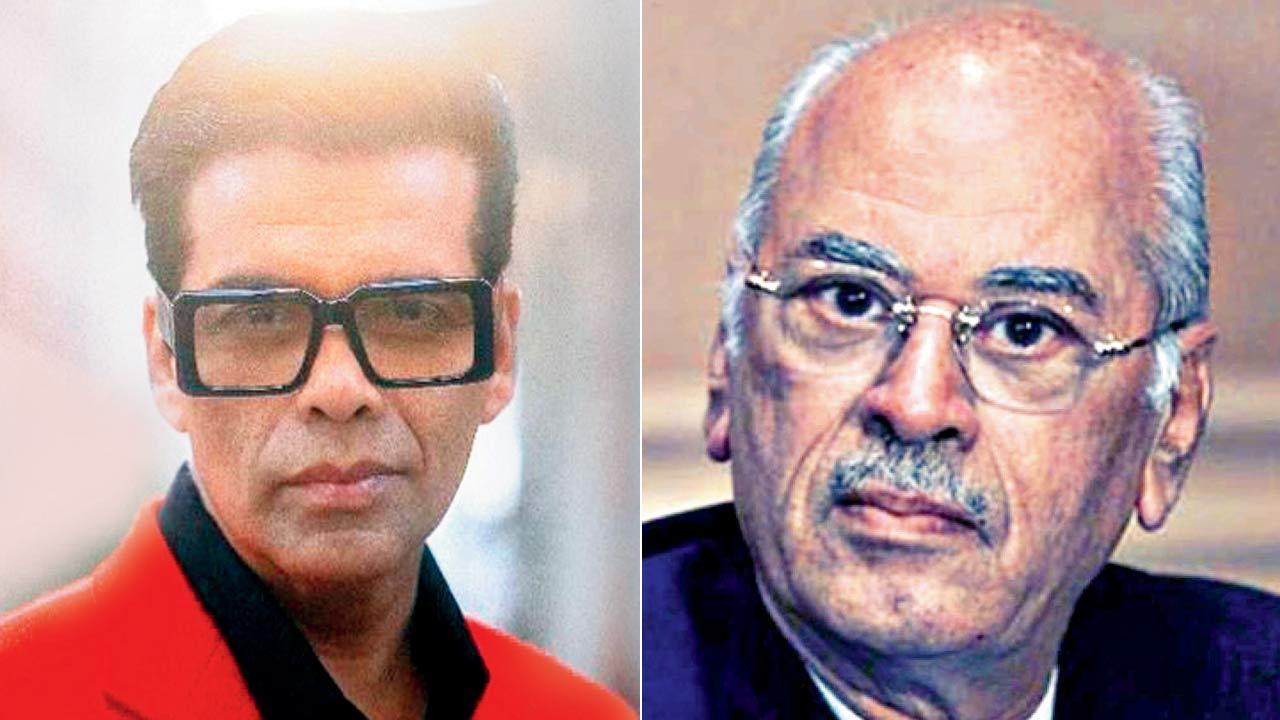
KJo, who opens comedian Zakir’s new show, reveals his biggest regret is that father Yash Johar couldn’t witness banner’s continued success
Upala KBR (MID-DAY; August 10, 2024)
Over the past 26 years, Karan Johar has built a stellar career in films. If he has any regret, it’s that his late producer-father Yash Johar couldn’t witness his success for long. The filmmaker, who is the first guest on Zakir Khan’s new show Aapka Apna Zakir, has opened up about how his father’s journey in the movies prepared him for the industry’s cut-throat nature.
“My father turned producer with Dostana [1980]. I’ve witnessed a lot of failures through my father’s journey, and that is when I realized that nothing is easy. I’ve also seen the way the industry reacted to him when a film didn’t work. It was tough to see him go through all that, but it also makes you resilient,” he recalled.
In the episode, Karan also reminisced about how his father would call him his ‘aankhon ka noor’. “My father used to say, ‘You’re so handsome, you should become a hero!’ My mother [Hiroo Johar] used to roll her eyes, saying, ‘Don’t listen to your dad, you have no qualities of a hero.’ Acting wasn’t something I wanted to do, but my father had full conviction in me. When I made Kuch Kuch Hota Hai [1998], he used to take me everywhere and tell everyone, ‘My son is the best director in all of India.’ He left us too soon. My biggest regret is that he wasn’t with me when Dharma Productions was going through its best phase.”
If same-sex marriage is recognised in India, I would like to get married too-Onir
7:55 AM

Rishabh Deb (BOMBAY TIMES; June 8, 2021)
A few days ago, someone asked Onir on social media, “Why do queer people make coming out a big deal? Straight people don’t have to do the same.” The filmmaker responded, “Straight men and women do not have to be closeted. There is nothing for them to hide. Their existence, desire and love — it is all out in the open. And the reason we come out is to claim our spaces outside the closet so that we have a world where we don’t need to be in the closet.” In a Pride Month special interview with us, Onir shares, “The very fact that such questions are being asked is a sign that we have to keep educating people and keep making the right noise for visibility.” Excerpts from the chat:
‘QUEER PEOPLE ARE GOING BACK TO UNSAFE SPACES’
Onir feels that while many speak about the pandemic having brought them closer to their families, this period has been doubly tough for the queer community, “For a lot of queer people, being home means going back to a space where they are not accepted and celebrated. In such instances, they either have to hide their sexuality or face abuse and threats for expressing themselves freely. This causes anxiety and mental health issues, adding to the trauma that the queer community faces every day,” says the My Brother Nikhil director.
Onir adds that he regularly gets calls asking for work or seeking help regarding mental health issues from the community. He shares, “Mumbai is an expensive city to live in, and many people have left because they cannot afford it anymore. Queer people are constantly worried about how to escape the unsafe places they are returning to. It is really heartbreaking to see so many of them suffer like this. I wish I could help them all.”
‘PRIDE MONTH IS NEEDED TO MAKE THE RIGHT NOISE’
With the Pride Month celebrations, another important development is in the process right now. Onir explains, “We are also in the process of the Delhi High Court’s hearing about same-sex marriage, which is a very important step for us. The next hearing is soon (July 6). However, it is constantly debated by people who oppose it for the most ridiculous reasons. Having said that, this month is for the recognition of what we have achieved as a community. It has been a long struggle for us. I am often amazed by how many people choose to remain silent about LGBTQIA+ rights. So, Pride Month is needed to make the right noise.”
‘THE REAL REPRESENTATION OF QUEER PEOPLE ON SCREEN IS RARELY SEEN’
There’s been a discussion about queer representation in Indian cinema for a while now. Sharing his opinion on the same, Onir says, “People forget that we are the largest film making country in the world. To me, Dostana is not an LGBTQIA+ narrative. When I’m talking about real films that deal with our lives, I hardly see them, even today. The percentage is very small. Earlier, when I made My Brother... Nikhil, it was termed as 'not box office-friendly'. Today, the box office word has been replaced with eyeballs. When I did some of my best work, nobody told me about eyeballs.”
And have OTT platforms made a difference? He says, “The so-called freedom that one has with OTT platforms is an overhyped myth because whatever you do, it has to go through various levels of scrutiny by people who think they can evaluate what you have done. I won’t say everything is bad; the good stuff is also happening. But queer representation is very less.”
‘DATING FOR ME COMES WITH A BAGGAGE, NOT BECAUSE I’M GAY, BUT BECAUSE I’M A FILMMAKER’
Opening up about his dating life and thoughts on marriage, Onir shares, “For me, dating becomes a bit different because I am a filmmaker and it mostly comes with baggage. It is not about my age or me being gay. The only thing people see is that I am a filmmaker and I might be their roadmap to something. My parents feel that if they are not around, I should have a partner. The only thing is that I don’t have a partner right now, but the guys I dated, they lived with me, and my parents always graciously accepted them and loved them.”
He adds, “My parents want me to get married and if same-sex marriage is recognised in India, I would like to get married, too, not to conform to anything, but to make a statement that it is my right to get married, too. The sad part is that gay partners don’t even get legal rights. Hence, recognising same-sex marriage is very important.”
‘COMING OUT SHOULD BE CELEBRATED’
Onir is of the opinion that the society has been dominated by heteronormative narrative, and he stresses on the importance of coming out. He shares, “We have to come out of the closet to be visible. If we can’t be visible, that means there’s fear and shame. When Dutee Chand came out, it was absolutely inspiring that a sportsperson did it. I wish in my fraternity, too, people come out and celebrate themselves instead of playing hide and seek. Coming out will inspire not just youngsters, but their families, too, because they will understand and be accepting.”
I don’t use money as excuse to do a film-John Abraham
10:51 AM

John Abraham on how to ensure longevity in the industry and why he wants to go easy on workouts
Roshmila Bhattacharya (MUMBAI MIRROR; February 10, 2020)
 Mumbai Saga, Attack, Satyameva Jayate 2… Going by the line-up, 2020 will mark the return of John Abraham, the action hero.
Well, barring Attack, which is purely an action entertainer, the other two have elements of action but are not strictly in this genre. Satyameva Jayate 2 tackles social issues in an entertaining way, while Mumbai Saga is the true story of gangster Amar Naik. I wouldn’t say it works or is a safe bet, but it’s something I enjoy doing and with a lot of ease.
Apart from Tiger, no younger actor owns this space like Akshay Kumar, Ajay Devgn, Hrithik Roshan and you. What’s your USP?
Every action hero has a different positioning and I revel in the raw and real. People like to see me as this larger-than-life guy who bangs heads against the wall, lifts and smashes bikes and cars and takes down a lot of people at one time. And I enjoy playing to the gallery sometimes.
Satyameva Jayate played to the gallery and succeeded in its novelty. But will the exaggerated machismo, which is rooted in ’80s cinema, work a second time? The appeal seems to have waned with Marjaavaan...
While we will continue to play to the gallery in our quest for a larger audience SMJ 2 will be very different in its treatment. The original was primarily a film for the masses. This time, we aim to get the classes in, too, by tackling relevant issues. In the action, too, we are steering clear of what was done in Part 1 or in Marjaavaan. John Abraham will still do what someone believes he can, but I promise, it won’t be over-the-top, and it will be super-entertaining.
Buzz is, it’s going to be John versus John versus John. In short, you are playing a triple role.
I hope that’s true, but Milap (Zaveri, writer-director) is still in the process of developing certain characters and he might like me to play other roles, too. But that’s still up for a lot of discussion. So, I can’t say if there’s going to be one, two or three of me in the film.
While you evolved as an actor with films like Parmanu, Batla House and Madras Café, Pagalpanti pulled you down, which was disappointing for the audience.
It was disconcerting for me too. I’m not going to pass on the buck or get into postmortems. I enjoyed making Pagalpanti and I stand by it. The other three films were my productions and while, as an actor I want to entertain, as a producer, I want to make meaningful films. I consciously separate the two, but when they come together, it’s an explosive combo. I’m walking on eggshells with Attack, asking myself if the audience will accept it, but backing my debutant director, Lakshya Raj Anand all the way. It’s a risk, but I believe people are tired of the regular action films and I want to effect a change. I’m not afraid of failure. You are insecure only if you feel the pressure to succeed.
You gave two years exclusively to your own production, Parmanu. Then, just when everyone was beginning to believe you’d focus on one or two films a year, comes a spate of announcements. Have you gone back to being just an actor with the producer taking a backseat?
In advertising, I learnt that half of what you spend goes waste, you just don’t know which half. From all these announcements, I really don’t know which ones will finally go on the floors. I like to take my time with my films, my own productions are all curated over three-four years and are high on content. Nothing is a proposal. As an actor, I love the scripts of both SMJ2 and Ek Villain 2. I wouldn’t force a sequel just to make some money.
Many actors, who have turned producers, have confessed to doing certain films to raise funds for a passion project, a new house, a farm and such-like.
I don’t use money as an excuse to do a film. That would be disastrous in the long run. I believe if you treat money as a by-product and the film is the central issue, the probability of your longevity is higher. I do films because I want to. But I charge what I think I deserve. I’m not putting a gun to a producer’s head. If he feels I am not worth it, we go our separate ways, else we work together. Sometimes I make certain choices, like Pagalpanti, and I stand by them. If our film failed, it’s not the end of the world. Will I stop doing such films? No. If I get a script that I’m entertained by, I will do it.
The word ‘content; has made a comeback in our cinema…
(Laughs) Better late than never.
How does that feel for the man who gambled with Vicky Donor, Madras Café, Parmanu and more recently, Batla House?
I wish they had woken up to this 15 years ago or that I had come 15 years later. That way, I could have bypassed the earlier motions of filmmaking. Ten years ago, if you made a content-driven film and it failed, you would say, “Thank God, I’m making a commercial film next, maybe that will work.” (Smiles) Today, it’s the reverse.
True. Content films are commercial today…
And commercial films are niche. Content is the star. Typical proposals and formulae are not selling any more. We introduced Ayushmann Khurrana seven years ago, I will launch another newcomer and I will convince studios to put their money on young directors and different stories. Besides Attack, I’m working with Nikkhil Advani on Gorkha, which takes off next year. It’s one of the most hard-hitting films I’ve done. Then, there’s Ray with Abhishek Sharma which I can proudly claim is unlike anything you’ve seen before in Indian cinema. Appreciation for a film like Batla House means there’s a lot of pressure on me to perform better and choose the best. The audience today sees me as an intelligent producer and hopefully, an intelligent actor and not just John Abraham, the body (Laughs). That’s a relief; I can go easy on my workouts now.
Talking about physicality, the image of you coming out of the ocean in only a pair of trunks in Dostana is imprinted on the audience’s mind even after a decade...
If I had to give anybody credit for that film, it would be Karan Johar. He handled the subject with so much care and sensitivity. I went to hear it with absolutely no expectations and was laughing throughout the narration. By the end of it, I told myself, “This is really funny, it would be fantastic to do it.” Recently, on Abhishek’s (Bachchan) birthday, I posted a picture of us pouting. It was brave of him to give me a kiss.
And it was brave of you to reveal a lot more for the camera…
When I look back on my introduction scene, I think, “Ufff, how was I so brave to pull down my trunks!” But it was a light, breezy film. It wasn’t vulgar; we got away with it.
Will Shubh Mangal Zyada Saavdhan be the first ever proper LGBT hit film of Bollywood?
2:38 PM

Times are changing and more and more novel and unconventional topics are being tackled in our films. But homosexuality is one such subject where we have slightly lagged behind. Here, we are not talking about caricature gay characters inserted in films for cheap laughs but realistic depiction of such people. Interestingly, Hollywood and many of our web series too are based on this idea. Even regional films on homosexuality have thrived. However, a handful of Hindi films have had protagonists playing gays.
So what’s stopping Bollywood for getting into it full throttle like its contemporaries? The biggest problem is that despite Supreme Court decriminalizing homosexuality and increase in awareness, it’s something that still remains a taboo. And films made on taboo topics can be detrimental. Akshay Kumar’s film on sanitation, Toilet – Ek Prem Katha, worked very well as this was a still a topic that can be discussed. But when he attempted to spread awareness about sanitary pads in Pad Man, the desired result was not achieved. Toilet – Ek Prem Katha earned Rs. 132.07 crore while Pad Man, despite having better word of mouth, could reach only till Rs. 78.22 crore.
Shockingly, none of the LGBT film of Bollywood has even seen a commercial success. Fire was the first such film in this genre. However, it was met with violent protests due to which the film was withdrawn. Sometime later, it was re-released after the Censor Board imposed cuts. Though it ran without any problem, the earnings were paltry.
Then, Split Wide Open, Rahul Bose-starrer, came next in this genre. But it was so niche that it went unnoticed. Karan Razdan’s 2004 flick, Girlfriend, was a story of an obsessive lesbian. It had immediately come after Murder, which popularized the idea of films with intimate scenes. It had loads of steamy and sleazy scenes and hence, it didn’t do much for the LGBT movement. And it was an average grosser at the ticket window.
Many other films then came up but were mostly small-budget. My Brother Nikhil, Onir’s first directorial, came all of a sudden, and as expected sank without a trace. Margarita With A Straw got a bit noticed but didn’t have any commercial trappings. Same happened with Aligarh. Angry Indian Goddesses was a fine piece of cinema and had an unexpected lesbian angle but viewers couldn’t give it a chance because of its very elite feel. Dunno Y Na Jaane Kyun, meanwhile, is considered to be a success story, and even has a sequel. But those who have seen it call it shoddy piece of cinema. And in cinemas, it was a big time disaster.
Karan Johar made two films and both have done a lot to make homosexuality mainstream. His 2008 flick Dostana was an average grosser and many even criticized for being cheap. However, homosexuals call this film a blessing as it at least ignited the conversation. During 10th anniversary of Dostana, prominent LGBTQ rights activist Harrish Iyer had told this writer, “Dostana broke the taboo. It was a landmark film as it mainstreamed the issue. It brought the conversation to the dining table. Dostana almost became a word for gays. People would say ‘Yeh log dono Dostana karte hai’ instead of saying ‘Yeh dono gay hai’!” He futher adds, “Karan Johar has done a lot of service to the homosexual community by bringing the conversation out from the closet into the open.” 8 years later, Karan Johar produced Kapoor & Sons. This was a hit film but homosexuality formed a very small part of the flick.
Last year, a lot of expectations were rested on Ek Ladki Ko Dekha Toh Aisa Laga. It featured a mainstream actor like Sonam K Ahuja in the role of a lesbian. What’s more, her real life father Anil Kapoor played the part of her dad, and there was also Rajkummar Rao and two popular songs too add to the impact. Sadly, the film received mixed response. On top of that, the taboo topic obviously and also the serious nature of the film kept audiences away.
But now, we have a film that can finally emerge as the first box office success in this space - Shubh Mangal Zyada Saavdhan. It stars Ayushmann Khurrana and Jitendra Kumar as the lovers with Neena Gupta, Gajraj Rao, Manu Rishi Chadha and Maanvi Gagroo playing supporting parts. The trailer was unveiled few days back and has been loved for its clever writing and the feel good mood of the film. What’s great is that someone like Ayushmann Khurrana has backed it and that too at this stage of his career. Right now, he’s on a roll and how. He has had 6 back-to-back hits, and it all started with the first part of this film, called Shubh Mangal Saavdhan, which was based on performance anxiety. Ayushmann is known to take up such topics in his films like sperm donation, late pregnancy etc in his films and these movies are family entertainers, without too many embarrassing moments for the traditional audiences.
Due to these reasons, Shubh Mangal Zyada Saavdhan has a very high chance of becoming a hit at the box office. The costs also seem limited and even if it does a business of around Rs. 55-60 crore, it’ll be in the safe zone. One might argue that a value of a film should not be judged by the amount of money it makes. After all, films like My Brother Nikhil, Fire etc also have been significant films of this movement, notwithstanding their box office outcome. But when a film on gays becomes a hit and gets whole-hearted acceptance, it’ll encourage more and more producers and even mainstream actors to back such projects. And this, in turn, will serve the larger cause and bring social acceptance to LGBT in a small but significant way. Hence, here’s hoping that Shubh Mangal Zyada Saavdhan turns out to be a great fare and that it gets the success it deserves!

I’d ask Amitabh Bachchan solicitously, “I hope I didn’t hurt you too much?”-Shatrughan Sinha
8:29 AM

Roshmila Bhattacharya (MUMBAI MIRROR; October 19, 2019)
 For the millennials, Dostana is Karan Johar’s romcom which got John Abraham and Abhishek Bachchan, playing roomies pretending to be gay so they can live in an apartment of their choice with Priyanka Chopra, the best jodi of 2008. But for those who date back by a few decades, Dostana is Karan’s father, Yash Johar’s action-drama, featuring Amitabh Bachchan, Shatrughan Sinha and Zeenat Aman, which opened in the theatres on October 17, 1980. “Thank you for reminding me of the fiilm,” Shatru ji’s distinctive baritone booms across the wire. He’s in the midst of hectic campaigning for the state elections,but happy to recall that despite much skepticism, director Raj Khosla had expressed confidence in him, asserting that the role of the lawyer, Ravi Kapoor, could only be played by Shatrughan Sinha. “Amitabh, my friend from my struggling days and the favourite of the nation then, played my bestie (police officer Vijay Varma) with Zeenat, a common friend, as the lady we’re both in love with,” he informs.
He flashbacks to a three-day shoot at Mumbai’s Mehboob Studio, for which an expensive set had been erected. Following the sudden demise of his make-up man Prasad, a devastated Shatru ji, busy with the funeral arrangements, had not turned up for the shoot for the first couple of days. His producer was very understanding, but on the last day, there were urgent summons for him to film one important scene with Bachchan as the set had to be dismantled. He was also informed that since his co-star had another commitment, he would be there only till 2 pm.
Shatru ji assured everyone that the show would go on and drove in through the gates at 1.30 pm. “My director was sure I would pull off the intricate trolley shot despite several pages of dialogue within the deadline. But as I walked into the set, I could see from the worried faces around me that others weren’t so sure,” he reminisces, informing that while the make-up man touched up his face, an assistant director read out his lines to him, following which his moves and the camera field was explained to him. “At 1.40 pm, I stood up and said, ‘Okay, let’s go for a take.’ Raj Khosla had so much faith in me that he didn’t argue.”
As the camera rolled, the faces around him grew more tense as they were going into the shot blind, without even one rehearsal. It was a difficult shot, with a drunk Ravi confronting Vijay with several allegations, and slapping him. “I don’t know what I said or did that day, I was in a trance, but as soon as the director called ‘Cut’, there was a roar of applause, followed by Raj Khosla’s ‘Bravo.’ Then, as Amitabh hugged me, others milled around, congratulating me on a perfect shot. The time was 1.50 pm.”
Everyone was satisfied, except Shatru ji himself. There was still 10 minutes left and he pushed for another take. “The camera started rolling at 1.55 pm, but halfway through that shot, while he was still in the frame, Amitabh walked up to me and hugged me, saying, ‘Lalla, let’s not do this anymore, usse better nahin hoga.’ And it was from this healthy competition, mutual admiration and warm camaraderie that Dostana was born. It remains an object lesson to young actors almost 40 years later; to not just think of themselves, but work with co-stars to create magic on camera,” says Shatru ji.
Interestingly, the film also reunited, Prem Chopra and Amrish Puri, who knew each other from their theatre days in Shimla. “He was around five years my senior, a jolly good fellow and a stickler for details. We both performed at Shimla’s Gaiety Theatre, did a couple of plays together, for which I won some awards and the desire to be an actor was born,” says Chopra, all praise for the late actor, his generous producer and versatile director.
Prod him on the two leading men and he recounts a scene when he holds Ravi and Vijay captive, and whips the latter for details. “After every shot and every lashing, I’d ask Amitabh solicitously, “I hope I didn’t hurt you too much?” Finally, when he wondered why I kept saying that and I pointed out that it was my turn to get beaten up next. ‘I want you to be gentle with me when the time comes,’’’ he concludes with a laugh.
I’m crying because I am happy. We are finally telling our stories-Apurva Asrani
8:42 AM

Film editor and screenwriter Apurva Asrani tracks the Hindi film industry’s transformative journey of coming out of the closet
Apurva Asrani (MUMBAI MIRROR; September 8, 2019)
Growing up in India in the 1980s, I remember stealing my father’s stash of Debonair magazines, rummaging through pages filled with nude women, and trying to find that image of a buff man. Often, he was in the same frame as the woman, and in my head, I would replace her face with that of another man, and pretend they were a gay couple. This was the best I could do as there was absolutely no imagery anywhere that alluded to homosexual existence.
The first time I saw a gay man on screen was in 1993 — in the hard-hitting film Philadelphia, where a cute Tom Hanks was in love with a dishy Antonio Banderas. After searching in the dark for 15 years, I was relieved to finally find an image which I could aspire to. This was around the same time that three brave young men — Ashok Row Kavi, Vivek Anand and Suhail Abbasi — were bringing out India’s first gay magazine, Bombay Dost. The representation in India had begun.
If you had told the 15-year-old me, about 26 years on, that I would be attending Mumbai’s own LGBTQ film festival — celebrating its tenth anniversary, and showcasing 160 LGBTQ-themed films — I would not have believed you.
Some 43 countries (with a maximum number of entries from India) sent in films for the four-day event that took place last June across the city’s most iconic theatres — Liberty Cinema and Metro INOX. Kashish’s opening night saw over 1,000 LGBTQ Indians proudly walk its glittering red carpet; Section 377 had been shown its place, and we were no longer criminals in the eyes of the law. It is heartening that the youth of today, who find themselves struggling with their sexuality, have a plethora of LGBTQ imagery to refer to, and need not feel isolated like people of my generation did. In the last few years alone, Indian audiences have been exposed to a diverse spread of queer cinema.
 The script of Aligarh (left), a film I worked on, was born out of a desperate need to end the lampooning of gay men in mainstream cinema. While we owe much of our early identity to Riyad Wadia’s Bomgay (1996), Mahesh Dattani’s Mango Souffle (2002) and Sridhar Rangayan’s Gulabi Aaina (2003), we were aware that these films weren’t co-opted into the mainstream. This may be partly because they were ahead of their time, and partly because society perceived them as ‘by’ and ‘for’ the community. BomGay, arguably the first gay film from India, reflected the angst of the repressed urban homosexual, and I remember being too afraid to watch the scenes of sodomy in a movie hall.
 Onir’s sensitive My Brother Nikhil (2005; right) was probably the first film about a gay man that captured the attention of the mainstream. The film, starring Sanjay Suri, Purab Kohli and Juhi Chawla, did for Indian gay men, what Fire (1996; left below) — starring Shabana Azmi and Nandita Das — perhaps had done for lesbian women. It paved the way for sensitive LGBTQ representation in Indian cinema. Alas, the doors that opened with My Brother Nikhil were shut tight with big-budget padlocks when Dostana (2007) — Tarun Mansukhani and Karan Johar’s gay parody — hit the theatres.
 While there were many who were thankful that Dostana brought the idea of being gay to family audiences, I was severely critical of how the film used the subject only for laughs, and remained homophobic till the very end. Films like Raja Babu, Mast Kalandar, Humshakals and Pyar Kiya Toh Darna Kya had also lampooned gay men in the past, the difference (and saving grace) here was that Dostana alluded to the possibility of a mainstream gay couple — well, almost. Karan Johar followed this up with Student Of The Year (2012), where Rishi Kapoor played a closeted school principal who lusts after a male teacher. “There’s so much more to gay men than just being over the top or sexual,” I wrote in a blog after Dostana released.
The biggest challenge with Aligarh was to write a character who, despite being in a sexual relationship with another man, refused to wear the many tags of sexuality. He belonged to a generation where the words ‘gay’ and ‘queer’ did not exist, a place where Professor Siras has to beg society to leave him to define himself. This was neither an activist film, nor did it ask for homosexuals to be treated specially. Instead, it asked for Professor Siras to be seen as a human being — and to award him the same constitutional right to life and privacy as anyone else.
Aligarh’s Siras is a private man, an award-winning poet, a man of letters, a respected academic, but most importantly, he is a man who treats others with respect. Siras never lusts after the handsome young male reporter interviewing him in his bedroom, and always conducts himself with dignity. That the brilliant Manoj Bajpayee broke Bollywood’s longstanding tradition of a mainstream actor refusing to “play gay” adds much value to the film.
Watching Aligarh with my father — who has struggled to make sense of my sexuality — was a surreal experience. He watched it with tears in his eyes, and identified with the loneliness of a senior citizen. I saw that Siras’ sexuality never got in the way of his empathy. At that moment, I knew Aligarh would achieve what it had set out to.
What surprised me though, is that Aligarh did not meet with strong opposition from either society or the censor board. While theatres screening Fire were vandalised in 1996, the CBFC had banned Gulabi Aaina in 2003, calling it ‘vulgar and offensive’, the times seem to have changed when Aligarh ‘came out’ of the censorship closet. While they muted the words ‘gay’ and ‘homosexual’ for its TV telecast, the film hit the cinemas without any major cuts. Even the kiss between Siras and the male rickshaw puller was retained without objection. And besides the city of Aligarh, where its mayor had banned the film, Aligarh ran all over India, for almost four weeks.
Incidentally, the last five years have seen a number of LGBTQ-related films play in cinemas. Shonali Bose’s terrific Margarita With A Straw (2015) saw Kalki Koechlin play a girl with cerebral palsy discovering her bisexuality. Karan Johar and Shakun Batra’s Kapoor & Sons (2016) brought us our first celluloid gay sex symbol — played gracefully by Fawad Khan.
Sudhanshu Saria’s urban gay love story LOEV (2017) focused on the emotional and sexual complexities between two friends; Sridhar Rangayan’s Evening Shadows (2018) told the emotional story of a mother coming to terms with her son’s sexuality; and Shelly Chopra Dhar’s Ek Ladki Ko Dekha To Asia Laga (2019) featured Bollywood star Sonam Kapoor as a small-town lesbian girl coming out to her traditional family.
The biggest leap in LGBTQ representation, however, has been in the digital space with Sacred Games (2018) and Made In Heaven (2019). Sacred Games by Anurag Kashyap and Vikramaditya Motwane, featured a trans character named Kukoo, played wonderfully by Kubbra Sait. Kukoo is an attractive dancer, a strong, self-respecting woman, in love with the leading character played by Nawazuddin Siddique, and also happens to have a penis. Made In Heaven by Zoya Akhtar and Reema Kagti is a current favourite with gay and straight people alike. It features Arjun Mathur in the lead, playing a Delhi wedding planner who gets in trouble with the law after he is filmed in his bedroom having sex with another man.
While the track bears an uncanny resemblance to Professor Siras’ in Aligarh, it is the writing and treatment that sets it apart. Arjun’s character Karan doesn’t wear his sexuality on his sleeve, yet he is seen as a ‘top’ who indulges in ‘no strings attached’ sexual relationships. And while I am grateful that the show normalises gay sex, Karan’s sexuality is never his identity. He is a bloody good wedding planner, a great friend, and a man who displays an astute sense of right and wrong.
I was privileged to have worked as an editor on Made In Heaven, cutting the episodes of Zoya Akhtar and show-runner Nitya Mehra. I suspect they brought me in because they wanted a gay man at the cutting table, to help them check on Karan’s character. The incredible response to the show is proof that characters like Karan are now seen as a legitimate part of society.
Before they began shooting, I was asked to read the scripts of Made In Heaven and offer feedback. I remember finishing reading them around midnight, and then bursting into tears. When my partner awoke to see me crying, he asked if the story made me sad. I turned to him and said, “No, I’m crying because I am happy. We are finally telling our stories.”
The writer is a National Award and Filmfare Award winning film editor and a Screen Award winning screenwriter. A version of this article appeared in Rainbow Reflections — An Anthology of LGBTQ Narratives in Indian Cinema, published by KASHISH Arts Foundation
Imtiaz Ali cites 80s’ Dostana song to highlight ‘popular sentiment’ of victim-blaming
8:18 AM

At a recent discussion, the filmmaker said no one objected when Amitabh Bachchan, playing a cop, questioned ‘whom to punish’, but Bollywood can’t normalise harassment anymore
Niharika Lal (BOMBAY TIMES; October 9, 2018)
Imtiaz Ali was in Delhi on Saturday to discuss Bollywood, and one of the things he spoke about was Hindi cinema’s portrayal of ‘eve-teasing’. The director was holding a session at the India Global Summit and explained how Bollywood, which once normalised harassment in films, can’t do the same now because ‘society has changed’.
‘LOGON KA SENTIMENT YEHI THA KI LADKI NE CHHOTE KAPDE PEHNE HAIN TOH KOI EVE-TEASING KAREGA’
In reply to a question about changes in the dynamics of storytelling in the last 20 years, Imtiaz said, “I will give an example (from the 1980 film Dostana). The situation is that the heroine (Zeenat Aman), who is really beautiful, approaches the hero, who is a police officer, and tells him, ‘eve-teasing ho gayi mere saath’. Toh jo hero hai, woh ussko pakadte hain jisne eve-teasing ki hai, lekin woh gaana gaane lagte hain. And the lyrics of the song are, ‘Bahut khoobsoorat jawan ek ladki, sadak par akeli chali ja rahi thi, fakat naam ko usne pahene the kapde, Ajanta ki murat nazar aa rahi thi. Koi diljala uss se takra gaya, mere doston tum karo faisla, khata kiski hai, kisko de hum sazaa’.”
Imtiaz added, “The policeman is asking, ‘kis ko de hum sazaa?’ Amitabh Bachchan was the hero, and it was a hit movie. When I was watching the film in the theatre, not even a single person present thought that it was wrong. Logon ka sentiment yehi tha ki iss ladki ne chhote kapde pehne hain, toh zahir hai koi na koi eve-teasing karega. Toh galti ladke ki nahi hai. Yeh 25 saal pehle ki baat hogi. Now, just 10 years ago, there was a film, Jab We Met, which was my film, in which there’s a scene where a guy helps Geet (Kareena Kapoor) board a train. Once she is inside the train, she says, ‘Ab toh mera haath chhod do, train mein aa chuki hoon main. Itni bhi sundar nahi hoon main’. So obviously, times have changed. I am not criticising Amitabh Bachchan’s film, I’m just saying that an idea becomes a hit if it is a popular sentiment of the time. The idea then stays there, and affects the audience’s mentality.”


Karan Johar revives Dostana sequel?
8:30 AM

The sequel is expected to roll out early next year with two new actors and an A-list actress
Roshmila Bhattacharya (MUMBAI MIRROR; August 8, 2018)
A decade after his trendsetting romcom, Dostana, it’s much-anticipated sequel is finally getting ready to roll. Mirror has learnt that producer Karan Johar who wasn’t greenlighting Part 2 because he wasn’t happy with the script, has finally zeroed in on an interesting idea that he likes. “The script is currently being developed and should be locked by the end of the month. The film is expected to go on the floors early next year,” informs a source close to the development.
The 2008 film which was shot in Miami, was directed by Tarun Mansukhani but Karan has yet to decide who will helm Dostana 2.

The charade gets complicated when Kunal is coaxed by Sam to apply for domestic partnership with him because he is a US citizen and the latter’s mother, Rani, upset to learn the secret of her munda’s sexuality, lands up at their apartment. In matters of the heart too, both boys end up falling in love with Neha and try to not just put her off the other but also mess up a budding romance with her new boss, Abhimanyu/Abhi (Bobby Deol). They engineer a break-up between the two, only to find themselves out on the road without a roof over their head.
Dostana made John and Abhishek the Jodi No. 1 of B-town and was the first film to bring the taboo topic of homosexuality out of the closet and into Bollywood’s mainstream. Ten years later, there is little likelihood of the duo reuniting on screen. “Karan wants to cast two new actors in the film,” confides the source.
Meanwhile, his ‘Desi Girl’ is a big name in the West today but even Priyanka isn’t expected to return to the franchise. “There will be a girl to complete the triangle and she will be a Bollywood A-lister but it won’t be Priyanka reprising her role,” adds the source.
Mandira Bedi, Patralekhaa replicate Shilpa Shetty's perfect 10 from Dostana
7:55 AM

MUMBAI MIRROR (January 4, 2018)
Among the yearly flurry of holiday images, Mandira Bedi and Patralekhaa’s snapshots from their idyllic vacations in Thailand have been gathering a lot of steam.
While both actresses flaunted their toned bodies in swimsuits with gorgeous water bodies in the backdrop, we were instantly reminded of Shilpa Shetty striking a similar pose in her special number “Shut Up and Bounce” from Tarun Mansukhani’s 2008 film, the Priyanka Chopra, Abhishek Bachchan and John Abraham-starrer buddy comedy Dostana.
Quite a happy, even if unintended throwback, considering the film turns 10 this year, no?
At auditions, they make you feel terrible and small-Sidharth Malhotra
8:14 AM

Nayandeep Rakshit (DNA; October 31, 2017)
Successful actors rarely talk about their struggling days. Most of them choose to blank it out or underplay it. That might be a good thing or a bad thing depending on how you look at it. Aspiring actors could either be encouraged by their pre-success stories or be put off by the prospect of facing humiliation and hardships. Here, Sidharth Malhotra talks about the time when he came to the city of dreams with no filmi connection, and survival before he became a star.
Your family was in Delhi. Was it difficult to go through all of it alone?
Obviously. I came from a very comfortable background. It was difficult for me to deal with small things on many days. I would break down on days, and feel really low. But I never thought of going back because I had to prove a point to myself first and then everyone else that I could do this.
Then, you became an AD on the sets of Karan Johar’s film...
Yes, I was lucky enough to meet a friend who introduced me to the concept of assistant direction. I knew this was the job I wanted to have, if I wanted to be a Hindi film actor. It gave me a chance to be close to the cameras, the actors and see how things work. That was one of the most interesting decisions I took. I used to visit offices of production houses, and people thought I was there to audition and I would ask for ‘assistant direction’ waale jobs instead. It worked.
Wasn’t My Name is Khan your first film as an AD?
No, a lot of people don’t know this. But I worked for a bit in Dostana, too. But yes, My Name Is Khan was the best film school I could go to. Then, I was lucky because I got to audition for Student Of The Year (SOTY) and everything fell into place.
How many rejections did you go through before SOTY?
That time, to survive, I had to give a lot of TV auditions. And it isn’t the most heartening sign when you have 150 people, all dressed up similarly, standing in a line for auditions. Then someone would come and ask me to say something random like, ‘Naam bolo,’ in a weird way. It was like a bloody jail where you have to say your name, number and act out something. Because half of us were clueless, we never got those jobs. People used to ask me to do some stupid, imaginary car-driving, or enact some lines or talk in some weird accent.
Tell me about your first audition...
My first audition was for an ad film, it was rubbish, and I got rejected. I didn’t go through an agency, so they didn’t pay attention to me. Then, I bagged a Ponds advertisement, where the girl was Sonal Chauhan and we shot it in Bangkok. That was a big one.
Did that change anything?
Not really. When you bag one, you gain confidence. But you again go back and get rejected for your second, third and fourth and lose all that confidence. It’s very unpredictable and not for everyone. Only maybe for people who are frustrated and have to make ends meet, they know they have to survive such auditions.
What was the worst part?
(Pauses) At auditions, they make you feel terribly small and unimportant. It makes you feel that aapke jaise sau log aur hai. That’s why I digressed and became an assistant director. It was a very negative environment. It didn’t help me grow and kept me in the same loop.
Did you ever come across the casting couch?
No, never! It wasn’t casting couch. It was just people treating aspiring actors badly, which was upsetting. Most people were not civil, and were unnecessarily rude. Also, I had an immense sense of self respect even then, which people mistook for arrogance. I always knew I’m beyond this bull sh**. I would turn around and say, ‘Tameez se baat karo.’ I would speak in proper English and most times, they didn’t like that.
At some point, you decided to get out...
Yes, I realised that I can’t waste my time giving auditions for TV and ads because my final goal was to work in films. Then, I got lucky because I got the job as an AD, and the rest is history...
I'd lounge on a recliner with a glass of wine or champagne, in a bikini and a cowboy hat-Priyanka Chopra
8:04 AM

Sanyukta Iyer (MUMBAI MIRROR; May 8, 2017)
Ranked second in the US
after New York and 13th in the world as a tourist hub, Miami is every
traveller's paradise. In 2012, it was classified as
an 'Alpha -World City' and Forbes magazine ranked it as America's 'Cleanest City' for its year-round air quality, green spaces, clean
drinking water and streets, and citywide recycling programs. It has the
third tallest skyline in the US, with over 300 high-rises, while the
Port of Miami is known as the 'Cruise Capital of the World'.
It is also the world's fifth-richest city in terms of purchasing power and has been nicknamed as the 'Capital of Latin America' for its expansive Cuban influence reflected in the cafes and cigar shops, which line Calle Ocho in Little Havana. On the barrier islands across the Biscayne Bay, is the glamorous neighbourhood of Miami Beach famous for its colourful art deco buildings, white sand and surfside hotels.
Actress-producer-singer Priyanka Chopra, whose upcoming Hollywood debut, Baywatch, is set in Miami, shares her experiences of filming and holidaying there:

Bikini girl on the beach
 I know Miami really well because
Dostana was filmed entirely there too. We were in Florida for four months
in 2008. “Desi Girl“ and the gold bikini sequence...! I have family
living there too, who I caught up with at the time.
I know Miami really well because
Dostana was filmed entirely there too. We were in Florida for four months
in 2008. “Desi Girl“ and the gold bikini sequence...! I have family
living there too, who I caught up with at the time.
For the Baywatch shoot though, it was a shorter stay. I was shuttling between cold Montreal where I was shooting Quantico, and the sunny Baywatch set in Miami. While the rest of the cast (Dwayne 'The Rock' Johnson, Zac Efron) spent four months on the beach, I didn't get to stay for longer than three-four days at a time.
I'm not an explorer, I'm a vegetator and like to grow roots. And I wish I could have spent more time in Miami and Savannah (which is about 800 kms away) along the same coastline, and equally beautiful. The sun is always shining. Tiny cottages face the spectacular bluegreen sea. I'd lounge on a recliner with a glass of wine or champagne, in a bikini and a cowboy hat, sun-bathing or reading a novel - Harper Lee's Go Set a Watchman or Robert Vavra's Horses of the Sun. Bliss!
Cruising along
One weekend in February, we took a yacht out. I felt like a mermaid, walking barefoot on the sand, tucking into the delicious buffet and watching the sun go down. The sky in Miami is always on fire.
I spent the last weekend of 2016 there too, getting pampered by the Venetian pool. Maimi offers the best burgers and I'm always ready for a big bite. I also love a nice spread of English breakfast - eggs, sausages, baked beans and black coffee.

Steak-ing my claim
The beach island of Key Biscayne is serene and secluded. It's the northernmost island in Florida and offers pristine beaches, two waterfront parks and a panoramic view of Miami. Towards the north end of the Key, Crandon Park has a lovely barbecue arena where you can dig into a juicy steak.
The flowers are gorgeous at the Miami Beach Botanical Garden with miles of manicured lawns and waterfalls. I love slipping into a comfortable summer dress and walking around the city, admiring the Mediterranean-style houses with rocking chairs on the porch. Live musicians on the streets and the beat of Latino music streams out of the record shops, giving the neighbourhood an authentic Cuban vibe.
In the main city, there are a string of coffee shops on the sidewalk and art galleries. There's also the 1111 Lincoln Road, possibly the world's most glamorous parking garage, along with local luxury boutiques and gift shops.The street art is vibrant.
Hopefully, next spring, when the city is buzzing, I'll get to visit again with my mom (Madhu Chopra) and friends. Then again, I haven't taken a break longer than three days in the last 15 years, so maybe it will be work, which will take me back there.
It is also the world's fifth-richest city in terms of purchasing power and has been nicknamed as the 'Capital of Latin America' for its expansive Cuban influence reflected in the cafes and cigar shops, which line Calle Ocho in Little Havana. On the barrier islands across the Biscayne Bay, is the glamorous neighbourhood of Miami Beach famous for its colourful art deco buildings, white sand and surfside hotels.
Actress-producer-singer Priyanka Chopra, whose upcoming Hollywood debut, Baywatch, is set in Miami, shares her experiences of filming and holidaying there:
Bikini girl on the beach
I know Miami really well because
Dostana was filmed entirely there too. We were in Florida for four months
in 2008. “Desi Girl“ and the gold bikini sequence...! I have family
living there too, who I caught up with at the time.For the Baywatch shoot though, it was a shorter stay. I was shuttling between cold Montreal where I was shooting Quantico, and the sunny Baywatch set in Miami. While the rest of the cast (Dwayne 'The Rock' Johnson, Zac Efron) spent four months on the beach, I didn't get to stay for longer than three-four days at a time.
I'm not an explorer, I'm a vegetator and like to grow roots. And I wish I could have spent more time in Miami and Savannah (which is about 800 kms away) along the same coastline, and equally beautiful. The sun is always shining. Tiny cottages face the spectacular bluegreen sea. I'd lounge on a recliner with a glass of wine or champagne, in a bikini and a cowboy hat, sun-bathing or reading a novel - Harper Lee's Go Set a Watchman or Robert Vavra's Horses of the Sun. Bliss!
Cruising along
One weekend in February, we took a yacht out. I felt like a mermaid, walking barefoot on the sand, tucking into the delicious buffet and watching the sun go down. The sky in Miami is always on fire.
I spent the last weekend of 2016 there too, getting pampered by the Venetian pool. Maimi offers the best burgers and I'm always ready for a big bite. I also love a nice spread of English breakfast - eggs, sausages, baked beans and black coffee.
Steak-ing my claim
The beach island of Key Biscayne is serene and secluded. It's the northernmost island in Florida and offers pristine beaches, two waterfront parks and a panoramic view of Miami. Towards the north end of the Key, Crandon Park has a lovely barbecue arena where you can dig into a juicy steak.
The flowers are gorgeous at the Miami Beach Botanical Garden with miles of manicured lawns and waterfalls. I love slipping into a comfortable summer dress and walking around the city, admiring the Mediterranean-style houses with rocking chairs on the porch. Live musicians on the streets and the beat of Latino music streams out of the record shops, giving the neighbourhood an authentic Cuban vibe.
In the main city, there are a string of coffee shops on the sidewalk and art galleries. There's also the 1111 Lincoln Road, possibly the world's most glamorous parking garage, along with local luxury boutiques and gift shops.The street art is vibrant.
Hopefully, next spring, when the city is buzzing, I'll get to visit again with my mom (Madhu Chopra) and friends. Then again, I haven't taken a break longer than three days in the last 15 years, so maybe it will be work, which will take me back there.

I’d love to do another Dostana with Amitabh Bachchan-Shatrughan Sinha
8:18 AM
Subhash K Jha (DNA; September 27, 2016)

 Nearly five decades after they came together in
Dostana, Amitabh Bachchan and Shatrughan Sinha have agreed to do another
film together. This comes to light after the duo participated in a new
talk-show where they reminisced over old times. Sinha saw Big B’s
latest release Pink and was bowled over. He said, “What a film, so
timely, so thought-provoking and a mirror of today’s times. The three
actresses are gorgeous. But it’s Amitabh Bachchan who holds the film
together with his towering performance. He proves once again that he is
one of his kind. There’s no one like him.” When the two Bollywood
legends met for Sajid Khan and Ritesh Deshmukh’s new talk-show, Yaaron
Ki Baraat, they hit it off instantaneously. Says Sinha, “Whatever our
differences in the past were, they’ve all been forgotten. We are now the
best of friends again. And we’re getting loads of requests for a movie
together. I’d love to do another Dostana with him.”
Nearly five decades after they came together in
Dostana, Amitabh Bachchan and Shatrughan Sinha have agreed to do another
film together. This comes to light after the duo participated in a new
talk-show where they reminisced over old times. Sinha saw Big B’s
latest release Pink and was bowled over. He said, “What a film, so
timely, so thought-provoking and a mirror of today’s times. The three
actresses are gorgeous. But it’s Amitabh Bachchan who holds the film
together with his towering performance. He proves once again that he is
one of his kind. There’s no one like him.” When the two Bollywood
legends met for Sajid Khan and Ritesh Deshmukh’s new talk-show, Yaaron
Ki Baraat, they hit it off instantaneously. Says Sinha, “Whatever our
differences in the past were, they’ve all been forgotten. We are now the
best of friends again. And we’re getting loads of requests for a movie
together. I’d love to do another Dostana with him.”
A project featuring the two inimitable iconic stars is already in the pipeline.

 Nearly five decades after they came together in
Dostana, Amitabh Bachchan and Shatrughan Sinha have agreed to do another
film together. This comes to light after the duo participated in a new
talk-show where they reminisced over old times. Sinha saw Big B’s
latest release Pink and was bowled over. He said, “What a film, so
timely, so thought-provoking and a mirror of today’s times. The three
actresses are gorgeous. But it’s Amitabh Bachchan who holds the film
together with his towering performance. He proves once again that he is
one of his kind. There’s no one like him.” When the two Bollywood
legends met for Sajid Khan and Ritesh Deshmukh’s new talk-show, Yaaron
Ki Baraat, they hit it off instantaneously. Says Sinha, “Whatever our
differences in the past were, they’ve all been forgotten. We are now the
best of friends again. And we’re getting loads of requests for a movie
together. I’d love to do another Dostana with him.”
Nearly five decades after they came together in
Dostana, Amitabh Bachchan and Shatrughan Sinha have agreed to do another
film together. This comes to light after the duo participated in a new
talk-show where they reminisced over old times. Sinha saw Big B’s
latest release Pink and was bowled over. He said, “What a film, so
timely, so thought-provoking and a mirror of today’s times. The three
actresses are gorgeous. But it’s Amitabh Bachchan who holds the film
together with his towering performance. He proves once again that he is
one of his kind. There’s no one like him.” When the two Bollywood
legends met for Sajid Khan and Ritesh Deshmukh’s new talk-show, Yaaron
Ki Baraat, they hit it off instantaneously. Says Sinha, “Whatever our
differences in the past were, they’ve all been forgotten. We are now the
best of friends again. And we’re getting loads of requests for a movie
together. I’d love to do another Dostana with him.”A project featuring the two inimitable iconic stars is already in the pipeline.
Me & Karan Johar thought we will work on Dostana together-Aishwarya Rai Bachchan
8:05 AM

Aishwarya Rai Bachchan on missing out working with Karan since his directorial debut & finally working with him in Ae Dil Hai Mushkil
Nayandeep Rakshit (DNA; June 4, 2015)
Karan Johar had revealed on national television how
Aishwarya Rai Bachchan had called back and politely said no to his
directorial debut Kuch Kuch Hota Hai. Seventeen years and multiple
offers later, Aishwarya and Karan have finally teamed up for their first
project together — Ae Dil Hai Mushkil. Over the years, both fancied
working with each other but nothing really worked out.
Ash explains, “I would have said yes to Karan all along as well. First of all, the schedules had always been the problem whenever we wanted to do a film. What was special with Ae Dil Hai Mushkil was I finally had a schedule to start setting. (Laughs) It is easy for me actually to be able to immediately work it out this time because I was just planning my schedule.”
Karan and Ash’s bond strengthened post her marriage, she reveals. “Karan’s been a dear friend to me over the years. Post marriage, our bond has become even stronger. We spent a lot more time in each other’s company. We have spent a lot more evenings together and that’s special because I never used to spend my evenings with anyone from the film industry before. I was one of those few people who would be like, ‘Kaam karo aur ghar bhaago!’ During one such evening, he narrated the idea of ADHM to me. It is wonderful to be telling a story so beautifully and for Karan to be doing it, it’s extremely special to me,” she giggled.
Here’s Ash explaining why, despite multiple attempts, she and Karan could not come together for a film all this while….
PLAYING IT ‘SAIF’!
Karan had initially planned to rope in Aishwarya along with Abhishek and Saif for Dostana but that also eventually fell through, thanks to Saif. “Through the years, we kept discussing subjects and we thought we will work on Dostana together. Then I got married. Saif was there in the film initially but after our marriage, he was like, ‘Abhishek and Aishwarya will be together in the film. So it won’t look right’. That’s how the vibe was becoming around the film but I was like, ‘The role is of the two guys’. Since that was the kind of discussion and feeling going around with the casting, I decided to step out of Dostana and didn’t do that as well,” she revealed. But eventually Saif too copped out. But by then, Ash had already decided to be out of Dostana. “Then, it was John and Abhishek with PC who eventually did the film. Saif himself opted out. Somewhere, things did not fall in place for both me and Karan”, she quips.
NO DATES!
Aishwarya was one of the first people Karan had approached for KKHH. But the actress could not allot him dates and hence the role went to Kajol. “When I started movies, I totally jumped into it and my story was never that of a conventional newcomer. It wasn’t like, Ek film karo, phir dekho oh kaise chalti hai. Phir aage ke filmein sign karo’. It was totally opposite. My story was the same from the very beginning. Right at the inception, I was already in four films together. Then, as and how my dates got set, I accommodated films. So with Kuch Kuch Hota Hai also, I was unable to do it.”
But unlike many other actors, Aishwarya had personally phoned Karan and informed him about her predicament. “Karan always teased me saying that you were really polite, unlike others. I always told him, ‘Polite ki baat nahi hai. I wanted to do it but main kar hi nahi saki because I was shooting at that time already,” she said. “If I remember, it was a mixed schedule of Jeans for the Seven Wonders song travel and Aa Ab Laut Chalein for Chintuji (Rishi Kapoor),” she added. Not just as a friend, Ash loves Karan’s sensibilities, too. “I have always loved his understanding of cinema and when he said he will make his directorial debut with me, I happily agreed to do it, but other commitments did not allow me to do the film.”
Bollywood is filled with closet gays-Kirron Kher
8:01 AM

Actress and BJP MP, Kirron Kher is now the 'face' of the LGBT community
Sanyukta Iyer (MUMBAI MIRROR; April 16, 2015)
Despite representing a political party known for its staunch Hindutva ideologies, Kirron Kher is fearless and completely committed to the LGBT community in the country. Excerpts from an interview:
Do you have a personal connection with the cause?
One's prayer and pleasure are personal business. Which God I pray to and what turns me on in bed are private matters. I've a mixed bag of friends who are homosexuals, heterosexuals and bi-sexuals. Their sexual orientation does not define our friendship.
Films like Dostana, in which you played a stereotypical mother aghast at her son's gay sexuality, were hits but did it really help the LGBT community?
See, as far as Dostana goes, ultimately my character was warm and accepting of her gay son. It took Indian parents years to accept their mentally challenged children and now finally, our country is open to talking about other mental diseases. The day parents fight the social and moral taboos surrounding the LGBT community we'll have tackled the issue.
Even before you became the 'face' of the LGBT community you told Mr. Gay India 2014, Sushant Divgikar, on the reality show, India's Got Talent, that you will fight for the rights of the community?
I hosted the talk show Purushkshetra that discussed alternative sexuality for the first time on Indian television. Even thought the show only aired for a short duration, it focussed on homosexuality and women in a patriarchal society like ours. I have been supportive of the LGBT community since the very beginning. Why should anyone be against it?
How did you party react to the decision to campaign for gay rights?
There are many in power who are against Section 377 but there are also those who support it. The first thing I would like to do is introduce educational programs which will help people understand the scientific and medical history of homosexuality. This will eradicate the stereotype that men have a choice in deciding their sexual preferences.
What should be the film fraternity's agenda to support the cause?
Films help minorities. The Legend of Bhagat Singh, Bhaag Milkha Bhaag and Singh Is King have been the 'face' of the Sikh community in Bollywood and helped us move on from portraying Sardars are 'funny characters'. Bollywood is filled with closeted gays who pretend to be straight. It will take a long time for people to be open about the issue. The change definitely needs to start with our film industry.
Saif Ali Khan-Riteish Deshmukh do a Dostana in Humshakals
8:03 AM

Upala KBR (DNA; March 25, 2014)
 The posters of Humshakals show three sets of Saif Ali Khan and Riteish
Deshmukh. Both the actors have triple roles in the film. One of the
pairs look quite camp. It sparked speculation that the two actors will
be playing gay characters in their upcoming film. A first for leading
actors in a Hindi film. While Abhishek Bachchan and John Abraham played
gay characters in Dostana, it was an act to woo the leading lady.
The posters of Humshakals show three sets of Saif Ali Khan and Riteish
Deshmukh. Both the actors have triple roles in the film. One of the
pairs look quite camp. It sparked speculation that the two actors will
be playing gay characters in their upcoming film. A first for leading
actors in a Hindi film. While Abhishek Bachchan and John Abraham played
gay characters in Dostana, it was an act to woo the leading lady.Director Sajid Khan claims his characters are not gay, “I don’t have gay characters in my film.” When we argue that Riteish and Saif’s characters seem camp, he adds, “They are a bit effiminate as they are momma’s boys and will appeal a lot to the ladies.” He takes great pains to stress that he hasn’t drawn any inspiration from Dostana, “Heyy Babyy came in 2007 before Dostana and it had plenty of gay jokes.” When asked like in all his films, will this one too have gay innuendos, which don’t go down well with the LGBT community, he explains, “But my gay jokes are never offensive. Most of the time they are there just to make the audiences laugh. I am not poking fun at anybody. I never have and never will. In fact, you will see that there is zero per cent vulgarity in my films.”
 About his two lead actors, he says, “Riteish and Saif will be
seen in the most difficult roles they have ever done. There are three
sets of people in the film — the good, bad and ugly. Sometimes there
were times when they had to stand in the same position for hours because
there are nine of them. Saif, too, has never done this kind of a role
or been exposed to this kind of humour before and he’s done an excellent
job. I started working with an actor called Saif Ali Khan and by the
end of the film, I’d become his fan. As for Riteish, he has done five
films with me and I have always pushed him to different zones of comedy
but in Humshakals you will see him doing something he’s never done
before.”
About his two lead actors, he says, “Riteish and Saif will be
seen in the most difficult roles they have ever done. There are three
sets of people in the film — the good, bad and ugly. Sometimes there
were times when they had to stand in the same position for hours because
there are nine of them. Saif, too, has never done this kind of a role
or been exposed to this kind of humour before and he’s done an excellent
job. I started working with an actor called Saif Ali Khan and by the
end of the film, I’d become his fan. As for Riteish, he has done five
films with me and I have always pushed him to different zones of comedy
but in Humshakals you will see him doing something he’s never done
before.”The poster with the three stars in their triple avatars has got positive response all around. Sajid smiles, “Yes, I consider myself very lucky. It was a joint decision between Rahul Nanda and me. The creative camp has done a fabulous job. The idea of putting nine times the fun tagline was mine.”
Subscribe to:
Posts (Atom)