Showing posts with label Dinesh Vijan interview. Show all posts
Showing posts with label Dinesh Vijan interview. Show all posts
The day you feel there is a formula, it will be the end-Dinesh Vijan
9:06 AM

Sonal Kalra (HINDUSTAN TIMES; October 25, 2025)
More often than not, when a film becomes a hit, the conversation focuses on the actors. Rarely does it turn to the people behind the scenes: the producers. Dinesh Vijan, however, is an exception, having established himself as one of today’s most successful producers, with a string of memorable films under his production house Maddock Films’ belt. His latest film, the horror-comedy Thamma, has opened to strong numbers too. Excerpts from a chat:
Your films Chhaava and Stree 2 got audiences back to the theatres. With the response Thamma is getting, what is your vision for Maddock?
Conviction comes from the gut. The most important decision you make is which film to make. The rest is logistics. I have a line in our company, ‘We have to be unique and audacious’. People want to be surprised when they go in a theatre. We are fortunate that we are getting to make the films we want to make.
My job at Maddock is simple: I take care of the content and a little bit of marketing. I have some beautiful people who take all the stress away from me, so I can focus on this. The day you feel there is a formula, it will be the end. Three or four years back, I remember, some social media comments said, ‘This is a Maddock kind of film,’ and my team got excited. I said, ‘This is like writing your obituary.’ We make what we love, and love is not [meant] to be finite. The day you get stuck, you would want to make films for that acceptance.
From Love Aaj Kal to Param Sundari, the graph of your films shows diversity. How do you decide the budget of a film? On one hand, you made a grand-scale film like Chhaava, and then there were Mimi and Luka Chuppi...
A story is never small or big. It’s about the relevance of a story. We think about money last, and that’s why we end up making money. Our most illogical bet was Chhaava. At the scale we made it, it was also about survival. We had to change the cinematic experience. Vicky Kaushal or Laxman Utekar had never made a historical film before; technically, it was not a safe film. Yet it fired [became a hit].
The first look of Ikkis, is out now. Usually December sees festive releases. Why did you decide to come out with such a story during that time of the year?
Generally Diwali falls in November every year; this time it fell in October. If you look at it, Animal was also released in December 2023, the same as Sam Bahadur. I feel between the two festive seasons of Diwali and Christmas, a film like Ikkis can come. We are trying to find an exact date and don’t want to clash with any other film. I have loved this story on late Lt Arun Khetarpal’s life for seven years. We got hit by Covid in between; that’s why we couldn’t start the film. I had narrated it to Sriram Raghavan all those years back; generally, he writes his own material and brings it to you. He had a tear in his eye. The idea was to do either Badlapur 2 or Ikkis; he chose this.
You were in banking before you started producing films. How did this decision come about? Did you ever think Maddock will one day be called at the top of the film industry, like Yash Raj Films and Dharma?
I am a Leo; I will obviously want to get there! Honestly, where we have come is so far. I don’t think that boy ever saw it. When you are young, with brashness, you might think so. But the answer is a no. I am fortunate my parents allowed me to do this. My father and I used to watch Amitabh Bachchan’s films together, so that desire was there somewhere. I knew my father couldn’t [pursue what he wanted] because my grandfather had a heart attack, and he had to get into the family business. But I became my father’s Simran, and he let me go. It was tough.
Can we have unique content for everyone, everywhere, all at once? Dinesh Vijan speaks up
8:57 AM
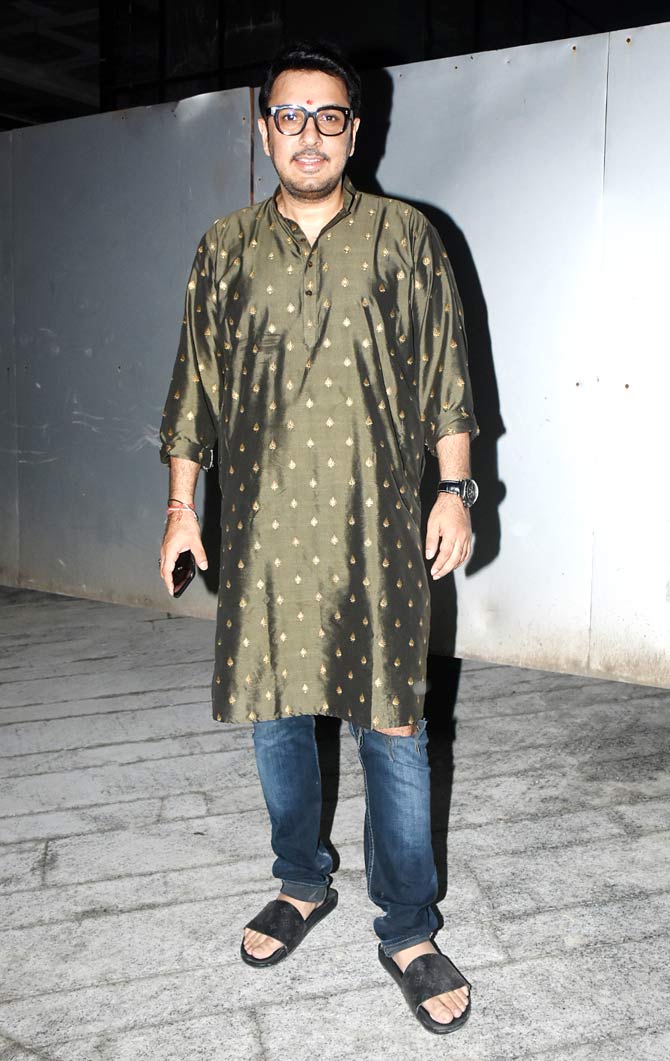
Dinesh Vijan (THE ECONOMIC TIMES; December 31, 2024)
The future of entertainment lies in the hands of audiences, who will decide how and where they want to consume content. Imagine a scenario where a QR code allows viewers to choose whether to watch a film in a theatre, on the phone, or on TV. This flexibility will define new-age entertainment.
However, content must reach a wider audience, especially in a country with India's massive population. For example, while Stree 2 was a blockbuster, it was watched by only 45 million people. This highlights the huge scope for broader content distribution.
In the coming years, technology-particularly AI and innovative distribution models-will empower filmmakers and create platforms for new content. The key, however, is to craft stories that resonate with a large, diverse audience. We need to focus on creating content that is about India, for India, and of India.
I don't believe there's a "takeover" by southern cinema. Since the pandemic, the Hindi film industry has seen remarkable successes, with films such as Animal, Gadar 2, Pathaan, Jawan, and Stree 2 achieving box office collections of Rs. 500-600 crore in India. This clearly shows that the Hindi film industry is performing as well as its southern counterpart. What truly matters is giving audiences something fresh and unique-exactly what these films have delivered. Instead of viewing southern and Hindi films as separate entities, we should embrace them as part of one Indian film industry. My hope is that films from across the country resonate with audiences nationwide.
Both southern and Hindi industries produce hits, but there are also films from both that fail to connect with audiences. As someone who stays in touch with creators from both industries, I am optimistic that next two years will bring unique stories from across India.
Streaming platforms are not a threat to cinema-they will coexist with theatres. While streaming services are still expanding their reach, they complement rather than compete with the theatrical experience.
If you look at the animals in The Jungle Book and in Bhediya, you will say that ours is as good-Dinesh Vijan
8:05 AM

Madhureeta Mukherjee (BOMBAY TIMES; November 22, 2022)
We have seen filmmakers create a whole universe with action, cops, comedy, even superheroes. But in our cinema and in today’s times, creating a horror comedy universe is rare, and let’s say, not a job for the weak-hearted. There in comes Dinesh Vijan, who leads Maddock Films, a place which he says, ‘Is a home for anyone who wants to tell a story, no matter where you come from’. After Stree and Roohi, he’s all set to release Bhediya in theatres on November 25 — a creature comedy starring Varun Dhawan and Kriti Sanon, directed by Amar Kaushik that is also backed by Jio Studios. Dinesh passionately talks to us about what drives him, how we need to unearth great stories from within us, and what made him pave new roads, and sometimes take the forests less travelled. Read on...
It’s hard enough to land a good comedy with the audience, and blending it with horror and thrill, and also building a universe around it with a string of movies, is tricky and needs a lot of conviction and courage. What pushed you in this direction?
Honestly, I have never looked at any film that I have made as a risk. When I made Hindi Medium, some people told me it was a risk, and before that, it was Badlapur. When you hear a concept from a director or writer, your first thought has to be, ‘I can’t not make this film’, and that’s what drives me to make it. Instinct is everything for me. If there is a voice from inside that tells me that I should make a film, I do it. After being in the business for 18 years, our strength is that we don’t take ourselves seriously. We don’t think we know it all. We believe that we have to constantly learn and evolve.
You have made films like Cocktail and Agent Vinod that are urban and contemporary, and also Love Aaj Kal (which, of course, did go into retro mode). And then, you gradually started moving towards stories that were very different in tonality and texture — more rooted in our culture and shot in small towns. Did you observe the audiences changing tastes for content before making that shift, or was this something that happened organically?
Agent Vinod taught me how to make Badlapur. I learnt what went wrong and how to correct it with director Sriram Raghvan (who directed both). Agent Vinod and Raabta (directed by me) have taught me more than all my films. If you are willing to learn, failure teaches you much more. In fact, Raabta taught me that trends had changed. Through the making of Love Aaj Kal, I was learning how to be a producer. I think that Saif (Ali Khan) and I made a pretty good debut production. Sometimes, it takes about ten years to find your voice and understand what satisfies you. Hindi Medium was a game changer for us. Badlapur and Hindi Medium made me realise that if you have a pure story, strong writing, the right man to direct the film (it’s not necessary that he has to be the best in the business) and good actors — you will hit home.
Most of your films are set in small towns, including Bhediya (shot in Arunachal Pradesh’s Ziro in Lower Subansiri, Sagalee in Papum Pare and Pakke-Kessang district). Do you believe that smaller towns are a hotbed for greater, rarer and untold stories which can emerge from only there?
A while back, we were aspiring to make films that were more like the West and I feel that around 2015 that changed. With Badlapur and Hindi Medium, even I realised that the power has moved as much to small towns, as the people there are actually going to the theatres a lot more. I looked inwardly and found a treasure. There are so many stories buried in these towns and cities. My dad always made me travel a lot and would tell me that, ‘You must know your country’. I owe a lot to him. Most people in the cities don’t know what the rest of India is. Your instinct as a filmmaker also comes with the life that you have lived. Amar Kaushik happens to be a Forest Ranger’s son, so like I said, it is about getting the right man to direct your film.
You made Badlapur with Varun Dhawan, and in a recent interview with us, he said, “When I asked Dino ki tu hamesha mere paas itna teda story kyon leke aata hai, he told me ki ussi mein hi mazaa hai. I want to put you in an uncomfortable zone.”
I think that’s when they are at their best. I have been telling Varun that this is his 2.0 version. He has given his blood and sweat to this film. Now when I see the film, I can’t imagine any one other than him in this part.
Would you say that Bhediya has been the most challenging film of your career — in terms of scale, subject, VFX, shoot, etc?
It’s the best film I have produced. With Bhediya, our instinct said yes, but we also knew that if we didn’t create a wolf that is of international standard, this film won’t work. And I can tell you that if you look at the animals in The Jungle Book and ours, you will say that ours is as good. When you see the film, you will feel like we have not used VFX, it looks real. We went to one of the best VFX companies in the world and made the film in a record time of about 18-20 months. And also, it’s about what the film leaves you with at the end. There are few films that talk about conservation. This is a film that you would want your kids and young adults to watch. I think what Indians now want are films emerging from their culture, but made at par with international standards. And they want it to be affordable in the theatres. If we can achieve that, we are home.
In recent times, there has been a lot of doubt and skepticism in the industry about what will work on the big screen. Maybe there isn’t one right answer, but do you believe that every theatrical release will need to be a visual spectacle to get the numbers? Or does great content minus the visual impact, too, have the power to bring back larger volumes to the theatres?
The world is gravitating towards the first statement you made. Do I completely believe in it? Maybe we will have more clarity in the next twelve months, but as we are talking about it, we have made one (spectacle film). However, we also have a variety of other kinds of films coming up. We have to accept that the digital medium is a reality because most people are in relationships with their phones. We need to understand the screen size, as your film will get consumed on all mediums, so we have to make films keeping that in mind. My first love is theatricals, and we make films for the big screen, but we can’t ignore other mediums. The West is largely in the spectacle kind of cinema space. I feel we need to pull up our socks and deliver high quality films. The film has to completely engage you, which most our films haven’t been doing lately. You need to have an experience — whatever that might be. Today, if you ask me whether a Hindi Medium would still do well, I would say, yes, it would. If I give you a really good comedy with a high concept, will you watch it in the theatre? I think you will. Bhool Bhulaiyaa 2 wasn’t a spectacle film, but it’s done such good numbers.
In the last two years, like many businesses, the film industry, too, has had to navigate through a lot of uncertainty. Was it all a huge learning experience for you as a filmmaker and a phase that changed your outlook and perspective?
Even pre-COVID, I was telling my friends that there is going to be a huge change in our cinema. I am happy that we instinctively made Bhediya, which will hopefully keep us relevant. Today, we have to fight to be relevant and win back the audience’s confidence. We have to achieve these two things. We are competing with the West, but we have to look at what we have. If we look deep inside, look at our culture and find those stories, we are going to be able to create that experience for them. And that is their own experience; it’s not America saving the world. It’s none of that. And it begins with writing. We have to reward our writers. My writers are empowered, they have a say and I believe in them. And we (Maddock Films) are a home for anyone who wants to tell a story, no matter where you come from. I was like that, as I don’t come from a film family. I am the first-generation coming into this industry, and all my directors are too. I want my directors to feel that they have got the best wingman in me and that I completely have their back.

Angrezi Medium had released in UAE...it was too late to pull back-Dinesh Vijan
8:26 AM

Roshmila Bhattacharya (MUMBAI MIRROR; March 14, 2020)
In conversation with Mirror, Dinesh Vijan talks about releasing Angrezi Medium on Friday amid coronavirus scare. Even as major markets closed down one after another later in the day, the filmmaker says he understands that it’s an unprecedented situation and hopes people will wait to see his Irrfan Khan-starrer in theatres...
At a time when Rohit Shetty has indefinitely pushed the release of his cop-drama, Sooryavanshi, featuring Akshay Kumar, Katrina Kaif, Ajay Devgn and Ranveer Singh, it was a brave decision to go ahead with Angrezi Medium as scheduled.
We had no option as the film had already opened in the UAE-GCC market on Thursday, when the Chief Minister of Delhi (Arvind Kejriwal) announced shutdown of theatres later in the day. Had we known three-four days ago that this would happen, we might have had time to rethink the release, but on Thursday, it was too late to pull back.
You and your studio partner, Jio, were locked in a closed-door meeting which went on till close to midnight on Thursday. At one point there were reports that certain theatre chains had been instructed to stop advance booking…
Advance bookings had started on Wednesday itself. Even in Delhi, tickets had been sold. When the government order came, it took us an hour or so to align ourselves with the unforeseen developments. After that, the discussion was on how best to put it out. As I said, it was too late to stop the release by then as we had already gone live. Also, the overseas prints had been dispatched and KDMs (code for digital projectors) issued to theatres across India. However, despite everything, the film has opened well all over. It has been appreciated by critics and the audience alike.
Going by early estimates, it should do double the business of Hindi Medium on the opening day. This, despite the fact that business is down by 30 per cent after the corona scare, and we’ve lost another 40 per cent from Delhi, which is a big market.
What about overseas?
Dubai has opened very well. Friends of Sutapa (Sutapa Sikdar, Irrfan Khan’s wife) who saw it there, informed us that the theatre was 90 per cent full, and the audience was laughing and crying and generally enjoying the film. It’s a father-daughter story which will tug at the heartstrings. But 80 per cent of our expected business was from home. And after Delhi, Jammu and Kerala, there were orders to shut down theatres in Bihar, Karnataka and UP, though the UP CM has left the decision to the theatre management. The big hit was when Mumbai, Thane, Navi Mumbai, Pune and Nagpur were also declared out of bounds.
I understand that the government is taking these steps in the larger interests of people, and I personally want everyone to be safe. Still, it’s sad that a good film has come in the eye of a storm. In my 20 years as a producer, I’ve never faced a situation like this. There have been shutdowns in one or two territories, but this is an unprecedented situation.
Can you claim insurance for the no-shows?
Yes, we are covered by insurance.
How are you taking this personally?
I made this film for Irrfan and no matter what, it will be a journey I will cherish all my life.
How is Irrfan taking it?
I think he’s beyond all this. I spoke to him this morning and he’s happy those who have seen it are appreciating the film.
In the current scenario is piracy a concern?
It’s always a concern but those who visit theatres, go for the experience. And I hope they will return to them when they reopen. As Irrfan said in the teaser, I hope they will wait for us.

Making a film like Angrezi Medium has made me a better person-Homi Adajania
8:15 AM

Onkar Kulkarni (BOMBAY TIMES; March 12, 2020)
They began their journey together in 2006 with Being Cyrus. After Cocktail (2012) and Finding Fanny (2014), this year, the duo has collaborated on Angrezi Medium. In conversation with BT, director Homi Adajania and producer Dinesh Vijan speak about their association, working with Irrfan and how that experience has changed them for life. Read On:
You have collaborated with each other since Being Cyrus (2006), and Homi, you have always worked with Dinesh. There are things that have worked and not worked where your projects are concerned, but creatively, the two of you have had an interesting journey, right?
Homi: I remember, I narrated the story of Being Cyrus to Dinesh, and he asked me how many days I would take to make the film. I had no clue, as I had never made a film before. I told him that I’d finish it in 30 days. He said that if I took more than 30 days, I would have to pay from my own pocket. By the end of that day, I was a little worried. I asked him, ‘What if it starts raining and that disrupts the shoot?’ It was like dumb and dumber (laughs!).
Dinesh: It was a level playing field. He didn’t know how to direct, and I didn’t know how to produce. We were trying our best to keep that fact hidden from the other (laughs!). The thing is that Homi and I learnt the business together and we have had an interesting journey.
Homi: The only thing common between us was that we wanted to tell stories — that was our passion. After the first film, I became a scuba diving instructor. One day, I got a call from Dinesh for Cocktail. A romantic comedy was virgin territory for me. He approached me so that I could bring my own palette to the genre. Dinesh always believed in my potential, while I have been blind towards it. One thing that has worked for us is that we have never lied to each other. Even when I agreed to do Cocktail, I told him that I still don’t believe in the story, and I will give the subject my own twist. He said that’s exactly what he wanted me to do.
Dinesh: Even films like Stree or Bala that I have backed have been as reckless as Cocktail. If I like a story, I want to tell it, and one does everything to make it happen. One week before a film’s release, I know where we stand. My average products have never worked. Initially, I would wish that I could get away with it, but that has never happened. If it is a good film, and it doesn’t work for some reason, then I am okay with it. But, if it is a bad film, then it is not forgivable.
Everyone wants to make content-driven cinema, but you also have to be a risk-taker and have the faith to go ahead and put your money in such projects…
Dinesh: In the last 15 years, filmmakers have destroyed the business because we wanted to make money beforehand and we didn’t want anyone else to make money. We also wanted to ensure that if our film failed, we would not be at risk. That model changed for us with Stree (2018). Since then, we have made money and at the same time, done better films. Nobody wanted to put their money on Stree. I had no option but to back it myself. It was all or nothing, and it could have shut us down. I will tell you about my production house’s formula. We believe that if it doesn’t fire, nobody loses money and only if it fires, we make money. A film has to run in theatres. If that doesn’t happen, it is sad as a lot of work goes into it. My upcoming release, Angrezi Medium is an entertaining film. I have no problem if you love it or hate it. But, being indifferent towards a film is scary!
Talking about Angrezi Medium, how was your experience of working on a film with Irrfan, at a time when he was battling a tough phase in his life and undergoing treatment?
Homi: Well, the experience changed everyone. It made me change the way I make my films. After all, you are making a film and not curing a disease. Don’t take it so seriously! The entire experience of shooting Angrezi Medium will always be a wonderful memory. Making this film has made me a better person. In fact, it has touched everyone in one way or another. It the kind of experience which uplifts your spirit and makes you understand what resilience is. We knew all about the risks. We went into it with our eyes open. There was no question of tiptoeing around Irrfan. The fact is that we addressed the elephant in the room. He had cancer and was undergoing treatment. And we all were living life the way that one is supposed to. Nothing has to stop at any point in your life. That’s the spirit with which we kept going. Irrfan, too, soldiered on with passion and wasn’t stressed about it. It was inspiring seeing him do what he was doing.
Dinesh: When the unit was shooting in London, I was supposed to be on set only for five days, but Irrfan asked me to stay back. He told me he feels positive when I am around. So, I stayed back for him. There was never a gloomy moment on the set of the film.
A lot of actresses (probably more popular, too) would have loved to play the role essayed by Radhika Madan. What made you think that Radhika was apt for the part?
Dinesh: A lot of actresses were keen to play this role as the first one (English Medium, 2017) did so well. So, whichever manager approached us with their client’s name, I showed them Radhika’s audition video. And after that they agreed that Radhika was apt for the role.
Homi: Dinesh showed me her audition for Pataakha (2018). I remember she had invited me to watch the film, but unfortunately, I wasn’t in town. Later, she messaged me and asked if she could audition for this role. I turned down her request and told her that we wanted a younger actress to play the part of the 18-year-old girl. Regardless of that, she sent her audition video. I was just blown away seeing her performance.
Homi, you have directed films like Being Cyrus, Cocktail and Finding Fanny. This is your first film that is in quite a desi zone, in a sense.
Homi: Yes, Angrezi Medium is very much out of my comfort zone.
Dinesh: I feel that if you have something on paper, and a good director on board, then language can never be a barrier. I felt Homi would be perfect to direct this film because he is an amazing father. He has two boys, and I have seen their equation. He also has maximum respect for writing and writers.
Homi: The film is about a parent and a child. Personally, as a father, I really get scared of some situations. You hold the hands of your little ones; show them the way, and then one day you let them go. You do that with a lot of pride and as much pain and a lot of hope in your heart that one day, when you need them, they will come back to you. This is the sur of this film. The writer got it, Irrfan got it, and then, we all were on the same page.
Dinesh, you have tried your hand at direction with Raabta (2017). When do we see you directing again?
Homi: He is a very good producer, let him produce (laughs!).
Dinesh: We do a lot of stuff for validation. As you grow older, you realise this. I thought I was enamoured by direction. When I did it, I realised I genuinely loved producing. Ten years later, I feel the urge to direct, then I’ll think about it at that time. Right now, producing is working well for me. Now that I have been through the process of direction, it helps me better my production skills, too. I believe we have a lot of directors, but only a few producers who can add value to a director’s vision. Though your failure teaches you much more than your victory, life is too short to make all your mistakes. So, you learn from other’s mistakes. Today, all filmmakers get along with each other and use each other’s creativity. It helps and it also gives a good vibe.
The film industry is going through a positive change in many ways…
Homi: (Cuts in) Of course! After all, if films do well, then it is more conducive and beneficial for us as an industry. For some strange reason, earlier, we would feel that people didn’t want someone else to do well within the industry. But that has changed now.
Dinesh: When I met a well-known Hollywood film producer, he said, “You know why Hollywood works? Because the top five people (of the industry) get along really well.” We need to take from each other if we want to grow the business.
Homi: The film industry can be wiped out if we don’t stick together and grow the business.

There are plans for a Chinese Medium too-Dinesh Vijan
8:22 AM

Dinesh Vijan reveals that he would like to spin a franchise out of problems related to education, faced by both parents and children, across generations and countries
Roshmila Bhattacharya (MUMBAI MIRROR; March 9, 2020)
After Hindi Medium and Angrezi Medium, are you planning to carry this franchise forward?
Yes, since education is a universal subject, it should be. There are plans for a Chinese Medium, but it would all depend on my friend Irrfan Khan.
Chinese Medium?
Yes, Hindi Medium released in China and was a hit. Angrezi Medium, too, will find its way there in a few months. I was in the country four weeks after the first film opened on April 4, 2018, dining at a private room in one of the restaurants when one of the waitresses, having heard that the producer of Hindi Medium was there, came running to tell me she’d seen the film with her young daughter and it had really connected with her. That set me thinking.
Now, with Angrezi Medium, we have taken the story out of our country, and because the daughter is older and wants to study in the UK, the crisis is bigger for Irrfan’s character, who, this time, is a single parent. Since the Chinese are all around the globe and are sending their kids abroad for higher studies while struggling with the language barrier, I think the world now deserves a Chinese Medium.
Talking of China reminds one of the Coronavirus. Has the outbreak prompted a rethink on the release date, March 13?
While safety is a concern, except for the Delhi-NCR belt, the number of cases is not all that alarming yet, and from Baaghi 3’s opening numbers, it is evident that people are still going to the theatres. This film has been made against all odds, with a lot of love, and I believe we should release it now rather than pitch it four months later. My dad has been looking out for me from up there, that makes me confident to take every risk.
I recently showed the film to 14 of my mother’s friends, my younger sister Pooja, my niece Alia and four of her buddies, all in their 20s, and their reactions were most heartening. The kids could empathise with Radhika’s (Madan) Tarika since they are the same age, my sister saw it from the perspective of a parent, and my mom could see only my dad in it. Irrfan, as Champak Bansal, made them laugh, he made them cry. It’s his best performance; absolutely flawless!
What was it like working with Irrfan?
It was a life lesson. We get so caught up in the business of living, that we chase after the wrong aspirations. With Irrfan, I learnt to value the little moments that usually pass us by, the emotions that really matter. As soon as it was ready, I had taken the script to him and he gave his “yes”. After Homi (director Homi Adajania) came on board, we were all set to go on the floors, but then, Irrfan fell ill. I couldn’t imagine making Angrezi Medium with anyone else, so we waited a year for him. I remember on the second day of shoot in Udaipur, I watched him give a really emotional shot. I’d never seen him do anything like this before. When I told him this, Irrfan replied, “Yaar Dinoo, maine mere illness ko nichod kar iss performance mein daal diya hai.” For me, this film will be memorable for the time I got to spend with this fabulous actor and fantastic human being. He’s made all of us better people.
What made you think of Homi to direct it?
Homi, like me, appreciates writers and good writing. So, if you have a good script, he’s the best guy for the job. And in this case, he could emotionally connect with it too. He is a phenomenally good father to his two little boys and has always wanted a daughter. Also, Irrfan and he have wanted to do a film together for a while, so, it all worked out well.
Angrezi Medium also reunited you with Kareena Kapoor…
Kareena is an independent woman, and really connected with her character, Naina, an undercover cop. In one scene, Irrfan tells her that as a kid, we hold our parent’s finger and learn how to walk, and then, we grow up, leave that finger and walk off. I think Kareena did this film for that one scene alone. Dimple (Kapadia) ma’am and her track, that of an estranged mother and daughter, parallels Irrfan and Radhika’s. It’s a kind of a simile to the growing chasm between father and daughter and what it could lead to. The beauty of Angrezi Medium is that it presents a picture from both perspectives, that of the parent and the child, while attempting to bridge the centuries-old generation gap.

When it’s love, people listen to Imtiaz Ali-Dinesh Vijan
10:48 AM

Dinesh Vijan on his Love Aa j Kal director; says he is looking forward to headlining Cocktail, too and that Go Goa Gone 2 is about the world ending
Roshmila Bhattacharya (MUMBAI MIRROR; February 10, 2020)
Imtiaz Ali, in a recent interview, had told us that Love Aaj Kal is the only franchise-able idea he has had. His producer, Dinesh Vijan, begins the conversation by saying that he’d love to take the 2012 romcom, Cocktail, which Imtiaz had written with brother Sajid Ali, forward if “we can find the right director—that’s from Homi (Adajania, who directed the film) sitting with me in the car—and the right mix that makes a relationship stick.
In the case of his upcoming Valentine’s Day release, what merited a follow-up was the format and the fact that thematically, the concept of love changes every five-10 years. “The last Love Aaj Kal went back to when there were no phones. But over the last decade, the onslaught of the digital revolution has changed the way people communicate. The millennials are looking for human connect, at least some of them are. If there’s another shift, we can make another Love Aaj Kal, that’s the idea,” he says brimming with the excitement and enthusiasm of a filmmaker who is succeeding with off-beat themes where others are floundering with time-tested formulae going by the success of Stree, Luka Chuppi and more recently Bala.
But with people expecting original ideas from him, how much of a pressure is it to take a successful romcom which people still have a lot of attachment for and ‘twist’ it literally to come up with a new film. The pressure, he says, was to write it better. And Imtiaz has chosen a story with two similar parallel tracks but a new conflict, and new actors playing new characters and speaking the language of today to tell it. “Like Pritam, who has composed a completely new track which has only an echo of 'Twist', the film, too, is a fresh take with just a hint of the old. I’m curious to know how two generations, yesterday’s and today’s, react to this film. What’s reassuring is that over the last decade, Imtiaz has owned this space. If there is anyone people listen to on the subject of love, it’s him,” asserts Dinesh, pointing out that sometimes a character may not merit another journey, but the concept does.
It’s interesting that Sara Ali Khan has taken the baton from dad Saif, but her producer is quick to dispel the notion that she entered the picture because of their relationship. “Sara’s Zoe is intelligent, career-oriented and has a voice. As a character, she’s very new to Hindi cinema, but I could see a lot of her in the way Sara talks, walks, dresses and thinks. Of course, there’s a lot of Sara who is not in Zoe too, but she was the perfect fit,” he avers.
Ten years down the line, will we see Taimur headlining the next Love Aaj Kal? “Taimur doesn’t have dates even today. And by then, Kartik, could also have a good-looking child,” he guffaws. What did love mean to him yesterday and has it changed today, you wonder, and pat comes the reply, “There’s no kal, aagewala ya peechhewala. It’s just love aaj, with the love of my life, my wife, Pranita.”
 Meanwhile, he has announced Goa Goa Gone 2. A zombie apocalypse action comedy was a revolutionary film even back in 2013. How do you plan to up the ante with this one? Dinesh informs that writer Gautam Mehra, who worked with them on the Rajkummar Rao, Janhvi Kapoor, Varun Sharma horror comedy Roohi Afzana which opens in April, had come up with the idea. “It’s a stoner comedy of sorts about the world coming to an end. It’s interesting given the state of our planet,” he chuckles. And is there a chance of Saif returning as Boris, the Russian mobster and zombie hunter? “Of course, there is!” he exclaims. “Boris was an integral part of the first film and made it special. As soon as the script is ready, we will go to him. Hopefully, he will like the role and come on board.”
But before this in March, Angrezi Medium which takes the story of Hindi Medium forward, arrives in the theatres. Dinesh, who waited patiently for Irrfan Khan to get back to work, says there would have been no Angrezi Medium without Irrfan. “I’m happy we could come together and make it. It’s Homi's most sensitive story and both Irrfan and he got along really well. Some films change you and this one has. I lost my father five years ago and watching Irrfan play one in this essentially father-daughter story was emotional. He’s put something extra into the role that makes you feel for real. I was to be in London for just one week during the shoot, but he insisted I stay back. And somewhere, in the process of making the film, I’ve become a better human being,” he signs off with a smile.

We all have one such story in our life that underlines our imperfections-Dinesh Vijan
8:29 AM

Rachana Dubey (BOMBAY TIMES; November 5, 2019)
Dinesh Vijan has always believed in backing content that he is convinced about without fearing failure. “Raabta (2017) and Agent Vinod (2012) taught me to look at cinema differently,” he says. Ahead of the release of his production, Bala, he spoke to BT about picking the right content, reuniting with three directors he had started his Bollywood journey with, and the unforgettable lessons he has learnt along the way. Excerpts:
After Luka Chuppi, Arjun Patiala and Made In China, Bala, which hits the theatres this week, will be your fourth release as a producer this year. How would you describe the year, which has been hectic, challenging and fast-paced?
This has been a year of lessons, an enhanced understanding of the work we do and stability. I’ve managed to line up my films for the next year — the ones that go on floors and ones that release. I can’t wait for 2020 because there is a lot of action ahead. I’m reuniting with Imtiaz Ali, Homi Adajania and Sriram Raghavan, with whom I had worked at the beginning of my journey as a filmmaker. I remember learning so much from Imtiaz when he was making Love Aaj Kal (2009). The year ahead is more packed than this one. With everything that I have learnt, particularly from my failures, I’m more than geared up for the next year.
What about your plans to direct? You wanted to start something this year...
In the next two years, I have over ten films slated to release and around five or six big films to roll out. I can’t take my attention away from that right now. As a filmmaker, my biggest learnings came from Agent Vinod (2012) and Raabta (2017), which taught me just how fast the audience is changing. I learnt the art of making films like Badlapur (2015) and Stree (2018) from these. Failures teach you more than success. Today, as a filmmaker, I go by my gut instinct. I have to know the emotional arc of a story and see if it works for an audience.
While this year has been one of mixed results for you, what are your expectations from Bala? Do you feel nervous before the release of a film?
No, I don’t. I am not nervous because I make the films that I truly believe in. Take Bala for instance, I truly love it for what it stands for. So far, with most of our films, you take something home after the viewing experience. This time, you might also leave a little bit of you behind in the cinemas. I am extremely proud of this film because it will establish an unreal sort of a connection with you as an audience.
A film on similar lines opened a week prior to Bala. Does that bother you?
I’ve not commented on this matter so far because when the dust settles, people are smart enough to see things for themselves. People are going to say all kinds of things. Yes, the lead characters in both films are bald, but I know that my film is different. In Bala, there’s nothing similar to the south Indian film (on which Ujda Chaman was based). My company has stood for positive and original content. We’ve stuck to our date for Bala, and we’re confident about our film. I’m known to thrive on my sense of originality.
When you announced your film about a year ago, what had drawn you to the subject at that time?
The film is not so much about balding. It’s actually about the fact that we all have something we don’t like about ourselves. It could be size, weight, height, hair or skin colour. The idea is to love yourself for who you are, because it’s foolish to expect other people to love this perfect, superficial version of you. Amar Kaushik (director) was the best person to make this subject, which will appeal to the simplest, yet the most complicated Indian. The reason I kept quiet all this while was because, I didn’t want to corrupt the experience that Bala, as a film, offers.
Talking of imperfections, are you conscious of any of own?
I don’t observe myself so much; I am not even on social media. I remember when I was in class four, I shot up (in height), and suddenly, I was the tallest in my class. I developed a hunch because I became conscious of my height. Of course, eventually, my height became my strength. I’ve realised that anything different is always frowned upon and that has to do with the way we are conditioned. With Bala, we want to initiate a change there. That is the aspect I related to the most. We all have one such story in our life that underlines our imperfections or what we see as our imperfections. Bala will make you love yourself.
As a producer, you’ve refrained from backing anything formulaic. At the outset, you were doing something different from the rest of the industry. Did people also frown at your choices of films and the direction you were heading in?
I don’t know about that because we were busy making films. We’ve always backed stories that we firmly believe in. We’ve forged some extremely fruitful equations with filmmakers like Imtiaz Ali, Sriram Raghavan and Homi Adajania. As a company that arrived out of nowhere, we have never feared failures. We never take our audience for granted and never hide things or mislead them. Yes, when you make five films, you will go right and wrong with some of them. But why make a film that you don’t believe in? I’ve always wanted the directors of my films to get their vision right; we can work around the rest. After making Agent Vinod, Sriram made Badlapur and then AndhaDhun; he’s come into his own and is now making Ekkees with us. Fortunately, I’ve always found like-minded people to work with, whose love for cinema is greater than everything else. The intent is always to make the best possible film with the material at hand.

This Friday, you will know that our film Bala is an original concept-Dinesh Vijan
7:56 AM

Dinesh Vijan on his next, which tells Ayushmann Khurrana’s bald story, and informs that plagiarism case against him is withdrawn
Roshmila Bhattacharya (MUMBAI MIRROR; November 4, 2019)
 For someone who has been redefining content with films like Badlapur, Hindi Medium and Stree, it must feel like a bad dream to be accused of plagiarism by the makers of Ujda Chaman. Yet, you have chosen to remain silent on the charges.
When something like this happens, a part of you wants to explain yourself. But since we were just three weeks away from release, I needed to see my film through without losing focus. It will be out this Friday and then you will know that Bala is a completely original concept. We are credible filmmakers. Forget a subject, I’ve never even signed a director working for another production house.
How did the issue blow up?
Before we started, Luv Ranjan and Kumar ji (Mangat, producer of Ujda Chaman) approached me on the similarity in the plots of the two films. Since Kumar ji’s film was a remake of a Kannada film (Ondu Motteya Kathe) I didn’t need to listen to his subject, but I narrated mine to Luv who assured us that there was no resemblance between the two. Twenty days after we wrapped up, they went on the floors. I reiterate our film is nothing like the South film or the 2011 Hindi film Hair Is Falling or any other on the subject. More than hair loss, Bala propogates self-love. There are things we don’t like about ourselves, be it our hair, height, or complexion, yet, it’s important that we love ourselves for others to love us. That’s what our film is about and it’s Ayushmann’s (Khurrana) best performance to date. He’s known for brave choices but this one is all heart.
Why, then, did you push the release forward, from November 22 to November 8?
After Karan (Johar) called to say that his Bhoot was moving, we thought of coming with Bala on November 8. My studio partners felt that with November 11 being Guru Nanak’s birthday and a holiday, it'd give us an extended weekend and a two-week run at the box-office.
What’s the status on the plagiarism cases against you? Even Dr Zeus threatened legal action for recreating his song, “Don’t Be Shy”.
The Ujda Chaman makers have withdrawn their case and as far as the song goes, we have officially taken the rights from Kamran Entertainment, the copyright owner of the original song.
 Some don’t like the fact that Bhumi Pednekar’s skin tone has been inordinately darkened on screen since she is playing a dusky girl...
Bhumi is an actor playing a character which demanded this, just like Ayushmann’s Bala needed him to sport a balding pate. The idea here is to sensitise people with respect to terms like ‘takla’ and ‘kala’, which begin as jokes in school and whose scars we carry all our life, unless we can love ourselves for who we are.
What went wrong with Arjun Patiala and Made In China?
The former, as a spoof, fell flat. I stand by Made In China’s script and its intentions. Raj (Rajkummar Rao) was outstanding. I think we faltered with the release date. If Agent Vinod taught me to be brave with Badlapur, and Raabta with Stree and Luka Chuppi, Made In China has made me realise the importance of timing a release right.
 Given how big a hit Stree was last year, we had expected Roohi Afza, which is in the same genre, to arrive before the year was out.
We started filming only three months ago and still have two songs to shoot, followed by four months of post-production. A film, like a baby, takes nine months to deliver. Roohi Afza, my first film with Janhvi (Kapoor) and my third with Raj, comes in April 2020. In March 2021, we plan to release another horror-comedy, Munjha, which goes on the floors next year in August. All three— Stree, Roohi Afza and Munjha—will have a part 2 which will arrive over the next five years, three years after the original opened, each answering the question the first part ended with. Then, all three will come together in my horror universe in a series of two films which deal with the bigger picture and a larger conflict. All of them and their sequels are being written by separate writers and will be made by different directors over eight years. Now, isn’t that exciting?
 Very much so. Now, tell us about the Love Aaj Kal sequel. Can Sara Ali Khan and Kartik Aaryan’s real-life split affect its box-office prospects?
I didn’t even know Sara and Kartik were dating. They are both strong actors who have the love of the audience, and with Imtiaz Ali, the master of heartbreaks, telling us how love has changed in the last decade, I am confident this film will be a much-awaited 2020 Valentine Day release. I remember little Sara present at the pooja when we started Love Aaj Kal with her father (Saif Ali Khan). Now, she’s the leading lady of the sequel. Taking the journey forward with her, Imtiaz and Kartik, with whom I had a hit in Luka Chuppi earlier this year, has been heart-warming.
 The Irrfan Khan-starrer Angrezi Medium followup to Hindi Medium was another reunion project for you. What was that journey like?
There is an almost Sufi quality to Irrfan now. He’s made me realise that the mind is living our lives, making us chase success instead of valuing the here and now. Thanks to my mother, Irrfan and my wife Pramita, I’ve become a better person—calmer, more balanced and mature. I’m still passionate about my work, but when I go home now, I can disconnect and feel grateful for all that I have. Perhaps that’s why the recent controversies didn’t rattle me, nor do box-office results. You can’t get it right every time, but it’s important to work with good people, give my best and enjoy the moment.
 That’s why it’s exciting to reunite with not just Irrfan on this film but also Homi Adajania. I started my career with his directorial Being Cyrus, and have collaborated with him on Cocktail, Finding Fanny and now Angrezi Medium. My Badlapur director-actor duo, Sriram Raghavan and Varun Dhawan, and I have also joined hands on the biopic of Second Lieutenant Arun Khetarpal. The film is a big responsibility towards the late martyr's brother Mukesh Khetarpal and to the Indian army. It’s wonderful when actors, writers and directors trust you enough to want to work with you again.
You’ve reunuited with your Luka Chuppi director, Laxman Utekar, and actress Kriti Sanon too on Mimi but isn’t she a little too young to play a mother?
Mimi, the remake of Marathi film, Mala Aai Vhhaychay, is about surrogacy and till it was banned, it was young girls who agreed to be surrogates to support their families. This young girl wants to be an actress but ends up becoming a mother. I believe a child gives birth to a mother and if with Laxman sir’s help, Kriti who has not experienced motherhood yet, can bridge that gap between herself and her character, Mimi will be her best performance.

The Love Aaj Kal sequel is above controversies and unnecessary attention for me-Dinesh Vijan
7:52 AM

Rachana Dubey (BOMBAY TIMES; November 4, 2019)
 Sara Ali Khan and Kartik Aaryan, who will be seen in Imtiaz Ali’s next, the sequel to Love Aaj Kal, have been grabbing headlines lately for the status of their relationship. In a recent Diwali picture, the duo was in the same frame but standing apart, further fanning rumours which have been doing the rounds, that they have spilt-up. A few months before this, they were photographed spending quality time with each other in Lucknow.
While most believe that this romance spilled over from reel to real life while working on the sequel to Love Aaj Kal, when BT caught up with filmmaker Dinesh Vijan, who has bankrolled this project, we brought up the subject their love story, and he told us, “I have not had the time to speak to Sara and Kartik about anything in the world. They’re busy, and so am I. But they’re very special to me. I remember when Saif (Ali Khan) and I had started Illuminati Films and were launching Love Aaj Kal, Sara was in the office for the puja. I have known her since she was a little girl. Life has indeed come a full circle and she is a part of the Love Aaj Kal’s sequel as its leading lady. Kartik did Luka Chuppi with us and he’s someone I value a lot. Ditto, Imtiaz Ali, who I am teaming up with after a very long gap. So, for me, this film is above controversies and unnecessary attention.”
As a content creator, I’m only trying to gauge what can break the clutter-Dinesh Vijan
2:32 PM

Rachana Dubey (BOMBAY TIMES; July 27, 2019)
Filmmaker Dinesh Vijan and director Rohit Jugraj have one thing in common - they’ve both learnt the ropes of their business by taking risks. Dinesh decided to signed Rohit to helm Arjun Patiala, a spoof comedy, after seeing one of his Punjabi films with Diljit Dosanjh. Dinesh and Rohit had a frank and fun conversation with BT about their film, which also features Kriti Sanon and Varun Sharma, and the changing face of the comedy space. Excerpts:
Comedy as a genre is gradually changing with newer sub-genres being introduced to the audience. What do both of you make of this trend?
Dinesh: Comedy is the most successful genre that we have today. David Dhawan is one of the most successful filmmakers we have in the industry, in terms of commercial success, and he understands comedy the best. So far, all of my films have had an element of humour in them. The thing is aap logon ko hansa-hansa ke kuch batayenge toh woh jaldi samjhenge. We spoke of live-in relationships with a family angle in Hrishikesh Mukherjee’s style with Luka Chuppi. That made the film accessible to everyone. Even in Arjun Patiala, the humour is such that it can be consumed by everyone.
Rohit: Punjabi cinema has some sort of hold on comedy; they do it really well. I think the audience has been ready for variety in comedy as a genre. We, as filmmakers, have taken longer to convince ourselves to try something out-of-the-box.
Dinesh, after successful films like Stree and Luka Chuppi,you decided to back a film like Arjun Patiala, which is a spoof comedy – a genre that has not been explored much in Bollywood…
Dinesh: I would say that this is the most experimental film we have made so far. While it’s out there, in a strange way, it’s also risky because we are breaking the fourth wall and talking directly to the audience. My company and I have backed films like Stree and Go Goa Gone in the past, which explored new territories. Even here, while there is a pre-existing base, the film is self-deprecating, which is quite new for the business and us. It will be interesting to see how many people this appeals to. We’ve broken the very format of narrating a film where we are saying this is a mandatory love song or an item song. We’ve turned the cop genre on its head.
Over a period of time, you’ve tapped quite a few unchartered territories, as a filmmaker, business-wise isn’t it safer to try something that’s worked in the past?
Dinesh: It’s a spoof comedy that makes fun of itself with a clear story and characters that take themselves very seriously. We haven’t made fun of any other actor or film while trying to do this because it’s not fair. For us, the real challenge was to tap those people who didn’t laugh when they saw the trailer because they didn’t quite get the humour in it. As a filmmaker, I have always experimented with my content, starting with Being Cyrus and Go Goa Gone. Badlapur was an experiment with Varun Dhawan playing such a dark character at the beginning of his career. Stree was a horror-comedy, and films like Angrezi Medium, Bala, Imtiaz Ali’s next, Roohi-Afza and Made In China are also content-driven, with an underlying layer. I’m proud of the line-up. Arjun Patiala leads the pack because it opens first. I remember, when released the trailer of Go Goa Gone, people didn’t know how to react. As a content creator, I’m only trying to gauge what can break the clutter over the next two years. I’ve never taken the audience for granted. My film is an experimental product, and I’m not shying away from that.
Self-deprecation is neither easy to depict nor easy for an audience to consume and accept…
Dinesh: I was ridiculously confident about Stree and Luka Chuppi because somewhere, I knew they would work. Go Goa Gone was an experiment, a zombie film where no one knew how the audience would react. These genres, over a period of time, develop a cult following, which takes time and effort. When writers Sandeep Leyzell and Ritesh Shah came to me with Arjun Patiala, I felt they had the right intent – they wanted to make a film that laughs at itself.
Rohit,you made your last Hindi film, Superstar,a few years ago.Between that and Arjun Patiala, you’ve made some Punjabi comedy films. Why make a comeback with a spoof comedy?
Rohit: The first Punjabi film that I made was Jatt James Bond, which was a thriller-comedy. After working in the Punjabi film industry, I realised that there could be so much variety in humour. For me, it’s a form of spirituality. I have realised that Punjabis generally tackle everything with a pinch of humour and they get past things or drive home their point well. I had gone off the radar from Hindi movies because here nobody lets you make the films you want to if your previous films have flopped. It had happened with me. When I moved to Punjabi films, I got a chance to work with top stars like Diljit Dosanjh and Gippy Grewal, and I understood a lot about stories and the numerous ways in which they could be told. About a year ago, when Dinesh and his writers told me about this film, it hit me somewhere. I was blown away with just how self-deprecating they intended it to be. Writer Ritesh Shah is known for some serious films, and I wasn’t expecting this from him. When Dinu said that we have to break the forth wall and talk to the audience, it was important to understand the four walls to know which one to break. My team had even warned me against me doing this film, but I decided to give something unique a shot.
How difficult was it to explain a film like Arjun Patiala to its actors?
Rohit: They came around fairly easily because they liked their parts; we have had a deeper discussion in this interview than we had with them (laughs!). They just had to believe in the characters and do their bit.
What do you make of the spoof comedy genre which is already quite popular in the West?
Rohit: I think films like Hot Fuzz, Scary Movie and Deadpool are quite popular. Spoof comedies from the West have been massy, and yet, very sophisticated. Their humour has grown on the audience over time. The ultimate thing in any film is its entertainment quotient. We don’t need to have a hangover of the West. If our superhero film doesn’t entertain, the audience will question it. The reason people are more accepting of what they see in Hollywood films is because they say things convincingly and in an entertaining manner. In our spoof comedy, we’ve not aped anything from any existing film. We have done our own thing, and if it entertains, irrespective of whether one has seen a spoof comedy before or not, people will like it.
The most important decision is which story to tell-Dinesh Vijan
10:00 AM

Dinesh Vijan who after Badlapur, Hindi Medium and Stree is hoping to bust the box-office with more films growing out of the heartland
Himesh Mankad (MUMBAI MIRROR; February 25, 2019)
 Lots of buzz around the Hindi Medium sequel which is supposed to be Irrfan Khan’s comeback film. What’s happening on that front?
Hindi Medium is a special film because it brought us so much love and appreciation. It’s important Part 2 lives up to expectations. The script is currently being fine-tuned. Irrfan is a close friend and he’s been very strong. It’s only fair that any announcement come formally at the right time. For now, it’s time for Luka Chuppi, a beautifully written comedy, like Hrishikesh Mukherjee’s films.
It’s a catchy title…
Yeah, well, India is a ‘connected’ country in that everybody in a family is involved with each other’s lives. In such an environment, it can be disastrous to lie. If you do, it results in a comedy of errors which may be funny for the world but dangerous for the ones involved. That’s the concept of our film.
Can a quirky family film make the cash counters jingle?
Last year, the audience made it clear that we are no longer aspirational about the West but just as proud of our own country. We want to see Indian stories and there are so many fascinating stories in the heartland which if executed well will definitely find takers. It’s not about a particular type of cinema, but about novelty as evidenced in the films that worked—a diverse spectrum from AndhaDhun and Badhaai Ho to my own horror-comedy Stree.
You must be relieved as a producer to see content-driven films work irrespective of stars as that makes a project economically viable?
The most important decision is which story to tell and that’s determined by gut instinct. The logistics will eventually fall into place if you make the film sensibly. The so-called small films are no longer doing a business of just Rs 30-40 crore, they are earning big bucks. The script is the real hero of the film today.
Won’t Luka Chuppi’s releasing during the exam period hamper its prospects given that its lead pair (Kartik Aryan, Kriti Sanon) and premise are targetted to the youth?
It’s a family film, but that aside, if not exams, there will be the IPL or something else. Last year, Sonu Ke Titu Ki Sweety worked during the exam period.
What’s your take on live-in relationships?
(Laughs) I haven’t tried it and I am a married man now, so I shouldn’t really have a take on this. Also, this film is more a comedy of errors than a take on live-in relationship. Personally, I believe in marriage, but in today’s time, it is important to connect with loved ones.
Next up, Arjun Patiala…
That’s a spoof in the cop genre with a beautiful supporting cast in Ronit Roy, Seema Pahwa, Zeeshan Ayyub, along with the leads, Diljit Dosanjh, Kriti Sanon and Varun Sharma.
And Made In China with Rajkummar Rao?
That is a story of a struggling Gujarati businessman and his journey to becoming an entrepreneur. I saw the film recently and I am proud of it. The subject is relevant.
What can we expect from Ayushmann Khurrana’s Bala?
Well, he’s playing a small-town guy who suffers from premature balding and the film underlines the need to love yourself for who you are. It is hilarious and will redefine quirk in our cinema. Not many understand the heartland as well as our director Amar Kaushik who gave us Stree earlier.

Luka Chuppi feels different despite being a love story-Dinesh Vijan
9:59 AM

Rachana Dubey (BOMBAY TIMES; February 25, 2019)
Though he inherited a logistics and transport business from his father, at 23, Dinesh Vijan decided to back Being Cyrus (2005), a film that was ahead of its times and a huge risk to start out in Bollywood. Gradually, he learnt his lessons and found his bearing. After professionally parting ways with Saif Ali Khan, his first collaborator, Dinesh laid the foundation of Maddock Films, which is nine movies old today. He has a packed slate for the next two years that largely boasts of films that have no reference points. Over to the producer-director, who’s gearing up for his next release, the Kartik Aaryan-Kriti Sanon-starrer, Luka Chuppi...
Live-in, as a subject, has been attempted by several filmmakers. What then drew you to make Luka Chuppi?
My approach to cinema remains what it was when I started off. The story has to be so compelling that I can’t refuse it. My banner is defined by projects that have no reference points. Luka Chuppi reminded me of Hrishikesh Mukherjee’s films back in the day. They are layered films that make you laugh without evidently making an effort. This film is a comedy of errors about a family, about two people in love and what happens when you keep secrets from your family. It feels different despite being a love story. It’s a window into what is popularly known as small-town India. For me, that is India. Although it has many issues, it’s still vibrant and full of stories. As a filmmaker, my greatest learnings came from Raabta (2017), which received such polarised responses, and Hindi Medium (2017), which was loved by everyone. You have to find stories that resonate with India that exists outside metros.
Kartik Aaryan has worked in comedies before. Wasn’t it a challenge to cast him in Luka Chuppi?
Kartik hasn’t ever done a situational comedy. This is not a film where his character relies on dialoguebaazi. Here, he had to make us believe that his love for Kriti’s character is unconditional without being too loud. In the bargain, there’s a lot of situational humour. Kartik has pulled that off well. Even Kriti has done a good job.
Unique propositions come with a lot of risks, don’t you think?
I agree. It’s important to be a bit insecure because it makes you work harder and have a different perspective. The day I feel I know it all, it’s the end of the story for me. Raabta and Agent Vinod (2012) taught me that failures can teach you only if you want to learn. Learning and experimenting should never stop. I question myself at every stage and I’m open to being questioned. That’s how I keep my mind open to new ideas, and attempt to give the audience something novel every time.
This year, you have a film releasing once every two months. Do you think that you are biting off more than you can chew?
I don’t think so. If I still find something that pushes boundaries while being entertaining, I’ll back it. Year 2018 was phenomenal at the movies. Films that entertained, worked at the box office, more so the ones that came without reference points. Raazi, Stree, AndhaDhun…. So, we’ve worked on the fact that cinema changes once every three years. We find stories that are captivating. For that, we invest time and effort to cultivate writers and directors. Actors have become an extended family, too. In the process, we’ve nurtured some exciting projects like Made In China, Arjun Patiala and many more. I feel that we will be on our toes for at least the next 24 months, but it’s great.
You’re also a director, but your slate doesn’t have anything that you will helm.
A movie is like my mashooqa, I can get carried away with it. With so many projects releasing this year and the year after, I don’t think there is time for me to direct. If I take up a film, I’ll be away from everything for six months. When I made Raabta, I kept everything on hold. Now, it’s time for me to wait. We’ve hit a good run and we’ll try and keep the momentum going.

I believe that the story should choose the budget and not the actors-Dinesh Vijan
7:57 AM

Madhureeta Mukherjee (BOMBAY TIMES; June 7, 2017)
He has made various kinds of
cinema - dark comedy, spy thriller, cute romances and complex
relationships. His cinematic sensibility is cut from a different cloth,
often not tailored for the usual Bollywood design. Yet, he makes the cut
with subjects that are spiked with a heady mix of characters. Producer
Dinesh Vijan, who has backed films like Being Cyrus, Finding Fanny, Love
Aaj Kal, Cocktail and Badlapur, turns director with the upcoming
Raabta, starring Sushant Singh Rajput and Kriti Sanon. In a chat with
BT, he tells us about his school of cinema, pushing boundaries and how
his mistakes made him a better filmmaker. Read on...
For years you have donned the producer's hat with success, but it took you long the take on the director's baton...
In the time that I directed Raabta, I could have produced two-three films, but for some reason, this story wasn't leaving me. I don't know if I was creative 15 years ago or if I am creative now. All I know is that you need something to drive you and this story did that. It chose me. I never believed that I know it all and all these years have been a learning process. The day I think I know it all, I will stop learning. If I look back at myself 10 years ago and feel that I was a big idiot, that's fine. But if I think of myself the same way even today, it means that I haven't grown up.
Earlier, Homi Adajania was supposed to direct Raabta with you. You seem to prefer working with a few chosen directors like Homi and Sriram Raghavan. Do similar creative sensibilities keep you all together?
When we were developing the content and writing it, there was no director on board. Halfway through it, I had this feeling that I didn't want to let it go. Homi was the first person to tell me, 'You should tell this story'. I think that while making films, you should have only one perspective, you can't have a shared perspective. I believe that there are two kinds of filmmakers; one, who studies cinema, like Quentin Tarantino and Sriram Raghavan. Their knowledge is so deep that they can give you a reference of a film that released 30 years ago. Then, there are filmmakers like Imtiaz Ali and Homi who study life, take experiences from it and capture it on screen. I am more from the second school of cinema. I don't come with any pre-set notion that films are supposed to be a certain type; otherwise, I wouldn't have backed films like Finding Fanny, Cocktail and Badlapur. I like to have four-five strong equations in my life; I don't think that we have the capacity for more than that. With Homi and Sriram, I have that and there is a common keenness to be productive together. I don't hobnob much with people from the industry, and in the last two years, I haven't watched too many movies. I feel that if I see something too beautiful, I will get too inspired; I want my stories to be more or less original. Like we say, there are only eight stories but a million moments. The moments in every film should be original.
When you are producing films like Go Goa Gone, Finding Fanny and Being Cyrus, which are in a very different zone and un-Bollywood like, right at the onset you are aware that the risks are high. How do you still take the plunge in an industry that usually tends to play it painfully safe?
As a filmmaker, you have to understand how many people the story will appeal to. If Badlapur was made at a colossal budget, it wouldn't have made money. Today, the actors have also become sensible. Finding Fanny had such a stellar cast, and it fetched us decent numbers, quite surprising for an English film made here. If I had made it at the price of Cocktail, we would have been screwed. I believe that the story should choose the budget and not the actors. Ultimately, your partners (co-producers) need to be commercially safe; otherwise there will be no studios. Agar aap roz bank lootenge toh kuch bachega nahin. Sometimes, the films that look the safest on the table are the riskiest. I have seen a lot of people in this business getting ahead of themselves. As a producer, I have always given my directors a lot of confidence, as they are like children who need to be nurtured. So, while directing Raabta, I missed myself. If I had me, I would have been more confident (laughs!). We take producers lightly; in fact, they are the ones who keep the ship intact. If the film goes down, it is the producer's fault; after all, it is their decision to invest so much money into a story.
Well, it is interesting you said this, because generally, people don't remember who produced the film, but they damn well remember who directed it. In that way, the onus of the film largely rests on the director's shoulders, doesn't it?
As a producer, the onus of the failure is mine, because the decision to greenlight a film is also mine. A director gets totally consumed while making a film and is not capable of disconnecting from it. So maybe, for a director, the heartache is more. My dad taught me one thing: When you put your head on the pillow, you should get good sleep. Lot of us give that up, but for what? We are constantly looking at other people to tell us how good we are. But how good is that at the end of the day? I take responsibility for all my films, but I don't want my life to be just about films. If I am constantly looking for validation, then what's the point of it all? If I am telling you that I am making films about experiences, then I have to go get the experiences, right? If I stop doing that, I won't have anything to say. I like to go home by 9 pm, and I need to take time off and disconnect. After Cocktail, everyone said that I should quickly make two-three films, but I tuned off and went traveling, and that's when the story of Raabta came to me.
What happens when a dream project like Agent Vinod fails to hit the bull's eye? Does it make you rethink your choices or regret them?
You can never predict if a film will work or not, we can only focus on trying to achieve what we have set out to. I have never worked harder on a logistical level than I worked on Agent Vinod. It was Saif's (Ali Khan) dream and I haven't met a more honest filmmaker than Sriram Raghavan. I guess sometimes, you can't analyze a film while it happens, you will know only once the dust has settled. So, you can never blame anyone for it. What do you gain by blaming anyone, anyway?
My point of view on that film was that as producers, we wanted to make something like James Bond, and as a director, Sriram's strength was Jason Bourne (the Bourne franchise). And we felt that the most unique thing was that we got both worlds into one. I think if we had made it tighter, without songs in the Bourne-zone, it would have been ahead of its times. As a producer, by making Agent Vinod, I learnt how to make Badlapur. Even for the latter, I told Sriram, 'I'll make it, but you can't hold back your punches, you have to go all out'. He did that and it worked. Well, I'm not that lucky, because if I make a so-so film, it's never done well. There are times when dishonest films work, but in my case, they don't work. At the same time, I think that if I had made no mistakes in the last 10 years, I would have learnt nothing.
As a filmmaker, while you are pushing boundaries, our actors need to follow suit, too, right? They often get caught in the loop - like how much screen time they have, what age they are playing, et al...
I think the attitude among the younger lot is changing. Deepika (Padukone) drove Finding Fanny; in fact, she called up and told me that she wanted to do the film. In Badlapur, Varun (Dhawan) who was two films old, played a father. In Go Goa Gone, Saif did a small part. The youngsters are picking films that are edgy and different. Cinema has been changing for the last 10 years, and since a few years, even our audience has changed, but we were not willing to accept it. Now, we are accepting it. The audience is ahead of us. We need to make cinema that will resonate with them years from now. A really good film might not work today, but in five years, it will not lose value. Films like Johnny Gaddaar and Ek Hasina Thi might not have been blockbusters, but they are films that we talk about way more than other films. Of course, there are those Rs 200-300 crore spectacles which you also need, but I want to make films that survive time, and films that build value.
For years you have donned the producer's hat with success, but it took you long the take on the director's baton...
In the time that I directed Raabta, I could have produced two-three films, but for some reason, this story wasn't leaving me. I don't know if I was creative 15 years ago or if I am creative now. All I know is that you need something to drive you and this story did that. It chose me. I never believed that I know it all and all these years have been a learning process. The day I think I know it all, I will stop learning. If I look back at myself 10 years ago and feel that I was a big idiot, that's fine. But if I think of myself the same way even today, it means that I haven't grown up.
Earlier, Homi Adajania was supposed to direct Raabta with you. You seem to prefer working with a few chosen directors like Homi and Sriram Raghavan. Do similar creative sensibilities keep you all together?
When we were developing the content and writing it, there was no director on board. Halfway through it, I had this feeling that I didn't want to let it go. Homi was the first person to tell me, 'You should tell this story'. I think that while making films, you should have only one perspective, you can't have a shared perspective. I believe that there are two kinds of filmmakers; one, who studies cinema, like Quentin Tarantino and Sriram Raghavan. Their knowledge is so deep that they can give you a reference of a film that released 30 years ago. Then, there are filmmakers like Imtiaz Ali and Homi who study life, take experiences from it and capture it on screen. I am more from the second school of cinema. I don't come with any pre-set notion that films are supposed to be a certain type; otherwise, I wouldn't have backed films like Finding Fanny, Cocktail and Badlapur. I like to have four-five strong equations in my life; I don't think that we have the capacity for more than that. With Homi and Sriram, I have that and there is a common keenness to be productive together. I don't hobnob much with people from the industry, and in the last two years, I haven't watched too many movies. I feel that if I see something too beautiful, I will get too inspired; I want my stories to be more or less original. Like we say, there are only eight stories but a million moments. The moments in every film should be original.
When you are producing films like Go Goa Gone, Finding Fanny and Being Cyrus, which are in a very different zone and un-Bollywood like, right at the onset you are aware that the risks are high. How do you still take the plunge in an industry that usually tends to play it painfully safe?
As a filmmaker, you have to understand how many people the story will appeal to. If Badlapur was made at a colossal budget, it wouldn't have made money. Today, the actors have also become sensible. Finding Fanny had such a stellar cast, and it fetched us decent numbers, quite surprising for an English film made here. If I had made it at the price of Cocktail, we would have been screwed. I believe that the story should choose the budget and not the actors. Ultimately, your partners (co-producers) need to be commercially safe; otherwise there will be no studios. Agar aap roz bank lootenge toh kuch bachega nahin. Sometimes, the films that look the safest on the table are the riskiest. I have seen a lot of people in this business getting ahead of themselves. As a producer, I have always given my directors a lot of confidence, as they are like children who need to be nurtured. So, while directing Raabta, I missed myself. If I had me, I would have been more confident (laughs!). We take producers lightly; in fact, they are the ones who keep the ship intact. If the film goes down, it is the producer's fault; after all, it is their decision to invest so much money into a story.
Well, it is interesting you said this, because generally, people don't remember who produced the film, but they damn well remember who directed it. In that way, the onus of the film largely rests on the director's shoulders, doesn't it?
As a producer, the onus of the failure is mine, because the decision to greenlight a film is also mine. A director gets totally consumed while making a film and is not capable of disconnecting from it. So maybe, for a director, the heartache is more. My dad taught me one thing: When you put your head on the pillow, you should get good sleep. Lot of us give that up, but for what? We are constantly looking at other people to tell us how good we are. But how good is that at the end of the day? I take responsibility for all my films, but I don't want my life to be just about films. If I am constantly looking for validation, then what's the point of it all? If I am telling you that I am making films about experiences, then I have to go get the experiences, right? If I stop doing that, I won't have anything to say. I like to go home by 9 pm, and I need to take time off and disconnect. After Cocktail, everyone said that I should quickly make two-three films, but I tuned off and went traveling, and that's when the story of Raabta came to me.
What happens when a dream project like Agent Vinod fails to hit the bull's eye? Does it make you rethink your choices or regret them?
You can never predict if a film will work or not, we can only focus on trying to achieve what we have set out to. I have never worked harder on a logistical level than I worked on Agent Vinod. It was Saif's (Ali Khan) dream and I haven't met a more honest filmmaker than Sriram Raghavan. I guess sometimes, you can't analyze a film while it happens, you will know only once the dust has settled. So, you can never blame anyone for it. What do you gain by blaming anyone, anyway?
My point of view on that film was that as producers, we wanted to make something like James Bond, and as a director, Sriram's strength was Jason Bourne (the Bourne franchise). And we felt that the most unique thing was that we got both worlds into one. I think if we had made it tighter, without songs in the Bourne-zone, it would have been ahead of its times. As a producer, by making Agent Vinod, I learnt how to make Badlapur. Even for the latter, I told Sriram, 'I'll make it, but you can't hold back your punches, you have to go all out'. He did that and it worked. Well, I'm not that lucky, because if I make a so-so film, it's never done well. There are times when dishonest films work, but in my case, they don't work. At the same time, I think that if I had made no mistakes in the last 10 years, I would have learnt nothing.
As a filmmaker, while you are pushing boundaries, our actors need to follow suit, too, right? They often get caught in the loop - like how much screen time they have, what age they are playing, et al...
I think the attitude among the younger lot is changing. Deepika (Padukone) drove Finding Fanny; in fact, she called up and told me that she wanted to do the film. In Badlapur, Varun (Dhawan) who was two films old, played a father. In Go Goa Gone, Saif did a small part. The youngsters are picking films that are edgy and different. Cinema has been changing for the last 10 years, and since a few years, even our audience has changed, but we were not willing to accept it. Now, we are accepting it. The audience is ahead of us. We need to make cinema that will resonate with them years from now. A really good film might not work today, but in five years, it will not lose value. Films like Johnny Gaddaar and Ek Hasina Thi might not have been blockbusters, but they are films that we talk about way more than other films. Of course, there are those Rs 200-300 crore spectacles which you also need, but I want to make films that survive time, and films that build value.

The appreciation for Badlapur proves that audience accepts atypical content-Dinesh Vijan
7:48 AM

BOMBAY TIMES (February 25, 2015)
Maddock Films' Dinesh Vijan
has produced films that include Being Cyrus, Love Aaj Kal, Cocktail, Go
Goa Gone and Finding Fanny. Reserved, unless he's promoting a film, we
caught Vijan celebrating the audience's overwhelming appreciation of his
latest outing, Badlapur, and managed to get some insights into the man
and his process.
How do you choose your projects?
I have to be
emotional about them. We generally don't seem to accept that the
audience will accept atypical content. This is a misconception. I
choose stories that resonate and don't initially look at figures. This
keeps the film pure. After it's canned is when my insecurities surface. I
wonder what mad dog bit me to make stuff that is considered risky or
niche and I analyse how to pitch it to the right audience.
But your choices have no pattern and seem like such a mixed bag.
Maddock Films enjoys the loyalty of talented directors like Sriram Raghavan, Homi Adajania, and with Illuminati Films, I've had the fortune of working with Imtiaz Ali and Raj & DK as well. Now, if my directors are a mixed bag of nuts, then what will our films be?
Director Homi Adajania told us that you were largely responsible for the unforgettable music of Cocktail and director Sriram Raghavan echoed the same about Badlapur's music.
That's generous of them. Music is a very important part of my life and my films. The process of collaborating to create music has taught me the value of harmony and helped me grow as a person. I enjoy a very special association with Pritam and Sachin-Jigar as well. Both relationships are unique, though they share the same ideology to explore and achieve some thing special.
Isn't a large part of producing about people management?
I'd be highly stupid to think that I know everything and only used technicians to execute things rather than apply their individual creativity. The energy on a project is very important. My main job is to bring out the best in people and make sure my team is happy. I'll risk sounding clichéd, but I have no doubt that the actual joy of the experience reflects on the screen.
How do you deal with failure?
Agent Vinod, Lekar Hum Deewana Dil and Happy Ending didn't end happily, to say the least. I truly believe that failure teaches you so much more than success ever can. How I see it is if a film goes down, it is my mistake and if it succeeds, it's everyone's victory. If that sounds like a lonely place to be, so be it, but I truly believe this.
What is next on your plate?
I have a story that Homi (Adajania) is co-directing with me because we have a blast working together. It's a long-haul shoot, so we decided to have an extended holiday. On a serious note, experiences are what make us grow. I feel it'll make me a stronger producer once I've gone through this experience.
Subscribe to:
Posts (Atom)