Showing posts with label Dhurandhar. Show all posts
Showing posts with label Dhurandhar. Show all posts
I believe an actor who becomes frustrated burns out very quickly-Rakesh Bedi
4:52 PM

Neha Maheshwri (BOMBAY TIMES; July 20, 2026)
If Dhurandhar has been a disruptor in Indian cinema, Rakesh Bedi has emerged as one of its biggest rediscoveries. Nearly five decades into a career spanning cinema, TV and theatre, the veteran has won widespread acclaim for his portrayal of Jameel Jamali, proving that one role can remind audiences of an actor’s enduring brilliance.
‘Dhurandhar was a result of one scene in Uri’
Citing his role of Khabrilal in Tirangaa (1993) as an example, he says, “No matter the role, big or small, I always worked honestly and to the best of my ability. When Uri: The Surgical Strike (2019) was being made, I received several calls from the production, but I kept refusing because I didn't want to do just one scene. Finally, Aditya Dhar called me. At the time, I barely knew him. He told me, ‘Sir, whenever I reach this page in the script, I can only think of you for this part. Now you tell me, will you do it or not?’ I was overjoyed. Since then, Aditya and I have shared great mutual respect.”
‘The maine sabki chhutti kar dee mindset is a dangerous zone’
At the sequel’s screening, Arjun Rampal told him, “Aap sabko khaa gaye.” Bedi smiles at the memory but is careful not to let the compliment go to his head. He says, “That was his way of appreciating my performance. Everyone has done justice to their role. So did I. It's just that my part took a bigger slice of the pie.”
The veteran is equally mindful of not allowing success to inflate his ego. Clarifying a recent remark about finally feeling like a star, he says, “I don’t have the feeling that I am a star. I said it in reference to the love I have received after Dhurandhar. If that’s what people call stardom, so be it. I never assume that maine sabki chhutti kar dee. That mindset can be dangerous. It can get into your head, and luck or fortune can humble you overnight. Main uss zone mein nahi jaata ki main bahut phail jaaun.”
‘I believe an actor who becomes frustrated burns out very quickly’
Jameel Jamali has revealed a side of Bedi that even many within the industry hadn’t seen before. Yet, he has never measured his career by the opportunities he missed.
He says, “One thing about me is that I have never been frustrated. I believe an actor who becomes frustrated burns out very quickly. If I keep dwelling on what I didn’t get, it will only breed anger, and sooner or later, that will reflect in my work and behaviour towards colleagues ki tum nahi jaante main kya hoon. Arre bhai, nahi jaante tum kya ho, lekin tumko jo kaam diya hai, usko toh theek se karo. I never want to get into that space.”
‘Amjad Khan didn’t become an overnight star with Sholay’
If there’s one thing Bedi wants younger actors to remember, it is to let the work speak louder than the trappings of stardom. He says, “Aap jo bhi kaam kar rahe hain, usko achha kijiye. Uska kahin na kahin aage jaa kar asar padta hi hai. A lot of newcomers focus more on the frills than on the work, like meri vanity, mere dry fruits, and everything that comes with stardom.”
Drawing from Bollywood history, he adds, “We often think Amjad Khan became an overnight star after Sholay (1975). He didn’t. Before that, he had done around 10 films, playing small parts, sometimes just a scene or two. But whatever he did, he did well. The same is true of Nawazuddin Siddiqui and Pankaj Tripathi. I’m not saying you should accept completely inconsequential roles with a single dialogue like, ‘Yeh aapka letter aaya hai,’ or ‘Maine injection laga diya hai. Baaki Bhagwan par bharosa rakhiye.’ Luck plays a huge role, but it isn’t in your control. What is in your hands is doing every role with honesty, dedication and complete focus.”
‘I have to choose my roles diligently and carefully’
Finding a director who can look beyond an actor’s established image, Bedi believes, can be career-defining.
He says, “Ye iss industry ki vidambana hai that once you’ve played a certain kind of role, people tend to see you only through that lens. They either can’t or don’t imagine you differently. They often cast whoever is available and fits the budget. Very few filmmakers are willing to wait for an actor rather than compromise on their vision. That kind of faith gives an actor tremendous confidence. It’s always a two-way street.”
He concludes, “After Dhurandhar, people have expectations from Rakesh Bedi. So, I have to choose my roles more diligently and carefully. Whatever I achieved in Dhurandhar, I owe equally to Aditya Dhar. He wrote a wonderful part, and I’m grateful he entrusted me with it.”
Vijay Ganguly on his National Award win: "I was just numb for five minutes"
9:25 AM

Tanvi J Trivedi (BOMBAY TIMES; July 24, 2026)
Vijay Ganguly says he never saw coming. The choreographer, who once had no interest in dancing, admits he is still processing the honour.
“I was just numb for five minutes. I couldn’t believe it. When messages started pouring, I realized, okay, this is really happening. I’m still processing it,” he says.
The award is especially meaningful for Vijay as it continues a family legacy. “My father had won two National Awards (Anil Ganguly received Best Story for Kora Kagaz and Best Feature Film in Hindi for Tapasya). This is the third National Award coming into our home. It’s a fantastic feeling,” he adds.
Ironically, Vijay’s journey into dance began almost by accident. “Growing up, I was never interested in dancing. I would only perform during Durga Puja celebrations. In 1999, just for fun, I enrolled in a Shiamak Davar dance class. I realized I really enjoyed it, and the rest is history,” he shares.
Looking back at Aaj Ki Raat, Vijay says he had hoped the song would connect with audiences but never imagined it would become one of the year’s biggest party anthems. “We knew we had done a good job, but had no idea it would connect with so many people. We simply did our job and hoped it worked. Everyone, from children to older people, connected with it.”
He is also quick to credit Tamannaah Bhatia for bringing the choreography to life. “Tamannaah definitely played a huge role because, ultimately, what people see is the performer.”
It’s just love: Vijay on his mother Rajani Ganguly’s viral dance reel
His mother, Rajani Ganguly’s dance reel on his song Shararat from Dhurandhar recently won hearts online. Vijay says the family never expected it to go viral. “I don’t share too many reels, but this one was special. Mumma loves dancing and she’s a very good dancer. We always feel people should see her dance. Whenever one of my songs becomes a hit or excites her, we ask her to dance and we post it. It’s just for fun. It’s not social media content that we expect will go viral. It’s just love.”
Dhurandhar music composer Shashwat Sachdev says "The idea is never to use a song simply because it’s old or familiar"
2:45 PM

Komal RJ Panchal (MID-DAY; June 29, 2026)
Sure, the Dhurandhar franchise is star-studded. The bigger stars, however, are its screenplay, Aditya Dhar’s stylised direction, and certainly, its music. From placing beloved retro songs in action sequences to crafting original numbers that up the narrative’s tempo, composer Shashwat Sachdev showed how music can be a powerful storytelling tool. As audiences continue to dissect the soundtrack and score, scene by scene, the composer, in a chat with mid-day, breaks down how he created the spy action thriller’s album using nostalgia and contrast. Excerpts from the interview.
Did the response to Dhurandhar’s (2025) music influence the risks you took in the sequel?
Most of the music for the second film wasn’t driven by expectations or outside noise; it was driven by the material. The screenplay was inspiring, and there was only one objective: create great music.
What made you remix retro songs and place them in a gritty espionage universe?
The idea is never to use a song simply because it’s old or familiar. It has to serve the scene’s emotion. Sometimes a melody carrying memory, innocence, or longing can reveal something about a character that a conventional approach cannot. When an unexpected choice creates a stronger emotional response, it becomes interesting. For us, the question was always: does it help tell the story better? If the answer was yes, it belonged there.
Many feel your biggest achievement was making retro songs feel relevant again. How do you revive a track without reducing it to a remix?
I don’t see it as remixing. Around the world, artistes sample older music and create new ideas from it. For me, it was about using fragments of an existing idea to tell a new story. I think of sampling as an instrument, no different from a piano, guitar, or an orchestra. If sampling is an instrument, then the whole world becomes your palette. The challenge is learning how to play it well.
How were the songs chosen?
It started with Aditya’s vision because he wrote the script and designed the world. But filmmaking is always collaborative. It was his vision, mine, and Shivkumar V Panicker’s [editor] interpretation of the score. Then there was my interpretation of what both of them were asking for. Often, what we ended up with was very different from what any of us initially imagined, yet it worked.
The use of cheerful songs in brutal action scenes felt almost Tarantino-esque. What can a song achieve in those moments that a traditional score cannot?
Music can create contrast. A traditional score often guides the audience towards a specific emotion. A song can create irony, memory, tenderness, discomfort, or tragedy while something completely different is happening on screen. That tension between what you hear and what you see can make a scene stay with you much longer.
The industry seems to put you in a box and then overuse it-Madhubanti Bagchi
9:06 AM

(L-R) The singer with Usha Uthup. Pics/Instagram, Youtube
Priyanka Sharma (MID-DAY; July 13, 2026)
It’s not common for a singer to bring out a chartbuster even as their last song is dominating everyone’s playlists. But that’s the kind of run Madhubanti Bagchi is enjoying at the moment. Her latest track, Jab Talak, from Cocktail 2 continues to make waves even as Shararat from Dhurandhar (2025) as well as her other numbers released years ago continue to be popular.
“It’s a fulfilling feeling for sure,” she tells mid-day, as she sits down for a chat about the industry’s tendency to pigeon-hole artistes and preserving her art in a business that over-relies on a few voices. Excerpts from the interview.
How did Jab Talak happen?
Jab Talak was recorded after the film’s first teaser was dropped. I am happy with the way the female part was composed. Pritam da is a magician. Who doesn’t want to work with him? It’s a dream for any artiste to sing a song composed by him.
It’s the latest addition to your streak of hits that began with Aaj Ki Raat. After that song’s success, you must have been flooded with offers of similar songs. How tough was it to avoid that trap?
It wasn’t difficult to say no to such offers. The industry seems to put you in a box and then overuse it as much as possible until you do something else. Then they will put you in another box. Before Aaj Ki Raat, my Heeramandi song [Nazariya Ki Maari] came and everybody saw me as a classical singer. When Aaj Ki Raat released, people jumped from ‘She is a classical singer’ to ‘She sings dance numbers’. As artistes, we have to think about the narrative we are going to set for the audience. Why would I restrict myself to [one genre]?
Arijit Singh often mentioned that there was an overuse of his voice. Is there a way out of the industry’s over-reliance on a few voices?
Arijit da’s problem is of a different scale altogether because he is so versatile. He is one of those artistes who plays a character when he sings. There was no other male singer [dominating the scene] since he arrived. Also, Bollywood music industry is male-dominated. An album will have five male songs, and at best two female-led songs. So, for 13-14 years, an industry is producing 90 per cent male songs, of which Arijit da is the only one singing. There will obviously be fatigue because he doesn’t have anybody to share that load with. Now, it’s time for the industry to find not another Arijit Singh, but five-six singers. His space cannot be taken up by one person.
How do you balance the independent artiste and playback singer in you?
First and foremost, I am a playback singer. My non-film journey started much later. As a playback singer when I sit with a composer, I like getting into the details of the song and character. For instance, if you have an outspoken character, the song’s rendition will be different from that of a shy character. But when I’m doing a non-film song, I’m being myself. These are stories from my own life. As a non-film artiste, there is no purdah between my audience and me.
No to remixes, but yes to ‘Ramba Ho’
Madhubanti Bagchi is admittedly “scared” of remixes, but she voiced the ‘Ramba Ho’ recreation for ‘Dhurandhar’ (2025). It earned appreciation not only from listeners, but also from Usha Uthup, who had sung the original.
“After the song released, I was stressed and wanted some kind of validation from Usha ma’am. So, I called her and sent her the song. Later, we made a video on the song. That reel went viral,” recalled Bagchi.
Sooraj Barjatya told me ‘You’re harming the industry by working less’-Irshad Kamil
10:24 AM

Lyricist Irshad Kamil says the biggest challenge before him isn’t writing another hit. It’s finding a more honest language for romance
Soumya Vajpayee (MUMBAI MIRROR; July 12, 2026)
Irshad Kamil has little left to prove. Over two decades, he has written some of Hindi cinema’s most memorable songs, from Tum Se Hi, Nadaan Parindey and Kun Faya Kun to Agar Tum Saath Ho and the recent Saiyaara. Yet the National Award-winning lyricist insists he is still a student.
“My journey has been about coincidences and evolution,” he says with a laugh. “It’s about what I want to become.” Sitting over tea on a rain-soaked afternoon in Andheri, Kamil looks back at a career that began almost by accident. As a student with a deep interest in theatre and poetry at Panjab University, he drifted into television before finding his way to films. More than 100 films later, he still believes every project teaches him something new.
Still learning
“I stumbled into television. I stumbled into films,” he says. “With every song, I understand a little more about what it means to be a lyricist. There are so many layers to lyric writing. Just as there are many kinds of love, I’m still learning them.” That desire to keep evolving changed the way he works.
For years, Kamil deliberately restricted himself to four films annually. Then filmmaker Sooraj Barjatya offered advice that stayed with him.
“‘Irshad, you’re harming the industry by working less,’” he recalls. “That really struck me.” He decided to say yes more often. “The more time you spend in a creative environment, the more you learn. That’s how projects like Krishnavataram and the ghazal EP with Papon happened.”
Making love believable
If there is one emotion Kamil keeps returning to, it is love. Ironically, he considers it the hardest to write. “I feel most love songs don’t have the purity that love deserves,” he says. “My language for every film is love. I want to redefine that language for today’s world.”
His ambition is not to make lyrics more poetic, but more truthful. “Love has evolved. Society has evolved. I want to reflect that in my writing. I want songs to feel less fake.”
That philosophy shapes Main Vaapas Aaunga, on which he worked alongside A R Rahman while simultaneously writing for Tere Ishk Mein. Before beginning, the pair watched James Mangold’s Bob Dylan biopic, A Complete, Unknown together. “Bob Dylan’s journey charged me creatively,” he says.
One song from Main Vaapas Aaunga, Kya Kamaal Hai, juxtaposes images of Partition with those of present-day refugees. “For me, it isn’t just a song,” he says. “It’s a dream of love, peace and hope.”
No room for ornament
Kamil is equally clear about what he doesn’t want his lyrics to become. “In every art form, people struggle to balance mass appeal with artistic quality,” he says. “We’re diluting art to make it more popular. Dilution isn’t the solution. Accessibility is.”
Instead of reaching for ornate vocabulary, he prefers words people are familiar with. “I don’t want to impress listeners with difficult words from a dictionary. I’m trying to make my lyrics more accessible without compromising on quality. At the same time, I’m trying to redefine myself, and romantic songs in films.”
That openness also informs his collaborations. Having worked with veterans such as Rahman, Pritam, Vishal-Shekhar, Amit Trivedi, and now with a younger wave: Shashwat Sachdev, Tanishk Bagchi, Sachet-Parampara, Vishal Mishra, Sarthak Kalyani, Hiral Viradia, is the process of working with new-age composers different? “There’s no fixed pattern,” he says. “Every composer has a different way of thinking, so every project challenges you differently. That’s where the learning happens.”
Some of his most rewarding work has emerged from those unstructured sessions. While writing Dhurandhar, he, director Aditya Dhar and composer Shashwat Sachdev often worked through the night, with Dhar’s home doubling up as a studio.
“We’d start at six in the evening and sometimes continue till six the next evening,” he says. “Phir Se was born during one of those sessions.”
The long game
Unlike singers and composers, lyricists rarely enjoy the visibility of live performances. But Kamil believes the profession has become more sustainable.
“Being a lyricist now comes with a pension plan,” he says, referring to royalties collected through IPRS. “Sometimes the royalty from a successful song can become many times what you were originally paid. And it keeps coming.”
Social media often compares him with Gulzar, Javed Akhtar and Anand Bakshi. Others have likened aspects of his recent work to Bob Dylan. Kamil accepts the compliments but rejects the comparison.
“There can never be another Bob Dylan,” he says. “Just as there can never be another Sachin Tendulkar. Every artist has their own zone. Irshad Kamil has to remain Irshad Kamil.”
Perhaps that is why, even after two decades in Hindi cinema, Kamil still speaks less about success than about discovery. At 54, his ambition is simpler, or perhaps some might say harder: to write songs that feel a little more honest than the ones he wrote yesterday.
A 9-year-old film starring Rakul Preet Singh scripts YouTube history with 1 billion views
9:19 AM

Akash Bhatnagar (HINDUSTAN TIMES; July 2, 2026)
Nearly nine years after its release, Jaya Janaki Nayaka is making headlines again. The Hindi-dubbed version (Khoonkhar) of the 2017 Telugu film, starring Rakul Preet Singh and Bellamkonda Sreenivas, has become the first film in the world to cross one billion views on YouTube.
Reacting to the milestone, Rakul tells us she is still trying to wrap her head around the sheer scale of the achievement: “When we convert it into footfalls today of people going to theatres, it’s an insane number. Even Dhurandhar would have been watched by one crore people, so one billion is amazing.”
The actor is also keen to set the record straight on reports describing the film as a commercial failure. “It was a film that did well at the time of its release as well. I don’t know why some platforms have written otherwise. We had celebrated the success of the film, it was well received,” she says.
Director says
Writer-director Boyapati Srinu says the milestone is particularly gratifying because the film’s long-term success has “far exceeded” its theatrical performance. “It gives support to my vision to believe in content and make films for people with conviction, without fear of the result.”
With inputs from Deep Saxena
I could’ve made Hera Pheri 3 bigger than Dhurandhar-Priyadarshan
9:09 AM

Upala KBR (MID-DAY; July 3, 2026)
Much anticipated, but seemingly jinxed — that’s Hera Pheri 3 for you. The comedy franchise’s third instalment, which was announced in January 2025, faced a fresh blow earlier this week when producer Firoz A Nadiadwallah announced that Priyadarshan would no longer helm the Akshay Kumar, Suniel Shetty, and Paresh Rawal-starrer; something that was further confirmed by the director. So, what caused the filmmaker to exit a project that he was deeply invested in? Legal tangles and Nadiadwallah’s behaviour towards him, he said.
In an exclusive chat with mid-day, Priyadarshan revealed, “Firoz told Akshay, ‘You have the rights to make Hera Pheri 3, but never make it with Priyadarshan. That’s my only request.’ He has insulted me so many times — he told me that my cut of Hera Pheri [2000] looked like a poor man’s version, that he had to edit my five-hour movie. I initially agreed to do the third part with Akshay because I thought I could make one of this country’s biggest franchises. If I had directed it, I could’ve made it bigger than Dhurandhar. Akshay, Suniel, and Paresh requested me to make Hera Pheri 3. When I narrated the story to them, they were all excited.”
According to Priyadarshan, troubles began right in 2025. “When Hera Pheri 3 was announced, I got a call from Seven Arts Films’ G P Vijayakumar that if we ever do the film, it will be a violation. I didn’t know what to do. This is why I said that Hera Pheri 3 may never see the screens with the same characters. You will never see them again as it has too many legal issues. According to me, Hera Pheri [2000] was born, Phir Hera Pheri [2006] became sick, and Hera Pheri 3 will be dead,” said the director.
Earlier this year, South Indian producer Vijayakumar claimed that Nadiadwallah didn’t own the rights to the Hera Pheri franchise and questioned his transfer of third instalment’s rights to leading man Kumar. Vijayakumar further claimed that in 2022, he had bought the entire franchise’s rights from Adithya Films, the makers of the Malayalam original Ramji Rao Speaking (1989), on which Hera Pheri was based.
He also alleged that Nadiadwallah had only bought the Hindi remake rights of Ramji Rao Speaking, and then flouted the contract by making the sequel. “It is a legally complicated battle of copyright,” stated Priyadarshan.
In May 2025, Paresh Rawal had briefly exited ‘Hera Pheri 3’ only to return later. In the interim, producer and co-star Akshay Kumar sued him for Rs. 25 crore, while reports indicated that Rawal was apparently unhappy with the compensation and his character arc.
Over a year later, Priyadarshan offered a different version of events. “At that time, Paresh Rawal got a legal notice from Firoz A Nadiadwallah saying that while Akshay has the third part’s rights, Nadiadwallah had not sold the three main characters, including that of Baburao [Rawal’s character]. Paresh panicked and wanted to take a legal opinion on it. Hence he left the film. Money was not an issue,” said the director. "Hera Pheri is one of my favorite films so whatever may be the outcome and whoever the producers are, let Hera Pheri live long, by entertaining the people who love it."
You should be privileged to get my thappad-Saumya Tandon
8:39 AM

Onkar Kulkarni (BOMBAY TIMES; July 3, 2026)
For an actor who had relatively few lines in Dhurandhar, Saumya Tandon found herself at the centre of one of the franchise’s most discussed moments. As Ulfath Rehman, the wife of Rehman Dakait (Akshaye Khanna), she portrayed much of the character’s grief, anger and resilience through silence rather than dialogue — a challenge she later revisited in Dhurandhar 2 The Revenge.
Ironically, what audiences remember most are the slaps. When told she has earned the unofficial title of Bollywood’s newest “Thappad Queen”, Saumya laughs and says, “I’ll take that as a compliment. But those scenes were never really about the slap. There was so much happening underneath — the emotions, the conflict, the pain. They were actually among the most difficult scenes I’ve done.”
She reveals that the physical action may have lasted only a moment, but the emotional build-up required far more work. “People remember the thappad, but for me it was everything before and after it. Har kisi ko thappad nahi milta hai... you should be privileged to get my thappad,” she adds.
One of those scenes involved Ranveer Singh and talking about that Saumya shares, “I really didn’t want to slap him. I kept hoping there would be some camera trick. But he kept saying, ‘Go for it.’ Finally, he picked up my hand and said, ‘Maar de.’ After that, there was no escaping it.”
Away from the intense world of Dhurandhar, Saumya is now looking ahead to a very different project with filmmaker Sooraj Barjatya. The shift, she says, is part of a conscious effort to avoid being boxed into one kind of role.
“People have seen me in cheerful, bubbly characters. Then they saw me in a much more intense space. As an actor, I feel there is still a lot left to explore. I really want to do a romance film. I hope I get to play many different shades and keep surprising people,” she says.
Someone did imagine Akshaye Khanna as Rehman Dakait-Sanjay Suri
9:44 AM

Priyanka Sharma (MID-DAY; June 30, 2026)
Sure, the love that Sanjay Suri has been receiving for his performance in Imtiaz Ali’s Main Vaapas Aaunga has left him elated. Interestingly, it has also made the actor greedy for opportunities. “I don’t have much time left. I am 55! So, I better do more work,” he laughed.
What stopped him all these years? Over his 26-year career, the actor hasn’t been seen on screen as frequently as he would have liked. There is a reason for that, he stated.
“Throughout my career, the query has been ‘Why do we see less of you?’ My only answer would be that I felt underutilized. I would get a lot of offers [to play] a well-educated, well-to-do, smart, and suave guy. That’s where it ended. There would be nothing more to offer [in the roles]. So, there has been creative short-sightedness in imagining me,” explained Suri.
Hopefully, that will change. The actor believes that directors today prefer casting against type. He said, “Times have changed. For instance, someone did imagine Akshaye Khanna as Rehman Dakait [in Dhurandhar, 2025], right? These directors don’t want run-of-the-mill [casting], which is exciting. So, I’m hoping for diverse opportunities to come my way. The slotting still happens, but a few of the directors as well as OTT entertainment have changed that.”
We believed brain rot cinema would work-Suniel Shetty
10:01 AM

Upala KBR (MID-DAY; June 29, 2026)
Although Suniel Shetty was initially hesitant about joining Welcome To The Jungle, today, the actor is happy he did a rethink. Ahmed Khan’s directorial venture has reportedly crossed the Rs 50 crore mark over its first weekend.
“Initially I was skeptical about doing it as I wasn’t sure whether justice could be done to so many actors,” said Shetty of the ensemble film that has a principal cast of 30-plus actors. “I knew the script was over-the-top but because I was comfortable with my producer Firoz A Nadiadwallah and Ahmed, I said yes to it.”
Many have drawn parallels between Welcome To The Jungle — also starring Akshay Kumar, Sanjay Dutt, Raveena Tandon, and Disha Patani, among others — and Ben Stiller’s Tropic Thunder (2008) where a film crew’s shoot in the jungle turns into a real-life combat operation.
The comparisons don’t affect Shetty, who reasoned, “Comparisons will keep happening. What makes a difference is the writing, performances, the director’s vision, and our belief that over-the-top, brain rot cinema will also work. We are nobody to judge. Audiences have enjoyed Welcome To The Jungle.”
After the laugh riot, the senior actor is shifting gears to the action thriller, Hitman. In the Sachin Ravi-directed offering, Shetty plays a mentor to Tiger Shroff’s character. Chatter suggests that Shetty’s role has grey shades — something that he remained tight-lipped about, only saying, “I cannot say anything till the producer announces it. Grey is always good, but black never is.”
Suniel Shetty noted that making comedy films is as important as doing spectacle films like ‘Dhurandhar’. “I love Aditya Dhar’s cinema. For me, entertainment is [a movie] that appeals to kids and families. The way they are going to the theatres for ‘Welcome To The Jungle’ speaks for itself,” he said.
Is a Hollywood 'Obsession' sidelining Hindi releases?
2:59 PM

After filmmaker Anurag Kashyap claimed that Hollywood films are getting priority over Hindi films in theatres, trade experts weigh in on the impact on Indian releases
Akash Bhatnagar (HINDUSTAN TIMES; June 17, 2026)
The global success of the Hollywood horror film Obsession, which has reportedly earned 330 times its budget, has become a case study in world cinema. However, it has sparked mixed reactions within the Hindi film industry.
Filmmaker Anurag Kashyap recently expressed concern on his Instagram Stories that theatre chains are prioritizing Obsession over Hindi releases, including his film Bandar (released on June 5) and recent Friday releases such as Main Vaapas Aaunga, Governor, and others.
Trade analyst Komal Nahta, however, believes international films aren’t an impediment. He shares, “Only bad content is coming in the industry. Bandar is not doing well even otherwise, so the number of shows isn’t going to make a difference,” adding, “If in two shows, they can’t get houseful, what will they get in 20 shows?”
Trade analyst Atul Mohan adds that multiplex programming is largely driven by audience response. He says, “In a way, Anurag is right. Business is ruthless. If a film doesn’t do well in the first two days, they reduce the shows drastically, which doesn’t give time for word of mouth to spread. Hindi films deserve that time to grow.”
Film exhibitor Akshaye Rathi echoes the sentiment and says that the audience makes the ultimate decision. “If Main Vaapas Aaunga or any other film have very good occupancy levels, cinemas across the country would increase the number of shows, like they did for Haunted – Echoes Of The Past in the same week. So, it’s not about the theatres but what the audience decides,” he shares.
--------------------------------------------------
These are business-oriented decisions. There is a policy for encouraging local produce, and there should also be a policy for encouraging local cinema. But there are arguments on both sides of the matter, and can’t be compared.
- IMTIAZ ALI, DIRECTOR OF MAIN VAAPAS AAUNGA
--------------------------------------------------
Nothing is coming in the industry except bad content. If Anurag thinks it is because of Obsession that Bandar is not doing well, he should see the collections. Critical acclaim is not the same as the box office, and when we talk about competition, we talk about box office. So, Obsession is not acting as an impediment to the running of Indian films at all.
- KOMAL NAHTA, TRADE ANALYST
--------------------------------------------------
‘FOR EVERY DHURANDHAR, THERE WILL BE FIVE EXPENSIVE FILMS THAT WILL BOMB’
Rishabh Suri (HINDUSTAN TIMES; June 17, 2026)
For Indian films to not get enough attention from theatres, despite having good reviews, does not go down well with Anurag.
He tells us, “Films like Bandar and Main Vaapas Aaunga should get proper shows so that people can watch them, allowing word of mouth to build up. Then another problem is that there’s an audience that is getting used to seeing such films on OTT. So you’re building an audience only for event movies. But such films are so expensive, and the hit-and-miss ratio is huge. For every Dhurandhar, there will be five expensive films that will bomb.”
He emphasizes strategic show timings for smaller films too. He adds, “Bandar’s night shows were full. But who’s going to go watch Bandar at 9 am, when it is going to upset you for the rest of the day? There’s human psychology also involved.”
25 Years of Gadar - Ek Prem Katha: Never had exhibitors seen such a response to scenes with the public going wild
10:52 AM
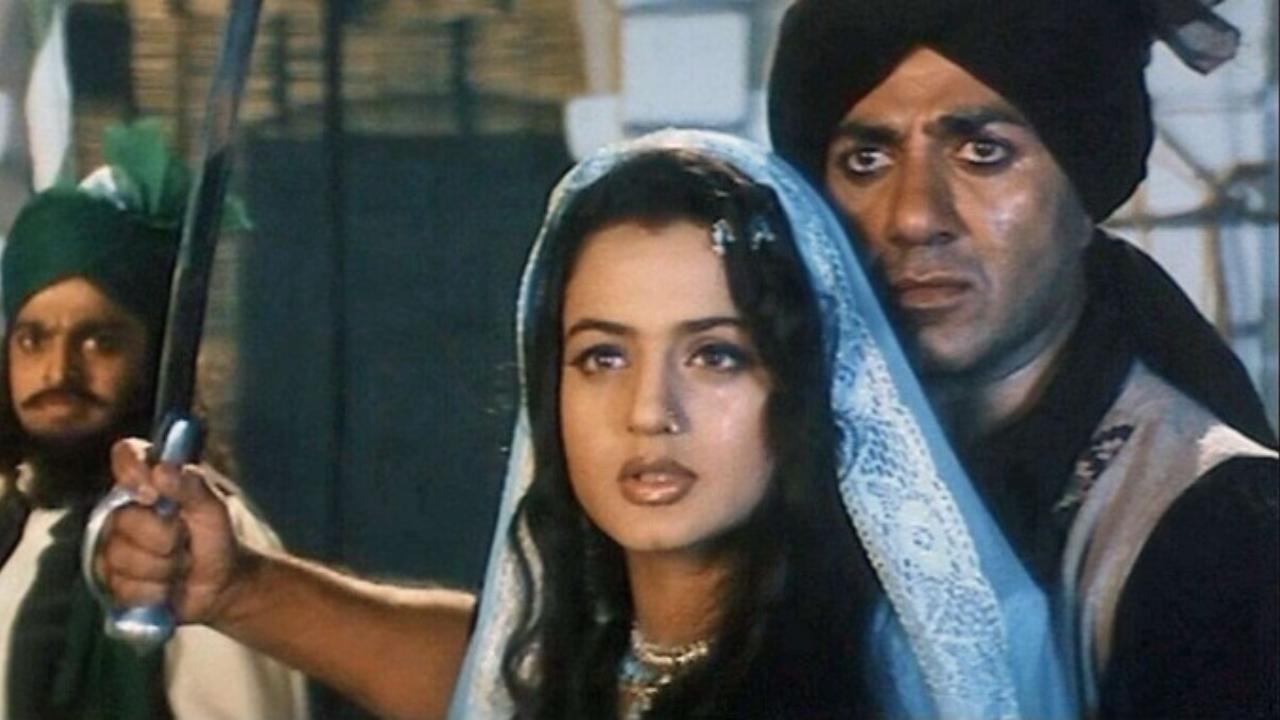
Box Office India Trade Network
GADAR - EK PREM KATHA is celebrating 25 years today as it released on 15th June 2001 to a bumper response. The collections on day one were not a record but that was basically because it was not the biggest release in terms of prints. In those days, prints were important for the final number as generally most commercial films with a star cast were going to 90% plus occupancy on day one. GADAR - EK PREM KATHA opened to cent per cent capacity all over barring some stations of South India.
The collections of the film were never seen before type especially for those initial 10-12 weeks. The craze was unprecedented with the music and dialogues, certain scenes going to such a level that they became etched in public memory like never before. Never had exhibitors seen such a response to scenes with the public going wild and this was practically all over the country.
The film did an insane job at the box office when released and was one of the great films of India cinema but to get among the real cream there has to be a longevity. GADAR - EK PREM KATHA had this longevity as some scenes were such that the audience would never forget but due to the change in business, it never had that theatrical run of SHOLAY or MOTHER INDIA, which, even after twenty of years release, were a theatrical force. These films proved their relevance well after release. So, while GADAR - EK PREM KATHA had the same relevance their was no way to prove it. Yes satellite was a rage but then SOORYAVANSHAM was a bigger rage. Hence, when you want to be among the greats, you need something more than satellite.
Eventually GADAR 2 happened in 2023 and that initial and the response to the film rubber stamped the greatness and relevance of GADAR - EK PREM KATHA and how it had passed the test the time like very few before it. The reaction to GADAR 2 meant that that GADAR - EK PREM KATHA was probably the second greatest film ever seen in India after SHOLAY.
There are only 4-5 films in this bracket and time will tell if BAAHUBALI or DHURANDHAR can get there though it will be tougher for the former due to the faces in it and the music in the film as CHANDRALEKHA was a similar film in 1949. But ten years later, no one really knew about it. With DHURANDHAR time will tell though it does not have that mass appreciation at the level of a SHOLAY, GADAR or MOTHER INDIA.
GADAR clashed with another big film LAGAAN but in those days the clashes did not matter as both films had their chain of theatres in each circuit. LAGAAN had better industry reports and the general sense was that it will do better but this was related to media and industry. GADAR had been sold for higher prices and was a wider release. So, ground realities were different to what the industry and media thought even before release. The only thing was business was not about the weekend or week at that time. As a result, with the better industry reports they would have thought that the final business of LAGAAN would be better.
Thank God for Dhurandhar. We are allowed longer films now-Imtiaz Ali
9:20 AM

Madhureeta Mukherjee (BOMBAY TIMES; June 15, 2026)
There is a reason Imtiaz Ali’s stories linger. Beneath the romance, music and heartbreak lies a deeper search — for home, for meaning, for the versions of ourselves we leave behind as we move through life. With Main Vaapas Aaunga, inspired by an emotional return to his childhood home, the filmmaker once again turns inward, exploring memory, longing and the ache of belonging.
In this conversation, Imtiaz reflects on love and loss, the purity today’s generation is searching for, and the invisible pull of the past. He reflects on why the stories that stay with us are often not born from cinema, but from life itself.
Would you say, there’s a certain beauty in that sense of loss?
There’s beauty in that because it brings you to yourself. The yearning, therefore, sometimes cannot be cerebrally understood. Everyone always feels that they have left something behind, in whatever they might have achieved. You feel…kya choot gaya? Inevitably, you want to go back to that. I guess the feeling of who we were is something we can never leave behind, however far we go.
From Love Aaj Kal, Rockstar to Tamasha – your films often ask whether love liberates us or consumes us. Has your own understanding of love changed over time?
I feel the simplistic answer is that it’s the being consumed that liberates you. It’s the surrender that liberates you. You realise your power when you surrender. And it’s easier said than done. In love, you’re constantly engaged with yourself. You are constantly talking to yourself. I’ve noticed that people who are in love with different women at different times in their lives, are in love in the same way. They yearn in the same way. If somebody is, let’s say, obsessive, then they will be obsessive in every relationship of theirs. They will try to find someone to shower love and affection on, and become obsessive about. The thing is, I don’t have answers about love or life, if I had answers, I wouldn’t be making movies.
So, you’re finding your answers through movies, characters, stories?
I don’t think I’ve found anything from my movies (laughs).
And you insist you aren’t a romantic? You have this image of being a romantic, a bit of a philosopher, too…
I am not. These words like romantic, philosopher and all of that sound very boring to me. I don’t know why I have this image. Tell me, how do I break this image?
Music in your cinema isn’t just something that happens in the background or around the story – it forms a character. It adds to the emotional rhythm, literally. You seek something from music emotionally that dialogue alone cannot achieve?
Oh, I love the work of music. I don’t listen to music too much, but I’ve always been a fan of music in films – whether it’s being part of the making of the song, the background music or shooting to music. The biggest thrill of shooting for me is when music plays on a set. I am the director who prays every day that we are not forced to reduce or remove music from films. For romantic movies, sometimes we connect to the music first and then the story.
This is your second collaboration with Diljit Dosanjh after the much-acclaimed Amar Singh Chamkila. He has an interesting emotional quality about him; he can appear really vulnerable, restrained with a certain kind of power. How do you direct someone like him?
He has somehow kept himself pure. He’s connected to himself and for that reason, he has not done many things that other people do. He is not like an actor who’s standardized in a certain way he lives. He doesn’t care for the obvious things, but some other things. Like, when we were starting out with Chamkila, we had to postpone the shoot, because of which one and a half months of his dates got wasted. I called him and told him about the problem. He said, ‘Koi nahi paaji. Main chala jaunga. Main solo trip pe chala jaunga pahadon mein. Problem hi nahi hai. Meri taraf se toh ho gaya.’ I said, ‘Lekin aapke days waste ho gaye.’ He said, ‘Arey, waste thodi hote hain dates. Mujhe jaana tha pahadon mein, toh solo trip pe chala jaata hoon.’ So, he went ahead and did whatever he wanted.
You’ve made generational love stories and worked with actors across generations. Today, in a world that is increasingly instant, performative and filtered, do you think people still crave the purity and beauty of truly connecting with another person?
I feel you can be very lonely in the present world. There is so much noise all around us that it’s difficult to talk and communicate. I believe this generation is seeking much more than before. For instance, today getting intimate with a girl or a guy is not difficult. Previous generations were distracted by the thought, as they knew that they would get intimate after marrying the person. Now that happens early on, they get over it and they aren’t lusting anymore. Lust is out of the park. What this generation is seeking is pure. They are digging deeper and are truly trying to find meaning. It’s just that they are very lost.
How do you protect your own sensitivity in an industry that can often become transactional and noisy?
I believe that the film industry is actually better than most other places in the world, because there are drifters and dreamers here. And no matter how smart they pretend to be, at the end of the day, all of these great guys in the film industry who talk about numbers and all of that, they are basically dreamers and drifters. What they want to do is to huddle somewhere and talk about cinema (laughs). This is what I have realized. Otherwise, it wouldn’t be possible for a rank outsider like me to be here. It must have been the kindness of some people that gave me my first step, my first break, right? The world is what it is, but I feel that the film industry is better, really, than most of the other parts of the world.
Your cinema generally revolves around the idea of yearning, not just from the point of view of yearning for romantic love, but yearning to come into yourself, to become someone else. What was the starting point for this film Main Vaapas Aaunga?
There was a point when I went home to the place which I call home, which was just a company quarter in Jamshedpur where I grew up. My earliest memories are from there. It was a rented place, but every time I think of home, I think of that place. One day, I went back there with my dad and I got so overwhelmed, I just went straight inside the house and in the courtyard, and obviously the present occupants found it strange. The courtyard had changed; that whole area seemed like it had changed, and something came over me, and I broke down. I never cry, in fact, my mother feels there’s something wrong with my system. But I broke down. I kept asking myself…what happened here? There was this sense of loss, but it’s not as though I’ve lost something.
Love portrayed in your films is rarely idealistic. It’s messy, transformative and often heartbreaking. Do you think our cinema still struggles to portray emotionally complex relationships with honesty?
For me, it’s impossible to show something clean and perfect because I would have no reference. If you asked me to make a clean love story with no heartache, I wouldn’t know where to begin because I’ve not seen it in my life, and I don’t think it exists. I don’t go out to make love stories, really. I make stories where people have various emotions and I follow those characters and see where they come at. And sometimes, of course, there’s an echo of what I’ve seen and felt, since I don’t draw from cinema as inspiration, I draw only from life as inspiration. Yes, I feel relationships are messy sometimes. They have the potential to be messier if the film duration were longer.
Now we’re slowly going back to longer films…
Thank God for Dhurandhar. We are allowed longer films now (laughs).
In Bollywood, at one time, romantic films were celebrated as spectacle films, today, action seems to occupy that space. Do you think filmmakers should make more romances for theatrical viewing?
I don’t think that era of romances can go away. A prominent producer recently told me, ‘Imtiaz ji, good love stories always run. If there are more action films being made, then that is the time to make a good love story.’ I think that is true. There will always be a Qayamat Se Qayamat Tak, and suddenly, you won’t even remember the other movies around you. I’m not saying that films of other genres are not good, but somehow, the memorability of a Qayamat Se Qayamat Tak or Maine Pyar Kiya is much more.
Dhurandhar The Revenge top grosser in West Bengal; 2nd highest hit in CP Berar after Pushpa 2 - The Rule
9:20 AM

Box Office India Trade Network
DHURANDHAR THE REVENGE has smashed the record for Hindi films across India by a huge margin of 30% but it has turned out to be no competition for PUSHPA 2 - THE RULE in CP Berar as the latter is around 27-28% better. DHURANDHAR THE REVENGE has done extraordinarily well in the circuit but the collections of PUSHPA 2 - THE RULE were something else due to the appreciation of PUSHPA: THE RISE - PART 01 in the centers of CP Berar.
There are other circuits where DHURANDHAR THE REVENGE is second best to PUSHPA 2 - THE RULE like Rajasthan, CI, Bihar and Odisha and also sub circuit Gujarat but the gaps are nothing like CP Berar. Even an Odisha, where the gap was most likely to be the highest, is only 15% less but it can be due to a Telugu version of PUSHPA 2 - THE RULE in play in the circuit. Both CP Berar and Odisha have a history of out performing for South films. Even that 80's phase where they were not South films but Hindi films made by South producers/directors tended to do better in these circuits.
DHURANDHAR THE REVENGE may not be the top grossing film in the circuits mentioned above but to be close to a PUSHPA 2 - THE RULE in the likes of Rajasthan, CI, Bihar and Gujarat is actually a huge achievement in itself as the former is not a mass film like the latter and that can be seen by the collections in the smaller centres of these circuits. It is the bigger centres of these circuits be it a Jaipur, Patna or Indore which have taken it close to the PUSHPA 2 - THE RULE collections. The biggest film in the circuit ever is SHOLAY (1975) like in most circuits while second place you would give to HUM AAPKE HAI KOUN (1994). This century, it would be GADAR (2001) followed by PUSHPA 2 - THE RULE.
The all time top ten grossers in CP Berar are as follows.
1. Pushpa 2 - The Rule - 56,07,00,000
2. Dhurandhar The Revenge - 44,09,00,000
3. Baahubali 2: The Conclusion - 34,84,00,000
4. Chhaava - 34,40,00,000
5. Dhurandhar - 33,79,00,000
6. Gadar 2 - 32,32,00,000
7. Stree 2 - 30,70,00,000
8. KGF - Chapter 2 - 28,03,50,000
9. Animal - 23,86,50,000
10. Jawan -22,14,00,000
-------------------------------------
DHURANDHAR THE REVENGE has emerged the highest grossing film ever in West Bengal which did not look like happening on release. It was pretty much certain on day one that it would be the top film in North India, South India and probably Mumbai as well though Central and Eastern side would be tougher. It has not got to the top in any circuit in the Central circuits of Rajasthan, CP Berar and CI but has managed to be number one in West Bengal and Assam in the East.
The record in West Bengal was a big one as JAWAN had a big total which was 9 crore nett higher than anything else and West Bengal had been one of the weaker circuits for DHURANDHAR. Compared to JAWAN, it has underperformed in West Bengal but that is more to do with the Shah Rukh Khan factor who is by far the biggest star in the circuit. It can be seen below that it is JAWAN and PATHAAN that have out performed in this circuit. So, despite the star factor not being what it used to be, it still pays a part but its area by area an is not across the board.
There is also WAR but had advantage of Puja week and its possible that Hrithik Roshan is next most popular star here after Shah Rukh Khan. DHURANDHAR also has that Punjabi base which historically has never worked that well in West Bengal but the series overcame that too as well due to the content. DHURANDHAR THE REVENGE is practically at the end of its run and will finish at around 44.25 crore nett as its hardly playing in the circuit now.
The top ten grossers in West Bengal are as follows.
1. Dhurandhar The Revenge - 44,25,00,000 apprx (Ten Weeks)
2. Jawan - 43,68,50,000
3. Pushpa 2 - The Rule - 35,32,00,000
4. Pathaan - 34,95,00,000
5. Dhurandhar - 32,56,00,000
6. Stree 2 - 28,18,00,000
7. Baahubali 2: The Conclusion - 27,47,00,000
8. KGF - Chapter 2 - 24,77,50,000
9. War - 22,89,50,000
10. Animal - 19,69,00,000
Top 10 overseas grossers - Dhurandhar The Revenge sits between Pathaan, Jawan
9:13 AM

Box Office India Trade Network
DHURANDHAR THE REVENGE has emerged the second highest grossing Hindi film ever after PATHAAN as it collects $47 million plus and this includes Nepal as the general figures from the overseas distributors will not include this. The collections without Nepal are $46.375 million till date. The film has finished a little short of PATHAAN but with a Gulf release, it would have been way ahead. In terms of INR, it is the highest ever due to the ever weakening Rupee. It has a gross of 438 crore compared to the 396 crore of PATHAAN.
It would have become the first film to cross $50 million and maybe even $60 million. Its hard to judge how much Gulf would have done. JAWAN is best with $17.70 million and if we take that figure, it would be $65 million for DHURANDHAR THE REVENGE but its an unknown how much it would have done in Gulf. You can probably say $10 million was certain and $20 million was potential as the Muslim crowd may have been compensated by the South Indian crowd like its happened in UK but this is an unknown and will remain that way.
JAWAN would be in second place if we count the collections from the regional versions but that's going away from the Hindi film and in that way there are many films which got a Far East release which are ahead with Dangal on top at $233.80 million. The Far East countries may well be showing a Hindi subtitled or dubbed version but generally its not the same as the original Hindi film. In this way DHURANDHAR THE REVENGE is the eighth highest grossing film overseas.
The business of DHURANDHAR THE REVENGE easily puts that $50 million target up for grabs for the original film and there are a couple of big films later on this year which can target that figure.
The top ten grossers Overseas for original Hindi films are as follows.
1. Pathaan -$48,500,000
2. Dhurandhar The Revenge - $47,100,000
3. Jawan - $46,800,000
4. Dhrandhar - $32,00,0000
5. Dangal -$30,700,000
6. Padmaavat - $29,140,000
7. Bajrangi Bhaijaan - $28,640,000
8. Dhoom 3 - $28,330,000
9. Animal - $27,210,000
10. Dilwale - $26,580,000
Dhurandhar makers’ internal investigation found Saini S Johray guilty of sexual molestation before FIR; credits removed
8:38 AM
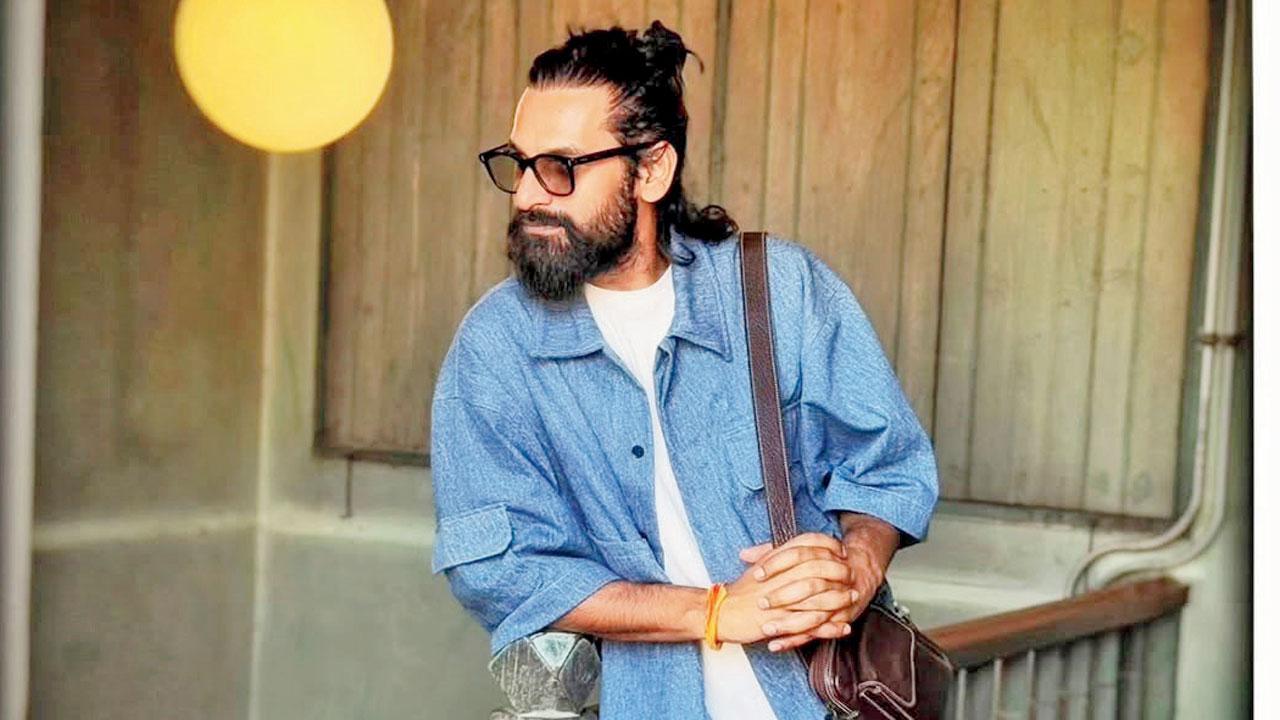
As ‘Dhurandhar’ production designer Saini S Johray faces sexual harassment allegations, mid-day finds out film’s POSH Committee investigated the complaint last year; dropped him from latest OTT version after guilty verdict
Priyanka Sharma (MID-DAY; May 29, 2026)
As ‘Dhurandhar’ production designer Saini S Johray faces sexual harassment allegations, mid-day finds out film’s POSH Committee investigated the complaint last year; dropped him from latest OTT version after guilty verdict
A source revealed that the complaint first reached the studio in October 2025, which immediately activated its Prevention of Sexual Harassment (POSH) Committee. “The POSH committee did a thorough investigation, given the sensitivity of the matter and the production house’s no-tolerance policy towards harassment,” said a source.
Another source shared that the POSH committee, by March-end, found Johray guilty. “It was a six-month investigation that ended around late March-April. He was found guilty on two counts — sexual molestation and tampering of evidence. The committee communicated the findings to the complainant,” revealed the source.
The finding appears to have impacted Johray’s association with the movie. While his credit appeared in Dhurandhar’s (2025) OTT version that premièred on January 30, 2026, it has gone missing from the ‘Raw and Undekha’ version that dropped on the streamer on May 22.
As for Dhurandhar The Revenge, which released this March, it remains unknown whether he was credited in the theatrical version. However, his name doesn’t appear on the sequel’s IMDb page.
While Johray was arrested by the Chandigarh Police after an FIR was filed against him in the matter in April, he was granted bail by the district court later.
There was a phase where I did some really questionable work-Darsheel Safary
2:47 PM

Onkar Kulkarni (BOMBAY TIMES; May 19, 2026)
Nearly two decades after Taare Zameen Par made him one of the most memorable child actors in Indian cinema, Darsheel Safary is still closely associated with the film that touched millions. But the actor says he is not trying to run away from that image — he is simply waiting for the next role that can leave a similar impact.
Speaking about growing up in the shadow of an iconic debut, the 29-year-old says the audience’s perception will only change with the kind of work he chooses.
“I don’t know what people think. It’s about the work that I bring to the table — that is what the reaction depends on, frankly,” he says. “Taare Zameen Par is that kind of film from which it will be difficult to break away naturally. Even today, people talk about it and there are discussions around it.”
Rather than distancing himself from the film, Darsheel says he sees it as the foundation of his journey. “Now that I’ve grown up, I’m looking at another such project for myself — something that makes me memorable for the next 20 years. It’s not about people not being able to break out of that image, it’s about what you are giving and what you’re getting back in return.”
The actor, who has been busy with theatre, says every former child artiste eventually waits for that one defining role that changes how audiences see them.
Referring to actors like Fatima Sana Shaikh and Sara Arjun, he says, “They gave their Dangals, they gave their Dhurandhars afterwards. Back then, they were familiar faces — you knew they existed. But when they came out with that one project, everything changed.”
Darsheel, who will soon be seen in an international project with Priya Mani Raj, also reveals that the past few years have been transformative. “It’s been an introspective journey. I’ve tried to understand why I want to be an actor. There was a phase where I did some really questionable work. But then I started working with filmmakers like Suparn Varma, Anand Mahadevan, Abhinay Deo and Subhash Kapoor. I was also busy with theatre. The closer I got to myself, the closer I got to acting.”
Censor board should have protocol on spy movies-Delhi High Court
4:32 PM

Abhinav Garg (THE TIMES OF INDIA; May 21, 2026)
New Delhi: The Delhi High Court on Wednesday remarked that the "censor board should have some guidelines" related to spy movies, after a PIL filed by a serving Sashastra Seema Bal (SSB) personnel flagged concerns over Ranveer Singh-starrer 'Dhurandhar The Revenge' revealing tactical and sensitive information on the country's intelligence and defence operations, and sought framing of a 'spy movies protocol'.
"The concerns raised by the petitioner need to be considered and addressed appropriately," a bench of Chief Justice D K Upadhyaya and Justice Tejas Karia said, adding although films are meant for entertainment, they do have an impact.
The bench disposed of the PIL with a direction to the I&B ministry and Central Board of Film Certification (CBFC) "to consider the entire writ petition as representation of the petitioner and take an appropriate decision on the issues raised". It asked the authorities to communicate their decision on the representation, and if any corrective measures are taken, to the petitioner.
The PIL contended that the film violated the Official Secrets Act as it showed tactical operations, sensitive locations and agents in "depth", and some scenes even revealed information that is not in the interest of the country's security. The petitioner further argued that actions and characters modelled after high-ranking officials and martyred servicemen are so explicit in the film that it is not in the country's best interest, and even certain successful military operations are recalled in the movie.
The petitioner also objected to the movie using "classified protocols" in certain scenes and depicting "deep cover identities". He claimed that the movie has "directly compromised the safety of our on-field undercover agents" and led to local authorities in Karachi being on "spy alert".
The PIL sought framing of a protocol to prevent the showcasing of methods of the country's agents, and revocation of the certification granted to the movie.
Jio Studios to line up Rs 5,000 cr over 3 yrs for content push despite BO slowdown
9:48 AM

Rajesh N Naidu (THE ECONOMIC TIMES; May 18, 2026)
Mumbai: Jio Studios plans to invest Rs. 4,000-Rs. 5,000 crore in films and non-film content over the next three years, 30-40% more than in the previous three years, chief executive Jyoti Deshpande said, even as a prolonged box-office slowdown prompts several established and family-owned studios to scale back.
In an interview with ET, after the success of the Dhurandhar franchise films co-produced by the Reliance Industries unit, Deshpande said 98% of the company's content is released on "other" platforms (like Netflix and Amazon Prime).
Under Deshpande, Jio Studios has built a balanced portfolio of films. On the one hand, it has backed four blockbusters grossing more than Rs. 500 crore each: Stree 2, Chhaava and the two Dhurandhar franchise films. On the other, it has also supported films that deserve expression and space, such as Laapataa Ladies, Baramulla and Mrs.
Deshpande said her mantra has been: "Build scale, keep an eye on the bottom line and reach as many Indians as possible." She added: "I am more focused on looking into the eyes of a filmmaker and gauging his or her conviction. This is vital for me in backing a film. Then the other variables follow."
In a thin attention-span economy, Deshpande remains a staunch champion of long-form storytelling, especially theatrical films.
"Audiences have become accustomed to long-form and immersive storytelling thanks to streamers," she said. "Against this backdrop, I was confident that the Dhurandhar franchise films would work. The films broke conventional storytelling forms through their chaptered, episodic and immersive structure. They showed that content, not length, is what works.
Trade analysts said the Dhurandhar franchise films have grossed more than Rs. 3,000 crore worldwide on a budget of less than Rs. 500 crore.
Deshpande is unperturbed by streamers functioning as studios and releasing films theatrically. "I think consolidation is good. It will expand the market," she said.
Arjun Rampal breaks silence on viral DJ controversy: "I’ve been spinning since I was 17"
2:38 PM

Onkar Kulkarni (BOMBAY TIMES; May 13, 2026)
In a society still shaped by conventional ideas of marriage and family, Arjun Rampal and Gabriella Demetriades have quietly built a relationship on their own terms. Together since 2018 and parents to two sons, Arik and Ariv, the couple have come to represent a modern blended family — grounded in companionship, commitment and co-parenting, without feeling bound by traditional timelines.
In December 2025, Arjun surprised many when he casually revealed on a podcast that the couple was officially engaged. Asked about the development, the actor smiled and said, “One step at a time.”
Arjun recently also found himself at the centre of a viral social media moment after videos of him playing DJ at a Gurugram nightclub surfaced online. While many praised his effortless stage presence and passion for music, others questioned whether he was genuinely trained as a DJ or if it was simply a publicity-driven appearance.
‘An entire community that follows electronic music started showing up and supporting me’
Clearing the air, Arjun said, “Oh Lord! I’ve actually been spinning music since the age of 17, so this is definitely not something new for me. Music, especially electronic music, has always been a huge passion in my life. I’ve had my own decks at home for years and I genuinely enjoy the whole culture around it. In fact, I even had a nightclub at one point that was dedicated entirely to that kind of music. Over the years, I’ve had a lot of close DJ friends, and I’ve learned so much from them. What started as something I enjoyed privately slowly became more public, because people who had heard me play began inviting me to perform at places. From there, it all just grew organically.”
He added, “There’s this entire community and cult following around electronic music, and people who connect with that vibe started showing up and supporting me. It just snowballed from there. Honestly, I really enjoy doing it. Right now, I’m trying to do as many gigs as I can because once I get fully back into my film commitments, I won’t really have the time to perform as a DJ.”
‘Filmmaking is collaborative; it is never about one person’
On the work front, Arjun has been receiving considerable attention following the success of Dhurandhar. Ask him whether the reaction to film has altered the way he now approaches scripts and projects, and the actor insists success alone cannot dictate creative decisions.
He said, “When we were making Dhurandhar, none of us knew what the outcome was going to be. All you can do as an actor is give absolutely everything you have to a film and hope that you’re surrounded by a team that shares the same passion and commitment.”
Subscribe to:
Posts (Atom)