Showing posts with label Devdas. Show all posts
Showing posts with label Devdas. Show all posts
Curious to see how the new generation responds to Dev D-Anurag Kashyap
8:57 AM

The film’s team weighs in on the impact it had on Indian cinema as the movie gears up for its re-release
Renuka Vyavahare (BOMBAY TIMES; April 4, 2026)
Anurag Kashyap’s Dev D (2009), a contemporary reimagining of the classic Bengali novel Devdas by Sarat Chandra Chattopadhyay, achieved cult status for its unconventional storytelling and outlook on modern day relationships. Co-written by Kashyap and Vikramaditya Motwane, the film, headlined by Abhay Deol, Kalki Koechlin, and Mahie Gill, is all set to re-release in select theatres on April 24, through PVR INOX.
‘Curious to see how the new generation responds to Dev D’: Anurag Kashyap
Talking about the re-release, Anurag Kashyap explained, “When we made Dev D, it came from a place of rebellion. I wanted to strip away the poetry and confront the contradictions, the very human mess beneath a protagonist (Devdas) who had long been romanticized. The film was a provocation, taking a story steeped in nostalgia and tragic romance and thrusting it into the chaos of contemporary India. This Dev isn’t a romantic hero. He’s entitled, impulsive, and often deeply unlikable. His self-destruction isn’t noble; it’s reckless and painfully real. Paro, too, is no longer just the waiting lover. She has agency, desire, and anger; she chooses; she resists. And Chanda, shaped by the realities of today, isn’t defined by sacrifice but by survival and reinvention. To see Dev D return to the big screen feels special. It’s a film meant to be experienced collectively with Amit Trivedi's pulsating music and Rajeev Ravi’s cinematography powering the narrative. I am curious to see how the new generation responds to it."
The best part about shooting Dev D was not knowing anything about filmmaking: Kalki
Thrilled by the news, Kalki Koechlin shared, “My first film Dev D is re-releasing! Crazy. I remember being so nervous about my Hindi lines that every morning on set I would wake up and do 'a aa e ee o oo' practicing all my vowels and consonants in Devanagari for my correct ‘uchaaran’ (pronunciation). The best part about shooting Dev D was not knowing anything about film making, because it meant I didn’t care about which angle, how I looked on camera, I gave 100 percent in the takes, not knowing if the camera is pointed at the back of my head, not knowing I could do it again. I was totally un-self-conscious.”
My idea was to call out Devdas’ misogyny: Abhay Deol
Recalling how the film was considered arty back then, Abhay Deol says, “I remember the days I would narrate the idea of Dev D to people, friends, and industry, and the most common reaction I got was that it was too 'arty' to be made. When I narrated it to Anurag, I didn’t tell him it was a contemporary treatment of Devdas, I just narrated a love story. He did not guess what it was that I was actually narrating and when I revealed that it was a contemporary Devdas he went quiet for 20 minutes imagining it in his head. He was hooked and he also loved the idea of treating it with a musical score that took the story forward one song at a time. Although he went with a different ending (I stuck to the original with Dev dying in the end), my idea was to call out Devdas’ misogyny and highlight the women’s resilience. It’s my only idea that got made into a movie so it will always remain a personal triumph for me.”
Dev in Dev D didn’t deserve the poetic martyrdom of Devdas. Didn’t want to give audiences a sanitized, feel-good ending: Anurag Kashyap
Talking about why the ending of the film differs from the one narrated to him by Abhay, Anurag explained, "I was very clear about one thing: I didn’t want to romanticize self-destruction. The original Devdas myth is built around a man who drinks himself to death and is almost glorified for it. Dev in Dev D didn’t deserve that kind of poetic martyrdom. At the same time, we didn't want to give audiences a sanitized, feel-good ending either. The ending isn’t about resolution. It’s about discomfort. It pushes one to confront their own ideas of forgiveness and accountability. Dev doesn’t suddenly transform into a better human being. He doesn’t arrive at redemption in any conventional sense. He simply becomes aware, or at least there's a fleeting recognition of the fragility of life itself, and I thought that was the best way to end the film. Everyone in life deserves a second chance."
Dev D helped me find my voice as a composer: Amit Trivedi
Music composed by Amit Trivedi formed an integral part of the film’s identity. He shares, “Dev D was a turning point in my career indeed. Before that, I was just trying to find my space, making music without knowing if it would ever reach people. Anurag placed immense trust in me and gave me complete creative freedom, and that changed everything. We weren’t just composing songs; we were shaping the emotional pulse of the film. Each song was instinctive, deeply rooted in the narrative, whether it was the wild, experimental energy of ‘Emosanal Attyachaar’ or the quiet ache of ‘Nayan Tarse'. When the film released, something shifted for me. It helped me find my voice, and I remain deeply grateful that audiences embraced something so raw and unconventional. Seeing Dev D return to cinemas is so emotional; it reminds me of a time when we were fearless, curious, and simply creating from the heart."
Niharika Bijli, Lead Strategist, PVR INOX Limited, said, “We are constantly looking for definitive titles, films that have shifted something, and Dev D is undoubtedly one of them. It is a film meant for the big screen; the landscapes, the music, and the emotions all feel far more immersive when experienced in a cinema, shared with an audience reacting in unison. Dev D is also an essential watch to understand the diversity of storytelling that Anurag Kashyap brings to his craft. It's exciting to bring Dev D back to PVR INOX; this is not a film one should miss experiencing in theatres.”
Vijay Crishna, who played Shah Rukh Khan's father in Devdas, passes away at 80
11:05 PM

THE TIMES OF INDIA (March 5, 2026)
Mumbai: He walked kilometres to school in the hills of Shimla, climbed a 20,000-ft peak in Ladakh in his seventies, and trekked through Antarctica and South America. Somewhere in between, Vijay Mohan Crishna became one of India's most quietly distinguished actors straddling stage and screen. Best known for playing Shah Rukh Khan's stern father in Devdas and for his decades-long association with Mahesh Dattani's Dance Like a Man, Crishna — former executive director of Godrej Industries — passed away on March 4, aged 80. The cause of death has not been disclosed.
Crishna's acting life began on a Delhi stage in the 1960s, where the young man from Shimla discovered theatre—and, by happy accident, a fellow theatregoer named Amitabh Bachchan. By 1971 he had moved to Mumbai, throwing himself into its theatre scene. He played a tender gangster in Pearl Padamsee's play Orphans, took the title role in Alyque Padamsee's tantric-inflected Macbeth, and directed Shaw's Saint Joan.
His greatest association, though, was Dattani's Dance Like A Man —as Jairaj, a Bharatanatyam dancer past his prime — a role he performed on stage for over 25 years and reprised in Ritesh Menon's 2014 film adaptation.
His tryst with cinema began with Richard Attenborough's Gandhi (1982) but it was Sanjay Leela Bhansali's Devdas (2002) that gave him his most memorable screen moment — as the stern, heartbreaking patriarch Narayan. He later appeared in Guzaarish and Rajkumar Hirani's PK.
None of this was his only life. After eight years of management experience in Kolkata and five years in advertising in Mumbai, he had joined Lawkim Ltd in 1977 and helped turn the bankrupt company taken over by the Godrej Group around. Crishna, who then served Godrej Enterprises Group for 45 years, stepped down from the board in 2021 due to advancing age. A lover of wildlife, hiking and racing, his greatest relaxation, he once said, was the daily drive to the workplace in Vikhroli.
Actor Anupam Kher expressed his grief and co-actor Lillete Dubey wrote on Instagram: "RIP my Jairaj... you will never be forgotten."
He is survived by wife Smita Crishna-Godrej and daughters Nyrika Holkar and Freyan Crishna Bieri.
The spookiest was when my role got mysteriously chopped off from a film-Adah Sharma
4:17 PM

Natasha Coutinho (HINDUSTAN TIMES; October 31, 2025)
Adah Sharma made her debut with the supernatural hit 1920, so scares and spooks are hardly new to her. This Halloween, the actor opens up about costumes, candy, chaos, and her delightfully eccentric take on the festival of fright.
“Halloween and me go way back, more than sau saal ago, from 1920 to 2025,” laughs Adah. “For me, it isn’t a day, it’s a lifestyle. Halloween is when the world finally catches up to my vibe. Scaring people is my cardio! It’s also a great way to learn how to express fear as an actor. I use it as an excuse to scare people all year round,” she grins, before adding a bizarre twist: “Once, I saw a mannequin in a mall turn his head and speak. He told me cockroaches will take over the world soon. No one believes me, but it’s true, I was freaked out!”
If she were to host a Bollywood-style Halloween bash, Adah says her theme would be terrifyingly simple. “All of us actors would have to come without makeup, not the ‘no-makeup look’, but actually barefaced. Everyone would have to style themselves. That would be scary enough!”
When asked about real-life spooky moments on set, she quips, “I work in Bollywood, I experience unexplainable things every day! The spookiest was when my role got mysteriously chopped off from a film. No disclaimer, no warning. I told myself maybe I was hauntingly good. But it wasn’t even a ghost film! They made me temporarily invisible, that’s ghosting on another level.”
If Adah were to reinvent a horror classic, she already has a script ready. “I’d play a possessed Paro in Devdas. She’d team up with Chandramukhi and make all the alcohol in the world disappear. Devdas and all the drunk men would finally be held accountable, and we’d both turn into invisible witches travelling the world,” she chuckles.
Her favourite horror moment from Hindi cinema is equally unexpected. “The staircase scene from Hum Aapke Hain Koun! I’m still traumatized when I see my aunts walking down steps in sarees. That movie scarred me, I literally get nightmares about my dear ones tripping on stairs in slow motion.”
Currently, Adah is shooting in Mumbai for, unsurprisingly, another horror film. “I have a feeling that after release, my character will become a favourite Halloween costume,” she teases.
I chose roles others didn’t want-Jackie Shroff
9:06 AM
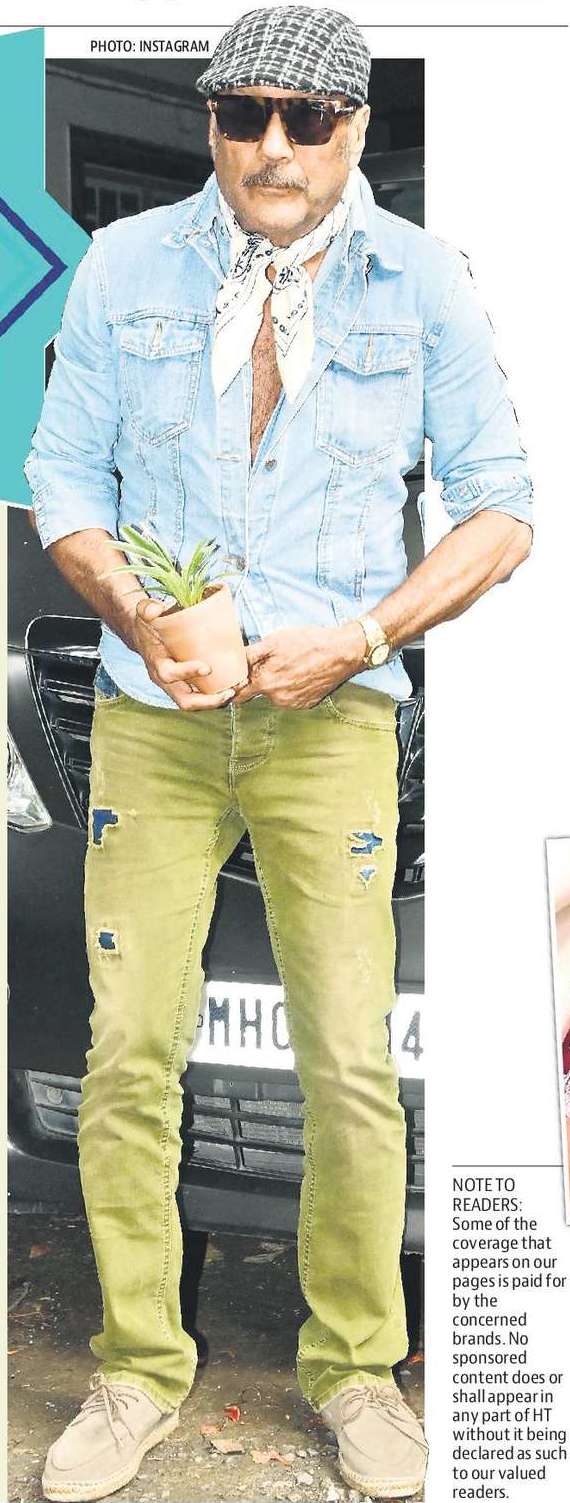
Akash Bhatnagar (HINDUSTAN TIMES; August 2, 2025)
More than four decades in the film industry, Jackie Shroff is still at it — working steadily and enjoying one of the busiest phases of his career. With films such as Housefull 5 and Tanvi The Great already out this year, and a web series in the pipeline, the 68-year-old shows no signs of slowing down.
Ask the actor the secret behind staying relevant for so long, and he says, “I don’t know [if there’s any secret]. I am doing the same thing I was doing back in the day. I used to do three films a year, I still do that. The only thing that’s changed is that I used to sing songs on screen more earlier. Now, I do it only if some filmmaker gives me the opportunity. I like to act, and I like to be handled by my technicians. This is my job.”
Jackie credits his longevity to embracing unconventional roles over the years, which he feels has been his USP. “Right from the beginning, I have chosen roles that others didn’t want to do. I should get a BAFTA for that,” the actor quips, adding, “No one wanted to do Aaranya Kaandam (2010) or even Chunnibabu in Devdas (2002). People said, ‘Title role to Devdas ka hai’. Par kya ho gaya usse? People were scared to do a role opposite Shah Rukh Khan (actor). But I know if I stand in a frame, I’ll be seen.”
He also knows his place in the larger picture. “I know my limitations, but I’m open to learning. I prefer being like water. The director is the captain, I don’t plot or plan. Use my presence, my sincerity, my discipline. There’s no pretence with me. I’ll put it like this: I don’t die in a death sequence,” the actor signs off.
With AI, it’s harder to judge the authenticity of a singer-Kavita Krishnamurti
8:29 AM

Debarati S Sen (BOMBAY TIMES; June 1, 2025)
In 1971, Bollywood playback singer Kavita Krishnamurti began her musical journey with composer Hemant Kumar, alongside the iconic Lata Mangeshkar. Fast forward to November 2024, she lent her voice to The Sabarmati Report, adding another milestone to her career spanning over five decades. With over 23,000 songs to her credit, she’s worked with Salil Chowdhury, Laxmikant–Pyarelal, RD Burman, OP Nayyar, Naushad, AR Rahman and others.
In a candid conversation at her Andheri home, she spoke about her journey, the changing music industry, the impact of technology, AI and more. Excerpts…
You have been a part of the music industry for over five decades, do you remember the experience of recording you first film song?
I began doing concerts with Hemanta Da (Hemanta Mukherjee) while still in college. One day, he called me to Rajkamal studio, saying, “Chole esho at 10 am, don’t go to college tomorrow.” Sitting with his harmonium, he taught me four lines of Shokhi Bhabona Kahare Bole — a beautiful song. I had no idea why, until the door opened and Lata Mangeshkar Ji walked in. I don’t know how I didn’t faint! Hemanta Da, who called her Lata, said, “You’ll sing four lines with her. (Lata r shathe charte line gaite hobe)”. During the final rehearsal, standing beside her, I completely forgot my lines. I was so mesmerized that I lost track of my cue! Hemanta Da reminded me, “Now we’re going for a take—don’t forget your lines. Lata is a perfectionist, one take okay.” We did two takes, and I finally sang. That was my first film song, Shriman Prithviraj (1972). And my first lucky mascot was Lata Ji.
What do you feel about the evolution of the music industry from the era of live orchestras to the digital age, and how it impacted you as a playback singer?
I consider myself very lucky to have witnessed and worked with legendary artists while also collaborating with younger composers like Jatin-Lalit, Anu Malik, Nadeem-Shravan, Anand-Milind, and A R Rahman. I started in the ’70s when playback singing was done with a full orchestra—one mistake meant redoing the entire song. Music directors had an incredible ear; Pyarelal Bhai could pinpoint a single violinist in a 30-piece orchestra playing the wrong note. He’d say: You (His name) sitting in the third row, the fifth violinist, you were told C major, but you are playing C minor. Correct that note.’ That was the precision of that era. Today, everything is computerized. I slowly adapted to these changes, but by 2004, when technology completely took over, I found myself stepping back.
With advancements in technology and AI today, what are your concerns about the use of artificial intelligence in music?
It's difficult for the common listener to distinguish between a naturally skilled singer and one enhanced by pitch correction and AI. Musicians can recognize true artistry, but for the average person, technology has blurred the lines. With AI refining sur and even creating harkats, the authenticity of a singer is harder to judge. While AI is a breakthrough in medicine, its role in music raises concerns and AI in music is a question mark for me, as it opens the door to potential misuse.
However, at the same time, technology is good too. I'm not so young now and for me, to think that I can sing one line and take a breath, and then sing the next line, really helps. Earlier, I would record entire songs in one go, but now recording line by line, with breaks in between has become a habit and makes the process easier.
You’d mentioned a poignant encounter with the legendary Geeta Dutt. What struck you the most?
Guru Dutt's youngest brother, Vijay Padukone, was my Rakhi brother. He introduced me to advertising jingles while I was a student in St Xaviers. I first met Geeta Dutt at a studio in Worli during my debut jingle recording. As the door opened, I was struck by her beauty and presence. I touched her feet and sat down. She was recording a butter commercial in Hindi and Bengali that I had to sing in Tamil. Her voice was pure magic. Though she was in the twilight of her career, facing personal loss and financial struggles, her aura remained intact. She barely spoke, just said, ‘Bhalo theko’. At that time, she was famous but had no money—yet nothing could take away her personality or her gift for singing. For me, Lata Ji and Asha Ji are the greatest singers I’ve ever met, but there are songs that only Geeta Dutt could have sung. Waqt Ne Kiya Kya Haseen Sitam—I don’t think even Lata Ji or Asha Ji could have delivered it the way she did.
You've sung for some of the biggest music directors. Tell us about a few of your favourite songs.
That's tough! But if I had to choose, I’d say Hawa Hawai, Dil Ne Kaha Chupke Se, and my songs from Hum Dil De Chuke Sanam. I love the ones I did with Rahman, like Tu Hi Re, Dheeme Dheeme, Kay Sera Sera. Maar Daala from Devdas is a favorite too, along with the title track of Hum Dil De Chuke Sanam and Hamesha Tumko Chaha from Devdas. Yeh sab mujhe bahut pasand hai.
Shah Rukh Khan is the first Indian to win Pardo Alla Carriera award at Locarno Film Festival
8:10 AM
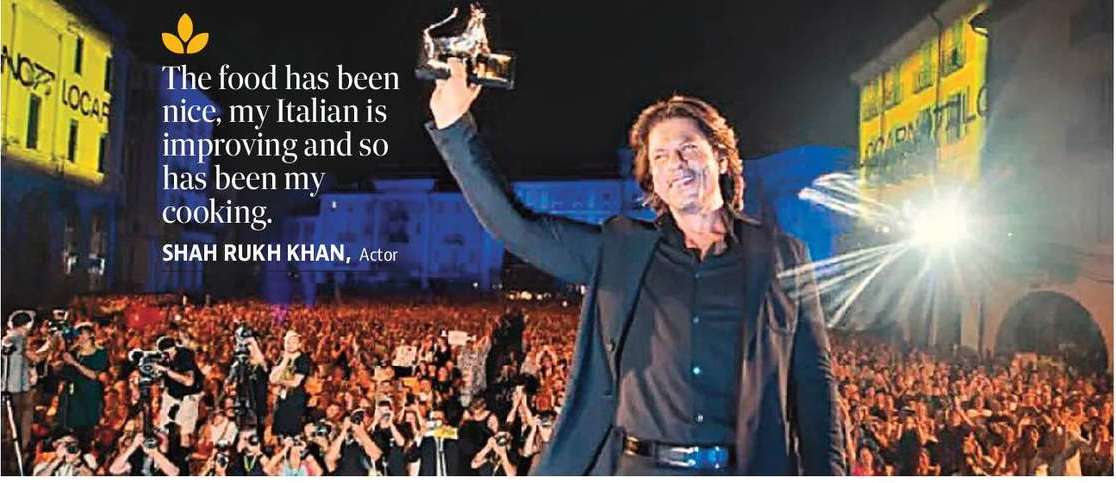
Shah Rukh Khan becomes the first Indian to be honoured with a lifetime achievement award at Locarno Film Fest; charms audience with his speech
BOMBAY TIMES (August 12, 2024)
Shah Rukh Khan has added another achievement to his illustrious career. On August 10, he became the first Indian personality to be honoured with a lifetime achievement award, the Pardo alla Carriera, or Career Leopard at the 77th edition of the 2024 Locarno International Film Festival.
The main highlight of the fest was SRK’s speech, which drew constant cheers from the crowd. As per Variety, SRK began by acknowledging the warm reception he received. “Thank you all for welcoming me with such wide arms wider than the ones I do on screen,” he quipped, referencing his famous open-armed pose.
SRK then shared his thoughts on cinema. “I truly believe cinema has been the most profound and influential artistic medium of our age. I’ve had the privilege of being part of this for many years, and this journey has taught me a few lessons,” he said.
On his 35-year career in cinema, he mused, “I’ve been a villain, I’ve been a champ, I’ve been a superhero, I’ve been a zero, I’ve been a rejected fan and I’ve been a very, very resilient lover.”
The actor emphasized the universal nature of art and filmmaking, stating, “Art is the act of affirming life above all. It goes beyond every man-made boundary into a space of liberation. It need not be political. It need not be polemical. It need not sermonize. It need not intellectualize. It need not moralize. Art and cinema only need to say what it feels from the heart, to express its own truth. And that, to me, is the biggest creativity, honestly.”
As the crowd cheered, SRK made one last attempt at pronouncing the award’s name, before laughing and saying, “Can you keep a shorter name? Just like, ‘arrivederci.’”
----------------------------------
HINDUSTAN TIMES (August 12, 2024)
Exuding charm and being his witty self at the 2024 Locarno International Film Festival in Switzerland, actor Shah Rukh Khan was awarded the prestigious Pardo alla Carriera Ascona-Locarno Tourism aka the Career Leopard. He has been honoured with this award in recognition of his significant contributions to Indian cinema. The 58-year-old is the first Indian celebrity to receive this award.
During his acceptance speech, which took place at a packed Piazza Grande square in Locarno, on Saturday evening, Khan said, “I want to thank you all for welcoming me with such wide arms, wider than the ones I do on screen, to this really pretty, very beautiful, cultural, artistic, and extremely hot city of Locarno. So many people stuffed up in a little square and so hot, it’s just like being at home in India.”
As he lifted the trophy, he admitted he can’t pronounce its name, but added: “The food has been nice, my Italian is improving and so has been my cooking. I can cook pasta and pizza.”
When the host told him the proper pronunciation, Khan joked, “Which in English means the Leopard Award for being the most awesome in the world and the history of mankind.” He wrapped his speech with “Namaskar. Dhanyawaad. God bless you all”.
The festival screened his 2002 film Devdas, directed by Sanjay Leela Bhansali.
Manoj Bajpayee was offered Chunnilal in Devdas, but let it go as he wanted Shah Rukh Khan's role
9:08 AM
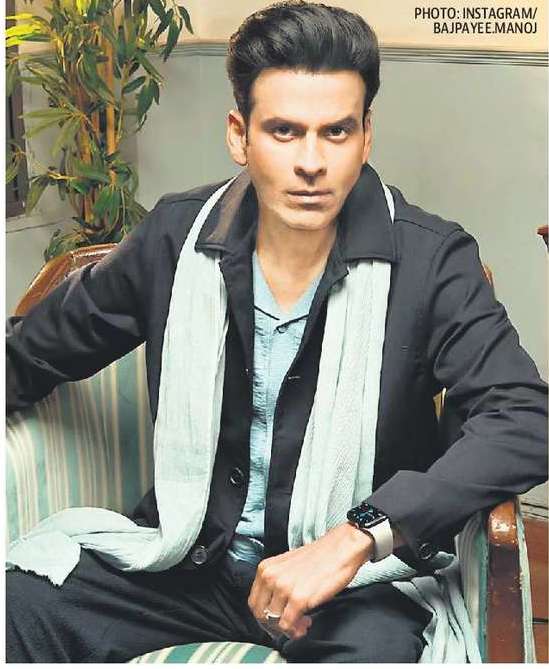
HINDUSTAN TIMES (June 1, 2024)
Actor Manoj Bajpayee was offered the role of Chunnilal in filmmaker Sanjay Leela Bhansali’s Devdas (2002) starring Shah Rukh Khan, but he turned it down before the role went to actor Jackie Shroff. Bajpayee admits that he regrets not taking it up back then.
Recalling the conversation he had with Bhansali when the role came his way, he told YouTuber Sushant Sinha, “I was offered Jackie Shroff’s role in Devdas, but I immediately said no. I said, ‘Sanjay, yaar, meri toh hamesha se ichchha thi Devdas [ka role] karne ki. That film became a superhit and I regret letting it (the offer) go.”
The actor added, “I wanted to play Devdas since my theatre days, ever since I had watched (late actor) Dilip Kumar’s film.”
My father said there is light at the end of the tunnel; for me, Sanjay Leela Bhansali became the light-Adhyayan Suman
8:26 AM
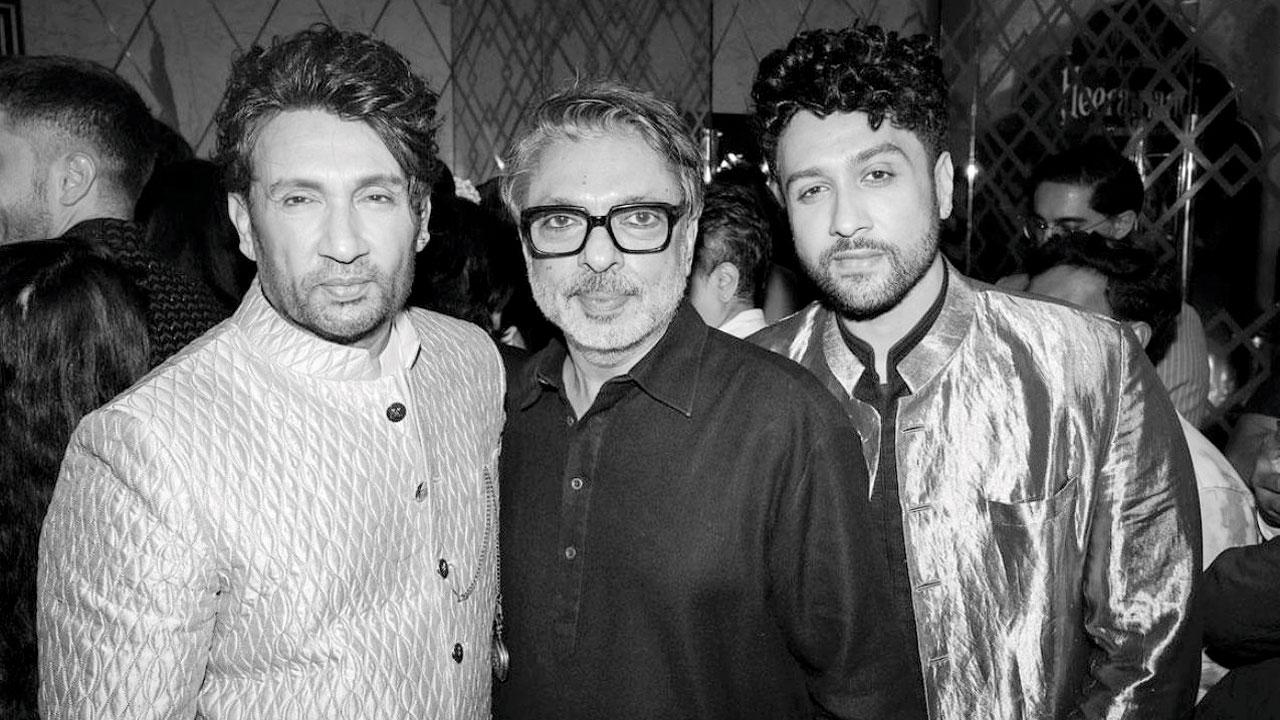
After going without work for seven years, Adhyayan hopes to revive his career as he joins dad Shekhar for SLB’s Heeramandi
Mohar Basu (MID-DAY; April 30, 2024)
The Diamond Bazaar is a delectable package of many surprises. In his maiden web series, Sanjay Leela Bhansali has brought together an eclectic bunch of actors. While Farida Jalal returns to screen after a decade, it also features Fardeen Khan, who was last seen in Dulha Mil Gaya (2010). Among other things, it also stars father-son duo Shekhar and Adhyayan Suman together on screen. Shekhar plays the flamboyant Nawab Zulfiqar, who is in love with Manisha Koirala’s character Mallikajaan, and his son steps into the shoes of Zorawar, a mean, brutal nawab.
Netflix’s ambitious series is centred on six female actors—Koirala, Sonakshi Sinha, Aditi Rao Hydari, Richa Chadha, Sanjeeda Shaikh and Sharmin Segal—but Shekhar asserts that the male characters aren’t ornamental.
“The dynamics between the tawaifs and the nawabs were intimate. It is quintessentially the story of the courtesans and how they wielded power, but these women derived their power from the men. Nawabs were skilled mercenaries, who allied with the British to get power and titles. My character has a hint of arrogance. He adds to the politics of Heeramandi. He is in love with Mallikajaan, but doesn’t shy away from [threatening] her when she doesn’t bow to him,” says the actor.
If fate had worked out differently, Shekhar would have collaborated with Bhansali over two decades ago on Devdas (2002). He recalls, “I came close to working with Mr Bhansali in Devdas when he called me for the role of Chunnilal. I couldn’t do it then because of my workload. But since then, whenever we met, I told him that I would love to work with him when the opportunity presented itself.” And it did in Heeramandi, a period drama about the courtesans of Lahore. It was doubly joyful to work on the project as Shekhar has always had an affinity for history.
“I love historical movies made in India. When I met Mr Bhansali, he was looking for a good actor who had knowledge of the era. Also, he wanted to go for an unusual casting. I knew of Heeramandi for years because it’s written by my friend Moin Beg. He [SLB] is an intense filmmaker who puts passion, pomp, grandeur and everything into the story.”
The light at the end of the tunnel
For the senior Suman, Heeramandi may be the realisation of his wish to work with Bhansali. But for Adhyayan, it is more than a show; to him, it is a ray of hope that pulled him out of darkness and despair. The actor hit headlines early on in his career when he featured in Raaz: The Mystery Continues (2009), but soon had to make do with forgettable films. It hasn’t been an easy run, he admits.
“There have been days I have been broken, I wanted to give up. It sounds dark, but I didn’t want to live anymore. Acting was something I was very passionate about. Unfortunately, [work] dwindled in 15 years. I became a star with a successful film and then 12 films didn’t work. I have not worked for seven years. I went through rejection after rejection. I would wonder, ‘Kal kya hoga?’ The day I stopped chasing, things began to work out.”
After watching Gangubai Kathiawadi (2022), he nursed the desire to work with the filmmaker. “In a few weeks, Shruti Mahajan [casting director] called to say that sir is casting for Heeramandi. My father would always say that there is light at the end of the tunnel; for me, Bhansali sir became the light. When Shruti called, I was in the Himalayas. I stopped on the road in the hills, and recorded my audition.”
When he initially wasn’t chosen for the part, Adhyayan was admittedly “heartbroken for two months.” “However, on a Saturday afternoon, I was called to meet sir. His words were, ‘Bachcha, I will see you on set tomorrow.’”
Different actors, different approaches
On set, the two actors and their characters were as different as chalk and cheese. Through Zulfiqar, Shekhar had to bring alive a character whose love for Mallikajaan was more about power and less about romance.
He breaks it down, “There was a lot of uneasy love on paper and a lot that Mr Bhansali added on set. He is a director who changes the interpretation when the shot flows. I have known Manisha for years, so there was chemistry. Manisha is accomplished, she knew how to be Mallikajaan and that made the energy between her and the nawab easy [to create].”
Adhyayan, however, decided to play his part more emotionally and less technically. His process was personal. Guiding him through the role was his father who sat and read lines with him all night. “Zorawar is debauched, grey, looks down upon the women in Heeramandi; he makes a woman believe he is in love with her and marries another person. A scene in the second episode changed my life. Bhansali sir got up after my performance and cried. I have been waiting for 15 years for an opportunity, and now that I had the opportunity, I couldn’t not be sincere. The character’s language came from my father. Bhansali sir is so sharp, he caught that my father has been working with me off set. One day, I was giving my cues to Manisha ji and sir said, ‘Iske baap ne sikhaya hai isko.’ I was rehearsing with dad from 1 am to 6 am, and at 8 am I was on set.”
Let your work speak
Over the years, the industry has heard more than its share of rumours about Adhyayan. Much of the dialogue about him has been about his off-screen life than on-screen work. The actor hopes that with the web series, the audience will see the artiste in him. He has already noticed a change in his co-actors.
“One night, Richa came home with me to prep for a major sequence that was to be shot the next day. When she went home, she sent me a long text saying, ‘I had these preconceived notions about you being a spoilt star kid, someone who is not serious about his art and got it easy. So much has changed in you. Hats off to you!’ Her validation made me emotional. The lack of opportunities has not let people take me seriously. People have said to my face, ‘We thought you do drugs.’ I wasted a lot of time looking for answers to where the rumours started. Now it is all behind me.”
Choosing art over comedy
We also hope to see more of Shekhar, whom we used to see every day on the tube in our growing-up years as he hosted the popular Movers & Shakers. Considering we are in the midst of the election season, why wouldn’t he give his audience just another season of the crackling show filled with political humour?
The actor-host says, “Movers & Shakers was a cult show. But it has probably resulted in the undoing of an actor. That imagery is so strong that it has been tough to imagine me as an actor. Unfortunately, I am good at comedy. I would love to do that now, especially in the election season. I want to do it sporadically, not continuously. It would hamper my growth as an actor.”
Javed Akhtar once said, ‘Aapne Kashmir ke liye toh jhagda kar liya, aap ne Urdu ke liye kyun nahi kiya?’-Gulzar
2:28 PM

What questions do you pose to a man whose legacy spans eight decades? But Gulzar has a way of holding forth when we meet him at his Mumbai bungalow. Dressed in his signature white kurta pyjamas, the 89-year-old, who has just got the 58th Jnanpith Award, spoke to Mohua Das about how languages adapt and endure
Mohua Das (THE TIMES OF INDIA; February 25, 2024)
Congratulations on the Jnanpith Award for your lifelong work in Urdu. Does this recognition make you optimistic about the future of the Urdu language despite talk of its decline?
I don’t agree it’s a dying language nor am I worried about its future. Jis zubaan mein aap se main baat kar raha hun, aap sun rahe hai, yeh Urdu nahin toh kya hai? (the tongue I’m speaking to you in, what do you call it if not Urdu?) The Urdu script may not be as prevalent or common today, because professionally it’s not required or popular. But the script isn’t the language itself. The language itself is still alive as it always was. Urdu literature, from the works of Ghalib to Khusro, is available in Hindi Devanagari script. Urdu is spoken daily. Even in Hindi films, isn’t it Urdu? Urdu and Hindi are essentially the same language. It’s the script that keeps varying — sometimes Devanagari, sometimes Urdu. I write in both these scripts, but my main medium is still Urdu. Secondly, let’s not forget, Urdu was born in India. It’s not foreign. Like it happens in the growth of any significant language, Urdu’s phonetics derive from various languages like Awadhi, Prakrit, Braj Bhasha, and Dakhini, yet it remains essentially Hindustani. As Gandhiji said: ‘Leave aside the Hindi-Urdu debate, call it Hindustani... because it belongs to Hindustan.’
Yes, both you and Javed Akhtar have always reiterated that Hindi and Urdu are twins...
They are indeed twins. Javed saab has very rightly pointed out that if their grammar is the same, how can they be considered different languages? I quote Javed saab when he once said, ‘Aapne Kashmir ke liye toh jhagda kar liya, aap ne Urdu ke liye kyun nahi kiya?’ (You’ve fought for Kashmir, why not for Urdu?) It’s your language, after all. However, he also acknowledges that there’s no need to fight for it because promotion of Urdu is essentially the promotion of our own Indian language. For instance, if we use English as a working language here, which comes from the UK and is referred to as the Queen’s language, are we in a constant battle over it? There’s Indian English, just as there’s American English. India, especially in terms of languages, is incredibly rich, and Urdu is a wonderful language that is inherently Indian and still very much alive and thriving.
Yet last year, a Delhi police circular banned the use of nearly 400 Urdu words in FIRs like ‘intezaam’, ‘guzarish’, ‘intiqam’, ‘mulzim’, ‘mujrim’. There’s a perception that Urdu is being punished for its association with the Muslim community…
I don’t see it as Urdu being punished. Urdu has always carried words that were originally Persian, Turkish and even from Uzbekistan. It’s fascinating how it got intertwined with our language here, and borrowed letters like ‘bha’, ‘pha’, ‘tha’, and ‘dha’ from Sanskrit. Today more words are coming in to replace Urdu words, much like how Hindi has incorporated many English terms. But should we really be banning these words? Imagine if we stopped using words like ‘railway’, ‘platform’, ‘car’, or ‘sir’ in everyday speech? If one is not prejudiced, you are able to see how language evolves over time.
Do you worry that it might be losing its secular character?
Honestly, I don’t share those concerns because they’re not entirely founded. If you meet a Tamilian from Chennai, what language do you think they’ll speak in? Tamil, right? Tamil, Marathi, Bangla — these are our classical languages, deeply rooted in our culture. Are they unsecular for not speaking Hindi? I think a few entities may be creating these fears or prejudices, but India doesn’t need to be taught secularism. Every Indian by their very nature and culture is secular. We speak a minimum of three languages and our ears encounter at least five to seven different languages every day. That is what defines Indian culture and strengthens our secular ethos. I’m optimistic about the resilience of language and the secular character of our society.
What can be done to make Urdu a part of daily conversation and culture?
One doesn’t need to make a deliberate effort. It will happen on its own. Languages are made by people. Take cinema, for instance. The language spoken in movies a decade ago is quite different from what it was 25 years ago. If you watch Bimal Roy’s ‘Devdas’ (1955) and compare it with P C Barua’s (1935), you’ll see a noticeable shift in expressions and vocabulary although it’s the same story in the same country played by different people at different times. Cinema is a great example of how people shape language. I think one needs to be open-minded, allowing language to naturally change and adapt, much like how seasons and eras define the environment around us. As our world becomes more interconnected, it’s only natural that various influences will continue to shape the Hindustani language, too.
You turn 90 this year. What are you currently busy with?
I’m hoping to work on a project that’s close to my heart — compiling all my prose and poetry about Mumbai into a book. I’ve decided to name it ‘Aamchi Mumbai’.
My take on Devdas will be very different-Rakeysh Omprakash Mehra
3:48 PM
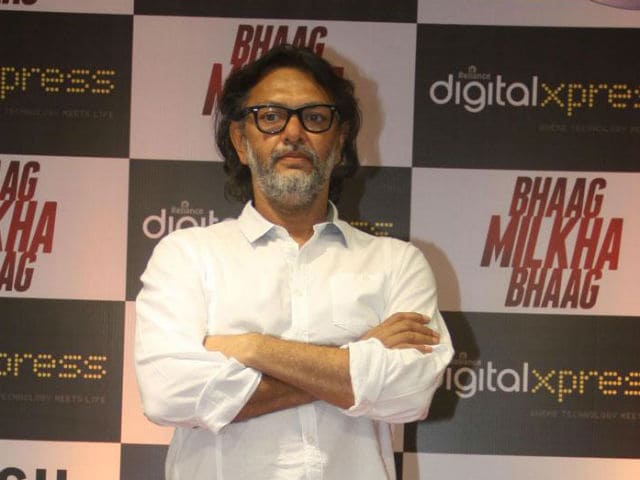
Onkar Kulkarni (BOMBAY TIMES; September 9, 2023)
Rakeysh Omprakash Mehra had once said that the first-ever film he wanted to make was Devdas. However, in 2001, he made his directorial debut with Amitabh Bachchan and Raveena Tandon-starrer Aks. Now, many years down the line, Mehra still wishes to make Devdas some day.
He tells us, “It is a great subject. The story has always touched me deeply whenever I have read it. I don’t know whether I want to modernize it or if I want to set it in that period in Bengal. Ek baar woh bulb jalega toh shuru ho jayegi kahani. At this point, I can say that my take on the story is very different.”
Currently, the buzz about Mehra working on Karna is being talked about. As per reports, it is going to be a mythological film based on Karna from the epic saga Mahabharat.
Ask Mehra, how he plans to go about the film given that executing movies in this genre is quite challenging, and he says, “When I work on anything, I just shut myself out from everything around. Otherwise, be it the music, how the scenes are shot or the wardrobe is designed, it can influence you and it creeps into your work. Also, I don’t want it to get into what will work and what won’t. Woh sab smart logon ki baatein hai and I am not that smart. I want to do something that I love, tell a story that I believe in and have great fun doing that. I know it is going to be hard work… creating a universe and all that would be fun.”
While the project keeps him busy, he shares that there are two other scripts that he is simultaneously working on and doesn’t know which film, out of the three, he will go ahead with. He says, “One is a comedy, but has a life lesson. It won’t be an easy film to make because comedy is the hardest genre. It is not a slapstick film. The other is a caper (a subgenre of crime film). I haven’t done a caper yet, and I just love that genre.”
Nitin Desai’s sets were a visual custard of colours and opulence
8:50 AM
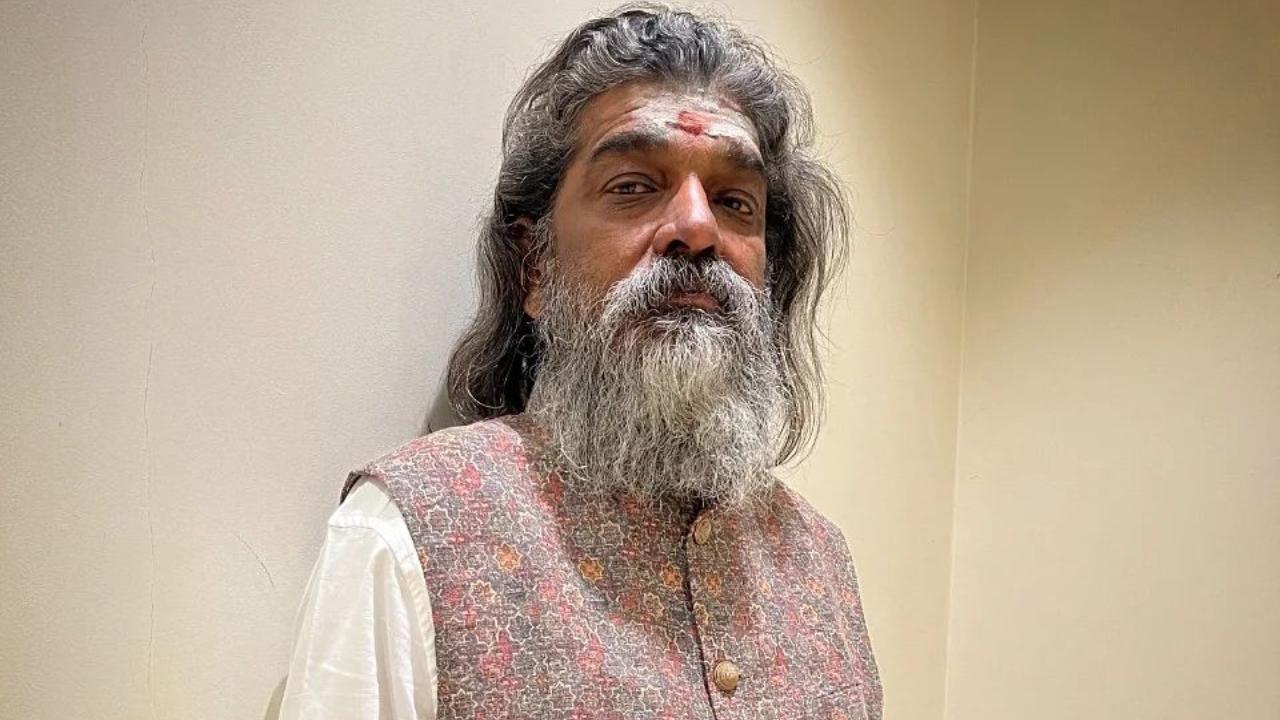
Avijit Ghosh & George Mendonca | TNN (THE TIMES OF INDIA; August 3, 2023)
As word of veteran Bollywood art director Nitin Desai’s death got around, several personalities paid homage to his creative spirit. Television producer Siddhartha Basu, who collaborated with him on several shows, including the iconic Kaun Banega Crorepati (2000), tweeted that Desai conjured “world class installations on an industrial scale.”
Apart from films and TV shows, Desai was much sought after for organising state fun ctions for Maharashtra such as the Republic Day tableaus. He was to set up Mumbai’s popular Lalbaugcha Raja Ganpati installation this year.
Actor and BJP MP Hema Malini remembered the art director as “a warm human being.” Actor Riteish Deshmukh described him as “soft spoken, humble, ambitious & a visionary” who had contributed “immensely to the growth of Indian cinema.”
As an art director first—and later in the more expansive capacity of a production designer—Desai elevated the projects he was associated with, especially those of film directors Vidhu Vinod Chopra, Sanjay Leela Bhansali and Gowariker.
There’s a harmony and continuity of palette in the way most scenes are crafted in Bhansali’s Hum Dil Chuke Sanam (1999). “A French production company called me up to find out where the location in the film was. I had to tell them the whole thing was a set built at Film City,” Desai said in a 2003 interview.
Bhansali’s Devdas was a visual custard of colours and opulence, and offered a contrast to the earlier film versions of Saratchandra’s novel portrayal of 19 century Bengal. Desai’s artwork turned colours into a language and helped Bhansali communicate his alternative vision. Just a year earlier, the art director had displayed his versatility in Gowariker’s anti-colonial cricket drama, Lagaan.
The terrain was totally different: the desert of Kutch where a famine looms. Desai’s production design of the village and surroundings is delightfully restrained, much in tune with the movie’s needs and mood. Just as he is pompish in the medieval tales of romance and valour, Gowariker’s Jodhaa Akbar and Panipat (2019). In his own way, Desai revolutionized art direction in Hindi cinema.
A student of photography at JJ School of Arts in Mumbai, he shifted to the world of moving images in the 1980s. Desai started out as a fourth assistant to the renowned art director Nitish Roy in Govind Nihalani’s telefilm, Tamas (1988), a searing tale on the horrors of Partition. He also assisted Roy in Shyam Benegal’s Bharat Ek Khoj and worked independently in the DD serial, Chanakya.
But he caught attention and found appreciation with Vidhu Vinod Chopra’s 1942: A Love Story (1994), which underlined his eye for details and flair for the eye-catching. The film earned him the first of his three Filmfare Awards: Khamoshi: The Musical (1997), Devdas being the other two. He also bagged four national awards for production design: Dr Baba Saheb Ambedkar’ (1998), Hum Dil De Chuke Sanam, Lagaan and Devdas.
In 2005, Desai set up N D Studios, a sprawling facility for filmmaking and television work, spread over 52 acres. It was his dream venture where many big projects such as mega reality tv show, Bigg Boss, were lensed. Sadly, this is also where the dream died.
(With inputs from Mohammed Wajihuddin in Mumbai)
-----------------------------------------
Final act: Help for tribals, NDRF amid landslide
Navi Mumbai: Nitin Desai provided 10 tents to house victims and rescue workers at the landslide-hit Irshalwadi hamlet in Khalapur taluka. The tents were kept at two different locations to help victims and government staff involved in rescue and relief. Desai also provided a night's accommodation and dinner to 56 personnel of the National Disaster Response Force 5th battalion-Pune which carried out the rescue work. Desai’s aid came when the administration was struggling with the logistics at a remote location in the immediate aftermath of the incident.
Meena Kumari is iconic & represents older period in cinema; Kajol symbolizes 20th century-Maithili Rao
8:11 AM
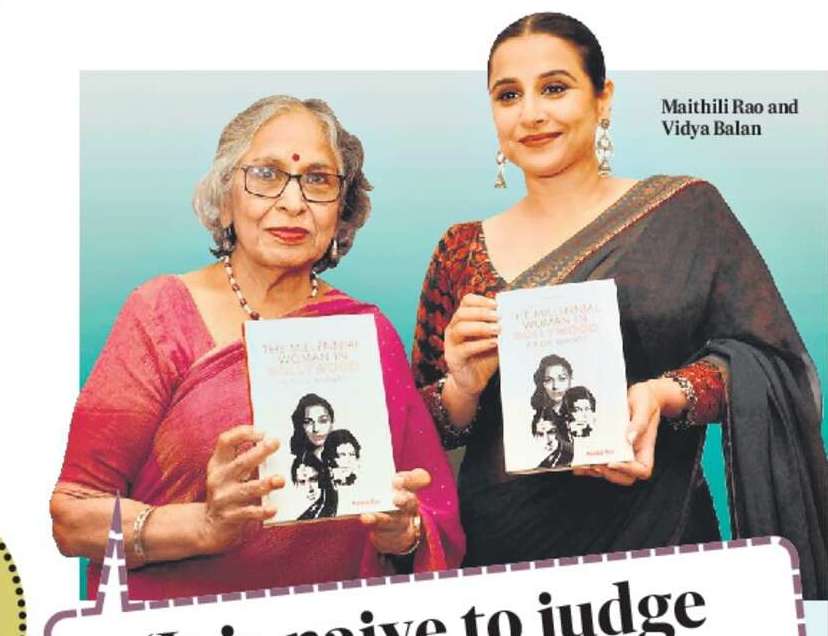
Abigail Banerji (HINDUSTAN TIMES; March 1, 2023)
“I must have watched at least 100 or more Bollywood films when I was writing the book,” says author Maithili Rao. Her third book, The Millennial Woman In Bollywood: A New ‘Brand’? was launched by actor Vidya Balan in Mumbai recently. The duo engaged in an animated discussion on the role of women in cinema. In her book, Rao explores the nature of female characters and the change they have undergone.
She first started writing the book in 2019 and had a draft ready by 2020. “But I lost two chapters and I had to rewrite them as I am not very tech-savvy,” she laughs.
Talking about the book, she says, “This idea has been with me since 2015 after I wrote my book on (late actor) Smita Patil. I didn’t want to focus on any one actor (male or female) or filmmaker.” Out of all the chapters she wrote, Rao reveals she enjoyed writing about the subversives — Devdas (2002), Dev D (2005) and Saheb Biwi Aur Gangster (2011). “It was fun to write. The characters were positive and took charge of their lives.”
During her travels to the US, she was exposed to the idea of millennial women. The curiosity behind this phenomenon in India made her want to further explore it in her writing. “Millennial women are independent, don’t get involved in politics and are a part of the I, Me, Mine generation,” she adds.
Understanding and writing about female-centric characters was always her priority. The 80-year-old writer says, “My work made me consciously look at and deconstruct how women have been portrayed in cinema. It is naive to judge every female character based on whether they are feminist enough or at all. It is more interesting to create complex characters that engage with you.”
While the book looks at films from the 2000s, Rao says, “You can’t just write about the last 20 years without looking at the films that came before. I write about the idea of an archetypal Indian mother which has changed over the years. She is now younger, no longer desexualized and sitting and making aloo parathas for her laadla beta,” she explains.
The cover of the book features three female actors from different time periods — late Meena Kumari, Kajol Devgn and Vidya Balan. Ask her about it and she explains, “Meena Kumari is iconic and represents the older period in cinema, while Kajol symbolizes the 20th century. For me, in the current period, it had to be Vidya as her films show the evolution (of female roles).”
None of this would have happened if I didn’t get that phone call, ‘Main Sanjay Leela Bhansali bol raha hoon’-Shreya Ghoshal
8:13 AM

Debarati S Sen (BOMBAY TIMES; February 28, 2023)
In the last two decades, Shreya Ghoshal has gone on to become one of the most-loved singers in our country. While she is known for some unforgettable, soulful melodies like Bairi Piya, Manwa Laage, Silsila Ye Chahat Ka, Jaadu Hai Nasha Hai, Wada Raha, Piyu Bole, Rasiya, she has also given music lovers foot-tapping numbers like Chikni Chameli, Param Sundari, Ooh La La and more.
In the recent past, Shreya did not get a chance to do a live concert in Mumbai, and finally, last weekend, after almost four years, she was back on stage to enthral her fans. Talking to Bombay Times, a few days prior tothe concert, she had said, “I feel Mumbai needs more live concerts. There is so much scope for our city to grow when it comes to live events as the energy of the audience here is amazing. I feel that Mumbai does not have as many concerts as other cities. There is a lot of potential here and as an artiste I do feel the lack of it.”

‘MUMBAI REPRESENTS THE MULTICULTURAL PART OF MY JOURNEY’
The singer feels strongly for the city which she says is her karma bhoomi. “Mumbai is very cosmopolitan, a huge mixed pot,” she said.
Shreya said, “We have so many different kinds of people living in the city, so, doing a concert in Mumbai feels very wholesome. As an artiste, my songs belong to various genres and I sing in different languages. Mumbai represents that multicultural part of my journey.”

‘IN MUMBAI CONCERTS, I LIKE TO SING MARATHI SONGS’
The fact that Shreya has sung in over 17 languages ensures that whenever she is at a concert, across India, she sings a few of her songs in the local language. She recently sang some Marathi songs for composer Ajay-Atul. “After a long time, I sang something in Marathi — a song called Chandra (Chandramukhi). A lot of non-Maharashtrians also enjoyed this song. In Mumbai concerts, I like to sing Marathi songs,” she added.
‘A CALL FROM SANJAY LEELA BHANSALI CHANGED MY LIFE’
At the concert that happened over the weekend, Shreya walked on to the stage singing the hit song Deewani Mastani from Bajirao Mastani. On an emotional note, she shared with the audience what working with Sanjay Leela Bhansali meant to her. The singer completed 20 years in the music industry, and while talking about it, she also recalled her first collaboration with Bhansali.
She said, “None of this would have happened if I didn’t get that phone call, ‘Main Sanjay Leela Bhansali bol raha hoon’. That call changed my life in every sense. And the song from Devdas, Bairi Piya, is the first song I ever recorded.”

Being a mother has changed me as a musician-Shreya Ghoshal
8:28 AM
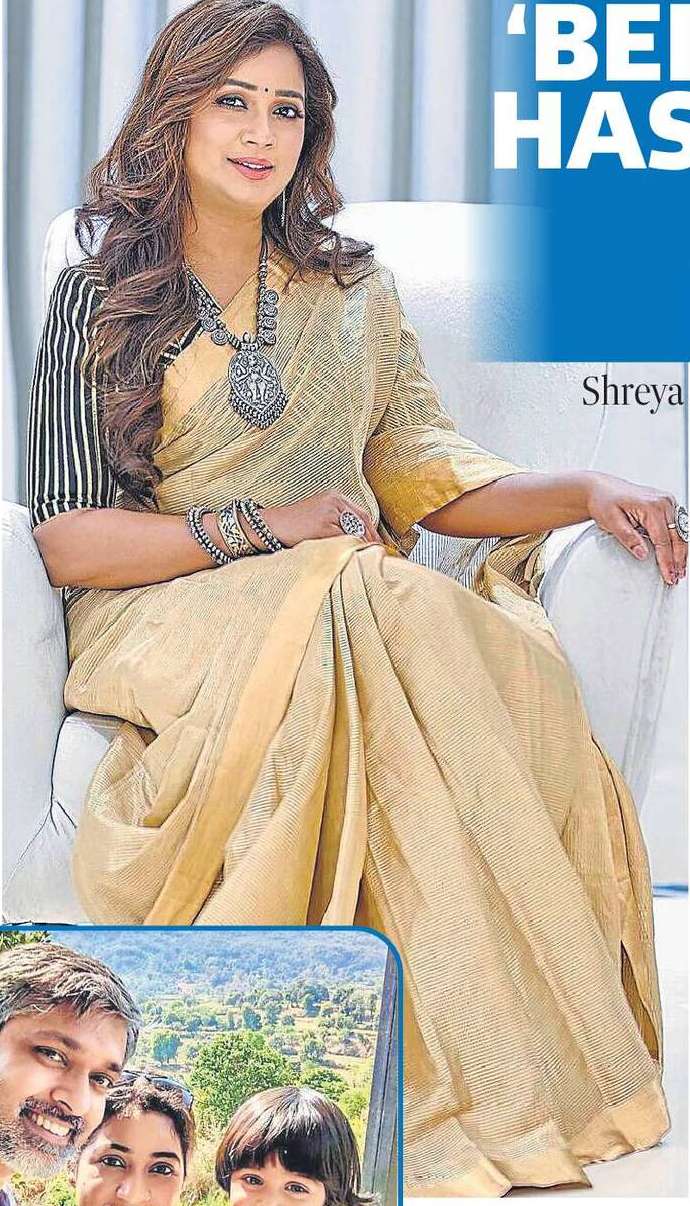
Shreya Ghoshal says her two-year-old son has helped her become more satisfied as a person; adds that he enjoys music too
Soumya Vajpayee (HINDUSTAN TIMES; February 25, 2023)
“Performing live gives me the oxygen to keep going. To be able to sing in front of large audiences means the world to me,” says Shreya Ghoshal, who will take the stage in Mumbai tonight. The singer, who became a mum during the pandemic, says motherhood has impacted her art positively.
“Being a mum has changed me as a musician. My perspective about life has changed a lot and that reflects in my life as a musician too. I feel more satisfied now,” says Ghoshal.
Does her son, Devyaan, enjoy music, too? “He is 21 months old now and it’s amazing to see him grow every day. He loves listening to music. He’s been responding to music since he was born,” shares the 38-year-old, who has given her “100% as a mum alongside work”.
Proud of being able to strike a work-life balance, Ghoshal adds, “It’s because of my family that I could travel for shows. It’s tough to stay away from my son for long. Sometimes, I take him along too.”
Though she has completed 20 years as a playback singer, she says it doesn’t feel like that long. “This is my 21st year. I started with Devdas (2002) and I feel so grateful and blessed. Though it’s a long time, it feels like yesterday. The journey has been so giving and enriching,” says the singer.
Ask about her aspirations as a musician, and Ghoshal adds, “I wish to learn more genres, collaborate with more artistes and delve more into independent music. I feel there’s no boundary between film and independent music anymore. People make good music and listeners connect to all kinds of music. I am so happy independent music is back and I too keep trying different kinds of songs.”
Catch it live
What: Shreya Ghoshal Live In Concert
When: February 25
Where: Inorbit Mall, Malad (W)
Timing: 7:00 pm onwards
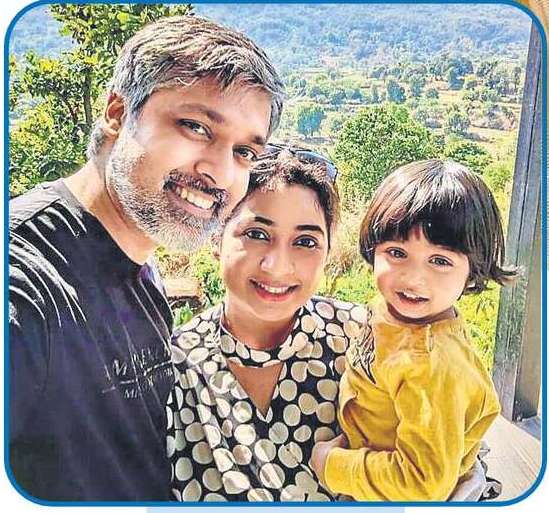
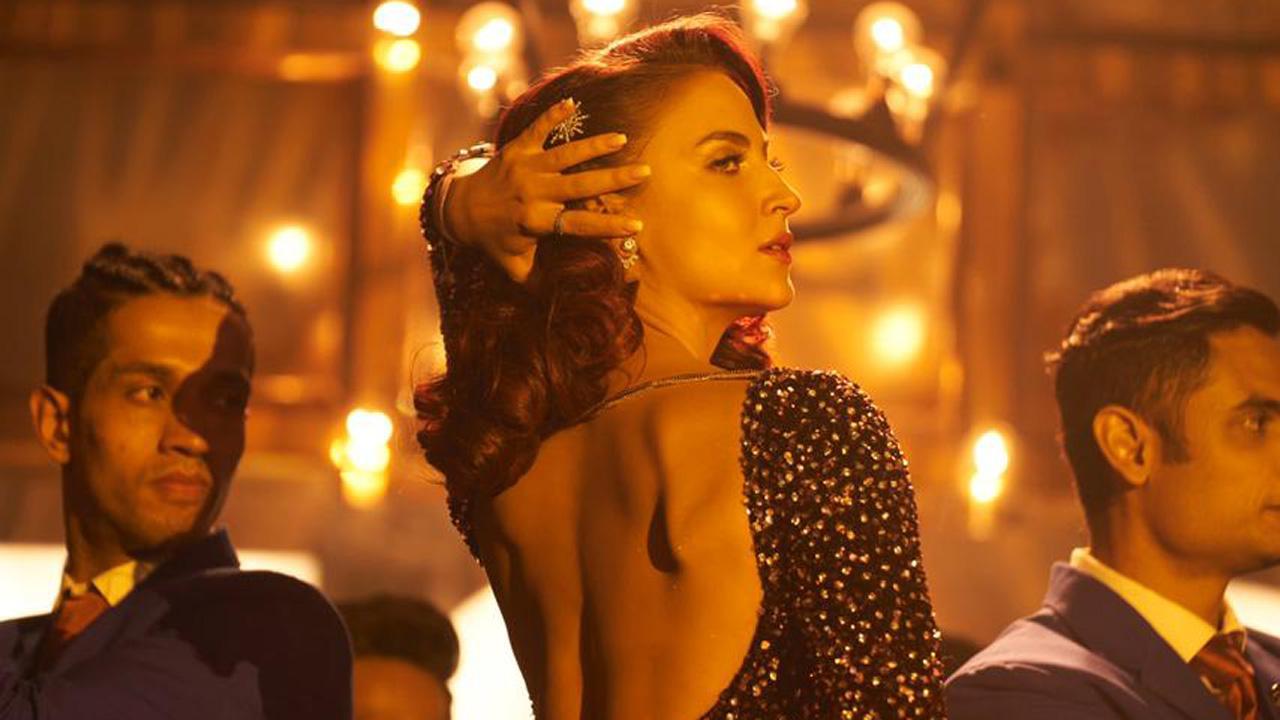
If I had an Indian name, more opportunities would’ve come my way-Elli AvrRam
2:25 PM
Renuka Vyavahare (BOMBAY TIMES; December 16, 2022)
Having shared the screen space recently with accomplished actors like Amitabh Bachchan (Goodbye) and Dhanush (Tamil film Naane Varuven), Elli AvrRam’s decade-long stay in India seems to finally be paying off. “Things work when you are about to give up,” says the Swedish-Greek actress, who frequently breaks into fluent Hindi mid-conversation.
In a candid chat, Elli talks about how Aishwarya Rai Bachchan-starrer Devdas was a turning point in her life, the need for Bollywood to be more diverse and inclusive and her journey so far. Excerpts:
As someone who was raised in Sweden with no connect to India, what was it about Bollywood that fascinated you?
Right from my childhood, I have felt a deep connect with India. I was hooked to documentaries about India, and I was a fan of shows like The Kumars At No. 42. Everything about the culture and people fascinated me. The colours, laughter and noise… you don’t see that abroad. Bollywood only made that connect stronger. My grandmother would watch Hindi movies in Greece, and she was a huge fan of Nargis ji. Now, select Hindi films are shown in Swedish cinemas, but that wasn’t the case before. Not many Bollywood DVDs were available in Sweden when I was growing up, so I ended up watching a few big films, like Devdas, Hum Dil De Chuke Sanam, Namastey London and Kabhi Khushi Kabhi Gham, over and over again. I was blown away by Shah Rukh Kham’s Devdas and that film was the reason I wanted to come to India and pursue a career in Hindi movies. I wanted to play Paro. Aishwarya Rai Bachchan became my idol. I even had her posters in my room.
Did you have any preconceived notions about India?
The Bollywood movies I saw made me feel that everyone lives in these big bungalows here. I never thought Mumbai could be full of buildings. The people I was staying with in India said, ‘Amitabh Bachchan ka bungalow hai Mumbai mein and a few more people have bungalows, but a majority of Mumbaikars stay in buildings.’ That is something I had not anticipated.
What do you think of the diversity and inclusivity in Bollywood?
White girls have been stereotyped in Bollywood. You either got to play characters who speak with an American or British accent, an NRI or these exotic dance numbers. I am happy that it is changing. Now, you are cast if you suit the character or speak the language. Your background or nationality isn’t the criteria anymore. After my recent film Naane Varuven with Dhanush, many people called to say, ‘You look so Indian, Elli!’ when I came to India, the rickshawalas always asked me whether I was from Punjab or Kashmir. They could never guess that I was a foreigner. Strangely, when I would go for the auditions and say that I am Elli AvrRam from Sweden, their outlook towards me would change because of my name. Sometimes, I would introduce myself as Elli Sharma just to understand their perception and people would say, ‘Half Indian toh lagti hai.’ This was just to test them. If I had an Indian name, more opportunities would’ve come my way. Thankfully, performance-oriented roles are getting prominence and casting is getting more inclusive now. As an actor, you are a character; your real identity is secondary. The Indian audience has accepted me since Bigg Boss. I want the film industry to do that, too. I think filmmakers are seeing me as a versatile actress now.
Dilip Kumar is one of our icons, but we had limited options to pick from-Shivendra Singh Dungarpur
8:39 AM
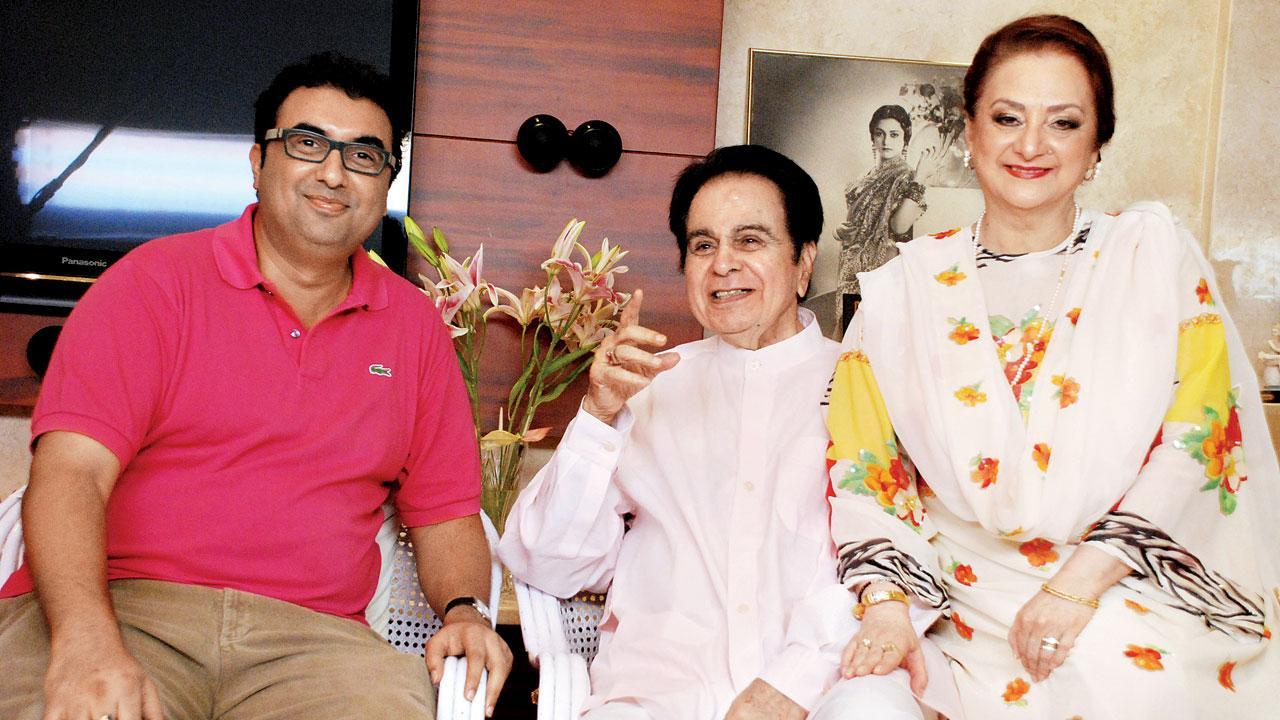
Urging industry to act, curator of restorative marking Dilip Kumar centenary laments that only seven of 60 films of superstar preserved
Priyanka Sharma (MID-DAY; November 29, 2022)
Citing an opportunity to celebrate the rich legacy of Dilip Kumar on his 100th birth anniversary in December, the Film Heritage Foundation decided to present the actor’s prominent works across 20 cities over a two-day retrospective. However, of the 60 films that Kumar frontlined across his five-decade career, only seven, we’re told, have been preserved for public screening in a cinema hall.
Film conservator Shivendra Singh Dungarpur — who has curated the films for the upcoming event — laments that the industry lends a blind eye to restoration efforts that are essential to retain the rich cultural history of Indian cinema.
“People have the misconception that a film has survived if it is available on YouTube, or on cassettes. But, look at the quality! It is terrible,” says Dungarpur, adding that the late actor’s celebrated offering, Gunga Jumna (1961), also couldn’t be salvaged.
“[Kumar] is one of our icons, but we had limited options to pick from. We wanted to choose films that he did in his prime. We have Aan [1952], which was India’s first techni-colour film, Devdas [1955] that got him the tragic hero status, Ram Aur Shyam [1967], which showed his impeccable comic timing, and Shakti [1982], his only film with [Amitabh] Bachchan,” says Dungarpur, adding that he hopes to showcase Kumar’s versatility to the young audience with this selection.
The retrospective, titled Dilip Kumar: Hero of Heroes, will play across 20 cities in the country. “There is a hunger in the youth to see these iconic performances on the big screen, because icons like Dilip Kumar are modern in their performances. There is a demand in Chennai, which is not even a Hindi-speaking belt,” says the conservator, who presented a similar restorative of Bachchan’s works last month.
What is film restoration?
Described as a series of ongoing efforts to rescue decaying film stock, and preserve the images they contain, film restoration aims to ascertain that movies continue to exist in forms that are as close to the originals as possible, so that they can be made available to the public.
Now, a film festival to celebrate Dilip Kumar’s 100th birth anniversary
8:42 AM

A two-day festival in December will showcase his iconic films like Devdas and Ram Aur Shyam on the big screen across 20 cities
Niharika Lal (BOMBAY TIMES; November 26, 2022)
It’s time for celebration for all Dilip Kumar fans. On the occasion of the actor’s 100th birth anniversary, the Film Heritage Foundation has curated a two-day film festival titled Dilip Kumar – Hero Of Heroes. The centenary celebration of the legend will take place on December 10-11, with screening of four of his films across 20 cities. The line-up includes Aan (1952), Devdas (1955), Ram Aur Shyam (1967) and Shakti (1982).
‘DILIP KUMAR’S FILMS HAVE A CONTEMPORARY APPEAL EVEN AFTER SO MANY DECADES’
Shivendra Singh Dungarpur, archivist and Director, Film Heritage Foundation (FHF), says the purpose of these screenings is to celebrate Dilip Kumar. He says, “Dilip Kumar’s centenary anniversary was an incredible opportunity to bring back one of the greatest actors of Indian cinema on the big screen. His films have a contemporary appeal even after so many years. He truly is the ‘Hero of Heroes’, as even today the biggest stars look up to him.”
He says that even though some of these films were released nearly seventy years ago, the power of the actor’s performances, his craft as a method actor and his charisma make him ageless.
‘MANY OF DILIP KUMAR’S FILMS ARE ONLY AVAILABLE IN LOW RESOLUTION AND CANNOT BE SHOWN ON A BIG SCREEN’
However, when the foundation decided to screen the actor’s films, the organizers found that many of his iconic films were not in a condition to be shown on the big screen. Dungarpur says, “I was excited about curating several of his films to mark the occasion. How can one choose only a handful of films for an actor with such an illustrious body of work? But I was shocked and heartbroken to discover that many of his great films survived only in low-resolution formats, which could not be projected on the big screen. We have cobbled together these four films with great difficulty.”
Dungarpur adds that he’s sure the actor’s fans will question why some of their favourite Dilip Kumar films are missing from the list. He says, “We have films available on online platforms, but these are not of good quality. Now we are aware how much of his work is available and how crucial it is to save what is remaining. That’s the reason we are also launching a campaign to save Dilip sahab’s films. This is also a tribute to the work of the actors, crew members and filmmakers of that time. Filmmakers and producers need to realise that time is running out and that they should look into preserving these films before it is too late.”
Dungarpur shares that when he decided to organize a retrospective of Amitabh Bachchan’s films to celebrate his 80th birth anniversary, it was difficult to convince everyone – from the stakeholders to producers – that people would come out to watch old films. He says, “People didn’t have confidence, but I knew theatres were going to be jam-packed.”
At a film restoration session recently, Dungarpur had shared how he failed to get Prakash Mehra’s Zanjeer for a film screening once because Mehra’s family assumed that if the hall runs empty, then the aura surrounding the movie would fade. He adds, “However (at the Amitabh Bachchan retrospective), the film’s screening was fully booked everywhere and even Amitabh Bachchan called for two tickets of the film.”
So, what changed between these two screenings? He says, “Now everyone knows that people will come to watch old films and there is always going to be an audience for classics. Cities like London have theatres dedicated to screen old films, but in India we don’t have any such theatres. That’s why I have decided to curate these festivals for stars like Dev Anand and Raj Kapoor too next year.”
IT WILL BE A JOY TO WATCH DILIP SAHAB BACK ON THE BIG SCREEN, LARGER THAN LIFE, LIKE HE HAS BEEN IN MY LIFE: SAIRA BANU
Talking about the film fest, Saira Banu shared, “I am so happy that the FHF is celebrating Dilip sahab’s 100th birthday on December 11 by screening some of his most popular films on the big screen across India. They could not have chosen a more apt title to commemorate India’s greatest actor – Dilip Kumar – Hero Of Heroes. He was my favourite hero from the time I was 12, when I first saw him in Aan in technicolor. It will be a joy to watch him on the big screen again, larger than life, like he has been in my life.”
WAS DEEPLY DISTURBED TO HEAR THAT MANY OF DILIP KUMAR’S FILMS ARE NOT IN A CONDITION TO BE SCREENED IN CINEMAS: AMITABH BACHCHAN
Amitabh Bachchan says, “I am glad that we are celebrating Dilip Kumar’s legacy with this festival of films. I would urge every film lover and contemporary actor, who has not watched Dilip Kumar larger than life, to not miss the incredible opportunity of watching this stalwart back on the big screen. Even today, I learn something every time I watch his films. Dilip Kumar was and is my idol.”
Bachchan says that he was deeply disturbed to hear that many of Dilip Kumar’s films are not in a condition to be screened in cinemas. Calling it a tragedy, he adds, “Film Heritage Foundation is working to ensure that the work of legends like Dilip Kumar survives and is preserved and restored to be shown to today’s young audiences.”

Shivendra Singh Dungarpur with late Dilip Kumar and Saira Banu
Saying no to Sanjay Leela Bhansali for Devdas might have hurt him, but I was helpless-Shekhar Suman
11:04 AM

Rishabh Suri (HINDUSTAN TIMES; July 26, 2022)
Shekhar Suman has always been focused on just one thing — not compromising on his principles when it comes to work. And the actor has managed to follow that till this day, even if it meant turning down people and ruffling a few feathers.
However, Suman, who is gearing up for his digital debut with the series AK 47, shares that one’s career is definitely impacted if a few people take your rejection to their offer in the wrong way. “You can’t have it all. You win some, you lose some. In life, you will be kicking a few egos. I remember I was offered the role of Chunni Lal in Devdas (2002). I didn’t want to say no, but I was neck deep in work then. Saying no to Sanjay (Leela Bhansali, director) might have hurt him, but I was helpless,” shares the 59-year-old, who returned to TV after a long absence as a judge on a comedy show.
Suman prefers to tell people straight to their faces if he is not going to do their project, instead of dilly dallying the refusal. That, he feels, helps. “Sometimes, you are frank and say, ‘I don’t like the role’. Those people never come back. Some of them understand where I am coming from. I am being honest, instead of saying things like, ‘Come tomorrow, I am thinking, speak to my secretary’. I decide things instinctively and say no to not doing them. If they feel hurt, too bad; I am not going to do anything about it,” he admits.
Devdas was facing problems; actresses were falling ill. I realised entry to the set was in the wrong direction-Neeta Sinha
8:27 AM
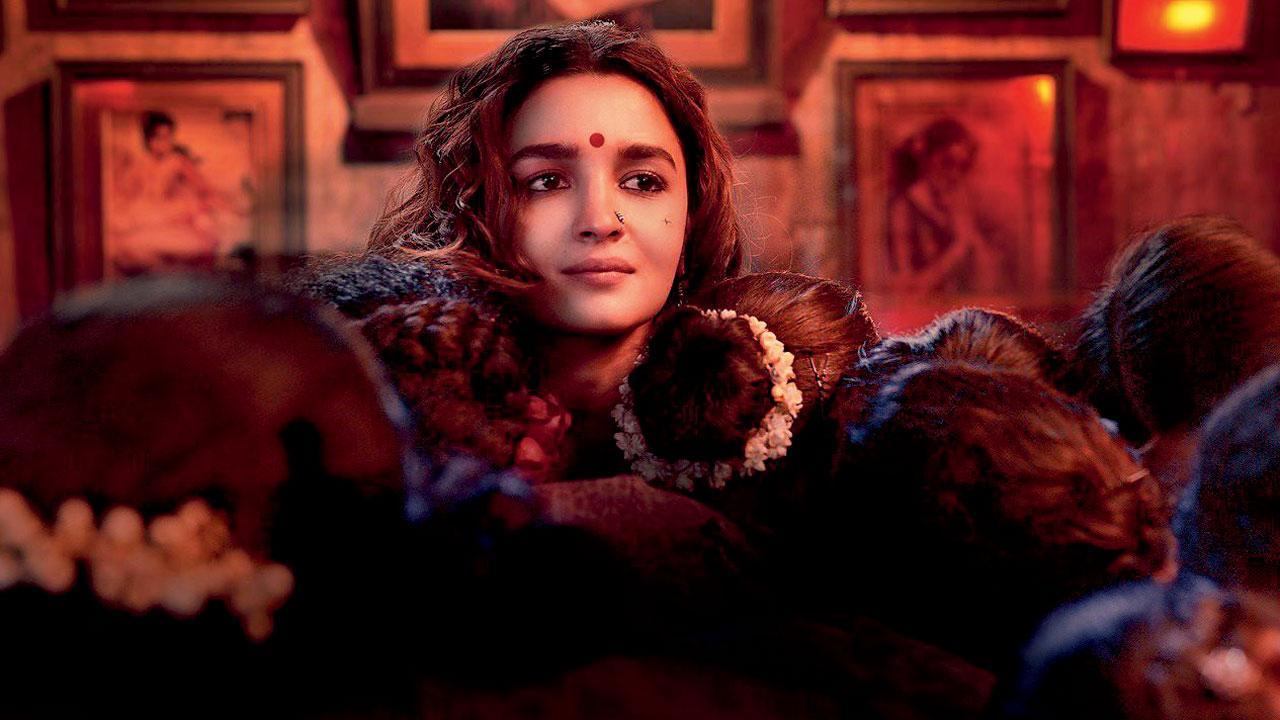
The warm reds in the frames from Gangubai Kathiawadi are as much a result of Neeta Sinha’s intuition as Bhansali’s vision. Meet the woman who’s shaking spirituality with architecture to serve a cocktail of peace and prosperity
Heena Khandelwal, Anju Maskeri (MID-DAY; March 6, 2022)
A little over two decades ago, Hindi film writer-director Sanjay Leela Bhansali was working on his ambitious project, Devdas. Mounted on a budget of Rs. 50 crore, the film found itself mired in one controversy after another. Its producer, diamond merchant Bharat Shah, was jailed for 16 months; crew members died in two separate accidents on the set and some reports said that even a part of the set caught fire on more than one occasion.
Some believed there was more to this tragedy chain than coincidence. Kirron Kher, who was playing Paro’s (Aishwarya Rai) mother, suggested that Bhansali meet Neeta Sinha, who believes that just like people, living spaces also have a horoscope, and the individuals who inhabit the place have a relationship with its energy. They prosper when they are in harmony with their environment.
Perhaps short of choices, Bhansali took up Kher on the suggestion and consulted Sinha. She says, thereafter, the movie wrapped up without any incident. Since then, Sinha has been consulted by Bhansali for every film, including Goliyon Ki Raasleela Ram-leela, Padmaavat and the recently released Gangubai Kathiawadi starring Alia Bhatt.
“The film [Devdas] was facing problems, and the actresses were falling ill. I realised that the entry to the set was in the wrong direction. I suggested they block that entry, add some money plants at specific spots—that drooped downwards—and change the name of the protagonist’s home from Paro ka mahal to Paro’s haveli,” recalls Sinha, 62.
Since then, Sinha has been called not just to rectify the wrong, but ensure no wrong happens to begin with. “I’m usually on board when they are conceiving the drawing [of the set]. The set designers are respectful of my suggestions,” says Sinha, adding that her ideas can be easily incorporated into their larger vision.
Sinha calls herself an astro architect, who specialises in Vastu Shastra or the ancient India science of architecture that some believe dates back to 6,000 BC.
For Gangubai Kathiawadi, Sinha added the colours red and yellow, and a mirror behind the scene to increase the warmth and passion that the cast and crew brings to the film and assigned specific entrances to be used by specific stars. The last, she says, was to enhance and encourage their talent. Bhansali is known for his attention to detail and while it’s not easy or recommended to make radical changes in his frames, Sinha says her ideas are more to balance out the energies on set.
“Bhansali’s sets always have a mandir. It’s critical that this is located in the right spot. I usually choose the North-East direction for the mandir. Colours also play an important role. But it may not always be possible to incorporate a shade I recommend in the frame. So, I use spaces that are out of camera range, like the pathway used for the movement of the crew.”
Sinha, whose clients include Amitabh Bachchan, Shah Rukh Khan, Karan Johar, Ambika Hinduja and Kumar Mangalam Birla, says, “it all started with Kirron Kher”. Kher was hosting a television show back in the ’90s called Jagte Raho, which explored alternative practices and science. Sinha says she was keen to get on the show because vastu didn’t enjoy mainstream awareness at the time.
“Most people believed that we’d break down their home. I was keen to be on the show to argue that structural changes aren’t mandatory [to align the vastu of a home]. I reached out to her and that’s how it all began.”
While the direction of rooms and structures, placement of plants are important, so are the names of people and places. “When Bombay was renamed Mumbai, I had argued [in an article in Debonair magazine] that the grace of South Bombay and Nariman Point would fade with the change, and the prestige would move to the east of Bandra. At the time, Bandra Kurla Complex didn’t exist, but it is Bandra East, isn’t it?” she shares.
Sinha claims Bachchan named his bungalow Jalsa at her behest, as did Shah Rukh Khan, when she suggested that he choose a name with the letter M for his Arabian Sea-facing mansion at Bandra Bandstand. “When he said ‘Mannat’, it sounded good to me.”
Sinha, who is a graduate, says it was the time she spent under the mentorship of her neighbour and homeopath late Dr L N Kusuma, who held a deep interest in vastu and astrology, that led her to develop her skills. While working for celebrities is Sinha’s high, it’s when her suggestions are able to solve a regular man’s challenges that she says she feels truly valued.
“Someone was unable to conceive, another person’s child wasn’t landing a job despite all efforts. Someone else’s family member was repeatedly falling ill. I call them up later to see if they’ve managed to incorporate what I suggested and if they are seeing any difference. People facing health challenges get my appointment on priority,” says Sinha, who claims she also advises hospitals since “they also want their patients to go back healthy”.

Neeta Sinha at her Juhu residence. She says it’s a myth that vastu demands structural changes. Pic/Shadab Khan
Sinha credits Kirron Kher for introducing her to Sanjay Leela Bhansali during the filming of Devdas. Pic/Instagram
I don’t understand where this thought comes from ki hero wali picture zyada chalti hai. It is not true-Sanjay Leela Bhansali
8:32 AM
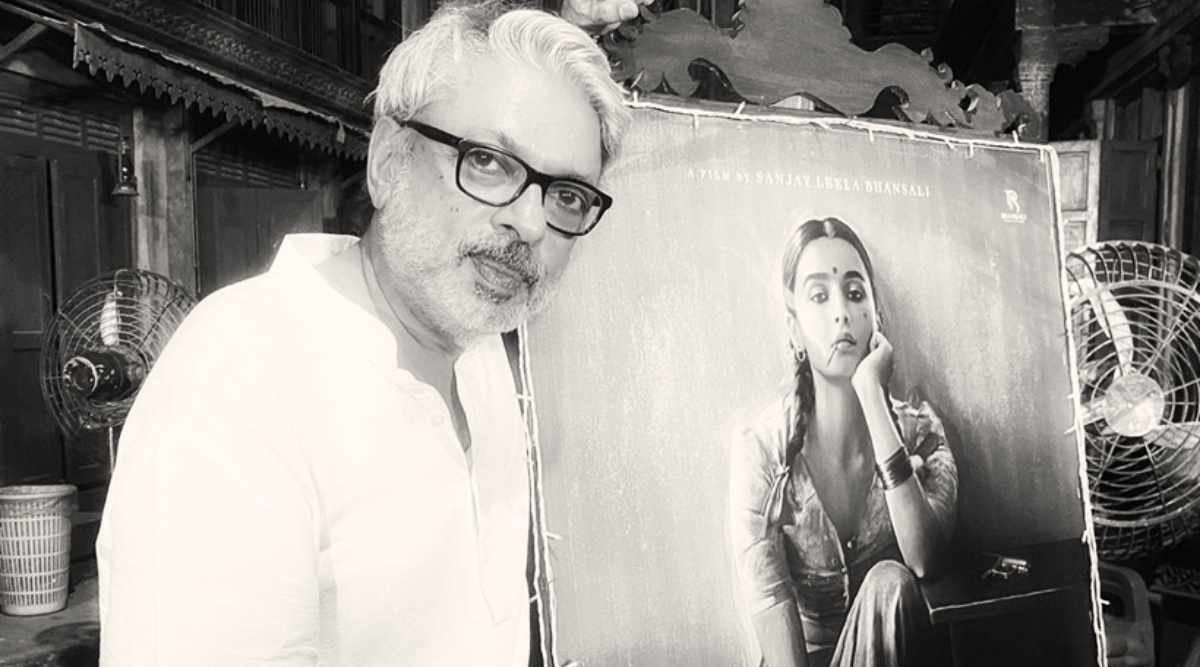
On Women's Day, Sanjay Leela Bhansali slams the perception that it is safer for a filmmaker to invest in a ‘hero-led story’ since the audience prefers that
Anshul Chaturvedi (BOMBAY TIMES; March 8, 2022)
Sanjay Leela Bhansali, whose last two mega projects have been focused on two very different female characters around whom the stories revolved – Rani Padmavati of Chittor and Gangubai Kathiwadi of Kamathipura – is dismissive of the sentiment that has prevailed in Bollywood over the past couple of decades that sees ‘women-oriented films’ succeeding at the Box Office as an exception, while the default setting is that you need a ‘hero’ to get the crowds in.
“Who says that the nation doesn't want to see a women-oriented story or a heroine-oriented story? Who says that they are not going to see it?” fumes the filmmaker, who is fascinated by the work of the veterans of yesteryear and how they weaved together enduring stories centred around women characters.
“There are so many shades of a woman, and this needs to be told on celluloid. I mean, just look at it from decades back Bimal Roy did it and worked on it in Sujata and Bandini. Raj Kapoor did Ram Teri Ganga Maili, Bobby. There were filmmakers who did such wonderful work. V Shantaram ji did such wonderful films on women such as Stree. Mehboob Khan did Mother India. Now why have these -women led films – become a lesser category, I don’t understand.”
He pauses and then reflects on a consistent theme in his filmography – layers and undercurrents. “There are so many layers if I have to tell a woman's story. Shyam Benegal did a lot of women-centred stories like Bhumika. They are the most beautiful characters to tell the story about. There are so many shades. Endless shades! Most celebrated directors have made films on women – from Mother India to Pakeezah to Mughal-e-Azam. Mughal-e-Azam was Anarkali’s story. Even if I make Devdas, it is the story of Chandramukhi and Paro primarily. Or you talk about Sujata and Bandini, they are all women-oriented films. The cinema of Yash Chopra they were all strong women-oriented films. Satyajit Ray made Charulata. Ritwik Ghatak’s cinema. If you look at all those films, they were all beautiful stories of women. This nation has celebrated those filmmakers. This nation has celebrated those films as the biggest hits of the country. As the most landmark films of this country.”
Prod him on why, then, has the belief that it takes a male lead to pull off a commercial hit prevailed in the industry for a while, and he rips into it. “You keep hearing that it is all a hero industry, hero industry I don't know who spread it. Where is this concept of a hero-oriented industry ki hero ki picture chalegi, wahin paisa daalo, heroine ki picture pe mat daalo where has this come from? I don’t understand where does this thought come from that in our industry, hero wali picture zyada chalti hai. It is not true! We are blaming the audience wrongly. A handful of people have just unnecessarily muddled the mind, and constantly keep imposing it on people, on the industry over the years. Especially the 80s onwards. I haven't understood where this comes from. And I hope to do my bit to change it. Padmaavat did great business, despite all the controversy. If Gangubai does well, as it is doing at the moment, more and more, then it will bring in a lot of those wonderful filmmakers who may today feel a little stifled about saying for a film that is centred around a female character kaise banayenge?”
Subscribe to:
Posts (Atom)