Showing posts with label Deewana. Show all posts
Showing posts with label Deewana. Show all posts
Sajid Nadiadwala's son Subhaan's debut film to be titled Aisi Deewangi Dekhi Nahin Kahin
4:15 PM
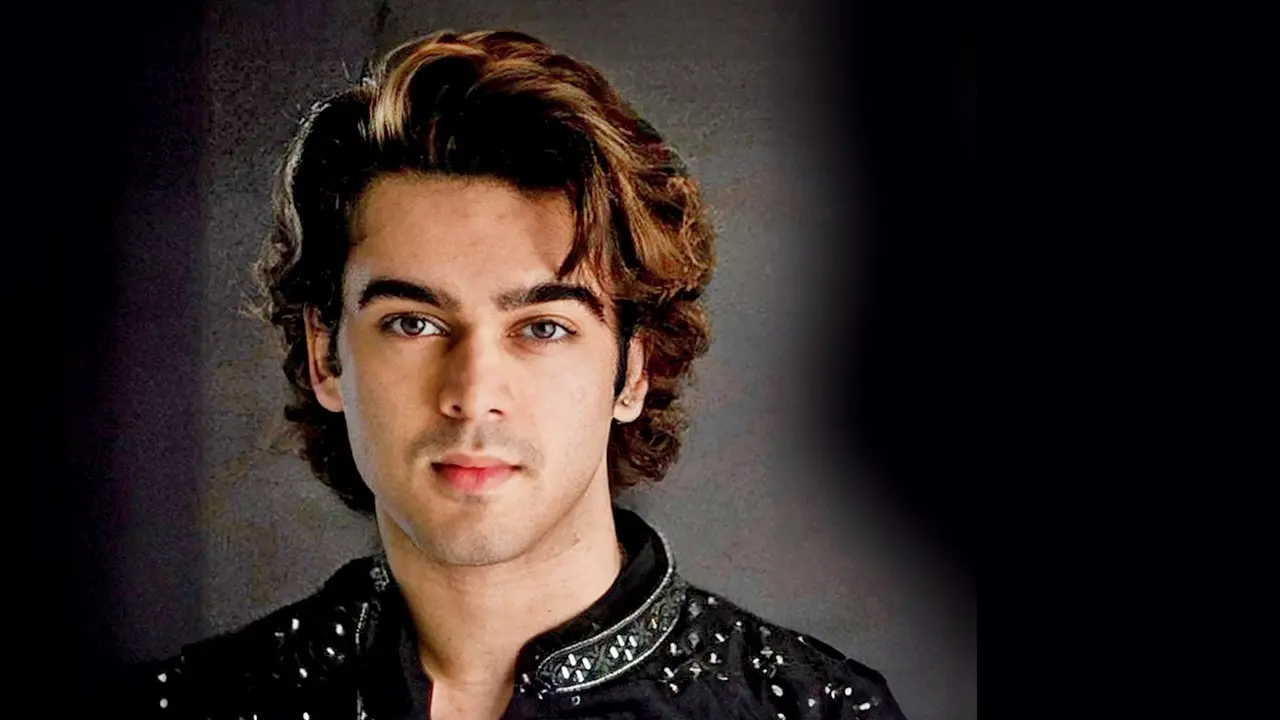
Sources say Sajid Nadiadwala’s son Subhan’s debut film named Aisi Deewangi Dekhi Nahin Kahin after Deewana’s hit song
Mohar Basu (MID-DAY; June 18, 2025)
In February, mid-day reported that producer Sajid Nadiadwala is readying to launch his son Subhan Nadiadwala’s acting career (Beta, chalo Bollywood, Feb 28). Now, the chatter in the industry is that the star kid’s debut film may borrow its title from Deewana’s (1992) hit track. It has been heard that the movie has been tentatively titled Aisi Deewangi Dekhi Nahin Kahin, after the popular song that featured Shah Rukh Khan and late Divya Bharti.
It could be a beautiful nod to both — Khan, who came into the limelight with the film, and the late actor, who was married to Sajid. The movie, to be helmed by Shashank Khaitan of Humpty Sharma Ki Dulhania (2014) fame, is expected to roll in November.
A crew member reveals, “The film is an intense love story. Aisi Deewangi Dekhi Nahin Kahin is the tentative name with which we refer to the project; it’s not set in stone. The title is from the hit song of Deewana that kickstarted Shah Rukh’s career.”
Mausam and Deewana nailed my image as a pop star-Sonu Nigam
8:24 AM

As Sonu Nigam’s cult albums turn 25, he shares why they continue to be special and how they helped him evolve
Soumya Vajpayee (HINDUSTAN TIMES; September 2, 2024)
Who can forget the iconic songs Ab Mujhe Raat Din, Deewana Tera or Bijuriya? These cult classics from Deewana and Mausam, rendered by Sonu Nigam, continue to resonate with music lovers even today. As both the albums turned 25 recently, the singer feels “grateful and overwhelmed”.
Sharing how the songs from the two records “are ageing like fine wine”, he says, “Although Kismet (his 1998 album) brought me in the pop scene, dynamically changing my image from a boy-next-door to a singing-dancing pop star, Mausam and Deewana in 1999 just nailed it for me. It’s been 25 years and I don’t remember doing a concert and not performing songs from these albums.”
The tracks in both the albums were quite diverse — from uptempo numbers to soulful, romantic ballads. Sharing how they gave him a chance to showcase his versatility as an artiste, Nigam says, “Back in 1999, I was a restless kid, wanting to experiment, try newer and unattempted genres, showcase my vocal skills, challenge the dancer in me and just have fun. The interesting part was that both the albums released around the same time and had the same artiste, but both went on to become chartbusters, as the genres of songs were poles apart. Mausam had songs ranging from Indian and western classical to ballads, to folk to pop, to dance, etc.”
As he goes on to talk about his favourite numbers from the two albums, the singer says if he were to revisit them now, “everything will change, as that Sonu doesn’t exist today”.
He shares, “I love all the songs. People have their favourites, mainly from Deewana. From Kuchh Tum Socho to Iss Kadar Pyaar Hai, besides the popular ones such as Ab Mujhe Raat Din and Deewana Tera. There was a special song in Mausam called Yesterday Was Tomorrow. It had no words, just sargam in different ragas, composed amazingly by Ravi Pawar. It was really special to me, as I had no formal training in classical music.”
Looking back at learning his signature steps for Bijuriya from late dance legend Saroj Khan, Nigam recalls, “I requested her to choreograph the songs keeping (actor) Govinda in mind. So, Saroj ji said, ‘Chaliye, kamar kas lijiye’. And I slogged to learn the steps, which, till today, are synonymous to me. I feel so grateful to see everyone dance along when I perform the song at my shows.”
30 Years of Kabhi Haan Kabhi Naa: Shah Rukh Khan's love story inspired this unforgettable film
8:31 AM

Niharika Lal (DELHI TIMES; February 25, 2024)
When Shah Rukh Khan was invited as a guest editor of The Times of India in 2006, he was asked to reveal his favourite role till then. He had said, “Kabhi Haan Kabhi Naa is an all-time favourite.” The film, released in 1994 and directed by the late Kundan Shah, starred SRK and Suchitra Krishnamoorthi in lead roles. Juhi Chawla had a cameo at the end of the film.
Samar Khan, who wrote a book titled SRK – 25 Years Of A Life, says, “SRK did the film when he was not a star. Mani Ratnam also signed him for Dil Se.. (1998) when he was not a star, but by the time Dil Se.. released, SRK was a star. In KHKN, Shah Rukh was almost living his own love story. There were parts that were inspired by his own real life.”
Critics still appreciate the film because it is rare for mainstream cinema to portray the hero as a “loser”.
Reminiscing about the film in a Instagram post last year, SRK wrote, “At that stage, in that age — raw, uncontrolled, craft still undefined, surrounded by the best cast & crew in India and a director who I miss every day! Taught me that sometimes you lose the moment…but win everything else…I am sure somewhere, some world Sunil did too”
At that stage in life, I was Anna: Suchitra Krishnamoorthi
“It is not possible to replicate that kind of innocence in films. At that stage in life, I probably was Anna. When I had seen the first cut of the film, I fought with director Kundan Shah telling him he made me look ugly. Now when I see the film, I feel, ‘Oh my God! I was so cute’. I remember they were struggling with the title, and I suggested, “Arey, keep it ‘Anna’. For me, it was the most obvious thing. The film’s ending was probably decided by Shah Rukh to keep it on a positive note that his character had moved on.”
Shah Rukh was paid Rs. 25,000 for the film
Shah Rukh was signed on for Rs. 25,000 for Kabhi Haan Kabhi Naa. Director Kundan Shah had recalled in an interview that he had already shot a chunk of the movie, but there was no official paperwork.
On the insistence of his producers, he went to the mahurat of Deewana at Centaur Hotel in (then) Bombay and told SRK in the corridor, “Shah Rukh, yaar, the producer is harassing me, please officially sign the film.”
Kundan Shah, however, was carrying no document. So SRK pulled out a blank paper, kneeled on the floor and put his signature at the bottom right corner of that blank paper, and Kundan Shah gave him Rs. 5,000 as the signing amount.
‘Kabhi Haan Kabhi Naa got made because a lot of talented young people had nothing to do’
In a past interview, the late Kundan Shah had said that KHKN came about because too many people were sitting at home with no work. He said, “After Shah Rukh, we signed on Suchitra and Deepak Tijori. Then Farah Khan came on board as the choreographer, and we got Ashutosh (Gowariker) from Circus. We had strange reasons for taking them on. Farah was a good kid but without any experience. But I liked that she kept laughing all the time. Ashu was a very ambitious person. Even then, you could see that he had a director’s bent of mind. Shah Rukh said Gauri would do his costumes, and I thought, “Good, one less thing for me to worry about!”
— With excerpts from Samar Khan’s book SRK25 Years of a Life
DID YOU KNOW?
- The shooting schedule of KHKN went for a toss because SRK had double booked his dates
- The film was 90% finished in 1992, but it released in 1994 because Kundan Shah didn’t have SRK’s dates for the remaining 10% film
- Kabhi Haan Kabhi Naa premiered at the Indian Panorama section of the 24th International Film Festival of India
- Gauri Khan did costume for SRK while Sutapa Sikdar did costume for Suchitra Krishnamoorthi
- Because of SRK’s date issues, he was once “whisked away at gunpoint” from the sets of KHKN to that of Deewana. “It was quite funny,” Kundan Shah had recalled in an interview

Agar kabhi Shah Rukh Khan mujhse mile, main toh ro doonga, says his lookalike Suraj Kumar
8:22 AM

Syeda Eba Fatima (HINDUSTAN TIMES; June 9, 2023)
Shah Rukh Khan’s doppelgänger, Suraj Kumar, had the time of his life when he was papped at India Gate in Delhi recently and his pictures went viral. Talking to us, the 22-year-old, who would instantly remind you of SRK from the 90s, can’t contain his excitement as he says, “I often go to India Gate to shoot videos. That’s my go-to spot to make reels. I love enact his scenes from movies Baazigar and Darr (both 1993).”
An ardent SRK fan, Kumar loves to watch his “older films such as Raju Ban Gaya Gentleman, Deewana, Chamatkar (all 1992) and Maya Memsaab (1993)”. He adds, “His style was unmatched. Unke bolne ka tareeka, baal, dance, haklaana... you don’t get to see all that in his newer films.”
Kumar, however, reveals that the response and love he has been receiving at the moment wasn’t the case a few years back. “Initially, when I used to behave like Shah Rukh in public places, people would laugh at me. After my videos went viral, they started recognizing what I do. Now, people take selfies with me and say, ‘Aap 90s ke Shah Rukh lagte ho’.
Who is Suraj?
Hailing from Jharkhand, Suraj left his home six years ago with a dream to meet SRK and become an actor. Currently living in Delhi, he says, “My family never supported me. Toh apne papa ki pocket se paise chori karke main Mumbai chala gaya. I wanted to become an actor like SRK.” He adds, “I’d go to Mannat daily, but I’ve never met him. Agar kabhi SRK mujhse mile, main toh ro doonga.”
Kumar has finally bagged a film, “which stars (actor) Pulkit Samrat. Mera sapna poora ho gaya”.
I realized the women were no longer talking about Shah Rukh Khan. They were using him as a metaphor-Shrayana Bhattacharya
8:57 AM
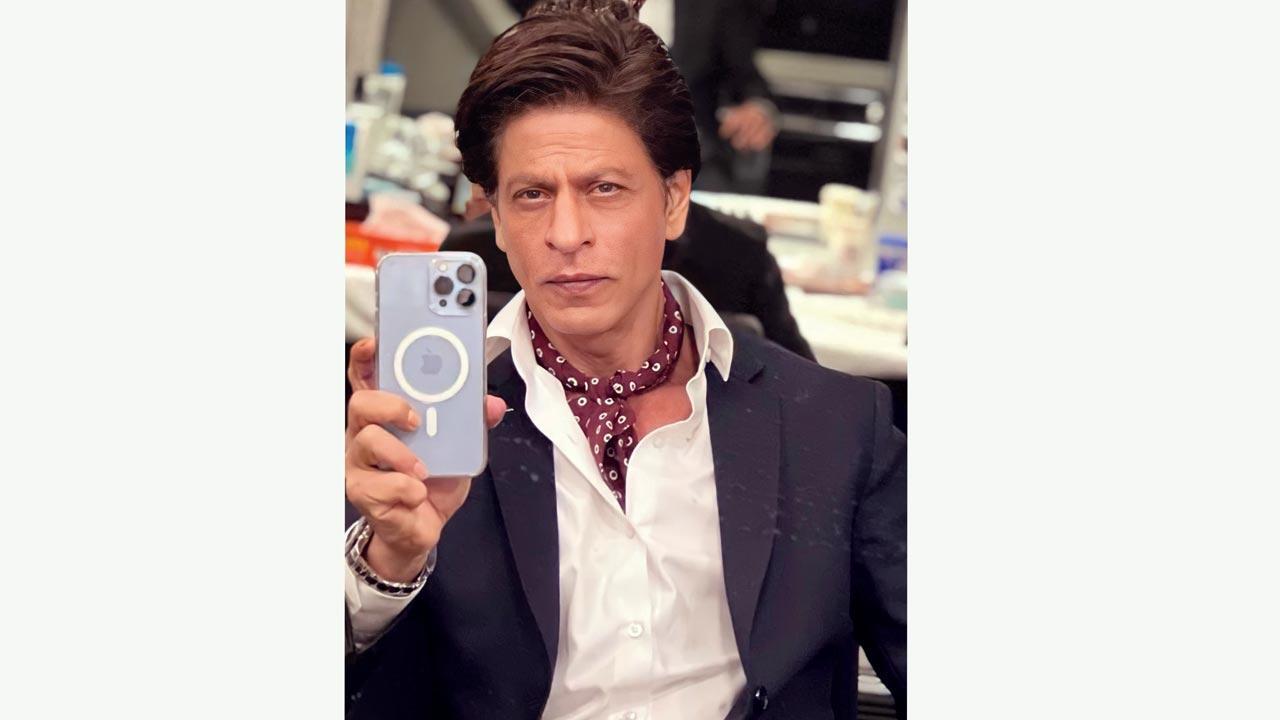
Thirty years after the Hindi film industry welcomed SRK into the movies, his legacy shines on. A social scientist, a documentary filmmaker, and his biggest fan deconstruct the myth and madness of Bollywood’s baadshah
Jane Borges (MID-DAY; July 3, 2022)
On our table at the Aquarius poolside restaurant of The Taj Mahal Palace Hotel, actor Shah Rukh Khan dominates the conversation. Writer-economist Shrayana Bhattacharya, who we are here to meet, teases the mid-day photographer, “Please, take good pictures… you never know, Shah Rukh might see.”
It’s been over half a year since her book Desperately Seeking Shah Rukh—already a bestseller—made it to bookshelves, and just about two months since her fortuitous visit to Mannat to meet the incidental subject of her book. “I am very happy to report that I didn’t faint. He is really presidential,” she shares.
On June 25, when Khan, Bollywood’s undisputed Baadshah, completed 30 years in the movies, Bhattacharya was among those who celebrated it with her two bits on social media: “An artist whose images and interviews changed the way I approach economics, writing, social science research, gender studies and myself. He is more than a ‘star’, he is a universe of concepts and meaning,” she wrote, with the hashtag #pictureabhibaakihain.
Bhattacharya tells us now, how she dislikes words like “star-struck”—often used callously for the actor’s admirers—to describe her work as a social scientist. “I am too ordinary a fan,” she confesses. What she was purely interested in, is telling the story of “what happened to women in post-liberalisation India”. “India is one of the few countries where as we have grown [economically], women’s employment drastically declined. Today, we are at the bottom five [when it comes to women’s employment],” says Bhattacharya.
“I wanted the reader to understand data, the different explanations, the technical substance of it, but of course, I wanted to do it in a way which would not bore them to death. It had to be interesting and accessible, and I was very committed to that for a long period of time.” As luck would have it, SRK came into the picture.
Her research began in 2006, when she was working on projects for Self Employed Women’s Association (SEWA) and Institute of Social Studies Trust (ISST) in rural hamlets of Gujarat and Uttar Pradesh. While investigating questions “about their employment and working conditions” she sensed a disinterest on their part. After all, they had answered these questions so many times before, she says.
“In research, we are taught to employ different methods [to eke out information]... like ice breakers. So, I started asking people about their favourite actor, and lo and behold, everywhere I went, I met these giant Shah Rukh fans. The energy and enthusiasm when talking about your favourite actor is much more, when compared to talking about your economic circumstances, which honestly can be quite depressing. We live very harsh lives in India, at least most people. I decided I will give energy to that [the conversations about Khan],” she says.
Her pursuit was a revelation of sorts. “For the next six to seven years, as I was sent to different areas of the country, speaking to women fans about him, I realized the women were no longer talking about him. They were using him as a metaphor.”
Fandom, explains Bhattacharya, is not a “silly cultural activity”. “It actually is an economic activity… to follow the work of an artiste requires money, free time, access to markets, media, public space, and even a mobile phone. None of these things, women in India [especially in rural India], can claim with ease.”
She learnt along the way that one of the ways in which Khan’s Indian female fans “flexed their economic independence was to buy a movie ticket or a television set, so that they could star gaze at their favourite actor”. He became a means to articulate their autonomy. Not to mention, a benchmark to critique masculinity.
There is a line in her book that Bhattacharya harks back to: “As real men retreat, superstars gain more glory. An ideal man is found in fantasy. You scour the landscape of everyday life, but he is nowhere to be found.” The idea of Khan, the King of Romance as that “ideal” is what Indian women continue to celebrate even 30 years on.
Khan represents the softer, gentler kind of man, thinks Bhattacharya. Having had her own “heart smashed” in 2013, when she was in the midst of research, made her realise this more certainly than ever. “All the ordinary frustrations of not being seen and acknowledged, and all the labour that women are doing... [in Khan] they see a man who is acknowledging that, not just in his films, but also in his interviews. Through the interviews I conducted with the women, I realised that he is not just some silly celebrity crush... he is a well-thought out formulation of a man who helps in a kitchen, performs emotional labour, a man who accords a certain kind of dignity to women’s experiences, and the burdens our society places on us. He is a powerful icon not just because he is a remarkable personality of our contemporary age, or because so many people’s memories and life experiences are bound to him, but because he is a language. How many people become language?” she asks.
People’s love for Khan, argues Bhattacharya, is a serious social and cultural phenomena. Even his interviews to the media elicit emotion, she says, while narrating the experiences of her interviewees mentioned in her book. “When these women would feel lonely, they’d listen to his stories of loneliness and the struggles he had. And, they drew a lot of solidarity from that.”
Back in 2005, documentary filmmaker, TV producer and author Nasreen Munni Kabir and Peter Chappell gave fans a peak into the life of their most admired icon in a two-part film, The Inner And Outer World of Shah Rukh Khan. The documentary, in a first, showed us Khan, beyond the veneer of his stardom—the family man, diligent actor and live performer, committed smoker, who was dealing with the tragedy of losing his parents at an early age, and fighting the insecurities that came with success. Kabir, who is now in London, says that since 1988-89, she had been documenting a number of film personalities. “My choice for my documentaries were those who in my view were history makers and left an imprint on the industry.”
Khan then was at the peak of his career with blockbusters like Dilwale Dulhaniya Le Jayenge, Dil To Pagal Hain, Kuch Kuch Hota Hai and Kal Ho Naa Ho under his belt. “This was the time before Facebook, Twitter or Instagram, so your connection with the stars was still quite fictionalized. To see someone [like him] in their daily life, came as a revelation.”
During the nine weeks she spent with him, Kabir saw a side of Khan, which was humbling—and that directly translated into how he came across in front of the camera. “He was a natural. He allowed you to film him, and was never really pretentious,” she remembers. “He was not vain. An actor, who is in front of the camera, would be constantly fiddling with his hair or checking himself out in the mirror... he was utterly the opposite of that. That was also the most endearing quality about him.”
Kabir says when you interview Khan, you realise that “he is, who he is”. “And when he is with you, he is completely there. That particular capacity of being totally present, even in a fictional film, makes him so relatable.” That he is also intelligent means that he can analyse himself and his craft with great clarity.
Kabir admits that it is impossible to make an absolutely objective film about anyone, leave alone Khan, but the attempt here, was to understand what he meant to people. She remembers the time when she and Chappell went with the actor to New Delhi, where he visited the grave of his parents. “Even there, in the graveyard, he had all these people following him. They really didn’t think about that moment he needed with the memory of his parents. Peter and I, however, were at quite a distance from the grave. We chose a wide shot [to give him privacy]. I remember he said something very nice after that; he said, ‘you are not greedy. You could have been up my nose, but you chose to keep a distance’.”
To understand the reason why Khan continues to be loved among fans, Kabir says, you must go back to the 1990s, when the romantic hero was adored across generations. “Stardom doesn’t come before the films. The films [of the actor] have to match up first, and have to be lived by the fans for a certain number of years, before this actor is proclaimed a star.”
In that, Khan had proved himself ably. “But there are some stars whose stardom is set in stone. So whether, the last film or the last two films are popular or not, nobody can shift them from their position. Shah Rukh is a bit like that... fans still have an attachment to him. He has become bigger than his films.”
Khan’s biggest fan, arguably, is Vishahrukh Singh of Lucknow. Vishahrukh’s fandom is both personal and public. He has christened his home Shah Rukh Palace, and his children, Simran and Aryan. His own birth name is Vishal, but he chose to keep Vishahrukh after director Subhash Ghai, who happened to see him on the set of Pardes, suggested that he take on the name of his favourite actor.
“My love for Shah Rukh ji only keeps growing,” he tells us over a video call. He is wearing a black T-shirt which has Khan’s name printed on it, and his brown hair is neatly parted in the middle, with strands inching close to his aviator glasses. It’s a “’90s SRK hangover,” we admit. Vishahrukh first saw Khan on Doordarshan, when he won acclaim for his roles in Fauji and Circus. “But, it was his character in the film Deewana [1992] that caught my attention. I had installed a music system on my bike, and I’d play two songs from the film and roam around every day... just like Shah Rukh ji.”
After he got married, he and his wife Ruchi came to Mumbai to meet Khan. This was in 1996. “We didn’t even know how far Bandra was from Colaba, where we were lodged,” he remembers. At the time, Khan lived in Amrit Building on Carter Road. On someone’s suggestion, the couple even dined at the Taj Mahal Palace Hotel, as they were told that Khan visits a particular restaurant there after shooting. “We spent the entire evening there, and also incurred a huge bill, but Shah Rukh ji never came.”
Vishahrukh finally came face-to-face with the superstar days later—it involved hovering around his building daily and befriending the security guards. He recalls creating a ruckus, when he tried to run behind Khan’s car, as it entered the gates. “I was screaming and wailing like a lover-boy for his attention. He had already read a letter that I had sent through the guard, where I had mentioned that I’d jump into the sea, if he didn’t meet me. So, he knew about me. He got out of his car, hugged and spoke to me. I was so emotional, that he had to remind me to get my camera out and take a picture with him.”
His love for Khan, he says, has only grown over time. Vishahrukh has since met the actor on several occasions, and each time, Khan has obliged him and the family. “He addresses my wife as bhabhi. When the world’s biggest superstar says something like this, who will not fall in love with him.”
In 2004, when Khan brought his fans to tears with his stoic performance in Kal Ho Naa Ho, where he is seen fighting a terminal heart condition, Vishahrukh was himself battling cancer. “I had bought the home I called Shah Rukh Palace around the same time... all this while I was undergoing chemotherapy. I drew strength from him and continue to do so,” says Vishahrukh, who has also launched a production house and an institute, where they teach dance and acting.
For Khan’s film, Fan (2016), he says the writers had reached out to him, to understand what obsessive fan worship can do. Vishahrukh was, however, disappointed with the character of Gaurav Chandna, the 20-something young man, whose world revolves around a mega movie star Aryan Khanna, based on Khan. “True fans won’t harm their heroes,” he tells us. His dream now is to make a film with Khan, titled Hum Bhi Hain Shah Rukh. “I have had many ups and downs in life, but Shah Rukhi ji has and always will remain a constant.”
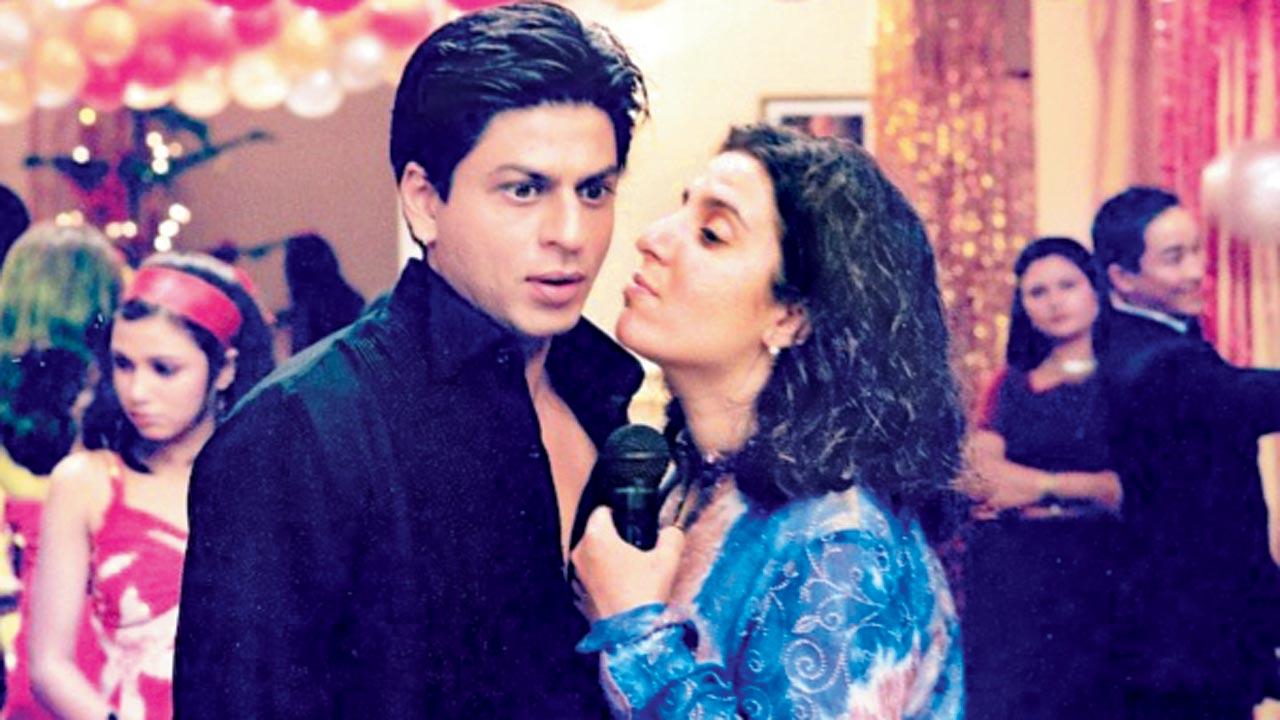
During the making of The Inner World of Shah Rukh Khan, 2004. On the set of Main Hoon Na, with director Farah Khan
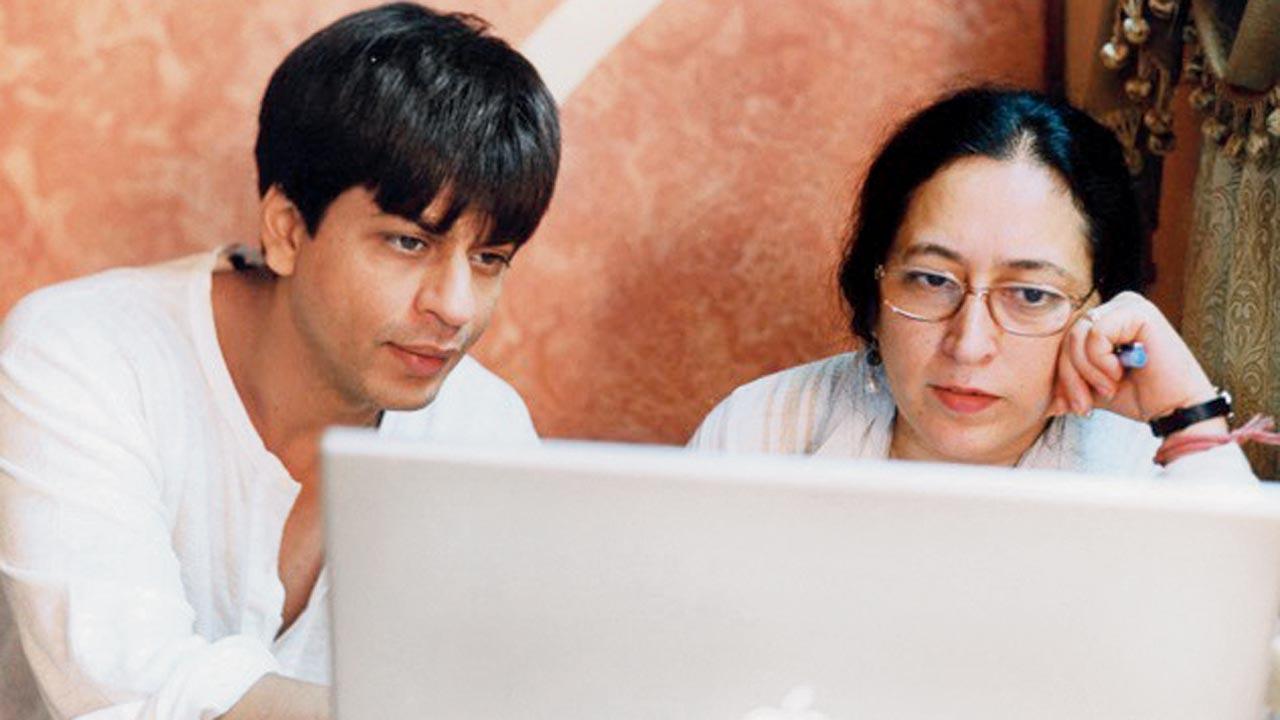
With director Nasreen Munni Kabir. Photographs by Peter Chappell. Pics courtesy/Hyphen Films, UK
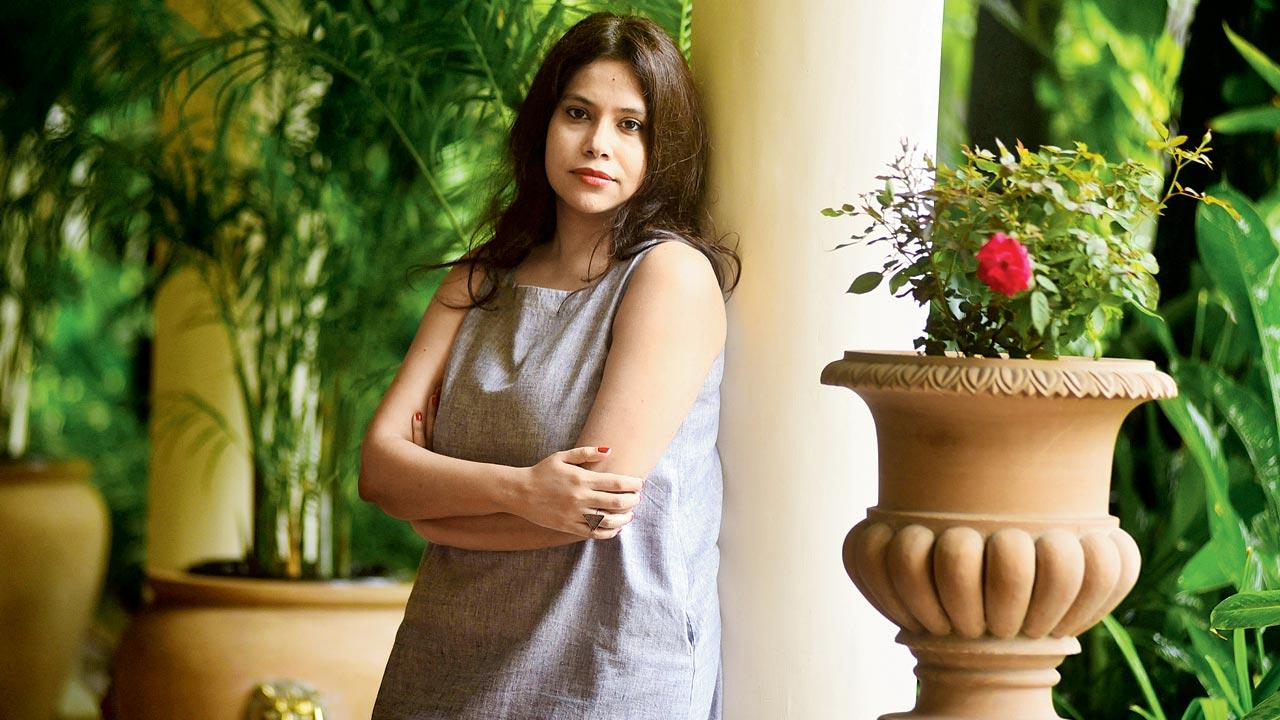
Writer-economist Shrayana Bhattacharya’s book Desperately Seeking Shah Rukh (HarperCollins India) uses the actor as a metaphor to explore the economic circumstances of women in post-liberalisation India. Pic/Shadab Khan
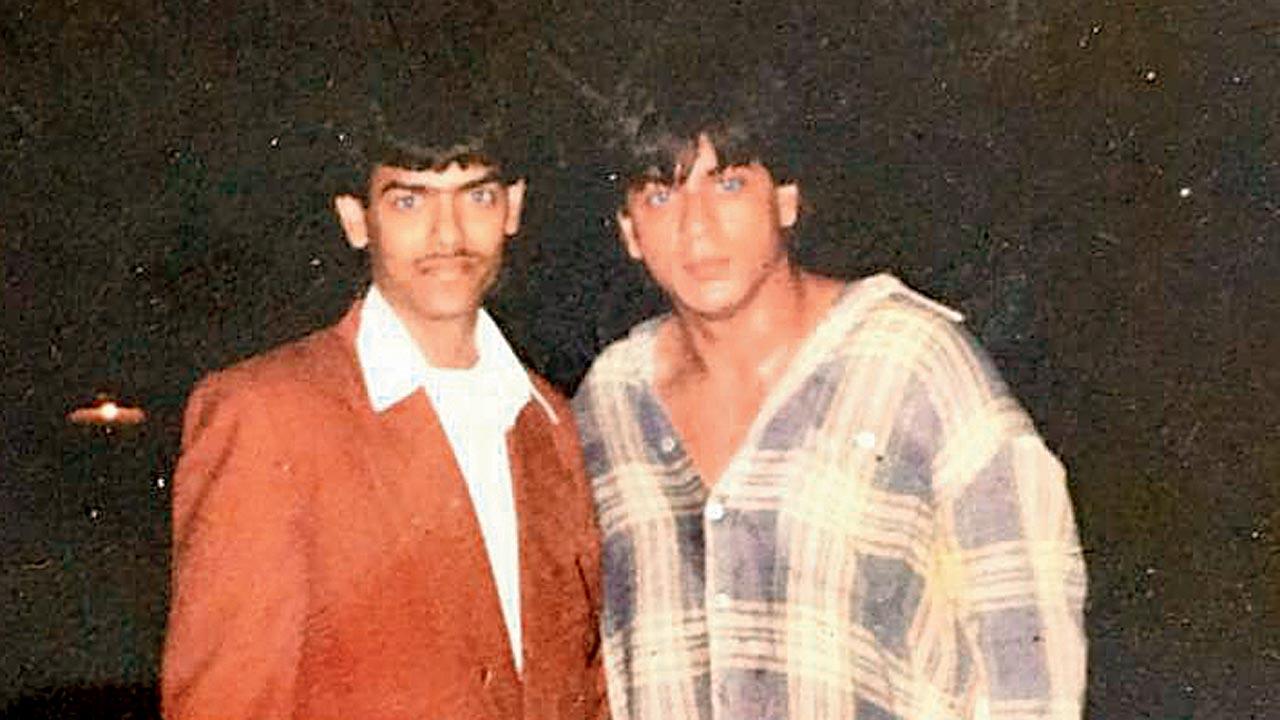
Vishahrukh wants to make a film with the actor so Vishahrukh Singh with Khan during their first meeting in 1996.
Covid claims Bollywood composer Shravan Rathod
7:57 AM

THE TIMES OF INDIA (April 23, 2021)
From Husnlal-Bhagatram to Shankar-Jaikishan, from Kalyanji-Anandji to Laxmikant Pyarelal, Hindi film industry has a rich tradition of musical partnerships. Nadeem-Shravan forged an illustrious link to this abiding chain composing a staggering bunch of chartbusters in the 1990s. On Thursday evening, the alliance was snapped forever as the Coronavirus claimed the life of Shravan Rathod at a Mumbai hospital. He was 66.
Speaking to Bombay Times, Nadeem Saifee said, “My Shanu is no more. We have seen an entire life together. We saw our highs, we saw our lows. We’ve grown up with each other in many ways. We never lost touch and no physical distance could ever separate the two of us. I am in deep pain as I say this but my friend and my companion, my partner of so many years is no more. It has left such a vacuum.”
The pair started off with ‘Dangal’ (1977), the first Bhojpuri film made in colour. ‘Kashi Hile Patna Hile’, a reworked version of the popular folk track, ‘Aarah hile Chhapra hile’, became a sensation. The two graduated to Hindi cinema in the 1980s.
Tuneful melodies for films such as ‘Maine Jeena Seekh Liya Hai’ (1982) got them work but major success eluded them.
The duo hit the jackpot with Mahesh Bhatt-directed ‘Aashiqui’ (1990). Every song in this intense romantic drama, from ‘Dheere dheere se meri zindagi mein ana’ to ‘Bas ik sanam chahiye’—rose to the charts. The film also vaulted Kumar Sanu, who sang a majority of the tracks, to the top. Nadeem-Shravan became a hot property.
The 1990s belonged to them. ‘Saajan’, ‘Deewana’, ‘Dil Hai ke Manta Nahi’, ‘Phool aur Kaante’, ‘Hum Hain Rahi Pyar Ke’, ‘Raja Hindustani’ and ‘Pardes’—they lorded over the decade blending old school melody with modern instrumentation. Songs such as ‘Mera dil bhi kitna pagal hai’ (Saajan) to ‘Pardesi pardesi jaana nahi’ (Raja Hindustani) to ‘Do dil mil rahe hain’ (Pardes) were as popular among the college crowd as the truck drivers on the highway. The pair won the Filmfare award three years in a row, 1991-93, for ‘Aashiqui’, ‘Saajan’ and ‘Deewana’ and again in 1997 for ‘Raja Hindustani’.
It seemed that the two would rule over Bollywood for another decade or two. But things were never the same after Nadeem’s name cropped up in the killing of a music baron and he fled to London. The duo still kept providing scores together in films such as ‘Kasoor’ and ‘Dhadkan’. The two split once, then reunited. This time, sadly, the separation is final.
Wajid Khan didn't get his due-Sonu Nigam
8:43 AM

Sonu Nigam remembers Khan, a talented music composer, friend and a die-hard foodie
Sonu Nigam (MID-DAY; June 2, 2020)
 I have known Wajid for 29 years. When I first came to Mumbai, I would sit outside his studio while he would be inside working with his father. We bonded over our love for music and musical instruments. He used to joke, 'Sonu bhai ka haath harmonium pe dekh ke main hil gaya' because I am quick with the keys.
Our first collaboration was in 1996 when we worked on the remix of Yeh kahan aa gaye hum [Silsila, 1981]. A few years later, T-Series requested me to cut an album. Bhushan [Kumar] sent me some songs composed by Sajid-Wajid, and that is how Deewana was born. The album became a rage, and it has always been precious to the three of us.
I was undoubtedly their favourite singer as we collaborated on several songs. Last year, we worked on a romantic duet for a movie that was eventually postponed. After that, Wajid suddenly fell ill. He had diabetes, and had to undergo a kidney transplant. I would often visit him. One day, he expressed a desire to go out as he had been indoors for long. So, I took him on a drive. Next time, I took him home and we sat on the terrace, sipping chai. He kept on saying, 'Bhaijaan, kitna mazaa aa raha hai. I am stepping out after so long.'
We were like brothers. I would always visit their home during Ramzan. His mother would say, 'Sonu aa raha hai? Let me make haleem.' He was a foodie and would often send me home-cooked khichda. Not many know his [then to-be] wife and he had abruptly called off their wedding, days before the celebration. I played the mediator between them.
In the last few months, his condition worsened. I was in touch with him when he was in the hospital. It was heartbreaking to see that a person who loved music couldn't even speak as a tube was put down [his windpipe]. So, we used to chat over WhatsApp. I texted him on Eid, but he did not reply. Then his wife informed me that he had contracted Coronavirus. In five days, he was gone...
He was immensely talented. Even when they made a mastiwala song like Hud hud dabangg, it was classy. They did legendary work in such a short time. I would say he didn't get his due. Wajid was a sensitive soul who will be missed. Of the songs we worked on, Tumko na bhool payenge was my favourite. I will always remember him by that song.
As told to Upala KBR
Prominent filmmakers and celebrities remember Rishi Kapoor
8:28 AM

MUMBAI MIRROR (May 1, 2020)
He wanted to live and die an actor - Subhash Ghai, Director, Karz and Kaanchi
 For me, he was always Chintu, the hero of my first film as a producer, Karz, in 1980. Thirty-four years later, we did Kaanchi, my last film as a writer, producer and director With the passage of time, I have seen many actors looking old and jaded, but you cast them for the experience and nostalgia they bring to the screen. But Chintu surprised me. He brought to the Kaanchi song, “Thumka” the same zest and zing of Karz’s evergreen chartbuster, “Om Shanti Om”. There were rehearsals galore, 10-12 takes, but his energy never flagged. It spoke of the passion for cinema that he had inherited from his grandfather, Prithviraj Kapoor, a theatre legend, and his father Raj Kapoor, the greatest showman of Indian cinema. Chintu is a case study for future generations of actors on how to keep the magic alive and set the screen on fire, even after four decades.
Acting was in his genes, but he was a director’s actor. His never interfered and was always the obedient student. Also, he never acted, he simply reacted. To begin with, he was the proverbial chocolate box romantic hero. But in his second innings, when he returned after a decade, he was a revelation. He excelled in every role, be it that of the villain or an old man. Much like Amitabh Bachchan, who also came back with a bang.
Chintu was a doston ka dost who valued relationships. He had a lot of respect for my knowledge of cinema and my sense of drama. He’d reprimand me for not having made a film in five years. I had promised him that as soon as I got a script, I would make a film with him and a younger actor. He was excited, telling me he was waiting for the day.
I met him for breakfast in January and berated him for going to work. He replied saying he wanted to live and die an actor. He got his wish. The world will get more actors, but not another Chintu who was a wonderful human being.
—As told to Roshmila Bhattacharya
---------------------------------
Just one week after returning to Mumbai, he was reporting to work, on time - Emraan Hashmi, Co-star, The Body
 It was my lifelong desire to work with Rishi Kapoor because I had grown up watching his films. I got my wish with The Body. We shot on a set in Mumbai for 45-50 days at a stretch, and I learned so much from him. He reinvented himself as an actor over the years and enlivened intense, conversational sequences in the film with his wit and spontaneity. We didn’t think he’d be able to allot dates for the promotions, but a week after returning to Mumbai from New York where he’d been undergoing cancer treatment, he was reporting to work on time.
Before he fell ill, he was asking after my son Ayan, who has beat cancer. It was bizarre because two months later he was diagnosed with cancer himself. When I went to meet him after his return, I thought he’d be frail from all the chemotherapy, but he looked super healthy and raring to go. I’m devastated today.
— As told to Ankita Chaurasia
---------------------------------

Whenever I was hurt, he would come running to check - Jaya Prada, Co-star, Sargam
 Rishi ji may have been a hero for the world but for me, he was always my friend, Chintuji. He was my first Hindi film hero. On the first day of the film, I was both excited and nervous to be standing in front of a huge star who was smiling at me. He came up to talk to me and make me comfortable. He helped me get through long shoots. Since I had to dance barefeet, whenever I was hurt, he’d come running to check. He was fond of dancing and would give me a run for my money.
He was a brave man which is evident from the way he fought cancer. During his treatment in the US, I’d text him, assuring him that he’d be fine. It was a long journey, from Bobby to 102 Not Out. Each character seemed to have been written just for him.
—As told to Akash Bhatnagar
---------------------------------

He was a brilliant actor - Umesh Shukla, Director, All Is Well, 102 Not Out
 He was a brilliant actor and a wonderful person with a great sense of humour. To me, he was like a friend and a brother. He’d say that he was enjoying his second innings as actor, adding, “Ab tak toh sweaters, pullovers pehen ke waadiyon mein gaane gaata tha...”
Rishi ji sought challenging roles and played them brilliantly, like Do Dooni Chaar and Kapoor & Sons. He was interested in new things and was encouraging of younger colleagues, like Jimit Trivedi, the chemist in 102 Not Out. If Jimit sat at some distance alone in between shots, Rishi ji would call him to sit with him and Amit ji. In the first half of the film, Rishi ji’s character is irritated with the chemist. But he helped make Jimit comfortable.
I visited him with writers Saumya Joshi and Abhijat Joshi when he was in New York for treatment. Rishi ji was so zindadil that we felt like patients in front of him. On March 18, I sounded him out on a new subject. He looked forward to resuming work.
—As told to Hiren Kotwani
---------------------------------

I was in college when Bobby released; a year later, it was still playing - David Dhawan, Director, Bol Radha Bol, Eena Meena Deeka, Yaarana, Yeh Hai Jalwa and Chashme Baddoor
 Over the years, he became family. He was moohfat and would initiate a conversation rather than wait for you to start it. He was an endearing man who was passionate about films and food, in particular Chinese.
I was in college when Bobby released in 1973. When I joined FTII the following year, I’d pass the theatre and still see the film playing. My first film in Switzerland, Yaarana, was with him, and he insisted I buy a good watch as Swiss watches were the best.
He was very disciplined and quick to catch a mistake.
After his return from New York, we met him a few times.
—As told to Hiren Kotwani
---------------------------------
He was a Puckish prankster, rulate nahin the, bas chidate the - Poonam Dhillon, Co-star, Yeh Vaada Raha, Amiri Garibi, Tawaif
 During our first film together, he was a big star and I was in awe of him. Once, while shooting a romantic song, he was doing silly things to distract me. You could never get into the ‘mood’ when he was around. He was such an effortless actor, the ultimate hero in romantic roles. People would tell me he was a bully, but for me he was a Puckish prankster, rulate nahin they, bas chidhaate they. His tweets reflected his wit and that he was upfront and outspoken. There was no diplomacy or artifice. He was professional in all his dealings and took his father’s legacy forward.
We can’t go to pay our last respects but we are there in spirit.
—As told to Hiren Kotwani
---------------------------------

He had love in his heart even for his enemies - Paresh Rawal, cast member, Aa Ab Laut Chalen

I could see that he liked modern cinema and discussing new ideas. He was equally passionate about the cinema of yore. His one pet peeve was something he had christened “har jagah coverage”. If a director wanted to take a shot from different angles, Rishi ji would get agitated, arguing that the “spontaneity would be lost”. He also preferred dubbing over sync sound.
There was a certain ease in talking to him; one didn’t have to worry about being manipulated. He had a whacky sense of humour, but he was a seedha, raja person at heart.
—As told to Hiren Kotwani
---------------------------------

Chintuji was one of the reasons Shah Rukh came on board - Guddu Dhanoa, Producer, Deewana
 When we narrated the film to Shah Rukh (Khan), he asked who was playing the lead character. On learning it was Rishi, he exulted, “He is my favourite actor, I’m doing the film.” Chintuji was one of the reasons he came on board.
When we were shooting with Chintuji and Divya (Bharti), in Ooty, in between shots, we’d play cards. We didn’t have enough chairs one day, so Divya sat on the ground. He looked at her and asked “Tumko maloom hai, main tumse kitna bada hoon? Twenty years.” Despite the jokes, the age difference didn’t show on screen as he was so handsome man.
I last spoke to him during the release of his autobiography. .
—As told to Himesh Mankad
A ghazal could be written and composed badly, while there could be an excellent item song-Sonu Nigam
8:11 AM

Debolina Sen (BOMBAY TIMES; January 1, 2019)
Music can create magic when a melodious voice, which has made both film and non-film songs popular in equal parts, is matched to the rhythmic beats of an acclaimed percussionist. At one such recording session between singer Sonu Nigam and composer Bickram Ghosh, the duo share their views on the evolving music scenario. Excerpts...
THE CURRENT MUSIC SCENARIO IN THE COUNTRY
Sonu Nigam: Every art form is a reflection of society and a lot of ‘happening’ music is being churned out these days. People like to dance to music these days and they also like to listen to music while they drink. So, the music made now reflects that mindset. But I’m not the kind of person who is going to be looking down upon any kind of genre. The past was good, the present is good and the days ahead, will also be good for music.
Bickram Ghosh: I’ve been watching the trends closely and there’s a shift happening. It’s still gradual, but there’s a big section of listeners, who are more into high energy music. There’s also another shift, where youngsters are listening to songs not considered ‘regular’ for their age bracket. In fact, Sonu bhai’s Agneepath song Abhi Mujh Mein Kahin is still heard by a lot of people. I remember him saying that Chikni Chameli was touted as the song of the film. Ironically, people have forgotten Chikni Chameli and Abhi Mujh Mein Kahin has become the iconic song of this generation. The return of melody is a positive change that is slowly seeping in.
CHANGES THAT 2019 SHOULD BRING TO THE WORLD OF MUSIC
Sonu: I sincerely hope that independent music should get more leverage. It needs the right kind of patronage. The custodians of independent music should look after it. Film music is great and we all have been a part of it. But we shouldn’t be confined to it. Other genres like ghazal, qawwali, classical, semi-classical and light music should also get a lot of space in independent music and should be promoted well.
Bickram: I second Sonu bhai. When I think of him and his early days, the album, Deewana, comes to mind. I would say it was as big as or even bigger than some of the songs he was then singing for films. That era is slowly coming back. He has done a bunch of songs and I did an album, Phero Mon, which has done really well. We’re working in an untitled album now and hoping it’s going to really appeal to people. It’s essentially capturing the essence of romance in different hues.
ON SONGS CREATED WITH ITEM NUMBERS IN MIND
Sonu: A good song is a good song — it can be an item number or any other genre. There can be a very badly written and composed ghazal as well. And there can be an excellent item song, too. It all depends on the calibre of the musician. Instead of labelling genres, we should appreciate the merit of the artiste.
Bickram: I’m on the same page with him.
RUSH FOR REMIXES
Sonu: You can make as many remixes as possible. But you will have to create some songs for the future generation so that they can remix them as well. So, original songs are still needed (laughs). There’s also a feeling that today’s composers don’t need old voices.
Bickram: The way we have archived old songs is not up to the mark. In the US, one can still find the stems of the original tracks so that they can remix them to the audio quality of the current scenario. Sprucing up here and there is fine but the stem is important. In India, we don’t have that.
PROMISING NEW SINGERS AND MUSICIANS
Sonu: There are a bunch of great singers today. Arijit Singh sings very well and Armaan Malik ka ek gaana aya tha — Bol Do Na Zara — aur main hil gaya tha. Singing well is fine, but expression is the key. I like Javed Ali a lot. Neha Kakkar achha gati hain bahut. I also like Guru Randhawa, Hardy Sandhu and Badshah.
Bickram: There are some amazing instrumentalists like Pratik Shrivastava, who plays brilliant sarod, Abhishek Mallick’s sitar is amazing, young percussionists like Ojas Adhiya and there is a whole generation of singers in the classical genre also.
COMPOSING MUSIC IN BENGALI
Sonu: In the 26 years of my career, I’ve done a lot of work in the Bengali music industry. I would like to collaborate for a Rabindra Sangeet album with people who really know the genre well.
Bickram: Our compositions in Jal (2013), got an Oscar contention — a rare feat in music. One thing we both believe in is class. When you bring dignity to your work, it stands the test of time. Whether it is in Bangla or elsewhere, that’s what’s required. Thankfully, for most Bengali films, people have stopped using stock music now and are allocating bigger budgets, too.
FAVOURITE TRACKS OF RECENT TIMES
Sonu: Heartless by Badshah and Banja Tu Meri Rani by Guru Randhawa are all that I remember now. The film, Paltan, didn’t do too well but the songs were crazy good.
Bickram: Kulfi by Sonu Nigam.
ON THE NEED FOR A CLASSICAL BASE FOR SINGERS
Sonu: There’s no need. Depends on the genre you want to sing in, what your core talent is and how intelligently you use it. But even if you are a rapper, you should have overall knowledge of production, sound engineering, playing an instrument and so on. There are also many in the industry who never thought they will become a singer but they are doing well.
Bickram: Itna toh riyaaz karhi lo ke aap se important auto tuner na ho jaye. It’s during live shows that people get to know your worth as a musician.
I couldn’t recollect Shah Rukh Khan's face till he entered a restaurant at Connaught Place-Guddu Dhanoa
8:14 AM

Roshmila Bhattacharya (MUMBAI MIRROR; June 28, 2018)
 On Sunday, Shah Rukh Khan revealed that the following day would be
exactly half a lifetime of being ‘others’. “Of expressing love,
happiness, sadness, dancing, falling and flying...” The tweet ended with
the hope that he had touched small bits of our hearts and would
continue to do so through his lifetime, rhapsodising, “Roshni meri bahot
door tak jayegi, par shart yeh hai ki saleeke se jalao mujhko.” His
first mainstream film, Deewana, opened on June 25, 1992 and kickstarted
his star trek. But producer Guddu Dhanoa reveals that SRK stepped in to
play Raja, who woos and weds a widowed Kaajal (Divya Bharti) with her
mother-in-law’s blessings only after Armaan Kohli’s exit. “Armaan had
differences with Shabnam Kapoor on another film, Insaaf Ki Devi.
Shabnam’s husband Sweety (Lalit Kapoor) and Raju Kothari were
co-producing Deewana with me and his dad, Rajkumar Kohli, called to say Armaan would either do both films or neither,” Guddu reminisces.
On Sunday, Shah Rukh Khan revealed that the following day would be
exactly half a lifetime of being ‘others’. “Of expressing love,
happiness, sadness, dancing, falling and flying...” The tweet ended with
the hope that he had touched small bits of our hearts and would
continue to do so through his lifetime, rhapsodising, “Roshni meri bahot
door tak jayegi, par shart yeh hai ki saleeke se jalao mujhko.” His
first mainstream film, Deewana, opened on June 25, 1992 and kickstarted
his star trek. But producer Guddu Dhanoa reveals that SRK stepped in to
play Raja, who woos and weds a widowed Kaajal (Divya Bharti) with her
mother-in-law’s blessings only after Armaan Kohli’s exit. “Armaan had
differences with Shabnam Kapoor on another film, Insaaf Ki Devi.
Shabnam’s husband Sweety (Lalit Kapoor) and Raju Kothari were
co-producing Deewana with me and his dad, Rajkumar Kohli, called to say Armaan would either do both films or neither,” Guddu reminisces.
The maker was simultaneously working on the prep of Bobby Deol’s debut and Dharmendra, his first cousin, had deputed him to coordinate with Champion’s scriptwriter Javed Akhtar and director Shekhar Kapur. En route to Chennai to see the special effects of Mani Ratnam’s Anjali, Guddu confided to Shekhar that he’d lost his ‘hero’, who instantly recommended Shah Rukh Khan who’d impressed in his TV shows, Fauji and Circus. “I couldn’t recollect his face till he entered a restaurant at Connaught Place and then, knew instantly that he was my Raja,” narrates Guddu.
SRK, juggling five films — Raju Ban Gaya Gentleman, King Uncle, Chamatkar, Kabhi Haan Kabhi Naa and Dil Aashna Hai — had no dates but agreed to a narration at his home the next day. After a barren first half, when Raja is nowhere in the picture, he suggested they break for lunch. “When we resumed, the story grabbed his interest and at the end of the narration, he told me, ‘Guddu, I’m doing your film. But I can shoot only if another maker cancels his dates. I paid him a signing amount of Rs 11,000 and returned,” says Guddu.
After a month, he got a call from the actor whose Raju Ban Gaya Gentleman schedule had got cancelled. He had 20 days off. ‘When can you shoot?” he asked and Guddu replied, “Tomorrow.” They started a day later, and the film he had no dates for, was the first to release.
“God up there writes our screenplays, we are just actors playing out roles,” philosophises Guddu, remembering how they’d take the ferry to Madh Island for the shoot at Poonawala bungalow. “One day, I told him some industry people were saying Shah Rukh was a good actor but didn’t look good in songs. He shot back, saying, ‘Meri filmein chalin toh main rahunga, else I’ll return home to Delhi.’ After a beat, he added, ‘Par main chaloonga.’ I liked his confidence,” Guddu smiles at the memory.
He himself was confident of Deewana working after the music, released a month before the film, topped the charts. “Aisi Deewangi” was playing in cabs and hotels while we were shooting in Shimla. It was the first song to be recorded. “Payaliya”, “Teri Umeed Tera Intezaar”, “Sochenge Tumhe Pyaar” and “Koi Na Koi Chahiye” were equally popular. Sameer bagged the Filmfare Award for Best Lyricist (“Teri Umeed”), Best Male Playback went to Kumar Sanu for “Sochenge Tumhe” and Nadeem–Shravan were Best Music Directors.
“I came across Nadeem-Shravan when scouting for a heroine for Bobby in Champion. I’d picked up a reel of Dil Hai Ke Manta Nahin so we could take a look at Pooja Bhatt. Everyone ended up loving the title track and Nadeem-Shravan were signed. It’s another thing that Champion never got made and their compositions were used in Barsaat with which Bobby eventually made a beginning. While ferrying them for music sittings at Sunny Super Sound, I told them about my film, and they agreed to score for it too,” he says.
After the film was complete, Guddu had some sleepless nights following rumours that SRK wouldn’t dub for Deewana as the makers of his solo release wanted to come out first. But he assured them the film that was done wouldn’t be stopped and kept his word. “Manmohan Desai who’d taken the Delhi–UP territories for distribution had a problem with Kaajal staying with Raja at the end and insisted she returns to her first husband, Ravi. Since he was an experienced maker while we were newcomers, many suggested we listen to him. But we refused and listened to our hearts and our love story had a happy ending,” says Guddu who ended a two-year dry spell with the film.
I won’t lie. I host very well. In fact, I should get an 'honesty award' at Filmfare-Shah Rukh Khan
8:04 AM

Shah Rukh Khan sets the tone for his upcoming stint as the host of the upcoming 63rd Jio Filmfare Awards 2018 on January 20
Sanyukta Iyer (MUMBAI MIRROR; December 28, 2017)
Even before the year wraps up, Shah Rukh Khan seems to have put a resolution in action. The 52-year-old actor recently confided that of late, everyone around him is surprised to have him show up to work commitments bang on time as opposed to the usual four-hour-late regime he’s famous for. Almost always the last one to arrive on red carpets and perennially late to film sets, SRK recently showed up on the dot on the sets of Aanand L Rai’s upcoming drama, in which he plays a dwarf. When he arrived at the call time of 12 pm, the crew was still setting up, so he parked himself in a corner. When Rai walked in at 1:30 pm, he was surprised to see his leading hero. SRK also joked that he’s partly doing it to see the shocked expression on everyone’s face. “I’m enjoying being on time,” he laughed.
On January 20, the actor is set to host the 63rd Jio Filmfare Awards 2018. At the launch of the event at a Bandra five-star on Tuesday, the actor cheekily explained why he most certainly is the best compere in showbiz. “See, I won’t lie. I host very well,” he began. “In fact, I should get an 'honesty award' at Filmfare. Someone should recommend this category to be included. I am impromptu, handsome, humorous. I speak English and Hindi well. I am not demeaning anyone but honestly yaar, aaaaah… there’s no better host than me!” he chuckled.
Shah Rukh went on to sing “Tum Jiyo Hazaaron Saal” for Salman Khan’s 52nd birthday, and said that he’s not going to the actor’s Panvel farmhouse for the night of celebrations because he’s eager to spend the holidays with his children — Aaryan and Suhana, both of whom are in town for the holidays.
Going on to speak about the long-standing history of the awards, SRK continued, “When I was growing up in Delhi, I used to watch Filmfare in bits and pieces on Doordarshan and I had this desire ever since — of being at a place where people would shower me with love. The feeling of watching the stars receive the Black Lady was overwhelming and enticing and I hoped to be there some day. As the years have gone by my desire has still remained the same and now, I’ve been at the awards for almost 25 years,” he smiled, adding that there was a moment in one of his recent releases, Fan, that was inspired by his loss in 1992, where he was expecting to win the Filmfare Debut Award for Deewana but lost out to Ajay Devgn for his performance in Phool Aur Kaante. But he went on to win 14 Filmfares including the Best Actor for Dilwale Dulhaniya Leh Jayenge, Dil Toh Pagal Hai, Kuch Kuch Hota Hai, Swades, Chak De India and My Name is Khan. “Every time I win an award I feel the essence — the love of my parents, who can see that moment from heaven. So when someone else wins, I believe it’s their parents who are watching and showering their blessings,” Shah Rukh reasoned.
The awards, which will take place at the NSCI Dome in Worli and air on Colors, will also see other hosts for certain segments, details of which are yet to be finalised.
Last year, the introduction of the Filmfare Short Film Awards segment was lauded with Tisca Chopra winning the Best Actress trophy for the delightfully dark Chutney and Manoj Bajpayee for Tandav in the Best Actors in the Short Film category.
Khamakha, Chutney and Matitali Kusti won Best Films in People’s Choice, Fiction and Non-Fiction categories respectively. Now, the awards show is scheduled to continue the special segment for short films this year.
We both faced this uprootedness together-Shah Rukh Khan's most candid interview on wife Gauri Khan
7:48 AM

Shah Rukh Khan on completing 25 years in the industry with wife Gauri by his side
Nayandeep Rakshit (DNA; July 14, 2017)
Shah Rukh Khan has completed 25 years in the film industry. His debut movie, Deewana, released in 1992. The actor also celebrated his 25th wedding anniversary last year. It’s half a lifetime of togetherness with films and wife Gauri. SRK recalls, “I shifted to Mumbai the day I got married.” The couple spent their wedding night on a film set! From that to accepting the nature of his job to the constant spotlight on her, Gauri has been with him through the ups and downs. In this candid conversation, SRK reminisces about his last two-and-a-half decades at work and at home. Read on...
Twenty five years spent acting. What stands out?
One thing that stands out for me is that these 25-26 years happened very fast, yaar. It feels like I’ve been in Mumbai only for about two-three years. It does not seem like 25 years. I think I got stuck in time. When you see your children all grown up... It’s very shocking, but I really feel like I have been here for a very little time. When people question the fact that I am doing the same thing — I feel odd. I am working with young actresses so I am also young (laughs). On Twitter, people were putting out posters of all my films from the last 25 years. I don’t even know how many films I have done. There is a strange sense that so much time has passed, so fast. I feel like it was yesterday.
Have you finally watched your first film, Deewana?
I haven’t seen the film even today. Not out of ego, but I watch new films (smiles). Just after Deewana, I was in Mehboob studios shooting for King Uncle and Rakeshji (Roshan) told me, ‘You have become a big star’. I was passing by Salman’s house and Salim Uncle told me, ‘Your film has worked, you will become a star’. I came home and told Gauri the film has worked and she just said, ‘It’s good’. Now you get to know the box-office numbers even before the release of the film.
You don’t take criticism seriously...
(Cuts in) I don’t take the praise seriously either. When people call me the coolest, I don’t believe it. You have to disregard criticism, too.
Do you remember the first time you read something horrible about you?
There was a journalist who said that I was pathetic in Raju Ban Gaya Gentleman. But I’ve had worse before and after that too. And it will continue to be so. It’s not important what people think of you, what’s more important is what you think of yourself. And not in terms, ‘Oh, I’m great’. But if you know your grain and your bone, it doesn’t matter. I have written it in my book. That you bury your bone, take it out, gnaw at it and then keep it back again, it’s your bone. So, if you know what stuff you’re made of, how does it matter what others say? Having said that, if I’ve lost a race, I would like to win it back. Not because you criticised me for losing the last race — and it’s also not because you are praising me for running it again — but it’s because I want to do it. I want to do sh*t because I tell myself to. I’m not doing it to show anyone. I don’t think Usain Bolt has won 100 gold medals because his neighbour told him that he doesn’t run fast enough. Maybe he lost a race when he was young and he wanted to win a race. And he has not stopped winning races.
Gauri has been in this race with you. You spent your wedding night on a film set. Was she really okay with it?
Moving to Mumbai was a radical change for us. Not only for her, for me too. Not for any other reason but because we were uprooted from the city that we were born and brought up in and suddenly put into a new world — that was so different from anything real. I think Gauri and I, both, dealt with it. There were days where I would be explaining to her things that I didn’t understand. There were days when she would stand by me and say, ‘Okay, this is how it’s gonna be. Let’s make the best of it’. But I think within the first two-three years, the fact that we both faced this uprootedness together, in a world we didn’t belong to, kind of got us to understand what space we are going to live our lives through. Because somewhere deep down inside, we all want life to be nice and happy. And for as long as possible. Realistically speaking, we didn’t think I’ll become such a big star because we didn’t know the magnitude of stardom that can be achieved here.
Are you and Gauri happy and content with how life turned out to be?
Just recently, when we (Gauri and he) were sitting and chatting with our children next to us, it seemed like a dream. We both genuinely believe that we had been living a dream for 25-26 years. I was married the day I came here and it’s been a good dream. A lovely dream, which we are happy about. Also, my kids have been brought up in a space where they accept the fact that my life belongs to the world. I think my wife and my sister too believe that. But there’s a private part of me, which the world doesn’t know at all. They enjoy that part. They have taken that part to heart. They feel, that ‘okay, this part is totally ours and to be honest, they aren’t involved with the other part of my life at all. They are like, ‘You are happy doing it. So do it’. They keep asking about my well-being, they become a little concerned when I’m on an outdoor for 40 days, missing home and AbRam. So he will be sent there. They take care of me publicly. Privately, what belongs to them, they know I don’t share that with anyone else.
When you both moved to Mumbai, did Gauri lay any conditions for you?
No, there were no conditions at all. I told her that we’ll take it year by year. I will do films and see where we head from there. We didn’t even know what a hit or flop film was, actually. Then I worked and we started looking for a house. Then, we collectively bought a house and one thing just led to another. We haven’t just stopped rolling. It feels like we are rolling down a hill inside a zorb. And it’s been a great time — sometimes, it’s overwhelming, sometimes it’s scary and even bumpy and strange. Our life’s been like that. You get out of it and you might say I’ll never do it, but you do it again. (Smiles) It’s like a skydiving kind of a trip. But it’s been a good dream overall.
How does your family react to your films? Your favourite film is Kabhi Haa Kabhi Naa. What’s theirs?
They know me well, so they know that most of the stuff that I do on screen is most unlike me. So, my family doesn’t have any adherence to that. They aren’t like ‘Wow’. Of course, if I do a good film, which they have liked me in, they will come and say something sweet. But the maximum my kids or my wife have told me, in terms of praises for my films, is ‘You look good in that film’. It doesn’t mean physically. I have never had a bigger praise than that. Neither have I expected. If they say something else, I will know they don’t mean it! (Laughs)
If you had to list down the best memories or moments of your life, which ones would you pick?
Each one has been different, but can be counted as one — the birth of my three children. Each had a different story to it. At different stages of my life. So, those have been really special. Like before Aryan, there were some miscarriages but then when he was born, a couple of days were difficult. Suhana was a girl so that was exciting, as Gauri and I, both of us always wanted a girl first. But it happened second. Gauri was very keen that the kids look like me. First thing she asked me after her delivery was, ‘Does she look like you?’. And Suhana had a dimple so yeah of course, she looked like me. That was interesting. Then much later in life, we started feeling there was a space for a third child so AbRam came. They have been high points of my life for sure. In my career, I would call Dilwale Dulhania Le Jayenge and Kuch Kuch Hota Hai the biggest highs and most memorable films. Because it was with a set of friends. Karan, Adi and me — we were very close even then. I remember the first day we saw DDLJ, it was Gauri’s birthday. We had this great party at Mannat, that too when we had not taken over the house. We had no electricity in the house, so Karan and Adi put up candles. That was sweet. So all those bits and pieces are nice moments. Physically, I think Madame Tussauds was nice. There have also been some personal ones at home. Sometimes, even sitting and chatting with kids too can be beautiful. When we get to know they are grown-ups, their problems, their happinesses. I think there’s a nice event everyday at home when we all are together.
You had a rather humble upbringing but your kids have everything....
(cuts in) No, not at all. My children have been brought up very humbly. I know most of the people don’t get to spend time with my children and they should not. It’s not their world. But my kids have no different upbringing than what I had. Upbringing is not the house you live in. My upbringing was beautiful, in spite of living in a house that was the size of a matchbox. My kids’ upbringing is as beautiful despite the fact that they live in a house which is as big as Taj Mahal. We (my sister and I) had a hugely poverty-stricken upbringing, but it never affected us. The house doesn’t matter, the riches don’t count. Upbringing has got to do a lot with how your parents emote with you, say things to you and your relationship with them. It has nothing to do with the situations and circumstances or well being or not well being.
Your autobiography was titled 20 Years A Decade. Will you change the title now that it’s over 25 years?
Just like Jab Harry Met Sejal, the title will be the last thing to come. (Laughs) Let me just finish the damned thing first. It’s been 25 years now, so my book is 15 years overdue. Actually, maybe the book should never be complete. Till good things keep happening to me, I will keep including and adding them to the book. So, I hope this book never ends. And I keep writing it so that good things happen to me. Having said that, there will come a time when somebody will tell me to end it. And I will end it.
Fifty Shades Of Khan Trio: May they stay forever young
8:59 AM

This year, the three men who defined our dreams turn fifty. Will the Khans continue to blaze like supernovas without an expiry date or will age wither their myth?
Anupama Chopra (THE TIMES OF INDIA; February 22, 2015)
 My generation lacks a label. In India, there
isn't a sexy, generalizing, all-encompassing name
for those of us who were born in the 1960s. Those
who grew up on Amitabh Bachchan, Chitrahaar, Thums Up, Karen Lunel
Liril ads and Studio 29. We haven't been properly defined like Baby
Boomers or Generation X or Millenials. So here's my humble suggestion:
Khanists.
My generation lacks a label. In India, there
isn't a sexy, generalizing, all-encompassing name
for those of us who were born in the 1960s. Those
who grew up on Amitabh Bachchan, Chitrahaar, Thums Up, Karen Lunel
Liril ads and Studio 29. We haven't been properly defined like Baby
Boomers or Generation X or Millenials. So here's my humble suggestion:
Khanists.It's a bit awkward, I know. And perhaps even misleading. After all the generations most influenced by the Khans - Aamir, Salman and Shah Rukh - are those that came of age in the 1990s and after. But we are the same generation as them. Once, we were all ordinary people growing up in ordinary times. And then the universe shifted. With the opening up of the economy, the arrival of American television and eventually, the entry of the internet, life as we knew it, became extinct. It was a brave new world. And three men from our generation came to embody the fantasies of 1.2 billion people and shape the narrative of India.
This year, the Khans will turn 50. Aamir on March 14. Shah Rukh on November 2 and finally Salman on December 27. We have loved these men now for more than 25 years. Aamir hit screens first - he was the angry hostel boy Madan Sharma in Holi in 1984. But he entered our hearts only four years later with Qayamat Se Qayamat Tak. The same year, a painfully skinny and decidedly awkward Salman appeared in Biwi Ho To Aisi. He barely registered. But one year later, with Maine Pyar Kiya, he hit the A-list. Shah Rukh came last and made the biggest first impression - the minute the audience saw him driving down on a motorcycle on Mumbai's Marine Drive in Deewana in 1992, they were sold.
In 23 years, Shah Rukh has had 59 releases. In 27 years, Salman has had 74 releases. In 31 years, Aamir has done 40 films. And here are a few more numbers to chew on - Shah Rukh's first three films did a total India theatrical business of approximately Rs 13 crore. His last three films crossed Rs 550 crore. Salman's first three films made a little over Rs 20 crore. His last three films touched Rs 522 crore. Holi was so small that no box office figures are available. QSQT made about Rs 5 crore. Aamir's last film PK crossed Rs 330 crore.
For more than two decades, the three have strode Bollywood like a colossus. They have set the parameters of mainstream Hindi cinema - both in terms of business and art. They have defined the tastes of millions of viewers around the world. They have been global ambassadors for Brand Bollywood, seducing audiences in non-traditional markets such as China, Germany and Peru. In 2002, Aamir even took Bollywood to the Oscars with Lagaan: Once Upon a Time in India.
I sometimes wonder why we have loved them so passionately for so long. The actresses they started out with haven't exhibited the same staying power. Many of the filmmakers who helped create their success are fighting to stay relevant. In fact many of those early successes - Shah Rukh's Baazigar or Aamir's Raja Hindustani or Salman's Saajan - seem horribly dated now (revisit the Baazigar climax for a master class in hamming). But the three continue to blaze like super novas without an expiry date.
My thesis is that each one satisfies a different hunger. Each fulfills a longing but also offers a unique fantasy. Each one, in a different way, allows us to believe in a better tomorrow. Aamir is our moral center and collective conscience. He has certitude and righteousness, which can sometimes be extreme - witness his stand on the AIB controversy. Aamir stands for quality, commitment and a certain gravitas. We want to listen to him, whether he is asking us to question our core religious beliefs in PK. Or bringing to our attention the many injustices that erode our country, from female foeticide to rape - season one of Satyamev Jayate was watched by 51 crore Indians in seven languages. The show collected more than Rs 35 crore in donations for the NGOs featured in it. To paraphrase a line that Jack Nicholson so beautifully threw at Helen Hunt in As Good As It Gets: Aamir makes us want to be better men.
Salman is our idea of a life lived supersized and without fear or regrets. Among the three, he has exhibited the least interest in crafting a career. Especially in the past, his choices have seemed arbitrary - shoddy films done for family and friends. He has also resolutely refused to be taken seriously as an actor. He once laughingly told me that his close friend, filmmaker Sajid Nadiadwala likes to say that 'you can catch Salman for anything but you can't catch him acting.' When I asked in an interview why he insisted on playing himself in each film, he answered with a question: Why? Do you have a problem with my personality? Salman functions as a one-man franchise, giving us comfort instead of art. There are no sub-texts in his films. He takes his shirt off and beats the bad guys to pulp. And we sit in the theater, content in the knowledge, that at least onscreen, he will fix everything.
Shah Rukh hasn't been big on craft either. I first interviewed him in 1995 on the sets of Ram Jaane. Even then, the clarity and cockiness was in place. He said: 'Style is prime. I don't believe in acting that doesn't have style. I'm not into becoming the character. I will always be Khan playing the beggar or goonda or villager.' Shah Rukh went on to become, not a great actor but a great movie star. We kept going back to him for the same blend of highbeam charm, wit, urbanity and swooning romance. Each time, he spread his arms out in that signature pose, we gasped with delight as though we were seeing it for the first time. He felt like he belonged to us. He was never a star on a pedestal. He was simply the most charismatic member of our family.
These men have defined our dreams. Their stratospheric stardom has both enlarged and stunted our cinema. Will age wither their myth? Will custom stale their infinite variety? What, I wonder, is their second act? As a film critic, I have often railed against their movies but as a Bollywood lover, I cannot imagine my cinema without them. Despite their many omissions and remissions, I continue to drink the Khan Kool-Aid.
I hope that in their 50th year, they continue to soar and shape Hindi films. I hope that they use their might to reinvent and reenergize our imaginations. I hope they touch our lives in new, unexpected ways.
As Bob Dylan so memorably put it: May you stay forever young.
We used to be shy but Salman bhai has made us so free - Sajid-Wajid
7:57 AM

Sajid-Wajid, one of Bollywood’s most prolific composer-duos give us a glimpse into their music-making process and tell us what has driven their pursuit of excellence over the years
Bryan Durham (DNA; January 24, 2015)
With Tevar and Dolly Ki Doli in quick succession and a
strong showing in 2014, composer-duo Sajid-Wajid are at the top of
their game. Known for their strong melodies and hit tracks in every film
they take on, they’ve become a force to be reckoned with. The sons of
Ustad Sharafat Ali Khan have come a long way since their breakthrough
with Pyaar Kiya Toh Darna Kya in 1998 and have worked for the best and
biggest films in Bollywood, of course with varying degrees of success,
but mostly successful nevertheless. One thing has remained constant.
Sajid’s technical prowess and Wajid’s larger-than-life love for every
creation of his and his photographic memory of tunes and lyrics and
people he encounters. That and their love and respect for Salman Khan.
They had their ups and downs, but have the distinction of being part of a
very small club — of composers who fly solo on soundtracks — at least
most of the time. The brothers are inseparable and that bond shows all
too well in the music they compose. We met one evening and chatted
nineteen to the dozen about their journey so far...
Is it okay to tell you that I enjoyed Dolly Ki Doli’s music more than Tevar’s?
Sajid: It happens. Each soundtrack has to be different. Also, you also have to consider that a director’s vision is involved and consider how that works in a collaboration.
Wajid: And people like what they want. Despite releasing this close to each other, it helps that none of the songs sound the same. And that both albums have worked. That says a lot.
When voice casting, how do you reach a balance between using established and new singers?
Wajid: I believe the song chooses the singer. Nobody could’ve sung Phatte Tak Nachna like Sunidhi or Fashion Khatam like Mamta or Superman like I did (laughs).
You’ve had a great run over the last few years...
Sajid: Yes, 2014 went quite well — we had Jai Ho, Main Tera Hero, Heropanti, Daawat-E-Ishq and this year, Tevar and Dolly Ki Doli!
More often than not, Mika and Mamta Sharma feature in almost every other album of yours
Wajid: Really? I don’t know. (shrugs). When you speak of item numbers you need to have a voice. And Mamta is fantastic for character singing. Her voice texture is brilliant. She goes perfect inside that pocket, if you know what I mean. She just sits there... the way she learns the song and she's very raw, those little nuances she adds to a song, a trained singer cannot. And Mika has that alag andaz to his singing.
How do you choose your lyricists?
Wajid: Whoever gives me the best line (laughs). Of late, we’ve been working with Kausar Munir a lot, but here’s the thing. We work as a team. Danish Sabri, who’s my cousin as well as my assistant, has written some of the lyrics on the latest albums and I credit him for his contributions. But I give Kausar credit. She’s a senior writer who also appreciates something somebody else has written and is willing to share credits where it demands. Most lyricists are not open to doing that.
You’ve also worked with Kumaar...
Wajid: Yes, he’s written Mere Naina Kaafir Ho Gaye (from the DKD soundtrack) and is very happy. He writes hit songs for most films but never something like this for anyone. This one was exceptionally good.
Each soundtrack now sounds like a bazaar.. a cacophony of sounds with multiple composers on an album
Wajid: I’m not happy with this thing going on. it’s not fair to anybody (shrugs).
Sajid: At the same time, it’s fair also. you can’t even say if its fair to them or not fair to them, because jo struggle kar raha hai, usse ek gaana mil jaaye toh woh bahut badi baat hai. It all depends on whether you want to be a one-song wonder or a versatile music director.
Do you think it’s a passing phase?
Wajid: We really don’t know. We can only speak for ourselves when we say we’ve really worked hard to get to where we are. We work extra hard to ensure that all our songs are hits.
There are times directors/producers go in for an extra composer at the last minute...
Wajid: How much difference does it make to a film? Most often, these are promotional tracks and has a short shelf life. It happens with a lot of films.
What keeps you motivated enough album after album?
Sajid: Our love for music and our upbringing.
Wajid: We lost our father, Ustad Sharafat Ali Khan last year. He was a passionate musician who taught us that you don’t have to compete with anyone else but yourself. We work extra hard to make sure we live up to his name.
In the days of OP Nayyar and R D Burman, composers were kings, then singers became the superstars. I believe the age of composers (rather composer-singers) is upon us. Your take?
Sajid: Composers have come back in a big way.
Wajid: For me, it always was the composer who was the rockstar. Being a composer-singer is always a bonus. If you can sing your compositions, very good. I’ve seen new composers struggle to get a foothold but new singers manage with gigs. No such luck for struggling composers .Woh daldal hi hai. Either he has to sink in or get out of it. He has no other choice. It is very important to understand that. Everyone is equal. Bas koshish mein kami nahi honi chahiye.
How do you divide the work among yourselves?
Wajid: Sajid bhai always tells me if a song isn’t working. He’s got a fantastic ear. And he comes up with fabulous one-liners. He likes to compose that much and jokes, ‘Aage ka kaam tera hai’.
Sajid: But seriously, to make it simple we give the other his space.
Wajid: I do more compositions while he looks after the arrangement and how it sounds. But he’s the elder brother, so he takes the cake. He takes advantage of that.
Wajid, do you seek out his opinion?
He respects it when I do. I should be clear to counter him if needed. We do have disagreements at work because at the end we want what’s best for the film. We welcome our technicians as well to to voice their opinions openly. We foster that kind of culture at the workplace. We’re more like best friends than music directors.
I remember reading somewhere that Salman Khan said at a children’s event that he wished that you two were here because they’d keep the kids more entertained. What does he know that we don’t?
Wajid: One thing we’ve learnt from him is to exude that energy impromptu. We used to be shy, but he’s made us so free that now if he asks us to do something, we readily agree. We’re like kids who forgot to live and are getting a chance to relive our childhood by being kids around kids.
It’s a lesser known fact that you were the composers of Sonu Nigam’s Deewana album...
Wajid: What most people don’t know is that the album was prepared even before Sonu Nigam could come on board. He joined the project after all the compositions were created. His involvement began with later albums. Back then, to have an album on that level where the composer could call the shots musically — we were first-time composers then — was a big deal. At the time, only Daler Mehndi worked and everybody advised us to compose Punjabi numbers. I told them ‘I’ll do what my heart feels.’
Sajid: I said the same thing. We made that album, it broke records and made history. Since then, our formula has remained the same, eight songs toh eight songs hit, five songs toh five songs hit. The D-factor has worked for Sajid-Wajid, right from Deewana to Dolly Ki Doli!
What makes either of you incomplete without the other?
This rishta is made by Allah, it is not of this world. It will last us beyond forever. What stronger bond than that? We’re bound by blood, what can come between us? Those that don’t share that strong a bond can be separated by the smallest of things. In my opinion, it is all about upbringing. There exist differences between siblings, but they shouldn’t be that great that it separates you. That’s common between us as brothers. There are three of us — Sajid, Wajid and Javed. We’re a really close-knit family.
Bickram's soul resides in Kolkata; we bring the best of both the worlds-Sonu Nigam
8:18 AM
Sonu Nigam and Bickram Ghosh share a great friendship and now, the
singer and the percussionist have a new Hindi album coming up. Deepali
Dhingra chats with the duo and realises that they are a barrel of laughs
Deepali Dhingra (MID-DAY; December 14, 2014)
 We're at Sonu Nigam’s house in Seven Bungalows, Andheri, where
percussionist Bickram Ghosh is regaling me with behind-the-scene stories
of the making of their album The Music Room, an album that’s as much
mainstream, as it is experimental. Talking about how Nigam would prod
him to give him beat structures he’s unfamiliar with, Ghosh says, “We
have composed songs which are in three-and-a-half beats or four-and-a- half beats, which is very rare.” This would, in turn, make Nigam’s
job of writing the lyrics even more challenging. “But you should listen
to the lyrics he’s written. They will blow your mind,” the musician
from Kolkata tells us.
We're at Sonu Nigam’s house in Seven Bungalows, Andheri, where
percussionist Bickram Ghosh is regaling me with behind-the-scene stories
of the making of their album The Music Room, an album that’s as much
mainstream, as it is experimental. Talking about how Nigam would prod
him to give him beat structures he’s unfamiliar with, Ghosh says, “We
have composed songs which are in three-and-a-half beats or four-and-a- half beats, which is very rare.” This would, in turn, make Nigam’s
job of writing the lyrics even more challenging. “But you should listen
to the lyrics he’s written. They will blow your mind,” the musician
from Kolkata tells us.
I remark that the two must have pushed each other’s boundaries, to which a deadpan Nigam says, “Push... pa!”, a la Rajesh Khanna in Kati Patang and Ghosh almost spills his tea as he guffaws aloud at the former’s comic timing.
Open ground
It is probably this ability to switch off from work-related talk and delve into mundane matters, which helped the percussionist and the Mumbai-based singer form a bond. “A common friend from a music label introduced us. She insisted that we work together because we’re a lot like each other in terms of temperament,” Nigam says.
Prod him further and he explains, “In this industry, we come across a lot of people who speak in cliches. So if you’re from the classical background, it will be ‘Wah janaab, kamaal kar diya’ and if you’re from Bollywood, it will be ‘Sir main hoon na, sir’. It’s hard to come across someone who is free from the cliches of this industry.” Ghosh agrees. “People tend to become prototypes and we have consciously stayed away from that. Sonu and I met each other on a very open ground. We chatted about our philosophies of life for almost three or four hours before we got down to doing some actual work,” he chuckles.
Adding layers
The two might have enough stories to share with each other, but it’s amazing how much work they can get done when it really matters. “All the seven songs in the album are the outcome of just one sitting,” Ghosh reveals, while Nigam adds that each time they met after that was only to layer those original seven songs further.
The fact that they live in two different cities could have been a disadvantage, but the duo prefers to see it as a blessing in disguise. “His soul resides in Kolkata, while I live here in Mumbai. Maybe that’s good, as we bring in the best of both worlds,” says Nigam.
Work on the album began in 2010, so I wonder aloud why it took nearly five years for The Music Room to release. “We have been busy with composing music for movies, too. After Jal and Sooper Se Ooper, we composed music for two upcoming movies, Happy Anniversary and the title song of Chauki,” Ghosh tells us.
But the delay in the release of the album has only helped mature it, they feel. “Over these five years, we got to know each other and strengthen our friendship. And as we grew, we added more layers to the songs. Time has matured the album,” he adds.
The science behind music
The freedom to compose the kind of music they would like to — free from the strains of commercial factors — is what draws the duo to independent music. “I’m used to pre-decided situations, with the director coming up with an idea, the composer’s music and the lyricist’s words,” says Nigam, “Even with private albums, such as Deewana and Jaan we played it safe with soft, romantic numbers. But when you make independent music, you have to let the music be free. You cannot have wings and drive on the highway. Bickram and I gave ourselves a lot of space to play around with, to come up with stuff we have never done before,” says Nigam.
For instance, he tells us about a song, Khamakha, which is set to nine beats, one of the rare songs to be recorded in this rhythmic cycle. “For the listener it’s a nice song, but for the connoisseur of music, there’s a science behind it,” he explains. Yes, there were times when they doubted their ability to compose such a song but ultimately, they went with their gut feeling. “We realised that we should be greater than the opportunity,” Ghosh says.
With camaraderie such as this, did they ever disagree with each other? “Yes, but then we would keep work aside and talk about other things. That helps clear our minds and the issue gets resolved on its own,” Nigam says, turning to look at Ghosh, who nodding his head, says, “Pushpa... I hate disagreements.” And this time, it’s me who almost spills the tea.
Deepali Dhingra (MID-DAY; December 14, 2014)
 We're at Sonu Nigam’s house in Seven Bungalows, Andheri, where
percussionist Bickram Ghosh is regaling me with behind-the-scene stories
of the making of their album The Music Room, an album that’s as much
mainstream, as it is experimental. Talking about how Nigam would prod
him to give him beat structures he’s unfamiliar with, Ghosh says, “We
have composed songs which are in three-and-a-half beats or four-and-a- half beats, which is very rare.” This would, in turn, make Nigam’s
job of writing the lyrics even more challenging. “But you should listen
to the lyrics he’s written. They will blow your mind,” the musician
from Kolkata tells us.
We're at Sonu Nigam’s house in Seven Bungalows, Andheri, where
percussionist Bickram Ghosh is regaling me with behind-the-scene stories
of the making of their album The Music Room, an album that’s as much
mainstream, as it is experimental. Talking about how Nigam would prod
him to give him beat structures he’s unfamiliar with, Ghosh says, “We
have composed songs which are in three-and-a-half beats or four-and-a- half beats, which is very rare.” This would, in turn, make Nigam’s
job of writing the lyrics even more challenging. “But you should listen
to the lyrics he’s written. They will blow your mind,” the musician
from Kolkata tells us.I remark that the two must have pushed each other’s boundaries, to which a deadpan Nigam says, “Push... pa!”, a la Rajesh Khanna in Kati Patang and Ghosh almost spills his tea as he guffaws aloud at the former’s comic timing.
Open ground
It is probably this ability to switch off from work-related talk and delve into mundane matters, which helped the percussionist and the Mumbai-based singer form a bond. “A common friend from a music label introduced us. She insisted that we work together because we’re a lot like each other in terms of temperament,” Nigam says.
Prod him further and he explains, “In this industry, we come across a lot of people who speak in cliches. So if you’re from the classical background, it will be ‘Wah janaab, kamaal kar diya’ and if you’re from Bollywood, it will be ‘Sir main hoon na, sir’. It’s hard to come across someone who is free from the cliches of this industry.” Ghosh agrees. “People tend to become prototypes and we have consciously stayed away from that. Sonu and I met each other on a very open ground. We chatted about our philosophies of life for almost three or four hours before we got down to doing some actual work,” he chuckles.
Adding layers
The two might have enough stories to share with each other, but it’s amazing how much work they can get done when it really matters. “All the seven songs in the album are the outcome of just one sitting,” Ghosh reveals, while Nigam adds that each time they met after that was only to layer those original seven songs further.
The fact that they live in two different cities could have been a disadvantage, but the duo prefers to see it as a blessing in disguise. “His soul resides in Kolkata, while I live here in Mumbai. Maybe that’s good, as we bring in the best of both worlds,” says Nigam.
Work on the album began in 2010, so I wonder aloud why it took nearly five years for The Music Room to release. “We have been busy with composing music for movies, too. After Jal and Sooper Se Ooper, we composed music for two upcoming movies, Happy Anniversary and the title song of Chauki,” Ghosh tells us.
But the delay in the release of the album has only helped mature it, they feel. “Over these five years, we got to know each other and strengthen our friendship. And as we grew, we added more layers to the songs. Time has matured the album,” he adds.
The science behind music
The freedom to compose the kind of music they would like to — free from the strains of commercial factors — is what draws the duo to independent music. “I’m used to pre-decided situations, with the director coming up with an idea, the composer’s music and the lyricist’s words,” says Nigam, “Even with private albums, such as Deewana and Jaan we played it safe with soft, romantic numbers. But when you make independent music, you have to let the music be free. You cannot have wings and drive on the highway. Bickram and I gave ourselves a lot of space to play around with, to come up with stuff we have never done before,” says Nigam.
For instance, he tells us about a song, Khamakha, which is set to nine beats, one of the rare songs to be recorded in this rhythmic cycle. “For the listener it’s a nice song, but for the connoisseur of music, there’s a science behind it,” he explains. Yes, there were times when they doubted their ability to compose such a song but ultimately, they went with their gut feeling. “We realised that we should be greater than the opportunity,” Ghosh says.
With camaraderie such as this, did they ever disagree with each other? “Yes, but then we would keep work aside and talk about other things. That helps clear our minds and the issue gets resolved on its own,” Nigam says, turning to look at Ghosh, who nodding his head, says, “Pushpa... I hate disagreements.” And this time, it’s me who almost spills the tea.
Subscribe to:
Posts (Atom)