Showing posts with label Coronavirus. Show all posts
Showing posts with label Coronavirus. Show all posts
During Covid, Asha Bhosle and I became very close because we were stuck in Lonavala and Khandala-Shabana Azmi
4:11 PM

Shabana Azmi on the artistry, fearlessness and charm of Asha Bhosle
Debarati S Sen (MUMBAI MIRROR; April 21, 2026)
For Shabana Azmi, the voice of late Asha Bhosle has always been more than music — it is a feeling, a memory and a lifelong companion. Her tribute reflects not just admiration for an extraordinary artiste, but deep affection for someone who became family over the years.
A VOICE THAT DEFINED GENERATIONS
For Azmi, Asha Bhosle is far more than a celebrated playback singer - she is an irreplaceable artistic force. “Asha ji has been my most favourite singer of all times. Unki aawaz mein jo ras hai jo shararat hai — it’s unmatched,” she says, capturing the essence of a voice that brought emotion, playfulness, and depth to every song.
Over the years, the legendary singer lent her voice to several songs picturised on Azmi, elevating her performances on screen. Memorable collaborations include Phir Se Aaiyo Badra Bidesi from Namkeen and Ambar Ki Ek Paak Surahi from Kadambari, where Asha’s evocative singing perfectly complemented Azmi’s nuanced acting. In Sameera (1981), Bhosle sang multiple tracks, including Zindagi Hum Tere Haal Par and Jaane Na Doongi, further strengthening their artistic association.
MEMORIES BEYOND MUSIC
While their professional collaborations were significant, it is the personal moments that Azmi cherishes most. “During Covid we became very close because we were stuck in Khandala and she with family were in Lonavala,” she recalls. “She would cook the most delicious meals for us and between Javed and her we would be regaled with hilarious anecdotes from the industry and cheeky humour,” she says.
These shared experiences reveal another side of the legendary singer — one marked by warmth, wit, and generosity. “Her memory is phenomenal and she could be very candid,” Azmi adds, evoking evenings filled with laughter, storytelling, and companionship.
FEARLESSNESS AND A SPIRIT OF REINVENTION
What stands out most for Azmi is not just Bhosle’s voice, but her fearless approach to life and music. “What I admire most is her gumption, her fearlessness and her desire to take risks and push her own parameters,” she says.
This spirit of constant reinvention has defined Bhosle’s remarkable career, allowing her to experiment across genres and remain relevant across decades — qualities that Azmi deeply admires. “Her voice will remain immortal but what I will cherish are the memories she has left behind for us,” she says.
Homebound row: Dharma Productions issue statement after author alleges plagiarism, call claims baseless
4:10 PM

After ‘Homebound’ lands in legal trouble amid plagiarism accusations, mid-day digs out the list of scenes author Puja Changiowala alleges are lifted from her book; Dharma Productions calls the claims ‘baseless’
Mohar Basu (MID-DAY; December 25, 2025)
Only a week after earning a place in the 2026 Academy Awards shortlist for Best International Feature Film, Homebound has come under the scanner. On December 23, it came to light that author and journalist Puja Changiowala sent a legal notice to Dharma Productions, which backed the Ishaan Khatter, Vishal Jethwa, and Janhvi Kapoor-starrer, accusing the makers of plagiarism. She alleged that Neeraj Ghaywan’s directorial venture has drawn heavily from her 2021 book of the same name. In the latest development, mid-day has dug out the list of similarities.
Set in India during the COVID-19 pandemic, Changiowala’s book follows Meher and her Dharavi-based family, who journey on foot toward their village in Rajasthan after the government announces a strict lockdown.
The documents in midday’s possession, dated October 15, has cited a scene in the movie where the lead characters and some migrant workers discuss the issues of rent, dwindling savings, and the length of the journey as they debate leaving the city. The author has claimed that her book features the exact scene where characters discuss the same dilemmas. It has also pointed to a character saying, “Corona se baad mein, bhook se mar jayenge pehle”, which Changiowala believes is lifted from page eight of her novel.
The author has further claimed that the sequence where Khatter and Jethwa’s characters attempt to go home via a special train and are lathi-charged “is wildly similar” to her book. The notice reads, “In pages eight and nine, characters receive WhatsApp messages about a special train. The father figure attempts to [go to] the station and is also met by a police lathi-charge.”
Changiowala has sought recognition of authorship and other remedies. In a separate application dated December 23, she sought mediation and claimed preliminary damages of Rs 1 crore.
When mid-day reached out to Dharma Productions, it responded with a statement that read, “The allegations of copyright infringement are baseless and unfounded, and Dharma Productions categorically denies the same. Homebound is an officially licensed adaptation inspired by the New York Times article by Basharat Peer, with all requisite rights lawfully acquired and due credit duly provided. A legal notice has been received and duly responded to by Dharma Productions’ legal counsel.”
The statement further read, “Dharma Productions has become aware through media reports of an alleged pre-suit mediation before the Bombay High Court — however, no formal communication has been received to date. We take such allegations seriously and are exploring legal action at our end to protect the integrity of our film.”
---------------------------------------------------
One among the many contentious scenes is where Vishal Jethwa’s Chandan tells Ishaan Khatter’s Shoaib to use a Hindu alias. This allegedly tallies with events that play out on page 179 of Changiowala’s book
My right eye is still affected, but hasn’t hindered my work-Vaibhavi Merchant
9:17 AM

Natasha Coutinho (HINDUSTAN TIMES; September 28, 2025)
Vaibhavi Merchant, who received her second National Award for Best Choreography on Tuesday, has spoken about battling health challenges like peripheral vision loss and thyroid issues for the first time. The 49-year-old, who was honoured for Dhindhora Baje Re (Rocky Aur Rani Kii Prem Kahaani, 2023), opens up about her body transformation.
“I was diagnosed with thyroid in 2017; it is a hereditary issue. Despite working hard and trying several diets, my body showed no results until my endocrinologist put me on a slow, sustainable plan. I also started playing badminton,” she shares.
But soon after, Vaibhavi was diagnosed with an autoimmune trigger. “I had peripheral vision loss in my right eye,” she reveals, adding, “It could be due to the Covid vaccine or the shoot schedule of Tiger 3 (2023). We shot throughout Europe — including Italy, which was badly affected by Covid — and I spent long hours in a mask, which affected a nerve.”
Vaibhavi was put on steroids at the time. She recalls, “It made me gain another 10 kg. To date, people ask me why I wear glasses indoors, but I have to do what I can to protect my eyes. My right eye is still affected, but hasn’t hindered my work.”
Despite the stress on her body, she has learnt to adapt to the situation: “I never gave up, though I still have 5 kg to lose and muscle mass to gain. It’s important to be guided by a doctor, and to love your body the way it is.”
Her slim physique at the ceremony, captured by actors Shah Rukh Khan and Rani Mukerji, also surfaced on social media. “I got so many messages about how people loved SRK and Rani rooting for me. They made my day special by capturing beautiful photos and videos. Rani is my soul sister, Shah Rukh just knows how to make you feel special,” she ends.
He hit me till I fell-Fatima Sana Shaikh
9:22 AM

Fatima Sana Shaikh on being assaulted after confronting harassment
HINDUSTAN TIMES (July 14, 2025)
Actor Fatima Sana Shaikh recently opened up about a traumatic incident where she was physically assaulted after confronting a man who touched her inappropriately in public. The experience left a lasting impact on her.
Fatima recounted the harassment: “Once, a man touched me inappropriately, and I hit him. But he hit me back so hard that I was fully down. I only hit him because he touched me, but that pissed him off, and he hit me to the point that I fell.”
The incident was a wake-up call. She told Hautterfly, “After that incident, I got a little more cautious. I realized that we also have to check how to react in such situations. But look at the irony...something wrong is happening with us, and we only have to think about how to react to it.”
The 33-year-old also shared another harassment episode during the Covid-19 lockdown. While cycling in Mumbai with a mask on, a tempo driver persistently honked and made “weird sounds,” following her until she turned into her lane.
A lot of people are failing because they are putting five titles underneath each film-Nagarjuna
10:54 AM
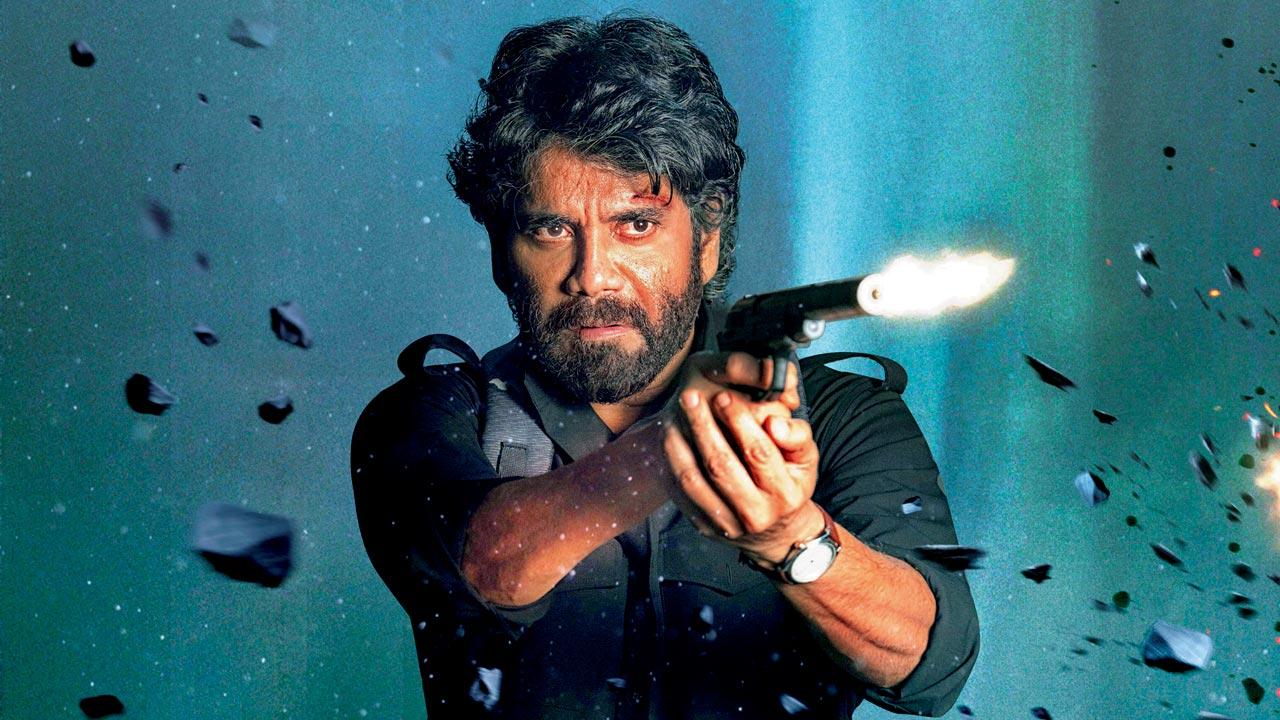
Even as his pan-India movie Kuberaa tastes success, Nagarjuna says makers must be judicious as each story doesn’t have the power to appeal across cultures
Priyanka Sharma (MID-DAY; July 1, 2025)
For Nagarjuna, there was more than just money riding on Kuberaa. Its success would determine the path ahead for the superstar. With the crime drama having reportedly earned about Rs. 81 crore in the domestic market, we can hear the smile in Nagarjuna’s voice as he gets on the call for his first interview post the release. “Kuberaa is different from what I or director Sekhar Kammula was doing before. It was important for the movie to succeed so that we get the courage and strength to do more films with different subjects,” says the actor of the June 20 release that also stars Dhanush and Rashmika Mandanna.
Courage isn’t the only outcome of a successful film. As Nagarjuna puts it, “Success makes you love your job.” This is especially true when one has been working for 36 years. “Longevity is quite difficult to achieve, especially in our field. Success and love for the job go hand-in-hand. I was fortunate that success was always around the corner.”
After almost four decades in the industry, the actor, 65, craves to experiment more. He wants to keep things stimulating for the artiste in him, even though experiments can be risky for the superstar in him. He reflects, “We get caught in the loop that we have to do something exactly like this [to ensure success]. I noticed that in my career, whenever I [repeated myself], I had failures. Trying different things and new characters will always be loved by the audience.”
Nagarjuna has been ahead of the curve in another aspect — he did pan-India films way before they became a phenomenon. “When Shiva came in [1990], I tasted success in Mumbai, Delhi, and across the Hindi-speaking belt. It was fantastic. After COVID, everybody started watching movies in every other language.” The change is welcome, but the senior actor notes that it demands a discerning attitude from filmmakers.
“Every film cannot be a pan-India offering. It’s very difficult to be familiar with a different culture altogether. These days, a lot of people are failing because they are putting five titles underneath each film. [A pan-India film] requires a lot of planning and a [powerful] screenplay. Why did only Shiva work for me? I could have done a lot of other films. We didn’t make them because only a few films deserve to be pan-India.”
Not enough bang for the binge, Indian streamers flip the script
9:11 AM

Ad-supported long-format web series make a comeback, reversing the ad-free premium content trend, as growth slows and viewer habits change
Rajesh N Naidu (THE ECONOMIC TIMES; June 26, 2025)
India's streaming industry is witnessing a return to ad-supported long-format web series - typically spanning 20 to 50 episodes - as subscriber additions stagnate and margins on premium ad-free content fall.
The share of such long-format shows in total web series content on OTT are expected to rise to 70% in the next one year, up from about 50% now, as streaming platforms increasingly embrace traditional television consumption and monetization patterns, industry experts said.
The shift away from big-ticket original shows, which had surged to 50% of streaming content, is being driven by a binge fatigue among Indians partly due to time constraints.
"Traditionally, the Indian television audience is more attuned to daily soap or episodic format of storytelling," said Sudeep Nigam, a scriptwriter known for mini-series The Indrani Mukerjea Story: Buried Truth. "Binge-watching is essentially a western concept."
While binge-watching spiked during the Covid-19 lockdown, Nigam said the trend was temporary. "Post the pandemic, due to hectic lifestyle, an average Indian viewer can spare little time for viewing. In this context, ad-supported long-format web series has high relevance in India, as premium content demands intense engagement from a viewer," he said.
The share of premium originals on OTT platforms could drop to around 30% over the next one year, according to industry estimates.
"India is still not a subscription economy," said Manish Sinha, founder and CEO of RunnTV, the country's first independent free ad-supported streaming television (FAST) platform. "It is expensive to retain subscribers. Subscribers buy subscriptions for specific content and then do not renew subscriptions."
Latest numbers confirm that the paid subscription base is not expanding. According to media and entertainment research firm Ormax Media, subscribers who had access to paid content in India fell by 1.6% to 150.6 million in 2024 from 153 million in 2023.
Industry analysts said streamers have realized that focusing only on premium content does not materially improve profitability, which has become one of their key focus areas post the pandemic.
The reluctance of top Hindi film actors to take up roles in streaming content is also posing a challenge to creating premium content, experts said. These actors fear that appearance in streaming content may deplete their 'star' value. Also, there is unchecked piracy which impacts the returns on investments on premium OTT content, experts said.
Meanwhile, the base of ad-supported content subscribers grew more than 20% between 2023 and 2024, industry analysts said. This has warranted the demand for mass content. The recent Netflix-Balaji Telefilms creative partnership must be seen in this light, experts said.
One of the key advantages of producing ad-supported long-format web series for streamers is its cost-effectiveness.
"Today, streamers want new subscribers. This necessitates telling new stories in familiar ways. Ad-supported long-format web series have been familiar with the Indian audience. It is cost-effective for streamers," said Samar Khan, CEO of Juggernaut Productions, a platform agnostic content creation hub.
It is estimated that the cost of shooting an episode of an original for a streamer is between Rs. 1 crore and Rs. 3 crore. In comparison with this, the cost of shooting an episode of an ad-supported large-format web series is between Rs. 20 lakh and Rs. 30 lakh.
Manju Warrier's Malayalam thriller Footage to release in Hindi: "Want to see how 'Hindi film audience responds to it"
8:21 AM
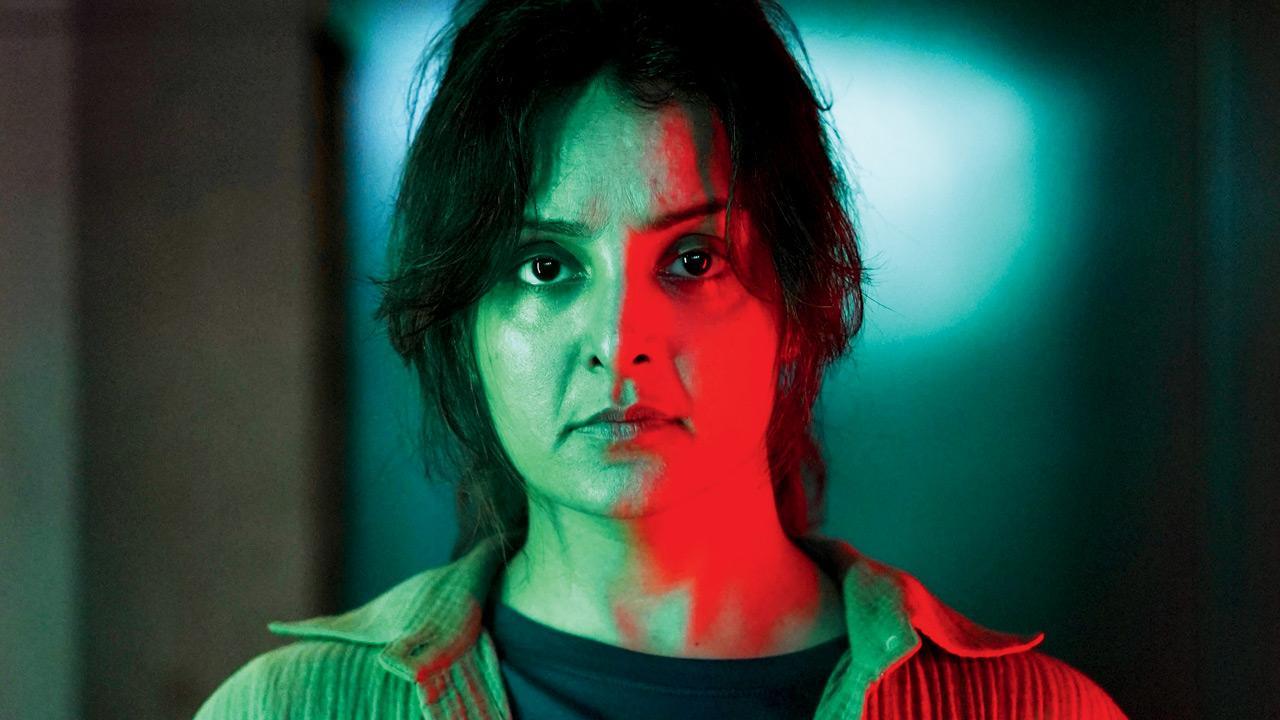
With Footage releasing in Hindi, Manju Warrier says she wants to gauge the Malayalam movie’s popularity among Bollywood-loving audience
Priyanka Sharma (MID-DAY; March 4, 2025)
Almost six months after the release of Malayalam thriller Footage, the makers are bringing the Hindi version of the Manju Warrier-starrer to the audience. Saiju Sreedharan’s directorial venture will hit the theatres later this week.
Ahead of the dubbed version’s date with the audience, Warrier says, “Whenever I have been to Mumbai or north India, people have come up to me and talked about my films. But that is an audience that loves watching Malayalam films. With Footage, I want to see how the Hindi film audience, which doesn’t consume Malayalam movies, responds to it.”
Bollywood fans, who may not be familiar with the National Award-winning actor, will recognise a name in the movie’s credits. Footage, which belongs to the less-explored genre of found-footage, is presented by Anurag Kashyap. Teaming up with the filmmaker has Warrier elated.
“I remember I had first met Anurag sir at the première of a Malayalam film. I was surprised that he even knew my name! Since then, we’ve been friends. When we finished filming Footage, he wanted to watch it. After watching it, he presented it in Malayalam, and now he is backing it in Hindi,” she smiles.
The actor has two more releases lined up—L2: Empuraan, and Mr X. Bollywood too is on Warrier’s mind. In fact, she was to star in a Hindi film opposite R Madhavan.
“We had started shooting for it, but had to [halt] it midway due to COVID. We couldn’t resume it due to various reasons,” she recalls, before adding, “I am looking forward to doing good films in Hindi.”
If only five big producers can support independent cinema, things can drastically change-Rima Das
9:13 AM
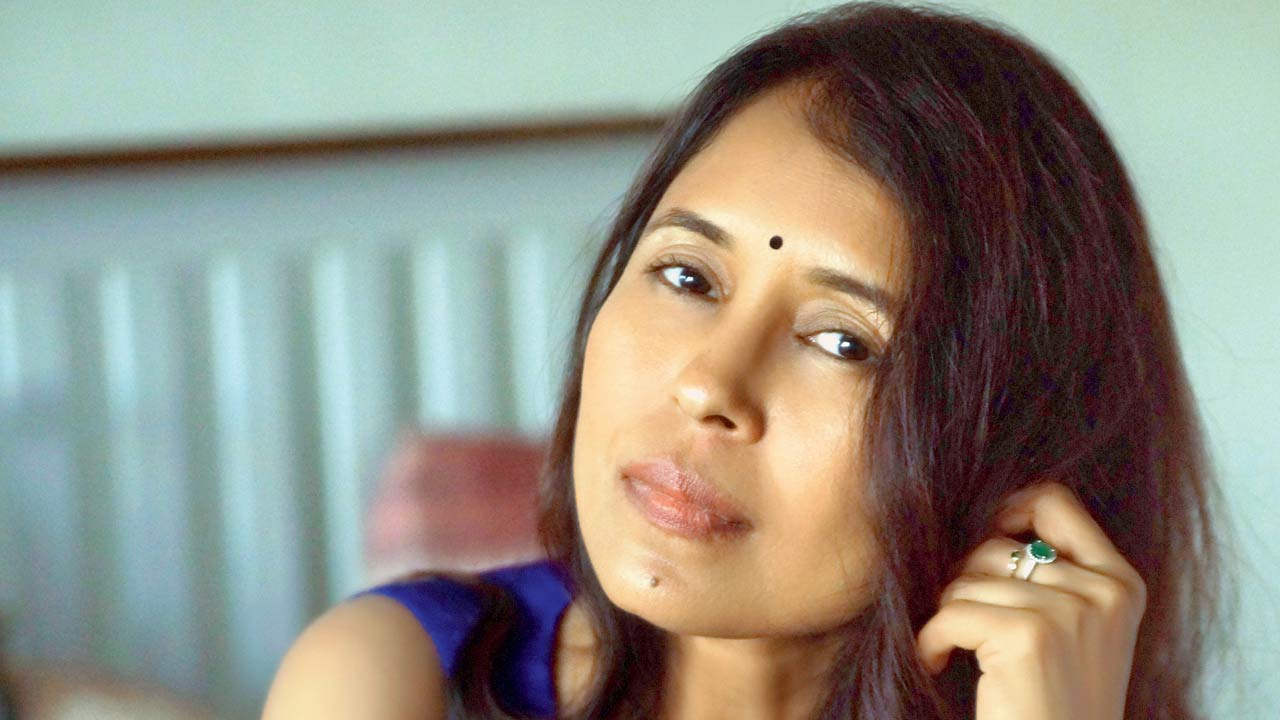
As Village Rockstars 2 premieres at the Berlin Festival, Nation Award-winning filmmaker Rima Das opens up working on a folk-horror story for her next, and why financial support for independent filmmaking in India needs to go beyond just lip service
Priyanka Sharma (MID-DAY; February 16, 2025)
It's time for Rima Das 2.0. The National Award filmmaker is currently at the coveted Berlin International Film Festival for the premiere of her latest work, the Assamese movie, Village Rockstars 2. The festival darling lets us in on a new resolution when we speak to her—she is ready to turn over a new leaf. “I have realized going to festivals is not enough. Now, my main aim is that my work reaches more people,” she says.
In her over a decade-long career, Das has created an enviable filmography—her breakout film Village Rockstars, Bulbul Can Sing to Tora’s Husband—and now the sequel to her National Award-winner, which has already travelled to several national and international festivals.
“At Busan Film Festival last year, a producer from Singapore told me, ‘Rima, I think this is the only sequel of an independent film. We haven’t had any other sequel to an indie film before’.” Das laughs as we mention that her film couldn’t have come at a better time, as sequels seem to be the latest obsession.
“While making Village Rockstars [2018], I never thought of a sequel. But while editing it, it did strike me that the story has a natural progression and another film can be made. But I thought if I took it to festivals, how will they react to a sequel? Also, for the audiences who haven’t watched the first part, will the title Village Rockstars 2 work? Then, I thought about the long-term value of a story and that’s why I decided to make the sequel.”
Village Rockstars is about Dhunu, a 10-year-old girl, who dreams of buying a guitar and is saving up for it. However, when calamity hits her village, she must re-evaluate her priorities. Part 2 revisits the life of Dhunu, seven years after the events of the last film.
The filmmaker began working on the film, on which she also serves as the writer, cinematographer and co-producer, in 2020. But it ended up consuming Das’ time more than she anticipated.
“In 2020, I wanted to start something with Tillotama Shome. Then, the pandemic happened. I felt like I was in a cocoon, so I started making Tora’s Husband and Village Rockstars 2 simultaneously, but there was a lot of physical, mental trauma because of the pandemic. I lost my father. So, to finish both the films took a long time. I had to rewrite and re-shoot portions of Village Rockstars 2. It took me four years to finish the film,” she shares.
As rewarding as making Village Rockstars 2 was, it also left the filmmaker feeling stagnated. Das knew it was time for a reboot. “I had been shooting in the same location for years because Village Rockstars and Bulbul Can Sing were shot in the same area, while Tora’s Husband was shot nearby. I stopped enjoying it. So, during that time I started developing other ideas because I felt like doing something new,” she says.
Now brimming with ideas, the filmmaker is having a party. “I am writing something set in Mumbai, and it’s folk horror. When I look around, I see a lot of stories. Then, I feel like telling these stories is more important than making something perfect.”
With creative expansion on her mind, Das wants to enter unfamiliar territories. “Now, I also want to do commercial and semi-commercial films. Not being officially trained in filmmaking, my perception and knowledge of art is probably different from other filmmakers. Keeping the essence of cinema intact, I want my films to be accessible and reach a wider audience. Some films I think feel very arty. If I am making a Village Rockstars, I have a message to tell. If only cinephiles are watching it, it’s not enough for me. I want my films to reach marginalized sections or the [regular] audience. That is success for me. I don’t like my films to be a piece of art that is consumed by only a section of the audience. This wasn’t exactly on my mind when I made Village Rockstars. It was made without music and I thought the way it had shaped up was for a foreign audience but when it was released in India and I saw people loving it, I realized there are no boundaries to art.”
What also calls out to the filmmaker today is the need to embrace collaborations. Since the beginning of her career, Das has made movies largely by herself— from writing to producing. “I am looking for more collaborators, who are like-minded. I don’t want to be in the lonely place of doing everything by myself. I know when the time is right, the right kind of people will align with my vision and understanding of cinema.”
Making movies is as much about having talent as it’s about finding people who believe in it. It becomes particularly difficult to find believers of stories that don’t conform. Das, one of the biggest success stories in India’s independent space believes, “If you look at our audience, it should not be difficult to be an independent filmmaker in India. But there aren’t many forces to support it. There is a lot of lip service. If only five people, who are big producers, can support the scene, it can drastically change. But that’s not happening and I don’t know why. We look at old architecture and marvel at it, but nothing new is being built. Good art, poetry, and film are as important as good architecture. When I hear about the box office, it is only about two per cent of our population watching a film that is called a huge success. So, when we spend Rs. 50 lakh to a crore on an indie film, the recovery in India is very easy. You just need to find your audience. But there is no support.”
On this note, Das registers praise for actor-producer couple Richa Chadha and Ali Fazal, who made their production debut with the marvellous Girls Will Be Girls. “We need more people like Richa and Ali. Look how they supported an independent filmmaker [Shuchi Talati] and a beautiful film got so much visibility.”
Beyond that, Das believes one has to just be at it. “These problems have always been there in the independent space. Films are a catharsis for me. Every time I am doing something, I am creating opportunities for people, whether the number is 10 or 40.”
Losing my voice was heartbreaking, but I've healed now-Shekhar Ravjiani
10:19 AM
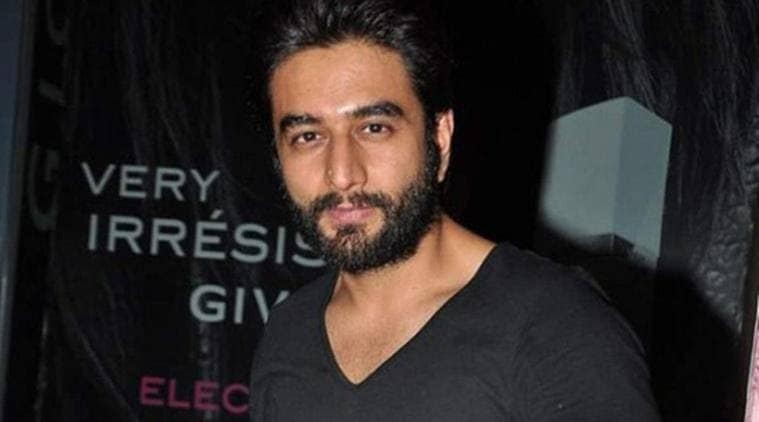
Tanvi Trivedi (BOMBAY TIMES; December 2, 2024)
Musician Shekhar Ravjiani (of the Vishal-Shekhar composer duo) recently revealed on social media that he lost his voice and could not perform at concerts two years ago. He was diagnosed with a condition called Left Vocal Cord Paresis, a disorder where an individual's left vocal cord reduces movement or ability. In a conversation with BT, Shekhar spoke about his traumatic experience and how he dealt with it.
“I tested positive for COVID twice during the pandemic, but I recovered and resumed my normal life. But, in June 2022, I suddenly found that I could not sing and had lost my voice and just air coming out from my throat. I was shocked and shuddered, thinking what would happen to me. Thinking of a life where I would never be able to sing or perform frightened me,” he shares.
‘I had to put up a strong front and pushed myself harder at concerts’
Elaborating on what happened after the diagnosis, Shekhar said, "When I was diagnosed with Left Vocal Cord Paresis, I began believing that there was no hope. After a few weeks, I had to accept that it was something that I had to deal with. The solution was to fight it. I was completely heartbroken. I put up a strong front and pushed myself harder at the studio and concerts. Mentally, I was in a bad state, but I avoided talking about it and kept myself busy.”
‘Today, I have healed and can sing even better’
He further added, “I had to go to San Diego for a project, and there, a friend asked me to meet a doctor in the US. She suggested a vocal warm-up and vocal exercises to help get my voice back. I also learnt that a vocal warm-up is essential every time I perform on stage. If you don't exercise your vocal cords, your voice can be harmed a lot. Today, I have healed and can sing even better. I am talking about it now because I hope everyone should learn from this and never give up hope. My faith in Lord Hanuman helped me sail through. I am thankful and grateful to the doctors who helped me recover from this condition.”
I will stop singing songs on alcohol if all states become dry states-Diljit Dosanjh
8:27 AM
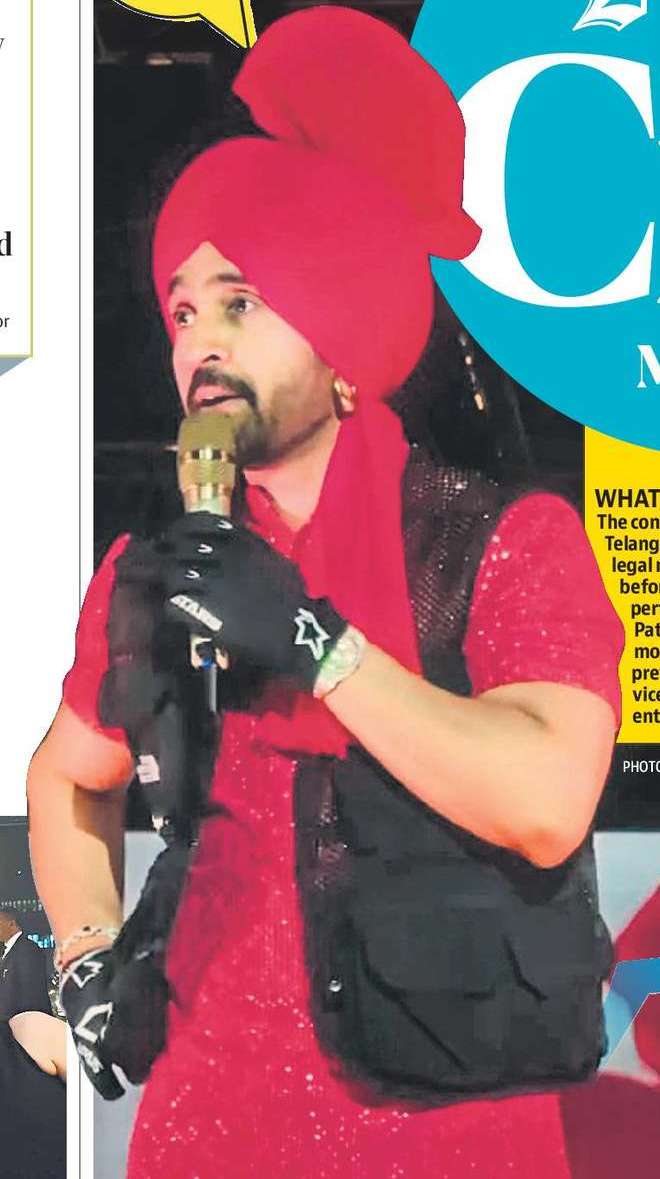
BOMBAY TIMES (November 19, 2024)
Diljit Dosanjh says he will stop singing songs with alcohol references if all the states in the country are declared dry state. At his Sunday show in Ahmedabad, the singer-actor responded to the notice sent to him ahead of his Hyderabad concert, directing him to avoid songs related to alcohol, drugs and violence.
The singer said, “There’s some good news. I didn’t get any notice today. There’s more good news: I’ll not sing a single song on alcohol to day either. Ask me why? Because Gujarat is a dry state! Let’s do something, let’s start a movement. If all states declare themselves dry states, I’ll stop singing songs on alcohol from the very next day... I will stop singing about alcohol, you shut the ‘thekas’ in the country... I take a pledge. Is this possible? It’s a big source of revenue. Everything was shut in corona (pandemic), except the thekas. You can’t fool the youth.”
--------------------------------------------------
Diljit Dosanjh takes on government’s dictate on his songs and says declare the state dry, and he will tweak his songs
HINDUSTAN TIMES (November 19, 2024)
On Sunday (November 17), while performing in Ahmedabad, singer-actor Diljit Dosanjh publicly addressed the Telangana government’s notice warning him against performing songs that glorify alcohol, drugs or violence ahead of his November 15 Hyderabad concert. The notice, issued just hours before his performance, sparked a debate that Dosanjh has carried into his subsequent shows, including the one in Gujarat.
Starting his Ahmedabad concert on a light note, Dosanjh announced his “good news” — this time, no notices had been served. Aware that Gujarat is a dry state, he refrained from performing songs referencing alcohol. However, he expressed frustration that despite releasing two devotional tracks recently, his critics focus only on songs like Patiala Peg and 5 Taara.
Clearing misconceptions, Dosanjh asserted that he neither drinks nor promotes alcohol, unlike Bollywood stars who endorse liquor brands. “Main jahan jaata hoon, chup karke apna programme karta hoon, chala jata hoon. Aap kyun chedh rahe ho mujhe?” he questioned. Comparing his handful of songs referencing alcohol to the abundance of Bollywood tracks on the same subject, he called out the hypocrisy.
The singer-actor proposed a bold solution: a pan-India movement to ban alcohol entirely. “Agar saari states dry state ghoshith ho jaayein, main kabhi sharab ka gaana nahin gaunga. Main pran karta hoon,” he declared. Highlighting the government’s reliance on liquor revenue, he mocked the system, saying, “Corona (Covid-19) mein sab bandh hogaya tha, theke bandh nahin huye thhe. Aap youth ko fuddu nahin bana sakte.”
Acknowledging the ease of adapting his performances, he cheekily offered a compromise: declaring dry days during his concerts. “Jahan jahan mere shows hain, ek din ke liye dry day ghoshith kar do, aur main gaana tweak kar doonga,” he said, promising that his fans would still enjoy the show without alcohol-themed tracks.
Praise for Gujarat govt
Lauding Gujarat’s dry-state status, the 40-year-old expressed hope that Amritsar, his hometown, might follow suit. “Main Gujarat government ka fan hoon,” he remarked, urging his fellow Punjabis to consider the benefits of such a policy. HTC
What happened
The controversy began when Telangana authorities issued a legal notice to Dosanjh hours before his Hyderabad performance, citing tracks like Patiala Peg and 5 Taara. The move, they claimed, was to prevent glorification of vices in public entertainment.
Telangana govt responds
Defending their notice, Telangana Deputy Chief Minister Bhatti Vikramarka Mallu stated that the guidelines were intended for the betterment of society and its youth. “The government of India has issued clear guidelines against songs promoting drugs and alcohol. Mentioning these guidelines while granting concert permissions is standard procedure, so there is nothing wrong in it,” he said.
I was asked to replace the word chaddi from Jungle Jungle Baat Chali Hai-Gulzar
11:26 PM

Natasha Coutinho (BOMBAY TIMES; November 14, 2024)
Celebrated Indian poet, lyricist, author, screenwriter and film director Gulzar has penned iconic children’s songs like Lakdi Ki Kaathi from Masoom (1983), Jungle Jungle Baat Chali Hai from The Jungle Book (1989) and Panga from Makdee (2002), the latter two composed by Vishal Bhardwaj. Not many know that even the popular prayer Humko Mann Ki Shakti Dena from Guddi (1971) was written by him. On the occasion of Children’s Day, in a chat at his Bandra bungalow, Gulzar spoke to us about some of his favourite works for children.
‘Many are not aware that the lyrics of Humko Mann Ki Shakti Dena were written by me’
Gulzar explains that the idea behind the song was to portray what a young schoolgirl prays for and how she expresses her thoughts. He says, “Humko Mann Ki Shakti Dena went on to become the morning prayer at many schools. Many people don’t know the lyrics were written by me. I was recently working with Shaad Ali (director) at the recording studio, and he mentioned that they used to sing Humko Mann Ki Shakti Dena in school. He was taken by surprise when Shankar Mahadevan mentioned that the lyrics were written by me. If you speak from your heart, it reaches children. Back then, the great Indian poet Kedarnath Singh had told me, ‘Your work has gone beyond your name, which is a great thing.’”
‘Writing for children isn’t about getting the grammar right’
Talking about how he develops the idea that connects with children, he cites the example of Lakdi Ki Kathi (Masoom), a song that has resonated with children across generations. “The idea came from the thought that if you make a child sit on a walking stick and call it a horse, they know it isn’t real, but they still enjoy the experience because of their imagination. It’s also important to use places that they are familiar with, for example, they have heard their parents speaking about visiting the sabzi mandi (vegetable market) or Mehrauli and so on. So, the song must have a familiar environment. Writing for children isn’t about getting the grammar right, it’s about throwing grammar out of the window and connecting with the child’s thought process. Children enjoy tongue twisters, what we give them in textbooks is boring.”
‘I was asked to replace the word chaddi from the song Jungle Jungle Baat Chali Hai’
Recalling a controversy over the lyrics of another popular song, he shares, “NFDC had some objection to the lines, Jungle Jungle baat chali hai, pata chala hai, arre chaddi pehen ke phool khila hai (The Jungle Book, 1989).
“I was told, ‘Gulzar saab ab aap poetry mein chaddi bhi le aayenge.’ There was a silly suggestion to replace the word chaddi with lungi. I asked them if Mowgli in The Jungle Book had put on anything else throughout the film? Ab chaddi ko kuch aur bolenge? Vishal Bhardwaj (music composer for The Jungle Book) has a knack for understanding children, he made films like Makdee and The Blue Umbrella, but didn’t find encouragement from the trade. Vishal himself is a little child for me.”
‘I have been working with physically challenged children since 1972’
Gulzar shares, “Since the time I made Koshish in 1972, I have been working with physically challenged children. Every year these children come down from Bhopal and I walk with them at the Mumbai Marathon. These children feel so happy when they appear on television and that gives me immense joy, too. I wish to continue working with children till I’m alive.”
'Inspired to write poems during Covid'
He says, "I wrote a poem on a crow during COVID-19, when death was surrounding us, ambulances were constantly passing by, people were wearing masks but this crow near my house, was busy building it’s nest. Hearing the little crows caw was so inspiring. I ended up writing 14 children’s poems that were published by my friend Sushil Shukla with illustrations by Allen Shaw."
Photo: Prathamesh Bandekar
I had to remind people that I existed. During that time, social media became my lifeline-Alaya F
9:11 AM

Akash Bhatnagar (HINDUSTAN TIMES; September 22, 2024)
In recent times, several actors, including Abhishek Banerjee and Aahana S Kumra, have openly criticised social media influencers for stepping into showbiz and snatching acting roles. But for Alaya F, the journey has taken the opposite path. She started as an actor and, due to circumstances, later embraced the influencer space.
Reflecting on this transition, she shares, “The world shut down right after my first film Jawaani Jaaneman released in 2020. I had to find a way to stay relevant, to remind people that I existed. During that time, social media became my lifeline.”
At 26, Alaya admits that platforms like Instagram have been a “blessing” for actors. She adds, “Now, you don’t have to rely on films for money. You can choose projects out of passion because social media handles the financial part.”
This year has been a mixed bag for the actor. While Srikanth performed well at the box office, her more commercial film Bade Miyan Chote Miyan didn’t hit the mark. When asked how she handles such ups and downs, she says, “In this industry, your position and reality are always shifting. The only constant is change, and I’ve grown a lot more comfortable with it. Initially, it made me anxious — feeling the pressure to prove myself — but now I’ve learned to stay calm. I want to make more thoughtful choices going forward.”
Alaya admits she often feels like an underdog in her career, too. “I still feel like I’m fighting to prove myself, and that’s actually great because everyone loves an underdog story. I have so much more to show and so much yet to achieve. That excitement keeps me driven and makes the journey worthwhile,” she says.
I cycled from Gangotri to Gangasagar in 75 days-Shantanu Moitra
8:12 AM

“Cycling is nostalgia for me,” says Shantanu Moitra who learnt and fell in love with the sport when he was in the fifth standard. In a candid chat with us for World Bicycle Day, the musician who has composed for films like 3 Idiots and 12th Fail takes us through his life-changing experiences while cycling around the country. Excerpts:
Baba taught me how to cycle
As a child, my first sense of freedom came from cycling. The falling, getting up trying again – as you learn, your parents let you go which gives a sense of independence also. In Delhi’s East Patel Nagar, where we grew up, we used to see every other person travelling on a bicycle, but I never had my own as we couldn’t afford it. So I used to borrow from my friends and take rounds of our neighbourhood. My father was an avid cycle lover. He used to travel 40 km to and from work every day. He taught me how to balance the two wheels. I remember the day vividly when he let me go on my own. It was an important day in my life, it empowered me to take care of myself.
‘My father’s cycling tales fascinated me’
Baba always told me how he made friends from different walks of life while he used to cycle. He and his friends always went to a particular tea shop for chai or nimbu paani on their way back home. He had created a world while cycling and it fascinated me. Just imagine: you are riding a cycle and stop to pick up a jamun that fell from a tree. Isn’t it captivating? All these stories were like a fantasy land for me.
‘I bought my first cycle when I was 30’
Ironically, I never got to buy a cycle when I was in school or college. Eventually, I bought a car, but never a cycle. When I came to Mumbai 30 years back, I saw cycling as a hobby was popular. That was when I bought my first cycle, at 30 years of age! It made me nostalgic and I realized I was made for cycling. Then a cycling community was formed and, every Sunday at 5.30 am, we used to cycle 70 km, from my home in Versova to Nariman Point. It was a Sunday morning ritual we looked forward to. Everyone in this community was a cycle lover.
‘The Ganga expedition was an opportunity of a lifetime’
Shantanu shares that after completing the music composition for 3 Idiots, he undertook a ‘100 days in Himalayas’ trip in 2016. “I was travelling above 14,000 feet right from Kashmir to Tibet. The perspective I gained from that trip made me realize that I wanted to do it on a cycle. I wanted to see Ganga from its source to the end. Adventure is not rational, one has to feel that urge from within. My fear was that the timing of the adventure (which he undertook in 2021) shouldn’t clash with the music composition of Shoojit Sircar’s Sardar Udham, but Shoojit being a friend assured me that he could adjust, and I shouldn’t let go of the opportunity of a lifetime.”
‘It was a mind game’
For the Ganga expedition, Shantanu realized that he had to cycle for 2,700 km. “That’s a magnificent number. I realized it’s a mind game. This time was pivotal in my life – Baba saw me prepping, which made him very happy. Soon after, COVID changed the world, and I lost Baba in the pandemic. I realized life is uncertain so I must fulfil my dream. I knew I had to do this expedition for my baba.”
‘Got professional guidance’
Shantanu started prepping for the trip in 2019. He says, “Before any mammoth expedition, professional guidance is a must. I got a nutritionist, and got medically checked. For my lung capacity, I practiced regularly at Bhor Ghat, Lonavala’s highest point. I mapped my route on a cycle trainer at home. I started my regime by cycling 100-150 kms every day and slowly the cycle became my greatest companion and best friend. Within 25 days, I reached Rishikesh, and the expedition of 75 days started from Gangotri to Gangasagar. It was a memorable experience.”
Shantanu’s safety tips
- If you are cycling early in the morning, there has to be a taillight on and a helmet light on
- A red light is applicable for all transports, including a cycle. Respect that
- Before you start long-distance cycling, eat light food at least one and a half hours before. And after cycling for say 50 km, munch on a snack bar or something light so that your body has the fuel to continue
- People tend to avoid cycling and opt for a car or bike as they feel it is safer. The first and foremost rule while cycling is to wear a helmet, it’s non-negotiable
- Hydration is a must when you are cycling long distances. Alertness is very important for a cyclist and that happens when you keep yourself hydrated. Also, muscle reflexivity increases if you are well-hydrated
- Need to create paths for cyclists
- If we encourage cycling for the young generation on World Cycling Day, we have to create paths for cyclists – and that is the biggest concern of urban civilization. Any civilized place has cycling tracks. If we want less fuel consumption, less pollution and a healthier lifestyle, cycling tracks are a must in any city.
------------------------------------------------
Cycling takes care of one’s body, mind and reflexes. Not only does it help build a community but also lets one connect with nature. We must encourage the young generation to cycle more for a better world
------------------------------------------------
No one understood why a music director is cycling down a river. I failed to explain to people that it was an experience of a lifetime. Every pedal was a tribute to my father and no one can stop me from cycling
– Shantanu on his Gangotri to Gangasagar expedition

The composer shared with us his cycling route map for the Gangotri to Gangasagar expedition, spanning 2,700 km. “I mapped my route on a cycle trainer at home,” he tells us
Aditi Rao Hydari talks about her Gajagamini walk: "It took Sanjay Leela Bhansali to show that other body types are as beautiful"
8:56 AM

Aditi, who took to the Cannes red carpet, on how her Gajagamini walk in Heeramandi defied ‘manufactured idea of beauty’ and stood for body positivity
Mohar Basu (MID-DAY; May 25, 2024)
The red carpet of the Cannes Film Festival is all about glamour and fashion. But behind it lie multiple fitting sessions and negligible sleep, quipped Aditi Rao Hydari, when we spoke to her only days before she headed to the French Riviera. On Thursday, the actor walked the red carpet in a strapless monochrome gown, completing it with soft lip colour and an updo.
The idea was to showcase her inherent style. “I don’t try to prove anything to anyone. When I was starting out, people had a lot of advice to give me. For the promotions of my early films, I’d wear jeans and a shirt. People started saying, ‘Get a hairstylist, be glamorous, and wear heels.’ [I] felt the need to conform. That change [in mindset] happened in 2016 when I worked with Mani [Ratnam] sir. Subsequently, I’ve never let fashion play heavy on me,” said Hydari, who represented L’Oreal Paris at the gala.
Her non-conformist streak has held her in good stead. Earlier this month, her Gajagamini walk from Sanjay Leela Bhansali’s Heeramandi: The Diamond Bazaar caught the fancy of the internet.
“Sanjay sir had asked me to put on some weight. Then I got COVID-19 and became so skinny that everyone overfed me. I put on a few kilos when I went to shoot the song. I suggested losing weight, but Sanjay sir said, ‘You’re beautiful. You’re not a 2020 heroine, but a 1940’s woman.’ Today when I see how that has made people feel, it feels wonderful. People have written in to say that they feel seen. We’re stuck in a manufactured idea of beauty, and it took Sanjay sir to show that other body types are as beautiful. In our tryst to be healthy, we have normalized a particular body type. But all body types are beautiful.”
Even though the Cannes Film Festival is among the most prestigious film galas, for some, fashion takes precedence over movies. Hydari said, “It depends on the intention of the person. There are countless cinephiles there, who watch films all day long. The media also needs to report more diversely. This year, we have a film in the competition section [All We Imagine As Light]. Payal’s [Kapadia, director] mother is my mom’s friend. I want to catch her film!”
Only after taking the Covid-19 vaccine I experienced fatigue-Shreyas Talpade
8:18 AM

The actor hints that his heart attack could have been a side effect of COVID-19 vaccine
BOMBAY TIMES (May 6, 2024)
Speaking up on his health, Shreyas Talpade has said that his recent heart attack could be a side effect of the COVID-19 vaccine. On December 14, last year, Shreyas suffered a heart attack in Mumbai following the shoot of an upcoming film. He was admitted to a hospital in Mumbai, where he underwent angioplasty.
In an interview to an entertainment portal, the actor said, “I don’t smoke. I’m not really a regular drinker, I drink perhaps once a month. No tobacco, yes, my cholesterol was a little high, which I was told is normal these days. I was taking medication for that. So, if all the factors – no diabetes, no blood pressure, nothing, then what could be the reason?”
About his apprehensions that a vaccine caused his health issues, Shreyas said, “It was only after the COVID-19 vaccination that I started experiencing some fatigue. There has to be some amount of truth, and we cannot negate the theory. Maybe it is COVID or the vaccine, but there is something associated post that... It is unfortunate because we don’t know what we have taken inside our bodies.”
A unit hand came running to warn me to lock the door, or I could risk getting kidnapped-Amruta Khanvilkar
8:20 AM

Amruta Khanvilkar on shooting for Hansal and Jai Mehta’s series, Lootere, during pandemic in crime-infested South Africa
Letty Mariam Abraham (MID-DAY; March 19, 2024)
Amruta Khanvilkar considers it a stroke of luck that she chanced upon Hansal and Jai Mehta’s series Lootere while they were scouting for actors. The pirate thriller not only gave her the opportunity to work with South African actors, but also offered her a strong female character in the male-dominated show. In conversation with mid-day, the actor—who is primarily seen in Marathi projects—talks about the challenges of working in South Africa during the Coronavirus pandemic, and the long wait for the show’s release. Edited excerpts from the interview.
What was the brief given to you?
I was auditioning for a role at the casting director’s office in Andheri, when I learnt that Hansal Mehta is making a series that is being shot internationally with foreign actors. I begged for the audition script. When I read the script, I found it powerful. Later, I met Jai [Mehta, director], who is a young and enthusiastic chap. Lootere is a male-dominated show and he wanted Avika to be someone who wouldn’t spare anyone. She gets married to Vikrant [Vivek Gomber], and hopes that he will help her escape from Somalia. Avika was mentally and physically trapped; that was to reflect in my body language, clothes, even in my eyes.
What was the first day on the set like?
On my first day [of shoot] in South Africa, I was in a vanity van and the door was left open [to combat] the heat. A unit hand came running to warn me to lock the door, or I could risk getting kidnapped. Sometimes, we’d be ready to head to the location, but something would disrupt the shoot. The language was difficult to comprehend, plus this was amid the pandemic. For almost two-and-a-half months, I’d leave my hotel, go for the shoot and come right back to the hotel. I’d go out only when the entire cast and crew did.
Did you manage to do sightseeing?
I remember going out with my DoP [Jall Coswasji] and trying paragliding. By the end of the shoot, we had all become a little homesick. The unit was shooting for over seven months, which is long. It felt longer because we were far, in between COVID waves, and it was trying our patience.
Was it tough to portray a character who feels suffocated?
It gets to you because you are already in a [restricted atmosphere]. We all felt trapped during COVID. Plus, in South Africa, if I had to go somewhere, someone had to be sent with me. So, I took inspiration from that and my surroundings, especially from my first day when I was told I could be kidnapped.
Does the long wait between shoot and release bother you?
The waiting period is the most testing time. I shot about three to four web series two years ago. I shot for a Vishal Furia crime thriller series after I returned from South Africa. [For this interview], I had to call up Jai to give me a recap about it because it has been a while since we shot for this. There is anxiety around a show’s final outcome. As actors, I feel we are paid for the patience we have, not only in terms of money, but also future offers.
Had you heard about the pirate world before doing this series?
We’ve seen this world in international shows; this is the first time it’s being tackled in an Indian series. It was a daring move to shoot such a subject and bring two cultures together. Half the time, they shot on a ship where it’d often get extremely cold, so much so that one couldn’t even touch the metal railings. The people shooting aboard had seen dolphins and whales; they sustained injuries. It wasn’t an easy shoot. I’m glad the boys pulled it off.
How was it interacting with actors from a different culture?
There is a South African officer in the series. He is about six feet in height with a heavy build, but he was gentle and soft-spoken. He is the sweetest person I’ve met. Jai also enjoyed talking to South African actors. Their school of acting is so different; it was a learning opportunity.
Not theatrics, meaningful content to drive fortunes of film industry
8:59 AM

Footfalls in theatres fall by 9% in 2023 on year, but single-screens see higher gross box-office collections than multiplexes as audiences weigh costs
Rajesh Naidu (THE ECONOMIC TIMES; March 18, 2024)
In the years since the Covid-19 pandemic, shifting audience tastes have given rise to two divergent trends in India's exhibition industry.
According to the latest Ficci-EY media and entertainment report, footfalls in theatres (single screens and multiplexes) have fallen by 9% to 900 million in 2023 from 994 million in 2022. But, gross box-office collections (before tax) of single screens and multiplexes expanded 15.3% and 13.7%, respectively.
To be sure, the base effect plays a role in the quantum of increase.
Still, growth in gross box-office collections of single screens has been higher than for multiplexes. These divergences help explain how audiences are watching content in theatres after the pandemic.
More than two years since the re-opening of theatres after the pandemic, footfalls have not touched pre-pandemic levels. In 2019, they were 1.46 billion, sliding to 900 million last year. The cost of going to a movie (not just ticket price) outweighs the cost of buying relatively economical entertainment: streaming and social media platforms. Also, audiences are willing to wait for films to release on streamers (high viewership of Hindi film Animal on Netflix is a case in point) after the theatrical release.
This fall in footfalls is compensated by high-ticket prices, which audiences are willing to pay if rewarded either with well-made, big-budget massy films or mid-budget films. Today, with the exception of Hollywood tent-pole movies, the content that works in multiplexes (12th Fail, for instance) is not materially different from what works in single screens.
Indeed, a Hindi filmgoer has become more accepting of non-Hindi content, provided it is engaging and entertaining. This is reflected in the box-office collections of southern films. According to the Ficci-EY report, the gross box-office collections of southern films in 2023 were Rs. 5,200 crore. For Hindi films, by contrast, the collections totaled Rs. 5,300 crore. The space for meaningful content, which was considered exclusive fiefdom of multiplexes, has been taken over by streaming platforms (especially YouTube).
Hence, going to theatres is no longer a weekend tradition or ritual followed without careful assessment of its effectiveness in delivering worthy entertainment. As loyalties among audiences shift more toward engaging and entertaining content or stories than stardom of stars, the decision to watch films in theatres is formed after considering three things.
One is either watching trailers of films. Two: Following films' reviews of trustworthy people. And three: How competing available sources of entertainment - streamers and social media - would fare against a theatrical experience.
So, when entertaining massy films were released in 2023, single screens, which were shut for a while due to the pandemic, saw higher collections in 2023 compared with the previous couple of years.
Rising costs make OTT companies go selective on content
8:24 AM

Rajesh Naidu (THE ECONOMIC TIMES; March 12, 2024)
ET Intelligence Group: Rising content costs, increasing focus on balance sheet and re-opening of theatres have impacted the share of revenue from digital rights in the total revenues generated by India's media and entertainment companies.
According to the latest FICCI-EY media and entertainment report, revenue generated by selling content to the OTT (over the top) platforms accounted for 17.7% of the total revenue for a sample of media companies in 2023 compared with 48.6% in 2020.
According to Ashish Pherwani, Leader, media and entertainment sector at EY, the journey of OTT platforms can be broken down into three phases. The first phase was pre-Covid when these companies focussed more on developing their own content while selectively buying studio productions. The second phase was during the pandemic where they ran short of their own content which increased their exposure to external content. Since theatres were shut during the lockdown period, they tried to compensate the producers for the loss on theatrical revenue. In the third phase after the pandemic, things are fast changing.
“The streaming platforms are following a strategy of buying either tentpole (money spinning franchise of studios) or extremely low-cost content with large purchases linked to the theatrical success," said Pherwani.
In the pre-Covid phase, the share of studio revenue from digital rights was close to 10%. It expanded five fold during the Covid period as streamers had to buy more content to retain the fast growing subscriber base.
According to Ameya Naik, head, Fantasy Films, an event management company, streamers are focusing on their balance sheet and are keen on generating at least a small profit. “Today, streamers have become cautious about their investments in films as subscriptions are not yielding effective results. Then, there is high content cost,” said Naik, adding that streamers gauge how films fare in theatres first and then buy them.
The streaming platforms may either showcase movies after a theatrical release or may release them directly on platforms. According to the FICCI-EY report, the number of films directly released on streaming platforms fell to 57 in 2023 from 105 in 2022.
"One must bear in mind that streamers are brands who look at films as brands. When they buy a film, they want to make their own brands stronger,” said Naik citing that streamers are willing to pay high prices for big-budget and star-studded films which performed well at the box office whereas mid-budget films may not make the cut as they may not generate high audience interest on OTT platforms.
Preaching to kids is useless but telling stories works-Shriya Saran
2:26 PM

After acting in south and Bollywood films for nearly two decades, Shriya Saran decided to step away from the limelight when she conceived. The Haridwar-born star and her Russian husband Andrei Koscheev moved to Barcelona so she could enjoy her pregnancy, “get fat and not care what people wrote about her.’ Saran announced the ‘good news’ nine months after their daughter Radha’s birth, and by then she was back to her svelte self. The actor spoke to Neha Bhayana about how she lost the pregnancy weight and dealt with postpartum blues
Neha Bhayana (THE TIMES OF INDIA; February 25, 2024)
Radha turned three last month. Are you facing threenage tantrums? What’s your trick for getting her to listen to you?
We are seeing tantrums these days. I find that telling stories really works. If you preach or tell children ‘no, don’t do this’, they will not understand, but stories work. I just make up random tales about animals. For example, I talk about an elephant and bananas and about how the doctor came. It may make no sense, but they get distracted and go into that world. I notice if you ask the child, “Will you be happy if that happened to you?”, it does not help, but if you say, “What if the elephant did it differently, wouldn’t it be nicer?” then it kind of works.
You have a busy schedule with films and endorsements. How do you ensure you are making enough time for Radha?
I try to come home as early as I can so I can spend time with her. I tell stories, take her for long walks. When we are not working, we take her to a farm on weekends to keep her connected to nature.
Acting or parenting — what’s more challenging?
That’s a tough question because I think one prepares you for the other role. I’m a better person when I am with Radha. My experience with her makes me a better actor. I think life prepares you to be a better actor. And when you do good work, your soul is satisfied, you’re happy inside and that prepares you to be a better mom. I feel we all need passions and we all need something that we love doing. So, whatever it is that makes your soul happy, you need to do that.
What, according to you, is the toughest part of parenting?
I think the toughest part of parenting is trying to match up to our own parents. I feel like that generation of parents were like Mother Teresa; they were way too giving. We are a little more self-centred. Our parents did so much for us, but they didn’t tell us what problems they had. They never spoke about time balance issues or health problems; they just went on and on with their job. They made sure they came home early and spent time with us. My dad taught me cycling, and my mom took me to dance classes. When I was very young (17), we moved to Delhi so I could learn dance from Sovana Narayan. They didn’t speak about these sacrifices. Also, as parents today, we’re very aware. This inability to disconnect is tough too. I feel a little bit of ignorance is bliss.
I’ll give you a simple example. When I was a kid, I couldn’t understand the difference between E and A so I was very scared to learn a new language. But still, I went on to do films in four different languages. The languages which were not mine, I learnt or understood before the films or at least memorized the lines. When I saw ‘Taare Zameen Par’, I realized that there is a situation when you don’t know left and right, you can’t differentiate between certain letters or that it is called dyslexia. I had no idea I had it. But at that time, there weren’t so many counsellors and not so many people were aware so you didn’t really know. But now that you know, sometimes, I think it’s good to not know.
What’s the best part about parenting?
The joy your baby gives you, the hugs and love you get when you come home. It is unmatched.
You will soon be seen in Karan Johar’s web series ‘Showtime’. Acting is a demanding profession. Is it difficult to juggle work commitments and your parenting duties?
When I am away, Andrei takes over or my mom. I have a great support system with my mom, my mom-in-law and my dad and I am very grateful to them. As an actress, you need a lot of help. A lot of heroes now acknowledge and are very grateful to their wives for managing the show when they are not there.
Yours is a cross-cultural marriage. What are the similarities and differences in your parenting style? Do you have clashes?
His upbringing is very similar to mine. His mother was a history teacher and his dad was an engineer. My dad too was an engineer and my mother, a teacher. It helps to have that similarity. Our value systems are the same. Of course, we do have clashes and differences but we find a middle path. Like he does not understand the practice of mundan (head shaving) and why we do it. But otherwise, he has really taken to our culture. He has turned vegetarian. We go to the temple together. He understands the different cultures in India. We have named our daughter Radha which means something in both languages. ‘Radha’ means ‘happy’ in old Russian. We want Radha to be part of both cultures. Radha goes for a Russian class and she loves sports just like her dad. I am going to introduce her to dance very soon. She speaks brilliant Hindi; better than most people I know. She speaks English and Russian too. And, she was born in Spain, so we want her to know Spanish as well. We want her to be fluent in at least four languages.
A lot of moms are now speaking up about postpartum depression. Did you find the first year difficult?
It was a difficult time. There was a lockdown and there was no help. We were in Barcelona. My mom came for two months but after that, for the next five months, we were completely on our own. There were times when you get up and you are feeling very low. It happens. There’s a huge change because your body was preparing to create this human and nurture that human. You are carrying the baby and suddenly it’s not there with you. So, your hormonal balance is very different. All that happened but I didn’t have time to even think. Breastfeeding is very, very important, but people don’t tell you that it is very difficult. It hurts; it is painful. And I was diagnosed with Covid-19 when Radha was seven months old. I had to stay away from her for two weeks. That was very difficult for me. I couldn’t stop crying.
You must have had to wean her off breastfeeding suddenly?
Yeah…that happened to a lot of women who had Covid. Suddenly, you had to stop breastfeeding. It's super painful. That year was hard. I had time maybe to cry for like five minutes and then I had to get up and cook to make sure there’s food for us and for our child. It’s not easy. If I was cooking, Andrei was making milk. If Andrei was cooking, I had to give her a bath. One does have emotional issues and all of that. But I think the best way to get over it is to listen to a lot of music. Recognize that your body is going through a lot and let it be. Let it go.
Is your husband Andrei equally involved in Radha’s care?
To be honest, a woman’s job is a woman’s job. As much as we say it’s equal, all of that doesn't happen. Andrei surely does much more than a lot of other men I know. He actually dedicated the entire year after Radha’s birth to her care. We were like a team and took care of her all by ourselves. We were very grateful for that time (in Barcelona) because it really got us connected to Radha. Now, we try to spend as much time with her as we can. We also constantly have these arguments and conversations because I feel Andrei should spend more time with Radha. He does try but it is hard. His work is very demanding too.
Between the two of you, who’s strict and who’s soft?
I think Andrei sometimes becomes a super softie. And then I fight with him and I get really pissed with him. But of late, we have agreed to be a team. So whatever one says, the other parent says the same. Unless one of us is saying something that is really out of the context or makes no sense at all. And that happens. Sometimes, I say things that really make no sense at all (laughs). So, we do check each other when required.
Is Radha mama’s baby or papa’s pet?
She is more attached to me. Andrei travels from Andheri to Thane for work so he is away for 16 hours a day. And when I am shooting, I’m not there at all. But she understands. She's very smart. When I am away, she goes to Andrei. When he is away, she goes to my mom or dad. When they are not around either, she goes to the nanny.
Are you a disciplinarian? What are your rules for screens, sugar and sleep?
We do have a set schedule for meals and Radha sleeps by 9 pm. I try to avoid sugar and as of now, she does not watch cartoons. I want to not let her watch TV for a long time. It is a struggle. When you are in the car, an hour seems difficult to pass and the next hour seems even more difficult. But after that, kids figure out what to do. They start counting the cars outside. They start tracking the traffic signal. It is a challenge but one manages.
Did you follow any exercise or diet regimen during pregnancy to avoid too much weight gain?
My doctor didn’t allow me to check my weight. He didn’t want me to get conscious and worried because being an actress you anyway tend to be very weight conscious. But I continued yoga and kathak (she is an accomplished dancer) through the pregnancy.
What did you crave the most during your pregnancy?
I ate a lot of good food. Initially, I was very homesick. My mom somehow managed to send garam masala to Barcelona despite the lockdown. And I got obsessed with south Indian food. I wanted to eat dosa every day. I learned how to make dosa for myself. It was a lovely time in my life. But by the time I delivered, I had put on 20 kilos.
And yet you seem to be slimmer than ever now…
It was not easy. The shoot for ‘Drishyam 2’ was starting and then I was doing another film, ‘Kabzaa’, so I had to lose weight fast. I dropped 15 kgs in seven months. After that, the last five kilos were the hardest. Dance and yoga really helped me.
You played a mom in Drishyam 1 when you were not even married and by the time you did ‘Drishyam 2’, you had had your baby. Did your real-life experience as a mom influence the way you portrayed a mom on screen?
Every experience helps. I think as an actor, what you see and observe around you also helps. It’s a mixture of both.
You have been involved in a lot of philanthropic work. How can parents encourage their kids to be empathetic and what values do you hope to imbibe?
It’s a process. It’s not easy. You keep doing it. You keep telling them and they learn. I want Radha to be someone who is friendly, happy, giving, forgiving, loving and kind. And most of all, someone who's hard working.
When you make exercising fun, you can integrate it into your life-Kriti Sanon
7:59 AM
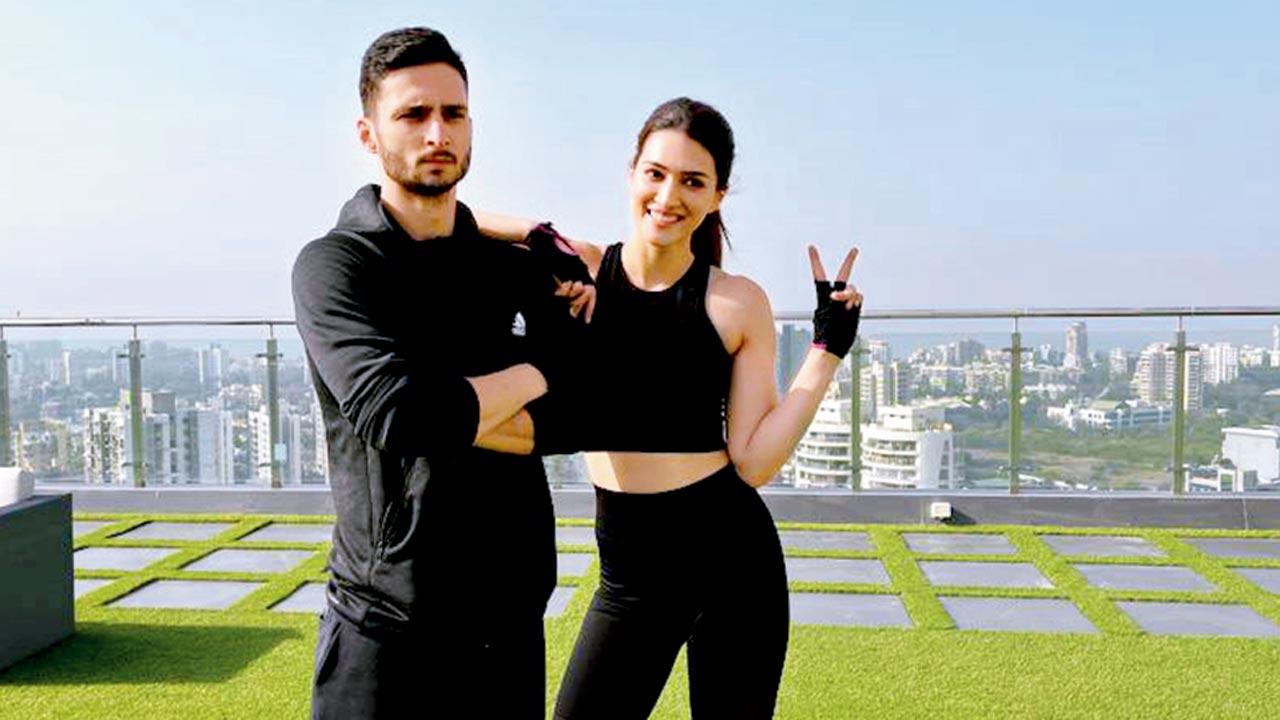
Asserting that consistency plays a crucial role in effecting physical change, Kriti says choosing exercises that are “enjoyable” is her utmost priority
Sonia Lulla (MID-DAY; November 22, 2023)
As fate would have it, a film venture that required her to gain 15 kilograms redefined Kriti Sanon’s fitness journey. Ever since Sanon adopted a new routine to shed the weight she had gained for Mimi, she has turned heads with her athletic abilities, which became increasingly prominent after the release of her last actioner.
For anyone hoping to learn about Sanon’s fitness routine, her social media feed could be deceptive. She does, after all, explore a variety of formats. Ask her which ones she has most benefited from, and she says, “Given the kind of body type that I have, I prefer to choose exercise formats like weight-training coupled with 30-second-long bursts of activities that shoot the heart rate. Typically, these are HIIT-styled exercises, and this mix is suitable for me. Because I lose weight very quickly, I prefer not to do too many cardiovascular activities. Sometimes, I may also practice yoga or incorporate flexibility exercises into my routine. I also meditate.”
For Sanon, however, developing a liking for fitness was a work in progress. It was during the time that she had to lose the 15 kilos that she had packed on for Mimi that she chanced upon trainers with whom she subsequently went on to launch a business venture.
“This was during COVID-19, and I had to train from home. The three trainers I trained with had started virtual sessions, and each of their energies was fresh. Each had something unique about their styles that made exercising enjoyable. The fact that I wasn’t executing the same monotonous routine again and again felt good. In case I needed to be in recovery or had injured my knee, [my trainer] knew which exercises would help me recover. Many people are often not motivated to exercise, but fitness is something that should be part of their lives, so the idea is to make it as [interesting] as you can. People think of exercise as something that needs to be regimented. But when you make it fun, you can integrate it into your life.”
Her biggest learning from the process, she shares, has been her comprehension of the importance of consistency. “Nothing happens overnight. Even if you exercise for two hours each day and slog yourself, you won’t see results in four days. You have to be consistent.”
All game for another action film, Sanon says her body type is suited for the genre. “I know I have the frame that is required for action to look good. But only when I feel that the script touches my heart, and that getting to do action would be [a bonus], will I do it. The script has to be more than just action alone.”
When the actor shares that she’s never had a cheat meal, we preemptively believe she adheres to a stringent one. It turns out to be the opposite.
“I am not a believer in following a strict diet or not having a certain food item. I don’t have cheat meals because I give my body everything. Of course, if there is a shot for which I need to show my midriff, I’ll cut down on the [amount of] carbs I have at night. But if you simply eat clean, that is, the right kind of foods, including vegetables, protein, carbs and fat in moderate amounts—that’s all that you need to do to stay fit. I’m a Punjabi. I love food. For me, it’s important to enjoy food, and I do,” said the actor while speaking to mid-day on the sidelines of the recently held Skechers marathon.
Subscribe to:
Posts (Atom)