Showing posts with label Class. Show all posts
Showing posts with label Class. Show all posts
Eight projects of mine went down the drain and I was depressed for a long time-Gurfateh Singh Pirzada
8:06 AM

Actor Gurfateh Singh Pirzada opens up about a particularly tough period in his career and feeling more settled in the industry now
Akash Bhatnagar (HINDUSTAN TIMES; March 23, 2025)
Gurfateh Singh Pirzada recently moved into the first house he bought himself and the actor is over the moon. “More than owning real estate, it’s about just being at peace. It feels good, although meri jaan nikal gayi hai ghar banate banate,” he tells us about his new Mumbai residence.
Does he now feel a sense of accomplishment? “I don’t know about achievement, but it’s more about pride,” replies the 28-year-old, adding that it took 11 years in the industry to reach this milestone.
Reflecting on the journey, he says, “It’s been difficult, but also great. I am more settled now; I had to say no to a couple of projects because the dates were clashing. My manager said it’s a good problem to have.”
But Gurfateh, who is set to star in a web series with actor Raveena Tandon, admits that this comes after a tough spell where over half a dozen of his projects got shelved. “Those days were very difficult; seven to eight projects of mine went down the drain and I was depressed for a long time,” he shares, adding, “But bade bade actors ki filmein shelve ho rahi thi toh main kaun hi tha.”
Ask if there was a specific project that turned things around and he says, “Class (web series, 2023) gave me a new lease on life and right after that, Call Me Bae happened. It gave me a glimmer of hope. But there’s still the question ‘Is he a viable actor?’ Woh jung main abhi bhi ladd raha hoon.”
Actors like me wait for bigger actors to say no to risky films or characters-Gurfateh Pirzada
8:25 AM
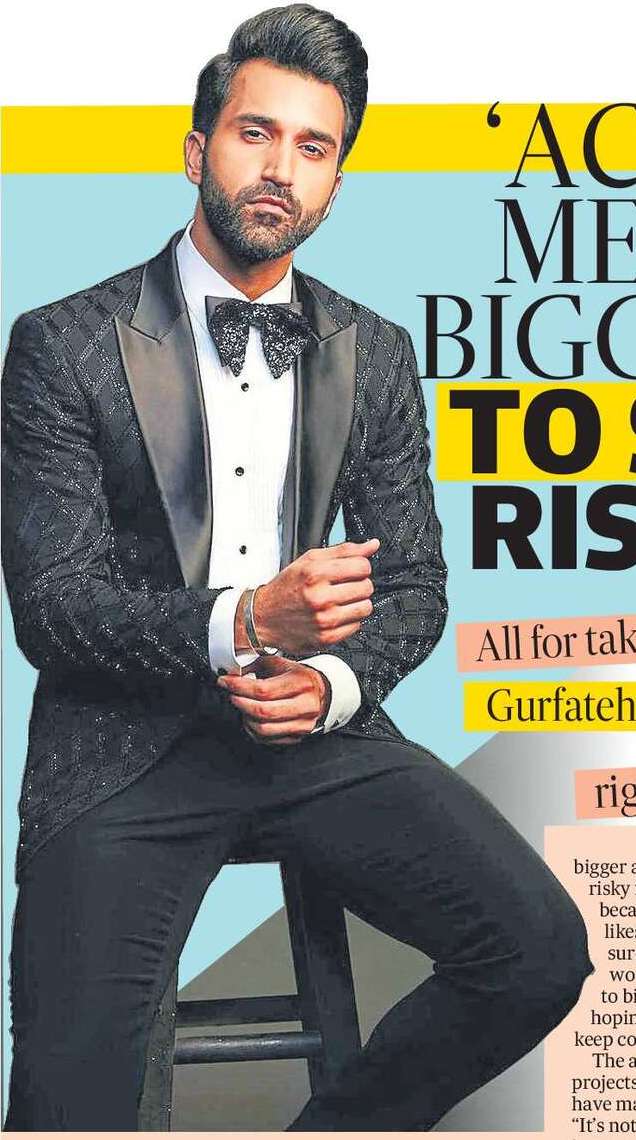
All for taking on challenging parts, Gurfateh Pirzada likes to wait for the right offers to come his way
Rishabh Suri (HINDUSTAN TIMES; March 21, 2023)
Gurfateh Pirzada is content with the way his career has progressed. The actor came in the spotlight with the 2020 web film Guilty. He did a small role in Brahmāstra: Part One – Shiva (2022) and with his February OTT release, Class, he got a chance to showcase his versatility. “I am happy that the audience likes what I am doing. I had not chosen Guilty, it chose me. In fact, I was not in the position to make choices at that time. I always had a vision of the kind of projects I wanted to be a part of and the people I wanted to work with,” says the 26-year-old.
All for taking on challenging parts, Pirzada adds, “Actors like me wait for bigger actors to say no to risky films or characters, because not everyone likes to experiment. I am sure Guilty and Class would have been offered to bigger actors. I am hoping more such projects keep coming my way.”
The actor admits that the projects he has done so far have made him confident. “It’s not been an easy journey. I have been doing this (trying to find good work) for nine years,” says Pirzada, adding that patience has kept him going. That’s also evident from how he’s responded to his first film as the lead, Bedhadak, getting delayed. It was supposed to go on floors, but Coronavirus disrupted the plan. The actor says, “It has been pushed and I am shooting for something else right now.”
Talking about the way things have changed, he adds, “There has been a lot of change in the way things are dealt with in the film industry after the pandemic. Consumer needs have changed, so films are going to take some time. But I am in no rush. I am here to stay for 50 years and not work for five years and disappear.”
Are the makers of web series going overboard with the use of expletives
8:12 AM
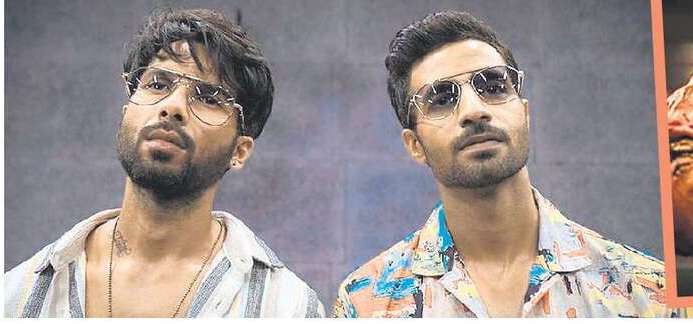
The use of strong language and expletives in shows such as Farzi and Class has raised the question: are the makers really going overboard with it?
Rishabh Suri (HINDUSTAN TIMES; March 11, 2023)
Streaming platforms are known to be free from censorship. But strong language, peppered with expletives, on shows, has been raising eyebrows of late. Take the case of shows such as Farzi and Class that have been getting brickbats for the use of strong language. The question remains, is profanity really getting out of hand on these platforms?
How much is too much?
Talking about Farzi getting called out for using strong language, actor Divya Dutta, opines, “It depends on the project — it could be voyeuristic or coming from the land that you are trying to show. For instance, when I watched Farzi, mujhe nahin laga zabardasti daal diya hai. I see those kinds of boys out there.”
Reiterating that the choice of language varies for each person, Kanishk Varma, director of the third season of Inside Edge and the film Sanak (2021), shares, “For Inside Edge, we showed how people (in the show’s universe) would interact. At the same time, I did a showreel for a streaming platform where my goal was to have nothing that could hurt someone. However, sometimes [in shows], I’ve felt, ‘Why do you have to abuse so much when asking for a glass of water!’,” he says.
In such times, self-censorship seems to have become the norm. Like actor Anil Kapoor, who removed extra expletives from his dialogues in The Night Manager. “There is nothing wrong with it; I just felt it was becoming more of a cliché. We were careful as we wanted our show to be viewed by families,” he opines.
Vishal Mangalorkar, who directed Jeet Ki Zidd, feels sometimes it’s a lot to handle. “There can be a little bit of restraint... What we tend to do sometimes is show real-life situations where people would use that kind of language. But kahin kahin pe zyaada hai,” he says.
Actor Rajshri Deshpande, who has been a part of the web show Sacred Games, says, “I believe we need to have freedom. It should just not be derogatory or demean any person.”
Can legal notices be the beginning of Censorship?
A recent order from the Delhi High Court to file an FIR against the makers of the web series College Romance, for the usage of “obscene, profane and vulgar” language has further stoked the issue. The order stated, “This court notes that this is not the language that [the] nation’s youth or otherwise citizens of this country use, and this language cannot be called the frequently spoken language used in our country.”
Will such curbs translate into the end of creative freedom? Actor Abhishek Banerjee, who was a part of Paatal Lok, feels one can opt out of watching certain things instead of curtailing creative expressions. “OTT is the most democratic set up. One has the choice to watch or not watch something on the platforms. At the end of the day, it’s a creative expression and is meant to be taken that way.”

Those who express reservations about showing children in such light should Google ‘Delhi school scandals’-Ashim Ahluwalia
9:28 AM
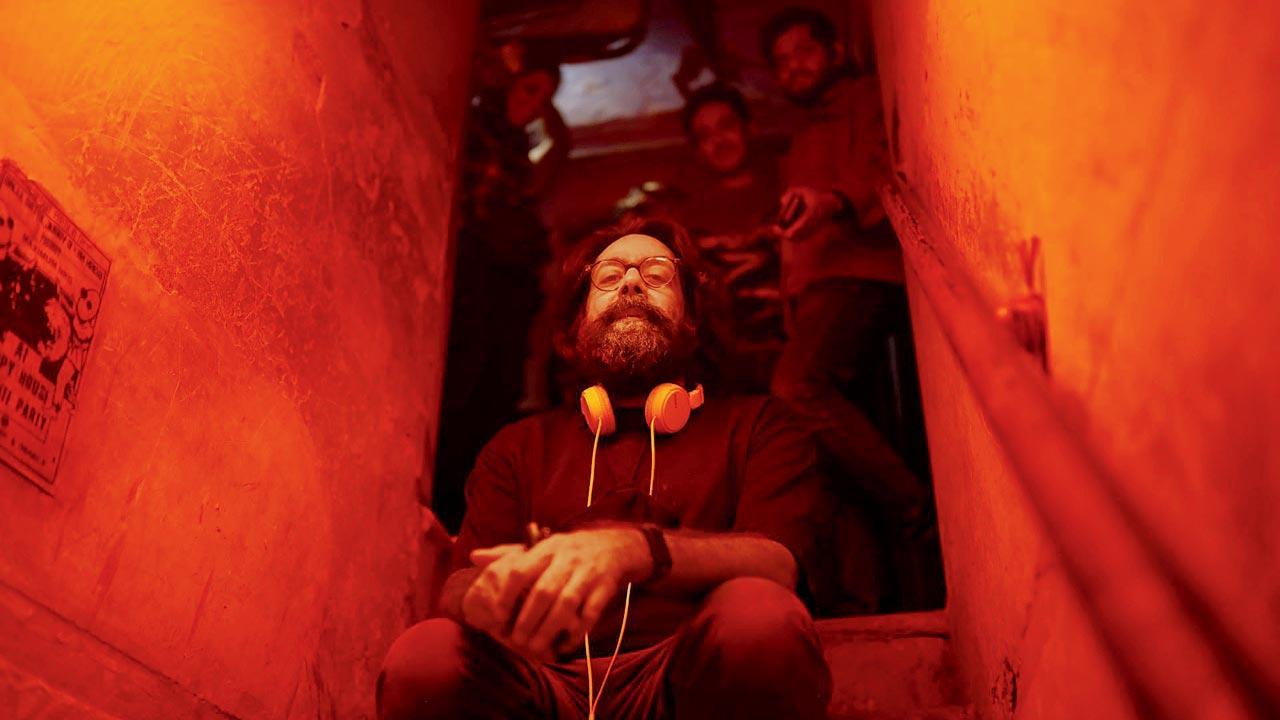
The makers of a new OTT offering—Ashim Ahluwalia and Kersi Khambatta—on how they manoeuver through the rugged and controversial terrain of caste and class through young eyes
Yusra Husain (MID-DAY; February 12, 2023)
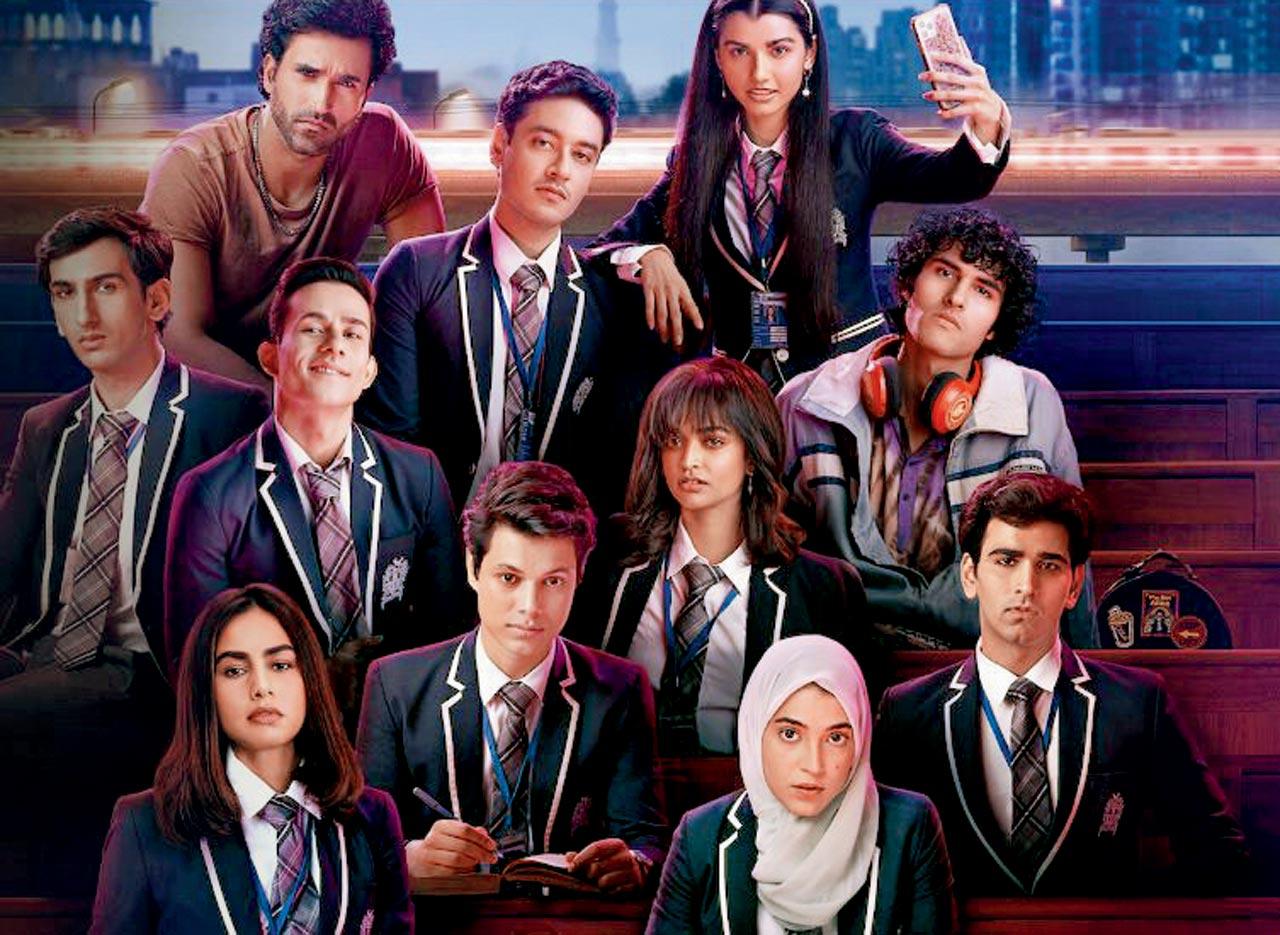
Love it, like it, or find it overloaded with themes layered like Medusa’s tresses, but you cannot miss the new series on Netflix, Class.
On a weekday, we sat down for a chat with showrunner Ashim Ahluwalia and screenplay writer Kersi Khambatta about the eight-episode murder mystery revolving around the lives of young adults in Delhi, and it smoothly transitioned into a conversation about caste nuances, class privilege and character representations. An adaptation of the Spanish show, Elite, Class is a story of three students from poor backgrounds, who get into an uber-rich school on scholarship, and their interaction with the other students.
Ahluwalia says he never set out to adapt Elite, nor had he watched it until requested to. “Class represents India right now. I was keen to make something around rebellious teenagers,” says the maker of Miss Lovely, “because I was one. Even though the Spanish original is glossier, I found the characters and situations intriguing and decided to stick with the plotline, almost like a novel source, and create a more realistic Indian version.” Peppered with his own childhood experiences in Mumbai, Ahluwalia says the screen depiction of rich kids and their parents is not far from reality.
“In a metropolis,” says the National award-winning director, “we all come across spoiled, wealthy children. Some people might express reservations about showing children in such light; I’d ask them to Google ‘Delhi school scandals’. Everything is out there—MMS scandals, brats running people over and getting away with it, even rape threats. Perhaps our version is softer.”
“There was no time for soft touch, over thinking, or over justification of character motives,” interjects Khambatta, “We wanted to hit hard, get the message across, keep the pace and all the fluff away.”
The message is quite clear, really. “Caste, class, religious and financial disparity is out there in the real world; there’s no denying it,” says Ahluwalia, adding, “We didn’t want to be preachy. You can be pro one community and anti another, pro gay or not, but our audience can have their own point of view. We are not telling anyone how to think, just showing a multilayered world that exists.”
Khambatta’s filmography includes Being Cyrus and Finding Fanny—both with friend Homi Adajania—with them alternating the roles of director and writer. “You open the newspaper and these issues [caste, religious and gender discrimination] are in there,” is his perspective, “It is what some Indians deal with every day, and while most shows have only skirted the issues in an effort to be politically correct, we wanted to hold up a mirror to society.”
Discarding the accepted pattern of a one-theme show, the makers say theirs isn’t about “homophobia, Islamophobia, Dalit rights etc, but just about a bunch of kids and what they deal with every day”. It’s the several Indias within one India.
And while Khambatta is less hopeful about change, Ahluwalia believes the good and bad co-exist. “The fact that we have such a show running,” he points out, “and that conversations around caste and religion can take place, is encouraging in itself. I don’t think this would have been possible 20 years ago.”
Joking about the realism of their characters, Ahluwalia says that a number of his acquaintances have wondered whether the characters or situations are based on them. He laughs it off. “The original show did not have the parent angle,” he says, “I introduced it considering that if the children are this wild, what would the parents be like? Many [viewers] have appreciated this aspect.”
Both makers are aware of the responsibility of how sex is shown on screen, and the role social media plays. “In India,” says Ahluwalia, “most works depicting sexuality are voyeuristic. The same goes for some western shows, where people fast forward to the scenes of nudity, sex and skin. We wanted to deal with sexuality through the eyes of the characters and the narrative. Teens experiment and grow through such acts into adults, but we didn’t want to exploit these [to grab eyeballs].”
Khambatta has the last word: “The younger generation is all about the Internet; their acceptance in society and insecurities are all driven online. The Internet has given people a voice beyond control. Social media explosion should reflect in every show now because it is a part of all our lives, and more so for teens, who practically live online for most of their waking hours.”
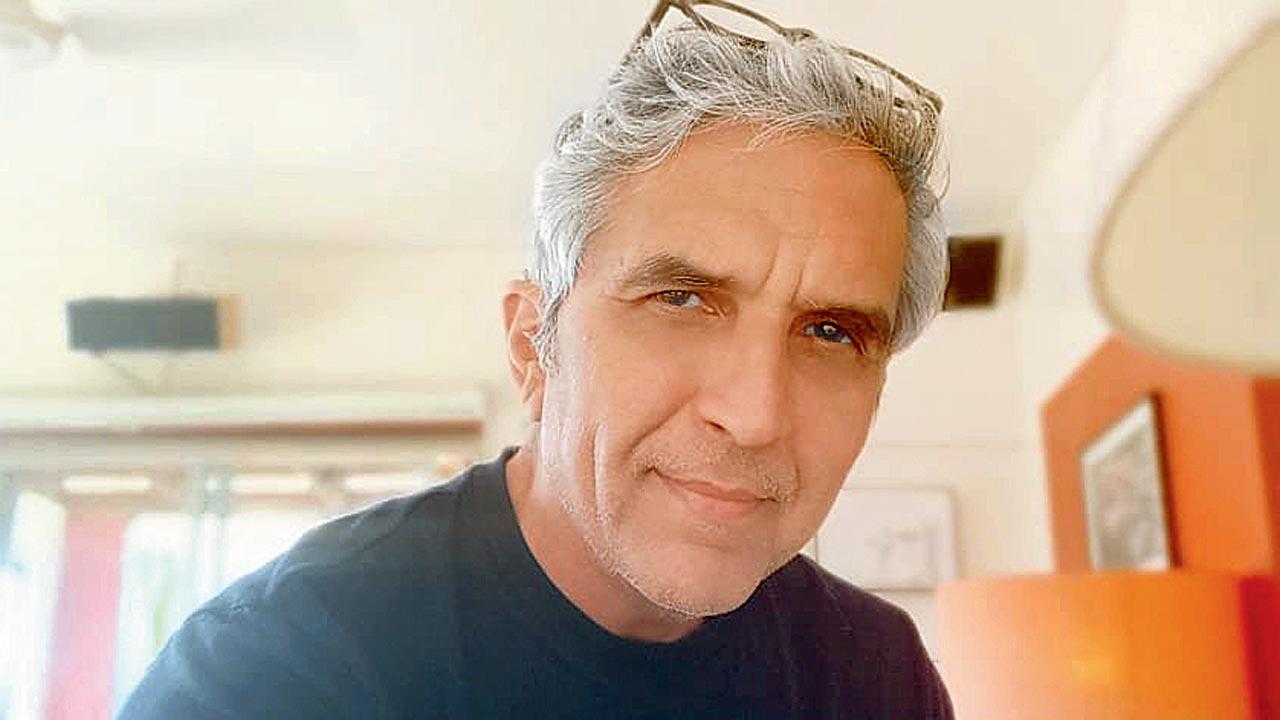
Kersi Khambatta, writer-director
Subscribe to:
Posts (Atom)