Showing posts with label Chandni. Show all posts
Showing posts with label Chandni. Show all posts
The fact that you said Assi and Dhurandhar in the same breath is good enough-Anubhav Sinha
3:01 PM
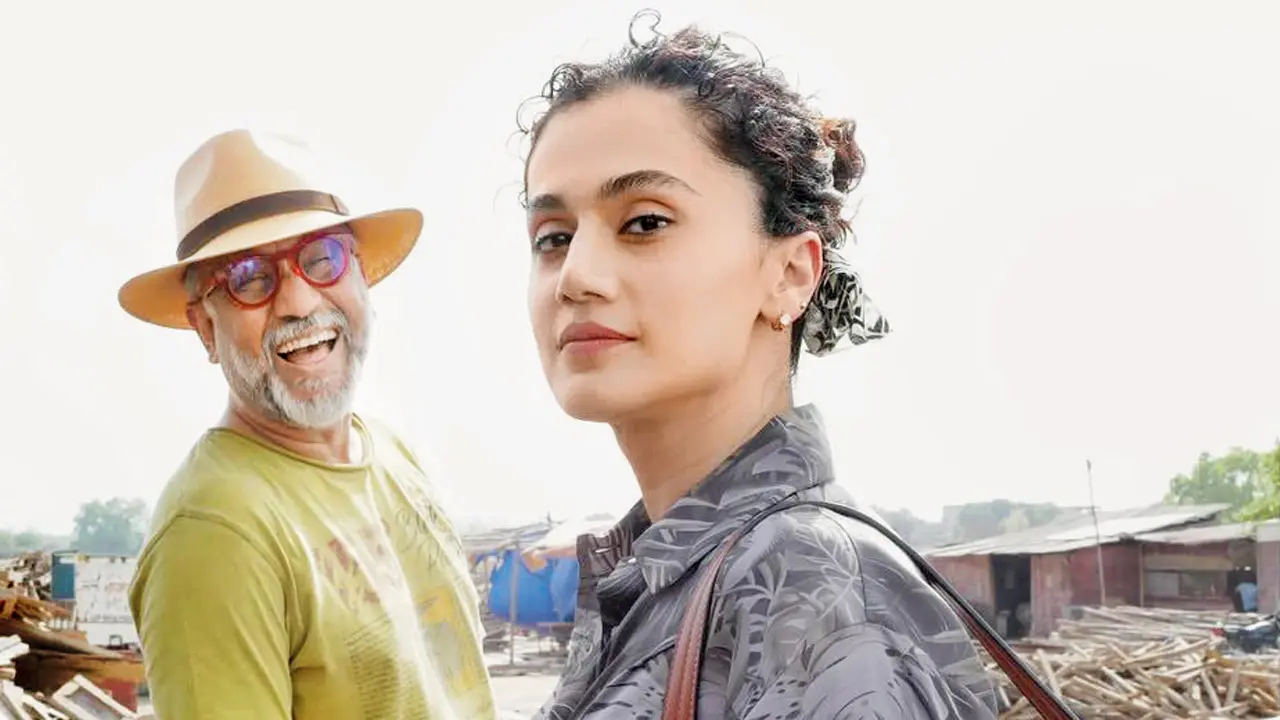
As Assi drops online, filmmaker Anubhav Sinha gets candid about its box office reception, making unpopular choices, and why he believes films like The Kerala Story and The Kashmir Files have a right to exist
Priyanka Sharma (MID-DAY; May 3, 2026)
Stationed at a city hotel, filmmaker Anubhav Sinha is busy recording long media interactions about his latest film, Assi. If one didn’t know better, the director’s enthusiasm would give the impression the film is about to release. But the Taapsee Pannu-starrer released two months ago, and began its streaming run last week. For Sinha, though, it feels like a re-release.
“The film dropped on Zee5 on Thursday night (April 17). Friday was a little quiet. So, I thought maybe OTT release is like this. But, Friday night onwards, it became viral — whether it was Instagram Reels or Whatsapps or DMs from filmmakers, friends, bichhde hue dost Mathura aur Jaipur se. So, for me, it’s feeling like a re-release,” he smiles.
Still, two months is a long time for a maker to observe the reactions that a film received during its theatrical run, agrees Sinha. “Largely, things that are said about the film are in appreciation. There are a slim percentage of people who find Kumud’s [Mishra] character, Kartik, to be an outsider to the story. But that’s all that I have heard as a critique. The other observation is that the film is very disturbing, which it was intended to be,” he says.
It feels the right time to register a feedback that one felt while watching the movie that works both as an investigation and an introspection centred around the rape of a school teacher (played by Kani Kusruti) in the capital. The feminist intent notwithstanding, the execution in parts feel preachy, we share with Sinha. The director replies, “I respect this observation and if I looked at the film from that viewpoint and it’s not absolutely unfounded.”
Sinha, consistently, has been among the voices in the industry who remain open to dialogue and dissent. So, we ask him how he views Pannu’s widely-discussed Instagram post, before Assi’s release, where she appealed to the audience to be louder in their support for films that aren’t cut from the cloth of mainstream. “You deserve good cinema only when you value it,” reads a sentence from her post. Doesn’t it put an unfair amount of responsibility on the audience, which is an outsider to the rooms that decide what gets made in the industry?
“The responsibility of the audience is directly proportional to the expectation of the audience. So, Tapsee is probably coming from a place where she very regularly hears that good cinema is not made. Even though, I don’t agree much with this because how do I assume my cinema is good? People will decide that. But Tapsee was probably trying to talk about real cinema, real stories. So, if the audience has expectations and demands from cinema, then it becomes your responsibility as well [to support it] because making such films is an unpopular choice. People have no idea what it takes to get these films off the ground,” he says.
But another argument arises that the audience merely reacts to the visual assets of a film or to a star, if it’s a star-fronted feature. If a filmmaker fails to ignite excitement among the viewers, the onus shouldn’t fall on them to still pay to watch a film, howsoever well-intentioned it is. Sinha agrees that the responsibility lies more on the industry to churn out diverse stories on a regular basis, even if it fails at times, in an attempt to reach out to the audience and eventually condition it to give a chance to “unpopular films”.
How does one restore the balance that an Assi and Lapataa Ladies can co-exist with a Dhurandhar and a Pathaan [2023]? “Yes, the balance has become very lopsided. But the fact that you said Assi and Dhurandhar in the same breath is good enough. Around 13 lakh people went to see Assi in the theatres. If I draw an analogy, 40–50 thousand people sit in a stadium to watch a match. Now, three crore people went to Dhurandhar, but its stakes and ambition were different. Assi’s ambition was not that three crore people should go to see me,” he argues.
But Sinha is a producer as well and the commercial ambition of Assi will have a number attached to it. “It should have done much better than what it did for it to fall into that [success] category. But that’s one of the later metrics that I look at. In the real world, it seems that the math of a film is very urgent. But it takes a backseat, not only for the filmmaker but for the whole team, including the stars and the studio. Years later, it doesn’t matter how much money did Satya [1998], Chandni [1989] or Lamhe [1991] make. On an urgent basis, Lamhe was a flop. But today, it is a hit.”
What remain urgent are Sinha’s stories. So, we mention our recent conversation with filmmaker Mahesh Bhatt, who said that stories on screen are being weaponised to push people away from each other.
“As an audience, you can choose one story over the other but all of them have the right to exist. The Kerala Story [2023] has a right to exist, and so does The Kashmir Files [2022],” Sinha says.
So, where does an artiste’s responsibility lie? “Artistes will make their own choices and then history will place them on shelves. It’s not my job to place another artiste on a shelf or myself on another shelf. We are making films, and today there is a knee-jerk response. Twenty years later, when a smart girl writes a massive article about what happened in this era in India, we will all be judged much later. If you are fortunate, you will be judged, otherwise you will most likely be ignored by history.”
Schools are going into lockdown because the air is so toxic. What kind of a world are we leaving behind?-Bhumi Pednekar
8:15 AM
Unnati Joshi (BOMBAY TIMES; March 22, 2023)
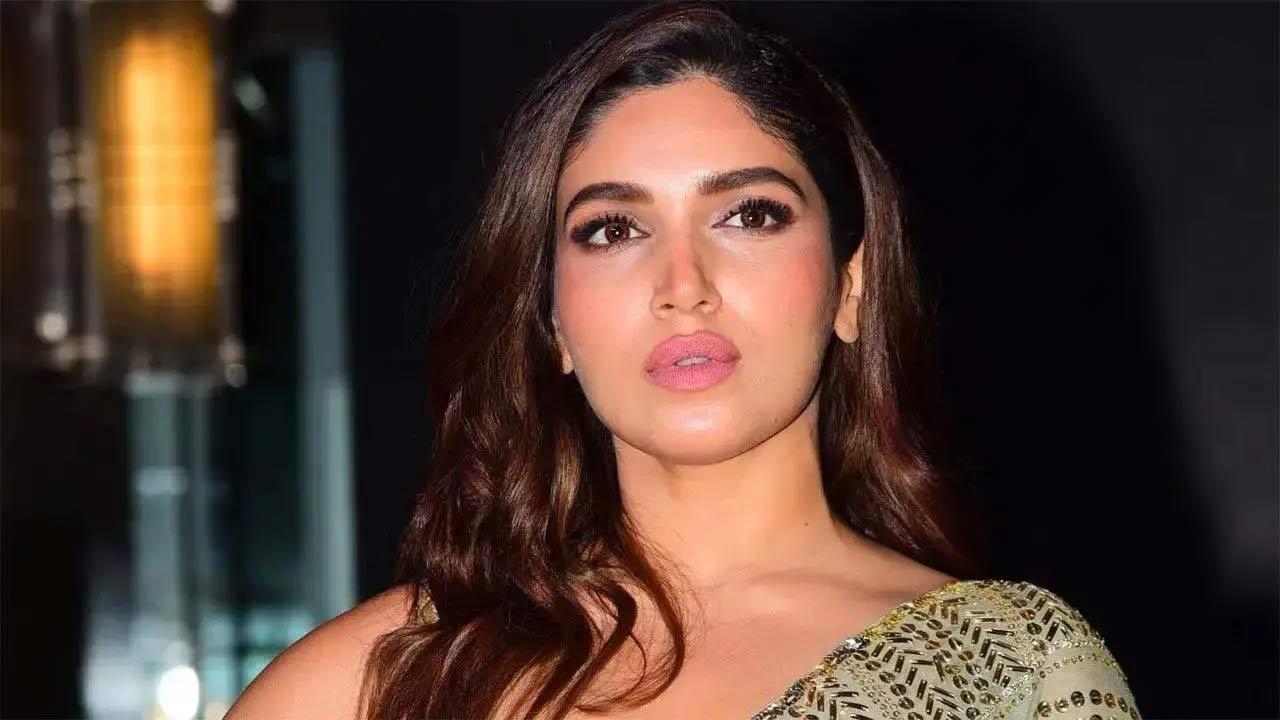
Bhumi Pednekar, who has been an advocate for climate-related issues, has always loved Delhi winters. However, she says that Dilli ki sardi no longer excites her. Courtesy: the smog. “Spring is definitely the best time to be in Delhi right now. But we have to understand we can’t always go to the second-best alternative. Is it fair that kids in the next few years will have respiratory problems? Schools are going into lockdown because the air is so toxic. What kind of a world are we leaving behind? Today, our summers and winters are so extreme. The biggest misunderstanding is that people think climate change will happen far away in the future. No! It’s happening now. We have had multiple heat waves, we experienced the coldest winter days this year, there have been floods and droughts, and this is not normal!”
“We must be really delusional if we believe that we aren’t going to face the adverse effects of climate change,” says Bhumi.
‘I FIND DELHI TO BE A MIX OF CULTURE AND DEVELOPMENT’
Talking about shooting in the Delhi smog, the climate warrior, who was recently named The United Nations Development Programme’s (UNDP) first national advocate for Sustainable Development Goals (SDGs) in Delhi, adds, “There were days when we had to push the shoot as the smog was so intense and we couldn’t see anything.”
Bhumi recalls, “I remember I would come back from the shoot and have bad allergic rhinitis, thanks to the pollution. I don’t want to live wearing a mask all the time, but that’s what we are going towards, and it’s heartbreaking.”
Despite that, Delhi remains one of her favourite cities. She says, “I love Delhi. I have grown up in the city and have my friends and family here. And what I love the most about the capital is the mix of culture with development. It really gives me a high when I go around Lutyens’ Delhi and cross the areas like the Parliament and the embassies. I think what’s beautiful about Delhi is that you will randomly see a historical monument and then there’s so much development around it. I love how both worlds co-exist. I also love the food here.”
‘WANT TO USE MY CRAFT TO MAKE SOCIETY A BETTER PLACE’
On the work front, Bhumi says she is looking forward to playing glamorous roles, but not ones that are about objectification of women. “I love glamour, and I love fashion. Most of my films don’t portray that, but in my personal life, that’s something I love. When I look at Sridevi in a chiffon saree in Chandni... uff! I want to do roles like that, but over time, we just reduced the importance of female characters tremendously. I would like to believe it’s changing now,” she shares.
The actress enjoys doing challenging roles. “Being an actor is a lot more than just looking amazing on screen and portraying different characters. It also comes with a little bit of responsibility. I got lucky because my first film was Dum Laga Ke Haisha, I tasted blood with that film and realized that doing unconventional parts is my power, and that’s how I can create a space for myself.”
She further adds, “I really enjoy challenging and pushing myself. I enjoy that my films bring about a certain amount of positive change in the world. I want to use my craft to make society a better place. I feel very proud that I have created a niche for myself, and I really hope that other women join me in that space, I will be happy to share it. There’s enough work for everyone.”
Pandit Shiv Kumar Sharma's music didn’t make masses feel disconnected-Shankar Mahadevan
8:18 AM

Noted composer hails Sharma for bridging the gap between classical and film music
As told to Sonia Lulla (MID-DAY; May 11, 2022)
When you are handling a mainstream subject like a Bollywood movie, there is always a discussion around classy music and massy music. Creating a piece that satisfies both, the maestro and the masses, is not easy because the latter may not understand Indian classical music. But Pandit Shiv Kumar Sharma had the ability to do that. If you see his work in Silsila [1981] and Chandni [1989], you can see that the classical music that he used had depth, but wasn’t so difficult that the masses felt disconnected.
In a mainstream song like Dekha Ek Khwab from Silsila, there is a beautiful santoor section. He raised the bar of Indian music, and was an example for a musician like me who wanted to imbibe [those qualities] and use Indian classical music in mainstream compositions. Not many people know that he also played the tabla in so many legendary songs that were sung by Lata ji [Mangeshkar].
His contribution to film music is only a fraction of all that he has achieved. The santoor was not traditionally known as an Indian classical instrument. The Kashmiri folk instrument was [alien] to the Indian classical music world, and he popularised it all over the world. Indian classical music became popular via the santoor, because of him. He made people take the fact that the instrument was associated with Indian classical music, for granted. With the word santoor, no other name except Pandit Shiv Kumar Sharma can be associated. He will be remembered forever.
Shiv Kumar Sharma passes away; to be accorded a funeral with full state honours
8:14 AM

THE TIMES OF INDIA (May 11, 2022)
Shiv Kumar Sharma, who reshaped the identity of santoor, elevating the instrument’s stature across the globe, and who composed a bunch of dulcet melodies with renowned flautist Hariprasad Chaurasia in Yash Chopra movies, passed away following a heart attack in Mumbai on Tuesday morning. He was 84.
Although the maestro was on regular dialysis, he remained active till the end and was to perform in Bhopal next week, family sources said.
“My story is different from other classical musicians. While they had to prove their mettle, talent and calibre, I had to prove the worth of my instrument. I had to fight for it,” Sharma had told TOI in 2002.
He will be accorded a funeral with full state honours, said CM Uddhav Thackeray. The last rites will be performed at the Vile Parle crematorium at around 3:00 pm on Wednesday.
-----------------------------------------
Shiv Kumar Sharma, who reshaped the personality and identity of santoor elevating the instrument’s profile and stature across the globe, and who composed a bunch of dulcet melodies in tandem with renowned flautist Hariprasad Chaurasia in Yash Chopra romances and thrillers, passed away following a heart attack in Mumbai on Tuesday morning. He was 84.
“He was on regular dialysis but was still active. He was to perform in Bhopal next week,” a family source told PTI.
With his arresting features — the shock of hair being his signature — the santoor maestro regaled music lovers in thousands of concerts over decades; his jugalbandis with Chaurasia and tabla virtuoso Zakir Hussain a treat to the ear and the soul. But the accolade and the glory came after a long struggle to gain respect for the instrument he played.
“My story is different from other classical musicians. While they had to prove their mettle, their talent, their calibre, I had to prove the worth of my instrument. I had to fight for it,” Sharma told The Times of India in 2002.
“Shiv Kumar-ji was an epochal musician. Braving almost universal cynicism, he made an obscure staccato instrument capable of a convincing presence in classical music. His ascension to the Hindustani Music Hall of Fame is even more significant because it coincided with the era ruled by formidable instrumentalists like Ustad Vilayat Khan, Pt Ravi Shankar, and Ustad Ali Akbar Khan,” musicologist Deepak Raja said.
Jammu-born Sharma was ushered into music when just five by his vocalist father Uma Dutt Sharma of Benaras gharana and showed promise in both vocals and tabla. But the notes changed when he was 13 after his father brought a gift from Srinagar. “I tore at the wrapping paper eagerly, expecting a game or something else as exciting. But the box held a strange-looking musical instrument which I hadn’t seen before! And that’s how I was introduced to the santoor,” he told TOI in 2001.
The Dogri musician’s father-guru wanted him to play this instrument. “At that time, the santoor was used only in Sufiana music in a small pocket in Kashmir. No other part of India had ever seen it. But dad wanted it to be developed for national use in Indian classical music — and he entrusted the job to me,” he said.
In 1955, Sharma came to Bombay for a concert packed with the galacticos of Indian classical music: Bade Ghulam Ali Khan, Ali Akbar Khan, Ravi Shankar, among others. He was just 17. But he made an impact. The same year Sharma also composed a background piece in V Shantaram’s film, ‘Jhanak Jhanak Payal Baaje’ (1955) for music director Vasant Desai.
But many critics were far from convinced about santoor’s range. “… connoisseurs rejected it as a complete instrument since I couldn’t play alaap. Santoor is essentially a percussion instrument played by strikers. It can’t sustain the vibrations and so, there was no scope for meend (glide from one note to another)…I modified the instrument and created a distinct character,” he once told TOI.
Much against his father’s wishes, Sharma came to Bombay in 1960, hoping to build a career as a freelance musician. Over the years, his services were utilised by top Hindi film composers, including Hemant Kumar (‘Bees Saal Baad’), Jaidev (‘Hum Dono’), SD Burman (‘Guide’) and RD Burman.
‘Call of the Valley’ was released in 1967. The long-playing record, put together by the trio of Sharma, flautist Hariprasad Chaurasia and guitarist Brij Bhushan Kabra, musically expanded on a day in the life of a shepherd through a bouquet of ragas. The album steadily entered the music shelves of the culturally-inclined and became a milestone in their careers.
When director Yash Chopra introduced Sharma and Chaurasia as a composer duo in ‘Silsila’ (1981), the film industry was surprised. Silsila was a multi-starrer and roping in two classical musicians, Shiv-Hari as they were christened, was deemed a commercial risk. In the end, the music turned out to be one of Silisila’s few highlights. Shiv-Hari became regulars for Chopra (‘Faasle’, ‘Vijay’).
In the Eighties, when melody had largely taken a backseat in mainstream commercial ventures, they provided ear-pleasing yet chartbusting scores, most notably in ‘Chandni’ (1989). That the two had internalised the idiom of Hindi film music was most evident in ‘Darr’ (1993), where they delivered a score that fused seamlessly with the demands of a thriller.
-----------------------------------------
A MUSICAL JOURNEY
- 1938: Shiv Kumar Sharma is born into music – the only son of Jammu-based musician Pt Uma Dutt Sharma of Benaras Gharana
- His music journey begins at 5 as a tabla player. At 13, gets gift of santoor from his father
1955 Sharma gives his first public performance at 17, playing the santoor in the presence of Bade Ghulam Ali Khan, Ravi Shankar, Allah Rakha Khan and other maestros
- Gets his first film as a santoor player in V Shantaram’s ‘Jhanak Jhanak Payal Baaje’. It is also the first time santoor is used in Hindi cinema 1967
- Teams up with flautist Hariprasad Chaurasia and guitarist Brij Bhushan Kabra for the concept album ‘Call of the Valley’, which becomes a huge hit 1981
- Collaborates with Hari Prasad Chaurasia for a film for the first time, composes music for Yash Chopra’s ‘Silsila’ 1986
- Sharma receives the Sangeet Natak Akademi Award 1991
- Is awarded the Padma Shri 2001
- Is honoured with the Padma Vibhushan May 10, 2022
- Dies of heart attack at 84
Yash Chopra came to me thrice with Dil To Pagal Hai, but I was young and success had gone to my head-Juhi Chawla
8:02 AM

Roshmila Bhattacharya (MUMBAI MIRROR; October 9, 2020)
Their first collaboration was Chandni, a guest appearance, and Juhi Chawla, who was riding high on the success of Qayamat Se Qayamat Tak, was both excited and nervous to be working with her idol Sridevi, senior actor Vinod Khanna, cinematographer Manmohan Singh and of course, the legendary producer-director Yash Chopra. They started out with a photo session in the white outfit she was to wear in the song “Lagi Aaj Saawan Ki Phir Woh Jhadi Hai”, subsequently shot at Chandivali Studio. “It was choreographed by Saroj Khan and I was tense, but fortunately, the shoot went off smoothly. I met Yash ji at a suite in Holiday Inn, which had been converted into a hospital room. One look at me and Yash ji told Pandhari Dada to reduce my makeup. When Dada reasoned that since I was dying in the film, the pronounced dark circles below my eyes were justified, Yash ji told him something, I’ll remember all my life, ‘A heroine should look lovely, no matter what,’” the actress recounts 31 years later.
For the rest of the shoot, an awed Juhi remained practically tongue-tied in the presence of her seniors. “It would be years before I could have a conversation with Vinod ji. It was at the premiere of a film, maybe Dabangg, when I raved to him about what a brilliant actor his son Akshaye was. When he complained that he was too selective, I assured Vinod ji that though his films were few, Akshaye was riveting on screen,” she laughs.
Bring up the subject of Yash ji and she says that what set him apart was that while other makers sketched out the story to her in three lines, she got a full narration of Aaina, produced by him, from scriptwriter Honey Irani. And when he approached her with Darr, he himself narrated the story of obsessive love.
“Since we were flying off to Switzerland for a 25-day schedule, he had Neeta Lulla design my entire wardrobe and got his still photographer to click pictures of me in every outfit in the garden. He’d look at them closely and tell Neeta what worked and what needed to be tweaked. This was when, on other sets, I’d get my costumes on the day of the shoot and they’d be switching and tucking, minutes before I faced the camera,” Juhi shares.
Chandni was followed by Aaina, a story of two sisters, directed by Yash ji’s first assistant, Deepak Sareen. The producer himself never came on the set and only supervised the song “Goriya Re” which had remained incomplete because of unseasonal rains in Lonavla, in the end. “Aaina’s Reema, shy, bespectacled, introverted, was a lot like me. But I guess Yash ji saw something to cast me as the more glamorous Kiran in Darr,” says Juhi. “Darr followed Sri ji’s Chandni and Lamhe, so I had pretty big shoes to fill. I’d look at Adi (Yash ji’s son Aditya Chopra), who was assisting him, after every shot, to gauge how it had gone off from his reaction.”
The schedule in Switzerland was gruelling. She’d be up by 6 am and into the bus an hour later. At the location, there were no vanity vans, so while Shah Rukh Khan changed behind a tree, the curtains were drawn and she was given the bus to dress up, and do her hair and makeup. The shoot was constantly interrupted by showers and everyone would dash into the bus. Work was held up for an hour or two. “We were never bored because we had two great raconteurs in Yash ji and Shah Rukh, who regaled us with stories. Yash ji was always full of laughter, jokes and anecdotes,” Juhi reminisces.
They’d shoot till around 10 pm, drive back to their chalets, tuck into a hearty Punjabi meal, and listen to Pam Chopra sing, before calling it a night. “The next day we were back on the bus for a full day’s shoot, but it was so much fun that it never felt like work,” she marvels.
They stayed in touch even after the film, meeting at Holi bashes and Diwali parties at his home, where Gauri, Shah Rukh and Yash ji’s sons, Adi and Uday, would play cards, squabble and laugh. “Whenever we met, Yash ji would greet me, saying, ‘India’s Most Beautiful, how are you?’ Sri ji was far more beautiful, but I revelled in the warmth of his teasing words,” Juhi smiles.
They did not do another film together. “He came to me thrice with Dil To Pagal Hai, but I was young and success had gone to my head. I didn’t want to play second fiddle to Madhuri (Dixit), though Yash ji assured me that Nisha, too, was a great role. It’s something I’ll regret all my life because he went away too soon,” she rues.
On October 21, 2012, a couple of weeks after their last meeting at Amitabh Bachchan’s birthday bash, when Juhi thought Yash ji wasn’t his usual self, he passed away after contracting dengue. Eight years later, as his production company steps into its golden jubilee year, the ex-Miss India raises a toast to the memory of the King of Romance, who immortalised her as one of his ethereal heroines.
Sridevi’s statue to be installed in Switzerland
8:07 AM

MID-DAY (September 10, 2018)
The Switzerland authorities are planning to install a statue of veteran actor Sridevi, whose hit film Chandni was shot at the country’s picturesque locations. The statue of the renowned Indian filmmaker, Yash Chopra, was unveiled in Interlaken in 2016.
“Many of Chopra’s films featured Switzerland as a backdrop and he is credited with boosting the popularity of the Alpine nation among Indian tourists. Now, considering Sridevi’s role in promoting tourism here, there is a proposal to honour the actor by having her statue here,” a senior official familiar with the development said.
The 1989 blockbuster Chandni had also put Switzerland on centre stage as almost half the song and dance sequences in the film had a Swiss backdrop.
Sridevi died earlier this year at the age of 55 due to accidental drowning in Dubai.
DNA After Hrs editor Meena Iyer pays an ode to Sridevi
10:38 AM

Meena Iyer (DNA; February 26, 2018)
When I woke up to the news of Sridevi’s demise yesterday, I fervently hoped that it was a ‘death hoax’ and someone would call me soon to say, “It was a mistake. Sri is alive.”
But when my worst fears were confirmed and I learnt that she had passed away close to midnight on February 24 in Dubai with husband Boney Kapoor by her side, I just slumped in my chair. I felt a lot older and was so deeply saddened by the news that I’m yet to recover from it.
Okay, let me put things into perspective. Sridevi or Pappi, as she was called by her family, was not a friend. But she was the darling of the masses for over three decades. And for those of us who started Hindi cinema reportage at the start of the ’80s, she was someone who dominated our thoughts.
Personally and professionally, No 1 was always a lonely spot and Sri, who wore the mantle of top dog for the longest time, never let her mask slip in front of anyone but her immediate family. Fiercely protective about her private life, she hated being probed, whether it was about her mother who controlled her finances or Mithun Chakraborty, who had stolen her heart.
The only time she broke down (or rather the first time it became public knowledge) was at the start of the ’90s, when she lost her father, Ayyapan Yanger. She was shooting for Boney’s Roop Ki Rani Choron Ka Raja (1993) then. That was perhaps one of the earliest times when she sought refuge in his home in Lokhandwala. The company of Boney’s parents — Surinder and Nirmala Kapoor — gave her solace.
Interviewing Sri was always a task. A person of few words, getting an answer out of her was tough. Yet, I have notched up some really terrific interviews with her. Both of us spoke Tamil and perhaps that’s why Sri gave me more concessions than she did to other journos.
However, the atmosphere around her was crackling. She was deified all over South India, long before she came to Mumbai. Chances were that you would be trampled upon by her fans if you were travelling to a shoot with her. Like this one time when we went to Visakhapatnam for a shoot of a film called Jaani Dost (1983). She was pairing up with Jeetendra in the Hindi version and Krishna in the Telugu version. As bystanders, our jaw dropped because in the sweltering summer heat of Andhra Pradesh, at least 20,000 had come from nearby villages and townships just to get a glimpse of their devi.
She was riding such high in the ’80s that soon after Himmatwala and Mawaali (both of which released in 1983) followed by Maqsad (1984), she became the reigning queen of Hindi cinema.
But she was no fluke. Like Jeetendra, with whom she had done 15-odd films, had once told me, “As far as Sri goes, I admired her when she was a newcomer. I admire her even now.” He added, “She wasn’t the original choice for Himmatwala. It was supposed to be Rekha. But director K Raghavendra Rao asked me to see this new girl. Sri landed Himmatwala and the rest is history.”
Jeetu also recalled her dedication. “She was a fabulous dancer. And I was like a parrot. I would just parrot my steps and keep doing rehearsals. Though Sri got her steps right the first time itself, she would patiently rehearse with me. Her dedication should be applauded,” he said. Amitabh Bachchan, Vinod Khanna, Rishi Kapoor and Anil Kapoor clamoured to do a film with her. Dimple Kapadia, Amrita Singh and Meenakshi Seshadri mostly did those films that were rejected by Sridevi.
I remember the time in 1987, when we wrapped up an interview on a flight from Mumbai to Chennai where she told me, “I’m absolutely fed up of doing films where a heroine is just required to stand around as a showpiece.” By this time she was refusing more movies than accepting them. It didn’t matter to her even if the film was a Toofan (1989) with Amitabh.
In his biography by Harper Collins, Khullam Khulla: Rishi Kapoor Uncensored that I co-authored with him, Rishi says, “There was only one heroine who was a little reluctant to work with me, very likely because she was the bigger star at the time. Sridevi was making waves and I had hit a plateau when we worked together in Nagina (1986). She was also very reclusive. I was later told that she was an extremely shy person and very inhibited.”
“One of our most embarrassing moments was when we were shooting a song for Nagina at RK Studios. When you are in the midst of a ‘take’ and the assistant cameraman suddenly says the magazine has run out (when the camera needs a new roll of film), it is a very awkward moment for actors. The lights are on, you are in position, and you have to hold it, looking odd and static, while a new film is loaded. During Nagina, Sridevi and I found ourselves in that awkward situation, just standing there, waiting. When she suddenly spoke to me and said, ‘Sir, I have seen Khel Khel Mein four times,’ I was so taken aback. I could only mumble something about a film of hers that I had seen and that was it.”
“That was the only conversation I had with Sridevi all through the filming of Nagina. Otherwise, it was always ‘Namasteji’ and ‘Good Night ji.’
It was during the making of Chandni (1989) that we became friendly. She opened up to me and a new level of comfort also improved our performance. Yashji (Chopra) gave us a free hand in the film, leaving a lot of room for improvisation. It worked well since I had to be spontaneous and improvise on set, and so did Sri. She contributed a great deal towards making scenes work. The ‘cognac, sharab nahi hoti’ sequence, for instance, was entirely improvised. It was not in the original script. It was made up on the spot by Yashji, Sridevi and me.'
Sridevi is a terrific actor who balances method acting (which she picked up from Kamal Haasan) with spontaneity. She has also evolved over the years. When I saw her in English Vinglish (2012), I was floored. She has flowered into a highly-intelligent actor.
I was probably one of the first people to know that Sridevi was in a relationship with Boney Kapoor. For the first time, I had an inkling of it when we were shooting a song for a film in Goa. Sridevi had left the location before me. And, I was heading back to the Taj for lunch when I saw someone who looked like Boney from afar. But I wasn’t sure. Fortunately, the general manager of the hotel, Joe, was a classmate of mine. I called him up and asked, ‘Is Boney here?’ He said, ‘Who Boney?’ I replied, ‘Boney Kapoor.’ He looked up the name on the computer and reported that he wasn’t there. It occurred to me then that he may have used an alias, so I asked Joe, ‘Has an Achal Kapoor checked in?’ And the answer was, ‘Yes.’
Achal Kapoor is Boney’s real name. And that’s when I guessed what was brewing between the two. Three or four months later, after they got married, there were whispers that she was carrying his baby. The dress man of our film revealed that all her clothes were being altered and her trousers were being loosened. The director was also told not to take shots below the waist. But for the most part, Sridevi kept her personal life away from public scrutiny, and professionally, she was wonderful to work with. She was a fabulous actor. I had two huge successes with her, Nagina and Chandni. We also did Banjaran (1991), which was an average film.”
After her marriage to Boney, Sri’s world revolved around her home. She affectionately called him, “Papa” and he addressed her with many endearments including “Jaan”. When one dropped by to meet Boney at their Juhu bungalow in a quiet by-lane, Sri was the one offering chai and biscuits. She looked happy beyond words and of course once Janhvi and Khushi came, she just slipped seamlessly into domesticity.
On her return from Dubai, Sri and Boney were committed to fly to Mauritius to attend a function where she was to be Chief Guest. And a few weeks ago, this couple was also house-hunting in South Mumbai. Perhaps, they were looking for a plush address to settle sometime later in life.
Of course, all of that is now an unrealised dream. The queen of Indian cinema has passed away, leaving behind her a void that will never be filled.
I will miss my Chandni for all the lovely cinematic moments that she gave me-Rishi Kapoor
10:29 AM

Rishi Kapoor reminisces fond memories of Sridevi
As told to Rachana Dubey (BOMBAY TIMES; February 26, 2018)
It was the rudest shock to wake up to at 4 am. I got a call asking about my memories of working with her. When I started my second innings as an actor, I was confident that we will work together again. It’s a dream that will remain unfulfilled for as long as I live. I still can’t believe she’s no more. Sridevi was fit and looking gorgeous as ever. She didn’t have an ailment, she was careful with her diet, she was a gym regular and she’s succumbed to cardiac arrest. She’s gone at a time when everything was going good for her. I don’t understand what really triggered this.
Even today, memories of working with her in Nagina and Chandni are fresh in my mind. I remember Jaya Prada was the original choice to play the leading lady in Nagina. For reasons that are beyond me, she lost the part to Sridevi. At that point, I wasn’t aware but Sridevi was keen to work with me because she hadn’t worked with me till then. The film became a turning point in her Bollywood career. While she was scaling the heights of stardom, this film catapulted her to superstardom almost overnight. On the set, she didn’t converse much. Initially, I thought maybe she’s snooty or simply arrogant to not speak to her co-stars.
Later, I found out that she was actually shy and maybe, a tad conscious about speaking in Hindi or English, because she was not proficient in either of the languages back then. In fact, she told me about it much later. Those days, while shooting a film, we had something called as a magazine change. It was a technical thing and we had to stay at our positions while the lights faced us. In those two to three awkward minutes, we stood there not knowing what to speak. I broke the ice and complimented her dance skills. To that she said, ‘I’ve seen Khel Khel Mein four times.’ That was the first conversation we had. By the time we worked together in Chandni, she had scaled great heights of superstardom. Amitabh Bachchan and she are the only actors who have really seen those dizzying heights of fame for a long, long time in their careers.
When we started working in Chandni, she had become more conversant and confident with her Hindi and English. We did a lot of improvisation on the set, on almost every scene. Like, the cognac scene was not written the way it was in the film. On another occasion, we were shooting the title track in which I give her my ice-cream and when I asked her for the cone, she showed me a thenga! That was impromptu. Can you believe that?
That was the fun of working with another artiste who made everything look and feel real. She brought to the table what no one else did. There was a dance sequence featuring her in the film, which is about three minutes long. It was shot in Switzerland, and she had a morning call time. By lunch time, everyone was back to the hotel. I was dumb-founded to know that she took less than half a day to film an entire dance sequence, one that was difficult. Saroj Khan, who was choreographing it, told me, ‘It was a cake-walk for this girl. She did it all with such ease.’ That was the genius that Sridevi was.
We won’t get to see such artistry ever again. The last time I worked with her was 25 years ago. At that time, she decided to leave everything to set up a house and start a family. I immensely respect her for that because a female actor has a body clock and she must adhere to it. She raised her daughters Janhvi and Khushi beautifully. When they were old enough, she returned to the movies with English Vinglish and Mom, and she was as good as ever. Today, I feel terrible for her lovely daughters. I will miss my Chandni for all the lovely cinematic moments she gave me. Her fans will miss her. No one will entertain the way she did. I don’t see another female actor achieving what Sridevi did in any sphere of life. Mere Haathon Mein Nau Nau Choodiyan became a national anthem for all desi weddings and Main Teri Dushman headlines the naagin dances everywhere even now. These are all her footprints on our cinema which will remain…
Check out Sridevi and Boney Kapoor at Moscow for the Russian premiere of Mom
7:43 AM

Sridevi and producer-husband Boney Kapoor recently arrived to a warm response for their film’s premiere in the freezing country
Sanyukta Iyer (MUMBAI MIRROR; December 18, 2017)
Sridevi, her producer-husband Boney Kapoor and their younger daughter Khushi were welcomed by the Indian Ambassador in Moscow Pankaj Saran as they arrived for the premiere of their last release, Mom, in the Russian capital. The gritty thriller which follows Sridevi’s mission to avenge her daughter’s rape, released in 30 theatres across Russia. And on Sunday, 400-plus Russians were screaming “Chandni… Chandni…” during interval. They continued to sing it even after the film ended.
Speaking to Mirror from Moscow, Sridevi exulted, “It was overwhelming to witness the audience’s reaction to the film. It felt like I was watching it for the first time because there was so much energy in the room.”
An equally delighted Boney added that his wife was mobbed by women who seemed to be completely in love with her. He was particularly enthused by their response to the film and one sequence in particular, where Akshaye Khanna’s cop finds a pair of glasses as a prime reason to pin Sridevi’s character as a suspect when she fishes out a similar pair from her handbag, puts them on. “They were cheering and hooting during that scene,” said Boney, who added that while the Kapoors love to explore new places on their trips, the plan this time is to return home as it’s freezing in Russia.
He recalls how his iconic production, the Shekhar Kapur-directed Mr India had released in Russia exactly 30 years ago and Bollywood’s bond with Moscow remains as strong as ever. “It’s freezing right now, too cold to walk, but the locals are celebrating our cinema. While the influx of Hindi films had slowed down in the last few years, we seem to be back with a bang. This is the time for an Indo-Russian collaboration,” Boney asserted, confiding that he will be meeting a Russian producer on the trip.
Sridevi, Rishi Kapoor remember their Chandni co-star, Vinod Khanna
7:09 AM

Upala KBR (DNA; April 28, 2017)
For Rishi Kapoor, Sridevi and the late Vinod Khanna, Chandni was a landmark film with Yash Chopra. One that had unforgettable music, some great scenes between the trio.
Of course, in the wake of his recent passing, condolences have been pouring in and the three have been co-stars separately in films other than that. Here, Sridevi and Rishi remember Vinod with much fondness...
SRIDEVI
“We have worked together in three films including Chandni (1989) and Pathar Ke Insaan (1990) and Farishtay (1991). It was a great shock to hear about him passing away... I feel very sad... I heard from Boneyji (Kapoor) about it. I remember Vinod as being a very calm and dignified actor. He always talked softly, was extremely humble and down-to-earth and a wonderful co-star. My heart goes out to his family. He was a great guy. We first worked together in Chandni. Before that, he was a top star and this larger-than-life personality for me. I would watch all his films and I was very excited and happy when I heard he was working in Chandni and that I would get to work with him. I couldn’t believe it! We did a mahurat of Chandni and I imagined him as a regular famous person would be. We wished each other and then I started observing him. Vinodji was so simple and quiet. It was really amazing as he turned out to be a total contrast from what I had envisioned him to be. He was dignified, non-starry and simple. I have always had great respect for him.”
RISHI KAPOOR
“It was heart-breaking for me to hear the news. I have known him even before he became an actor. Vinod was so handsome, a good-looking hunk and a lady-killer. But more than that, he was a good chap. The first time we shot together was for Amar Akbar Anthony. After that we did several films together, including Chandni. One thing, I must tell you — about three weeks ago, when I went to meet Vinod at the hospital, we couldn’t meet him, but his wife Kavita was very kind. She came out to meet us and spoke about how he was progressing. We were chatting with Kavita, when she told us that at that very point, Vinod was reading my book Khullam Khulla and he was very happy reading it.”
Ankita Srivastava's Chandni audition blows away Welcome Back makers
7:38 AM

Avinash Lohana (MUMBAI MIRROR; August 3, 2015)
Ankita Srivastava, who will
romance Anil Kapoor and Nana Patekar in Welcome Back, has been
christened Chandni in the film, after Sridevi's 1989 eponymous movie.
The elated newbie says, “I've never met Sridevi ma'am but I'm a
huge fan and might faint if I do.“ Sridevi turned singer with
the title track of Chandni, but Ankita won't even be
shaking a leg to it or to Mr. India's Hawa Hawai. But she
manged to woo the director, who was looking
for an established
actress, by performing an emotional scene from her favourite
movie, Chandni, to bag the role of the Rajkumari of Najafgarh. “I was blown away by her audition. She has seen Chandni innumerable
times.That's why Firoz bhai (producer Firoz Nadiadwala) and I decided to
name her character Chandni,“ says Anees.
Subscribe to:
Posts (Atom)