Showing posts with label Chameli. Show all posts
Showing posts with label Chameli. Show all posts
Sex scenes are not important to take the story forward-Kareena Kapoor
8:14 AM

BOMBAY TIMES (March 13, 2025)
Kareena Kapoor Khan has clocked in 25 years in the film industry. However, the actress has avoided scenes that are sexual in nature. In her recent conversation with Gillian Anderson hosted by The Dirty Magazine, the Hollywood actress asked Kareena about her thoughts on filming sex scenes.
Kareena responded, “I feel like it’s not important to take a story forward. It is not some thing I believe is required in the form of a story to show that. I know I might not be comfortable doing that on screen. I never have done it. We don’t look at your sexuality or sex as a human experience. We have to start looking at and respecting that a lot more before we put it on screen. Where I’m coming from is the fact that we’re still not as open as having the narrative the way it is out there for you guys.”
‘Chameli was kind of a turning point’
Kareena, who played the role of a sex worker in Chameli (2004), said that the film was a game-changer for her. She shared, “It was kind of a turning point because it also helped me tap into my own confidence, my sensuality at a young age.”
She added, “I kind of realized a lot of things. The fact that I didn’t have to conform to the traditional notions like looking a particular way of femininity, of being beautiful, because she was so brash and unapologetic. I think that was a form of beauty, which I really appreciate. It pushed me to be a lot more fearless.”
Today, there are so many women-led films such as Alia Bhatt and Sharvari's Alpha-Anjini Dhawan
8:32 AM

Akash Bhatnagar (HINDUSTAN TIMES; January 12, 2025)
Actor Anjini S Dhawan, niece of actor Varun Dhawan, firmly believes that “with the influence of the younger generation, people have become more woke and open-minded.” On National Youth Day today, the 24-year-old opens up about what it’s like to be a young actor in the industry and how Gen Z can change the game.
“The kind of roles being offered to us (younger generation) have changed drastically. Now, we get to do roles that are more inclusive, such as in Mismatched, as well as women-led, which was not the case earlier. I remember watching Chameli (2004) and there wasn’t any other such film for a long time after that,” Dhawan shares, adding, “Films like Sadma (1983) were also just one-offs. But today, there are so many women-led films such as the upcoming Alpha [starring Alia Bhatt and Sharvari].”
Talking about Gen Z’s role in making such changes possible, Dhawan adds, “The younger generation is changing many norms, and it’s eventually them that’s going to run the country and the world. People are also open to a lot more things than they were earlier, and I think mindsets are changing — which is a good thing.”
Pritish Nandy asked me for a sequel to Hazaaron Khwaishein Aisi-Sudhir Mishra
9:08 AM
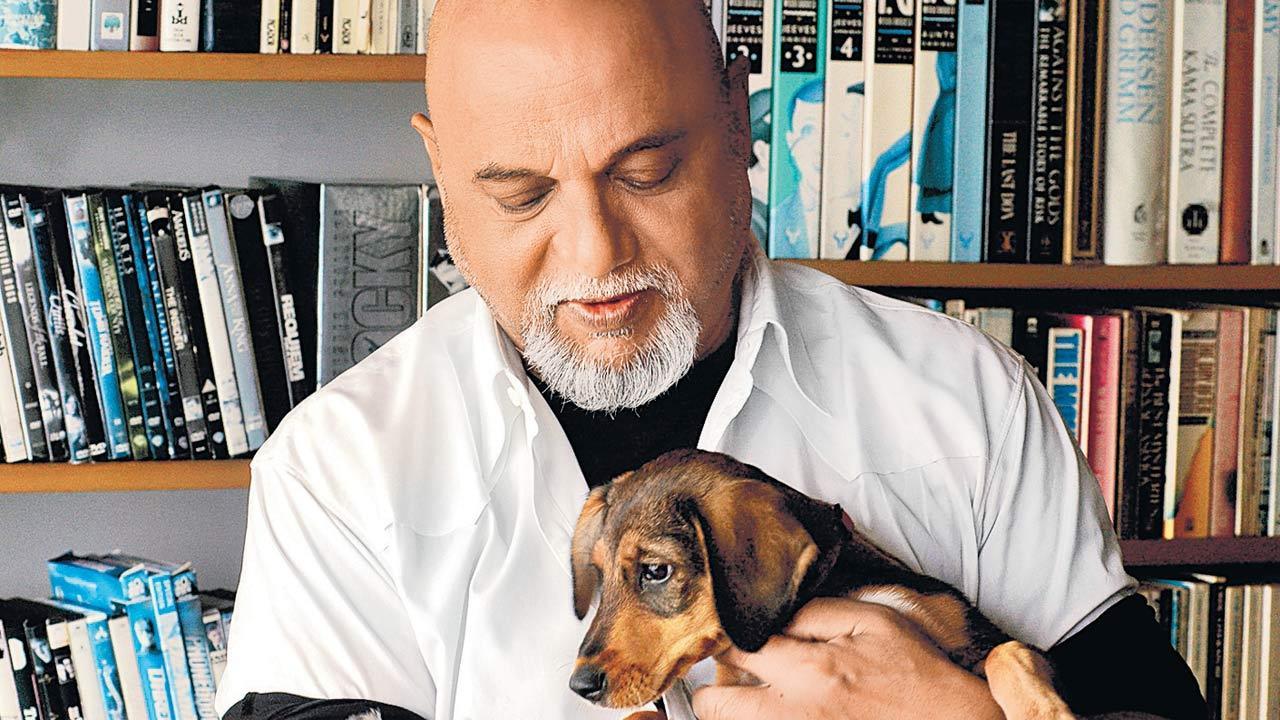
Director Sudhir Mishra on the man who made his Hazaaron Khwaishein possible
Sudhir Mishra (MID-DAY; January 10, 2025)
“You seem stressed”, a voice next to me half-whispered into my ear. I must’ve been crying or something. I was very stressed. I turned around and through my tears, I saw a blurred face of a man, who I recognized to be Pritish Nandy.
We were on a flight to Delhi, and the funding for my film had just fallen through. That film was Twist With Destiny, which would later be known as Hazaaron Khwaishein Aisi. The guy, who was funding me, told me to f*** off, because it was too obtuse, too unlike anything else, too political, and not political enough, where the main girl character was a kind of a sl**.
“Who’s going to sympathize with a bitch like that,” Money Man had said. I turned to look at Pritish again, and trying to get a hold of myself, I told him I was trying to make a film. And now that Money Man had said no, I’ll be unable to make it.
He looked at me, and smiled. Of course, I knew Pritish: the publisher and editor of The Times of India group, and that he had taken over the Illustrated Weekly magazine from the hands of Khushwant Singh!
He had done a lot of famous interviews with Mr Patnaik, the chief minister of Orissa, at the time. The interviews had almost toppled his ministry! I knew that the Delhi circles were quite upset with him. I knew that he didn’t give a damn.
I also knew that he had taken over the Sunday Observer magazine and then left it again! Rumours were that he had started a production company, but there were too many rumours in Mumbai, and we seldom took everything seriously.
I must’ve stared at him blankly, because I didn’t know how to reply when he suddenly asked me what the film was about. Anyway, I was going to spend two hours with the man [on the flight], and he had bothered to ask. My gut instinct told me that he’d get the film, creatively.
I sort of gave him a 15-minute narration. There was a long pause, and he told me “Come to my office tomorrow. I’ll give you the money.” That’s exactly how Hazaaron began.
We met the next day, I signed the contract in a couple of days. He never asked me what the cast was. I showed him pictures of the people I was casting. 40 per cent of the money was supposed to come from France, in kind. This came to us in the form of the DoP, the editor, and the sound designer.
Everyone else from India was new. The actors Shiney Ahuja, Chitrangda Singh were absolutely fresh faces and while KK had done some work, it was still initial days for him. Shantanu Moitra was the music director nobody knew at the time. Swanand Kirkire happened to be my associate director and he would go on to write the songs. He was also the main casting director.
Pritish never said much. He never talked about the film, but talked around it. He was very respectful to us as filmmakers, and very generously tried to tell us things around the subject-matter of the film—in the hope that some things would land, be understood and therefore, become part of the film.
In those conversations, I understood how deeply he knew about those times. There was also a lament inside him for what was changing. There was this Radical Kolkata interacting with the Cosmopolitan Kolkata. The Radical Kolkata was also the product of the Cosmopolitan Kolkata, and the various fissures tearing apart Bengal then.
Pritish Nandy was a product of the Kolkata of that time, and he carried that with him wherever he went. Sometimes, I think, you could feel the loss in his poems, although he never directly talked about them.
Another great thing about Pritish was that he never imposed his power as producer. When he didn’t like something, he never issued instructions. Instead, he gave you many options, of which you could take one, or many. There was never any insistence from his side. But the depth and force of his arguments were so great that you often incorporated his understanding of things into your film.
One day he called me and said, “Your film is about my time, but then it should also be about any time.” For him, the ’60s were also visible in the ’70s; and so was a yearning for the future.
“So, your film should indicate the time period subtly, but not constantly thrust it in the audience’s face. Everyone should not have sideburns. Not everyone should wear a bell bottom, and so on.”
I thought it was a sharp observation and something that I implemented. As a result, Hazaaron became about the people, and the Emergency became its backdrop, and therefore, now it’s not only about the young people of that time, but about the young people and their passions in any time period.
Another sharp memory. I was going to the shoot one day, and he called me and said, “You know, Sudhir. Your title ‘Twist With Destiny’ doesn’t do justice to the film. So, change it, but please don’t give me an English one. It’s an Indian film. Give me a title, which doesn’t just appeal to the anglicized set, but to everyone.”
Five minutes later, I asked him if we can call it ‘Hazaaron Khwaishein Aisi’. He immediately said yes, and put the phone down.
When Hazaaron didn’t release for a long time I was quite upset and he said to me, “I let you make the film you wanted to, right?” Now, let me put it in front of the audience in a way that the audience deserves, and he did.
Hazaaron, in some strange way, in the way he marketed it [though not everyone agreed] became a silent, cult hit, and that has a lot to do with Pritish.
Then we made Chameli. During that time, I met his two lovely, young daughters. He said, “I used to hate them, when they were children. But when they grew up to be bright, intelligent children, I fell in love with them.” You wouldn’t think so, when you met a man like Pritish. But he really adored his children.
I often met him later… We were going to do another film, but it didn’t work out. He called me, and we met again. He asked me for a sequel to Hazaaron. It’s one of my regrets that I couldn’t come up with a worthy sequel for Hazaaron.
We were supposed to meet this month and over a cup of tea, talk about life and cinema. That too is one regret.
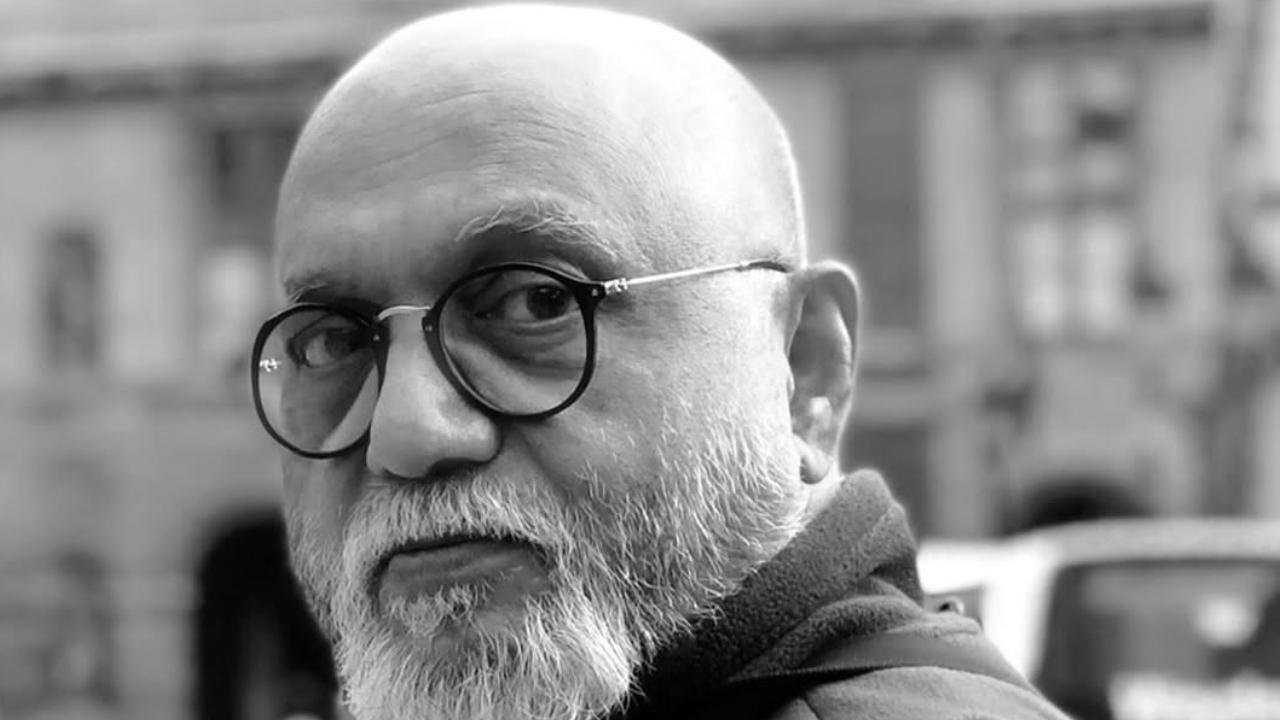
Pritish Nandy passes away at 73
8:24 AM
THE TIMES OF INDIA (January 9, 2025)
Poet, editor, TV show host, film producer, Rajya Sabha member, animal rights activist - Pritish Nandy, a gifted man of many parts and surprises, passed away in Mumbai on Wednesday. He was 73.
Born in Bihar's Bhagalpur town, Nandy was the brother of renowned academic Ashis Nandy. He was a prolific poet, writing with the passion and intensity of Latin American versifiers in his youth. Nandy often wrote with empathy for the young Naxalites who were killed for the cause they believed in, including in a poem titled, 'Calcutta if you must exile me.'
Eventually, it was Nandy who exiled himself. Shifting to what was then called Bombay, he found a new calling at The Times of India. He edited The Illustrated Weekly of India and oversaw Filmfare and Femina.
Pritish Nandy foresaw the future, and was always full of surprises. During Pritish Nandy’s tenure as editor, The Illustrated Weekly came up with several exclusives. Among his famous reports was an interview of Frank Camper, a mercenary who ran a training camp for his tribe in the jungles of Alabama. Nandy’s interview with singer Kishore Kumar provided an insight into the mind of the musical genius. As an editor, he also had a fondness for special issues related to quiz, sports and cinema — all collector’s items.
Moving on to the world of motion pictures and television seemed to be a natural step. He hosted The Pritish Nandy Show on DD. When he set up his own media company in the early 1990s, he named it Pritish Nandy Communications.
In the 1990s, Bollywood was still doing film business the traditional way. But Nandy foresaw the future. He was among the pioneers in the corporatisation of Bollywood. Among his noteworthy films are the big budget, multi-starrer thriller, Kaante, and director Sudhir Mishra’s masterpiece, Hazaaron Khwahishen Aisi. Other films such as Bollywood Calling, Jhankar Beats, Chameli, Pyaar Ke Side Effects were entertaining yet different from humdrum Bollywood. They typified the new polished Bollywood, still trying to find its way in the new millennium.
Considering his affinity for Leftist movements in the past, many were surprised when he was nominated to Rajya Sabha by Shiv Sena. Nandy was the first MP from the city to use his local area development fund (MPLAD) for the heritage precinct at Kala Ghoda.
But Nandy was always full of surprises. He played a key role in setting up NGO People for Animals with Maneka Gandhi. He saw the potential of the internet before most, playing a key role in setting up one of India’s first cyber cafes. And he was a popular columnist.
His death was mourned by many ranging from actor Sanjay Dutt to writer Ashwin Sanghi to academic Amitabh Matttoo. Actor-politician Anupam Kher wrote on X, “Deeply deeply saddened and shocked to know about the demise of one of my dearest and closest friends #PritishNandy! Amazing poet, writer, filmmaker and a brave and unique editor/journalist!” Kher also posted how Nandy had anchored him during his day of struggle.
Imagine Chameli without Kareena Kapoor's face; A R Rahman was a co writer in Lagaan-Sudhir Mishra
7:49 AM
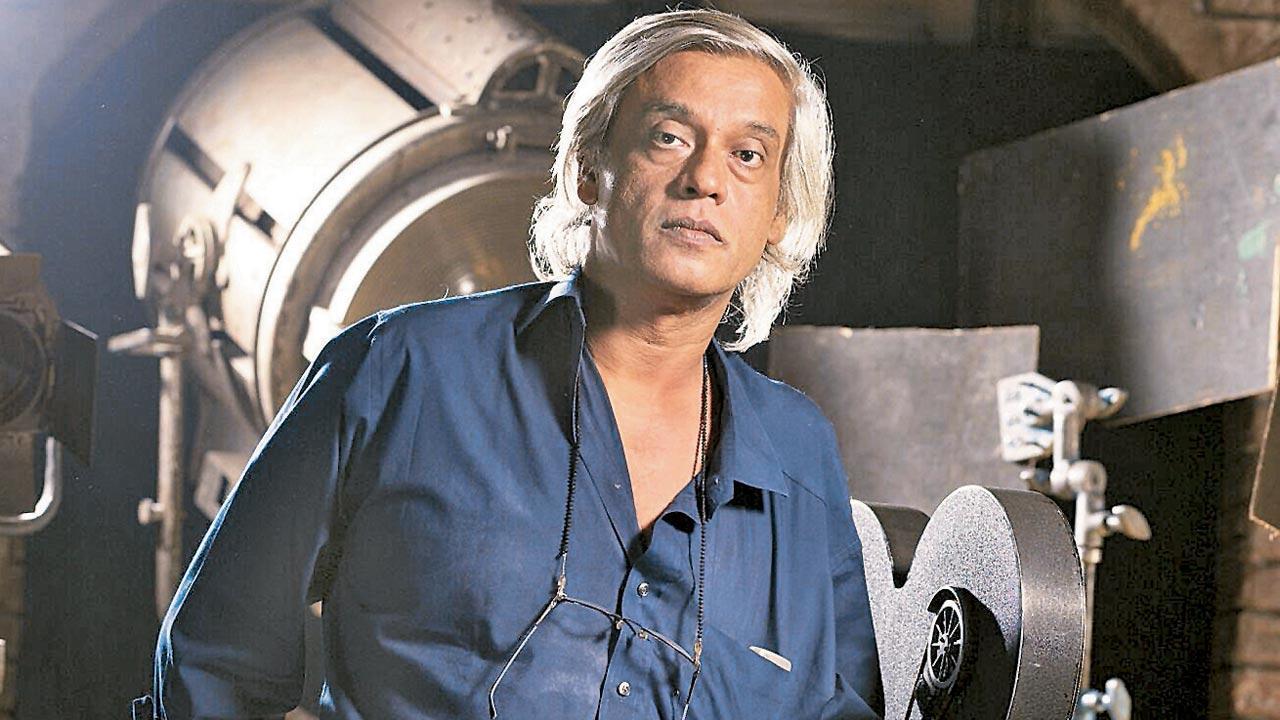
Niharika Lal (BANGALORE TIMES; November 8, 2024)
Sudhir Mishra sees filmmaking as a constant process of rewriting. But, he insists that filmmaking is not only a director’s medium. “Actors are co-writers of the film. Every actor has a different process, and the director’s job is to follow their process,” he says. In a recent interview, the filmmaker opened up about the making of Tanaav Season 2, his love for long-form storytelling, how he connected with Kashmir, and what it’s been like working with actors throughout his career.
‘WHAT’S THE POINT OF ACTORS IF EVERYTHING IS PRE-WRITTEN’
Sudhir Mishra tells us, “I consider cinema a constant process of rewriting. You rewrite with locations and with the actors, otherwise, what’s the point of actors when everything is pre-written? Imagine Hazaaron Khwaishein Aisi without Chitrangda Singh’s face, or Chameli without Kareena Kapoor, or Serious Men without Nawazuddin Siddiqui, Yeh Saali Zindagi without Irrfan Jhan, or Dharavi without Om Puri and Shabana Azmi. You can’t – they’re co-writers.”
He adds, “Then, the camera takes its position, the location speaks, and you gather all that material and sit with the editor. The film you imagined may not be there, so you try to find it. You add music – take A R Rahman’s score in Lagaan. Put another piece and the film changes. So, for me, Rahman is a co-writer of Lagaan.”
‘THE FILM I MAKE SHOULD IMPACT ME’
For Mishra, discovering the film is the aim of making a film. He says, “When I make a film, I should learn something I didn’t know before. The film should impact me – that’s the fun, the excitement, the therapy.”
Sudhir Mishra says all his films have surprised him – sometimes for the better, sometimes for the worse. “You can’t say it’s not the cinematographer’s medium – then why do you hire him? The director is a bit like an architect or a designer of the overall film. A director is like a conductor of an orchestra. Sometimes he writes the score and also conducts it,” he adds.
‘After making Tanaav, I understand Kashmir better’
About making Tanaav and shooting in Kashmir, he says, “I just love Kashmiris. They are really compassionate, warm, but also very sad. So, you have to work with that rhythm. I tried to bring out the human aspect (in the show). After making Tanaav, I understand Kashmir better.”
Talking about films on Kashmir and how he managed to avoid any controversies, Mishra says, “Most films about Kashmir are made by outsiders, and many of them don’t have a deep enough connection to the place. If your purpose is not to offend, and you approach things without bias – seeing them as they are – no one gets offended. If you’re not a sensationalist, not pretending to be the final word on anything, not strutting around like someone who thinks they know everything, there’s no issue.”
--------------------------------------------
About working with Rajat Kapoor, the filmmaker says, “You just have to indicate the character to Rajat and he will bring himself to it”
--------------------------------------------
Talking about Irrfan, Sudhir Mishra says, “He knew the character and was more interested in ensuring the entire scene works, because if the scene worked, he worked”
Rain machines to waterproof makeup: All that goes into shooting a rain song
8:14 AM

Natasha Coutinho (BOMBAY TIMES; July 27, 2024)
Who can forget Aishwarya Rai Bachchan dancing in the rain in Barso Re (Guru) or Sridevi's seductive blue sari from Kate Nahin Kat Te (Mr India)? The ethereal, romantic beauty of rain songs are imprinted in our collective memory, and they have been a staple of Hindi cinema over the decades. But the shooting of rain songs is quite the opposite of the romance they portray – with logistical challenges, detailed coordination between production departments and an extensive backend crew that must function in sync. This monsoon, we explain the mechanics of a rain song shoot.
KAREENA KAPOOR’S SARI KEPT GETTING HEAVIER WHILE REHEARSING IN THE RAIN: SUDHIR MISHRA
Bhage Re Mann, Chameli
Kareena plays a sex worker in Chameli, but the rain song brought out the child within her. Rain songs are difficult to shoot and you have to constantly coordinate with the cinematographer to get the desired effect and the correct camera exposure. I wanted the set to look very realistic, like a Mumbai street in the rains. Kareena was dancing in a sari and there were several rehearsals before the final take, and the outfit kept getting heavier in the water. But the difficulty did not show on her face. Saroj Khan was the choreographer and she ensured that her dance and expressions were perfect. The film was shot in 28 days and we put aside two days just for this song.
THERE WERE 24 WATER TANKERS IN PLACE TO SHOOT TIP TIP BARSA PAANI
Tip Tip Barsa Paani, Sooryavanshi
No rain song is complete without rain machines that are used to create what production teams call ‘controlled rain’.
Swapnil Bhalerao, who was the production designer for the new Tip Tip Barsa Paani song from Sooryavanshi, says, “We had around 24 water tankers on set for the shooting of the song. For closeup shots, we use three-four nozzles to shower water over the actors. To ensure hygiene, we use alum to purify the water. Some actors demand that mineral water is used for closeups. If the rain song is being shot in winter, the water must be heated as well. While shooting rain songs in the day is relatively easier, for night shoots we have a safety team to look after the electrical setup. The SFX department is in charge of creating thunder and lightning effects in the song.”
Tip Tip Barsa Paani was shot over four days on a set in Hyderabad.
WATERPROOF MAKEUP IS A MUST WHILE SHOOTING A RAIN SONG
Cham Cham, Baaghi
One crucial aspect of a rain song is the makeup of the actors involved, since it needs to stay in place for hours while the song is shot. Makeup artist Suraj Shekhar Sharma, who oversaw Shraddha Kapoor's makeup during the shoot of Cham Cham, says, “We use waterproof high-definition makeup that does not come off, and a primer and fixer to ensure it stays in place. During shot breaks, we keep an eye out to see if a touchup is required. It’s very important to dry their hair between takes so that an actor doesn’t fall ill.”
Cham Cham, which also featured Tiger Shroff, was shot over four days, partly on a set in Mumbai and at a real railway station in Kerala.
VINTAGE FABRIC WAS SOURCED FOR AISHWARYA’S BARSO RE COSTUME. IT SURVIVED THE ARTIFICAL RAIN
Barso Re, Guru
Aishwarya Rai Bachchan’s costume was created from fabric sourced from shops in and around Chor bazar in Mumbai. Antique saris and brocade borders with gharchola and bandhani fabric were chosen to create her ghagra-choli in Guru’s iconic Barso Re song.
“The costumes were sturdy, but I was paranoid that the vintage fabric may disintegrate in the pressure of the artificial rain. There were scenes of her jumping into a river and swimming, and swinging from a tree. She had to wear the costumes through the entire course of the shoot, which lasted a couple of days. It would be a disaster if the colour started running from the fabrics. Luckily though, it all worked out fine,” says Ameira Punvani, costume designer of Guru.
FACT BOX
Rs. 25-30 lakh is the per day cost of shooting a rain song, depending on the scale of production
---------------------------------------------------
Dancing in the rain is difficult, as there is always the danger of slipping and falling. Lip syncing to the lyrics and having the correct facial expression can also be tough to pull off. Aesthetics go for a toss and it’s important as a choreographer to remember that the dance steps should not be too difficult for the actors to pull off. I was part of a music video for the song Aao Na sung by Vishal Mishra, where I realized first-hand the difficulty of lip syncing in a rain song
- Terence Lewis, choreographer
Shehnaaz Gill to feature in a recreated version of Sajna Ve Sajna from Chameli for Vicky Vidya Ka Woh Wala Video
9:28 AM

Neha Maheshwri (BOMBAY TIMES; July 13, 2024)
Shehnaaz Gill, last seen in ‘Thank You for Coming’, has been brought on board for a special number in Triptii Dimri and Rajkummar Rao’s ‘Vicky Vidya Ka Woh Wala Video’. She will dance to the recreated version of ‘Sajna Ve Sajna’ from ‘Chameli’ (2003). The actress-singer finished shooting the song a couple of days ago.
Director Raaj Shaandilyaa says, “We wanted someone who has not performed many special numbers to bring freshness to the recreated version, and Shehnaaz has done complete justice to it. Rajkummar will also make a brief appearance in it. I make films with family audiences in mind, and Shehnaaz is a perfect choice for the song because they love her. She is cute and beautiful, adding much-needed charm to the number. The redux version comes at a crucial juncture in the movie and takes the narrative forward.”
The film will include a few more recreated versions of popular songs. Regarding Shehnaaz, the actress-singer has been focussing on enhancing her acting and diction. We have learnt that she is taking Hindi and Urdu classes to refine her Punjabi accent.
Shehnaaz catapulted to fame following her stint in ‘Bigg Boss 13’, which is arguably the most popular season of the reality show. She was featured in a few music videos before she made her way into the Hindi film industry. The actress made her Bollywood debut with the Salman Khan-starrer ‘Kisi Ka Bhai Kisi Ki Jaan’ and was later seen in Bhumi Pednekar’s ‘Thank You For Coming’. Both were released last year.
In a previous chat with us, while talking about her love for singing and her Punjabi accent, Shehnaaz had said, “Jab main Hindi mein baat karti hoon tab Punjabi sound karti hai, but that’s not the case with singing. I understand music and can sing in any language and pick an accent easily.”
Buying film tickets is like voting. What you buy is what will be made-Anurag Kashyap
3:51 PM

Niharika Lal (BOMBAY TIMES; December 13, 2023)
At a recent session in Delhi, directors Anurag Kashyap and Sudhir Mishra discussed their filmmaking process and how the audience decides the kind of films that are made.
‘UNLIKE IN INDIA, FILMMAKERS IN OTHER COUNTRIES TAKE PRIDE IN THEIR LANGUAGE’
While the audience often criticizes the film industry for not making “good” films, makers say that when offbeat films are made, they don’t get audience support.
During the session, Anurag said that when the audience doesn’t turn up in cinemas and wait for a good film to come to them (on OTT/TV) then it affects those films. “Those films that you don’t go to theatres to watch thinking that these will come to us anyway (on OTT), they are taken off theatres after poor performance in the first three days. Aapko jo chahiye, aapko uske liye vote daalna parega. Film ki ticket khareedna bhi vote daalna hai. Jo cheez aap khareedoge, wohi banegi aur wohi bikegi,” he said.
SUDHIR MISHRA IS OG : ANURAG
At the session, Sudhir Mishra and Anurag Kashyap recalled their first meeting and what they like about each other’s work. Sudhir shared, “I’m really proud of Anurag Kashyap. In these 20 years, he has done more for Indian cinema than perhaps the National Film Development Corporation. Look at the list of films he has produced.”
Anurag added, “Jab Sudhir film banata hai, to woh patthar ki lakeer nahi hoti; woh film badalti rehti hai. Inki sabse khoobsurat baat yeh hai ki yeh patthar se bhi acting karwa lete hain. It is important. OG yehi hain, jo seekha inhi se.”
‘MAIN JAB FILM BANANE JATA HOON TOH MAIN FILM DHUNDHNE JATA HOON’
Anurag and Sudhir discussed how not saying “cut” can result in good performances. Sudhir recalled, “Jab maine Kareena Kapoor ke saath Chameli ki, toh main cut kehna bhool gaya aur usne kuch aisa kiya jo maine kaha nahi tha. Toh maine cut kehna hi chhor diya.” Anurag shared that he also doesn’t say cut on his set. “Main film banane jata hoon toh main film dhundhne jata hoon. Aur mil bhi jati hai film.”
The two also discussed the importance of dialect when planning characters. Sudhir said, “Characters speak like the background they come from. Language also depends on the kind of film you are making. For instance, in Hazaron Khwahishen Aisi, all characters speak differently; a south Delhi person will talk differently from a character from Bihar.”
Anurag added that at present, Hindi movie scripts are written in English. Elucidating on it, he said, “Kirdar se kahani aati hai aur jis mahaul mein woh kahani hai bhasha usi hisaab se badalti jati hai. Lekin ab aap Urdu ki baat chhodiye, Hindi khoti ja rahi hai. Aaj kal hamara jo Hindi cinema hai wahan log sochte bhi angrezi mein hain aur likhte bhi angrezi mein hain. Script bhi Roman mein likhi ja rahi hai. Toh bhasha toh pata nahi kahan ja rahi hai. Jaise hamara jo regional cinema hai woh (filmmakers) aaj bhi apni hi bhasha mein likhte hain, sochte hain. Hamare yahan hum log shehar ke angrezi mahaul mein reh kar Hindi filmein bana rahe hain.”
Anurag recalled, “When we were shooting Gangs Of Wasseypur, all our actors were from villages – Manoj Bajpayee, Pankaj Tripathi, Nawazuddin Siddiqui. And everyone was sharing their stories. Kis ko kahan ishq hua tha sab bata rahe thay, aur usmein kisi ne ek baat kahi thi, aur maine socha, ‘Ye toh bahut achha hai, isko scene banate hain.’ Phir humne Huma (Quereshi) ko bola, ‘Jaldi se aa jao, scene shoot karna hai.’ Kagaz pe sirf Mohsina (Huma’s character) ka naam likha tha. Huma ne pucha, ‘Mujhe kya karna hai?’ Toh maine kaha, ‘Aa jao, hum scene (set pe) jakar banayenge.’”
‘DON’T THINK PEOPLE UNDERSTOOD GULAAL’
Talking about his dialogue-writing process, Anurag shared that most of his dialogues are not written on paper but are decided on the set. For instance, there’s a dialogue from Gulaal: “Is mulk ne har ek shaqs ko jo kaam saunpa tha, uss shaqs ne uss kaam ki maachis jala ke chhod di.” Sharing that this line was spoken by Piyush Mishra, Anurag added, “Unko yaad bhi nahi hoga. Main aise churata rehta hoon.” He paused and added, “I don’t think people were able to understand Gulaal.”
‘GOLI MAAR... WAS GHAM KE NEECHE BOMB LAGA KAR...’
At the event, Anurag shared an anecdote about the song Kallu Mama from Satya. A line from the song – ‘Gham ke neeche bomb laga kar gham uda de’ – was changed to the now famous line ‘Goli maar bheje mein’ by Gulzar, the film’s lyricist. Anurag shared that Vishal Bhardwaj (the music composer) and Ram Gopal Verma (the director) both wanted to use the original line, so they pushed Anurag to convince Gulzar.
Anurag recalled, “Main 22 saal ka tha. Main pahunch gaya Gulzar sahab ke paas aur maine kaha, ‘Pehli wali line bahut achhi hai – Gum ke neeche bomb laga kar gum uda de.’ Unhonne kaha, ‘Gum nahi hai, gham hai. Ye gond (glue) nahi hai. Wahan ja kar baitho aur chai peeyo.’ Uske baad kisi ne iss baare mein baat nahi ki.”

Jab We Met is ghar ki khichdi, you want to see it again and again. It doesn’t get old-Kareena Kapoor
8:27 AM

Kareena Kapoor Khan is at a zen stage in her career and all she wants to focus on is doing quality work. In a chat with us, the actor talks about defying the age-old notion of female actors not getting along, her ‘other’ films and more
Rishabh Suri (HINDUSTAN TIMES; June 6, 2023)
‘EXCITED TO WORK WITH TABU’
“Lolo (sister, actor Karisma Kapoor) and Tabu have done some stellar films together. So, I am super excited because I have never worked with her,” says Khan, who will star with actors Tabu and Kriti Sanon in The Crew soon. “All of us working on the film are women, including our producers (Rhea Kapoor and Ektaa Kapoor). These two have always been cool enough to break the mould and do something different. It’s a big screen film and I am pretty sure the audience will love it,” she adds.
NO FRICTION
Dismissing the notion that female actors don’t get along, Khan says, “I have worked in many women-centric films and alongside many female actors. I think today, it’s about doing a good film, not about who or what’s in it. Everybody just wants to do a good film.”
‘JAB WE MET DOESN’T GET OLD’
“Of course, Jab We Met (2007) is ghar ki khichdi, you want to see it again and again. It doesn’t get old. That’s a rarity; every time you watch it, it’s like you are watching it for the first time. It’s just the character,” says Khan, referring to the vivacious Geet.
‘TALK ABOUT MY OTHER FILMS TOO!’
Every film Khan does is compared to her iconic performances in Kabhi Khushi Kabhie Gham (2001) and Jab We Met (2007). “They are iconic, I understand. But, I feel like people should talk about [my other films like] Chameli (2003), Yuva (2004), Omkara (2006) and Heroine (2012), too. They are underrated in terms of my performance. Why don’t people talk about that? I am also doing The Devotion Of Suspect X; that’s a very different kind of spectrum for me,” she asserts.
Every director needs a collaborator like Shiv Subrahmanyam-Sudhir Mishra
7:35 AM
Sudhir Mishra remembers Shiv Subrahmanyam, his brutally honest friend who always made his craft better
As told to Upala KBR (MID-DAY; April 12, 2022)
I really loved Shiv; at one point, he was very close to me. I remember this bright, young man who came to me [at] Naseeruddin Shah’s [behest]. This was in 1983, at the time of the making of Saeed Mirza’s Mohan Joshi Hazir Ho. I was the chief assistant on the sets. Shiv was a writer, and being in theatre, he was part of Naseer’s coterie. Naseer asked me to look after Shiv and show him around.
We would get into heated arguments over Brecht and Shaw, and other poets. He co-wrote Is Raat Ki Subah Nahin, Chameli and Hazaaron Khwaishein Aisi, with me. We worked on Hazaaron Khwaishein Aisi for six months, and Shiv, Swanand Kirkire and I wrote Chameli in 15 days. I called Shiv and we worked together night and day. Shiv’s contribution to Chameli cannot be overlooked. Chameli was our last piece of writing together. We were really close at one point of time. I don’t think I have spent that much time with somebody.
I found him to be an interesting collaborator who could tell me where I was going wrong. Every director needs such a collaborator. Shiv was fearless — he could say anything to anyone, [and couldn’t] take rubbish from anyone. I was quite afraid of crossing Shiv’s path. If he was really angry with you, there would be a look in his eyes. I can imagine that if someone upset him, he could [reject their proposal], even if he was getting a lot of money.
Shiv had a terrific, biting, and wicked sense of humour. All the work that we did together had an element of black comedy. We shared a similar sense of humour. Creatively, we were like brothers. I would write one line, and he could finish the scene. His sense of humour was self-deprecatory. I remember him as a guy with a fine mind; he was a passionate theatre person. Shiv and I met every day, and I really depended on his views on everything. His plays must be reprinted. Theatre was where his heart was. It is the most difficult medium to be in, and involves a lot of struggle.
We lose sight of our dear ones as life gets messy. Shiv and I lost each other during the pandemic. I got involved with my problems as my father passed away. I had to look after my mother, and had to focus on earning money. During the lockdown we lost touch; I never knew the suffering he was enduring. He was too proud to say anything. It is terrible. The last time I met him was in January 2020, when he was coming out of the hospital with his [late] son, and I was taking my dad there. We didn’t know that we would never meet again. I was unaware of what was going on in his mind, in the last couple of years.
I miss him a lot… It’s a pity that there won’t be another subject that I can collaborate with Shiv on. He was contemporary, supportive, yet independent-minded, and could always tell me the truth. Shiv was compelled to say what was on his mind.
Commercial movies are a part of my DNA-Kareena Kapoor
8:14 AM

Kareena Kapoor Khan has no qualms about doing masala potboilers, but she tries to do ‘something different’ with each film
Juhi Chakraborty (HINDUSTAN TIMES; December 17, 2019)
Not just with her fashion choices, Kareena Kapoor Khan has also been quite a trendsetter when it comes to her film career. It began right from her first film when despite being a star kid, she chose a non-glamorous debut with cross border romantic film, Refugee (2000), something which was considered to be an unconventional choice. Nineteen years on, she continues to push the boundary with each of her films, and life choices, too.
“I think it’s just always been a conscious decision to at least try to do something different. When I had my son Taimur (born on December 20, 2016), not many people expected that I would take up a film with four girls,” she says referring to Veere Di Wedding (2018), which also starred Sonam K Ahuja, Swara Bhasker and Shikha Talsania.
The 39-year-old admits that many questioned her decision to do a female ensemble cast film that marked her return to films after becoming a mother.
“Everyone was like ‘You just had a baby, so why don’t you come back to the screen with a heroine-oriented film where the story would be all about you’. That is the norm here but I don’t think like that. I have a slightly unconventional thinking and that has always been a part of my journey. From Dev, Chameli, Yuva (all 2004) to Omkara (2006), I have always tried to do something different and that gamble has actually paid off well,” shares the actor, who is busy promoting her upcoming release, Good Newwz.
In all these years, Kareena has been a part of several commercial potboilers, and given memorable characters, from Poo in Kabhi Khushi Kabhie Gham...(2001) to Geet in Jab We Met (2007).
So, is there anything that is left to be desired at this stage of her career?
“There is so much more to explore now with lines blurring and great scripts coming to life more than ever before. I am not going to say that especially for women because I have never believed that. I always thought women have had the opportunity to choose. There is a lot left to explore. These are the exciting times. I have done it all — meaningful films or big banner entertainers. Big commercial movies are a part of my DNA and that’s never going to change, I will always be part of those, but I am trying to do something different with each film,” Kareena muses.
The actor has a slew of films lined up next including Angrezi Medium, Laal Singh Chaddha and Takht. But other than films, there is one thing that she wants to try her hands at. “I would love to do theatre but I am really scared. In films, we are used to delayed gratification. But I feel performing on stage is an instant thing and I am very scared of that,” she concludes.
My stardom has overshadowed the actor that I am-Kareena Kapoor
7:38 AM

Good Newwz actor Kareena Kapoor Khan asserts she has made bold career moves in her 20-year run despite her image of masala film heroine
Mohar Basu (MID-DAY; December 16, 2019)
 Her star has always shone bright. But Kareena Kapoor Khan does not mince words when she says superstardom comes with its own pitfalls. "That [her stardom] has overshadowed the actor that I am," she begins, when we sit down to chat with her in the living room of her Bandra apartment, which is adorned with gorgeous pictures of husband Saif Ali Khan and her vacationing in Gstaad.
To make her case, the actor points out how she, at 22, had worked on Chameli (2004) when women-led films were few and far between. But her career risks are often forgotten amidst the hero-led box-office blockbusters that she has been part of. "I started the trend of headlining films long ago. People are talking about it now because there is more focus on women's voice in Bollywood. Many actresses would have turned down Veere Di Wedding [2018] because no one wants to talk about periods, or lack of orgasm [being grounds for] divorce. The film was path-breaking because we established that there's an alternative to bro-code."
She is proud to have ruled the industry for two decades, especially since it is notorious for short shelf life of female actors. "That's because I am a filmy child who knows what entertainment is. People have assumed I am a diva, but I loathe the word now. My PR [game] is not strong; there's zero strategy behind who I am. I have never bothered about projecting myself as a serious actor. I am happy when my fans are happy and my film is a success. Then, I whisk off on a holiday."
Coming up next is Good Newwz with Akshay Kumar. Quiz her if the maternal instinct made her sign the film revolving around in vitro fertilisation, and she says, "It was a hoot of a narration. Since I am doing fewer films, I want people to be excited about my projects. I was the first one to sign the film."
Shahid Kapoor told me he was getting married-Kareena Kapoor
8:09 AM

Kareena Kapoor Khan on her ex taking the arranged marriage route, her husband’s uncertainty about working with her in films and also why there can never be a tiff between her and her ‘lover’ Karan Johar
Sarita A Tanwar (DNA; June 17, 2015)
Meeting Karena Kapoor Khan is always fun. She is
delightful in a very blond way. But don’t mistake her for being dumb.
Had she been, she would not have survived in the cutthroat film industry
for over 15 years now. She’s worked with the biggest actors and best
directors. She has always reinvented herself every few years. She begun
her career with Tusshar Kapoor and now, gears up to work with Arjun
Kapoor, who was just 15 when she started her career, it’s been an
interesting journey. Sitting in the sea-facing suite of a five-star
hotel, with her entourage, Bebo chats about her man (Saif) her ex
(Shahid) her lover (Karan Johar!). Bebo, like her films is always
entertaining. Read on...
Today, there’s a lot of brouhaha over films like Piku and Tanu Weds Manu Returns, but you did films like Chameli, Heroine and Jab We Met many years ago. Is it because of the social media explosion that the impact is more now?
Yes, of course. But I feel the kind of impact that Jab We Met and Chameli had was far more. People are talking about it till today. For me, they will always be my iconic films. I mean it’s not like you can forget good films. People still talk about Kagaz Ke Phool or Amar Prem, which were made way back in the day; there was no social media then. Honestly, I have nothing against the social media explosion and the fact that everybody is on Twitter and Instagram. I feel that it helps you connect with your fans. But I don’t know how much it pulls people to the theatre. Because various films are marketed on social media platforms and while certain films do well, certain films don’t. So that can’t be the benchmark.
Sure, if the film is good, it will run.
Exactly. Tanu Weds Manu Returns and Piku — I haven’t seen them — but I believe the story and the performances are unbelievable. So, obviously, it’s the content that’s is responsible for the final box office numbers.
What do would you consider your major achievement in your career?
I feel there are two major achievements. One is that I worked with Anil Kapoor and now I am working with Arjun Kapoor. Fifteen years here and I am still running, I’m still at the same position in this industry, whether it’s working with Salman Khan who was once working with Karisma and is now my hero. I feel that’s a huge achievement. I have done two rounds with the Khans and the fact that they are still working with me, says something. I have worked in two Talaashs in my career. (Grins) Second would be the fact that I have been pitted against every actress in every generation, I think that’s a big achievement.
Now you have been compared to Alia Bhatt!
Yes, Can you believe it? Next is going to be my niece Samaira. Lolo keeps telling me that you will be one actress who will be pitted against Samaira. That would be the greatest compliment that I can ask for.
She wants to act? Do you see the signs already?
A little bit, but she is more of a bookworm now. I think this generation, the young kids. They like Bollywood movies and watch them but are not as crazy as we used to be. If you ask her, ‘Do you want to go and watch a film, she will like be ‘What film? When? Why?’ She’s quite happy on her iPad playing, or on her Kindle reading. But Sara and Ibrahim love Bollywood.
I believe you have taken up reading.
Yes. And by the way, I am on my ninth book. Can you believe it... a girl who never used to read?
I’m in shock! Ninth book!
Right now, I am reading The Kind Worth Killing by Peter Swanson. I couldn’t sleep and was reading till 2 am. And Saif had passed out at 10.30 pm! I couldn’t put the book down. I am obsessed with finishing this now.
Who recommends books to you?
This book was given to me by one of Saif’s friends from London. He is a publisher, and he knows that I love crime thrillers. I have read six books by Michael Connelly. It’s nice because I think Saif looks at me and says, ‘I am going to give you a book shelf and a new house which is only going to have your books.’ He says, ‘I just feel really proud when I look at you reading and this is one change that I have brought in you.”
Any plans to work with Saif again?
I would love to work with Saif, but I am not sure he would want to. If I was approached for a film with him, I would do it. But it hasn’t happened for a while now. I am open to it, but I don’t know if he is. I don’t know somehow he says working with your wife, I guess he feels some tension. He says it’s not as comfortable as working with somebody you doesn’t know.
Would you work with Shahid Kapoor?
I am working with everybody and I work for anybody who pays me and who has got a good script as long as I have the dates.
Films that you turned down went on become big hits. Any regrets?
Not at all. I think we are actors and we select scripts according to what suits us at that time.
Why did you walk out of Shhuddhi?
When Hrithik R didn’t do the film, I don’t think it just made sense. Because that film I think was all about Hrithik and Kareena coming back.
After Salman walked out of the film, #BringBackHrithikKareena was trending for two days...
Yes, I know. I am not on Twitter and Instagram but I get my information from sources. So many people now.
Karan Johar didn’t have a problem with you walking out of the film?
Karan and I can never have a problem. He is part of my family, he is like a brother to me. I would talk to him about so many other things apart from what film he is doing etc. I don’t think I have ever asked Karan ever in the 15-17 years that we have been friends, ‘What film are you making, Karan?’ Or ‘I want to be a part of it.’
But why? You should be able to ask that of a friend.
I have never asked any producer what film they are making. I have never told them that I want to be a part of any film.
Why not? Most actresses do it.
I have faith in my talent. I have never done that. I most definitely don’t feel the need to do it now. Especially with someone like Karan. It’s like, never. If he has something for me, he will call. He knows my work, he knows my talent. We have done some great films, some not so great movies, but that’s a journey of an actor and a producer. Karan and I are friends so we can never have problems. (giggles) He is my lover.
Any regrets about not doing Dil Dhadakne Do?
Just one. That I missed an opportunity to work with Zoya Akhtar, but it’s not her last film and definitely not mine. Not because of anything else, but because I think she is a wonderful girl and she’s just a brilliant director and I think her energy is just right.
And Ram Leela?
It just never worked out with Sanjay Leela Bhansali, sadly. But I think it worked out better for him. I have no regrets at all.
All actresses are attempting different kinds of cinema, your thoughts?
I am very proud to be a commercial actress. I don’t know why it’s being made to be a crime to be a part of film with the Khans because everybody under the sun wants to work with Salman. I have always said that I want to strike a balance between being part of fun, entertaining, commercial films because that’s also who I am. I come from a Bollywood family and have grown up on song and dance. But yes, I want to do great roles, which I think I am ready for now. I think I’m balancing commercial movies and some great roles. I am very excited about working with Balki.
Amongst — Alia, Parineeti and Shraddha, who has that spark to get to the top?
Definitely, Alia Bhatt.
Tired of being compared to her?
(Smiles) No! I just hope she is not tired. It’s a compliment that I have been pitted against all these young girls, but I think that’s fine. I like Alia. I also haven’t seen the work of other actresses.
You watch films of your contemporaries?
I watch some movies. I love watching movies on the flight and all. But I never go to see trials and previews because I am not fake. I cannot fake praise for a film. Also, I don’t like going and socialising. I prefer to see a film in a theatre. These days, for trial shows, you have to do hair and make-up because you have to pose for photos and then give bytes. What’s with this everybody going to each other’s trials... I am really happy sitting at home and reading a book. I am not being a snob. I don’t go to see my own films at the trials, I’ll watch it on the flight or I’ll watch it on DVDs.
Deepika Padukone thinks it’s wrong for people to slot you and her in the same category because you started much earlier. Your comment.
I think she is absolutely right. I don’t know why everyone is compared to me. But now I am like, ‘Accha, theek hai’. I have become immune to it now. Fifteen years and now, I think I should be immune to it by now, at least.
Has marriage made you less ambitious about your career?
No, I think I was always like this. I want to have it all, that’s why I decided to get married. I can’t be somebody who says ‘Okay, work is my only thing, all I need is just to work.’ I can’t be like that. Everyone says personal life can wait. I want to tell the young girls,‘Trust me, there is no later.’ It’s now that you have to work and experience other things in life. Your life cannot be only your work. I am shooting for 25 brands, I am doing three films, but I still have time to read, travel, to unwind, and chat with Saif. So, no, my priorities haven’t changed. I am obsessed about my work but I am also obsessed about having a full life. So it’s a nice balance. I am doing work at my own pace and I want to work and I want to be married, I want to read my books, I want to travel. I am very greedy but I am not greedy as much only for good roles, I am greedy for a good life.
You guys travel a lot. Every time I connect with you, you are either going on a vacation or returning from one.
(Screams) No, no don’t say that! Even my mom is saying, “Naam kharab ho gaya, hai, din bhar holiday ke liye ja rahi hai. That’s not true. We club work and pleasure. If I am shooting a brand or a film in London, I extend and stay back and Saif joins me and vice versa. We are trying to always balance it out. You know both of us are working, so to take out time for each other is important. Which is why no time for added distractions like Instagram and Twitter.
Doesn’t the number game bother you? Or you are beyond that now?
I don’t think it ever bothered me earlier and most definitely, it can’t bother me now. I am a very secure person and in a very secure space.
Saif is going through a phase where he hasn’t had a hit in the last two years. Any advice you’d give him?
No. I am nobody to give anybody advice. Anybody who gives me advice, I never take it. So my advice is that don’t take advice from anyone. Do what you want to do. I think an actor’s mistakes are their own. My mistakes are my own and I would not like to take advice from anyone. Likewise for him. I mean a couple of mistakes here and there, please you can’t crucify an actor for that. Some films will be great and some films will not be so great.
And finally, any thoughts on Shahid’s marriage?
I wish him all the best. It’s a great decision. I met him at YRF a few months ago and he told me he was getting married and I congratulated him.
Your views on arranged marriage?
I think he can make it work. He has changed and matured and he knows what is best for him.
Subscribe to:
Posts (Atom)