Showing posts with label Cargo. Show all posts
Showing posts with label Cargo. Show all posts
From Kanu Behl to Chaitanya Tamhane, filmmakers are challenging a system that decides what India can and cannot watch
9:52 AM

Jane Borges (MUMBAI MIRROR; November 23, 2025)
“It’s taken me over nine years, a large chunk of my life and a lot of blood, sweat, toil and tears to make Agra,” filmmaker Kanu Behl shares over a phone call, “I couldn’t have let this go.” Agra, which won Best Indie Film at the Indian Film Festival of Melbourne and premiered at the Cannes Directors’ Fortnight to critical acclaim, is a psychological drama, exploring sexuality and loneliness. Earlier this week, after being given severely limited screenings for his film—only 70 screens across the country—the filmmaker took to social media to call out the “long-standing systemic pattern affecting all independent films in India”: the denial of theatrical access.
His post immediately found support within the community, with 46 filmmakers, including Chaitanya Tamhane, Payal Kapadia, Shaunak Sen, Vasan Bala, co-signing a statement demanding fair access for independent films.
“The group is expanding as we speak,” Behl told Mirror, “We are now in the process of forming a body that will come together to talk about our collective rights.”
Reel dreams, real struggle
Directors Alankrita Shrivastava and Arati Kadav, co-signees to the statement, say their solidarity stems from having experienced similar helplessness. Shrivastava remembers the difficulty she faced in getting a theatrical release for her film Turning 30 (2011), a romantic comedy, starring Gul Panag, revolving around an ad executive who gets dumped and has her ideas stolen before her 30th birthday.
“We got screens in certain places where the film honestly did not have any resonance, whereas we needed more screens in places where the film was doing well,” she says.
For Kadav, who found OTT fame with Mrs (2023) — a remake of the Malayalam film, The Great Indian Kitchen — bootstrapping her career had been the norm for the longest time. Her sci-fi fantasy film Cargo (2019), starring Vikrant Massey and Shweta Tripathi, set aboard a spaceship where souls of the deceased arrive before they are prepared for reincarnation, went to over 25 festivals, including the Miami International Science Fiction Film Festival (MiSciFi).
“Though it was lapped up by everyone outside India, I struggled with distribution for about one-and-a-half years. I had put in a lot of money into this project, and felt quite dejected,” she says.
While the film didn’t get a theatrical release — Kadav says she understands “theatrical reservations for some festival films”, though the need of the hour is to find “incentives for them”—it was eventually picked up by Netflix where it had a decent five-year run. Having the backing of an industry powerhouse like Anurag Kashyap, who was among Cargo’s many co-producers helped. “I got lucky,” Kadav admits.
Showtime comes at a price
The fight at the ground level for independent films is getting harder with each passing year, says Kimaya Hemdev, director and head of acquisition at Star Entertainment Pvt Ltd. “Companies that were once only theatre owners have now also become distributors. So, you’re competing with a distributor who also has the bargaining power of a theatre,” she explains.
When producers, distributors and exhibitors are the same people, it creates a monopoly—one where, she says, “there’s a clear preference for the films they distribute, especially studio movies.”
Quality time slots and cinemas are carved out for the big studio films, which are also exonerated from paying a Virtual Print Fee —a charge producers pay to exhibitors to help cover the costs of converting to digital cinema projectors — which Hemdev says is anywhere between Rs 25,000-Rs 50,000 per screen, per show, and can be prohibitive for independent filmmakers. If a film had to run for a week with a single show daily, it would translate to Rs 3.5 lakh approx.
Audience is king
The long-held argument that there’s no audience for independent films, Behl says, is “fallacious”. “On Tuesday night, when I finally got a show [for Agra] at PVR Citi Mall in Andheri, there were 119 people who came to watch it,” he says.
According to Shrivastava, what’s happening right now is neither fair to independent films, nor the audience. “If the audience can’t access these films, how will they ever get a taste of another kind of cinema?”
Vishek Chauhan, CEO of Rupbani Cinemas, Purnia, Bihar, says that ultimately, “the programming power lies only with the audience.” He stresses that no exhibitor in their right mind would deliberately refuse a good film that promises viewership, because theatres operate as businesses and decisions depend on demand and viability. He finds it unfair to pin the blame solely on exhibitors.
Theatrical success, he says, is no longer the only metric of a film’s performance. The majority of the viewers consume films at home on OTT or television, with theatre earnings form only “12–20 per cent of a film’s overall pie.” Therefore, he says, forcing exhibitors to run films with low turnout “jeopardizes other films that could do better.”
Kerala files
Down South, in the Malayalam film industry, filmmakers working with novel scripts have tried to negotiate the system to reach the right kind of viewers. A case in point is the 2023 National Award-winning drama Aattam, written and directed by Anand Ekarshi, which turns the spotlight on a theatre group whose sole actress faces sexual assault by one of the men. According to him, “shooting and making the film is actually the easiest part; releasing the film is the toughest.”
As an early business strategy, Ekarshi raised funds to make a 10-minute pilot of his film to show producers. “The idea was to give them a glimpse of the script, understand the characters, and see what the actors could pull off.” Joy Movie Productions came on board soon after. Aattam, despite its experimental nature, turned into commercial project. It was made on a shoestring budget of Rs 3 crore, of which Rs 80 lakh was dedicated solely to marketing—the movie enjoyed a successful theatrical run and bagged a prime OTT release.
Meanwhile, the theatre run of Prasanth Vijay’s Ithiri Neram, a romantic drama starring Zarin Shihab and Roshan Mathew, earlier this month in Kerala has been hard-won. Vijay has made two critically acclaimed films before, Athisayangalude Venal and Daayam, funded by a school friend and his wife respectively, which didn’t make it to theatres. He tried to cut the risks with Ithiri Neram by getting a producer — Jomon Jacob of Mankind Cinemas and four others — who shared his sensibility. “Even after the film was made, it took a while to find the right distributor,” he says.
“But I waited, because I wanted the film to reach the last mile, even if it were fewer theatres.” The goal was also to be able to get a good OTT platform for wider reach. The film opened in 60 theatres in the first week of November and continues to reach newer audiences.
The fact that the Kerala state government has taken up initiatives to support the arts, has also come to the aid of filmmakers. Debutante filmmaker Sivaranjini J won a Rs 1.5 crore woman’s empowerment programme grant for her film, Victoria in 2022 — there is no such equivalent grant in Maharashtra for women. The production was taken care of by the Kerala State Film Development Corporation and the movie, when it releases next week, will be shown across eight government-run theatres in major cities. A government grant comes with its own set of challenges with filmmakers having to deal with red-tapeism and mounds of paperwork. “But it gives you a good start,” she admits.
Meenakshi Shedde, Senior Programming Advisor-South Asia at the Toronto International Film Festival (TIFF) and South Asia Delegate to the Berlin Film Festival for 27 years, says that in contrast with Bollywood, Kerala has a very strong grassroots film movement.
“Even the rice farmers know their cinema, and that’s unthinkable in most parts of the country,” she says, adding “that the International Film Festival of Kerala and film societies have played a huge role in shaping their taste”.
Alternative script
Internationally, independent American production house A24 has been backing indie and artistically driven films in its attempt to push high-quality cinema. Closer home, Manish Mundra, filmmaker and founder-producer, Drishyam Films has emerged as an unlikely champion of independent films — Masaan (2015) and Newton (2017) are part of the success story.
“For things to change, everyone must play a part. Producers and distributors cannot do it alone. Audiences need to show up for these films, and the government needs to recognize that cinema is a cultural resource. We need more single screens, art-house theatres and community spaces across the country, and not just urban and expensive multiplexes focused on mainstream releases,” Mundra says.
Shedde believes that independent filmmakers should also tap into movements taking place within cities like Mumbai, that provide platforms to showcase good, quality cinema. “Film Heritage Foundation and VHS [Versova Homage Screenings], for instance, regularly screen indie productions and also get audiences for these screenings.” She stresses the need for filmmakers to think more about “how to help create an audience for their films as well.
Karan Talwar, filmmaker and co-founder of Harkat Studios, has for the last decade been building an alternative community-driven space for independent and experimental films. “Harkat now screens nine to 10 films a month under our independent calendar, with guest curators and rotating themes,” he says. They operate on a 50-50 box-office sharing model, to help filmmakers earn revenue.
“We are seeing a massive uptick of people who want to come in for these screenings,” he says, adding. He believes that the one way to fight this system is to make new inroads and find new friends.
This is 3rd time I’ve worked on a project fo 2 years; then it just went nowhere-Arati Kadav
10:32 PM
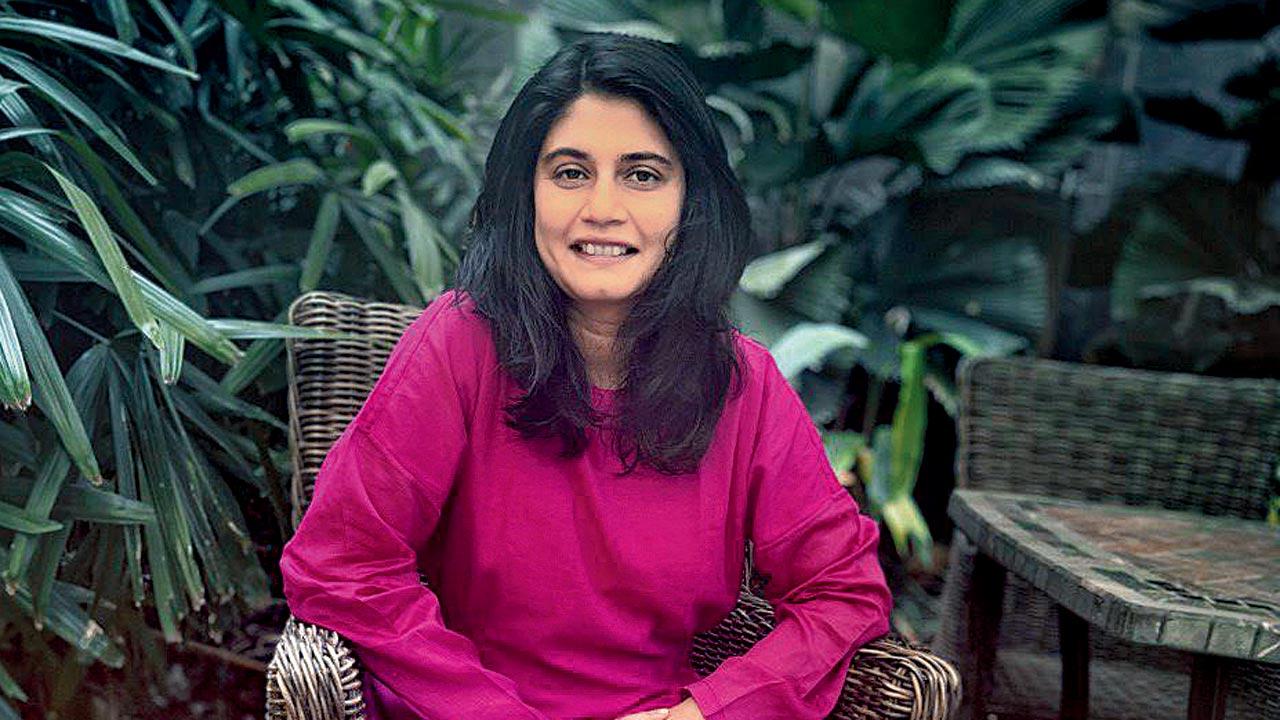
Admitting the struggle to find backing for sci-fi projects has taken its toll, director Arati Kadav on why she is choosing to go independent
Mohar Basu (MID-DAY; August 24, 2025)
She began with boundless energy and optimism, but director Arati Kadav — known for one of 2025’s most-discussed films Mrs — is now weary of an industry she says is risk-averse. Her dream? To make a big, mainstream sci-fi film. After Cargo (2019) starring Vikrant Massey and Shweta Tripathi, she followed it up with the award-winning short The Astronaut And His Parrot (2022) with Ali Fazal. In 2023, she began her third sci-fi feature, only to watch it stuck in limbo. Having invested years and even relinquished intellectual property, Kadav declared in a tweet: “I have decided I will never write sci-fi for any Indian producer anymore.”
Over a call, Kadav told mid-day the repeated cycle of investing years of passion and energy into projects that stall has pushed her to step away from collaborating with mainstream producers.
She said, "I’ve been very passionate about science fiction. This is the third time I’ve worked on a project for almost two years, and then it just went nowhere. It becomes very defeating, you know? Back-to-back, you pour yourself into something because you’re passionate about it. I want to make a big mainstream sci-fi film, a blockbuster that everyone can watch. A film my parents would be proud of, kids would be fascinated by, young people would say 'wow, that’s cool'. And every time I get a chance, I work very hard, but then something or the other happens and the project collapses. This is the third time I’ve worked on a sci-fi concept for over a year, almost two years. And in the process, you even give away your IP sometimes because you’re working in collaboration. Then the projects just sit in limbo. You’re left wondering, what was all that for? It’s very frustrating. That’s where that tweet came from."
Kadav describes the system as structurally incapable of nurturing sci-fi projects. She points to an industry that prioritizes what looks “safe on paper” over innovation or imagination, leaving little space for creators to experiment with ambitious concepts.
"Working with a production house is not an easy process. It becomes laborious because I have to constantly take them along with me -- explain, justify, listen to feedback, argue my point. It’s exhausting. And after all that, they still don’t get it. I really believe you can make good mainstream, funny, accessible science fiction. Cargo itself was mainstream sci-fi. But something happens in the process of putting a project together—it just doesn’t come alive. I don’t know why, even after years of work, decks, meetings, sitting with them endlessly. I also feel it’s the market’s risk-taking ability. Because there isn’t money, there isn't the bandwidth to take risks. Everybody just wants to rehash what’s been done. I think the industry has become so risk-averse. It’s like a content pipeline madness—people only care about what looks safe on paper, not about what audiences might actually like. Producers are picking projects that are 'safe on paper'.”
Won't the success of Mrs embolden stakeholders? "I still have the energy of a child for this genre. I can wake up in the middle of the night and start working on sci-fi. But all the sci-fi I’ve made so far has been self-funded. And it’s not like I had money. I was literally broke, but still funding those stories because of my passion. At some point, though, you need financing. Good science fiction requires decent budgets, not something an individual can bear alone. You need producers and organizations to come together. That’s why my frustration burst out. I am exhausted."
Even the much-hyped entry of OTT platforms, she says, has failed to deliver on the promise of risk-taking. While streamers initially appeared to widen the spectrum of stories being told, they too have increasingly gravitated towards formula-driven content, leaving science fiction out of the mainstream conversation.
"There was hope OTTs would broaden the landscape. But they haven’t delivered on that hope. Yes, there’s a slightly wider set of stories being told, and one should be grateful. But it’s not as wide as we thought. They’re also going back to safe formulas -- cop dramas, family sagas and comedy shows. They’re not innovating as much as expected. Also, when I was younger, I had that innocence and passion. I remember how I made Cargo. I stayed at it. But later, you start balancing things, and you slip into a kind of survival mode with your profession. In that mode, you can’t really attempt these kinds of experiments anymore. When you’re starting out, there are a lot of illusions—nobody is expecting anything from you, so you feel free to innovate and try new things. But later, you begin to play it safe. You start saying, ‘I want the safety of this much budget, I want the security of that much backing’, and that safety takes over."
Bollywood opens its door to mythologies once again
8:16 AM

Titas Chowdhury (HINDUSTAN TIMES; October 18, 2021)
Bollywood’s love for mythology dates back to several decades. But soon, actioners and love stories took precedence. But the next few years will witness a plethora of mythology features such as Ram Setu, Adipurush, Ramayana, Brahmastra, Chanakya, Mahaveer Karna, Sita: The Incarnation and Draupadi.
However, these films often come under scrutiny for deviating from the original idea. Kriti Sanon, who will be essaying the role of Janaki in Adipurush believes that playing such a part “comes with a certain responsibility”. “I’ve to keep a check on how much you can play as an actor as there’s a certain boundary that you cannot cross. We’ve to adhere to facts and not end up hurting sentiments,” she says.
Manoj Muntashir, who has penned the dialogues for Sita: The Reincarnation, Adipurush and Chanakya, asserts that filmmakers “need to capitalise on our epics”. Ask him about what kept them away from this genre over the past few years and he explains, “All of a sudden, India has woken up to its legacy. Baahubali broke many grounds.”
In 2019, Arati Kadav wrote and directed Cargo, a science-fiction rooted in Indian mythology. Agreeing with Muntashir, she says, “Mythologies are a goldmine we’re sitting on and we’ve to just tap into them.” So, is the trend here to stay? “Mythology films can give even the top sci-fi films a run for their money. If we rehash what the millennial generation has seen and already dismissed, we won’t be able to win them. Also mythology films involve high-grade VFX and massive production scale.”
Trade analyst, Taran Adarsh resonates with her thoughts, but he believes A-list actors headlining these projects “is a positive sign”. “If big stars are cast, that will take care of the budget aspect, too. But if you make a good mythological film, there’s a huge audience wanting to watch it. Jai Santoshi Maa (1975) didn’t have stars and it was low-cost film but it became huge,” he says.

The industry has embraced me with open arms-Vikrant Massey
2:25 PM

Juhi Chakraborty (HINDUSTAN TIMES; October 23, 2020)
Nepotism in Bollywood has been a hot topic for a while now. But actor Vikrant Massey has a different take on the insiders vs outsiders debate. “I am a firm believer of the power of hard work and potential. The industry has welcomed and embraced me with open arms, and I cannot complain. From doing TV, to playing smaller parts, to being hero ka dost and then to be part of critically acclaimed films and also dabble in commercial space as lead, I think I have done it all,” he shares.
Massey adds that what we get to see and get to hear today is rather unfortunate but everyone can see through it and not pay any heed to the larger agendas at play. “Any sensible head on a shoulder would gauge as to which direction this conversation is heading and it is very disheartening to see that. Thankfully the people I am around know the ulterior motives. They know the larger picture and are not affected by it,” he points out.
Massey says that his journey so far has been, “incredible”. “I am grateful for the life I lead; everything that I have is because of this industry,” adds the actor, 33, who has had three back-to-back OTT film releases — Dolly Kitty Aur Woh Chamakte Sitare, Cargo and Ginny Weds Sunny — in the last few months. “The last 7 months have been difficult for all of us. To be able to do things that you love, which in my case is entertaining people through my stories, is great,” he says.
Sci-fi genre in India: Much fanfare but why so sparse?
8:03 AM

Juhi Chakraborty (HINDUSTAN TIMES; September 28, 2020)
When we think of the sci-fi genre, our mind immediately starts listing the several Hollywood films and series that are made every year. But when it comes to home grown content, one really has to think hard. Yes, there have been films such as the Krrish franchise, Robot franchise, Ra.One (2011) and regional language films such as Tik Tik Tik (2018) and 24 (2016), but the genre never really took off in India.
“From my experience, the benchmark for sci-fi are indeed these big-budget Hollywood films, and their scale actually acts as a stumbling block, as it is tough for local producers to put that kind of money in any home-grown story. Also the Hollywood narratives (superheroes, futuristic world), do not culturally fit in the Indian context, and the early films were tacky imitations of these stories. So, their failure was seen as the genre’s failure,” says filmmaker Arati Kadav, whose debut sci-fi film, Cargo, has been getting rave reviews.
Shailender Vyas, who directed sci-fi web series JL50, agrees that in India, there are not enough home grown sci-fi genre films. “India is very rich when it comes to scientific conclusions. Yet, in the past few years, we have been rejecting logical science treating it as foreign trend. Somewhere, we, too, fail to project this genre,” says Vyas.
Actors are also embracing this genre wholeheartedly now. Actor Shweta Tripathi Sharma, who stars in Cargo, says, “Some films should be seen on the big screen and Cargo is one such film. In theatres, it would have been just magical. But nonetheless, it is a new way forward, and I think, it will pave way for a lot of other filmmakers to get into this genre now more than ever before.”

Instead of seeking inspiration from the West, we need to draw from Indian folklore, says Cargo director Arati Kadav
9:00 AM

Cargo director Arati Kadav on why Bollywood needs to quit seeking inspiration from the West
Shaheen Parkar (MID-DAY; September 13, 2020)
 It was a long wait for Arati Kadav's sci-fi film Cargo to see the light of day. The Vikrant Massey and Shweta Tripathi Sharma-starrer premièred at the MAMI film festival in 2019 and did the festival rounds. "Had it not been for the pandemic, Cargo would have been screened at several more festivals," says Kadav, adding, "Now that it has dropped on Netflix, it will travel to many more homes."
The writer-director admits that for a first-time filmmaker a theatrical release "would add to your resume, but given the prevailing circumstance, this is the best option". Obsessed with the sci-fi genre, Kadav says she couldn't think of any other subject to make her debut. "Science fiction comes naturally to me. For the last eight years, I have been writing and making short films on it," says the filmmaker.
Streaming on Netflix since September 9, Cargo revolves around a demon, who works on a spaceship to aid the transition services post death along with an astronaut. "A spaceship comes close to the Earth every day and the dead are carried like cargo to an after-life. They have to go through immigration, give up their identity, get their memories erased and give up worldly possessions to begin a new life," explains Kadav.
Though sci-fi films are the biggest grossers in Hollywood, Bollywood still shies away from the genre. "I hope more producers back sci-fi projects. Due to the special effects, the budget of the film shoots up, which makes most producers stay away," reasons Kadav, adding that the benchmark for Indian sci-fi subjects still remains around Hollywood inspired films about superheroes. "Instead of seeking inspiration from the West, we need to draw from Indian folklore. There are enough subjects to draw inspiration from and to weave a tale about the other worlds." The filmmaker is already working on two more scripts around the same subject.
Shweta Tripathi and I are hopeless romantics-SlowCheeta
8:22 AM

Loved-up couple under quarantine, actor Shweta Tripathi and singer SlowCheeta, talk about their new ready-to-devour projects
Aastha Atray Banan (MID-DAY; August 30, 2020)
Shweta Tripathi and SlowCheeta, aka Chaitnya Sharma, realised early in the Coronavirus lockdown that social media trends weren't to be followed. "I tried to make the fancy coffee everybody was making online, and Chaitnya got sick after having it. So, we decided not to try anything trendy, just keep ourselves happy," the actor tells us over the phone.
Well, it would make sense, as the couple has enough to keep themselves busy. SlowCheeta has just released his three-track rap EP, and Tripathi will be back with Mirzapur's season 2, which is set to release in October. Before that, sci-fi movie Cargo releases on September 9. "We even shot all of the Voot series The Gone Game, in the house! I shot Shweta, and we were working all day long. So, it's been a productive time," says SlowCheeta, as Tripathi adds, "It was very different, as we are very vocal about each other's work, and when he said, he liked a scene, I was over the moon. The highlight of this phase has been spending time with my husband. Otherwise, when I return from a shoot, he's usually leaving for one."
SlowCheeta's EP presents the view of an upper middle-class man dealing with his set of problems. In a world where we are accustomed to recognizing rap as a "gully" sound, his take is refreshing. The melodies are catchy, his voice ear candy, and the lyrics speak of challenges he faced when growing up. "The three songs are about asking the listener to come share my journey. Rap has risen from the streets, but street or skyscraper, we all have our problems."
Tripathi, on the other hand, is the unsuspecting cutie on screen who can handle intense roles with ease. Most recently, she was the most palatable character on Netflix dud Raat Akeli Hai. But what viewers are looking forward to is Cargo, which director Arati Kadav had described to this writer in an interview in March as "a movie about life on Pushpak 634A, where a demon works for the Post Death Transition services, and with the help of a female astronaut, gets dead people ready to be recycled for rebirth". "Everything Arati does is not of this world, and that itself is exciting. I also love working with first-time directors, who bring great energy on set. Every little detail is looked into. We are competing with shows from all over the world. If you don't like it, switch it off. The audience has a lot of say now about what content works."
While work has slowly begun to take everyone out of home, the couple wishes they can spend more time with each other.
SlowCheeta says, "We are hopeless romantics. And we have so much to talk about all the time. The spectrum of conversation can get strangely widespread. A simple, 'how was your day?' question can set off an interesting chat. We love that."
I was chatting with Rajkummar & Patralekhaa on my birthday when he broke the news about Irrfan-Hansal Mehta
8:44 AM

Hansal Mehta reveals that a project with the late actor didn’t materialise, says he’s been very productive during the lockdown
Akash Bhatnagat (MUMBAI MIRROR; June 2, 2020)

Also produced by Bhushan Kumar, the film was supposed to release in March, then pushed to June and even now its opening date is uncertain. But Hansal is not worried, “It would have been a disaster had it opened in March; it’s a film which will be liked by all even if it comes after five years as it is an inspiring, heart-warming story laced with gentle and genuine humour. So, I am not bothered.” There have been rumours of a digital release, but the National Award-winning director shrugs it off as just speculations. “We are going through a pandemic and have lost two stalwarts (Rishi Kapoor and Irrfan Khan) in the midst of it. It has been a tough couple of weeks for the industry during which we didn’t even discuss the film. But my producers are working on it and we will have something concrete to announce really soon,” he promises.
Irrfan passed away on Hansal’s birthday (April 29). “I was on a video call with Raj and Patralekhaa who had called to wish me. We were chatting and laughing when Raj broke the news to me. I was stunned,” he recalls. That day, Hansal had tweeted about a secret which even now he refuses to divulge, saying it’s private. All he will say is that Irrfan and he almost ended up working together fairly recently. “It did not happen eventually for a variety of reasons that I don’t want to discuss as it will hurt a lot of other people,” says the filmmaker, who regrets not getting the opportunity, but is glad he got to spend some time with his friend. “We had known each other since 1994, and now our life and death are inter-connected. My date of birth will now mean a new life for Irrfan in a better place,” Hansal says emotionally.
Recently, his film Omerta, based on the life of terrorist Ahmed Omar Saeed Sheikh, completed two years. Going down memory lane, Hansal admits the film was a difficult but satisfying journey because it was Raj and his most intimate collaboration after Shahid. “It will remain special to me because we collaborated on creating an aspect of human nature which we don’t normally explore even as a human characteristic. Evil is not seen as evil,” he points out.
The filmmaker has been a part of movies not only behind the camera, but also in front of it. He was last seen in The Accidental Prime Minister last year. “I keep stepping in for friends when they call me in emergency,” he laughs, revealing he has also done a small role in Vikrant Massey’s sci-fi film Cargo, which was screened at the MAMI film festival in 2019, for producer Shlok Sharma. “I told him I am not an actor but he was persistent,” he shares, adding that he often gets called for acting gigs. “I guess it’s because of my grey hair and that I work for free and for the love of being on a film set. I was even shortlisted for the doctor’s role in Good Newwz, but I was busy with Chhalaang at the time and the film was saved,” he concludes with a chuckle.
I had an attraction towards the Yamraj myth-Arati Kadav
9:09 AM

Arati Kadav on why she made the switch from engineer to sci-fi filmmaker and why death isn't permanent
Aastha Atray Banan (MID-DAY; March 8, 2020)
"My name is Aarti only, but when I was younger, I made up my mind that I wanted to change the spelling," says Arati Kadav, the director of the sci-fi movie Cargo. She may look unsuspectingly docile, but it's this rebellious streak that perhaps led the IIT Kanpur graduate, who once worked at Microsoft in Seattle, to become a filmmaker. Cargo, which premiered at MAMI last year, is about life on Pushpak 634A, where a demon works for the Post Death Transition services, and with the help of a female astronaut, gets dead people ready to be recycled for rebirth.
Though the plot of Cargo sounds complicated, it was with the simple stories of Panchatantra and Indian mythology that Kadav, who grew up in Nagpur, first was introduced to science fiction. "I used to write short stories about fantasy—all things magic came naturally to me. Also, my family was crazy about computers. We got one early on. So, there was a good mix of fantasy and technology," says the daughter of an engineer and a teacher.
It was in Seattle that she got a video camera, and started making short videos by herself, while also studying about Martin Scorsese. And so, when she got back to India, she enrolled at Mumbai's Whistling Woods for a course in filmmaking. Her first film there, about a grey coloured man living in a colourful world, was what got her hooked. "He buys himself a colorful robot, who is enamoured by his greyness. The film was appreciated in the school, and I got a big kick making it, seeing my vision come alive. And then I knew, this was a high I wanted to keep feeling."
It may be Western sci-fi (Philip K Dick, Ray Bradbury and the likes) that has shaped most people's view of the genre, but Kadav is a fan of Eastern sci-fi, which she feels she could relate to more as well as an Indian. One example is Ted Chaing's Arrival, which eventually made it to the big screen. "The original, The Story Of My Life, is the most beautiful story ever. When I read it I wanted to die of jealousy. Sci-fi doesn't need to be larger than life. It can be simple, nuanced and yet very profound. There is a Spanish author, who is a champion of the unreliable narrator—a character whose version of events doesn't seem to be complete or accurate. Isn't Indian folklore like that as well? Kuch bhi ho sakta hai."
Before Cargo, which is going to travel to other film festivals ahead of its OTT debut, Kadav dabbled in making ads and music videos. But, after Cargo, there is no looking back. "So India has the coolest sci-fi in shape of its own mythology. Like Mahabharat. But, every generation can impact these stories. I had an attraction towards the Yamraj myth. But I wanted to make the afterlife concept more interesting. So after you die, you come to the spaceship, which is like an immigration counter, before you get rebirth." As she gets ready for audiences to start watching it and passing verdict, she says she has a message to go with it, too. "I think what I really wanted to say was that if a life ends, there are still traces of us left behind. Nothing gets over forever. Secondly, forever is not about living on and on. Forever could just be a moment. For instance, when you are looking at a beautiful flower. It could just be that."
Shweta Tripathi roped in for a sci-fi
8:43 AM

Director Arati Kadav, after Cargo, looks forward to working with Tripathi again
Mohar Basu (MID-DAY; February 23, 2020)
After delivering a crackling film in Cargo, word on the street is that director Arati Kadav will join hands with the film's leading lady Shweta Tripathi for another sci-fi outing. She says, "Shweta is one of the few actors who understand science fiction and isn't afraid to try out new ideas." Known amongst the handful of deft filmmakers who can dabble in the genre, Kadav is in the process of writing her next. Sources claim that she has already reached out to Tripathi to play an integral part in the film. While it is still at a nascent stage, Tripathi has expressed interest in the project.
Much like her last few films, Kadav in the garb of science fiction will explore human emotions. The film will be set in a whimsical world much like Cargo, but will delve into a unique facet of human personality. Kadav adds, "I am still developing ideas. It was such a joy working with Shweta [earlier], I am looking for another opportunity [to work with her]. She is a mighty talented actor and the set was an absolute joy ride. Cargo was amongst my most enjoyable experiences."
Talking about her next, Kadav says, "Everybody will resonate with it regardless of the genre. My chemistry with Shweta allows me to push her into exploring new things. Reuniting with her will be symbiotically self-exploratory for both of us."
Arati Kadav made me realise that work need not take a backseat for women post marriage-Shweta Tripathi
8:00 AM

Recently married Shweta Tripathi Sharma on headlining Arati Kadav's sci-fi film
Mohar Basu (MID-DAY; October 31, 2019)
 Positive word of mouth for Vikrant Massey and Shweta Tripathi Sharma's Cargo at the MAMI festival has set the ball rolling for the film. Mounted on a small budget, the actor says the film is "high on concept" — something that gratifies her as an artiste. It's not money so much as the "sheer joy of movies," she insists, that keeps her going.
"When this script came to me, I was sold on director Arati Kadav's vision. It's a sci-fi movie that even the common man can relate to," says Tripathi, adding that the Kadav, Anurag Kashyap, Shlok Sharma, and Navin Shetty production asks pertinent questions that often plague people. "It asks deep poignant questions about life, the afterlife and existential crisis. It's a thought-provoking film that is rooted in folklore as much as science," she adds.
Ask her about working with Kadav, and Tripathi can't stop singing her praise. "Women like her are inspiring. She would often come on set with her young daughter. She made me realise that work need not take a backseat for women post marriage. It didn't happen for me, it didn't happen for her. And I hope such expectations are not kept from the next generation at all," says Tripathi, who tied the knot with Chaitanya Sharma last year.
More often than not, films of this scale struggle to make it to the theatres, but Tripathi is confident that the positive reviews have been a huge impetus, and hopes Cargo is acquired by an OTT platform. "Theatrical release comes with its own set of commercial viability baggage but OTT is a free-playing field that is making room for diverse content."
Movie Review: CARGO by FENIL SETA
8:58 AM

Although newer ideas have been explored in Bollywood, one can't deny that we can still do better in terms of novel content. Arati Kadav takes up the challenge and for her debut feature film Cargo, she scores a sixer!
The story of the movie: It’s a time when humans and rakshasas have made an alliance. Prahastha (Vikrant Massey) is a rakshasa who works for ‘Post Death Transition Services’ and runs a spaceship called Pushpak 634 A. As part of his job, he receives a ‘cargo’, that is, people who have died. It’s his responsibility to prepare them for next life and then extract them. Prahastha works under Nitigya sir (Nandu Madhav) who communicates with him through video call. He often tells Prahastha to be more social and like other astronauts, make himself available to his fans on social media. Prahastha however is a recluse who prefers to work alone without making any noise for his followers. When Nitigya sir announces that Prahastha will be given an assistant, Yuvishka (Shweta Tripathi), he protests as he doesn’t feel the need. But his request is not adhered to. Yuvishka is sent to Pushpak 634 A and unlike Prahastha, Yuvishka likes to document her each day on social media. Prahastha is irritated and misses his old life, when all was under his control. But now there’s no looking back and he has to settle with Yuvishka as his colleague.
Cargo becomes a winner just through its concept. The taut execution and performances are like icing on the cake. The way the whole world has been created by Arati is seen to be believed. Even the introduction of the characters and the whole process of transitioning after death is well handled. There are no complaints in the beginning as the film is highly engaging. But in the middle, it stagnates. The film is 119 minutes long and could have been 10-15 minutes shorter for a better impact. A few scenes are bewildering. Also, while the world shown in the film is spectacular, it's also a bit confusing especially the rakshasa bit. Thankfully the film picks up in the last 15-20 minutes and the movie ends on a fine note.
Talking of performances, both Vikrant Massey and Shweta Tripathi give their hundred per cent. Vikrant is an absolute natural and despite his young and boyish looks, he manages to be convincing as someone who has a vast experience in his work. Shweta is adorable and delivers yet another bravura performance. There are several layers to her character and she brings it out very well. Nandu Madhav has a crucial part and nails it. Biswapati Sarkar is funny at first but his character has a deeper meaning. Konkona Sen Sharma is lovely in the cameo. Anjum Rajabali is decent. Others also do well.
Shezan Shaikh's music is futuristic and has the space feel. Kaushal Shah's cinematography is praiseworthy. 90% of the film is set on the spaceship but it doesn't make viewers feel trapped. Lovedeep Gulyani's costumes are in sync with the film's theme. VFX is superb, especially considering the limited budget of the film. Anish John's sound design elevates impact. Paramita Ghosh's editing is neat but one wishes a few sequences were further shortened.
Arati Kadav's story is one of the strenghts of the film. Arati Kadav's screenplay makes the plot even more worthy and even entertaining. She mentioned that due to budget constraints, she had to make some compromises but in a way, it works as the film focuses solely on the two characters and their predicaments. Arati Kadav's dialogues are simple.
Arati Kadav's direction is commendable, also because it's her directorial debut. She does a good job even with how she adds layers. A few aspects of her direction are really impressive. For example, she doesn't show people dying in most cases and the manner in which the scenes cuts from people on earth before their death to them on Pushpak 634 A is nicely done. Also, the marriage party scene is a masterstroke. If only the concept was a bit more simplistic, Cargo would have been a classic. Yet, no complaints because even what she has managed will be loved!
On the whole, Cargo has a mind-blowing and a unique concept, which we don’t get to see in Hindi cinema. The exemplary performances by Vikrant Massey and Shweta Tripathi also contribute to the impact. Here’s hoping this hatke film gets a timely release in cinemas!
My rating - **** out of 5!

Cargo's story was abstract and gorgeous-Vikrant Massey
8:30 AM

Vikrant Massey on slipping into the role of an astronaut for the first time in Cargo
Mohar Basu (MID-DAY; October 19, 2019)
Set to play an astronaut for the first time on screen in Cargo, Vikrant Massey was "blown away" by the script that revolves around a spaceship which comes close to Earth every day, to collect dead bodies. Arati Kadav's directorial venture, backed by Anurag Kashyap and Vikramaditya Motwane, portrays this spaceship as one that doubles up as an 'immigration office' for the dead. "The story was abstract and gorgeous, and I had to read the script in detail to [decipher] what she was saying. It stunned me, and that's when I knew I had to do this film," Massey says of the dark comedy, which attempts to "raise existential questions".
Even as Kadav has attempted to explore such an ambitious subject on a rather small budget, Massey says the scale on which it was being helmed was never a deterrent. "The conviction of the director was paramount. If I am convinced about what I am doing, the money being pumped into it doesn't matter. Arati knew exactly what she wanted. She took us through the CGI work that she was planning to include in it so as to give us a gist of what she had in mind."
Next up, the actor will be seen in the second season of Broken But Beautiful, and will then feature alongside Deepika Padukone in Chhapaak. "My line-up [of films] in 2020 is interesting. I want to challenge myself as an actor and go back to the basics as an artiste."
Each shot in Cargo was planned to the last detail-Arati Kadav
8:20 AM

As Vikrant Massey's Cargo is set for festival premiere in Mumbai, the director Arati Kadav reveals how she shot sci-fi at 'one-millionth the budget of Gravity'!
Mohar Basu (MID-DAY; October 8, 2019)
 By the very nature of their subjects, sci-fi films are often mounted on a big budget. However, the budgetary constraint did not deter director Arati Kadav from imagining Cargo, a sci-fi black comedy — featuring Vikrant Massey and Shweta Tripathi — built on an unlikely premise. "It is the story of a spaceship that comes close to Earth every morning and waits for dead people. The spaceship doubles up as an immigration office for the dead," she explains.
While producer Anurag Kashyap and executive producer Vikramaditya Motwane saw promise in the spaceship designed for the film story, the challenge was to shoot the movie on the limited budget — "one millionth of Gravity (right)," as Kadav puts it — they had. The first step was to develop a comprehensive storyboard. "Each shot was planned to the last detail. We also came up with solutions to make this world authentic in terms of techniques to show zero gravity. For the design of the spaceship, we took inspiration from the bio-mechanism of jelly fish," she says, adding that they faced logistical issues while shooting inside the mock spaceship. "Because it was relatively lightweight, it would shake when the crew walked around. So we recreated a part of the spaceship on ground for steady camerawork."
Kadav beams that the film being chosen for the MAMI Spotlight section is a validation of her belief. "The idea was to take references from reality and movies, but make something ground up in a way that resonated with us culturally."

The spaceship designed for the film
Vikrant Massey shoots ups his price by 40%
9:17 AM
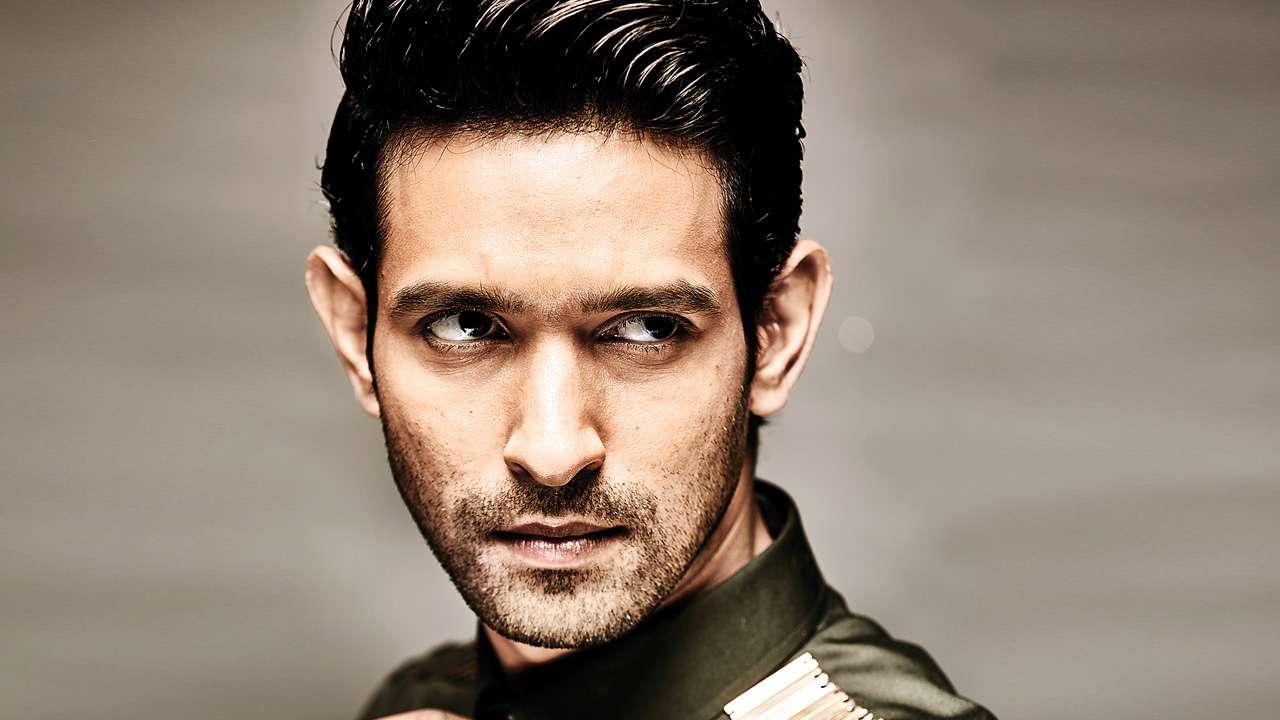
Deepali Singh (DNA; July 13, 2019)
If the adage ‘slow and steady wins the race’ had a face, Vikrant Massey would be one of the foremost contenders for it. From starting his career with television shows such as Dharam Veer and Balika Vadhu to signing a project with Deepika Padukone in Meghna Gulzar’s next, Chhapaak, he’s come a long way. And with his rising popularity, we hear the actor has upped his price by 40 per cent!
The powerhouse performer has proved his mettle, not just in television and commercials but was also noticed in films such as Lootera (2013), Half Girlfriend (2017) and Dil Dhadakne Do (2015), even though he was not in the forefront. He also bagged a nomination for best actor for his lead role in Konkona Sen Sharma’s debut directorial venture, A Death in The Gunj (2017). Since then, he has acted in digital shows Mirzapur, Broken and Criminal Justice.
Now, apart from Chhapaak, he also has Alankrita Shrivastava’s Dolly Kitty Aur Woh Chamakte Sitare, Seema Pahwa’s directorial debut Pind Daan, Cargo, Yaar Jigri and the romcom Ginny Weds Sunny. He is also filming for the second season of Broken But Beautiful. For the next project he signs, we hear the actor will charge a hiked price.
Says a source, “Vikrant has successfully carved a niche for himself in Bollywood and is being considered as one of the most sought-after actors in his league. His success ratio and choice of films have made him a bankable actor. Producers have faith in his acting prowess and popularity with the youth, and hence, do not hesitate to invest in him more. He knows how much rides on his shoulders and the responsibility that comes with it.”
Roadblocks like regulation of web content must first be gotten away with-Vikrant Massey
8:05 AM

Referring to the likelihood of censorship making its way to the web space, Mirzapur actor Vikrant Massey on how India can better the prospects of its digital shows on a global platform
Sonia Lulla (MID-DAY; November 24, 2018)
Returning to the digital platform with the recently released Mirzapur, Vikrant Massey, in a chat with midday, acknowledges that the Indian audience still consumes international shows with more generosity than it does Indian series. With offerings like Inside Edge and Sacred Games, the trend is inarguably changing. But, the actor believes it is the ability of filmmakers to explore the stories of our country that will go a long way in enhancing the fate of Indian shows.
“[This platform allows us to] explore things in their truest forms. It’s easy to go overboard when showcasing violence or sex. But filmmakers must have the requisite skill set to be aware of that. India has many stories; we can exploit our diversity on a platform like this one, and we must do that,” Massey says.
Amidst reports of a review committee for the regulation of web content being considered, Massey says, “such roadblocks must first be gotten away with.” “We have a right to say stories. And it is a filmmaker’s responsibility to be aware of his work. With Mirzapur, we’ve tried to present the essence of the place in the show, including the crude humour that’s part of it. That is something you can only explore on this platform. We need to think about where we want to be five years from now, and not derail our process.”
Pointing out to the comic undertone that’s part of regular conversations among people in Mirzapur, he says, “As someone from Mumbai, [I] would laugh when I would hear how people in UP speak, because they have an inherent humour. The dialect changes every five kilometres.”
Set to play an astronaut in his upcoming venture, Cargo, Massey says, “We took part in anti-gravity training for certain sequences. We’ve explored the theory of whether or not man did land on the moon.”

Shweta Tripathi, Vikrant Massey to play astronauts in Cargo
7:43 AM

Shravan Shah (MUMBAI MIRROR; February 9, 2018)
 Shweta Tripathi, who was last seen opposite Nawazuddin Siddiqui in Shlok
Sharma’s controversial film Haraamkhor, is foraying into the sci-fi
genre with her next. The 32-year-old actress and her co-star Vikrant
Massey play astronauts in Cargo. It is directed by Arati Kadav and they
are currently shooting in Film City.
Shweta Tripathi, who was last seen opposite Nawazuddin Siddiqui in Shlok
Sharma’s controversial film Haraamkhor, is foraying into the sci-fi
genre with her next. The 32-year-old actress and her co-star Vikrant
Massey play astronauts in Cargo. It is directed by Arati Kadav and they
are currently shooting in Film City.“The film is set inside a space-ship. We began shooting in the first week of January and have another week to go before wrap-up,” Shweta told Mirror, adding that she plays a character called Yuvishka Shekhar who has powers to heal. “So does Vikrant, he’s my senior and I join his spaceship.”
Shweta is also working on a Tamil film, Mehendi Circus, written by National Award winning writer-director Raju Murugan and her biggest challenge was shooting for two projects simultaneously. “It was hectic but fun. We had a lot of reading sessions with Arati who made us watch sci-fi films, books to go through and told us stories. It was like being back in school,” she laughed.
Besides the two projects, the Masaan actress is also set to feature in a drama which revolves around a girl suffering from Alopecia. “Gone Kesh is about a 15-year-old aspiring dancer who loses all her hair to the illness,” Shweta signed off.
Shweta Tripathi pairs up with Vikrant Massey for the sci-fi film Cargo
7:44 AM

Natasha Coutinho (MUMBAI MIRROR; November 16, 2017)
 Shweta Tripathi, who had earlier collaborated with Anurag Kashyap for
the film Zoo, India’s first film shot on iPhone, is now reuniting with
the filmmaker. In Arati Kadav’s next, Cargo, produced by Anurag and
Vikramaditya Motwane, the actress is paired opposite Vikrant Massey. The
project goes on the floors in January.
Shweta Tripathi, who had earlier collaborated with Anurag Kashyap for
the film Zoo, India’s first film shot on iPhone, is now reuniting with
the filmmaker. In Arati Kadav’s next, Cargo, produced by Anurag and
Vikramaditya Motwane, the actress is paired opposite Vikrant Massey. The
project goes on the floors in January.“The most exciting thing about this film is that it is in the sci-fi genre. We have little to show for it in Hindi films apart from Mr. India and Jaani Dushman. And even those were not really full-fledged sci-fi,” the 32-year-old actress told Mirror.
Shweta is glad to have an author backed-role in the film. “The biggest compliment for me is when somebody writes a part with me in mind. When Arati handed the script to me to read, even the character’s name was Shweta, it is being changed now. There is certain trust and faith they have in you. It makes me very happy because I am extremely choosy about the kind of work I do,” she signs off.
Besides acting, Shweta is also busy shortlisting scripts at the moment for her production house that she plans to launch next year. With the home banner, the actress plans to make full length feature films as well as short films. Right now, she’s working on two films — a horror and a drama.
Subscribe to:
Posts (Atom)