Showing posts with label Bhushan Kumar interview. Show all posts
Showing posts with label Bhushan Kumar interview. Show all posts
Nagraj Manjule was certain that Jhund is meant for the big screen and I supported him-Bhushan Kumar
8:26 AM
Neha Maheshwri (BOMBAY TIMES; March 1, 2022)
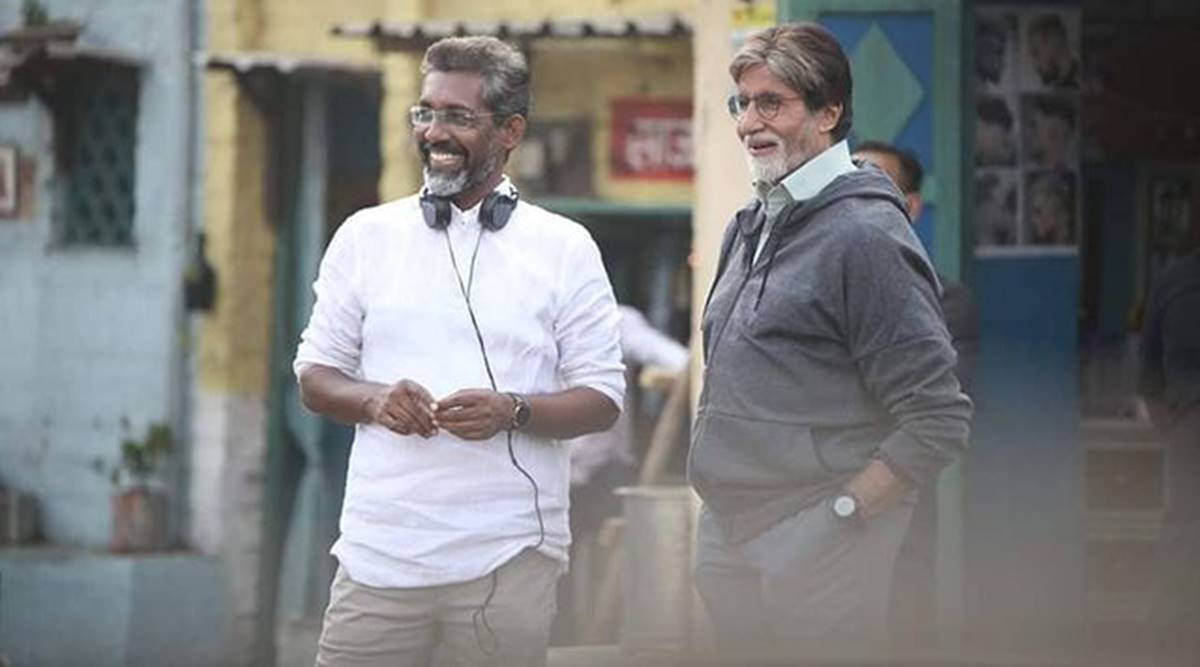
Jhund marks Sairat director Nagraj Manjule’s directorial debut in Bollywood. The film helmed by him is headlined by Amitabh Bachchan and backed by producer Bhushan Kumar. The movie, based on the life of Vijay Barse (played by Amitabh Bachchan), who founded the NGO Slum Soccer, hits the big screen on March 4. In an exclusive chat with BT, Nagraj Manjule and Bhushan Kumar talk about what makes Jhund special and their association of mutual trust and admiration. Excerpts:
The two taglines — ‘Isse Jhund nahi team kahiye’ and ‘Badi film bade parde par’ — grab your attention instantly while watching the trailer. Is that a comment on the film or the teamwork behind it?
Nagraj Manjule: It is a comment on perception. What might seem wrong to you, could be right in my eyes. Similarly, what I see as a team, people perceive as jhund. The film revolves around the lives of slum dwellers and how we tend to judge people on the basis of their background and looks. For instance, a dark-skinned person is often assumed to be a villain, while a man with innocent looks is assumed to harbour no ill intentions. Jhund addresses these stereotypes. Besides, Bachchan sir hain toh yeh film automatically badi hai mere liye.
Bhushan Kumar: It’s been almost three-and-a-half years since we started making the film. Several opportunities came our way to release it on an OTT platform, which has become an extremely powerful medium with an impressive viewership. But when Nagraj ji showed me the film during the lockdown, everyone in the team felt strongly that we should hold the film back for a theatrical release. Nagraj ji is the creative person behind the film, and he was certain ki yeh bade parde ki film hai, aur wahin aani chahiye. As a producer, I have to support him and respect his vision.
Since the film is releasing in theatres after three-and-a-half years, did you have any content becoming dated?
Bhushan: This movie doesn’t belong to the thriller, comedy or action genre, which generally tends to become dated after a couple of years. This is a reality-based story adapted by Nagraj ji, so the film becoming dated was out of the question. No one can predict how a film will fare at the box office, but as a producer, you must have conviction about your product as well as the interests of the director at heart. I kept him informed about the OTT option, but he had made up his mind about the film releasing in theatres. As producers, we should also take steps to ensure the smooth functioning of theatres. Theatres khatam nahi hone chahiye. It’s a good sign that the fear of watching a film in theatres, owing to Coronavirus, is reducing.
Nagraj, you have always chosen the cast of your films depending on the characters, which often included picking untrained actors. So, did you write the central character in the film keeping Amitabh Bachchan in mind?
Nagraj: I am a fan of Bachchan sir and have admired him since my childhood. Main jab chhota tha tab Bachchan sir ke jaise shirt ko gaanth maar kar school mein jaata tha, aur maar khaata tha uske liye. I must have watched all his films. It was beyond my imagination that I would ever be able to work with him. However, things fell into place when I pitched an idea to Bhushan sir and everyone felt that it could be developed with Bachchan sir playing the central character. I wanted to flesh out the story before approaching him. So, Jhund is the first film for which I have developed a script keeping the actor in mind. I usually follow a different process because there is an inexplicable pressure and fear when I have to decide on an actor before writing. That should not be the case, because if you like what you write, you can work on the project more confidently.
Bhushan, this is the first time Nagraj is making a Hindi film, what prompted you to back the project?
When I heard a brief narration of the story, wahin se main iss film ke saath jud gaya tha. Hum content se judte hain. As a studio, we make all kinds of films, including action and massy entertainers. Hum Jhund bhi banaate hain, Thappad bhi banaate hain aur Kabir Singh bhi. Jhund mein humne football aur slum ke bachhon ki duniya dikhaayi hai. The kids cast in the film are those who live in the slums. The actors are real. We haven’t taken any established actors for kids.
When you choose the cast for a film with such real characters, the process must be exciting and interesting. Can you take us through it?
Nagraj: These kids meet the requirement of the characters. My brother, who does the casting for me, spent two months in Nagpur and went around the slum settlements. We must have auditioned 600 children, who knew how to play a bit of football. They underwent a prep for around one-and-a-half years. When you watch the film, you will get a glimpse into their reality and background.
How encouraging it is to have a producer who backs your film without producer who backs your film without putting any box-office pressure on you?
Nagraj: It’s extremely encouraging. On many occasions, there are financiers who come on board as producers. It helps if a producer is also creatively inclined and isn’t just thinking about making money. It’s a pleasant surprise that someone with immense knowledge about the business aspect of filmmaking isn’t just looking at it as a business prospect. He never asked me how the film was shaping up and visited the set only once.
Bhushan: Not everything is just about the money in business. Thankfully, we have enough funds, and I don’t need to put in so much effort. It can result in tunnel vision. So, it’s not always the money. It is also about a feeling of pride, and Jhund evokes a sense of pride in you. I am positive about Jhund, as Nagraj ji has made a very good film and I am sure we won’t be in losses.
Bhushan Kumar has a strong sense of business and I work more on the creative side-Aanand L Rai
8:10 AM

Rachana Dubey (BOMBAY TIMES; December 26, 2021)
Atrangi Re marked the third collaboration between producer Bhushan Kumar and filmmaker Aanand L Rai. Of course, music brought them together years before they became co-producers on Shubh Mangal Zyada Saavdhan and Haseen Dillruba. Three films later, they talk about what makes their equation stronger and how they have nurtured it for years. Excerpts…
You both have known each other and partnered on the music of Tanu Weds Manu and other films.How does the equation work when you become co-producers on a project?
Aanand: Our journey has been very long and it started with music. We had both been looking to partner as producers and take the equation to the next level. Shubh Mangal Zyada Saavdhan turned out to be the project. After three films, we have our fourth collaboration ready to go on floors next month, and a couple of films are being discussed. It’s been an enriching journey so far and will be so, as we go along.
As a team, we both have our strengths. He has a strong sense of business and I work more on the creative side. We trust each other to play our individual roles well. In the last few years, we have all witnessed how, as a producer, he has wholeheartedly believed in his creative partners and, in return, has won their trust. I enjoy this collaborative process where we pool in our strengths to make something interesting.
Bhushan: At a personal and professional level, I have gained an invaluable relationship with creatively gifted people like Aanand ji. From the time I have known him, I’ve been eager to work with him in a bigger capacity, which happened eventually with Shubh Mangal… His strengths lie in the way he conceives the films, focusses on the stories and creates wonderful worlds around them. I pitch in with the muscle to ensure the film is made without any compromises. The way we promoted Atrangi Re, people assumed it’s releasing in a theatre when it’s going to an OTT platform. A great combination is where both parties work to their absolute potential and display their strengths as a collective force. Ek jute hokar sab kuch plan aur execute kiya hai humne. That makes the collaboration extremely strong. For me, Aanand ji’s passion, focus, and creativity are superlative.
In a recent chat with BT, Bhushan had mentioned why he had decided to release Atrangi Re on a digital platform. After making the decision to drop the film on OTT, were you ever tempted to have a theatrical run, especially after theatres opened in Maharashtra?
Aanand: We tried very hard. That was a difficult decision to make. As a director, you feel that you had a vision, and you think the film on hand had cinematic value. But eventually, I also learned from this process. We tried our best to reverse the decision, but it didn’t work at so many levels. Today, I don’t feel guilty because we did our best. We have to accept destiny and move on. In fact, today, what makes me happier is that the film has reached a wider audience base than a theatre can promise.
Bhushan: Making films in future will entail a consideration — where we want to release it, and it will become a part of our primary decision-making process. OTT is here to stay, and films will be made keeping a theatrical, or an OTT run in mind. Everyone is thinking ahead. People may be stepping out for an event film like Spider-Man, but they are also scared of the new strain of the COVID virus. We don’t know kal kya hoga. From where I see it, we will need a big event film to go to the theatres. Content-led films, which performed well, will return to theatres, but we will have to wait and watch.
Aanand: Releasing a film on OTT has nothing to do with the size of a star, it has to do with the way you made the film and the story you have on hand. For me, a film’s grandeur lies in its emotional quotient. And that quotient, coupled with the economics of the times, helps one make a decision to release a film on a said platform.
Bhushan: Today, there is a clear demarcation between what can go on OTT and what can go into theatres. So many good films made in the past would have reached so many more people if we had the options we have today.
Lastly, every equation has its share of disagreements, how do you both work in such a situation?
Aanand: Trust and mutual respect for one another’s work are essential here. As a creator, I don’t invest my emotion and time in a film for the sake of it. I have to have a reason to tell the story. When I talk to him about it, he understands it quickly and trusts my word. I respect his inputs on various things because that comes from his experience and vision for the film. I feel more responsible towards him because he gives me the space to function as I like. I’ve earned the right to share my thoughts with him, even on films that I’m not associated with. Disagreements dissolve on their own when two people want the best for one another.
Bhushan: Bina trust factor ke koi equation nahi banti. I have always had faith in Aanand ji. I support his vision — if he believes a newcomer is better suited for a role, I back it because I know eventually, he will turn in a crackling film. Disagreements toh har relationship mein hote hain, but we always find a middle ground.

Film business runs on hard work, a bit of luck and your own sensibilities-Bhushan Kumar
3:48 PM

Rachana Dubey (BOMBAY TIMES; December 6, 2021)
When Bhushan Kumar took charge of his father, Gulshan Kumar’s company, T-Series, he was a young 19-year-old. Today, not only has he turned the company into one of India’s most successful music labels, but he has also earned it the tag of being one of the country’s foremost film production studios.
He is currently busy promoting his upcoming films, Chandigarh Kare Aashiqui starring Ayushamann Khurrana and Vaani Kapoor and Atrangi Re featuring Akshay Kumar, Sara Ali Khan and Dhanush. Besides that, he’s also been making time to visit the sets of his upcoming films like Shehzada starring Kartik Aaryan and Luv Ranjan’s next with Ranbir Kapoor and Shraddha Kapoor in Delhi.
In a freewheeling chat with BT, he spoke about the changing avatar of the entertainment business and what has helped him maintain his position despite intense competition and a global health crisis. Excerpts:
While you waited almost two years to release Satyameva Jayate 2 in theatres, you continued to have movie releases via OTT platforms. In short, your company did not have a lean day in the last 20 months. How did you go about doing that?
As a studio, we have always tried to make films that cater to every single bracket of audience in the country. My job is also to ensure my actors and directors are happy to work with me. The encouragement and appreciation they sense from a theatrical run are unmatched.
I didn’t want to take that away from them for the sake of profit. Having said that, the theatrical situation is not what it used to be. Before the second wave hit, we had released Saina and Mumbai Saga, which did nominal business. We took the steps that were important to keep the business going at all times. So now, we have a list of films that will be released in theatres, and some that were pre-committed to OTT platforms will have a direct to digital run.
You are releasing Atrangi Re on an OTT platform and Chandigarh Kare Aashiqui in theatres. What has been your strategy while trying to blend different business models in terms of releasing your films?
All the films on our list were made for a theatrical run, but circumstances have forced us to recalibrate and think wisely about our release strategy. Today, we have 30 ongoing projects and twice as many in different stages of development. The decision to release content on different platforms was to ensure that we keep the audience entertained and we have ample cash flow at the same time for our new ventures. Apart from strong content, we look at the cast we have on board. Releasing a film in a theatre or on an OTT platform is a decision made with experience, gut instinct and the way a project shapes up, among several other things. We have already started drawing up our plans on what will work better as an OTT release and what can now be released in theatres.
From tackling competition at an early age to becoming a frontrunner in film and music production, what has helped you build and sustain your spot in the business?
My father, Gulshan Kumar, is a source of inspiration for me. Music was in his genes which he passed on to me, and filmmaking was his dream that I am trying my best to fulfil. It was a gradual process. When I started out, I braved competition from domestic players and international companies making big films. That was a tough phase, but I didn’t want to give up. Paisa sab ke paas hota hai, but not the kind of long-standing relationships that I have built and continue to invest in even now. A great set of directors like Aanand L Rai, Nikkhil Advani, Anubhav Sinha and newer filmmakers like Om Raut and Sandeep Reddy Vanga are all working with me as creative collaborators. Most of them are producing and directing content together with us. We play on each other’s strengths. With the space we give one another, and with the way we respect each other’s contribution to every project, they don’t want to leave my corner. I have never had a specific strategy to counter competition. This business runs on hard work, a little bit of luck, your own sensibilities as a producer and as a music label. The response to our content shows that we have probably made some wise and correct decisions. In the bargain, I have earned the goodwill I have.
With the number of songs in our films decreasing, you have been tapping into singles. What’s been your thought process there?
Yes, it’s true that the space for music in our films is depleting. As a label, you have to keep your ear to the ground and know what people want to hear. In the last two years, we’ve made a lot of singles around bewafaai, which have worked really well. Before that, we made the best recreations of old songs. We have a vast catalogue today. The content earns for itself. You just have to try and understand what the audience seeks.
In the new scheme of things in the entertainment business, in which direction do you see your company heading?
Right now, my biggest worry is the health situation in our country, which is changing every day because of new variants of the Coronavirus. Today, everyone is wondering what they should make, and what might draw people into theatres. Jab lockdown tha people had content that was released on OTT, and it was consumed. The real challenge for content creators begins now. We’re positive and hopeful that things will only get better. Health and safety are really the key. What may not change from now on is that a chunk of films will continue to go to OTT platforms, and some will make their way to theatres. As usual, we are prepared to embrace change and move ahead.

We had to convince ourselves to release Ludo on OTT-Bhushan Kumar
8:23 AM

Producer Bhushan Kumar of T-Series, director-producer Anurag Basu & composer Pritam discuss their journey on Ludo, and what releasing music and cinema in the new normal feels like
Rachana Dubey (BOMBAY TIMES; November 11, 2020)

ANURAG BASU: I just wanted people to watch the film. Releasing it on OTT will be a new experience. The idea is to reach as many people as possible.
BHUSHAN KUMAR: It was heartbreaking to arrive at this decision because we made the film with a theatrical release in mind. During the first quarter of the lockdown, we had no clue how things would move eventually. Then, films started going directly to platforms one after the other. I wanted to wait and observe how things work in this scenario. Like any producer who has been making films for years, I just didn’t want to sell this film for a small profit, when we made the film with the intention to entertain people in theatres. We had to convince ourselves; we had a lot of discussions. I was not in a hurry to bring the film out. I could have waited, but Anurag felt that the freshness in the film’s story and treatment might get lost with time and that is something both of us didn’t want to sacrifice.
Music of films releasing on OTT platform doesn’t get the kind of push it does in the case of a theatrical release. However, with Ludo you have tried to promote the music, too.
BHUSHAN: The songs are interspersed with the story in such a way that they can’t be separated from the narrative. Pritam came up with such amazing tracks. Anurag wove them in so wonderfully that the film will seem incomplete without the songs. What is also striking is that in a film like this is that, people don’t expect soft, romantic tracks. They expect grunge and heavy stuff. The songs are melodious and slow-starters, and they grow on you.

ANURAG: We have an on-going process. Even when we don’t know what I am making next, we work on tracks. Like the track Hardam Humdum was not made for Ludo, but it fitted in beautifully. Script-writing and music go hand-in-hand with us, and that is why the narratives in my films have a strong musical base.
PRITAM: Anurag thinks musically, and that is a huge plus. In a film like this, people would expect rock and heavy stuff, but it’s all mellow and sweet. It’s because, like in Ludo, there is an underlying emotion in all of Anurag’s films. A film like Gangster was violent, but look at the songs. There is a strong undercurrent of emotion in his edgy stories. He uses music to highlight the finer emotions, and he has a fabulous ear for music. When I was told Ludo will release on OTT, it didn’t affect me because I know the producer (Bhushan Kumar) is passionate about music before anything else. Toh woh to kuch bhi waste nahi jaane denge. He will ensure the music gets its due, and it’s happening.
Pritam, you had the tough task of completing the songs and delivering them on time in the middle of the Coronavirus pandemic. Did the new normal make it tough for you?
PRITAM: The new normal has taken a toll on me. Scoring a track in the current scenario is so difficult. Things that took a day in the usual circumstances took about four days. Sending feedback and going back and forth with the tracks was taxing, but I was okay, because I could work while being around my family. I have now begun to enjoy it. I guess, in this new normal, we will all miss a lot of things of the past, but we will also cherish what we now have.
Yes, Luv Ranjan and I have a sequel in mind for De De Pyaar De-Bhushan Kumar
8:37 AM

Bhushan Kumar on taking De De Pyaar De forward, spinning a franchise around Sonu Ke Titu Ki Sweety and several South films whose remake rights he wants to buy
Himesh Mankad (MUMBAI MIRROR; May 7, 2020)

Talking about his projects, Bhushan informs that there is about 10 days of work remaining on Bhuj, which will be completed once shooting resumes. “But the big question is whether we can arrive on August 15 as scheduled,” he admits.
Set against the backdrop of the Indo-Pak war of 1971, the film features Ajay Devgn as a squadron leader on the frontline. Sanjay Dutt, Sonakshi Sinha and Nora Fatehi are part of the ensemble cast. Bhushan and Ajay’s last collaboration, Tanhaji: The Unsung Warrior, is the year’s biggest grosser so far and the filmmaker admits to slight nervousness because of the huge numbers. “Bhuj is looking good and since people want to see real cinema, we hope to live up to the expectations. But first, we need the pandemic to go away,” he maintains.
Meanwhile, another Ajay-starrer, the Akiv Ali-directed 2019 rom-com De De Pyaar De, had hinted at the possibility of a sequel by way of its climax. The comedy of errors, set in London, revolved around a 26-year old go-getter, Ayesha (Rakul Preet Singh), who falls in love with a 50-year old businessman, Ashish (Ajay Devgn). The twist in the tale comes when she insists on her meeting his estranged wife Manju (Tabu) and grown-up children in India. Part 2 is expected to have Ayesha introducing her family to her 50-year-old beau. “Yes, Luv Ranjan and I have a sequel in mind for De De Pyaar De,” Bhushan confirms.
Another Luv Ranjan film is set for a return. “We are definitely doing Sonu Ke Titu Ki Sweety 2, it’s a great franchise to take forward,” Bhushan shares. The 2018 bromance comedy was a game-changer of sorts for the team that put it together, propelling Kartik Aaryan into the big league.
While cooped up at home, Bhushan is also watching South films. “We have shortlisted a few and once things get back on track, we will buy the rights,” says the filmmaker, who has received some lovely songs from upcoming composers, singers and lyricists, which he promises to incorporate in future projects. “They say music has healing powers, and we are trying to put out as much content as we can, till we all return to our normal lives. I am glad that our music is topping even international charts.”
Bhushan has the courage to back a creative producer like me who only goes after tricky subjects-John Abraham
8:05 AM

Rachana Dubey (BOMBAY TIMES; November 19, 2019)
 John Abraham and Bhushan Kumar are in a happy space as creative collaborators. After Satyameva Jayate (2018) and Batla House, their third outing together, Pagalpanti, is ready to hit cinemas this week. Ahead of that, they spoke to BT about what makes their equation work and why, despite two hectic years ahead, they believe that they will not reach a point of burnout. Excerpts:
In the last 18 months, you have collaborated on two films — Satyameva Jayate and Batla House — and Pagalpanti is the third in line. There are half-a-dozen films more in the offing, too. What do you think has cemented your equation as partners?
John Abraham: Bhushan has been extremely forthcoming and he has the desire to be involved creatively with projects. He has transitioned from being the baron of a music label to a creative producer, who is not afraid to take risks and back films that are daring and unique. Batla House is a case in point. People would have thought a thousand times over about backing it, but he went right ahead, and put his money where his mouth is. Our association has been organic because we never set out with a plan. Today, if I find something that I want us to do together, I reach out to him. If it doesn’t work for him, we leave it there. There’s no compulsion, ever.
Bhushan Kumar: I feel very comfortable working with John and he’s right when he says that ours is an organic relationship. He gives the producer his due space. Actors who are also producers often take over the project completely and don’t allow producers to have a say. Here, we are on the same page. After Pagalpanti, we have Mumbai Saga, Satyameva Jayate 2, an untitled film with Arjun Kapoor and Rakul, Attack and another one that we will announce soon. This can happen only when you build an equation of trust and respect.
One places trust and respect in any equation only after it has stood the test of time. How did you guys go about winning each other’s trust?
John: I think you can place trust and respect in the other person, especially in a work equation, when he or she displays transparency at all times. Bhushan has been in the industry for longer than I have and we both have been cheated on several occasions. Transparency is something that I insist on, and I respect immensely. If there’s an issue, he’s always there to back me up. When we make a commitment, we stand by it. He has displayed the courage to back a creative producer like me who only goes after tricky subjects. I don’t have the power to propel a project like Bhushan, but his sensibilities as a producer match mine. He helps me secure that new space that I’m trying to tap into in the best way possible. Studios are about balance sheets, board of directors and paperwork, but I have a one-to-one relationship with Bhushan. If I tell him why our project will be slightly more expensive, he will hear me out and we will find a way to make things work.
Bhushan: John takes my word for it because I’ve always lived up to my word. He believes me and has shown faith in my work. This industry works on relationships and no relationship can survive without mutual trust. John is a straightforward guy and he gets really upset when someone breaks his trust. Our comfort level grew over time, it didn’t happen overnight. And the kind of comfort I have while working with John is different from what I have with other actors. He’s an actor-producer, and he understands what viability of a project is. Other actors would probably see that as us trying to cut corners for the sake of it. John knows the math, and he understands how and why we’re trying to work around our costs.
Is this the reason you wanted your wife Divya Khosla Kumar to make her acting comeback with John?
Bhushan: Not entirely, but yes, my equation with John is one of the reasons I was happy for Divya to make her comeback with him in Satyameva Jayate 2. She’s also very comfortable with the team, she knows Nikkhil Advani and his family. She knows John very well. She knows how Milap Zaveri works. Everyone was happy to have her on board. As her husband, Divya’s comfort is of prime importance to me.
John, you’ve had a fairly long spell of serious films and they seem to be working for you. Why did you decide to then digress into a comic caper with Pagalpanti? Bhushan, did you ever have second thoughts about his decision?
Bhushan: Once the audience accepts an actor for his comic timing or for his serious outings, it makes life easy for a producer. John has been accepted in both. It’s like Akshay Kumar, who does a lot of serious films, but he balances it with a comedy film. He can do that because he is accepted in both spaces. John has done that, too. So, I am not at any risk. I’ve seen Pagalpanti and I think the title is apt. Anees Bazmee has made a full-fledged comedy. I was actually excited about it from the time John told me about it. I called Kumar Mangat ji, and joined forces with him on this one.
John: It’s true that I have been doing serious films for a while. I really wanted to give myself a break from that and I am also a big Anees Bazmee fan.
Comedies are often accused of lacking a credible story and the narrative relies mostly on one-liners and the actors’ comic timing. Was that ever a concern here?
John: Not at all. Pagalpanti has a relevant plot, apart from being very entertaining. Fugitives have escaped our country after looting our banks and robbing thousands of middle-class people of their savings. Our film uses this as the core story. In an entertaining way, we are giving out a message to the audience. When you see characters running around the streets of London in circus outfits, you can’t figure out what’s going on. But it’s a good story, which in a weird manner, is patriotic.
Bhushan: I was game for all this craziness. It’s not a tricky film for a producer to back. It’s a well-rounded film with so many elements and such good actors. After backing Batla House and Kabir Singh, this film feels pretty cool.
Over the next two years, you already have films like Mumbai Saga, Satyameva Jayate 2 and Attack lined up. While churning out one film every quarter, do you fear that your equation might reach a state of burnout?
John: We approach each other only when we find something really striking. Both of us are not in a hurry to bring out projects. Our films are getting green-lit pretty organically. He believes in my process and he knows I will not approach him because I want to create a slate of films with him.
Bhushan: Luckily, even though we have a string of projects together, we’re doing some very cool films, which are all in different spaces. There’s no room for monotony and so, I don’t see a burnout situation, ever.

Recreating music is a tougher job than making new songs-Bhushan Kumar
7:42 AM

Neha Maheshwri (BOMBAY TIMES; May 4, 2019)
T-Series, which was once known for mainly churning out albums and dominating the music industry, has today become a prominent name in the business of filmmaking, too. Bhushan Kumar, head honcho of the company, talks to us about cracking the code in the movie business, producing films with big stars as well as backing fresh talent and small-budget movies, and the new generation that’s lured by remixes. Excerpts:
You have an interesting mix of as many as 15 films lined up this year. How involved are you in each of these projects?
Movies were one of my father’s biggest passions. He wanted the company to become a leading production house in the country. Like any other son, even I wanted to fulfil my father’s (Gulshan Kumar) dream after I took over around 21 years ago. It was my idea to move to films after taking over the company, which was primarily about music. I have tried my level best to achieve that and I think I have accomplished what I set out to do. I would say that Aashiqui 2 (2013) was the turning point for me. The film was a huge success and its music was a hit, too. Thereon, we moved on from making small films to joint ventures and multiple projects simultaneously with the simple idea that if I had to look after every project creatively, then I wouldn’t be able to make so many movies. And I didn’t want to compromise on the quality of the movies that I was backing. I am collaborating with people like Dinesh Vijan, Nikhil Advani, Luv Ranjan, Atul Agnihotri and Ajay Devgn. Having a good creative team is paramount. Money is important, but as a producer, I believe that it won’t be fair to the audience if we worked with only profits in mind. Besides, I personally watch every film to see what kind of content is working with the audience.
While it’s been proven time and again that content is what drives the audience to the theatres today, most of your films are headlined by big stars. At some level, do you think that getting big names for your projects adds more weightage to your films?
Gone are the days when people would flock to theatres after big names. Fortunately, I am getting to strike a balance between the two. So, while Bharat is headlined by Salman Khan, it’s a content-driven film as well. Likewise with Tanhaji: The Unsung Warrior, which stars Ajay Devgn. Also, no project is big or small today. The idea has to be big. Stree, which was made on a small budget of around Rs 17 crore, did great business. We are ensuring that we are either making a biopic, a real-life story, or a full-on masala action movie. The films that I am making with newcomers could probably be small budgeted projects, but they are high on content with a great business potential.
You are mostly into co-producing films. How does that model work for you?
Look, that’s the best model; otherwise, it would be impossible to make so many films. The success rate is high when you have different minds working together. If I have to make films on my own, I won’t be able to make more than two a year and the film might also suffer on a creative level. Filmmaking is a totally different ball game and it can’t be compared to the creativity that’s required for music. I can make a song in five minutes along with a music director and a lyricist, but when it comes to movies, the approach is very different.
Does your acumen for music come in handy as a producer?
My father had a tremendous sense of music. Every song that he picked connected with the audience. I have inherited that ear for music from him. I bought the rights of Aankh Marey and Tere Bin Nahi Lagda Dil Mera Dholna and told the team to recreate it for Simmba, as I knew both would become a hit. Rohit (Shetty) shot the two songs beautifully and they went on to become major hits. Similarly, my father would also suggest songs for several films and I am following in his footsteps. It applies to scripts as well; I might have gone wrong many a times, but we are getting there.
Today, music is incorporated in a film in a rather organic manner. Unlike earlier, songs are now a part of the narrative. How do you view this change?
For some films, music is really important, but then I have also produced a film like Baby, which had no scope for music. I incorporate songs in a film only if they don’t disturb the story. Earlier people would tell me, ‘Tum ye film kar rahe ho, usme aise gaanon ki jagah nahi hai’. But I want them to know that I am also ready to do a film without music. Aise hi nahi ki hero yahaan se bhaaga aur gaana chaalu ho gaya, or ye hua toh seedha Switzerland pohoch gaye. If there’s a romantic song, it comes organically and is placed depending on the narrative. There aren’t any dream-sequence songs in my films.
What do you have to say about the current music scenario with rap and pop becoming a rage? Since you’re a man of melody, was it difficult to adapt to these changes?
I am very happy. People are enjoying different kinds of music, which is opening different genres for creators like us. Earlier, a romantic or a dance track was supposed to be made in a particular way. But we are happy that new genres are opening up. If you observe, every song has a great melody apart from rap. Melody honi bohot zaroori hoti hai nahi toh woh gaana work nahi karta hai. So, melody never goes out of fashion, whether it’s a dance or a romantic track. Let me tell you, there is a great demand for sad romantic tracks in India. Once Shah Rukh Khan had mentioned in an interview, ‘Mujhe Bhushan ye bolta tha ki harr gaane mein dard hona chahiye, toh maine dance track mein bhi dard daal diya’. He was referring to the song Dard-E-Disco from Om Shanti Om (laughs!).
In one of your interviews, you mentioned that your father, Gulshan Kumar, would go to parties hosted by music composers just to understand what kind of music was working. How do you keep abreast?
Yes, he would do that. Today, you have everything on your mobile phone. I access the online platforms a lot. I keep track of new independent artistes, who put up their videos. If we like the song, we call the singer and buy the rights for it. At times, we adapt it to make songs in a similar zone. Most of the times, these artistes put up these videos expecting a big label to call them, take their song for a film and picturise it on a big star. That way their voice gets famous and, in turn, they get more shows.
As somebody who’s so musically inclined, what’s your view on recreating songs? Why aren’t we creating more original songs instead?
Recreating music is a tougher job than making new songs because you have to do it correctly. If you don’t make the song better than the original one, then it will be a wasted effort. Also, we make sure that most part of the song, which has been recreated, is new; that’s something you don’t realise while listening to it. For example, in Dilbar Dilbar, barring just two lines, seven lines are new — both in terms of the lyrics and the tune. So, for almost every song that’s recreated, we just take the hook line and then create new content for 90 per cent of it, including the tune, the sound and the lyrics. It is not that we are recreating tracks, because we are not getting new songs. We are purposely making it, because this is the demand of the market. We make a mix of recreated numbers and original songs for a film. The reason why these redux versions are working today is because people want to listen to them and that’s why they get millions of views. Also, what qualifies as a remix song for the older generation, is a new track for the youth. Many people from the industry criticise it, but the audience wants to listen to it. So, what's wrong in it?
What the progress on Mogul, a biopic on your father, which is an ambitious project for you?
That’s a very emotional and touchy subject for us, which we will definitely make. The only thing I can tell you right now is that we are starting the film in 2020. Everything else is under wraps.
Hindi Medium 2 will only happen with Irrfan Khan, but it will take time-Bhushan Kumar
8:20 AM

Renuka Vyavahare (BOMBAY TIMES; February 14, 2019)
We have missed one of our finest actors — Irrfan — in the movies this past year. On March 16, 2018, he took to Twitter to announce that he has been diagnosed with neuroendocrine tumour, a rare form of cancer. The news was an emotional jolt to him and his fans. After undergoing treatment in London, we have now learnt that the actor is back in Mumbai.
While it was reported that Irrfan will resume shoot on February 22 for the sequel to Hindi Medium, our source close to the actor denied the news. He said, “Yes, Irrfan is back in Mumbai, but he hasn’t given any date as to when he will resume shooting. He is taking things slowly.”
Bhushan Kumar, (co-producer of Hindi Medium and its sequel with Dinesh Vijan) told BT, “Hindi Medium 2 will happen, but it will take time. It is not going on floors on February 22 as reported. The film will happen only with Irrfan. His fans and audiences need to wait a bit more. We will surely make an announcement soon.”
Our source also denied the news of Irrfan being admitted to a Mumbai hospital. He clarified, “Irrfan has been given a sanction from the London hospital to shift base to Mumbai, where he can continue with his treatment. He is here now, but he hasn’t been admitted to any suburban hospital as reported. He will consult the doctors as and when required. People should stop speculating and give him some space.”
Today, people either want to see meaningful cinema or a film like Baahubali-Bhushan Kumar
8:08 AM

Lasyapriya Sundaram (BOMBAY TIMES; September 24, 2017)
Bhushan Kumar was only 19
when he was straddled with the responsibility of carrying forward his
father Gulshan Kumar's legacy. Today, apart from being a big player in
the music industry, his company, T-Series, is packing an interesting
mix of films, which include smaller content-driven movies and big-starrer
projects. In a chat with BT, Bhushan talks about his upcoming films and
how he wants to fulfill his dad's dream. Excerpts...
While you have produced out-and-out commercial films in the past, many of your releases this year are small-budget projects driven by content. Has there been a shift in the kind of movies that you want to back?
Our focus is to make content-driven films because that's what the audience seems to like. Pucca commercial projects haven't done well at the box office recently. This year, our film, Hindi Medium, became a huge success. That movie was a real test for us and we didn't expect it to open big at the ticket windows. We were of the opinion that if it doesn't work, then we are on the wrong path. But clearly, realistic narratives and films with strong and relatable stories are making a mark. Our recent film Raabta, which was based on the concept of reincarnation, didn't work. People couldn't relate to it. Baadshaho was a big-budget multi-starrer, but the backdrop of the film was based on a real incident. That helped pique people's curiosity. Two of my upcoming projects, Kedarnath and Raid, are also based on real events. While the former is a love story set during the 2013 Uttarakhand floods, the latter is a thriller about a real-life income tax raid.
There was a time when it was believed that people went to the theatres to indulge in fantasies and leave behind their daily struggles. Now, the tide has turned, and people want to see more realistic cinema even while getting entertained...
Today, people either want to see meaningful cinema or are demanding a film like Baahubali. With the latter, the audience knows that willing suspension of disbelief is a prerequisite. In such a film, the protagonist fighting a thousand adversaries alone and emerging victorious without a scratch is palatable because of the superb quality of production and visuals. On the other hand, mere star-driven films fail to earn box-office revenue.
There are also more takers for films driven by women today? Is that the reason that many of your recent and upcoming films - Simran, Bhoomi and Tumhari Sullu - have women-oriented narratives?
With women empowerment becoming a talking point, the number of films with women as protagonists has been on the rise. While some women-centric films are impactful, some are not. I recently saw the rushes of our film Tumhari Sulu, starring Vidya Balan, and realised how relevant it is to our times. Bhoomi is a father-daughter story which also highlights a current issue.
It is to be noted that an important aspect of making a content-driven film is to keep the budget tight...
I am a passionate filmmaker, but at the same time, I also ensure that my films are budgeted smartly. I don't believe in pumping in any amount just to fulfill my passion. Producers who don't keep a check on their budget end up losing money. We put in our own money, we don't borrow from anyone. I earn from my music business and use it to produce films. Actors now insist that a movie's budget shouldn't be on the higher end of the spectrum, and often reduce their remuneration to help make the film a profitable venture.
You have been part of the music business and film industry. As a businessman, which one do you find tougher to handle?
I have been in the music business for close to 18 years. Now, filmmakers consult me before they zero in on the songs for their films. So, as far as music is concerned, I know the game. However, I haven't nailed it as far as ascertaining what makes for good content in movies. In fact, I have green lit films that I was not sure about and admitted ki mujhe nahi maloom ki yeh chalegi ya nahi. I did that because I wanted to take a chance and learn. The turning point for our production house was the Salman-starrer Ready, which turned out to be a huge hit. That's when we decided to get into full-fledged production. At that time, franchises like Raaz and Murder were in vogue and so, I thought of making Aashiqui 2. Aashiqui was my father's first film, and I was anyway keen on taking it forward. It was my father's dream to make films after music, and I wanted to carry his legacy forward. Talking about my father, Mogul is a very special film for us, as it's his biopic. Akshay will essay the lead role; I didn't even narrate the script (penned by Subhash Kapoor) to him. I simply told him that we wanted to make the film. While my father is my idol and inspiration, my mother has been my biggest support. Twenty years back, when I took over the business, it was her encouragement and belief that helped me. She would keep telling me that my father would guide me and help me take the business forward even though he was no more.
Bhushan Kumar is as passionate as Shah Rukh Khan-Anubhav Sinha
7:47 AM

BOMBAY TIMES (November 18, 2016)
Tum Bin will always be
special for Bhushan Kumar and Anubhav Sinha. It marked their debut in
Bollywood, as producer and writer-director, respectively. Sixteen years
later, as the duo is all set for the release of Tum Bin 2, BT met them
for a chat. Here are excerpts from the rendezvous over cups of chai.
Sixteen years have passed since Tum Bin marked your debut. What memories do you have of the film?
Bhushan: I was 23 and had just taken over the business. At that time, Anubhav was making great music videos for us. We thought we could weave a story around some well-shot songs, but Anubhav wanted a beautiful story laced with soulful tracks.
Anubhav: I narrated the film's story to him. He gave me Rs 11 as shagun, which he did this time, too.
Could you have made that film better?
Bhushan: No, it was perfect.
Anubhav: I would have slashed 15 minutes from it. Also, I would have cut the cost by at least Rs 50 lakh.
How has your friendship evolved over the years?
Anubhav: We never had any professional conflict and our friendship is based on loyalty and trust. I don't think even marriages work for 20 years these days.
Bhushan: It's a bond beyond friendship. I have never told people what Anubhav means to me.
Anubhav: He helped me buy my house when I didn't have enough money. He also gave me work so that I don't have to depend on him for anything.
What have you learnt from each other?
Anubhav: When it comes to work, Bhushan is as passionate as Shah Rukh Khan. He takes personal interest in the smallest of things and is frugal with money.
Bhushan: He's creative, but keeps the cost under check. He's honest and hard-working.
Tum Bin 2, produced by Bhushan Kumar and Anubhav Sinha, releases today.
Like me, Divya doesn't smoke, drink or party & is a vegetarian-Bhushan Kumar
9:02 AM

Bhushan Kumar, 38 & Divya Khosla Kumar, 31
Excited about their upcoming 11th wedding anniversary, the producer-director duo talk movies, melody and the meeting of hearts
Roshmila Bhattacharya (MUMBAI MIRROR; February 7, 2016)
They met during a music session of her 2004 debut film, Ab Tumhare Hawale Watan Saathiyo. And almost immediately, Bhushan Kumar, the chairman and managing director of T-Series started plying the film's heroine, Divya Khosla, with messages. "I answered a few and then backed off. I belonged to a conservative Punjabi family and I didn't want to get too close to a rich boy who drove fast cars," reminisces Divya. The texts continued, four-five a day, and eventually, Bhushan's cousin, Ajay Kapoor, arrived in Delhi to find out why Divya wasn't replying to them. She pointed him in the direction of her parents. As soon as he left, she got another message from Bhushan, "What did she say? Did she say yes?" She figured it was for Ajay, sent to her by mistake.
The 27-year-old music magnate had just moved to Mumbai and was driving a new car every day, reportedly with a new girl by his side. Bhushan admits to his fascination with cool wheels ever since his father, the late Gulshan Kumar, had bought him a Toyota Sienna with wing doors when he was in Grade 11, followed by three Ferraris and a Lamborghini. "I was too possessive of my cars to take a girl in them. I only drove around with friends," he laughs off the rumours. But his family wanted him to settle down. Before his mother fixed a match, he sent her with a 'rishta' to the Khoslas who coaxed Divya. "Everything was on track in two months," he reminisces.
On February 13, a day after the release of Divya's second directorial, Sanam Re, the two will raise a toast to 11 years of wedded bliss. Over the years, she's accepted her workaholic husband who's on call even on holidays and who she waits till midnight to have dinner with. And he's learnt to give her the creative space she wants, supporting her through an anti-piracy film, music videos, a feature, Yaariyan, and now another. "Initially, I was nervous, worrying about the insult if the wife of a successful businessman failed. But I appreciated that like me, she didn't smoke, drink or party and was a vegetarian. She only wants to do something creative," he reasons. So when Divya approached him with two options, he greenlit Sanam Re after telling her the dialogues needed more work. On her part, she didn't burden him with her problems, even sorting out permission issues in Canada on her own. "People think it's easy with a producer husband, but I've always relied on my talent. I am a hands on director," she asserts.
At 19, after his father's death, Bhushan inherited his business empire and the ability to work hard and an ear for music. Today, his company is rumoured to be valued at Rs 500 crore, although he won't confirm. "I can't compose but I can select good music," he asserts. In 1999, two years after taking over, he released a non-film album, Deewana, a collaborative effort with composers Sajid-Wajid and lyricist Faiz Anwar. Bhushan was involved in everything, from the lyrics to the sound design.
But starting out wasn't easy. Top singers turned away, as he didn't inspire the confidence his father did, and moved to Tips, Venus and Sa Re Ga Ma. They'd pick up a Subhash Ghai or a Rakesh Roshan film and sell 10,000 cassettes on the first day itself. Even Sonu Nigam, his father's protege, had second thoughts about dubbing the songs of Deewana, only agreeing after Magnasound gave him the go ahead. Still, he refused to shoot for even one of the eight videos. "He complained that the songs were too slow and raved about the peppy tracks he'd recorded for Magnasound. Deewana is Sonu's best pop album, he still sings those songs," claims Bhushan who went on to experiment with a film, Tum Bin, Jagjit Singh ghazals and Punjabi pop, decimating the competition with a 95 per cent track record. He insists a music company can't be run by employees and that you have to be a hands-on boss with a finger on the audience's pulse.
Nothing fazes him. During the copyright controversy, when composers and singers moved away, he built up new talents like Mithoon, Amaal and Armaan Malik and Ankit Tiwari. The endeavour continues through singles which revive and recreate classics for Gen X. But aren't they also, dheere deere se, wiping out memories of Rahul Roy and Anu Aggarwal's Aashiqui and music directors like Nadeem-Shravan who once ruled on hoardings? "If it's a star like Aamir or Shah Rukh Khan, the memories will remain," Bhushan argues, informing that during Shoojit Sorcar's Madras Cafe an Ormax survey revealed that 25 per cent of the respondents didn't know who Rajiv Gandhi was. "If they don't remember a former Prime Minister how do you expect them to remember a music director after 25 years?" Touche!
I missed my father; cried when I had to do Tulsi's kanyadaan-Bhushan Kumar
7:47 AM

Priya Gupta (BOMBAY TIMES; March 4, 2015)
Be it for the fact that
Bhushan Kumar is the owner of a music label that dominates the
music industry , the love and respect that the music industry shares
for his late father Gulshan Kumar or the fact that he is now a producer,
the film fraternity that was in town made it a point to come and bless
his sister Tulsi on her marriage. What was truly heartening to see was
how Bhushan played the most loving and caring brother, who did not leave
the side of his sister even for a moment throughout the
evening. Excerpts from an exclusive conversation with Bhushan post the
reception.
How do you feel seeing Tulsi married?
I have two younger sisters, Khushali and Tulsi. Since my father died in 1997, I feel responsible towards the both of them. Even though Tulsi was never the boyfriend kind, she always wanted to get married to someone whom she loved and did not want an arranged marriage. She met Hitesh Ralhan at a marriage in Delhi and they fell in love with each other. He comes from Jaipur and is into exports business and will now be moving to Delhi where the both of them will live. It was a dream for me to get her married the way she wanted. It was a big thing for me when my mother all of a sudden at the time of the pheras said, 'Tumhe kanyadaan karna hai'. I got very emotional that time. I missed my father as I was doing the kanyadaan on his behalf. I always feel that he is always with me so don't normally cry remembering him, but that day I could not control my tears. I was very emotional. Out of the three of us, my father was closest to Tulsi. After my parents had me and Khushali, they did not want a third child. But then my father lost his mother. He was a big devotee of Shivji and Mata Rani (Vaishno Devi) so he went to Mata Rani and asked for a girl. Somebody there told him that on March 15, he would be blessed with a girl and that way his mother would return to him. And Tulsi was born on March 15. So, he was always most attached to her. And that's why her marriage for me was so special. I tried my best to fulfil all her wishes. The only thing I could not do was dance with her on the dance floor as I get tired. She wanted to dance in all her functions and she did.

Subscribe to:
Posts (Atom)