Showing posts with label Belly Of The Beast. Show all posts
Showing posts with label Belly Of The Beast. Show all posts
Society would fall apart if mothers revolted-Kalki Koechlin
9:34 AM

Debarati S Sen (BOMBAY TIMES; June 29, 2026)
Kalki Koechlin returns to the stage with Aadyam Theatre's Belly Of The Beast, a play adapted from the book The Elephant in the Womb (penned by her), that takes an unflinching look at motherhood, bodily autonomy and the invisible labour of caregiving. Staying true to her reputation for taking on layered and uncomfortable subjects, the actor-writer uses the production to challenge the idealised narratives often attached to women and motherhood. In a conversation with Bombay Times, she reflects on why society remains uneasy with the harsher truths of parenting and how becoming a mother transformed her in ways that are still difficult to put into words. Excerpts...
Do you feel the stage today allows women to tell more complex and uncomfortable stories than mainstream cinema does?
I think a stage like cinema has mainstream theatre, independent original theatre, alternative theatre. So, it's similar. You have wonderful indie films that portray complex, uncomfortable stories about women, and similarly, the same for theatre. It's just a different medium for expression and I think theatre allows for community in the sense that it's not really one person on stage, it's usually quite a few people and that makes it much more sort of collaborative. And it's just, yeah, it's a very fantastic medium for bringing up subjects that are complicated because you have so many more people and so many more opinions contributing to the performance.
One of the recurring themes in your work is how a woman's identity can disappear behind the role of mother. Do you feel mothers get enough support and recognition for the work they do raising children?
I think the unpaid labour part is the most striking and unjust thing about this whole experience. We are somehow supposed to give up everything else and not be paid for this, and that leaves us with less independence and less autonomy to be able to make choices for ourselves. It is a big problem, and we have a long way to go in terms of, for example, paternity leave. That would be a wonderful way in which fathers could take time off from work and contribute very much to raising the child, and experience this side, where you also get something back from being around your child.
Your writing has never shied away from conversations about reproductive rights and bodily autonomy. At a time when debates around women's choices, from childbirth to abortion, remain politicised worldwide, do you think artists and storytellers have a responsibility to challenge these narratives, even at the risk of alienating audiences?
Well, I think one of the positive things is that we still have abortion rights in India. Of course, there's a lot of cultural taboo, but at least legally, we have the right over our bodies, which is really wonderful. And I think these things, the more we talk about them, the less taboo they'll become, and the more sort of stories we will hear. I think it's one of those things where the silence around it makes it much bigger and worse than it is. And if people spoke about it more often, it would sort of break down these taboos quicker.
Was there any stage of motherhood that you found difficult to portray honestly, either as a writer or as a performer?
I think one of the things I found hard to portray, I don't know about honestly, but I just found it hard to describe, was the sort of way your child changes you. Of course, you have changes in your body, you have changes psychologically, you're finding it hard to be the person you were before, but what this child gives back to you and how you fundamentally change as a human because of it, that's hard to articulate.
Motherhood is portrayed as instinctive, joyous, and almost sacred. Your work often highlights its messier realities. Why do you think society remains uncomfortable with stories that acknowledge the exhaustion, resentment, fear, and loss of identity that many mothers experience?
I think society is uncomfortable acknowledging the exhaustion, resentment, fear, and loss of identity that mothers experience because society would fall apart without mothers, if mothers quit, if mothers revolted. So, this is kind of like tying a bow around the whole experience in order to sort of make it important. But I don't think we allow for mothers to really vent, let go, or hand over these jobs to other people. And I think the system that we have in modern society is to sort of separate the domestic space from everything else. And I think that's very, very difficult for mothers.
Pregnancy is tough, birth is gruesome and postpartum is hell-Kalki Koechlin
9:11 AM
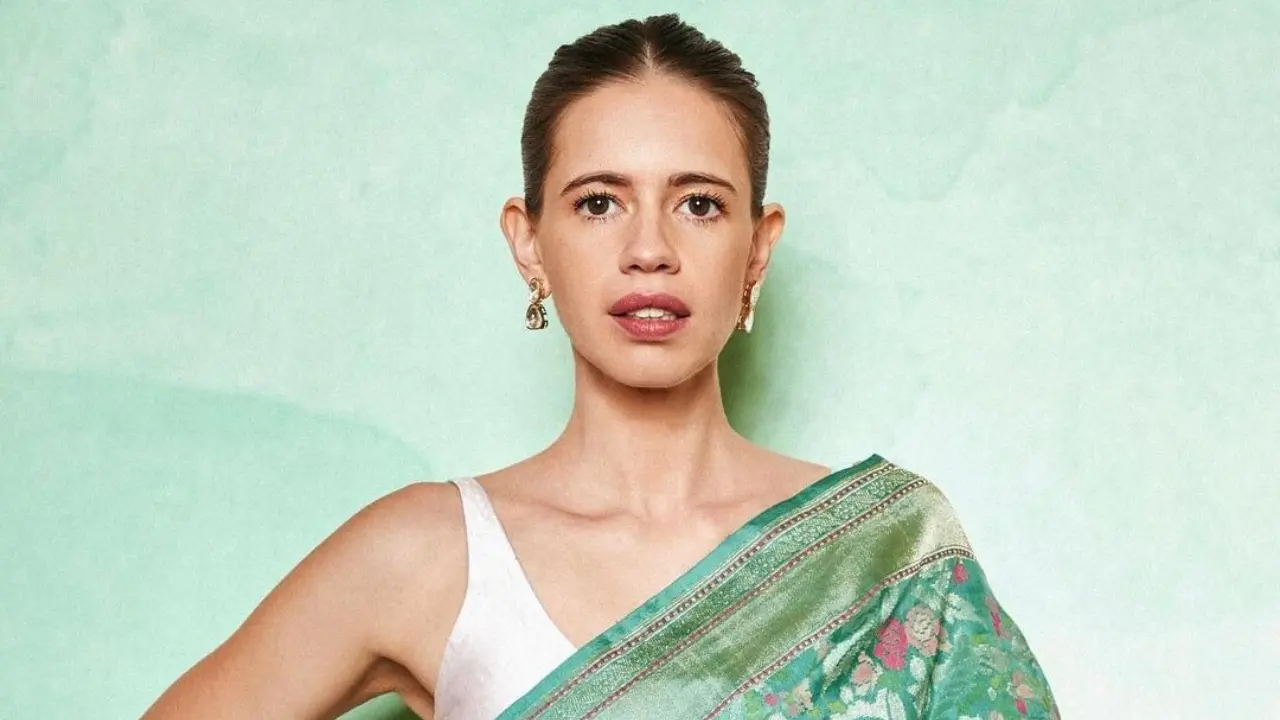
Kalki Koechlin on turning postpartum exhaustion into mythical creatures, theatre into therapy, and her daughter into a co-writer
Sapna Sarfare (MUMBAI MIRROR; June 14, 2026)
There’s a moment, mid-rehearsal, where Kalki Koechlin stands holding a breast pump the way other actors might hold a sword — gripped, purposeful, faintly absurd. At another point, a colleague is hoisted onto a tabletop, arms thrown skyward. It’s an unlikely tableau, but it captures something true about the indignities of new motherhood.
Koechlin, 42 this year, a Filmfare and National Award winner who has spent two decades being professionally unbothered by other people’s discomfort, says, “Pregnancy is tough, birth is gruesome and postpartum is hell—but more horrifying than all three is society’s completely casual approach to one of the most epic life experiences.”
Much of this — the bluntness, the refusal to prettify — makes its way directly into Belly Of The Beast, the play she’s co-written with director Sheena Khalid for Aadyam Theatre, adapted from her 2021 book, The Elephant In The Womb. The book was written through lockdown, less as a creative ambition than as triage. “It was really therapeutic,” she says.
“Biology is such that you quickly forget — that’s the nature of things. If it wasn’t all written down, I would have probably forgotten how hard it was.” The audience for her candour now includes her six-year-old daughter, Sappho.
“The first drawings of our mythical creatures were done by her,” Koechlin says. “Growing with her, I feel like we’ve become friends now. It’s a wonderful relationship.”
Notes from the field
The five women in Belly Of The Beast — drawn from interviews covering IVF, the severe, often debilitating nausea pregnant women often experience, single motherhood and miscarriage — are deliberately not Koechlin, even though the breast pump in her hand suggests otherwise. “The Elephant In The Womb is my personal experience,” she says, “but this is now about other women, and each of their experiences is vastly different.”
It’s an unusual instinct for a writer adapting her own memoir — to dilute the “I” rather than amplify it — but it tracks with everything else about how Koechlin talks about herself: glancingly, almost reluctantly, as though the interesting part is always someone else’s story.
She’s similarly unsentimental about her own role in shaping the production. Despite having co-written it, she never considered directing. “I’m primarily an actor,” she says, crediting Khalid’s devised process — built in rehearsal, through trial and error, rather than handed down from a script — as something she trusts completely. Off stage, she’s just as resistant to received wisdom. Ask about parenting style — gentle, helicopter, strict, the usual taxonomy — and she shrugs it off entirely.
“I feel like I’m a pretty regular old mother,” she says. “I believe in routine and reliability for my child. That’s what helps them feel safe growing up.” Even the ordinary parts get their due: listening to Sappho narrate the plot of a cartoon she has zero interest in, Koechlin says, is simply the job. “That relationship of being curious, listening, and being present — that’s really the best a parent can do.”
It’s the same matter-of-factness she brings to talking about herself. Asked recently about a stretch of heartbreak-induced insomnia, her prescription was simple: therapy, rest, distance from the noise. “Sometimes you just need to stay still and take care of your spirit.” She’s been in therapy for years, she says, the same way someone might mention a gym routine.
Holding pattern
Koechlin’s process on set has shifted, too — away from intensity, toward presence. “I used to spend a lot of time being in character — I wouldn’t want to talk to people,” she says. “But now I find that very exhausting. I like to prep well, then be more interactive, and only get into character a couple of minutes before the shot.”
It seems to be the throughline of Koechlin’s 40s so far, whether she’d put it that way or not. Right now, none of the other plans — the production company, the musical she’d love to do, the Joachim Trier film she wishes she’d been cast in — are getting much airtime. “Belly Of The Beast is my entire universe,” she says. “I cannot think beyond it.” Given that her six-year-old’s monster drawings are now part of the set design, it’s hard to imagine she’d want to.
Subscribe to:
Posts (Atom)