Showing posts with label Begum Jaan. Show all posts
Showing posts with label Begum Jaan. Show all posts
We were like schoolgirls on the set, say Vidya Balan and Ila Arun
8:17 AM

Debarati S Sen (BOMBAY TIMES; November 19, 2024)
At the recently concluded Literature Live! The Mumbai LitFest 2024, held at the National Centre for Performing Arts (NCPA), the audience was treated to a heartwarming exchange between Bollywood star Vidya Balan and the actor-singer-thespian Ila Arun. The event marked the unveiling of Ila Arun’s autobiography, Parde Ke Peeche.
The story behind the curtains
“After my song Choli Ke Peeche (Khalnayak, 1993) became popular, it became my signature,” explained Ila. “Koi yeh nahi janta tha ki Ila Arun kaun hai, parde ke peeche kya hai. And that’s how I named my autobiography. Logon ko aana padega parde ke peeche mujhe jaanne ke liye,” said Ila Arun, revealing the inspiration behind the title.
A friendship beyond generations
Vidya Balan expressed her deep affection for Ila Arun, highlighting the unique qualities that have endeared Ila to her over the years. “My favorite thing about Ila ji is her child-like quality, that immense enthusiasm she has in everything she does,” Vidya said.
“What is so amazing about her is that I never felt that there was any sort of age difference between us, from the moment we first met. I love her! She genuinely is one of my most favourite people. She has always been the youngest person in any cast, and I don’t mean this in an ageist way. Ila ji is just so much fun to have around! I’ve also had the opportunity to watch her on stage and she is magic. I’ve met Ishita, (her daughter), who was my junior in college, and she is great fun, but I feel Ila ji is the child! It’s just so easy to talk to her about anything. She levels with you so beautifully.”
Their camaraderie was evident as Vidya recalled their collaborations in films like Shaadi Ke Side Effects (2014), Begum Jaan (2017), and Sherni (2021). “We would be yapping away between takes, like schoolgirls! Yet, when the camera came on, she would just transform,” Vidya remarked.
The mischievous side of Vidya and Ila’s playful recollections
The stage was alive with laughter as both shared amusing anecdotes from their time on set. Ila Arun, tearing up at Vidya’s heartfelt praise, recounted a mischievous moment: “Vidya would crack a joke on set and make everyone laugh while she kept a straight face. Once, when I was preparing for a serious scene in Begum Jaan, she asked someone to play the song DJ Wale Babu! She knew that if I heard music like that my feet would tap to the music. When the shot was ready, she played the song and I couldn’t help moving! The director asked me to be still and Vidya stood there seriously for action!”
Vidya, laughing, added her version of events, “Ila ji was in a white sari, and we were doing a Holi scene. She kept asking the director, ‘Main nai Holi khel rahi? Rang mujhpe nahi lagayenge?’ The director explained the historical context, and Ila ji was heartbroken. She stood sulking in a corner. To lift her spirits, I said, let’s play DJ Wale Babu. It was her childlike spirit shining through!”
Adventures in Shantiniketan and Jharkhand
Vidya also reminisced about their shared adventures while shooting in Shantiniketan and Jharkhand. “On Saturdays, Shantiniketan would have a Boul Mela where folk artistes gathered to perform. Imagine having Ila Arun perform live with them! It was incredible.”
In another memory, Vidya spoke about their encounters with snakes and scorpions in the wild. “The director once chased us with a bottle containing snakes, and I hid behind Ila ji. But she was always such a sport, playing along!”
The blessing of Ritwik Ghatak
Vidya reflected on the opening chapter of Ila Arun’s autobiography, which recounts a blessing from legendary filmmaker Ritwik Ghatak. “He told her in Bengali, ‘You will die on stage.’ He saw in Ila ji what perhaps she couldn’t see in herself at the time. You’ve been on the stage in various avatars, on various stages, in various stages of your life. It’s so beautiful and inspiring."
Ila Arun, with her characteristic humor, responded, “That’s what I really want for me to happen. But Kunal pe taras aata hai (Kunal Kapoor, Trustee, Prithvi Theatre.) I want my last breath to be at Prithvi but aap itna arrangement kaise karenge. Meri iccha hai (to die on stage) but main location dhoondh rahi hoon, yahan (NCPA) nahi toh wahan.”
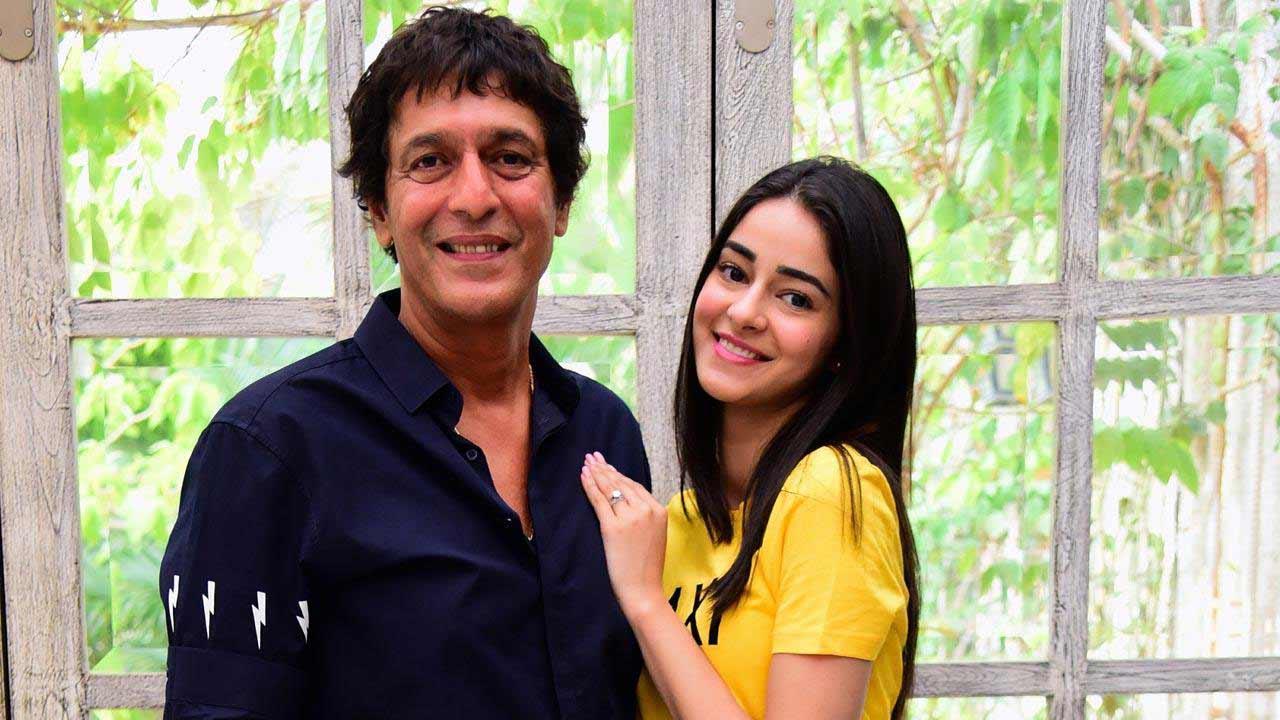
I’m learning a lot from Ananya these days-Chunky Panday
8:27 AM
Logesh Balachandran (BOMBAY TIMES; January 12, 2023)
Chunky Panday believes that films are not bound by limitations of language or regions. The actor, who has been a part of pan-India films like Saaho, recently shot with South actor Karthi for the Tamil spy thriller, Sardar. In a candid chat, the actor spoke about working in pan-Indian films, the impact of trolls, daughter Ananya. Excerpts:
‘CINEMA HAS ITS OWN LANGUAGE’
Talking about working in movies across film industries in India, he says, “The team of Saaho had watched my work in Begum Jaan before casting me. I want to work in all the Southern film industries. I watched KGF - Chapter 2, Ponniyin Selvan - Part 1, Super Deluxe and Maanadu, which were amazing films. I had earlier worked in Bangladesh cinema for five years and would love to work in Malayalam and Kannada films, too. Cinema has its own language.”
‘JUST KEEP LEARNING’
Despite a long career in films, the actor says that he has a lot to learn. “I hang around youngsters and keep myself updated,” he says, adding, “I’m lucky to have a daughter (Ananya Panday) who is also working in the film industry, and I’m learning a lot from her nowadays. I arrived in the film industry in 1987 and now, it’s 2023! Things have always changed. Cinema has changed. The audience has changed! So, as long as we learn, we will survive.”
‘HAVE TO BE PREPARED TO FACE TROLLS’
Chunky says that while it has become important for actors to be on social media, they also have to learn to deal with the trolling that comes their way. “Digital media is now both a big advantage and also a disadvantage. Anyone can share their opinion about a movie or a person. It is a tool that can be used to create as well as destroy. Youngsters are hooked to social media and it’s a necessity to build their brand. So, if you are in the public eye, you will have to be prepared to face these trolls,” he signs off.
Sourav Ganguly told me, ‘Mithali Raj is legendary. You must do this well’-Srijit Mukherji
10:52 AM

Rachana Dubey (BOMBAY TIMES; July 12, 2022)
It took him five years to return to direct a full-blown Bollywood film after Begum Jaan in 2017. In a conversation with Bombay Times, National Award-winning director Srijit Mukherji talks about making his upcoming film,
Shabaash Mithu headlined by Taapsee Pannu, which is based on the life of ace cricketer Mithali Raj, his passion for the sport and the changing norms of content creation today. Excerpts:
Shabaash Mithu had a different director on board earlier and when you took charge, the film had already gone on floors. Was it difficult to find your space in such a scenario?
It was difficult. The pre-production work was already over and I had to restructure it. The original plan had to be changed. Looking at the way modern cricket-watching has evolved, we could not shoot matches for real. We decided to use footage, which was the more prudent thing to do. Also, we were shooting with COVID scare still in the air. A lot of locations became out of bounds and so on. So, we had to restructure the blueprint, which was challenging, but we managed well. As an ardent cricket follower, I was clear about how those portions had to be shot and shown in the movie.
We even cast many state-level players in the film, which is easier than training actors to become cricketers. Also, I reinstated certain things that had been taken out of the original screenplay. The points where your vision doesn’t match the writer’s or the studio that’s backing the film, is where you have to arrive at a consensus, which I enjoyed.
Since Taapsee had already prepped herself based on the vision of another filmmaker, how did you get her on board with how you wanted to shape the film?
It started with our first meeting where we started talking about her stance and I suggested some technical changes to the way she held the bat and her body language. Subsequently, it turned into a freewheeling chat about issues like how there is inherent sexism in the way cricket is perceived in India, the lack of focus on women’s issues, how Mithali has been vociferous about these matters and has fought a hard battle for several years. I’ve followed Taapsee on social media, and she has similar views about sexism, pay parity and so on. We also discussed how much the script emphasizes on these points, how the message in the film should be strong but put across subtly without being preachy and how we should do all of this without sacrificing the cricket portions. I was extremely excited to work with Taapsee. I had first met her when Pink had released, and we’ve been in touch since then. We always discussed stories, but I guess the stars aligned themselves for this special project. Taapsee lends herself wonderfully to the role — she’s incredibly hardworking and a natural athlete. Cricket is my first passion in life. I ventured into it as a writer, a commentator and a reader. I’m glad Taapsee and I came together to make Shabaash Mithu.
Women cricketers have not received that kind of adulation and attention that their male counterparts enjoy in our country. Given that this is a sports biopic, how did you strike a balance between talking about these topics while keeping the focus on a legendary cricketer’s journey?
Most of the sequences depicted in the film have happened in Mithali’s life. Our writer, Priya Aven, has articulated them wonderfully in the screenplay. I just shot them dramatically, which I felt was needed. Before every sequence, Priya, Taapsee and I would discuss everything — from the setting to the dialogues to how they had to be delivered to ensure that they don’t sound textbookish. While writing the film, Priya shadowed Mithali, interviewed her and spoke to her at length. After that, when I joined in, I also started interacting with Mithali. She would be at different tournaments and in bio bubbles, but she would answer all my queries. I had a lot of technical questions about the evolution of her stance, her grip, whether she had ever done any sledging on the field, her evolving body language and her stroke-making style. These were small, but extremely important parts of depicting her journey on screen. Shooting the cricket portions was the most difficult aspect. We were still in the thick of the pandemic. Also, there was a lot of rain to be battled. Shooting outdoors was a nightmare. Strangely, the only thing that favoured us was that the grounds could be kept empty. India mein women’s cricket mein stadium nahi bharte, so we didn’t have to show that, which was an advantage as far as shooting the film was concerned at that time.
As a cricket enthusiast, what took you so long to make a film revolving around the sport?
It took this long because of Sourav Ganguly. I’m fond of dada and I wanted to start by making his biopic. We kept exchanging notes and I had researched and figured out everything. We kept discussing things over three-four years, but he was so busy that we couldn’t make this work. I couldn’t translate my research into something concrete. So, when Shabaash Mithu came to me, I informed him and he was happy for me. In fact, he said, ‘She is legendary. You must do this well.’ Now, I hear his biopic is being made by another production house.
You made your first Hindi film, Vidya Balan-starrer Begum Jaan, in 2017. If one doesn’t count the anthology, Ray, in the online space, it took you five years to make another Hindi film...
My first Hindi film didn’t work at the box office. I got Ray because my direction was appreciated for Begum Jaan. Success begets success in Bollywood. Begum Jaan barely broke even. With that tag, it gets difficult. If it were a hit, I would have had more offers. But trust me, I didn’t mind it because I feel it’s important to tell stories, irrespective of the language. Today, I want to make films in different languages. I want to make a movie in Malayalam with Fahadh Faasil. I am in talks for a web series where I want to cast a brilliant artiste like Nimisha Sajayan.
OTT has broken the language barrier. Fahad and Nimisha have a following all over the country. In the last five years, I won three National Awards for my Bengali films. I have travelled to festivals with my material and had a blast. I am ready to work in any language, as long as I work on my terms. When I was making Sherdil: The Pilibhit Saga, I wasn’t getting funds because the hero of the film was Pankaj Tripathi. OTT platforms changed that barometer completely. The OTT revolution has given brilliant actors and directors their due recognition. Shefali Shah and Rasika Duggal are the busiest names in the market. I have a plethora of things that I’m in talks to make after this. So, irrespective of the language of the content, I have exciting times to look forward to.
Do these people understand the gravity of dragging a woman’s name in a porn scandal?-Flora Saini
8:11 AM

Actress Flora Saini says she has never interacted with Raj Kundra and dragging her name in the porn racket controversy is unfair
Renuka Vyavahare (BOMBAY TIMES; July 26, 2021)
Actress Flora Saini’s name was mentioned by a Hindi news channel on Saturday along with a WhatsApp chat record they splashed on screen between Raj Kundra and Umesh Kamat in the ongoing porn racket case. In the chat, the two are seen discussing if they could rope in Flora for a song in a film on ‘Bollyfame’ (another app that Kundra and his associates were reportedly planning to launch) and even for a probable role. Flora released a video soon after the channel aired their story and clarified that she had no involvement with the two whatsoever and they discussing probable casting for their upcoming projects had nothing to do with her. Her name being dragged into a controversy without any confirmation compelled her to release a video to speak about the same.
In a chat with Bombay Times on Sunday, Flora set the record straight. She revealed, “I have never interacted with Raj Kundra. This is why I spoke up. Had I kept quiet, people would have assumed I had something to hide. If two people discuss my name in a chat that doesn’t mean I am aware or involved with what was being discussed. I am sure other names were also mentioned, perhaps of actresses who have done bold scenes. But since I am not from a film family, it’s considered okay to drag my name without even checking with me. Do these people understand the gravity of dragging a woman’s name in a porn scandal?”
She added, “I have done one web series called Gandii Baat that was risqué or bold per se. People conveniently forget my other work like Stree, Begum Jaan and Laxmii. So dragging me into this controversy has nothing to do with my screen image.”
Asked if she was approached by Kundra directly or his company, and she said, “Yes, casting waale aapko kabhi kabhi phone karte hai. It is they who will call you and say, aisi web series ban rahi hai for HotShots app, would you be interested? And I said no to that as well. I don’t work for new platforms as they make a certain kind of content and often budgets are low. I am not desperate for work. I have worked in South film industry for long enough. I did Gandii Baat because that was a challenge for me. I was a fat kid, so this was pushing the envelope for me. I have not done any bold series after that. Every actor has pushed their limits. To say, yeh ladki aise hi kaam karti hai, yeh bolna galat hai. The case deals with porn and by dragging my name into it, you are insinuating that I could be involved in it. This is a violation of my rights. Because I am not from a film family, they thought it was fine to drag my name in this. I don’t want publicity of this kind!”
Tezaab was offered to Govinda first-Chunky Panday
7:35 PM

Chunky Panday adds he too had to turn down Khudgarz because of date problems; clarifies he hasn’t signed a film with daughter Ananya yet
Roshmila Bhattacharya (MUMBAI MIRROR; August 10, 2020)
“Would you believe, I was banned even before my first film released,” asks Chunky Panday, going on to inform that while they were filming Aag Hi Aag, there was a film industry strike and those who continued shooting were blacklisted. “Since we were in Bangalore, stopping work would have led to huge financial losses. My seniors, Dharmendra and Shatrughan Sinha, had too many films on the floors, so the axe fell on this 22-year-old newcomer. But thanks to my producer Pahlaj Nihalani’s intervention, the ban was lifted in a week.” The film opened slowly, had picked up by Tuesday and by the end of the first week, was a hit.
Chunky has more surprises up his sleeve. “Tezaab was offered to Govinda first,” he reveals, adding that since the actor had got very busy after Ilzaam and writer-director N Chandra wanted a chunk of dates, the role of Babban came to him on the rebound. “I’d auditioned for a film called Roshni before Aag Hi Aag and though I didn’t land that role, Chandra promised to return with a big film. I’m lucky he saw me in Babban and so, shot some extra scenes with me, even giving me the evergreen ‘So Gaya Yeh Jahaan’ before the heavy climax,” shares Chunky, recalling how, while filming the song, Anil Kapoor and he had gone to a five-star hotel coffee shop at 3 am to grab a bite. “The shocked manager looked us up and down and asked if he should call the doctor. That’s when we realised we were still wearing our blood-splattered costumes.”
“So Gaya Yeh Jahaan” is one of the film’s highlights, along with “Ek Do Teen”. The latter, according to Chunky, was an afterthought. Laxmikant-Pyarelal were all set to record “Tu Mera Tota Main Teri Maina”, inspired by the Marathi song “Java Naveen Popat Ha”. It was only after Pahlaj and Chunky informed them that they had already shot it for Paap Ki Duniya. That’s when they zeroed in on “Ek Do Teen,” which was such a hit that when the advance booking counters opened at Gaiety-Galaxy theatres on Monday, the queue was a mile long. “Suddenly, someone noticed a shoot going on at the nearby Bandra station. It came as a shock to those waiting to buy tickets to learn that the man sitting atop a train was Anil Kapoor and he was shooting for Tezaab,” Chunky guffaws, pointing out that since the title didn’t need to be censored, they could take that shot five days before his film opened on November 11, 1988, to a rapturous response.
Paap Ki Duniya and Mitti Aur Sona, which opened in the same year, made Chunky a star, and soon he was so busy, that Khudgarz went to Govinda on the rebound, because this time, he didn’t have the dates. The two actors came together for the blockbuster, Aankhen. According to Chunky, during a Sunday meeting in ’92 with director David Dhawan, writer Anees Bazmee, Govinda and him, Pahlaj announced that he wanted to make a film in six months on the lines of the in-progress Andaz Apna Apna and release it before Rajkumar Santoshi’s laugh riot. “We started shooting in Hyderabad in October-November and the film opened on April 9, ’93 to full houses,” Chunky flashbacks.
Cut to 2009 and Kambakkht Ishq. Chunky was in Los Angeles while the film was being shot there and producer Sajid Nadiadwala approached him for a two-scene appearance. “I got a designer suit too, but then learnt that since I didn’t have a work visa, I couldn’t shoot in the US. When I went to return the suit, Sajid told me to keep it as a signing amount, confident we’d do another film together,” he reminisces.
Soon after, he ran into actor-director Sajid Khan, who told him about a role in his next, that everyone wanted him to play. But Sajid suggested he sign up to play the Italian hotelier, Aakhri Pasta, in Housefull (HF). “He’d been modelled on Sujit Kumar’s character, a flamboyant Italian agent, Marconi, in The Great Gambler. Everyone loved him and he’s been a part of the franchise since,” says a delighted Chunky.
Meanwhile, on the first Sunday after Housefull 3’s release, he auditioned for Srijit Mukherji’s post-Partition drama, Begum Jaan, with HF jokes being cracked all around him. Kabir was a vicious killer, a character Chunky had always wanted to play. Sujeeth, who saw the film in Hyderabad, was impressed that Aankhen’s happy-go-lucky Munnu could pull off such a dark and disturbing role and signed him as the villain of his ambitious Saaho. “I’m not a method actor, but while shooting for this film at Ramoji Rao Studios, I kept to myself and was unusually short-tempered even away from the camera,” he says, proudly pointing out that one got to see two sides to him last year.
This year too, he’s balancing between a dark and a comic character in two big films that have been thrown off gear by the pandemic. He refuses to divulge details but insists neither is Fighter, featuring Vijay Deverakonda and his daughter Ananya. “I’d love to play Ananya’s father, but right now, what you’re hearing are just rumours. I’d wanted my daughter to be a doctor like my parents, but she chose to follow me into the movies and I was so proud and thrilled when she bagged a Filmfare Award which has eluded me. I’ve told her every film is a kundali and it’s for her to chart her own destiny,” he avers, sounding like a real-life papa.
And will younger daughter Rysa also follow in their footsteps? “She’s a good singer. She’ll be a rockstar,” he promises.

I’ll cherish every moment spent with Rishi Kapoor-Chunky Panday
8:26 AM

Titas Chowdhury (HINDUSTAN TIMES; May 2, 2020)
“I remember watching Bobby (1973) in the theatre. I’ve been Rishi Kapoor’s biggest fan,” says Chunky Panday as he walks down the memory lane. As the veteran actor breathed his last yesterday, Panday reminisces the time when he couldn’t share a single frame with him despite working in a film with him. He shares, “After I became an actor, I worked with him in Kasak (1992) where we didn’t have a single scene together. I was quite upset back then.”
Talking about the time when he closely worked with Kapoor during the shoot of Housefull 2 (2012), he nostalgically says, “Then I got a chance to work with him in Housefull 2. When we had the first screening of Housefull 2, I couldn’t make it because I was travelling. After the show, he called me and said to me, ‘You’re a fine actor!’ That coming from him was bigger than receiving any award.”
Panday says that Kapoor had a huge influence in his career. “I took on negative roles because I saw him as Rauf Lala in Agneepath (2012) and I was shaken up by that performance. The reason I did Saaho (2019) and Begum Jaan (2017) was because he inspired me to take that route. There’s going to be no one like him,” says Panday.
With a heavy heart, he says that his “biggest regret” would be to not have met the senior actor in the past couple of years. “The last time we worked together was when we went to Bengaluru for an event. Then he went to New York for his treatment. While I was there, I wanted to meet him. So, I called him up and I came to know that he was resting. I didn’t want to disturb. When he came back to India, I wanted to visit him but he went to Delhi to resume shooting and got very busy. But I’ll cherish every moment that I spent with him,” he signs off.
People didn’t ever forget me entirely. I guess I stayed at the back of their minds-Chunky Panday
8:45 AM

Rachana Dubey (BOMBAY TIMES; September 1, 2019)
In the 80s and 90s, the audience saw him lip-synching the classic, So Gaya Yeh Jahan from Tezaab (1988) and matching Govinda move-fora-move in Aankhen (1993). Chunky Panday, who returned to the lives of cinegoers with characters like Aakhri Pasta in Housefull (2010), is now juggling his schedule between multiple films, two of which present him as a villain. While it may not be easy to laugh at oneself, it’s an art that he has mastered and is gradually passing on the tricks to his 20-year-old daughter Ananya, who made her debut this year with Student Of The Year 2. In a chat with BT, Chunky discusses his current phase in the industry, his daughter’s acting career and what his mistakes have taught him. Excerpts…
Your new innings as an actor is in full force with films like Prassthanam, Jawani Jaaneman and Housefull 4, where you play diametrically different characters. Is this the most satisfying time of your professional life?
Yes, it is. I am also doing a Marathi film called Bhangarwala in which I play an Arab; after seeing that, I don’t think they will let me enter Dubai (laughs!). Before this, the only regional cinema I had tried was Bangladeshi (laughs even more), which means I’ve also done Bengali films.
I’ve been a great fan of Pran, Mehmood, Amjad Khan, Kader Khan, Shakti Kapoor and Amrish Puri. I can’t ever dream of coming close to these guys and the characters they’ve immortalised. Deva Katta, who made the original Prassthanam, felt that I could play the grey character in his story. I’ve just tried to remember the masters of such characters in Indian cinema while playing this one, with the hope that I, too, can achieve that glory.
Given that you are being offered performance-driven parts now, would you say that you’re finally coming into your own?
It wouldn’t be wrong to say that. We are actually living in the golden phase of this craft. Today, newer platforms have opened up avenues for actors. If you realise, I haven’t done much work in about 30 years as an actor. I may have 94 films to my credit, but only about 75 have been released. I am less exposed and also lucky to get the characters I have today. Also, people didn’t ever forget me entirely. I guess I stayed at the back of their minds. The second innings started with characters like Aakhri Pasta and that Nepali guy in Apna Sapna Money Money (2006). The intention was to impress the younger audience. The subsequent characters, like the ones in Begum Jaan (2017) and Prassthanam, are bonuses. I would like to believe what my wife Bhavana often says when we fight. She says, ‘There is a little devil hiding in you and you are evil personified.’ That’s a statement every wife makes when the couple fights, but I took it a tad bit seriously and decided to prove her right (Laughs!). My wife was petrified to see my look in Begum Jaan. Ananya was taken aback, but impressed. Doing negative characters had some impact at home. My younger daughter (Rysa) and wife didn’t talk to me for days after Begum Jaan released. I played a devilish guy who feeds dogs to people, while at home, I am a dog lover. When I grew a beard for that part, my daughters refused to come close to me, because I wore this weird look on my face, unlike the daddy they knew. And my wife? She refused to kiss my cheeks or hug me. So, coming into my own has not been easy.
How has this new phase changed you as an actor?
It’s made me a lot more confident, but I would say that the directors, too, had a huge role to play. To do Prassthanam and Housefull 4 in the same year is a big deal for me. I was stepping into the comedy franchise, which is almost like home to me, after doing two badass characters. The after-effect of playing those parts was that I was finding it hard to slip into Aakhri Pasta (his character in Housefull 4). The transition between roles was a challenge. Your mind tends to get confused, and you need the director’s support. I am not the greatest actor on earth, and I depend a lot on my director. Even for Prassthanam, I depended a lot on Deva Katta. If left to me, I will do the same navrasas in every film. I can trust the actor in me, but I need a chance to show something new every time. That new thing is the director’s take on the character. I always ask for that.
Jackie Shroff, Gulshan Grover, Sanjay Dutt — a bunch of your colleagues from the 1980s and 1990s — seem to have a better repertoire today than you did. As a leading man in the 1990s, why did you drop out of the scene, that, too, soon after a hit like Aankhen?
I had no option. I arrived on the scene in 1987. Govinda had come a year earlier, and in quick succession, we had Aamir Khan, Salman Khan, Shah Rukh Khan, Akshay Kumar and Ajay Devgn. There was one new face every year. My honeymoon got over in no time with so many heroes arriving on the scene. My solo-hero films did average business, but the multi-starrers did very well. In this industry, you should never underestimate or overestimate anyone. When I went to Deepika Padukone and Ranveer Singh’s wedding reception, I met filmmaker Shankar. He remembered me instantly, but it took me a while to recall that he was assisting a South filmmaker on Jai Shiv Shankar — a film I did for Rajesh Khanna’s company, which never released. Imagine, Shankar was an assistant on that film! So, you cannot discount anyone. I have seen things change overnight for people, from good to bad and terrible to great. I always feel that one should maintain a balance with people. Don’t write them off and don’t chase them crazily.
But didn’t you get almost written off when you decided to work in Bangladeshi films?
It was a phase of a meltdown. I was thinking of switching careers. I had the biggest hit in the country, Aankhen, to my name but I didn’t get much work after that. I moved to Bangladeshi films and kept doing films there because they worked. I was just running away from myself. I somehow wanted to continue being an actor, because if I didn’t, then I would have to find an alternate profession. It was Bhavna who got me back here. She told me that even in Bangladesh, people know me as Chunky from Bollywood. Filmmaker Harry Baweja gave me my first role during that phase in Qayamat: City Under Threat (2003). Things changed from there. There are times when you ask yourself why certain things happened and what went wrong. I think I made a lot of good choices, but I also made many mistakes; I was meant to make them. For instance, I left Tridev (1989) for another film. Everyone makes mistakes and learns from them. Today, if I get a great character, I do it, no matter what. I wish I was as wise a few years ago. It took me some soul searching and introspection to be like this. I was getting characters even back then, but my mind was not ready for them. Today, I am thick-skinned, and I have no ego. I change my colours like a chameleon, and I can laugh at myself. That makes life easier for an actor.
Isn’t it strange that when you decided to come back, the work didn’t really come from the friends who you often hang out with?
It didn’t come from friends because I have never depended on them to give me work and I don’t like bringing work between us.
 While you are clearly enjoying your second innings, your daughter Ananya has started her career…
I am damn excited for her. I was also scared about that at one point. The most important thing for any actor is to be accepted by the audience. I’ve always told this to Ananya because there’s just that much advice I can dole out. She’ll have to figure her way through this on her own, making her own choices and her own mistakes. I’ve always told her that no one can ever predict the box-office success of a film, because a billion people decide that. I stopped worrying when I saw Student Of The Year 2 at a private screening. Bhavna and I were sure she would find acceptance. There’s no harm in being excited and optimistic, but one should never get carried away.
Ananya has entered the industry at a time when actors have to face pressure beyond box-office performance of their films. Social media pressure is a major aspect today...
Yes, the golden phase of show-business has its own perils. I’m proud of my daughter’s initiative to fight social media bullying instead of giving in to it. It’s a nasty thing that affects so many people. Someone had to bell the cat and Ananya has taken the lead. She’s 20 and doing something brave for her age. Today, I just hope that she enjoys everything she does. She did well academically, but she’s learning things now, and things that will help her survive in an industry like ours. She did her formal training in acting, but no university can teach you things that Bollywood can. And trust me, it teaches you too many lessons very quickly.
Link-ups with co-actors happened in the 1990s, and they happen even today. Within six months of her debut, Ananya has already faced such a situation...
Yes, she got linked very early on in her career, but as they say, you live and die by the sword. It happened then and it happens now. You can’t control it, whether you’re married or single. I only tell her to take it in her stride, what else can I advise her on this? Even as an actor, when she asks me my opinion on her scripts, I don’t say much, because I want her to make her decisions and stand by those, forever.

Actors don't have a shelf life, stars do-Vidya Balan
8:21 AM

Vidya Balan busting the myths around girl bonding in Bollywood, the shelf life of actresses and why her career isn't a chore for her
Mohar Basu (MID-DAY; August 18, 2019)
We meet Vidya Balan on the last day of Mission Mangal promotions. Dressed in finery after swiftly wrapping up last-minute work, she settles in her sea-facing room at a suburban five-star. "During Kahaani (2012), I made a personal record of 58 interviews in a day. This feels a lot a lighter," she starts off. Feet up, sinking inside a quilt, a visibly exhausted Balan retains her affable smile as we chat about the shifting definition of a female actor, the reason behind her long gaps, the myth of female catfights and the long wait up to her passion project—the Indira Gandhi biopic.
Edited excerpts from the interview.
It's been a year and half since Tumhari Sulu (2017). Why did you take such a long gap?
I did three films back to back [Kahaani 2, Begum Jaan, Tumhari Sulu] and after that I didn't want to jump into another one immediately. I loved Mission Mangal which is why I took it up. I need time to rejuvenate after gruelling work and family time is sacrosanct; I prefer to take things at my own pace. There have been instances in the past when I have gone on set and said, "Pack up kab hai?" That's a red flag for me. My work cannot become a chore. I am not here to churn films, neither am I in any tearing hurry to get anywhere. I am here for a lifetime.
But the common assumption is that actors have a shelf life.
Actors don't have a shelf life, stars do. Being in the public eye and living under constant scrutiny can get daunting and draining after a while. By design, that is changing because the fabric of movies and audience is changing. Hence the concentration is on becoming a better actor [with each film], not a star. My 'care-a-damn' attitude works and it is the only way I know [how to survive], which is why I am here [in Bollywood] for as long as I want to.
In a cast full of women, all stars in their own right, how regular were the catfights?
(Laughs) That's a cliché. People believe when female actors work together, tensions and insecurities run high. However, in my experience, that is hogwash. I did Begum Jaan with an ensemble female cast [and there were no catfights]. It's even more creditable here because each of us—Taapsee (Pannu), Nithya (Menen), Sonakshi (Sinha), Kirti (Kulhari)—are stars in our own right. We were secure and it was a joyous experience to work together. High time we made a girls' road trip film in India. The cliché [about catfights] was probably true in the past, but women stand together today.
Being the primary lead in the film, doesn't it bother you that Akshay Kumar's face is more prominent on the poster?
[The emotion is] far from it. If Mission Mangal does well, we will all gain from it. Having his face [on the poster], guarantees more footfall in the theatres; and I have no qualms using his stardom. In the films I headline, I am prominent on the poster. We all have prominent roles, but when there is a star like Akshay Kumar, it makes sense. I know the film I signed up for and I am okay with whatever they do to market it. My experience helps me see things in perspective.
Last November, filmmaker Radha Bharadwaj reached out to mid-day about a legal suit she filed on you for passing her film idea (similar to Mission Mangal) to R Balki.
And we won the case. Although I never met Radha, her script came to me through my agent, Bling [Entertainment]. I was offered four films on the same subject. One script that Atul Kasbekar wanted to produce was still at the ideation stage; and there was nothing for me to do in it. Ronnie Screwvala had a similar script with two character options—a 22-year-old and a 55-year-old—I declined it because I fit neither. Each of the scripts gave me the feeling of something missing. Mission Mangal scripted beautiful personal lives for each scientist, the science was simplified, the mission was detailed and I loved it. I was on board as soon as I finished reading. Having spent 15 years in the business, I respect everyone who comes to me and I pride myself for my integrity. Not once have I shared another person's idea with another filmmaker. I am happy truth prevailed.
Did you feel targeted because you are a star?
We are definitely scrutinised more. I felt it was unfair to me, considering I never announce my own films. It always comes from a director or producer. I was taken aback when it happened and that too on the first day of our shoot. Last one month, the pressure increased because Radha wanted clarity before our film's release. I can empathise with that, especially for someone who has worked on a script for long. The information is on public domain and there is no limit on how many films can be made on the same subject, like the Bhagat Singh biopics that all happened at the same time.
What is next in the pipeline?
I start prep for the Shakuntala Devi biopic soon. The Indira Gandhi biopic [based on author-journalist Sagarika Ghose's book Indira: India's Most Powerful Prime Minister] will take more time to be structurally drafted and Ritesh Batra is working hard on it. The web series is a mammoth amount of work. It is a passion project.
Are you involved in the writing process of the series?
I don't have the talent, bandwidth or discipline for it [writing]. I respond better to what is being written. May be by year-end, once the material is ready, we could start discussions. It may also take another two years, but it's worth the wait. Sometimes, I worry that it's taking too long, but then, I don't have to go anywhere. Good things require patient brewing.
Any plans to venture into production someday?
No. Ronnie offered me the producer credit [for Natkhat] because there is no money in short films. Siddharth [Roy Kapur, husband] is a producer. Honestly, I am living my only dream of being an actor. Producers have plenty to handle, and I am clear, I want to be on the other side, being handled (laughs).

I am here to stay, so it doesn’t matter how many films I do in a year-Vidya Balan
7:52 AM

Madhureeta Mukherjee (BOMBAY TIMES; August 14, 2019)
In an industry where the power scale continues to tip largely towards the leading male stars, Vidya Balan has held her own; making brave moves and rare choices. The scenario is gradually changing, and mindsets, too. And Vidya, whose upcoming film Mission Mangal is on the verge of release, rightly explains, “It takes a lot to stand up for yourself, and I think women are slowly getting there.” In a conversation with BT, she expresses her opinions on the over-sensitive section of the social media, how women should adeptly use their EQ to make the cut in a man’s world, and how she doesn’t need to clock in more movies to prove a point. Read on...
We have seen you lead the show in most of your films, and then, here is this ambitious mission-to-Mars film, with a new director and a huge star cast. You haven’t really been seen in this space before...
WelI, I had worked with Jagan (Shakti, director) on Paa (2009), as he was assisting R Balki then. He showed me all the videos and presentations he had, and I asked him why he wanted to make this film. For a first-time director, Mission Mangal is quite an ambitious film to attempt. He said that he has been wanting to tell this story for a long time now; also, his sister (Sujatha) is a part of the Indian Space Research Organisation (ISRO), hence, he knew quite a few scientists. He had done hours of research and culled out all the highlights to make it cinematic. I had been offered films on the same subject thrice before, but none of those really interested me. But when Balki narrated this story to me, I instantly said… I am in. That is a rarity for me.
The information and details about MOM (Mars Orbiter Mission) are pretty much in the public domain, but the way the lives of the characters in the film are fictionalised, it gives the film a wholesome feel. What interested me about the story is not just the mission, but what the characters were going through in their personal lives. Thankfully, I believe that in reality, those scientists didn’t go through such conflicts, but cinematically, we needed that. So, here, we juxtapose both — their lives and the mission at hand.
Add to that, a bunch of very talented women sharing screen space, which is a rarity, too...
Akshay was already on board when I heard the story, and then they told me about the rest of the cast. I thought that if this cast comes together, it will be fantastic. I am so glad it did. How often do you get to work in an ensemble cast like this, and in this day and age?
In an interview, Taapsee Pannu said that it is tough to get an A-list male actor to feature in a film where the women have a massive role to play? Having headlined so many films as a ‘hero’ in the typical sense, if I might say so, what do you have to say to that?
I think it is fantastic that Akshay is part of a film (as actor and co-producer) that has so many female actors. That is incredible. I have seen a lot of films that came along, but it didn’t get a so-called superstar. I am talking about the early days of my career, around 2005-2006, when there were quite a few films which the male superstar didn’t consider at all, because they had a woman playing the protagonist. They didn’t end up doing it, the budget didn’t get justified, and finally, the film was shelved. Hence, this project (Mission Mangal) is a fantastic attempt. Having said that, there is still a long way to go. If it was just one woman in this film, then we’d have to see how far it would have gone (laughs!).
When the first poster of the Mission Mangal was released, it became a talking point. People felt that Akshay got more prominence in it than the rest of the actresses. While it is important to have such conversations, the industry’s point of view remains that whoever draws in the audience leads the promotions. In fact, your other co-stars from the film like Tapsee and Sonakshi, too, agreed on it. Your thoughts...
Well, we are in the business of cinema. And finally, if Akshay is going to sell the maximum tickets, it only makes better business sense. Slowly, actresses are gaining in strength, and someday, our faces will be equal, if not bigger than the lead actor. I am saying this in jest, and with no feeling of being slighted or anything. Also, I really feel that we are getting touchy about too many things these days. It is great that today there are conversations about so many things (on social media) that people would not speak about before, but sometimes, I do think that the people who are commenting are not even aware of what they are saying. They want to be part of a herd, and they feel compelled to take on other people’s opinions, just so that they look like they have one, too.
Do you feel pressurised to comment on various issues, give your point of view (POV), react and respond to everything being said and done (in the universe of movies and the world around us).
Yes! People out there want everyone to give their opinion on everything. Many times, I don’t have a POV on a lot of things, and I am okay with admitting that. If someone asks me about some political developments in our country, I say that I can’t comment on it as I am not fully aware of it. I don’t think as actors we need to be aware of everything. In that case, even non-actors should be aware of everything. Why are we actors held to higher standards than everyone else? We are blamed for everything like all the evils in our society, perpetuating stereotypes, not standing up for a cause, not giving an opinion, or not rallying together. It is like we are held responsible for everything, why?
Talking about feats, you have pulled off quite a few on celluloid. A lot of the characters you have portrayed, like Ishqiya (2010), The Dirty Picture (2011) and Begum Jaan (2017), command authority and exude power. In reality, do you feel that women think twice before exercising their power in various areas of life? Is a woman’s show of strength often considered to be arrogance in a man’s world?
Women are emotionally extremely strong, while men are physically strong. The moment a woman enters the left-brain domain, she brings a certain soft power and EQ (emotional quotient) to the table. We use that to bring out the best in people and situations. When we are in a man’s world, we often start thinking that we need to be like men to be successful. And when that happens, you begin to take on their aggression and other traits. I feel that’s not needed. When there is a marriage of our strength and theirs, we can achieve great results. Sometimes, I know that we (women) have had to portray ourselves as being more powerful, more aggressive, only so that we are seen as professionals and not soppy, emotional people. This struggle makes it harder for us. Of course, there are individual differences in all of this. We suppress that power that we naturally have within ourselves. The more we become comfortable with ourselves, the more we won’t feel the need to align with what we see as expressions of power in men. Women can redefine power. Yes, it’s true that women often tend to accept less, because they feel that they can’t ask for more, or ask for what is rightfully theirs — whether it is more responsibility or respect. It takes a lot to stand up for yourself, and I think women are slowly getting there.
The good thing is that today, whether a film is headlined by women, men, or both, or by a huge line-up of stars, beyond a point that does not matter. At least, for a section of the audience, who is looking for good content, great stories and nothing else...
Yes, this means that we will churn better content, and it is a great time to be in the movies. This also means that today, it’s not just the superstars’ films that have chances of getting an audience and doing well. It opens the horizon for all of us and there is an audience for every kind of film. In the past, I remember someone telling me, ‘I don’t know if India is ready for a space film’. The way Mission Mangal is made, whether or not you are ready for it, you will get it. It is simplified, without compromising on what needs to be explained. The parlance is not scientific in that sense. If you ask me, which is my favourite sci-fi film, I have very few, as I get intimidated by science.
Also, today, the audience is looking for heroes in common people. They are keen to see stories about simple heroic deeds that impact their lives. Right?
Now, we are no longer saying that the hero is some other-worldly being. If the hero is one of us, that excites the audience. Hence, we are seeing all kinds of unlikely heroes. Today, the hero does not need to bash up ten people; instead, if that person is able to live his or her life well and realise their dreams, then that is inspiring. It makes the audience feel that they have a chance at being a hero, too. That is what social media is doing, isn’t it? It makes everyone feel that their voice has value and their words have power. I am not sure if that it is a great thing always, in this respect, but that is what is happening.
There was a point earlier when you were trying to fit in, be a certain type and look a certain way. Then you broke those barriers and set yourself free from those trappings. Subsequently, we saw you flourish in roles like The Dirty Picture (2011), Kahaani (2012) and more, but still at that point, you were in the process of gaining a strong foothold in the industry. Now, having made a crack (a big one at that), and settling into a space that truly belongs to you, is life calmer? Are you more in control and has it slowed your pace, work-wise?
I did three intense films back-to-back, Kahaani 2 (2016), Begum Jaan (2017) and Tumhari Sulu (2017). When you are leading films like that, there is prep, shoot, dubbing and promotions. Five months or more are consumed by one film. I had three releases in a span of one-and-a-half-years or less. It got a bit too much. I also need time for myself, spend time with family, read and travel. It was coincidental that the subjects that I had liked were being developed. The only ready project was Mission Mangal, which I agreed to do immediately. I know that I am here to stay, so it doesn’t matter how many films I do in a year. I think that I am an eternal optimist. I always feel that this is the best time of my life. I felt that way even in my worst phase, at a time when my films were not working. I have this attitude and it is a blessing. I feel that I am having the best time of my life and wonder how it can get any better. I am still as passionate about cinema and that has not changed at all. Like I said, I don’t feel the need to clock in a certain number of films. I did a Telugu film in between, which was like doing two films and I ended up shooting more than I thought I would. I am starting the biopic on Shakuntala Devi immediately after Mission Mangal releases. I want to work at my pace. I think after that phase, where I had five hits and then my films flopped one after the other, I kept thinking about what is going wrong. I couldn’t figure what needed fixing, and then, that phase taught me that nothing needed fixing. I realised that this is how it is, and this is how it is always going to be. If that phase (of success) wasn’t permanent, even this wouldn’t be. I guess, it is all about growing up. And the amazing thing is that, the more I grow up, the more I am in touch with the child in me. It is because it frees you. I am not waiting for validation, approval or acceptance anymore, it’s all there (in your head). It is never an absolute, but I am definitely better than I was before.

Friends would call me ‘Work Experience Girl’-Pallavi Sharda
8:11 AM

As told to Avinash Lohana (MUMBAI MIRROR; October 8, 2018)
I was born and brought up in Australia where my parents, who are both IIT alumni and have PhDs in science and engineering, migrated before I entered the world. Both my parents, Dr Hema Sharda and Dr Nalin Kant Sharda, are professors in Australia. I knew I wanted to be an actress as a young girl, but perhaps because of the academic environment at home, I chose to pursue Law, Media and Communications and a Diploma in French at the University of Melbourne.
As a child, I had dreamt of being an independent working woman. When I was 15 years old, I started my first job at a bookstore in Melbourne. I would sell books, stock shelves and handle the check-out counter. My father loves books and our house in Melbourne is like a library — so the bookstore felt like a natural place to start my working life.
In my second year at the University, I worked as an RJ on a community radio channel and would do a broadcast once a week. I also sold 3G phones in a phone store in Melbourne.
In the third year, I started working part-time at a management consultancy firm. I was a part of a team which set the curriculum on how to teach new software to the employees of our clients. We were called the ‘Human Performance Team’.
While I was working at the consultancy firm, I splurged on my first ‘adult’ Christmas presents for my family. I bought my brother a signed copy of Steve Waugh’s autobiography, a beautiful stainless-steel kettle for mama and socks and ties for my father (he always drew the short straw!). I remember putting up our tree and carefully wrapping all the presents. It was rare for all of us to be under one roof on Christmas Day as my mother used to travel a lot. But that year, we were all there and I wanted it to be a real Christmas.
My friends called me, the ‘WEG’ — the ‘Work Experience Girl,’ because every time we met, I was doing something new. Some of these jobs only paid me a few dollars an hour but I enjoyed the joy of buying my own coffee, clothes and paying for my own expenses.
I wanted to understand what I really wanted to do before I actually embarked on my future, so I tried my hands at as many jobs as possible. I even worked at a law film, doing a clerkship in my final year at the University.
But while I was doing all this, I still clung on to my acting dream. The first step was to enrol in drama school part-time while I was studying.
I then started teaching Indian dance at the University. A Bharatanatyam dancer, I was passionate about Indian folk and classical dance, I wanted people in Melbourne to know that our country is more than just Bollywood and introduced dance forms from around India within the course. On Saturdays, I would also teach Bharatanatyam to young students at our dance school. Throughout this period, my father would joke that he had to take an appointment to meet his busy-busy daughter.
I was still studying at University when I first came to India in 2010 to follow my childhood dream. Mumbai and the film industry was a whole new world for me. I auditioned every day and one of my first major assignments was a cameo in Karan Johar’s My Name Is Khan with Shah Rukh (Khan) and Kajol in the lead.
The same year, I played a leading role opposite Manoj Bajpayee in Ajoy Varma’s comedy drama Dus Tola, a remake of the Malayalam film, Ponmuttayidunna Tharavu. I played a classical dance teacher and my experience came in handy. I would go back and forth to Melbourne to finish my degrees and ultimately graduated with honours.
During my time in India, I’ve worked in the theatre in Mumbai and gone on to do films including Besharam, Hawaizaada with Ayushmann Khurrana, Dev Patel’s Lion and the period-drama Begum Jaan. I’ve loved the last two-three years in which I’ve had the opportunity to work in so many territories, diversify my craft and expand my horizons as an Indian-Australian actress.
People said don’t do Rocket Singh, if you are not playing Ranbir Kapoor’s love interest-Gauahar Khan
8:04 AM

As she launches her own fashion line, Gauhar Khan talks to us about the art of reinventing herself
Aastha Atray Banan (MID-DAY; March 25, 2018)
It's 2.30 pm in the afternoon and though actress Gauhar Khan says she is feeling under the weather, she looks fresh and excited. We are sitting at her office in Lokhandwala, where sister Nigaar, sitting nearby on a computer, is busy sending emails out. It’s been a busy six months for Khan who just came out with a fashion line of her own. On the wall behind the sofa, hangs a sign that screams, Gauhargeous, which is the name of the collection as well. “It’s been a mad six months, so I guess the excitement has got to me. But I clearly remember that in November 2016, I was sitting at a coffee shop alone and I wrote a note to myself and in that I said, I will start a fashion line, and well, here I am.”
We all know Khan through various avenues. She showed us she could dance in Jhalak Dikhla Jaa; she wowed us with nuanced performances in movies like Rocket Singh and Begum Jaan; she showed us she could be calm and graceful under pressure in Bigg Boss 7, could do musicals with her stint on Zangoora — the Gypsy Prince; and could also be glamorous and Kardashianlike in her reality TV show, The Khan Sisters. In an industry that could chew you up and spit you out, she has managed to cut clutter. “It’s a hard place to be. People said don’t do Bigg Boss, that’s what happens when people have nothing else to do; people said don’t do Rocket Singh, if you are not playing Ranbir Kapoor’s love interest; or, don’t shift to Gurgaon for Zangoora... I have realised you can only do what you can do. You can’t take anyone else’s path, you can’t do what other people think is right. So I decided, I am going to create my own path because that’s the only way I can be happy.”
Ask her the often-asked question, if she feels that she hasn’t got her due as an actress, and she is sorted in her reply. “People call and say ‘Gauhar, here is a role, and we want someone like you for it’. I am okay with not dancing around trees, because people like Vidya Balan and director Srijit Mukherji want me for specific roles, like the one in Begum Jaan. It’s a space I have made for myself.”
As we come back to the fashion line at hand, and talk fashion influences, Khan says that she owes her “style” to her mother. “We were always dressed by her, and dare we wear just anything. There were bows, buttons and clips to match every outfit.” Later, it was Rekha who shaped her aesthetic. “I love movies like Khoobsurat and Jhoothi and was taken in by her style — those plaits and polka-dot dresses. I gave her an award last year, and she actually knew who I was, and called me a diva. I cried on stage.”
In a market that is now flooded with celeb clothing lines, what Khan doesn’t want is a tie up with a retail outlet. Instead, she wants to eventually focus on having a store of her own. The designs, which follow her own clean, classy aesthetic, are a mix of basics and separates; only 23 pieces for now. “We may have limited pieces but we have thought of dressing curvy girls, as well as slender ones. For example, we were just talking about having a jersey dress, and we realised it won’t look good on every shape, so we said we will make it a loose-fitting one instead of a tight one.”
To end, we ask her who would she say is the Gauhargeous girl, and she laughs, “Good question! It’s someone who knows that she can express her mind through her clothes. She knows exactly who she is, and wants to show that off.”

Everywhere I go, I get a sari and I shamelessly accept them-Vidya Balan
7:57 AM

Recently, NY Times carried a piece stating how the garment has become “a priority” in India. After Hrs caught up with Vidya Balan, a die-hard sari lover, on the six-yard wonder
Manish D Mishra (DNA; November 18, 2017)
In a piece which appeared in New York Times this week, titled ‘In India, Fashion Has Become a Nationalist Cause’, writer Asgar Qadri observed that, “India’s leaders have always made political use of traditional clothing, from Mohandas K Gandhi’s adoption of the dhoti to Jawaharlal Nehru’s jacket. But active state intervention and patronage of the fashion industry have never before reached this scale.”
Designer David Abraham of label Abraham & Thakore commented in the article, “A subtle current of Indianising the fashion was already there, but now, with the government’s backing, it has gained a new momentum.”
In the wake of this article, After Hrs caught up with B-Town’s veritable clotheshorse, who has worn the sari while keeping its sartorial purity and simplicity intact. The Tumhari Sulu beauty has often been seen sporting handwoven and craft-based saris from textiles-based labels like Anavila, Raw Mango and Eka. She’s smitten with designer Gaurang’s artisanal weaves and counts the iconic Rekha as one of her style inspirations. One’s keen to ask her if it was a conscious decision to promote India’s indigenous crafts. “Gaurang does Kanjeevarams with a contemporary touch, he’s using a lot of animal motifs. I am really exploring the sari space and there’s some amazing work happening,” she says with a smile.
MOM’S MY INSPIRATION
She says, “My mom always wore cotton and Kanjeevaram saris, but I didn’t know what was organic, what was synthetic. When I worked with designer Sabyasachi Mukherjee for a while, he opened my eyes to a lot of things, he helped me understand the story behind the handloom products and also different kinds of weaves from across the country. What I knew instinctively was articulated by him.”
A SARI COLLECTOR
Vidya observes that there’s such a diverse array of saris in India. “I am a collector but not a hoarder. In fact, I like to auction my saris at some point for various purposes because that’s putting it to better use. I get sent a lot of stuff, so I don’t have to go anywhere to shop. I get gifted a lot, especially, saris. Everywhere I go, I get a sari and I shamelessly accept them,” she quips with a smile.
SULU’S SARIS
Vidya Balan and stylist and costume designer Rick Roy have worked together many times and the mutual understanding and comfort level they share reflects in their projects. Vidya says, “Director Suresh Triveni was absolutely clear about the character he had in mind and he would keep drilling it in Rick and that’s why you see me wearing more floral prints and flowy saris given the economic strata she belongs to. Rick had to interpret that and I trust him a lot. He always brings out the best in me. We’d sit together and go through the character sketch. With someone like Rick, I am at ease.
In Begum Jaan, he had to come up with the period look on his own but here the character sketch was well-defined and that dictated the clothes. He didn’t want to use things off-the-rack. Of course, one can easily go to Manish Market and buy synthetic saris, which reflect the current trends. But he cut dupattas and made saris by combining different kinds of fabrics. He did a great job.”
THERE ARE NO RULES
There’s been criticism from purists about the purity of the sari being diluted by designers, who do sari gowns and dresses. Vidya nixes the idea. “I really think there are no rules and you can wear what you want. I have friends who mix and match really well and they’re such cool dressers. Their attitude makes them pull anything off. It’s really individualistic. A lot of people are weary of draping a sari like most people do. If a sari dress or gown gives them some degree of comfort, it’s great. Sari is the most flexible garment and you can wear it for any occasion. It’s versatile. I anyway don’t understand fashion in its pure form like that,” says she in all honesty.
I can’t pretend to be a 19 year old-Vidya Balan
8:03 AM

Nayandeep Rakshit (DNA; November 1, 2017)
People who know Vidya Balan personally would understand that the actress has put a lot of her own personality in Sulu — the character she plays in her next Tumhari Sulu. Her last few films might not have fared well at the box office but Vidya is raring to go sans any regrets. “It’s wrong to not stand by your film, just because it didn’t work,” she says. Vidya is known to pick character-driven films. Ask her if she would choose a small-budget film with an impactful role over a `200 crore mega blockbuster with little to do, and she instantly replies it would be the former. We sit down for a chat over her favourite masala chai, at her plush Juhu apartment, discussing her choices in film and why her approach to picking movies will never change, no matter whether they hit or miss the target. Over to her...
Your last few films didn’t work, didn’t that make you want to change your approach to picking projects or altering your choices?
I keep questioning myself — what is that I am doing differently? How is it that five films of mine, back-to-back, worked the way they did? Whether you talk about critical acclaim, commercial success, everything. Those films had given me the tags that people started referring to me with. People called me the female hero and all that. And then, suddenly, what happened when these films were not working? I went through a lot of introspection. I kept talking to Siddharth (Roy Kapur) because he can give an insider’s perspective and yet because he’s not an actor, it’s a wider one. I would talk to him constantly and try to figure out what just went wrong. He would just tell me, ‘Some films work, some films don’t. That’s the unfortunate truth and there’s no math to it.’ I know that myself but when you are going through a phase like that, you just want quick answers but they don’t come quickly. Having said that, I am also glad I went through that phase because firstly, nothing is permanent. Secondly, I still feel as passionately about the choices I made. I don’t regret any of the films that didn’t work. Yes, you question but then, you move on.
The way you are steering your career is nothing like industry norms. Have you stopped trying to fit in?
Ten years ago! (Laughs) It was around the time when I was doing Paa and Ishqiya. I was like goli maaro yaar, this is how I am. I don’t know how else to be. I love people and I will be my natural self. No walls, nothing. I cannot be the heroine stereotype doing 20 things just for show. I like being who I am and I wear my individuality proudly wherever I go. So yes, I don’t even think about fitting into these boxes anymore. I would love to be free, just like I’m right now.
What do you think went wrong with Begum Jaan?
It’s not one thing. People felt it was too intense. They probably didn’t want to watch something of that intensity in a theatre. That word-of-mouth spreads and later on Twitter, I kept getting congratulatory messages about my performance. I’m very grateful for that. But you cannot put a finger and say, ‘Iss wajah se film nahi chali’. We can draw up a list of reasons but it might not be any of them and be something else completely. Or maybe, it’s a combination of a few things. Even when a film works, you really don’t know why it does. There’s no math.
What mindset were you in when Tumhari Sulu was offered to you?
Tumhari Sulu came to me in 2015. Because Suresh Triveni and my brother-in-law Kedar had done some ad films together. I trust Kedar’s creative instinct. He told me that there’s this ad filmmaker who has a great idea and wants to pitch it to you. So, I said, ‘Okay I’ll meet him’. This is the first time ever that Kedar has suggested someone. I met and loved our meeting because of the way he kept talking about the films, performances and also the way he narrated the idea to me. I asked him to develop the script and he brought it to me after a few months but he said that he wasn’t too happy with the way it was turning out. He then told me that he had another idea which he wanted to share with me. He told me about Tumhari Sulu, that’s about a homemaker who lands a job as a late night RJ. Imagine her saying, “Hello, aapki raaton ko...” I felt that’s quite funny and in just another three-four months, he came with a fabulous first draft. I heard the narration and I wrote on his script’s hard copy — ‘This is one of the best scripts I’ve read. Let’s move forward.’ Then, Atul (Kasbekar) was setting up their company and they had produced Neerja. I had loved what they did with the film, so I asked Suresh to meet him and his team to just see if the director and producers vibe with each other. It took a while, but it all fell into place.
Which character trait of Sulu totally resonates with you?
The fact that she says, ‘Main kar sakti hai’. There’s nothing she won’t try, nothing she won’t do. She isn’t shy or inhibited. Woh bindaas hai. She’s an enthu cutlet. So even if you ask her to go mining, woh chalegi. She has that josh to even perform at FIFA World Cup.
You played a housewife in Ghanchakkar too. Which one are you closer to and why?
I think I’ll say I’m closer to Sulu because I’m someone who smiles and laughs a lot. I look for reasons to smile, laugh and be happy. So Sulu is that way more me. But when I played Neetu in Ghanchakkar, I loved her too. She was on a different sur, but Sulu is closer in person to me.
There was a huge debate over the homemaker versus working women issue. What’s your take on this?
I personally feel that homemakers do a lot of work. I have a problem calling them housewives. It’s a debate that’s been going on because the work of a homemaker is literally invisible. Because you are not paying for her work, there’s no value for it. That’s extremely unfortunate because if other members of the house are able to function smoothly, it’s because of all the work that the homemaker puts in. I think it’s your choice and it’s fantastic. As long as you are happy being a homemaker, a working woman or both, it’s great.
Unlike most of your contemporaries, you are playing a mother on screen, time and again...
Honestly, I don’t really think about what anyone else is doing. It’s about me and what challenges me and the story I’m getting to tell. I don’t think about breaking norms or setting standards or making a point. I’m just here to tell stories. At 38, I’m more than happy with the kind of work that I’m doing. It’s an exciting time, so I don’t mind my age. There are 38-year-old women who are mothers. Why should I not play a mother just because I’m not one in real yet? Or maybe because there’s a certain perception about actresses taking up mother’s roles and their careers being over? Come on, I’m 38! I can’t pretend to be like a 19-year-old. But there’s again so much great work for a 38-year-old as well.
Are you happy given that it’s not a slapstick comedy?
This is my kind of comedy. It’s very subtle, it’s not slapstick or over-the-top. It’s her personality that makes it funny. The way she says, ‘Mujhe pressure cooker nahi, TV mil sakta hai kya?’ That’s relatable because you know people like that. And that’s why I used to love Hrishikesh Mukherjee films because it had that kind of comedy. No one was falling over a banana peel, for the lack of a better example, to make you laugh. I’m so glad that I got this and it couldn’t be better timed because I had been doing some serious stuff for sometime now. Mentally, it’s just refreshing and relieving to do something like this.
Do you feel strong comic roles aren’t written for women?
I don’t think they are. It’s unfortunate. There is just a handful of them here and there. Yes, there is a Tanu Weds Manu Returns and now, there’s Tumhari Sulu. These are the only films that I can think of. Where are any other comedy roles written for actresses?
Kangana Ranaut recently said that after Sridevi, she’s the only heroine doing comedy. Agree?
I think she said it because she got to do it in Tanu Weds Manu Returns and a bit of it in Queen, too. Personally, I don’t think it’s about agreeing to what she said but there aren’t any comedy scripts for female actors. Out of which she has done one and she’s done it beautifully. There’s no contesting that at all.
A-list male actors stay away from films where the central character is that of a woman. Does it stem from ego or insecurity?
Let me make it very clear. I absolutely have no issues with men because now-a-days the moment you talk about women upliftment and the position of women in the society, people start thinking that you’re probably anti-men. I don’t think men are used to taking second place, in personal or professional spheres, which is why all these clashes have happened because women are asserting themselves and wanting to hold on to their space. They are coming into their own and living their life the way they want to. So men, that way, do have ego issues where they cannot be secondary to a woman. Whereas we have historically done that over the years. Ninety per cent of the films have women playing roles which are sometimes inconsequential, and even when it’s consequential, they are always a step below. The heroines are hardly at par with the heroes in most of our films. Whereas, they are not okay with doing that in our films. Yes, he is no Shah Rukh Khan but Manav Kaul is a fabulous actor, too. He is brilliant in the film and no one but he could have done the role this way. I have watched the film so what he’s done to the role is extraordinary. We naturally trusted each other because both of us were secure as actors, therefore there was no one-upmanship.
Are you averse to a commercial masala entertainer completely?
I won’t say I’m averse but those films offer me nothing. I am very happy doing the kind of films I’m doing right now. For me, an actor really means someone who lives different people’s lives with every film. That’s what is challenging or fulfilling. Sometimes, films work and sometimes, they don’t. But I’m happy I’m getting to play such varied characters in a span of 12 months. There was Kahaani 2, Begum Jaan and now this, so I’m very happy as an actor.
Rick Roy is the only designer I have worked with who has not asked me to lose weight-Vidya Balan
8:12 AM

Vidya Balan, victimised for her body shape, finds a willing collaborator in designer Rick Roy
Aastha Atray Banan (MID-DAY; October 29, 2017)
We are at the rooftop T-Series office in Andheri, waiting to meet Vidya Balan. She has back-to-back interviews and we are told she is running late. When she finally arrives, in a hip-long blouse paired with a printed saree and flashes a smile with a warm hello, it becomes evident that those who know Balan, love her. “She doesn’t care about her weight and that’s the best part”; “Anything looks good when you have that sort of grace,” we hear those gathered say.
For all the success and critical acclaim Balan, a Chembur girl minus a cinema legacy, has seen, she has had a rocky relationship with style. When you meet her you realise she is petite, and curvy. It has taken her a while to embrace her shape. The first time we met her, it was right after The Dirty Picture had released. She said that having played the south film industry’s sex bomb, Silk Smitha, she had discovered newfound respect for her body. It was then that Balan decided she would no longer strive to fit in.
Balan hasn’t changed her mind in the six years since. She is accompanied by designer and friend Rick Roy today. Roy styled her for her last film Begum Jaan, and handles her costumes for brand endorsements. “Rick knows my body, what flatters me, what doesn’t, and I trust that,” she says looking over to the red-haired Roy, who mock scowls, “I have to say that’s a bad thing and makes my job harder. This means I have to be harder on her, and say, no, let’s not go down this road. But the great thing about her is that if you tell her what you have chosen is working, she will trust you. No questions asked. Sometimes, that’s scary. So, with her, you have to be sure. You can’t use a kaam chalao outfit, because she will go right ahead and wear it!”
For Balan, who has been at the receiving end of criticism for her weight, it’s been a challenging road to acceptance. She says it’s Roy’s complete disregard for her shape that has worked. She recalls the first time someone suggested that he style her. “I said, ‘I have seen him style all the fancy ladies in red carpet gowns. How will he get the character or understand my body?’”
That opinion changed when Roy designed her look for Begum Jaan, the 2017 period drama where she played the head of a brothel that sits on the border of Sakkergarh and Dorangla. “He is the only designer I have worked with who has not asked me to lose weight. Everyone else, though lovely and great at what they do, have said, ‘you could do with losing a bit’. All Rick says is, ‘you are looking gorgeous’. That’s enough to make me feel beautiful and know that he will take care of me.”
Roy blushes. He thinks Balan’s confidence sees her carry off most outfits, and when she smiles, the deal is sealed. “It’s also that stylists prefer it if actors fit into clothes that are ready, and off the ramp. I am not a stylist; I design, so I make clothes to fit the person, not the other way around.”
For Tumhari Sulu, where Balan plays a gregarious homemaker who takes on the job of a late-night RJ, Roy decided he’d go street. “By that, I don’t mean high street. I mean Lokhandwala ‘street’. I could have given her a Zara bag to carry, but can Sulu afford Zara? So, I gave her a rip-off picked from a bag store in Lokhandwala.”
The film also saw him customize sarees and to reflect the social fabric Sulu belongs to. “He has taken two sarees and stitched them together, and the same for dupattas, you’ll see,” she says.
As we head out, we suggest that she consider of starting her own fashion line, to inspire millions of girls who grapple with body image. Her eyes brighten up, and she looks at Roy. “That’s an idea. Maybe a line of sarees? What do you think?”
Salim Khan’s gesture is a sign of ethics and morality in today’s world-Shreyans Hirawat
8:08 AM

Manishaa R (DNA; August 22, 2017)
From re-releasing legendary classics like Amar Akbar Anthony, to acquiring the negative rights of over 1,300 big films for satellite release and eventually consolidating its position as one of the biggest distribution houses in the trade, Narendra Hirawat’s NH Studioz, commands a formidable reputation in the business of films. Narendra Hirawat is now joined in his distribution business by his young and dynamic son, Shreyans Hirawat, who is eager to take the 37-year-old legacy forward, with his innovative business moves. In a brief chat, Shreyans recalls the challenges on the distribution scene and Salman’s generous gesture to refund the losses incurred by distributors in Tubelight. Read on for excerpts from an interview...
Considering that you are one of the biggest stakeholders in the distribution business, does star power weigh high in terms of the acquisition and pricing of a film?
Unfortunately, star power does play an important role though there are several factors that play a decisive role in acquisition, be it the director, production quality, previous products from the same banner, besides the story line of the film.
How far according to you does distribution strategy impact the success of a film?
A successful theatrical release definitely defines the fate of a film and that’s where the strategy matters. It is very important to serve the right product to the right audience. Three of the films we released are pointers in this direction, namely Pink, Dear Zindagi and Begum Jaan. In all the three films, the decision to target the right audiences and the strategy made a difference. In fact, Begum Jaan performed well, despite competition from the Hollywood franchise Fast And Furious 8.
How did it feel when hugely anticipated films like Tubelight and Jab Harry Met Sejal failed at the box office?
It was disappointing as we had huge stakes in both the films and the box-office collections were upsetting. I guess the audience had distinctive expectations from the super heroes of these films and the films were not in sync with their outlook. Interestingly, the base plot appeared to be perfect for both the films.
Salim Khan refunded distributors partially for Tubelight when the film did not live up to box-office expectations. Comment.
The very idea of them considering the losses came as a relief to us. Having said that, it was undoubtedly a humble and big-hearted gesture. They have set out an example for everyone. Salim Khan’s gesture is a sign of ethics and morality in today’s world.
Do you think producers whether stars or non-stars should compensate distributors when highly-priced films fail to live up to box-office hype?
The basic ups and downs in the trade are inevitable, but when some films meet with a disastrous response, it could prove to be a back-breaking experience and a challenge for the distributors of those films. In such cases, the producers should seriously look at compensating distributors to whatever extent they can.
Do you think moderately-budgeted films prove to be a safer bet at the box office?
Yes, definitely but let’s accept the fact that no film is a safe bet until Friday. Nevertheless, any film made in a safe and moderate budget has a fair chance of doing good. Also, the fate of a film lies to a great extent on its relativity to the audiences.
In the ‘90s distribution houses reigned supreme. Now, a majority of these distributors have shut shop. What do you think about this?
Until the late 90s, film distribution was a very safe and rewarding business. It was a win-win situation for both the producers and distributors, wherein both were judiciously rewarded for the risks and returns. Post that period, the corporate houses took over and it was a lopsided balance with higher risks and lesser returns.
Begum Jaan to Lipstick Under My Burkha: Why fun female films are ignored in Bollywood?
7:07 AM

Dhaval Roy (DNA; July 21, 2017)
Bollywood has always been big on bhai bonding. From Jai-Veeru in Sholay to Karan Arjun, from Ram Lakhan to Main Khiladi Tu Anari, from 3 Idiots to Zindagi Na Milegi Dobaara, and from Dil Chahta Hai to Gunday — Hindi cinema has always celebrated brotherhood on screen. While the industry and the media constantly talk about getting Shah Rukh Khan and Salman Khan in a film together, no one talks about casting Deepika Padukone and Katrina Kaif in a film. Chick flick, or otherwise.
Fun films with more heroines are considered frivilous and not commercially-viable. Even when these films are made, they are serious films like this week’s release Lipstick Under My Burkha. After Hrs explores why lighthearted, girls-only films have been few and far between in Bollywood.
Why so serious?
If you try to think of a big commercial film with female protagonists, Chak De India! might come to mind. But that would never have been made without SRK. Is Dangal a film about two female wrestlers or about Aamir Khan? You know the answer to that.
Chick flick, as a genre has largely been untapped in Bollywood. With a gang of girls as protagonists and a road trip across Thailand, looks like Sonam Kapoor and Kareena Kapoor starrer, Veere Di Wedding, is going to be the perfect chick flick. Before this film, Rajshree Ojha’s Aisha (2010) would probably be the only movie that would easily pop up in one’s mind. Rajshree says, “When I made the film, there were no light films about women as friends, so I thought it would definitely work.” But she was, perhaps, ahead of her time.
Bring on the buddy films
While there are plenty of buddy films and brawn fests like Dil Chahta Hai, Zindagi Na Miley Dobara, the Munnabhai series, Dhamaal, Masti, Houseful, Dhoom, and their sequels, there is a serious dearth of awe-inspiring films in the — Clueless, Mean Girls, or Sex And The City — space, which lies mostly unexplored even though there is a market for it. “A shortage of women directors who can make films to cater to the sensibilities of ‘chicks’ or young females is one of the reasons,” says film exhibitor and distributor, Akshaye Rathi. However, director Sajid Khan doesn’t think male directors are unskilled at making chick flicks. “Gary Marshall made two of the most iconic Chick flicks ever — Pretty Woman and Runaway Bride — and Gary Winick made Bride Wars,” says he, adding that back home, “Karan Johar, Aditya Chopra, and Punit Malhotra (I Hate Luv Storys) have the sensibilities to make great chick flicks.” However, according to him, “It’s a buyer’s and not a seller’s market. People try to make what will sell. Multi-starrers with heroes do better at the box office.”
Issue-based films
Not just in the present, earlier decades of Bollywood has also mostly seen male-centric multi-starrers, whether Amar Akbar Anthony (1977) or Naseeb (1981), while films with female bonding as their subject have had overtones of feminism and a social message. In recent years, we have seen many women-centric films — Lipstick Under My Burkha, Parched, Angry Indian Goddesses, Pink, Begum Jaan — but they all focus on social issues and messages.
And that has been the case for decades with films like Mandi (1983), Rihaee (1988), Mirch Masala (1989), Lajja (2001), Dor (2006). “There are important messages that will probably not be conveyed if not through these films,” says Rajshree. Actress Tannishtha Chatterjee, who has done multi-starrers like Gulab Gang and Parched says that the first half of her film Angry Indian Goddesses was like a chick flick or a road movie, but when the promo released, the sexist comments called it a corrupt and unrealistic film.
Get the Message!
Director of Begum, Srijit Mukherji, too believes that a powerful medium like cinema is a tool to convey socially-relevant messages across. “For a country like India that has seen so much violence against women and women’s empowerment is a raging issue, I’d call it a luxury to concentrate on lighter films and chick flicks. I genuinely feel there are far more serious issues that need to be tackled,” the director says.
It’s a culture thing
Tannishtha says that Indians cannot relate to lighthearted narratives of girls, and have a long way to go before they can wrap their heads around the fact that girls can have fun, on screen or off it. “We are still struggling with basics like, ‘what were two girls doing outside at 10 pm, wearing such clothes?’ So, a road film or a story that’s purely about girls having fun and not dealing with serious problems won’t be accepted any time soon,” she says.
Films like Aisha or Sex And The City will only appeal to a fraction of the population that comprises the urban elite, the actress adds. “Unfortunately, audiences only relate to inspiring stories like Dangal or hard-hitting films when it comes to women-centric films,” she says.
No takers...
While finding a producer for a film with heroes as protagonists wouldn’t be a tough task, an all-girls outing doesn’t inspire the same kind of confidence. Rajshree recalls the travails of trying to find a producer for Aisha, owing to the fact that ours is a male-dominated society. “Producers would wonder who was going to watch it (a chick flick). One studio even asked me to change the protagonist to a male,” Rajshree says. Srijit concurs, “It’s very difficult to find producers for a multi-starrer with female protagonists even if it’s a serious film that has an audience.” Getting a producer for the film is only half the battle won as box-office success of such films is another concern.
No benchmark for producers
Taapsee Pannu, who was recently seen in Pink, says that she has been looking for chick flicks, “I’ve been told by directors that they don’t have any such script. I think light films with females in leading roles has no market and they won’t get enough returns.” Akshaye doesn’t blame the producers, though, “With films starring one of the Khans, Akshay Kumar, or Varun Dhawan, the makers know the film will do good business. But with chick flicks, they don’t really have a benchmark to see them as good investments.”
War of the roses
Many chick flicks are also sacrificed at the hands of starry egos and a bid to get better screen space. For instance, Goldie and Shrishti Behl’s remake of Bride Wars was first delayed when one of the leading ladies, Katrina Kaif, reportedly walked out because the other star, Priyanka Chopra, had an equally meaty and strong role. Rajshree faced a similar problem while casting for Aisha. “Because the film was about three girls, no big actress was ready to do it since all of them wanted to get the main role. One popular actress turned down Amrita Puri’s role just because of that. In such cases, one ends up getting new girls instead of big actresses,” she says.
Untapped genre
Akshaye says that it’s the lack of good directors and writers making such films that the genre remains unexplored. “There’s a demography and psychography that craves such entertaining films that are focused on girls or young women. We are not doing enough to cater to them. The gap in demand and supply of such films needs to be filled and if someone makes a good and fun film on a modest budget and recovers the money, a lot of producers would look at the genre,” he says. Other than the business aspect, “We need to have a fun movie with friendly banter and girls enjoying themselves,” like Rajshree says. As Taapsee adds, “Someone has to take that first brave step soon.” We all live in the hope that Veerey Di Wedding does well at the box office so that more makers are encouraged to tap the genre.
Subscribe to:
Posts (Atom)