Showing posts with label Barry John. Show all posts
Showing posts with label Barry John. Show all posts
I was the worst student in class while Varun Dhawan was the most hardworking student-Kubbra Sait
8:46 AM
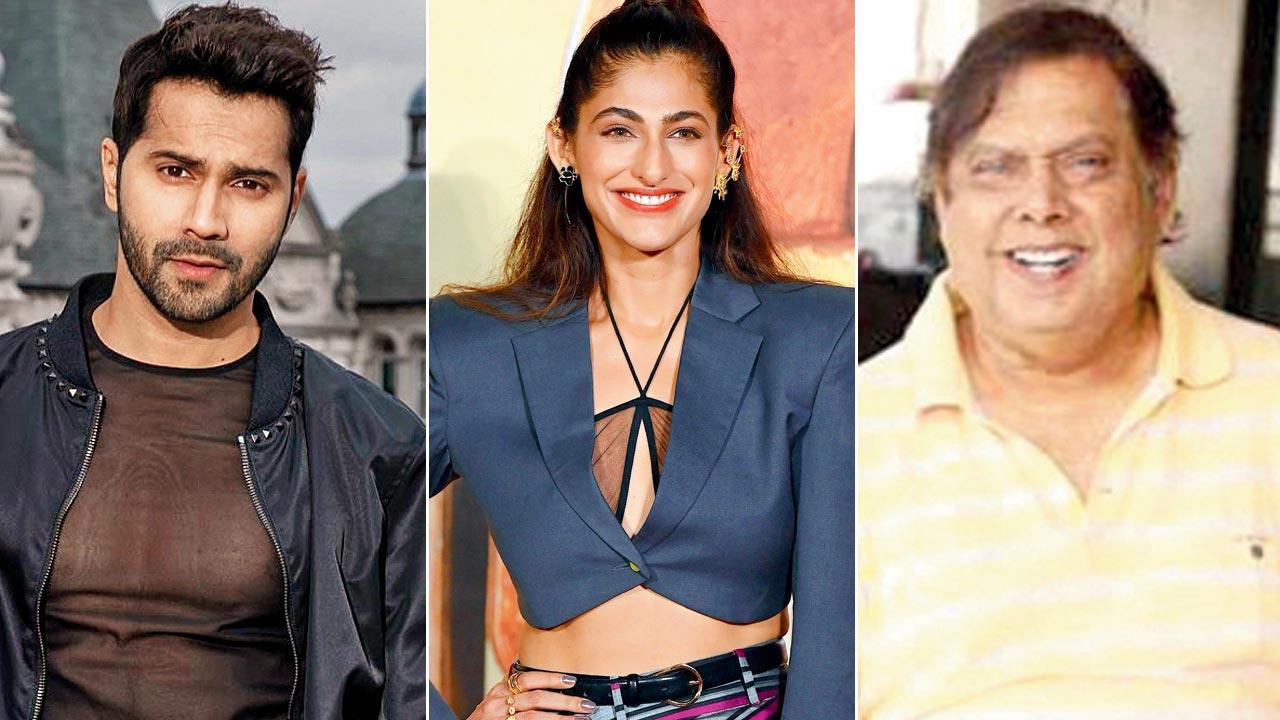
Kubbra Sait on working with her acting school alumni Varun Dhawan in David Dhawan’s Hai Jawani Toh Ishq Hona Hai
Priyanka Sharma (MID-DAY; July 27, 2025)
Even as Kubbra Sait awaits the release of Son of Sardaar 2, she is thrilled to have already completed her second comedy feature, Hai Jawani Toh Ishq Hona Hai. Unlike the Ajay Devgn-led film, the David Dhawan directorial features her in a small part. “In all honesty, that was a one-day shoot,” she reveals.
But that didn’t matter, as the opportunity to be part of a film directed by the veteran filmmaker was quite special for the actor. “For me, it’s a legacy project, because I’m working with ‘the’ David Dhawan,” she says, before mentioning that the film "was also giving me a chance to work with Mrunal Thakur, whom I last worked with in Son Of Sardaar 2. So, it would have been an extension of our earlier collaboration. Varun Dhawan has been my classmate in my acting class! Lastly, Maniesh Paul is someone I have shared the stage with for so many years. So, that for me was a project I would never say no to, even if it was an hour’s job,” she shares.
Sait tells us that Varun and she attended Barry John’s acting school before making their screen debuts. “We were in the same batch. I would [often] run away to do my events and other stuff; I think I was the worst student in the class. Varun, on the other hand, was the most hardworking student,” she smiles
Pease don’t think that you need to be Shah Rukh Khan to be happy-Barry John
8:45 AM

Acting guru Barry John, who was recently awarded a Padma, speaks to Shruti Sonal about star students and acting mantras
Shruti Sonal (THE TIMES OF INDIA; February 2, 2025)
You first came to India back in 1968 in your twenties. Did you think that you would spend the rest of your life in India and get one of its highest citizenship awards one day?
Frankly, no. I came initially for a voluntary service program teaching in Bengaluru. That went on for two years. After that, I had an invitation to go to Delhi to join a theater group, which I did and have never looked back since. I don’t think about awards and never dream of them. So, the Padma Shri came as a very pleasant surprise.
Over the years, from Shah Rukh Khan to Manoj Bajpayee, several of your students have gone on to become stars. What are your favourite memories of them?
Shah Rukh joined our theater group and worked with us for several years. I was rehearsing a musical in Lady Shri Ram College called ‘Annie Get Your Gun’. A handsome young man walked into the auditorium and said, “Is there any chance that I can act in your production?” So, I tried him out on that day, and he became one of the principal dancers in the show as the main roles had been given out by then. But he was happy to dance. Manoj was quite different. I also met him somewhat accidentally. My relationship with Manoj was difficult at first, thanks to my bad Hindi and his bad English (laughs). But eventually we overlooked that and became the best of friends, and he worked more closely with me than anyone else. And at that time, I had begun exploring the possibility of using drama to help special groups of people, like the hearing and visually impaired. Manoj started helping out on those programs. As poor as he was, he was happy to be involved. NSD (National School of Drama), by the way, refused admission to him strangely on several occasions. So, working with me and with children…that’s how he evolved.
From the 1980s, when you were so active with NSD to today, do you see a change in aspirants?
First, the students all carry a bloody phone in their hands all the time, even in class. They don’t read or watch serious cinema anymore. I think social media has a negative impact. Australia is banning social media for children under 16. I think every country should do the same.
You’ve also acted in films like ‘Gandhi’ and ‘Massey Sahib’. What’s more challenging: acting on stage or on camera?
I think I was born to be on the stage. I’ve always found cinema uncomfortable because it’s such a stop-start, stop-start routine for the actor. I’m not very proud of any of the films I’ve done, but I was one of two Brits in India at the time. The other was Tom Alter. If it wasn’t Tom, it was me (laughs).
What’s the biggest differences between theatre in India and the UK?
The Brits are a very class-conscious people and theatre was always something the upper classes did. My father was a factory worker, and my mother was the proverbial homemaker so, I wasn’t born and bred into visiting the theatre until my own interest took me there. I realised later that sadly, it costs a lot of money to buy a theatre ticket in the UK. It has become part of the tourist industry in London and various other big cities, which is sad. I wanted to use it as an educational force. India allowed me to do that.
You’re now 79 and still teaching. What keeps you going?
It’s a wonderful life training young actors. There’s no guarantee that everyone will become the next Shah Rukh or even Manoj Bajpayee. Yet, you do your best, and if there are serious improvements in their work, it’s wonderful. I don’t want to retire and lie on the sofa watching TV.
What tips would you give aspiring actors?
First, be patient with your parents because they’ll never understand your passion for acting. The second is to not give up. Join a local amateur theater scene and follow your passion. Lastly, please don’t think that you need to be Shah Rukh Khan to be happy. We can’t all be such fabulous fairytale film stars, but you can still have a very useful and positive life as an actor.
Whatever I am today and whatever I have accomplished, it is all because of Barry John-Manoj Bajpayee
10:45 AM
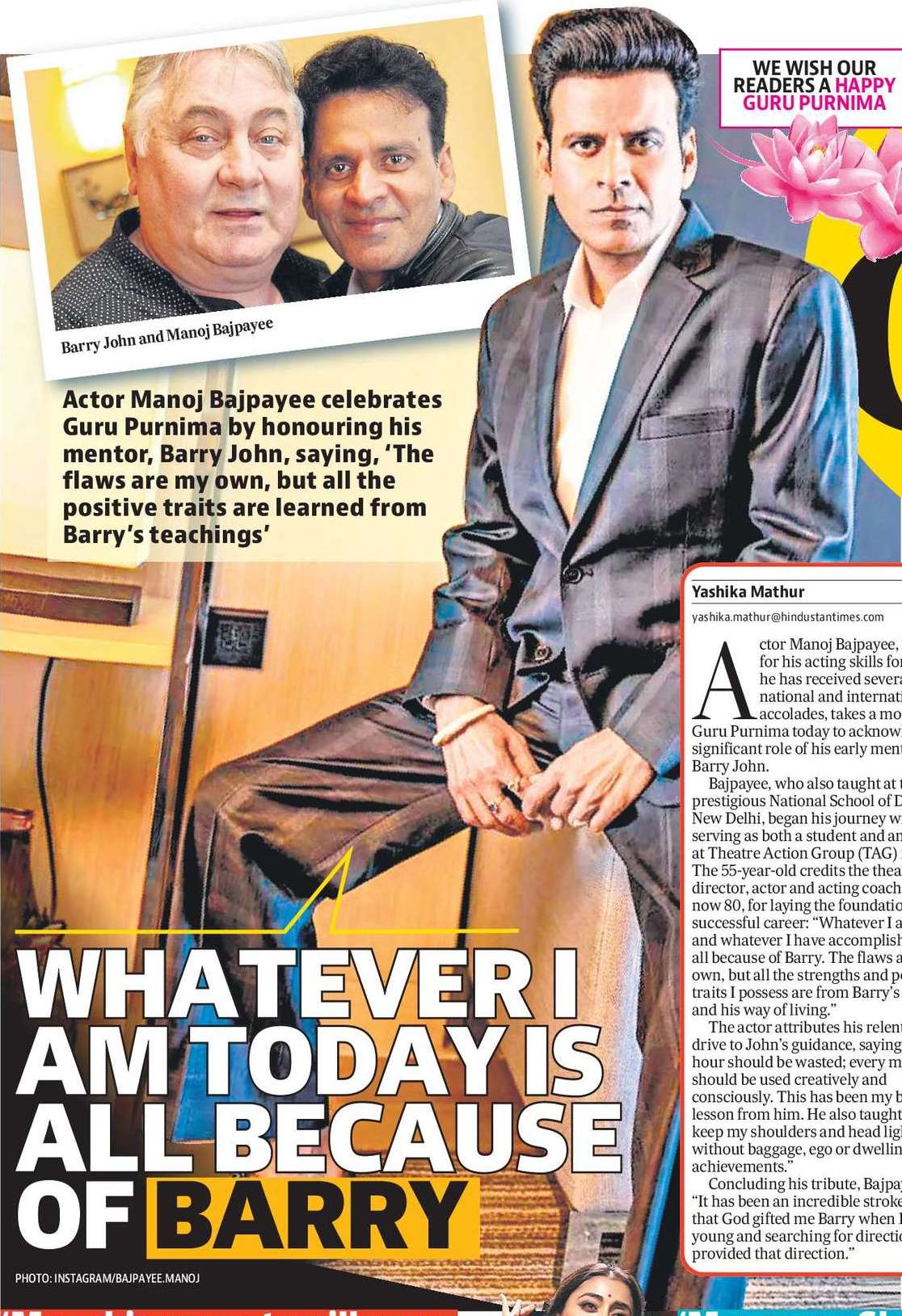
Actor Manoj Bajpayee celebrates Guru Purnima by honouring his mentor, Barry John, saying, ‘The flaws are my own, but all the positive traits are learned from Barry’s teachings’
Yashika Mathur (HINDUSTAN TIMES; July 21, 2024)
Actor Manoj Bajpayee, known for his acting skills for which he has received several national and international accolades, takes a moment on Guru Purnima today to acknowledge the significant role of his early mentor — Barry John.
Bajpayee, who also taught at the prestigious National School of Drama in New Delhi, began his journey with John, serving as both a student and an assistant at Theatre Action Group (TAG) in Delhi. The 55-year-old credits the theatre director, actor and acting coach, who is now 80, for laying the foundation of his successful career: “Whatever I am today and whatever I have accomplished, it is all because of Barry. The flaws are my own, but all the strengths and positive traits I possess are from Barry’s teachings and his way of living.”
The actor attributes his relentless drive to John’s guidance, saying, “No hour should be wasted; every moment should be used creatively and consciously. This has been my biggest lesson from him. He also taught me to keep my shoulders and head light, without baggage, ego or dwelling on past achievements.”
Concluding his tribute, Bajpayee adds, “It has been an incredible stroke of luck that God gifted me Barry when I was young and searching for direction. He provided that direction.”
Rituraj Singh was already popular when Shah Rukh Khan joined Barry John’s theatre group-Varun Badola
8:26 AM
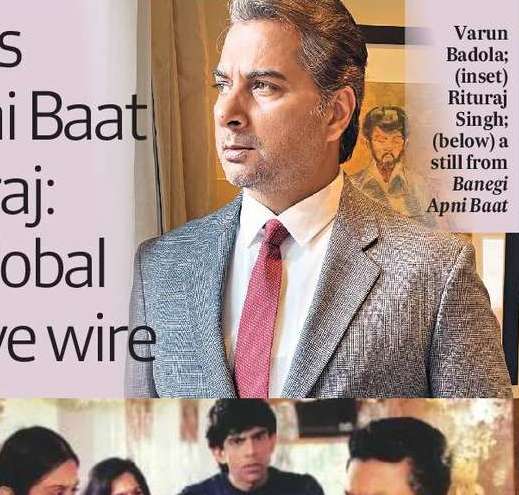
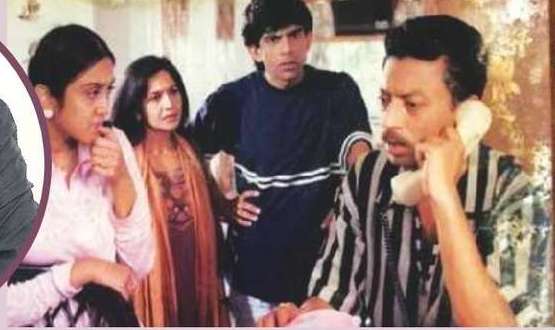
Mimansa Shekhar (HINDUSTAN TIMES; February 22, 2024)
For actor Varun Badola, the news of his Banegi Apni Baat (BAB) fellow actor Rituraj Singh’s death left him in a state of shock as he says Singh was more than just a colleague for him. “Even my wife did not break the news to me. I knew Rituraj as more than a co-actor. It’s shocking, too close for comfort,” says Badola, who received the tragic news a little late as he was travelling.
“I have seen Rituraj’s popularity and stardom. Sometimes, when someone departs, your world suddenly shrinks for unknown reasons,” adds Badola remembering Singh, who died of a cardiac arrest on February 20.
Though Badola and Singh appeared in separate tracks of the cult ’90s show, he got introduced to Singh post his stint in BAB. “It was a landmark show and Rituraj was the hero. We met at its after-parties and he was a huge [star] at that time. His stardom wasn’t restricted to TV. He was a global person, quite a live wire and one of the most promising actors who entered the industry at that time,” recalls Badola, 50.
Surprisingly, the actor’s favourite performance of Singh was from his theatre days. “Rituraj was already popular when (actor) Shah Rukh Khan joined Barry John’s theatre group. He did an English play titled Lend Me A Tenor. It was pretty flawless, and he was brilliant in it,” Badola concludes.
No matter how talented we were, girls always flocked to Shah Rukh Khan-Manoj Bajpayee
8:28 AM

Ahead of Hitlist Web Awards, the 'Family Man', over a long sit-down chat, traces his journey from farmland in Bihar
Mayank Shekhar (MID-DAY; March 7, 2020)
In a way, the journey of Bombay cinema's transition into millennial cool, late-90s/early-2000s onwards — what with even 'indies' beginning to merge with Bollywood mainstream — starts from a street in Delhi. It's officially named Sudhir Bose Marg, where colleges of Delhi University's (DU) North Campus are lined up one after another, on either side.
If you survey this street late '80s onwards, you'd find Manoj Bajpayee enrolled in Ramjas College, fresh off a train from Bihar. Bajpayee says he also used to perform in plays at the next-door Hindu College, where there was actor Ashish Vidyarthi. When not representing university in cricket, Vishal Bhardwaj (from Meerut) would score music for those plays. "Rekha, Vishal's girlfriend [later his wife], was learning classical music."
To the right of Shishir Bose Marg is Khalsa College, where Saurabh Shukla graduated from. To the left is Hansraj College, where Shah Rukh Khan was reading economics. Few years later, Imtiaz Ali (from Jamshedpur) founded Hindu College's dramatic society.
At about the same time as Anurag Kashyap (originally from Banaras), who was at Hansraj. "Oh there are just way too many people [to name]," Bajpayee trails off, as we stage an unscripted, hour-and-half long edition of Sit With Hitlist, before a live audience.
Will continue to use full names, just so you can correlate them with their relevance to current Bollywood. The point for most of these DU students — who later made the move to Mumbai and cinema — wasn't quite to crack their final exam in history (Bajpayee), or zoology (Kashyap). It was firstly to gain access to the thriving theatre scene in the Capital.
This is where Bajpayee co-founded the theatre company, Act One. It had, among others, Imtiaz Ali, actors Gajraj Rao, Piyush Mishra: "Shoojit Sircar used to design background music, and assist director [N K Sharma]. Anubhav Sinha assisted [in direction], and was an important part of the circle."
During the day Bajpayee trained under Barry John and his company Theatre Action Group (TAG), to secure a place in Delhi's National School of Drama — that ultimately rejected him four years in a row. It's at TAG that he first met Shah Rukh Khan: "No matter how talented we were, girls always flocked to Shah Rukh." Nothing's changed.
"Shah Rukh, along with Divya Seth, Jeeturaj, were English theatre actors, from privileged backgrounds in South Delhi," Bajpayee recalls. While everyone really made it on their own in Mumbai/Bollywood, with zero family connections, the one to scale the steepest climb is still likely to be Bajpayee. He was born into a famer's family, with six siblings, raised in a village called Belwa in Bihar, bordering Nepal, where there wasn't even a local cinema, growing up.
Besides, being Bihari meant a strong regional accent that he had to shed, in order to ready himself for multiple parts on stage/film: "If you're an actor, you can't be 'one type' in your real life — a Bihari, for instance. You should be able to play a Marathi, Punjabi.... For many years, from my Hindi, many people couldn't figure out where I was from."
What he worked on harder still is English. Which is just a language, yes, but it also denotes social access in India: "I always knew English is a tool to compete in this country; to fit in, and get your work done—even if I decide to work in the Hindi film industry. I didn't take it as a burden."
It was quite common for Bihari students (nicknamed 'Harries') to land up in DU, to pursue courses in sciences and liberal arts, and take a shot at several entrance exams later — chiefly for the civil services. Bajpayee made sure he spent significantly more time with the few foreign students in his college, rather than the 'Harry gang': "The Kenyan/Nigerian guys would listen to my English, quietly, without judgment. Five hours of my day spent with them meant only speaking English, flat-out — gaining command/confidence over the language. Barry John, who took me under his wing, started giving me roles in English plays as well."
This interview is wholly in English. He's as fluent as it gets. This, he says, surprises his former flat-mates — a full-on 'English medium type' in particular, who'd make fun of him back in college. By the early '90s, having spent enough hours perfecting his diction, reading literature, watching plays, doing street theatre, exposing himself to arts and [alternate] cinema, what he calls the "best days of my life", Bajpayee began to 'belong' — to Delhi's intensely active stage scene.
"We were Turram Khans [of the circuit]," he says, also of fellow actors Seema Biswas, Nirmal Pandey, and the like. This is the catchment area filmmaker Shekhar Kapur, along with his assistant and casting director Tigmanshu Dhulia, tapped into to cast for Bandit Queen (1994). Post its commercial success, the Bandit Queen 'alumni' pretty much migrated en masse to Mumbai.
"Nirmal Pandey became a star. Seema Biswas got [the lead role with] Sanjay Leela Bhansali. Aditya Shrivastav got busy as well. Saurabh Shukla in fact was the busiest…" And Bajpayee? Because his character Maan Singh in Bandit Queen didn't have many lines, despite strong screen presence, he remained relatively unnoticed.
He did move to Mumbai with a "major role in Prakash Jha's Mrityudand" though, and a TV series with director Pankaj Parashar in hand. Both fell through. He was kicked out after the first day's pilot shoot of the latter. As from three other leading roles — in a TV show, corporate film and a docu-drama — all on the same fateful day!
What followed is four years of "no work, consequently no food," and life in a chawl. The primary talent he developed in these years, Bajpayee jokes, is an ability to time his entry into friends' homes — right at the moment when lunch was getting served; or a booze bottle was being cracked open! An important lesson that showbiz teaches most aspirants though, and something that Bajpayee appears to have imbibed as a personality trait, is the strength/perseverance to repeatedly face rejection, and calmly move on, before it breaks one's resolve/spirit.
"I am basically dheeth [stubborn]," Bajpayee says more than once to describe himself. While playing the popular character Sunil in the television series Swabhimaan certainly turned his meagre fortunes around —"I could eat at fancies restaurants now" — the turning point in Bajpayee's career is obviously the iconic/immortalised 'Bhikhu Mhatre' from Ram Gopal Varma's Satya (1998).
Varma, Bajpayee reckons, is the man who singularly altered the landscape of Lokhandwala, and indeed (mainstream) Hindi films. Varma was looking for writers for Satya. Bajpayee introduced him to Anurag Kashyap and Saurabh Shukla. Satya led to Varma's Kaun? (1999), also written by Kashyap, and a role that Bajpayee says he practically remodelled on the first day of shoot — turning Sameer Purnavale into a goofy bloke, rather than a serious fellow.
Shool (1999), written by Kashyap as well, followed. Among Bajpayee's contributions to this lead part of a quiet cop, diametrically opposite to the boisterous Bhikhu, was the name Samar Pratap Singh. Samar was what Bajpayee wanted to officially change his own name to, but couldn't do paper-work for, before the release of Bandit Queen: "Everybody in Bihar is called Manoj — Manoj Cyclewallah, Puncturewallah, Bhoojawallah, Littiwalllah…." His parents had named him after the actor Manoj Kumar (born Harikishan Goswami). Who, in turn, named himself after Dilip Kumar's character from the film Shabnam (1949)!

Up until Chandraprakash Dwivedi's Pinjar (2003) that won Bajpayee his second National Award (first was for Satya), what you sense is an unlikely Bollywood star, on an enviable dream run, both at the box-office, and with critical acclaim. And then everything starts tumbling downhill thereafter — for seven frickin' years straight!
He had a fall-out with Varma, when the latter was at the top of his game: "I used to be angry, sensitive — not an easy person to deal with." Kashyap and he parted ways. He was going to both act in, and co-produce Kashyap's debut: "Anurag had mistakenly presumed that I wasn't interested in the role/film."
He looks back at the fallow period, "Those weren't easy times. No work was coming [my way]. And whatever was, didn't match up to standards. Also, I was not keeping well." On the IMDb trivia page, Bajpayee may well boast of the longest list of shelved films for a filmography that could've been. There is at least one major movie mentioned on the user-generated page — Rakeysh Omprakash Mehra's Rang De Basanti, that he was replaced from. It's true, he says.
Bajpayee's actual career graph effectively resembles a symmetrical ECG report, with extensive highs and lows, almost equally spaced out! He agrees, "I still call filmmakers for work, if I've enjoyed their recent film. The hardest part was to convince friends that I was still good enough — aur woh mooh chura rahe thhe [and they were sheepishly looking away]. When I reminisce [those times], I feel only I could've survived it. Because I don't take it to heart. The only thing that could break me is [upheaval on the] personal front. The professional life, even now, doesn't bother me much. Mumbai says it most beautifully, 'Yaar, load kyun leta hai [Why take stress?]'.
"TV crews that used to hound me started putting their cameras down, watching me enter events. I could hear the reporter, who wouldn't even lower his voice, instructing this to his crew. A friend with me felt bad observing this and said, 'Jabda tod denge [I'll break his jaw].' I told him, jabda tootega. And that happens with work. I was sure I was going to come back. But I needed a role. When I got Raajneeti, I knew this was it. I knew what I wanted to do with Duryodhan's role."
Raajneeti (2010), a major hit that Bajpayee, 51, admits resurrected his floundering résumé, was an adaptation of Mahabharat, set within contemporary Indian politics. It was directed by Prakash Jha, whose offer for that "major role" in Mrityudand (1997; that eventually went to actor Ayub Khan) Bajpayee had optimistically landed in Bombay with.
Similarly, he earned matchless street-cred as Sardar Khan with Kashyap's masterpiece Gangs Of Wasseypur (2012). Kashyap and he are back to being friends. Of which he laughs, "Anurag is incredibly talented, but a loner. If you meet him for three days in a row, he starts hating you!"

Further, his most challenging lead role in the current phase could well be as the Marathi, gay Professor Siras in Aligarh (2015): "A leading journalist had written about how actors' careers got ruined, once they played gay characters on screen. My career got made as a result." Aligarh was directed by Hansal Mehta, with whom Bajpayee had collaborated in the under-rated cult film Dil Pe Mat Le Yaar (2000), co-written by Saurabh Shukla, during the first upswing in his career.
In 2019, Bajpayee stormed into mainstream web with Amazon Prime's smashing success, The Family Man, directed by Raj-DK, playing a spy Srikant Tiwari, who could be any other guy on a Mumbai street. As a basic brief, even that sounds a little lot like Bajpayee's breakout role in Satya: "Bhikhu Mhatre was the most real [gangster] that this country has ever seen on the big screen. He could be standing by a restaurant or a paan shop, and you wouldn't know he's a dreaded don. Which is true for people doing extraordinary things —they're extremely unassuming in day-to-day life. Srikant Tiwari has all the same elements, but we went a little further ahead in this realistic direction — he's even more casual, nervous, anxious [than Bhikhu]."
If life/career must indeed be shaped into a circle, let's look at Bajpayee's last major film, Sonchiriya (2019) that, while not quite creating waves at the box-office, finds itself nominated in critics' categories across most major awards, including winning the Filmfare black lady for Best Film (Critics).
The film is set in the same time-frame and location (ravines of Chambal) as Bajpayee's debut, Bandit Queen. Like with his debut, Bajpayee appears as a quiet dacoit named Maan Singh. It's directed by Abhishek Chaubey (Ishqiya, Udta Punjab) who, like his mentor (and Bajpayee's contemporary) Vishal Bhardwaj, went to Hindu College, from the same Sudhir Bose Marg in Delhi.
Cast Your Vote For The Hitlist Web Awards
- Manoj Bajpayee has been nominated in the Best Actor (Male) category for Amazon Prime’s The Family Man.
The other nominees are:
- Arjun Mathur (Made In Heaven; Amazon Prime)
- Nawazuddin Siddiqui (Sacred Games S02; Netflix)
- Vikrant Massey (Criminal Justice; Hotstar)
- Dhruv Sehgal (Little Things S03; Netflix)
- Mohit Raina (Kaafir; Zee5)
- The Family Man enjoys six nominations, including Best Series, Best Creator, Best Actor (Male), Best Supporting Actor (Male), Best Supporting Actor (Female) and Best Writing.
- There are 14 categories that the public can vote in. Log on to www.hitlistwebawards.com to cast your vote.
- You can also vote via SMS. Send HITLIST <space> category name <space> your choice (a/b/c/d as on the website) to 57575.
- Voting lines extended by a day, to close on March 9

'Professor' Manoj Bajpayee is conducting workshops at the NSD
8:27 AM

The actor who was rejected four times by the premier institute has been conducting workshops there as recently as last month
Roshmila Bhattacharya (MUMBAI MIRROR; July 12, 2019)
Last month, Manoj Bajpayee was at the National School of Drama (NSD) to conduct a 10-day workshop with students of the second year. This is not the first time that he has been to the institute to teach the craft and nor is he the first actor to do so. What makes it interesting is that the National Award-winning actor is not an NSD alumni even though he had wanted to be a part of one of the foremost theatre training institutions in the world since his childhood.
“The first time I applied, I was rejected. It was heart-breaking, I took it very badly and didn’t know what to do for months. Thereafter, getting into the NSD became an annual ritual. I was rejected four times but after a while it no longer mattered,” points out Manoj, who, over the years, has done plays with former NSD students and teachers outside the institute, followed its curriculum and used its library.
He admits that he was humbled and flattered when he was approached to conduct classes in the premises. He is quick to inform that this wasn’t the first time. He’s been there in the past too and is overwhelmed by the respect and love he is accorded by the students and teachers.
“They consider me one of their own even though I don’t have a diploma from NSD. And I like that acting is seen as one of the major elements of theatre there and taught scientifically by professionals to a bunch of sincere and dedicated students,” he avers.
But can acting be taught, you wonder, and the actor who was recently honoured with a Padma Shri, retorts, “Everything can be taught and learnt. Even someone who is a genius at math needs to go to college to learn engineering. Similarly, an actor can only benefit from going to an institute and having his talent honed by professionals. Contrary to popular belief, acting is the most difficult job in the world and not everyone can act on stage or on the screen,” Manoj asserts.
What changes has he noted in the NSD over the years? “Well for one, the curriculum is constantly being improved and updated according to the dynamics of theatre and changing interpretation of the craft the world over. If you are not in sync with the times, you get stagnant,” he reasons.
Prod him on what he teaches in these workshops and Manoj says he first gets to know each student personally and works on their personality. “It’s important to make them aware of their own self because acting is not just about saying your lines or enacting a scene, but about just being,” he points out.
Manoj is full of gratitude for his own teacher, acting coach and theatre director Barry John, with whom he did a few workshops, staying on as his trainee. “I owe everything I’ve learnt to Barry,” he signs off on an emotional note.
I would run away from bank officials my father owned money to-Manoj Bajpayee
9:02 AM

As told to Roshmila Bhattacharya (MUMBAI MIRROR; February 4, 2019)
 My father was a lower middle-class farmer in the small village of Belwa in Bihar. He had a little plot of land and every day was a struggle to overcome the vagaries of the weather and grow crops, make ends meet and bring up six children. He was very ambitious for his children and made sure we all completed our graduation. I studied in the village till the third standard before being sent away to boarding school because the district town was 50 kms away. KR High School in Bettiah was a Hindi medium Catholic school with a lovely campus. During vacations, I would help my father till the fields, driving the tractor and running away from bank officials my father owned money to for the tractor and other loans.
After completing my 12th standard, I moved to Delhi with a burning desire to become an actor. My first play was an adaptation of Norwegian playwright Henrik Ibsen’s play An Enemy of the People. A classmate who had been thinking of directing a play since we were in the first year of college, finally landed the opportunity and encouraged by my passion, cast me in the main lead. The response was overwhelming and gave us the confidence to put up more productions.
I had heard of the National School of Drama and applied thinking that it would give me the chance to work with different instructors under one roof who would help iron out my weaknesses and mould me into a better actor. I was rejected and took it very badly and getting into NSD became an annual ritual. I was turned down two more times, but by then it no longer mattered because I had got busy with theatre. I did a few workshops with acting coach and theatre director Barry John and stayed on as a trainee.
Those were years of extreme poverty. Sometimes if we got a sponsor we would get paid a thousand or two a month, but that was rare. It was only thanks to supportive friends who were ready to share everything they had, from a roof to food and meagre savings, that I managed to survive what was a really difficult decade. Back in the village, my parents were worried for me and my mother would sometimes not eat for a couple of days. Fortunately, there were no phones in the village and the only way of communicating with them was through letters so they had no idea how bad things really were. But these are the sacrifices you make to reach somewhere.
I was completely focussed on acting and there was never a desire to venture into another profession to earn a living. Since I had no film connections or godfather, I knew that the only thing that would sustain me in the long run were the skills I learnt. Barry not only shaped Manoj Bajpayee, the actor and the human being, but since I was working for Barry’s Theatre Action Group all day, assisting him with his workshops for children and with the production of his plays, they started paying me a salary of Rs 1,200 that helped me get by. I also got the opportunity to work with NSD alumni and teachers, and went on to conduct a few workshops at the NSD campus.
Then, Tigmanshu Dhulia who was the casting director for Bandit Queen, recommended me to Shekhar Kapur. I was paid Rs 50,000 for the role of dacoit Mann Singh. Half of the money went towards settling the bill with the local chaiwalla and with the remaining Rs 25,000, Saurabh Shukla and I moved to Mumbai. We started out sharing a room in a chawl. Soon several other strugglers bunked with us. The TV soap, Swabhimaan, gave me the financial freedom to live alone. I was doing Tamanna when Mahesh Bhatt got Pooja’s mother to give her one-bedroom flat on rent to me. I used to earn around Rs 16-17,000 of which around Rs 6000 went on the rent. But things had started to look up.
Since then, 25 years have flown past and now I’ve begun to take things a little easy and channel my energy better. I’m still intense about acting, but not as aggressive. If I don’t get something, life doesn’t end. I guess that’s what you call wisdom. And now, it’s at this juncture in my life and career that the Padma Shri has come my way. It’s not an award but a recognition for the person and profession and I can accept it with full humility, knowing what goes into the making of an actor and his evolution as a person. My wife is over the moon, my parents and siblings are overwhelmed and as for my village, state and district, it seems like they have bagged the honour.

The play ‘Netua’ in which Manoj Bajpayee (guy with one hand on his head) played a dancer who disguises himself as a woman; the actor in his early days (right; above)
I want to make Majnu aspirational for people-Avinash Tiwary
7:58 AM
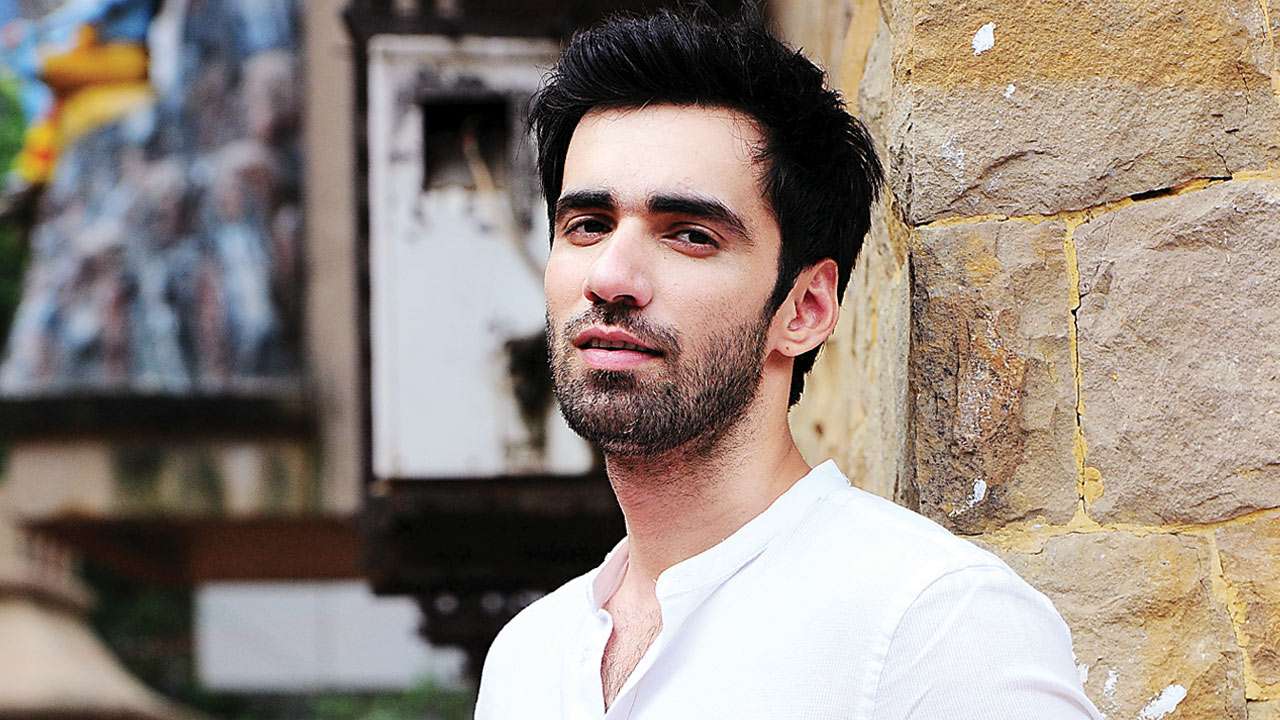
Hiren Kotwani (DNA; August 30, 2018)
Avinash Tiwary, who made his Bollywood debut as part of an ensemble cast in the light-hearted Tu Hai Mera Sunday (2016), will now be seen as the lead in Sajid Ali’s Laila Majnu. Scripted by acclaimed filmmaker Imtiaz Ali, who is also backing the film along with Ekta Kapoor, it’s a contemporary retelling of the classic love story. The Mumbai lad, who quit engineering in the fourth semester to pursue a career in acting, tells us about struggling for 13 years before landing his big break and the challenges of playing a man crazy in love. Excerpts...
How did you bag Laila Majnu?
In December 2015, the casting was underway for the film. I met Sajid, who told me that he’d liked my audition, but they were yet to take the final call. Eventually, in 2017, I was signed on for the part.
After debuting in Tu Hai Mera Sunday, the struggle and waiting for a second film must have been tough.
I had quit engineering and joined Barry John’s Acting Studio. After that, I went to New York Film Academy and started doing short films since 2005. I kept myself busy. By the grace of God, something or the other kept coming. So 13 years down the line, I can say I have started off now.
Tell us about your first meeting with Imtiaz Ali.
It was in 2016; he was gracious enough to call me home. Back then, I thought I had almost been selected for his movie, but still wasn’t entirely sure. I was nervous, but he was so humble. He asked me if I would like to have tea. Then, headed to the kitchen and made it himself. I just couldn’t believe it. I’m a huge fan of Imtiaz. Every time I see his films, I want to be a part of them.
What kind of guidance did he give you?
We did a lot of workshops before we started shooting. Imtiaz (Ali) sir attended all of them and would always tell me that I needed to feel for the character and understand where he was coming from before saying the dialogues. He also trained me how to lip-sync for songs.
Imtiaz has written the film but what were Sajid’s inputs as the director?
Sajid has lent the story a fresh voice through the dialogues. He approached the movie in a unique way. He is one of the most important forces behind the film.
What do you think makes this love story relatable to today’s audiences?
If it wasn’t, you wouldn’t be hearing Laila Majnu in every second song. They are a part of our being. I think, our generation, too, should have a Laila Majnu.
While the trailer gives a glimpse of Majnu’s madness after his separation from Laila, it seems debatable considering people’s practical mindset today when they don’t think twice before breaking up and moving on.
You feel people don’t feel so strongly for another person in times of Tinder? Everyone finds their own functions of practicality in cinema. Which is why Laila Majnu is an epic classical love story. If every love story was like that, then there would be no difference. As for Majnu’s madness, when was the last time you saw a guy go really crazy in love in a film? Our movie shows that jo junooniyat hai, woh kissi din nikale, toh kaisa hoga. I want to make Majnu aspirational for people. He is so liberated from the clutches of society. Today, we are stuck in a zone of vanity.
So what do you think takes Majnu to the brink of madness?
That is something I spent most time figuring out. After about seven-eight days of shooting, it finally struck me. Maybe this is my justification, but three things come to my mind. For instance, I have had a heartbreak and after four years, my ex-girlfriend and I happen to meet. She is sitting in front of me, a song plays in the background, but I’m still missing her. We make adjustments in life but what if you’re not able to make that compromise? What happens then? Usually, to console someone, it is often said, ‘Waqt guzarta hai, badalta hai.’ Lekin agar waqt guzarta bhi nahin aur badalta bhi nahin, tab kya? When we’re talking about the trappings of society, we know they exist, but still, we can’t let go. Which is why I said I want to make Majnu aspirational. We’ve become a hashtag generation. After four years, when something new comes up, we move on.
What was the most challenging part about playing Majnu?
We started with the second half first, where I have long hair and beard. I had to look thin, so initially, we thought we could get the look with loose clothes. But 15 days before the shoot, we felt it wasn’t working. So, I lost about 12 kilos in a fortnight. I would have an egg white, some clear chicken soup, cucumbers, carrots and some supplements for vital vitamins. I’d do all the physical activity. Initially, we had the workshops in the mornings and I would work out in the evenings. I also had a lot of black coffee during that time, which is not the most healthy thing. But I had to look weak. As the film was being shot continuously, I had to also transform back into the happy cheerful Majnu for the first half, which we started shooting within days of completing the second half. It took a while for me to get into the groove, but when there is so much at stake, you just have to do it.
If Aditya Chopra offers me a film that he thinks I will do a good job in, I will do it-Sushant Singh Rajput
8:53 AM

Sarita A Tanwar (DNA; May 29, 2017)
Sushant Singh Rajput has delivered a massive hit with M S Dhoni - The Untold Story, but for some reason he is not spoken about in the same breath as Varun Dhawan, Arjun Kapoor and Sidharth Malhotra. He did not have a dream launch. He made his debut with Kai Po Che, with an ensemble cast. He won Best Debut that year. He did two films after that all with YRF (Shuddh Desi Romance and Byomkesh Bakshy). Then, he had a fallout with Aditya Chopra and walked out of Paani after waiting for almost a year. He was told his career would be over. He delivered his first Rs 100 crore film with his next release. However, the industry is not acknowledging and celebrating his success like it should. And he understands this. He accepts it and perhaps, secretly enjoys it. Because that allows him to be the dark horse. Here he talks about the i chapter, the nepotism in the industry and “being Shah Rukh Khan” in his head. Read on for excerpts...
Working on your sixth film. Are you still trying to come to terms with the film industry?
I think it’s easy to understand. People talk about nepotism but I think we are just touching the subject superficially. We are just saying that outsiders find it hard to break into the industry and insiders get it easy, that’s the first thing. No one talks about how your successes and your failures are perceived and that is nepotism, too. If I do something and that’s going and you say...
Please explain..
It is not that insiders are not good, they are. But I also did something which is good but you would just punctuate that hundreds of times and you justify it. And the insiders would do anything and so nobody would question them because he or she was good. But that doesn’t take away from somebody else who was good, too. But that is there and just the room of that faith, hear what I am saying. Some failures are easily forgotten, some aren’t.
You mean that your failures are highlighted more, and your success is not celebrated as much?
I think all this is also nepotism. Anybody who says it isn’t, is either very ignorant or very powerful. That is it. I have no complaints because I have done five films that I wanted to do, I have signed some as well. Not that I didn’t have options... so, I can’t complain. But at the same time, I know that no matter how good friends I am with somebody, if my films don’t work...
...you won’t get offered their films, but you will get invited to their parties, correct?
(Smiles) Yes, that is something that has started happened lately. I am invited to parties. So I finally feel that I’ve arrived. I wouldn’t name him, but this maker just offered me a film after we had a tiff last year and just because my last film did well. It is such simple mathematics and there is nothing wrong to it. It is a money-making thing and if you are saleable — I don’t mean to emphasise that we need to network to get work — but it is expected and sometimes necessary.
SRK and you both hail from Delhi, both made it big after working on TV. Have you subconciously imbibed his style? You are accused of having a Shah Rukh Khan hangover.
Really? If it is working, I won’t complain. (Pauses) If that is true, then it is probably because we had the same acting teacher — Barry John. In fact, I got a chance to finally do a dance song in Raabta and I did his signature — arms spread — move. I’ve always wanted to do it. Because I am a big Shah Rukh fan. He’s the only reason I started.
You have often said that.
I remember coming to Swades ka set, to get his autograph, and I couldn’t meet him unfortunately. I had come from Delhi, he was shooting in Mumbai And a few years later I was dancing behind him when I was with Shiamak and I said, ‘Hi’ and he said ‘Hi’ back. And then, a few years later, when I made my debut, we were at the IIFA, he called me to his room, we sat there for 45 minutes and chatted. I was like, ‘This is it. I can’t get beyond this.’
You and SRK also have the Aditya Chopra connection. Though your experience hasn’t been as nice as his. Do you regret waiting for so many years for Paani to take off?
Yes. It was very unfortunate because I remember saying no to many films I really wanted to do at that point of time, just because I trusted somebody who was telling me, ‘No matter what, the film will be made.’ I can also understand that I am a newcomer and a filmmaker is putting in so much money, so he will have doubts, but it doesn’t take away the fact that if you decide not to do that film, you cannot not give me another film just because you know I have said no to so many films. That didn’t happen.
Did you really struggle with the decision to walk out of the film?
No, that was a very easy decision. I see few changes in myself that have happened in last four years. I am completely fearless about the consequences. I just don’t care. You will have a great time working with me because there are things I am sure of — I am professional and if you ask me to do nine things, I will do 10. You will be happy, but if it’s anything else that doesn’t contribute to what we are trying to do, then I will not take that sh*t, no matter how big or small you are. As simple as that. I think everybody who works with me, knows this and appreciates this.
How long did you wait for Paani to take off?
That was 11 months of the second year since making a debut. I did three films before that in one year and then I just had one year of doing nothing. But I shouldn’t say I wasn’t doing anything, because I was spending time with Shekhar and that did a lot for me. After waiting for nine months, in the tenth month, I got to know that it won’t happen. I waited for another month, so I would get another film but it didn’t happen. I said, ‘Fine! Let’s find out for myself.’
Did you feel you’ve burnt your bridges with him?
That’s for him to decide.
Shraddha Kapoor also had a problem with Aditya Chopra, but he recently offered her Thugs Of Hindostan. So maybe he doesn’t have that ego, and he will approach you if he has a film for you.
If he offers me a film that he thinks I will do a good job in, I will do it.
When I came to Mumbai, I was stubborn about working only in films-Tahir Raj Bhasin
7:50 AM

Hiren Kotwani (BOMBAY TIMES; November 14, 2016)
Two years ago, Tahir human
Raj Bhasin's uncon ventional debut as a trafficker in Mardaani impressed
the industry and the audience. The nuanced performance drew plum acting
offers, of which he chose Force 2 as his next outing, where he plays the
young baddie. What stays with us after a confabulation with this young
turk is his clarity of thought and frankspeak. Excerpts:
Aren't you wary of being stereotyped as a villain, since you're playing one for the second time in Force 2?
Two films are too less to judge me. My character in Force 2 is more of an antihero. I'm sure the audience will find something relatable about him. I'm not the first actor to do this. And the audience is fairly mature enough to separate the actor from the character. They might hate the character but love the actor. Without revealing details of my role, I can say that he doesn't like violence, has strong Indian values and a sense of humour.
How did you prepare for the action scenes?
John Abraham and Sonakshi Sinha were my mentors. There was a rooftop chase sequence with John and me. There were six cameras following us. While I had to be aware of him following me, I also had to give the right look in different cameras and be in character. So, it was stressful. I underwent functional training for six months with John's trainer. It helped strengthen my muscles. It was like preparing for a marathon.
After making a mark as a baddie in a big film, you signed another after two years. Were you being particularly choosy about the films you signed?
I was clear I wouldn't play dark, gritty characters immediately after Mardaani. And I didn't want to play a lover boy either. The second film is more important than the first, so I was keen on doing something different and substantial. Five months after my debut, I started talking to Vipul Shah and Abhinay Deo and here we are with Force 2.
Few would have noticed that you played miniscule parts in KLPD: Kismat Love Paisa Delhi and Kai Po Che. Do you regret these roles?
Nope! I took them up because I was keen to act. When I came to Mumbai, I was stubborn that I'd only work in films. I could have done TV and theatre too, but that would have distracted me.
Are you as intense as the characters you portray on screen? Who's the real Tahir Raj Bhasin?
I'm not all that dark and intense. I'm a romantic guy, a traveller and like listening to romantic music. I'm also quite shy and don't easily mix up with people at parties. I guess, it's typical of Delhi boys.
You've admitted to being in a relationship, but you recently said that you don't have the time for love anymore...
Yes, I was in one, but right now, I am not in a steady relationship. I'm not in a committed relationship because I'm focused only on work. But never say never - if you meet someone nice, you can take it forward.
So far, you have worked with two big banners. But has it been a struggle making your way here?
I remember, during my first acting class, my acting coach Barry John said, 'You're very good'. It was a huge compliment because it came from a man who has trained Naseeruddin Shah, Manoj Bajpayee and Shah Rukh Khan. That's the first time I felt I could live my dream. I came to Mumbai four years before I bagged Mardaani. The interim was a period of aspirations. I don't perceive it as struggle. I had an air of arrogance that I'd land a big banner film in Bollywood and set my foot here. But I realised it doesn't work that way. It takes time. In those four years, I met filmmakers, auditioned for several roles and did workshops at dance classes, so when I get that one big chance, I can crack it. And Mardaani's audition changed my fate.
Did you ever consider joining the armed forces like other members of your family?
My father and grandfather are Air Force pilots. My younger brother is a civil pilot but my parents wanted me to pursue something I was good at. I was an above-average student who excelled in basketball and theatre. I virtually grew up at Air Force bases, and when I was younger, I'd dream of wearing a uniform like my father and grandfather. But when I turned 10, I felt theatre and acting were my calling. My family was supportive about my decision. They told me to educate myself in the field that I wanted pursue. I did a Masters Course in Film Studies before becoming an actor.
What's the next step after Force 2?
I'm reading a few scripts. I want to explore diverse genres. It's a great time for newcomers. My only criteria while selecting roles is that it should be a lead part in an interesting story where the character has depth and layers.
Aren't you wary of being stereotyped as a villain, since you're playing one for the second time in Force 2?
Two films are too less to judge me. My character in Force 2 is more of an antihero. I'm sure the audience will find something relatable about him. I'm not the first actor to do this. And the audience is fairly mature enough to separate the actor from the character. They might hate the character but love the actor. Without revealing details of my role, I can say that he doesn't like violence, has strong Indian values and a sense of humour.
How did you prepare for the action scenes?
John Abraham and Sonakshi Sinha were my mentors. There was a rooftop chase sequence with John and me. There were six cameras following us. While I had to be aware of him following me, I also had to give the right look in different cameras and be in character. So, it was stressful. I underwent functional training for six months with John's trainer. It helped strengthen my muscles. It was like preparing for a marathon.
After making a mark as a baddie in a big film, you signed another after two years. Were you being particularly choosy about the films you signed?
I was clear I wouldn't play dark, gritty characters immediately after Mardaani. And I didn't want to play a lover boy either. The second film is more important than the first, so I was keen on doing something different and substantial. Five months after my debut, I started talking to Vipul Shah and Abhinay Deo and here we are with Force 2.
Few would have noticed that you played miniscule parts in KLPD: Kismat Love Paisa Delhi and Kai Po Che. Do you regret these roles?
Nope! I took them up because I was keen to act. When I came to Mumbai, I was stubborn that I'd only work in films. I could have done TV and theatre too, but that would have distracted me.
Are you as intense as the characters you portray on screen? Who's the real Tahir Raj Bhasin?
I'm not all that dark and intense. I'm a romantic guy, a traveller and like listening to romantic music. I'm also quite shy and don't easily mix up with people at parties. I guess, it's typical of Delhi boys.
You've admitted to being in a relationship, but you recently said that you don't have the time for love anymore...
Yes, I was in one, but right now, I am not in a steady relationship. I'm not in a committed relationship because I'm focused only on work. But never say never - if you meet someone nice, you can take it forward.
So far, you have worked with two big banners. But has it been a struggle making your way here?
I remember, during my first acting class, my acting coach Barry John said, 'You're very good'. It was a huge compliment because it came from a man who has trained Naseeruddin Shah, Manoj Bajpayee and Shah Rukh Khan. That's the first time I felt I could live my dream. I came to Mumbai four years before I bagged Mardaani. The interim was a period of aspirations. I don't perceive it as struggle. I had an air of arrogance that I'd land a big banner film in Bollywood and set my foot here. But I realised it doesn't work that way. It takes time. In those four years, I met filmmakers, auditioned for several roles and did workshops at dance classes, so when I get that one big chance, I can crack it. And Mardaani's audition changed my fate.
Did you ever consider joining the armed forces like other members of your family?
My father and grandfather are Air Force pilots. My younger brother is a civil pilot but my parents wanted me to pursue something I was good at. I was an above-average student who excelled in basketball and theatre. I virtually grew up at Air Force bases, and when I was younger, I'd dream of wearing a uniform like my father and grandfather. But when I turned 10, I felt theatre and acting were my calling. My family was supportive about my decision. They told me to educate myself in the field that I wanted pursue. I did a Masters Course in Film Studies before becoming an actor.
What's the next step after Force 2?
I'm reading a few scripts. I want to explore diverse genres. It's a great time for newcomers. My only criteria while selecting roles is that it should be a lead part in an interesting story where the character has depth and layers.

Am I a romantic? You'll have to ask my wife-Kunal Kapoor
10:12 AM

Actor Kunal Kapoor, who recently wowed the audience with his performance on stage, discusses his theatrical tryst with his fan
Tunali Mukherjee (MUMBAI MIRROR; November 15, 2015)
Ritika Jairam spots actor
Kunal Kapoor as he walks into Prithvi Café in Juhu. “He's here,“ she
says, before checking her phone one last time, ensuring she's got her
facts straight before she meets him. Jairam keenly watches Kapoor as he
greets his friends around the theatre, and for the nth time laments
about missing the play that he's performed on Friday. When he does greet
her, Jairam blushes, citing, “I'm nervous.“
But she quickly snaps out, and enquires about the play. “It's called Ek Punjab Ye Bhi,“ says Kapoor. “It's a very interesting format where we're storytellers who are also acting out the characters whose stories we tell,“ he says, throwing a question. “Do you enjoy theatre?“ Jairam's face lights up. “Oh yes, I love it. I'm actively involved in theatre in college. I love acting,“ she says. She confides, however, that theatre's currently taken a backseat, since she's in the final year of her science degree, pursuing mathematics at St Xavier's College. “I was a student of St Xavier's for a day, before I decided the commute was too much for me,“ grins the Juhu-boy sheepishly.
Jairam agrees the commute is tough, and is thrilled that they share something in common, but the similarities don't stop there. “I love Maths and numbers too and studied Science and Commerce in college. I even worked in the stock market for a year. Initially, I wanted to be an architect, but when I visited the construction site, I knew this wasn't what I wanted to do,“ says Kapoor.
Jairam is intrigued. “From Science to Commerce to acting? How did that happen?“ she asks. “I was an assistant director for the film, Aks in 2001 and travelled to Delhi for its release with Manoj Bajpayee. That's when he told me that if I wanted to be an actor, I must meet Barry John. Most people come to Mumbai from Delhi to be actors, but I did the opposite. John told me I had to stay back in Delhi if I wanted to learn to act, so I called my parents to inform them that a day trip to Delhi had become a five-month long acting residency,“ laughs Kapoor.
“So how does it feel to pursue theatre?“ asks Jairam. “The preparation is the same,“ he explains. “However, while in films the camera and other technical details help you tell the story, in theatre you have to know how to really hold the audience's attention for the duration of the performance. It takes a lot of energy.“
Looking at the sparkly-eyed 20-year old, Kapoor asks if she's headed to college right after, and she reminds him it's Diwali vacation. “We spent Diwali rehearsing for the play!“ he exclaims. “You're not a firecracker person then,“ Jairam concurs, relieved. “Not at all. My dog is terrified of it. I don't see the point of creating so much pollution either,“ he says, as the two rattle off about their thoughts on being a clean and responsible Mumbaikar.
Jairam later enquires about his other projects. “I've had some ideas that I pitched to a few writer and director friends and we're currently developing some scripts,“ he shares.
Kapoor's favourite genre is romance, “A perfect film would be romance with a mix of action,“ says Kapoor. “Are you a romantic person?“ she teases. “I'd like to think so, but you'll have to ask my wife. I definitely like to romanticise things a lot,“ he laughs.
It's time to say goodbye and Jairam slips in the one question she's been waiting to ask. “What's in store for us Kunal Kapoor fans in the near future?“ “An action film,“ smiles the actor, leaving his fan with just enough information to keep her guessing, and excited to seeing him on the big screen again.
But she quickly snaps out, and enquires about the play. “It's called Ek Punjab Ye Bhi,“ says Kapoor. “It's a very interesting format where we're storytellers who are also acting out the characters whose stories we tell,“ he says, throwing a question. “Do you enjoy theatre?“ Jairam's face lights up. “Oh yes, I love it. I'm actively involved in theatre in college. I love acting,“ she says. She confides, however, that theatre's currently taken a backseat, since she's in the final year of her science degree, pursuing mathematics at St Xavier's College. “I was a student of St Xavier's for a day, before I decided the commute was too much for me,“ grins the Juhu-boy sheepishly.
Jairam agrees the commute is tough, and is thrilled that they share something in common, but the similarities don't stop there. “I love Maths and numbers too and studied Science and Commerce in college. I even worked in the stock market for a year. Initially, I wanted to be an architect, but when I visited the construction site, I knew this wasn't what I wanted to do,“ says Kapoor.
Jairam is intrigued. “From Science to Commerce to acting? How did that happen?“ she asks. “I was an assistant director for the film, Aks in 2001 and travelled to Delhi for its release with Manoj Bajpayee. That's when he told me that if I wanted to be an actor, I must meet Barry John. Most people come to Mumbai from Delhi to be actors, but I did the opposite. John told me I had to stay back in Delhi if I wanted to learn to act, so I called my parents to inform them that a day trip to Delhi had become a five-month long acting residency,“ laughs Kapoor.
“So how does it feel to pursue theatre?“ asks Jairam. “The preparation is the same,“ he explains. “However, while in films the camera and other technical details help you tell the story, in theatre you have to know how to really hold the audience's attention for the duration of the performance. It takes a lot of energy.“
Looking at the sparkly-eyed 20-year old, Kapoor asks if she's headed to college right after, and she reminds him it's Diwali vacation. “We spent Diwali rehearsing for the play!“ he exclaims. “You're not a firecracker person then,“ Jairam concurs, relieved. “Not at all. My dog is terrified of it. I don't see the point of creating so much pollution either,“ he says, as the two rattle off about their thoughts on being a clean and responsible Mumbaikar.
Jairam later enquires about his other projects. “I've had some ideas that I pitched to a few writer and director friends and we're currently developing some scripts,“ he shares.
Kapoor's favourite genre is romance, “A perfect film would be romance with a mix of action,“ says Kapoor. “Are you a romantic person?“ she teases. “I'd like to think so, but you'll have to ask my wife. I definitely like to romanticise things a lot,“ he laughs.
It's time to say goodbye and Jairam slips in the one question she's been waiting to ask. “What's in store for us Kunal Kapoor fans in the near future?“ “An action film,“ smiles the actor, leaving his fan with just enough information to keep her guessing, and excited to seeing him on the big screen again.
Does coming from a theatre background actually translate into better acting skills?
8:12 AM

Shakti Shetty (MID-DAY; March 27, 2014)
In November 2012, Naseeruddin Shah stated that he was suffering from cinema fatigue. At that point of time, the veteran actor was contemplating a long break from films and was hoping to learn carpentry in order to keep his mind occupied. However, he pointed out that he doesn’t find theatre — his first love — tiresome. Even now, he seems to be doing a fine job of juggling films with plays, and this in turn makes him a rarity.
In the Hindi film industry, several actors have started out in theatre before turning to the silver screen. Instances include superstar Shah Rukh Khan, Manoj Bajpayee, Irrfan Khan, Nawazuddin Siddiqui, and Boman Irani. Among actresses, Kalki Koechlin, Nandita Das and Huma Qureshi are some names who have dabbled in theatre.
On the occasion of World Theatre Day today, hitlist mulls over the question: do actors hailing from a theatre background have an edge over those who don’t? Also, is acting among those vocations where formal training is not a pre-requisite? The number of actors without theatre experience far exceeds those who have starred in stage productions. In such a scenario, how exactly does working in theatre help an actor/ actress perform better in front of the camera?

Lessons from theatre
Barry John has some answers. The Delhi-based theatre personality, whose protégés include SRK, and younger names such as Sushant Singh Rajput and Freida Pinto, feels that formal training in theatre has its share of advantages and disadvantages. “Theatre doesn’t offer an actor/ actress all the training that is needed to perform in front of the camera. Then again, it gives an actor/actress more room to perform, whereas films are often technology/production-driven. It’s a well-known fact that theatre experience can serve as the foundation of an actor’s body of work. There’s no denying that theatre makes you a better actor.” One of the reasons for this is the fact that when an actor/actress is part of a play, he/she has to absorb the whole script. This is unlike films, where one can afford to not get it right at the first take. A film actor/actress doesn't need rehearsals; you perform till you get the right shot, whereas theatre thrives on fine-tuning one’s acting skills and dialogue delivery during the rehearsals. In the early days of Indian cinema, legendary actors like Prithviraj Kapoor and Balraj Sahni made the most of these opportunities that theatre offered.
 Similarly,
in the mid-’70s, actor Om Puri made a humble beginning with the play,
Zaildar by Kapoor Singh Ghuman. The National Award-winning actor then
trained his sights on Bollywood as he went on to star in ‘ arthouse
cinema’ of the late ’70s and early ’80s. But the actor points out that
theatre background is not a pre- requisite to excel in films. “I don’t
think it’s necessary for an actor to do theatre in order to succeed in
cinema. If you work in theatre, that’s great as it makes you versatile. But if you are not, you have to make sure you hone your acting skills.
Or else you will end up repeating yourself and you won’t enjoy acting
after a point,” he says.
Similarly,
in the mid-’70s, actor Om Puri made a humble beginning with the play,
Zaildar by Kapoor Singh Ghuman. The National Award-winning actor then
trained his sights on Bollywood as he went on to star in ‘ arthouse
cinema’ of the late ’70s and early ’80s. But the actor points out that
theatre background is not a pre- requisite to excel in films. “I don’t
think it’s necessary for an actor to do theatre in order to succeed in
cinema. If you work in theatre, that’s great as it makes you versatile. But if you are not, you have to make sure you hone your acting skills.
Or else you will end up repeating yourself and you won’t enjoy acting
after a point,” he says.
Big screen v/s the stage
 Interestingly though, actors seldom go back to theatre once they’ve
established themselves in the film industry. ‘Lack of time’ is often
the excuse cited. For instance, Nimrat Kaur (of The Lunchbox fame)
explains why she doesn’t want to star in a play anytime soon. “Theatre
requires utmost dedication and time. You have to be entirely involved.
You can’t be half- hearted about it,” says the Mumbai- based actress.
Interestingly though, actors seldom go back to theatre once they’ve
established themselves in the film industry. ‘Lack of time’ is often
the excuse cited. For instance, Nimrat Kaur (of The Lunchbox fame)
explains why she doesn’t want to star in a play anytime soon. “Theatre
requires utmost dedication and time. You have to be entirely involved.
You can’t be half- hearted about it,” says the Mumbai- based actress.Of course, there are some exceptions. After her debut film, Oye Lucky! Lucky Oye! (2008), had released, Richa Chadha toured across India and Pakistan , where she starred in several plays for nearly a year. She was then signed on by Anurag Kashyap for his film, Gangs of Wasseypur. The actress now says that she is not willing to do theatre anytime soon as she wishes to focus on her film career instead. Ask her if theatre lent her an advantage over her contemporaries, and she chooses to play it safe. “I don’t wish to compare myself with anyone because each person has his/ her strengths and weaknesses. But yes, theatre teaches you different aspects of your craft — be it projection, light or movements. You are technically prepared to face the camera. What happens later though depends on the actor/ actress and how he/ she takes it forward.”
Director’s cut
Filmmakers often feel that actors with technical knowledge are assets unto themselves. Govind Nihalani, who made acclaimed films like Aakrosh (1980) and Ardh Satya (1983), had the reputation of working with actors from theatre background. He says, “Theatre breeds discipline and adds to your confidence. But if an actor has what it takes to perform, then he/ she will make it big on the basis of their talent, irrespective of
their background.”
Director Hansal Mehta finds the debate subjective. He says, “Theatre experience is not compulsory. A good actor is a good actor. There are many theatre personalities who didn’t click when they moved to cinema. You have to remember that we’re talking about two different mediums here.”
Om Puri cites the example of Akshay Kumar’s rise to stardom in order to drive home the point made by Mehta. “Akshay is an action star, who is also good at comedies. I don’t think he could have perfected his stunts in a play; nor can you expect him to star in a production of Hamlet. But it’s a fact that he’s a star of his own making,” says the celebrated actor.
Subscribe to:
Posts (Atom)