Showing posts with label Baramulla. Show all posts
Showing posts with label Baramulla. Show all posts
You wouldn’t get 12 cinematographers to shoot your film. So, why do you get 12 composers?-Shor Police
9:55 AM

Clinton Cerejo and Bianca Gomes
Having composed for ‘Baramulla’, music band Shor Police questions Bollywood’s norm of roping in many musicians for a project and overlooking the background score
Priyanka Sharma (MID-DAY; November 24, 2025)
What started with a song turned into a full-fledged score for the movie. While Clinton Cerejo and Bianca Gomes, who form the band Shor Police, weren’t sure they had the time to go beyond composing the songs for Baramulla, the outpouring of love over the last 15 days has validated their decision. In a chat with mid-day, the duo talks about creating the soundscape of the Netflix horror film. Excerpts from the interview.
Take me back to when Baramulla came your way.
Gomes: Initially, we were called on board to only compose one song. After we saw the film, we were asked to do the score. Since it was a tight timeline, we were apprehensive. But the film was so beautifully shot that we were happy to adjust our schedules and meet the deadline.
What was director Aditya Suhas Jambhale’s brief?
Cerejo: Aditya was one of the most open directors we came across. He had a temp [temporary] score, but he was eager to hear what we have. That’s rare because often directors get so used to the temp score that they find it difficult to disconnect from it. [For them] nothing you do will match up to that score, because they’ve lived with it for so long.
Gomes: He wanted the music to sound new. In horror films, you have the same kind of music and the audience is led in a certain way. So, it’s easy to go down that same path. But Aditya wanted the music to be a reflection of the landscape. We’ve used instruments like the rabab.
Background score has been overlooked so much that if a musician’s name is attached to a project, it’s believed they only composed the songs. What’s your take?
Cerejo: When you think of movies, you think of the songs associated with them. Nobody used to talk about a film’s background score. As a result, even if composers got to do the background score, they’d feel it’s not worth spending their time. Composers like Shankar-Ehsaan-Loy and A R [Rahman] do both. In Bollywood, when you say that someone is a film composer, you’re most likely referring to the one who has composed the songs. In Hollywood, film composers are those who do the background score. Here, the score has been largely ignored not just by the public, but also by the industry. [People] don’t want to be score composers because they don’t get the respect they deserve.
The issue is also the [concept] of multiple composers in a film. You wouldn’t get 12 cinematographers to shoot your film. So, why do you get 12 composers?
Whenever I see two musicians together, I think, ‘How do they manage to be in tune with each other?’ Do you two fight?
Gomes: Oh, a lot!
Cerejo: One of us will walk out of the studio, mostly me (laughs).
Gomes: Musicians in a band are always having creative differences. So you can imagine how many differences there will be when two people are in charge of writing a song. But when you team up with someone, you have to make room for their opinions. I give Clinton credit for that because it takes a lot of openness from someone, who is more experienced, to say, ‘We are a team.’ If you can’t leave your ego at the door, you’ll have a problem.
The way award functions have been functioning, it’s like they are saying ‘Don’t take us seriously’-Yami Gautam
10:16 AM

Neha Sharma (HINDUSTAN TIMES; November 13, 2025)
Ever since her latest film Haq hit theatres, actor Yami Gautam Dhar has been experiencing an emotional outpouring from her fans like never before.
Many women have come up to her, sharing how relatable her character felt, some even kissed her hand, teary-eyed, telling her how empowered they felt after watching her in the film based on the famous Shah Bano case in which a muslim woman fought a legal battle for maintenance from her husband.
For Yami, who has delivered power packed performances in recent years, this recognition feels long due.
“I think everyone has their own interpretation of validation. For me, true validation is when your audience accepts you. When they watch a film and write something, be it a comment or when they tell an artiste something, that purity reflects in their eyes and words. You can feel how much they mean the compliment. It’s very heartening and overwhelming for me as an artiste,” she says.
It’s double celebration in the family these days. Success of her film apart, her husband, filmmaker Aditya Dhar is winning praise for his latest production, Baramulla. “We are very happy,” she smiles. “Aditya’s had his own journey, which has been full of challenges, but staying true to yourself, ethical and honest, that’s a rarity, and I really respect him for that. Of course, I love him; he’s my husband. But with love, that respect is equally important. As a wife, as an artiste, as someone who’s part of the same industry, I respect him. He’s taken the harder way, done what he believes is right, and what gives him peaceful sleep.”
So, has she felt inspired to step behind the camera herself? “No, no, no!” she laughs. “I still feel there’s so much more to explore in acting. I need to figure out what’s next, what more I can do, how differently I can be part of something so that I don’t have to say what kind of films I like. My filmography should speak for me, that I like versatility.”
And her career trajectory spells versatility all the way. Ever since her debut with Vicky Donor in 2012, Yami has built a solid filmography, choosing scripts that stand out. Her process, she says, is entirely instinctive. “Right from Haq, Article 370 ( 2024), OMG 2 (2023) to A Thursday (2022), Chor Nikal Ke Bhaga (2023) or Bala (2019), if I felt the script was good and the choice was right, yes, I chose them. But because someone wrote it, I cannot take that credit. It has to go to the writers, and that’s what we, as an industry, need to value even more now. When I’m done reading a script, my decision is absolutely based on instinct. I don’t overthink. I read it both as an artiste and as an audience.”
As appreciation continues to pour in, Yami has already signed four new films. “It’s the producer’s prerogative to announce,” she smiles when we prod for details. But she’s more than willing to talk about being the audience’s darling and how staying away from trends and formulas has worked for her.
Your fans are betting on a National award for Haq. Are you expecting one, and how much do awards mean to you?
I’m only imagining the headlines out of this because I have no idea how to answer this question. I’m really trying to be so careful and measured. I don’t want to sound like anything that I’m not.
But I’m sure you’ve read the social media posts...
I have, and it’s my audience saying it. So, I think that in itself is a really big thing for me. I’m here because of them and, of course, the belief of certain directors in me when probably not many believed. I don’t go to any award functions, with all due respect to them.
Yes, you are not seen at parties and award functions as such, but it’s said that the film industry is all about networking at such events...
That must be true. There is no denial about it. But if I don’t connect with that, then how do I work? How do I tell someone that I want this opportunity? I’ll work really hard, identify the right scripts and wait for that opportunity from certain directors to take that chance with me, which is what happened in 2019 with Uri, with Aditya (Dhar, filmmaker and her husband). But socially or in terms of going against my personality, something that doesn’t make me happy, or I feel I’m being asked to do something or fit in a system, if that is the system, that’s not me. That was never me. The only way out was work, slowly and steadily. Then yes, awards. There’s a certain section that may believe (in them), so whatever works for you. But the way award functions have been functioning of late, it’s like they themselves are saying ‘Don’t take us seriously’. And I’m not saying it. The audience is saying it now. That means tomorrow, if someone’s there in my position, they will know that both can coexist.
Your son Vedavid is just 1.5 years old. But do you think about which films of yours you’d like to show him later?
I think we’ll come to that when he reaches that age. He’s too young right now, as you said, and I really haven’t thought about it. But my mother said something very sweet to me when I was expecting him, I was shooting for Article 370 (2024) and of course, the mind of a first-time mother or just any mother... It’s your first baby, you’re working in a film like this, and the gazillion questions! The one thing she said was, ‘If you’re fit to work, don’t worry. Your son inherently will value the importance of being a hard worker, like his mum. So you’ll be very proud. You go for it, you give your best. We’re here to take care of you.’ So I used to literally feel the two of us working in every scene. I think that is going to be really special because I’d be like, ‘You are part of that film, you know?’
(Crisp) Movie Review: BARAMULLA by FENIL SETA
10:23 PM

Baramulla, which has released today on Netflix, is a one-of-its-kind film – it is a supernatural thriller set in Kashmir. The story is spectacular. A lot happens in 112 minutes and the way director Aditya Suhas Jambhale weaves all the aspects together is commendable. It takes a while for it to happen and in between, one does wonder where the film is heading and whether the finale would be worth it. Also, a few questions remain unanswered. Thankfully, the film goes to another level in the last 20 minutes. The suspense is very shocking and unpredictable. Manav Kaul displays his vulnerability without going overboard; he also communicates beautifully through his silences and body language. Bhasha Sumbli delivers yet another effective performance after The Kashmir Files. Here's an actor who deserves to be seen more. Arista Mehta (Noorie) plays a difficult role with ease. Child actors Rohaan Singh (Ayaan) and Ahmad Ishaq (Shoaib Ansari) leave a mark. Khurshid Mir (Iqbal; caretaker), Aswini Koul (Khalid Dar), Shahid Lateef (Juneid Shaikh), Shahid (Saleem Khan; cop) and Neelofar Hamid (Zainab; teacher) have important parts and do very well. Sanjay Suri is lovely in a cameo. All in all, Baramulla is one of the best films of the year. Kudos to Aditya Dhar – after directing Uri, he has produced Article 370, Dhoom Dhaam and now Baramulla (his next directorial is Dhurandhar, a highly anticipated flick). All these 4 films are terrific, which makes Aditya Dhar one of the finest filmmakers of our times.
My rating - **** out of 5!
My rating - **** out of 5!
I want the audience to watch Baramulla and Google later and say, ‘Oh, this is real’-Aditya Suhas Jambhale
10:37 AM
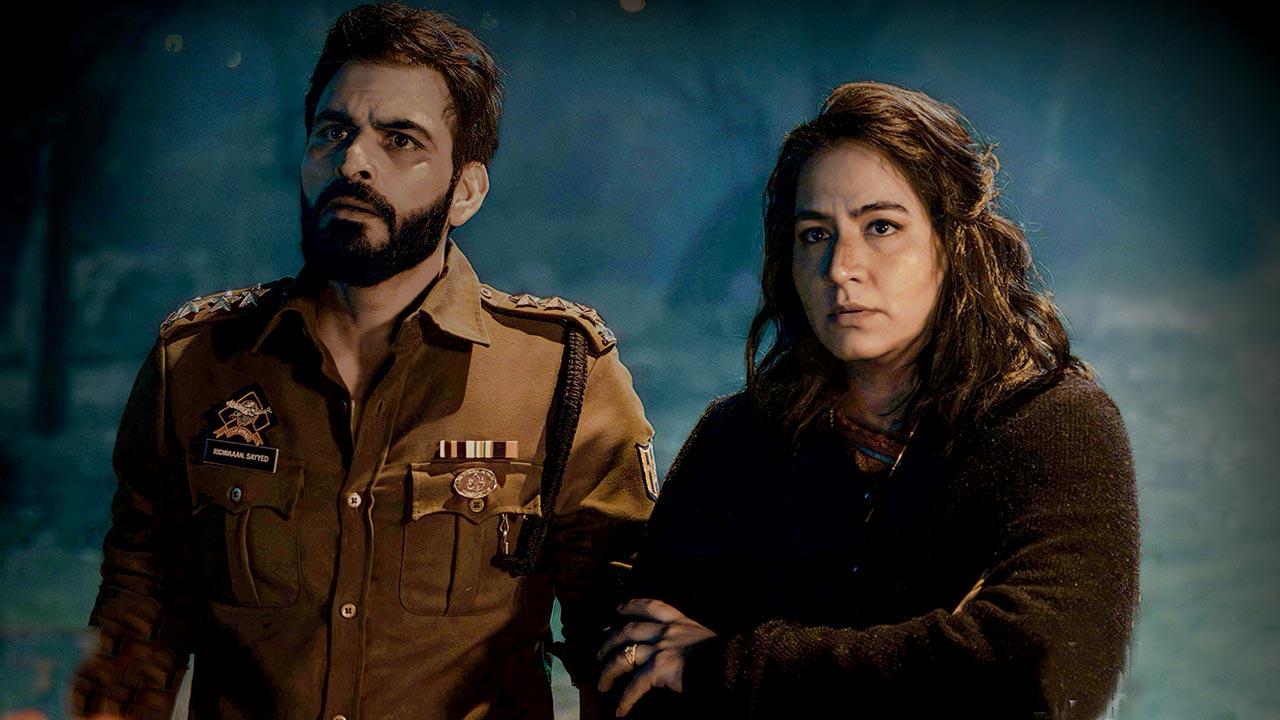
‘Baramulla’ director Aditya Jambhale discusses viewing Kashmir through the lens of its tales and driving a point home with the horror film
Mohar Basu (MID-DAY; November 5, 2025)
As someone who graduated in electronics and telecom engineering, Aditya Suhas Jambhale is a science buff. Yet, the engineer-turned-director loves worlds where one can imagine beyond what is “scientifically justified”. It is from this instinct that his second Hindi feature, Baramulla, is born.
“I didn’t want jump-scare horror in Kashmir. The challenge was whether we can make something rooted in whispers that locals grow up with,” starts the director about the upcoming Manav Kaul-starrer.
Producer Aditya Dhar first floated the idea of a horror film set in Kashmir, even sharing a three-page draft. Jambhale took it and disappeared to Goa for months.
“I told Aditya, ‘If I’m doing this, I have to change everything’,” recalls Jambhale. He finally returned with a 120-plus-page new script that was approved almost instantly by Dhar.
The upcoming Netflix film weaves the lore of the Valley as it tells the story of Kaul’s police officer investigating the mysterious disappearance of children in Kashmir. Jambhale’s research began in Goa, where several Kashmiris now live, before he travelled to Kashmir and heard their tales — about not stepping out after sundown in certain parts of Baramulla, and winter evenings that turn the Valley a smoky grey. He won’t reveal specifics because a lot of it is crucial to the movie’s suspense.
“I want the audience to Google later and say, ‘Oh, this is real’. I want to resist spoon-feeding. If you explain every myth, it kills the magic.”
But he’ll underline one thing — that the supernatural is often influenced by geography. “Every place has its horror. Kashmir’s lore can’t be separated from its sociopolitics,” he observes.
The director shot the Kaul and Bhasha Sumbli-starrer in Srinagar, Baramulla, Gulmarg, and Pahalgam over 23 days, in minus eight degrees. Plus, the shadow of politics lingered. “Locals worry about portrayal. But as a filmmaker, my job is to be truthful to the story,” he says, adding that Baramulla — like his previous offering Article 370 (2024) — makes a point.
“Expect neutrality from the media, not from artistes. If I empathize with a character’s pain and am biased toward them, that’s storytelling. You may disagree with my ideology and that’s democracy. Baramulla carries a point too and I’m proud of that.”
Can cinema help us understand Kashmiri culture beyond strife? “The idea is to show Kashmir in a different light. A film like this shows how empathy should work.”
You aren’t a Kashmiri if you make a face when you taste Kashmir tea-Manav Kaul
8:48 AM

Debarati S Sen (BOMBAY TIMES; April 23, 2024)
Manav Kaul is a voracious reader, someone who lives and breathes books and belongs to that rare clique of people who know that books are true magic and that pens wield the power to transform and transport readers to not just familiar but also fantastical lands. On World Book Day we catch up with the playwright-author-actor. Excerpts…
For someone who has been an avid reader for the last decade, what do you feel about this day? Does the world need a Book Day?
Yes, definitely. Very late in life I realized that books are extremely important. When writing plays, I’d miss a friend with whom I could discuss writing, and the loneliness of it and the idea of why we write. When I read a good book, I felt I needed to discuss that with someone and mujhe aisa dost kabhi nahi mila. But, I found books that made me realise that all I wanted was, to listen to a good writer. Kitni interesting kitabein mili mujhe. This may be a cliched line, but books are actually my best friends. I belong to the world of books and I’m extremely comfortable around them. This is my private world. Isko main bacha ke rakhta hoon hamesha. Maine bahut mehnat ki hai to live the way I live. I love to travel, and love to write. When I die, I’ll be a story. I don’t want a novel, I want my life to be a collection of short stories.
When did you first begin reading?
I started theatre when I was around 17-18 and, in those days, I’d read only plays. Initially main ladkiyon ko impress karne ke liye padhta, then when I came to Bombay I began reading seriously and it became a part of me. Meeting others who were well-read was another high. Conversations becsme exciting, interesting and I loved that. You come to know kaun kaisa banda hai, kya sochta hai. with the kind of books they read.
Growing up you weren’t brilliant in studies, somehow scraped through school and never had a relationship with books at all. How did your love affair with books begin, and which ones influenced you the most?
Your friendship with books begin when for the first time they make you cry or laugh. When I had just begun doing theatre in Bhopal, I remember reading Mohan Rakesh’s Ashadh Ka Ek Din. Third Act mein main itna roya… Mujhe kabhi pata nahi tha ki ek kitab aapko itna rula sakti hai. And Che Guevara ki kitab, The Motorcycle Diaries padhke main itna zyada hansa hoon! It is beautifully written, itni masti hai uss kitab mein. These books were the turning point in my life, ki I can sit, laugh, cry and feel all emotions while just reading.
What do you love more fiction, non-fiction?
I love fiction. I believe fiction is more truthful than any biography or non-fiction because it gives the writer a mask. Honesty is always a point of view, even for Israel – Palestine for example. When you are writing a fictional story about a person in Gaza you will touch every aspect of it. And so, fiction becomes much more beautiful and much bigger. Fiction can state a lot of truths, because in life, there is no one single truth, there are always different truths and points of views.
You were born in Baramulla, and so Kashmir is prominent in your life. Of late there are many films being made on the erstwhile history of the state. What is your POV?
Whatever happened in Kashmir three decades ago was one of the worst things to happen to any community. But I feel that being an artist, I have lived my life, and it’s time to think of what we are giving to the society. Hum jee chukein hain. Now the new generation is important. We must give them a better world. Are we injecting peace in society, are we saying, this is what happened and now the world is yours, live. We have to remember that nothing will thrive if there is no peace. You have to work towards peace, love and hum sabko saath milke hi rehna hai. The world has become small and we have just this one planet to live on together. I feel as a writer, as an artist, hamari bahut badi zimmedari hai ki what are we injecting in the society – are we injecting hatred or is it peace and love? We have to be very careful, but yes, we also have to state the facts. History is important.
When you were nine you left Kashmir and then you went back there 27 years later. What are your fondest memories of Kashmir?
It’s a blessing in disguise that Kashmir waise ka waisa hi hai, jaisa main chod ke gaya tha bachpan mein, apart from the fact that we don’t have our home there anymore. We had to sell our home and leave Kashmir. When I visited Baramulla, I found my school was still intact. Lakdi ka school tha. Our colony where we grew up was gone completely because it was a government colony. When I was traveling inside the non-touristy Kashmir, I found that everything was the same. That’s the beauty of our country there are so many parts which are so different – whether its Kerala or Kashmir. Chai tak badal jati hai, there is green kahwa tea and sheer chai or salted pink tea. I love it. You aren’t a Kashmiri if you make a face when you taste Kashmir tea. Our breakfast would be sheer chai and tandoori roti.
Characters that have stayed with you?
Rodion Raskolnikov from Fyodor Dostoevsky's Crime And Punishment - I have lived that character. The other is Howard Roark from Ayn Rand's The Fountainhead. I read it when I was 21-22. It plays with your head. I am idealistic anyway and at that time I felt I was reading myself.
Authors who had an impact on you and inspired you to write.
The first one is Nirmal Verma, Vinod Kumar Shukla, Jean-Paul Sartre, JM Coetzee, Saul Bellow, Franz Kafka. When I read Kafka’s ‘The Metamorphosis’, I thought, ‘damn! Yeh likha ja sakta hai kya’. You also want to try something like that. There were playwrights who inspired me too. Girish Karnad was a very exciting playwright and an exciting man. When I was in Bhopal, I would read Karnad and Mohan Rakesh. Then I discovered Badal Sircar. His Evam Indrajit has a huge influence over me.
Reading books are back in trend these days. Do you agree?
A few days ago, I did a meet and greet in Delhi and everyone said that the youth was reading my books. And that is so promising. I am happy to know that there is a future. Youth padhega toh hi future hai. Yes, books are back in trend these days. People are sharing pics of books they are reading, posting pic of books. This is a very interesting, beautiful time to be a writer.
Is it rewarding enough to be a writer in today’s times?
Monetarily bahut bura nahi hai. I know that staying in Mumbai, I can’t survive just as a Hindi writer, but yes, I can survive in the mountains somewhere by writing books, abhi itna toh bik jaata hai. I keep travelling. For my book Titli I had stayed in Copenhagen for two months and spent around 19-20 lakh rupees and woh mujhe lifetime wapas nahi ayegi but thank God I am also an actor and because of that I can afford this.
Do you feel writers are at a good place now?
Yeah, things were different earlier. Bahut buri halat thi. Earlier when you would ask about Hindi writers, the names that would come forth were Manto, Premchand. Now there are so many names, so many writers. So people are buying and reading books. The future is interesting. There are so many books being made into OTT releases and there are many writers. Life is getting better for writers.
Apart from the usual copyright issues, plagiarism etc these days there are also instances of using content without permission. Have there been problems for you too?
Of course, plagiarism is an issue. There have been times when people read my stories on YouTube. The kind of world we are living in, we can’t stop these things from happening. There was an instance when a person had tagged me and posted, ‘If you want all the PDFs of Manav Kaul’s books then pl DM me.’ I told him, ‘Ek kitab likhne mein jaan nikal jati hai and itni asani se mat de do.’ I also know that the PDFs of my books are being circulated on Telegram. But I still have trust in people who actually buy my books and read them. I like people who buy books. The writer hardly gets anything, the publisher also has to survive. In this world of so much entertainment around you, people who read are rare and they are beautiful people.
Your favourite books right now…
The Years by Annie Ernaux, Death At Intervals Jose Saramago and The Lonely City Olivia Liang.
What’s your message to young readers on World Book Day?
I genuinely feel that if you are holding a book, all your photographs look much better. If you read a book, you look beautiful. When I am travelling and see someone with a book, I go up and speak to them to know more about kaun si kitab padh raha hai, kya kya padha hai. I believe that as a human being, you become more interesting and beautiful with books. Rather than spending money on other things, buy a book!
How the most militarized zone was normalized is a powerful story-Aditya Suhas Jambhale
8:34 AM
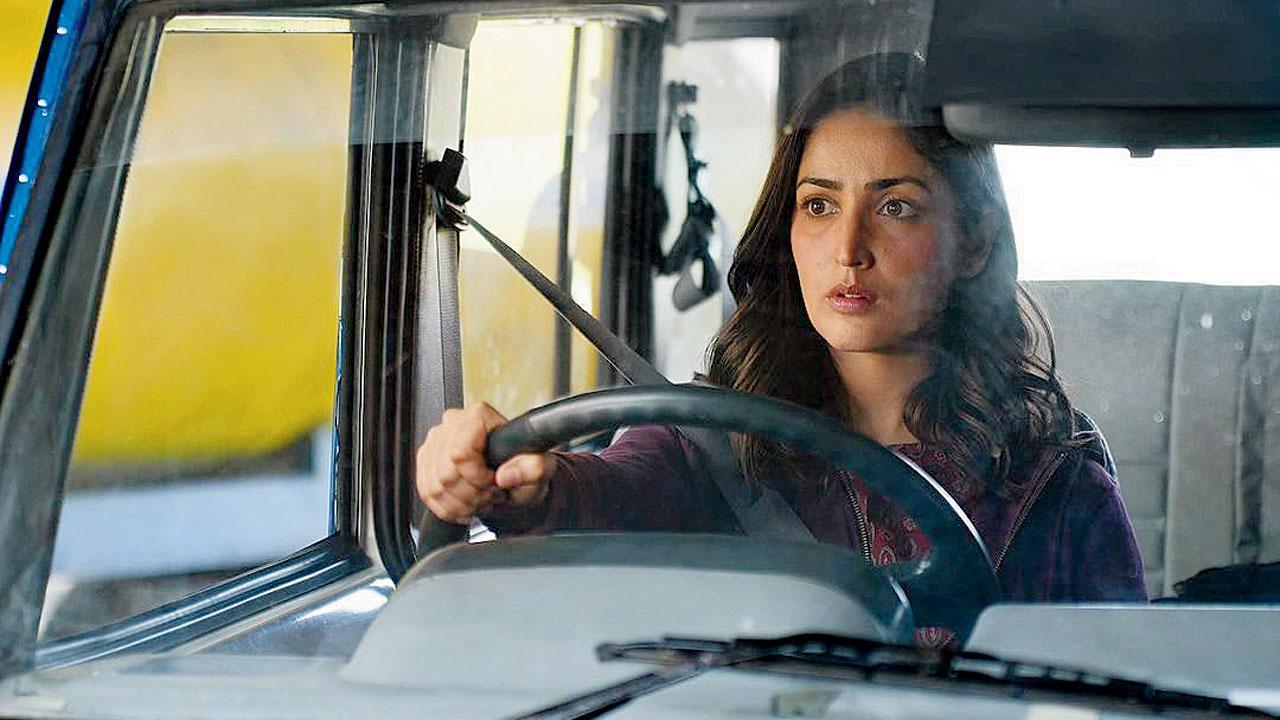
Addressing people’s skepticism, Article 370 director Jambhale says the political thriller reflects his belief that the 2019 abrogation created ‘one India’; asserts the covert operation makes for a powerful story
Mohar Basu (MID-DAY; February 20, 2024)
Director Aditya Suhas Jambhale’s first two short films were set in Konkan, a region he knew intimately. Amritsar Junction (2020), set against the backdrop of the Partition, was born from his desire to prove to himself that he can do a Punjabi film.
“I wanted to prove that I can handle complex stories that are not familiar to me,” he explains. Did this sentiment lead the Goan filmmaker to make Article 370, which examines the 2019 revocation of the special status that was granted to Jammu & Kashmir? Jambhale says the genesis of the Yami Gautam-starrer took place when he was shooting his supernatural film, Baramulla.
“Aditya [Dhar, producer] trusted me because the story of Baramulla was sensitive, and I was able to shoot prolifically in Kashmir. I had always thought of Kashmir as an outsider, but during Baramulla’s shoot, I stayed there for four months. In the last three years, the tourism in the region has changed. Businesses are booming. It was never a location for Bollywood, but now 20 productions are on,” shares the director.
Assured by producer Aditya Dhar’s faith in him, the National Award-winning filmmaker says he played on the front foot as he shot Article 370 in Kashmir. “We shot a scene with Yami in Downtown [Srinagar], where no shoot happened previously. The police and the CRPF [Central Reserve Police Force] were there; the locals also made us feel secure,” he states.
Many view the abrogation of Article 370 as a major win for the current government. One cannot overlook how the movie, centred on this subject, is having a timely release in the election year. Can such a film then have a balanced point of view? “Article 370 deals with the local Kashmiri feeling. On ground, it has impacted the life of a person selling things on a shikara on Dal Lake,” asserts Jambhale.
“As far as the election year is concerned, there are two things—we have the right intent. We believe that the covert operation was fascinating, and [they pulled it off] without losing lives. How the most militarized zone was normalized is a powerful story. It reiterates that India is one. People tell us that it’s for the sake of elections, and we tell them, ‘Go, watch the film.’ Secondly, as a filmmaker, I want to have an opinion. I support the decision of Article 370 being made redundant, and creating one India. Unless I believe in it, I cannot make it.”

Jammu and Kashmir’s Baramulla, Handwara get movie halls after 33 years
8:22 AM

Saleem Pandit (THE TIMES OF INDIA; July 16, 2023)
Baramulla: Baramulla and Handwara saw the return of cinema halls after 33 years on Saturday, with LG Manoj Sinha raising the curtains on two 100-seater complexes in the twin north Kashmir towns.
The inaugurations are part of a continuing drive by the Sinha-led UT administration to reopen cinemas shuttered by terrorism over the past few decades, revive the cinema-going culture, expand entertainment options and buttress the message of normality in the aftermath of the August 2019 abrogation of J&K’s special status.
Last year, Sinha inaugurated cinema halls in Shopian and Pulwama. A multiplex had come up in Srinagar, too. The LG has vowed to set up a theatre in every district, saying the people of the region should have the “big-screen experience”. Jammu & Kashmir was once a cinema haven and a setting for many iconic Bollywood films.
At the Baramulla and Handwara inaugurations on Saturday, Sinha congratulated the people on the “momentous occasion” and described theatres as a “reflection of J&K’s growing aspirations”. The cinema halls, built under public-private partnership, also have a cafe, conference and seminar facilities for the youth. They will start screenings soon with “Pathaan”.
Baramulla had two cinema halls till 1990, Rigina and the army-run Thimaya, but these had to be wound up after the outbreak of insurgency. The LG inaugurated development projects in Baramulla. “Baramulla is moving towards becoming an inspirational district from an aspirational district. It has made impressive strides towards development,” he said.
Reiterating the administration’s commitment to socio-economic empowerment of all through the vision of “Sabka Sath, Sabka Vikas”, the LG said the marginalised had the “first right” to government resources.
A Kashmiri boy told me, 'Give me a role. I can dance even better than him'-Vishal Bhardwaj
8:18 AM

Priya Gupta (BOMBAY TIMES; August 23, 2014)
While in the past too, many
Bollywood films have been shot in Kashmir, nobody has gone as deep as in
Haider, says Vishal Bhardwaj. In the past, while the film was shot in
Kashmir, the central protagonist was always an outsider unlike in Haider, where Shahid Kapoor and his family in the film are local
Kashmiris. With Vishal's aesthetics and his heart placed firmly in
shooting Kashmir the way no one has before, we have no doubt that he
will open us up to an even more beautiful Kashmir. The filmmaker
exclusively spoke to Bombay Times about how his Kashmir is different
than the one we have seen before. Excerpts:
Kashmir has again, in the last few years, opened up for shooting. How difficult was it for you to get the permission? Omar Abdullah, the Chief Minister of Jammu and Kashmir, called me home and said to me, 'Kashmir is mostly misrepresented in films.' I told him I was adapting Hamlet. He had read Hamlet in his university and asked me to narrate the whole story to him. I narrated and he got so interested that he not only gave me the permission to shoot, but allowed us to shoot wherever we wanted to in the state. We have shot in places where no film has been ever shot earlier. Tell us how your Kashmir will be different? KASHMIRI PROTAGONIST FOR THE FIRST TIME: If you see the films in the past, the protagonist has always been an outsider, be it an army officer from another part of the country or any other, so we have always seen Kashmir from the outside. This time, we will see it from inside and there is no outside character. Shahid is a Kashmiri from a middle-class family, whose father is a doctor and mother, a teacher. I also, like other Indians, have an image of Kashmir that no one studies there and everyone is walking around with an AK-47 under their phiran. But in Haider, Shahid is a student and it's the story of their struggle in the last many years. SHOOTING IN DOWNTOWN SRINAGAR FOR THE FIRST TIME IN 65 YEARS: There was another big film that wanted to shoot there and had also got the permission. The whole unit was waiting there, when, at the last moment, the lead actor cancelled it due to his family's safety concerns. Apparently, the Chief Minister and everybody was keen that they shoot, otherwise it would give the wrong signal, but it had to be finally cancelled. We shot exactly there, all of us. No mainstream film has ever shot there in the last 65 years. Downtown Srinagar is the most sensitive area. Anything can happen there, so normally there is not only no tourists there, but even their cars are not taken there by the taxi drivers. All protests in Srinagar start from there.   SHOOTING IN BARAMULLA AFTER 25 YEARS: Nobody has gone there to shoot in the last 25 years. It is a two-and-a-half hours drive from Srinagar. I got free first from my earlier shoot and decided to go there ahead of others. When I started travelling, a protest had apparently started, which I did not know about. When I crossed Baramulla police station, I saw the cops suddenly getting ready for something and saw them wearing a lot of pads. My taxi driver said to me, 'Looks like there is about to be a protest'. He had just said that when at the turn, we suddenly saw about 300 boys with stones in their hands running towards our car. It was like a crowd going for war. They asked us to roll down our glass and for 10 seconds, I thought we were gone that day. They spoke very aggressively and the driver talked to them in Kashmiri. I chose to remain silent when they asked me something. Then, one of the boys, who was the leader, came and said, 'Let them go'. When we left from there, my driver said, 'Thank God you did not speak. They asked me who you are and I said, you had come here for apple business'. And the driver told me that if you are a tourist or an apple trader, they would not let anything happen to you ever, as that is their bread and butter. What motivated you to shoot at such tough locations? Because the story demanded it and I wanted to go to places where no one had gone before. Did your wife Rekha Bhardwaj not stop you? Rekha knows me by now. We had shot in Kashmir in 7 Khoon Maaf also, but this time, we went down very deep and that too, with our lead cast. It's natural to feel scared while shooting in such sensitive locations. Was Shahid scared? Yes of course, initially we were all scared about shooting in Downtown. But we shot there after we had shot a part of the film already in other parts of Kashmir. We had about 100 cars with us and they were all locals and seeing us shoot, they realised the kind of film we were making. So the word spread that help Haider. So wherever we went, they would shout out for us, Hey Haider. They would offer us tea and insist that we have it. What is the impression that you carry back from Kashmir?  The people there are so lovely. If we found that kind of crowd in
Delhi, they would pass such lewd comments that you would feel
embarrassed. There, if you asked the crowds to move a little, 1000-2000
people would move so easily. They have problems only if you dont let them see the shoot. Strangers would come and invite us for tea and we understood that they feel offended if you said no. They
make tea with salt and it is called Noon Chai. We were once
shooting at the university there and had a confrontation with one of the
students. Six days later, we were shooting in another college when post
lunch, my production team informed me that the University General
Secretary had come to meet me. Suddenly, we all became serious. He
walked in and I was shocked to see him as in the morning shoot, he was
playing the typist in our film. He had actually come to say a sorry to
me and said, 'I became a typist to only spy on you. I came through one
of the junior artists'. He then invited us for tea. Then there was a
location where we were shooting the Bismil song where over
5,000 people from the entire village came to see the shoot. In between
the song, Shahid was sitting and suddenly we see this boy running
towards him with security running behind him. He slid on the wooden
stage and came and touched Shahid and started dancing. We were all
scared as we thought he had come to harm Shahid, but in reality, we
discovered that he had kept a bet with his friends that if he touched
Shahid he would win Rs 1000. We requested the security to not hit him and
post the shoot, got him to apologise to Shahid. He was so cute and after
saying sorry he tells me, 'Give me a role with Shahid. I can dance even
better than him'. One day again while shooting Bismil, the village mukhia
came to me quite angry.Word had spread that we were shooting so
people from neighbouring villages had started coming into their houses
so their women had to make food for all their relatives. So the women
started complaining to their husbands to go and stop the shooting and
they wanted normalcy to return to their lives. Kashmiris want Bollywood
to come and shoot there and I could just say that they gave us so much
love. The people there are so lovely. If we found that kind of crowd in
Delhi, they would pass such lewd comments that you would feel
embarrassed. There, if you asked the crowds to move a little, 1000-2000
people would move so easily. They have problems only if you dont let them see the shoot. Strangers would come and invite us for tea and we understood that they feel offended if you said no. They
make tea with salt and it is called Noon Chai. We were once
shooting at the university there and had a confrontation with one of the
students. Six days later, we were shooting in another college when post
lunch, my production team informed me that the University General
Secretary had come to meet me. Suddenly, we all became serious. He
walked in and I was shocked to see him as in the morning shoot, he was
playing the typist in our film. He had actually come to say a sorry to
me and said, 'I became a typist to only spy on you. I came through one
of the junior artists'. He then invited us for tea. Then there was a
location where we were shooting the Bismil song where over
5,000 people from the entire village came to see the shoot. In between
the song, Shahid was sitting and suddenly we see this boy running
towards him with security running behind him. He slid on the wooden
stage and came and touched Shahid and started dancing. We were all
scared as we thought he had come to harm Shahid, but in reality, we
discovered that he had kept a bet with his friends that if he touched
Shahid he would win Rs 1000. We requested the security to not hit him and
post the shoot, got him to apologise to Shahid. He was so cute and after
saying sorry he tells me, 'Give me a role with Shahid. I can dance even
better than him'. One day again while shooting Bismil, the village mukhia
came to me quite angry.Word had spread that we were shooting so
people from neighbouring villages had started coming into their houses
so their women had to make food for all their relatives. So the women
started complaining to their husbands to go and stop the shooting and
they wanted normalcy to return to their lives. Kashmiris want Bollywood
to come and shoot there and I could just say that they gave us so much
love.
|
Subscribe to:
Posts (Atom)