Showing posts with label Balak Palak. Show all posts
Showing posts with label Balak Palak. Show all posts
Box Office figures don’t matter, people’s reactions do-Riteish Deshmukh
8:31 AM
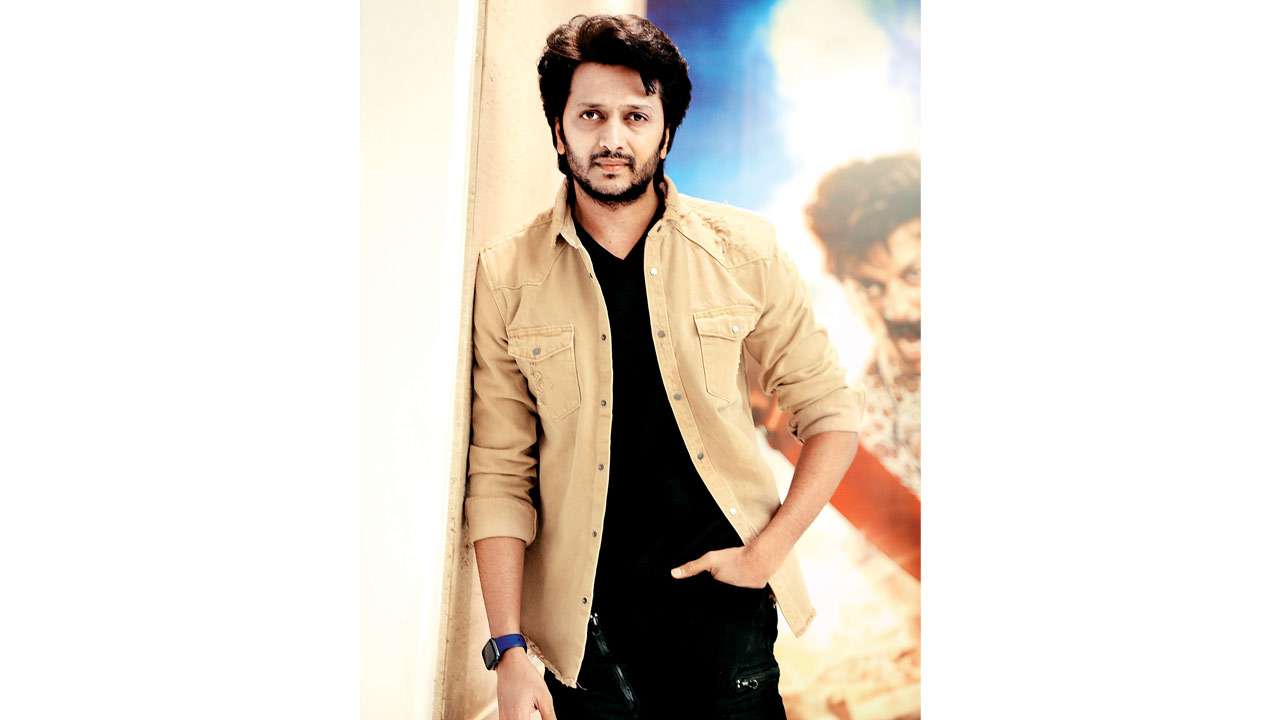
Nayandeep Rakshit (DNA; December 9, 2018)
Four years ago, Riteish Deshmukh made his debut in Marathi cinema as a producer with Lai Bhaari. His maiden venture went on to do over Rs 40 crore business at the box office. Proud of his Marathi legacy, the actor returns to the same space with Mauli. He tells After Hrs why there has been a long gap between both the movies, how he strikes a balance between regional and Hindi cinema as well as his learnings as a producer. Excerpts…
Would you say that Lai Bhaari is instrumental in changing people’s perception towards Marathi cinema?
Let’s not give Lai Bhaari that credit. It all started with films like Shwaas (2004) and Harishchandrachi Factory (2009), which won the National Award and were selected as India’s official entries to the Oscars. That’s when people started noticing the kind of content that was being generated in the Marathi industry. There are two parameters for films — content and commerce. But when the numbers started coming in, things changed. It began with Balak Palak (2013) which made Rs 12 crore. Then came Duniyadari that raked in Rs 25 crore. In 2015, Timepass 2 did around Rs 30 crore and after that, Lai Bhaari broke the Rs 40 crore mark as it had action and drama. So, Marathi industry was not only producing content but also making good numbers.
Natsamrat, which released in 2016, set the cash registers ringing with Rs 50 crore. Three months later, Sairat managed to cross the Rs 90 crore mark at the box office. Rs 90 crore in Marathi is almost like a Rs 300-400 crore film in Hindi. No Hindi movie, barring Baahubali, has done that much business in Maharashtra. Interestingly, all these flicks that have done these numbers opened in the same range of Rs 2-3 crore. So, now the aim is to increase the opening figures. But how do we do that? Do we increase shows? Because then, Hindi films will also take these shows up. So, it’s a double fight.
Regional and Hindi cinema fighting for screens has always been the case...
Yes, and it will continue to be so. There’s nothing bad with that. Everyone wants the best for their films. Now, it’s up to the audience to watch whatever they want to. But the only thing is that the other person should at least get a decent opportunity to showcase. Opportunity is an issue here.
You even moved your film, as a sign of love and respect for Shah Rukh Khan’s Zero...
Shah Rukh is doing the biggest movie of his career, in terms of production, and it’s an amazing film that he’s bringing to life. Mauli is the biggest film that my production house is making. The scales are completely different, and so are the budgets. I was releasing it on December 21 because it’s the holiday season. Initially, Total Dhamaal was supposed to open in cinemas on December 7. So, I wanted to keep a two-week gap between both my movies. With Total Dhamaal shifting to February 2019, I realised that if Mauli releases along with Zero, the business of both the movies would get affected. That’s when I decided that my Marathi movie should hit the marquee a week earlier. So, it has worked out well for Shah Rukh and me. And I’m glad we could do so for each other’s betterment.
What took you four years to come back with Mauli?
We were planning to release it sooner. We had developed it and announced it. However, later, we realised it’s not what it should be. After that, I got busy.
Does it become difficult to juggle between the two industries?
It is difficult but the responsibility I have for my Marathi films and productions is much more. I have to sit on everything — right from the font of the poster to whose name will be placed where. In the case of my Hindi films Housefull or Dhamaal franchise, I only have to do my photoshoots and promote the film. Life as a producer is challenging, engaging and extremely gratifying. It’s amazing to see how a script comes to fruition.
Is Mauli a takeaway from Lai Bhaari?
No, it’s not a part two. It’s a different story. But the essence and the premise remains the same.
People are increasingly remaking Marathi films in other languages…
There’s a certain sense of recognition today. Cinema and entertainment will soon be language agnostic. I’m watching a Spanish series with subtitles on my TV and enjoying it as it’s exciting. Mumbai is a true cosmopolitan city in the country where statistically 35 per cent of the population is Marashtrian while the remaining constitutes people from different corners. When a film becomes the talk-of-the-town, everyone gets excited to go and watch it. The non-Marathi speaking audience has also started watching our films, which is a great boon to our industry.
Have you ever thought of dubbing Mauli in Hindi and releasing it across India?
No, because if I had thought that way, I would have made it in Hindi. One should not confuse the basic core reason behind creating a movie. And that’s your audience. A Hindi version will take away a lot from the way I wanted to make the Marathi movie. Dubbing is an option. Mauli and Lai Bhaari both can be remade as great Hindi films too. But as of now, let’s see what happens.
Lai Bhaari was a huge success. So, the expectations from this film are quite high. Are you feeling the pressure?
No. Lai Bhaari, Sairat and other films were loved by the audience and that’s why they fared so well at the box office. If Mauli has to do the same business as Lai Bhaari, it has to be appreciated by viewers. Because of my debut Marathi film, I got the courage to make Mauli a bigger film in terms of budget, scale, action and songs. But if you think I’m looking at a business more than Lai Bhaari, then no, I can’t gauge that right now. Box office figures don’t matter, people’s reactions do. If people connect to the film, it will do good. Unfortunately, today we’re only discussing collections, which are immaterial. In recent times, smaller films have done Rs 100-crore business solely because of their strong connect.
We too face many issues with Censor Board-Ravi Jadhav
8:08 AM

Marathi filmmaker Ravi Jadhav lambasts the way regional films get treated by censors, while Bollywood gets all the attention
Sonali Joshi Pitale (MID-DAY; September 9, 2016)
 There has been much tussle between the Central Board of Film Certification (CBFC) and Hindi filmmakers in the past, around content leaks, muting of
dialogues and deleted scenes in films. Does the Marathi film industry
face similar issues, or do they have an easy way out with the CBFC? Ask
Ravi Jadhav to shed light on this, and the top Marathi filmmaker
instantly opens up. Jadhav says, “We have to deal with various diktats. The only difference is that Marathi producers make films on a tight
budget, so they do not have the money to fight against the censor board. In fact, during the release of Balak Palak (2013), the censors had
objected to the title itself. I had a tough time convincing them to
change their mind. Moreover, even if we face problems, we can only reach
out to a limited section of the media. The issue doesn’t get
highlighted and we don’t gain publicity either, quite unlike
Hindi films.”
A fortnight ago, as reported in hitlist, the political party Maharashtra navnirman Sena had objected to MS Dhoni’s Bollywood biopic being dubbed in Marathi. On this, Jadhav says, “I don’t think it is a big issue. I don’t think Ramayan and Mahabharat were written in Marathi or Hindi originally either. Translating a book or film should not be a problem. “It does become a big problem if they (the makers of the Dhoni biopic) seek benefits given to Marathi films — like prime-time slot in theatres, and tax concessions. That would be unfair, as Hindi cinema already enjoys luxury of huge budgets. and Marathi audiences would go to watch the film in Hindi anyway, since Dhoni is a national hero.”
Jadhav incidentally makes his Bollywood debut with the forthcoming release, Banjo.
Marathi films target youngsters to hit box office sweet spot
7:40 AM

Big Crowds Key As Satellite Rights Revenue Dries Up
Sandhya Soman (THE TIMES OF INDIA; April 12, 2015)
One of the indications that you have arrived as a bona fide Twitter celebrity is when you get your hands on a 'verified' account. It means that Twitter has weeded out the imposters and announced it to the world that you are the one who is really in the news. A few years ago, when actor Swapnil Joshi got the blue tick mark of authenticity, he felt that it wasn't because of his decade-long career in TV and Bollywood but due to a few small-time Marathi movies that he had starred in. Movies, that were specifically made to draw youngsters and had made news for being box office hits.
“It was a small personal victory but also a victory of cinema,“ says Joshi. Now there are fan clubs in Aurangabad, Beed and even in Mumbai for most big actors like him. Joshi's bracelets are dutifully copied while Bollywood actor and latest Marathi icon Riteish Deshmukh's grungy bearded look is carefully cultivated. “I feel that now you can have a stable career in Marathi if you can connect with the audience,“ says Joshi.
Ever since satellite broadcasting rights for movies started petering out around two years ago, Marathi films have had only box office collections to bank on. This explains the industry's jubilation when the state government tried to push through a controversial prime time slot for Marathi in Mumbai multiplexes recently. What has also changed is the way these filmmakers have been tweaking themes to make not just award-winning movies but also technically slick, youth-centric films to ensure a decent theatrical run.
“Around three years ago, 70-80% of the revenue came from satellite rights. Now that has changed and you have to recover costs mostly from theatrical rights. Channels will buy only if the movie does well in theatres,“ says producer Nanu Jaisinghani.
The fall in demand from TV channels is something that has hit Bollywood too, says Kamal Gianchandani, CEO, PVR Pictures. “There has been a general dip in broadcasting rights as ours is a cyclical business and this has happened before,“ he says. What might have accentuated it for Marathi is the rise in number of movies it is churning out. “Channels need probably 50-60 films while we are making 150 a year,“ says Vijay Patkar, president, Akhil Bharatiya Marathi Chitrapat Mahamandal.
Producers and filmmakers meanwhile haven't been idle.“Marathi films traditionally had viewers above the age of 35, the kind of people who used to watch plays with family. But I realised that youngsters will watch good content after I tracked their reactions to my film 'Balak-Palak' on social media,“ says ad man-turned-filmmaker Ravi Jadhav.
Jadhav trawled the net to see who was posting YouTube videos of his 2013-movie, their age group and comments. One fan finally told him on Facebook that the current love stories feature 40-year-old heroes and heroines. “I am watching them from my childhood! Why don't you make something for youngsters?“ he asked. Jadhav complied and came up with monster hit 'Timepass', a light teenage romance firmly anchored in Marathi ethos, which collected an unprecedented Rs 33 crore.
Now there are more movies where there is something for everyone. Deshmukh-starrer 'Lai Bhari', a bigger commercial success than `Timespass', is in Marathi but could be Bollywood for all purposes, says actor-producer Suhrut Godbole. He followed the same logic while making super hero-movie 'Baji' starring Shreyas Talpade à la Zorro.“We got the best technicians and the movie rivals any Hindi one,“ he says.
With producers poring over costumes, dance and action sequences, a sore point with youngsters put off by the mindless comedies of 80s and 90s, the college-going crowd has gone back to proudly watching Marathi films, sometimes repeatedly . There are now talks about ticketed release of 'Time Pass 2' in Singapore, Malaysia and the Middle East, and many such movies crossing Rs 1 crore in the first week of release.
Gianchandani says the adoption of various genres and experimentation shows the natural evolution of the industry. “The movies are becoming very similar to ones produced in Tamil, Telugu or Hindi,“ he says, adding that a large part of this success could be attributed to government policies of tax exemption and other grants. The developments are also reflective of societal changes, says Jadhav. “Earlier, boys and girls had to take permission from parents to watch movies. Now, they don't as they have pocket money,“ he says, adding that social media has ensured that there is no information lag even in villages.
There has been no let up in content so far. Low budget movies like 'Killa, 'Court' and 'Khawde' go to film festivals, win awards, and gain publicity and crowds in theatres. The others, meanwhile, say they prefer to make clean entertainers, limited as they are by budget and viewers who prefer aesthetic content. “Content remains king,“ says Joshi.
Bollywood suffers losses but Marathi Cinema shows 200% growth
9:28 AM

Looks like the Hindi film industry needs to learn a few lessons from Marathi movies' business model — superior content, low budgets and zero reliance on stars. After all, the regional industry has registered 200 per cent profits last year
 Sonali Joshi Pitale (MID-DAY; April 5, 2015)
The Marathi film industry seems to have everything going for itself. The number of releases has shot up over the last three years and so have the profits — all this without "superstars" or big budgets.
At the recently concluded annual session of the Federation of Indian Chambers of Commerce and Industry (FICCI), a panel of producer and studio representatives stated that the regional industry had registered nearly 200 per cent profits in the previous year. The much bigger Hindi filmdom, which rides on claims of crores of rupees, the gain was a meagre 0.6 per cent.
Trade expert Komal Nahta says the Marathi filmdom is pegged to be a Rs 150 crore industry. "So, if we consider that they have made 200 per cent profits, that makes it approximately Rs 300 crore. However, I don't agree with such numbers as some films click with the audience and do well at the box office while others don't."
Last year, Ravi Jadhav (top, on left)'s 'Timepass' (pictured on top) raked in a record-breaking Rs 5 crore in its opening weekend. The film was made on a budget of Rs 1.75 crore and went on to earn Rs 30 crore, says the filmmaker, adding: "Planning is something that helps producers. We generally have a schedule of 30-35 days to complete a film. Marathi actors come from theatre, so they are disciplined and allot proper dates. Therefore, the budget of the film hardly goes beyond Rs 2 crore. The film narratives are simple and the shoot happens at real locations, which is why we don't have to spend too much money on the sets."

 At the FICCI session, the unanimous view on Bollywood's dismal performance was that most filmmakers depend heavily on the "star system" — the three Khans, Shah Rukh, Salman and Aamir — as it is a safe bet. Producers also have to bear the compensation of an actor's staff and spend heavily on the movie promotions, which have become an ego battle. Eventually, a project tends to go over budget.
"I don't know the methods of calculating profit. But I think an important factor working in favour of Marathi movies is how you control the budget and spend on publicity," says Bollywood actor Riteish Deshmukh, who turned producer for Marathi films with the superhit comedy drama 'Balak Palak' (pic, above) (2013). "In Hindi cinema, there is more competition and producers have to spend a lot of money on marketing, so recovering it all becomes difficult. Someone needs to break this strategy," he adds.

Sandeep Kulkarni, who featured in Nishikant Kamat's critically acclaimed film 'Dombivali Fast' (2005), feels the audience has been able to connect with recent Marathi films due to good content and music. "Films like 'Lai Bhaari' had a novelty factor which drew crowds to the theatres. It was also marketed well. In case of Hindi films last year, only 'Queen' could make profits as it was made on a small budget film and had a good story," says the actor, who will produce the sequel to 'Dombivali Fast'.
Director-producer Paresh Mokashi echoes his views, saying that Marathi culture has always supported good art, and the present-day filmmakers are in sync with the cultural milieu and aspirations of the audience. "Marathi films have never been a star-studded affair; people have always liked the way a story has been presented. So, films belonging to different genres like 'Lai Bhaari', 'Duniyadari', 'Elizabeth Ekadashi' and 'Fandry' have worked well," says the National Award winning filmmaker.
In the last few years, the regional film industry has handed out an assorted platter of coming-of-age films, social dramas, biopics as well as out-and-out masala movies for the masses, which have been a delight for the audience. And the winners, undoubtedly, have been the films with superior content.


Sources said the government subsidy for regional filmmakers is Rs 30-40 lakh.
BO toppers
Rs 40 crore
Total collection of 'Lai Bhaari' (pictured below); budget: Rs 8 crore
Rs 30 crore
Total collection of 'Timepass'; budget: Rs 1.75 crore
Rs 12 crore
Total collection of 'Dr Prakash Amte'; budget: Rs 2.5 crore
Rs 7 crore
Total collection of 'Elizabeth Ekadashi'; budget: Rs 1.5 crore

We need a reservation system for small films-Riteish Deshmukh
8:49 AM

Riteish Deshmukh might be known for being a comic actor, but in his avatar as producer, he’s chosen to go off the beaten track with some unconventional choices
Shubha Shetty-Saha (MID-DAY; July 6, 2014)
After about a decade of acting in films, Riteish Deshmukh turned to producing movies. What is interesting is that like John Abraham, Deshmukh has made some brave choices while producing movies. His debut production, Balak Palak, a quirky take on sex education, earned critical acclaim while his second production, Yellow, was an unconventional, yet sensitive story, of a woman and her differently abled daughter. Yellow received three National Awards including Special Jury and Special Mention at the 61st National Film Awards. And now, Riteish is acting in an out-and-out action movie, Lai Bhaari, which marks his debut in Marathi films as an actor. Excerpts from a freewheeling chat with the actor- turned-producer.
Q. If one keeps your acting career in mind, then it’s difficult to imagine you as the person behind the movies you have produced.
A. The script of Balak Palak came to me while I was shooting for Housefull. I read the script, but got busy and forgot about it. Later, when I got back to them expressing interest, they told me that they were already halfway done with the shoot, with a different producer. I insisted on being a part of the movie and that’s when I met Uttung Thakur who was the producer. Uttung and my father (the late Vilasrao Deshmukh) shared a close relationship and he agreed to take me on board as the co-producer. Yellow, too, came my way through him. It was a great experience to produce these two movies, considering they were unique in content, and also worked for us budgetwise.
Q. Are you good with money?
A. Money and reputation are two different things. You could lose either money or reputation. The effort is in finding a balance between the two. If you are financially stable and people consider you to be a good producer, there’s nothing better than that.
Q. Is reputation more important of the two for you?
A. No. Balak Palak and Yellow might have been critic-friendly subjects, but my next film, Lai Bhaari, might not be. It is an out-and-out mainstream commercial film, so it’s a big risk. You just have to believe in what you are doing. Lai Bhaari is an action film and it is a genre that I haven’t seen in Marathi films in the past 10 years, at least.
Q. There’s a sudden interest in Marathi movies these days. Is it because the filmmakers are daring to make something different now?
A. When it comes to Hindi cinema, the entire dynamics change. In Marathi, you can make a film in Rs 4 crore, which works out with satellite rights among other things. I might make Yellow again in Rs 5 crore in Hindi, but for the movie to be noticed, I will need a special budget for publicity. I will be fighting for space with big producers who spend Rs 10-15 crore, only on publicity. So what does a smaller-budget film do? However, times are changing. I hope it gives more courage to younger producers to make smaller films.
Q. There is a dichotomy in the kind of films you act in and the kind of movies you produce.
A. That’s simply because of a lack of choices. It’s not that I am ashamed of the films I have done — right from Humshakals to Grand Masti to Housefull — I’m proud of all of them.
Q. What would your advice be to a budding producer?
A. Nothing is more important than content. Just having money is not enough. You need to have the attitude to understand the content and the kind of films you want to produce. Your sensibility will reflect in the result you get at the box office. You need to be convinced of the content first. Also, I think one should invest only that much amount, as that won’t hurt you. No point in making a film that will make you bleed.
Q. What would help smaller films in Bollywood?
A. If I had to make Yellow in Hindi, I will have to make it more commercial — include bigger names so that people come to watch them.
Q. Won’t that kill the film?
A. No, one can manage. Many small films in Hindi have failed because you don’t get enough theatres as bigger movies take up the major chunk of the theatres. If there is a rule saying no big films can release in more than 70 per cent of the screens, there might be a chance.
Q. You mean we need reservation for small films?
A. Yes, what we need is a reservation system for smaller films. At least a 10 per cent reservation if we want them to thrive. Bigger movies always bulldoze small films.
Low-budget production, absence of star system doing wonders for Marathi cinema
8:50 AM

Urmimala Banerjee (MID-DAY; March 9, 2014)
It seems like a classic case of the tortoise and hare race. Even when Bollywood films are riding over claims of hundreds of crores, the Marathi film industry is quietly making quality films which are raking in substancial profits, thanks to relatively low cost of production. Marathi filmmaker Ravi Jadhav’s Timepass (above) raked in Rs 5 crore in its opening weekend.
Over a span of three weeks, it earned Rs 31 crore, breaking the Rs 25 crore record held by Duniyadari.
Close on the heels of Timepass came Fandry, a strikingly different film that grossed around Rs 2.25 crore in its first week. After wooing the regional audience, it’s the first Marathi film to be released across different Indian cities.
For the past two years, Marathi films have managed to catapault themselves to an enviable position, mainly due to their novel stories and engaging narratives. From social dramas to biopics and mass entertainers, creative ideas are blossoming. Young talented actors, directors and storytellers are finding the industry a great platform to showcase their talents. How is this transformation happening?
Cinematic renaissance
In the ’90s, the Marathi film industry was caught in a rut with every second film belonging to the slapstick comedy genre. It was Sandeep Sawant’s Shwaas that gave a new lease of life to the stagnating industry.
Filmmaker Mangesh Hadawale, who directed the critically acclaimed Tingya, explains, “ I found it tough to find a producer for my film till 2007. Umesh Kulkarni who made Deool is also greatly responsible for encouraging the new breed of directors. Marathi cinema had seen its heydays when filmmakers such as Amol Palekar and Dr Jabbar Patel made classics; this is the second innings.” Besides Shwaas, films like Deool and Shala also played a role in bringing about a transition. The period of 2009-2011 was a good one with films like Deool, Harishchandrachi Factory, Shala and Mi Shivajirao Bhosale Boltoy doing well at the ticket windows.
Director Sujay Dahake who is gearing up for the release of his film, Ajoba, made his directorial debut with Shala. He explains, “The film made on a budget of Rs 3 crore grossed around Rs 9 crore at the box office. It created a lot of buzz, as it starred rank newcomers and had foreign technicians. Plus, we got critical acclaim with the National Award.”
Culture comes to aid
Marathi literature has always been rich with its quota of amazing novels, short stories and poetry. The new generation of directors seems to be in sync with the cultural milieu and aspirations of the audience.
Jadhav says, “Our audience believes in a good story. This reflects in the casting as actors don’t choose films, it’s the films that choose them. Fandry is a prime example. It talks about the caste system through a love story. Marathi audience has a certain standard that comes with reading and watching theatre. When we made Balak Palak, we had to ensure that a family can watch it together without cringing. Even a commercial film like Timepass had a message that love is not a onquest or a matter of frivolity. The themes are universal, but our treatment is local.”
Dahake argues that the lack of content in Bollywood is helping Marathi films. He opines, “There is a huge revival in the art of story- telling. Modern directors want to explore new themes. Our audience has got a stimulation it missed sorely in the ’80s and ’90s.” Hadawale adds, “Our women love reading rather than attending kitty parties. We have to recognise their sensibilities.” It is this regard for content that has wowed the corporates as well.
Nitin Sane, head of the Marathi film division, Essel Vision says, “The content in Marathi film is better than Hindi ones. Also, our films are extremely rooted in our culture. Look at Kaksparsh, Natrang and now Fandry, all of them resonate with our people. As a corporate house, we believe in good subjects. While many producers would have avoided financing a project like Fandry after a superhit like Timepass, we thought otherwise. Our next film is a biopic on Yashwantrao Chavan, the first CM of Maharashtra.”
Zero star system
The absence of a star system in the industry is also being hailed as one of the reasons behind this renaissance.
Since there are no stars to take away a major chunk of the investment, films are made in much smaller budget. Since the budget is not much, many more risks are taken in terms of stories and scripts. Nagraj Popatrao Manjule, the director of Fandry says, “I did not have a target audience in mind before making the film. The idea was to tell a good story. When you have such a mindset, you don’t bother about stars or profitability. The focus is solely on correct casting.”
Unlike Bollywood, the Marathi film industry is devoid of camps, which makes it easier to take risks. “Present-day directors know their craft and are brave enough to experiment with what they think is right for their films. They have watched European and Iranian cinema and believe in good story- telling with everyday characters. The people who worked in the Laxmikant Berde-Ashok Saraf brand of cinema weren’t educated in the craft per se,” adds Hadawale.
However, Ravi Jadhav has a different take on this. “I think the commercial aspect is equally important as the creative one. I could make a film like Timepass without stars as it suited the subject. However, it was a good idea to cast Swapnil Joshi, Ankush Chaudhary and Sai Tamhankar in Duniyadari (below) as it was a mass youth-centric film. Tomorrow, if I make a big budget thriller, I will opt for a proper beefed-up hero. It’s too early to talk about a star system out here.”

Bollywood wakes up
A number of B-Town actors raved about Fandry after seeing the film. Riteish Deshmukh made profits as a producer after the success of Balak Palak. His next production venture is Yellow, the story of a swimming champion with Down’s Syndrome.
Akshay Kumar and Nikhil Advani too are producing Marathi films. Jadhav states, “I don’t think Bollywood stars think about profits when they invest in Marathi films. When they come here they want to promote stories they actually believe in. It’s nice to see people such as Akshay Kumar, Riteish and Nikhil investing in the industry. Their positive feedback is very crucial for us in reaching out to more people.” It is not just about production ventures, romantic films that are slowly disappearing from B-Town are finding their way in Marathi films
Dahake says, “Even two years earlier, the Marathi audience would prefer a Bollywood film over a Marathi one. I feel that the romantic films of the ’90s in Bollywood are making a comeback in Marathi with varied treatments. The young audience relates to the depiction of love in Hindi films. Perhaps, that’s why films on love and marriage are finding takers.”
Money matters
The minimum investment in a Marathi film is Rs 1 crore for a topnotch production. The minimum amount is Rs 60- 65 lakh. “The smaller films too have an audience in the rural areas. An amount invested in films is around Rs 2.5 crore which is just the production cost. The marketing costs an additional crore. Even if a film makes Rs 6-8 crore, it has recovered money,” states Dahake. When a Rs 2-3 crore film crosses Rs 30 crore, it’s great news for the industry. “A film like Fandry even if it does not do great business, is good as it brings appreciation for Marathi cinema. Out of 120 films it’s only 10 that do really well,” says Jadhav.
Nitin Datar, exhibitor and distributor says, “Out of the 80 films released last year, 95 per cent made losses. Only five per cent were successful. The minimum investment is Rs 40 lakh. There are some who make films just to get government subsidy. Many first-time producers have incurred greater costs due to inexperience.”
Marketing magic
According to Datar, the publicity costs have gone higher. Many spend more on artistes and less on the quality of films. “With promotions across TV channels and newspapers across 35 districts of Maharashtra, costs have shot up,” says Datar. Sane stresses, “We have tried our best to promote films like Fandry. As a channel, we like to encourage new and upcoming talent. In terms of marketing, we have a long way to go.”
Government support
Jadhav says, “I can’t speak much about subsidy. But it’s good that they are starting studios in Malvan and Kolhapur. State awards are very important for us. They also give Rs 1 lakh cash reward. The entertainment tax exemption is also important in bringing in more people to the theatres.”

A scene from Sujay Dahake’s upcoming film 'Ajoba' that talks about the journey of a leopard from Malshej Ghat to Mumbai - See more at: http://www.mid-day.com/articles/why-marathi-films-are-not-small-fry-anymore/15145060#sthash.SFlvasNz.dpuf
Imtiaz Ali to be creative producer for Balak Palak director's Laila Majnu adaptation
7:51 AM

Ankur Pathak (MUMBAI MIRROR; March 6, 2014)
 After garnering rave reviews for his Marathi films including the National Award-winning
Natarang, the commercial hit Balak Palak and more recently, Timepass,
director Ravi Jadhav is all set to make his first Hindi film.
Mirror has learnt that Ekta Kapoor’s Balaji Motion Pictures is bankrolling Jadhav’s Bollywood debut, which will be an adaptation of Laila Majnu's love story. The film will be extensively shot in Kashmir where Jadhav is currently finalising the locations.
A source close to the development revealed, “Although there have been speculations about Jadhav directing a sequel to Timepass, it’s actually an epic love story on the lines of Laila-Majnu that he is planning next.”
The source further added that Imtiaz Ali will be the film's creative producer. “He has loved the script and will oversee the production. However, they are yet to lock the cast." Jadhav, couldn’t be reached for a comment, while Tanuj Garg, CEO of Balaji Motion Pictures, declined to comment on the story.
Subscribe to:
Posts (Atom)