Showing posts with label Avinash Arun. Show all posts
Showing posts with label Avinash Arun. Show all posts
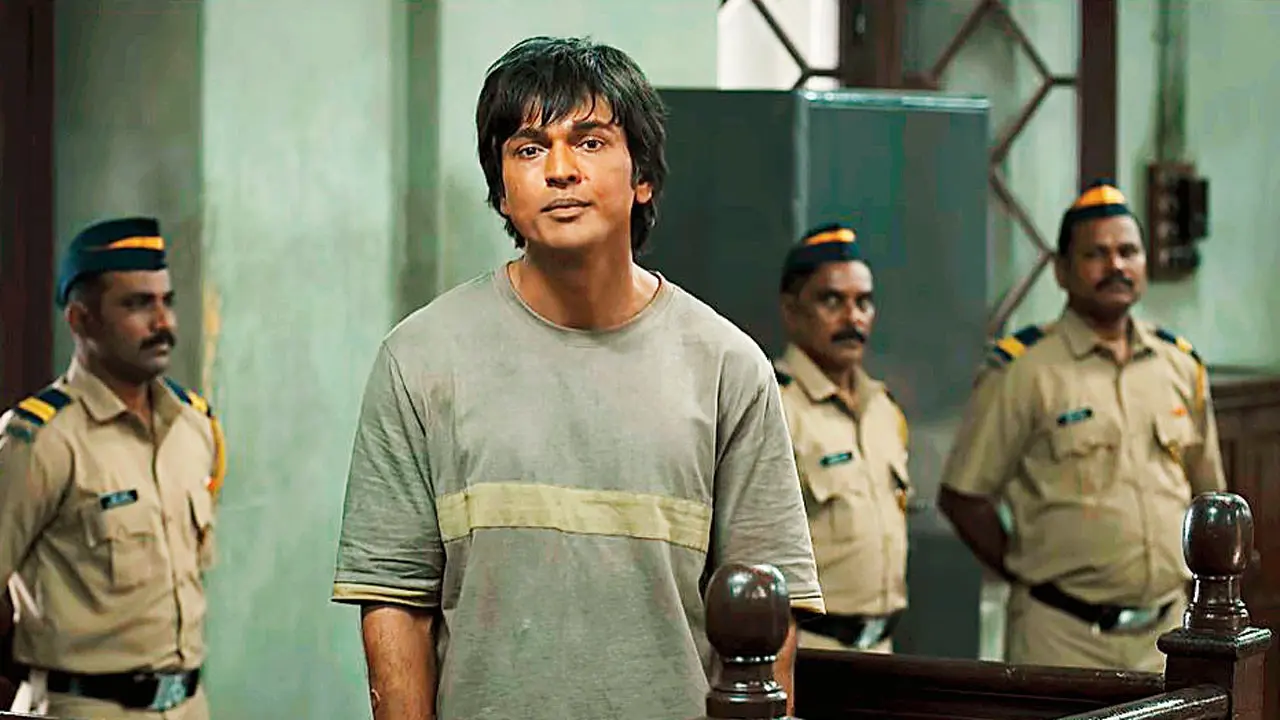
Lalit Prabhakar reveals how just one YouTube video helped him play Ajmal Kasab in Prahaar
9:58 AM
Priyanka Sharma (MID-DAY; October 26, 2026)
Lalit Prabhakar knew he had the chance to do something unique when he was asked to audition for the role of 26/11 Mumbai attacks terrorist Ajmal Kasab for Prahaar, led by Rajkummar Rao. While two takes were all it took for director Avinash Arun to know that he had found his Kasab, becoming the on-screen terrorist was a longer journey for the actor.
Breaking down his prep, Prabhakar said, “I spent time with Avinash sir as he expressed his approach towards the character, how he wanted to humanize it, and didn’t want to [adopt] the melodramatic, filmy style. He believed Kasab’s psyche should be our focus. What exactly does it mean to be brainwashed? If a person has killed so many people and is ready to die, how would his eyes and expressions be?”
The actor, who is winning praise for his act in Prahaar, also read the book, 26/11 Kasab Ani Me, by Ramesh Mahale, the chief investigating officer of the attacks.
Prabhakar added, “There’s only one video of Kasab available on YouTube. That’s all I could watch. I studied his two-three photos that are in public domain. The main task was [perfecting] the dialect and tone.”
Ab samajh aaya OTT alag hai, cinema jaisa nahi hai. Par hai mazedaar-Rajkumar Hirani
5:02 PM

Niharika Lal (BOMBAY TIMES; September 10, 2026)
Rajkumar Hirani says he didn’t intend to make a series or to make a series about cybercrime. However, during the pandemic, he read about a lot of incidents and became fascinated by the world of cybercrime.
He spoke to cybercrime officials and hackers in Mumbai and Delhi. And he felt that this material couldn't be contained within the duration of a film. That realization led to Pritam And Pedro, his first series and his debut on streaming which he didn't direct. Months after its release, and now working on the second season, Rajkumar Hirani admits he’s still a little paranoid about opening his mails.
In a recent conversation, Rajkumar Hirani spoke about the world of cybercrime, and about what streaming taught him.
Ab samajh aaya OTT alag hai, cinema jaisa nahi hai. Par hai mazedaar!
Rajkumar Hirani says that now he feels more equipped to work in OTT. He shares, “Cinema mein itna depth mein nahi ja sakte kisi character ke andar. Do ghante mein, 2.5 ghante mein kahani kehni hoti hai. We compress the story a lot. While writing as well, we compress a lot - this scene can’t go in, so many pages. Here, in a series, we have the opportunity to go in depth. Aap khol sakte ho characters ki life. Yeh ek alag world hai. Alag dhang se bolni padti hai kahani yahan. I also found that in every episode you have to create some dynamic thing to keep people hooked.”
He says the process changed how he thinks about writing. “Likhte-likhte samajh aaya. Ab likhne ke baad aur (response) dekhne ke baad samajh aaya - in a way I’m better equipped now to do something better on OTT. Ab samajh aaya ki alag hai, cinema jaisa nahi hai. Par hai mazedaar! Kai kahaniyaan jo hum wahan nahi keh sakte, definitely yahan keh sakte hain.”
He also got feedback that the series never derails, which usually happens in longform storytelling. He shares, “Woh hua kyunki hamari cinema ki training thi. Main koshish kar raha tha ki main usko tight rakhoon, aur sab mujhse keh rahe thay - khol dete hain tracks, lamba-lamba rakh sakte hain. Par hamari training cinema ki hai toh lagta hai kyun khol rahe hain usko? Details mein batao, lekin dramatic nahi hai toh mat kholo tracks. I really kept it very tight. Tha bhi lamba, par mujhe laga yahan bore ho jayenge toh main kaatta gaya. Bahut kaata. Bade pyaar mohabbat se ban gayi woh series. Maza aa gaya,” he says, laughing.
'Every project that I start begins with a fascination to understand that world'
Hirani says every project of his begins with a fascination. “If it’s 3 Idiots, then I am like - we should show college life, kahani bahut mazedaar hogi. For Munna Bhai, the concept was: what if an older guy goes to a medical school! So it’s a small trigger through which we jump into that world. PK was about religion, and in this series, the trigger was cybercrime. There is no clear-cut objective. And then you learn that world. Ab toh main mail bhi dar-dar ke kholta hoon,” he laughs.
He explains, “Finally, stories are of characters and their world. Like PK was of religion and God, and this was of cybercrime - but it is personal story of two characters. Humne educate karne ke hisaab se nahi banaya, par research strong hoti hai toh woh cheezein uske andar aa jati hain. Nahi toh surface pe hi reh jaati hai kahani.”
'If people don’t like something, aapka phone band ho chuka hota hai'
Hirani says the feedback for this show is unlike anything he experienced with films. “Whether film or show - one thing is numbers. In cinema you get to know via box office, and here you get to know by the number of views. Second is people’s reactions. If they don’t like something, aapka phone band ho chuka hota hai. Koi response nahi aata hai. Ya bahut courteous - nice, itna sa aa jayega ek message, ek smiley aa jayega. Kisi ko lagta hai isko bolna zaroori hai. You have to read between the lines and understand ye kaisa response raha.”
This time, the response surprised him. “Very strangely, none of my films got me these reactions. I got reactions from people I haven’t heard from in ages. Kahan kahan se gaon se hamare log message kar rahe hain. I think maybe it’s because it’s available immediately, everywhere, at the same time. I was totally shocked, ye ho kya raha hai. And that made me realize the power of OTT. Reach of OTT is - woh aapke ghar mein ghuss jata hai,” he says, laughing, “aur aapko ticket nahi lena padta.”
He adds, "Till now, the crimes we used to see were really hardcore - on-ground crime and on-ground investigation, like Sherlock Holmes. But cybercrime is a different world, where most crimes are committed by phones and solved by phones."
Avinash Arun directed the series
For the first time, Hirani didn’t direct his own script. Pritam And Pedro was helmed by Avinash Arun, known for Paatal Lok. “I had written it. I know Avinash’s work. Mujhe laga Avinash will do it well. Aisa nahi hai ki main pura disconnect ho gaya tha - likha tha maine, aur phir editing bhi maine khud ki thi. Maine kisi ko nahi diya. Editing is also like you write and rewrite - maine kaafi waqt bitaya hai ispe. But of course, unless you have a good actor and a good director, it can go anywhere. So you have to be on the same page. I think I got lucky with Avinash doing it.”
Who wins creative disagreements? He says there usually aren’t any. “It’s a unanimous call. Ya toh main usko convince kar leta hoon, ya woh mujhe convince kar leta hai. Nahi toh kar ke dekh lete hain — kuch logon ko dikha lo, unke reactions mil jaate hain. Aisa conflict nahi hota hai kabhi. You arrive at a decision.”
Rajkumar Hirani's son Vir Hirani was not part of the series initially
The six-episode series follows a tech-averse Goa police officer who teams up with a young hacker to solve cybercrimes. Hirani researched the roles by speaking not only to cybercrime officials but to hackers themselves. Arshad Warsi was cast first as the officer. “Arshad is such a fantastic actor. We were working together after so long, so it was good fun,” Hirani says.
Casting the hacker was less straightforward. Rajkumar Hirani's son Vir Hirani plays the role of hacker. He shares, “Vir was not supposed to do the series at all. He always wanted to do films, and I also had this in mind that he will do a film. Mere paas bhi koi subject tha nahi jo uss age ka ho, toh maine kaha, tum dekho bahar - you read scripts, do auditions. And he was doing it.”
Vir heard the show was being made and approached the producer himself. He auditioned, and it was director Avinash Arun who suggested casting him. “We can take him because the age gap would be very interesting - a senior police officer and a young hacker,” Avinash Arun told Hirani.
Hirani says, “Earlier we were looking for people who were not as young. Luckily, now it has done extremely well and it is the most-watched show. He is also getting a lot of appreciation.”
Inlaks aka the Bombay dream goes in for redevelopment
10:23 AM
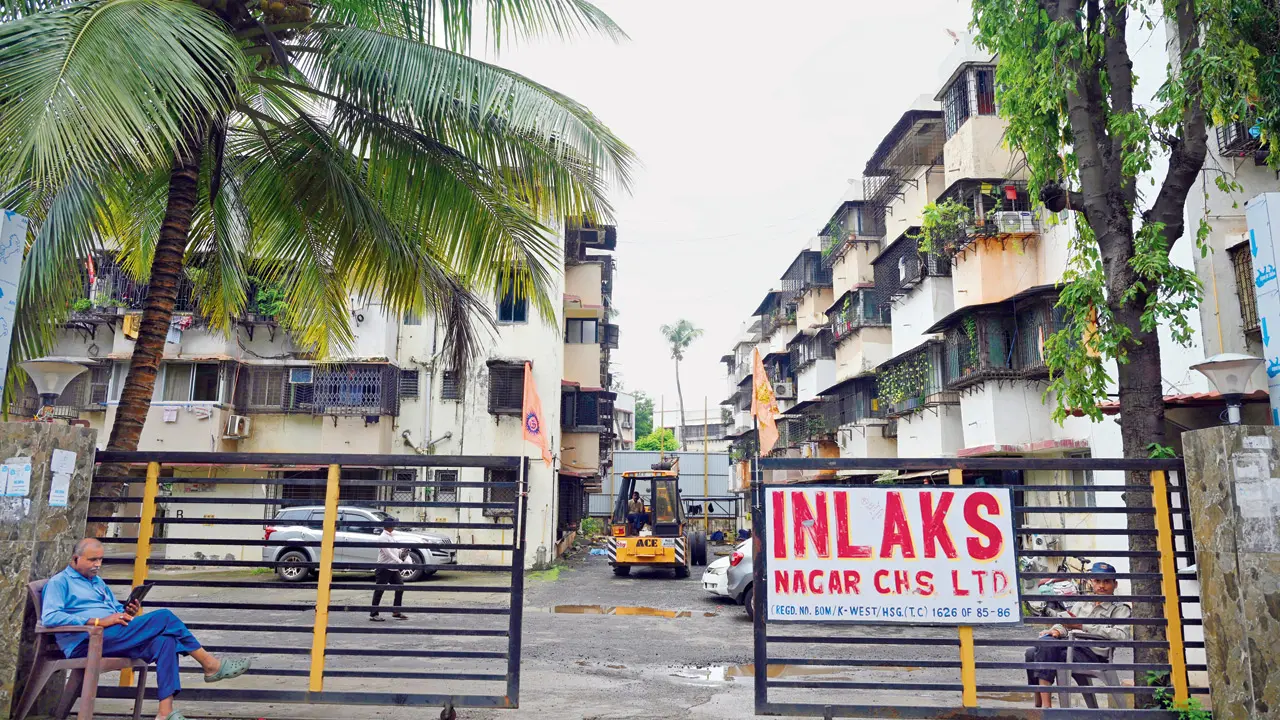
This Versova society welcomed actors, screenwriters, and anyone with a Bollywood dream with open arms, including Sanya Malhotra and Rajkummar Rao. As it heads for redevelopment, many ask: Where will aspirants find solace now?
Mohar Basu (MID-DAY; August 23, 2026)
If you have lived in Andheri West and worked in the film industry, chances are you couldn’t have missed Inlaks, the soon-to-be-torn-down society that has been a rite of passage into Bombay’s film world. There is a long-running joke that all roads in Versova lead to Inlaks — sometimes for an unforgettable night of partying with friends, sometimes to huddle around a laptop and write your first film, and more often than not because it was one of the last housing societies in this supposedly progressive city that didn’t interrogate you before handing you a key: Which religion do you belong to? Are you married? What do you do for a living? And, the most humiliating of all, “Movies mein ho? Toh phir ghar kyun denge?”
My entry into Inlaks was after an unfortunate sabbatical I took from mid-day to pursue my Bollywood dreams. I landed up in the office of screenwriters Raghav Raj Kakker and Kashyap Kapoor in 2023 after a decade of avoiding the mystical, magical land that has been the starting point of hopes for many. NDAs forbid me from telling more of what we made and what eventually happened (or didn’t happen to it), but it sure did one thing: It brought me back to life through a really dark phase of my own career. So when I decided to write this piece, I went back to meet them where I began, at that very office.
The glorious 2010s
In 2011, when Kakker first came to Inlaks, Versova was still a very different place. “This used to be such a deep end of the city, that literally a dust bowl was flying here,” he remembers, “This wasn’t even a paved road, it was a rough road.”
Over the years, the society became known as a kind of unofficial film-school extension, a place where people who had come to Bombay to work in films could find a home, often before they had found a career. The society itself had a different purpose when it came up. Kakker recalls that Inlaks was created as low-cost accommodation for members of the Sindhi community through the Amil Panchayat.
Over time, however, it acquired another identity, one that would become almost inseparable from Mumbai’s film industry. Directors, cinematographers, art directors, actors, casting directors, and acting trainers lived there or regularly hung around. “They used to call it a mini FTII,” he says, “Rajkummar [Rao] bought an Audi and the joke was that it was a car worth more than a house. So, I would see Rajkummar chilling outside. A lot of directors, DPs, art directors from FTII would hang out here. When casting directors were not even a legitimate profession, casting director and acting trainer Prashant Singh used to hang out here. Actors Aakash Dahiya and Chandan Roy Sanyal used to hang out here.”
What mattered, though, was not simply the number of film people living in one place. It was the fact that everyone was at a different point in the same journey. “There was a sense of community. Outside Inlaks and inside Inlaks, there are a lot of people like me who are in different degrees of success. Some are just starting out, some are about to start, some have already started. And the common factor was this space.”
The feeling, he remembers, was simple — you could walk outside, bump into somebody who has just made it and think, “tomorrow it will be my turn”. That became part of Inlaks’s mythology. Kakker remembers the building going into a small frenzy at the famous chai tapri outside over the belief that Aamir Khan had visited during the shoot of Dangal (2016) because Sanya Malhotra was apparently living there. “I don’t even know if it’s true or not,” he says.
There was a piece of folklore about Inlaks that Kakker remembers clearly. “If you come to the industry and don’t live in Inlaks, you haven’t come to the industry.”
The reason the joke stuck was because the society had a reputation for making room for people who might not have found it elsewhere. “Bachelors used to get houses. Four boys used to get houses. Minorities used to get houses. Industry people used to get houses.” That was crucial for people entering an industry built around irregular work. Actors don’t necessarily have salaries.
Writers didn’t necessarily have salaries. A person could have talent, ambition and a promising audition, and still not have the paperwork or income that made a conventional landlord comfortable. Inlaks had room for that person.
The tea stall outside
For casting director Aakash Dahiya, who worked with Mukesh Chhabra in their early years, the film industry didn’t just exist inside Inlaks. It existed at the tea stall outside.
Dahiya lived there from 2008 for four to five years. He and Chhabra were working together on casting, and the tea shop became their adda, a place where actors, casting people and other film industry aspirants would meet. They would find out from one another where auditions were happening, who had gone for which audition, and who was looking for whom. It was an informal network before the industry had the kind of digital networks it has today. The tea stall was where information travelled.
He tells us, “It was an informal network, you found out about work simply by being around. For four-five years while I was there, so much of my life happened there. Mukesh and I were doing casting. We would sit there, meet people, find out who had gone for which audition, where the next one was happening, who was looking for whom. That was how you found work, through people. Even industry seniors lived there — so you had Raj, Vinod, Vineet Kumar Singh, Manoj bhai and so many others around you. And personally, I did D-Day while I was living there, Delhi Crime season one was made while I was there. My first car was there. I fell in love there, I had a breakup there. So when you tell me Inlaks is going away, it doesn’t feel like you’re just taking down a building. We have seen a life there.”
The loneliness antidote
Actor Ashish Verma, known for his roles in Sui Dhaaga, Article 15, Haseen Dillruba, Atrangi Re, Teri Baaton Mein Aisa Uljha Jiya and Tere Ishk Mein, as well as shows including InMates and Court Kacheri, came to Inlaks in 2012, during his transition from FTII to Bombay. He moved through D Block, C Block and A Block over roughly two years. The society was known to be friendly towards artistes and freelancers, and people were willing to accommodate unconventional living arrangements, including living in with his then partner, now wife Ronjini Chakraborty.
His own early years there were modest. He remembers 10-by-10 rooms, two-room arrangements and sharing the space with filmmaker Avinash Arun.
“I kind of graduated through the years. At that point, they would allow you to live there, even if you were in a live-in relationship. When I got here from FTII to Bombay, Inlaks became a very natural transition for us. Divyenndu was there, Deepak Nambiar was there, Rajkummar was there. There were so many of us. The beautiful thing about that FTII gang is that we have seen each other growing. We have seen each other at every stage. Today we might all be busy, we might not meet for months, but nobody has really changed. You meet again and you start from exactly where you left off.”
“I remember Divyenndu around the time of Chashme Baddoor, when he had just started shooting. Avinash was a DOP then, and he was working on a script on the side, which he kept coming back to. That eventually became Killa. You were literally watching people’s careers take shape around you,” he says.
For Verma, Inlaks was also a mohalla. It was almost like a hostel, where every night there would be people around. “Mumbai can be very lonely, and the film industry can be brutal because actors are rejected every single day. Here, you would come home and there would be 10-15 people around you. It became this mini-hostel, this community of people who were all trying to figure their lives out together. And that is something I think you don’t easily recreate.”
But his reaction is far more pragmatic. He says, “I am a strong believer in evolution, so I don’t want to say that nothing should change. Geography changes, cities change, and something more beautiful can come out of it. A few of my friends have gone on to buy houses and move ahead in life. But when you see Inlaks going into redevelopment, you also realize that a very particular kind of space is disappearing, the space that allowed all of us to be young, broke, and uncertain and still be in Bombay, still be close to the industry.”
A 300-square-ft sanctuary
For screenwriter Kashyap Kapoor, the Juhu boy who was introduced to this world by his writing partner Kakker, Inlaks became their first workplace. The duo, whose credits include Inmates, Class, Faraaz and The Buckingham Murders, have their office there.
For Kapoor, the significance of that office was not simply that it was inexpensive. “Inlaks in that sense is a safe space and a sanctuary,”
Kapoor says, “It gave us the dignity of an office from a coffee shop. If you get a sense of space, irrespective of whatever that space is, suddenly it’s yours and you are more responsible to your work. There is a respect for space. People come and work there. There is that energy.”
From that small room, however, their stories travelled. “We have been able to write stories of Bangladesh, the UK, North India, South India, Manipur. And I think that is one of the highlights of this place — that we could still be in Bombay and be cut off enough to say stories of the world. We all spent years in this room together creating something that we were really proud of, irrespective of whether it got made or not.”
Kapoor remembers the first big cheque they received at the office. “We were literally one light, two chairs, and one table and arrives this big cheque and it felt like we have made it. It is also so serendipitous; the first show we wrote at this office (an eight-part series for a leading platform) went on floors last week. It will be our last delivery from this space too. It makes me also feel that this is a place where a lot of dreams come true for a lot of people, including us. So, no matter how hard it gets, the only way to make it here is to stay at it and someday, many years from the day you wrote something, it will be out there for the world to watch it.”
The professional high, however, was accompanied by the very ordinary realities of the building. After returning from London following The Buckingham Murders, they came back to Inlaks and
the monsoon arrived. “We came back and it started raining and our roof started falling on our heads, quite literally. We spent a day mopping the ceilings and the walls, laughing about the irony called life.”
That Midas touch
Artiste manager Amandeep Khubber remembers another Inlaks entirely. She left her home earlier this month after an eviction notice was sent to those renting apartments. Her memory of the place is not of the crowds outside, but of looking out from her window.
During lockdown, there was a small ground below her house. She spent much of her day at the window. She began noticing the birds. There were different kinds every day. There was a pair of hummingbirds that she would sit and watch. There were monkeys too.
She lived in the same house from 2017 to 2021 and eventually it became her office. “I didn’t necessarily move to Inlaks because I wanted my immediate social circle to be there, but if I look at my career, I grew 100 per cent while I was living in that house. I took a sabbatical in 2023, and when I went independent in 2024, I really saw the shift. I registered my own company and suddenly actors started approaching me for representation. Manoj and Seema-ji, Suvinder Vicky, Vijayant sir, these are some of the people I associate with that phase of my life. Mehoob Brar was also working on Operation Safed Sagar (the newest hit show on the streamer) while he was there.”
“I sometimes joke that Inlaks had a Midas touch. I don’t know what it was about that place, but people seemed to grow there. I could work from there, live there and have this very quiet space while my career was changing completely. That’s what I will miss most — not just the building, but what that house represented for me.”
‘Where will the artiste live?’
That is what Kapoor finds hardest to reconcile with the redevelopment. “This was the last bastion of those who are starting out,” he says. “The artiste who used to come, who needed a house in his budget, who wanted to live in Versova… Because now where will the people live?”
He points to the old Shah Rukh Khan story, the outsider who arrived in Bombay and became its biggest star. “There is always a growing conversation about how artistes are not getting a place in Mumbai. The classic Shah Rukh Khan story, that he came from far and became the king? That story can never be made again because we are not leaving a place for him.”
For people who grew up around Inlaks, that is what makes its redevelopment sting. The building is changing at exactly the moment when the city around it has become increasingly difficult for the people who once made it. For some perspective and wisdom, we reached out to a filmmaker-actor whose Inlaks story of living there for decades, is apparently put down into a script and is parked with a streamer.
She and husband moved to Mumbai in 1994, where they built a life together in this very society. She told us, “Well, life moves on. As for artistes, they are a resilient bunch; they will find their way...”
Perhaps she is right. Because, right now, the set of Ram Gopal Varma’s Daya Nayak biopic is parked right next to the crumbling building. Its leading man is Harshvardhan Rane, who left home at 16, struggled for eight years before landing his first acting gig. It took him 26 years to give the biggest hit of his career last year. Well, dreamers do find their way.
Broker Speak
Real-estate broker Mohit Sharma says the numbers around Inlaks tell a very different story from the era remembered by its former residents. “Today, a 1-BHK in and around Inlaks and Yari Road can command roughly Rs 45,000 to Rs 55,000 a month, depending on the building, condition and furnishing. In the society, till last year, rent was in a similar range. You can find lower or higher quotes, but the old idea of getting a decent 1-BHK in this part of Versova for the kind of rent artistes once paid is simply not realistic anymore.”
Recent 2026 listings around Yari Road and Inlaks show 1-BHKs at about Rs 53,000, with numbers going up to Rs 1 lakh for 2-BHK homes.
It was not till 2010, that we found a contemporary, urban language that defined us-Akarsh Khurana
2:41 PM
(From left) Akarsh, Dilshad, Akash, Meera, and Adhaar Khurana. Pic Courtesy/Akarsh Khurana
From studying mathematics, to stepping onto the stage, directing a film, and acting, Akarsh Khurana has been there and done that. In this edition of Arts Adda, the veteran is staying relevant in the game while borrowing from his 25-year-long journey
Shriram Iyengar (MID-DAY; June 21, 2026)
It is a busy afternoon while the cast and crew of Micro Theatre sets up their technical check on stage at antiSOCIAL in Lower Parel. Akarsh Khurana smiles, as he walks in; the tiredness of a battle-weary veteran of Mumbai traffic is hard to miss. “It feels like this city is at war with itself. I have grown up in Mumbai; a Bandra boy through and through, and yet, I find it tough to defend it these days,” he admits.
The conversation flows over cups of coffee, jokes, and insight into anecdotes and observations on everything from the stage to film.
Excerpts from the interview
Congratulations on 25 years. That’s quite an achievement...
It was in 2000 when we set up our production. Last year, we wanted to just celebrate. This year, it might be a reduced showcase.
Take us back to 2000, and your first production.
I was at St Xaviers’ College. Arghya [Lahiri] was a schoolmate, back from Arya Vidya Mandir in Bandra. One evening at Prithvi [Theatre], he suggested I submit a play to Thespo.
And, which play was this?
It was Brothers. I recall one of our lead actors contracted malaria two days before the opening, and I had to step in. Thankfully, we did well.
The perfect start for a 23-year-old on the stage…
Yes, but at a cost. The next season, I got more ambitious, and set up a production with 28 actors. We were literally booed off stage. I considered quitting theatre altogether.
So why didn’t you?
Back then, you had to apply in advance for dates at venues. Just then, the National Gallery of Modern Art (NGMA) offered me two dates. Quasar Thakore [Padamsee], Arghya [Lahiri], myself, and a few others quickly put together a quartet of short plays which did spectacularly. That was a resurrection.
Going back to setting up Akvarious. What was the moment of epiphany?
It felt like a place I wanted to be in. The name, Akvarious, came from my father’s [Akash Khurana] writing company — a combination of his initials, and his star sign, Aquarius. But it was not till 2010, that we found a contemporary, urban language that defined us.
That language is not just in theatre. I remember it in Karwaan. How did you not get mobbed during the shoot?
We did. Do you remember that now famous scene of Dulquer Salmaan, Mithila [Palkar] and Irrfan [Khan] on the bridge? It is now called the DQ Bridge.
It had been built just a week before we arrived. Avinash [Arun, Director of Photography] and I picked it because it was an isolated place. Unfortunately, on the day of the shoot, there was a funeral in the village. Suddenly, hundreds of people were trying to catch sight of Dulquer [Salmaan]. Everyone else became almost irrelevant.
Two hilarious episodes occurred. Irrfan couldn’t reach his car, and just hopped on a passing local bike for a lift. The other incident was that Avinash and I were trying to set up a shot, and one over enthusiastic gentleman climbed up on my shoulder to take a picture of Dulquer (laughs). It was memorable.
Talk to us about the idea of curating theatre at a musical venue
They [antiSocial] approached us with the idea as they found that a few days in the week were slower at the venue. It sounded like a good alternative to experiment with subjects to suit the space. After a while of staging plays, we also stepped on board to help with the curation. The Micro Theatre itself is an interesting idea, and is mainly overseen by Jahaan Singh and Rayaan Khatib.
We want to build a community of theatre lovers, actors, and audiences. To do so in Lower Parel is an interesting project.
With your dad, and Adhaar, do you think of the legacy on stage?
I don’t think we consider legacy much. Even this community-building exercise is something we simply chose to do as an interesting experiment.
What is the ultimate objective?
The ultimate dream is to have my own venue. But it takes a lot. In this next five-year plan, it is something I would like to achieve.
Nothing in the system is designed to nurture our stories-Arati Kadav
10:13 AM

Arati Kadav, Kanu Behl, Aditya Kripalani
As 46 filmmakers sign a joint letter demanding equitable screens, Kanu Behl and Arati Kadav discuss forming a body to secure minimum rights for indie cinema after years of being stifled by theatres and OTT
Mohar Basu, Priyanka Sharma (MID-DAY; November 19, 2025)
Change is what Kanu Behl urged for, as he spoke to mid-day last week after his film Agra was allotted only 70 screens across the country (I will quit filmmaking, Nov 15). Within days, his appeal has transformed into an industry-wide call for action. On November 17, 46 independent filmmakers across India signed a joint letter asking multiplex chains to give their films a fair shot by providing them equitable showtimes, transparency in how the screens are allotted, and urged OTT platforms for acquisition parity. The signatories include acclaimed voices such as Nandita Das, Chaitanya Tamhane, Cannes Grand Prix-winning director Payal Kapadia, Orizzonti Award winner Anuparna Roy, National Film Award winner Rima Das, Arati Kadav, Vasan Bala, and many more.
The first step
Behl reveals that the idea of a joint statement sprung from his conversation with a bunch of filmmakers right after Agra’s release. After all, each of their films, at one point or the other, had been snubbed the way Agra was. “So, we felt it was high time we came together and spoke about this in one voice,” he tells mid-day.
The letter appeals the industry to make space for independent films. It points out the irony of how countless indie movies have been celebrated at renowned film festivals — Cannes, Venice, and Busan — but fail to reach the Indian audience. It highlights that small films face limited screenings, morning or weekday-only slots, and cancellations even.
A wave of reactions
The letter has received an overwhelming support from the industry, with actors, filmmakers, and writers spreading the word through their social media accounts. The reaction itself is telling, notes Behl. “If there is such a huge public outcry, it’s because every single person in the town feels stifled in one way or another.”
Echoing the sentiment is Mrs director Kadav. She voices what every indie filmmaker feels when she says, “Nothing in the system is designed to nurture our stories! Indie filmmakers spend five, six years shaping a film, and when it’s finally ready, there is barely any space for it — not in theatres, not even on OTT, which was supposed to be the great equaliser! We’re constantly told to make what ‘works’, but what about what the artiste needs to say?”
Filmmaker-writer-editor Sumit Purohit, another signatory on the statement, believes solidarity in the industry needs to go beyond words.
“Everyone needs to actively support and promote independent voices. Especially actors and filmmakers who began their journeys with indie films and have gone on to do bigger work. They can make a huge difference by backing new, smaller films. If they cannot always be part of them as cast, they can still support as producers, executive producers, presenters, or by helping the films find funding,” he says.
Actionable change
Kadav terms the letter as “just the beginning”. The plan ahead is to make a filmmakers’ guild. Behl elaborates, “We are developing a collective of filmmakers, which will become an official body and will have a larger conversation about securing minimum rights for this kind of cinema.”
Main Actor Nahi Hoon director Aditya Kripalani highlights that a formal body will give filmmakers far stronger leverage than fighting these battles alone. It will also provide a streamlined approach to champion each other’s work. He cites an example from Hollywood to show how a community of filmmakers can bring the change they want to see. “Agnès Varda, Martin Scorsese, Francis Ford Coppola, Brian De Palma, and so many others were friends who backed each other’s films and ambitions. The same is true of the three Mexican auteurs — Alfonso Cuarón, [Alejandro Gonzalez] Iñárritu and [Guillermo] del Toro.”
Et tu, OTT!
Streamers, once considered the harbinger of a new wave of storytelling, have also been called out in the letter. It questions why OTT platforms consider a movie’s theatrical performance as a prerequisite for acquisition. Here, Kripalani points out that OTT has perhaps benefited the most from indie talent. “They find all their directors for their series from indie films — be it Avinash Arun [who directed Paatal Lok], Devashish [Makhija] who is now making Gandhari, or Vasan,” he shares, before making an appeal. “What would help us is if OTT platforms can keep aside some budget every year for indie films. Even if it’s one-tenth of the big films, it’s enough.”
Rajkumar Hirani’s son Vir to make his web series debut by playing a computer geek cop
8:58 AM

Prepping to play a tech-savvy cop in his father Rajkumar Hirani’s web series, son Vir has been both building muscle and brushing up on his computer skills
Upala KBR (MID-DAY; January 15, 2025)
Rajkumar Hirani’s upcoming web series is special for the filmmaker for more reasons than one. Apart from marking Hirani’s debut in the digital space, the crime-drama series will also serve as the launch pad for his son, Vir. A source from the creative team tells mid-day that the Disney+ Hotstar offering revolves around two cops who come to terms with their distinct working styles.
“Initially, Arshad [Warsi] was to play the role of an old-fashioned cop who likes to solve crimes in his style, while Vikrant [Massey] was set to be seen as a young computer geek who uses technology to solve crimes. It chronicles what transpires when two diverse personalities are brought together to solve crimes. Now, some changes have come into effect. While the six-episode series was to be directed by Hirani’s assistant, Amir Satyaveer Singh, now, Pataal Lok director Avinash Arun has taken his place. Also, because Vikrant is busy with his other commitments, the makers have decided to cast Vir instead.” The 12th Fail (2023) actor has not stepped back from the project, but will now slip into the role of the antagonist.
The decision to cast Vir in the show, tentatively titled Pritam Pedro, did not require several rounds of discussions. He has assisted his father during the shoot of Sanju (2018), and has also studied theatre at the Royal Academy of Dramatic Art, London. He has directed several short films, including The Obituary, and also debuted in a play called Letters From Suresh, directed by Feroz Abbas Khan.
“Vir had delivered a 35-minute monologue in it,” reveals the source, adding that the aspiring actor will be undergoing intense physical preparation for his role. “He is adhering to a rigorous diet and training schedule to play the part of a fit cop. He is also brushing up on his knowledge of computers. Since he has been involved in the scripting process, he knows each scene of the series like the back of his hand.”
Young people also need to see such films because they will get old some day-Swanand Kirkire
8:11 AM

With Three Of Us led by middle-aged actors, Swanand proud that film reflects changing dynamics in an industry infamous for ageism
Priyanka Sharma (MID-DAY; November 11, 2023)
“Do you want me to write a song for it?” That was lyricist-singer Swanand Kirkire’s reaction when director Avinash Arun offered him Three Of Us. His response was natural since acting offers don’t come too often to him —this, even though he won a National Award for his performance in Chumbak (2017).
“Acting has never been my bread and butter. But I loved the script of Three Of Us. When Avinash said he wanted me to play the husband’s role, I was happy because that’s the character I love the most,” says Kirkire.
The drama revolves around Shefali Shah’s Shailja, who revisits her former lover Pradeep—played by Jaideep Ahlawat—as she begins losing her memory to dementia. Kirkire as her husband Dipankar completes the love triangle.
“You see the film through his eyes because you’re as uncertain about Shailja and Pradeep’s friendship as he is. He is the only one who shows his insecurity, the only one with a reconciliation graph. Another thing that drew me to him was that he didn’t understand poetry and music. That was a challenge for me because I earn my bread and butter through them.”
At a time when larger-than-life cinema is drawing audiences, it’s a feat in itself to have a mid-sized film on the big screen. Kirkire credits Arun’s compelling storytelling for it. For him, the film’s victory also lies in the fact that it is fronted by middle-aged actors.
“There was a time when at 40-plus, female actors’ careers would be over. Today, they are ruling the OTT space—from Sushmita Sen to Raveena Tandon. Shefali is one of the examples of a great talent leading many series, and now a film. Young people also need to see such films because they will get old some day.”
When Paatal Lok 2 got pushed, I had no work. I got nervous, says Three of Us director Avinash Arun
8:13 AM

Helming a tender love story in Three of Us, Killa director Avinash says Shefali-starrer is his attempt to revive Mukherjee’s brand of cinema
Priyanka Sharma (MID-DAY; October 31, 2023)
Sometimes, a seeming loss turns into an unexpected gain. That’s what happened with Avinash Arun. When the production of Paatal Lok’s second season was delayed due to the pandemic, the director had no idea that it would lead to the creation of Three Of Us. “When Paatal Lok 2 got pushed, I had no work. I got nervous. One night, after meeting director Chaitanya Tamhane, I got so inspired that I returned home and started writing. Within a week, my two friends, Arpita Chatterjee and Omkar Barve, and I wrote the screenplay for Three Of Us,” recounts the director.
What followed was a smooth ride as lead actors Shefali Shah, Jaideep Ahlawat and Swanand Kirkire, dialogue writers Varun Grover and Shoaib Nazeer came on board quickly, and the film was ready to roll in three months. It reminded Arun that when a movie is destined to be made, things fall in place.
“When I sent the first draft of the screenplay to Shefali, she replied, ‘I am on.’ After I sent the dialogue draft to Jaideep, he video-called me and said, ‘This is so beautiful. I am doing it.’”
Arun is aware that things are usually harder than this. After all, it took him eight years to get his second feature film as a director, even though his debut feature Killa (2015) earned a National Film Award. But he agrees that the stupendous success of Paatal Lok has given him an impetus. Now, as he presents an unrequited love story with Three Of Us, the director wants to bring forth the lost magic of films rooted in simplicity.
“I miss those times when Hrishikesh Mukherjee films were mainstream. We have grown up watching films by him, Sai Paranjpye, Basu Chatterjee and Gulzar saab. Such stories are gone. So, this is my attempt to get that genre back to the mainstream.”
I told Avinash Arun we should narrate School Of Lies from the perpetrator’s point of view-Ishani Banerjee
8:37 AM

Noting that slow-burn shows like School Of Lies aren’t easily greenlit, writer Ishani Banerjee bats for series to be judged on nuances rather than their first-week views
Priyanka Sharma (MID-DAY; June 13, 2023)
Some shows like School of Lies are not meant to be binged, but savoured. Ishani Banerjee, who wrote it with creator-director Avinash Arun, says the idea was to tell a multi-dimensional story of violence.
“Avinash had passed on a few news articles to me. When I finished reading them, I told him we should [narrate the story] from the perpetrator’s point of view. He wanted to do a meditative piece on violence, look at the cyclical nature of abuse and trauma,” says the co-creator and writer, who started her run in the movies with Aligarh (2015).
The Disney+ Hotstar mystery drama, led by Nimrat Kaur, follows the case of a 12-year-old boy who has gone missing from a boarding school. Banerjee is confident that the series, despite being unlike the fast-paced whodunits, will find its audience and may even open the doors for slow-burn shows in India. “School of Lies is a slow-burn show. It is not to be determined by the number of first-week views,” she states, insisting that writers, creators and streamers must together use the OTT boom to tell richer stories.
“Today, when OTT has given us the opportunity, it’s a disservice to writing if you aren’t deep-diving. If 49 out of 50 shows are catering to a certain kind of storytelling, then at least one should say something different.”
Banerjee says that the onus is also on OTT platforms to not succumb to the rat race, and instead give writers the chance to tell diverse stories.
“It’s not easy to get a School Of Lies made. There is a demand-supply cycle. We are constantly looking at which OTT show has got the maximum views. [These conversations] have been happening with regard to films and their box-office numbers. If you are still stuck in that rut on OTT, what’s the difference? The onus lies as much on the writers as on producers and platforms [to usher in change].”
TV circuit will always be a beneficial market as it is vast in nature-Swanand Kirkire
8:10 AM

Wearing actor and lyricist hats, Swanand Kirkire who is readying to feature alongside Shefali and Jaideep in a new film says that success today means catering to diverse audiences
Parth Srivastava (MID-DAY; June 12, 2023)
Lyricist Swanand Kirkire grew up in a musical family, with his parents always teaching him the importance of leading a good life. “But, I was more interested in theatre than music. Before I learnt about the National School of Drama, I would offer a helping hand to the local theatres in Indore,” says Kirkire, who subsequently arrived in Mumbai to write for a TV serial named Swaraj, and work as filmmaker Sudhir Mishra’s assistant.
It is perhaps this amalgamation of the craft he pursued and the one his family exposed him to, which enables Kirkire to don several hats at once. His upcoming slate of projects is only testimony to this fact. “I’m [acting] in a film with Jaideep Ahlawat and Shefali Shah. It is called Three Of Us. We still don’t know whether it will be released on OTT or in theatres. It was a pleasure to work with director Avinash Arun, who has received much love for his previous works like Pataal Lok, Drishyam and Masaan.”
Artistes across the industry have attempted to distinguish between the demands of cinematic projects and web offerings, but Kirkire believes such segregations are inessential. “I don’t think that the audience has been segregated. Earlier, there were two sources of entertainment — TV and theatrical films. Now, with the addition of OTT, there are three. This platform has attracted many people, but the TV circuit will always be a beneficial market as it is vast in nature. Every platform is equally important to us. When it comes to revenue, cinema is a direct medium — a film is either a hit or a flop. But, on the web, it’s tough to decipher if a film is a hit or a flop. The generation of revenue is also not linear. So, for an artiste, the [medium via which] revenue is direct, is good. Gradually, people are trying to learn the tropes required to succeed in each platform. The main motive is to entertain, that’s it.”
Up next for him is a musical with Ankur Tewari. He lights up while discussing the project, stating, “Ankur and I had a terrific time working on that show. It will be released soon, and I’m sure people will love it. Apart from this, I will also release an album with different composers. I have created a band with two young musicians named Shrey Gupta and Harshit Mishra.”

Jaideep Ahlawat, Shefali Shah, and Swanand Kirkire
I couldn’t have gone ahead knowing I let School Of Lies pass-Nimrat Kaur
8:12 AM

Nimrat says fronting School Of Lies was a no-brainer, thanks to ‘game-changer’ of a story and the chance to work with Paatal Lok director Avinash Arun
Mohar Basu (MID-DAY; June 9, 2023)
Nimrat Kaur is not new to long-format storytelling, having featured in The Test Case (2017), Wayward Pines (2016), and the award-winning series, Homeland. Headlining her latest web series, School Of Lies, was an easy decision. For the actor, the draw was collaborating with director Avinash Arun.
“I had always wanted to work with Avinash. I was curious to know what he would make after Killa [2014] and Paatal Lok [2020]. I have done a lot of long-format series abroad, but in India, I found myself more drawn to films. But this story was a game-changer. I couldn’t have gone ahead knowing I let this pass,” she smiles.
In the Disney+ Hotstar offering, Kaur plays a student counsellor trying to get to the bottom of a child’s mysterious disappearance from the boarding school. She found the perfect inspiration in her sister Rubina.
“My sister was formerly a student counsellor. I had observed her closely for many years. The ability to connect with a child and to think like them is the most crucial part of the job.”
It seems Kaur has made a conscious choice to do more work in India. After 'Dasvi' last year, the actor has a busy 2023 with School Of Lies, Happy Teachers’ Day, and Sky Force with Akshay Kumar. “It’s not a calculated move at all. I’m an emotional person who decides on projects that make it to my heart. I don’t care if it’s made in Iran, India or Europe. The question is — is it something I’d like to watch? If it is, I will chase it.”
A prime example is the upcoming second season of the Apple TV+ series, Foundation, in which she features in episodes one and six. “I got to work with Jared Harris, one of my all-time favourite actors. It was the most educating experience of my career. It was an honour to be a small part of this big franchise.”
Having started out with music videos, Kaur graduated to movies and web shows, emerging as a dependable actor over the years.
Nearing the two-decade mark in the industry, she reflects, “I haven’t cracked the code [to success]. What takes you forward is remaining curious, not getting bored and never allowing yourself to stagnate.”
You can call a boarding school a way of education, or what I used to call as a child, ‘a jail’-Avinash Arun
8:38 AM

School Of Lies director Avinash Arun says his fascination with boarding school life led to the creation of Nimrat Kaur-led series
Priyanka Sharma (MID-DAY; May 27, 2023)
As a child, Avinash Arun used to wonder about the life of kids in a boarding school, especially because he never studied in one. Years later, he got an opportunity to revisit his curiosity during a film’s shoot, which in turn gave birth to his upcoming series, School Of Lies.
“When I went to shoot a film in the Himalayas, I experienced the vibe of a boarding school from an outsider’s perspective and found it cinematically exciting,” says the director.
One of the questions that struck Arun was how many children attended such institutes of their own free will. It forms the bedrock of the Disney+ Hotstar thriller — starring Nimrat Kaur, Geetika Vidya Ohlyan and Aamir Bashir — that studies how such institutions demand discipline, and its consequences on children.
“One has to leave his home and family to step into another world, and is told to adjust to the environment. You have to learn, study, and discipline yourself. I wanted to see how it affects a child’s psyche. You can call a boarding school a way of education, or what I used to call as a child — ‘a jail’. You can call it freedom or confinement, depending on your perception,” states Arun, who is known for helming Killa (2015) and Paatal Lok (2020).
With School Of Lies, the director doesn’t intend to generalize the experience of boarding schools. Instead, the thriller follows a group of kids whose lives are upended when their classmate goes missing. “It’s a unique story about three-four kids who come [into a world] that will make or break them.”

Overwhelmed with the response Monica O My Darling has received-Sanjay Routray
8:12 AM

BOMBAY TIMES (December 6, 2022)
Matchbox Shots, the production house that backed the recently released neo-noir crime comedy thriller Monica O My Darling, directed by Vasan Bala, has received a lot of praise. The film follows the National Award-winning film Andhadhun, which was directed by Sriram Raghavan that broke new ground in Indian storytelling. Having set the tone with their unique cinematic sensibilities, partners Sanjay Routray, Sarita Patil and Dikssha Jyote Routray are all set to unveil a stellar lineup of quality stories for OTT platforms and theatres. Their next project is Scoop, which is a dramatic adaptation of a real-life journalistic incident by director Hansal Mehta.
Sanjay Routray said, “We are overwhelmed by the love Monica O My Darling received after Andhadhun. Regardless of the genre, we pull out all stops to support the project. While Matchbox Shots is proud to be working with filmmakers like Hansal Mehta, Anubhav Sinha, Navdeep Singh and Vasan Bala who have made their mark, we are also excited about our new voices like Avinash Arun, Varun Grover, Pankaj Kumar, Smita Singh and Abhijeet Singh Parmar.”
Sarita Patil says, “Good stories have no geographical limitations, which is why we are collaborating internationally with Mammoth Screen, UK, the producers of The Serpent, the hit show on Charles Sobhraj. Dikssha Jyote Routray is creating a limited series based on the 2008 Goa murder case of a young UK teenager Scarlett Keeling with them.”
As for now, the partners are delighted after filmmaker Avinash Arun’s Three Of Us premiered at IFFI, Goa, in the Indian Panorama section, while Varun Grover’s debut feature film All India Rank will soon be screened at an international film festival. Amidst the celebrations, the partners continue working hard to make the production house a perfect home for storytellers.
Nobody knows that there is a humorous and wicked side to me. Darlings explores that-Shefali Shah
8:11 AM

Creatively satisfied after shooting for six projects in 2021, Shefali discusses why working on Paatal Lok co-director’s next, 3 Of Us, has been enriching
Uma Ramasubramanian (MID-DAY; January 20, 2022)
Shooting six projects in a year can be quite a handful. How does one go from one film to another without feeling spent? If you’re Shefali Shah, you see each project as an opportunity to embrace a new character. “I did six projects last year,” she exclaims, almost surprised that she packed in Delhi Crime 2, Human, Darlings, Doctor G, Jalsa and 3 Of Us in the same year. “I have always been choosy. But after having such a line-up, I have to wait for something better. I am dying to go back on the set, but [the project] has to be as rich as the ones I have done till now.”
The actor, who began the new year with medical thriller Human, is now looking forward to Darlings. Alia Bhatt’s maiden production venture is special to Shah as it gave her the rare opportunity to showcase her comic timing. “I somehow have this serious image. Nobody knows that there is a humorous and wicked side to me. Darlings explores that.”
Where she can capture the essence of Darlings with a few adjectives — “It is wicked, dark and hilarious” — the actor chooses her words more carefully when describing 3 Of Us. “It’s complex, but the whole film seems so simple,” she reflects.
Director Avinash Arun, who is making his Hindi feature film debut after the much-acclaimed Paatal Lok (2020), has roped in Jaideep Ahlawat opposite Shah. “The story is so delicate. We shot in the Konkan region, which is stunning. The film is in Hindi, but has a Maharashtrian backdrop. It comes from the culture of Malgudi Days, but it’s not exactly like that.”
It is evident that she is impressed by Arun’s passion for his craft. “Avinash is an emotionally rich person to be able to create something like 3 Of Us. We both were completely in sync. If I would deliver a shot in a certain way, he would say, ‘Why don’t we try it differently?’ I would say, ‘I will do it, but I think the first one goes better.’ Sure enough, the moment he’d call cut after the shot, we used to look at each other and say, ‘Let’s go with the first one.’”
Newton, Masaan producer Manish Mundra to make his directorial debut with a social drama
7:43 AM

BOMBAY TIMES (August 13, 2019)
 After backing award-winning films like Newton and Masaan, producer Manish Mundra is gearing up to make his directorial debut in Bollywood, with an untitled social drama inspired by true events.
Manish, the founder-producer of Drishyam Films, is also an author and photographer. Talking about his foray into direction , he says, “Deep down in my heart, there was always a desire to make my own film. However, because of other engagements and priorities, I started with producing films, which I will continue to do. I believe that this is the right time to take the next step in my creative journey.”
The film, whose screenplay will be penned by Dedh Ishqiya writer Darab Farooqui, will be co-directed by writer-director Supreet K Singh. It has been inspired by a woman, whose ordeal left a deep impact on Manish. Manish shares, “For some time now, I have been following the story of this Indian woman, and her battle against the corrupt confluence of politics, police and judiciary. It had such an impact on me that I decided to bring this important tale to the world.”
To be shot extensively in Uttar Pradesh and Delhi, by renowned cinematographer Avinash Arun, the film will go on floors in January 2020.
Since setting up his banner in 2015, Manish has been nurturing high-quality independent cinema, which has not only won acclaim at international film festivals, but has also been appreciated by the audience. Drishyam Films has four movies on its slate this year, three of which are co-produced with Jio Studios. Their upcoming releases include National Award-winning Bengali director Suman Ghosh’s Hindi debut, Adhar; veteran actor Seema Pahwa’s directorial debut Ram Prasad Ki Tehrvi (starring Konkona Sensharma and Vikrant Massey among others), and Umrika director Prashant Nair’s anthology feature, Tryst With Destiny. Along with these, they have also produced their first regional feature, a Marathi film titled Ghaath, which has been directed by Chhatrapal Ninawe and stars actor Jitendra Joshi.
Irrfan Khan signs Killa director Avinash Arun's Hindi film set in Mumbai
7:22 AM

Sanyukta Iyer (MUMBAI MIRROR; December 23, 2015)
Filmmaker Avinash Arun, who
bagged the National Award for Best Marathi Film and the Crystal Bear for
Best Film at the 64th Berlin International Film Festival for his
directorial debut Killa, earlier this year, is gearing up for his big
Bollywood debut. The 29-year-old director, who
has been working on the script for over a year, has roped in Irrfan Khan to play the lead in the yet-untitled film.
Speaking from Bikaner, Avinash told Mirror, “I am currently locking the final draft along with the cast and crew. Irrfan loved the script. It's a Hindi drama set in Mumbai.“
The film is expected to roll towards the end of 2016. Before that, Avinash will commence shooting his second Marathi film, Boomerang, in July. “Killa was my ode to the Konkan, Boomerang will showcase my love for the Sahyadri mountains, and is inspired by my own childhood experiences. Children are an integral part of this film too,“ says Avinash, who spent a good part of this year shooting Neeraj Ghaywan's Masaan and Nishikant Kamat's Drishyam as a cinematographer.
Meanwhile, Irrfan has reunited with his Qissa: The Tale of a Lonely Ghost director, Anup Singh, for a love story, The Song Of Scorpions, which is currently being filmed in Jaisalmer with camels and Iranian beauty Golshifteh Farahani, who plays his wife. Irrfan will also be seen in the Ron Howard-directorial Inferno, an adaptation of Dan Brown's book by the same name.
Bhumi Pednekar is a lot more desirable and hotter today-Ayushmann Khurrana
8:04 AM

Ayushmann Khurrana on his co-star in Sameer Sharma's upcoming directorial `Manmarziyan'
Sanyukta Iyer (MUMBAI MIRROR; October 23, 2015)
Putting all casting rumours
to rest, Ayushmann Khurrana and Bhumi Pednekar have confirmed that they
play the romantic leads in Sameer Sharma's upcoming love story,
Manmarziyan, which will be shot in Punjab. “We had been toying with the
story for a while. It's like making a movie with friends. Only this
time, Bhumi is back, and is a lot more desirable and hotter today,“
Ayushmann tells Mirror, adding that the film is a pure Punjabi romance. A second male lead for the film, which is a contemporary love story,
will be announced shortly.
Manmarziyan goes on floors in January and the actors will film a marathon
schedule. “Ayushmann and I have never had any unpleasant moment
between us, on or off the sets. He doesn't patronise me and is a
brilliant actor,“ Bhumi, who
made her Bollywood debut opposite the actor in Dum Laga Ke Haisha
last year, notes.
The actor returns the compliment, saying, “Bhumi's a chameleon. Despite being a Maharashtrian, she aced the North Indian accent in her debut film, and now, she's learning Punjabi.“ The actress, who has lost over 15 kgs since her debut, chimes in, “Yes, I've turned Punjabi overnight. I'm listening to Punjabi music, eating Punjabi food....“ before Ayushmann, who will also record a song for the film, jokingly cuts her off, “Bhumi, you need to stay away from food.“
Director Sameer Sharma, whose last directorial Luv Shuv Tey Chicken Khurana was also set in Punjab, reveals that he was not too keen to go back for his next, but he was left with no choice when, novelist Kanika Dhillon (of Bombay Duck is a Fish fame), who's written the story, shared the idea with him. The director has also been in the news for Jugalbandi, a musical love story, which will be produced by Salman Khan Films. “I would really like for that script to come alive on the big screen, but for now, I am focussing on Manmarziyan. I must confess that Jugalbandi is in very good hands and it is in progress,“ he promises.
Manmarziyan will feature music by Amit Trivedi while Avinash Arun, whose directorial debut Killa won the best Marathi feature nod at this year's National Awards, wields the camera. “As a writer, I know that I take a lot of time to write a film. Luv Shuv... took over two years and Manmarziyan has taken longer than that. But now that my work is in secure hands, I know we'll create meaningful cinema. And I will work faster too,“ the director laughs.
Talking about his film's hit jodi, Sameer says that Bhumi, who is dedicated to losing the last bit of her excess weight by the time the film rolls, is all set to play the quintessential Bollywood heroine. “She will be seen in a classic onscreen avatar - beautiful, sexy, reminiscent of leading ladies of Chandni, Silsila, Woh Saat Din, Andaaz. Ayushmann is such a fine actor; Bhumi and him make a beautiful team.“

You can smell death on the Ghats used for cremation in Varanasi-Avinash Arun
7:47 AM

Sanyukta Iyer (MUMBAI MIRROR; June 17, 2015)
 When Neeraj Ghaywan contacted Avinash Arun in January 2014, he sounded
desperate. In two days' time, he was scheduled to go to Varanasi to
shoot a pitch video to attract funding for his film Masaan from the
international market at the Sundance Film Festival. But Neeraj's
director of photography backed out from the project. He was hoping
Avinash would step in immediately.
The duo had been friends for a long time now, sharing innumerable cups of coffee, cigarettes and notes when they were students at the Film and Television Institute of India. They had worked together on Anurag Kashyap's short film, The Day After Everyday. Neeraj was the associate director and Avinash the cinematographer.
When Neeraj called, Avinash was busy with Killa, his directorial debut, which was being screened in the Panorama Selection at the 64th Berlin International Film Festival in two weeks' time. "I was caught up in post-production and hadn't even started on the subtitles," recalls Avinash. "That's when it struck me that Neeraj is a master at subtitling."
The two made a pact: Neeraj would subtitle Killa and Avinash would shoot Masaan. "I fell in love with Varanasi and the team over the next three months," smiles Avinash.
Masaan received a standing ovation at the Cannes Film Festival this year and won two honours: the FIPRESCI Prize in the main competition section and a special prize for debut films. It tells the story of a lower caste boy, Deepak Chaudhary (Vicky Kaushal), who is hopelessly in love with Shalu (Shweta Tripathi). There's a second story revolving around a father and his daughter, Vidyadhar (Sanjay Mishra), and Devi Pathak (Richa Chadha), who find themselves in the middle of a sexual controversy within a religious set-up.
Avinash informs that to prepare for his role of a pious pandit, Sanjay Mishra actually lived on a boat on the Ganges. "For two months, he dressed, ate and lived like a Benarasi baba. He had turned into one at the end of the first 10 days itself. After pack up, we would all gather on his boat and he regaled us with anecdotes," he reminisces.
The rest of the cast and crew lived with the locals at Manikarnika Ghat and Harishchandra Ghat, building what Avinash calls "an emotional connect". They witnessed births and deaths, celebrated festivals and finally got access to shoot cremations.
"You can smell death on the Ghats which have been used as cremation grounds for generations. One two-minute shot I filmed was the burning of a body. Even though it was a wide angle shot, my hands got burnt, my body felt like it was on fire and my skin turned black. I wondered how young boys worked there for a living and faced the fire in the summers," Avinash shudders.
Since the film was shot in sync sound, even the sound mixer Vinit D'Souza was on the sets and often a part of Avinash's heated debates with Neeraj, along with the first assistant director, Karuna Dutt. All of them were working for free. "Today, we're one family. We recently met and have decided to travel to Varanasi again, soon," Avinash signs off.
10 National Award winners come together to make Drishyam
7:40 AM

BOMBAY TIMES (May 11, 2015)

 What happens when 10
National Award win ners team up for a movie? It heightens
curiosity about the film, given the talent collaborating for it. And
that's what makes Drishyam a much anticipated film in the coming months.
The makers promise to keep the audience on the edge of their seats while
watching this Ajay Devgn-Tabu-Shriya Saran-Rajat Kapoor thriller.

 Ajay and Tabu have won the National honours twice - Ajay for Zakhm and
The Legend Of Bhagat Singh and Tabu for Chandni Bar and Maachis. Director
Nishikant Kamat has won the Best Feature Film in Marathi award for
Dombivali Fast. Writer-filmmaker and composer, Vishal Bhardwaj, who's
creating the music of Drishyam, has bagged awards for Haider,
Ishqiya, Omkara, The Blue
Umbrella and Godmother. The legendary Gulzar saab, who is penning the
lyrics for Drishyam, won it for his work in Koshish and Maachis. This
apart, Avinash Arun, the cinematographer-turned-director, won the
National Award for Killa (Best Marathi Film in 2014) and Aarif Shaikh
won the Best Editor for Samay: When Time Strikes.
Further, Viacom18 Motion Pictures, the studio that bagged two National Awards this year - Best Popular Film Providing Wholesome Entertainment (Mary Kom) and the Best Hindi Film (Queen) - will be joining hands with producer Kumar Mangat Pathak and director Abhishek Pathak, who have won the prestigious award for Boond.
Well, with such an amazing ensemble cast and crew, we sure are looking forward to Drishyam.
Subscribe to:
Posts (Atom)