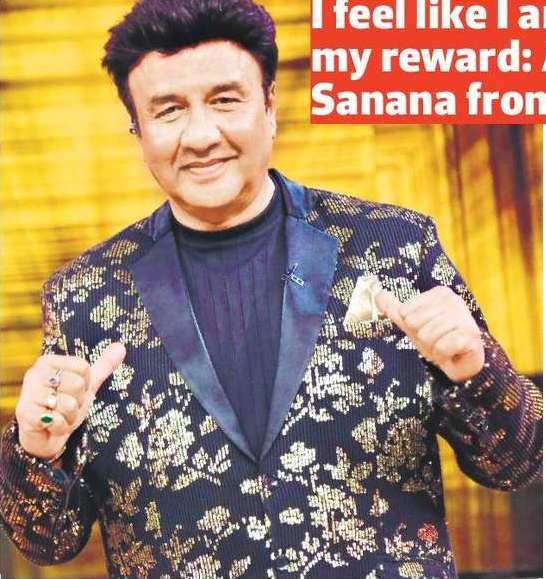
I feel like I am finally getting my reward, says Anu Malik on San Sanana from Asoka trending
8:09 AM

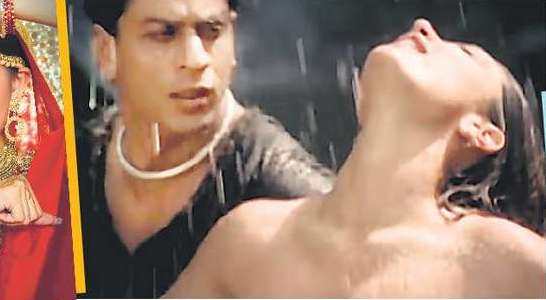
Salman Khan is sharp as a knife; Shah Rukh is made of special cloth; Aamir is too focused on himself-Kareena Kapoor
9:03 AM
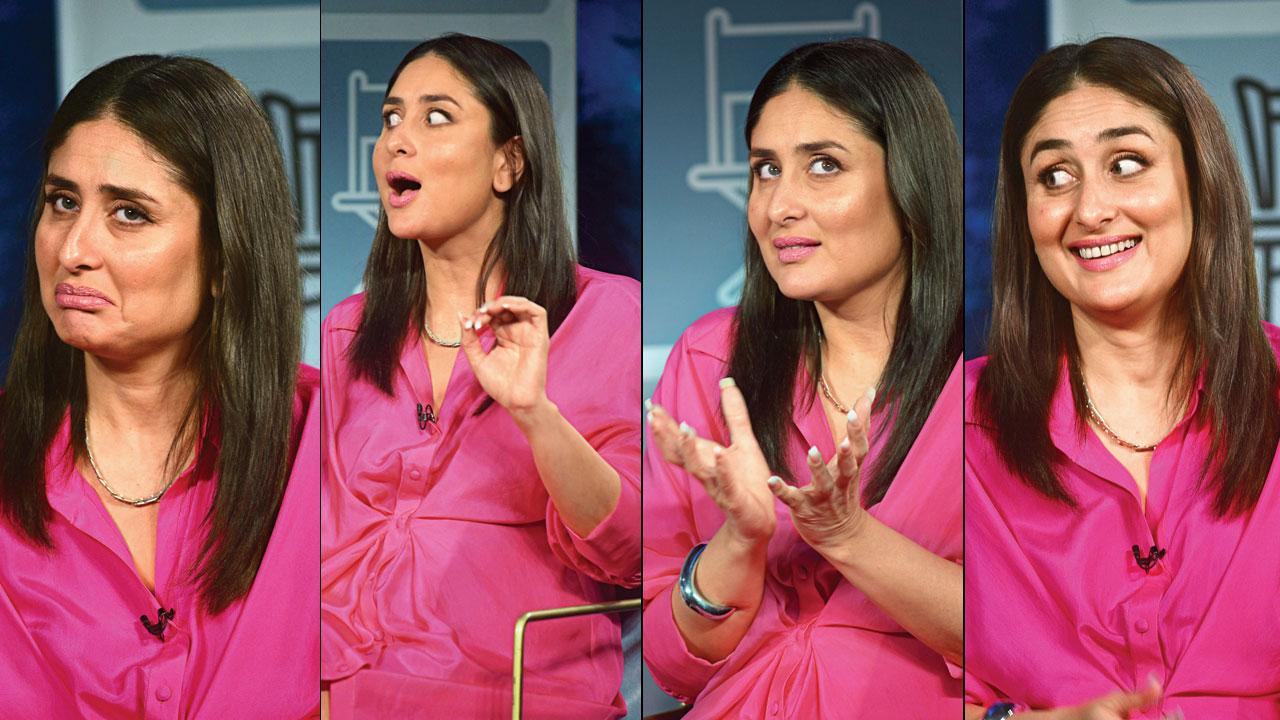
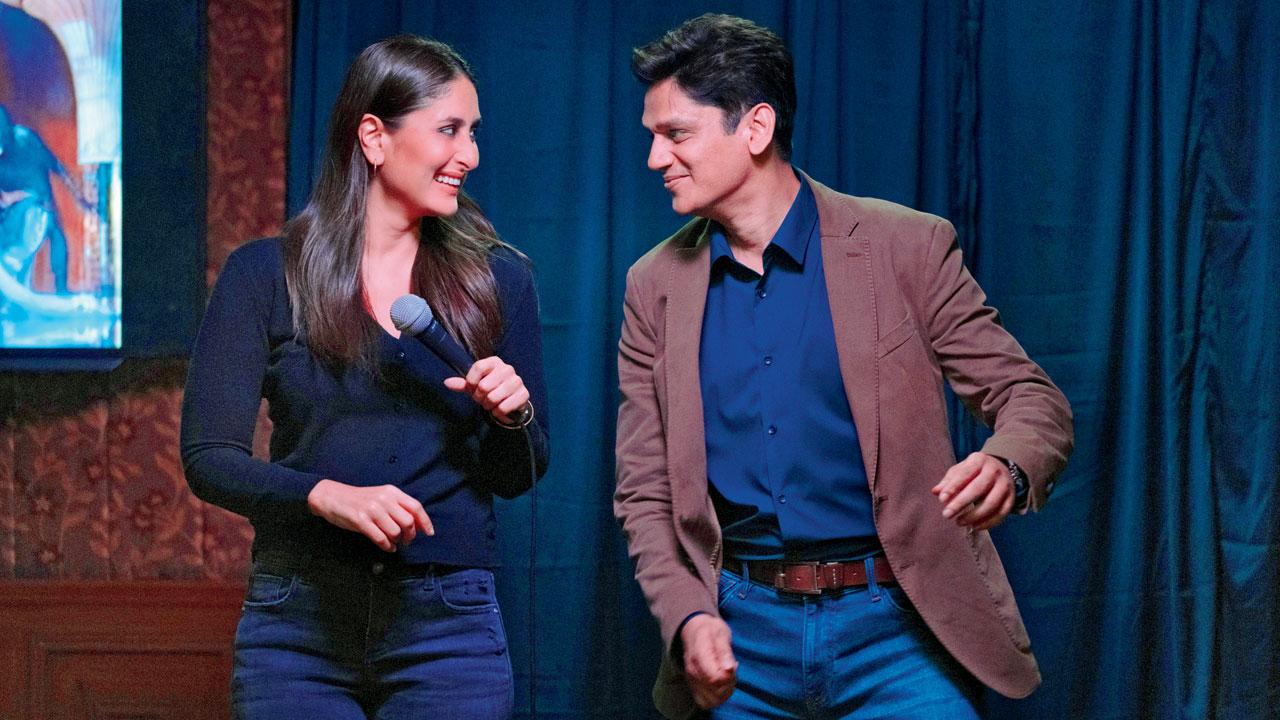
Happy Birthday Kareena Kapoor: In her first 2 years as an actress, she had appeared in 6 films, 3 of which were record openers!
3:45 PM

The Hindi film industry has seen several actors and actresses ruling the roost and breaking and setting new records. However, Kareena Kapoor, who celebrates her 41st birthday today, stands out when it comes to giving record openings. Believe it or not, in her first 2 years as an actress, she ended up giving as many as 3 record openers!
Kareena debuted with Refugee on June 30, 2000. It starred another debutant, Abhishek Bachchan. It was J P Dutta’s next after the monstrous blockbuster, Border (1997). The pairing of debutants and star kids Abhishek Bachchan and Kareena enhanced curiosity. Anu Malik’s music too was a rage. The film collected Rs. 1.56 crore and it was the biggest opening day ever till then, bigger than the films of the Khans and any other ruling stars! Even its weekend collections of Rs. 4.52 crore were the highest ever! Refugee’s record of first-day remained for four months and it was then broken by Hrithik Roshan-Preity Zinta starrer Mission Kashmir (2000). This Vidhu Vinod Chopra action thriller collected Rs. 1.64 crore on its opening day.
Kareena Kapoor’s second film, Mujhe Kucch Kehna Hai (2001), opened well, at Rs. 81 lakhs. It sustained very well and ended up collecting nearly Rs. 17 crore, that is, as much as Refugee. Thus, it got the Super-Hit verdict. This was followed by Yaadein (2001). This film had generated hype as it was directed by Subhash Ghai and because of the electrifying chemistry of Hrithik and Kareena, both of whom had given record openers a year before. Yaadein opened at Rs. 1.59 crore, that is, more than Refugee’s and less than Mission Kahsmir’s day 1 earnings.
And then came Ajnabee (2001). Along with Kareena Kapoor, it also starred Akshay Kumar, Bobby Deol and Bipasha Basu. The film was well packaged and marketed. The bold subject, the impressive posters and trailers and hit music enhanced curiosity. Yet, no one was prepared when this Abbas-Mustan suspense thriller took an earth-shattering opening. It collected Rs. 1.65 crore, a lakh more than what Mission Kashmir earned on release day. Ajnabee managed this feat despite releasing in non-holiday, adult-certification and despite releasing in lesser screens (325) than Mission Kashmir (400). Ajnabee was also Akshay Kumar’s first record opener.
Sadly, Ajnabee held the record for only a month. On October 26, 2001, the Sunny Deol-starrer Indian released and collected Rs. 1.80 crore on day 1. It clashed with Asoka, starring Kareena Kapoor and Shah Rukh Khan and it had a decent opening of Rs. 1 crore.
Finally, Kareena’s fifth and final film of 2001 was Kabhi Khushi Kabhie Gham. This was Karan Johar’s second film after the much loved Kuch Kuch Hota Hai (1998). It starred as many as six big actors – Shah Rukh Khan, Amitabh Bachchan, Kajol, Jaya Bachchan, Hrithik Roshan and Kareena Kapoor. It was released on December 14 and broke records by a huge margin. It’s opening day collections were Rs. 2.38 crore and weekend collections amounted to a huge Rs. 7 crore. It ended up making Rs. 55.65 crore at the box office and thus became a blockbuster.
In short, by the time 2001 ended, Kareena Kapoor had appeared in 6 films, 3 of which were record openers, and 2 of them had record weekends. Kareena probably holds this record of giving the maximum record openers in the beginning of her career.
Lastly, there’s another feat of Kareena Kapoor, worth mentioning. Ajnabee was also released today, on Kareena’s 21st birthday. In fact, she is the only actress or a rare actress who has had not 1 but 2 releases on her birthday – Ajnabee and Heroine (on September 21, 2012).

It's only now that writers, producers and directors finally see me as capable of shouldering a film-Vikrant Massey
7:55 AM

Kareena Kapoor revisits her iconic character Pooja on Dance India Dance
8:02 AM

MUMBAI MIRROR (September 6, 2019)
Kareena Kapoor, who is one of the judges on the dance-based reality show Dance India Dance, recently got a chance to revisit her iconic character Pooja aka ‘Poo’ from Karan Johar’s 2003 film, Kabhi Khushi Kabhie Gham. With guest judge, choreographer Geeta Kapur, with whom she has collaborated several times, Kareena also reminisced about the song “Bole Chudiyaan” from the film, as well as Asoka’s “Roshni Se”. As part of Geeta’s grand introduction on the episode, the actress and her co-judge, Bosco Martis, showered flowers and performed a traditional ‘aarti’.
“Geeta’s choreography is sensual, she makes her heroine look feminine. ‘Roshini Se Bhare Bhare’ is the most sensual song in my career. It’s just the way she moves, I think it’s inherent… I don’t think many choreographers tend to bring it out in us,” Kareena said.
When Mukesh proved his detractors wrong with Sardar Malik’s Saranga
7:40 AM

Anu with father Sardar Malik
Roshmila Bhattacharya (MUMBAI MIRROR; February 1, 2019)
Not many will recall a 1961 film titled Saranga but its song, “Saranga teri yaad mein”, filled with the pathos of a broken heart, ranks amongst Mukesh’s best. Anu Malik, son of its composer Sardar Malik, recalls his dad telling him that after bowling Mukesh over with Bharat Vyas’s poetry and his melody, he confided in the singer that some of his detractors were calling him “kansura” and he wanted to shut them up with this song. “But I’ll need to rehearse it with you every day,” Malik Saab insisted.
 Mukesh ji would dash down to his Juhu residence every day and despite the summer heat, they’d switch off the fan and he’d rehearse in his vest. “By the end of the session, both would be drenched in sweat,” recalls Anu. By the time of the recording, Mukesh ji knew every word and note. “Like me, he sang with the harmonium and the song flowed in perfect sur,” says Anu believing that if it had been picturised on Raj Kapoor rather than Sudesh Kumar (right), it might have been a bigger hit. “Stars carry forward your songs, that’s why I’ve fought for an Aamir, Shah Rukh and Salman Khan for my songs,” he reasons.
Salman’s father, Salim Khan played the lead in Bachpan. A Sardar Malik composition, sung by Mohd. Rafi, “Mujhe tumse mohabbat hai magar main keh nahin sakta” was filmed on him.“My first song for Poonam, 'Mohabbat rang layegi janaab ahista ahista', at the age of 17, was also sung by Rafi Saab. After the recording, he called me, ‘True son of a true father,’” Anu beams proudly.
 He also remembers approaching Shammi Kapoor (left) for his blessing only to be told he didn’t need to introduce himself. “You are Sardar Malik’s son,” Shammi ji smiled and when Anu wondered how he knew his father so well, he informed him, “I was launched with Sardar Malik’s music in the 1953 film Laila Majnu .” Despite several screen adaptations and Malik saab sharing the credits with another composer, Ghulam Mohammed, he left his imprint on the film with songs like “Baharon Ki Duniya” and “Dekh Li Aye Ishq Teri Meherbani.”
Malik saab also scored for Shammi Kapoor’s Chor Bazar which boasts of Lata Mangeshkar’s “Hui Yeh Humse Nadaani”and Shammi’s favourite “Tere Dar Pe Aaya Hoon Fariyad Lekar”. Then, there was Thokar unforgettable for Talat Mehmood’s ghazal “Ae-gham-e-dil kya karoon”with lyrics by Javed Akhtar uncle’s Majaz. It also had a female version by Asha Bhosle. “Asha ma adored daddy’s compositions as did her late husband Bhosle Saab. He loved and trusted daddy and told her this was one family she could stay with for as long as she wanted. I grew up playing in her arms,” Anu smiles, humming “Hum Apne Gham Ko Saja Ke” from Madan Manjari. Other Asha-Sardar Malik gems include “Tum Salamat Raho Hazar Baras” (Aulad).
Sardar Malik was a musician ahead of his times as reiterated by Saranga’s “Haan Deewana Hoon Main” composed on a minor key much before Bobby’s “Main Shayar To Nahi” was born. But despite this and songs like “Main Garibon Ka Dil Hoon Watan Ki Zubaan” (Abe-Hayat) he disappeared in a string of B-grade films with lesser known actors much before his demise on January 27, 2006. “Yes, his films didn’t do well and makers stopped coming,” admits Anu, pointing out that his simple, quiet father was too proud to ask for work. “He’d say they know the work I’m doing and if they need me they know where I live. With three children—Anu, Daboo and Abu—to bring up, he accepted what he got.” In these difficult times, Anu, at 12, picked up his harmonium and went looking for work. “People made fun of me saying I’d make songs on car bonnets and in the bathroom. They didn’t see the insecurity that made me run after people humming tunes, begging for a chance,” he says.
His dad smiled at Judwaa’s funky “Tan Tana Tan” and kissed him for Border’s “Aye Jaate Hue Lamhon”. “He was upset Asoka’s 'Roshni Se Bhare Bhare', 'Raat Ka Nasha Abhi' didn’t win me a National Award. When I won for Refugee , he raved, ‘Anu, you have combined Raag Yaman with Shudh Bihar.’” Anu had done it unknowingly but Malik Saab had studied music under Ustad Allauddin Khan and dance under Uday Shankar. “I told him his one 'Haan Deewana Hoon Main' was equal to my 200 films and he reiterated that he was proud I was a fighter who wouldn’t let go.”
Given a chance, I want to make Asoka again-Shah Rukh Khan
8:18 AM

Nayandeep Rakshit (DNA; November 2, 2017)
Shah Rukh Khan turns 52 today. The actor, who has been part of over 60 films (without the special appearances), has managed to maintain his superstardom over the last 25 years. Through the course of his career, he has attempted different things — some worked, some didn’t and some set new benchmarks in filmmaking.
Ask him about his plans and he tells us, “We have decided to produce almost nine-10 films in the next two years. I won’t be acting in all the films, we are always willing to do new things regardless of its outcome. Today, our films are doing the business, tomorrow I might lose everything but that thought will never stop me from attempting.”
The actor wants a revolutionary change in terms of special effects in India. “I understand we don’t have the budgets that a Hollywood film does. Today, I have a dedicated team, who is working endlessly to create VFX for films like Fan and Aanand L Rai’s film, which people couldn’t even think of doing, a few years ago. We tried introducing a technology in India with Fan and although the film didn’t work, it cannot take away the accomplishment of my team. When people come and talk to me about it, I consider all this fluff — that my career is ending and I’m going to be finished. That’s what you think but without being pompous, I can say that I’m at a position where I can decide to take on things which come with a huge chance of failure. But if we don’t do it, things won’t progress.”
He also expresses another wish he’s nurtured for quite some time now. “I had loved doing Asoka. Given a chance, I want to make Asoka again. But this time, it will be much bigger and grander. Maybe with some great VFX work which has so far not been seen in Hindi cinema.” He further explains, “We made Asoka in a budget of Rs 8 crores. We didn’t know much about VFX because special effects were still not a rage then. Today, imagine how much more we can do with a bigger budget and better VFX. I’m fascinated by such powerful war stories and someday, I would definitely like to revisit Asoka again.”
Why Shah Rukh Khan has agreed to act in Nikhil Dwivedi’s production
8:14 AM

Upala KBR (DNA; December 19, 2016)
Shah Rukh Khan has agreed to act in Nikhil Dwivedi’s co-production with Videocon’s Anirudh Dhoot. Shares a source, “SRK is very close to Videocon owner Venugopal Dhoot and his family and has also been their brand ambassador for years. It was even reported that Videocon had partly financed Asoka. He is almost like family to them. Naturally, he would be part of their first production which is being handled by Venugopal’s son Anirudh.”
Meanwhile, Nikhil and SRK have been friends for almost two decades and naturally he has approached the star to act in his production. Nikhil, who has worked in Dhoot’s company in the past, took the action-thriller-drama, to the star and he agreed to come on board. The source adds that Nikhil has been told not to talk about the project till everything is finalised. “Nikhil is leaving it to Videocon to handle everything including the announcement. The project is expected to begin next year.”
Farhan Akhtar's need for order is borderline OCD-Saket Chaudhary
7:57 AM

Priya Gupta (BOMBAY TIMES; February 22, 2014)
Saket Chaudhary, 39, is curious, sensitive and structure-oriented. He is little closed and creates a space around him, making it difficult for others to get in. To him, competence matters more than financial success and he needs to be convinced that what he is doing, he is doing well. His parents have only asked one thing from him — to do in life whatever makes him happy and independent and that has emotionally made him secure and freed him from the burden of having to explain to others what makes him happy. It took seven years to make his second film but he sailed through the tough emotional period, thanks to his co-writer Zeenat Lakhani. Over an hour-long conversation ahead of his romantic comedy Shaadi Ke Side Effects, he spoke to Bombay Times about Farhan’s need for order, Vidya’s comfort with chaos and why sessions of whisky with Aziz Mirza were invaluable. Excerpts:
How did you become a filmmaker?
I am a Punjabi, born and brought up in Delhi. My father was into marketing of pharmaceuticals and is now retired. After graduating in Physics, I had more or less decided that I would not do that even though I sat for the JEE and wanted to do something related to writing, be it in journalism or advertising. So then I went to Pune and did a masters in Mass Communication, post which I came to Mumbai when I was 21. I started assisting ad commercial makers for a year and then started writing Movers And Shakers and became the head writer for the show. I then started assisting Aziz Mirza and that is the first time, I started helping out with writing in a feature film. I met Santosh Sivan, who was the cinematographer, who asked me if I wanted to write Asoka and that’s how I wrote my first film and decided that I wanted to be a filmmaker.
Who are the people who have encouraged you in your career?
I wrote my first script for Pyaar Ke Side Effects, but no producer was willing to make it till I met Rahul Bose, who liked the script and took me to meet Rangita Nandy, who then decided to produce it. When I came to Mumbai, my parents supported me financially for the first year, after which I took care of myself. Despite being the seventh assistant to Aziz Mirza, he allowed me to participate in writing and he allowed me to speak in front of himself as also in front of a giant star like Shah Rukh Khan, which gave you confidence. Aziz sahab is this grandfatherly figure, who is extremely accepting and open and he has his durbar, where everyone contributes and gets to share his whisky, that is his pride and joy. His way of working was very fluid, but I learnt how to think on my feet. Then there was Santosh Sivan. I was just 25, but he gave me the confidence to go write a film like Asoka and that was a massive learning curve. He understood the camera and is a genius and one of the most fearless people I know who can do anything. I am neither fearless nor fluid like Aziz sahab or Santosh and may be that is why I liked them so much. I studied at Springdales School in Delhi and I remember telling my teachers in fifth standard that I wanted to be a writer, but they not only didn’t mock at that, which could easily have been the case in Delhi, but they were very encouraging. I would finish my English paper in half hour as I wanted to spend the balance one-and-half hours in writing my essay. And lastly, but most importantly, I never had to worry about my parents’ support. Even in fifth standard when I wrote stories, they would read them out to me and always encourage.
What is Shah Rukh Khan like?
He was a massive star but he was very friendly and did not have an attitude that a star his stature could have had. Santosh Sivan being a South Indian would be on the floor by 9am wanting to start the shoot but Shah Rukh would not show up till 12.30. But once Shah Rukh came on the set, he just switched on and was extremely spontaneous and organic.
What is Farhan Akhtar like?
Farhan is also very invested in the script. For him, your evaluation comes from the script and if that is good, he has full confidence. He is very precise in taking up things in the script. He does not let go of something he is uncomfortable with and even though he will make his point in a polite manner, he will make his point. Either you have to convince him or he will convince you. He likes to concentrate a lot, so the set needs to be in a certain organised manner for him. He likes quietness. Even if I do my best, the fact is that our sets are very noisy, but due to him I learnt how to cut the chaos on the set to give actors their space. He likes order. In fact, his order is borderline OCD. Farhan will not shout but he makes his point well enough.
How about Vidya Balan?
Vidya read the script four times and took two narrations before she said a yes. But once she is sure, she invests herself completely. I remember once the house in which she and Farhan live in the film was ready, she went there a day in advance to make the space her own and in fact, changed some things there that she felt would go with her character. She will keep a constant conversation about the script going with you to take references of your life and use her own life references for acting. The film is about what happens to a couple after they have given birth to a child. So she drew references from her sister Priya as she was a mother. As much as Farhan operates with order, she does not mind working with chaos. Both Farhan and Vidya come from directorial backgrounds (Vidya was an assistant director on TV). I love and respect when actors read the script as that is the only tangible thing you have before the film. You'd believe that everyone does it, but there are a lot of people who don't read scripts and just take a narration. Both Vidya and Farhan read the script thoroughly to the extent that they would come back with notes on it.
What makes you a part of the executive council of the Film Writers Association?
I am extremely passionate about the Film Writers Association and feel that writers should get their due recognition and return. If we need to make better films in this business, then it may be the most clichéd thing that story is the most important thing, but that does not reflect in a way. A storywriter gets paid from 10 lakhs to 80 lakhs if it’s a senior writer compared to a senior director, who could get paid upto 7-8 crores. I am a director and a writer and can safely tell you that as much as come parts of a director’s work may be bigger and larger, but it is not that much larger what a writer creates. Why should a writer be paid just 10% of a what a director is paid as the writer generates employment for everybody else. Tell me which director can go to work if a writer doesn’t write a script? A producer will tell you it is his money driving the film but had there not been a story, he would not make more than his bank interest on that money. A certain recognition and royalty is an aspect in any civilised society today. Why should there be so much resistance to it over here?
How do you safeguard a script?
When I was in the Film Writers Association, I was in the dispute committee and would see how people’s work was stolen and advised them on what to do. I learnt from there. I am fairly precise on the legal process, have lawyers and register my script before I give a narration to anyone.
There was a gap of seven years between your two films. Was that period tough for you?
After Pyaar Ke Side Effects, I wrote another script that was not as good. But I had wasted a year-and -a-half writing it. Then I wrote Shaadi Ke Side Effects which I had resisted to write earlier as I did not want this to be my second film. Getting up and just sitting in front of your computer for that many years is an incredibly difficult process. It’s one of the loneliest things to do. Of course you have to enjoy loneliness to write. But a blank page is damn scary. I lived in a bare minimum manner during this time as I did not know the future. You see your friends acquire things you have not acquired. But it made me reach a conclusion that you have to believe that writing is your calling and that life is not going to pan out for you like it has for other people and therefore you lower the expectation from the things you want from life. My co-writer Zeenat was a personal and professional anchor as we have been in this journey for so many years together. It was even more difficult for her as this was her first film and she had to wait for so many years. But we were a constant support to each other. I could see that my parents were concerned about me, but they never said it. To grow up with the emotional freedom in your head that you can do whatever makes you happy and independent is the best thing your parents can give you. You land up internalising that whatever I am doing has to satisfy me and I don't have to explain that to other people.
